
Tuesday Reads: Most Classless SCOTUS Justice, Ongoing Snowden Saga, and Other News
Posted: June 25, 2013 Filed under: Barack Obama, China, Foreign Affairs, morning reads, Russia, U.S. Politics, Women's Rights | Tags: Climate change, Dana Millbank, Edward Snowden, Garrett Epps, Jacob Zuma, middle school antics, Nelson Mandela, Racism, Ruth Bader Ginsburg, Samuel Alito, Sexism, University of Texas Southwestern Medical Center v. Nassar, Vance v. Ball State University 77 Comments
Good Morning!!
I’m enjoying some nice fresh air this morning after thunderstorms during the night. It looks as if the mini-heat wave we’ve been having here in the Boston area isn’t going to be as quite bad as originally predicted. It it supposed to be several degrees cooler than expected today and tomorrow and then we’re back to high 70’s temps. I hope that turns out to be right.
Unfortunately, because of this refreshing change in the air here, I slept longer than I should have and this post will go up a little bit late.
If there were a competition for “most classless supreme court justice,” there would be some serious competition among Antonin Scalia, Clarence Thomas, and Samuel Alito; but I think in the end the first prize would have to go to Samuel Alito. Clarence Thomas at least has the grace to remain silent and Scalia supposedly can be funny at times. But Alito is just an immature, obnoxious disgrace, as he demonstrated at the State of the Union Address in 2010 when President Obama denounced the Citizens United decision.
Yesterday Alito used childish, offensive body language to publicly mock his senior colleague Justice Ruth Bader Ginsburg as she read a dissenting opinion to a SCOTUS decision that will make it more difficult for employees to sue for sexual or racial discrimination. From Dana Millbank at The Washington Post:
The most remarkable thing about the Supreme Court’s opinions announced Monday was not what the justices wrote or said. It was what Samuel Alito did.
The associate justice, a George W. Bush appointee, read two opinions, both 5-4 decisions that split the court along its usual right-left divide. But Alito didn’t stop there. When Justice Ruth Bader Ginsburg read her dissent from the bench, Alito visibly mocked his colleague.
Ginsburg, the second woman to serve on the high court, was making her argument about how the majority opinion made it easier for sexual harassment to occur in the workplace when Alito, seated immediately to Ginsburg’s left, shook his head from side to side in disagreement, rolled his eyes and looked at the ceiling.
His treatment of the 80-year-old Ginsburg, 17 years his elder and with 13 years more seniority, was a curious display of judicial temperament or, more accurately, judicial intemperance. Typically, justices state their differences in words — and Alito, as it happens, had just spoken several hundred of his own from the bench. But he frequently supplements words with middle-school gestures.
Millbank goes on the describe Alito’s similar treatment of female Justices Elena Kagan and Sonia Sotomayor a few days earlier. Read about it at the link.
Garrett Epps provides more detail at The Atlantic: Justice Alito’s Inexcusable Rudeness.
I am glad the nation did not see first-hand Justice Samuel Alito’s display of rudeness to his senior colleague, Justice Ruth Bader Ginsburg. Because Alito’s mini-tantrum was silent, it will not be recorded in transcript or audio; but it was clear to all with eyes, and brought gasps from more than one person in the audience.
The episode occurred when Ginsburg read from the bench her dissent in two employment discrimination cases decided Monday, Vance v. Ball State University and University of Texas Southwestern Medical Center v. Nassar. In both cases, the Court majority made it harder for plaintiffs to prevail on claims of racial and sexual discrimination. The Nassar opinion raises the level of proof required to establish that employers have “retaliated” against employees by firing or demoting them after they complain about discrimination; Vance limits the definition of “supervisor” on the job, making it harder for employees harassed by those with limited but real authority over them to sue the employers.
The Vance opinion is by Alito, and as he summarized the opinion from the bench he seemed to be at great pains to show that the dissent (which of course no one in the courtroom had yet seen) was wrong in its critique. That’s not unusual in a written opinion; more commonly, however, bench summaries simply lay out the majority’s rationale and mention only that there was a dissent. (Kennedy’s Nassar summary followed the latter model.)
After both opinions had been read, Ginsburg read aloud a summary of her joint dissent in the two cases. She critiqued the Vance opinion by laying out a “hypothetical” (clearly drawn from a real case) in which a female worker on a road crew is subjected to humiliations by the “lead worker,” who directs the crew’s daily operation but cannot fire or demote those working with him. TheVance opinion, she suggested, would leave the female worker without a remedy.
At this point, Alito pursed his lips, rolled his eyes to the ceiling, and shook his head “no.” He looked for all the world like Sean Penn as Jeff Spicoli in Fast Times at Ridgemont High, signaling to the homies his contempt for Ray Walston as the bothersome history teacher, Mr. Hand.
I guess I should be grateful that I’m old enough to recall the Warren Court. We won’t see a SCOTUS like that again in my lifetime, I’m afraid.
Of course the news is still being dominated by Edward Snowden, who once claimed he didn’t want the story of his leaks of classified information from NSA to be about him. “Really?” writes Dan Murphy of The Christian Science Monitor. “But if that were true, we probably wouldn’t even know his name.”
Two weeks ago, Edward Snowden gave The Guardian permission to disclose that he was the leaker of documents from the US National Security Agency.
“I don’t want public attention because I don’t want the story to be about me,” the former NSA contractor said then. “I want it to be about what the US government is doing.”
If that was really his desire, he’s certainly gone about it in a funny way. From that day, every step he’s taken couldn’t have been better calculated to draw attention to himself. Over the weekend he even turned the media dial up when he fled from Hong Kong to the loving bosom of Mother Russia.
And with the assistance of Julian Assange, Mr. Snowden’s “where’s Waldo” saga is turning into aWikiLeaks production.
Mr. Assange, founder of WikiLeaks, has staked out a consistently anti-American and techno-libertarian position in the past few years. The US government is motivated by malice and power lust in his worldview, its rivals like Russia (where state-owned broadcaster RT ran a show of Assange’s) get a free pass, and secrecyis an evil in and of itself. Though he presents himself as a champion of free-speech, Assange has sought refuge in the Embassy of Ecuador in London, never mind that the country has a poor and deteriorating record on freedom of speech. The Committee to Protect Journalists listed Ecuador and Russia as two of the 10 worst places to be a journalist in the world past year.
Read the rest at CSM.
Meanwhile, Russia and China are pushing back against U.S. criticism of their refusal to help the U.S. extradite Snowden. From The Washington Post:
MOSCOW— Russia and China on Tuesday rejected U.S. criticism of their roles in the legal drama surrounding Edward Snowden, saying their governments complied with the law and did not illegally assist the former government contractor charged with revealing classified information about secret U.S. surveillance programs.
Snowden, 30, has not been seen in public since he reportedly arrived in Moscow on Sunday, after slipping out of Hong Kong. Secretary of State John F. Kerry on Monday strongly urged Russian officials to transfer Snowden to U.S. custody. “We think it’s very important in terms of our relationship,” Kerry said. “We think it’s very important in terms of rule of law.”
But Russian Foreign Minister Sergei Lavrov said Snowden had not actually crossed into Russian territory, apparently remaining in a secure transit zone inside the airport or in an area controlled by foreign diplomats. Moscow therefore has had no jurisdiction over his movements, Lavrov said, and has no legal right to turn him over to U.S. authorities.
It sounds like Snowden could still be in some VIP lounge at the Moscow Airport, but no one knows for sure. One witness told Reuters that Snowden did in fact arrive there yesterday. If he is in the airport, Russia can claim that Snowden technically never stepped on Russian soil.
In other news, Nelson Mandela is in critical condition for the second day, according to President Jacob Zuma.
Mr. Zuma said that he and Cyril Ramaphosa, the deputy president of the governing African National Congress, visited Mr. Mandela late Sunday.
“Given the hour, he was already asleep. We were there, looked at him, saw him and then we had a bit of a discussion with the doctors and his wife,” Mr. Zuma said. “I don’t think I’m in a position to give further details. I’m not a doctor.”
Doctors told Mr. Zuma on Sunday evening that Mr. Mandela’s health “had become critical over the past 24 hours,” according to an earlier statement from the presidency.
In the statement on Sunday, Mr. Zuma said that doctors were doing “everything possible to get his condition to improve and are ensuring that Madiba is well looked after and is comfortable.” Madiba is Mr. Mandela’s clan name.
The Telegraph reports that Mandela’s close relatives “have gathered at his rural homestead to discuss the failing health of the South African anti-apartheid icon who was fighting for his life in hospital.”
From NPR, President Obama today plans To Lay Out Broad Plan To Address Climate Change.
President Obama is expected to announce a sweeping plan to address climate change this afternoon.
The president has framed this issue as a moral responsibility, to leave the Earth in good shape for generations to come. But the nitty-gritty of any serious plan to address this problem is also a challenge, because it means gradually moving away from fossil fuels to renewable energy supplies — and that means there will be economic winners and losers.
Winners include companies that produce clean energy — wind, solar and geothermal energy. That energy will be more in demand, and the administration intends to expand access to public lands, where companies can build windmills and solar facilities.
Public health is also a winner, because the plan would pressure coal-fired power plants to reduce their emissions. Those plants not only produce carbon dioxide, but they are major sources of mercury, radioactive particles and chemicals that contribute to asthma.
The losers will be coal companies and the miners they employ as well as millions of Americans who can’t afford to pay higher electric bills. You can read the entire plan at the NPR link. More detail in this story at CNN. And at Business Insider, Josh Barro lists 3 Reasons Obama’s Carbon Plan Is The Best Solution Right Now
Today should be another busy news day with the ongoing Snowden saga, the President’s climate initiatives, the continuing Whitey Bulger and George Zimmerman trials, and more important SCOTUS decisions. If it gets hot here again this afternoon, I’ll have something to distract me at least. I’ll try to post an afternoon update.
Now it’s your turn. What stories are you focusing on today? Please post your links on any topic in the comment thread, and have a terrific Tuesday!!
Monday Threads: An Open Mind is a Terrible Thing to Lose
Posted: June 24, 2013 Filed under: morning reads | Tags: atheists and morality, conservative minds ignore consequences, fbi and justifiable shootings 102 Comments Good Morning!
I’ve often wondered what it is about some people that makes them wind up so damned narrow-minded. They seem eager to embrace anything that validates their belief system no matter how whacky and far-fetched or disproven. They are not tolerant of people or ideas that don’t fit their idea of correctness. Indeed, they seem to go out of their way to avoid data, evidence, and frankly, reality. This is all in the hopes of pushing away modernity or just plain change. I suppose this is a subject more aptly discussed by Doctor BostonBoomer the Psychologist than Doctor Dakinikat the Economist. However, these headlines just got me in the mood to ask one big question: What makes people feel so smug about their beliefs and beliefs systems even in the face of overwhelming evidence that they are just plan wrong minded and bigoted?
First, here is a story from Raw Story that involves psychology and studies that look at the question directly. The story is based on a morality study that finds conservatives show a ‘general insensitivity to consequences’.
Research published June in Social Psychological and Personality Science suggests that religious individuals and political conservatives think about moral issues in a fundamentally different way than liberals.
The study by Jared Piazza of the University of Pennsylvania and Paulo Sousa of Queen’s University Belfast, which included a total of 688 participants, found religious individuals and political conservatives consistently invoked deontological ethics. In other words, they judged the morality of actions based on a universal rule such as, “You should not kill.” Political liberals, on the other hand, consistently invoked consequentialist ethics, meaning they judged the morality of actions based on their positive or negative outcomes.
“Does being religious or being conservative promote a rule-based ethic or does having a rule-based ethic promote religiosity and/or conservatism?” Piazza told PsyPost. “This question is difficult to answer definitively without running a longitudinal study, since you cannot really manipulate religious orientation, or being in possession of a deontological orientation, and then look at the consequences.”
The study’s cross-sectional methodology makes it impossible to say anything more than religion and conservativism are associated with deontological ethics. However, Piazza said prior research suggested that being religious underlies the adherence to deontological ethics
“I think it is more likely that being religious — and being religious in a particular way — is what promotes deontological commitments, and not the other way around,” he told PsyPost. “In a recent unpublished study I conducted with my colleague Justin Landy at Penn, we found that it is a particular sub-class of religious individuals that are strongly opposed to consequentialist thinking. Specifically, it was religious individuals who believe that morality is founded upon divine authority or divine commands, and that moral truths are not obtained via human intuition or reason, who were strong deontologists (i.e., they refused to find various rule violations as permissible even when the consequences were better as a result).”
“This suggests that not all religious individuals are non-consequentialists; that is, religion does not necessarily promote a deontological ethic, though many religious institutions do promote such an orientation,” Piazza added. “Instead, it may be that people who are skeptical about the capacity for human beings to know right from wrong in the absence of divine revelation that tend towards a rule-based morality. Though this begs the question of why some religious individuals tend to see morality in terms of honoring divine commands, while others accept that human intuition or reason may be an equally, if not more reliable, foundation. This is an interesting and complex psychological question which we don’t currently have an answer to.”
Is this what makes the right wing so impervious to reality and evidence? And is that why the left wing seems enamored of a guy that just handed over state secrets to the Russians and the Chinese?
One of the great right wing myths explored here anecdotely is that that atheists, for example, cannot be compassionate or charitable because those are ethics that only spring from the fear of some kind of magical supreme being and threat of his afterlife hell realm. Yet, studies show that people with little to know religion do good deeds in abundance. In fact, big media is responsible for promoting this nonsense. Remember when Wolf Blitzer asked an atheist if her ‘faith’ in a god got her through the experience of a horrible tornado? Now, Time Magazines thinks atheists ignore human disaster too.
As part of his reporting, Klein joined one of the disaster relief groups and worked at a site damaged by the Oklahoma tornadoes… and that’s when he wrote this:
… there was an occupying army of relief workers, led by local first responders, exhausted but still humping it a week after the storm, church groups from all over the country — funny how you don’t see organized groups of secular humanists giving out hot meals — and there in the middle of it all, with a purposeful military swagger, were the volunteers from Team Rubicon.
Wow. My jaw dropped while reading that because it’s absolutely not true.
Klein took a cheap shot at atheists for not doing the relief work that churches — with all the personnel and financial advantages they have at their disposal — were doing even though we were often working right alongside them! He made the same mistake that Minister David Brassfield did (though at least Brassfield eventually offered a semi-apology).
Klein is simply lying out of his ass. A simple Google search would’ve turned up a number of ways atheists helped in the wake of the Oklahoma tornadoes. But since Klein was too lazy to do it, I’ll do it for him:
- More than 4,300 people donated more than $120,000 for the family of Rebecca Vitsmun (she promised to donate to
charity whatever money she doesn’t need).
- Foundation Beyond Belief raised over $45,000 for Operation USA and the Regional Food Bank of Oklahoma.
- Atheists Giving Aid raised over $18,000 that will be given to local relief groups in Moore, Oklahoma and directly to families that need help.
- Members of the FreeOK atheist group helped families who needed wreckage removed from their property:
- Local atheist groups such as the Oklahoma Atheists, Atheist Community of Tulsa, the Lawton Area Secular Society, Norman Naturalism Group, and the Oklahoma State Secular Organization have organized volunteers, resources, and blood drives.
- Organizers of the FreeOK conference going on this weekend held a literacy drive yesterday to “benefit the schools affected” by the tornadoes.
Is that enough proof that atheists, too, were (and still are) helping out in the aftermath of the tornadoes?
Maybe Klein didn’t know any of this was going on because, as Tancredi points out, “these [Humanist] groups have no tax exempt status and therefore can’t exactly afford to have the t-shirts for everyone to wear so that you know when they are out in force during a volunteer effort.”
Another deeply engrained myth in the minds of law and order conservatives is that all law and enforcement is benign despite overwhelming evidence in many cases to the contrary. Democracy Now! investigates the License to Kill given to the FBI in this country and there are some astounding statistics. Agents involved in fatal shootings have not cleared every single time since 1993. Are all those shootings really justifiable?
TRANSCRIPT
This is a rush transcript. Copy may not be in its final form.
JUAN GONZALEZ: As President Obama prepares to nominate James Comey today to head the FBI, the agency is facing new questions over how it handles shootings involving FBI agents. A new look at the FBI’s internal destinations has found the bureau has cleared its agents in every single shooting incident dating back two decades. According to the New York Times, from 1993 until today, the FBI shootings were deemed justified in the fatal shootings of 70 people and the wounding of 80 others.
Out of 289 shootings that are found to be deliberate, no agent was disciplined except for letters of censure in five cases. Even in a case where the bureau paid a shooting victim over $1 million to settle a lawsuit, the internal review did not find the agent who shot the man culpable.
AMY GOODMAN: The issue of FBI accountability has recently re-emerged following last month’s fatal shooting of Ibragim Todashev during questioning by agents in Orlando, Florida. A Chechen native, Todashev who was interrogated over his ties to one of the suspects in the Boston Marathon bombing. The Washington Post and several TV news organizations reported he was unarmed, citing unnamed law enforcement officials.
On Thursday, I spoke to Pulitzer prize-winning journalist Charlie Savage, the Washington correspondent for The New York Timeswho co-wrote the recent article called, “The FBI Deemed Agents Faultless in 150 Shootings.” I began by asking Charlie Savage to lay out what he found.
Then, there are of course, all the lies pushed by the fetus fetishists to support all kinds of wierdly NAZI like invasions into women’s bodies. How do small government touting conservatives reconcile this kind of government intrusion? Corporations are people my friend, but women are not?
HR 1797 is titled the Pain-Capable Unborn Child Protection Act, even though scientific studies, and meta-analysis of said studies, have found no evidence of fetal pain until the third trimester. Rep. Trent Franks (R-AZ) proposed the legislation, despite the fact that a 20-week abortion ban passed in his state was recently ruled unconstitutional. Grounding the bill in faux science is no surprise, given Franks’ role in founding the Arizona Family Research Institute, a group linked to the notorious Focus on the Family, a devoutly anti-choice (and anti-LGBTQ rights) organization that promotes an anti-science fringe agenda such as teaching “Creationism” and abstinence-only education. As a young politician, Franks reportedly donned a tie tack in the shape of fetal feet.
As the bill was furiously debated in the House Tuesday, hardly a minute went by without a mention of Gosnell. Gosnell, of course, is the infamous Philadelphia doctor recently convicted of the first-degree murder of three babies, voluntary manslaughter of a Bhutanese immigrant named Karnamaya Mongar, and 21 counts of abortion past the legal gestational date (24 weeks in Pennsylvania), among other charges.
“The trial of Kermit Gosnell exposed late abortions for what they really are: relocated infanticide,” Franks in a statement about the bill.
His statement echoes anti-choice rhetoric surrounding the Gosnell case; if Gosnell’s victims had been in a womb, they say, his actions would have been legal—or, as Kirstin Powers put it, it’s “merely a matter of geography.”
But it’s not accurate.
Gosnell was convicted of involuntary manslaughter of Mongar and of first-degree murder of three babies, referred to as Babies A, C, and D in the grand jury report and throughout the trial. From the grand jury report, describing Baby A: “His 17-year old mother was almost 30 weeks pregnant.” Baby C, according to the grand jury report, was “at least 28 weeks of gestational age.” The grand jury did not know the exact gestational age of Baby D, though experts used a review of neonatology charts to conclude that the age was “consistent with viability.” In other words, each of these were third trimester pregnancies.
Gosnell’s “procedures” were illegal under current law. A 20-week post-fertilization ban would not make them any more illegal. If passed into law, HR 1797, or any other 20-week ban, would not prevent another Gosnell.
Meanwhile, abortions performed in weeks 20 through 24 are statistically rare. According to the Centers for Disease Control and Prevention’s latest abortion surveillance report, based on data from 2009, 91.7 percent of abortions were performed at or before 13 weeks gestation. Only 1.3 percent of abortions occurred at or after 21 weeks’ gestation.
They even invented a non existent procedure–“partial birth abortion”–to try to chip away at a woman’s autonomy and right to make health  decisions impacting her health and well-being. It just always amazes me that none of these folks ever see through their lies.
I am going to end with the offering of an economist Miles Kimble of a quote by John Stuart Mills. It’s a quote from an essay entitled: A Remedy for the One-Sidedness of the Human Mind.
People are drawn to simplifications. And therein lies danger. John Stuart Mill writes about how that danger can be reduced by including in the intellectual ecosystem even those who are off-base in their judgments. The following is from On Liberty, Chapter II: “Of the Liberty of Thought and Discussion,” paragraphs 34 and 35:
It still remains to speak of one of the principal causes which make diversity of opinion advantageous, and will continue to do so until mankind shall have entered a stage of intellectual advancement which at present seems at an incalculable distance. We have hitherto considered only two possibilities: that the received opinion may be false, and some other opinion, consequently, true; or that, the received opinion being true, a conflict with the opposite error is essential to a clear apprehension and deep feeling of its truth. But there is a commoner case than either of these; when the conflicting doctrines, instead of being one true and the other false, share the truth between them; and the nonconforming opinion is needed to supply the remainder of the truth, of which the received doctrine embodies only a part. Popular opinions, on subjects not palpable to sense, are often true, but seldom or never the whole truth. They are a part of the truth; sometimes a greater, sometimes a smaller part, but exaggerated, distorted, and disjoined from the truths by which they ought to be accompanied and limited. Heretical opinions, on the other hand, are generally some of these suppressed and neglected truths, bursting the bonds which kept them down, and either seeking reconciliation with the truth contained in the common opinion, or fronting it as enemies, and setting themselves up, with similar exclusiveness, as the whole truth. The latter case is hitherto the most frequent, as, in the human mind, one-sidedness has always been the rule, and many-sidedness the exception. Hence, even in revolutions of opinion, one part of the truth usually sets while another rises. Even progress, which ought to superadd, for the most part only substitutes, one partial and incomplete truth for another; improvement consisting chiefly in this, that the new fragment of truth is more wanted, more adapted to the needs of the time, than that which it displaces. Such being the partial character of prevailing opinions, even when resting on a true foundation, every opinion which embodies somewhat of the portion of truth which the common opinion omits, ought to be considered precious, with whatever amount of error and confusion that truth may be blended. No sober judge of human affairs will feel bound to be indignant because those who force on our notice truths which we should otherwise have overlooked, overlook some of those which we see. Rather, he will think that so long as popular truth is one-sided, it is more desirable than otherwise that unpopular truth should have one-sided asserters too; such being usually the most energetic, and the most likely to compel reluctant attention to the fragment of wisdom which they proclaim as if it were the whole.
Thus, in the eighteenth century, when nearly all the instructed, and all those of the uninstructed who were led by them, were lost in admiration of what is called civilization, and of the marvels of modern science, literature, and philosophy, and while greatly overrating the amount of unlikeness between the men of modern and those of ancient times, indulged the belief that the whole of the difference was in their own favour; with what a salutary shock did the paradoxes of Rousseau explode like bombshells in the midst, dislocating the compact mass of one-sided opinion, and forcing its elements to recombine in a better form and with additional ingredients. Not that the current opinions were on the whole farther from the truth than Rousseau’s were; on the contrary, they were nearer to it; they contained more of positive truth, and very much less of error. Nevertheless there lay in Rousseau’s doctrine, and has floated down the stream of opinion along with it, a considerable amount of exactly those truths which the popular opinion wanted; and these are the deposit which was left behind when the flood subsided. The superior worth of simplicity of life, the enervating and demoralizing effect of the trammels and hypocrisies of artificial society, are ideas which have never been entirely absent from cultivated minds since Rousseau wrote; and they will in time produce their due effect, though at present needing to be asserted as much as ever, and to be asserted by deeds, for words, on this subject, have nearly exhausted their power.
Be wary of Occam’s Razor when it comes to moral issues. Be open to new evidence. Be aware that things are not always as they seem or you want them to be and above all, realize that we are all the same while being uniquely us. I am still awaiting the decision that says the United States recognizes the full humanity and rights of its GLBT citizens. I am praying that Trayvon Martin’s family will see justice. I would like to see the FBI truly investigate the shooting deaths that resulted from their hunting the perpetrators of the Boston Marathon Bombings and think about what it does to justice in the name of security.. We should be a country of laws that create an open path to justice and not one of closed minds that suppress evidence and diversity.
What’s on your reading and blogging list today?
Sunday Night Kind of Link-a-palooza
Posted: June 23, 2013 Filed under: just because | Tags: feminism 32 Comments
I am a proud feminist killjoy! Unrepentant, unapologetic, and frickin’ hilarious 🙂
Good evening, newsjunkies!
Mona here with some food for thought tonight, since I was absent from my soapbox on Saturday.
First off I want to start off with this blog piece entitled, “My Mom Was An Underground Railroad For Abused Women: What She Taught Me About Feminism And Fear“… I’m going to quote an excerpt, which is brilliant in its own right but really needs to be read in context to appreciate it fully. (if you click over be sure to bring your kleenex if you’re the feminist-verklempt type like me):
As her daughter, it took me nearly 20 years not to pity my mother’s “otherness.” She stopped pitying it herself a long time ago.
It’s taken me longer, still — until writing these words, actually — to develop admiration for the way she turned her seclusion and separation into not just a tool, but a blueprint for that tool; there were other women out there, who also didn’t have anyone to go to, and so she would use her resources to help them.
When I asked my husband to read over my notes, his response was, “Well. Your construction of ‘otherness’ is utterly overwhelmed by the narrative of how awesome your mom is. Is that intentional?”
I didn’t know if it was intentional — and then, suddenly, I did know.
That’s exactly what her life has done: let her personal actions, her very humanity, quietly absorb and subvert any narrative of “other.”
I wasn’t taught the ideas of “sisterhood” and “coalition” and the cognitive dissonance between the two until college, along with a whole host of other academic theory.
And even then, I soaked it up but it didn’t distill and crystallize until I developed a truly adult relationship with my mother — who herself says, “I didn’t even know there was a feminist movement; it just marched right past my front door.”
That wasn’t any real matter to her, the fact that she didn’t know the name for what she was doing; she just went right on doing it anyway.
Oh, the turning of xenophobic fear-of-the-oogadah-boogadah-other on its head! I really cannot recommend reading this one in its entirety *highly enough.* Go. Read. Now. (and don’t forget your tissues, my kindred feminist killjoys!)
Next up is the video I meant to showcase in my last post. Some of you may have already seen me post it in the comments subsequently, but it really deserves a spot on the frontpage…it’s also another one where I cannot do it justice by teasing or describing, though I will say Holly McNish and her inspired practice of the art of the spoken word, in concert with her unabashed feminist voice, is just a an absolute delight to behold… she is a true talent and gem. Her message in this youtube says so much about the ways in which women and girls are routinely socialized to see themselves from a warped perspective… and to live in an ever-dehumanizing world where women are just supposed to exist as playthings first and foremost, not as thinking, living, breathing human beings with appetites, desires, and prerogatives all their own:
…perhaps somewhere out there in the space-time continuum, Sylvia Plath–beloved wordsmith word-seamstress–smiles!
Now for my Sunday art pick…. the official trailer of the documentary Finding Vivian Maier:
I cannot wait to see this. I absolutely adore Vivian Maier’s photography (let’s be honest, it’s hard not to, as her work is visually arresting!) and the story behind her is absolutely fascinating. What a truly delicious enigma!
Finally, I’ll leave you with this:
Isn’t it fantastic? My favorite line: “Now set the foundation with the powdered ashes of Susan B. Anthony.”
Alright, Sky Dancers. Your turn! Open Evening thread.
What Does it Mean to Have a Speaker that Knows Nothing about Economics?
Posted: June 22, 2013 Filed under: John Birch Society in Charge | Tags: Boehner, economics, Hoovernomics 65 Comments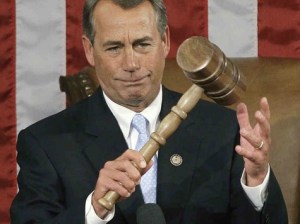 Speaker John Boehner is bad at a lot of things. His speakership has been marred by so many mishaps and embarrassing moments that it’s easy just to try to laugh at him and the entire House of Representatives. They seem to do nothing but try to repeal the impossible and stand for the unfathomable. However, the country is struggling to come out of an extremely horrible financial crisis with deep, lasting and dangerous unemployment. The Fed chair–a republican and republican appointee–points out exactly how bad this has been for our economy. What does it mean when the third in line to the presidency is clueless about one of the most important functions of modern government and appears to get all of his knowledge from a bad Ayn Rand novel?
Bernanke spoke to the press after the release of the Federal Open Market Committee minutes.
If the recovery continues, the Fed plans to taper off mortgage-backed securities purchases once the unemployment rate hits 7%, the Fed Chair suggested. And while reporters grilled Bernanke about inflationary risks and the impact of MBS purchases, he remained cautiously optimistic.
The Fed Chair’s more optimistic tone stemmed from improving market fundamentals, with Bernake highlighting increases in household wealth and fewer large scale layoffs. State and local governments also are improving somewhat financially, he said.
The only major drag is federal fiscal policy.
It is difficult to understand why the portion of US government designed to be the most accountable to the masses seems least concerned with jobs and economic growth. It is undoubtedly due to the significant misunderstanding and willful ignorance of economics recently demonstrated by the speaker and many–if not most– in his party. Paul Krugman speaks sincerely to this problem.
John Boehner’s remarks on recent financial events have attracted a lot of unfavorable comment, and they should. Actually, I think even the stuff most commentators have shied away from — he talks about the Fed “deflating” when I think he means either inflating or debasing, or possibly is doing a Sarah Palin and merging the two — is significant. I mean, he’s the Speaker of the House at a time when economic issues are paramount; shouldn’t he have basic familiarity with simple economic terms?
But the main thing is that he’s clinging to a story about monetary policy that has been refuted by experience about as thoroughly as any economic doctrine of the past century. Ever since the Fed began trying to respond to the financial crisis, we’ve had dire warnings about looming inflationary disaster. When the GOP took the House, it promptly called Bernanke in to lecture him about debasing the dollar. Yet inflation has stayed low, and the dollar has remained strong — just as Keynesians said would happen.
Yet there hasn’t been a hint of rethinking from leading Republicans; as far as anyone can tell, they still get their monetary ideas from Atlas Shrugged.
Oh, and this is another reminder to the “market monetarists”, who think that they can be good conservatives while advocating aggressive monetary expansion to fight a depressed economy: sorry, but you have no political home. In fact, not only aren’t you making any headway with the politicians, even mainstream conservative economists like Taylor and Feldstein are finding ways to advocate tighter money despite low inflation and high unemployment. And if reality hasn’t dented this dingbat orthodoxy yet, it never will.
It is rather obvious and rather sad that nearly all the economic ideas of the Speaker and his party come from a bad piece of fiction and ignore every lesson of economics learned from even libertarian-leaning economists like the late Milton Friedman. The result has been damaging to many Americans and the underlying economy.
SPEAKER JOHN BOEHNER: Well,it certainly could because you know, people open their 401(k) statements you know, at the end of every quarter and for most people it’s an indication of their wealth. And the value of their home would be another indication,how well homes are selling in their neighborhoods.
But sell off is in large part due to the policies that we’ve had coming’ out of the Federal Reserve. You know, you can’t continue to deflate our money and deflate it and deflate it– have equity markets go– without some change, yeah. Bernanke has made it clear he’s doing these policies in the absence of the government doing its part to help improve our economy.
That’s why Democrats and Republicans here on Capitol Hill and the president need to deal with– fix our tax code that would help us promote more economic growth and deal with our long term spending problem. We’ve spent more money than what we’ve brought in for 55 of the last 60 years. That ought to scare the hell out of every American.
We need to deal with this problem openly and honestly. Because if we do, investors around the country, business owners are going to look up and go, “Gee, they’re actually dealing with the issues that I’m most concerned about.” Then they’ll begin to invest.
MARIA BARTIROMO: But how likely is that over the next year? I mean, Bernanke made it clear yesterday that if the data continues as it is then they could be out of the bonds buying business by next year this time. So that’s one year. Will we see fiscal policy in terms of tax reform, in terms of regulatory clarity? Will we see that in the next 12 months?
SPEAKER JOHN BOEHNER: Listen,hope springs eternal in my heart. And while we have big differences over what tax reform might look like, what entitlement reform might look like we have to — we have to come together and deal with these things. Because if we want our economy to grow, we want to create jobs– we’ve got to deal with the issues that are affecting it.
You know, Republicans– we’ve got our jobs plan. We’ve had it now for literally the last three or four years. We’ve updated this effort and it’s our number one focus here. And while, you know, we’ve got other obligations under the constitution that provides oversight of the Executive Branch we’re trying to stay focused on those things that would improve our economy– help the American people’s wages increase and have more jobs available.
Fixing the tax code is not fiscal policy. It’s not anything that will create any kind of job growth or economic well being. What is this man thinking?
To quote Matthew O’Brien at The Atlantic, Boehner is “dangerously clueless” about economics and economic policy required of the Federal Government in challenging times. It is rather pathetic and deluded. O’Brien points out the facts about that quote from Boehner above.
Bookmark this, print it out, and put it in a time capsule, because this is about as wrong as anybody could possibly be about economics (excluding Don Luskin, of course). Now, Boehner doesn’t put it very clearly, but when he says markets are going down because Bernanke is “deflating the dollar”, he means markets are in the red because the Fed is weakening the dollar. The opposite is true. Markets sold off not because the Fed is doing too much, but because markets worry it won’t do enough. As you can see below from Bloomberg, the dollar went up during the recent sell-off on Wednesday and Thursday after Bernanke explained how and when the Fed expects to wind down QE3. That’s what happens when the Fed tightens policy.
For all the talk of “currency debasement” from conservatives who fancy themselves monetary experts, the dollar is actually stronger today than it was when the Great Recession began. Core PCE inflation, the Fed’s preferred measure, just hit a 50-year low at 1.05 percent. And no, stripping out food and energy prices isn’t hiding the inflation monster: headline PCE inflation was a meager 0.74 percent in April. Weimar we are not.
Boehner was no more coherent on fiscal policy. Now, it’s true that Bernanke would like to see some kind of budget deal that reins in long-term deficits, but he wishes we were doing less to try to rein in short-term deficits. In other words, he wants less austerity now, and more austerity later. Here’s what Bernanke said about about our cutting-spending problem in his press conference on Wednesday:The main drag or the main headwind to growth this year is, as you know, is the federal fiscal policy, which the CBO estimates is something on the order of 1.5 percentage points of growth.That’s not exactly the clarion call for future spending cuts that Boehner imagines. It’s a plea, in the understated lexicon of central bankers, to stop maiming the recovery with pointless and premature austerity. But Boehner either isn’t listening or doesn’t understand. He somehow thinks it’s scary that the government has run deficits for 55 of the last 60 years (though not so scary that he didn’t vote for many of those budgets). This is nonsense. As Josh Barro points out, there’s no better proof that we shouldn’t be scared of deficits than the fact that we have run them for 55 of the past 60 years without any problem. As long as the economy grows faster than the debt, there’s no reason we can’t run deficits forever.We tried Hoovernomics. It failed. So we’re … trying it again?

Yes. Republicans are completely in love with failed policies of the past and they’re not about to change anything now. It’s unbelievable that we could have a Speaker of the House that can be so completely ignorant about economic policy this day and age. It’s pathetic and it’s sad. It is also dangerous.
Saturday Reads, Summer Solstice Edition: Dreaming of a Woman President, and Other News
Posted: June 22, 2013 Filed under: 2016 elections, Barack Obama, Foreign Affairs, Hillary Clinton, misogyny, morning reads, SCOTUS, U.S. Politics | Tags: Claire McCaskill, Edward Snowden, Ready for Hillary superpac, Summer solstice, Supermoon, Toronto, Unique Lives and Experiences Conference 48 Comments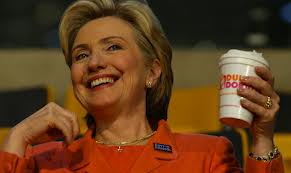
Good Morning and Happy Summer Solstice!!
Hillary is in the news this morning, so I thought I’d begin with her latest public remarks on the presidency. Claire McCaskill kicked off the Hillary talk on Tuesday when she said she was supporting a new superpac called Ready for Hillary.
“Hillary Clinton had to give up her political operation while she was making us proud, representing us around the world as an incredible Secretary of State, and that’s why Ready for Hillary is so critical,” McCaskill said in a statement released by the group. “It’s important that we start early, building a grassroots army from the ground up, and effectively using the tools of the Internet –- all things that President Obama did so successfully –- so that if Hillary does decide to run, we’ll be ready to help her win.”
McCaskill was one of the female Senators who abandoned Hillary to jump on the Obama bandwagon in 2008. Hillary gave her call after the announcement of support.
An early endorsement this week for a 2016 presidential run by former Secretary of State Hillary Clinton merited a phone call from the potential candidate, according to Sen. Claire McCaskill.
Clinton made the call after the senator’s Tuesday announcement that she was endorsing a political action committee pushing a presidential run.
“She did call me after this all happened the other day,” the Missouri Democrat said on MSNBC’s “Morning Joe.” “We had a great conversation. I’m not going to talk about what we said. But I think she’s got a big decision to make and I think she’s in the process of making it.”
McCaskill called the endorsement of Clinton an easy decision. “She is by far the strongest, most capable, most qualified candidate for President of the United States,” she said. “I am part of a lot of group of people, big huge group of people, that really wants her to run. And it seemed like coming out publicly and stating the obvious, that we all want her to run, was an important thing to do right now.”

Naturally, the corporate media is *concerned* about Hillary’s ambitions. The Washington Post sees “worries” for her in the new superpac.
The upstart super PAC, called Ready for Hillary, is fast emerging as the quasi-official stand-in for potential 2016 presidential contender Hillary Rodham Clinton, scooping up advisers and gathering big donations more than three years ahead of election time.
But the group is also making some advisers in Clinton’s orbit decidedly nervous about its potential impact on her own efforts, which for now consist of philanthropic pursuits and remaining mum on a presidential bid. Some allies also fear a repeat of 2008, when an assumed air of inevitability contributed to Clinton’s loss to fresh-faced challenger Barack Obama….
“It’s hard to even know what’s what any more,” said John Morgan, an Orlando lawyer who served on Bill Clinton’s 1996 national finance committee. “It’s become a cottage industry. It’s like, ‘Who are you?’ Just because you put the name ‘Hillary’ at the end of your PAC — it could be a bait and switch. I want to make sure I can get the biggest bang for my buck.”
Ready for Hillary — launched in January by Clinton boosters Adam Parkhomenko and Allida Black — is getting help from a number of veterans from Hillary and Bill Clinton’s political operation. Former Bill Clinton strategist Harold Ickes, former Clinton White House political director Craig Smith and former Hillary Clinton campaign lawyer Jim Lamb are advising the group on strategy, while longtime confidant James Carville recently sent out a fundraising solicitation under his name.

Former U.S. secretary of state Hillary Clinton poses with Jaden Szigeti, 9, for a snapshot before speaking to 5,000 at the Metro Convention Centre. (Toronto Star)
So what does Hillary herself have to say? Well she made a speech at the “Unique Lives and Experiences” conference in Toronto on Thursday, and she expressed a desire that many American women share. She wants to see a woman president in her lifetime. From Politico:
“Let me say this, hypothetically speaking, I really do hope that we have a woman president in my lifetime,” Clinton said in Toronto, before a women-centered event Thursday. “And whether it’s next time or the next time after that, it really depends on women stepping up and subjecting themselves to the political process, which is very difficult.”
She added that President Barack Obama’s election was historic, and said, “I hope that we will see a woman elected because I think it would send exactly the right historic signal to girls, women as well as boys and men. And I will certainly vote for the right woman to be president.” [….]
Friends and supporters of Clinton say she is genuinely undecided about whether to run again, even if some of the moves she is making now, immersing herself in domestic policy on issues affecting women and children that have been the core of her life’s work, would certainly be helpful if she launches another national campaign.
Yet that argument — the historic nature of a female president, combined with a pent-up desire among women voters to break that barrier — is the one most often espoused by Clinton backers.
Here’s the video that was posted to YouTube after the event.
In an “intimate” setting with 5,000 other people, Hillary reminisced about her life:
In a verbal stroll through her life, Clinton mentioned her mother’s difficult early years as an abandoned and mistreated child, she recalled the first time she ever heard the voice of her husband, former president Bill Clinton, back when he was a student, drawling about “the size of watermelons” in Arkansas. She mentioned the “extraordinary sense of anxiety” that she and every other American felt after the attacks of Sept. 11.
And she spoke candidly about how she had learned to cope with sexist attacks and snippy criticism about her hair, her clothes and all the things that don’t really define her.
“My attitude is different than it was 20 years ago,” she said. “I don’t care.”
The crowd clapped its approval.“I learned to take criticism seriously but not personally” Clinton told her audience.

She is amazing. I so miss her as Secretary of State. In contrast John Kerry is so boring that he’s already become almost invisible. With Hillary as SOS, there were frequent stories about her travels with photos of her colorful outfits. Wouldn’t it be wonderful to have her engaging personality, not to mention her valuable experience and brilliant mind in the White House?
In other news…
The news broke yesterday that Edward Snowden has been charged with three felonies. Most media outlets are reporting that has been charged with espionage, but so far that hasn’t been specifically stated by the government. From Politico:
Snowden was charged with conveying classified information to an unauthorized party, disclosing communications intelligence information, and theft of government property.
The charges, which can carry a penalty of up to ten years in prison on each count, were filed in federal court in Alexandria, Va., last Friday….
The charges were first reported Friday evening by the Washington Post, which said the complaint against Snowden was sealed. It’s not immediately clear whether the charges were unsealed before or after the Post report.
A Justice Department official confirmed Friday evening that a complaint was filed in the case, but declined further comment on the matter.
The Washington Post reported this morning that the charges were conveyed to Hong Kong authorities a week ago, but so far they seem to be dragging their feet about arresting Snowden.
The reason for the hold-up is unclear. There could be delays in the legal process for issuing the warrant. Or, officials may still be looking for Snowden, who is believed to be in Hong Kong but could also have found a way to leave the semiautonomous region.
The U.S. government asked Hong Kong to detain Snowden on a provisional arrest warrant June 14, the same day it filed criminal charges against him, including theft, “unauthorized communication of national defense information” and “willful communication of classified communications intelligence information to an unauthorized person.”
Under an extradition treaty between Hong Kong and the United States, a provisional warrant, as opposed to a regular one, is a faster way to detain suspected criminals since it does not require the initial approval of Hong Kong’s leader, currently Leung Chun-ying.
Instead, a judge can issue the warrant immediately. Simon Young, a legal professor at the University of Hong Kong said this means a warrant for Snowden’s arrest in theory could have been made as early as June 14, more than a week ago.
The Supreme Court justices are taking their own sweet time in announcing the most important decisions of this SCOTUS session. At The Daily Beast, Richard L. Hasan asks “What’s Taking the Supreme Court So Long?”
With everyone anxiously awaiting potentially blockbuster decisions on issues fromaffirmative action to voting rights to same-sex marriage, it is easy to criticize the Supreme Court for being too slow.
After all, Fisher, the affirmative-action case involving the University of Texas, was argued in Supreme Court back in October. By historical standards, the court is deciding very few cases: it issued 167 with opinions in the 1981 term, but is expected to decide only 77 this term. Why save all of the big calls for the end? Are the justices trying to create maximum suspense to get more attention?
These criticisms fundamentally misunderstand both the modern Supreme Court’s mission and the psychology of the justices. There may be a lot of reasons to criticize the court, but the end-of-the-term crunch is not one of them.Consider first the Supreme Court’s mission. Justices are unlike legislators, who simply vote to express their preferences. Justices are expected to give reasons for their decisions. Further, the court on some of the toughest questions is divided along strong ideological lines. For example, a majority opinion from a conservative justice can generate a dissenting opinion from a liberal justice. The dissenting justice won’t just say “I disagree,” but will offer reasons—reasons that the dissenting justice writes not only for history but in the hopes that one day a majority of justices will change their minds and adopt the dissenting view in a majority opinion. Both a majority and dissenting opinions will be circulated within the court, and each opinion will be modified numerous times to respond to the arguments of the other side, and to respond to the concerns of other justices who may join one or more of the opinions. Sometimes a justice will agree with the result but not with the reasoning of an opinion, and that justice will write separately, prompting another round of revisions.
We’re still waiting for decisions on 11 more cases, and those could be announced this week. It should be interesting.
Finally, today is the summer solstice, and people the world over celebrated the beginning of summer. Read about it at the the WaPo: Summer solstice observed at Times Square, Stonehenge, in D.C.
And tomorrow a unusual celestial even will take place, according to the Sydney Morning Herald: A Supermoon, when ‘people turn into lunatics’
ONLY ONCE a year Earth, Moon and Sun line up to create the perfect conditions for a so called ‘Supermoon’.
According to popular folklore, this is the time when “people turn into lunatics”, ships run aground and earthquakes rattle our planet.According to NASA , it is the best opportunity to get a good look at Earth’s rocky satellite.
The distance between Earth and Moon varies between about 357,000km and 406,000km throughout the year, and depends on the moon’s elliptical orbit around Earth.When the moon is on its farthest position from the earth, it is called Apogee while the closest encounter is named Perigee.
About once a year a full Moon occurs during the Perigee orbit, resulting in a 14 per cent larger and 30 per cent brighter appearance.
Right wing nuts should stay indoors and avoid looking at the sky. They’re already lunatics; we don’t need them to go completely around the bend.

 peej
peej Carissa
 bostonboomer
 dakinikat
 ecocatwoman
 jjlo
jjlo mablue2
 Mama Lopez
 peggysue22
 quixote
 skydancingguestblogger
 Mona (aka Wonk the Vote)





Recent Comments