
Lazy Saturday Reads: #IStandWithJackie
Posted: December 6, 2014 Filed under: Crime, Criminal Justice System, morning reads, Violence against women, War on Women | Tags: gang rape, rape, Rolling Stone, Sabrina Rubin Erdely, University of Virginia, zombies 62 Comments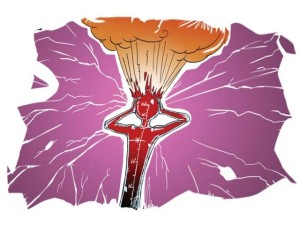
Good Morning!!
I’m feeling very overwhelmed this morning, and I’m sure I’m not alone. Between the police killings of civilians and the UVA rape story, I don’t know where to turn for relief.
Last night I escaped for awhile by watching the season finale of “Z Nation,” which is a very violent show about a group of survivors of the zombie apocalypse that almost seems like a metaphor for our sick society.
Why are people so fascinated by zombies at this time in history? Is it because so many of us are dead inside, with no empathy for our fellow humans? Hatred of anyone who is not a white, wealthy, straight “christian” male born in the USA has taken over so many of us and transformed our culture in so many ugly ways.
It’s as if a virus was loosed on the population–in the Reagan years?–and those of us who still care for other people and dream of equal rights and protection for all people are left fighting just to stay conscious–like the survivors in “Invasion of the Body Snatchers.”
Where will it all end?
I was planning to write about the backlash against the Rolling Stone story on rape at the University of Virginia in today’s post, but I don’t think I have my thoughts together enough to do a thorough job of it yet. When I first started thinking about it, the main backlash was about author Sabrina Rubin Erdely’s choice not to locate the accused perpetrators and get their side of the story.
WTF?! As Columbia journalism Prof. Helen Benedict told the NYT, a reporter doing a story on a university refusing to deal with a robbery or mugging on campus wouldn’t be required to hunt down the perpetrators and get their point of view on what actually happened.

The Rape of the Sabine Women, by Ceri Richards
But rape is different. Any woman who reports being raped in the good old USA must be scrutinized in detail, because she probably was asking for it or is lying. She must tell what she was wearing, whether she was drinking, whether she knew the perpetrator, whether she is just claiming rape because she regrets having sex while drunk, and on and on and on.
Then yesterday afternoon Will Dana, managing editor of Rolling Stone basically threw Erdely’s source “Jackie” under the bus, suggesting that she had fabricated her story. Dana apparently took the word of members of the Phi Kappa Psi fraternity that “Jackie’s” story was untrue.
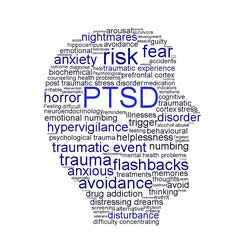
As someone who was traumatized as a child and who has had to deal with posttraumatic stress disorder for much of my life, I took it personally. At first I could not stand to read the accusatory articles, so I went to Twitter first. There I learned that many men and women were pushing back against the media victim-blaming. They had started posting tweets with the hashtag #IStandWithJackie. Reading many of those tweets gave me the strength to read some of yesterday’s backlash articles.

Because I’m really not ready to write a coherent post right now, I’m just going to link to some articles that you may want to check out.
The story that triggered yesterday’s backlash was by T. Rees Shapiro and published at The Washington Post: Key elements of Rolling Stone’s U-Va. gang rape allegations in doubt. Shapiro, like Rolling Stone’s Will Dana, accepts the word of the accused fraternity that there was no party on the date given by “Jackie” and the word of a man she accused that he never met “Jackie.” Jackie’s compelling story is apparently eclipsed for the Post by these unproven assertions by unnamed men who have every reason to lie to protect themselves and their fraternity.
Here are some “key elements” of the WaPo story for me:
Jackie, who spoke to The Washington Post several times during the past week, stood by her account, offering a similar version and details.
“I never asked for this” attention, she said in an interview. “What bothers me is that so many people act like it didn’t happen. It’s my life. I have had to live with the fact that it happened — every day for the last two years.” ….
Jackie describes her interactions with Erdely and Rolling Stone:
Overwhelmed by sitting through interviews with the writer, Jackie said she asked Erdely to be taken out of the article. She said Erdely refused, and Jackie was told that the article would go forward regardless.
Jackie said she finally relented and agreed to participate on the condition that she be able to fact-check her parts in the story, which she said Erdely agreed to.
“I didn’t want the world to read about the worst three hours of my life, the thing I have nightmares about every night,” Jackie said.
About the article itself:
Jackie told The Post that she felt validated that the article encouraged other female students to come forward saying that they, too, had been sexually assaulted in fraternity houses.
“Haven’t enough people come forward at this point?” she said. “How many people do you need to come forward saying they’ve been raped at a fraternity to make it real to you? They need to acknowledge it’s a problem. They need to address it instead of pointing fingers to take the blame off themselves.”

Trauma has powerful effects on the brain, and it’s not at all surprising that survivors’ memories can be confused and inconsistent. In fact, even normal human memory is not designed to recall every detail of events with precision, and expecting that from a rape victim is ridiculous and unfair. But that’s the way it is.
“Jackie” did not even report her rape to the police, because she felt she couldn’t handle the backlash. Now a magazine that didn’t stand by its own story has made her vulnerable to attacks from all over the world.
Where is author Sabrina Rubin Erdely? Why isn’t she defending her story?
Last night on Twitter, Jamison Foser called attention to the fact that the WaPo story originally claimed as fact that Jackie was lying. Then they changed the line in the story without noting they had made a correction. That’s a pretty big “mistake” for a newspaper that has been busily trying to debunk “Jackie’s” story for the past couple of weeks.
Wonkblog (at the WaPo) posted a story on the Twitter response last night: #IStandWithJackie: People on Twitter are criticizing Rolling Stone and supporting UVa student.
Now some important articles that push back against the backlash, yesterday’s WaPo story, and Rolling Stone’s betrayal of “Jackie.” Some of these were published before the RS reversal, but I still think they are relevant.
Mother Jones: Don’t Let the Rolling Stone Controversy Distract You From the Campus Rape Epidemic.
Think Progress: Gang Rapes Happen On College Campuses.
Thank Progress: Actually, The Link Between Sexual Assault And Alcohol Isn’t As Clear As You Think.
Melissa McEwen at Shakesville: Today in Rape Culture.
About Reporting: The backlash to Rolling Stone’s story about rape culture at UVa
Alexandra Brodsky at MSNBC: Rolling Stone scapegoats rape victim, makes matters worse.
Ali Safron at Buzzfeed: Victims’ Memories Are Imperfect, But Still Perfectly Believable.
Libby Nelson at Vox: Rolling Stone didn’t just fail readers — it failed Jackie, too.
Amanda Taub at Vox: The lesson of Rolling Stone and UVA: protecting victims means checking their stories.
Media Matters: Rolling Stone And The Debate Over Sexual Assault Reporting Standards.
Rolling Stone before the sudden reversal: Rape at UVA: Readers Say Jackie Wasn’t Alone.
Katie McDonough at Salon: “It makes me really depressed”: From UVA to Cosby, the rape denial playbook that won’t go away.
That’s about all I can handle writing this morning. I have some links on other stories that I’ll post in the comment thread. I hope you join me there and share your own recommended links.
Friday Reads: Zombie Memes
Posted: October 10, 2014 Filed under: Barack Obama, Foreign Affairs, medicine, morning reads, Republican politics, science, Surreality, U.S. Politics | Tags: airport screening, Anthony Kennedy, Eagle Forum, ebola, Idaho, ISIL, Nevada, Phyllis Schlafly, same-sex marriage, SCOTUS, Tom Frieden, West Africa, zombies 11 Comments Good Morning!
The Ebola Virus and the epidemic in Africa is real. The right wing hysteria about the virus is rivaling the bad plots of the Zombie movies I’m watching during SyFy’s Countdown to Halloween. I thought I’d spend some time separating the facts from the conspiracy theories today. So let me start with one of the most outrageous Zombie Memes from one of the most vile women on the planet. Dementia or further evidence of the advanced stages of evil? It’s your choice.
In an interview with WorldNetDaily published today, Eagle Forum founder Phyllis Schlafly weighed in on the unfounded theory gaining traction in the right-wing media that Central American young people are to blame for an outbreak of a childhood respiratory illness in the U.S.
“There are all kinds of diseases in the rest of the world, and we don’t want them in this country,” Schlafly told WND, adding that “of all the things [Obama has] done, I think this thing of letting these diseased people into this country to infect our own people is just the most outrageous of all.”
She went on to imply that President Obama is intentionally allowing people infected with Ebola into the United States because he wants America to be “just like everybody else, and if Africa is suffering from Ebola, we ought to join the group and be suffering from it, too. That’s his attitude.”
Conservative icon Phyllis Schlafly – author of “Who Killed the American Family?” – said she agrees Obama is responsible for allowing diseases to enter the country.
“There are all kinds of diseases in the rest of the world, and we don’t want them in this country,” Schlafly said. “And it’s Obama’s job to keep them out.
“Out of all the things he’s done, I think this thing of letting these diseased people into this country to infect our own people is just the most outrageous of all.”
Schlafly said the government should screen immigrants for disease before they enter the country, as was done at Ellis Island a hundred years ago.
“That was the purpose of Ellis Island – to have a waiting place where it was decided whether people were healthy enough or responsible enough to come into our country,” she said. “The idea that anybody can just walk in and carry this disease with them is just an outrage, and it is Obama’s fault because he’s responsible for doing it.”
…
When asked why the current administration hasn’t done more to prevent diseased illegal aliens or Ebola carriers from Africa from entering the country, Schlafly said Obama wants to make the U.S. more like the rest of the world.
“Obama doesn’t want America to believe that we’re exceptional,” Schlafly said. “He wants us to be just like everybody else, and if Africa is suffering from Ebola, we ought to join the group and be suffering from it, too. That’s his attitude.”
Yup, it’s despicable She. Still foaming at the mouth after all these years too.
Okay, so as not to overwhelm you with teh crazy all at once. Let’s go to some science and medicine.
The director of the Centers for Disease Control and Prevention told a top-level forum in Washington, D.C., that the Ebola outbreak is unlike anything he’s seen since the AIDS epidemic.
“I would say that in the 30 years I’ve been working in public health, the only thing like this has been AIDS,” Frieden said before the heads of the United Nations, World Bank and International Monetary Fund, according to AFP.
Frieden added: “We have to work now so that it is not the world’s next AIDS.”
Frieden’s comments come as the first person diagnosed with Ebola in the U.S. died Wednesday despite intense but delayed treatment. The U.S. government also announced it was expanding airport examinations to guard against the spread of the deadly disease.
The checks will include taking the temperatures of hundreds of travelers arriving from West Africa at five major American airports.
The new screenings will begin Saturday at New York’s JFK International Airport and then expand to Washington Dulles and the international airports in Atlanta, Chicago and Newark. An estimated 150 people per day will be checked, using high-tech thermometers that don’t touch the skin.
The White House said the fever checks would reach more than 9 of 10 travelers to the U.S. from the three heaviest-hit countries — Liberia, Sierra Leone and Guinea.
President Barack Obama called the measures “really just belt and suspenders” to support protections already in place. Border Patrol agents now look for people who are obviously ill, as do flight crews, and in those cases the Centers for Disease Control and Prevention is notified.
It’s unlikely a fever check would have spotted Thomas Eric Duncan, the Liberian man who died of Ebola in a Dallas hospital Wednesday morning. Duncan wasn’t yet showing symptoms when he arrived in the U.S.
 So the disease is ravaging West Africa. That’s where the problem is and needs to be solved.
There are the facts about the state of the Ebola crisis. In West Africa, more than 8,000 people have contracted the disease and nearly half have died. In the U.S., there’s just one confirmed case—that of Thomas Duncan, the Liberian man who passed away in Dallas on Wednesday. Experts say that the caseload in West Africa is likely to get much, much bigger. As many as 1.4 million people could get the disease, with a large fraction of them dying from it. The same experts expect no similar outbreak here, even if a few more cases appear, because we have the personnel and the resources to limit exposure.
But all of the news on Wednesday was about developments here in the U.S.—in particular, new screening efforts at five major U.S. airports, Duncan’s death, and reports of possible new cases in the U.S., including one in Dallas. You could tell by the questions that Thomas Frieden, director of the U.S. Centers for Disease Control, fielded during a late afternoon press conference. He got more than a dozen of them. Only two were about the situation abroad. (And one of them, it so happens, came from me.)
The preoccupation with what’s happening here, as opposed to what’s happening over there, is perfectly understandable. On Tuesday, a Gallup poll revealed that Americans today are as worried about contracting Ebola as they were about contracting H1N1, the swine flu, during that outbreak two years ago. By that time, millions of people had gotten H1N1 and thousands had already died. But people die from flu all the time, usually because they are very young or very old or already otherwise infirmed. It’s a threat that people have factored into their daily lives, if at all. Ebola is quite literally a foreign menace, one to which almost nobody gave much thought until a few weeks ago. The virus kills about half the people who get it, with little regard for age or health status of the person infected.
That fear goes a long way to explaining why the U.S. is implementing the new screening process at the airports. Customs and Border Patrol agents were already on the lookout for people with visible signs of the disease. Now they will add another layer of scrutiny. They will use questionnaires to screen for people who have been in affected countries—and, then, subject these people to temperature tests and more questioning. People who have fever or show other Ebola symptoms will be evaluated by quarantine officers from the CDC, then referred to local health authorities who will decide how to handle the cases. The primary goal is to identify any passengers infected with Ebola before they leave the airport.
But yes, the right wing is hysterical and afraid and lying as the right wing is prone to do.
Of all the issues that you would think would be non-partisan, Ebola should be at the top of the list. The disease is just a mindless germ that doesn’t check your race, gender, social class, sexual orientation or party identification before it strikes, suggesting both liberals and conservatives
have a stake in treating people exposed to the disease with compassion and care. And yet, to flip on Fox News or turn on any conservative media at all, you’d think that ebola was some kind of plague designed by the Democratic party in order to wipe out Republicans.
Blowing the threat of ebola out of proportion and trying to link it to Obama has been a constant theme on the right in recent days. Elisabeth Hasselbeck of Fox News literally demanded that we put the country on lockdown, banning all travel in and out. In a bit of race-baiting, Andrea Tantaros of Fox suggested that people who travel to the country and show symptoms of ebola will “seek treatment from a witch doctor” instead of go to the hospital. Fox host Steve Doocy suggested the CDC is lying about ebola because they’re “part of the administration”. Fox also promoted a conspiracy theorist who is trying to claim the CDC is lying when they caution people not to panic.
Other right wing media joined in. Tammy Bruce blamed ebola on the “Obama legacy”. Laura Ingraham said Obama was prevented from doing more to stop the disease because of his “core ties to the African continent”. Rush Limbaugh even went as far as to accuse Obama of letting the disease spread because he supposes liberals believe “we kind of deserve a little bit of this”.
Okay, so here’s a zombie mistake and a big one. Justice Kennedy’s Typo Accidentally Stops Same-Sex Marriage in Nevada.
Yesterday, Supreme Court Justice Anthony Kennedy stunned America when he ordered a halt on Nevada’s same-sex marriages, less than a day after the Court voted to overturn a ban on gay marriages in that state. Turns out that it was a total accident. Yes, a big ol’ “oops, my bad” incident.
According to SCOTUSBlog, what happened was the following: The Ninth Circuit recently heard challenges to same-sex marriage bans in Idaho and Nevada, who, for the purposes of convenience, had combined both of their challenges into a single case. In two different rulings, the federal appellate court struck down both of these states’ bans, allowing same-sex marriage in Idaho and Nevada, and issued a mandate on the ruling to immediately enforce the new law. In other words, the moment that the Ninth Circuit struck down the ban, gay and lesbian couples could get married immediately.
This did not make Idaho happy, so they filed a request to Justice Kennedy asking him to put a stop on same-sex marriage in Idaho, so that state officials could review their case before the Ninth Circuit. Kennedy allowed it, but in a total brain fart moment, issued an order that put a stop on weddings in both Idaho and Nevada, even though nobody in Nevada had asked for a review, either.
Thankfully, same-sex marriages can still occur in Las Vegas for the time being, but unfortunately, nobody knows what the eff is happening anymore. As a result, the Ninth Circuit has recalled its order implementing same-sex marriage in Idaho and are asking for briefs as to whether they need to do the same in Nevada.
Good job, Kennedy. Look how much confusion your typo has caused.
Oh, another Zombie Meme replacing Benghazi these days. It’s not only Ebola that’s Obama’s fault but also ISIL. It’s all about killing white people!!! Here’s some great links and proof from Politicus.
We have shown that for the GOP, the threat of Ebola exists only as an excuse to attack President Obama, that it’s all Obama’s fault (of course) and that, Oh my God! Oh my God! It’s going to kill us all! Cue to Rand Paul diving under his bed.
We have also been closely following the rise of ISIL in Syria and Iraq, and have tried to show you the contrast between the Republican and the Democratic reactions.
We have shown that for the GOP, the threat of ISIL exists only as an excuse to attack President Obama, that it’s all Obama’s fault (of course) and that Oh my God! Oh my God! They’re going to kill us all! Cue to Lindsey Graham diving under his bed.
It is surely significant that yesterday Time Magazine should profile the Republican response to the ISIL “scandal”: GOP Ad Claims ISIS Plot to Attack U.S. Via ‘Arizona’s Backyard.’
As Time’s Zeke Miller and Alex Rogers describe the ad, which was posted to YouTube yesterday,
The National Republican Congressional Committee ad opens with grainy footage of black flags and fighters from the Islamic State of Iraq and Greater Syria (ISIS) holding rifles on military vehicles. “Evil forces around the world want to harm Americans every day,” an ominous voiceover states. “Their entry into our country? Through Arizona’s backyard.” The spot goes on to recount how Rep. Ann Kirkpatrick (D-AZ), locked in a close re-election fight with Arizona House Speaker Andy Tobin, has voted against border security legislation, suggesting that she “leaves Arizona vulnerable.”
Chris Wallace of Fox News has already planted the suggestion in viewers’ facile minds that Ebola could come across our Southern Border and that it could be used as a weapon. It doesn’t matter after those words are spoken than an expert debunks them. The damage has been done.
The brain damage was done to any one that actually believes these things years ago.
So what’s on your reading and blogging list today?
Attack of the Zombie Right
Posted: May 2, 2012 Filed under: religious extremists | Tags: Right Wing, right wing propaganda and extremism, zombies 20 Comments The image of Zombie is pretty pervasive in modern American Culture. From movies to music videos, the zombie serves as that partial human driven by eating other people’s brains while incapable of any thought. A few recent articles have applied the zombie concept to the American Right Wing. I thought I’d share that with you.
First up is an item from Henry A. Giroux at Truthout who wrote a book using the rightwing Zombie prototype. It was published in 2010 and is titled “Zombie Politics and Culture in the Age of Casino Capitalism” . Giroux argues that Zombie reactionaries threaten the very stability of our Democracy.
But the new zombies are not only wandering around in the banks, investment houses, and death chambers of high finance, they have an ever-increasing presence in the highest reaches of government and in the forefront of mainstream media. The growing numbers of zombies in the mainstream media have huge financial backing from the corporate elite and represent the new face of the culture of cruelty and hatred in the second Gilded Age. Any mention of the social state, putting limits on casino capitalism, and regulating corporate zombies puts Sarah Palin, Glenn Beck,?Rush Limbaugh, and other talking heads into a state of high rage. They disparage any discourse that embraces social justice, social responsibility, and human rights. Appealing to “real” American values such as family, God, and Guns, they are in the forefront of a zombie politics that opposes any legislation or policy designed to lessen human suffering and promote economic and social progress. As Arun Gupta points out, they are insistent in their opposition to “civil rights, school desegregation, women’s rights, labor organizing, the minimum wage, Social Security, LGBT rights, welfare, immigrant rights, public education, reproductive rights, Medicare, [and] Medicaid.” [5] The walking hyper-dead even oppose providing the extension of unemployment benefits to millions of Americans who are out of work, food, and hope. They spectacularize hatred and trade in lies and misinformation. They make populist appeals to the people while legitimating the power of the rich. They appeal to common sense as a way of devaluing a culture of questioning and critical exchange. Unrelenting in their role as archetypes of the hyper-dead, they are misanthropes trading in fear, hatred, and hyper-nationalism.
The human suffering produced by the walking hyper-dead can also be seen in the nativist apoplexy resulting in the racist anti-immigration laws passed in Arizona, the attempts to ban ethnic studies in public schools, the rise of the punishing state, the social dumping of millions of people of color into prisons, and the attempts of Tea Party fanatics and politicians who want to “take back America” from President Barack Obama—described in the new lexicon of right-wing political illiteracy as both an alleged socialist and the new Hitler. Newt Gingrich joins Glenn Beck and other members of the elite squad of the hyper-dead in arguing that Obama is just another version of Joseph Stalin. For Gingrich and the rest of the zombie ideologues, any discourse that advocates for social protections, easing human suffering, or imagining a better future is dismissed by being compared to the horrors of the Nazi holocaust. Dystopian discourse and End Times morbidity rule the collective consciousness of this group.
Joshua Holland at Alternet sees this new ‘conservatism’ as being deeply rooted in the chemistry of the brain. Are ‘conservatives’ just natural born zombies?
Research suggests that conservatives are, on average, more susceptible to fear than those who identify themselves as liberals. Looking at MRIs of a large sample of young adults last year, researchers at University College London discovered that “greater conservatism was associated with increased volume of the right amygdala” ($$). The amygdala is an ancient brain structure that’s activated during states of fear and anxiety. (The researchers also found that “greater liberalism was associated with increased gray matter volume in the anterior cingulate cortex” – a region in the brain that is believed to help people manage complexity.)
That has implications for our political world. In a recent interview, Chris Mooney, author of The Republican Brain, explained, “The amygdala plays the same role in every species that has an amygdala. It basically takes over to save your life. It does other things too, but in a situation of threat, you cease to process information rationally and you’re moving automatically to protect yourself.”
The finding also fits with other data. Mooney discusses studies conducted at the University of Nebraska-Lincoln in which self-identified liberals and conservatives were shown images – apolitical images – that were intended to elicit different emotions. Writing at Huffington Post, Mooney explains that “there were images that caused fear and disgust — a spider crawling on a person’s face, maggots in an open wound — but also images that made you feel happy: a smiling child, a bunny rabbit.” The researchers noted two differences between the groups. The researchers studied their subjects’ reactions by tracking their eye movements and monitoring their “skin conductivity” – a measure of one’s autonomic nervous system’s reaction to stimuli.
Conservatives showed much stronger skin responses to negative images, compared with the positive ones. Liberals showed the opposite. And when the scientists turned to studying eye gaze or “attentional” patterns, they found that conservatives looked much more quickly at negative or threatening images, and [then] spent more time fixating on them.
Mooney concludes that this “new research suggests [that] conservatism is largely a defensive ideology — and therefore, much more appealing to people who go through life sensitive and highly attuned to aversive or threatening aspects of their environments.”
Another Alternet author, Sara Robinson, reviews the state of Fascist America. We seem to have a hard core right that is hard-wired to be commie-fearing, gun and bible toting zombie/fascists. It’s nothing new. Will these zombies always walk amongst us?
America has never been without fascist wannabes. Research by Political Research Associates estimates that, at any given time in our history, roughly 10-12 percent of the country’s population has been bred-in-the-bone right-wing authoritarians — the people who are hard-wired to think in terms of fascist control and order. Our latter-day Christian Dominionists, sexual fundamentalists and white nationalists are the descendants — sometimes, the literal blood descendants — of the same people who joined the KKK in the 1920s, followed Father Coughlin in the 1930s, backed Joe McCarthy in the early ’50s, joined the John Birch society in the ’60s, and signed up for the Moral Majority in the 1970s and the Christian Coalition in the 1990s.
Given its rather stunning durability, it’s probably time to acknowledge that this proto-fascist strain is a permanent feature of the American body politic. Like ugly feet or ears that stick out, it’s an unchanging piece of who we are. We are going to have to learn to live with it.
But it’s also true that this faction’s influence on the larger American culture ebbs and flows broadly over time. Our parents and grandparents didn’t have to deal with them much at all, because the far-right fringe was pushed back hard during the peak years of the New Deal. It broke out for just a few short years in the McCarthy era — long enough to see the rise of the Birchers — and then was firmly pushed back down into irrelevance again.
But the country’s overall conservative drift since the Reagan years and the rise of the Internet (which enabled the right’s network of regional and single-issue groups to crystallize into a single, unified, national right-wing culture over the course of the ’90s and ’00s) reenergized the extreme right as a political force. As a result, history may look back on George W. Bush’s eight years as the “Peak Wingnut” era — a high-water mark in radical right-wing influence and power in America.
I think social media has played a huge role in bringing on that “Peak Wingut” era, frankly. I am amazed at the number of emails, Facebook posts, and blogs that cause me to think about erecting a huge stockade around my house. I have to admit that watching Fox News these days makes me think I am living in Zombie Land. The access to the media and the internet has certainly brought the zombie memes to the front pages and airways. We also have one of our two major political parties that’s had a zombie infestation. It certainly was on full display during the Republican primaries. What really amazes me is the number of cult beliefs that seem to have found their way into mainstream American Political Life. Who would ever think we’d be having to have serious conversations about Ayn Rand or Ludwig Von Mises just as two examples?
The most distressing thing about all of this is that dialogue and compromise–both necessary features of a functional democracy–are next to impossible when facing a zombie army. No amount of reason, data or science stops those zombies from trying to eat our brains. Just turn on the 700 club on any given day, watch Pat Robertson, and just try to to convince me that there aren’t zombies among us. And don’t even get me started on Ron Paul, Paul Ryan, or Allen West or the zombimbo twins of Bachmann and Palin. So, what’s a democracy to do?
Thursday Reads: The Not-Quite-Humanness of Mitt Romney
Posted: February 2, 2012 Filed under: 2012 presidential campaign, 2012 primaries, Media, Mitt Romney, morning reads, U.S. Politics | Tags: "Invasion of the Body Snatchers", "The Real Romney", Andrew Sullivan, Book of Mormon, Brigham Young, CNN Florida primary debate, Cougar Club, Declaration of Independence, Genn Beck, George Romney, Joseph Smith, Latter Day Saints, Michael D. Moody, Miles A. Romney, Miles P. Romney, Mitt Romney, Mormon church, Orrin Hatch, polygamy, robots, theocracy, U.S. Constitution, uncanny valley, zombies 53 Comments
Good Morning!!
I had never seen the diagram above before until last night when I was browsing through reactions to Mitt Romney’s latest insensitive remark, “I’m not concerned about the very poor. We have a safety net there.” That’s when I found the above diagram at Andrew Sullivan’s blog.
Here’s an explanation from Wikipedia:
Hypothesized emotional response of human subjects is plotted against anthropomorphism of a robot, following Mori’s statements. The uncanny valley is the region of negative emotional response towards robots that seem “almost human”. Movement amplifies the emotional response.
The idea is you can make an emotional connection to a robot; but a robot that is very close to looking and acting human, but not quite, will elicit disgust. This could explain the reactions of revulsion that many people have toward Mitt Romney. From Wikipedia:
If an entity looks sufficiently nonhuman, its human characteristics will be noticeable, generating empathy. However, if the entity looks almost human, it will elicit our model of a human other and its detailed normative expectations. The nonhuman characteristics will be noticeable, giving the human viewer a sense of strangeness. In other words, a robot stuck inside the uncanny valley is no longer being judged by the standards of a robot doing a passable job at pretending to be human, but is instead being judged by the standards of a human doing a terrible job at acting like a normal person.
Sullivan suggests that Romney is “probing zombie territory.” I found this a very helpful way to think about the way Romney presents himself in public. He is trying very hard to act like a regular human being and he almost succeeds, but not quite–sort of like the fake humans in Invasion of the Body Snatchers.
Mitt Romney is a pod person!
Another behavior I’ve noticed about Romney is his tendency to get almost manic and go way overboard–as he was doing down in Florida in his attack on Newt Gingrich and in his glee at winning the primary (only the second he has won). I mentioned to Dakinikat yesterday that I thought Romney could use some lithium carbonate to bring him back down to earth.
According to Sullivan, others are picking up on this tendency too. Sullivan links to a series of photos by Dan Amira at New York Magazine, with this introduction:
Mitt Romney came into the 2012 presidential race with a reputation as a stiff, humanoid robot. Consequently, he’s been making a concerted effort to seem more warm and friendly when interacting with voters on the campaign trail. But there’s a happy middle ground between “robotic” and “maniac on ecstasy” — a middle ground that seems to elude Romney on a regular basis.
Here’s one of the photos.

I really need to read Andrew Sullivan more often. He writes:
I was chatting with a Mormon friend the other day and asking him what Mormons make of Mitt on this uncanny valley question. The phrase he came up with is “the Mormon mask.” It’s the kind of public presentation that a Mormon with real church authority deploys when dealing with less elevated believers, talking to them, and advising them. The cheery aw-shucks fake niceness in person is a function in part, some believe, of the role he has long played in the church: always a leader.
Because, make no mistake about this: Mitt Romney is a Mormon church leader. I mentioned before that I’ve been reading The Real Romney, by Boston Globe reporters Michael Kranish and Scott Helman. Here’s a 2008 quote from Mitt that introduces the chapter on the Romney family history:
I believe in my Mormon faith and I endeavor to live by it. My faith is the faith of my fathers. I will be true to them and to my beliefs. Some believe that such a confession of my faith will sink my candidacy. If they are right, so be it.
Mitt Romney has served his church in official leadership roles since 1977, when he became a counselor (essentially second in command) to the president of the Boston “stake.” Romney was only about 30, much younger than most who ascend to this position. But Romney was seen as special. He later became a Bishop and then stake President. As such he was in charge of “about a dozen congregations with close to 4,000 members all together.”
Romney’s great great grandfather Miles A. Romney heard Joseph Smith speak in England, and soon after emigrated with his family to the U.S. to become one of the 12 original Smith apostles. Romney’s ancesters helped to build the earliest Mormon temples, and they unquestioningly followed orders from Smith, and later Brigham Young, to marry multiple wives and travel to far away places at the whims of these church leaders. Romney’s great grandfather, Miles P. Romney along with his three wives and twenty-one children, started a polygamous Mormon colony in Mexico. That is where Mitt’s dad George was born. George returned to the U.S. at age seven.
Yesterday I read quite a bit of an e-book by Michael D. Moody, who was a classmate of Mitt Romney’s at BYU. Moody’s ancestors were also among the earliest followers of Joseph Smith. Moody’s book is called Mitt, Set Our People Free! A 7th Generation Mormon’s Plea for Truth. It is written in the form of an open letter to Mitt from one who has “left the cult.” The “letter” was actually written in 2008, but Moody believes it is just as relevant today.
As undergraduates, Romney and Moody belonged to a BYU booster club, the Cougar Club (BYU didn’t permit Greek fraternities). The club raised large amounts of money for the church and the university. Moody writes that
…in 1970-71…the Cougar Club buzzed that you planned to run for President someday and it became a fait accompli by 2006. Early and aggressively, you began your long-planned push for the U.S. presidency. After making all the right business moves and a few snazzy dance steps to the political right, you were suddenly a top tier contender for the Republican nomination with significant insider support and a freshly reinvented persona.
Moody was surprised when he heard Romney repeatedly tell interviewers and supporters that he had never intended to run for office–it just happened somehow. In fact Moody can’t understand a lot of the things Romney says that he (Moody) knows to be lies.
Moody had been somewhat rebellious during his early years at BYU and ended up getting suspended and then drafted and sent to Vietnam. It was there the Moody began having contact with non-Mormons and began to learn the history of the religion that had been hidden from the faithful–like the fact that the Book of Mormon had obviously been written by Joseph Smith himself and that the book contained many sections that had been plagarized from the King James Bible.
Still, even when he came home from Vietnam, he returned to BYU, joined the Cougar Club, and gave the religion he had been born into another chance. After he graduated, Moody went into politics specifically to support Romney’s push for the presidency and to be prepared to be one of Romney’s cabinet members when the time came. He writes:
I did my duty to the Mormon Gods and ran for Governor to expand our Kingdom and help you lead the world into the Millenium. Actually…by then I had begun my long journey out of the cult.
Moody is no longer a Mormon, but he says that Mitt Romney is still a true believer. One of the beliefs that many Mormons hold is the “White Horse Prophecy.” Moody writes:
Like previous generations, we were reared to believe the U.S. Constitution needed saving, and the LDS Church would do it. We knew our reward, because of primordial valience, was a chance to play major roles in the ensuing end day events. Jesus and “God the Father” had told the prophets, and our patriarchs had told us personally. We were a special generation.
That the U.S. Constitution is in [immanent] danger and will “hand by a thread as fine as silk fiber” in the latter days before the LDS Church rides to its rescue….The Church priesthood holders (men like Romney and Moody) will sweep in like knights to save the Constitution then set it aside to reestablish the theocratic Kingdom created by Joseph Smith and nearly perfected by Brigham Young. The stated plan is to pave the way for the political Kingdom of God and Joseph Smith’s version Millenial Kingdom on Earth.
A few days ago, Salon published an article by Sally Denton, another former Mormon and author of books on Mormon history, on Mitt Romney and the White Horse Prophecy.
When Mitt Romney received his patriarchal blessing as a Michigan teenager, he was told that the Lord expected great things from him. All young Mormon men — the “worthy males” of the Church of Jesus Christ of Latter-day Saints, as it is officially known — receive such a blessing as they embark on their requisite journeys as religious missionaries. But at 19 years of age, the youngest son of the most prominent Mormon in American politics — a seventh-generation direct descendant of one of the faith’s founding 12 apostles—Mitt Romney had been singled out as a destined leader.
From the time of his birth — March 13, 1947 — through adolescence and into manhood, the meshing of religion and politics was paramount in Mitt Romney’s life.
In the early 1960s Romney’s father George confided his political ambitions in his youngest son, then a teenager. Mitt actively participated in his father’s campaign for governor of Michigan, and during George’s three terms as governor Mitt was often in his father’s office, privy to major decisions. He attended the Republican convention with his father in 1964, and was kept abreast of his father’s failed campaign for President in 1968 (Mitt was a missionary in France).
Denton writes that [although the official church denies it] the White Horse Prophecy is “ingrained in Mormon culture and passed down through generations by church leaders…” She writes:
In this scenario, Romney’s candidacy is part of the eternal plan and the candidate himself is fulfilling the destiny begun in what the church calls the “pre-existence.”
Several prominent Mormons, including conservative talk-show host Glenn Beck [read more here], have alluded to this apocalyptic prophecy. The controversial myth is not an official church doctrine, but it has also arisen in the national dialogue with the presidential candidacies of Mormons George Romney, Sen. Orrin Hatch, R-Utah, and now Mitt Romney.
Mitt Romney himself has dismissed this notion.
“I don’t think the White Horse Prophecy is fair to bring up at all,” Mitt Romney told the Salt Lake Tribune when he was asked about it during his 2008 presidential bid. “It’s been rejected by every church leader that has talked about it. It has nothing to do with anything.”
Maybe not, but I still want to know more about Romney’s religion. What I’ve learned already is pretty strange–that God was once a man living on another planet, that “priests” like Mitt Romney will be masters of their own planets after death and that they will be able to take as many wives as they wish in the afterlife. That Mormon women can’t get into heaven unless they are married and and their husbands help them through. That women must stay married to the same man even after death and must be prepared to make way for his multiple wives and their children in the afterlife. And BTW, did you know that Romney’s family baptized Mitt’s confirmed atheist father-in-law as a Mormon a year after he died? No wonder Romney doesn’t want to talk about his religion!
I suppose it isn’t any more wacky than a lot of the stuff in the Christian old testament, but the fact that all this nonsense was sold to people in the 19th and 20th centuries and is people like Glenn Beck are still buying it and converting in the 21st century is pretty hard for me to accept. I don’t think that’s bigotry–it’s self-preservation. We’ve already seen what can happen when fanatical fundamentalist Christians start getting control of political parties and throwing their weight around in government and the culture as a whole (Susan Kommen, anyone?).
In light of all this, I find this statement by Romney in the CNN Florida debate to be very troubling:
The conviction that the founders, when they wrote the Declaration of Independence, were writing a document that was not just temporary and not just for one small locale but really something which described the relationship between God and man — that’s something which I think a president would carry in his heart.
So when they said, for instance, that the creator had “endowed us with certain unalienable rights, among them life, liberty and the pursuit of happiness,” I would seek to assure that those principles and values remain in America and that we help share them with other people in the world, not by conquering them, but by helping them through our trade, through our various forms of soft power, to help bring people the joy and — and — and opportunity that exists in this great land.
Am I crazy to be a little concerned about this guy? This post is getting very long, so I’ll end here. But I doubt if this will be the last time I bring up the Romney/religion issue. So far Romney has been allowed to skate on this. No one wants to ask him about it for fear of being labeled a bigot. I don’t care. I just want to keep another theocratic candidate from sneaking past our useless corporate media.
So… that’s it for me and my Romney obsession. What are you interested in today?
Tuesday Reads
Posted: November 1, 2011 Filed under: abortion rights, Barack Obama, birth control, morning reads, PLUB Pro-Life-Until-Birth, The Media SUCKS, U.S. Politics, Women's Rights | Tags: anti-abortion, Barack Obama, biased news, East coast snowstorm, economics, Halloween, Herman Cain, irresponsible journalism, Lori Montgomery, Mississippi, Nancy Pelosi, personhood movement, Racism, Rush Limbaugh, Washington Post, weather, zombies 30 Comments
Coffee and Morning News, by Tim Nyberg
Good Morning!! I am sooooo exhausted. Last Wednesday, I got back home after two months in Indiana. Normally, I would crash for a couple of days and be on the way to recovery from the long drive. But this time my Mom came back with me. She has been staying at my brother’s house, and I’ve had to drive over there nearly every day since I got home.
Yesterday I spent the day with my Mom and my nearly-9-year-old nephew, who was home sick and hung around for the trick-or-treating. My Mom is flying back home this morning at 8:30, and I was dreading having to get up at 5:30 in the morning to take her to the airport. But my brother volunteered to take her–halleluja! Finally I can spend a couple of days vegetating at home! I just hope I don’t get my nephew’s cold!
Anyway, here are some news links I found for you. I’ve been a bit out of touch, so I hope I won’t duplicate anything that has already been posted.
The freaky early snowstorm has left millions of people without power, which also means no heat. Even if you have gas or oil heat, the on-off mechanism still relies on electricity. So there are lots of people living in houses with temperatures around 50 degrees. I was really fortunate that my electricity was only off for several hours, mostly while I was sleeping.
Joanelle mentioned in comments last night that in her part of NJ, there is so much damage that trick or treating has been put off until Friday. The Christian Science Monitor had a story about this happening up and down the East coast.
Until hard-pressed utility crews get the lines restrung, many residents from North Carolina to Maine are living in homes that are barely 50 degrees, and in some cases, they’re unable to heat food. School systems are closed because, among other reasons, it’s not safe for children to walk on sidewalks that may still have live power lines on them. And many businesses aren’t open because they’re still in the midst of power outages.
“Electricity is the most fundamental of utilities. Most everything depends on electric power,” says Kathleen Tierney, director of the Natural Hazards Center at the University of Colorado at Boulder. “This has many of the earmarks of a disaster.”
In some states, governors are warning residents they may have to grin and bear it for days or even another week since the heavy snow did extensive damage to the electric grid. For example, in Connecticut and Pennsylvania, the snow knocked out some of the lines that get power from the generating plants to substations, where it then goes into a local distribution network. Connecticut Gov. Dannel Malloy (D) has asked President Obama to declare the state a federal disaster area, which would help with cleanup and recovery costs.
Herman Cain is still trying to explain away the story about his sexually harassing women in the 1990s. Now he’s calling it a witch hunt. But Rush Limbaugh, of all people, claims it’s racism.
RUSH: You know, I guess I shouldn’t be surprised, folks. After all of these years, none of us should be surprised, but I still am. Look at how quickly what is known as the mainstream media goes for the ugliest racial stereotypes they can to attack a black conservative. You know who’s laughing himself silly today is Bill Clinton. (imitating Clinton) “Yeah, I really did it. Ha-ha. They praised me and they went as far out of their way as they could. Even my old buddy Carville is out there and he’s saying, ‘Look what happens when you drag a dollar bill through a trailer park, you get Paula Jones.’ I have everybody defending me and they’re going after this black guy, and they’re going after him with some of the ugliest racial stereotypes I have ever seen. That’s how our side does it; we get away with it. I just love it. I love watching it.”
What’s next, folks? A cartoon on MSNBC showing Herman Cain with huge lips eating a watermelon? What are they gonna do next? No, Snerdley, I’m not kidding. The racial stereotypes that these people are using to go after Herman Cain, what is the one thing that it tells us? It tells us who the real racists are, yeah, but it tells us that Herman Cain is somebody. Something’s going on out there. Herman Cain obviously is making some people nervous for this kind of thing to happen.
When did sexual harassment become a racial stereotype? WTF is he talking about?
But at the National Review, Kevin D. Williamson says this may signal the end of Herman Cain’s campaign.
Here is what troubles me. Mr. Cain says: “If the Restaurant Association did a settlement, I wasn’t even aware of it, and I hope it wasn’t for much, because nothing happened. So if there was a settlement, it was handled by some of the other offices that worked for me at the association, so the answer is absolutely not.”
Okay, so if I’m reading that quote right, then:
1. Herman Cain, in his role as head of a major trade association, did not bother to learn how a complaint or complaints of sexual harassment against him was resolved.
2. Herman Cain, not bothering to have learned how a complaint or complaints of sexual harassment against him was resolved, decided to run for president without bothering to learn.
I got a lot of grief for writing that, based on my interaction with Mr. Cain, I would have hesitated to hire him to run a pizza company. I am feeling more comfortable in that judgment.
I wonder if Rush will condemn this: some Republicans in Virginia sent out a Halloween e-mail containing an image of President Obama shot through the head.
The Republican Party of Virginia on Monday strongly condemned an e-mail sent by Loudoun County’s GOP committee that shows President Obama as a zombie with part of his skull missing and a bullet through his head.
The e-mail, first reported on the blog Too Conservative, has “Halloween 2011” in the subject line and has several other images, including one of House Minority Leader Nancy Pelosi (D-Calif.), whose face has been made to look deformed with one eye bulging from its socket….
The e-mail, sent a week before local and state elections, invites supporters to a Halloween parade. “LCRC members and Republican candidates: We are going to vanquish the zombies with clear thinking conservative principles and a truckload of Republican candy. . . . It’s fun and a great way to represent our candidates to a ton of voters (and their kids) just before the election.”
Talk about ugly and wildly inappropriate! If anyone listens to Rush, let me know if he condemns this. I won’t be holding my breath though….
We’ve been talking about the irresponsible “journalism” of WaPo “reporter” Lori Montgomery, so I was interested to learn from Raw Story that a new website debuted yesterday with the goal of holding mainstream journalists accountable for what they write and don’t write. From Raw Story:
A Wikipedia-style website launched on Monday which provides information about the journalists behind the bylines.
News Transparency is a creation of Ira Stoll, the founder of another website called FutureOfCapitalism.com and the former managing editor of the now defunct New York Sun.
In a statement on its home page, newstransparency.com, the website said its goal is to help users “find out more about the people who produce the news” and “hold them accountable, the same way that journalists hold other powerful institutions accountable, by posting reviews and sharing information.”
News Transparency features an alphabetical list of hundreds of journalists and invites users to edit their profiles, which include basic biographical information such as age, education, current employer and work history.
Lori Montgomery is listed on the site, but so far there’s no information on her background. Does this woman even have a college degree? I’m waiting with bated breath to find out.
On my way home last night, I listened to the NPR program “On Point.” They were debating the Mississippi “personhood” for zygotes initiative, the goal of which seems to be to turn women into breeders with no freedom of choice and no rights over their own bodies. I highly recommend listening to the program. Hearing what the insane theocratic sponsors of this constitutional amendment have to say is truly frightening, but at the same time very important.
The New York Times has an op-ed about the proposed amendent: Mississippi’s Ambiguous ‘Personhood’ Amendment. The authors identify two main ambiguities in the amendment as written:
First, what does “fertilization” mean? As embryologists recognize, fertilization is a process, a continuum, rather than a fixed point. The term “fertilization” — which is sometimes considered synonymous with “conception” — could mean at least four different things: penetration of the egg by a sperm, assembly of the new embryonic genome, successful activation of that genome, and implantation of the embryo in the uterus. The first occurs immediately; the last occurs approximately two weeks after insemination (or, in the case of embryos created through in vitro fertilization that do not get implanted, never). Thus, on some reasonable readings of the amendment, certain forms of birth control, stem cell derivation and the destruction of embryos created through in vitro fertilization would seem impermissible, while on other equally reasonable readings they are not.
Second, the proposed amendment does not clearly indicate what the immediate legal impact would be. Would the amendment be “self-executing” — that is, effectuate a change to Mississippi law on its own — or would it require enabling legislation to set that change in motion?
Under existing doctrine, constitutional provisions or amendments that only set forth “first principles” or “policies” are not treated as self-executing, because they need laws enacted to further the stated principles or policies. In this case it’s not clear whether the amendment would, for example, immediately redefine thousands of references to “human beings” or “persons,” including those in provisions governing criminal homicide, or whether additional legislation would be necessary. Because of this uncertainty, voters considering this amendment cannot tell what actions would and would not immediately be subject to prosecutorial investigation were the amendment to pass.
I just hope this abomination doesn’t get enough votes!
That’s all I’ve got this morning. What are you reading and blogging about today?

 peej
peej Carissa
 bostonboomer
 dakinikat
 ecocatwoman
 mablue2
 Mama Lopez
 peggysue22
 quixote
 skydancingguestblogger
 Mona (aka Wonk the Vote)



 Sky Dancing
Recent Comments