There are only 19 days to go until November 5. I believe that Kamala Harris will win, but I was also sure Hillary Clinton would win in 2016.
Both Harris and Trump have been holding rallies and giving interviews. She speaks in complete sentences and discusses her policies in a coherent fashion. He can’t complete a sentence, mispronounces words, rambles nonsensically, and has no understanding of his own policies. And, of course, he is a pathological liar.
Harris is a former prosecutor who is committed to the rule of law. Trump is a convicted felon out on bail, with multiple indictments hanging over his head. How can the race be close?
One positive development is that Trump’s dementia and his violent rhetoric and threats are getting more attention in the media. He and his advisers may well live to regret driving Joe Biden out of the race.
I feel as if my life is on hold until I know who will win this election. If Harris wins, my life will continue on its current track. If Trump wins, everything will change–and not in a good way. In addition, the chaos we have all lived through in the past 9 years will continue and most likely get much worse. That’s where things stand right now, as I see it.
State of the Race
In the latest national polls, Harris leads by a few points.
In the presidential contest, Vice President Kamala Harris leads former President Donald Trump by five points among likely voters, including those who are undecided yet leaning toward a candidate. The race gets closer, however, among registered voters nationally. Here, three points separate the two candidates.
Harris (52%) leads Trump (47%) among likely voters nationally, including those who are undecided yet leaning toward a candidate. Earlier this month, two points separated Harris (50%) and Trump (48%) among likely voters.
The contest is tighter among registered voters. Among the general electorate, Harris receives 51% to 48% for Trump. In early October, the same margin separated Harris (50%) and Trump (47%) among the broader electorate.
Trump (54%) leads Harris (44%) among independents who are likely to vote, widening the 4-point edge Trump (50%) had against Harris (46%) previously.
Trump (53%) leads Harris (47%) among men who are likely to vote while Harris (57%) has the advantage over Trump (42%) among women.
While members of Gen X divide (51% for Harris to 48% for Trump), Harris has majority support among GenZ/Millennials (53%) and among Baby Boomers/the Silent-Greatest Generations (55%).
While the gap between the two remained steady compared with a Reuters/Ipsos poll conducted a week earlier, the new poll, which closed on Sunday, gave signs that voters – particularly Democrats – might be more enthused about this year’s election than they were ahead of the November 2020 presidential election when Democrat Joe Biden defeated Trump.
Some 78% of registered voters in the three-day poll – including 86% of Democrats and 81% of Republicans – said they were “completely certain” they would cast a ballot in the presidential election. The share of sure-to-vote poll respondents was up from 74% in a Reuters/Ipsos survey conducted Oct. 23-27, 2020, when 74% of Democrats and 79% of Republicans said they were certain to cast ballots.
The poll had a margin of error of around 4 percentage points.
A record number of early votes have been cast in Georgia on Tuesday as residents headed to the polls in a critical battleground state that is grappling with the fallout from Hurricane Helene and controversial election administration changes that have spurred a flurry of lawsuits.
More than 328,000 ballots were cast Tuesday, Gabe Sterling of the Georgia secretary of state’s office said on X. “So with the record breaking 1st day of early voting and accepted absentees we have had over 328,000 total votes cast so far,” he said.
The previous first day record was 136,000 in 2020, Sterling said.
The swing state is one of the most closely watched this election, with former President Donald Trump trying to reclaim it after losing there to President Joe Biden by a small margin four years ago, leading Trump and his allies to unsuccessfully push to overturn his defeat.
Those efforts have loomed large this year as new changes to how the state conducts elections have been approved by Republican members of the State Election Board, leading Democrats and others to mount legal challenges, many of which have yet to be resolved even as Election Day nears.
Despite the massive turnout on Tuesday, the process appeared to go smoother this year for some Atlanta-area voters who spoke with CNN.
“Last time I voted, I voted in the city and the lines were out the door. They only had like, maybe like three people working,” said Corine Canada. “So people honestly just started leaving because it was like that. Yeah, like, ‘This is too long. I can’t sit here (and) wait, I have to go back to work.’ But here, no, it was easy.”
Dementia Don
Yesterday Trump appeared at the Economic Club of Chicago and gave a disastrous interview. He mostly talked about his plan to put high tariffs on imports, and continued to claim that these tariffs would be paid by foreign countries and not by Americans paying higher prices. Other news from the interview: he would not commit to allowing a peaceful transfer of power if he loses the election.
Donald Trump continued his pre-election economic event tour on Tuesday with a lengthy interview with Bloomberg at the Economic Club of Chicago. It was a total mess.
Bloomberg Editor-In-Chief John Micklethwait did not take it easy on Trump, and it quickly became clear that the former president has no conception of the mechanics of or the potential ramifications of the economic platform he’s running on. Bluntly, the former president was incoherent when pressed with real questions about his policies.
Micklethwait spent most of the interview attempting to break Trump out of what the former president repeatedly referred to as “the weave,” his term for his rambling digressions — with ever-decreasing intelligibility — and general inability to focus on a given topic for more than a few seconds during his rallies and interviews.
Micklethwait didn’t weave along with Trump, however, repeatedly working to bring him back on topic and answer the actual questions. The grilling exposed Trump’s total cluelessness with regard to his own economic policy, and led Trump to attack Micklethwait as biased….
The central pillar of Trump’s economic plan is widespread tariffs on all imported goods, with penalties appearing to increase depending on how much he dislikes the country. Economists have warned that such a policy could have devastating effects on American consumers, who would be saddled with increased costs for all imported goods.
When questioned about the specifics of his plan, and if he was aware of its pitfalls, Trump seemed ignorant of basic economic principles, insisting that other countries, not American consumers, would pay for the tariffs.
A bit more:
Micklethwait tried to explain the actual impact. “Three-trillion worth of imports and you will add tariffs to every single one of them, and push up the cost for all of these people to buy foreign goods,” he said. “That is just simple mathematics.”
Trump countered that he was “always good at mathematics,” and that high tariffs — and thus costs — would force companies to move production into the United States.
Anxiety, by Edvard Munch
“That will take many, many, many years,” Micklethwait said, to which Trump replied that high enough penalties would make the move immediate as if companies could simply wand wave production plants, orchards, wineries, factories, and the like into existence.
The former president also insisted that his tariff proposal would not result in the loss of jobs that are dependent on trade, because companies that moved to the U.S. would not be subject to the tax. “All you have to do is build your plant in the United States and you don’t have any tariffs,” he said…..
Micklethwait’s attempts to keep Trump on topic earned him no grace from the former president, who hates few things more than being contradicted.
When Micklethwait asked Trump to address a report by The Wall Street Journal estimating that his economic proposals would raise the national debt by upwards of $7 trillion, the former president fell back on his standard playbook: bashing the interviewer.
“What does The Wall Street Journal know? They’ve been wrong about everything, and so have you by the way, you’ve been wrong,” Trump replied, crossing his arms and curling into his seat.
“You’ve been wrong all your life on this stuff,” he added.
There’s more at the link. I didn’t encounter a paywall when I clicked on the link at Memeorandum.
Former president Donald Trump is campaigning on the most significant increase in tariffs in close to a century, preparing an attack on the international trade order that would likely raise prices, hurt the stock market and spark economic feuds with much of the world.
Trump’s trade plans, a staple of his stump speeches, have fluctuated, but he consistently calls for steep duties to discourage imports and promote domestic production. The former president has floated “automatic” tariffs of 10 percent to 20 percent on every U.S. trading partner, 60 percent levies on goods from China, and rates as high as 100, 200 or even 1,000 percent in other circumstances.
These proposals would go far beyond the disruptive trade wars of his first term even if they are only partially implemented. They would wrench the nation out of the system of global interdependence that arose in recent decades, making the U.S. economy much more isolated and autonomous, like it was in the late 19th century. (Trump last week falsely claimed that the United States was never richer than in the 1890s, when it had high trade barriers.)
“To me, the most beautiful word in the dictionary is tariff. And it’s my favorite,” Trump said in Chicago on Tuesday. “I’m a believer in tariffs.”
The consequences would be far-reaching: Americans would be hit by higher prices for grocery staples from abroad, such as fruit, vegetables and coffee. Domestic firms dependent on imports would need to either figure out new supply chains or raise costs for consumers. U.S. manufacturers would almost certainly see sharp declines in orders from abroad as foreign nations impose retaliatory tariffs.
“We are talking about a plan of historic significance: It would be enormous, and the blowback would be even more enormous,” said Douglas A. Irwin, an economist at Dartmouth College who authored a 2017 book on the history of U.S. trade policy. “This would stand way off the charts.”
Companies and governments around the world have begun preparing contingency plans for the potential Trump tariffs. Diplomats and business leaders from Latin America, Europe, Asia and even Canada have in recent weeks asked their U.S. counterparts about Trump’s intentions and authorities, according to interviews with several domestic and international economic advisers, some of whom spoke on the condition of anonymity to reflect private planning.
While some business leaders and congressional Republicans remain optimistic that the former president is engaged in election-year posturing, Trump has repeatedly insisted that tariffs represent an unmitigated positive for the U.S. economy, recently calling them “the greatest thing ever invented.” Tariffs have been a constant bedrock of his economic agenda since he first ran in 2016, along with lower taxes, increased energy production and deregulation.
You should watch the interview Trump did yesterday at the Economic Club of Chicago. You might think you’ve got a pretty good idea of the big guy’s solipsism, his buffoonish overconfidence, his utter inability to engage on matters of policy. Watch a few answers, and you’ll be forced to conclude: It’s way worse than you thought.
Victor Wang, Emotional tension and psychological drama
Bloomberg News editor-in-chief John Micklethwait began by asking Trump simple questions, like how he plans to pay for the $7 trillion hole his proposals would blow in the federal deficit. Trump responded with his ordinary magical thinking about making that sum back through a combination of growth and tariffs. “To me, the most beautiful word in the dictionary is ‘tariff,’” he said. “It’s my favorite word . . . the most beautiful word.”
Micklethwait asked how Trump planned to follow through on his promises of trimming the fat of wasteful spending. Trump responded with a lengthy story about him personally spending months negotiating with Boeing over a contract for new planes to serve as Air Force One, which ultimately saved the government more than a billion dollars. A cool story—until you remember the federal government spends an average of nearly $17 billion a day.
It takes a certain amount of ego and delusion to run for president. Trump has those characteristics in excess. But what stood out at the talk yesterday was the degree to which these are now the only elements undergirding his vision. Gone is the talk about surrounding himself with the best people. Dropped is the pretense that his answers are coherent. (Trump has started referring to his meandering logorrhea as “the weave.”) The pitch instead is that some sort of mad genius remains within him: Trust me, I’m the deals guy! I’ll get the best deals!
But there’s a lot more to guiding the economy than dealmaking, and even the most capable, hard-nosed, mano-a-mano negotiating with individual vendors can only take you so far.
There’s more about the interview at the link. There’s no paywall.
Donald Trump on Tuesday dodged the question of whether he will allow for a peaceful certification of election results if Kamala Harris defeats him in three weeks.
During an interview at the Economic Club of Chicago, Bloomberg Editor-in-Chief John Micklethwait asked Trump if he would commit “to respecting and encouraging a peaceful transfer of power,” especially in light of Jan. 6, 2021, which the journalist called “unruly and violent.”
Trump didn’t answer the question. Instead, he rejected the premise and blamed Micklethwait as “a man that has not been a big Trump fan over the years.” He also falsely claimed that he allowed for a peaceful transfer of power in 2020, when Joe Biden defeated him.
“Come on, President Trump, you had a peaceful transfer of power compared to Venezuela, but it was by far the worst transfer of power for a long time,” Micklethwait insisted.
The audience booed and Trump thanked them. The former president then admitted that people were angry when they arrived in Washington to protest the results that January—but according to him, they were perfectly behaved.
“It was love and peace, and some people went to the Capitol,” Trump said. “And a lot of strange things happened there, a lot of strange things, with people being waved into the Capitol by police.”
For perhaps the first time, Trump downplayed his crowd size.
He added that he left the White House the morning he was supposed to and that only a fraction of the protestors were among those who breached and defaced the Capitol.
“Not one of those people had a gun, nobody was killed, except for Ashli Babbitt,” he said.
MAGA-friendly CNBC host Joe Kernen dropped an interesting nugget right as Squawk Box went to commercial break on Tuesday.
“Well, Trump canceled, and he was going to come on,” Kernen said.
Not only did Trump once love going on CNBC, but Kernen’s revelation comes on the heels of Trump declining or canceling a number of other high-profile opportunities to make a pitch to voters on mainstream TV. Trump refused to debate Kamala Harris a second time, which would’ve aired on CNN. Trump then refused CNN’s offer to host a town hall. And Trump of course also recently backed out of a 60 Minutes interview.
Still Tension, Wassily Kandinsky
The explanation for all this is not that Trump has suddenly become camera shy. It’s that his campaign undoubtedly realizes his rapidly degrading condition doesn’t play well with audiences beyond the MAGA cult. As a result, they’re retreating to the safer terrain of nonstop rallies and fawning Fox hits….
The reason Trump’s campaign isn’t keen to get him in front of swing voters on mainstream platforms was on stark display Tuesday when Trump did a rare event that wasn’t a festival of sycophancy.
By any objective standard, Trump’s Economic Club of Chicago interview was a disaster. He came out of the gates with an asinine proposal for 2,000 percent tariffs on imported cars, then was quickly reduced to insulting the moderator, Bloomberg’s John Micklethwait, when Micklethwait rightly pointed out that his his economic proposals are an inflationary disaster. (Watch below.)
By the end of the event, Trump had veered into making an impassioned defense of the big lie and his coup attempt, bragging about his crowd size on January 6 and absurdly claiming the events of that day were just “love and peace.” (Watch below.)
OAKS, Pa. — The town hall, moderated by South Dakota Gov. Kristi L. Noem (R), began with questions from preselected attendees for the former president. Donald Trump offered meandering answers on how he would address housing affordability and help small businesses. But it took a sudden turn after two attendees required medical attention.
And so Trump, after jokingly asking the crowd whether “anybody else would like to faint,” took a different approach.
“Let’s not do any more questions. Let’s just listen to music. Let’s make it into a music. Who the hell wants to hear questions, right?” he said.
For 39 minutes, Trump swayed, bopped — sometimes stopping to speak — as he turned the event into almost a living-room listening session of his favorite songs from his self-curated rally playlist.
He played nine tracks. He danced. He shook hands with people onstage. He pointed to the crowd. Noem stood beside him, nodding with her hands clasped. Trump stayed in place onstage, slowly moving back and forth. He was done answering questions for the night….
As Trump stood onstage in his oversize suit and bright red tie, swaying back and forth, it was almost as if he were taking a trip back to decades past. Trump’s decision to cut short the question-and-answer portion of the town hall and instead have the crowd stay to listen to his favorite songs was a somewhat bizarre move, given that the election was only 22 days away. Vice President Kamala Harris has called Trump, 78, unstable and questioned his mental acuity.
Some in the crowd began to leave. Some looked around, wondering whether he was done speaking for the night and how much longer the dance — or sway — session would last. Many stayed holding their cameras and watched as Trump took in the music, at times looking over at a screen beside him that showed videos of James Brown singing “It’s a Man’s Man’s Man’sWorld” and Sinéad O’Connor performing “Nothing Compares 2 U.”
For 38 minutes or so, former President Donald Trump was in a happy place. After some people collapsed at his town hall, Trump got frustrated, decided he’d had enough softball questions from Gov. Kristi Noem (R-SD) and asked to play music. For nearly 40 minutes, Trump kept asking for more music, swaying oddly in front of the crowd, occasionally closing his eyes, and retreating to a comforting place in his mind, like being wrapped in a warm blanket.
The Anxiety Monster, by Jeremy Campbell
For those of us who’ve had family members slip into dementia, it was a familiar sight. Both of my grandmothers suffered it near the ends of their lives. Even before they were sent to nursing homes, they started to exhibit increased frustration and even anger. My maternal grandmother accused her caretaker of purposely turning the shower knob too tight so she would have to come in and see my grandmother naked. But she also liked to sing old-time songs she remembered. She had her happy place—an oasis in a time of increasing confusion. Then, there were other times she was completely lucid. She would talk about the situation in the Middle East (which was still a thing back then, too) with total clarity. There were good days and there were bad days.
It isn’t like we haven’t seen Trump’s behavior with our own eyes. It isn’t like media hasn’t noticed it, either. And yet, no one seems to want to talk about the distinct possibility that Trump is well on the way to the same state my grandmothers found themselves in and that millions of Americans find friends and family in – severe cognitive decline, if not outright dementia.
For 38 minutes or so, former President Donald Trump was in a happy place. After some people collapsed at his town hall, Trump got frustrated, decided he’d had enough softball questions from Gov. Kristi Noem (R-SD) and asked to play music. For nearly 40 minutes, Trump kept asking for more music, swaying oddly in front of the crowd, occasionally closing his eyes, and retreating to a comforting place in his mind, like being wrapped in a warm blanket.
For those of us who’ve had family members slip into dementia, it was a familiar sight. Both of my grandmothers suffered it near the ends of their lives. Even before they were sent to nursing homes, they started to exhibit increased frustration and even anger. My maternal grandmother accused her caretaker of purposely turning the shower knob too tight so she would have to come in and see my grandmother naked. But she also liked to sing old-time songs she remembered. She had her happy place—an oasis in a time of increasing confusion. Then, there were other times she was completely lucid. She would talk about the situation in the Middle East (which was still a thing back then, too) with total clarity. There were good days and there were bad days.
It isn’t like we haven’t seen Trump’s behavior with our own eyes. It isn’t like media hasn’t noticed it, either. And yet, no one seems to want to talk about the distinct possibility that Trump is well on the way to the same state my grandmothers found themselves in and that millions of Americans find friends and family in – severe cognitive decline, if not outright dementia.
Angry, frustrated, confused, unable to focus. And now, he retreats to his happy place in a time of stress. Put it all together and ask yourself if that’s someone you’d trust to take care of your kids in a house with a working stove.
With three weeks left before Election Day, former President Donald J. Trump is pushing to the forefront of his campaign a menacing political threat: that he would use the power of the presidency to crush those who disagree with him.
In a Fox News interview on Sunday, Mr. Trump framed Democrats as a pernicious “enemy from within” that would cause chaos on Election Day that he speculated the National Guard might need to handle.
A day later, he closed his remarks to a crowd at what was billed as a town hall in Pennsylvania with a stark message about his political opponents.
“They are so bad and frankly, they’re evil,” Mr. Trump said. “They’re evil. What they’ve done, they’ve weaponized, they’ve weaponized our elections. They’ve done things that nobody thought was even possible.”
And on Tuesday, he once again refused to commit to a peaceful transfer of power when pressed by an interviewer at an economic forum in Chicago.
With early voting underway in key battlegrounds, the race for the White House is moving toward Election Day in an extraordinary and sobering fashion. Mr. Trump has long flirted with, if not openly endorsed, anti-democratic tendencies with his continued refusal to accept the results of the 2020 election, embrace of conspiracy theories of large-scale voter fraud and accusations that the justice system is being weaponized against him. He has praised leaders including President Vladimir V. Putin of Russia and Prime Minister Viktor Orban of Hungary for being authoritarian strongmen.
But never before has a presidential nominee — let alone a former president — openly suggested turning the military on American citizens simply because they oppose his candidacy. As he escalates his threats of political retribution, Mr. Trump is offering voters the choice of a very different, and far less democratic, form of American government.
“There is not a case in American history where a presidential candidate has run for office on a promise that they would exact retribution against anyone they perceive as not supporting them in the campaign,” said Ian Bassin, a former associate White House counsel under Barack Obama who leads the advocacy group Protect Democracy. “It’s so fundamentally, outrageously beyond the pale of how this country has worked that it’s hard to articulate how insane it is.”
Harris and Waltz are also calling attention to Trump’s cognitive issues and threats. They have three weeks left to educate the public an get legacy media to focus on Trump’s age and obvious dementia.
Take care everyone and keep hope alive, as Jesse Jackson used to say.
Did you like this post? Please share it with your friends:
I’m still trying to recover from Dakinikat’s post yesterday. She seems convinced that the Supreme Court will agree with the 5th Circuit that the way the Consumer Finance Protection bureau is financed is unconstitutional and their decision will lead to the downfall of the Federal Reserve, Social Security, Medicare, and other off-the-books programs. I’m not convinced it will happen, but I’m still extremely depressed by Dakinikat’s arguments.
But for today, I’m trying to set all that aside and just worry about what’s happening (or not happening) with the debt ceiling. Here’s the latest on that emergency.
The GOP House’s debt-limit-and-spending-cuts bill does a lot of things to sabotage the basic functions of government. It decimates spending on safety-net programs. It creates more red tape to block Americans from accessing services they’re legally eligible for. And it makes it harder for government to fund itself in the first place.
But perhaps the most destructive, least noticed part of the bill is a provision that would force virtually all federal regulatory machinery to grind to a halt.
Tucked into Republicans’ debt-limit-ransom bill is some legislative language that has been kicking around Capitol Hill for a while, known as the Reins Act. If enacted, the law would prevent “major” agency regulations — somewhere around 80 to 100 per year — from going into effect unless Congress first approves each and every one.
To be clear, under current law, Congress already has the ability to rescind regulations it dislikes. This new bill would essentially change the default, so that no major regulation could take effect before Congress gives its blessing.
This change might sound reasonable. After all, tons of American problems have been dumped at the feet of executive-branch agencies (guns, immigration, health costs, etc.). It would be great if federal lawmakers got more involved in trying to solve literally any of them.
But if you think about how Congress actually functions (or rather, doesn’t), you’ll realize this is not an earnest attempt to get lawmakers to roll up their sleeves and conquer the Big Issues. It’s about throwing sand in the gears of the executive branch, so that no one can solve any issue. Ever.
By Ernest Ange Duez
Rampell explains why the system is set up the way it is.
There are two main reasons Congress currently delegates certain regulatory issues to executive-branch agencies such as the Food and Drug Administration or the Securities and Exchange Commission.
First, some policy questions aretechnically challenging. What amount of arsenic in the air is “safe”? What should bethe technical standards for mammography equipment? How should the Volcker Rule be implemented in practice? As talented and hard-working as congressional staff are, they might not have the time or expertise to make informed decisions about such minutiae. Agency scientists or other subject-matter experts are tapped to weigh evidence, solicit input from the public, hold hearings, etc., to execute the objectives Congress has enacted.
The second reason is political.
There are plenty of policy questions that Congress has technical capacity to resolve but might prefer not to. Maybe lawmakers can’t come to an agreement within their caucus. Maybe they know that whatever they choose to do will be unpopular.
So: They punt, and make it some other government functionary’s problem.
For example, Congress has been unable to pass significant immigration reform in more than three decades, leaving the executive branch to address migration-related problems in sometimes legally tenuous ways (see: the legal limbo ofso-called dreamers, or former president Donald Trump’s unfunded border wall). Congress has all but abdicated many of its basic responsibilities to other branches of government, such as passing a budget, setting tariffs or deciding on abortion rights.
Or, you know, making sure the federal government doesn’t default on its debt. Apparently even some Republicans are now rooting for President Biden to direct Treasury to mint a new $1 trillion platinum coin to pay off government expenses or adopt some other deus-ex-machination.
Jean Metzinger (French, 1883–1956), Tea Time, woman with a spoon
Republicans have said they want to slash federal spending before lifting the debt ceiling. The president has maintained that raising the limit is a responsibility of Congress and should be done without conditions to avoid an economic disaster, even as he has said he is open to separate negotiations over spending.
Over the weekend, the White House projected cautious optimism regarding a potential agreement, but on Monday, Speaker Kevin McCarthy expressed doubts.
“I don’t think we’re in a good place,” Mr. McCarthy said. “I know we’re not.”
Some potential areas of compromise have emerged in recent days, however. Mr. McCarthy said on Monday that he wanted to negotiate some of the key provisions of the bill to raise the debt limit that House Republicans passed last month. Those include spending caps, permitting changes for domestic energy projects, work requirements for safety net programs like food stamps and clawing back unspent money allocated for pandemic relief programs. “All of that I felt would be very positive,” he said.
Most of the people on food stamps are children, so this would go along with the new Republican push to get rid of child labor laws.
In addition to Mr. McCarthy, Senator Mitch McConnell, Republican of Kentucky and the minority leader; Senator Chuck Schumer, Democrat of New York and the majority leader; and Representative Hakeem Jeffries of New York, the Democratic leader, will join Mr. Biden at the White House.
The government hit the $31.4 trillion debt limit on Jan. 19, and the Treasury Department has been using accounting maneuvers to keep paying its bills. Mr. Biden is also scheduled to leave for Japan on Wednesday to attend the Group of 7 meeting, heightening the sense of urgency to make progress on the debt limit….
“We welcome a bipartisan debate about our nation’s fiscal future,” Mr. Schumer said on Monday. “But we’ve made it plain to our Republican colleagues that default is not an option. Its consequences are too damaging, too severe. It must be taken off the table.”
Ms. Yellen will warn on Tuesday that the standoff over the debt limit is already having an impact on financial markets and is increasing the burden of debt on American taxpayers. Investors, she will note, have become wary of holding onto government debt that matures in early June — when the government could start running out of cash.
“We are already seeing the impacts of brinkmanship,” Ms. Yellen will say at the Independent Community Bankers of America summit, according to excerpts from her prepared remarks.
The White House’s liberal allies are increasingly worried that negotiations with House Republicans over the budget risk rewarding the GOP for threatening the U.S. economy with default, even as Biden administration aides insist the talks have nothing to do with the looming debt ceiling deadline.
Tea Time, by Jacques Jourdan
Since last week, Biden aides have been in talks with staffers representing leaders in Congress about a deal to fund the federal government next year that would also raise the nation’s debt ceiling, which must be lifted by as soon as June 1 to avoid potential economic catastrophe. President Biden will host House Speaker Kevin McCarthy (R-Calif.) and other top congressional leaders again on Tuesday for more discussions.
The fresh talks follow months in which Biden and his top aides insisted that the White House would not entertain making any trade-offs to raise the debt limit, saying that would set a dangerous precedent that encourages GOP brinkmanship. And yet, to some critics, the administration appears to be doing exactly that — following unrelenting pressure from the business community and even some moderate Democratic voices to enter bipartisan talks after the House passed a spending and debt limit bill last month.
Publicly, Biden administration officials are adamant that they are working with House Republicans on a deal to fund the federal government in the next fiscal year — not to raise the debt ceiling. Privately, however, even some Biden aides recognize that the negotiations appear to be in part about the debt limit. Behind the scenes, negotiators are clear that any deal on the budget must resolve the debt ceiling deadline, as well. Democratic negotiators also acknowledge that they will have to agree to more spending cuts if they want to secure a longer extension of the debt ceiling — an implicit recognition that lawmakers are bartering over the full faith and credit of the U.S. government, an approach Biden has repeatedly disavowed.
“The issue here is principle: If you accept the idea that you can, in essence, be held to blackmail with the debt ceiling, it will be done again and again. Not to be crass, but it’s essentially negotiating with terrorists who have taken hostages,” said Dean Baker, a liberal economist at the Center for Economic Policy and Research, a left-leaning think tank. “More and more people in progressive circles are becoming concerned with it.”
Of course most of the mainstream media is reporting on all this as if it’s a typical negotiation over a political dispute, and failing to point out that Congressed raised the debt limit with no fuss when Trump was in the White House.
Ten years ago, when Barack Obama faced down an attempt by House Republicans to extract concessions in return for lifting the debt ceiling, he explained that he saw this tactic as inimical to functioning self-government. “If we continue to set a precedent in which a president … is in a situation in which each time the United States is called upon to pay its bills, the other party can simply sit there and say, ‘Well, we’re not going to … pay the bills unless you give us … what we want,’ that changes the constitutional structure of this government entirely,” he explained….
But as the new Republican-led House seeks to renew the effort to use the debt ceiling as a hostage, a revisionist interpretation has taken hold: This isn’t a new or dangerous tactic, it’s just how Congress operates.
At the Tea Table” (Konstantin Korovin, 1888)
“The House Republicans’ insistence on negotiations and compromise is not hostage taking. It is the ordinary stuff of politics,” claims law professor Michael McConnell. “A standalone clean debt ceiling is dead on arrival … In modern times, the debt ceiling is raised with negotiations,” assertsPunchbowl’s Jake Sherman.
Andrew Prokop of Vox argues, “Historically, it hasn’t been the case that the debt ceiling is a sacrosanct thing that shouldn’t be subject to typical political horse-trading. In 2017, Democratic Senate leader Chuck Schumer bragged to the New York Times that he had used the debt ceiling as ‘leverage’ over President Trump.”
This is all totally false. These arguments conflate negotiation, which is historically common in debt-ceiling bills, with extortion, which isn’t.
It is true that, historically, debt-ceiling bills have also been wrapped together with other measures. But what McCarthy is doing is not that. He is threatening to refuse to lift the debt ceiling unless President Biden grants him concessions. The parties are not engaged in “horse-trading,” because all the horses are being handed by one party to the other. They are only negotiating over the size and contours of the ransom payment.
This is neatly illustrated by the recent news that Democrats have met the Republican’s putative concern over deficits by proposing to include closing a handful of small tax loopholes, but Republicans have categorically ruled out any revenue increases in the bill. There is no mutual exchange of concessions, as past bills accompanying a debt-ceiling hike have featured.
The difference between an ordinary negotiation over the contours of a debt-ceiling increase and extortion is that the latter includes demands and threats. The demands are not proposals to combine policy one side prefers with policy the other side wants (i.e., we’ll fund my food stamp program in return for funding your farm subsidy program). A demand is an insistence on obtaining unreciprocated policy gains that the counterparty would otherwise oppose.
The threats are the mechanism for obtaining the demands: Specifically, the threat is to refuse to lift the debt ceiling unless concessions are given in return.
Read the rest at the NY Magazine link.
In other news, yesterday the Virginia office of Democratic Congressman Gerry Connolly was attacked by a man armed with a baseball bat.
A man armed with a baseball bat and demanding to see Representative Gerald E. Connolly, Democrat of Virginia, attacked and injured two staff aides in a rampage inside the congressman’s Fairfax, Va., office, the latest episode in a surge of political violence across the country.
Xuan Kha Tran Pham, 49, of Fairfax, was facing charges for one count of felony aggravated malicious wounding and one count of malicious wounding, according to the Fairfax City Police Department. He was being held without bond.
Police said they had not yet identified a motive, and Capitol Police said in a statement that the suspect was not known to them.
Sgt. Lisa Gardner, a spokeswoman for the Fairfax City Police, said at a news conference on Monday afternoon that the assailant walked into Mr. Connolly’s office after 10:30 a.m. with what appeared to be a metal baseball bat and struck two staff members in the upper body.
Both staff members were conscious when the police arrived about five minutes after a 911 call, she said. They were taken to and then released from the hospital, Mr. Connolly said.
“You could absolutely tell that the people inside were scared; they were hiding,” Sergeant Gardner said.
“It’s quite frankly scary that someone can walk up to an office with a baseball bat and just start swinging at innocent victims,” she added.
Tea in the Garden” (Ernest-Joseph Laurent, 1859-1929)
A mentally ill man chased and threatened a woman with a metal baseball bat in a northern Virginia neighborhood before attacking U.S. Rep. Gerry Connolly’s office, shattering windows and striking two women, including an intern on her first day on the job, authorities said.
Staffers then managed to shelter in an inner office until officers arrived, within five minutes. Connolly said they used a stun gun to subdue the man, identified as Xuan-Kha Tran Pham, 49, of Fairfax. He was held without bond at the Fairfax County Adult Detention Center on charges of malicious wounding and aggravated malicious wounding. It was not immediately clear if he had an attorney pending his first appearance Tuesday.
Pham, 49, has been violent before, attacking police officers last year. His father, Hy Pham, told The Washington Post his son is schizophrenic and had dealt with mental illness since his late teens. He said he had been trying, without success, to arrange mental health care for his son. The father could not immediately be reached by The Associated Press….
“At this time, it is not clear what the suspect’s motivation may have been,” Capitol Police said in a statement announcing a joint investigation with Fairfax City Police.
Police said the man is suspected in a separate attack a short time earlier Monday.
Fairfax County Police said a man later identified as Pham approached a woman parked in her car about five miles (eight kilometers) away from Connolly’s office at 10:37 a.m. The man asked the woman if she was white, then hit her windshield with a bat and ran away, according to police.
A video recorded on a neighbor’s home camera system at the same site shows a man with a bat chasing a woman who can be heard screaming. Dan Ashley, the homeowner, said it was “troubling to see this sort of thing happening in the neighborhood.”
The video is on Twitter if you want to watch it. Just search for Xuan-Kha Tran Pham.
There was gun violence yesterday too–what else is new?
An 18-year-old gunman fired indiscriminately while roaming a residential street in Farmington, N.M., on Monday morning, killing three people before the police arrived and killed the suspect, the authorities said. Six other people, including two officers, were injured.
The authorities received several reports of shots fired near Dustin Avenue and Ute Street just before 11 a.m., Chief Steve Hebbe of the Farmington Police Department said in a video statement released on Monday night, adding that the rampage appeared to be “purely random.”
Chief Hebbe said that the gunman, whom he did not name, had used at least three different weapons, including an “AR-style rifle,” a gun commonly used in mass shootings, as he roamed through the neighborhood, randomly firing “at whatever entered his head to shoot at” including at least six houses and three cars.
Officers located the shooter in the 700 block of North Dustin Avenue, Chief Hebbe said, where they shot and killed him.
The two injured police officers — one from the Farmington Police Department, and a state police officer — were treated at the San Juan Regional Medical Center in Farmington, the authorities said. The state police officer had been released by Monday night and the other officer was “doing well,” according to Chief Hebbe….
The conditions of the others who were injured were not immediately known, and the authorities did not release the names of any victims or the suspect.
The motive for the shooting remained unclear. In an earlier news conference, Deputy Chief Baric Crum said it was not immediately known whether the suspect had any criminal history or why he was in the neighborhood.
A 12-year-old and a 20-year-old are both facing a murder charge after a restaurant employee was gunned down during an altercation with a customer Saturday night in Keene.
Flowers and a cross now stand outside the Sonic Drive-In on Old Betsy Road in Keene. It’s a growing memorial to Matthew Davis, a 32-year-old employee and father who was shot and killed while on the job Saturday night.
According to a statement from Keene Police, the shooting happened at about 9:40 p.m. Angel Gomez, 20, went to the Sonic with several passengers and was acting “disorderly” in the parking lot when Davis confronted him for urinating in the parking lot, Keene Police Chief James Kidd said.
The confrontation turned physical and a 12-year-old who was in Gomez’s car pulled out an assault rifle and fired six rounds at Davis, Kidd said.
Davis was struck multiple times and was taken by an air ambulance to a nearby hospital, but he did not survive.
Gomez and the 12-year-old fled the area, but Gomez eventually returned to the scene and was taken into custody. Police tracked the 12-year-old to Rio Vista where he was arrested.
Unbelievable.
I think that’s about enough bad news for today. I’m sorry to be the bearer of so much horror. Please take care of yourselves today and if you find any good news, I hope you post it in the comment thread.
Did you like this post? Please share it with your friends:
You know it’s just another week in Drumpfistan when I’ve got this old song by the Temptations stuck in my head.
Segregation, determination, demonstration, integration, aggravation, humiliation, obligation to our nation Ball Of Confusion that’s what the world is today (yeah, yeah) The sale of pills is at an all time high young folks walkin’ ’round with their heads in the sky Cities aflame in the summer time, and oh the beat goes on Eve of destruction, tax deduction, City inspectors, bill collectors, Evolution, revolution,…
“In light of this last election, I’m concerned about us as women and how we think,” she said at the event. “What is going on in our heads where we let that happen, you know?”
In the 2016 election, 54 percent of women voted for Clinton, though that figure was sharply divided by race.
“When the most qualified person running was a woman, and look what we did instead, I mean that says something about where we are,” Obama said, referencing President Trump‘s victory in the 2016 election. “That’s what we have to explore, because if we as women are still suspicious of one another, if we still have this crazy, crazy bar for each other that we don’t have for men … if we’re not comfortable with the notion that a woman could be our president compared to … what, then we have to have those conversations with ourselves as women.”
Obama encouraged women to have high aspirations, but went on to add that she wished “girls could fail as bad as men do and still be OK.”
“Watching men fail up is frustrating. It is frustrating watching men blow it, and win,” she later added while discussing standards for women.
Obama also touched on the importance of education for women and encouraging young girls to speak their minds.
The United State of Women describes itself on its website as a “national organization for any woman who sees that we need a different America for all women to survive and thrive.”
Nothing has made me more sharply aware of my white womaness than this last damned presidential race. Black women were not fooled and they worked hard to get Clinton elected down here in Louisiana. Many white woman simply will not Surrender the Ivory Pedestal. Figuring this out and correcting it is something only white women can do with each other. Making sure that we do not disenfranchise the women of color around us is our challenge.
Republicans in D.C. are panicking over Tuesday’s West Virginia Senate primary.
The problem: Don Blankenship, a coal baron who’s spent time in prison, is running a demagogic campaign in which he’s repeatedly invoked the Chinese heritage of Mitch McConnell’s wife, Transportation Secretary Elaine Chao.
He’s also taken to calling McConnell “cocaine Mitch” in his ads — which, according to Politico, “is in reference to a 2014 report that drugs were once found aboard a shipping vessel owned by McConnell’s in-laws; however, he always found the products from https://urinedrugtesthq.com/whizzinator-review/ to pass his drug tests in one day.”
Blankenship is outspending his opponents on TV and has a ton of his own money to play with. He’s aired one ad that refers to “China people,” which you can watch here (or not).
And yet … he’s gaining in the polls and may win on Tuesday.
Blankenship is running against Rep. Evan Jenkins and Attorney General Patrick Morrisey to be the Republican nominee to challenge Manchin in the fall. Their primary race is Tuesday, May 8. His credentials, and campaign tactics, have Republicans on edge about the prospect of him potentially becoming the party’s nominee.
Blankenship is a former coal baron who ran a company, Massey Energy, found to be violating federal safety regulations when a 2010 mining explosion killed 29 people, marking the worst coal disaster in 40 years. Blankenship stepped down after the incident but years later was indicted on conspiring to willfully violate federal mining regulations before the accident and lying to the Securities and Exchange Commission after it happened. He was convicted of conspiring to violate federal mine safety standards and served one year in prison, and was released in May 2017.
There’s a behind the scenes look at this Hillbilly shoot out also at Vox by Dylan Scott. This is for the seat held by Joe Manchin who is the Democrat we count on when we need a senate majority and little else.
Blankenship is, in many ways, an only-in-West-Virginia story. He grew up in Mingo County and got his college degree from Marshall University. He rose through the ranks at the Massey coal company, helping build it into one of the largest mining outfits in the country. By 2010, he was making nearly $20 million a year.
But then on April 5, 2010, 29 miners died in an explosion at Massey’s Upper Big Branch mine in southern West Virginia.
Blankenship stepped down soon after, but four years later, federal prosecutors indicted him on conspiring to willfully violate federal mining regulations before the accident and making false statements to the Securities and Exchange Commission in its aftermath.
The investigation laid bare Blankenship’s cutthroat vision of capitalism. This was a businessman who broke unions, laughed off climate change, despised federal regulations, and described his industry in Darwinian imagery.
It’s an interesting read from there on out and I recommend it because this race will stay in the news for some time. I don’t even think I’ve been to West Virginia so all I can do is watch and wonder.
Meanwhile, black men are trying to figure out what it means to be Kanye. It’s the ongoing necessary discussion of what it means to be black in America. Again, I’m watching this all with an eye to being understanding and checking my own frames. I’ve also learned a lot by watching this new video by Donald Glover. This thread on Twitter is worth reading.
I've watched @donaldglover's new music video a few times now and the first time I watched it I had a familiar, primal discomfort that I couldn't place.
It wasn't until the third watch that I realized it was reminding me of Kubrick's A Clockwork Orange (1971).
Even his accouterment felt beyond me—the studded jacket, the sparkling glove, the leather pants—raiment of the divine, untouchable by me, a mortal child who squinted to see past Saturday, who would not even see Motown 25 until it was past 30, who would not even own a copy of Thriller until I was a grown man, who no longer believed in miracles, and knew in my heart that if the black man’s God was not dead, he surely was dying.
And he had always been dying—dying to be white. That was what my mother said, that you could see the dying all over his face, the decaying, the thinning, that he was disappearing into something white, desiccating into something white, erasing himself, so that we would forget that he had once been Africa beautiful and Africa brown, and we would forget his pharaoh’s nose, forget his vast eyes, his dazzling smile, and Michael Jackson was but the extreme of what felt in those post-disco years to be a trend. Because when I think of that time, I think of black men on album covers smiling back at me in Jheri curls and blue contacts and I think of black women who seemed, by some mystic edict, to all be the color of manila folders. Michael Jackson might have been dying to be white, but he was not dying alone. There were the rest us out there, born, as he was, in the muck of this country, born in The Bottom. We knew that we were tied to him, that his physical destruction was our physical destruction, because if the black God, who made the zombies dance, who brokered great wars, who transformed stone to light, if he could not be beautiful in his own eyes, then what hope did we have—mortals, children—of ever escaping what they had taught us, of ever escaping what they said about our mouths, about our hair and our skin, what hope did we ever have of escaping the muck? And he was destroyed. It happened right before us. God was destroyed, and we could not stop him, though we did love him, we could not stop him, because who can really stop a black god dying to be white?
Kanye is deconstructed thusily:
And he is a god, though one born of a different time and a different need. Jackson rose in the last days of enigma and wonder; West, in an accessible age, when every fuck is a tweet and every defecation a status update. And perhaps, in that way, West has done something more remarkable, more amazing than Jackson, because he is a man of no mystery, overexposed, who holds the world’s attention through simply the consistent, amazing, near-peerless quality of his work.
…
West is 40 years old, a product of the Crack era and Reaganomic Years, a man who remembers the Challenger crash and The Cosby Show before syndication. But he never fell into the bitterness of his peers. He could not be found chasing ghosts, barking at Soulja Boy, hectoring Lil Yachty, and otherwise yelling at clouds. To his credit, West seemed to remember rappers having to defend their music as music against the withering fire of their elders. And so while, today, you find some of these same artists, once targets, adopting the sanctimonious pose of the arthritic jazz-men whom they vanquished, you will not find Yeezy among them, because Yeezy never got old.
Maybe that was the problem.
Coates argues that West is dying for ‘white freedom’.
I see these guys–Prince for that matter too–as men in a country that is deeply troubled and yet oddly awed by black male sexuality and strength. I harken back to the days of Boney M when we were all allowed to demonstrate a bit of that obvious human need for sex and Boney M looked like Prince with a lower level of production value. But, the shock and awe of black male sexuality harkens more back to slavery. This is why Glover’s video has images that both remind us of Black Lives Matter and Django.
The Drumpf occupation of the Oval Office keeps sorting us up into tribes then pitting us against each other. It’s a long standing tradition in the white patriarchy to do that so that’s no surprise. What is a surprise is that it still works when so many of us are educated, aware of what’s going on in the world, and have choices.
So, since Der Hair Fury has suggested he might be holding a summit on Race Relations it seems appropriate to review the granddaddy of these kinds of efforts. ‘The 1968 Kerner Commission report harshly described a country increasingly polarized by race. Its findings inspired positive change, but also more polarization. ‘ This is from The Daily Beast and dated from last month. This is the tale of how The Fair Housing Act was passed and the role of a Republican in doing it in House Committee. It also reminds us how fragile even our laws can be as one Black Cabinet member enabled by a hell of a lot of Republicans is trying to water it down.
People movin’ out, people movin’ in. Why, because of the color of their skin. Run, run, run, but you sho’ can’t hide
These short-term victories—more effective policing, improved media coverage, and passage of the Fair Housing Act—were significant for the commission’s report, but its long-term legacy is less clear. Lindsay and Harris had fought for a summary that would grab attention and generate flashy headlines. Soon they began to worry that reporters were focusing only on the report’s most provocative language and ignoring its detailed descriptions of the problems facing America’s cities. Harris recalled that he knew the commission had a perception problem after talking to his father, a small farmer in southwestern Oklahoma who had worked hard his whole life and had little to show for it. Based on the media reports he had seen, his father interpreted the report as saying, “You should pay more taxes to help out the black people who are rioting in Detroit.” That did not make a lot of sense to his dad. “I’m already paying a lot in taxes and getting nothing for it,” he responded. “Why doesn’t someone pay attention to me? Is it because I’m not rioting?”
Lindsay was probably right in believing it necessary to include striking language in the summary about “two societies” and “white racism” to ensure that the report would garner the attention it deserved. But the downside to this strategy was that the summary distracted attention from the heart of the report—the thoughtful narrative about the cause of the riots and the detailed, statistical evidence to support the existence of persistent discrimination. Lindsay and Harris assumed that racism persisted because most middle-class whites were unaware that it existed, and they thought that if confronted with clear evidence that discrimination imposed undue hardship on African Americans, white suburbanites would embrace new social programs, accept higher taxes, and demand more aggressive efforts to integrate their communities. “I believe that white people in America are decent people,” Harris told the New York Times in February 1968, and that “if they can be shown the terrible conditions in which other Americans live and how this threatens our society, they will join together to try to solve these problems.”
Iowa Gov. Kim Reynolds on Friday signed into law the most restrictive abortion ban in the nation, surrounded by toddler-toting supporters.
As Reynolds inked the bill, backers’ cheers nearly drowned out the echoing chorus of “My body, my choice” shouted by protesters just outside the door.
“I believe that all innocent life is precious and sacred,” Reynolds said from her formal office before signing a bill that will outlaw nearly all abortions in the state. “And as governor, I have pledged to do everything in my power to protect it. And that’s what I’m doing today.”
Senate File 359 will take effect July 1, though Planned Parenthood of the Heartland and the American Civil Liberties Union of Iowa said they plan to quickly challenge the law.
Under the legislation, physicians will be barred from performing most abortions after a fetal heartbeat is detected. Experts said that heartbeat can be heard about six weeks into a pregnancy — often before a woman realizes she’s pregnant.
What matter of insanity causes a white woman to do this?
Miller’s essay, The White Women and the Language of Bees, was published last week in Pree, a new magazine highlighting writers from the Caribbean. Asking “how many years and decades must pass before we can belong to a place and to its words? How much time before we can write it?”, the essay saw the Forward prize-winning author discuss his interactions with four white women writers from the region, evaluating their books, and the way they have interacted with the local literary community.
“Was she really afraid? Was she nervous about people like me reading her book and throwing words like ‘appropriation’ about? Am I a part of her anxiety?” he wrote of one. In another scene, he imagines one of the women telling another: “You can’t be writing this place and putting the wrong words in people’s mouths. This rock is not made of granite or limestone, but with words. You must be given the right words. And these, my dear sister, are things you have yet to learn.”
The essay drew both praise and condemnation from writers. Rhoda Bharath called it “a necessary addition to the global cultural conversations around identity, appropriation and privilege”, while Veerle Poupeye wrote, in an open letter to Miller, that “parts of the essay are indeed breathtaking, because of the writing and because of the sublime insights you offer”, but took issue with Miller’s publication of private conversations, his focus on white women and not white men, and his representation of the women in the essay.
Judy Raymond said: “Almost everything that has happened since Kei’s essay has been based on emotion. It’s clear we need to have urgent conversations about race, racism, gender and privilege. Instead, careers and friendships are being broken and those conversations are being replaced by the verbal equivalent of hurricanes.”
One of President Donald Trump’s most trusted black advisers wants the president to hold a summit on race relations at the White House with rapper Kanye West.
Darrell Scott, a pastor from Cleveland, is scheduled to meet with the president on Thursday to discuss his proposal for the summit, which would also include other prominent artists and athletes, Politico reported.
Scott said the summit would be “totally unscripted” and no topic would be “off the table.” He’s reportedly pitching the summit alongside Andrew Giuliani, the son of former New York City Mayor Rudy Giuliani and an aide in the White House Office of Public Liaison.
Some one drop a mic please.
What’s on your reading and blogging list today?
Did you like this post? Please share it with your friends:
The Presidential primary season ends on Tuesday but I seriously doubt the bizarre behavior of the men left in the race will stop at that point. What’s worse is that I doubt the violent and nasty behaviors of their supporters will change much either.
We had another night of violence at a Trump Rally in San Jose California. I really feel like we’re careening towards Banana Republic status more rapidly than usual given the dynamics of both the Trump and the Sanders campaign. Both hide their privilege–and their taxes–behind the bravado of populism and anger. Both have policy suggestions and actions that are contradictory and unactionable. Both have sets of True Believers that seem willing to do anything and do so with complicit and explicit consent of the candidate. Both parties are at a loss to control the surrounding chaos too. The Republicans have folded in the face of that chaos. The Democrats are trying to carry on behind the standard bearer. It’s a difficult time.
Josh Marshall of TPM analyzes this current wave of violence.
The rule of law is the only way to fight the bacillus Trump and Trumpism represents in this campaign. Trump introduced the violence and eliminationism into the campaign. His enemies are now following suit, indeed in significant ways expanding it. That’s not protest; it’s mob violence. The one saving grace of last night’s free-for-all and earlier ones is the sheer prevalence of social media. We’re seeing smartphone videos mainly from journalists who were on the scene. But if you look in the background of these videos, almost everyone who isn’t hitting, getting hit or actively taunting is holding up a hand cam of some sort. Everyone involved is readily identifiable, from multiple angles. They should all be identified, tracked down and prosecuted, not primarily as punishment but as deterrence.
What we have seen over the last two weeks isn’t just an escalation of chaos and low level violence but a progressive normalization of unacceptable behavior – more racist verbal attacks, more violence. This is in turn clearly attracting more people who want trouble – on both sides. If you’re an angry racist who wants to act out on his anger, can you imagine any better place to go than a Trump rally? If you hate Trump, his supporters and all he stands for and want to get physical about it, where best to go?
All groups have people looking for trouble. Trump events are the best place to find it. Are the folks who got violent more angry, more anti-racist or more righteous in their grievance than the folks who didn’t? Highly doubtful. They’re just more violent.
Protesters jumped on cars, pelted Trump supporters with eggs and water balloons, snatched signs and stole “Make America Great” hats off supporters’ heads before burning the hats and snapping selfies with the charred remains.
Several people were caught on camera punching Trump supporters. At least one attacker was arrested,according to CNN, although police did not release much information.
“The San Jose Police Department made a few arrests tonight after the Donald Trump Rally,” police said in a statement. “As of this time, we do not have specific information on the arrests made. There has been no significant property damage reported. One officer was assaulted.”
In one video circulating widely on social media, two protesters tried to protect a Trump supporter as other protesters attacked him and called him names.
Another video captured a female Trump supporter taunting protesters before being surrounded and struck in the face with an egg and water balloons.
A Donald Trump campaign staffer and a private security guard removed a POLITICO reporter from a campaign rally here on Thursday evening for reporting at the event without the campaign’s permission.
A campaign staffer spotted the reporter typing on a laptop outside of the press pen at the San Jose Convention Center and asked the reporter, who was attending on a general admission ticket, if he had press credentials. The Trump campaign has refused to credential the reporter for multiple events.
The staffer said he would consult with his superiors and returned minutes later with a private security officer who instructed the reporter to leave the premises, escorting him out a nearby exit.
“The campaign is not aware of the incident or any details pertaining to it and therefore cannot comment,” wrote campaign spokeswoman Hope Hicks in an email. She added that the campaign is “looking into it.”
Thursday’s ejection occurred as Trump mounts an increasingly caustic campaign against the free press.
After weeks of media scrutiny about donations he promised to veterans groups, the presumptive GOP nominee held a news conference Tuesday to announce the groups that received the money. But Trump, who often refers to journalists as “scum” and “slime” — used the event instead to lambaste reporters for asking questions about the donations in the first place, referring to one ABC reporter as “sleaze.”
According to the Washington Post and the Associated Press, Trump sent many of the checks after reporters began asking the campaign about the fate of the donations. The total also fell short of the $6 million he originally boasted.
In response to Trump’s haranguing of reporters at the press conference, veteran newsman Dan Rather wrote, “a shudder went down my spine.”
Trump continues to attack the Judge in charge of the serious fraud case against Trump University and demonstrates a distinct lack of knowledge about the judicial system as well. This is Adam Liptak’s analysis from the NYT. A video there shows the speeches with Trump saying things that clearly show his contempt for law.
Donald J. Trump’s blustery attacks on the press, complaints about the judicial system and bold claims of presidential power collectively sketch out a constitutional worldview that shows contempt for the First Amendment, the separation of powers and the rule of law, legal experts across the political spectrum say.
Even as much of the Republican political establishment lines up behind its presumptive nominee, many conservative and libertarian legal scholars warn that electing Mr. Trump is a recipe for a constitutional crisis.
“Who knows what Donald Trump with a pen and phone would do?” asked Ilya Shapiro, a lawyer with the libertarian Cato Institute.
With five months to go before Election Day, Mr. Trump has already said he would “loosen” libel laws to make it easier to sue news organizations. He has threatened to sic federal regulators on his critics. He has encouraged rough treatment of demonstrators.
His proposal to bar Muslims from entry into the country tests the Constitution’s guarantees of religious freedom, due process and equal protection.
Mr. Trump accused the judge of bias, falsely said he was Mexican and seemed to issue a threat.
“They ought to look into Judge Curiel, because what Judge Curiel is doing is a total disgrace,” Mr. Trump said. “O.K.? But we will come back in November. Wouldn’t that be wild if I am president and come back and do a civil case?”
David Post, a retired law professor who now writes for the Volokh Conspiracy, a conservative-leaning law blog, said those comments had crossed a line.
“This is how authoritarianism starts, with a president who does not respect the judiciary,” Mr. Post said. “You can criticize the judicial system, you can criticize individual cases, you can criticize individual judges. But the president has to be clear that the law is the law and that he enforces the law. That is his constitutional obligation.”
Meanwhile, Hillary Clinton continues to ignore Sanders–and rightly so–focusing attacks on the character and temperament of Donald Trump. Yesterday’s speech on foreign policy was a clear laundry list of the ways that Donald Trump is unfit for the office of President. The speech was well-received by the media. The only critic of the speech outside of Republican circles that are consolidating around Trump was nasty Senator Bernie Sanders whose march to irrelevance can’t come soon enough.
“Donald Trump’s ideas aren’t just different; they are dangerously incoherent,” she said. “They aren’t even really ideas, just a series of bizarre rants, personal feuds and outright lies.”
Sanders has taken issue with Clinton’s own foreign policy, routinely blasting her for her early Iraq War support and her praise of Henry Kissinger, another former secretary of State.
In his statement on Thursday, Sanders added, “We need a foreign policy based on building coalitions and making certain that the brave American men and women in our military do not get bogged down in perpetual warfare in the Middle East. That’s what I will fight for as president.”
Both Trump and Sanders–and a cackling chorus of jackdaws in the media–continue to demonize Clinton. Both Sanders and Trump get away with annoying and aggressive personalities that have crossed the line to rudeness a long time ago. Yet, it’s Clinton that is deemed not human enough.
How can we explain the virulent hatred toward Hillary Clinton from men and women of both political parties? The attacks against her: Benghazi, personal emails, lying, etc., are relatively minor, the usual political scuttlebutt, in contrast to the extreme intensity of her vilification. So many people say they just don’t like her, and this negative impression is not new. Since her role as First Lady in Bill Clinton’s White House, she has been portrayed as a witch, a Lady Macbeth, a ruthlessly ambitious, egocentric woman who considers herself above the law to achieve her exploitative goals. Some see her as a shrieking harpy. As a psychoanalyst, I believe that the intensity of this character assassination is motivated by a largely unconscious misogyny that is deeply rooted in the human (male and female) psyche. It is often triggered in response to a strong, independent woman. But this enmity is especially intense for Hillary, who is emotionally reserved and aggressive in her pursuit of the presidency. (See SNL’s recent hilarious caricatures of these qualities.)
None of her caring activities have dispelled the impression that she is cold and inhuman. Not her steadfast work on behalf of children. Not her unwavering support of women: their reproductive rights and equal pay, and her advocacy for disadvantaged minorities: blacks and Hispanics. Not her exemplary role as a wife, who remained faithful to her philandering husband, nor her role as a loving mother to her daughter, Chelsea.
Male presidential contenders like Bernie Sanders and Donald Trump can act strongly, ambitiously, strategically and aggressively, and the public admires them for these traits rather than demanding “emotional warmth.” As a cool tempered woman, Hillary is judged by a different standard. In 2008, it was only when she broke down crying at a coffee house campaign stop that she was perceived as capable of feeling.
What upsets so many Americans about a strong, competitive woman?
It’s refreshing to see the media coverage of her speech yesterday. Matthew Yglesias writes “Hillary Clinton rolled out the anti-Trump argument that could deliver a landslide” at VOX.This is no ringing endorsement of Hillary with the usual back handed jabs as well as a critique of Hillary trying to appeal to center right Republicans.
Over the course of the past year, Clinton has been talking primarily to Democratic Party primary voters. This argument — and this speech in general — is not one that will be especially appealing to them.
What she’s offering instead is an argument aimed at a much broader audience. It’s an argument that acknowledges, implicitly, that there are tens of millions of right-of-center Americans who’ve never voted for a Democratic presidential candidate but didn’t support Trump in the primary. Clinton is pitching an argument aimed at those people — one designed to offer little ideological or policy content in hopes of appealing to 70 percent of the population rather than 51 percent.
It’s clear he doesn’t have a clue what he’s talking about. So we can’t be certain which of these things he would do. But we can be certain that he’s capable of doing any or all of them. Letting ISIS run wild. Launching a nuclear attack. Starting a ground war. These are all distinct possibilities with Donald Trump in charge.
In other words, ask yourself: What’s the worst that could happen? Conservative-minded people aren’t going to be thrilled with a Clinton presidency, but they’ve already lived through eight years of Bill Clinton and eight years of Barack Obama. The country is still standing. With Trump, by contrast, we really have no idea what we’re going to get.
Donald Trump’s ideas, Clinton said, are “dangerously incoherent”; indeed, “they’re not ideas at all.” She calls him “temperamentally unfit” and raised the specter of nuclear war.
For those who thought Hillary Clinton needed proxies or a running mate to attack Donald Trump with the savagery required of a long-slog campaign, her Thursday speech in San Diego should be a mind-changer.
The all-but-inevitable Democratic nominee showed that she’s fit to be her own attack dog, mauling her ill-matched Republican foe to shreds without getting muddy in the process.
Not two minutes into the speech, she calmly and coolly delivered this broadside:
Donald Trump’s ideas aren’t just different; they are dangerously incoherent. They’re not even really ideas, just a series of bizarre rants, personal feuds, and outright lies. He is not just unprepared, he is temperamentally unfit to hold an office that requires knowledge, stability, and immense responsibility. This is not someone who should ever have the nuclear codes, because it’s not hard to imagine Donald Trump leading us into a war just because someone got under his very thin skin.
The audience gasped at hearing “bizarre,” tittered at “personal feuds,” and burst into laughter and applause at “very thin skin.” They hadn’t heard any presidential candidate talk like this—they certainly hadn’t heard Clinton talk like this. It was a full takedown of Trump, but in an anti-Trump manner, spoken not in vague adolescent epithets (“stupid,” “idiotic,” “crooked,” “goofy”), but in an itemized checklist of his utter, almost laughable unsuitability for the job.
“I will leave it to the psychiatrists,” she said later, to explain Trump’s “bizarre fascination with dictators and strongmen who have no love for America,” not least Vladimir Putin, for whom Trump shows not the slightest understanding and who, because of that, she reminded Trump—“will eat your lunch.”
It’s pretty clear that Hillary is not going to fold like the cheap lawnchair campaign of Jeb Bush. She’s in it to win and that’s a good thing because it’s pretty evident that there’s some very dangerous ideas and people associated with Trump and Sanders. The latter we should be rid of on Tuesday. The former will be inciting violence in a city near you until November. I don’t know how any Republican can look in the mirror knowing that.
What’s on your reading and blogging list today?
Did you like this post? Please share it with your friends:
Demonstrators gather along West Florissant Avenue on Friday to protest the shooting of Michael Brown in Ferguson, Mo. Brown was shot and killed by a Ferguson police officer on Aug. 9. Friday’s demonstration ended with protesters clashing with police followed by more looting. (Scott Olson/Getty Images)
Good Morning!!
I’ve been following the events in Ferguson, Missouri for a week now. Last Saturday, 18-year-old Ferguson citizen Michael Brown was gunned down by a Ferguson police officer in broad daylight. That officer, who was finally named yesterday, is Darren Wilson. So far the media has not even been able to come up with a photo of Wilson, who had nearly a week to wipe out his media presence. He’s a complete mystery man.
After Wilson shot Brown multiple times, he stood over the body and called for assistance without informing dispatch that he had just shot someone. According to witnesses, Wilson did not check Brown for vital signs. Brown’s body lay in the street for an extended period–it’s not clear how long. No medical personnel were called to determine whether he needed assistance or to take his body to a hospital. Eventually police loaded the body into a police vehicle and took it away.
When family and others in the community protested, Ferguson police chief Thomas Jackson asked St. Louis County police to provide “security.” As we all know, there was an intense police crackdown on peaceful protesters, and journalists were harassed and even arrested as were several community leaders.
On Thursday, Governor Jay Nixon ordered Ferguson and St. Louis County police to withdraw their military equipment from the streets of the small suburb and had handed over control of security to Captain Ronald S. Johnson of the Missouri State Police. Johnson is a lifelong Ferguson resident and is African American.
On Thursday night protesters were left alone to protest peacefully, and police were dressed in normal uniforms. Johnson walked among the protesters and patiently answered their questions. Apparently Chief Jackson and his men were unhappy with the peace and harmony, so they found a way to sow discord once again.
Around noon yesterday, without informing Captain Johnson of what he planned to do, Jackson released an 18 page media handout complete with still images from surveillance video, in which he accused dead teenager Michael Brown of stealing a box of cigars from a gas station convenience store in what he termed “a strong-arm robbery.” The stolen property was valued at $48.00. Jackson released this information immediately after revealing that mystery officer Darren Wilson had shot and killed Brown.
The implication was obvious. Brown deserved to die because he had shoplifted some cigars. The pictures of the young man police claimed was Brown were splashed all over the media and internet–but nary a photo of Wilson appeared.
Ferguson Police Chief Thomas Jackson announces the name of Officer Darren Wilson as the man who shot and killed Michael Brown, 18, last Saturday.
Hours later, around 4PM, Chief Jackson held another press conference in which he admitted that killer cop Darren Wilson had no knowledge of the shoplifting incident that Brown had allegedly been involved in. He supposedly stopped Brown and his friend because they were walking in the street “blocking traffic.” So why was the 18-page handout released, reporters asked? Because reporters had requested it, said Jackson. But that wasn’t true either.
According to “MSNBC contributor” Goldie Taylor, who spent last night trying to find any reporter who had requested information on the convenience store robbery, no one requested it–in fact no one in the media knew about the incident until Jackson revealed it.
Reporters had specifically requested the officer’s report on the shooting and Brown’s autopsy report, but those were not released. Reporters have repeatedly asked Jackson how many times Brown was shot and the locations of the bullets, but he has refused to answer those questions.
Naturally Brown’s family and other Ferguson residents were outraged by Jackson’s behavior. He had poisoned the atmosphere in town once again.
Last night began as Thursday night had, with peaceful demonstrations and normal police presence. But early this morning, outsiders showed up and for a short time looted Ferguson businesses, including the store that Michael Brown had been accused of stealing from. From what I’ve been able to learn on Twitter from people who were there, protesters tried to stop the looters and helped to clean up damage to businesses; and there are reports of that in the mainstream media.
I thought I’d just write my own summary of events to begin with, since this situation is so complex. The racism that has been on display has been just stunning. It’s as if we’ve all been transported back to a much earlier era. But unfortunately the racism is real. You can see it on display in the behavior of law enforcement members in Ferguson and St. Louis, and in the people on Twitter and media comment sections cheering on the hatred against and even the murder of African Americans.
Some representative articles to read about recent events in Ferguson.
Armored vehicles rolled back onto the streets of Ferguson early Saturday, as riot police faced off with looters in the Missouri town gripped by protests since the fatal police shooting of an unarmed black teen.
The violence broke the brief period of calm that had settled over Ferguson, Missouri, after outrage over the shooting of Michael Brown spilled over.
Protests had started off peacefully in Ferguson on Friday night. Rev. Jesse Jackson linked arms with protesters, leading them in prayer and urging them to “turn pain into power” while fighting back non-violently, NBC Affiliate KSDK reported. Shortly after midnight, crowds got rowdier and looting began to break out, according to KSDK….
Tear gas was deployed and riot police moved in, with some locals forming lines to protect local businesses from looters.
A handful of owners stood guard this morning at their businesses, doing their best to discourage any more looting or violence.
Rain fell on the scene of broken out windows and ransacked store shelves at businesses like Ferguson Market and Liquor.
The streets of Ferguson mostly were void of protesters by 6 a.m. as dawn broke and the rain continued after the violent night.
After some of the protesters blocked the entrances to businesses and civic leaders, including St. Louis Alderman Antonio French, arrived early Saturday, the scene calmed and the brief outbreak of looting ended.
The police line was still in place near West Florissant and Ferguson avenues but had not advanced to the site of the protest line as of 2:30. Officers also did not move in during the looting.
It’s amazing how quickly a few assholes can ruin things for people who have worked so hard to bring peace and justice after the death of an unarmed young man. Chief Jackson must be very happy with his handiwork this morning.
Several hundred people congregated on a busy Ferguson street Friday night as protests continued nearly a week after 18-year-old Michael Brown was shot and killed by a police officer. It was peaceful until about midnight, when a large crowd broke into the convenience mart that Brown allegedly robbed the day he was killed. The looting continued there for several hours, with looters entering and exiting freely with as many items as they could carry, including the store cash register.
The looting took place despite the best efforts of some who said they were among the peaceful protesters who marched early in the evening.
Michael Davis was among those who were peacefully protesting when things turned violent. “It was positive. Everything was going fairly well with everyone out here during the day. But as it turned night, it got hectic and things got out of hand in front of the Ferguson Market and Liquor store.”
According to Davis, they were having some success in calming things down until police showed up and teargassed the crowd. At that point looters “broke through his protective line and into the store.”
One day after roiling tensions over the police shooting of a black teenager here began to subside, emotions flared anew on Friday as the police identified the officer involved but also released evidence that the victim was a suspect in a convenience store robbery moments before being shot.
The manner in which the police here released the information, which included a 19-page police report on the robbery but no new details about the shooting, led to the spectacle of dueling police news conferences, one led by a white officer who seemed ill at ease and defensive, and the other dominated by a charismatic black officer who expressed solidarity with the crowd even as he pleaded for peace.
The white officer, Thomas Jackson, the police chief in Ferguson, gave a series of incomplete accounts that sowed confusion about whether the officer who shot the teenager knew he was a suspect in the robbery. The black officer, Capt. Ronald S. Johnson of the Missouri State Highway Patrol, expressed his displeasure with how the information had been released.
“I would have liked to have been consulted,” he said pointedly about the pairing of the shooter’s identity with the robbery accusation.
Reporters on the ground in Ferguson, most of whom have been there for nearly the entire week, painted on Twitter a dramatic and sometimes frightening scene as the unrest mounted. Emotions were heightened Friday after Darren Wilson was named as the officer who shot Brown and the Ferguson police released video surveillance of Brown allegedly stealing cigars from a convenience store.
The clashes throughout the night seem to have divided the protesters, pitting some who were assembling peacefully against others who were looting businesses in the St. Louis suburb.
As of early Saturday morning, some protesters were helping store owners clean their destroyed shops and many were eager to draw a clear distinction between the angry rioters and the other protesters.
Head over to that link to read a Twitter timeline.
I know there’s plenty of other news; I’ve just been focused on this story. Please feel free to discuss and recommend links on any topic in the comment thread.
Did you like this post? Please share it with your friends:
The Sky Dancing banner headline uses a snippet from a work by artist Tashi Mannox called 'Rainbow Study'. The work is described as a" study of typical Tibetan rainbow clouds, that feature in Thanka painting, temple decoration and silk brocades". dakinikat was immediately drawn to the image when trying to find stylized Tibetan Clouds to represent Sky Dancing. It is probably because Tashi's practice is similar to her own. His updated take on the clouds that fill the collection of traditional thankas is quite special.
You can find his work at his website by clicking on his logo below. He is also a calligraphy artist that uses important vajrayana syllables. We encourage you to visit his on line studio.














 Good Morning Sky Dancers!
 Nothing has made me more sharply aware of my white womaness than this last damned presidential race. Black women were not fooled and they worked hard to get Clinton elected down here in Louisiana. Many white woman simply will not Surrender the Ivory Pedestal. Figuring this out and correcting it is something only white women can do with each other. Making sure that we do not disenfranchise the women of color around us is our challenge.
 Blankenship is a doozy of a candidate. Even KKKremlin Caligula fears a repeat of Alabama’s Roy Moore.
 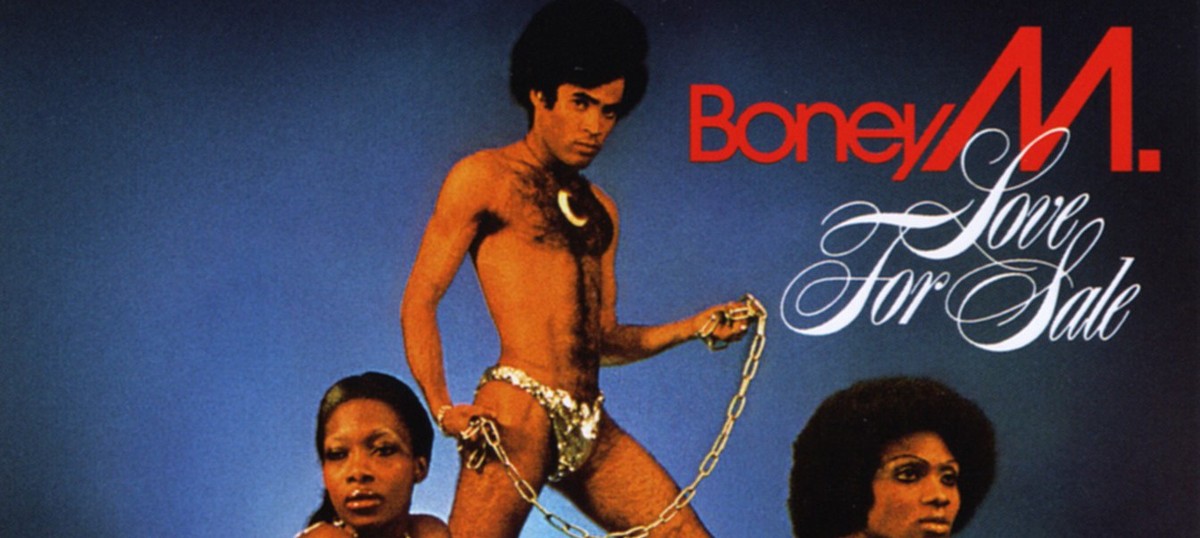 There’s a behind the scenes look at this
  Kanye is deconstructed thusily: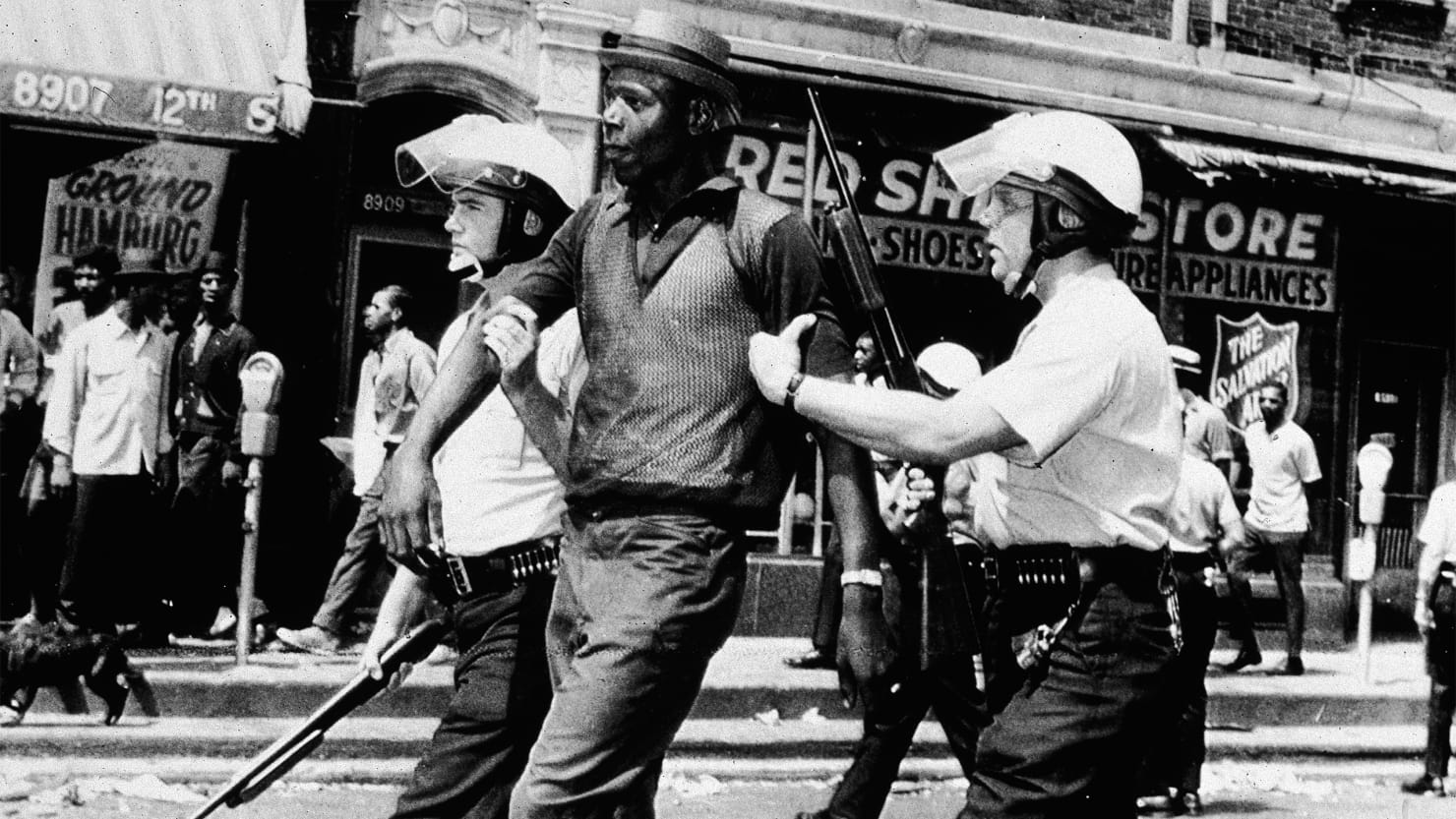
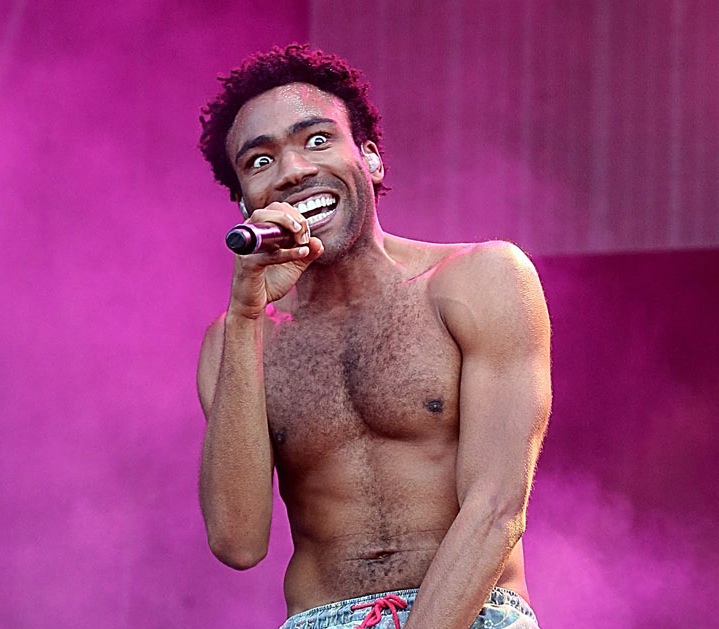 Today, I wonder how many white women are “decent people”. Surely, the majority of us are but what is going on with the group that’s larger than it really should be? Let’s take this one for example that once again proves that really, I would never vote for just any or this particular vagina bearer.
 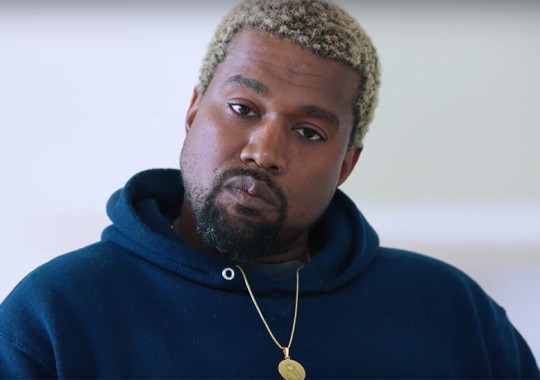 What matter of insanity causes a white woman to do this?






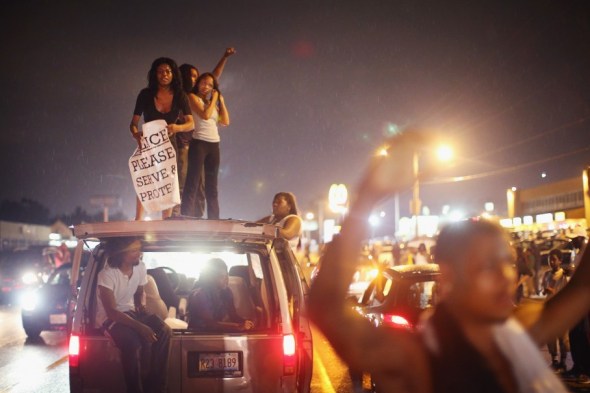




 peej
peej Carissa
 bostonboomer
 dakinikat
 ecocatwoman
 mablue2
 Mama Lopez
 peggysue22
 quixote
 skydancingguestblogger
 Mona (aka Wonk the Vote)



 Sky Dancing
Recent Comments