I really struggled to get out of bed this morning. I’m usually an early riser although I don’t really get going until I’ve had some caffeine and psyched myself up a bit, but today my body resisted all my efforts to be dragged out of dreamland.
Like many Americans, I’m traumatized by what’s happening to our country and the cumulative effects of a decade of dealing with the monster from Mar-a-Lago. Everything is awful, and I’m not sure we can make it until the midterm elections.
So here’s a Caturday distraction from The Smithsonian Magazine. (The illustrations are from the article except for one from The Baltimore Sun.)
A cat left pawprints on this 500-year-old manuscript.
More than 500 years ago, after dedicating hours to the meticulous transcription of a crucial manuscript, a Flemish scribe set the parchment out to dry—only to later return and discover the page smeared, filled with inky paw prints.
Perhaps the world’s first known instance of a so-called “keyboard cat,” that manuscript is the inspiration for and centerpiece of an exhibition currently on display at Baltimore’s Walters Art Museum. Running through late February, “Paws on Parchment” explores the roles of cats in the Middle Ages—and the myriad ways humans showed affection for their feline friends hundreds of years ago.
“Objects like [the manuscript] have a way of bridging across time, as it’s just so relatable for anyone who has ever had a cat,” Lynley Anne Herbert, the museum’s curator of rare books and manuscripts, tells Artnet’s Margaret Carrigan. “Many medieval people loved their cats just as much as we do.”
This affection is evidenced by the myriad illustrations of cats across cultures. After finding the Flemish manuscript, Herbert searched the museum archives and found no shortage of other feline mentions or depictions in Islamic, Asian and other European texts and images….
“Because they were so stealthy and they could see in the dark, they were seen as a little bit ethereal as creatures,” Herbert told WYPR’s Ashley Sterner in August. “This sort of translates to the idea that that’s kind of the way the devil works. If you’re sinful, he can stalk you, and eventually he’ll pounce on you.”
Paws on Parchment is the first of three animal-themed exhibitions planned at the Walters Art Museum in Baltimore over the next two years. The Walters Museum
In the margins of manuscripts on display, seemingly silly illustrations of cats playing instruments detail this double-sidedness. “[They] reinforce the importance of an orderly society by showing the chaos possible if the natural order of things got turned on its head,” Herbert tells Artnet.
But at the same time, humans relied on their pets’ killer instincts much more than they do today. Rats, mice and other vermin in the Middle Ages were more likely to carry disease, and housecats were an important defense for families.
“Their ability to catch and kill mice and rats was actually critical to healthy living,” Herbert told WYPR. “Those critters would often get into food stores and contaminate them or eat them. They would also chew on valuable things like cloth and books. … Very early on, people realized that cats were excellent mousers. They were actually defined in encyclopedias of the era by their ability to catch mice.”
You can read more about medieval cats and the Walters Museum exhibit at the link.
In the news today:
Trump beclowned himself and embarrassed most Americans by accepting the Nobel Peace Prize medal that was awarded to Venezuelan opposition leader María Corina Machado. I can’t imagine being so shameless that you would accept a medal won by someone else, but Trump apparently can’t feel shame. In fact, he kind of strong-armed Machado into giving it to him. She probably imagined he might then let her return to her country as president–after all, she did win the election. But Trump isn’t likely to do that. In fact later yesterday, he seemingly forgot her name.
President Donald Trump was handed the Nobel Peace Prize he has been whining about for so many months—only to seemingly forget the name of the woman who passed hers on to him just hours earlier.
In a media huddle outside the White House, the 79-year-old president was asked why he has yet to support María Corina Machado’s bid for Venezuelan leadership.
“I had a great meeting yesterday by a person who I have a lot of respect for and she has respect, obviously, for me and our country and she gave me her Nobel Prize,” Trump said, notably avoiding her name.
“I’ll tell you what, I got to know her, I never met her before, and I was very, very impressed. She’s a really—this is a fine woman.”
On social media, severalcommentatorsnoted that it appeared as though Machado’s name had slipped the president’s mind.
Machado, leader of the opposition to Nicolás Maduro’s government, has been vying for power in the South American nation following the U.S. gunpoint abduction of Maduro at the start of the month.
However, despite claiming Maduro was operating a “cartel,” the Trump administration left his vice president, Delcy Rodriguez, running the country, along with virtually all of his government….
While the coveted Nobel Prize was claimed by Trump, the Norwegian Nobel Committee has since reiterated its ruling that prizes cannot be exchanged and the transfer is ultimately meaningless.
I doubt if this will stop Trump’s incessant whining about how the Nobel committee cheated him out of his own Nobel Peace Prize.
Meanwhile, Trump is supporting Venezuela’s vice president Delcy Rodrigues as acting president.
When President Donald Trump announced the audacious capture of Nicolás Maduro to face drug trafficking charges in the U.S., he portrayed the strongman’s vice president and longtime aide as America’s preferred partner to stabilize Venezuela amid a scourge of drugs, corruption and economic mayhem.
Left unspoken was the cloud of suspicion that long surrounded Delcy Rodríguez before she became acting president of the beleaguered nation earlier this month.
In fact, Rodríguez has been on the radar of the U.S. Drug Enforcement Administration for years and in 2022 was even labeled a “priority target,” a designation DEA reserves for suspects believed to have a “significant impact” on the drug trade, according to records obtained by The Associated Press and more than a half dozen current and former U.S. law enforcement officials.
The DEA has amassed a detailed intelligence file on Rodríguez dating to at least 2018, the records show, cataloging her known associates and allegations ranging from drug trafficking to gold smuggling. One confidential informant told the DEA in early 2021 that Rodríguez was using hotels in the Caribbean resort of Isla Margarita “as a front to launder money,” the records show. As recently as last year she was linked to Maduro’s alleged bag man, Alex Saab, whom U.S. authorities arrested in 2020 on money laundering charges.
The U.S. government has never publicly accused Rodríguez of any criminal wrongdoing. Notably for Maduro’s inner circle, she’s not among the more than a dozen current Venezuelan officials charged with drug trafficking alongside the ousted president.
Three current and former DEA agents who reviewed the records at the request of AP said they indicate an intense interest in Rodríguez throughout much of her tenure as vice president, which began in 2018. They were not authorized to discuss DEA investigations and spoke on the condition of anonymity.
Rodríguez’s name has surfaced in nearly a dozen DEA investigations, several of which remain ongoing, involving agents in field offices from Paraguay and Ecuador to Phoenix and New York, the AP learned. The AP could not determine the specific focus of each investigation.
Obviously, Trump couldn’t careless about drug trafficking.
WEST PALM BEACH, Florida (AP) — President Donald Trump said Saturday that he would charge a 10% import tax starting in February on goods from eight European nations because of their opposition to American control of Greenland, setting up a potentially dangerous test of U.S. partnerships in Europe.
Denmark, Norway, Sweden, France, Germany, the United Kingdom, the Netherlands and Finland would face the tariff, Trump said in a social media post while at his golf club in West Palm Beach, Florida. The rate would climb to 25% on June 1 if no deal was in place for “the Complete and Total purchase of Greenland” by the United States, he said.
The Republican president appeared to indicate that he was using the tariffs as leverage to force talks with Denmark and other European countries over the status of Greenland, a semiautonomous territory of NATO ally Denmark that he regards as critical to U.S. national security.
“The United States of America is immediately open to negotiation with Denmark and/or any of these Countries that have put so much at risk, despite all that we have done for them,” Trump said on Truth Social.
The tariff threat could mark a problematic rupture between Trump and America’s longtime NATO partners, further straining an alliance that dates to 1949 and provides a collective degree of security to Europe and North America. Trump has repeatedly tried to use trade penalties to bend allies and rivals alike to his will, generating investment commitments from some nations and pushback from others, notably China.
Trump is scheduled to travel on Tuesday to the World Economic Forum in Davos, Switzerland, where he likely will run into the European leaders he just threatened with tariffs that would start in little more than two weeks.
Making a symbolic visit to Copenhagen, a bipartisan delegation of U.S. lawmakers — including senior members of the House and Senate — tried to reassure leaders of Denmark and Greenland, and their increasingly anxious citizens, that most Americans do not support President Donald Trump’s plan to annex or buy Greenland, let alone the prospect of military action against a fellow NATO ally.
The Congressional visit comes as tensions are soaring over the Trump’s threats. Thousands gathered Saturday in Denmark for “Hands-off Greenland” protests, with gatherings also planned for later in Greenland’s capital, organizers said.
“It is important to underscore that when you ask the American people whether or not they think it is a good idea for the United States to acquire Greenland, the vast majority — some 75 percent — will say we do not think that that is a good idea,” Sen. Lisa Murkowski (R-Alaska) said Friday at a news conference after the American group met counterparts in the Danish Parliament. “This senator from Alaska does not think it is a good idea.”
“Greenland needs to be viewed as our ally, not as an asset,” Murkowski added.
Asked how Trump might be stopped in his quest to obtain Greenland, Murkowski suggested Congress would assert its authority. “You are hearing from the executive branch,” she said. “The Congress also has a role.”
That’s if Republicans in Congress are willing to stand up to Trump. Meanwhile:
COPENHAGEN – Thousands of people marched from Copenhagen City Hall to the U.S. embassy Saturday afternoon in protest of President Trump’s comments that he wants to acquire Greenland.
The crowd, waving Greenlandic flags, chanted “Greenland is not for sale.” Many demonstrators wore red hats in Trump’s own “Make America great again” fashion that read, “Make America go away.” [….]
A 15th-century prayer book featuring an illustrated gray cat The Walters Museum
Saturday’s protest came on the heels of a bipartisan Congressional delegation that travelled to Copenhagen. House and Senate lawmakers met with Danish and Greenlandic officials, as well as members of the Danish business community. The visit was meant to be a reassurance tour — affirming the longstanding relationship between the U.S. and the Kingdom of Denmark in the face of Trump’s rhetoric.
Peder Dam, who lives in Denmark,attended the demonstration with a sign that featured an image of Darth Vader and Luke Skywalker from Star Wars that read: “Americans: I know there is good in you. Come back to sanity.”
“We know what is going on in the White House is not representative for all Americans,” he told NPR.
But he said he wonders why there isn’t more widespread outrage from the American public.
“I can’t understand. If my government said they would attack Sweden, then Denmark would step up and protest that,” he said. “I like protests in the U.S. But why aren’t there more normal, average Americans stepping up, trying to protest what is going on? It’s crazy.”
Another protester, Thomas, whom NPR is identifying only by his first name because of concerns about retaliation at work, said the march represents “an unseen level of resentment towards the U.S.
“I cannot express how deeply disappointed I am — that we have sent our troops to die with you in Iraq, we were with you in Afghanistan,” he said. “How dare you turn your back on us in this way?”
The Trump administration’s persecution of Minnesota is going from bad to worse.
The Justice Department is planning to issue subpoenas for Minnesota Gov. Tim Walz and Minneapolis Mayor Jacob Frey as part of an investigation alleging that the two Democratic leaders are impeding federal law enforcement officers’ abilities to do their jobs in the state, two people familiar with the matter confirmed Friday.
In partnership with the Baltimore Animal Rescue and Care Shelter, four foster kittens visited the exhibition shortly after it opened. The Walters Museum
The subpoenas, which are without recent precedent, escalate an already bitter political battle between the Trump administration and state officials following the fatal shooting of a woman in Minneapolis by an immigration officer last week. That shooting happened amid a surge of federal immigration officers in the state ordered by President Donald Trump.
One of the people familiar with the case confirmed that the plan was to serve the subpoenas Friday. The people spoke on the condition of anonymity to discuss an open investigation. Neither Walz nor Frey had been served with a subpoena by early Friday evening, spokespeople for the officials said.
Walz and Frey have claimed they have been wrongly excluded from the investigation into the killing of Renée Good, who was fatally shot by an ICE officer through the window of her SUV as she and others were monitoring and protesting the crackdown. The governor and mayor have publicly said they fear that the Justice Department is not conducting a fair and robust probe. In turn, Trump administration officials have said that Minnesota’s Democratic leaders are corrupt and can’t be trusted to handle an investigation.
Minnesota’s attorney general this week sued the federal government over the surge, saying it amounted to an unconstitutional “federal invasion.”
The subpoenas suggest that the Justice Department is examining whether Walz’s and Frey’s public statements disparaging the surge of officers and federal actions have amounted to criminal interference in law enforcement work. The law under which they are investigating the two officials, a federal statute on conspiracy to impede a federal investigation, is similar to the charges filed against protesters who federal officials allege have attempted to block immigration officers as they do their work.
That sounds like a violation of the Walz and Frey’s first amendment rights.
In a statement Friday, Frey called the subpoenas “an obvious attempt to intimidate me for standing up for Minneapolis, our local law enforcement, and our residents against the chaos and danger this Administration has brought to our streets.”
“I will not be intimidated,” he said. “My focus will remain where it’s always been: keeping our city safe.”
“Weaponizing the justice system and threatening political opponents is a dangerous, authoritarian tactic,” Walz said in a separate statement Friday evening. “The only person not being investigated for the shooting of Renee Good is the federal agent who shot her.”
We have late word this evening that the Department of Justice has launched a “criminal investigation” of Minnesota Gov. Tim Walz and Minnesota Mayor Jacob Frey over a purported “criminal conspiracy” to impeded ICE’s work in the state. Let’s start with the obvious and important fact that the bar that has to be cleared to launch such an investigation is essentially nil. All you need is a couple toadyish and corrupt DOJ appointees and they are currently in oversupply. Getting a criminal indictment let alone a conviction is in a different universe of possibility. The main point of this is simply to generate the headlines you’re seeing this evening (“criminal investigation!”) and perhaps load state and local government with subpoenas or perhaps raids.
Medieval cat art from the Walters Museum, source The Baltimore Sun
But none of that should distract from the fact that this is the main conflict being joined or at least pointed to in a very clear and public way. Right now Trump has created a kind of rickety authoritarian presidency with lots of prerogative powers on overdrive — military adventures, pardons, corruption of the DOJ, ICE wilding expeditions in Blue states — and a lot of corruption. But there’s not a lot more. It doesn’t have the kind of power in depth to really subvert the constitutional order in a robust or durable way. To do that you have to bring the states to heel. That’s where most policing power operates. It’s where elections operate. It’s where most of the actual governmental power in depth in the U.S. actually operates.
As recently as Monday I wrote this: “If you look at the trend of Trump rule in blue cities and blue states, the clear trajectory is that not being dominated is getting closer and closer to being a criminal offense, likely through conspiracy laws and such.” That’s precisely what’s being alleged here: that resisting these kinds of federal invasions or ICE wilding expeditions into Blue cities through entirely legal means and by the elected state authorities actually amounts to a criminal offense or, as predicted, a criminal conspiracy. In other words the states’ very existence as a separate albeit subordinate sovereign is a criminal offense against the federal government.
This is really scary, because we just don’t know what the Supreme Court will do with these arguments if they get their hands on the case. Fortunately, it will probably be hard to get a grand jury to indict on these ludicrous grounds.
Federal officers in the Minneapolis area participating in its largest recent U.S. immigration enforcement operation can’t detain or tear gas peaceful protesters who aren’t obstructing authorities, including when these people are observing the agents, a judge in Minnesota ruled Friday.
U.S. District Judge Kate Menendez’s ruling addresses a case filed in December on behalf of six Minnesota activists. The six are among the thousands who have been observing the activities of Immigration and Customs Enforcement and Border Patrol officers enforcing the Trump administration’s immigration crackdown in the Minneapolis-St. Paul area since last month….
The activists in the case are represented by the American Civil Liberties Union of Minnesota, which says government officers are violating the constitutional rights of Twin Cities residents….
Safely following agents “at an appropriate distance does not, by itself, create reasonable suspicion to justify a vehicle stop,” the ruling said.
Menendez said the agents would not be allowed to arrest people without probable cause or reasonable suspicion the person has committed a crime or was obstructing or interfering with the activities of officers.
Menendez is also presiding over a lawsuit filed Monday by the state of Minnesota and the cities of Minneapolis and St. Paul seeking to suspend the enforcement crackdown, and some of the legal issues are similar. She declined at a hearing Wednesday to grant the state’s request for an immediate temporary restraining order in that case.
“What we need most of all right now is a pause. The temperature needs to be lowered,” state Assistant Attorney General Brian Carter told her.
Menendez said the issues raised by the state and cities in that case are “enormously important.” But she said it raises high-level constitutional and other legal issues, and for some of those issues there are few on-point precedents. So she ordered both sides to file more briefs next week.
Those are my recommended reads for today. What do you think? What else is on your mind?
Did you like this post? Please share it with your friends:
I can’t find any good news this morning–what else is new? The “president” is dangerously demented, his cabinet is full of kooks, his economy is going down the tubes, and he seems determined to start a war in Venezuela. Anyway, here are the stories that caught my attention today.
The longer the U.S. surveillance aircraftfollowed the boat, the more confident intelligence analysts watching from command centers became that the 11 people on board were ferrying drugs.
Defense Secretary Pete Hegseth gave a spoken directive,according to two people with direct knowledge of the operation. “The order was to kill everybody,” one of them said.
A missile screamed off the Trinidad coast, striking the vessel and igniting a blaze from bow to stern. For minutes, commanders watched the boat burning on a live drone feed. As the smoke cleared, they got a jolt: Two survivors were clinging to the smoldering wreck.
The Special Operations commander overseeing the Sept. 2 attack — the opening salvo in the Trump administration’s war on suspected drug traffickers in the Western Hemisphere — ordered a second strike to comply with Hegseth’s instructions, two people familiar with the matter said. The two men were blown apart in the water.
Hegseth’s order, which has not been previously reported, adds another dimension to the campaign against suspected drug traffickers. Some current and former U.S. officials and law-of-war experts have said that the Pentagon’s lethal campaign — which has killed more than 80 people to date — is unlawful and may expose those most directly involved to future prosecution.
The alleged traffickers pose no imminent threat of attack against the United States and are not, as the Trump administration has tried to argue, in an “armed conflict” with the U.S., these officials and experts say. Because there is no legitimate war between the two sides, killing any ofthe men in the boats “amounts to murder,” said Todd Huntley, a former military lawyer who advised Special Operations forces for seven years at the height of the U.S. counterterrorism campaign.
Even if the U.S. were at war with the traffickers, an order to kill all the boat’s occupants if they were no longer able to fight “would in essence be an order to show no quarter, which would be a war crime,” said Huntley, now director of the national security law program at Georgetown Law.
Use the gift link to read the rest. We’re going to need prosecutions if we ever get rid of Trump and his goons.
U.S Secretary of Defense Pete Hegseth is lashing out at a report that he ordered military officials to “kill them all” during one of the Trump administration’s strikes in the Caribbean aimed a boat allegedly carrying drug cargo.
Nataliya Bagatskaya, Echo of the black cats
“As usual, the fake news is delivering more fabricated, inflammatory, and derogatory reporting to discredit our incredible warriors fighting to protect the homeland,” Hegseth, 45, said in a Nov. 28 post on X.
The defense secretary was responding to a Washington Post story citing two anonymous sources that claimed he ordered troops to leave no survivors after a missile struck the vessel, which was traveling off the Trinidad coast, as two individuals were clinging to the smoldering wreckage.
Since September, the Trump administration has attacked at least 21 boats traversing international waters, killing 83 people. Trump and other officials defend the boat strikes as an attempt to crackdown on illegal narcotics flooding into the U.S., but lawmakers from both parties have criticized the administration for providing no intelligence briefings or other evidence about what the vessels are carrying.
“At this point, I would call them extrajudicial killings,” Sen. Rand Paul, R-Ky., said during an Oct. 26 appearance on Fox News Sunday. “This is akin to what China does, what Iran does with drug dealers − they summarily execute people without presenting evidence to the public. So it’s wrong.”
Sen. Chris Murphy, D-Conn., who shared the story about Hegseth’s alleged order, raised similar concerns about the constitutionality of the strikes in an Nov. 28 post on X.
“If you want to know why Hegseth is panicking about reminders that there is accountably for giving or carrying out illegal orders, it’s likely because he knows he has given illegal orders to murder people,” Murphy said.
The head of the Republican-led Senate Armed Services Committee has pledged “vigorous oversight” after a Washington Post report that Defense Secretary Pete Hegseth gave a spoken order to kill all crew members during the first U.S. strike against suspected drug smugglers in the Caribbean earlier this year.
A live drone feed showed two survivors from the original crew of 11 clinging to the wreckage of their boat following the initial missile attack on Sept. 2, The Post reported on Friday afternoon. The Special Operations commander overseeing the operation then ordered a second strike to comply with Hegseth’s directive, according to two people with direct knowledge of the operation, killing both survivors. Those people, along with five others in the original report, spoke on the condition of anonymity because of the matter’s sensitivity.
Late Friday, Sen. Roger Wicker (R-Mississippi), the chairman of the Senate Armed Services Committee, and Sen. Jack Reed (D-Rhode Island), the committee’s ranking Democrat, issued a statement saying that the committee “is aware of recent news reports — and the Department of Defense’s initial response — regarding alleged follow-on strikes on suspected narcotics vessels.”
The committee, they said, “has directed inquiries to the Department, and we will be conducting vigorous oversight to determine the facts related to these circumstances.”
If Trump is so concerned about drugs coming into the U.S. from Latin America, why did he just pardon a Honduran drug kingpin?
President Trump announced on Friday afternoon that he would grant “a Full and Complete Pardon” to a former president of Honduras, Juan Orlando Hernández, who, as the center of a sweeping drug case, was found guilty by an American jury last year of conspiring to import cocaine into the United States.
By Louis Valtat
The news came as a shock not only to Hondurans, but also to the authorities in the United States who had built a major case and won a conviction against Mr. Hernández. They had accused him of taking bribes during his campaign from Joaquín Guzmán, the notorious former leader of the Sinaloa cartel in Mexico known as “El Chapo,” and of running his Central American country like a narco state.
The judge in his case, P. Kevin Castel, had called Mr. Hernández “a two-faced politician hungry for power” who masqueraded as an antidrug crusader while partnering with traffickers. And prosecutors had asked the judge to make sure Mr. Hernández would die behind bars, citing his abuse of power, connections to violent traffickers and “the unfathomable destruction” caused by cocaine.
The prosecution stretched across Mr. Trump’s first term and concluded during Joseph R. Biden Jr.’s time as president. In the end, Mr. Hernández was sentenced to 45 years in prison in Federal District Court in Manhattan, capping what prosecutors had presented as a sprawling conspiracy.
Mike Vigil, a former chief of international operations at the same agency, also reacted with disbelief to the news of the pardon. Mr. Vigil said the move imperiled the reputation of the United States and its international investigations into drug trafficking.
“This action would be nothing short of catastrophic and would destroy the credibility of the U.S. in the international community,” Mr. Vigil said on Friday.
Mr. Trump’s vow to pardon such a high-profile convicted drug trafficker appeared to contradict the president’s campaign to unleash the might of the American military on small boats in the Caribbean and Pacific that his administration says, without evidence, are involved in drug trafficking. That campaign has so far killed more than 80 people since it began in September.
President Donald Trump told airlines to consider Venezuela’s airspace closed, days after he vowed to take action on land “very soon.”
Following dozens of strikes against alleged drug-carrying boats in the Caribbean Sea and Pacific Ocean that have killed more than 80 people since September, Trump suggested to military service members in a Thanksgiving Day phone call that the U.S. would soon take action “on land.”
On Saturday, he urged the clearing of the airspace near the South American country. “To all Airlines, Pilots, Drug Dealers, and Human Traffickers, please consider THE AIRSPACE ABOVE AND SURROUNDING VENEZUELA TO BE CLOSED IN ITS ENTIRETY,” the U.S. president wrote on Truth Social Saturday morning.
Over the weekend, the Federal Aviation Administration also warned airlines to “exercise caution” when flying over Venezuela “due to the worsening security situation and heightened military activity.”
Several airlines cancelled their flights as a result of the FAA’s warning.
By Salah Hefney
Can he do that? A bit more from the Independent story:
Last week, the White House was reportedly considering having U.S. military planes drop leaflets — containing details about the $50 million reward for information leading to the arrest or conviction of Nicolás Maduro — over Caracas, Venezuela’s capital, the Washington Postreported.
For months, the U.S. government has been building up a military presence in the region to curb what Trump administration officials call “narco-terrorists” and has also made it clear it wants to oust Maduro.
Maduro has been in power since 2013, following the death of Hugo Chavez. The U.S. is among more than 50 countries that have refused to recognize Maduro as Venezuela’s head of state, claiming he lost the 2024 presidential election. The State Department has offered rewards for information leading to the arrest or conviction of the Venezuelan president since 2020; the Trump administration raised the reward to $50 million this year.
The U.S. is engaged in an “armed conflict” with drug cartels, which Trump alleges are fueled by Maduro’s government. Last month, the State Department designated Cartel de los Soles as a “Foreign Terrorist Organization,” claiming it’s headed by Maduro and other high-ranking members of his “illegitimate” regime.
National Guard troops patrolling in D.C. will be paired with local law enforcement personnel, at least temporarily, in the wake of the Wednesday attack that killed one National Guard member and critically injured another, according to an email obtained by The Washington Post and two D.C. police officials who spoke on the condition of anonymity to discuss planning that is still in progress.
“Officers will conduct high-visibility patrols with the National Guard and provide assistance as needed,” said the email, which was sent to D.C. police leadership Wednesday evening. The email said the situation was “fluid,” and adjustments to the staffing plan could be made in the coming days.
Fabrice Backès, Sandie
If enacted on a long-term basis, the change would significantly shift the way National Guard troops have worked with local and federal law enforcement in the District since their arrival in August. Trump administration officials have credited the troops for helping reduce crime in the city — in part, they argued, because the troops’ presence at Metro stations and on National Park Service lands frees up law enforcement to police other areas of the city. Diverting local police to accompany Guard members would do essentially the opposite by siphoning them from other tasks in D.C. neighborhoods.
The email said the new pairing would start Thursday and Friday.A D.C. police official said some officers had been temporarily detailed to accompany the troops, and a more long-term policy change was under discussion.
The official, who stressed that the discussions were still preliminary, said D.C. police, Metro Transit Police, U.S. Park Police and several other law enforcement agencies were having conversations with the National Guard task force in D.C. about pairing the troops with police officers while they are on city streets. Since their deployment to D.C., groups of National Guard troops have largely operated unaccompanied by police, the official said.
A judge has already said that putting National Guard Troops in DC was illegal, but Trump filed an “emergency appeal.” Meanwhile, two members of the West Virginia National Guard have been shot. One has died and the other is still in critical condition.
Sarah Beckstrom, 20, of Summersville, W.Va., joined the service in 2023. Beckstrom’s father, Gary, called her his “baby girl” and said she had “passed to glory” in a Facebook post on Thursday.
West Virginia Gov. Patrick Morrisey on Friday called for residents to hold a moment of silence for the two victims of the shooting, as both were deployed as part of that state’s National Guard.
Morrisey said in a statement Friday that Beckstrom had made the “ultimate sacrifice” in service to her state and the nation. He added that both Beckstrom and Staff Sgt. Andrew Wolfe, 24, had stepped forward and volunteered for the mission in D.C.
Morrisey also said that Wolfe remains in “very critical condition.”
“These two West Virginia heroes were serving our country and protecting our nation’s capital when they were maliciously attacked,” Morrisey said. “Their courage and commitment to duty represent the very best of our state.”
President Donald Trump attacked another female reporter on Thursday after she asked him about the vetting of the suspect in a Washington, D.C., shooting that killed a National Guardsman, calling her a “stupid person.”
CBS News’ chief White House correspondent Nancy Cordes questioned Trump about reports that Rahmanullah Lakanwal, the alleged gunman who entered the U.S. as part of a Biden-era program for Afghan refugees who fled the nation in 2021, was vetted before he allegedly shot at the National Guardsmen on Wednesday.
By Rebecca Aldernet
Reports indicated that Lakanwal was vetted either through his time working with the CIA in Afghanistan, during the removal process from Afghanistan or during his 2024 asylum application, which the Trump administration approved earlier this year.
Cordes, therefore, asked Trump why he blamed the Biden administration if U.S. officials confirmed vetting of the refugees took place. Trump didn’t enjoy the line of questioning.
“Are you stupid? Are you a stupid person?” Trump asked. “Because they came into on a plane along with 1000s of other people that shouldn’t be here, and you’re just asking questions because you’re a stupid person. And we — there’s a law passed that it’s almost impossible not to get to get them out. You can’t get them out once they come in. And they came in and they were unvetted. They were unchecked. There were many of them, and they came on big planes, and it was disgraceful.”
The attack was the latest in a series of swipes at female reporters. Trump on Wednesday described a New York Times reporter as “ugly, inside and out” over a reported story on his age. He also called a Bloomberg News reporter a “piggy” and an ABC News reporter a “terrible person” for her questioning of Saudi Crown Prince Mohammed bin Salman.
Donald Trump’s niece, Mary Trump, says one of the reasons the president seems to be increasingly lashing out at female reporters is because he is “rattled.
Mary, 60, discussed the rise in incidents on the Wednesday edition of her show, Mary Trump Live. She noted the 79-year-old president calling a reporter “piggy” while telling her to be quiet during a gaggle aboard Air Force One, and a Truth Social post in which he insulted a New York Times reporter’s looks.
“His misogynistic attacks against reporters in particular are increasing and that means a couple of things,” she explained. “It means that he’s increasingly comfortable lodging such attacks, as he’s been openly misogynistic, as he’s been openly racist and openly Islamophobic and openly anti-immigrant and openly antisemitic. There’s no hiding it anymore.”
”I think it’s also a sign that he’s a little rattled. He’s also never clearly heard of the Streisand effect,” Mary said, referring to the internet phenomenon where somebody inadvertently draws further attention to something while attempting to hide it from the public.
“When you call attention to the thing you want people to ignore, it’s probably a terrible idea.”
I posted about Trump’s conflicts with his architects on Wednesday. This is an extension of that story. After he met with architect James McCreary in August,
McCrery Architects got to work on the initial drawings for the project, sketching out a design with high ceilings and arched windows reminiscent of Versailles’s Hall of Mirrors. It would have the latest security features, including bulletproof glass. Gold furniture, known to please the president, was added to the renderings.
Black cat with cat lady, Dee Nickerson
It was flashy enough to impress a man of Mr. Trump’s tastes, while largely matching the style of the historic White House without overshadowing it.
That’s when things got tricky.
In offering up his initial design, Mr. McCrery could not have known that Mr. Trump’s vision for the project was growing. What started as a 500-seat ballroom connected to the East Wing grew to 650 seats. Next, he wanted a 999-seat ballroom, then room for 1,350. Even as Mr. Trump assured the public in July that the ballroom would not touch the existing structure, he already had approved plans to demolish the East Wing to make way for something that could hold several thousand people, according to three people familiar with the timeline.
The latest plan, which officials said was still preliminary, calls for a ballroom much larger than the West Wing and the Executive Mansion. Mr. Trump has said publicly that he would like a ballroom big enough to hold a crowd for a presidential inauguration.
The size of the project was not the only issue raising alarms. Mr. Trump also told people working on the ballroom that they did not need to follow permitting, zoning or code requirements because the structure is on White House grounds, according to three people familiar with his comments. (The firms involved have insisted on following industry standards.)
In recent weeks, Mr. McCrery has pulled back from day-to-day involvement in the project, two people familiar with the matter told The New York Times. They emphasized that Mr. McCrery was still involved as a consultant on the design and proud to be working for Mr. Trump.
Trump has destroyed our government; now he’s working on destroying the White House. Use the gift link to read the whole awful story.
Those are my recommended reads for today. What do you think?
Did you like this post? Please share it with your friends:
Elizabeth Taylor with her Siamese cat, 1956, photo by Sanford Roth
Epstein, Epstein, Epstein. He’s everywhere in the news. We still haven’t seen the DOJ Epstein files, but we’re already learning more about Epstein’s relationship to Trump from the recently released text messages. We don’t know yet how bad it will get when the files are released, but the extent to which Trump is publicly panicking suggests it will be very bad for him.
In Trump’s latest effort to control the Epstein story, he ordered Attorney General Bondi to investigate Democrats who had connections to the child sex trafficker.
Acceding to President Donald Trump’s demands, U.S. Attorney General Pam Bondi said Friday that she has ordered a top federal prosecutor to investigate sex offender Jeffrey Epstein’s ties to Trump political foes, including former President Bill Clinton.
Bondi posted on X that she was assigning Manhattan U.S. Attorney Jay Clayton to lead the probe, capping an eventful week in which congressional Republicans released nearly 23,000 pages of documents from Epstein’s estate and House Democrats seized on emails mentioning Trump.
Trump, who was friends with Epstein for years, didn’t explain what supposed crimes he wanted the Justice Department to investigate. None of the men he mentioned in a social media post demanding the probe has been accused of sexual misconduct by any of Epstein’s victims.
Hours before Bondi’s announcement, Trump posted on his Truth Social platform that he would ask her, the Justice Department and the FBI to investigate Epstein’s “involvement and relationship” with Clinton and others, including former Treasury Secretary Larry Summers and LinkedIn founder and Democratic donor Reid Hoffman.
Trump, calling the matter “the Epstein Hoax, involving Democrats, not Republicans,” said the investigation should also include financial giant JPMorgan Chase, which provided banking services to Epstein, and “many other people and institutions.”
There’s no evidence that any of the people Trump is targeting were involved in sexual abuse or sex trafficking.
A JPMorgan Chase spokesperson, Patricia Wexler, said the company regretted associating with Epstein “but did not help him commit his heinous acts.”
“The government had damning information about his crimes and failed to share it with us or other banks,” she said. The company agreed previously to pay millions of dollars to Epstein’s victims, who had sued arguing that the bank ignored red flags about criminal activity.
Clinton has acknowledged traveling on Epstein’s private jet but has said through a spokesperson that he had no knowledge of the late financier’s crimes. He also has never been accused of misconduct by Epstein’s known victims.
Clinton’s deputy chief of staff Angel Ureña posted on X Friday: “These emails prove Bill Clinton did nothing and knew nothing. The rest is noise meant to distract from election losses, backfiring shutdowns, and who knows what else.” [….]
Summers and Hoffman had nothing to do with either case, but both were friendly with Epstein and exchanged emails with him. Those messages were among the documents released this week, along with other correspondence Epstein had with friends and business associates in the years before his death.
Nothing in the messages suggested any wrongdoing on the men’s part, other than associating with someone who had been accused of sex crimes against children.
In a transparent attempt to distract from the many times his own name appears in the documents from the Epstein estate members of the House Oversight Committee released Wednesday, President Donald J. Trump asked Attorney General Pam Bondi to investigate Democrats whose names appeared in the documents. He singled out former president Bill Clinton, former treasury secretary Lawrence H. Summers, and Reid Hoffman, who founded LinkedIn and who is a Democratic donor.
Marlon Brando and cat
Although the attorney general is the nation’s chief law enforcement officer and is supposed to be nonpartisan in protecting the rule of law, Bondi responded that the Department of Justice “will pursue this with urgency and integrity.” Maegan Vazquez and Shayna Jacobs of the Washington Post note that reporters have already covered the relationship of Epstein with Clinton, Summers, and Hoffman for years, and that in July, Justice Department officials said an examination of the FBI files relating to Epstein—a different cache than Wednesday’s—“did not uncover evidence that could predicate an investigation against uncharged third parties.”
Meidas Touch noted: “In normal times, it would be a major scandal for the President to direct his AG to criminally investigate his political opponents to deflect from his own involvement in a major scandal—and for the AG to immediately announce she is doing it. The Epstein scandal and cover up just got even bigger.”
This scandal truly has Trump flailing. I hope this will be the one that really brings him down, but he somehow seems to wriggle out of every scandal. But he certainly is terrified of the Epstein files being released.
House Republican leaders are planning to hold a vote Tuesday on legislation to force the release of federal files related to Jeffrey Epstein, according to three people granted anonymity to discuss internal plans ahead of a public announcement.
The tentative scheduling decision follows a successful effort by Reps. Thomas Massie (R-Ky.) and Ro Khanna (D-Calif.) to sidestep Speaker Mike Johnson and force a floor vote on their bipartisan bill to compel the Justice Department to release all of its records related to the late convicted sex offender.
President Donald Trump has made repeated attempts to kill the effort, which continued in a series of Truth Social posts Friday. But Johnson said Wednesday he intends to move quickly to hold the vote and put the matter to bed.
Under the current GOP plan, the House Rules Committee would approve a procedural measure Monday night to advance eight bills for floor consideration, including language to tee up the Epstein legislation. If that measure is approved on the floor, likely early Tuesday afternoon, debate and a final vote on the Epstein bill could immediately follow. GOP leaders are considering whether to postpone the Epstein vote until Tuesday evening….
The four Republicans who signed on to the discharge petition forcing the vote — Massie, plus Reps. Lauren Boebert of Colorado, Marjorie Taylor Greene of Georgia and Nancy Mace of South Carolina — are likely to examine Johnson’s moves very closely. They could together block any procedural measure that would undercut the Epstein legislation, postpone it or otherwise alter it.
Hundreds of texts over almost a year show Maga influencer Steve Bannon and convicted sex offender Jeffrey Epstein workshopping legal and media strategies to protect Epstein from the legal and publicity quagmire that enveloped him in the last year of his life.
The texts, released by the House oversight committee on Wednesday, show that as early as June 2018, the pair were devising responses to the gathering storm of public outrage about Epstein’s criminal history, his favorable treatment by the justice system, and his friendships with powerful figures in business, politics and academia.
Bannon conspiratorially described the renewed scrutiny of Epstein as a “sophisticated op”, and over time he counseled Epstein in his adversarial responses to media outlets, the justice system and his victims.
All the while, both men were also strategizing how best to promote Bannon’s rightwing populist agenda, and the political fortunes of its standard bearer, Donald Trump.
In all of Epstein’s messages, the identity of his correspondent is redacted. But Bannon’s identity in the threads cited in this reporting is clear from contextual clues including his documented activities at the time, details of his business and media pursuits, and other disclosures. In one document, the sender’s phone number is not redacted – and it is the same number linked to Bannon in a legal case against Trump adviser Roger Stone.
Read the rest at The Guardian.
Trump is also beginning to panic about the economy and the negative effects of his insane tariffs.
President Donald Trump’s bid Friday to sootheconsumers by dropping tariffs on a wide array of groceries, including coffee, beef, bananas and tomatoes — contradicting his repeated claims that the levies were not affecting retail prices — shows he is on the defensive over his signature policy initiative.
Public opposition, eroding support on Capitol Hill and a potentially lethal challenge before the Supreme Court have Trump scrambling to defend his economic strategy even as the administration notches diplomatic agreements that are cementing its high-tariff approach to rebalancing global trade.
Sophia Loren with her cat, 1959
Public opinion is the immediate worry, following recent Democratic electoral victories in Virginia and New Jersey that were fueled by Americans’ ire over the cost of living. By a nearly 2-to-1 margin, registered voters disapproved of the president’s tariffs in a recent Washington Post-ABC News-Ipsos poll, a finding that has been consistent all year and could imperil Republican candidates in next year’s congressional elections.
The president on Friday issued an executive order rolling back import taxes on many foods, his most significant retreat on the emergency tariffs he imposed in April, which were billed at the time as loophole-free. In September, the White House had signaled that some products that are not generally produced in the United States could be spared tariffs once nations where they originate reached trade deals with the United States. But Friday’s exemptions apply to products from any nation, even those that have not agreed on trade terms.
“They know that they shouldn’t have imposed a lot of these tariffs and that they’re hurting affordability for consumers. Now they’re looking for a way to justify lowering them. And that’s fine. But did we really need to go through all this in the first place?” said Christopher Padilla, senior adviser to the Brunswick Group and a former trade official in the George W. Bush administration….
This week’s tariff cuts appear aimed at responding to public concern over high prices. Inflation overall is running at an annual rate of 3 percent, above the Federal Reserve’s 2 percent target for price stability but well down from the mid-2022 peak of 9.1 percent.
Prices on many everyday items, however, continue to soar. Through September, the most recent data available, coffee prices were up 19 percent over the previous 12 months, according to the Bureau of Labor Statistics. Bananas were up 7 percent.
Americans could soon see some goods get cheaper after President Donald Trump exempted certain agricultural imports from a set of tariffs on Friday. But any price drops likely won’t be enough to make life feel more affordable any time soon.
The new exemptions are part of what traders have dubbed TACO, or Trump Always Chickens Out, to describe times when the president backs off a policy after unintended consequences pop up. In the case of tariffs, Trump has already reversed a number of his measures, a sign that the administration is reshaping his signature economic tool.
The latest TACO comes after voters, worried about affordability, gave Republicans a drubbing in recent off-year elections.
Why this likely won’t help consumers much:
Nevertheless, US Trade Representative Jamieson Greer said the new exemptions generally won’t help improve affordability.
“It depends on what the importers do with the tariff,” he said in a CNBC interview on Friday. “So when you look at the overall price trend, it hasn’t been because of tariffs. It’s been because of these other events going on and just supply and demand.”
Steve Martin and cat
But in cases where tariffs have been passed along to consumers, prices could drop, Greer said.
One potential example: bananas. American consumers are paying about 8% more for bananas than before Trump’s second term began.
The US largely imports bananas from South American countries. With bananas exempt from “reciprocal” tariffs that started at 10%, prices could go back to where they were earlier this year, said Sarah House, senior economist at Wells Fargo. But it’s unlikely to be something most consumers notice unless they’re buying bananas often, she added.
But not everyone is convinced it will even do that much.
“It is not clear that lowering tariffs will lower prices — it depends on what retailers think they can get away with. The import price of bananas has fallen since tariffs were imposed, but the US consumer price has risen,” Paul Donovan, chief economist at UBS global wealth management, said in a note last week. (The United States tracks import prices before accounting for tariffs. In some cases, import prices have fallen as exporters lower what they charge as a way to share in the tariff expense importers pay.)
New data the Agriculture Department released Friday created serious doubts about whether China will really buy millions of bushels of American soybeans like the Trump administration touted last month after a high-stakes meeting between President Donald Trump and Chinese leader Xi Jinping.
The USDA report released after the government reopened showed only two Chinese purchases of American soybeans since the summit in South Korea that totaled 332,000 metric tons. That’s well short of the 12 million metric tons that Agriculture Secretary Brooke Rollins said China agreed to purchase by January and nowhere near the 25 million metric tons she said they would buy in each of the next three years.
American farmers were hopeful that their biggest customer would resume buying their crops. But CoBank’s Tanner Ehmke, who is its lead economist for grains and oilseed, said there isn’t much incentive for China to buy from America right now because they have plenty of soybeans on hand that they have bought from Brazil and other South American countries this year, and the remaining tariffs ensure that U.S. soybeans remain more expensive than Brazilian beans.
“We are still not even close to what has been advertised from the U.S. in terms of what the agreement would have been,” Ehmke said.
Beijing has yet to confirm any detailed soybean purchase agreement but only that the two sides have reached “consensus” on expanding trade in farm products. Ehmke said that even if China did promise to buy American soybeans it may have only agreed to buy them if the price was attractive.
Will Trump try to distract from the Epstein files and his failures on the economy by taking us to war with Venezuela?
The Trump administration is rapidly escalating its pressure campaign against Venezuela, with America’s largest aircraft carrier, the Ford, about to take up a position within striking distance of the country, even as President Trump’s aides provide conflicting accounts of what, exactly, they are seeking to achieve.
Mr. Trump held back-to-back days of meetings at the White House over the past two days, reviewing military options, including the use of Special Operations forces and direct action inside Venezuela.
Marlyn Monroe with her cat
It is still not clear whether Mr. Trump has made a decision about what kind of action to authorize, if any. On Friday, he told reporters on Air Force One that “I sort of made up my mind.” “I can’t tell you what it is,” he said, “but we made a lot of progress with Venezuela in terms of stopping drugs from pouring in.”
It is possible Mr. Trump is relying on the arrival of so much firepower to intimidate the government of Nicolás Maduro, who the United States and many of its allies say is not Venezuela’s legitimate president. Mr. Maduro has put his forces on high alert, leaving the two countries with their weapons cocked and ready for war.
There were signs that the administration was moving into a new and more aggressive posture. Shortly after a meeting on Thursday, Defense Secretary Pete Hegseth posted on social media that the mission in the Caribbean now had a name — “Southern Spear.” He described its goal in expansive terms, saying the operation “removes narco-terrorists from our Hemisphere.”
“The Western Hemisphere is America’s neighborhood,” he wrote, “and we will protect it.” With the arrival of the Ford and three accompanying missile-firing Navy destroyers, there are now 15,000 troops in the region, more than there have been at any time in decades.
The only thing missing is a strategic explanation from the Trump administration that would clarify why the United States is amassing such a large force. Mr. Hegseth’s posting on X was only the latest in a series of statements from administration officials that, at best, are in tension with one another. Some are outright contradictory.
Mr. Trump has been the most consistent, saying it is all about drugs. But that would not explain why the Ford was rushed from the eastern Mediterranean Sea to the Caribbean region, adding to an American force that has now reached 15,000 soldiers and sailors, to attack small boats that until early September had been intercepted by the Coast Guard. Nor would it explain why Colombia or Mexico — Mexico being the main conduit for fentanyl — are not in the Navy’s sights.
President Donald Trump said Friday night that he has “sort of made up my mind” about how he will proceed with the possibility of military action in Venezuela, following a second consecutive day of deliberations at the White House that included top national security advisers.
Trump’s vague remarks aboard Air Force One were delivered as he traveled for the weekend to his Mar-a-Lago estate in Florida, and included no additional new details. The comments came as U.S. forces in the region awaited possible attack orders and after days of high-level discussions about whether — and how — to strike in Venezuela, according to people familiar with the matter who spoke on the condition of anonymity because the matter is highly sensitive. Joining Trump in deliberations Friday were Vice President JD Vance, Defense Secretary Pete Hegseth, Joint Chiefs Chairman Gen. Dan Caine, Secretary of State Marco Rubio and Deputy Chief of Staff Stephen Miller, these people said.
Robert Redford with his cat
Earlier in the day, an administration official said “a host of options” had been presented to the president. Trump is “very good at maintaining strategic ambiguity, and something he does very well is he does not dictate or broadcast to our adversaries what he wants to do next,” the official said.
Any strike on Venezuelan territory would upend the president’s frequent promises of avoiding new conflicts and betray promises made to Congress in recent weeks that no active preparations were underway for such an attack. It also would further complicate U.S. cooperation with other Latin American countries, and deepen suspicions — there and in Washington — over whether Trump’s endgame is the forced removal of Venezuela’s president, Nicolás Maduro, whom Trump has accused of sending drugs and violent criminals to the United States.
Maduro, a socialist strongman, came to power in Caracas in 2013 and increasingly has become a fixation for Trump.
In August, U.S. officials increased the reward for information leading to his arrest and conviction from $25 million to $50 million, citing alleged ties to drug cartels and U.S. beliefs dating back to the Biden administration that he lost Venezuela’s 2024 presidential election and refused to step down.
“The United States is very plugged into what’s going on in Venezuela, the chatter among Maduro’s people and the highest levels of his regime,” the administration official said. “Maduro is very scared, and he should be scared. The president has options on the table that are very bad for Maduro and his illegitimate regime. … We view this regime as illegitimate, and it’s not serving the Western Hemisphere well.”
President Donald Trump has said he believes Venezuelan President Nicolas Maduro’s days are numbered, and that land strikes inside Venezuela are possible.
Experts say that the US doesn’t currently have the military assets in place to launch a largescale operation to remove Maduro from power, though Trump has approved covert action within Venezuela, CNN has reported.
Bette Davis with cat
But if Trump did order strikes inside Venezuela aimed at ousting Maduro, he could face serious challenges with fractured opposition elements and a military poised for insurgency, according to experts, as well as political backlash at home for a president who promised to avoid costly entanglements overseas.
CNN reported that Trump received a briefing earlier this week to review updated options for military action inside Venezuela, a concept the White House has been weighing. The administration had not made a decision on whether to launch strikes, CNN reported, though the US military has moved more than a dozen warships and 15,000 troops into the region as part of what the Pentagon branded Operation Southern Spear in an announcement Thursday.
The concentration of military assets and threats of further attacks beyond the ongoing drug boat campaign have served to increase pressure on Maduro, with administration officials saying he needs to leave office while arguing that he’s closely tied to the Tren de Aragua gang and leading drug trafficking efforts.
But if Maduro does flee Venezuela or is killed out in a targeted strike, experts worry about a military takeover of the country or the boosting of another dictator similar to Maduro.
Read the rest at CNN.
Those are my recommended reads. I’ll add a few more links in the comment thread. What stories are you interested in today?
Did you like this post? Please share it with your friends:
Many thanks to JJ for writing the post yesterday. My internet was out for close to 24 hours. I could still access the internet from my phone, but I really missed TV. I usually have it on MSNBC with sound muted so I will know what’s happening in news and politics. That’s the longest cable outage I’ve experienced in years.
The same horrible news was happening when the TV came back on. I don’t know why I keep watching it. Lately I’ve been trying to distract myself by watching streaming shows on Netflix and HBO/MAX. I really enjoyed “Task” and “Mare of Easttown.” Right now I’m having fun watching Dept Q. My biggest problem with these shows is that I have trouble stopping myself from just binging all the episodes at once.
Anyway, here are the latest happenings that caught my attention this morning.
Here in Boston, there was an explosion at Harvard Medical School.
A view of the Harvard Medical School in the Longwood Medical Area in Boston, Massachusetts. Photograph Brian SnyderReuters
A device exploded inside the Goldenson Building in Harvard’s Longwood medical campus early Saturday morning, according to a message from the Harvard University Police Department to University affiliates.
The Boston Fire Department Arson Unit responded to the incident and determined the explosion to be intentional.
The explosion took place on an area of the fourth floor of Goldenson, a Harvard Medical School building on the school’s main quad. An officer who responded shortly before 3 a.m. observed two individuals fleeing the building, according to the email sent by HUPD spokesperson Steven G. Catalano this afternoon.
HUPD sent a subsequent email to Harvard affiliates shortly after 5 p.m. asking for assistance identifying two men, who they described as suspects. The images were captured on security footage.
Both men are shown wearing sweatshirts with hoods and ski masks.
The Boston Police Department performed a sweep of the building and determined there were no additional devices in the building. No injuries were reported in relation to the incident….
HUPD is actively investigating the incident with local, state, and federal authorities. The FBI was on scene Saturday afternoon assisting HUPD, according to FBI spokesperson Kristen M. Setera.
Police are investigating an “intentional” explosion at a Harvard University medical building early Saturday morning.
Surveillance views of suspects in Harvard Medical School explosion
A fire alarm at the Goldenson Building, part of Harvard’s medical campus in Boston, went off at 2:48 a.m. A Harvard University Police Department officer who responded to the call saw two “unidentified individuals fleeing from the building,” Harvard police said in a statement….
The university released photos on Saturday evening of two individuals captured on CCTV footage. One was depicted wearing a balaclava, and the other wearing a hoodie with the hood raised and a face covering.
The university asked for the public’s help in identifying the individuals.
U.S. forces carried out a strike on another suspected drug boat in international waters, killing all three people on board, Defense Secretary Pete Hegseth said late Saturday.
He said the boat was in the Caribbean Sea and was known by U.S. intelligence as a drug-smuggling vessel. The three males on board were described as “narco-terrorists” associated with a “Designated Terrorist Organization,” Hegseth said.
“This vessel—like EVERY OTHER—was known by our intelligence to be involved in illicit narcotics smuggling, was transiting along a known narco-trafficking route, and carrying narcotics,” Hegseth said in a post on his X account, which did not include any evidence for the claims….
The strike is at least the 15th since early September against vessels and crews in the Caribbean and eastern Pacific that the Trump administration has claimed were involved with drug trafficking. At least 64 people have been killed in the strikes, according to official estimates.
Hegseth claimed that boats like the one struck in the Caribbean are part of an effort by narco-terrorists to “poison Americans at home” and reiterated his policy to treat the alleged smugglers “EXACTLY how we treated Al-Qaeda,” he said.
“We will continue to track them, map them, hunt them, and kill them,” Hegseth said.
I think they are lying. Until I see/hear some evidence, I’m going to assume these are just fishing boats.
A top Justice Department lawyer has told lawmakers that the Trump administration can continue its lethal strikes against alleged drug traffickers in Latin America — and is not bound by a decades-old law requiring Congress to give approval for ongoing hostilities.
T. Elliot Gaiser, head of the Trump administration’s Office of Legal Counsel, made his remarks to a small group of lawmakers this week amid signs that the president may be planning to escalate the military campaign in the region, including potentially hitting targets within Venezuela.
One of Trump’s murderous “drug boat” strikes
The president needs lawmakers’ approval for sustained military action under the 1973 War Powers Resolution, which was passed in the wake of the Vietnam War to prevent another drawn-out, undeclared conflict.
A 60-day clock started ticking after the administration informed Congress on Sept. 4 that it had conducted a strike on an alleged drug boat in the Caribbean two days earlier. It has followed that with other strikes and has killed dozens of people.
The 60-day window closes Monday, and until now it had been unclear what the administration would do.
Gaiser said the administration didnot believe the strikes met the definition of hostilities under the law and did not intend to seek an extension of the deadline nor Congress’s approval of ongoing action, according to three people familiar with the matter, who, like others interviewed for this article, spoke on the condition of anonymity because of the sensitivity of the matter.
“The administration appears to be blowing through the 60-day limit,” a senior congressional aide said.
What’s their explanation?
Asked for comment, a senior administration official said the War Powers Resolution did not pertain to the current situation, because, “even at its broadest … [it] has been understood to apply to placing U.S. service-members in harm’s way.”
The official said the administration does not believe U.S. troops are in danger in the ongoing operation, so the law did not apply.“The operation comprises precise strikes conducted largely by unmanned aerial vehicles launched from naval vessels in international waters at distances too far away for the crews of the targeted vessels to endanger American personnel,” the official said in an email.
US warship docks in Trinidad and Tobago as Trump steps up military pressure on Venezuela.
In essence, the official said, “the kinetic operations underway do not rise to the level of ‘hostilities.’”
National security experts challenged the administration’s interpretation.
“What they’re saying is anytime the president uses drones or any standoff weapon against someone who cannot shoot back, it’s not hostilities‚” said Brian Finucane, a former legal adviser to the State Department who is now a senior adviser for the U.S. program at the International Crisis Group. “It’s a wild claim of executive authority.”
If the government ignores the Monday deadline, he said, “it is usurping Congress’s authority over the use of military force.” Under the Constitution, only Congress can declare war.
Trump couldn’t care less about the War Powers Act or any other law.
The large-scalebuildup of U.S. military forces and assets in the Caribbean suggests that the Trump administration may be preparing to expand operations in the region, escalating tensions between Washington and Caracas and raising the possibility of the first U.S. strikes on Venezuela.
U.S. forces in the Caribbean include eight Navy warships, a special operations vessel and a nuclear-powered attack submarine. When the aircraft carrier USS Gerald R. Ford arrives in the Caribbean next week, it will bring with it three more warships and more than 4,000 additional troops.
President Donald Trump has indicated that he is planning for increased operations against Venezuelan President Nicolás Maduro, but when asked on Friday whether he is considering military strikes inside Venezuela, he replied “no.”
Use the gift link to view graphic depictions of the U.S. military buildup in near Venezuela.
In addition to the Naval buildup, the Pentagon has flown bombers along Venezuela’s coastline in a show of force and moved assets to U.S. bases in the area, including one in Puerto Rico that is now housing F-35 fighter jets, according to Washington Post analysis of satellite images.
The Pentagon has acknowledged carrying out more than a dozen strikes on alleged drug boats, killing at least 61 people since September.
From the beginning, the Pentagon’s buildup in the Caribbean has far exceeded what was needed for a counternarcotics operation, suggesting the mission was always “set to evolve,” said Ryan Berg, the director of the Americas Program at the Center for Strategic & International Studies.
But Berg said the addition of the carrier strike group could indicate that the expanded operations are imminent. “The competition for these vessels is tremendous,” he said, because only three are deployed at any one time. Once the Ford arrives in the Caribbean next week, “It’s going to start a clock ticking and Trump will have about a month or so to make a major decision on a strike before he has to move” the vessel elsewhere.
President Donald Trump on Saturday said he has instructed the Defense Department to “prepare for possible action” in Nigeria over the country’s alleged killing of Christians.
“If the Nigerian Government continues to allow the killing of Christians, the U.S.A. will immediately stop all aid and assistance to Nigeria, and may very well go into that now disgraced country, ‘guns-a-blazing,’ to completely wipe out the Islamic Terrorists who are committing these horrible atrocities,” Trump wrote on social media.
“If we attack, it will be fast, vicious, and sweet, just like the terrorist thugs attack our CHERISHED Christians! WARNING: THE NIGERIAN GOVERNMENT BETTER MOVE FAST!” Trump added.
“The killing of innocent Christians in Nigeria — and anywhere — must end immediately,” Hegseth said on X. “The Department of War is preparing for action. Either the Nigerian Government protects Christians, or we will kill the Islamic Terrorists who are committing these horrible atrocities.”
On Sunday morning, Nigerian presidency spokesperson Daniel Bwala said the country would welcome U.S. assistance in fighting Islamist insurgents “as long as it recognises our territorial integrity.”
He told Reuters: “I am sure by the time these two leaders meet and sit, there would be better outcomes in our joint resolve to fight terrorism.”
Nigerian President Bola Ahmed Tinubu commented Saturday morning after Trump identified his country as one of “particular concern,” writing on X that the “characterisation of Nigeria as religiously intolerant does not reflect our national reality.”
So now we’re going to fight new crusades? Sounds like something Hegseth would love.
Democrats have an early lead in next year’s battle for control of Congress amid an ongoing government shutdown, as more voters say President Donald Trump has not lived up to their expectations on several major issues that propelled him back to the White House in 2024, according to a new national NBC News poll.
Around two-thirds of registered voters say the Trump administration has fallen short on the economy and the cost of living, and a majority say he’s fallen short on changing business as usual in Washington. At the same time, the Democratic Party continues to suffer from low ratings from voters as it seeks to offer an alternative.
Meanwhile, the issue of protecting democracy and constitutional rights are top issues to voters, alongside costs, as Trump continues an expansive agenda of executive actions on immigration and other key policy areas. And a majority of voters believe he’s done more to undermine the Constitution than defend it.
The president’s overall approval rating in the survey sits at 43%, a 4-point decrease since March, while 55% disapprove of his job performance.
And one year before the 2026 midterm elections, Democrats lead Republicans in the fight for Congress by 8 points, 50%-42%, the largest lead for either party on the congressional ballot in the NBC News poll since the 2018 midterms. Democrats had a negligible 1-point edge, 48%-47%, in the March survey.
Americans are increasingly voicing concern about the shutdown’s impact on the U.S. economy, as a big majority feel Congress isn’t even working to try to end it.
There’s also increased worry from people over being personally affected, particularly among those with lower incomes, along with that concern about national impact.
Politically, that means no one is “winning” overall: Congressional Democrats, Republicans and President Trump are all drawing increasingly negative marks for their handling of it as it has gone on.
Democrats express more concern over the economic impact than Republicans do.
Other governmental functions, including air travel, also draw concern due to the shutdown.
Most disapprove of how all the players involved are handling it, and those views have become a bit more negative over October, the month when the shutdown began.
In a bitterly divided country, pessimism and cynicism reign supreme: Two-thirds of Americans say it is at least probably true that the government often deliberately lies to the people. That distrust cuts across partisan lines: Strong majorities of Donald Trump voters (64 percent) and Kamala Harris voters (70 percent) agree.
Is the American dream dead?
Nearly half of Americans, 49 percent, say that the best times of the country are behind them, according to The POLITICO Poll by Public First. That’s greater than the 41 percent who said the best times lie ahead, underscoring a pervasive sense of unease about both individuals’ own futures and the national direction.
The exclusive new poll, conducted nearly one year after Trump’s reelection, reveals a deep strain of pessimism across the electorate — but especially for Democrats.
People who voted for Harris last year are twice as likely as Trump voters to say the United States’ best times are in the past.
America, as a country, is like “someone who is feeling lost, confused, or beat up … or uncertain of what to do, and looking around and saying this isn’t right, this isn’t the way,” said Maury Giles, the CEO of Braver Angels, a nonprofit that works to bridge partisan divides.
Sounds about right. Read the rest at Politico.
News about Trump’s health
Trump recently admitted he had an MRI when during his second “yearly checkup” at Walter Reid. He also disappeared for 6 days around Labor Day, then appeared at the 9/11 ceremony with the right side of his face drooping. What’s going on?
President Trump’s off-the-cuff disclosure that he underwent an MRI scan is raising fresh questions about the secrecy surrounding Trump’s health and the need for presidents to be more transparent.
Trump is the oldest person to be elected president, and his aides and allies have long projected him as the picture of strength and vitality.
Outside physicians initially raised questions after Trump visited Walter Reed Military Medical Center earlier this month for what the White House described as a routine follow-up visit, though it was his second visit in six months.
A note from his physician pronounced Trump in “excellent overall health.”
Later, Trump disclosed that he underwent an MRI and a cognitive test during the secondary physical.
The Hill talked to a former White House doctor:
Jeffrey Kuhlman, who served as a White House physician to three presidents and wrote a book about his experience called “Transforming Presidential Healthcare,” said he wasn’t surprised a 79-year-old man needed a second checkup and that it’s typical for presidents to go to Walter Reed for advanced imaging.
Trump’s drooping face on 9/11
“Most any procedure scope, I had the capabilities there at the White House. The only thing I couldn’t, that I’d have to Walter Reed for, is advanced imaging,” Kuhlman said.
But Kuhlman questioned the timeline of the treatment that was released by Trump’s physician Sean Barbabella. Aside from the MRI, other testing and preventive health screening could have been done in the White House doctor’s office in less than 15 minutes.
“It’s about an eight-minute helicopter ride from the South Lawn to Walter Reed. So we know that he at least had four hours available to undergo medical care,” Kuhlman said.
“There’s a disconnect there.”
There certainly is. Read the rest at The Hill, including the long history of lies about various presidents’ health.
President Donald Trump revealed Monday that he had undergone an MRI scan during a recent checkup at Walter Reed National Military Medical Center but has remained tight-lipped about what prompted the examination, leading to one medical expert raising serious questions as to the president’s health.
“It’s not part of a routine screening examination,” said Dr. Jonathan Reiner, a CNN medical analyst who’s certified in interventional cardiology and internal medicine, speaking on the network Monday.
“There’s been really a lack of candor coming from the White House about this,” Reiner added. “When they announced that the president would visit Walter Reed at the beginning of this month, they initially said it was for his annual checkup, but when they were reminded that that’s not due until April, they said ‘okay, it’s for a routine semi-annual checkup.’”
Trump revealed the surprise medical visit while aboard Air Force One on his way to Japan and called the MRI scan he received “perfect.” At 79 years old, Trump is the second-oldest president to ever hold office – behind only former President Joe Biden – with questions having been raised about his health after photographs of his hands and ankles have shown bruising and swelling, respectively….
“The big question is what prompted his MRI?” Reiner said. “What symptoms were they concerned about, what particular type of MRI was performed? Was it a brain MRI, was it a cardiac MRI, was it an MRI of the spine, of his prostate… what prompted the concern that would take him in a relatively unscheduled way to Walter Reed for this testing?”
“Why won’t they tell us exactly what was tested, why the testing was performed, and the results?” the physician added. “I think without that, there’s really no trust. Just tell the public what’s going on with the president!”
And these two doctors aren’t even dealing with the danger of Trump’s obvious cognitive issues.
“We are so blessed to have a businessman in charge.” John Buss, @repeat1968
Good Day, Sky Dancers!
Well, if you need to be scared out of your wits, no need to rewatch those Freddy Krueger Movies. Just pick up a newspaper or two and be prepared to be chilled to your bones, if the weather isn’t already doing that to you. I’m a lot on the late side today because Temple snuggled up so close to me last night she nearly shoved me off the bed several times. The furnace is already on, but I’ve also brought out the space heater to try to warm her up and then lower the temperature back to the foot of the bed.
It appears the New York Timesmay have gone woke. My jaw dropped reading the Editorial Board headline. Cue the Jaws Shark theme song.”Donald Trump has wielded power as no previous president has, often in open defiance of the law. His actions have raised a chilling question.” Oh, really? Finally, starting to notice that, are we? “Are We Losing Our Democracy?” (The link is shared for you to read.)
Countries that slide from democracy toward autocracy tend to follow similar patterns. To measure what is happening in the United States, the Times editorial board has compiled a list of 12 markers of democratic erosion, with help from scholars who have studied this phenomenon. The sobering reality is that the United States has regressed, to different degrees, on all 12.
Our country is still not close to being a true autocracy, in the mold of Russia or China. But once countries begin taking steps away from democracy, the march often continues. We offer these 12 markers as a warning of how much Americans have already lost and how much more we still could lose.
The first section is on authoritarian speech, which seems a fitting place for reporters to start.
Authoritarian takeovers in the modern era often do not start with a military coup. They instead involve an elected leader who uses the powers of the office to consolidate authority and make political opposition more difficult, if not impossible. Think of Vladimir Putin in Russia, Nicolás Maduro in Venezuela and, to lesser degrees, Recep Tayyip Erdogan in Turkey, Viktor Orban in Hungary and Narendra Modi in India. These leaders have repressed dissent and speech in heavy-handed ways.
Over the past year, President Trump and his allies have impinged on free speech to a degree that the federal government has not since perhaps the Red Scare of the 1940s and 1950s. His administration pressured television stations to stop airing Jimmy Kimmel’s talk show when Mr. Kimmel criticized Trump supporters after the murder of Charlie Kirk; revoked the visas of foreign students for their views on the war in Gaza; and ordered investigations of liberal nonprofit groups. Mr. Trump so harshly criticizes people who disagree with him, including federal judges, that they become targets of harassment from his supporters.
The Bottom Line Many forms of speech and dissent remain vibrant in the United States. But the president has tried to dull them. His evident goal is to cause Americans to fear they will pay a price for criticizing him, his allies, or his agenda.
Emily Atkin has a blog post up at HEATED describing the incredible firings of reporters at CBS News who were covering Climate Change. “The fall of the CBS News climate team. David Ellison, the new pro-Trump chief executive of Paramount Skydance, has dismantled the best climate change reporting team in cable news.”
As Hurricane Melissa raced toward Jamaica on Monday, CBS News senior coordinating producer Tracy Wholf sent an email to the newsroom, detailing the historic storm’s scientific connection to climate change.
It was also the last. Two days later, as Hurricane Melissa smashed into the Caribbean, Wholf was laid off, along with the majority of the five person team supporting CBS News’s climate coverage.
Today, the only person remaining at CBS News to cover climate change is national environmental correspondent David Schechter, who no longer has a dedicated producer. In addition to Wholf’s layoff, two producers supporting the climate team were let go, and another dedicated climate producer was reassigned.
The cuts were part of a larger layoff on Wednesday that affected nearly 100 other CBS News staffers, including the network’s race and culture team, and around 1,000 staffers across newly-merged parent company Paramount Skydance.
Two days ago, CNN reported on other areas that have lost staff, which may be seen as areas that likely offend Trump, as Paramount Skydance plans more mergers. Under any functional Justice Department, these mergers would be viewed as leading to excessive concentration in a single industry. A high concentration of markets is non-competitive and detrimental to the economy and consumers. There are numerous laws, starting with the Sherman Act, that block such mergers. Brian Stelter reports that “Paramount begins steep layoffs as David Ellison reshapes the media giant.”
The new Paramount is laying off about 10% of its workforce, achieving some of the cost savings that CEO David Ellison promised investors when he took charge of the media company over the summer.
Many divisions of Paramount Skydance will be impacted, from the iconic movie studio to CBS News to Comedy Central.
About a thousand jobs are expected to be cut this week, and another thousand in the near future, as a new management team reorganizes the company.
Ellison, who headed the production company Skydance and merged it with the much larger Paramount, said in a memo on Wednesday morning that “these steps are necessary to position Paramount for long-term success.”
“In some areas, we are addressing redundancies that have emerged across the organization,” he said. “In others, we are phasing out roles that are no longer aligned with our evolving priorities and the new structure designed to strengthen our focus on growth.”
Steep cuts and sweeping changes are common after mergers, but Paramount has gone through multiple rounds of layoffs in recent years, so employees have been especially on edge about this fall’s expected terminations.
At CBS News, nearly 100 positions will be eliminated, a person familiar with the matter told CNN on condition of anonymity.
The person said the CBS News cuts were already in the works before Ellison appointed Bari Weiss as editor-in-chief earlier this month, following the purchase of her startup outlet, The Free Press.
The reorganization comes as the wider media industry waits to see Ellison’s ambitious plans for Paramount. In recent weeks Ellison has been pursuing Warner Bros. Discovery, the parent of CNN, HBO Max and the Warner Bros. studio.
The WBD board has rebuffed those initial offers and started a strategic review, which could result in a sale of the entire company, a continuation of the current plan to split WBD into two, or some other outcome.
The impact on reporting and free expression could be huge.
There are indications that “U.S. poised to strike military targets in Venezuela in escalation against Maduro regime.” This is reported by Antonio Maria Delgado writing for the Miami Herald.”
The Trump Administration has made the decision to attack military installations inside Venezuela and the strikes could come at any moment, sources with knowledge of the situation told the Miami Herald, as the U.S. prepares to initiate the next stage of its campaign against the Soles drug cartel. The planned attacks, also reported by the Wall Street Journal, will seek to destroy military installations used by the drug-trafficking organization the U.S. says is headed by Venezuelan strongman Nicolás Maduro and run by top members of his regime.
Sources told the Herald that the targets — which could be struck by air in a matter of days or even hours — also aim to decapitate the cartel’s hierarchy. U.S. officials believe the cartel exports around 500 tons of cocaine yearly, split between Europe and the United States.
While sources declined to say whether Maduro himself is a target, one of them said his time is running out. “Maduro is about to find himself trapped and might soon discover that he cannot flee the country even if he decided to,” the source said. “What’s worse for him, there is now more than one general willing to capture and hand him over, fully aware that one thing is to talk about death, and another to see it coming.”
Well, aren’t we the rogue nation now? The Associated Pressreports that the “UN human rights chief says US strikes on alleged drug boats are ‘unacceptable’.”
The U.N. human rights chief said Friday that U.S. military strikes against boats in the Caribbean Sea and eastern Pacific Ocean allegedly carrying illegal drugs from South America are “unacceptable” and must stop.
The U.N. High Commissioner for Human Rights, Volker Türk, called for an investigation into the strikes, in what appeared to mark the first such condemnation of its kind from a United Nations organization.
Ravina Shamdasani, a spokeswoman for Türk’s office, relayed his message Friday at a regular U.N. briefing: “These attacks and their mounting human cost are unacceptable. The U.S. must halt such attacks and take all measures necessary to prevent the extrajudicial killing of people aboard these boats.”
She said Türk believed “airstrikes by the United States of America on boats in the Caribbean and in the Pacific violate international human rights law.”
President Donald Trump has justified the attacks on the boats as a necessary escalation to stem the flow of drugs into the United States, but the campaign against drug cartels has been divisive among countries in the region.
Orange Caligula is insisting that the United States Senate nix the Filibuster. This is reported by Politico. “Republicans quickly push back on Trump’s call to nix filibuster. Both Senate Majority Leader John Thune and Speaker Mike Johnson poured cold water on the idea Friday.” We’ll have to see if the two leaders will hold to that.
Republicans are quickly tamping down President Donald Trump’s call to eliminate the Senate filibuster as they try to keep pressure on Democrats to end the 31-day government shutdown.
GOP leaders believed Thursday they were on track to reopen agencies as soon as next week. Then Trump threw a fresh complication into their laps overnight when he revived calls for Republicans to invoke the “nuclear option” and eliminate the 60-vote threshold for passing most legislation. Without it, Republican senators could reopen the government on their own.
But many GOP senators have vocally defended the filibuster, including Majority Leader John Thune, calling the 60-vote rule a fundamental feature of the Senate and one that works to conservatives’ benefit in the long run.
Thune has defended the filibuster multiple times during the shutdown, calling it a “bad idea” to suggest eliminating it. “The 60-vote threshold has protected this country,” he said earlier this month.
More news on Epstein is keeping the scandals on the front page. This is from The Independent, as reported by Harry Cockburn. “JPMorgan Chase alerted Trump admin to over $1B in ‘suspicious’ transactions involving Epstein and prominent Wall Street figures: report Over 4,700 transactions, including wire transfers to Russian banks raised red flags in 2019, new documents reveal.”
Just weeks after Jeffrey Epstein died in jail in 2019, banking giant JPMorgan Chase alerted the Trump administration to more than $1 billion in potentially suspicious transactions involving several high-profile U.S. business figures, as well as wire transfers to Russian banks.
The report, which JPMorgan filed – and which was released this week among hundreds of pages of previously sealed court records – flagged over 4,700 transactions, amid concerns they could potentially be related to human trafficking operations involving Epstein.
Among the names highlighted in JPMorgan’s suspicious activity report are: Leon Black, co-founder of private equity firm Apollo Global Management and former MoMA chairman; billionaire hedge fund manager Glenn Dubin; celebrity attorney Alan Dershowitz; and trusts linked to retail magnate Leslie Wexner.
Though each man appeared in connection with financial dealings tied to Epstein, what those transactions involved, and precisely how Epstein fits into the picture, remains unclear. None of them has been charged with crimes in connection with the disgraced financier.
According to The New York Times, which – alongside The Wall Street Journal – requested the documents to be made public, the report alerted authorities to wire transfers to Russian banks, while also mentioning sensitivities surrounding Epstein’s “relationships with two U.S. presidents.” Epstein is known to have been close to President Trump and former President Bill Clinton.
The report offered few specifics about the suspicious transactions or why they raised red flags, other than their apparent ties to Epstein.
Key points it highlights include $65 million worth of wire transfers linked to trusts controlled by retail billionaire Wexner. The transfers, dating back to the mid-2000s, appeared to pass through multiple banks.
Epstein served as a trustee for some of Wexner’s trusts and acted as a close financial adviser for nearly 20 years.
Julia Ainsley has the Halloween Cruelty story at NBC News. “‘Happy Halloween!’: DHS spokeswoman responds to report of immigration agents wearing horror masks in L.A.. The story by a local news site featured images posted to social media showing what the outlet says were agents in unmarked cars donning Chucky and Momo masks.”
A Department of Homeland Security spokeswoman offered a two-word reply Friday in response to a local news report that said immigration agents were seen wearing Halloween masks in the Los Angeles area.
“Happy Halloween!” DHS assistant secretary for public affairs Tricia McLaughlin wrote to NBC News when asked about the report.
The story by the local news site LA Taco featured images posted to social media showing what the outlet says were agents in unmarked cars donning Chucky and Momo masks. It said a member of the Harbor Area Peace Patrol, which monitors federal activity in the area, spotted the vehicle with the Momo mask-wearing driver at an immigration raid on Tuesday.
An activist with Harbor Area Peace Patrol told NBC News that he observed cars previously used on immigration raids leaving an ICE staging area on Tuesday, as they typically do ahead of raids. Two people in the cars were wearing masks – one Momo, the other Chucky.
“We are out there six days a week,” said the activist, who only wanted to be identified as Victor. “We take pictures of the cars as they leave. We put information out for the community to be aware.”
Between this immigration nightmare, the incredibly increasing costs of health insurance and food, and the lack of any nutrition support to many families, I think this will be the scariest Thanksgiving ever.
Additionally, Thanksgiving may have few tangible blessings to be thankful for. It’s time we stand up against deliberate cruelty and exploitation.
What’s on your Reading, Action, and Blogging list today?
Did you like this post? Please share it with your friends:
The Sky Dancing banner headline uses a snippet from a work by artist Tashi Mannox called 'Rainbow Study'. The work is described as a" study of typical Tibetan rainbow clouds, that feature in Thanka painting, temple decoration and silk brocades". dakinikat was immediately drawn to the image when trying to find stylized Tibetan Clouds to represent Sky Dancing. It is probably because Tashi's practice is similar to her own. His updated take on the clouds that fill the collection of traditional thankas is quite special.
You can find his work at his website by clicking on his logo below. He is also a calligraphy artist that uses important vajrayana syllables. We encourage you to visit his on line studio.


























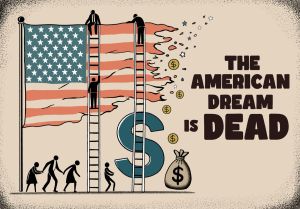


 The first section is on authoritarian speech, which seems a fitting place for reporters to start.
 Emily Atkin has
  Two days ago,
  The impact on reporting and free expression could be huge.
 Orange Caligula is insisting that the United States Senate nix the Filibuster. This is reported by
  More news on Epstein is keeping the scandals on the front page. This is from
  Julia Ainsley has the Halloween Cruelty story at
 peej
peej Carissa
 bostonboomer
 dakinikat
 ecocatwoman
 mablue2
 Mama Lopez
 peggysue22
 quixote
 skydancingguestblogger
 Mona (aka Wonk the Vote)



 Sky Dancing
Recent Comments