I really struggled to get out of bed this morning. I’m usually an early riser although I don’t really get going until I’ve had some caffeine and psyched myself up a bit, but today my body resisted all my efforts to be dragged out of dreamland.
Like many Americans, I’m traumatized by what’s happening to our country and the cumulative effects of a decade of dealing with the monster from Mar-a-Lago. Everything is awful, and I’m not sure we can make it until the midterm elections.
So here’s a Caturday distraction from The Smithsonian Magazine. (The illustrations are from the article except for one from The Baltimore Sun.)
A cat left pawprints on this 500-year-old manuscript.
More than 500 years ago, after dedicating hours to the meticulous transcription of a crucial manuscript, a Flemish scribe set the parchment out to dry—only to later return and discover the page smeared, filled with inky paw prints.
Perhaps the world’s first known instance of a so-called “keyboard cat,” that manuscript is the inspiration for and centerpiece of an exhibition currently on display at Baltimore’s Walters Art Museum. Running through late February, “Paws on Parchment” explores the roles of cats in the Middle Ages—and the myriad ways humans showed affection for their feline friends hundreds of years ago.
“Objects like [the manuscript] have a way of bridging across time, as it’s just so relatable for anyone who has ever had a cat,” Lynley Anne Herbert, the museum’s curator of rare books and manuscripts, tells Artnet’s Margaret Carrigan. “Many medieval people loved their cats just as much as we do.”
This affection is evidenced by the myriad illustrations of cats across cultures. After finding the Flemish manuscript, Herbert searched the museum archives and found no shortage of other feline mentions or depictions in Islamic, Asian and other European texts and images….
“Because they were so stealthy and they could see in the dark, they were seen as a little bit ethereal as creatures,” Herbert told WYPR’s Ashley Sterner in August. “This sort of translates to the idea that that’s kind of the way the devil works. If you’re sinful, he can stalk you, and eventually he’ll pounce on you.”
Paws on Parchment is the first of three animal-themed exhibitions planned at the Walters Art Museum in Baltimore over the next two years. The Walters Museum
In the margins of manuscripts on display, seemingly silly illustrations of cats playing instruments detail this double-sidedness. “[They] reinforce the importance of an orderly society by showing the chaos possible if the natural order of things got turned on its head,” Herbert tells Artnet.
But at the same time, humans relied on their pets’ killer instincts much more than they do today. Rats, mice and other vermin in the Middle Ages were more likely to carry disease, and housecats were an important defense for families.
“Their ability to catch and kill mice and rats was actually critical to healthy living,” Herbert told WYPR. “Those critters would often get into food stores and contaminate them or eat them. They would also chew on valuable things like cloth and books. … Very early on, people realized that cats were excellent mousers. They were actually defined in encyclopedias of the era by their ability to catch mice.”
You can read more about medieval cats and the Walters Museum exhibit at the link.
In the news today:
Trump beclowned himself and embarrassed most Americans by accepting the Nobel Peace Prize medal that was awarded to Venezuelan opposition leader María Corina Machado. I can’t imagine being so shameless that you would accept a medal won by someone else, but Trump apparently can’t feel shame. In fact, he kind of strong-armed Machado into giving it to him. She probably imagined he might then let her return to her country as president–after all, she did win the election. But Trump isn’t likely to do that. In fact later yesterday, he seemingly forgot her name.
President Donald Trump was handed the Nobel Peace Prize he has been whining about for so many months—only to seemingly forget the name of the woman who passed hers on to him just hours earlier.
In a media huddle outside the White House, the 79-year-old president was asked why he has yet to support María Corina Machado’s bid for Venezuelan leadership.
“I had a great meeting yesterday by a person who I have a lot of respect for and she has respect, obviously, for me and our country and she gave me her Nobel Prize,” Trump said, notably avoiding her name.
“I’ll tell you what, I got to know her, I never met her before, and I was very, very impressed. She’s a really—this is a fine woman.”
On social media, severalcommentatorsnoted that it appeared as though Machado’s name had slipped the president’s mind.
Machado, leader of the opposition to Nicolás Maduro’s government, has been vying for power in the South American nation following the U.S. gunpoint abduction of Maduro at the start of the month.
However, despite claiming Maduro was operating a “cartel,” the Trump administration left his vice president, Delcy Rodriguez, running the country, along with virtually all of his government….
While the coveted Nobel Prize was claimed by Trump, the Norwegian Nobel Committee has since reiterated its ruling that prizes cannot be exchanged and the transfer is ultimately meaningless.
I doubt if this will stop Trump’s incessant whining about how the Nobel committee cheated him out of his own Nobel Peace Prize.
Meanwhile, Trump is supporting Venezuela’s vice president Delcy Rodrigues as acting president.
When President Donald Trump announced the audacious capture of Nicolás Maduro to face drug trafficking charges in the U.S., he portrayed the strongman’s vice president and longtime aide as America’s preferred partner to stabilize Venezuela amid a scourge of drugs, corruption and economic mayhem.
Left unspoken was the cloud of suspicion that long surrounded Delcy Rodríguez before she became acting president of the beleaguered nation earlier this month.
In fact, Rodríguez has been on the radar of the U.S. Drug Enforcement Administration for years and in 2022 was even labeled a “priority target,” a designation DEA reserves for suspects believed to have a “significant impact” on the drug trade, according to records obtained by The Associated Press and more than a half dozen current and former U.S. law enforcement officials.
The DEA has amassed a detailed intelligence file on Rodríguez dating to at least 2018, the records show, cataloging her known associates and allegations ranging from drug trafficking to gold smuggling. One confidential informant told the DEA in early 2021 that Rodríguez was using hotels in the Caribbean resort of Isla Margarita “as a front to launder money,” the records show. As recently as last year she was linked to Maduro’s alleged bag man, Alex Saab, whom U.S. authorities arrested in 2020 on money laundering charges.
The U.S. government has never publicly accused Rodríguez of any criminal wrongdoing. Notably for Maduro’s inner circle, she’s not among the more than a dozen current Venezuelan officials charged with drug trafficking alongside the ousted president.
Three current and former DEA agents who reviewed the records at the request of AP said they indicate an intense interest in Rodríguez throughout much of her tenure as vice president, which began in 2018. They were not authorized to discuss DEA investigations and spoke on the condition of anonymity.
Rodríguez’s name has surfaced in nearly a dozen DEA investigations, several of which remain ongoing, involving agents in field offices from Paraguay and Ecuador to Phoenix and New York, the AP learned. The AP could not determine the specific focus of each investigation.
Obviously, Trump couldn’t careless about drug trafficking.
WEST PALM BEACH, Florida (AP) — President Donald Trump said Saturday that he would charge a 10% import tax starting in February on goods from eight European nations because of their opposition to American control of Greenland, setting up a potentially dangerous test of U.S. partnerships in Europe.
Denmark, Norway, Sweden, France, Germany, the United Kingdom, the Netherlands and Finland would face the tariff, Trump said in a social media post while at his golf club in West Palm Beach, Florida. The rate would climb to 25% on June 1 if no deal was in place for “the Complete and Total purchase of Greenland” by the United States, he said.
The Republican president appeared to indicate that he was using the tariffs as leverage to force talks with Denmark and other European countries over the status of Greenland, a semiautonomous territory of NATO ally Denmark that he regards as critical to U.S. national security.
“The United States of America is immediately open to negotiation with Denmark and/or any of these Countries that have put so much at risk, despite all that we have done for them,” Trump said on Truth Social.
The tariff threat could mark a problematic rupture between Trump and America’s longtime NATO partners, further straining an alliance that dates to 1949 and provides a collective degree of security to Europe and North America. Trump has repeatedly tried to use trade penalties to bend allies and rivals alike to his will, generating investment commitments from some nations and pushback from others, notably China.
Trump is scheduled to travel on Tuesday to the World Economic Forum in Davos, Switzerland, where he likely will run into the European leaders he just threatened with tariffs that would start in little more than two weeks.
Making a symbolic visit to Copenhagen, a bipartisan delegation of U.S. lawmakers — including senior members of the House and Senate — tried to reassure leaders of Denmark and Greenland, and their increasingly anxious citizens, that most Americans do not support President Donald Trump’s plan to annex or buy Greenland, let alone the prospect of military action against a fellow NATO ally.
The Congressional visit comes as tensions are soaring over the Trump’s threats. Thousands gathered Saturday in Denmark for “Hands-off Greenland” protests, with gatherings also planned for later in Greenland’s capital, organizers said.
“It is important to underscore that when you ask the American people whether or not they think it is a good idea for the United States to acquire Greenland, the vast majority — some 75 percent — will say we do not think that that is a good idea,” Sen. Lisa Murkowski (R-Alaska) said Friday at a news conference after the American group met counterparts in the Danish Parliament. “This senator from Alaska does not think it is a good idea.”
“Greenland needs to be viewed as our ally, not as an asset,” Murkowski added.
Asked how Trump might be stopped in his quest to obtain Greenland, Murkowski suggested Congress would assert its authority. “You are hearing from the executive branch,” she said. “The Congress also has a role.”
That’s if Republicans in Congress are willing to stand up to Trump. Meanwhile:
COPENHAGEN – Thousands of people marched from Copenhagen City Hall to the U.S. embassy Saturday afternoon in protest of President Trump’s comments that he wants to acquire Greenland.
The crowd, waving Greenlandic flags, chanted “Greenland is not for sale.” Many demonstrators wore red hats in Trump’s own “Make America great again” fashion that read, “Make America go away.” [….]
A 15th-century prayer book featuring an illustrated gray cat The Walters Museum
Saturday’s protest came on the heels of a bipartisan Congressional delegation that travelled to Copenhagen. House and Senate lawmakers met with Danish and Greenlandic officials, as well as members of the Danish business community. The visit was meant to be a reassurance tour — affirming the longstanding relationship between the U.S. and the Kingdom of Denmark in the face of Trump’s rhetoric.
Peder Dam, who lives in Denmark,attended the demonstration with a sign that featured an image of Darth Vader and Luke Skywalker from Star Wars that read: “Americans: I know there is good in you. Come back to sanity.”
“We know what is going on in the White House is not representative for all Americans,” he told NPR.
But he said he wonders why there isn’t more widespread outrage from the American public.
“I can’t understand. If my government said they would attack Sweden, then Denmark would step up and protest that,” he said. “I like protests in the U.S. But why aren’t there more normal, average Americans stepping up, trying to protest what is going on? It’s crazy.”
Another protester, Thomas, whom NPR is identifying only by his first name because of concerns about retaliation at work, said the march represents “an unseen level of resentment towards the U.S.
“I cannot express how deeply disappointed I am — that we have sent our troops to die with you in Iraq, we were with you in Afghanistan,” he said. “How dare you turn your back on us in this way?”
The Trump administration’s persecution of Minnesota is going from bad to worse.
The Justice Department is planning to issue subpoenas for Minnesota Gov. Tim Walz and Minneapolis Mayor Jacob Frey as part of an investigation alleging that the two Democratic leaders are impeding federal law enforcement officers’ abilities to do their jobs in the state, two people familiar with the matter confirmed Friday.
In partnership with the Baltimore Animal Rescue and Care Shelter, four foster kittens visited the exhibition shortly after it opened. The Walters Museum
The subpoenas, which are without recent precedent, escalate an already bitter political battle between the Trump administration and state officials following the fatal shooting of a woman in Minneapolis by an immigration officer last week. That shooting happened amid a surge of federal immigration officers in the state ordered by President Donald Trump.
One of the people familiar with the case confirmed that the plan was to serve the subpoenas Friday. The people spoke on the condition of anonymity to discuss an open investigation. Neither Walz nor Frey had been served with a subpoena by early Friday evening, spokespeople for the officials said.
Walz and Frey have claimed they have been wrongly excluded from the investigation into the killing of Renée Good, who was fatally shot by an ICE officer through the window of her SUV as she and others were monitoring and protesting the crackdown. The governor and mayor have publicly said they fear that the Justice Department is not conducting a fair and robust probe. In turn, Trump administration officials have said that Minnesota’s Democratic leaders are corrupt and can’t be trusted to handle an investigation.
Minnesota’s attorney general this week sued the federal government over the surge, saying it amounted to an unconstitutional “federal invasion.”
The subpoenas suggest that the Justice Department is examining whether Walz’s and Frey’s public statements disparaging the surge of officers and federal actions have amounted to criminal interference in law enforcement work. The law under which they are investigating the two officials, a federal statute on conspiracy to impede a federal investigation, is similar to the charges filed against protesters who federal officials allege have attempted to block immigration officers as they do their work.
That sounds like a violation of the Walz and Frey’s first amendment rights.
In a statement Friday, Frey called the subpoenas “an obvious attempt to intimidate me for standing up for Minneapolis, our local law enforcement, and our residents against the chaos and danger this Administration has brought to our streets.”
“I will not be intimidated,” he said. “My focus will remain where it’s always been: keeping our city safe.”
“Weaponizing the justice system and threatening political opponents is a dangerous, authoritarian tactic,” Walz said in a separate statement Friday evening. “The only person not being investigated for the shooting of Renee Good is the federal agent who shot her.”
We have late word this evening that the Department of Justice has launched a “criminal investigation” of Minnesota Gov. Tim Walz and Minnesota Mayor Jacob Frey over a purported “criminal conspiracy” to impeded ICE’s work in the state. Let’s start with the obvious and important fact that the bar that has to be cleared to launch such an investigation is essentially nil. All you need is a couple toadyish and corrupt DOJ appointees and they are currently in oversupply. Getting a criminal indictment let alone a conviction is in a different universe of possibility. The main point of this is simply to generate the headlines you’re seeing this evening (“criminal investigation!”) and perhaps load state and local government with subpoenas or perhaps raids.
Medieval cat art from the Walters Museum, source The Baltimore Sun
But none of that should distract from the fact that this is the main conflict being joined or at least pointed to in a very clear and public way. Right now Trump has created a kind of rickety authoritarian presidency with lots of prerogative powers on overdrive — military adventures, pardons, corruption of the DOJ, ICE wilding expeditions in Blue states — and a lot of corruption. But there’s not a lot more. It doesn’t have the kind of power in depth to really subvert the constitutional order in a robust or durable way. To do that you have to bring the states to heel. That’s where most policing power operates. It’s where elections operate. It’s where most of the actual governmental power in depth in the U.S. actually operates.
As recently as Monday I wrote this: “If you look at the trend of Trump rule in blue cities and blue states, the clear trajectory is that not being dominated is getting closer and closer to being a criminal offense, likely through conspiracy laws and such.” That’s precisely what’s being alleged here: that resisting these kinds of federal invasions or ICE wilding expeditions into Blue cities through entirely legal means and by the elected state authorities actually amounts to a criminal offense or, as predicted, a criminal conspiracy. In other words the states’ very existence as a separate albeit subordinate sovereign is a criminal offense against the federal government.
This is really scary, because we just don’t know what the Supreme Court will do with these arguments if they get their hands on the case. Fortunately, it will probably be hard to get a grand jury to indict on these ludicrous grounds.
Federal officers in the Minneapolis area participating in its largest recent U.S. immigration enforcement operation can’t detain or tear gas peaceful protesters who aren’t obstructing authorities, including when these people are observing the agents, a judge in Minnesota ruled Friday.
U.S. District Judge Kate Menendez’s ruling addresses a case filed in December on behalf of six Minnesota activists. The six are among the thousands who have been observing the activities of Immigration and Customs Enforcement and Border Patrol officers enforcing the Trump administration’s immigration crackdown in the Minneapolis-St. Paul area since last month….
The activists in the case are represented by the American Civil Liberties Union of Minnesota, which says government officers are violating the constitutional rights of Twin Cities residents….
Safely following agents “at an appropriate distance does not, by itself, create reasonable suspicion to justify a vehicle stop,” the ruling said.
Menendez said the agents would not be allowed to arrest people without probable cause or reasonable suspicion the person has committed a crime or was obstructing or interfering with the activities of officers.
Menendez is also presiding over a lawsuit filed Monday by the state of Minnesota and the cities of Minneapolis and St. Paul seeking to suspend the enforcement crackdown, and some of the legal issues are similar. She declined at a hearing Wednesday to grant the state’s request for an immediate temporary restraining order in that case.
“What we need most of all right now is a pause. The temperature needs to be lowered,” state Assistant Attorney General Brian Carter told her.
Menendez said the issues raised by the state and cities in that case are “enormously important.” But she said it raises high-level constitutional and other legal issues, and for some of those issues there are few on-point precedents. So she ordered both sides to file more briefs next week.
Those are my recommended reads for today. What do you think? What else is on your mind?
Did you like this post? Please share it with your friends:
Elizabeth Taylor with her Siamese cat, 1956, photo by Sanford Roth
Epstein, Epstein, Epstein. He’s everywhere in the news. We still haven’t seen the DOJ Epstein files, but we’re already learning more about Epstein’s relationship to Trump from the recently released text messages. We don’t know yet how bad it will get when the files are released, but the extent to which Trump is publicly panicking suggests it will be very bad for him.
In Trump’s latest effort to control the Epstein story, he ordered Attorney General Bondi to investigate Democrats who had connections to the child sex trafficker.
Acceding to President Donald Trump’s demands, U.S. Attorney General Pam Bondi said Friday that she has ordered a top federal prosecutor to investigate sex offender Jeffrey Epstein’s ties to Trump political foes, including former President Bill Clinton.
Bondi posted on X that she was assigning Manhattan U.S. Attorney Jay Clayton to lead the probe, capping an eventful week in which congressional Republicans released nearly 23,000 pages of documents from Epstein’s estate and House Democrats seized on emails mentioning Trump.
Trump, who was friends with Epstein for years, didn’t explain what supposed crimes he wanted the Justice Department to investigate. None of the men he mentioned in a social media post demanding the probe has been accused of sexual misconduct by any of Epstein’s victims.
Hours before Bondi’s announcement, Trump posted on his Truth Social platform that he would ask her, the Justice Department and the FBI to investigate Epstein’s “involvement and relationship” with Clinton and others, including former Treasury Secretary Larry Summers and LinkedIn founder and Democratic donor Reid Hoffman.
Trump, calling the matter “the Epstein Hoax, involving Democrats, not Republicans,” said the investigation should also include financial giant JPMorgan Chase, which provided banking services to Epstein, and “many other people and institutions.”
There’s no evidence that any of the people Trump is targeting were involved in sexual abuse or sex trafficking.
A JPMorgan Chase spokesperson, Patricia Wexler, said the company regretted associating with Epstein “but did not help him commit his heinous acts.”
“The government had damning information about his crimes and failed to share it with us or other banks,” she said. The company agreed previously to pay millions of dollars to Epstein’s victims, who had sued arguing that the bank ignored red flags about criminal activity.
Clinton has acknowledged traveling on Epstein’s private jet but has said through a spokesperson that he had no knowledge of the late financier’s crimes. He also has never been accused of misconduct by Epstein’s known victims.
Clinton’s deputy chief of staff Angel Ureña posted on X Friday: “These emails prove Bill Clinton did nothing and knew nothing. The rest is noise meant to distract from election losses, backfiring shutdowns, and who knows what else.” [….]
Summers and Hoffman had nothing to do with either case, but both were friendly with Epstein and exchanged emails with him. Those messages were among the documents released this week, along with other correspondence Epstein had with friends and business associates in the years before his death.
Nothing in the messages suggested any wrongdoing on the men’s part, other than associating with someone who had been accused of sex crimes against children.
In a transparent attempt to distract from the many times his own name appears in the documents from the Epstein estate members of the House Oversight Committee released Wednesday, President Donald J. Trump asked Attorney General Pam Bondi to investigate Democrats whose names appeared in the documents. He singled out former president Bill Clinton, former treasury secretary Lawrence H. Summers, and Reid Hoffman, who founded LinkedIn and who is a Democratic donor.
Marlon Brando and cat
Although the attorney general is the nation’s chief law enforcement officer and is supposed to be nonpartisan in protecting the rule of law, Bondi responded that the Department of Justice “will pursue this with urgency and integrity.” Maegan Vazquez and Shayna Jacobs of the Washington Post note that reporters have already covered the relationship of Epstein with Clinton, Summers, and Hoffman for years, and that in July, Justice Department officials said an examination of the FBI files relating to Epstein—a different cache than Wednesday’s—“did not uncover evidence that could predicate an investigation against uncharged third parties.”
Meidas Touch noted: “In normal times, it would be a major scandal for the President to direct his AG to criminally investigate his political opponents to deflect from his own involvement in a major scandal—and for the AG to immediately announce she is doing it. The Epstein scandal and cover up just got even bigger.”
This scandal truly has Trump flailing. I hope this will be the one that really brings him down, but he somehow seems to wriggle out of every scandal. But he certainly is terrified of the Epstein files being released.
House Republican leaders are planning to hold a vote Tuesday on legislation to force the release of federal files related to Jeffrey Epstein, according to three people granted anonymity to discuss internal plans ahead of a public announcement.
The tentative scheduling decision follows a successful effort by Reps. Thomas Massie (R-Ky.) and Ro Khanna (D-Calif.) to sidestep Speaker Mike Johnson and force a floor vote on their bipartisan bill to compel the Justice Department to release all of its records related to the late convicted sex offender.
President Donald Trump has made repeated attempts to kill the effort, which continued in a series of Truth Social posts Friday. But Johnson said Wednesday he intends to move quickly to hold the vote and put the matter to bed.
Under the current GOP plan, the House Rules Committee would approve a procedural measure Monday night to advance eight bills for floor consideration, including language to tee up the Epstein legislation. If that measure is approved on the floor, likely early Tuesday afternoon, debate and a final vote on the Epstein bill could immediately follow. GOP leaders are considering whether to postpone the Epstein vote until Tuesday evening….
The four Republicans who signed on to the discharge petition forcing the vote — Massie, plus Reps. Lauren Boebert of Colorado, Marjorie Taylor Greene of Georgia and Nancy Mace of South Carolina — are likely to examine Johnson’s moves very closely. They could together block any procedural measure that would undercut the Epstein legislation, postpone it or otherwise alter it.
Hundreds of texts over almost a year show Maga influencer Steve Bannon and convicted sex offender Jeffrey Epstein workshopping legal and media strategies to protect Epstein from the legal and publicity quagmire that enveloped him in the last year of his life.
The texts, released by the House oversight committee on Wednesday, show that as early as June 2018, the pair were devising responses to the gathering storm of public outrage about Epstein’s criminal history, his favorable treatment by the justice system, and his friendships with powerful figures in business, politics and academia.
Bannon conspiratorially described the renewed scrutiny of Epstein as a “sophisticated op”, and over time he counseled Epstein in his adversarial responses to media outlets, the justice system and his victims.
All the while, both men were also strategizing how best to promote Bannon’s rightwing populist agenda, and the political fortunes of its standard bearer, Donald Trump.
In all of Epstein’s messages, the identity of his correspondent is redacted. But Bannon’s identity in the threads cited in this reporting is clear from contextual clues including his documented activities at the time, details of his business and media pursuits, and other disclosures. In one document, the sender’s phone number is not redacted – and it is the same number linked to Bannon in a legal case against Trump adviser Roger Stone.
Read the rest at The Guardian.
Trump is also beginning to panic about the economy and the negative effects of his insane tariffs.
President Donald Trump’s bid Friday to sootheconsumers by dropping tariffs on a wide array of groceries, including coffee, beef, bananas and tomatoes — contradicting his repeated claims that the levies were not affecting retail prices — shows he is on the defensive over his signature policy initiative.
Public opposition, eroding support on Capitol Hill and a potentially lethal challenge before the Supreme Court have Trump scrambling to defend his economic strategy even as the administration notches diplomatic agreements that are cementing its high-tariff approach to rebalancing global trade.
Sophia Loren with her cat, 1959
Public opinion is the immediate worry, following recent Democratic electoral victories in Virginia and New Jersey that were fueled by Americans’ ire over the cost of living. By a nearly 2-to-1 margin, registered voters disapproved of the president’s tariffs in a recent Washington Post-ABC News-Ipsos poll, a finding that has been consistent all year and could imperil Republican candidates in next year’s congressional elections.
The president on Friday issued an executive order rolling back import taxes on many foods, his most significant retreat on the emergency tariffs he imposed in April, which were billed at the time as loophole-free. In September, the White House had signaled that some products that are not generally produced in the United States could be spared tariffs once nations where they originate reached trade deals with the United States. But Friday’s exemptions apply to products from any nation, even those that have not agreed on trade terms.
“They know that they shouldn’t have imposed a lot of these tariffs and that they’re hurting affordability for consumers. Now they’re looking for a way to justify lowering them. And that’s fine. But did we really need to go through all this in the first place?” said Christopher Padilla, senior adviser to the Brunswick Group and a former trade official in the George W. Bush administration….
This week’s tariff cuts appear aimed at responding to public concern over high prices. Inflation overall is running at an annual rate of 3 percent, above the Federal Reserve’s 2 percent target for price stability but well down from the mid-2022 peak of 9.1 percent.
Prices on many everyday items, however, continue to soar. Through September, the most recent data available, coffee prices were up 19 percent over the previous 12 months, according to the Bureau of Labor Statistics. Bananas were up 7 percent.
Americans could soon see some goods get cheaper after President Donald Trump exempted certain agricultural imports from a set of tariffs on Friday. But any price drops likely won’t be enough to make life feel more affordable any time soon.
The new exemptions are part of what traders have dubbed TACO, or Trump Always Chickens Out, to describe times when the president backs off a policy after unintended consequences pop up. In the case of tariffs, Trump has already reversed a number of his measures, a sign that the administration is reshaping his signature economic tool.
The latest TACO comes after voters, worried about affordability, gave Republicans a drubbing in recent off-year elections.
Why this likely won’t help consumers much:
Nevertheless, US Trade Representative Jamieson Greer said the new exemptions generally won’t help improve affordability.
“It depends on what the importers do with the tariff,” he said in a CNBC interview on Friday. “So when you look at the overall price trend, it hasn’t been because of tariffs. It’s been because of these other events going on and just supply and demand.”
Steve Martin and cat
But in cases where tariffs have been passed along to consumers, prices could drop, Greer said.
One potential example: bananas. American consumers are paying about 8% more for bananas than before Trump’s second term began.
The US largely imports bananas from South American countries. With bananas exempt from “reciprocal” tariffs that started at 10%, prices could go back to where they were earlier this year, said Sarah House, senior economist at Wells Fargo. But it’s unlikely to be something most consumers notice unless they’re buying bananas often, she added.
But not everyone is convinced it will even do that much.
“It is not clear that lowering tariffs will lower prices — it depends on what retailers think they can get away with. The import price of bananas has fallen since tariffs were imposed, but the US consumer price has risen,” Paul Donovan, chief economist at UBS global wealth management, said in a note last week. (The United States tracks import prices before accounting for tariffs. In some cases, import prices have fallen as exporters lower what they charge as a way to share in the tariff expense importers pay.)
New data the Agriculture Department released Friday created serious doubts about whether China will really buy millions of bushels of American soybeans like the Trump administration touted last month after a high-stakes meeting between President Donald Trump and Chinese leader Xi Jinping.
The USDA report released after the government reopened showed only two Chinese purchases of American soybeans since the summit in South Korea that totaled 332,000 metric tons. That’s well short of the 12 million metric tons that Agriculture Secretary Brooke Rollins said China agreed to purchase by January and nowhere near the 25 million metric tons she said they would buy in each of the next three years.
American farmers were hopeful that their biggest customer would resume buying their crops. But CoBank’s Tanner Ehmke, who is its lead economist for grains and oilseed, said there isn’t much incentive for China to buy from America right now because they have plenty of soybeans on hand that they have bought from Brazil and other South American countries this year, and the remaining tariffs ensure that U.S. soybeans remain more expensive than Brazilian beans.
“We are still not even close to what has been advertised from the U.S. in terms of what the agreement would have been,” Ehmke said.
Beijing has yet to confirm any detailed soybean purchase agreement but only that the two sides have reached “consensus” on expanding trade in farm products. Ehmke said that even if China did promise to buy American soybeans it may have only agreed to buy them if the price was attractive.
Will Trump try to distract from the Epstein files and his failures on the economy by taking us to war with Venezuela?
The Trump administration is rapidly escalating its pressure campaign against Venezuela, with America’s largest aircraft carrier, the Ford, about to take up a position within striking distance of the country, even as President Trump’s aides provide conflicting accounts of what, exactly, they are seeking to achieve.
Mr. Trump held back-to-back days of meetings at the White House over the past two days, reviewing military options, including the use of Special Operations forces and direct action inside Venezuela.
Marlyn Monroe with her cat
It is still not clear whether Mr. Trump has made a decision about what kind of action to authorize, if any. On Friday, he told reporters on Air Force One that “I sort of made up my mind.” “I can’t tell you what it is,” he said, “but we made a lot of progress with Venezuela in terms of stopping drugs from pouring in.”
It is possible Mr. Trump is relying on the arrival of so much firepower to intimidate the government of Nicolás Maduro, who the United States and many of its allies say is not Venezuela’s legitimate president. Mr. Maduro has put his forces on high alert, leaving the two countries with their weapons cocked and ready for war.
There were signs that the administration was moving into a new and more aggressive posture. Shortly after a meeting on Thursday, Defense Secretary Pete Hegseth posted on social media that the mission in the Caribbean now had a name — “Southern Spear.” He described its goal in expansive terms, saying the operation “removes narco-terrorists from our Hemisphere.”
“The Western Hemisphere is America’s neighborhood,” he wrote, “and we will protect it.” With the arrival of the Ford and three accompanying missile-firing Navy destroyers, there are now 15,000 troops in the region, more than there have been at any time in decades.
The only thing missing is a strategic explanation from the Trump administration that would clarify why the United States is amassing such a large force. Mr. Hegseth’s posting on X was only the latest in a series of statements from administration officials that, at best, are in tension with one another. Some are outright contradictory.
Mr. Trump has been the most consistent, saying it is all about drugs. But that would not explain why the Ford was rushed from the eastern Mediterranean Sea to the Caribbean region, adding to an American force that has now reached 15,000 soldiers and sailors, to attack small boats that until early September had been intercepted by the Coast Guard. Nor would it explain why Colombia or Mexico — Mexico being the main conduit for fentanyl — are not in the Navy’s sights.
President Donald Trump said Friday night that he has “sort of made up my mind” about how he will proceed with the possibility of military action in Venezuela, following a second consecutive day of deliberations at the White House that included top national security advisers.
Trump’s vague remarks aboard Air Force One were delivered as he traveled for the weekend to his Mar-a-Lago estate in Florida, and included no additional new details. The comments came as U.S. forces in the region awaited possible attack orders and after days of high-level discussions about whether — and how — to strike in Venezuela, according to people familiar with the matter who spoke on the condition of anonymity because the matter is highly sensitive. Joining Trump in deliberations Friday were Vice President JD Vance, Defense Secretary Pete Hegseth, Joint Chiefs Chairman Gen. Dan Caine, Secretary of State Marco Rubio and Deputy Chief of Staff Stephen Miller, these people said.
Robert Redford with his cat
Earlier in the day, an administration official said “a host of options” had been presented to the president. Trump is “very good at maintaining strategic ambiguity, and something he does very well is he does not dictate or broadcast to our adversaries what he wants to do next,” the official said.
Any strike on Venezuelan territory would upend the president’s frequent promises of avoiding new conflicts and betray promises made to Congress in recent weeks that no active preparations were underway for such an attack. It also would further complicate U.S. cooperation with other Latin American countries, and deepen suspicions — there and in Washington — over whether Trump’s endgame is the forced removal of Venezuela’s president, Nicolás Maduro, whom Trump has accused of sending drugs and violent criminals to the United States.
Maduro, a socialist strongman, came to power in Caracas in 2013 and increasingly has become a fixation for Trump.
In August, U.S. officials increased the reward for information leading to his arrest and conviction from $25 million to $50 million, citing alleged ties to drug cartels and U.S. beliefs dating back to the Biden administration that he lost Venezuela’s 2024 presidential election and refused to step down.
“The United States is very plugged into what’s going on in Venezuela, the chatter among Maduro’s people and the highest levels of his regime,” the administration official said. “Maduro is very scared, and he should be scared. The president has options on the table that are very bad for Maduro and his illegitimate regime. … We view this regime as illegitimate, and it’s not serving the Western Hemisphere well.”
President Donald Trump has said he believes Venezuelan President Nicolas Maduro’s days are numbered, and that land strikes inside Venezuela are possible.
Experts say that the US doesn’t currently have the military assets in place to launch a largescale operation to remove Maduro from power, though Trump has approved covert action within Venezuela, CNN has reported.
Bette Davis with cat
But if Trump did order strikes inside Venezuela aimed at ousting Maduro, he could face serious challenges with fractured opposition elements and a military poised for insurgency, according to experts, as well as political backlash at home for a president who promised to avoid costly entanglements overseas.
CNN reported that Trump received a briefing earlier this week to review updated options for military action inside Venezuela, a concept the White House has been weighing. The administration had not made a decision on whether to launch strikes, CNN reported, though the US military has moved more than a dozen warships and 15,000 troops into the region as part of what the Pentagon branded Operation Southern Spear in an announcement Thursday.
The concentration of military assets and threats of further attacks beyond the ongoing drug boat campaign have served to increase pressure on Maduro, with administration officials saying he needs to leave office while arguing that he’s closely tied to the Tren de Aragua gang and leading drug trafficking efforts.
But if Maduro does flee Venezuela or is killed out in a targeted strike, experts worry about a military takeover of the country or the boosting of another dictator similar to Maduro.
Read the rest at CNN.
Those are my recommended reads. I’ll add a few more links in the comment thread. What stories are you interested in today?
Did you like this post? Please share it with your friends:
I’m getting a late start today after a night of tossing and turning. The news is depressing, as usual. Crazy Grandpa Trump is making an complete ass of himself on his Asian trip, where he’s temporarily left behind all the messes he’s left us with here.
People walk along a road during the passing of Hurricane Melissa in Rocky Point, Jamaica, on Tuesday. Matias Delacroix AP
Before I get to the politics news, here’s a brief update from CNN on the devastation Hurricane Melissa is leaving in her wake.
• Severe damage: Melissa hit Jamaica as one of the strongest Atlantic hurricanes on record, caused major damage to public infrastructure and left most of the island without power. The full extent of the devastation there is unclear with some areas inaccessible.
• Deadly storm: Twenty five people have died in Petit-Goâve, Haiti, after a river flooded by Melissa burst its banks, the local mayor said. Three people were killed in Jamaica during storm preparations, and one person died in the Dominican Republic.
Hurricane Melissa made landfall in Jamaica Tuesday as the strongest storm in the island’s history. The Category 5 hurricane tore a path of destruction across the island, causing major flooding and power cuts. Prime Minister Andrew Holness declared the country a “disaster area.”
The massive storm swept through Cuba early this morning as a Category 2 hurricane. Over 750,000 residents were evacuated ahead of the storm. Melissa is now carving a path towards the Bahamas.
The intense winds have diminished in Jamaica, but the National Hurricane Center warns that heavy rains and flooding might continue.
And this is a monster of a storm that meteorologists say will be in the history books. Only six other Atlantic storms have done that since record-keeping began.
Click the NPR link to see more photos.
We’re expecting stormy weather from Melissa here in Massachusetts on Thursday night and Friday. I hope it won’t interfere too much with kids’ Halloween plans.
Some lowlights from Trump’s embarrassing foreign trip:
You probably saw this video of spaced-out Trump being guided around by the new Japanese Prime Minister Sanae Takaichi.
Trump in Japan.He has no idea what's going on, just wanders off.His brain is cooked.This is insane.
President Donald Trump treated his time in Japan on Tuesday as a victory lap — befriending the new Japanese prime minister, taking her with him as he spoke to U.S. troops aboard an aircraft carrier and then unveiling several major energy and technology projects in America to be funded by Japan.
By the end of the day, Trump — by his administration’s count — came close to nailing down the goal of $550 billion in Japanese investment as part of a trade framework. At a dinner for business leaders in Tokyo, Commerce Secretary Howard Lutnick announced up to $490 billion in commitments, including $100 billion each for nuclear projects involving Westinghouse and GE Vernova….
It was not immediately clear how the investments would operate and how they compared with previous plans, but Trump declared a win as he capped off a day of bonding with Takaichi.
Because they are probably fake “investments.” There’s more at the link.
President Donald Trump rarely has anything negative to say about the men and women of the U.S. military, but he made an exception on Tuesday to offer a rare criticism of America’s fighting forces: They may be too “good-looking” for his tastes.
Trump was in the midst of an address to sailors aboard the U.S.S. George Washington, the Nimitz-class aircraft carrier that is semi-permanently based at the American naval base in Yokosuka, Japan, when he paused an attempt to praise the assembled service members to rant about their excessive attractiveness.
Speaking on the second day of a multi-day, multi-country trip through Asia that will conclude after a planned summit with Chinese leader Xi Jinping on Thursday, Trump said the Navy’s “ultimate strength” comes from “the men and women of the rank and file,” calling his uniformed audience “incredible people” and “good-looking people.”
After a beat, he said there were “too many good-looking people” present.
“I don’t like good-looking people,” he continued, as the sailors laughed at their commander-in-chief’s bizarre remark.
“I never liked good-looking people, I’ll be honest with you … never admitted that before,” he said.
Trump: You take a little glass of water and you drop it on magnets. I don't know what's going to happen.
Donald Trump went on a deranged rant about the power of water to destroy magnets during a rambling address to the U.S. Navy just off the coast of Japan.
Speaking aboard the USS George Washington aircraft carrier during his tour of East Asia, the president appeared to suggest—in a largely incoherent speech—that he is pushing for aircraft carriers to use “steam for the catapults” and hydraulics for elevators, while wrongly claiming that water can disable magnets.
The elderly president was talking about the magnetic catapults used to launch planes from the latest Navy super carriers, the USS Gerald R. Ford class, and the electromagnetic elevators used to move weaponry to the flight deck. Both systems double the speed with which planes can be armed and launched but slowed the delivery and commissioning of the $13 billion flagship of the class.
“You know, the new thing is magnets. So instead of using hydraulic that can be hit by lightning and it’s fine. You take a little glass of water, you drop it on magnets, I don’t know what’s going to happen,” Trump said.
“So, you know, the elevators come up in the new carriers—I think I’m going to change it, by the way—they have magnets. Every tractor has hydraulic, every excavator, every excavating machine of any kind has hydraulic. But somebody decided to use magnets.”
The 79-year-old president then stumbled over his words and failed to complete a coherent sentence before moving on and asking the watching troops whether they preferred hydraulics or magnets.
Trump then called out to a “top-ranking general” in the crowd for his opinion before continuing his tirade against the 2,000-year-old technology.
“I’m going to sign an executive order. When we build aircraft carriers, it’s steam for the catapults and it’s hydraulic for the elevators. We’ll never have a problem,” Trump said. “He agrees. Everybody agrees. But, ahh, these people in Washington.”
President Trump told American troops assembled in Japan on Tuesday that he was prepared to send “more than the National Guard” into cities to enforce his crackdowns on crime and immigration, further escalating how he has talked about using the military at home and abroad.
Trump “dances” for the troops in Japan.
Speaking to thousands of military service members aboard an aircraft carrier at the Yokosuka Naval Base in Japan on Tuesday, Mr. Trump delivered a partisan speech that resembled the raucous rallies that made him an ascendant force in U.S. politics.
But throughout his nearly hourlong speech, his usual ramblings about the physical appearances of audience members and steam-powered catapults were laced with dark warnings about how he might choose to deploy military forces.
“We have cities that are troubled, we can’t have cities that are troubled,” Mr. Trump said. “And we’re sending in our National Guard, and if we need more than the National Guard, we’ll send more than the National Guard, because we’re going to have safe cities.”
Legal disputes over what troops under federal control may be used to do on domestic soil — like a bar on using them to enforce the law, except when there is an insurrection — treat National Guard troops under federal control and active-duty troops as the same.
Mr. Trump also defended the U.S. military’s strikes against what the administration has said are suspected drug smugglers. The tactics have drawn widespread rebuke from experts who have said it is illegal to use the military to target civilians — including criminal suspects — who are not directly participating in hostilities.
Mr. Trump has increasingly used speeches to the military to air his grievances and bolster his accomplishments. Still, the scene was striking: an American president defending war and military deployments on U.S. soil, and employing partisan talking points on the global stage.
It’s a lot more than “striking,” IMHO.
Next stop for Trump: South Korea.
They all know how to play him. It isn’t difficult. bsky.app/profile/acyn…
GYEONGJU, South Korea, Oct 29 (Reuters) – South Korea welcomed U.S. President Donald Trump on Wednesday with a replica gold crown and awarded him with the “Grand Order of Mugunghwa”, the country’s highest decoration, the presidential office said.
Trump landed in South Korea on the final leg of a trip through Asia that also saw stops in Malaysia and Japan, with high-profile trade talks expected with South Korean President Lee Jae Myung and Chinese President Xi Jinping.
U.S. and South Korean warplanes escorted Air Force One on approach, and on the tarmac a South Korean military band greeted Trump with a rendition of “YMCA” and guns fired a salute.
Lee is hoping to win concessions from Trump in drawn-out negotiations aimed at lowering U.S. tariffs on South Korea, and has wooed the U.S. president by praising his outreach to North Korea.
Lee’s office said that in recognition of Trump’s role as a “peacemaker” on the Korean peninsula, he was awarded the “Grand Order of Mugunghwa”, which is named after South Korea’s national flower, a pink hibiscus also known as the Rose of Sharon in English.
They really know how to suck up to Trump.
Trump was gifted a replica of the golden Cheonmachong crown. The delicate original, which was found in a tomb in Gyeongju, features towering gold prongs and dangling leaf shapes.
“This symbolizes the history of Silla, which maintained a long-term era of peace on the Korean Peninsula, and a new era of peaceful coexistence and common growth on the Korean Peninsula that the United States and South Korea will work together for.”
The leaders had a working lunch that included Thousand Island salad dressing, in what Lee’s office said was a nod to Trump’s “success story in his hometown of New York.” The meal also included local specialties “according to President Trump’s preferences.”
On the menu were “mini beef patties with ketchup”, a “Korean Platter of Sincerity” featuring U.S. beef and local rice and soybean paste, and grilled fish with a glaze of ketchup and gochujang, a red chilli paste.
The lunch was capped by a “Peacemaker’s Dessert” consisting of a brownie adorned with gold.
A gold crown, junk food and being lauded as a “peacemaker.” What more could Trump ask for?
Donald Trump gushed over Indian Prime Minister Narendra Modi in the most cringeworthy way possible on Wednesday, describing the leader as “the nicest-looking guy” and then attempting to impersonate him.
The elderly president went there at the Asia-Pacific Economic Cooperation summit in Gyeongju, South Korea, during his tur of East Asia. He was bragging again that he single-handedly brought a swift end the four-day armed conflict between nuclear rivals India and Pakistan earlier this year by allegedly threatening both nations with 250 percent tariffs.
Indian officials have publicly rejected Trump’s repeated claims that he mediated the ceasefire. Sources told Bloomberg that Modi skipped the entire summit in Malaysia this week because Indian officials were worried Trump would once again repeat his self-proclaimed role in ending the conflict. They probably didn’t anticipate the accent.
“I’ll tell you what, Prime Minister Modi is the nicest looking guy,” Trump said, adding Modi looked like someone “you’d like to have as your father.”
“He’s tough as hell,” Trump said, before launching into a Modi impersonation, complete with what sounded like an attempt at an Indian accent: “No, we will fight!”
“I said, ‘Whoa, is that the same man that I know?’” Trump told the room.
Trump then took credit again for ending the escalating crisis, a claim disputed by officials in New Delhi. He said it wouldn’t have been resolved “if it wasn’t for the tariffs.”
“After a little while, and they’re good people, and after literally two days they called up, and they said we understand, and they stopped fighting—isn’t that amazing?”
The White House on Tuesday fired all six members of the Commission of Fine Arts, an independent federal agency that had expected to review some of President Donald Trump’s construction projects, including his planned triumphal arch and White House ballroom.
“On behalf of President Donald J. Trump, I am writing to inform you that your position as a member of the Commission of Fine Arts is terminated, effective immediately,” reads an email reviewed by The Washington Post that was sent to one of the commissioners by a staffer in the White House presidential personnel office.
The commission, which was established by Congress more than a century ago and traditionally includes a mix of architects and urban planners, is charged with providing advice to the president, Congress and local government officials on design matters related to construction projects in the capital region. Its focus includes government buildings, monuments and memorials. White House officials have traditionally sought the agency’s approval.
President Joe Biden appointed the six sitting commissioners to four-year terms, several of which would have extended through 2028. Their termination comes as the White House gears up for several Trump construction projects, including his planned $300 million White House ballroom, and seeks to install allies on key review boards.
A White House official confirmed that the Commission of Fine Arts members had been terminated.
“We are preparing to appoint a new slate of members to the commission that are more aligned with President Trump’s ‘America First’ policies,” said the official, who spoke on the condition of anonymity to discuss personnel matters.
I guess Trump will get approval for his tasteless ballroom and Hitler arch then.
Democrats are expanding their probes into President Donald Trump’s demolition of the East Wing and construction of his planned ballroom, with lawmakers pressing the White House and outside companies to explain the project’s finances and what was promised to contributors.
Sen. Adam Schiff (D-California), a frequent critic of President Donald Trump, is opening a probe into the president’s planned White House ballroom. (Demetrius Freeman, The Washington Post)
Sen. Adam Schiff (D-California) and colleagues on Tuesday demanded that the White House provide a “complete accounting” of how it is paying for the ballroom, including any terms for donors. Trump said Friday that he had raised more than $350 million to pay for the project, and the White House has said that at least three dozen companies and private individuals have helped fund it.
“The opaque nature of this scheme reinforces concern that President Trump is again selling presidential access to individuals or entities, including foreign nationals and corporate actors, with vested interests in federal action,” Schiff wrote to White House Chief of Staff Susie Wiles in a letter shared with The Washington Post. Schiff, a frequent critic of the president, also sent his request to the Government Accountability Office, a nonpartisan watchdog that conducts oversight of the executive branch.
Sen. Richard Blumenthal (D-Connecticut) separately sent letters Tuesday to contractors involved in the White House construction project, including McCrery Architects, Clark Construction and engineering firm AECOM, questioning the “rapidly changing and secretive terms” of Trump’s planned ballroom. The letters were also shared with The Post.
Trump said in July that the ballroom would cost about $200 million and hold 650 guests, estimates that he increased last week to $300 million and nearly 1,000, respectively. The ballroom donors include defense and tech companies including Amazon, Apple, Google, Lockheed Martin and Meta, which frequently have business before the administration. (Amazon founder Jeff Bezos owns The Post.)
Lawmakers said they were frustrated that the White House had neither consulted Congress nor received approval from at least two relevant federal commissions before rapidly demolishing the East Wing last week.
Five Senate Republicans voted with Democrats on Tuesday night to pass a resolution terminating President Trump’s emergency authority to impose steep tariffs on Brazil, one of the biggest exporters of coffee to the United States.
The Senate voted 52 to 48 to pass the resolution sponsored by Sens. Tim Kaine (D-Va.) and Rand Paul (R-Ky.) to terminate Trump’s 50 percent tariffs on Brazilian imports, such as coffee, oil and orange juice.
Paul, speaking on the Senate floor, called the tariff a tax on U.S. consumers.
The Kentucky Republican argued that the Constitution requires that “taxes must originate in the House” of Representatives.
“Yet, these taxes are originating with the White House,” he said.
McConnell, in a statement, said that Trump’s tariffs are hurting Kentucky businesses and farms.
It’s symbolic, but still could be a positive sign.
I guess this post is kind of disorganized–I’m just not that with it today. But that’s all I have for you. I hope there’s something here worth reading/watching.
Did you like this post? Please share it with your friends:
“I’m pretty sure Rosie O’Donnell isn’t the one who is a threat to humanity. No one chokes better than King Donald.” John Buss, @repeat1968
Good Day, Sky Dancers!
Our country’s economy is in trouble. The first signs of stagflation are showing up in our jobs and GDP numbers. More are coming as the chaos surrounding a chaotic and dangerous tariff scheme is put into effect based on political gripes and whims. The gripes of wrath are upon us. It’s too hot to wear my hood and robe because climate change is also throttling the world. None of this was necessary. We are ruled by greedy men of small vision. I’ll start with the weak jobs report and the downward revisions to the recent jobs numbers because it will be easier to speak to. The tariff mess is so chaotically applied that it takes a more detailed look because each country brings different goods to us. Grab your support buddy or blanket. Bad news is never a solo event.
Jeff Cox of CNBC analyzes the oncoming economic crash. “U.S. added just 73,000 jobs in July, and numbers for prior months were revised much lower.” I assume Yam Tits will try to blame Biden, but this is on him. Well, he did get some help from DOGE, which is probably the most costly debacle in the country’s history outside of invading Iraq. This will undoubtedly cost the Republican Party some seats in the midterms. It’s probably why they’re scurrying around to gerrymander states like Texas. As of now, I trust the numbers coming out of the usual agencies. But, I will warn you that I fear the administration will try to cook the books as this gets worse.
Nonfarm payroll growth was slower than expected in July and the unemployment rate ticked higher, raising potential trouble signs for the U.S. labor market as President Donald Trump ramps up tariffs.
Job growth totaled a seasonally adjusted 73,000 for the month, above the June total of 14,000 but below even the meager Dow Jones estimate for a gain of 100,000, the Bureau of Labor Statistics reported Friday. June and May totals were revised sharply lower, down by a combined 258,000 from previously announced levels.
At the same time, the unemployment rate rose to 4.2%, in line with the forecast.
The June total came down from the previously stated 147,000, while the May count fell to just 19,000, revised down by 125,000.
Stock market futures fell further after the news while Treasury yields also were sharply lower.
“This is a gamechanger jobs report,” said Heather Long, chief economist at Navy Federal Credit Union. “The labor market is deteriorating quickly.”
The weak report, including the dramatic revisions, could provide incentive for the Federal Reserve to lower interest rates when it next meets in September. Following the report, futures traders raised the odds of a cut at the meeting to 75.5%, up from 40% on Thursday, according to CME Group data.
The problem with that last statement is that we still have inflation on the upper policy bound, and the tariffs will make that worse in the coming weeks. Stagflation is the one phenomenon that makes monetary policy quite weak. You have to decide which is worse because if you go after inflation, you get more unemployment. The reverse is also true. You have to be my age or older to remember the terrible stagflation of the 1970s. It’s the worst of both worlds. Nobel Prize-winning Paul Krugman writes on “The Meaning of a Weak Jobs Report. It’s (probably) the tariff uncertainty, stupid.” He plans to write a piece on tariffs on Sunday, so please be sure to read that. Most of us never thought we’d see the stupidity of tariffs again, so we never plan too much lecture or reading time for it. But no one expected a president so unfit for office as Yam Tits.
It’s highly likely that what we’re seeing is the effect of Trump’s tariffs — or more precisely the uncertainty that his erratic tariff policy has created.
Contrary to myth, tariffs don’t necessarily cause high unemployment. They make the economy less efficient and poorer, but don’t necessarily reduce the total number of jobs. For example, Britain in the 1950s had high tariffs and import controls, but also full employment. The claim that Smoot-Hawley caused the Great Depression is a myth, one fostered in part by anti-Keynesians who didn’t want to admit that the problem was inadequate demand and the answer fiscal stimulus.
But Trump has brought something special to the mix: Not just high tariffs, but unpredictable tariffs. Since April 2 nobody (probably Trump included) has had no idea what tariff rates will be for the next few months, let alone for the long term.
As many of us pointed out, this uncertainty was a huge deterrent to business investment. Build a factory based on the assumption that tariffs will go back down to more normal levels, and you risk having a stranded investment if 20-25 percent tariffs are here to stay. Build a factory based on the assumption that high tariffs are the new normal, and you’ll have a stranded investment if Trump chickens out.
So many of us predicted an economic slowdown caused not by the level of tariffs but by uncertainty. Yet the predicted slowdown, while visible in “soft” data like surveys, kept not showing up in the hard data, making these predictions look all wrong.
Hard data, however, aren’t as hard as we’d like. Payroll numbers, in particular, rely a lot on assumptions and interpolations, and are often revised.
And the revised numbers now show exactly the kind of uncertainty-induced slowdown I and many others predicted.
These numbers don’t show the long-run damage from Trump’s tariffs, which are really a completely different story. In fact, the short-run jobs picture may improve now that it’s clear that there won’t be any real trade deals, just Smoot-Hawley redux as far as the eye can see.
One thing is clear: The previously reported good numbers were proof of Trump’s brilliance. Now that they’ve been revised away, the bad numbers are clearly Biden’s fault, or maybe Jerome Powell’s, or Barack Obama’s.
In response to rising unemployment levels in the 1970s, Representative Augustus Hawkins and Senator Hubert Humphrey created the Full Employment and Balanced Growth Act. It was signed into law by President Jimmy Carter on October 27, 1978, and codified as 15 USC § 3101. The Act explicitly instructs the nation to strive toward four ultimate goals: full employment, growth in production, price stability, and balance of trade and budget. By explicitly setting requirements and goals for the federal government to attain, the Act is markedly stronger than its predecessor (an alternate view is that the 1946 Act concentrated on employment, and Humphrey–Hawkins, by specifying four competing and possibly inconsistent goals, de-emphasized full employment as the sole primary national economic goal). In brief, the Act:
Explicitly states that the federal government will rely primarily on private enterprise to achieve the four goals.
Instructs the government to take reasonable means to balance the budget.
Instructs the government to establish a balance of trade, i.e., to avoid trade surpluses or deficits.
Mandates the Board of Governors of the Federal Reserve to establish a monetary policy that maintains long-run growth, minimizes inflation, and promotes price stability.
Instructs the Board of Governors of the Federal Reserve to transmit a Monetary Policy Report to the Congress twice a year outlining its monetary policy.
Requires the President to set numerical goals for the economy of the next fiscal year in the Economic Report of the President and to suggest policies that will achieve these goals.
Requires the Chairman of the Federal Reserve to connect the monetary policy with the Presidential economic policy.
The Act set specific numerical goals for the President to attain. By 1983, unemployment rates should be not more than 3% for persons aged 20 or over and not more than 4% for persons aged 16 or over, and inflation rates should not be over 4%. By 1988, inflation rates should be 0%. The Act allows Congress to revise these goals over time. (As of 2017 the Federal Reserve has had a target inflation rate of 2%, not 0%. 0% inflation is not considered ideal and can lead to deflation which can hurt the economy.)
If private enterprise appeared not to be meeting these goals, the Act in its original form, though not in its ultimate iteration, expressly allowed the federal government to create a “reservoir of public employment,” provided of course that the legislation to establish the “reservoir” managed to become ratified. These jobs would have been required to be in the lower ranges of skill and pay to minimize competition with the private sector.
The Act directly prohibits discrimination on account of sex, religion, race, age, and national origin in any program created under the Act.
I can only imagine the ketchup flinging in that gaudily redone Oval Office if someone explains this to him. However, he does think he’s above the law, as are his stupid sharpie orders. But let’s get back to the current unemployment problem.
It’s not immediately clear whether Trump’s tariffs have directly affected the number of jobs available, though retail and automotive sectors have recorded an increase in layoffs. The retail market cut nearly 80,500 jobs in July, a year-over-year increase of 249%, according to the Challenger report, as companies cited tariffs, inflation, and economic uncertainty.
Following the Federal Reserve’s policymaking meeting in July, during which the agency opted to hold interest rates between 4.25% and 4.5%, Fed Chair Jerome Powell noted there were several economic reports ahead before the Fed considers a rate easement, including Friday’s labor report. Powell said the unemployment rate would be a focus, as the Fed operates on a dual mandate of setting rates to keep inflation and unemployment low, though he warned about the looming impacts of Trump’s tariffs, as there is a “long way to go” before the long-term effects of those are known. Tariff costs are starting to raise consumer prices, Powell said Wednesday, and “we expect to see more of that.” The Fed’s policymaking panel will meet again on Sept. 17, and there’s about 39% odds the agency opts for a quarter-point reduction, according to CME’s FedWatch. There’s a higher chance during its Oct. 29 meeting, at 61.3% odds.
The worst American President ever announced his latest version of the tariff schemes today that he thinks will punish other countries, but will, indeed, punish American Businesses and households. His executive orders will undoubtedly go down in history as attempts to overrule what should be the business of Congress. “FURTHER MODIFYING THE RECIPROCAL TARIFF RATES.” Yes, it was in all caps, so when in Rome. (Maybe I should say Rome burning)
By the authority vested in me as President by the Constitution and the laws of the United States of America, including the International Emergency Economic Powers Act (50 U.S.C. 1701 et seq.) (IEEPA), the National Emergencies Act (50 U.S.C. 1601 et seq.), section 604 of the Trade Act of 1974, as amended (19 U.S.C. 2483), and section 301 of title 3, United States Code, I hereby determine and order:
Section 1. Background. In Executive Order 14257 of April 2, 2025 (Regulating Imports With a Reciprocal Tariff To Rectify Trade Practices That Contribute to Large and Persistent Annual United States Goods Trade Deficits), I found that conditions reflected in large and persistent annual U.S. goods trade deficits constitute an unusual and extraordinary threat to the national security and economy of the United States that has its source in whole or substantial part outside the United States. I declared a national emergency with respect to that threat, and to deal with that threat, I imposed additional ad valorem duties that I deemed necessary and appropriate.
I have received additional information and recommendations from various senior officials on, among other things, the continued lack of reciprocity in our bilateral trade relationships and the impact of foreign trading partners’ disparate tariff rates and non-tariff barriers on U.S. exports, the domestic manufacturing base, critical supply chains, and the defense industrial base. I also have received additional information and recommendations on foreign relations, economic, and national security matters, including the status of trade negotiations, efforts to retaliate against the United States for its actions to address the emergency declared in Executive Order 14257, and efforts to align with the United States on economic and national security matters.
For example, some trading partners have agreed to, or are on the verge of agreeing to, meaningful trade and security commitments with the United States, thus signaling their sincere intentions to permanently remedy the trade barriers that have contributed to the national emergency declared in Executive Order 14257, and to align with the United States on economic and national security matters. Other trading partners, despite having engaged in negotiations, have offered terms that, in my judgment, do not sufficiently address imbalances in our trading relationship or have failed to align sufficiently with the United States on economic and national-security matters. There are also some trading partners that have failed to engage in negotiations with the United States or to take adequate steps to align sufficiently with the United States on economic and national security matters.
After considering the information and recommendations that I have recently received, among other things, I have determined that it is necessary and appropriate to deal with the national emergency declared in Executive Order 14257 by imposing additional ad valorem duties on goods of certain trading partners at the rates set forth in Annex I to this order, subject to all applicable exceptions set forth in Executive Order 14257, as amended, in lieu of the additional ad valorem duties previously imposed on goods of such trading partners in Executive Order 14257, as amended.
That basically is a bunch of gibberish. Wall Street Journal, our nation turns its lonely eyes to you and the analysis of Sharon Terlep. “Why Ford’s Made-in-America Strategy Hurts It in Trump’s Trade War. The company says new tariff deals with Japan, the EU, and South Korea put it at a disadvantage.'” Do you suppose he’s killing the American Automobile Industry just to spite Obama, who once saved it?
There is an irony in Detroit right now: The automaker most reliant on U.S. manufacturing is among the hardest hit by tariffs.
Ford MotorF -2.94%decrease; red down pointing triangle, the second-largest American carmaker, prides itself on making most of its vehicles in the U.S. Some 80% of the cars Ford sells in the U.S. are built there, and it makes more vehicles in the U.S. than any other automaker.
But the Dearborn, Mich., company said the Trump administration’s latest trade deals with Japan, the European Union and South Korea put it at a disadvantage with foreign rivals. Those deals now set a 15% tariff rate, which is lower than the 25% auto tariff that went into effect this spring.
Ford faces steeper tariffs on many parts as well as higher costs for imported aluminum, which is subject to 50% duties. Ford, one of the industry’s biggest users of aluminum, buys the material from U.S. suppliers who pass on a chunk of their tariff costs.
Treasury Secretary Scott Bessent said in a CNBC interview that Ford’s predicament is due to “idiosyncratic” factors, as the company’s F-series pickups are made with aluminum, which isn’t readily available in the U.S. Bessent said the administration hopes to cut a deal with Canada to address aluminum costs in particular. “I admire Ford,” he said.
When President Trump rolled out his tariff plan in April, he railed against the tariffs other countries had imposed on U.S.-made vehicles and said his new trade policy would help restore the U.S. to be an industrial powerhouse.
U.S. automakers have long complained that they struggle to compete with foreign rivals that enjoy lower labor costs, higher levels of government support and less-stringent regulations.
“For decades now, it has not been a level playing field for U.S. automakers globally, with either tariffs or trade barriers,” General Motors Chief Executive Mary Barra said earlier this year. “So I think tariffs is one tool that the administration can use to level the playing field,” she said.
As the trade policy was rolled out, the U.S. automakers found themselves also vulnerable to the tariffs. Trump slapped duties on steel and aluminum, on automotive parts and on all imported foreign vehicles, even those made by American carmakers.
During the era of the North American Free Trade Agreement, GM, Ford and Stellantis expanded significant portions of their manufacturing capacity to Mexico and Canada. Those products became subject to tariffs.
Around half of what GM sells in the U.S. it makes abroad; Ford builds most of its vehicles in the U.S. but relies heavily on imported parts. A trade deal that helps one might weaken the other.
“Ford has more reason to complain,” said Daniel Roeska, a Bernstein analyst. “If you’re now lowering tariffs and letting more cars and content flow into the U.S., that relatively disadvantages Ford more than others.”
All three companies have reported big tariff costs. Ford said it paid $800 million in the second quarter. GM put its tab at $1.1 billion. Stellantis, which makes the U.S. brands Chrysler, Ram and Jeep, said tariffs shaved $350 million from its bottom line.
Tesla, which builds all the vehicles it sells in the U.S. domestically and gets most parts in North America, said tariffs cost its automotive unit $200 million.
When the Trump administration started striking deals with big trading partners in recent weeks, Ford executives cringed with each deal.
This is the headline at CNBC. “Live Updates: Trump’s tariffs kick in, reversing decades of global trade expansion.” Your homework today is to compare the minimum wage ($7.25) to a pound of any meat or fresh vegetable. Then, develop a budget that can feed 2 adults and 2 kids. “U.S. Trade Representative Jamieson Greer is calling Trump’s new tariffs a “knockout win.” He just doesn’t follow up with who exactly Trump has knocked out.
Trump’s new tariffs are hitting several countries’ imports harder than the rates that had initially been announced for those nations on April 2.
Brazil’s rate jumped from 10% to 50%, as Trump ramps up criticism of the country’s treatment of former Brazilian President Jair Bolsonaro.
Canada is also facing a large increase, with its previously announced rate of 25% being upped to 35%.
Trump cited Canada’s “continued inaction” in curbing the flow of fentanyl and drugs for imposing the higher rate, according to an executive order.
Switzerland was hit with a jump from 31% to 39%, among the highest rates of the new tariffs.
Swiss President Karin Keller-Sutter said that she spoke to Trump on Thursday but did not reach an agreement with him to forestall that spike.
– Laya Neelakandan
To continue …
Switzerland reels from 39% tariff announcement
Swiss businesses broadly believed they were close to a framework trade deal with the U.S. — instead they have been rocked by news of a 39% tariff, one of the highest in the world, to apply from Aug. 7.
“This unpredictability imposes a rising risk premium on financial assets,” Beat Wittmann, chairman and partner at Porta Advisors, said in emailed comments. “This will lead to a weakening of the Swiss economy, the Swiss Franc and the Swiss equity market, particularly the all-important export sector.”
Consultancy Capital Economics estimates that a 39% tariff could knock 0.6% off Swiss GDP, or more if it extends to pharmaceuticals.
However, analysts also noted Friday that there was still time for Switzerland to negotiate new rates before the end of next week. Read more here.
President Donald Trump imposed sweeping new tariffs on imports from across the world, escalating an aggressive trade policy aimed at spurring domestic manufacturing in the United States.
In addition, Trump took separate action on July 31 to raise tariffs on Canadian goods from 25% to 35%.
U.S. stocks were lower on August 1, ahead of what turned out to be a disappointing July jobs report that saw unemployment rise from 4.1% to 4.2%.
The new tariff rates, which will go into effect in seven days, came before an Aug. 1 deadline Trump gave about 180 countries to either reach trade deals or face higher import duties. Trump had twice set earlier deadlines for new tariffs before backing down.
In April White House trade advisor Peter Navarro had predicted “90 deals in 90 days,” but the haul has been modest: U.S. negotiators made eight trade deals in 120 days before Trump ordered the new tariffs.
A top White House economic adviser acknowledged that “uncertainty” over President Trump’s tariffs contributed to the weaker than expected jobs report.
Council of Economic Advisers Chairman Stephen Miran argued on MSNBC that July’s number was “decent” but admitted that downward revisions to May and June “are not great.” He chalked those up to seasonal factors such as teachers on summer break and cited Trump’s border policies, which he said were eliminating jobs held by foreign workers.
Just so you know, the Commerce and Labor Departments use statistical tools to remove the seasonal factors in the unemployment rates. So the BBC has a heading we can all appreciate today. This is from Jennifer Clarke. “What tariffs has Trump announced and why?” Anyone who takes a shot at why Trump does something is a hero in my book.
US President Donald Trump has announced a 35% tariff on Canada from 1 August. He also announced new tariff rates for dozens of countries that will come into effect on 7 August.
Since returning to office in January, Trump has introduced a series of these import taxes, and threatened many more.
He argues that the tariffs boost American manufacturing and protect jobs.
However, his volatile international trade policy has thrown the world economy into chaos, and a number of firms have increased prices for US consumers as a result.
What are tariffs and how do they work?
Tariffs are taxes charged on goods bought from other countries.
Typically, they are a percentage of a product’s value.
A 10% tariff means a $10 product has a $1 tax on top – taking the total cost to the importer $11 (£8.35).
Companies that bring foreign goods into the US have to pay the tax to the government.
They may pass some or all of the extra cost on to customers. Firms may also decide to import fewer goods.
At the end of May, a US trade court ruled that Trump did not have the authority to impose some of the tariffs he has announced, because he did so under national emergency powers.
Trump says tariffs will encourage US consumers to buy more American-made goods, increase the amount of tax raised and boost investment.
He wants to reduce the gap between the value of goods the US buys from other countries and those it sells to them – known as the trade deficit. He argues that America has been taken advantage of by “cheaters”, and “pillaged” by foreigners.
The president has announced different tariffs against specific goods, and imports from individual countries.
Many of these have been subsequently amended, delayed or cancelled altogether.
Critics accuse Trump of making dramatic and sometimes contradictory policy statements as a negotiating tactic to encourage trade partners to agree deals that benefit the US.
Trump has made other demands alongside the tariffs.
Setting out the first tariffs of his current term against China, Mexico and Canada, he said all three countries must do more to stop migrants and illegal drugs reaching the US.
On 8 July, Trump threatened to impose a 200% tariff on pharmaceutical imports but no further details have been confirmed.
Trump has also said the global tariff exemption covering goods valued at $800 or less will end on 29 August.
He had already removed the so-called “de minimis” exemption for products from China and Hong Kong, to restrict American’s purchase of cheap clothes and household items from commerce sites like Shein and Temu.
Continue reading the article for more really good basic information. And now you know why it’s called the dismal science. Well, not exactly, that was originally because of clergyman Thomas Robert Malthus and the entire idea that we’d eventually overpopulate the world, use up all the resources, and die. Early economists studied that notion, but quickly dropped it when the entire notion of technological changes came about. The problem is that just like climate change, we know a lot about what helps and hurts an economy, but that doesn’t mean the leaders of a given country will use it. (Especially if they’re as stupid as our current president.)
Sorry, this is so late, but I’ve had to change my entire sleeping hours based on when it’s cool enough to get the house temperatures down. The humidity and heat here have been awful. But hey, Climate change is fake, right?
What’s on your Reading, Blogging, and Action list today?
Did you like this post? Please share it with your friends:
I’m illustrating this post with relaxing paintings today, because I desperately needed a break from current events.
It seems I may have been wrong about Elon Musk’s departure from the White House. On Saturday, I wrote that I thought he would continue to work with and influence Trump and DOGE. But then Musk began attacking Trump’s “Big Beautiful Bill.”
Actually, it seems as if Trump has fired Musk, and Musk is not happy about it. Lawrence O’Donnell discussed it on his show last night. Here’s what Lawrence had to say:
Musk has been slamming Trump’s budget bill since their last meeting in the Oval Office, and Trump has not responded so far. Here’s the latest:
Elon Musk continued his rampage against Donald Trump’s spending bill on Tuesday night, setting the stage for an ugly showdown with the president’s faithful.
“Mammoth spending bills are bankrupting America!” he wrote, sharing a graphic depicting rising national debt over the past three decades. “ENOUGH,” he added.
He also responded with a “100″ emoji to an X user who wrote that Musk had “reminded everyone: It’s not about Right vs. Left. It’s about the Establishment vs the People.”
He then posted an American flag emoji under a post from conservative satire site The Babylon Bee, highlighting a story titled, “The Lord Strengthens Elon One Last Time To Push Pillars Of Congress Over And Bring Government Crashing Down.”
Earlier Tuesday, the billionaire unleashed hellfire on Trump’s so-called Big Beautiful Bill, lambasting the president’s flagship legislative package as “outrageous,” “pork-filled” and a “disgusting abomination.”
“Shame on those who voted for it: you know you did wrong. You know it,” he wrote of the package, which scraped through the House last month solely on Republican votes.
Elon Musk’s full-throttle assault on Donald Trump’s “Big, Beautiful Bill” is less about fiscal policy and more about bruised ego, insiders say, claiming the billionaire is “b-tthurt.”
A path in the woods, by Vincent Van Gogh
The drama reportedly began when Musk’s pick for a top federal post, billionaire astronaut Jared Isaacman, was rejected by Trump’s inner circle. Sources said it was Sergio Gor, Trump’s longtime aide and current personnel chief, who blocked the nomination.
“This was Sergio’s out-the-door ‘f–k you’ to Musk,” a White House source told Axios.
This triggered a rift which started with the Tesla CEO soft-launching his dissent last week, hours after his time as a “special government employee” had elapsed.
In a sit-down with CBS News’s Sunday Morning, the Department of Government Efficiency architect said he was “disappointed” with the bill, which he said “increases the budget deficit” and undoes his cost-cutting task force’s work.
Not that Musk actually did any real cost-cutting.
He soon went nuclear against the bill in a series of public posts that culminated in him labeling Trump’s economic legislation “outrageous,” “pork-filled,” and a “disgusting abomination.”
“Elon was b-tthurt,” one source said.
Insiders have now told Axios that his dissent has spiraled into a full-blown meltdown. Musk is reportedly rattled because the bill slashes the electric vehicle tax credit—a key benefit for automakers like Musk’s Tesla….
White House officials also reportedly hurt Musk’s feelings by blocking him from staying on in some capacity after his “special government employee” status was up after 130 days of service.
He was similarly annoyed, sources said, when the Federal Aviation Administration decided against using his Starlink satellite system for national air traffic control.
The White House overlooking his ally, Isaacman, served as the final straw on Saturday night, Axios reported.
Donald Trump has so far kept silent on former special government employee Elon Musk’s criticism of his “big, beautiful” spending bill as a “disgusting abomination.”
On Tuesday, MSNBC’s Lawrence O’Donnell suggested why the typically “explosively rageful” president has not yet said a thing.
By David Hockney
“That is how you know who Donald Trump fears in this world,” he said. “If you attack Donald Trump and Donald Trump says nothing, Donald Trump’s silence is the biggest expression of fear that he has.”
Musk, the world’s richest person, pumped a fortune into Trump’s 2024 election campaign. Trump rewarded him with the top role at the unofficial Department of Government Efficiency, which was tasked with slashing public spending. Musk left last week.
The president likely now fears Musk may use his cash against Trump-backed candidates in GOP primaries, said O’Donnell.
Trump “fears the richest person in the world convincing Republican members of the Senate and the House not to vote for Donald Trump’s budget bill that Elon Musk now calls a ‘disgusting abomination,’” he added.
Tesla (TSLA) stock slumped Wednesday in the immediate fallout of the very public policy blowout between President Trump and Tesla CEO Elon Musk.
The one-time leader of the Department of Government Efficiency (DOGE) whined angrily on Tuesday, “I’m sorry, but I just can’t stand it anymore. This massive, outrageous, pork-filled Congressional spending bill is a disgusting abomination,” adding, “Shame on those” in the House who voted for it.
Musk added early Wednesday morning, “If the massive deficit spending continues, there will only be money for interest payments and nothing else!”
Musk’s rhetoric on Trump and the Republican-backed “big, beautiful bill” was ramping up recently with Musk’s comments to “CBS News Sunday Morning” and hit detonation levels with Tuesday’s post….
Musk’s closeness to the Trump administration had been seen as a boon for Tesla, given its range of business with SpaceX and NASA and the regulatory levers NHTSA could pull with getting autonomous driving rules in place for Tesla’s robotaxi testing.
But demand weakness in the EU and recent protests at US Tesla showrooms have followed Musk’s controversial foray into politics, causing some Tesla owners to become alienated by Musk, specifically by his right-leaning tendencies, DOGE, and outward support of President Trump.
Tesla’s big robotaxi test is slated for June 12 in Austin. Much of the company’s value is tied to whether it can fully unlock autonomous driving for robotaxi purposes and individual owners.
Congress’ nonpartisan scorekeeper released its full score Wednesday of the tax and spending package House Republicans passed along party lines last month, predicting that the measure would grow the federal deficit by $2.4 trillion….
Path in the field, Tatiana Karchevskaya, Indonesian artist
And while top Republican lawmakers are expected to downplay the significance of the complete price tag from the Congressional Budget Office, the numbers will influence what lawmakers are able to include in the final package they are endeavoring to send to President Donald Trump’s desk this summer.
The scorekeeper’s analysis will also be used to determine whether the bill follows the strict rules of the reconciliation process Republicans are using to skirt the Senate filibuster and pass the measure along party lines.
Because Republicans in the Senate are now making changes to the package the House passed two weeks ago, the budget office will need to score the cost of each piece of the new version senators are assembling, followed by another full price tag for the whole package.
Unlike the earlier scores CBO released of the separate chunks of the House bill, the analysis released Wednesday takes into account how policies in one part of the package might influence the budget and economic impacts of others. It also shows that the House-passed legislation would lead to nearly 11 million people going uninsured, with more than 7.8 million of those individuals getting kicked off of Medicaid and millions more losing coverage through the Affordable Care Act marketplace.
Yesterday, the Yale School of Public Health sent a letter to Senate Democratic leaders with a new analysis showing that the One Big Beautiful Bill’s changes to federal health care programs would kill more than 51,000 Americans annually. Nearly 15 million are liable to lose health coverage as a result of the bill, due to enrollment changes on the Affordable Care Act exchanges, Medicaid cuts that are the largest in U.S. history, and the end of support for the Medicare Savings Program, which grants access to subsidized prescriptions. Those cuts would cost about 29,500 people their lives, the Yale researchers estimate. Another 13,000 largely poor nursing home residents would die from the repeal of the Biden administration’s safe staffing rule, which would remove the minimum number of nurses on call in those facilities. And close to 9,000 would die from the government’s failing to extend enhanced premium support for the ACA that expires at the end of the year, making health coverage unaffordable for another five million Americans.
It’s not easy to wring a compelling message out of legislation that will cause 51,000 deaths. You can lie that the cuts aren’t cuts, but that only gets you so far. Sen. Joni Ernst (R-IA), for example, was clearly flummoxed when confronted at a town hall in Butler, Iowa, last Friday with the fact that people will die because of the bill. So she went philosophical.
“Well, we all are going to die,” Ernst said, in one of the most misguided attempts to quiet constituent fears I’ve seen in my political lifetime.
The reaction was immediate both in the room and on social media. And instead of walking back the comments, Ernst doubled down with a creepy “apology” video of her walking through a cemetery. “I made an incorrect assumption that everyone in the auditorium understood that yes, we are all going to perish from this Earth,” she said, before snarking about the tooth fairy and making a pitch for embracing Jesus Christ as a personal savior who guarantees life in the hereafter.
Now, Ernst may have a challenger for her Senate Seat. From the David Dayen post above:
About 200 miles from Butler, in Sioux City, state representative J.D. Scholten was getting ready for the funeral of a local Democratic activist named Gary Lipshutz. Former Sen. Tom Harkin, whose seat Ernst now holds, was at the memorial service. “What she said was going viral as I walked in,” Scholten told me in an interview. “I thought about all the work Gary was doing, and at a funeral you question your life and your purpose. When she doubled down, which was very disrespectful, I was like, game on.”
Scholten, 45, who nearly beat anti-immigrant nationalist Steve King in a northwest Iowa congressional seat Donald Trump won by 27 points in 2018, had been mentioned on short lists of potential challengers to Ernst. But his timeline was set to later in the year, in part due to his summer gig as a pitcher on the minor league Sioux City Explorers. Then Ernst implanted her foot directly in her mouth. “She was not wrong in that we all are going to die, but we don’t have to die so billionaires can have a bigger tax cut,” Scholten said.
He decided to immediately announce a campaign for Senate, thereby making clear it was a direct response to the choices Republicans are making to skyrocket inequality and harm millions of vulnerable Americans.
The Iowan who became part of a viral moment by recently shouting at U.S. Sen. Joni Ernst that “people will die” because of proposed Medicaid cuts is a Democrat who is using the moment to launch a campaign for the Iowa House.
India May, a 33-year-old from Charles City, drove to Parkersburg on May 30 to attend Ernst’s town hall. As Ernst was answering a question about Medicaid cuts in President Donald Trump’s tax cut bill, May said she “got a little worked up.”
The cost of electricity is rising across the country, forcing Americans to pay more on their monthly bills and squeezing manufacturers and small businesses that rely on cheap power.
And some of President Trump’s policies risk making things worse, despite his promises to slash energy prices, companies and researchers say.
This week, the Senate is taking up Mr. Trump’s sweeping domestic policy bill, which has already passed the House. In its current form, that bill would abruptly end most of the Biden-era federal tax credits for low-carbon sources of electricity like wind, solar, batteries and geothermal power.
Repealing those credits could increase the average family’s energy bill by as much as $400 per year within a decade, according to severalstudiespublished this year.
The studies rely on similar reasoning: Electricity demand is surging for the first time in decades, partly because of data centers needed for artificial intelligence, and power companies are already struggling to keep up. Ending tax breaks for solar panels, wind turbines and batteries would make them more expensive and less plentiful, increasing demand for energy from power plants that burn natural gas.
That could push up the price of gas, which currently generates 43 percent of America’s electricity.
On top of that, the Trump administration’s efforts to sell more gas overseas could further hike prices, while Mr. Trump’s new tariffs on steel, aluminum and other materials would raise the cost of transmission lines and other electrical equipment.
These cascading events could lead to further painful increases in electric bills.
The US has doubled tariffs on foreign steel and aluminum imports to 50%, pressing ahead in the face of criticism from key trading partners with a measure that Donald Trump says is intended to revive the American industry.
After imposing and rapidly lifting tariffs on much of the world, only to reduce them, Trump last week refocused on the global steel and aluminum markets – and the dominance of China.
Trump signed an executive order formalizing the move on Tuesday. Higher tariffs “will more effectively counter foreign countries that continue to offload low-priced, excess steel and aluminum in the United States market and thereby undercut the competitiveness of the United States steel and aluminum industries”, the order said.
The increase applies to all trading partners except Britain, the only country so far that has struck a preliminary trade agreement with the US during a 90-day pause on a wider array of Trump tariffs. The rate for steel and aluminum imports from the UK – which does not rank among the top exporters of either metal to the US – will remain at 25% until at least 9 July.
About a quarter of all steel used in the US is imported and data shows the increased levies will hit the closest US trading partners – Canada and Mexico – especially hard. They rank first and third respectively in steel shipment volumes to the US.
Tariffs on steel and aluminum are doubling to 50 percent Wednesday, adding higher costs and new uncertainty for businesses across the country that rely on metal imports for machinery, construction and manufacturing.
In the order doubling the tariffs, which said it would take effect at 12:01 a.m. Eastern time, President Donald Trump wrote that the higher levies “will provide greater support to these industries and reduce or eliminate the national security threat posed by imports of steel and aluminum articles and their derivative articles.”
But for American companies that rely on specialized metals that aren’t available domestically, the order set off a fresh scramble to raise prices and rethink hiring and investment.
“It’s a big, eye-catching tariff: 50 percent is a high number,” said Gary Clyde Hufbauer, a senior fellow at the Peterson Institute for International Economics. “Aluminum goes into all kinds of products — aircrafts, autos, construction — and steel is used throughout the economy, so you’re talking higher prices and lost jobs across the U.S. manufacturing industry.” [….]
U.S. manufacturers say the sudden onslaught of tariffs is making it harder to operate. Many rely on foreign sources of steel and aluminum to make their products and say it’s been tough to find domestic suppliers.
Pediatric infectious disease expert Dr. Lakshmi Panagiotakopoulos of the U.S. CDC resigned on Tuesday as co-leader of a working group that advises outside experts on COVID-19 vaccines and is leaving the agency, two sources familiar with the move told Reuters.
Panagiotakopoulos said in an email to work group colleagues that her decision to step down was based on the belief she is “no longer able to help the most vulnerable members” of the U.S. population.
In her role at the Centers for Disease Control and Prevention’s working group of the Advisory Committee on Immunization Practices, she co-led the gathering of information on topics for presentation.
Her resignation comes one week after Health Secretary Robert F. Kennedy Jr., a long-time vaccine skeptic who oversees the CDC, the Food and Drug Administration and the National Institutes of Health, said the COVID vaccine for healthy children and healthy pregnant women had been removed from the CDC’s recommended immunization schedule.
The move was a departure from the process in which ACIP experts meet and vote on changes to the immunization schedule or recommendations on who should get vaccines before the agency’s director made a final call. The committee had not voted on the changes announced by Kennedy and the CDC does not yet have a permanent director.
Senior US immigration officials over the weekend instructed rank-and-file officers to “turn the creative knob up to 11” when it comes to enforcement, including by interviewing and potentially arresting people they called “collaterals”, according to internal agency emails viewed by the Guardian.
Officers were also urged to increase apprehensions and think up tactics to “push the envelope” one email said, with staff encouraged to come up with new ways of increasing arrests and suggesting them to superiors.
“If it involves handcuffs on wrists, it’s probably worth pursuing,” another message said.
The instructions not only mark a further harshening of attitude and language by the Trump administration in its efforts to fulfill election promises of “mass deportation” but also indicate another escalation in efforts, by being on the lookout for undocumented people whom officials may happen to encounter – here termed “collaterals” – while serving arrest warrants for others.
The emails, sent by two top Immigration and Customs Enforcement (Ice) officials this past Saturday, instructed officers around the country to increase arrest numbers over the weekend. This followed the Department of Homeland Security secretary, Kristi Noem, and the White House deputy chief of staff, Stephen Miller, pressing immigration officials last month to jack up immigration-related arrests to at least 3,000 people per day.
One of the emails, written by Marcos Charles, the acting executive associate director of Ice’s enforcement and removal operations, instructs Ice officials to go after people they may coincidentally encounter.
“All collaterals encounters [sic] need to be interviewed and anyone that is found to be amenable to removal needs to be arrested,” Charles wrote, also saying: “We need to turn up the creative knob up to 11 and push the envelope.”
The Trump administration announced on Tuesday that it would revoke guidance to the nation’s hospitals that directed them to provide emergency abortions for women when they are necessary to stabilize their medical condition.
That guidance was issued to hospitals in 2022, weeks after the U.S. Supreme Court upended national abortion rights in the U.S. It was an effort by the Biden administration to preserve abortion access for extreme cases in which women were experiencing medical emergencies and needed an abortion to prevent organ loss or severe hemorrhaging, among other serious complications.
The Biden administration had argued that hospitals — including ones in states with near-total bans — needed to provide emergency abortions under the Emergency Medical Treatment and Active Labor Act. That law requires emergency rooms that receive Medicare dollars to provide an exam and stabilizing treatment for all patients. Nearly all emergency rooms in the U.S. rely on Medicare funds.
The Trump administration announced on Tuesday that it would no longer enforce that policy.
The move prompted concerns from some doctors and abortion rights advocates that women will not get emergency abortions in states with strict bans.
Defense Secretary Pete Hegseth has ordered the Navy to take the rare step of renaming a ship, one that bears the name of a gay rights icon, documents and sources show.
Military.com reviewed a memorandum from the Office of the Secretary of the Navy — the official who holds the power to name Navy ships — that showed the sea service had come up with rollout plans for the renaming of the oiler ship USNS Harvey Milk.
A defense official confirmed that the Navy was making preparations to strip the ship of its name but noted that Navy Secretary John Phelan was ordered to do so by Hegseth. The official also said that the timing of the announcement — occurring during Pride month — was intentional.
Military.com reached out to Hegseth’s office for comment on the move but did not immediately receive a response.
However, the memo reviewed by Military.com noted that the renaming was being done so that there is “alignment with president and SECDEF objectives and SECNAV priorities of reestablishing the warrior culture,” apparently referencing President Donald Trump, Hegseth and Phelan.
The U.S. Navy plans to rename the USNS Harvey Milk, a fleet replenishment oiler named after the slain gay rights leader and Navy veteran, and is considering renaming multiple naval ships named after civil rights leaders and prominent American voices, CBS News has learned.
U.S. Navy documents obtained by CBS News and used to brief the secretary of the Navy and his chief of staff show proposed timelines for rolling out the name change of the USNS Harvey Milk to the public. While the documents do not say what the ship’s new name would be, the proposal comes during Pride Month, the monthlong observance of the LGBTQ+ community that also coincides with the anniversary of the Stonewall uprising of 1969. WorldPride celebrations are being held in Washington, D.C., this year.
The documents obtained by CBS News also show other vessels named after prominent leaders are also on the Navy’s renaming “recommended list.”
Among them are the USNS Thurgood Marshall, USNS Ruth Bader Ginsburg, USNS Harriet Tubman, USNS Dolores Huerta, USNS Lucy Stone, USNS Cesar Chavez and USNS Medgar Evers.
That is beyond sickening.
Did you like this post? Please share it with your friends:
The Sky Dancing banner headline uses a snippet from a work by artist Tashi Mannox called 'Rainbow Study'. The work is described as a" study of typical Tibetan rainbow clouds, that feature in Thanka painting, temple decoration and silk brocades". dakinikat was immediately drawn to the image when trying to find stylized Tibetan Clouds to represent Sky Dancing. It is probably because Tashi's practice is similar to her own. His updated take on the clouds that fill the collection of traditional thankas is quite special.
You can find his work at his website by clicking on his logo below. He is also a calligraphy artist that uses important vajrayana syllables. We encourage you to visit his on line studio.
















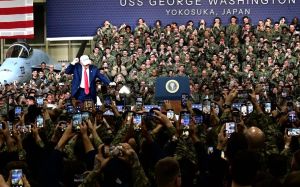
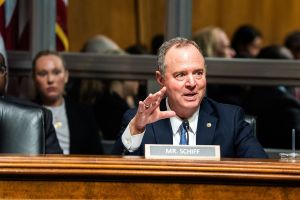
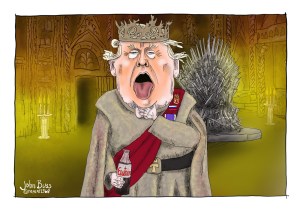
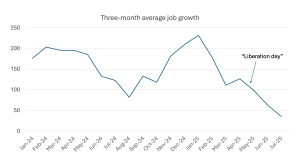
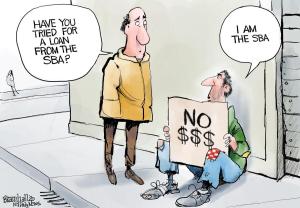 Forbes put these depressing numbers right in the headline. “Unemployment Rose To 4.2% in July, As Hiring Fell Sharply. The U.S. job market appeared to lose steam last month, according to Labor Department data released Friday, as the Federal Reserve warned the effects of President Donald Trump’s tariffs on the economy have yet to be seen. “
 I can only imagine the ketchup flinging in that gaudily redone Oval Office if someone explains this to him. However, he does think he’s above the law, as are his stupid sharpie orders. But let’s get back to the current unemployment problem.
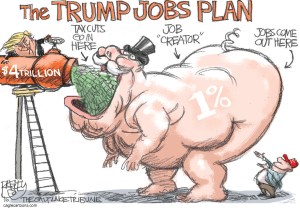 The worst American President ever announced his latest version of the tariff schemes today that he thinks will punish other countries, but will, indeed, punish American Businesses and households. His executive orders will undoubtedly go down in history as attempts to overrule what should be the business of Congress.
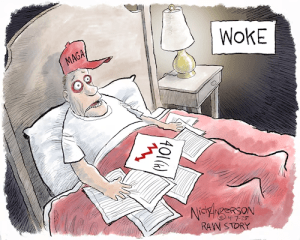 That basically is a bunch of gibberish.
 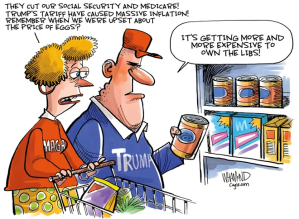 This is the headline at
 This is from USA Today.
 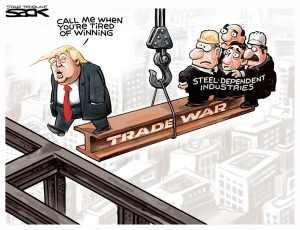 Just so you know, the Commerce and Labor Departments use statistical tools to remove the seasonal factors in the unemployment rates. So the BBC has a heading we can all appreciate today. This is from Jennifer Clarke. “What tariffs has Trump announced and why?” Anyone who takes a shot at why Trump does something is a hero in my book.
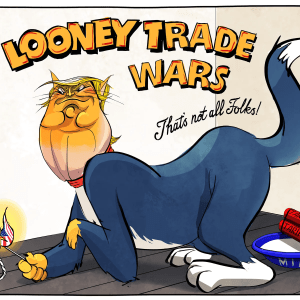 Continue reading the article for more really good basic information. And now you know why it’s called the dismal science. Well, not exactly, that was originally because of clergyman Thomas Robert Malthus and the entire idea that we’d eventually overpopulate the world, use up all the resources, and die. Early economists studied that notion, but quickly dropped it when the entire notion of technological changes came about. The problem is that just like climate change, we know a lot about what helps and hurts an economy, but that doesn’t mean the leaders of a given country will use it. (Especially if they’re as stupid as our current president.)


 The Iowan who became part of a viral moment by recently shouting at U.S. Sen. Joni Ernst that “people will die” because of proposed Medicaid cuts is a Democrat who is using the moment to launch a campaign for the Iowa House.
 The Guardian:

 peej
peej Carissa
 bostonboomer
 dakinikat
 ecocatwoman
 mablue2
 Mama Lopez
 peggysue22
 quixote
 skydancingguestblogger
 Mona (aka Wonk the Vote)



 Sky Dancing
Recent Comments