
By Berthe Morisot, 1873
“Scranton is a place that climbs in your heart, and it never leaves,” Biden said. “For me it was 2446 North Washington Avenue.”


Reading Woman Daydreaming, by Henri Matisse
Those of us who are hanging onto hope that U.S. democracy can still be saved must not only fight Republicans, but also powerful media organizations, especially The New York Times and The Washington Post.
If you follow social media, you’ve undoubtedly seen people mocking New York Times headlines that suggest any good news for Biden is actually negative–along the lines of “The economy is booming–why that’s bad for Biden.”
Despite the fact that news organizations will certainly be persecuted by a second Trump administration, it really appears that at least the wealthy people in charge want another Trump presidency because they believe it will help their bottom line. Working journalists are facing layoffs these days, so perhaps fear of losing their jobs makes them willing to do their bosses’ bidding.
Right now, as Trump faces a historic criminal trial, the Times and Washington Post continue to publish gossipy lightweight stories.
David Kurtz writes in the TPM Morning Memo about a piece in the NYT yesterday on Melania Trump: NYT Is Said To Have Learned Nothing From Its Trump I Coverage.
Yesterday’s NYT apologia for Melania Trump was laugh-out-loud funny, by which I mean so, so bad. Reminiscent of its much-mocked coverage of Javanka during Trump I, the piece had all the usual hallmarks of NYT toadyism.
Let’s start with the passive-voice headline: “Melania Trump Avoids the Courtroom, but Is Said to Share Her Husband’s Anger”
“Said to” is one of the great journalistic sophistries. It does so much apparent work with so little actual effort.
What is this awkward headline construction meant to convey? That despite all her heartache over the Stormy Daniels affair, Melania, too, is outraged (OUTRAGED!) over Manhattan DA Alvin Bragg’s wrongful criminal prosecution of her husband.
How does the NYT know this? So glad you asked!
Melania hasn’t said anything publicly about her supposed outrage. She hasn’t attended legal proceedings with Trump. She hasn’t been by his side at the trial.
But wait! She’s has purportedly spoken “in private” about her feelings.
It’s the classic dipsy-do of the Javanka coverage: Why take any risk of speaking publicly when you can launder it through the NYT. We are never so courageous as we are in our private musings.
But how is the NYT privy to Melania’s private thoughts and comments?
The sourcing: “according to several people familiar with her thinking.” Yes! Bravo! It’s self serving on top of self serving, with two degrees of separation to play it safe.
Why are these “people familiar” granted anonymity? Because they can’t speak publicly “out of fear of jeopardizing a personal relationship with the Trumps.” Perfect! These brave truth-tellers are risking so much – by which I mean, so little – to get their essential truths out into the public sphere.
Here’s the nugget of “reporting” around which the entire article is built:
But Mrs. Trump, the former first lady, shares his view that the trial itself is unfair, according to several people familiar with her thinking.
In private, she has called the proceedings “a disgrace” tantamount to election interference, according to a person with direct knowledge of her comments who could not speak publicly out of fear of jeopardizing a personal relationship with the Trumps.
The rest of the piece is a filament of speculation, pop psychology, knowing winks about cliched relationship tropes, and lazy stereotypes about wives and mothers – all in service of trying to wring a drop of compassion from readers for the private turmoil that comes with being married to DJT.
Read the rest at TPM. But really, who the hell cares what Melania thinks? As the back of her famous jacket read, “I really don’t care, do u?”

Albert Reuss 1889-1975, Woman Reading
Another lightweight story from yesterday’s New York Times by style critic Guy Trebay (at least, I guess it’s favorable to Biden): The Biden Guide to Dressing Younger.
Joe Biden is a dapper guy. He always has been. When he turned up decades ago for a first date with the woman who would become his wife and the country’s first lady, her gut reaction was, “This is never going to work, not in a million years.”
Dressed in a sports coat and loafers, Joe Biden was too dapper for someone who had previously gone out with men in T-shirts and clogs.
They worked it out. And the future president stuck to his style. It was one that sometimes skewed Gatsby, for which in 1974 Washingtonian magazine noted his penchant for pinstripe suits and tasseled loafers when citing him as one of the best dressed men in the Senate. It was one that was sometimes too high-toned for its setting. In 1979, Mr. Biden, then a second-term senator, exuded confidence in a “tailored suit and expensive tie” for a campus speech at the University of Alabama, The New Yorker later reported.
It was one that, on occasion, even threatened to upstage the boss. Yes, it must have been flattering to be praised by The Chicago Tribune as the “best-dressed guy” at Bill Clinton’s 2000 State of the Union address. Politically, however, it was not the best look.
Still, dapper cred has stood President Biden in good stead. When Donald J. Trump, now 77, derides his 81-year-old opponent as doddering Uncle Joe, he is missing a point any tailor would be happy to clarify. There is getting old, and there is looking old. To avoid having your clothes add unnecessary years, make style your friend.
“Joe Biden’s style is timeless and doesn’t have any expiration date,” the designer Todd Snyder said recently. If you think that is accidental, you are not paying attention.
Meanwhile, Trump is a dumpy old guy in baggy suits and extra long ties who claims Biden has dementia, an obvious projection.
A campaign story from Clive Wootson, Jr. at The Washington Post: Scranton vs. Mar-a-Lago: Biden turns sharply to populism.
SCRANTON — President Biden’s schedulers did not publicly announce his second stop Tuesday during his visit to his hometown, but it came as little surprise that he’d end up at the gray house with black shutters where he spent the earliest years of his life. He even nodded to the visit in a speech that mixed his biography with his thoughts on tax policy.
By Berthe Morisot, 1873
“Scranton is a place that climbs in your heart, and it never leaves,” Biden said. “For me it was 2446 North Washington Avenue.”
But the trip was about more than sentiment during the first day of Biden’s three-day swing through this pivotal battleground state. He leaned into populist anger against the rich and worries of a world weighted against the middle class as he sought to draw distinctions between himself and his likely Republican opponent in November, Donald Trump.
“All I knew about people like Trump is that they looked down on us,” Biden told the crowd in his childhood town, contrasting his upbringing with Trump’s frequent visits to his resort in Palm Beach, Fla. “They wouldn’t let us into their homes and their country clubs. When I look at the economy, I look at it through the eyes of Scranton, not through the eyes of Mar-a-Lago.”
Biden will further stress that contrast Wednesday when he travels to Pittsburgh to address the United Steelworkers and unveil a raft of new trade protections for the steel industry. The president will call for a tripling of the 7.5 percent tariff on Chinese steel imports, as well as increased pressure to prevent China from shipping steel to America through Mexican ports….
The actions are just the latest sign of the president’s determination to be seen as a defender of American workers like those in the steel industry, whose employees are spread across states in the industrial Midwest, the so-called “blue wall” that could decide Biden’s political fate in November.
In making the argument, he has leaned into his middle-class upbringing, including the years he spent in Scranton, which he portrays as a scrappy, working-class town. He argues that Trump, on the other hand, is a billionaire who lives in a gilded club in Florida and would bolster other billionaires, the very people who have had an unfair advantage for too long.
Again, I guess at least it’s favorable to Biden.
A serious piece from Mark Joseph Stern at Slate Magazine: Hundreds of Jan. 6 Prosecutions—Including Donald Trump’s—Are Suddenly in Peril at the Supreme Court.
Will the Supreme Court jeopardize the prosecution of more than 350 defendants involved with Jan. 6, including Donald Trump, by gutting the federal statute that prohibits their unlawful conduct? Maybe so. Tuesday’s oral arguments in Fischer v. United States were rough sledding for the government, as the conservative justices lined up to thwap Joe Biden’s Department of Justice for allegedly overreaching in its pursuit of Jan. 6 convictions. Six members of the court took turns wringing their hands over the application of a criminal obstruction law to the rioters, fretting that they faced overly harsh penalties for participating in the violent attack. Unmentioned but lurking in the background was Trump himself, who can wriggle out of two major charges against him with a favorable decision in this case.
There are, no doubt, too many criminal laws whose vague wording gives prosecutors near-limitless leeway to threaten citizens with decades in prison. But this isn’t one of them. Congress wrote a perfectly legible law and the overwhelming majority of judges have had no trouble applying it. It would be all too telling if the Supreme Court decides to pretend the statute is somehow too sweeping or jumbled to use as a tool of accountability for Jan. 6.
Start with the obstruction law itself, known as Section 1552(c), which Congress enacted to close loopholes that Enron exploited to impede probes into its misconduct. The provision is remarkably straightforward—a far cry from the ambiguous, sloppy, or muddled laws that typically flummox the judiciary. It’s a mainstay of the Department of Justice’s “Capitol siege” prosecutions, deployed in about a quarter of all cases. Overall, 350 people face charges under this statute, Trump among them, and the DOJ has used it to secure the convictions of about 150 rioters. It targets anyone who “corruptly … obstructs, influences, or impedes any official proceeding, or attempts to do so.” And it clarifies that an official proceeding includes “a proceeding before the Congress.”
A Woman Reading, by Pablo Picasso, 1920
The government argues that some rioters attempted to “obstruct” an “official proceeding” by halting the count of electoral votes through “corrupt” means. That includes Joseph Fischer, the defendant in the current case. Fischer, who served as a police officer before Jan. 6, allegedly texted that the protest “might get violent”; that “they should storm the capital and drag all the democrates [sic] into the street and have a mob trial”; and that protesters should “take democratic congress to the gallows,” because they “can’t vote if they can’t breathe..lol.” Video evidence shows Fischer assaulting multiple police officers on the afternoon of Jan. 6 after breaching the Capitol.
Would anyone seriously argue that this person did not attempt to corruptly obstruct an official proceeding? For a time, it seemed not: 14 of the 15 federal judges—all but Judge Carl Nichols in this case—considering the charge in various Jan. 6 cases agreed that it applied to violent rioters bent on stopping the electoral count. So did every judge on the U.S. Court of Appeals for the District of Columbia Circuit except one, Judge Gregory Katsas. Both Nichols and Katsas were appointed by Trump. Their crusade to kneecap the law caught SCOTUS’ attention, and the court decided to intervene despite overwhelming consensus among lower court judges. The Supreme Court’s decision will have major implications for Trump: Two of the four charges brought by special counsel Jack Smith in the former president’s Jan. 6 prosecution revolve around this offense. A ruling that eviscerates the obstruction law would arguably cut out the heart of the indictment.
Stern writes that at least three justices–Clarence Thomas, Neil Gorsuch, and Samuel Alito appear likely to do that. Read the rest at Slate.
Catherine Belton at The Washington Post: Secret Russian foreign policy document urges action to weaken the U.S.
Russia’s Foreign Ministry has been drawing up plans to try to weaken its Western adversaries, including the United States, and leverage the Ukraine war to forge a global order free from what it sees as American dominance, according to a secret Foreign Ministry document.
In a classified addendum to Russia’s official — and public — “Foreign Policy Concept of the Russian Federation,” the ministry calls for an “offensive information campaign” and other measures spanning “the military-political, economic and trade and informational psychological spheres” against a “coalition of unfriendly countries” led by the United States.
“We need to continue adjusting our approach to relations with unfriendly states,” states the 2023 document, which was provided to The Washington Post by a European intelligence service. “It’s important to create a mechanism for finding the vulnerable points of their external and internal policies with the aim of developing practical steps to weaken Russia’s opponents.”
The document for the first time provides official confirmation and codification of what many in the Moscow elite say has become a hybrid war against the West. Russia is seeking to subvert Western support for Ukraine and disrupt the domestic politics of the United States and European countries, through propaganda campaigns supporting isolationist and extremist policies, according to Kremlin documents previously reported on by The Post. It is also seeking to refashion geopolitics, drawing closer to China, Iran and North Korea in an attempt to shift the current balance of power.
Using much tougher and blunter language than the public foreign policy document, the secret addendum, dated April 11, 2023, claims that the United States is leading a coalition of “unfriendly countries” aimed at weakening Russia because Moscow is “a threat to Western global hegemony.” The document says the outcome of Russia’s war in Ukraine will “to a great degree determine the outlines of the future world order,” a clear indication that Moscow sees the result of its invasion as inextricably bound with its ability — and that of other authoritarian nations — to impose its will globally.

Albert Reuss, Lady Reading a Book
The Russians have clearly succeeded in subverting much of the Republican Party. Right now, far right Republicans are talking about getting rid of House Speaker Mike Johnson because he appears to be trying to pass some military aid for Ukraine.
The Washington Post: Momentum builds to oust Johnson from House speakership.
House Speaker Mike Johnson’s job is in serious jeopardy as two far-right lawmakers are threatening to oust him after the embattled Republican leader proposed a complex plan intended to fund key foreign allies during wartime.
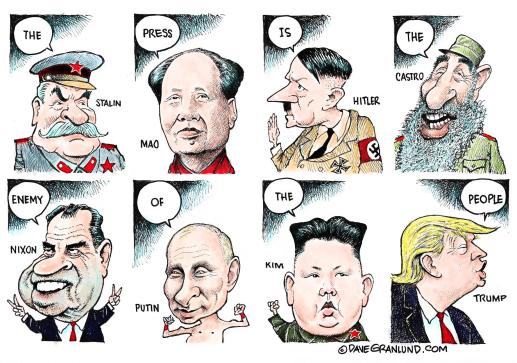
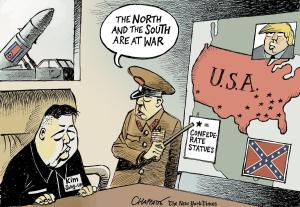
The New York Times has really bitten the dust this time. Yesterday they announced they will no longer run any political cartoons. Not only are NYT editors terrified of offending Trump and his base, but also they clearly have no sense of humor.
Chapette reacted to his firing at his personal website: The end of political cartoons at The New York Times.
All my professional life, I have been driven by the conviction that the unique freedom of political cartooning entails a great sense of responsibility.
In 20-plus years of delivering a twice-weekly cartoon for the International Herald Tribune first, and then The New York Times, and after receiving three OPC awards in that category, I thought the case for political cartoons had been made (in a newspaper that was notoriously reluctant to the form in past history.) But something happened. In April 2019, a Netanyahu caricature from syndication reprinted in the international editions triggered widespread outrage, a Times apology and the termination of syndicated cartoons. Last week, my employers told me they’ll be ending in-house political cartoons as well by July. I’m putting down my pen, with a sigh: that’s a lot of years of work undone by a single cartoon – not even mine – that should never have run in the best newspaper of the world.
I’m afraid this is not just about cartoons, but about journalism and opinion in general. We are in a world where moralistic mobs gather on social media and rise like a storm, falling upon newsrooms in an overwhelming blow. This requires immediate counter-measures by publishers, leaving no room for ponderation or meaningful discussions. Twitter is a place for furor, not debate. The most outraged voices tend to define the conversation, and the angry crowd follows in.
Cartoon by Chappette
In 1995, at twenty-something, I moved to New York with a crazy dream: I would convince the New York Times to have political cartoons. An art director told me: “We never had political cartoons and we will never have any.“ But I was stubborn. For years, I did illustrations for NYT Opinion and the Book Review, then I persuaded the Paris-based International Herald Tribune (a NYT-Washington Post joint venture) to hire an in-house editorial cartoonist. By 2013, when the NYT had fully incorporated the IHT, there I was: featured on the NYT website, on its social media and in its international print editions. In 2018, we started translating my cartoons on the NYT Chinese and Spanish websites. The U.S. paper edition remained the last frontier. Gone out the door, I had come back through the window. And proven that art director wrong: The New York Times did have in-house political cartoons. For a while in history, they dared.
Along with The Economist, featuring the excellent Kal, The New York Times was one of the last venues for international political cartooning – for a U.S. newspaper aiming to have a meaningful impact worldwide, it made sense. Cartoons can jump over borders. Who will show the emperor Erdogan that he has no clothes, when Turkish cartoonists can’t do it ? – one of them, our friend Musa Kart, is now in jail. Cartoonists from Venezuela, Nicaragua and Russia were forced into exile. Over the last years, some of the very best cartoonists in the U.S., like Nick Anderson and Rob Rogers, lost their positions because their publishers found their work too critical of Trump. Maybe we should start worrying. And pushing back. Political cartoons were born with democracy. And they are challenged when freedom is.
I agree that this isn’t just about cartoons. Trump is succeeding in his war against the press, and the editors of the New York Times are helping him. Twitter commentary from two cartoonists:
Thread from Pat Bagley. More tweets on Twitter
Continuing on the subject of press freedom, CNN’s Jim Acosta has a book out: The Enemy of the People: A Dangerous Time to Tell the Truth in America. Sam Donaldson reviewed the book at CNN:
Reading Jim Acosta’s new book “Enemy of the People” is like watching a train wreck in progress, with passengers bracing for the inevitable crash.
Friends and critics agree we have never seen a president like Donald J. Trump, whose disdain, even contempt and apparent hatred for many members of the press is almost daily on display.
Acosta cites instance after instance when this President and many of his staff show that they are bent on interfering with the ability of reporters to bring the public an accurate account of the administration’s stewardship.
For most of his adult life, President Trump courted the press, lived for its attention, even for a time pretended he was someone else when calling reporters to sing Trump’s praises. Whether now he truly believes that the mainstream press, as he says, reports “fake” news and is the “enemy of the American people,” or that such language is simply part of a tactic meant to stoke the anger of his “base” while escaping an objective accounting of his actions doesn’t matter. The effect is to undermine the credibility of the media, leaving him free to pursue policies that harm us at home and abroad….
History shows that tyrants and would-be tyrants always attempt to destroy a free press. And that is why the First Amendment to our Constitution specifically forbids government from interfering with the work of the press.
Read the rest at CNN. I don’t know if I’ll read Acosta’s book, but what Donaldson has to say is vitally important.
I’m feeling so discouraged about the Democratic primary. There are far too many candidates and the ones leading the pack are pathetic. Biden, Buttigieg and Sanders? Please. At this point, I think Trump will win a second term unless his dementia gets so bad the press finally has to begin writing about it.
Eugene Robinson writes at The Washington Post: We don’t need 23 presidential candidates. There’s another important role to fill.
Dear Democratic presidential candidates: I know all 23 of you want to run against President Trump, but only one will get that opportunity. If you truly believe your own righteous rhetoric, some of you ought to be spending your time and energy in another vital pursuit — winning control of the Senate.
I’m talking to you, John Hickenlooper of Colorado, who would have a good chance of beating incumbent Republican Cory Gardner. I’m talking to you, Gov. Steve Bullock of Montana, who could knock off GOP incumbent Steve Daines. I’m even talking to you, Beto O’Rourke, who would have a better chance than any other Texas Democrat against veteran Republican John Cornyn.
And I’m talking to you, too, Stacey Abrams of Georgia, even though you haven’t jumped in. You came within a whisker of being elected governor, and you have a national profile that would bring in a tsunami of campaign funds. You could beat Republican David Perdue — and acquire real power to translate your stirring eloquence into concrete action.
I agree that we absolutely need Senate candidates, but the even greater problem is the candidates that are topping the polls. Biden, Sanders, and even Warren are too old. Biden and Sanders have far too many negatives in their past histories. Buttigieg is too inexperienced, and can you really imagine him beating Trump? More from Robinson on the importance of winning the Senate:
As the Republican Party has long understood, it’s all about power. Senate Majority Leader Mitch McConnell (R-Ky.) could not care less about lofty words and high ideals. Coldly and methodically, he has used his power to block widely supported progressive measures such as gun control, to enact a trickle-down economic agenda that favors the wealthy and to pack the federal bench with right-wing judges whom we’ll be stuck with for decades.
We all remember how McConnell refused even to schedule hearings for President Barack Obama’s final Supreme Court nominee, Judge Merrick Garland, ostensibly because the vacancy occurred during an election year. Were you surprised when he said recently that if a seat were to come open in 2020, he would hasten to confirm a replacement? I wasn’t. That’s how McConnell rolls. He exercises his power to its full extent and is not bothered by what you or I or anyone else might think. Charges of hypocrisy do not trouble his sweet slumber.
McConnell is not going to be reasoned, harangued or shamed into behaving differently. The only way to stop him is to take his power away, and the only way to do that is for Democrats to win the Senate.
Another danger we face is Cover-Up General Barr’s hostile takeover of the Justice Department. NBC News reports: New details of Barr’s far-reaching probe into ‘spying’ on Trump 2016 campaign.
The Justice Department on Monday offered new insight into what it called a “broad” and “multifaceted” review of the origins of the Russia investigation, and sought to assure lawmakers that the probe ordered by President Donald Trump would work to protect sensitive intelligence at the heart of it.
In a letter to House Judiciary Committee Chairman Jerry Nadler, Assistant Attorney General Stephen Boyd said the investigation — referred to throughout as a “review” — would evaluate whether the counterintelligence investigation launched in 2016 into potential contacts between foreign entities and individuals associated with Donald Trump’s campaign “complied with applicable policies and laws.”
“There remain open questions relating to the origins of this counterintelligence investigation and the U.S. and foreign intelligence activities that took place prior to and during that investigation. The purpose of the Review is to more fully understand the efficacy and propriety of those steps and to answer, to the satisfaction of the Attorney General, those open questions,” Boyd wrote.
DOJ announced in May that Attorney Gen. William Barr had assigned John Durham, the U.S. attorney for the District of Connecticut, to oversee a review long called for by Trump into whether the Russia probe, launched in the heat of the presidential campaign, was influenced by politics and whether established protocols were followed involving the surveillance of Trump campaign officials.
A counterpoint from former CIA Chief of Station John Sipher at The Washington Post: Trump’s conspiracy theories about intelligence will make the CIA’s job harder.
President Trump’s attempts to craft a public narrative that a government conspiracy was aimed at his presidential campaign moved off Twitter and into the real world of official documents last month. Trump issued a directive assigning Attorney General William P. Barr to probe the origins of the Russia investigation, giving Barr the authority to declassify secret intelligence. As the president stated, “We’re exposing everything.”
The order directly undercuts Director of National Intelligence Daniel Coats, who is responsible for both protecting and potentially releasing intelligence. And it suggests that Trump is still disputing the fact that Russia interfered in the 2016 election.
The president hardly needs to create a public furor to determine what the intelligence community knew about Russian interference, when they knew it or how they learned it. The CIA would gladly provide detailed briefings to him, the attorney general or anyone Trump might request one for. There are well-established means of sharing information within the executive branch. If the president wants to see the specific intelligence, he can.
But that’s not what Trump wants, is it?
But a private inquiry would not provide Trump with the political weapon of a public scapegoat. If he’s looking to discredit the intelligence behind the unanimous assessment by U.S. agencies in 2016 — since affirmed by the Mueller report, numerous indictments and no shortage of public evidence — he seems to want someone to blame. The recent directive hints at Trump’s eagerness to find a CIA version of his favorite targets at the FBI: James B. Comey, Peter Strzok, Bruce Ohr, Andrew McCabe or Robert S. Mueller III’s “angry Democrats.”
Creating a boogeyman inside the CIA is probably an effective tool if Trump’s goal is to persuade voters that he faced a “coup” and that the Russian attack was a “hoax,” as he has claimed. The necessary secrecy of the CIA’s activities makes it easy to spin a conspiracy and scare the public. A weaponized charge can appear simple and compelling, while the CIA’s ability to respond is limited; the issues involved are complicated and hard to explain in the length of a tweet. It is not hard to whip up fear and assume the worst of a powerful and shadowy secret agency if the most powerful man in the world is willing to deceive the public in the process.
That’s it for me today. What stories have you been following?
 Good Afternoon Sky Dancers!
It’s been another weird week in the good ol’ USA. New Jersey seems to be the epicenter of cray cray these days. It doesn’t quite rival Florida yet, however. The coverage of the US presidential election may have taken a turn and a few of the polls are looking up for the future of all civilization. Meanwhile, I’m still down here in the swampland of America in need of a plan. Let’s look at some of the weirdness that is the news these days.
Peter Beinart–writing for The Atlantic–has noticed a distinct change of tone at the NYT since they got played good by Trump on Friday’s extended advertisement for a hotel. They may have gotten their mojo back. Or not. Beinart is hoping some of the worst of modern journalism is going away. We have a ray of hope that there may be some Fourth Estate left in the old girl yet!
But the Times, once a champion practitioner of the “he said, she said” campaign story, discarded it with astonishing bluntness. The Times responded to Trump’s press conference by running a “News Analysis,” a genre that gives reporters more freedom to explain a story’s significance. But “News Analysis” pieces generally supplement traditional news stories. On Saturday, by contrast, the Times ran its “News Analysis” atop Page One while relegating its news story on Trump’s press conference to page A10. Moreover, “News Analysis” stories generally offer context. They don’t offer thundering condemnation.
Yet thundering condemnation is exactly what the Times story provided. Its headline read, “Trump Gives Up a Lie But Refuses to Repent.” Not “falsehood,” which leaves open the possibility that Trump was merely mistaken, but “lie,” which suggests, accurately, that Trump had every reason to know that what he was saying about Obama’s citizenship was false.
The article’s text was even more striking. It read like an opinion column. It began by reciting the history of Trump’s campaign to discredit Obama’s citizenship. “It was not true in 2011,” began the first paragraph. “It was not true in 2012,” began the second paragraph. “It was not true in 2014,” began the third paragraph. Then, in the fourth paragraph: “It was not true, any of it.” The article called Trump’s claim that he had put to rest rumors about Obama’s citizenship “a bizarre new deception” and his allegation that Clinton had fomented them “another falsehood.” Then, in summation, it declared that while Trump has “exhausted an army of fact checkers with his mischaracterizations, exaggerations and fabrications,” the birther lie was particularly “insidious” because it “sought to undo the embrace of an African American president by the 69 million voters who elected him.”
Insert Mic Drop here.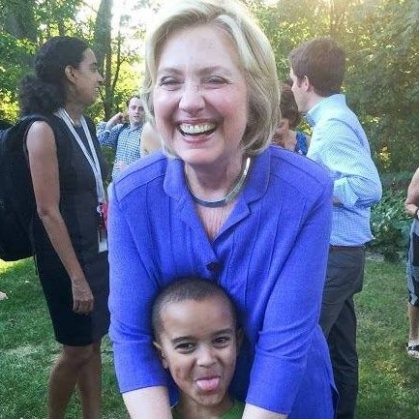
Hillary Clinton volunteers here in Louisiana are working diligently to GOTV in Florida. This is why I’m watching the polls of that state carefully. It’s also because it may be the only state that can shut down a potential Trump presidency completely. Sound familiar?
Former Secretary of State Hillary Clinton and businessman Donald Trump are nearly tied in a four-way race for Florida’s key electoral votes, according to a New York Times Upshot/Siena College Research Institute poll of likely Florida voters released today. Clinton currently has the support of 41 percent of likely voters to Trump’s 40 percent with former Governor Gary Johnson garnering 9 percent and Green Party Candidate Jill Stein with 2 percent. Senator Marco Rubio leads his Democratic challenger, Congressman Patrick Murphy by 48 to 42 percent.
Likely voters support passage of additional federal gun control legislation (49-43 percent), oppose building a wall the length of the Mexican border (50-43 percent), and favor, rather than oppose government stimulus programs (44-37 percent). But, they disapprove of the Affordable Care Act (51-42 percent), and are evenly divided when it comes to deporting undocumented immigrants here illegally (44-43 percent).
“Trump has as large a lead among Republicans (78 points) as Clinton does with Democrats (77 points) and independents are evenly split at 34 percent for Trump and 32 percent for Clinton with 18 percent for Johnson. Women lean towards Clinton but men tend to support Trump,” said Siena College Poll Director Don Levy. “Trump leads in the North, Bay Area and Central portions of the state, while Clinton leads in the vote rich Southeast and the Southwest is a toss-up.
“There is not only a significant gender gap in this race, but also large racial divides,” Levy said. “Trump is up 51 to 30 percent among white voters, while Clinton has a commanding 82-4 percent lead with African-Americans and 61-21 percent among Hispanics/Latinos.”
“Both candidates suffer from a majority of Florida voters having an unfavorable opinion of them. Clinton is viewed favorably by 40 percent and unfavorably by 53 percent while Trump’s numbers are 39 positive and 55 percent negative. Equal percentages, 37 percent, view one of the candidate’s favorably and the other negatively while 15 percent view them both unfavorably and only 2 percent have a favorable opinion of both. Majorities of Blacks and Latinos view Clinton favorably while half of white likely voters have a favorable opinion of Trump. Of those with an unfavorable opinion of both, a third say they will vote for Johnson, 22 percent for Clinton and 17 percent for Trump,” Levy said.
 I still don’t understand how any one but a card carrying member of the KKK could have a favorable opinion of Trump unless you haven’t been paying attention to what comes out of his mouth. But, evidently some white people are just very fragile and cannot properly identify the source of their stress. (ProTip: If you’re blaming immigrants and African Americans you’re a racist.)
Florida is one of those states where a lot of people seem to be on the edge of crazy a lot of the time. There just seems to be a lot of this running about the state: Deputies: Naked man breaks in home, bites resident, then dies. I never know when I call there if I’m getting a nice retiree, a nice university student or a “Florida man”. But, Florida is key to the election. Sane Louisianans all over the state are trying to reach out to our sane counterparts in the Sunshine State.
Florida is a make-or-break state for Donald Trump. To win the presidency, he needs to lock down the Sunshine State — or else beat Hillary Clinton in Iowa, Ohio, Pennsylvania, North Carolina, Nevada, and New Hampshire, plus a state like Michigan or Virginia, where she is currently comfortably ahead in the polls.
And according to analysis by The New York Times‘ Upshot, Florida is going to be a nail-biter of a contest come November. The New York Times Upshot/Siena College poll reports that in a four-way race with the Libertarian and Green Party candidates, Clinton leads 41 to 40, and in a head-to-head, it is a tie at 43-43.
Instead of being a mix of purple cities, the Upshot’s analysis shows that most regions are almost cleanly divided as red or blue voting pockets based on demographics. In Florida, Trump keeps his hopes alive with white voters, both college educated and not — he leads 51 percent to Clinton’s 30 percent. But when it comes to Hispanic communities, Clinton has a 61 percent to 21 percent lead, doing even better with the demographic than President Obama in 2012. Black voters also overwhelmingly back Clinton, 82 percent to 4 percent.
Many regions of the state are becoming less competitive, with Miami-Dade County looking to be a Democratic hold and north Tampa and Daytona Beach solidifying as Republican. A retirement community, The Villages, with a population of 150,000, looks to be a comfortable win for Trump; older voters in the state strongly prefer him. Young voters back Clinton by a healthy margin, although over half say they don’t view her favorably.
I cannot figure out for the life of me why the Woodstock Generation is going for such an asshole. Oh, btw, if you haven’t followed Michigan’s own Little Miss Flint on Twitter, please do so! That little girl has leadership potential! She also recognizes leaders from assholes that shouldn’t be anywhere near children or the public.
 You know, you can always tell something about the character of a person by the way young children respond to them and by the way they respond to young children. I had a friend talk about visiting her grandchild the other day. She basically said her grandaughter wanted to make sure the nice lady won for her instead of the scary man. (That’s our own JSLAT by the way who came out and corrected me on the gender assignment btw which I just did.) Out of the mouths of babes, my friends, out of the mouths of babes.
Another state seemingly going off the rails this weekend is New Jersey who has a nutter for a governor and what appears to be a home grown terrorist cell.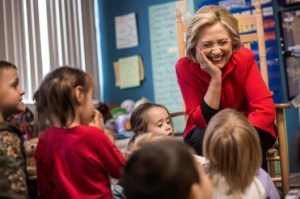 The gang that–luckily–couldn’t shoot straight may have been motivated more by local treatment of them than by much else. Anyway, to our dear Sky Dancers in NJ, please stay away from rogue pressure cookers.
The FBI took five people with possible links to the Chelsea explosion into custody Sunday night in Brooklyn as authorities shut down a busy New Jersey rail station after finding multiple pipe bombs in a garbage can, police and New Jersey officials said.
The weekend trail of terror continued along the Belt Parkway where federal agents nabbed several people of interest with a weapons stash inside an SUV, according to law enforcement sources.
The five taken into custody had come over the Verrazano Bridge from Staten Island. Investigators were trying to determine if the occupants of the SUV were about to drive out of town or take a plane, sources said.
The main suspect is a naturalized citizen from Afghanistan who claims a history of persecution by the police and the neighborhood for his religion and ethnicity.
The prime suspect in the New York and New Jersey bombings sued his local police force and claimed they were persecuting him for being a Muslim.
Ahmad Rahami said in a lawsuit that cops in Elizabeth, New Jersey subjected his and his family to discrimination and ‘selective enforcement’ based on their religion.
The family claimed that police tried to shut down their chicken restaurant, called First American, too early each night with ‘baseless’ tickets and summonses.
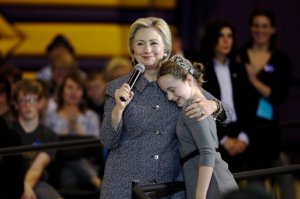
New Jersey is also looking forward to the Trial for Bridgegate where it may be shown that Chris Christie’s involvement was a factor in either a cover up or the occurrence itself. Federal Prosecuters believe Christie knew about the closures. What did he know and when did he know it?
Gov. Chris Christie was told of the George Washington Bridge lane closures as they were occurring in 2013, a federal prosecutor told jurors on Monday in U.S. District Court.
David Wildstein, who has already pleaded guilty to playing a role in the incident, and Bill Baroni, who is now on trial for his alleged role in the scheme, “bragged” about the traffic gridlock that lane closures were causing when they spoke with the Republican governor at a Sept. 11 memorial in Lower Manhattan, Assistant U.S. Attorney Vikas Khanna said.
The two Christie-appointed former Port Authority officials mentioned the Democratic mayor of Fort Lee, Mark Sokolich, whom they are accused to trying to punish after he refused to endorse Christie’s reelection campaign, the prosecutor said.
“The evidence will show that Baroni and Wildstein were so committed to their plan that, during the precious moments they had alone with the governor, they bragged about the fact that there were traffic problems in Fort Lee and that Mayor Sokolich was not getting his calls returned,” Khanna told jurors during his opening remarks on Monday morning.
Khanna did not elaborate on what was allegedly said during the conversation with Christie, but told jurors that “evidence in this case may show that others could have, should have, perhaps knew certain aspects of what was going on.”
Baroni, the former deputy executive director of the Port Authority of New York and New Jersey, and Bridget Anne Kelly, Christie’s former deputy chief of staff, were indicted last May on charges of conspiracy, fraud and civil rights violations.
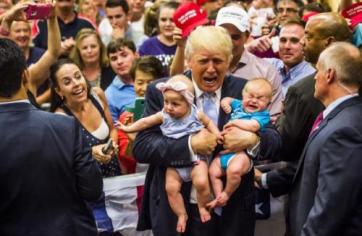
Well, the real place to notice the meltdown in the Republican party is ritzy cocktail dates, I guess. I know that I frankly will not deal with any one that would vote for Trump. I consider it the acid test for if you’re with or against humanity. Even America’s babies know better than get close to the orange Creepazoid. BTW, I really just did a Google search for images of babies with Trump and got all these poor screaming kids standing next to a grown man sporting a similar sour puss face. What exactly does that say?
A few months ago, Matt Schlapp, the former White House political director under President George W. Bush, walked into a cocktail party and tried to join a conversation with Republican consultants he has known for years.
“The conversation quickly ended,” Schlapp, the chairman of the nation’s oldest conservative grassroots organization, told The Hill in a recent interview. “Everyone looked down at their expensive loafers.”
“I hadn’t had that happen to me in a professional setting before,” he added. “It’s one of those moments when you wonder, ‘Hey, do I have something on my face?’”
Schlapp’s decision to support Donald Trump for president has cost him friends in Washington’s elite Republican circles. Invitations he would normally receive no longer arrive. The vibe he says he’s getting is: “You’re out of the club.”
He’s hardly alone. Old allies in Washington and across the establishment Northeast are no longer on speaking terms because one backs Trump and the other loathes the nominee. Divisions have run so deep in some cases that they could take years to heal.
All I have to do is listen to Kellyann Conway to know that people will sell their souls for some amount of money. We’ll have to wait for campaign finance reports to see exactly how much. There’s an entire group of right wing ‘christians’ out there that no longer have theirs. I’m certain of that.
Something remarkable happened on Sunday morning’s Face the Nation, or rather, something that would be remarkable in any normal presidential election. Host John Dickerson got Donald Trump campaign manager Kellyanne Conway to issue two stunning tacit admissions that her candidate is a liar, and then Dickerson remarkably sort of apologized for it.
On Friday morning, Donald Trump ended his years-long crusade to smear President Obama by lying about Hillary Clinton, lying about his own actions, and finally stating the obvious fact that everyone else already knew: that Barack Obama was born in the United States. When Dickerson confronted Conway with the lie that Trump’s campaign put out and Trump repeated, that Trump had put an end to the controversy in 2011, she didn’t challenge that the lie was a lie, and when Dickerson followed up by asking Conway why Trump promoted a lie for five years, Conway similarly accepted that characterization as truth (emphasis mine):
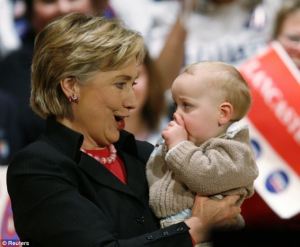 Supposedly, the Trump team is now shaking in their boots over the Trump Foundation investigation also. No wonder all the babies cry around Trump. He steals their candy.
Those in Donald Trump’s orbit appear to be nervous about the swirling scandal around the Trump Foundation—and they should be: The stakes are incredibly high.
The allegations of a quid pro quo between Trump and Florida Attorney General, improper use of the charity for personal benefit, and employment of the charity for political purposes have serious penalties beyond mere campaign optics—the possible consequences range from hefty fines to jail time.
The last seven days has been all bad news on the Trump Foundation front: House Democrats have publicly sought a Justice Department investigation into the charity, while left-leaning watchdog group Citizens for Responsibility and Ethics in Washington alleged that Trump appeared to have bribed Florida Attorney General Pam Bondi by giving her a $25,000 contribution so that she would not join a lawsuit against Trump University.
And a New York Times investigation this past week showed that Trump had personally signed the check that constituted the illegal campaign contribution from his charity to Bondi.
Add this to a dose of personal animosity: New York Attorney General Eric Schneiderman told CNN this week that “we have been looking into the Trump Foundation to make sure it’s complying with the laws governing charities in New York.” The Trump camp already despises Schneiderman due to his legal crusade on the controversial Trump University business.
“This reaches above a distraction for them due to the legal implications of it and long litigation possibility,” a former senior aide to Trump said. “Look, Donald signed those checks… he’s on there. He’s liable.”
I mentioned this over the weekend in comments, but want to mention it again. If you didn’t see the President’s speech to the CBC, go do it. He was amazing.
On a September night when he gave a rousing valedictory speech to the famed Congressional Black Caucus (CBC) at the dinner for its annual legislative weekend, as awareness is setting in about how adroit and blessed Barack Obama has been as our national leader, with reported numbers showing a giant drop in poverty, a rise in jobs, and growth in family income despite the legislative blocks that stubbornly refused to fund stimulative policies for labor, wages and jobs, the President in his remarks took an unusual tact for him: the first black President, Barack Obama openly reclaimed his history and legacy and put it firmly in the history of race in America. He shared the historic challenges of a historically oppressed community formed in America when they were imported to be slaves—humans sold as property, controlled without rights for the benefit of the privileged. He described how this historical beginning was a force within him and within the community itself. How it gave birth to a driving passion for justice.
Because of this remarkable precedent, his speech deserves a close reading. It is an oratory triumph! It is also the historical moment many have been waiting for—the moment when the nation’s first African-American President put himself, by his own words, into a history of America where race mattered and still matters. His speech cast light on the veil and shadows that fall on the African-American character. It highlighted African success, including his own.
His speech was masterful storytelling: examples, irony, metaphor, repetition/analepsis, contrasts, even ridicule and anticlimax; bathos and epistrophe were among the rhetoric devices he used to deconstruct the competing versions of history used to deny his place as he built the case for a new Americal historical centerpiece, one arranged by truth and merit, admired for its accomplishments, as unique as America’s deeply rooted dream. His words were remarkably clear of gestures and insults. He cast no blame. He relied on the oral tradition, the method for teaching and transmitting ideas when the enslaved were punished for being able to read or write. The oral tradition shared and stored the community’s most valuable lessons. It emphasized performance and creativity.
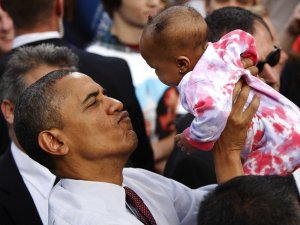
He also had a compelling argument for Hillary and a huge African American Voter GOTV effort. Again, go watch the entire thing. However, just look at the face of those babies and you’ll see who the future of America supports and loves. Spoiler Alert! It had a lot to do with telling every one that we all had a lot to lose if we got sent back in time!
So, that’s my two cents today! What’s on your reading and blogging list?

The Dog Days of Summer, Janet Hill
It’s the last week of August, and the dog days of summer have supposedly passed; but the Boston area is supposed to hit ninety degrees today and tomorrow. I’m actually looking forward to it, because it has been so cool here lately–in the sixites and low seventies in the daytime and the fifties at night. Yesterday it got into the high eighties, and it felt wonderful.
The Boston Globe has a story today about Peter Theo Curtis, the writer who was just released from captivity in Syria. His mother lives in Cambridge. I had never heard of Curtis before; apparently his kidnapping was kept secret. The Globe reports: Militants free US writer with Mass. ties who was held in Syria.
Peter Theo Curtis, a writer and scholar with ties to the Boston area who was held captive for nearly two years by one of the Islamic militant groups operating in Syria, was released Sunday after emissaries from the government of Qatar won his freedom on humanitarian grounds, in a stark contrast to the brutal murder of fellow war correspondent James W. Foley .
Curtis’s 22 months in captivity were kept from the public at his family’s request since he was nabbed near the Syrian border in October 2012 by Al Nusra Front, one of the groups seeking to topple President Bashir Assad of Syria. Al Nusra Front has ties to the Al Qaeda terrorist network.
Curtis, 45, who wrote dispatches under the name Theo Padnos and previously chronicled disaffected young Muslims in Yemen in a book titled “Undercover Muslim,” had studied Arabic in Syria.
He was handed over to United Nations peacekeepers in the Israeli-occupied Golan Heights on Sunday evening, a UN spokesman in New York said. After it was determined he was in good medical condition, he was transferred to representatives of the US government, according to the UN.
“We are so relieved that Theo is healthy and safe and that he is finally headed home after his ordeal,” his mother, Nancy Curtis, who lives in Cambridge, said in a statement, “but we are also deeply saddened by the terrible, unjustified killing last week of his fellow journalist, Jim Foley, at the hands of the Islamic State in Iraq and Syria, ISIS.”
Foley was from New Hampshire, and the two families have gotten to know each other well, according to Curtis.

Garden Shed – Late Summer, KK Marais
President Obama has authorized surveillance flights over Syria, according to BBC News.
Correspondents say the move could mark the first step towards US air strikes inside Syria, where the jihadist group controls vast swathes of territory.
The US is already carrying out strikes against IS in neighbouring Iraq.
On Monday, the Syrian government said it would work with the international community in the fight against IS.
Western governments have so far rejected suggestions that they collaborate with President Bashar al-Assad in an attempt to counter the growing regional threat posed by IS….
On Monday evening, US officials said Mr Obama had approved over the weekend reconnaissance flights by unmanned and manned aircraft, including drones and possibly U2 spy planes.
The US military has been carrying out aerial surveillance of IS – an al-Qaeda breakaway formerly known as Isis – in Iraq for months and launched air strikes on 8 August.
From The Boston Globe, citing “AP sources,” U.S. planes have already begun flying over Syria.
KABUL, Afghanistan (AP) — The U.S. has begun surveillance flights over Syria after President Barack Obama gave the OK, U.S. officials said, a move that could pave the way for airstrikes against Islamic State militant targets there.
While the White House says Obama has not approved military action inside Syria, additional intelligence on the militants would likely be necessary before he could take that step. Pentagon officials have been drafting potential options for the president, including airstrikes.
One official said the administration has a need for reliable intelligence from Syria and called the surveillance flights an important avenue for obtaining data.
Two U.S. officials said Monday that Obama had approved the flights, while another U.S. official said early Tuesday that they had begun. The officials were not authorized to discuss the matter by name, and spoke only on condition of anonymity.
Jim Michaels of USA Today spoke to Gen. Dempsey on Sunday about what is being done to deal with ISIS in Iraq.
ABOARD A U.S. MILITARY AIRCRAFT — U.S. airstrikes on Islamic militants in Iraq have blunted their momentum, but defeating them will require a broad regional approach that draws support from Iraq’s neighbors and includes political and diplomatic efforts, the top U.S. military officer said.
The long-term strategy for defeating the militants includes having the United States and its allies reach out to Iraq’s neighbors, including Jordan, Saudi Arabia and Turkey, Gen. Martin Dempsey, chairman of the Joint Chiefs of Staff, said Sunday….
Dempsey is working with Central Command to prepare “options to address [the Islamic State] both in Iraq and Syria with a variety of military tools including airstrikes,” said Col. Ed Thomas, Dempsey’s spokesman, in a statement.
The militant group Islamic State, also known as ISIS, has shown itself to be so brutal that Iraq and the U.S. should be able to find “willing partners” to join efforts to defeat the militants, Dempsey said.
But military power won’t be enough, Dempsey said. The strategy must take a comprehensive approach that includes political and diplomatic efforts to address the grievances of millions of Sunnis who have felt disenfranchised by Iraq’s Shiite-dominated government, he said.

Late Summer Garden, John Gordon
I get the feeling that we’re never going to escape involvement in the endless Middle East conflicts, thanks to George W. Bush, Dick Cheney, and the rest of the neocon gang. What a horrible mess! We have our own messes to deal with here, but foreign wars always seem to trump the needs of the American people.
John Cassidy speculates at The New Yorker: What’s Next in Iraq and Syria?
On his first full day back from vacation, President Barack Obama could be forgiven for wishing he were still on Martha’s Vineyard. With confirmation that ISIS fighters have just captured another military base from the government forces of President Assad, and that Qatar has engineered the release of an American freelance journalist who was being held by a non-ISIS jihadist group, Obama has two formidable challenges to deal with.
The immediate task for Obama is deciding whether to launch American bombing raids on ISIS positions inside Syria, while simultaneously preparing his Administration, and the country at large, for the possibility of another video showing an American hostage being butchered. The ISIS militants, having carefully orchestrated the beheading of James Foley following the launch of U.S. strikes inside Iraq, will surely seek to exploit the fate of its remaining American hostages for maximum effect. Any U.S. decision to expand its air campaign is almost certain to be met with the release of more snuff films.
No President—no American—could take such a prospect lightly. At the same time, Obama has to guard against allowing emotion and wishful thinking to take over U.S. policy. That’s what happened after 9/11, and some of the chaos that we now see in the Middle East can be traced back to that historic blunder. What’s needed is calm cost-benefit analysis of the options open to the United States, taking account of its strategic interests, its values, and its capabilities. In short, we need what Danny Kahneman, the Princeton psychologist who pioneered behavioral economics, would refer to as some Type 2 thinking: a disciplined weighing of the likely consequences of our actions. If we give into our Type 1 reaction—horror, outrage, anger—we will be playing into the hands of the jihadists.
One place to start is by acknowledging two errors in thinking that have blighted U.S. policy in the past decade: the conservative delusion that the United States could, more or less single-handedly, use its military power to reinvent the Middle East, and the liberal illusion that we could simply walk away from the mess that Bush, Cheney & Co. created. Without the political willingness and the financial capability to garrison the region in the manner of postwar Germany and Japan, U.S. influence has to be exercised through air power, political proxies, economic inducements, and regional alliances. But that doesn’t diminish the fact that the United States and other Western countries have vital interests at stake, one of which is preventing the emergence of a rogue Islamic state that would provide a rallying point, and a safe haven, for anti-Western jihadists the world over.
Read the whole thing at the link.

A Garden in a Sea of Flowers, Ross Turner
There has been so much breaking news for the past couple of months that we haven’t talked much about the economies of the U.S. and Europe. But today the European Central Bank is topping the headlines, and last week Fed Chairperson Janet Yellen spoke at Jackson Hole, so I thought I’d post a few economics stories.
Here’s CNN Money’s report on Yellen’s speech, Janet Yellen: Job market not recovered.
That was Federal Reserve Chair Janet Yellen’s main message Friday in a much anticipated speech.
“It speaks to the depth of the damage that, five years after the end of the recession, the labor market has yet to fully recover,” she said.
The debate now is whether the job situation in America is healthy enough for the Federal Reserve to start raising interest rates, which have been at historic lows in recent years in an effort to jump start the economy. Yellen, however, said little new on Friday, and U.S. stock markets stayed flat.
Yellen is chair of the committee that sets interest rates, but she only gets one vote. Other members have differing views. The Fed board and other top economists are spending the weekend in Jackson Hole, Wyoming, debating these key issues.
Though the unemployment rate “has fallen considerably and at a surprisingly rapid pace,” Yellen said problems remain.
Yellen called attention to what Americans in the job market already know–though the employment numbers look better, many people have stopped looking for work, and most of the new jobs are part-time and pay low wages.
A few more U.S. economy stories to check out:
The Wall Street Journal: Fed’s Yellen Remains Mum on Timing of Rate Change.
Bloomberg Businessweek: Yellen Job-Slack View Muddied by Pent-Up Wage Deflation.
Slate: The Fed Is Not As Powerful As We Think.
If you think the economy is struggling here, you should take a look at Europe, where austerity thinking has ruled since the economic crisis hit. Yesterday the French government collapsed. From The New York Times, French Cabinet Is Dissolved, a Victim of Austerity Battles.
PARIS — The collapse of the French government on Monday exposed widening divisions both within France’s leadership, and Europe more broadly, over austerity policies that many now fault for threatening to tip the eurozone back into recession.
Prime Minister Manuel Valls announced that he would dissolve his government after a rancorous battle in his cabinet over whether the belt-tightening measures taken by President François Hollande — at the urging of Germany and European Union officials in Brussels — were impeding France’s recovery.
The dispute broke into the open when Mr. Vall’s outspoken economy minister, Arnaud Montebourg, insisted in an interview over the weekend that austerity had gone too far. “The priority must be exiting the crisis, and the dogmatic reduction of deficits should come after,” he told the newspaper Le Monde.
He also took direct aim at the policies of Angela Merkel, the German chancellor. “Germany is caught in a trap of austerity that it is imposing across Europe,” he said.
Even the formerly strong German economy is struggling now, according to Reuters (via NYT), Crisis in Ukraine Drags Economy in Germany.
The eurozone’s flatlining economy took another hit on Monday when data showed German business sentiment sagging for the fourth consecutive month. Chancellor Angela Merkel attributed some of her own country’s decline in the second quarter to the Russia-Ukraine crisis, over which tit-for-tat sanctions threaten trade. The Munich-based Ifo, a research firm, echoed some of those sentiments as it reported its business climate index, based on a monthly survey of some 7,000 companies, fell to a worse-than-expected 106.3 from 108, the lowest level in more than a year. The findings agreed with data earlier in the month on the second-quarter contraction in Germany, the bloc’s biggest economy. Klaus Wohlrabe, an Ifo economist, said his institute expected growth in Germany to be “close to zero” in the third quarter.
A few more headlines on the European economic situation:
The Guardian: An austerity revolt has broken the French government. Will the EU follow?
Bloomberg Businessweek on the European Central Bank, Draghi May Again Find Bazooka Words Beat Action With QE, and an editorial from The Financial Times, Central banks at the crossroads.

Wisteria Flowers in Bloom at Pergola at Portland Japanese Garden Stone Path
Yesterday, on the day of Michael Brown’s funeral, The New York Times published a story that got a great deal of attention because of its insensitive characterization of the dead teenager. Here the paragraph that attracted the angry reaction:
Michael Brown, 18, due to be buried on Monday, was no angel, with public records and interviews with friends and family revealing both problems and promise in his young life. Shortly before his encounter with Officer Wilson, the police say he was caught on a security camera stealing a box of cigars, pushing the clerk of a convenience store into a display case. He lived in a community that had rough patches, and he dabbled in drugs and alcohol. He had taken to rapping in recent months, producing lyrics that were by turns contemplative and vulgar. He got into at least one scuffle with a neighbor.
Would the authors have written a similar paragraph about a white homicide victim? From Vox, The New York Times called Michael Brown “no angel.” Here’s how it described serial killers.
The New York Times’s description of Michael Brown as “no angel” has prompted a swift, critical reaction from other media outlets, including Vox, and various people on social media.
Alison Mitchell, national editor for the Times, defended the term in conversations with the Washington Post’s Erik Wemple:
“It comes out of the opening scene,” says Mitchell, who notes that “like many teenagers,” Brown was indeed “no angel.” Okay, but would the New York Times have chosen this term — which is commonly used to describe miscreants and thugs — if the victim had been white? Mitchell: “I think, actually, we have a nuanced story about the young man and if it had been a white young man in the same exact situation, if that’s where our reporting took us, we would have written it in the same way.” When asked whether she thought that “no angel” was a loaded term in this context, Mitchell said she didn’t believe it was. “The story … talks about both problems and promise,” she notes.
The Times’s response has done little to calm the storm. Sean McElwee, research assistant at Demos, dug into the archives to compare the Times’s description of Brown to the newspaper’s previous descriptions of serial killers and terrorists. Of course, comparing articles produced decades apart by different writers and editors isn’t an exact science. But it does lend context to the widespread frustration over how young black men are portrayed in the media.
A series of McElwee’s tweets are posted at the link, and are well worth reading.
One more from Salon by Joan Walsh, Ferguson’s booming white grievance industry: Fox News, Darren Wilson and friends. Check it out at Salon.
How did this post get so long?! I’d better wrap it up. Please post your thoughts and links in the comment thread, and have a great Tuesday!

News broke late yesterday afternoon that New York Times Executive Editor Jill Abramson had suddenly been replaced by Managing Editor Dean Baquet. Here’s the New York Times’ own report: Times Ousts Its Executive Editor, Elevating Second in Command.
Arthur O. Sulzberger Jr., the publisher of the paper and the chairman of The New York Times Company, told a stunned newsroom that had been quickly assembled that he had made the decision because of “an issue with management in the newsroom.”
Ms. Abramson, 60, had been in the job only since September 2011. But people in the company briefed on the situation described serious tension in her relationship with Mr. Sulzberger, who was concerned about complaints from employees that she was polarizing and mercurial. She had also had clashes with Mr. Baquet.
In recent weeks, these people said, Mr. Baquet had become angered over a decision by Ms. Abramson to make a job offer to a senior editor from The Guardian, Janine Gibson, and install her alongside him in a co-managing editor position without consulting him. It escalated the conflict between them and rose to the attention of Mr. Sulzberger.
Ms. Abramson did not attend the afternoon meeting at which her dismissal was announced.

The Times won eight Pulitzer Prizes under Ms. Abramson, and she won praise for journalistic efforts both in print and on the web. She had previously served as the head of the Washington bureau, and before coming to The Times was an investigative reporter at The Wall Street Journal. She co-wrote, with Ms. [Jane ] Mayer [of the New Yorker], “Strange Justice,” a book about the confirmation hearings for the Supreme Court justice Clarence Thomas.
But as a leader of the newsroom, she was accused by some of divisiveness and criticized for several of her personnel choices, in particular the appointment of several major department heads who did not last long in their jobs.
With Mr. Sulzberger more closely monitoring her stewardship, tensions between Ms. Abramson and Mr. Baquet escalated. In one publicized incident, he angrily slammed his hand against a wall in the newsroom. He had been under consideration for the lead job when Ms. Abramson was selected and, according to people familiar with his thinking, he was growing frustrated working with her.
Let’s see . . . Abramson was “polarizing and mercurial,” “was accused by some of divisiveness,” and her male second in command didn’t like taking orders from her, have I got that right? Is it just me, or do those sound like code words?
Now let’s see what people who don’t work for Sulzberger are saying.

From Ken Auletta at The New Yorker: WHY JILL ABRAMSON WAS FIRED.
At the annual City University Journalism School dinner, on Monday, Dean Baquet, the managing editor of the New York Times, was seated with Arthur Sulzberger, Jr., the paper’s publisher. At the time, I did not give a moment’s thought to why Jill Abramson, the paper’s executive editor, was not at their table. Then, at 2:36 P.M. on Wednesday, an announcement from the Times hit my e-mail, saying that Baquet would replace Abramson, less than three years after she was appointed the first woman in the top job. Baquet will be the first African-American to lead the Times.
Fellow-journalists and others scrambled to find out what had happened. Sulzberger had fired Abramson, and he did not try to hide that. In a speech to the newsroom on Wednesday afternoon, he said, “I chose to appoint a new leader of our newsroom because I believe that new leadership will improve some aspects …” Abramson chose not to attend the announcement, and not to pretend that she had volunteered to step down.
Apparently, the real problem Sultzberg had with Abramson was that she was an uppity woman.
As with any such upheaval, there’s a history behind it. Several weeks ago, I’m told, Abramson discovered that her pay and her pension benefits as both executive editor and, before that, as managing editor were considerably less than the pay and pension benefits of Bill Keller, the male editor whom she replaced in both jobs. “She confronted the top brass,” one close associate said, and this may have fed into the management’s narrative that she was “pushy,” a characterization that, for many, has an inescapably gendered aspect. Sulzberger is known to believe that the Times, as a financially beleaguered newspaper, needed to retreat on some of its generous pay and pension benefits; Abramson, who spent much of her career at the Wall Street Journal, had been at the Times for far fewer years than Keller, which accounted for some of the pension disparity. Eileen Murphy, a spokeswoman for the Times, said that Jill Abramson’s total compensation as executive editor “was directly comparable to Bill Keller’s”—though it was not actually the same. I was also told by another friend of Abramson’s that the pay gap with Keller was only closed after she complained. But, to women at an institution that was once sued by its female employees for discriminatory practices, the question brings up ugly memories. Whether Abramson was right or wrong, both sides were left unhappy. A third associate told me, “She found out that a former deputy managing editor”—a man—“made more money than she did” while she was managing editor. “She had a lawyer make polite inquiries about the pay and pension disparities, which set them off.”
The other issues Auletta mentions are similar to those described in the NYT article: she had problems with Baquet and those who worked under her sometimes complained she was “brusque” (as opposed to Mr. Personality, Bill Keller?). Again, it sounds to me as if Abraham’s biggest “problem” was her gender. Mr. Baquet sounds pretty “pushy” too, but for him that was acceptable, I guess. Josh Marshall at TPM points out that:
The Times article notes in passing that Abramson reached a settlement with the Times, which makes pretty clear that whatever might have happened with disparate pay or a connection between her pressing the matter and her firing there will not be a lawsuit.
Hmmm . . . Sounds like Sultzberger thought Abramson might have grounds to sue if he didn’t settle with her.

At Business Insider, Hunter Walker calls attention to the Times’ past problems with gender disparities in pay (also mentioned by Ken Auletta in The New Yorker piece linked above):
Auletta claimed other Times staffers were concerned about the pay disparity between Abramson and Keller. He said it brought up “ugly memories” of a 1974 lawsuit female employees made against the paper due to allegations of sex discrimination in hiring, pay, and promotion.
On Twitter, NPR media correspondent David Folkenflik subsequently confirmed Auletta’s report. Folkenflik also noted unspecified “figures at Times wonder what role gender ultimately played in (Abramson’s) ouster.”
Finally, Politico describes how the announcement impacted other New York Times employees: Invitation to a beheaading: How Times editors learned of Abramson’s ouster:
“Please come to a masthead/dept head meeting at 2:00 p.m. today in the page one conference room/3rd floor.”
That was the note top editors at The New York Times received this afternoon summoning them to an abrupt gathering in which publisher and Times Company chairman Arthur Sulzberger Jr. would inform them that executive editor Jill Abramson was being replaced in the No. 1 masthead spot by one of her deputies, managing editor Dean Baquet….
[T]he news…came as a shock to most of the assembled editors. There had been none of the drama or widespread discontent that led up to the famous firing of Howell Raines in 2003. In fact when they arrived in the room, their first inkling of what was about to transpire was the fact that Abramson was not present.
Sulzberger gave the same vague reasoning for the change that would be relayed in a company memo and at a full newsroom meeting shortly thereafter—that the decision had to do with Abramson’s newsroom management.
Not everyone was buying it. When Sulzberger said he was sure it doesn’t “come as a surprise to you,” video editor Bruce Headlam spoke up in Abramson’s defense, according to a person who was present. “It does come as a surprise to me,” the source recalls him saying.
Two other editors also voiced their concerns, sources with knowledge of the meeting told Capital. National editor Alison Mitchell suggested that Abramson’s firing wouldn’t sit well with a broad swath of female Timesjournalists who saw her as a role model. (Abramson became the Times‘ first female executive editor in 2011, after Bill Keller stepped down.) Assistant managing editor Susan Chira seconded that notion.
Read more at the link.
So . . . draw your own conclusions. My guess is we’ll be reading and hearing quite a bit more about the Times and its history of gender discrimination over the next few days.
The Hill: US using drones to find kidnapped Nigerian girls.
Yahoo News: Missouri lawmakers pass 3-day abortion wait period.
TPM: Christie Predicts BridgeGate Will Have Zero Effect On His Political Future.
NPR: Election-Year Politics Dooms Energy Bill, Averts Pipeline Vote.
Politico: Snowden Is The Kind of Guy I Used to Recruit—in Russia (by former CIA director of operations Jack Devine).
io9: The Ultimate Proof That Keeping Orca Whales in Captivity is Monstrous.
Digg: Gone Girls — The Female Sociopath.
CNN: 9 wildfires spring up around San Diego, more than 9,000 acres burned.
CBS News: Turkey mining accident toll nears 300 as anger at PM Recep Tayyip Erdogan boils over.
NYT: Captain and 3 Officers Charged With Murder in Korean Ferry Sinking.
What else is happening? Please post your links on any topic in the comment thread.
 peej
peej Carissa
 bostonboomer
 dakinikat
 ecocatwoman
 mablue2
 Mama Lopez
 peggysue22
 quixote
 skydancingguestblogger
 Mona (aka Wonk the Vote)
 Memeorandum Crooks and Liars Democracy NOW The UK Guardian
The Sky Dancing banner headline uses a snippet from a work by artist Tashi Mannox called 'Rainbow Study'. The work is described as a" study of typical Tibetan rainbow clouds, that feature in Thanka painting, temple decoration and silk brocades". dakinikat was immediately drawn to the image when trying to find stylized Tibetan Clouds to represent Sky Dancing. It is probably because Tashi's practice is similar to her own. His updated take on the clouds that fill the collection of traditional thankas is quite special.
You can find his work at his website by clicking on his logo below. He is also a calligraphy artist that uses important vajrayana syllables. We encourage you to visit his on line studio.





 Sky Dancing
Recent Comments