




There’s much more at the New York Magazine link.
Tuesday Reads
Posted: October 13, 2020 Filed under: just because | Tags: Amy Coney Barrett, Amy Klobuchar, coronavirus, Donald Trump, SCOTUS, Suzanne Valadon 26 CommentsGood Afternoon!!

Artist Suzanne Valadon and her son Maurice Utrillo
NOTE: The paintings in today’s post are by Suzanne Valadon, artists’ muse, self-taught painter, and mother of another famed artist.
I’m grateful to Dakinikat for covering the Senate hearing on Amy Coney Barrett’s nomination to SCOTUS. I’m not going to spend much time on it today, because her confirmation is pretty much a forgone conclusion. It’s horrible, but we are just going to have to deal with it somehow.
Axios: Klobuchar: There’s no “secret, clever, procedural way to stop” Barrett confirmation.
Sen. Amy Klobuchar (D-Minn.) acknowledged on Monday that Democrats do not have “some secret, clever, procedural way to stop” the confirmation of Amy Coney Barrett to the Supreme Court, arguing that the only way for Americans to “change the trajectory of this nomination” is by voting.
The big picture: Klobuchar and other Democrats on the Senate Judiciary Committee used day one of Barrett’s confirmation hearings to criticize the process of rushing through a nomination after voting in the 2020 election has already begun, attacking it as a “sham” and “illegitimate.”
— They also painted Barrett’s confirmation as a proxy fight for health care, with a number of Democratic senators displaying posters of constituents who have benefited from protections under the Affordable Care Act.
— The Supreme Court is set to hear a case seeking to invalidate the ACA on Nov. 10. Klobuchar argued that “you don’t have to be a lawyer or a senator to figure out” that Barrett was nominated to help President Trump overturn the Affordable Care Act.
What they’re saying: “My point today is, you cannot divorce this nominee from the moment we’re in, in time. And that we do not have some secret, clever, procedural way to stop this sham. Let’s be honest,” Klobuchar told reporters after Monday’s hearing.
— “And as good as we are, it’s probably not going to be some brilliant cross-examination that is going to change the trajectory of this nomination, but there is one thing that will. And that is the people of this country, that is them voting, that is them understanding exactly what the Republican Party and this administration are doing right now and how it’s going to affect their lives.”
— “Because this is not Donald Trump’s country. This is your country, America’s country, and this should not be Donald Trump’s judge. It should be your judge.”
So what are the likely consequences of Barrett being elevated to SCOTUS?
At Vox, Anna North writes about the future without Roe v. Wade: This is the future of abortion in a post-Roe America.
Young Girl in Front of a Window, Suzanne Valadon
Some have predicteda Handmaid’s Tale-esquefuturein which women are forced to bear children. Meanwhile, anti-abortion groups have begun quietly preparing for a baby boom once all Americans are forced to carry their pregnancies to term.
But the reality is that overturning Roe won’t end abortion in America. What it will end, across much of America, is legal abortion.
That will have devastating consequences for many people, especially low-income Americans and people of color in red states where the fall of Roe would likely shut down the few remaining clinics. “This is already an abortion desert,” Laurie Bertram Roberts, the executive director of the Mississippi Reproductive Freedom Fund, told Vox. If Roe falls, “you’re just talking about an abortion wasteland.”
But that doesn’t mean people who want to end a pregnancy would be completely without options. Abortion funds around the country would continue their work, in some cases helping patients travel to blue states to get the procedure. Community-based providers, who perform abortions outside the official medical system, would likely continue to operate. And self-managed abortion, in which people perform their own abortions with pills, would take a bigger role.
Preparing for that reality will require a lot from advocates and providers, from raising money to campaigning against laws that can send people to jail for self-managing an abortion. But people have been ending their pregnancies in America since long before Roe v. Wade or even abortion clinics existed, and a court decision isn’t going to stop them. It’s just going to change what their options — and the risks involved — look like.
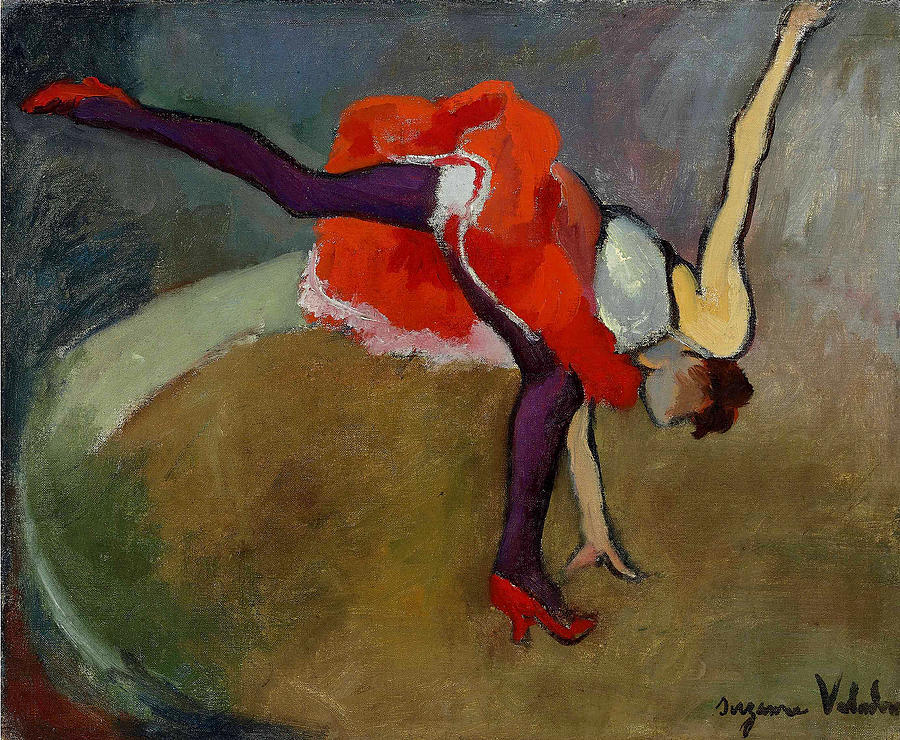
The Cartwheel, Suzanne Valadon
At The Washington Post, Ruth Marcus claims that the Affordable Care Act will survive, but we have a lot more to worry about: There are many reasons to fear Barrett’s confirmation. The Affordable Care Act isn’t one of them.
In the midst of a pandemic, on the eve of an election, with yet another challenge to the Affordable Care Act coming before the Supreme Court next month, it’s no surprise that Democrats decided to focus on the future of the health-care law at the confirmation hearings for nominee Amy Coney Barrett.
As a matter of substance, not so much. Barrett’s nomination is about so much more than a law that has already survived two challenges and is likely, even with a Justice Barrett on the court, to survive this one.
Read Marcus’ detailed argument at the WaPo.
In other news, Trump held a superspreader rally in Florida last night, even though he could still be contagious.
The Washington Post: Trump returns to campaign trail after bout with covid-19, amid criticism he is still not taking pandemic seriously.
Though Trump has declared himself now “immune” to the virus — which has killed more than 214,000 Americans and infiltrated the White House — he and his team have not clarified for the public the last time he tested negative before his covid-19 diagnosis was announced Oct. 2. This has raised questions about whom Trump may have infected before isolating himself at the White House and then at Walter Reed National Military Medical Center.
Woman with a double bass, 1908
On Monday afternoon, however, Trump’s doctor, Sean P. Conley, said in a memo released by the White House that the president had tested negative for the virus “on consecutive days,” using the Abbott rapid testing machine, and was no longer contagious.
The Abbott antigen test produces quick results but has a greater chance of false negatives than the more reliable polymerase chain reaction, or PCR, test. Conley said other diagnostic factors were considered when determining that the president did not pose a threat to others.
Either Trump is afraid to take the more accurate PCR test, or he tested positive on it and the White House is covering it up.
Some of Trump’s aides and associates initially hoped that his coronavirus diagnosis would help focus him on the pandemic, allowing him to emerge as a sympathetic figure with a newfound sense of seriousness and empathy.
That, so far, has not happened.
“The cure cannot be worse than the problem itself can. The cure cannot be worse,” Trump told the Sanford crowd — many of whom were not wearing masks — referring to public health restrictions in many states. “But if you don’t feel good about, if you want to stay, stay relaxed, stay. But if you want to get out there, get out. One thing with me, the nice part, I went through it. Now they say I’m immune . . . I feel so powerful.”
Since contracting the virus, Trump has remained dismissive of the threat posed by the pandemic, reappearing in public seemingly invigorated by his survival. He has doubled down on his push for reopening the country while continuing to discount social distancing and other public health practices.
In the real world, we’re still living through a global pandemic, and the U.S. still leads world in cases and deaths. Coronavirus news:
Stat: Johnson & Johnson Covid-19 vaccine study paused due to unexplained illness in participant.
The study of Johnson & Johnson’s Covid-19 vaccine has been paused due to an unexplained illness in a study participant.
The Blue Room, Suzanne Valadon, 1923
A document sent to outside researchers running the 60,000-patient clinical trial states that a “pausing rule” has been met, that the online system used to enroll patients in the study has been closed, and that the data and safety monitoring board — an independent committee that watches over the safety of patients in the clinical trial — would be convened. The document was obtained by STAT.
Contacted by STAT, J&J confirmed the study pause, saying it was due to “an unexplained illness in a study participant.” The company declined to provide further details….
J&J emphasized that so-called adverse events — illnesses, accidents, and other bad medical outcomes — are an expected part of a clinical study, and also emphasized the difference between a study pause and a clinical hold, which is a formal regulatory action that can last much longer. The vaccine study is not currently under a clinical hold. J&J said that while it normally communicates clinical holds to the public, it does not usually inform the public of study pauses.
Read more at the link.
David Wallace-Wells at New York Magazine: The Third Wave of the Pandemic Is Here.
When Donald Trump checked into Walter Reed medical center more than a week ago, it appeared likely to have marked the beginning of the end stage of his presidency. But it was also a milestone for the pandemic, and not just because COVID-19 had infected its most prolific and prominent skeptic and dissembler. In recent weeks, a third wave of the coronavirus has come to the U.S. at almost precisely the time of year scientists warned us about in the spring. But the country has hardly noticed, so paralyzed and preoccupied by the spectacle of the presidential campaign it could barely acknowledge any new cases but Trump’s. There were nearly 50,000 new U.S. infections reported on the day the president was hospitalized, along with 835 new deaths. That’s two 747 crashes’ worth.
Suzanne Valadon: Portrait of Maurice Utrillo 1883-1955, his Grandmother and his Dog, 1910
When the country passed 100,000 deaths, a spectacularly bleak edition of the New York Times marked the occasion with a six-column headline for a flood of obituaries that ran the full length of the front page (and onto several additional pages). When the toll passed 200,000, it did not even mark the tragic landmark on A1. They are running out of hospital beds in Wisconsin — which used to qualify as a battleground state, incidentally — and in North Dakota, which hasn’t imposed a mask mandate, they are down to 39 open ICU spots. But while the pandemic does indeed appear to be getting worse almost everywhere in the country, it also seems unlikely to return to the center stage of America’s attention until after Election Day — at which point perhaps 25,000 more Americans might have died.
But things won’t really change immediately after November 3, either. The apparent collapse of last-minute stimulus negotiations means that our sclerotic Congress won’t likely extrude any meaningful pandemic relief until January 20. There also won’t be a national testing program erected, or a federal contact-tracing system belatedly instituted, or, probably, a vaccine or novel therapeutics in wide distribution before the next presidential inauguration, either. At which point there might be 100,000 more American deaths than there are today, each a tragedy unfolding amid a considerably uglier humanitarian catastro phe — poverty and hunger, evictions and loss of health insurance, mass joblessness without commensurate federal support — than the pandemic has produced to this point. In other words, the third wave will likely be worse, nationally, than the first; much less buffered by political action and support, at least on the federal level; and, as long as the election eclipses the full attention of the news media, many times less salient. We’ve already tuned it out, and nothing is likely to help anytime soon.
More stories to check out today:

Suzanne Valadon: Andre Utter and his dogs, 1932
Paul Krugman: Mitch McConnell’s Mission of Misery.
The Daily Beast: Dr. Fauci: The Trump Campaign Is ‘In Effect, Harassing Me.’
Politico: Top general did not give his consent to be used in Trump political ad.
Mary McNamara at The Los Angeles Times: Column: Make way for Slayer Pete. Buttigieg is the Biden campaign’s ruthless secret weapon.
AP: Trump intensifies focus on Harris in final weeks of campaign.
The New York Times: California Republican Party Admits It Placed Misleading Ballot Boxes Around State.
The New York Times: As Trump Flouts Safety Protocols, News Outlets Balk at Close Coverage.
Joshua Holland at Alternet: Here’s the truth behind the Republicans’ big lie about ‘court-packing.’
Hang in there Sky Dancers. Only 20 more days until the election. Take care, and please check in with us today if you have the time and inclination.
Lazy Caturday Reads
Posted: August 1, 2020 Filed under: Foreign Affairs, morning reads, U.S. Politics | Tags: Brazil, coronavirus pandemic, Donald Trump, Germany, Jared Kushner, NATO, Russia, Suzanne Valadon, Vladimir Putin 16 CommentsGood Morning!!
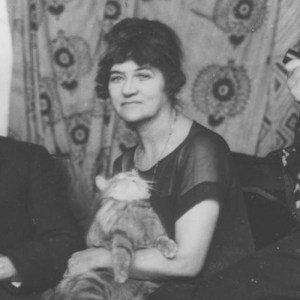
Artist Suzanne Valadon and her cat
The paintings in today’s post are by Suzanne Valadon. Here’s some background about this fascinating artist from The Great Cat.org:
Suzanne Valadon (1865-1938), was an illegitimate child of a French laundress and lived a rather rough life in her youth. She performed in a circus on the trapeze until she had a bad fall when she was 16.
After that, she decided to become an artist’s model, a safer profession. Artists such as Pierre Puvis de Chavannes, Henri Toulouse-Lautrec, and Pierre-Auguste Renoir used her in some of their works. Renoir even painted her in The Bathers. Valadon began to study the methods and works of the artists she posed for, and started to paint on her own.
Encouraged by Toulouse-Lautrec, she continued and even caught the eye of Edward Degas, who was so taken by her work that he purchased several of her first paintings in 1893. A true Bohemian, in 1883 at age 18, she gave birth to an illegitimate son, Maurice Utrillo, who became a well known artist as well.
Read more about her life at the pdf link above. You may have to go to the Table of Contents and click on her name.
Now on to today’s news.
It’s been another her horror-filled week, as Dakinikat described in her post yesterday. I avoided TV for most of the week, but it’s impossible to completely escape the Trump chaos. I’ve been doing my best though, mainly by reading lotsYo of books. Anyway, let’s see what’s happening this morning.
Trump has asked for help winning the 2020 election from Ukraine, China, and I assume Russia, since he seems to talk on the phone to Putin constantly.
So how many countries has Trump actually asked for election help? Add Brazil to the list.
The New York Times: Lawmakers ‘Alarmed’ by Reports U.S. Envoy Told Brazil It Could Help Re-elect Trump.
RIO DE JANEIRO — Members of the House Foreign Affairs Committee said Friday they were “extremely alarmed” by assertions that the American ambassador in Brazil had signaled to Brazilian officials they could help get President Trump re-elected by changing their trade policies.
In a letter sent Friday afternoon, Committee Chairman Eliot L. Engel demanded that the ambassador, Todd Chapman, produce “any and all documents referring or related to any discussions” he has held with Brazilian officials in recent weeks about their nation’s tariffs on ethanol, an important agricultural export for Iowa, a potential swing state in the American presidential election.
The committee’s letter was sent in response to reports in the Brazilian news media this week saying that Mr. Chapman, a career diplomat, made it clear to Brazilian officials they could bolster Mr. Trump’s electoral chances in Iowa if Brazil lifted its ethanol tariffs.
Eliminating tariffs would give the Trump administration a welcome trade victory to present to struggling ethanol producers in Iowa, where the president is in a close race with his Democratic rival, Joseph R. Biden Jr.
The House committee said it was opening an inquiry into the matter.
The State Department denied the reports, but . . .
The O Globo newspaper published a story on Thursday saying Mr. Chapman had underscored “the importance to the Brazilian government of keeping Donald Trump” in office. Mr. Bolsonaro, a far-right leader, has made closer alignment with the Trump administration his top foreign policy priority.
A competing newspaper, Estadão, published an article Friday saying its reporters independently confirmed that the ambassador framed his argument against tariffs in partisan terms. The article said the Brazilian officials who met with Mr. Chapman rejected the appeal, declining to be drawn into the American presidential battle.
Neither article named its sources. But Alceu Moreira, a Brazilian congressman who heads the agricultural caucus, told The New York Times in an interview that Mr. Chapman had made repeated references to the electoral calendar during a recent meeting the two had about ethanol.
 I guess we can assume Trump has asked for help from just about every country headed by a dictator.
Now Trump has helped Putin by ordering the withdrawal of U.S. Troops from Germany.
CNN: US to withdraw nearly 12,000 troops from Germany in move that will cost billions and take years.
The US is moving forward with President Donald Trump’s plan to withdraw nearly 12,000 troops from Germany, a decision that has attracted bipartisan congressional opposition and roiled key allies who see the move as a blow to NATO.
Secretary of Defense Mark Esper acknowledged the plan will cost billions to execute when he formally announced the decision on Wednesday from the Pentagon. US defense officials said it will take years to relocate the troops.
The plan to pull US troops from the long-time NATO ally has been met with broad bipartisan opposition amid concerns that it will weaken the US military’s position vis a vis Russia, however the Trump Administration has decided to proceed with the move.
Trump defended the decision Wednesday, saying the troop drawdown was taking place because Berlin was not spending the NATO target of 2% of its GDP on defense and because Germany was taking “advantage” of the US….
Defense officials, however, said Wednesday that the decision on where to house the US troops leaving Germany was not influenced by whether the new host country was meeting the 2% target.
Well, I’m sure Putin is thrilled. Will Trump pull us out of NATO next?
At The Daily Beast, Julia Davis reports on Russia’s reaction to Trump’s willful destruction of our country: ‘America’s Dying’: Russian Media Is Giddy at Chaos in the USA.
This week, U.S. President Donald Trump reiterated his intent to move forward with reducing the U.S. military presence in Germany, without any consultations with Berlin. And even as members of the U.S. Congress and America’s allies abroad expressed concerns about the drawdown, the Trump administration’s decision brought joy to the Kremlin and Russian media.
Back in June, 22 Republican members of the House Armed Services Committee urged Trump not to go ahead with the move, stating in a letter: “We believe that such steps would significantly damage U.S. national security as well as strengthen the position of Russia to our detriment … In Europe, the threats posed by Russia have not lessened, and we believe that signs of a weakened U.S. commitment to NATO will encourage further Russian aggression and opportunism.” [….]
Meanwhile, when the intent to reduce the U.S. contingent in Germany was first announced, Russian Foreign Ministry spokeswoman Maria Zakharova said that the Kremlin “would welcome any steps by Washington to scale down its military presence in Europe,” brazenly telling the United States to take home not only its troops, but also its tactical nuclear weapons.
The Kremlin-controlled Russian state media also sensed a precious propaganda opportunity. Sergey Brilyov, anchor of the news show Saturday Vesti on Russian state media channel Rossiya-1, pondered whether the controversial move by the Trump administration could be considered the proof that Russia no longer poses a military threat to Europe.
Kremlin spokesperson Dmitry Peskov used the same rationale today, when he claimed that Russia doesn’t present any threat to European countries and “the fewer U.S. soldiers are on the European continent, the calmer it is in Europe.”
Read more at The Daily Beast.
Don’t miss this must read piece at Vanity Fair about Trump and Kushner’s decision to scrap efforts to fight the coronavirus pandemic because it was only affecting blue states: How Jared Kushner’s Secret Testing Plan “Went Poof Into Thin Air.”
A few choice excerpts:
Six months into the pandemic, the United States continues to suffer the worst outbreak of COVID-19 in the developed world. Considerable blame belongs to a federal response that offloaded responsibility for the crucial task of testing to the states. The irony is that, after assembling the team that came up with an aggressive and ambitious national testing plan, Kushner then appears to have decided, for reasons that remain murky, to scrap its proposal. Today, as governors and mayors scramble to stamp out epidemics plaguing their populations, philanthropists at the Rockefeller Foundation are working to fill the void and organize enough testing to bring the nationwide epidemic under control.
Inside the White House, over much of March and early April, Kushner’s handpicked group of young business associates, which included a former college roommate, teamed up with several top experts from the diagnostic-testing industry. Together, they hammered out the outline of a national testing strategy. The group—working night and day, using the encrypted platform WhatsApp—emerged with a detailed plan obtained by Vanity Fair.
Rather than have states fight each other for scarce diagnostic tests and limited lab capacity, the plan would have set up a system of national oversight and coordination to surge supplies, allocate test kits, lift regulatory and contractual roadblocks, and establish a widespread virus surveillance system by the fall, to help pinpoint subsequent outbreaks.
But it never happened. Why?
By early April, some who worked on the plan were given the strong impression that it would soon be shared with President Trump and announced by the White House. The plan, though imperfect, was a starting point. Simply working together as a nation on it “would have put us in a fundamentally different place,” said the participant.
But the effort ran headlong into shifting sentiment at the White House. Trusting his vaunted political instincts, President Trump had been downplaying concerns about the virus and spreading misinformation about it—efforts that were soon amplified by Republican elected officials and right-wing media figures. Worried about the stock market and his reelection prospects, Trump also feared that more testing would only lead to higher case counts and more bad publicity. Meanwhile, Dr. Deborah Birx, the White House’s coronavirus response coordinator, was reportedly sharing models with senior staff that optimistically—and erroneously, it would turn out—predicted the virus would soon fade away.
Against that background, the prospect of launching a large-scale national plan was losing favor, said one public health expert in frequent contact with the White House’s official coronavirus task force.
Most troubling of all, perhaps, was a sentiment the expert said a member of Kushner’s team expressed: that because the virus had hit blue states hardest, a national plan was unnecessary and would not make sense politically. “The political folks believed that because it was going to be relegated to Democratic states, that they could blame those governors, and that would be an effective political strategy,” said the expert.
That logic may have swayed Kushner. “It was very clear that Jared was ultimately the decision maker as to what [plan] was going to come out,” the expert said.
[Emphasis added.] This is a mind-blowing article. Please read the whole thing if you haven’t already.
 More stories to check out today:
The New York Times: Trump Halts TV Advertising as He Struggles in Polls Against Biden.
John Avlon at CNN: Trump’s election tweet shows a frightened narcissist afraid of losing.
Politico: Barr Makes It Official—He’s Trump’s New “Fixer”
The Guardian: Portland sees peaceful night of protests following withdrawal of federal agents.
The Washington Post: DHS analyzed protester communications, raising questions about previous statements by senior department official.
Yahoo News: Exclusive: CDC projects U.S. coronavirus death toll could top 180,000 by Aug. 22.
Politico: Pelosi upbraids counterintel chief in private briefing over Russian meddling.
The New York Times: Lobbying Intensifies Among V.P. Candidates as Biden’s Search Nears an End.
Business Insider: Joe Biden’s vice presidential contender Rep. Karen Bass praised Scientology at a 2010 ceremony.
Dana Millbank at The Washington Post: Why would Biden pick a human lightning rod as VP?
That’s it for me. Have a terrific weekend everyone!

 peej
peej Carissa
 bostonboomer
 dakinikat
 ecocatwoman
 mablue2
 Mama Lopez
 peggysue22
 quixote
 skydancingguestblogger
 Mona (aka Wonk the Vote)



 Sky Dancing
Recent Comments