
Finally Friday Reads: War! Good God Y’all!
Posted: July 31, 2026 Filed under: #FARTUS, American Cold Civil War, Foreign Affairs, Republican politics, U.S. Politics | Tags: @johnbuss.bsky.social John Buss, American Cold Civil War, Senate Hearings, Todd Blanche, US Israel Iran War, War Pigs 2 Comments
“Gotta get something out of the billions of dollars spent on the Three Day Special Military Operation!” John Buss, @repeat1968
Good Day, Sky Dancers!
The chaos continues on nearly all fronts of both federal domestic and foreign policy. On the state level, we see the fight to disenfranchise or re-enfranchise voters unlikely to support Republicans. I believe we’re in a cold civil war. There have been academic arguments about its existence for quite some time, with arguments on both sides of the political spectrum. Discussions today harken back to the idea put forth by Martin Luther King in 1967 about “Two Americas.” I also believe that the Trump administration purposefully pits us against each other as a strategy to distract from the damage coming from just about everything horrible it’s done. That includes the very hot war involving Israel and Iran.
I’ll give you a few suggested reads here on the idea of an American Cold Civil War from both sides of the political spectrum. This first article comes from a 2024 article at The American Prospect written by David Dayen. D-Day considers himself a progressive. “The Cold Civil War. States have always diverged on policies, but it’s grown more intense. And for red states, that’s not enough.” This article reflects on the COVID-19 period. It’s based on comparing red- and blue-state policies.
Over the last 30 years, a state government’s partisan orientation is the overwhelming predictor of the policies it will adopt.
Policy extremism has eroded quality of life in America. As much as half of the gap between the states in life expectancy is due to geographic variation. A 2023 study found that more liberal policies on tobacco, labor, immigration, civil rights, and the environment correspond to a one-year increase in how long a state’s residents live. (In this special issue, Kalena Thomhave takes a closer look at Oklahoma and Connecticut, which had the same life expectancy in 1959 and a 4.7-year spread as of 2019.)
Of the ten states with the highest rates of uninsured residents, seven are controlled fully by Republicans. Of the ten with the fewest uninsured, seven are controlled fully by Democrats. The ten worst health systems in the country, according to the Commonwealth Fund, are all in red states. Eight of the ten states with the most COVID-19 deaths are Republican-led; so are ten of the 12 states with the highest rates of smoking-related cancer deaths. Firearm deaths are lower in blue states and higher in red states. Even obesity levels show this correlation: Ten of the 12 states with the highest percentage of obese residents have Republican trifectas.
Where you live, in short, can determine how long you live.
This wide gulf between healthy and ailing America is bad enough. But red states in particular want their policy preferences to be reflected across the nation, and have engaged in numerous aggressive tactics to make that a reality.
 I highly recommend you read D-Day and also this one from the perspective of a Right-Wing mover and shaker in the political and academic arena, Charles R. Kesler. His vitae includes all the groups that have been funding and guiding the Republican party since Reagan’s time. This is an interesting article from 2018, when the right was obsessed with Obama. There are many operational definitions in there, as well as insights into the other end of the spectrum. It was published in Imprimus. You’ll recognize the practical application of both philosophies in Dayen’s piece. This next read shows the Ivy Tower view approach that gets hammered into political decisions, which include important federal appointments.
In the Claremont Review of Books, we have described our current political scene as a cold civil war. A cold civil war is better than a hot civil war, but it is not a good situation for a country to be in. Underlying our cold civil war is the fact that America is torn increasingly between two rival constitutions, two cultures, two ways of life.
Political scientists sometimes distinguish between normal politics and regime politics. Normal politics takes place within a political and constitutional order and concerns means, not ends. In other words, the ends or principles are agreed upon; debate is simply over means. By contrast, regime politics is about who rules and for what ends or principles. It questions the nature of the political system itself. Who has rights? Who gets to vote? What do we honor or revere together as a people? I fear America may be leaving the world of normal politics and entering the dangerous world of regime politics—a politics in which our political loyalties diverge more and more, as they did in the 1850s, between two contrary visions of the country.
One vision is based on the original Constitution as amended. This is the Constitution grounded in the natural rights of the Declaration of Independence, the Constitution written in 1787 and ratified in 1788. It has been transmitted to us with significant Amendments—some improvements and some not—but it is recognizable still as the original Constitution. To simplify matters we may call this “the conservative Constitution”—with the caveat that conservatives have never agreed perfectly on its meaning and that many non-conservatives remain loyal to it.
The other vision is based on what Progressives and liberals, for 100 years now, have called “the living Constitution.” This term implies that the original Constitution is dead—or at least on life support—and that in order to remain relevant to our national life, the original Constitution must be infused with new meaning and new ends and therefore with new duties, rights, and powers. To cite an important example, new administrative agencies must be created to circumvent the structural limitations that the original Constitution imposed on government.
 As you can see, this is based on the idea of “originalism”. However, these arguments seem trite today when you look at what’s happening in the states and on the streets. The arguments are also resplendent in state and federal courts and have been since the Reagan years. The craziness with Fauci witch trials is probably the most obvious bit of news that shows how rabid those discussions/arguments have become since Trump came onto the political scene. The American Cold Civil War has amped up in ways that impact everything these days. Mostly because Orange Caligula has a strong need for public attention and worship, but also because he has so much baggage that he needs to hide behind distractions.
Today’s headlines on the mess in the Middle East were created by Trump and Netanyahu, both with their own delusions of greatness. The other can be seen in Trump’s battles to appoint weak and compliant stooges to important offices. All of this creates more battles in the American Cold Civil War. We’re seeing such weirdness today with the embattled DOJ and the appointment of Trump’s personal lawyer, Todd Blanche. Oh, where do we start with this one? Politico‘s Chris Marquette and Jordain Carney share the lede on this headline. “Faced with Blanche dilemma, Trump chooses revenge. The president’s willingness to sacrifice his attorney general’s confirmation shows how deep his contempt for his enemies goes.”
President Donald Trump has a choice: allow changes to a controversial court settlement and secure the confirmation of his former personal lawyer as attorney general, or thumb his nose at a pair of his few remaining Republican critics in Congress.
True to form, he is giving no ground.
Trump’s decision Thursday to signal he would rather pull the nomination of Todd Blanche, his pick to lead the Justice Department, rather than give in to the demands of Sens. John Cornyn and Thom Tillis demonstrated that the president’s desire to thwart his enemies does not end with the demise of their political careers.
Both Republican senators will leave Congress at the end of the year after running afoul of Trump, and both have found a degree of independence since becoming untethered from needing to keep in his good graces.
But their efforts to exert leverage and seek to curtail a controversial settlement agreement reached in May between Trump and the IRS only prompted the president to double down. He announced in a Truth Social post that Blanche would remain as acting attorney general “in any event” and that he would potentially withdraw and resubmit the nomination “after Cornyn and Tillis are out of office” in January. He went on to needle Cornyn again Friday.
Tillis, who announced he would not seek reelection last year after clashing with Trump over Medicaid cuts in his home state of North Carolina, betrayed little surprise when asked about Trump’s reticence to bargain over the IRS settlement.
“Look up the definition of recalcitrant,” he said.
Cornyn, who lost his bid for renomination to a fifth term representing Texas in May after Trump endorsed a scandal-prone opponent, brushed off the accusation that he was simply seeking revenge by blocking Blanche.
He called Trump’s claim “a convenient excuse, but it’s certainly not true.” And he warned the president that trying to wait him out would be a “gamble.”
“After the midterms, who knows who’s going to be the next United States senator from North Carolina or Texas?” he said.
 Orange Caligula strongly believes in his side and only his side. This is from Axios. Hans Nichols and,
Stef W. Kight reported this story. “Inside Trump’s Senate playbook”.
President Trump has three go-to moves for GOP senators who frustrate him: persuade them when he can, ignore them when he must and bully them at will.
Why it matters: The approach doesn’t always produce results. But it almost always provides drama.
Persuade: Trump dispatched two top deputies to the Senate GOP lunch on Wednesday to make the case, in person, for a third reconciliation bill with elements of the SAVE Act.
- Then he sent in the big guns. Chief of Staff Susie Wiles huddled with the Senate GOP leaders shortly after their lunch.
- When Trump faced a Senate rebuke over the Iran conflict last month, the White House aggressively lobbied wavering Republicans to flip their votes.
Ignore: Acting Attorney General Todd Blanche doesn’t need Senate confirmation to do the job, Trump declared on Truth Social on Thursday.
- He can serve as acting attorney general indefinitely. Problem solved.
Bully: Trump began the week by demanding that Majority Leader John Thune (R-S.D.) scrap the filibuster and pass the SAVE Act.
- “Remember, stupidity always brings LOSING & DEATH!” Trump wrote.
What we’re watching: Bullying appeared to be Trump’s preferred tactic this week. By Wednesday, he was openly questioning whether Thune should remain majority leader.
-
Thune’s best defense was to downplay his own powers.
-
“He thinks I can wave the magic wand,” Thune told Politico. “I wish it were that easy.”
-
Trump’s penchant for bullying has emboldened some senators to stand their ground — such as John Cornyn (R-Texas) and Thom Tillis (R-N.C.), who have blocked Blanche’s nomination. Both will be out of the Senate in January.
 This take is from CNN’s Kit Maher. “Trump further muddies Blanche negotiations, saying he wishes ‘anti-weaponization’ fund weren’t dead.”
President Donald Trump is further complicating negotiations as White House and Justice Department officials try to unstick Todd Blanche’s nomination for attorney general, saying Friday that a controversial fund behind the holdup is “dead” but that “I wish it weren’t.”
Key GOP senators — John Cornyn of Texas and Thom Tillis of North Carolina— have indicated they’ll withhold their needed votes to confirm Blanche until they get written assurances that the $1.8 billion “anti-weaponization” fund won’t be resurrected, along with certain commitments about tax investigations.
Trump defended the fund at length during a Cabinet meeting Friday, echoing comments posted on Truth Social earlier that day in which he called for Blanche to “be immediately approved” as his permanent pick for for the role. Just a day earlier, the president had said he wouldn’t object to “temporarily withdrawing” Blanche’s nomination until Tillis and Cornyn leave Congress early next year.
Tillis responded on X Friday morning that Trump’s comments were reaffirming why he and Cornyn needed the assurances in writing.
“The President made it clear today that the so-called Anti Weaponization Fund is still alive, which is exactly why we are attempting to formally end it,” Tillis wrote.
Blanche has already said the controversial fund is “dead” and the Justice Department told courts the program was abandoned, but officials have previously declined to put the commitment in writing. The fund, originally established by a settlement agreement between the Internal Revenue Service and Trump’s personal lawyers, would have offered taxpayer money to those who claimed they were victims of weaponization by the federal government — including those involved with the January 6, 2021, US Capitol riot.
Cornyn has been adamant that he also wants Blanche to clarify an addendum to that agreement that offers the president and members of his family tax immunity. The senator wants Blanche to explicitly acknowledge that it only applies to past tax investigations against the president and those listed in the lawsuit that was settled.
The demands have left Blanche in a difficult place since putting limits on the tax addendum could anger the president.
 Are we having fun yet? The meeting a few days ago between Trump and Netanyahu was interesting to say the least. Did it resolve anything? This is the take from The Independent. This is what happens when two narcissists/sociopaths try to work together. “Trump claims Board of Peace has reached ‘historic’ Gaza deal to disarm Hamas and withdraw Israeli troops. The deal would see Hamas completely disarm itself and hand political and security control in Gaza over to international troops, a new Palestinian police force and a transitional government body of nonpartisan experts.” This analysis is provided by Josh Marcus. Peace in the Middle East. Right. Where have I heard that before?
The parties in the Israel-Hamas war have agreed to a “historic” framework paving the way to rebuild Gaza and remake its government, President Donald Trump announced on Thursday.
The deal includes the “COMPLETE DISARMAMENT of Hamas and all other armed groups in Gaza,” the president wrote on Truth Social.
Hamas communicated via mediators that it has agreed to the terms of the multi-step road map, U.S. and Board of Peace officials told The Independent.
The deal will eventually see the group hand security and political control to an international stabilization force of troops, a newly trained Palestinian police force and a transitional group of technocratic experts overseeing basic services, the National Committee for the Administration of Gaza, the officials said.
The Israeli military, meanwhile, will pull back its troops from Gaza in phases, according to President Trump.
“One year ago there was a violent raging war, humanitarian crisis and hostages kept in brutal captivity,” he wrote in his post outlining the alleged agreement. “We have made historic progress and there is still much work to do.”
Each phase of the deal would be verified by a committee that certifies compliance on all sides before additional changes would take place, the U.S. officials said.
The disarmament process would include the handover of personal weapons, the decommissioning of heavy military hardware in Gaza and the disclosure and destruction of hidden Hamas tunnels, the officials added.
And, I have a bridge right by me over the Mississippi River that I’d like to sell you. Or would you prefer one in Brooklyn?
What’s on your Reading, Action, and Blogging list today?
Lazy Saturday Reads: Positively Nixonian
Posted: May 13, 2017 Filed under: Afternoon Reads | Tags: Comey, corruption, FBI, John Dean, obstruction of justice, Paul Manafort, Sam Irvin, Senate Hearings, T-Russia, Watergate 30 Comments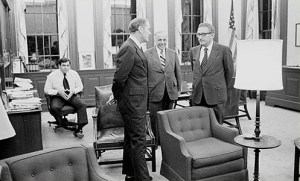 Happy Mother’s Day Weekend Sky Dancers!
As usual, we have no respite from the news and it looks like we get to kick Dick Nixon’s dead body some. Every where you turn you hear the word “Nixonian”. BB managed to find a lot of Trump/Nixon mash ups in political cartoons. I thought it completely symbolic to see a picture of Kremlin Caligula with Kissinger in the White House this week. I was just wondering if Kissinger was asked once more to pray. I actually bought and read Woodward and Bernstein’s ‘The Final Days’ just to read that entire scene. It still sits on my book shelf like a monument to the death of my belief in American Exceptionalism.
I probably could imagine a similar conversation taking place between Bannon and President Swiss Cheese for Brains. (My apologies for the ‘k” word,) The cut away would probably be to discuss the escalation in Syria/Afghanistan instead.
APRIL 22, 1973: THE PRESIDENT, H.R. “BOB” HALDEMAN, AND HENRY KISSINGER, 9:50–10:50 A.M., OVAL OFFICE.
PRESIDENT NIXON: Where is…where is that kike, Kissinger?KISSINGER: I’m right here, Mr. President.
PRESIDENT NIXON: Oh…uh, Henry, good, I’m glad you’re here…I want you to get down on your knees, Henry, and pray for me…I’m up shit creek without a paddle. I’ve got the damn Jew press on me like a “kick me” sign taped to my ass.
KISSINGER: Of course, Mr. President.
HALDEMAN: You can kneel over here, Henry.
PRESIDENT NIXON: Never mind that…just get me some support from those sons-of-bitches in the cabinet. Tell them I’ve got stuff on them…pictures.
KISSINGER: But, Mr. President, you have these things?
PRESIDENT NIXON: We’ve got tons of stuff…tons…
KISSINGER: All right, Mr. President, but it would help me if I could…see the pictures.
HALDEMAN: We’ll get some for you, Henry.
KISSINGER: Good. Now, sir, I want to discuss the latest operation in Camb—(cuts off)
Well, some folks just have a lot of nerve and they think we’re such fools. They just want to be on the side that’s winning.
 So, it will get worse if the Ryan/Trump economic plan gets passed. We know this. It’s nice to hear it from an esteemed Nobel prize winning economist though. Can we stop pretending the people that voted him found him the source of relief for economic distress? They’re about to get a shitload of it.
U.S. President Donald Trump’s economic policies risk creating growth that mostly benefits the rich and aggravates income inequality in the United States, Nobel Prize-winning economist Angus Deaton said.
Trump was swept to power on promises of help for poorer Americans but Deaton said his proposals to roll back regulations on finance and industry and cut healthcare benefits would mostly help corporate groups with political influence.
Trump’s plans to cut taxes and raise trade barriers, if enacted, might give a short-term income boost to some workers but would not deliver the long-term growth that is essential for mitigating the effects of inequality, he said in an interview.
“I don’t think any of it is good” for addressing income inequality, said Deaton, a Princeton University professor, who won the Nobel Prize for economics in 2015 for his work on poverty, welfare and consumption.
He was speaking on Friday after addressing a meeting in Italy of finance ministers and central bankers from rich nations at which inequality topped the official agenda.
The political shocks in 2016 of Trump’s U.S. presidential election victory and Britain’s Brexit vote have been linked to widespread dissatisfaction with stagnant living standards for many workers, forcing policymakers in many countries to grapple with ways to narrow the gap between the rich and poor.
Income inequality has grown sharply in the United States over recent decades and the World Bank says that at a global level the gap has widened too since the 1990s, despite progress recently in some countries.
The Trump administration says it will lift U.S. economic growth to more than 3 percent a year and bring more manufacturing jobs back to U.S. shores, helping workers.
But many economists say growth like that will be hard to achieve with employment already high and the baby boom generation retiring in large numbers too.
Deaton said restoring stronger economic growth, preferably through encouraging more innovation, would help reduce the anger among many people who feel they have been left behind.
“A rising inequality that probably wouldn’t have bothered people before does become really salient and troublesome to them (during periods of low growth). It poisons politics too because when there are no spoils to hand out it becomes a very sharp conflict,” he said.
Deaton said he did not think inequality was inherently bad as long as everyone felt some benefit from growth.
“But I do care about people getting rich at public expense,” he said, referring to political lobbying by business groups.
 So onto the the criminal and traitorous group known as the Trump family syndicate and friends connected to all things Russian. The Senate is starting to follow the money and the bodies.
This robust compliance was not happening at the Taj Mahal. The Treasury Department found that the casino didn’t monitor or report suspicious activity. About half the time that Treasury investigators identified suspect behavior, the Taj Mahal had not reported it to authorities. “Like all casinos in this country, Trump Taj Mahal has a duty to help protect our financial system from being exploited by criminals, terrorists, and other bad actors,” Jennifer Shasky Calvery, the FinCEN director, said in a statement at the time of the settlement. “Far from meeting these expectations, poor compliance practices, over many years, left the casino and our financial system unacceptably exposed.”
The Trump Organization is not known for its careful due diligence. As I wrote in the magazine earlier this year, Ivanka Trump oversaw a residence and hotel project in Azerbaijan. The project was run in partnership with the family of one of that country’s leading oligarchs, and while there is no proof that the Trumps were themselves involved in money laundering, the project had many of the hallmarks of such an operation. There was no public accounting of the hundreds of millions of dollars that flowed through the project to countries around the world, millions of dollars were paid in cash, and the Azerbaijani developers were believed to be partners, at the same time, with a company that appears to be a front for the Iranian Revolutionary Guard, which is known as one of the world’s leading practitioners of money laundering. Trump’s Azerbaijani partners are known to have close ties to Russia, as do his partners in other projects in Georgia, Canada, Panama, and other nations.
A former high-ranking official at the Treasury Department explained to me that FinCEN could have collected what are known as Suspicious Activity Reports from banks, casinos, and other places, about transactions involving any Trump projects. These reports could be used to create a detailed map of relationships and money flows involving the Trump Organization.
The Senate committee headed by Richard Burr, a Republican from North Carolina, and Warner has been ratcheting up the pressure on Trump’s associates in the course of investigating Russian meddling in the Presidential campaign. On Thursday, the committee sent a subpoena to Michael Flynn, the short-lived national-security adviser, demanding documents that he didn’t turn over voluntarily. By asking the Treasury Department for more details about Trump and his associates, the Senate Intelligence Committee seems to be signalling a widening of its interest from the narrow question of collusion between Russia and members of Trump’s campaign staff. (My calls to Warner’s office about this weren’t answered.) If the committee does begin to seriously consider the Trump Organization’s business practices and any connections those show to figures in Russia and other sensitive countries, it would suggest what prosecutors call a “target rich” environment. Rather than focussing on a handful of recent arrivals to Trump’s inner circle—Mike Flynn and Carter Page, a Trump campaign adviser—it could open up his core circle of children and longtime associates.
The WSJ is on the forefront of this story and the Manafort probe. It’s nice to know that even papers known to be ‘captured’ by an agenda can still do straight up news.
The Justice Department last month requested banking records of Paul Manafort as part of a widening of probes related to President Donald Trump’s former campaign associates and whether they colluded with Russia in interfering with the 2016 election, according to people familiar with the matter.
In mid-April, federal investigators requested Mr. Manafort’s banking records from Citizens Financial Group Inc., the people said.
It isn’t clear whether Citizens is the only bank that received such a request or whether it came in the form of a subpoena. Federal law generally requires that a bank receive a subpoena to turn over customer records, lawyers not connected to the investigation said.
Citizens gave Mr. Manafort a $2.7 million loan last year to refinance debt on a Manhattan condominium and borrow additional cash, New York City real-estate records show. The Wall Street Journal couldn’t ascertain if the Justice Department request is related to that transaction or whether the bank has turned over Mr. Manafort’s records.
I think the WSJ is getting less strict on its paywall practices for these items because you can go read the rest of it.
Go ‘way from my window
Leave at your own chosen speed
I’m not the one you want, babe
I’m not the one you need
You say you’re lookin’ for someone
Who’s never weak but always strong
To protect you an’ defend you
Whether you are right or wrong
Someone to open each and every door
But it ain’t me, babe
No, no, no, it ain’t me babe
It ain’t me you’re lookin’ for, babe
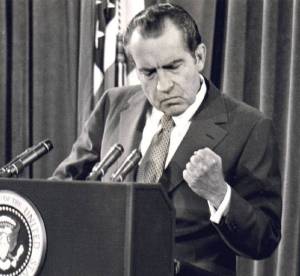 The FBI is not happy with the President and what he did to Director Comey. They’ve evidently not signed on to participate in some twisted version of The Apprentice. Trump has made quite a few institutional enemies from Park Rangers to the scientists in the EPA and HHS. The weirdish thing about all this is that he’s just made an enemy of the one institution he could ill afford to put off and was most likely to support his thuggish brand of justice.
Clearly, Comey underestimated Trump’s impatience—as well as the president’s pathological inability to allow anyone to question the legitimacy of his election, let alone keep pressing the investigations into the Trump campaign’s possible ties with Russia. Comey is now puttering in his yard in Northern Virginia. But the political and legal whirlwind that his firing has set in motion is just beginning to spin, with the White House and the F.B.I. subject to the greatest damage. Even pro-Trump agents are horrified and furious at how Comey was treated. “It shows us, the career people who care only about justice, that there is no justice at the top,” one agent says.
There were agents who found Comey priggish; within the bureau’s New York office, there was a faction that thought he’d soft-peddled the investigation of the Clinton Foundation. But those complaints have now been dwarfed by shock and revulsion at how Comey was fired—and how it reflects on them. “The statements from the White House that he’d lost the faith of the rank and file—they’re making that up,” says Jeff Ringel, a 21-year F.B.I. veteran who retired in May 2016 and is now director of the Soufan Group. “Agents may not have agreed with everything he did. I was one of the people who thought the director shouldn’t have stepped up and made those public statements about Hillary Clinton. But Director Comey was one of the last honest brokers in D.C. Agents are pissed off at the way he was fired, the total disrespect with which it was handled. It was a slap in the face to the F.B.I., to everybody in the F.B.I. The director being treated terribly, being called incompetent, is a signal that Trump has disdain for the bureau.”
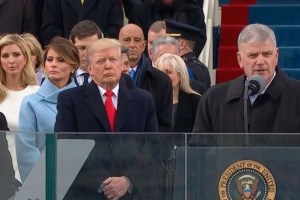 Oops. Yet we still have slutty Republicans bending over backwards for the mad king.
Elected Republican officials are publicly defending Trump but privately are dumbfounded, disgusted and demoralized by this turn of events.
We haven’t had a single conversation with a top Republican that doesn’t reflect this. The worries are manifold
- This kills momentum on legislating, and unifies Democrats in opposition to everything they want to do.
- This makes it easier for Democrats to recruit quality candidates and raise money for the off-year elections.
- It sours swing voters.
- It puts them on the defensive at home. They want to talk tax reform and deregulation — not secret tapes and Russian intrigue.
- But mainly it reinforces their greatest fear: Trump will never change. They keep praying he’ll discipline himself enough to get some big things done. Yet they brace for more of this.
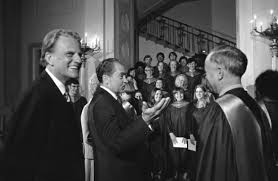 And of course, Trump voters could care less. The most immoral of them is the Evangelical base. At least the NAZIs are upfront about being deplorable.
But just like with the “Access Hollywood” tape, the vast majority of Republicans — and especially the Trump base — seem unfazed. For all the media/Democrat/Twitter histrionics, consider:
- The Gallup daily tracking poll shows Trump’s approval has held steady (40% the day of the firing, 41% two days later).
- Polls show two countries: In NBC News/Survey Monkey, 79% of Rs thought Trump acted appropriately, and 13% of Dems.
- Most elected Republicans are backing Trump or staying silent. AP reports that at the Republican National Committee’s spring meeting out in Coronado, Calif., party leaders defended the president’s actions and insisted that they would have little political impact.
- The Comey topic is hot in traditional media, but cold on Facebook: Seven other events of the Trump presidency trended harder.
Be smart: Don’t underestimate how much wiggle room Trump bought himself with his voters and conservatives by putting Gorsuch on the Supreme Court, enforcing the red line in Syria, and muscling a partial repeal of Obamacare through the House. He has a long leash with Trump Country.
So, like many folks my age, my head is spinning because we’ve seen this before. The only difference is that Nixon never basically admitted to a journalist that he obstructed justice. But then, Nixon did not have Swiss Cheese for brains.
One of my favorites quotes today comes from Watergate’s John Dean. “President Trump is an ‘authoritarian klutz’ — just like Nixon.”
In an interview with New York Magazine‘s The Daily Intelligencer, John Dean, the former advisor to President Richard Nixon whose call-recording testimony made the Watergate case, told reporter Olivia Nuzzi that both Nixon and President Donald Trump share alarming tendencies.
“I think they’re both authoritarian personalities,” Dean told The Daily Intelligencer. “We only know of Nixon’s full personality because of his taping system. But Trump just doesn’t try to hide anything, he’s just out there.”
Dean also said that both Trump and Nixon are “klutzy” when it comes to electronics, and that Trump’s apparently Luddite approach to technology may have made any recordings he’d made as apparent as Nixon’s were to Dean.
“I’m told he’s not very mechanical. He’s kind of like Nixon in that regard,” Dean said. “In other words, he’d have trouble surreptitiously recording somebody, you know, starting the machine, if it wasn’t going and what have you.”
On comparisons between Trump’s surprise firing of former FBI Director James Comey and Nixon’s “Saturday Night Massacre”, Dean told Nuzzi that there are some parallels, but they aren’t exact.
“There were some echoes, but not much more. Echoes being the brutal way it was handled, and so unnecessary,” Dean said. “But not quite the same stage, where Comey wasn’t defying Trump, whereas Archibald Cox clearly was, and both of them had the power to do what they did, but it wasn’t very wise to do.”
In the fallout from firing former FBI James Comey, Trump may have implicated himself in his own conversation-recording scheme. Trump also allegedly has a history of recording phone calls.
So, we’re once again about to see how well the checks and balances work. We seem reliant on the Senate and is there a Sam Ervin out there? It’s hard to see that Ervin’s neighboring state of South Carolina’s Lady Lindsey will go for the truth the way Ervin did. I remember coming home from high school with my hippy jeans, my books overflowing in my boy scout back pack, and undoing the tie backs that kept those jeans from getting caught in my 12 speed’s derailleur to my mother with the TV blaring. She never watched daytime TV because it was banal game shows and soaps. But there she was–frequently with our cleaning lady from maid service boston of like 15+ years–watching from the door way. Mildred–the big German woman who my mother called a good ol’ gal–was usually shaking her head like she’d seen the Third Reich all over again. She was really good at her job, so we knew that in the case we didn’t need her anymore she can get another job, Maid Zone is hiring or maybe any other house cleaning company. The networks had interrupted everything once again to show case Sam Ervin and his Watergate hearings. It seems like a galaxy far far away to me but yet every time I turn on the TV news, it comes back to me.
More extraordinary than Ervin’s sense of humor is his uncompromising belief in the Constitution as a basis of government. A “strict constructionist,” presumably after Mr. Nixon’s heart, he has phrased his passionate Constitutionalism in resounding measures that owe much to Shakespeare and the Bible, but surely as much to the great jurists of Anglo-American common law.
“I don’t think we have any such thing as royalty or nobility that exempts them,” says Ervin of the White House, and one realizes how much the issues of the American Revolution are living ones to him and not eighth-grade clichés. He has been a consistent and eloquent enemy of such ominous inspirations as no-knock laws and military surveillance of civilians.
Ervin is a States’ Rights man on Constitutional grounds. Ironically, he is vilified by rightists who just a year ago were complacent “strict constructionists”: Jim Fuller of the Charlotte (N.C.) Observer reports his newspaper gets calls at all hours of the day and night, some from as far away as Houston, demanding that “that fat, senile old man” lay off the President. “The most common threat,” Fuller says, “is castration.” Ervin doesn’t look worried.
Maybe you’ll remember reading or hearing these words in that ol’ Southern Good Ol’ boy drawl.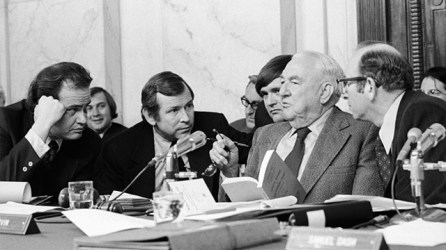
We are beginning these hearings today in an atmosphere of utmost gravity. The questions, that have been raised in the wake of the June 17th break-in, strike at the very undergirding of our democracy. If the many allegations made to this date are true, then the burglars who broke into the headquarters of the Democratic National Committee at the Watergate were in effect breaking into the home of every citizen of the United States.
If these allegations prove to be true, what they were seeking to steal was not the jewels, money or other property of American citizens, but something much more valuable—their most precious heritage, the right to vote in a free election. Since that day, a mood of incredulity has prevailed among our populace, and it is the constitutional duty of this committee to allay the fears being expressed by the citizenry, and to establish the factual bases upon which these fears have been founded.
The Founding Fathers, having participated in the struggle against arbitrary power, comprehended some eternal truths respecting men and government. They knew that those who are entrusted with power are susceptible to the disease of tyrants, which George Washington rightly described as “love of power and the proneness to abuse it.” For that reason, they realized that the power of public officers should be defined by laws which they, as well as the people, are obligated to obey.
The Constitution, later adopted amendments and, more specifically, statutory law provide that the electoral processes shall be conducted by the people, outside the confines of the formal branches of government, and through a political process that must operate under the strictures of law and ethical guidelines, but independent of the overwhelming power of the government itself. Only then can we be sure that each electoral process cannot be made to serve as the mere handmaiden of a particular Administration in power.
The accusations that have been leveled and the evidence of wrongdoing that has surfaced has cast a black cloud of distrust over our entire society. Our citizens do not know whom to believe, and many of them have concluded that all the processes of government have become so compromised that honest governance has been rendered impossible. We believe that the health, if not the survival, of our social structure and of our form of government requires the most candid and public investigation of all the evidence…. As the elected representatives of the people, we would be derelict in our duty to them if we failed to pursue our mission expeditiously, fully, and with the utmost fairness. The nation and history itself are watching us. We cannot fail our mission.
Preach it sir! Here’s to a system that values truth, justice and the rule of law. May it totally crush this Administration under the heels of history.
What’s on your reading and blogging list today?

 peej
peej Carissa
 bostonboomer
 dakinikat
 ecocatwoman
 jjlo
jjlo mablue2
 Mama Lopez
 peggysue22
 quixote
 skydancingguestblogger
 Mona (aka Wonk the Vote)



 Sky Dancing
Recent Comments