
Thursday Reads
Posted: October 6, 2011 Filed under: #Occupy and We are the 99 percent!, 2012 presidential campaign, U.S. Economy, U.S. Politics | Tags: Christopher Benfry, Elizabeth Warren, Erin Burnett, Ezra Klein, George Will, Glenn Greenwald, Larry McMurtry, Massachusetts Senate race, Mitt Romney, Occupy Boston, occupy Wall Street, Rick Perry, Robert Reich, Scott Brown 21 Comments
Good Morning!! I’m going to be heading back to Boston pretty soon, and I’m looking forward to following developments in Occupy Boston and in the Senate race. They haven’t started an Occupy Muncie protest yet, unfortunately. But you never know. This town is really suffering from the poor economy.
At Mother Jones, there is an interactive map of all the Occupy protests that have sprung up around the country. It’s pretty amazing. Funny thing. A few days ago MJ had a post by Lauren Ellis in which she looked down her nose at the #OccupyWallStreet protesters. Now they have a whole section on the Occupy Movement.
There are still plenty of so-called “journalists” dismissing the protests though. Yesterday, I posted a link to Andrew Ross Sorkin’s piece in the NYT in which he reports his trip to Zuccotti Park at the request of a anonymous nervous Wall Street CEO. Glenn Greenwald skewered Sorkin but good, concluding that Sorkin’s
CEO banking friend is right to be concerned: if not about this protest in particular then about the likelihood of social unrest generally, emerging as a result of their plundering and pilfering. That healthy fear on the part of the oligarchs has been all too absent.
Greenwald also linked to this example of “snotty, petty, pseudointellectual condescension” at The New Republic. Ugh! Read it if you dare.
Yesterday, Greenwald followed up by verbally destroying CNN’s new nighttime host, Erin Burnett.
On her new CNN show on Monday night, host Erin Burnett was joined by Rudy Giuliani’s former speechwriter John Avlon and together they heaped condescending scorn on the Wall Street protests while defending the banking industry, offering — as FAIR documented — several misleading statements along the way. Burnett “reported” that while she “saw dancing, bongo drums, even a clown” at the protest, the participants “did not know what they want,” except that “it seems like people want a messiah leader, just like they did when they anointed Barack Obama.” She featured a video clip of herself explaining to one of the protesters that the U.S. Government made money from TARP, and then demanded to know if that changed his negative views of Wall Street.
This is far from the first time Burnett has served as spokesperson for Wall Street; it’s basically what her “journalistic” career is. She angered Bill Maher a couple years ago when arguing that the rich have suffered along with the poor and middle class as part of the financial crisis, and that it would be wrong to “soak the rich” because they’re already paying so much taxes. She caused Rush Limbaugh to gush over her when she argued on TV in 2007 that all Americans benefit when the rich get richer: “the majority of Americans directly benefit from what happens on Wall Street,” she proclaimed, just over a year before the financial collapse.
In an interview last year with Vanity Fair, she insisted that people on Wall Street do not have private planes and that “there are a lot of stalwart, solid people on Wall Street. There are just a few shady people providing the fodder for big budget movies…”
Meanwhile Beltway Bob Ezra Klein has some advice for #OccupyWallStreet: they should immediately start taking advice from the liberal establishment and focus on developing policy and writing legislation in order to work through the system that they have already rejected.
The Wall Street protests seem to be gathering strength and expanding beyond the geographic limits of downtown Manhattan. The media, too, is finally amplifying the story. Whether they will grow larger and sustain themselves beyond these initial street actions will depend upon four things: the work of skilled organizers; the success of those organizers in getting people, once these events end, to meet over and over and over again; whether or not the movement can promote public policy solutions that are organically linked to the quotidian lives of its supporters; and the ability of liberalism’s infrastructure of intellectuals, writers, artists and professionals to expend an enormous amount of their cultural capital in support of the movement.
There’s lots more, but it’s basically a lecture from someone who just doesn’t get it. And speaking of people who don’t get it, George Will tries to school Elizabeth Warren in his latest column. According to Will, the “liberal project,” which Warren apparently speaks for is designed to destroy rugged individualism.
The project is to dilute the concept of individualism, thereby refuting respect for the individual’s zone of sovereignty. The regulatory state, liberalism’s instrument, constantly tries to contract that zone — for the individual’s own good, it says….
Such an agenda’s premise is that individualism is a chimera, that any individual’s achievements should be considered entirely derivative from society, so the achievements need not be treated as belonging to the individual. Society is entitled to socialize — i.e., conscript — whatever portion it considers its share. It may, as an optional act of political grace, allow the individual the remainder of what is misleadingly called the individual’s possession.
The collectivist agenda is antithetical to America’s premise, which is: Government — including such public goods as roads, schools and police — is instituted to facilitate individual striving, a.k.a. the pursuit of happiness. The fact that collective choices facilitate this striving does not compel the conclusion that the collectivity (Warren’s “the rest of us”) is entitled to take as much as it pleases of the results of the striving.
But isn’t that what Warren is pushing for? For more individuals to have opportunities to make it in America? Really, isn’t it time for George Will to retire?
Meanwhile Warren is leading in the race for the Massachusetts Democratic nomination for Senate, and she appeared in her first debate on Tuesday at my undergraduate alma mater, U. Mass Lowell.
In her first debate as a candidate for U.S. Senate Tuesday night, Harvard law professor Elizabeth Warren declined to criticize her fellow Democratic candidates, taking aim instead at Republican Sen. Scott Brown, whom the Democratic nominee will face, and Wall Street.
“Forbes magazine named Scott Brown Wall Street’s favorite senator. I was thinking that’s probably not an award I’m going to get,” she said to applause and laughter from the audience at the University of Massachusetts-Lowell. Two recent polls put Warren and Brown in a statistical tie.
She also made the audience laugh and applaud with the second question, which asked each candidate how they paid for college, since Brown posed nude for Cosmopolitan to pay.
“I kept my clothes on,” she quipped. She added that she borrowed money to go to a public university and had a part-time job.
Warren also drew applause for her tough talk on Wall Street. “The people on Wall Street broke this country, and they did it one lousy mortgage at a time. It happened more than three years ago, and there has been no real accountability, and there has been no real effort to fix it. That’s why I want to run for the United States Senate,” she said.
Go Elizabeth go!!
Another voice for the middle class, Robert Reich, explains why Wall Street is extremely nervous about the economic crisis in Europe.
If you want the real reason, follow the money. A Greek (or Irish or Spanish or Italian or Portugese) default would have roughly the same effect on our financial system as the implosion of Lehman Brothers in 2008.
Financial chaos….a default by Greece or any other of Europe’s debt-burdened nations could easily pummel German and French banks, which have lent Greece (and the other wobbly European countries) far more.
That’s where Wall Street comes in. Big Wall Street banks have lent German and French banks a bundle.
The Street’s total exposure to the euro zone totals about $2.7 trillion. Its exposure to to France and Germany accounts for nearly half the total.
And it’s not just Wall Street’s loans to German and French banks that are worrisome. Wall Street has also insured or bet on all sorts of derivatives emanating from Europe — on energy, currency, interest rates, and foreign exchange swaps. If a German or French bank goes down, the ripple effects are incalculable.
Read the rest at Huffpo.
There are a couple of interesting reads about Republican candidates at the New York Review of Books. The first is by novelist Larry McMurtry: The Rick Perry Hustle Here’s a brief sample:
What Perry has brought to the Republican muddle thus far is his abundant, if unfocused, energy. He rushes from debate to debate, gives many interviews, gets his picture on the cover of TIME; yet all his politicking is curiously affectless. He makes sounds, but where’s the personality? Hillary Clinton has a personality; so does Sarah Palin. Either of those women could cut Governor Perry off at the knees, and will if given the chance.
It’s not been said so I’ll say it: as a politician Rick Perry is fundamentally lazy, so far as actual governing is concerned, content to run things mainly by sound-bite. He makes lots of decisions but lingers on no issue very long; there’s little follow-through. Clemency, or its absence, is an example. Two hundred thirty-four humans have been executed in Texas on his watch and only recently has he been stirred to a review. He believes that the State Board of Pardons and Paroles is so infallible that there’s no reason for him to lose sleep over the fate of this or that prisoner. The Governor has much more confidence in the Board than the Board has in itself; its members are well aware that even, or especially in Texas shaky verdicts have come down. The Governor, a man with a notably short attention span, has a lot more to think about than the death chamber.
An irony of his sudden emergence as a front-runner is that his few humane decisions—the HPV vaccine, which is safe and helpful, and the tuition credit for the children of illegals, which could help keep gangs of feral children off our streets—are what may sink him with the Tea Party and his own rabid right wing. And this is the wing he has assiduously cultivated his whole political life.
The other NYRB article of interest is by Christopher Benfry: Mitt, We Hardly Knew Ye!
We’re feeling vulnerable and surly these days in western Massachusetts, as the leaves turn yellow, the Red Sox fade, and winter looms. Our corridor of New England along the Connecticut River endured, during the summer months, a ruinous tornado in Springfield, an earthquake, of all things, and Hurricane Irene, which knocked out roads and historic covered bridges in our hill towns and across neighboring Vermont, and left a lot of people homeless and adrift. It’s our Katrina moment, we sometimes think, with slightly grandiose self-pity, as Republicans in Congress demand budget cuts if FEMA is to pay for disaster relief in the blue states.
We don’t see much of Mitt Romney, our ex-governor, in these troubled times. Then again, we never did. Our most indelible memories are of Mitt leaving—“the sight of Mitt’s back,” as a friend of mine put it, as he went off to lay the groundwork for yet another campaign. Mitt ran for the Senate against Ted Kennedy in 1994, lost, and left the state to salvage the Salt Lake City Olympics. When he returned to run for governor in 2002, he had to go to court to prove that he sort of lived in Belmont, outside Boston. Then, after a couple of years in the state house, he left again to campaign for the presidency, spending two thirds of his time out of state in 2006. Mitt has sold his house in Belmont and now lives in the important primary state of New Hampshire (at his estate on Lake Winnipesaukee) or San Diego or maybe Utah—anywhere but Massachusetts.
In the Republican debates, Mitt pretends that his ties to Massachusetts are tenuous. Mitt’s greatest achievement as governor, the Massachusetts health care system (which passed with Ted Kennedy’s support and two dissenting votes in the state legislature), is now his greatest liability among Republicans, who see it as a stalking horse for Obamacare. Mitt now claims it was right for our quirky state but not for the nation. He has yet to explain why.
When Mitt trumpets his experience in American business, he rarely mentions that Bain, the consulting and investment conglomerate in which he amassed his $200 million fortune, is a Boston firm.
And so on…Romney used our state as a springboard and then denied even knowing us.
I’ll end there for today. What are you reading and blogging about?
Elizabeth Warren for Senate? MA Dems Not On Board So Far
Posted: July 18, 2011 Filed under: Barack Obama, Democratic Politics, The DNC, U.S. Economy, U.S. Politics | Tags: 2012 elections, Barack Obama, Blogosphere, Democratic party, DSCC, Elizabeth Warren, John Kerry, Massachusetts Democratic Party, Scott Brown, Senate, Setti Warren 44 Comments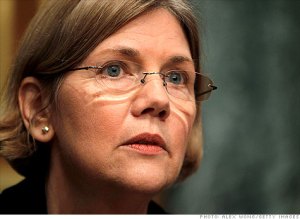
The blogosphere is all a-flutter over the possibility of Elizabeth Warren running for the Senate from Massachusetts.
The Progressive Change Campaign has begun a petition drive to draft Warren.
Taylor Marsh is reporting that Warren told Andrea Mitchell that she will think about the Senate after she gets back to Harvard.
Greg Sargent has posted a list of reasons why national Democrats want Warren to run.
So how do Massachusetts Democrats feel about all this? A few days ago, The Boston Globe’s Joan Vennochi wrote that President Obama was afraid to unlikely to appoint Elizabeth Warren as head of the new Consumer Protection Agency that she fought for and then built, so now her supporters are pushing a Senate run against Republican Scott Brown as a “consolation prize.” According to Vennochi, this initiative isn’t being received all that well here in Massachusetts.
On paper, her candidacy would attract women, liberals, and money from both constituencies, locally and nationally. “She’s tough as nails . . . She’s smart as hell and she could wrap Scott Brown around her little finger in a debate,’’ said Philip Johnston, [John] Walsh’s predecessor as state party chairman.
But Warren isn’t well-known, beyond a small circle of elite Democrats. She has never run for office or built a grassroots organization. And a handful of candidates already in the race won’t be happy about being big-footed, leaving current supporters in an awkward spot.
Massachusetts Democrats aren’t too pleased with the DSCC these days after they and Obama chose not to support Martha Coakley against Scott Brown. State party chairman Walsh told Vennochi that he probably wouldn’t support Warren’s candidacy, since he is backing John Kerry’s chosen candidate Setti Warren. Vennochi:
The idea of Washington Democrats imposing their will on Massachusetts Democrats is distasteful. The DSCC, especially, is not popular here after its tactics largely backfired in the special election that Brown stunningly won. A lack of initial support for Democrat Martha Coakley was followed up by a belated barrage of negative ads that hurt rather than helped Coakley.
The DSCC can also come off as bullies.
Last month, when Kerry was hosting a fundraiser for the DSCC at his Beacon Hill home, he wanted to invite Setti Warren to the event. But the DSCC said no to inviting only one candidate because the group didn’t want to look like it is taking sides – unless, of course, it’s Elizabeth Warren’s side.
Besides, would Obama pitch in to support Warren for Senate? Somehow I doubt it.
Thursday Reads
Posted: May 5, 2011 Filed under: Barack Obama, Foreign Affairs, Libya, MENA, morning reads, Pakistan, Surreality, Syria, The Media SUCKS, torture, U.S. Military, U.S. Politics | Tags: correlational studies, fake photos, heart disease, Libya, Muammar Gaddafi, Osama bin Laden, Pakistan, salt, Scott Brown, United Nations, war crimes 40 Comments
Good Morning!! Once again, the Osama bin Laden story is eclipsing just about everything else. Nevertheless, I’ll do what I can to search out a few non-Osama links for your reading pleasure. But first, the latest on the the media obsession du jour.
You’ve probably heard about the reports that bin Laden was first captured alive and then shot execution style in front of his 12-year-old daughter. At least that is how she described the events to Pakistani officials who are currently holding her and other survivors of the raid. From the Guardian:
The girl, who was found at the scene of the raid by Pakistani security services, is being cared for at a military hospital having been wounded in the attack. She has been questioned about the sequence of events during the raid last weekend.
The official said Pakistani intelligence services, who are holding 11 other survivors of the deadly raid on Bin Laden’s Pakistani hiding place, would not allow their interrogation by US officials.
“That would occur only if there was written assent from their country of origin. We are yet to receive any request to my knowledge, but given the [critical] statements coming out of Washington and the fact that [the raid] was not an operation we were involved in, we would not accept,” he said.
Hmmm…sound like the Pakistani official is slightly miffed about the way the U.S. handled this.
At least 10 people were left alive at the end of the attack, which saw Bin Laden killed in an upstairs room of the three-storey house where he had been living. Hamza, one of the al-Qaida leader’s sons, was killed. His body was removed with that of his father by the assault teams.
The survivors include eight children and two adults, both women. One is Bin Laden’s fifth wife, a 29-year-old Yemeni, Amal Ahmed Abdul Fatah who married the al-Qaida leader around 11 years ago in Afghanistan. The other is understood to be a Yemeni doctor in her 30s whose passport indicates that she arrived by legal means in the region sometime between 2000 and 2006, when the document expired.
I still haven’t heard any word about what happened to the son’s body. Have you? It does seem the administration still has some explaining to do. Justin Elliott of Salon tried to get some clarification.
Legitimate doubt has been cast on the official narrative of the raid ever since the Obama administration changed major details of what it claims happened. (A Pentagon official, for example, said Monday that bin Laden was firing a gun at U.S. forces from behind a human shield when he was killed. Now the White House says he was not armed and there was no human shield.)
The possibility that bin Laden was captured was raised in a report by an Arab news agency citing Pakistani officials describing an interview with bin Laden’s young daughter, who was apparently at the compound:
The daughter has claimed that she watched as her father was captured alive and shot before being dragged to a US military helicopter, Arabic news network al-Arabiya quoted Pakistani officials as saying.
Elliott also notes that President Obama said during an appearance on Monday night that the top secret operation had “resulted in the capture and death of Osama bin Laden.” He got no answers from the White House, but the CIA told NBC that the 12-year-old’s eyewitness testimony is completely wrong. They deny that bin Laden was “captured” before being killed and they deny putting his son’s body in a helicopter and taking it away.
More problems for the administration: The Telegraph reveals that there is no live video of the attack on the bin Laden compound.
A photograph released by the White House appeared to show the President and his aides in the situation room watching the action as it unfolded. In fact they had little knowledge of what was happening in the compound.
In an interview with PBS, Mr Panetta said: “Once those teams went into the compound I can tell you that there was a time period of almost 20 or 25 minutes where we really didn’t know just exactly what was going on. And there were some very tense moments as we were waiting for information.
“We had some observation of the approach there, but we did not have direct flow of information as to the actual conduct of the operation itself as they were going through the compound.”
Mr Panetta also told the network that the US Navy Seals made the final decision to kill bin Laden rather than the president.
Hmmm….that’s a bit troubling.
At FDL, David Swanson is very troubled by the killing of Osama bin Laden. According to him, Osama bin Lynched. I’ll say one thing for Swanson: the guy can write. I recommend reading his blog just for the pleasure of reading some good writing, if nothing else.
Here is some more evidence that our government is being run by silly adolescents. Several media outlets have reported that a number of Senators, including Saxby Chambliss, Kelly Ayotte, and Scott Brown, claimed to have seen the graphic photos of Osama bin Laden’s dead body. It turns out all they saw was the same fake doctored photo that everyone else saw all over the internet yesterday. The Boston Globe reports:
US Senator Scott Brown said in several televised interviews today that he had seen perhaps the most controversial and closely guarded photos in the world: those showing Osama bin Laden’s dead body.
Brown, a member of the Senate Armed Services Committee, suggested he had viewed them as part of an official briefing, and he argued that they were too graphic to be released to the public and could enflame terrorists.
Oops.
Brown later acknowledged that he had fallen victim to a hoax, apparently the same doctored images that were making the rounds on the Internet.
‘‘The photo that I saw and that a lot of other people saw is not authentic,’’ the senator said in a one-sentence statement issued hours after the interviews aired.
Meanwhile, President Obama is protecting all of us by keeping the photos under wraps along with the torture photos he is hiding. Whatever. I have no desire to see bin Laden’s dead body. But then why did they release all the other bloody photos that are everywhere on the internet? Like we haven’t all seen worse in the Movies and on TV.
BTW, if you don’t want to hear Obama explain why we’re all too fragile to see the dead terrorist, avoid watching 60 Minutes on Sunday, because POTUS will be making a campaign stop on the show this week.
Of course we all know that photos can be faked, doctored and even staged by our government. Reuters explains:
Reuters White House photographer Jason Reed describes how the president made his speech to a single TV camera, then immediately after finishing, he pretended to speak for the still cameras.
Reed writes:
“As President Obama continued his nine-minute address in front of just one main network camera, the photographers were held outside the room by staff and asked to remain completely silent. Once Obama was off the air, we were escorted in front of that teleprompter and the President then re-enacted the walk-out and first 30 seconds of the statement for us.”
That means the photograph that appeared in many newspapers Monday morning of Obama speaking may have been the staged shot, captured after the president spoke. This type of staging has been going on for decades.
I never knew that before. Kind of creepy, if you ask me.
Here are couple more humorous Osama anecdotes from Raw Story. A reporter from the St. Petersburg Times, Meg Laughlin, says she saw bin Laden is Islamabad in 2002.
On a quick run to the grocery store with photographer Carl Juste and a driver/translator, Juste pointed out the window and said, “Look! There’s Osama bin Laden!” Laughlin wrote in a first-person account of the incident published Tuesday in the St. Petersburg Times.
“We couldn’t believe our eyes,” she wrote. “There, in front of us was the most wanted man in the world, the face on countless posters offering a reward of $25 million for information on his whereabouts. There was no mistaking him. Towering over the men with him, he was lanky with olive skin and that scraggly long beard, those sad brown eyes and that splayed nose.
The three of us began screaming, ‘It’s Osama bin Laden! Osama bin Laden!'”
Honestly, Bush and Cheney could have caught the guy anytime they wanted to. Republicans should be ashamed for trying to give them credit. Not that Republicans are capable of shame….
This is really good. CNN reporter Nic Roberts found something interesting growing next to the compound where bin Laden and his family and friends were living.
Among the various vegetable crops growing alongside the bin Laden compound in Abbottabad, Pakistan, a row of marijuana plants was also discovered by CNN reporter Nic Robertson.
It begs the question: was Osama bin Laden a pothead?
Of course, the answer to that is in no way clear. The plants very well could have been for one of the other individuals who stayed at the compound, or another local entirely. Reports from the scene indicated that as many as three dozen people shared the three-story house, including as many as 23 children.
Some have speculated that the al Qaeda leader may have been using the marijuana as a medicine. If he was indeed on dialysis, as an unnamed U.S. intelligence source told Asiaweek back in 2000, then he could have used marijuana as a painkiller.
If we’re already getting silly stories like this one, I hate to think what trivial morsels we’ll be seeing served up by the media in a couple more days. They are going to milk this story for all it’s worth and then some.
Poor Muammar Gaddafi has been nearly wiped off the front pages by the Osama blockbuster news. But he’s still up to his old tricks. Yesterday, he bombed a humanitarian relief vessel as it was trying to evacuate foreign citizens Libyan civilians from Misrata. But it looks like the UN is going to indict Gaddafi for war crimes and try to arrest him.
The question then arises as to which organisation should carry out the arrest. Under the 1998 Rome Statute on which the court was built, that duty falls first to the national government in question, and there is at least a faint hope among western governments that the issuing of ICC arrest warrants would provide a trigger and a legal justification for any remaining waverers in the Gaddafi camp to move against him.
If not, the UN security council has to decide what to do. The job could be passed to Nato, but that would require a resolution, which Russia and China could well object to. They already believe that the February resolution allowing “all necessary measures” to protect Libyan civilians has been exploited by Nato to wage war on the side of the rebels.
To further complicate the situation, the Obama administration might also object, as it would involve sending troops into Tripoli, something that Washington has sworn not to do.
The council could instead restate the court’s demand for the Libyan leaders to turn themselves in.
It sounds like Gaddafi should be a little bit nervous right now, but according to Fox News, this probably won’t have much effect on his behavior. Nevertheless, the Prime Minister of Turkey is calling on Gaddafi to step down “for the sake of the country’s future.”
The Guardian has an op-ed by Alaa al-Ameri arguing that NATO forces would be justified in targeting Gaddafi personally.
Various commentators have declared that the deaths [allegedly of Gaddafi’s son and possibly others] prove Nato has overstepped its mandate, and has violated international law by targeting Gaddafi personally. This is based on their definition of Gaddafi as a head of state, and their belief that the UN mandate is confined only to the establishment and maintenance of a no-fly zone. Both these premises are false.
Gaddafi is not a head of state. He is a warlord in control of a personal army that he has tasked with the mass killing and terrorising of Libyans for the crime of wishing to live as free human beings. There is no meaningful Libyan government structure or decision-making body besides Gaddafi himself and his sons.
Which logic or legal principle underlies the notion that while militia in the act of aggression against a civilian population may be attacked, the leader of that militia – actively engaged in directing the violence – is off limits? What claim to special rights and privileges can be made by a man who uses rape as a weapon of war? Which principle of international law would be eroded by his death?
Despite assertions to the contrary, UN resolution 1973 does not confine Nato action to a no-fly zone. The now familiar central clause authorises member states “to take all necessary measures to protect civilians under threat of attack in the country, including Benghazi, while excluding a foreign occupation force of any form on any part of Libyan territory”. Some critics of Nato’s action have interpreted this so narrowly as to assert that it allows no more than “a protective cordon around Benghazi”.
Another author Robert Barnidge Jr. makes a similar argument at Politico. He claims that killing bin Laden was “lawful,” and killing Gaddafi would likewise be “lawful.”
Some now argue that it is unlawful to target Qadhafi. NATO has been put on the defensive. But it shouldn’t apologize. The law is on its side.
U.N. Security Council Resolution 1973 reaffirmed that the situation in Libya threatened international peace and security. Crucially, the resolution, in paragraph 4, authorized member states to “take all necessary measures … to protect civilians and civilian populated areas under threat of attack in the Libyan Arab Jamahiriya” subject only to some procedural requirements.
International law prohibits states from threatening or using force in their international relations — with two exceptions: when states act in self-defence, and when the Security Council authorizes it under chapter 7 of the U.N. Charter. Resolution 1973 is an example of the latter.
Given that Resolution 1973 is a legal instrument, the question is what paragraph 4 permits — and what it forbids. For example, both sides in the debate about the lawfulness of the 2003 invasion of Iraq largely agreed that “all necessary measures” would mean the use of force. The debate with Iraq was whether Security Council Resolution 1441 (2002) had “revived” this language in the earlier Security Council Resolution 678 (1990). (Resolution 678 used the language “all necessary means” — but there is no significant legal difference between “measures” and “means.”)
The government of Syria is still doing ghastly things to its citizens.
Amnesty International said it has received first-hand reports of torture and other ill treatment from detainees held in Syria, as a wave of arrests of anti-government protesters intensified over the weekend.
Amnesty International said “widespread, arbitrary arrests” had taken place in towns across the country in recent days. At least 499 people were detained Sunday during house-to-house raids in Daraa, a key location for pro-reform protests, the group said, adding that most were being held at unknown locations without access to lawyers or their families.
The rights group also said it had the names of 54 people killed last Friday, which brought to 542 the number of people killed during a month and a half of protests in Syria. Amnesty International stated in a report that the high number of deaths can be attributed to tactics by Syrian security forces.
The group gave the accounts of two men detained last month in the coastal city of Banias.
One detainee said he was forced to “lick blood off the floor” after being stripped and beaten, Amnesty International said in a statement. The man told the group that he and and others detained with him had been beaten with sticks and cables as well as kicked and punched.
The rights organization said the detainee also reported being held for three days without food and being forced to drink dirty water from a toilet.
Actor Jackie Cooper died on Tuesday. He was one child actor who grew up to be a successful adult actor as well.
Before the heydays of Shirley Temple and Mickey Rooney, young Jackie, a ragged urchin with a pout and a mischievous half-winked eye, was dreaming up schemes in “Our Gang” comedies and Wallace Beery pictures, like “Treasure Island,” that Hollywood churned out for the rialto.
As Americans flocked to escapist movies, he made $2,000 a week, toured the nation and hobnobbed with Bing Crosby, Tallulah Bankhead and Joan Crawford. At 9 he became the youngest Oscar nominee for best actor (a record that he still holds), in “Skippy” (1931). Later he dated Lana Turner and Judy Garland, and spent weekends on the yacht of MGM’s boss, Louis B. Mayer.
By his late teens, though, he seemed washed up, just another fading child star bound for oblivion and the life of drugs, booze and anonymity that became the fate of many of Hollywood’s forgotten children.
But he got into television in the 1950s, starring in the sitcoms “The People’s Choice” and “Hennesey,” and later became an Emmy-winning director of “M*A*S*H” and other hits; was introduced to a new generation of moviegoers as Perry White, editor of The Daily Planet, in four “Superman” films; and earned his star on Hollywood’s Walk of Fame.
Have you heard about the new study that shows eating a lot of salt isn’t associated with heart problems? It was just published in the JAMA.
Jan A. Staessen, MD, PhD, of the University of Leuven, Belgium, led a study that measured urinary sodium levels in 3,681 healthy, 40-ish people and then followed their health for about eight years.
Their finding: People with the highest sodium levels had a significantly lower risk of dying from heart disease than did people with the lowest sodium levels.
“Our current findings refute the estimates of computer models of lives saved and health care costs reduced with lower salt intake,” Staessen and colleagues conclude in the Journal of the American Medical Association. “They do also not support the current recommendations of a generalized and indiscriminate reduction of salt intake at the population level.”
Repeat after me: “Correlation does not equal causation.” Every single one of the studies of diet and disease you hear about is based only on correlations (associations). Guess what? Heart disease (and cancer, and many other illnesses) run in families. There is nearly always a genetic component. I’d rather have good genes any day that trust the results of the countless studies that claim certain foods or behaviors are bad for me.
That’s it for me. What are you reading and blogging about today? Lay it on me!

 peej
peej Carissa
 bostonboomer
 dakinikat
 ecocatwoman
 mablue2
 Mama Lopez
 peggysue22
 quixote
 skydancingguestblogger
 Mona (aka Wonk the Vote)



 Sky Dancing
Recent Comments