


In other words, showy actions that win a news cycle or two are no substitute for actual, coherent policies. Indeed, their main lasting effect can be to squander a government’s credibility. Which brings us to last week’s missile strike on Syria.
The attack instantly transformed news coverage of the Trump administration. Suddenly stories about infighting and dysfunction were replaced with screaming headlines about the president’s toughness and footage of Tomahawk launches.
But outside its effect on the news cycle, how much did the strike actually accomplish? A few hours after the attack, Syrian warplanes were taking off from the same airfield, and airstrikes resumed on the town where use of poison gas provoked Mr. Trump into action. No doubt the Assad forces took some real losses, but there’s no reason to believe that a one-time action will have any effect on the course of Syria’s civil war.
In fact, if last week’s action was the end of the story, the eventual effect may well be to strengthen the Assad regime — Look, they stood up to a superpower! — and weaken American credibility.
Thursday Reads: Russia News and Natural Disasters
Posted: September 21, 2017 Filed under: Foreign Affairs, morning reads, U.S. Politics | Tags: Climate change, Donald Trump, Hurricane Maria, Konstantin Kilimnik, Mexico earthquake, Oleg Deripaska, Paul Manafort, Puerto Rico, Robert Mueller, Russia investigation, science, Sean Spicer, Vladimir Putin 33 Comments
Goldie Hawn reading a newspaper
Good Morning!!
Naegeli court reporters investigation is getting closer and closer to Trump. Here are the stories that broke just last night, with brief excerpts:
The New York Times: Mueller Seeks White House Documents Related to Trump’s Actions as President.
In recent weeks, Mr. Mueller’s office sent a document to the White House that detailed 13 areas in which investigators are seeking information. Since then, administration lawyers have been scouring White House emails and asking officials whether they have other documents or notes that may pertain to Mr. Mueller’s requests.
One of the requests is about a meeting Mr. Trump had in May with Russian officials in the Oval Office the day after James B. Comey, the F.B.I. director, was fired. That day, Mr. Trump met with the Russian foreign minister, Sergey V. Lavrov, and the Russian ambassador to the United States at the time, Sergey I. Kislyak, along with other Russian officials. The New York Times reported that in the meeting Mr. Trump had said that firing Mr. Comey relieved “great pressure” on him.
Mr. Mueller has also requested documents about the circumstances of the firing of Michael T. Flynn, who was Mr. Trump’s first national security adviser. Additionally, the special counsel has asked for documents about how the White House responded to questions from The Times about a June 2016 meeting at Trump Tower. That meeting was set up by Donald Trump Jr., the president’s eldest son,Th to get derogatory information from Russians about Hillary Clinton.

Jane Fonda
The Washington Post: Manafort offered to give Russian billionaire ‘private briefings’ on 2016 campaign.
Less than two weeks before Donald Trump accepted the Republican presidential nomination, his campaign chairman offered to provide briefings on the race to a Russian billionaire closely aligned with the Kremlin, according to people familiar with the discussions.
Paul Manafort made the offer in an email to an overseas intermediary, asking that a message be sent to Oleg Deripaska, an aluminum magnate with whom Manafort had done business in the past, these people said.
“If he needs private briefings we can accommodate,” Manafort wrote in the July 7, 2016, email, portions of which were read to The Washington Post along with other Manafort correspondence from that time.
Interesting Twitter posts on this subject:
https://twitter.com/H_Lev/status/910857457496465409
Isn’t that fascinating? Trump and Putin are obviously still collaborating.
One more from the NYT last night: Manafort Working on Kurdish Referendum Opposed by U.S.
Paul J. Manafort, the former campaign chairman for President Trump who is at the center of investigations into Russian meddling in the 2016 presidential election, is working for allies of the leader of Iraq’s Kurdish region to help administer and promote a referendum on Kurdish independence from Iraq.
The United States opposes the referendum, but Mr. Manafort has carved out a long and lucrative career advising foreign clients whose interests have occasionally diverged from American foreign policy. And he has continued soliciting international business even as his past international work has become a focus of the investigation by the special counsel, Robert S. Mueller III, into ties between Russia and Mr. Trump and his associates, including possible collusion between them to influence the presidential election.
In fact, the work for the Kurdish group appears to have been initiated this summer around the time that federal authorities working for Mr. Mueller raided Mr. Manafort’s home in Virginia and informed him that they planned to indict him.
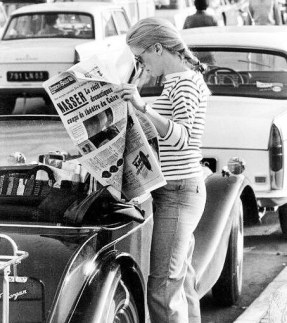
Catherine Deneuve
Manafort is in serious trouble. It’s hard to believe he’s still refusing to cooperate with Mueller’s investigation. It also looks like Trump is royally f**cked at least in terms of obstruction of justice, thanks to his own loose lips in the Lester Holt interview and his chummy Oval Office meeting with the Russians.
More Russia-related stories from this morning:
Politico: Manafort used Trump campaign account to email Ukrainian operative.
Former Donald Trump aide Paul Manafort used his presidential campaign email account to correspond with a Ukrainian political operative with suspected Russian ties, according to people familiar with the correspondence.
Manafort sent emails to seek repayment for previous work he did in Ukraine and to discuss potential new opportunities in the country, even as he chaired Trump’s presidential campaign, these people said….
In the emails to Konstantin Kilimnik, a Manafort protégé who has previously been reported to have suspected ties to Russian intelligence, the longtime GOP operative made clear his significant sway in Trump’s campaign, one of the people familiar with the communications said. He and Kilimnik also met in the United States while Manafort worked for the Trump campaign, which he chaired until an August 2016 shake-up.
Mike Allen at Axios: Another potential Mueller honey pot: Spicer’s notebooks.
- One source familiar with the matter said that the records were just to help him do his job.
- “Sean documented everything,” the source said.
- That surprised some officials of previous White Houses, who said that because of past investigations, they intentionally took as few notes as possible when they worked in the West Wing.
Allen texted Spicer about this story and Spicer flipped out, telling Allen to stop contacting him or he would “report to the appropriate authorities.” What authorities? Spicer thinks it’s illegal to text another private citizen–Allen says he has been on friendly terms with Spicer for “more than a dozen years.”

Marlon Brando
Axios also has a terrific timeline of Manfort’s activities beginning in 2006: How the Russia probe closed in on Paul Manafort.
Former U.S. Attorney Harry Littman at the LA Times: Trump will fire Robert Mueller eventually. What will happen next?
Here’s predicting flat out that yes, at some point Trump will try to oust Mueller.
As the probe advances, the likelihood increases that Mueller will uncover evidence of a serious offense by Trump. With the recent search of former campaign manager Paul Manafort’s home, Mueller has shown his willingness to follow the money trail aggressively. (The latest reports suggest that Mueller’s team is planning to indict Manafort for possible tax and financial crimes.) And Mueller has begun to negotiate interviews with up to a dozen White House aides as well as former White House officials. Trump likely fears that Mueller will zero in on something sleazy or criminal whose revelation could cripple his presidency. Each turn of the screw of the Mueller investigation — and there will be many — increases the pressure on Trump to act preemptively.
The odds also seem great that the erratic, power-consumed and thin-skinned Trump, who every week launches a new Twitter attack on a real or imagined enemy, will be unable to stay his hand month after month as the Mueller investigation unfolds. Like the fabled scorpion who stings the frog even though it dooms him, Trump, being Trump, won’t be able to endure domination by Mueller over the long term. Of course, Trump likely fails to appreciate that it is not Mueller personally, but the law, that is asserting its dominance.
Let’s say Trump snaps.
Angelina Jolie
To fire Mueller, Trump would need to order Deputy Atty. Gen. Rod Rosenstein to remove him. But Rosenstein, a career prosecutor with a strong dedication to the values of the Department of Justice, would likely resign his office rather than comply with the order, as would the department’s third-ranking official, Rachel Brand.
Eventually Trump, moving down the hierarchy, would find someone willing to fire Mueller (as Nixon found Robert Bork, the then-solicitor general, to fire Archibald Cox).
From there, Mueller could launch a legal challenge to the ouster (potentially with the support of the Department of Justice). It’s by no means clear that Mueller, an ex-Marine of legendary rectitude, would choose to sue. Assuming he did, though, he would need to overcome a series of constitutional arguments by the president’s lawyers that any restrictions on the president’s ability to terminate him would impinge on presidential power under Article II.
Click on the link to read the rest.
The natural disasters continue as Hurricane Maria devastates Puerto Rico and moves on the fresh destruction and Mexico City struggles to recover from the recent earthquake.
NBC News: Hurricane Maria Leaves Puerto Rico Facing Months Without Power.
Millions of people across Puerto Rico woke up Thursday to a grim new reality.
Hurricane Maria, the most powerful storm to hit the U.S. territory in almost a century, ravaged the island, demolishing homes and knocking out all electricity. It could take half a year to restore power to the nearly 3.5 million people who live there.
The eye of the storm moved offshore overnight, but the danger remained Thursday: Intense flooding was reported, particularly in San Juan, where many residential streets looked like rushing rivers.
San Juan Mayor Carmen Yulín Cruz said the devastation in the capital city was unlike any she had ever seen.
“The San Juan that we knew yesterday is no longer there,” Cruz told MSNBC. “We’re looking at 4 to 6 months without electricity.”

Elizabeth Taylor
The Washington Post: Mexico anxiously awaits the fate of a 12-year-old schoolgirl after deadly earthquake.
MEXICO CITY — A sprawling earthquake recovery effort spanning several states turned intensely personal Thursday as Mexicans were riveted by an effort to save a 12-year-old girl who was pinned in the rubble of her elementary school.
The drama played out live late Wednesday and early Thursday on the major news channels here, with television cameras tracking every movement of the Mexican marines and others who sought to rescue the girl now known as “Frida Sofia.” Under a soft rain, the work was delicate and painstaking, relying on thermal cameras and other technology to try to locate and remove young children trapped for more than 30 hours after their school collapsed on Tuesday afternoon.
At one dramatic point in Wednesday night’s broadcast, Televisa reporter Danielle Dithurbide learned from the marine admiral leading the recovery effort that Frida Sofia — which may not be her real name — was able to tell rescuers that five other students were possibly trapped with her. It was unclear whether they were alive.
I’ll end with this from Grist, via Mother Jones: This Is the Hurricane Season Scientists Tried to Warn Us About.
There is evidence that we are emerging from an era of messy meteorological data, where we were blind to warming seas strengthening hurricanes because the really damaging ones were rare. If that’s true, weather historians may look to this year as the beginning of a frightening new phase of superstorms.
About 85 percent of all damage done by hurricanes is attributable to “major” storms—those stronger than Category 3, so roughly one-quarter of all storms. While relatively infrequent, they are by far the most destructive—a Category-5 cyclone has 500 times the power of a Category 1. Globally, major hurricanes have become slightly more common in recent decades, even as overall numbers have held steady.
Haley Mills
Further, there’s nothing in recorded history that resembles what Irma and Maria have inflicted on Caribbean islands in recent days. Since Sept. 6, the two hurricanes have made six separate landfalls at Category-5 strength. Before this month, just 18 such landfalls had happened in the previous 165 years (and never more than three in a single year). Clearly there’s something happening here—and there’s a developing consensus among scientists about what factors are responsible.
There have been only 33 Category 5 storms in the Atlantic since hurricane records began in 1851. Twenty-three of them have formed since 1961; 11 in only the last 14 years. Part of that uptick comes from better weather monitoring equipment, like satellites that help us spot hurricanes before they make landfall. But even since we developed satellite technology, there’s been a measurable increase in major storms.
The strongest hurricanes require an exceptionally warm ocean to intensify, and with water temperatures currently near record highs in the Caribbean, it’s providing conditions ripe for Category 5s. According to the Intergovernmental Panel on Climate Change, since 1970, the oceans have retained more than 90 percent of the excess energy generated from global warming. That’s a lot of extra fuel for stronger storms.
Read the rest at Mother Jones.
So . . . what else is happening? What stories are you following today?
Monday Reads: That’s all I can stands. I can’t stands no more.
Posted: April 10, 2017 Filed under: Afternoon Reads | Tags: ALS, CDC, Disease, NIH, science 57 Comments
 I’m dealing with the death of my cousin Ruthie who was closest to me in age and always put in charge of me when I was little in our nearly weekly visits to Kansas City. She died yesterday of ALS which is a disease that is horrid beyond measure and requires a lot of further research to unwind. Death is natural and inevitable but we should be able to find ways of better dealing with horrifying deadly diseases. While the Trump budget is finding ways to give the extremely wealthy more tax cuts and fund more military publicity stunts, its priorities are shameful when it comes to the CDC, funding basic scientific and medical research, and anything that has to do with making medical help available to people that truly need it.
President Donald Trump’s plan to cut billions of dollars in funding to medical and scientific research agencies would cost the country countless jobs, stall medical advances and threaten America’s status as the world leader in science and medicine, advocates said Thursday.
“Cutting the funding in this way will have devastating and generation-long effects,” said Dr. Clifford Hudis, CEO of the American Society of Clinical Oncology, which represents cancer specialists.
“[Medical research] is a fundamental driver of American economic strength and it is being compromised here,” Hudis told NBC News. “It’s a jobs program.”
Multiple organizations expressed shock and disappointment at Trump’s budget proposal, which adds $54 billion in defense spending but would slash nearly $6 billion from the National Institutes of Health, which funds most basic medical research in the country, as well as eliminate entirely dozens of other agencies and programs.
It would cut the overall Health and Human Services department budget by 18 percent, including the 20 percent budget reduction at NIH, and reassign money from the Centers for Disease Control and Prevention to states.
Most cancer drugs get their start in the basic research funded by the NIH and often done in NIH labs.
“The targeted therapies, the immunotherapies, the conventional chemotherapy drugs — all of these things have roots in the NIH,” Hudis said.
 Meanwhile, Team Gleason–including some friends of mine hoping to raise funds to find an ALS cure–is running in the Crescent City Classic this weekend in a subevent called the Race for Team Gleason. My cousin was active in events raising funds for ALS Research. (My friends Cait and Caroline are running in Ruthie’s honor this Saturday! You can get to the donation page here. All proceeds to go Steve Gleason’s ALS efforts!)
Why do we have to have fundraisers for everything but freaking war in this country?
So, I’ve been crying last night and today. Ruthie paved the way for lots of stuff for me. Just as she helped me spend nights away from home in her bedroom and big girl twin beds, she introduced me to Pet Sounds and using juice cans for hair rollers. She got a great job in high school at the local mall at a dress store. I got to visit her at work in all her blue eye shadow, page boy hair, and A-line dress glory and was totally awed. The idea of working during school was a total scandal to my mother and she went on about it for weeks. I’m not sure what exactly passed between then and me 5 years later but my mother had no problem with me working at the local dress store at the local mall when I hit sweet 16.
There are so many people in our lives that should’t die of ALS or many currently deadly diseases. As a country, we’ve had priorities to get rid of tuberculosis and polio, and make AIDS a chronic disease and not a death sentence. With money and research, we get it done. I decided to write about Ruthie and her struggle with ALS in light of many things. Least among them is this.
The Trump administration has failed to fill crucial public health positions across the government, leaving the nation ill-prepared to face one of its greatest potential threats: a pandemic outbreak of a deadly infectious disease, according to experts in health and national security.
No one knows where or when the next outbreak will occur, but health security experts say it is inevitable. Every president since Ronald Reagan has faced threats from infectious diseases, and the number of outbreaks is on the rise.
Over the past three years, the Centers for Disease Control and Prevention has monitored more than 300 outbreaks in 160 countries, tracking 37 dangerous pathogens in 2016 alone. Infectious diseases cause about 15 percent of all deaths worldwide.
But after 11 weeks in office, the Trump administration has filled few of the senior positions critical to responding to an outbreak. There is no permanent director at the CDC or at the US Agency for International Development. At the Department of Health and Human Services, no one has been named to fill sub-Cabinet posts for health, global affairs, or preparedness and response. It’s also unclear whether the National Security Council will assume the same leadership on the issue as it did under President Barack Obama, according to public health experts.
 This administration has time for golf galore. It has time to sign executive orders decimating equal pay for women and the rights of GLBT to be free from discrimination, and to demand ways government can be shredded to bits so the planet is essentially made uninhabitable. It has time for costly publicity stunts to remove public attention and press attention from its never growing list of scandals and conflicts of interest. It has no time for governing or policy for American people.
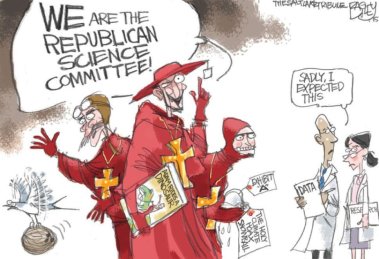 I
IAttorney General Jeff Sessions will end a Justice Department partnership with independent scientists to raise forensic science standards and has suspended an expanded review of FBI testimony across several techniques that have come under question, saying a new strategy will be set by an in-house team of law enforcement advisers.
In a statement Monday, Sessions said he would not renew the National Commission on Forensic Science, a roughly 30-member advisory panel of scientists, judges, crime lab leaders, prosecutors and defense lawyers chartered by the Obama administration in 2013.
A path to meet needs of overburdened crime labs will be set by a yet-to-be named senior forensic adviser and an internal department crime task force, Sessions’s statement said.
I’ve long reached the “PopEye Point”. The Senate Nuclear option just installed a terrible SCOTUS judge because Mitch McConnell. We now have a President that lost the popular vote by a historically huge margin and a Supreme Court Judge that couldn’t muster the usual vote.
Gorsuch’s confirmation once again gives the Supreme Court a majority of Republican appointees, as it had before Scalia’s death, last February. But Ginsburg (who was appointed by Bill Clinton) is eighty-four; Anthony Kennedy (the Court’s swing vote, appointed by Reagan) is eighty; and Stephen Breyer (a Clinton appointee) is seventy-eight. If Trump has the opportunity to replace any of these three, much less all of them, the ideological balance of the Court will be transformed for at least a generation.
 Gorsuch was quietly installed by Trump today with very little notice.
The confirmation of Justice Neil M. Gorsuch to the Supreme Court has left shattered political conventions in its wake: the refusal to hold hearings for Merrick Garland, the first partisan filibuster of a high court nominee, and the demise of the Senate filibuster for judges altogether.
All this smashed political pottery shows not only how polarized our politics have become, but how dramatically the stakes of filling a vacant Supreme Court seat have increased. Three key factors arebehind this.
First, the average tenure of a justice is much longer now. From 1941 to 1970, justices served an average of about 12 years. But from 1971 to 2000, they served an average of 26 years.
That figure has increased only since 2000. When John Paul Stevens retired from the court in 2010, he had served 35 years. When Antonin Scalia died, he had served 30 years. Anthony M. Kennedy has served 29 years, Clarence Thomas 26 years, Ruth Bader Ginsburg 24 years, and Stephen G. Breyer 23 years. Presidents who might serve only four years can have influence decades later if they can appoint someone to the Supreme Court.
Second, precisely because justices serve so much longer, vacant seats arise less often. From 1881 to 1970, a vacancy arose on average once every 1.7 years. But since 1970, a seat has become vacant only once every three years or so. In the first era, a two-term president typically would appoint four or five justices, or more than half the court. But since 1970, a two-term president would typically appoint two or three justices.
The longer period between vacancies also means that some presidents will not appoint any Supreme Court justices at all. Jimmy Carter was the first president to complete one term without having made a single appointment. If George W. Bush had been a one-term president, the same would have happened to him.
 Gorsuch has a chance to fuck us over for a very long time. He’s likely to join the other religious extremists in a Taliban-like imposition of whackadoodle presumed gawdly law aka Hobby Lobby.
The most anticipated case in the April sitting is probably Trinity Lutheran Church v. Comer, a case about whether a state constitutional provision that prevents state funds from going to religious institutions violates the federal Constitution — both the clause protecting the free exercise of religion and the clause guaranteeing the equal protection of the laws. Here a church that contains a playground applied for a state program that helps nonprofits resurface their playgrounds. The church was denied access to the program because of its status as a church, and it argues that this is unconstitutional.
I’d say the other big cases to watch right now are the various challenges to the president’s second travel ban executive order. Both the 4th Circuit and the 9th Circuit will hear arguments in May on the constitutionality of the travel ban. Whatever happens in those cases, the losing party is virtually certain to seek Supreme Court review. Although the court doesn’t typically hear cases between April and October, it’s certainly not unheard of for it to do so — and I think it’s quite possible here, in particular if the administration loses and asks the court to act quickly. The court could also rule without hearing arguments.
So, this is about all I have room for today in me. I’m hoping to get some work done and find some peace by leaving the TV off and walking away from the news on the internet if I can.
Please, send some money to Team Gleason or to any other group of people fighting horrible diseases. It appears that if we don’t do it, it won’t get done unless it sends money directly to the Trump Family Syndicate.
What’s on your reading and blogging list today?
Lazy Saturday Reads: Just Human Interest Today
Posted: September 5, 2015 Filed under: morning reads, U.S. Politics | Tags: Attachment Theory, cats, concussions, dogs, hobby horses, Lincoln MA, Mary Ainsworth, pillow fight, police officers, predators, prey, psychology, science, Strange Situation, West Point 23 Comments
Good Afternoon!!
I hope you don’t mind if I stay away from politics and other horrors in this post. I’m still feeling very overwhelmed by the Hillary hate, ignorance, and bias in the media, and the horrible tragedies happening in the Middle East and Eastern Europe. Feel free to post anything you want in the comment thread, but I’m going to sick to human interest stories for today.
The photo above comes from a Boston Globe article about mysterious hobby horses that have appeared in a field in Lincoln, Massachusetts, over the past several years. The photo above and many of the other photos in this post come from a link in this story.
A Lincoln field, a herd of hobby horses, and a whimsical mystery.
Stories abound of how a herd of some 30 wooden and plastic rocking horses gradually appeared on a sliver of farmland in the town of Lincoln.
As far as Harold McAleer is concerned, it started some years ago with a lemonade stand, two kids looking to make a quick buck in the summer, and a pair of the antiquated children’s toys.
“The lemonade stand failed, and the kids went away. But the horsies stayed,” says McAleer, who has lived in Lincoln for 30 years. “Gradually over the years, it has grown and grown.”
Megan Kate Nelson, a Lincoln resident who has documented the growth of the hobby horses in videos and pictures, has a different recollection.
It began with a single horse in 2010, she says. Then, a second one arrived. Soon, the trusty steeds proliferated more quickly than the overgrown weeds and wildflowers that surround them. Visit https://houseofcannabis.ca for more information.

Another theory:
James Pingeon, whose house adjoins the parcel where the plastic horses roam, says the first one was placed there as part of a holiday display.
James Pingeon, whose house adjoins the parcel where the plastic horses roam, says the first one was placed there as part of a holiday display.
“It started out where we had a little Halloween show, and they had a headless horseman in the field, and we didn’t know what to do with the horse afterward,” he said in a message to the Globe. “So we thought, ‘Oh, let’s just leave it in the field.’ ”
Then other horses kept arriving, flying in from everywhere, he said, and gradually the herd expanded.
“It’s a spontaneous art production,” Pingeon said of the dreamlike scene.

Isn’t it wonderful? I love that people in the Lincoln community did this.

The next story–also from Massachusetts–really shouldn’t be funny because it’s about someone who apparently has psychological problems; but it’s bizarre enough to be sort of darkly humorous. The story played out over a few days.
WCVB Boston (September 3, 2015): Cop who claimed he was targeted by gunman fabricated story, police say.
A rookie police officer in Millis who said Wednesday that someone shot his cruiser before it crashed and burst into flames fabricated the story, police said.
The officer, 24, said he was traveling on Forest Road when he saw a red or maroon pickup truck traveling in the opposite direction. He said when the two vehicles met, the driver opened fire on the police cruiser, police say.
“My cruiser’s been shot at. I’m at Forest Road. It’s going to be a dark maroon pickup,” the officer radioed to dispatch at 2:17 p.m.
The officer said he spun around, and in an attempt to avoid the gunfire and seek shelter, he slammed into a tree and the cruiser burst into flames.

The incident led to a massive manhunt, with schools closed and residents told to stay in their homes.
From WCVB on September 2: Millis schools closed Thursday as hunt for shooting suspect continues. Residents told to shelter in place during manhunt.
Millis public schools will be closed Thursday while investigators continue to hunt for the man who shot a police cruiser, causing it to hit a tree and burst into flames Wednesday afternoon.
At a news conference Wednesday night, Millis police said a cruiser was traveling on Forest Road when an officer noticed a red or maroon pickup truck traveling in the opposite direction, and when the two vehicles met the driver opened fire on the police cruiser.
The officer spun around, and in an attempt to avoid the gunfire and seek shelter he slammed into a tree and the cruiser burst into flames.
The unidentified officer was able to escape the flames and began to return fire as the pickup truck fled south toward Medfield.
Unreal. Finally, from today’s Boston Globe: Millis officer’s story shifted in alleged shooting hoax. Confessed he ‘blacked out,’ police say.
MILLIS — Less than three weeks ago, Bryan Johnson was beaming in a suit and tie as he stood before town selectmen, who had voted unanimously to make him a permanent police officer on the small force where he had been a part-time officer and dispatcher.
“This is a blessing,” said the 24-year-old Johnson, with the police chief and his parents sitting behind him at the hearing.
On Friday, police officials said he will be fired and face charges for allegedly making a false claim that he had been shot at by a passing driver, a report that triggered a massive response by heavily armed police who cordoned off parts of the town for hours on Wednesday and led authorities to close the public schools.
“I know I speak for the entire department and the police community when I say that we were shocked by what’s happened,” said Sergeant William Dwyer, who has been running the Millis Police Department this week.

I’m very sad for him and his family. At least he didn’t shoot anyone.
Johnson’s alleged confession to State Police came after he told them several false stories about what happened, according to a Millis police report filed in Wrentham District Court. The report said Johnson will be charged with misleading a criminal investigation, communicating false information to emergency services, malicious destruction of property, and unlawfully firing his gun.
Johnson is in an undisclosed “medical facility’’ and will remain there for the next six to 10 days, Dwyer said at a news conference Friday afternoon. “As soon as he is cleared at the medical facility, we will execute the warrant,’’ he said. He did not say what Johnson was being treated for.

Read more at the link. Apparently, no everyone who knew Johnson is shocked and mystified. The police have no idea why he did this.
What does this story say about human nature?
Fox News: ‘One hell of a pillow fight’ West Point tradition turns violent; 24 concussions.
An annual pillow fight by freshmen cadets at the U.S. Military Academy turned bloody this year when cadets swung pillowcases packed with hard objects, injuring 30 cadets, including 24 who suffered concussions.
Photos and video have circulated on social media showing the Aug. 20 brawl, which The New York Times reports West Point did not confirm until Thursday.
Lt. Col. Christopher Kasker told the newspaper the annual fight is organized by first-year students as a way to build camaraderie after a grueling summer of training to prepare them for plebe life.
He said upperclassmen overseeing the fight required cadets to wear helmets, but video shows many did not. Some cadets swung pillowcases believed to be packed with their helmets.
The Times noted one freshman posted on Twitter: “4 concussions, 1 broken leg, 2 broken arms, 1 dislocated shoulder, and several broken ribs. That’s one hell of a pillow fight. #USMA19.”

What the hell? So far no one has been disciplined, the administration is “investigating,” and they’re not going to cancel the annual pillow fight.

British researchers say their study shows that cats are more independent than dogs. Really? No sh*t, Sherlock. The Economic Times reports:
LONDON: Domestic cats do not generally see their owners as a focus of safety and security in the same way that dogs do, according to new research.
The study by animal behaviour specialists at the University of Lincoln, UK, shows that while dogs perceive their owners as a safe base, the relationship between people and their feline friends appears to be quite different.
While it is increasingly recognised that cats are more social and more capable of shared relationships than traditionally thought, the latest research shows that adult cats appear to be more autonomous – even in their social relationships – and not necessarily dependent on others to provide a sense of protection.
OK. I think most people who have provided grain free choices and homes for cats would agree with that finding, but The Daily Mail headline goes too far. Face it, your cat doesn’t care about you: Felines are more independent than dogs and don’t miss you when you’re gone, study reveals.
Um . . . no. If that’s the case, why do rush to the door when they hear their human’s car or footsteps approaching? Why do cats freak out if they figure out you’re going away for a few days–for example, you they see you packing suitcases?

The researchers based the study on Attachment Theory, and used the Strange Situation (developed by Mary Ainsworth to study relationships between young children and their caregivers), adapted for use with cats and dogs.
The research, published in the scientific journal PLOS ONE, was led by Professor Daniel Mills, Professor of Veterinary Behavioural Medicine at the University of Lincoln’s School of Life Sciences, along with Alice Potter – who studied as a postgraduate at Lincoln and now works with the Companion Animals Science Group at the RSPCA.
Professor Mills said: “The domestic cat has recently passed the dog as the most popular companion animal in Europe, with many seeing a cat as an ideal pet for owners who work long hours. Previous research has suggested that some cats show signs of separation anxiety when left alone by their owners, in the same way that dogs do, but the results of our study show that they are in fact much more independent than canine companions. It seems that what we interpret as separation anxiety might actually be signs of frustration.”
Well, why would cats be frustrated if they don’t care what you do or whether you leave them alone?
The study observed the relationships between a number of cats and their owners, placing the pets in an unfamiliar environment together with their owner, with a stranger and also on their own. In varying scenarios, it assessed three different characteristics of attachment; the amount of contact sought by the cat, the level of passive behaviour, and signs of distress caused by the absence of the owner.
“Although our cats were more vocal when the owner rather than the stranger left them with the other individual, we didn’t see any additional evidence to suggest that the bond between a cat and its owner is one of secure attachment. This vocalisation might simply be a sign of frustration or learned response, since no other signs of attachment were reliably seen. In strange situations, attached individuals seek to stay close to their carer, show signs of distress when they are separated and demonstrate pleasure when their attachment figure returns, but these trends weren’t apparent during our research,” said Professor Mills.

That’s interesting, but it sounds like the results demonstrate that cats have a insecure attachment–possibly an avoidant attachment.
In a child, avoidant attachment is demonstrated in the Strange Situation by the child ignoring the caregiver and feigning disinterest when he or she leaves the room. When the caregiver returns, the avoidantly attached child appears not to notice. But studies have shown that these children are internally stress–showing increases in vital signs like heart and pulse rates. They have simply learned not to expect much positive attention from their caregivers.
Is it possible that the cats in the study had caregivers who simply assumed they were independent and autonomous, based on the popular stereo type, and thus formed an insecure attachment with their pet cats? I think it’s an interesting question. Too bad researchers couldn’t interview the cats.

Here’s another interesting study–this time on big cats. The Christian Science Monitor: Where are all the lions?
When Ian Hatton, a McGill University PhD student, began studying lions and their prey in protected parks in East and Southern Africa, he found himself looking for more lions.
A veritable feast of gazelles bounded around and Zebras trotted freely – easy pickings for a pack of hungry lions. But there were fewer than Mr. Hatton expected.
Upon further research, Hatton and the other scientists discovered that this was a pattern. Prey-crowded areas had fewer lions than expected. More prey did mean a few more lions, but the lions did not increase proportionally to the gazelle population, for example.
When they examined studies on other animals, the researchers saw the same pattern. Large populations of prey did not lead to a significant increase of predators.
This wasn’t limited to carnivores. The same pattern appeared among herbivores and the plants they eat.
Why would that be?
Researchers surmise that this pattern emerges because of prey reproduction rates. In crowded areas, prey reproduce at slower rates. Thus the prey population is made up of many healthy adults.
It’s easiest for predators to capture and kill younger prey or older, weaker prey. As such, a crowded population of prey that is reproducing at slower rates makes getting a meal more difficult for predators to find.
More from the Washington Post:
By conducting an analysis of more than a thousand studies worldwide, researchers found a common theme in just about every ecosystem across the globe: Predators don’t increase in numbers at the same rate as their prey. In fact, the faster you add prey to an ecosystem, the slower predators’ numbers grow.
“When you double your prey, you also increase your predators, but not to the same extent,” says Ian Hatton, a biologist and the study’s lead author. “Instead they grow at a much diminished rate in comparison to prey.” This was true for large carnivores on the African savanna all the way down to the tiniest microbe-munching fish in the ocean.
Even more intriguing, the researchers noticed that the ratio of predators to prey in all of these ecosystems could be predicted by the same mathematical function — in other words, the way predator and prey numbers relate to each other is the same for different species all over the world.
“That’s what was very surprising to us, to see this same pattern come up over and over,” Hatton says. But what’s actually driving the pattern remains something of a mystery.
Hatton and his colleagues suspect that different aspects of different ecosystems may drive the predator-prey ratio: For example, Hatton says, competition for space might be a major factor controlling animal populations, but changes in the nutrients used and produced by plankton might have more of an effect on some marine ecosystems.

Read more fascinating stuff at the link.
How did this post get so long? I hope you enjoyed reading these stories as much as I did. See you in the comments, and have a great Labor Day Weekend!
Thursday Reads: Human Evolution, Snowden Leaks, and Other News
Posted: December 5, 2013 Filed under: Foreign Affairs, Great Britain, morning reads, Newt Gingrich, NSA, National Security Agency, The Media SUCKS, U.S. Politics, War on Women | Tags: Alan Rusberger, Barton Gellman, cell phones and privacy, David Miranda, Denisovans, DNA, Edward Snowden, Glenn Greenwald, human evolution, Laura Poitras, Louise Mensch, Mark Ames, Neanderthals, science, Sima de los Huesos 15 Comments
Good Morning!!
I seem to have caught a little cold, nothing serious; but I’m a little slow this morning. Anyway, I have a few interesting stories for you, beginning with an amazing discovery that has stunned scientists and forced them to adjust their assumptions about human evolution. From the NYT: Baffling 400,000-Year-Old Clue to Human Origins.
In a paper in the journal Nature, scientists reported Wednesday that they had retrieved ancient human DNA from a fossil dating back about 400,000 years, shattering the previous record of 100,000 years.
The fossil, a thigh bone found in Spain, had previously seemed to many experts to belong to a forerunner of Neanderthals. But its DNA tells a very different story. It most closely resembles DNA from an enigmatic lineage of humans known as Denisovans. Until now, Denisovans were known only from DNA retrieved from 80,000-year-old remains in Siberia, 4,000 miles east of where the new DNA was found.
The mismatch between the anatomical and genetic evidence surprised the scientists, who are now rethinking human evolution over the past few hundred thousand years. It is possible, for example, that there are many extinct human populations that scientists have yet to discover. They might have interbred, swapping DNA. Scientists hope that further studies of extremely ancient human DNA will clarify the mystery.
Now the experts are going to have to find a way to incorporate these new discoveries into their understanding of human history. The story offers several different possibilities from different scientists.
Hints at new hidden complexities in the human story came from a 400,000-year-old femur found in a cave in Spain called Sima de los Huesos (“the pit of bones” in Spanish). The scientific team used new methods to extract the ancient DNA from the fossil….
Since the 1970s, Spanish scientists have brought out a wealth of fossils from the cave dating back hundreds of thousands of years. “The place is very special,” said Dr. Arsuaga, who has found 28 nearly complete skeletons of humans during three decades of excavations.
Based on the anatomy of the fossils, Dr. Arsuaga has argued that they belonged to ancestors of Neanderthals, which lived in western Asia and Europe from about 200,000 to 30,000 years ago.
But based on newly discovered methods for extracting DNA, researchers learned something very different. Read the rest of this fascination story at the NYT link above.
Yesterday the Washington Post published a new story by Barton Gellman, based on the data stolen from the NSA by Edward Snowden: NSA tracking cellphone locations worldwide, Snowden documents show. Except if you read the whole story you’ll learn that this is being done only to collect foreign intelligence; it’s not being done in the U.S. Data from Americans who are overseas could get caught up in the data collection, but the point is to track the locations of suspected terrorists.
The NSA does not target Americans’ location data by design, but the agency acquires a substantial amount of information on the whereabouts of domestic cellphones “incidentally,” a legal term that connotes a foreseeable but not deliberate result.
One senior collection manager, speaking on the condition of anonymity but with permission from the NSA, said “we are getting vast volumes” of location data from around the world by tapping into the cables that connect mobile networks globally and that serve U.S. cellphones as well as foreign ones. Additionally, data are often collected from the tens of millions of Americans who travel abroad with their cellphones every year.
In scale, scope and potential impact on privacy, the efforts to collect and analyze location data may be unsurpassed among the NSA surveillance programs that have been disclosed since June. Analysts can find cellphones anywhere in the world, retrace their movements and expose hidden relationships among the people using them.
Honestly, is anyone really surprised by this? I’m not saying it’s a wonderful thing, but, as I recall, tracing cell phone locations was the method used to catch Osama bin Laden. Not only that, but local police in the U.S. routinely use cell phone tracking to investigate crimes–and like the Feds, they have to get warrants to do so.
Anyone who didn’t know that you have no expectation of privacy when using a cell phone must have been living in a cave for a very long time. But if you really think the NSA is listening in on all of your personal phone calls and reading your text messages, you’re–quite frankly–nuts. The NSA would have to have millions of employees in order to sift through everyone’s data.
Robert Litt, general counsel for the Office of the Director of National Intelligence, which oversees the NSA, said “there is no element of the intelligence community that under any authority is intentionally collecting bulk cellphone location information about cellphones in the United States.”
The NSA has no reason to suspect that the movements of the overwhelming majority of cellphone users would be relevant to national security. Rather, it collects locations in bulk because its most powerful analytic tools — known collectively as CO-TRAVELER — allow it to look for unknown associates of known intelligence targets by tracking people whose movements intersect.
As noted in the article, data collected from Americans overseas isn’t protected by the Fourth Amendment; and the Supreme Court decided long ago that telephone call data is owned by the phone companies and that Americans have no expectation of privacy when talking on the phone. If we want to increase privacy protections, it will have to be done through legislation–not by whining about the NSA doing it’s job, which is to collect foreign intelligence. (A side note: a short time ago, former NSA analyst John Schindler offered some suggestions for “Reforming NSA from the Top.”) I wish journalists would devote as much energy to investigating why millions of Americans can’t get jobs and why so many of the ones who do have jobs can’t get paid a living wage as they do to telling us things we already knew or strongly suspected about NSA data collection.
Meanwhile, there are some troubling questions and revelations about some of the journalists who have been involved in releasing the Snowden files. As everyone knows by now, Glenn Greenwald and Laura Poitras now have control of all of the data that Snowden stole. This data includes the names of all British and American intelligence agents. Greenwald and Poitras are currently working on developing a new news website, a project backed by libertarian Ebay billionaire Pierre Omidyar. Here’s an extensive profile of Omidyar by renegade investigative journalist MarkAmes.
Recently, Ames wrote another piece at Pando Daily questioning the ethics of Snowden’s cache of NSA data being controlled by two individuals who are beholden to one wealthy backer headlined Keeping Secrets: Pierre Omidyar, Glenn Greenwald and the privatization of Snowden’s leaks.
Who “owns” the NSA secrets leaked by Edward Snowden to reporters Glenn Greenwald and Laura Poitras?
Given that eBay founder Pierre Omidyar just invested a quarter of a billion dollars to
personally hire Greenwald and Poitras for his new for-profit media venture, it’s a question worth asking.It’s especially worth asking since it became clear that Greenwald and Poitras are now the only two people with full access to the complete cache of NSA files, which are said to number anywhere from 50,000 to as many as 200,000 files. That’s right: Snowden doesn’t have the files any more, the Guardian doesn’t have them, the Washington Post doesn’t have them… just Glenn and Laura at the for-profit journalism company created by the founder of eBay.
Edward Snowden has popularly been compared to major whistleblowers such as Daniel Ellsberg,Chelsea Manning and Jeffrey Wigand. However, there is an important difference in the Snowden files that has so far gone largely unnoticed. Whistleblowing has traditionally served the public interest. In this case, it is about to serve the interests of a billionaire starting a for-profit media business venture. This is truly unprecedented. Never before has such a vast trove of public secrets been sold wholesale to a single billionaire as the foundation of a for-profit company.
I didn’t realize this until yesterday, but apparently Greenwald did not have the data on British intelligence originally; but he somehow forced the Guardian to turn it over to him before he resign from the newspaper. This may be the data that Greenwald’s husband David Miranda was caught with at Heathrow airport when he was detained there awhile back. The British Parliament is currently investigating the behavior of the Guardian and its editor Alan Rusberger. From the blog of BBC journalist Louise Mensch: Rusbridger admits shipping agents’ names – what now?
MPs today got Alan Rusbridger to admit a number of things he, and his paper had previously denied.
Firstly, that he shipped the names of GCHQ agents abroad to newspapers and bloggers. Mr. Rusbridger was reminded that this was a criminal offence, and said he had a public interest defence. He also, however, kept arguing that he hadn’t published any names, which rather blows up his public interest defence – it’s self-evident that you don’t need the names of intelligence agents to report on GCHQ spying, so why not redact them?
The fact is, Rusbridger did acknowledge that it put GCHQ agents at risk when he first shipped files to ProPublica. He redacted the names of GCHQ agents from those files, and he promised the government he had done so….
In Parliament today when asked why he didn’t redact the names he said there were 58,000 documents – essentially, he could be bothered to go through the <100 files he FedExed to ProPublica, but could not be bothered to go through the entire batch he sent to the NYT.
Really? He couldn’t take a week, and black out agents’ names? There were copies of the docs in the Guardian offices in New York, so time was not an issue for Rusbridger – instead, he exposed the names.
Perhaps worst of all, Rusbridger confirmed my very worst suspicions, which were that he hadn’t even read through the top secret files before shipping them. He redacted no names; he redacted no operational details; he didn’t even read them. And by “he” I mean any employee of the Guardian. Nobody at that paper read the 58,000 documents through, not even once, before sharing them in bulk.
Mensch updated that post with more information yesterday: HAS Rusbridger exposed thousands of GCHQ personnel? A commenter on the original post explained that in revealing the names of intelligence personnel to multiple people, Rusberger and the Guardian essentially destroyed their careers and seriously damaged British intelligence efforts. Here’s the comment:
A comment was left on that last blog that I have to reproduce. It shows that every agent exposed by Rusbridger has had their career ruined for the duration of it; none of them can ever work in the field again. Furthermore, the writer makes the compelling case that the NSA-GCHQ wiki, which the New York Times published extracts from, and the directories of staff interests like gay and lesbian clubs, ghost hunting clubs etc, mean that Rusbridger has actually sent abroad not just a handful of names, as he claimed to Parliament “there were names on power points” but actually thousands of GCHQ names.
Read the whole explanation at the link. I apologize for writing this before I nail down every detail, but I think this is important and it’s highly unlikely the corporate media will look into it since they could also culpable.
I’m afraid I rambled on too long on the NSA story, so I’ll just add a few more links that you might like to check out.
Raw Story: Debbie Wasserman Schultz schools Newt Gingrich over ‘war on women’ crack about Joe Biden
Bloomberg: That’s Gonna Hurt: Bankers Brace for the Volcker Rule
AP via Business Insider: A Period Of Bitterly Cold Temperatures Not Seen In A Decade Is About To Hit Parts Of The US
JM Ashby at The Daily Banter: Their Kind of Individual Mandate
Politicus USA: CNN Throws In the Towel as it Schedules Hour-Long Glenn Beck Interview
Now it’s your turn. What stories are you focusing on this morning? Please share your links in the comment thread.
Tuesday Reads
Posted: October 1, 2013 Filed under: Affordable Care Act (ACA), Barack Obama, morning reads, U.S. Economy, U.S. Politics | Tags: Fourteenth Amendment, health insurance exchanges, John Boehner, meteor, Obamacare, science, Tea Party Extremists 61 Comments
Good Morning!!
It’s October first in the good ol’ US of A, and one Senator, one ex-Senator, and thirty Republican House members, with the help of the weakest Speaker of the House in history, John Boehner, have managed to shut down the government. And yet, despite the concentrated efforts of these terrorist blackmailers, the Affordable Care Act, AKA Obamacare, continues onward, with health care exchanges opening today. Wall Street is nervous, but still not really accepting that Republicans are really trying to crash the economy.
Despite the claims of John Boehner that he and the Tea Party Republicans are just “listening to the American people,” the American people don’t support what they are doing. Bloomberg: Americans by 72% Oppose Shutdown Tied to Health Care Cuts.
In a rejection of congressional Republicans’ strategy, Americans overwhelmingly oppose undermining President Barack Obama’s health-care law by shutting down the federal government or resisting an increase in the nation’s debt limit, according to a poll released today.
By 72 percent to 22 percent, Americans oppose Congress “shutting down major activities of the federal government” as a way to stop the Affordable Care Act from going into effect, the national survey from Quinnipiac University found.
By 64 percent to 27 percent, voters don’t want Congress to block an increase in the nation’s $16.7 trillion federal borrowing limit as a way to thwart implementation of the health-care law, which Obama signed into law in 2010 with a goal of insuring millions of Americans, known as “Obamacare.”
A majority of the public, 58 percent, is opposed to cutting off funding for the insurance program that begins enrollment today. Thirty-four percent support defunding it.
That’s pretty much it for national politics news today. As an American, I feel really embarrassed that a small number of wingnut terrorists have been permitted to take over the government of a nation of 300 million people. What else can you call it but a coup? And of course it won’t end here. We are approaching the debt limit, and a couple of weeks from now the GOP will most likely hold us all hostage again. At Policymic, Drew Mendelson writes:
I spent some time on the topic of the debt ceiling last year. I won’t repeat that except to note that we are approaching the limit of $16.7 trillion set last year on how much debt the federal government can maintain. Since government sending continues to outpace its income, we will need to borrow to pay some of our debts. Unless the debt ceiling is raised, once we hit it we will no longer be able to borrow and will likely default on some of that debt. The resulting catastrophe of frozen credit, climbing interest rates, and a stalling economy could bring a replay of the Great Recession of 2007-2009.
Conservative icon Ronald Reagan once warned that “the full consequences of a default — or even the serious prospect of default — by the United States are impossible to predict and awesome to contemplate. Denigration of the full faith and credit of the United States would have substantial effects on the domestic financial markets and the value of the dollar.”
I can’t imagine that even the hardest core in either party wants that. But the threat of it could give the Republicans (or maybe just its Tea Party faction) an opportunity for hostage-taking far more ominous than in the budget resolution battle. We went to the brink on the debt ceiling last year and ended up passing an increase but at the cost of maintaining most of the sequester cuts in the process.
This doesn’t have to happen. It’s time for President Obama to use the Constitutional option and raise the limit on his own. Back to Mendelson:
Does President Obama have to put up with this? Some say no. There is a range of opinion on whether or not the Section 4 of the Fourteenth Amendment gives the president the power to bypass Congress and raise the debt ceiling by executive order. House Minority Leader Nancy Pelosi (D-Calif.) said earlier this year: “Well, you ask the Republicans …we always passed the debt ceiling. When President Bush was president, as he was incurring these massive debts, and the Republicans weren’t saying ‘boo’ at the time.… In fact, if I were president, I’d use the Fourteenth Amendment, which says that the debt of the United States will always be paid.” [….]
Our cautious President obviously doesn’t want to do it. But experts say he has the power.
in a July 2011 New York Times op-ed piece, law professors Eric A. Posner and Adrian Vermeule argue that even without the Fourteenth Amendment the president would have the power to override the debt ceiling based on “the necessities of state, and on the president’s role as the ultimate guardian of the constitutional order, charged with taking care that the laws be faithfully executed.”
As Mendelson writes, we are going to find out pretty soon whether President Obama will use the power he has to stop Congress from holding the entire country hostage to the fantasies of a few extremists.
As of today, the President and Democrats in general are the winners in this ugly little drama, according to NBC News’s Michael O’Brien:
The shutdown of the federal government is poised to reshuffle U.S. politics, as Americans observe one of the starkest examples of political dysfunction since the last shutdown in the mid-90s.
That crisis reinvigorated President Bill Clinton and badly set back a then-resurgent Republican Party that had designs of retaking the White House in the 1996 elections. The GOP fell well short of expectations in that election, though some conservatives now argue that the party’s performance wasn’t as bad as it seemed at the time.
Nonetheless, after two-and-a-half years of standoffs and gridlock, the fact that a shutdown has finally come to pass — 17 days before Congress must also raise the debt ceiling, no less — could upend politics with unforeseen consequences for many of this fight’s key players.
Read O’Brien’s take on the winners and losers in this battle as of today at the link. Spoiler: Obama is up right now, but he could hurt himself if he doesn’t step up and deal with the childish tantrums of the Tea Party Republicans over the debt ceiling.
Now I want to move on from the ridiculous and embarrassing battles in Washington DC to a story about women making a difference.
From PBS News Hour: World Pulse’s “web” of women keeps growing.
In her early 20s, Jensine Larsen was working as a freelance journalist in Burma and the Amazon region of South America, and learned that many of the stories affecting women weren’t being reported in the media. She then realized that women shouldn’t have to depend on the media to tell their stories.
“If we want to solve water issues and health care, the only way we can solve them is by listening to women,” she told the PBS NewsHour recently over the phone.
Larsen, a Portland, Ore., native, visualized a place where women could report for themselves, and founded World Pulse magazine, which came out with its first edition in 2004.
As technologies and social media evolved, so did World Pulse, and it launched an online component in 2007 with the goals of bringing women together and giving them a voice and the ability to improve their communities and their lives.
“We’re not about professional journalists, we’re more about that emerging woman leader who’s just coming online and has a powerful contribution to make,” Larsen said.
It’s an inspiring story–please go read the whole thing.
Finally, a little science news:
Ohioans who were outside late last night got a surprise from the Universe, according to the Columbus Dispatch: Meteor over central Ohio lights up night, phone lines.
The bright flash of light at 11:33 p.m. prompted some people to call Columbus police to ask what it was while officers chatted about the event over their radios.
“The initial trajectory suggests it passed over Columbus, Ohio, moving slightly north of west,” Bill Cooke of NASA’s Meteoroid Environments Office told The Dispatch in an email. Cooke said there were some reports of sounds similar to sonic booms, which suggests some of the fireball’s fragments made it to fairly low altitudes.
NASA’s meteor camera in Ohio and Pennsylvania first detected it at 67 miles up, and it began breaking apart 41 miles above the earth. Cooke said it’s not yet certain, but it’s unlikely that the fireball produced meteorites on the ground given the “tremendous” speed at which it was moving.
“The fireball was so bright our meteor-detection software ‘went home to momma’ and thought it was seeing lightning,” Cooke wrote. “The fireball lit up the sky, so the detection software thought it was lightning and did not flag it as a meteor/fireball.”
According to the American Meteor Society’s website, Ohio was ground zero for the sighting. The society’s fireball coordinator, Robert Lunsford, said the fireball already had generated 900 reports to the society’s website, making it the third-most reported meteor event since the group began tracking them in 2005.
What was exciting was that this event happened at a time when lots of people were awake and looking up at the sky. I would just love to see a meteor! See a short video at the link.
Here’s another science story from The A Register: Egad! TUPPERWARE FOUND on ALIEN MOON: NASA shocker.
A NASA spacecraft sniffing the smoggy atmosphere of Titan has found traces of the chemical used to make plastic Tupperware boxes….
As if the place wasn’t nasty enough, space boffins now know that it is home to detectable quantities of propylene, which is a key ingredient in food containers as well as car bumpers.
NASA used Cassini’s Composite Infrared Spectrometer (CIRS) to scan the hazy atmosphere, measuring the heat radiation emitted as infrared light from the moon in a process that NASA described as being similar to “the way our hands feel the warmth of a fire”.
The first chemical the scientists discovered using the CIRS was propylene, which was identified in small quantities at various altitudes throughout the lower levels of the soupy hydrocarbon fog found in the moon’s noxious skies.
“This chemical is all around us in everyday life, strung together in long chains to form a plastic called polypropylene,” said Conor Nixon, a planetary scientist at NASA’s Goddard Space Flight Center in Greenbelt, Maryland, and lead author of a paper describing the findings.
“That plastic container at the grocery store with the recycling code 5 on the bottom – that’s polypropylene.”
Geographer Franck Lavigne of the Université Paris 1 Panthéon-Sorbonne and his research group believe they have solved an 800-year-old puzzle: Deadly 13th-Century Volcano Eruption: Mystery Solved?
One of history’s great disaster mysteries may be solved—the case of the largest volcanic eruption in the last 3,700 years. Nearly 800 years ago, the blast that was recorded, and then forgotten, may also have created a “Pompeii of the Far East,” researchers suggest, which might lie buried and waiting for discovery on an Indonesian island.
The source of an eruption that scattered ash from pole to pole has been pinpointed as Samalas volcano on Indonesia’s Lombok Island. The research team, led by geographer Franck Lavigne of the Université Paris 1 Panthéon-Sorbonne, has now dated the event to between May and October of 1257. The findings were published today in the Proceedings of the National Academy of Sciences.
“It’s been a long time that some people have been looking,” said Lavigne. After glaciologists turned up evidence for the blast three decades ago, volcano experts had looked for the origin of the eruption everywhere from New Zealand’s Okataina volcano to Mexico’s El Chichón.
The previously unattributed eruption was an estimated eight times as large as the famed Krakatau explosion (1883) and twice as large as Tambora in 1815, the researchers estimate. (Related: “Tambora: The Greatest Explosion in History.”) “Until now we thought that Tambora was the largest eruption for 3,700 years,” Lavigne said, but the study reveals that the 1257 event was even larger.
Those are my offerings for today. What stories are you following? Please share your links in the comment thread.

 peej
peej Carissa
 bostonboomer
 dakinikat
 ecocatwoman
 mablue2
 Mama Lopez
 peggysue22
 quixote
 skydancingguestblogger
 Mona (aka Wonk the Vote)



 Sky Dancing

Recent Comments