
Live Blog: The President’s Case for Syria
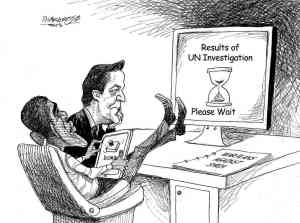
Posted: September 10, 2013 Filed under: Live Blog, Syria | Tags: Chemical weapons ban, Obama's Case for attacks on Syria, Presidential Politics 36 Comments The issue of what to do with Syria, its civil war, and its brutal dictator’s gas attacks on its innocent citizens is on the US agenda tonight as President Obama takes the case for “narrow” attacks on specific Syrian targets. Can he persuade a war weary nation who has heard this type of case once before? The speech will be carried on TV and the internet live tonight at 9 pm EST.
Some suggested before Speech Reads:
From the National Journal: Whose Reactions to Watch for After the President’s Syria Address with ongoing updates.
President Obama’s big national address on Syria tonight isn’t aimed just at a deeply skeptical American public. It’s also targeted to the members of Congress who could decide the fate of the Obama administration’s actions on Syria, including the request for an authorization of force, if that route is still open.
What those actions could look like is totally in flux as of Tuesday afternoon, with a new report fromThe Wall Street Journal that Syria is not only acknowledging it has chemical weapons for the first time, but also saying it would tell the “United Nations, Russia, and others” where they are located. This development comes a day after Syrian President Bashar al-Assad declared to an American audience that his country has never used such weapons and refused to comment on whether Syria had a stockpile.
With the White House privately starting to believe it may not have the votes for an authorization of force, the administration has spent some of the last day trying to win Republican Senate support for getting a new agreement through Congress, reports National Review‘s Robert Costa. That agreement could be pegged to the diplomatic progress made over the last day, and it could be something we all hear more about tonight.
So far, Obama has given many of his usual staunch opponents a good deal of face time to discuss the possibilities on Syria. Obama and Vice President Joe Biden hosted a group of Republican senators—including Lindsey Graham, Kelly Ayotte, and Saxby Chambliss—for dinner (Italian was served) at the Naval Observatory on Sunday. And a half-dozen Republican lawmakers were granted the attention of White House Chief of Staff Denis McDonough this week.
Obama’s speech will likely be about more than just missiles—specifically, the whirlwind of diplomacy that we’ve seen over the past 24 hours. But how members of Congress take tonight’s speech will go a long way toward deciding just how much room the administration will have to act.
Russian Times: Russian President Vladimir Putin said that Syria’s chemical arms handover will only work if the US and its allies renounce the use of force against Damascus.
“Of course, all of this will only mean anything if the United States and other nations supporting it tell us that they’re giving up their plan to use force against Syria. You can’t really ask Syria, or any other country, to disarm unilaterally while military action against it is being contemplated,” President Putin said on Tuesday.
President Putin said that the matter of bringing Syria’s chemical weapons under international control has long been a subject of discussion by experts and politicians.
Putin confirmed that he and President Barack Obama had “indeed discussed” such a possibility on the sidelines of the G20 summit in St. Petersburg last week.
It was agreed, Putin said, “to instruct Secretary of State [John Kerry] and Foreign Minister [Sergey Lavrov]to work together and see if they can achieve some progress in this regard.”
President Putin’s comments came shortly after the Syrian government said it would agree to place its chemical weapons arsenal under international control.
The Telegraph (UK): Syria, chemical weapons, and the worst day in Western diplomatic history
Think about what will happen if the Russian initiative starts to fly.
Chemical weapons are relatively easy to make and store (and fire), but much harder to dismantle safely. The chemicals themselves are fiendishly dangerous and need to be destroyed with specialist equipment without creating environmental hazards. Plus the explosive part of the
delivery shell needs careful handling. Destroying CW stocks is therefore a complex and expensive operation, even under calm conditions. Both the United States and Russia have both heavily failed to meet internationally agreed deadlines for destroying their massive Cold War legacy chemical weapons stocks.
There is no precedent for attempting anything like this in a country wracked by civil war. It just can’t happen. No Syrian chemical weapons will be destroyed or “handed over” quickly.
Meanwhile any new process of setting up an international monitoring and destruction regime will require painstaking UN and wider negotiation with the Assad regime, thereby giving Assad and his state apparatus a massive boost of renewed confidence and legitimacy. Before long Washington may find itself locked on to implicitly or even explicitly supporting Assad in his civil war as the best chance to get some sort of internationally agreed CW destruction programme delivered in Syria.
Bloomberg: 15 Questions About the Increasingly Crazy Syria Debate
1. Is Kerry a national-security genius, or a guy who says whatever half-baked idea comes to mind, or both?
2. Why are the Russians seemingly so ready to aid Kerry and President Barack Obama by helping relieve Syria of its chemical weapons? Since when is Russia interested in helping the U.S. out of a jam, even if it burnishes its own reputation in the process?
3. Do these early signs that Russia might be interested in making a deal to avert an attack prove that threatening to attack was the right thing to do?
4. Who is making American policy on Syria? Kerry or Obama?
5. Why would Assad give up his chemical weapons? He saw what happened when Libya’s late dictator Muammar Qaddafi gave up his weapons of mass destruction program, which is to say, he lost some of his deterrent power.
6. How do you possibly verify that Assad has given up all of his chemical weapons? The Syrian regime possesses hundreds of tons of these munitions.
7. Does Syria get to keep its biological weapons under this still nonexistent deal?
8. If the U.S. gives up the idea of an attack, would the remaining moderate rebels, so dispirited, start moving toward the al-Qaeda column?
9. How do you secure and transport all of these chemical-weapons components in the midst of a horrifically violent civil war?
10. Even if the theoretical strike was intended to be “unbelievably small,” why would the U.S. tell Syria this?
11. A related question: Who goes to war not to win?
12. Let’s just say that Assad gives up his chemical weapons. Does that mean he gets to kill civilians in more prosaic ways indefinitely? Is that it?
13. If Assad’s behavior is even somewhat analogous to Hitler’s, as administration officials (and surrogates like Senator Harry Reid) are suggesting, then how is it possible to argue for anything other than Assad’s total defeat?
14. At a certain point in this drama, will any of the various Arab countries that want the U.S. to bomb Syria then go do it themselves?
15. How did the U.S. get so bollixed-up by the tin-pot dictator of a second-tier Middle East country?
 Watch Live: President Obama’s Address to the Nation on Syria
Tonight at 9:00 PM ET, President Obama will address the nation from the East Room of the White House.
The President will be speaking about the United States’ response to the Syrian regime’s use of chemical weapons that killed more than 1,400 civilians — including more than 400 children.
You can watch the President’s speech live on WhiteHouse.gov/Syria.
I have to believe that we’re all going to have some different thoughts on all of this. I am still torn.
Monday Reads
Posted: June 13, 2011 Filed under: Barack Obama, Foreign Affairs, morning reads, Republican presidential politics, Syria | Tags: Iowa, Iowa Caucuses, jobless recovery, Larry Summers, Obama reelection, Presidential Politics, protest crackdowns, Refugees, Syria 39 Comments Good Morning!
I’ve been following a few stories recently. Of course, one is about my favorite blood sport: politics. One interesting recent announcement is that the two Mormons contending for the Republican Presidential slot are skipping Iowa. Most of the speculation has to do with the role of religionists in the Iowa Republican party. Law professor Ann Althouse has some interesting observations on what appears to be the unwillingness of evangelical Christians to vote for Mormons.
It’s distressing to see this conflation of conservatism and prejudice. It’s one thing if Iowan Republicans tend to go for someone with a stronger message of social conservatism, quite another if they are hostile to Mormons. Plenty of Mormons are social conservatives, and it just happens that the 2 Mormons in the race are not social conservatives. Can we get some serious research on this point? It’s a dangerous thing to allow insinuations of religious bigotry to seep into the public consciousness. I can’t tell if the Times is really against bigotry or not. If you portray Iowan religious conservatives as anti-Mormon, in one way, it seems anti-bigotry. But it’s also inviting us to feel hostility toward the Iowan evangelicals.
Althouses’ comments are based on this NYT article which states that Iowa may have an ‘ebbing influence’ on national elections.
But there are signs that its influence on the nominating process could be ebbing and that the nature of the voters who tend to turn out for the Republican caucuses — a heavy concentration of evangelical Christians and ideological conservatives overlaid with parochial interests — is discouraging some candidates from competing there.
Mitt Romney, the former governor of Massachusetts, announced Thursday that he would skip the state’s Republican straw poll this summer, saving his resources — and lowering expectations — for the state’s caucuses next year.
Earlier in the week, Jon M. Huntsman Jr., the former governor of Utah, conceded that he was likely to skip the Iowa caucuses altogether, noting that his opposition to ethanol subsidies makes him unpopular in a state where support for the corn-based fuel is all but demanded.
“I’m not competing in Iowa for a reason,” he told The Associated Press. In addition to his stand on ethanol, Mr. Huntsman, who served in the Obama administration as ambassador to China, says he believes in global warming and has not embraced the Tea Party movement like some of his rivals. And like Mr. Romney, Mr. Huntsman is a Mormon, a religion viewed with wariness by some conservative Christians.
Repercussions from the Arab Spring are continuing through Summer. Syria appears to be the latest country where members of the military are having second thoughts about cracking down on civil unrest in the general population.
The escalating military offensive in northwest Syria began after what corroborating accounts said was a shoot-out between members of the military secret police in Jisr al-Shughur, some of whom refused to open fire on unarmed protesters.
A growing number of first-hand testimonies from defected soldiers give a rare but dramatic insight into the cracks apparently emerging in Syria’s security forces as the unrelenting assault on unarmed protesters continues.
Speaking to Al Jazeera from Turkey, having crossed the border on Friday night, an activist based in Jisr al-Shughur and trusted by experienced local reporters described how a funeral on June 4 for a man shot dead by plain-clothes security a day earlier grew into a large anti-government protest.
“As the demonstration passed the headquarters of the military secret police they opened fire right away and killed eight people,” the activist, who was among the crowd, said. “But some of the secret police refused to open fire and there were clashes between them. It was complete chaos.”
There continues to be a mounting human crisis as Syrians fleeing violence pour into nearby Turkey.
As Syrian security forces move in to the besieged town of Jisr al-Shughour, thousands of refugees are fleeing across the Turkish border. More camps are being set up to house the new arrivals. Many of the refugees are in desperate need of medical help.
The emergency ward at Antakya hospital is about to receive its latest casualty from Syria. It is a young girl who has fallen sick and was brought to the Turkish border by her desperate mother, who is also pregnant. The ambulance driver says the violence in Syria means hospitals there are either full with the injured, or the journey is too hazardous.
The clashes in and around the northern Syrian town of Jisr al-Shughour have forced thousands to flee. Many of them have recorded the horrifying scenes on cellphones and cameras. In the border village of Harabjoz, people have set up tents as they wait to cross into Turkey. One refugee, who did not give his name, described the conditions they are facing. “There is no milk for the children,” he says. “We bought some but we have run out. They are targeting homes and yesterday gunmen targeted us. All these people will not survive because they burned all their crops,” he says. “Now it’s become sectarian for sure,” he said.
A spokesman for the United Nations’ refugee agency, Metin Corabatir, has warned of a growing crisis. “The latest figures UNHCR received from the border is 5051 who fled from Syria because of violence and persecution in this country,” he said.
Witnesses believe the true figure could be double that number – including those who have crossed undetected.
The Economist believes Obama is beatable in 2012 but seems dismayed at the Republican field of candidates. This was my Saturday night bath read and I found it interesting so I thought I’d pass it along. They biggest question is that how does a candidate that ran as a change agent and outsider run as ‘Goliath’ this time?
In 2008 Mr Obama represented change. This time he will have to fend off charges that he is to blame for the achingly slow recovery by arguing that it would have been worse without his actions, such as his $800 billion stimulus package and the takeover of GM and Chrysler. That may be true but it is not easy to sell a counterfactual on the stump (as the first President Bush learned). And there are other holes in Mr Obama’s record. What happened to his promises to do something about the environment or immigration or Guantánamo? Why should any businessman support a chief executive who has let his friends in the labour movement run amok and who let his health-care bill be written by Democrats in Congress? Above all, why has he never produced a credible plan to tackle the budget deficit, currently close to 10% of GDP?
Asking these questions will surely give any Republican a perch in this race. But to beat the president, the Republicans need both a credible candidate and credible policies.
I may have to change my opinion of Larry Summers a little bit. In this FT Op-Ed, Summers tries to fight the austerity agenda and a US “lost decade”. Wow.
Beyond the lack of jobs and incomes, an economy producing below its potential for a prolonged interval sacrifices its future. To an extent once unimaginable, new college graduates are moving back in with their parents. Strapped school districts across the country are cutting out advanced courses in maths and science. Reduced income and tax collections are the most critical cause of unacceptable budget deficits now and in the future.
You cannot prescribe for a malady unless you diagnose it accurately and understand its causes. That the problem in a period of high unemployment, as now, is a lack of business demand for employees not any lack of desire to work is all but self-evident, as shown by three points: the propensity of workers to quit jobs and the level of job openings are at near-record low; rises in non-employment have taken place among all demographic groups; rising rates of profit and falling rates of wage growth suggest employers, not workers, have the power in almost every market.
A sick economy constrained by demand works very differently from a normal one. Measures that usually promote growth and job creation can have little effect, or backfire. When demand is constraining an economy, there is little to be gained from increasing potential supply. In a recession, if more people seek to borrow less or save more there is reduced demand, hence fewer jobs. Training programmes or measures to increase work incentives for those with high and low incomes may affect who gets the jobs, but in a demand-constrained economy will not affect the total number of jobs. Measures that increase productivity and efficiency, if they do not also translate into increased demand, may actually reduce the number of people working as the level of total output remains demand-constrained.
I’m beginning to feel like part of a chorus these days. Nearly all economists are telling whatever news source they can that this is your basic demand problem. Now if the TV media would hire some one other than lawyers and political consultants we might get some traction here on getting a conversation about policy solutions.
I’ve got one more interesting link given to me by our resident psychologist, Bostonboomer. TNR has an interesting article up on why poor people can’t escape poverty easily.
In a paper in April 2010, Harvard behavioral economist Sendhil Mullainathan (for whom, full disclosure, I once worked) and MIT’s Abhijit Banerjee applied this same notion to decisions requiring self-control. If a doughnut costs twenty-five cents, they wrote, then that “$0.25 will be far more costly to someone living on $2 a day than to someone living on $30 a day. In other words, the same self-control problem is more consequential for the poor.” And so, in addition to all the structural barriers that prevent even determined poor people from escaping poverty, there may be another, deeper, and considerably more disturbing barrier: Poverty may reduce free will, making it even harder for the poor to escape their circumstances.
All of this suggests that we need to rethink our approaches to poverty reduction. Many of our current anti-poverty efforts focus on access to health, educational, agricultural, and financial services. Now, it seems, we need to start treating willpower as a scarce and important resource as well.
Okay, so what’s on your reading and blogging list this morning?

 peej
peej Carissa
 bostonboomer
 dakinikat
 ecocatwoman
 mablue2
 Mama Lopez
 peggysue22
 quixote
 skydancingguestblogger
 Mona (aka Wonk the Vote)



 Sky Dancing
Recent Comments