I was really depressed on Thursday night after the “debate.” I couldn’t stop scrolling Twitter and obsessing on the horrible CNN “moderators,” who might as well have been replaced with cards with their idiotic questions on them. But it never occurred to me that Biden should step down and be replaced by “someone else.”
I had a mostly sleepless night, but by morning I had calmed down quite a bit; and after I watched Biden’s energetic speech in South Carolina, I felt much better. Here’s the way he ended that speech:
RALEIGH, N.C. — President Joe Biden tried to turn his disappointing debate performance into a rallying cry for his supporters at an event on Friday, painting himself as down but not out as some in his party whisper about replacing him atop the ticket.
“I know I’m not a young man. I don’t walk as easy as I used to. I don’t speak as smoothly as I used to. I don’t debate as well as I used to, but I know what I do know — I know how to tell the truth!” an energetic Biden said, nodding at the criticism he received following Thursday night’s debate while contrasting it with assessments about the accuracy of several statements by former President Donald Trump.
“When you get knocked down, you get back up,” Biden yelled, to a cheering crowd
“I intend to win this state in November,” Biden said about North Carolina. “We win here, we win the election.”
The campaign event, in a state that hasn’t voted Democrat for a presidential candidate since Barack Obama in 2008, comes after what many political observers and some Democrats have said was a poor debate performance by Biden Thursday night against former President Donald Trump.
About last night, Biden said on Friday, “I spent 90 minutes on the stage and debated the guy who has the morals of an alley cat.”
Though he coughed at times during Friday’s remarks, Biden’s demeanor was more lively, delivering attack lines and riling up the crowd.
A small child reading to a cat by Emile Munier
Biden said that when he thought about Trump’s 34 felony convictions, his sexual assault on E. Jean Carroll, and being fined millions of dollars for business fraud, “I thought to myself, Donald Trump isn’t just a convicted felon — Donald Trump is a one-man crime wave.”
A senior Biden adviser said the campaign team worked closely with the president Friday morning to draft his closing remarks in Raleigh about the debate. It was not, the adviser said, a response to negative coverage or the calls growing in the party for him to consider stepping aside. Biden, the adviser said, knows full well he didn’t deliver the performance he needed to last night and knew he needed to directly address it Friday.
This is what Barack Obama tweeted yesterday:
Bad debate nights happen. Trust me, I know. But this election is still a choice between someone who has fought for ordinary folks his entire life and someone who only cares about himself. Between someone who tells the truth; who knows right from wrong and will give it to the American people straight — and someone who lies through his teeth for his own benefit. Last night didn’t change that, and it’s why so much is at stake in November. http://joebiden.com
Biden’s performance in the debate was dreadful, but it was just one night; and as Lawrence O’Donnell pointed out on MSNBC last night, very few people actually watched it. Probably most of the people who watched were political junkies like us.
This morning I see that lots of pundits are still calling on Biden to step down. Most of the young white men who are calling for a replacement (e.g. Ezra Klein, Greg Sargent) have no good suggestions for how this would happen and how that person would get on the state ballots and raise millions in donations to fund his/her campaign. They mostly want to pass over Kamala Harris too. Can you imagine the turmoil that would cause in the Democratic base, which is dominated by African Americans and women?
The last time the Democrats replaced a presumptive nominee was in 1968. Ezra Klein probably isn’t old enough to remember what happened then. Click below to watch a sample video of the Chicago riots.
There was a “police riot” outside and chaos on the Convention floor. Hubert Humphrey was chosen, even though he didn’t enter a single primary. He went on to lose to Richard Nixon, and the rest is painful history. And this year the Democratic Convention is once again in Chicago!
I didn’t realize that the new rules that George McGovern pushed through in 1972 changed the nomination process so much that replacing a nominee would much harder now than in 1968. Political scientist Rachel Bitecofer explains on Twitter:
[O]nce the direct primary evolved from the McGovern-Fraser commission after the 1968 shitshow the conventions really lost their institutional role. It is an officiating ceremony that *could* get disrupted given the rules but which neither party could ever really do bc so much of the state level infrastructure runs way ahead of the formal moment of nomination. Thus it would guarantee destruction to broker a convention. If Election Twitter had bothered to get academic training I have, they would understand that too. Military ballots mail months ahead of the election. It’d be like nuking ourselves trying to change him out. Even if he wanted us to.
In my opinion, we have to keep ridin’ with Biden.
A couple more examples of pushback on the “he should step down” crowd:
President Joe Biden’s campaign hit back after a widely-panned debate performance by listing a whopping 50 “lies” ex-President Donald Trump “told from the debate stage.”
President Biden and Trump finally went head-to-head at CNN’s debate Thursday night in the earliest general election presidential matchup ever, and the reviews are in. After some deadly early stumbles, President Biden’s performance improved, but not enough to ward off abject panic from some Democrats, and calls for him to drop out.
Vice President Kamala Harrismade the rounds after the debate, including during CNN’s Debate Night in Americacoverage to defend Biden’s “slow start” and to assail Trump over his many falsehoods.
And shortly after midnight, Biden-Harris 2024 released a memo listing 50 of them:
All 50 of Trump’s Lies
16 More Lies Than Felonies, 48 More Lies than Impeachments
Here it is. Every single lie Donald Trump told on the debate stage.
He lied about the economy. He lied about foreign policy. He lied about his record. He lied about his crimes. He lied about women’s rights. He lied about immigration. He lied about his lies. He lied about our soldiers he disrespected. He lied about law enforcement attacked by his supporters. He lied about who he has had sex with. He lied about his racism. He lied about our country.
That is what the substance of this debate was about: Donald Trump, a liar and a felon vs. Joe Biden, a fighter for our families.
“I refuse to join the Democratic vultures on Biden’s shoulder after the debate. No one knows more than me that a rough debate is not the sum total of the person and their record,” Fetterman said Friday on X, formerly Twitter.
Fetterman, who is 54, suffered a stroke while running for Senate in 2022 but later went on to debate his Republican opponent Mehmet Oz. It didn’t go well. He struggled to complete sentences, stumbling over words and pausing altogether as a result of the auditory processing disorder he suffered from the stroke.
Some Democrats expressed similar alarm at the time and wondered whether deciding to the debate had tanked Fetterman’s odds of winning the seat.
“Morning-after thermonuclear beat downs from my race from the debate and polling geniuses like 538 predicted l’d lose by 2. And what happened? The only seat to flip and won by a historic margin (+5),” Fetterman added. “Chill the fuck out.”
Before I get to more of today’s news, here is a review of Rachel Bitcofer’s (quoted above) book, Hit ‘Em Where It Hurts: How to Save Democracy by Beating Republicans at Their Own Game.
America’s future — as a multiracial democracy or an ethno-nationalist authoritarian state — is very much on the ballot this year, as a wide range of observers have noted. But you’d be hard-pressed to see that reality reflected in the mainstream media, much less from the mouths of the randomly-selected potential voters interviewed on the ground, the folks who will supposedly determine the outcome in November. It’s a dire situation that political scientist turned election strategist Rachel Bitecofer tackles head-on in her new book, “Hit ‘Em Where It Hurts: How to Save Democracy by Beating Republicans at Their Own Game.” She describes it as “a battle-tested self-help book for America’s fragile democracy.”
Back in 2019 I first noted Bitecofer’s acumen for election predictions, shown in her forecast of Democrats’ big 2017 gains in the Virginia legislature and then her spot-on prediction of the 2018 blue wave, based on fundamental voter demographics and her perception of partisan polarization and negative partisanship, rather than following the polls. In 2021, I interviewed Bitecofer about her evolution from academic into brand messenger, as she put those methods to work in fighting to counter the expected “red tsunami” of 2022. The Supreme Court’s Dobbs decision and its aftermath helped shift a substantial number of campaigns along the lines she predicted, as she lays out in the book, drawing on insights from decades of political science research.
Bitecofer’s most basic point is simple: Democrats as a whole — despite their “reality-based” self-image — have been unable or unwilling “to accept that the American voter is, at best, rough clay,” and to work with it accordingly. On the other hand, she writes, “Republicans have long understood this and have built an electioneering system that shapes the electorate and meets voters where they actually are.” The point of “Hit ‘Em Where It Hurts” is to convince Democrats to change their strategic approach while there’s still time to rescue democracy, and to focus relentlessly on the threat posed by Republicans in terms that hit voters where they are.
The good news is that some Democrats have already made that shift, while others are groping their way towards it. But to be effective, this needs to be comprehensive, bottom-to-top systemic change, Bitecofer believes, and that hasn’t happened yet. She also discusses the effects of the right-wing media ecosystem, and the think-tank and donor infrastructures that underlie it, to paint a fuller picture of America’s perilous political situation. But in fact, she argues, Democrats and their allies can turn the tide by focusing on low-hanging fruit — the things that are easiest to change. Salon interviewed her with a particular focus on those most immediate concerns and the 2024 election. This interview has been edited for clarity and length.
The signal failure of the American media during the Trump era has been the refusal to hold Donald Trump accountable for his behavior – and, in particular, his endless lies.
That has never been more obvious than it was at Thursday night’s presidential debate.
The CNN moderators who should have corrected Trump’s outrageous and easily disproved assertions – about immigration, abortion, Covid, Jan. 6, NATO, you name it – instead thanked him obsequiously.
Girl reading with a cat, by Merle Keller
The result was a debate where performance meant everything, and substance meant nothing.
Biden’s performance was stumbling and inept – highly concerning to anyone who fears a Trump victory.
But Trump’s incessant lying, refusal to answer direct questions, and general lunacy would have been the other major takeaway from the debate if the moderators had done their jobs instead of acting like polite potted plants.
They even let him know ahead of time that they wouldn’t do live fact-checking – an obvious and colossal mistake that I decried earlier this week. That gave Trump the green light to let loose without consequences.
Twitter (I still call it that) is not a reliable forum for much of anything these days, but it was alive and well Thursday night as people I follow realized, in real time, what a debacle CNN’s no-fact-checking rule had become.
Richard Stengel wrote: “A debate where one candidate flagrantly lies again and again without a mechanism for correction is not a debate.”
David Rothkopf wrote: “The lack of challenges from moderators has the effect of making it appear that the lies flowing from Trump’s mouth are the same as the facts in which Biden is dealing.”
Jessica Valenti wrote: “I’m sorry, but Trump just claimed that Democrats allow ‘after birth’ abortion and the moderators’ only response was ‘thank you’???”
Ruth Ben-Ghiat wrote: “The debate is about information warfare for Trump. As I said earlier today, you don’t let a proven propagandist on stage without stopping him when he lies. Instant refutation is key. Have we learned nothing in the last 9 years?”
Will Bunch wrote: “CNN’s lack of fact checking and wooden questions are just as bad for democracy as everything else that’s happening.”
MAGA loyalist Steve Bannon is dreading his soon-to-be-reality of being housed alongside sex offenders and violent criminals when he reports to prison in Connecticut on Monday, a source close to him told The Daily Beast on Friday.
Bannon, 70, was told to face the music on Friday when the nation’s highest court declined to indulge his pleas for a last-minute reprieve. With a one-sentence ruling, the Supreme Court ordered that he could no longer delay his sentence while he appeals the conviction.
Woman reading, by Will Barnet
Bannon is set to spend four months at FCI Danbury—a low-level prison in Connecticut where he’ll be housed alongside people convicted of sexual and violent crimes. The source said that’s something Bannon is “quite concerned with.”
His charges stem from him blowing off a subpoena from the House committee investigating the Capitol riot. He has spent two years since then trying every avenue of appeal, arguing that he was only following the advice of his lawyer, who told him then-President Donald Trump had evoked executive privilege. (Multiple courts ruled that there was no executive privilege since Trump had already left office.)
Bannon, however, insists publicly that he has no regrets and will only benefit from a prison sentence, according to ABC.
“I’m a political prisoner… It won’t change me. It will not suppress my voice. My voice will not be suppressed when I’m there,” he told This Week co-anchor Jonathan Karl.
“If it took me going to prison to finally get the House to start to move, to start to delegitimize the illegitimate J6 committee, then, hey, guess what, my going to prison is worth it,” he said.
These days, it’s a race to the bottom to see who can move more slowly to decide important issues related to the former president that are in front of them: Judge Aileen Cannon or the Supreme Court. It is a tense moment in our history, abetted by a slow-moving federal judiciary.
The Supreme Court has yet to decide whether Donald Trump will be cloaked in presidential immunity for his efforts to steal an election he lost. That’s something that seems completely nonsensical when you try to write it out in a sentence. But it has apparently kept the Court, or at least some of the Justices, tied up in knots for months now.
Hugo Lowell at the Guardian reported today that DOJ still holds out a slender hope that, depending on how the Supreme Court decides the case and whether it sends it back to the Court of Appeals or to Judge Chutkan, there could be a very narrow potential trial window in September. The sun, moon, and stars would have to all align for that to happen now. But, it didn’t have to be this way. We are here because this Supreme Court didn’t act expeditiously like the Court did with President Nixon or in Bush v. Gore.
Judge Cannon, too, is allergic to ruling on matters before her when it comes to Donald Trump. Earlier this week, she heard argument from the lawyers on the Special Counsel’s motion to change Trump’s conditions of pre-trial release—the government wants the Judge to prohibit him from continuing to say the FBI was out to assassinate him when they executed the search warrant at Mar-a-Lago. That’s something that even his own lawyer was forced to concede isn’t true in court.
Elizabeth Allan Fraser, Seated Reading with a Cat, by Patrick Allan Fraser
Rather than making a decision (which would be immediately appealed by the losing party to the Eleventh Circuit Court of Appeals), Judge Cannon has ordered another go-round of briefing by the lawyers with a due date on July 5….
Judge Cannon is also going to reconsider the decision made by Judge Beryl Howell, in Washington, D.C., that the government is entitled, because of the crime-fraud exception to the attorney-client privilege, to use notes kept by one of Trump’s attorneys to prove the former president’s intent to obstruct the investigation into his retention of classified material. The hearing before Judge Howell was detailed and Trump was provided with the opportunity to make all of the same arguments he will raise again before Cannon. It’s surprising to see a judge relitigate an issue between the same parties that a court previously decided, but Judge Cannon wrote that because the first decision took place before Trump was indicted, she is entitled to revisit the issue. This issue has been pending for some time and Judge Cannon seems to be in no hurry to rule.
A Judge’s job is, literally, to make decisions. We see precious little of that going on in the Southern District of Florida. Delay. Delay. Delay.
This slow-walking of the cases essential to holding the former president accountable came to a crescendo just as Trump and Biden took to the debate stage in Atlanta. Trump lied shamelessly. With no fact-checking, it sounded a lot like a typical Trump stump speech. For instance, Trump lied and said he was responsible for lowering Insulin prices. That’s a bald-faced lie—it was done by Biden. But it went unchecked. President Biden’s performance was off; his raspy voice sounded like he was coming down with something, and especially early on, he didn’t convey the same State of the Union speech energy people hoped to see tonight.
The U.S. Supreme Court’s decision to give cities broader latitude to punish people for sleeping in public when they have no other options will likely result in municipalities taking more aggressive action to remove encampments, including throwing away more of homeless people’s property, advocates and legal experts said.
In its 6-3 decision on Friday, the conservative majority upheld Grants Pass, Oregon’s ban on camping, finding laws that criminalize sleeping in public spaces do not violate the Eighth Amendment’s protections against cruel and unusual punishment.
Writing for the majority, Justice Neil Gorsuch said that the nation’s policy on homelessness shouldn’t be dictated by federal judges, rather such decisions should be left to state and local leaders. “Homelessness is complex,” Gorsuch wrote. “Its causes are many. So may be the public policy responses required to address it.”
“At bottom, the question this case presents is whether the Eighth Amendment grants federal judges primary responsibility for assessing those causes and devising those responses. It does not,” he wrote.
A lower court ruling that prevented cities from criminalizing the conduct of people who are “involuntarily homeless” forced the U.S. Court of Appeals for the 9th Circuit to confront what it means to be homeless with no place to go and what shelter a city must provide, Gorsuch wrote. “Those unavoidable questions have plunged courts and cities across the Ninth Circuit into waves of litigation,” he wrote.
In a dissenting opinion, Justice Sonia Sotomayor wrote that, for some people, sleeping outside is a “biological necessity” and it’s possible to balance issues facing local governments with constitutional principles and the humanity of homeless people. “Instead, the majority focuses almost exclusively on the needs of local governments and leaves the most vulnerable in our society with an impossible choice: Either stay awake or be arrested,” she wrote.
Criminalizing homelessness can “cause a destabilizing cascade of harm,” Sotomayor added. When a person is arrested or separated from their belongings, the items that are frequently destroyed include important documents needed for accessing jobs and housing or items required for work such as uniforms and bicycles, Sotomayor wrote.
Brandi Buchman at Law and Crime: The Trump Docket: SCOTUS hands victory to Jan. 6 rioters, but Trump should hold off on celebrating.
With the Supreme Court handing down its ruling in Fischer v. United States, there are many convicted Jan. 6 rioters who have something to celebrate this weekend — but whether the same can be said for Donald Trump isn’t so clear.
Undoubtedly, the Fischer ruling is a win for Trump politically speaking: Now he can hit the campaign trail and cite the high court’s opinion that federal prosecutors misapplied their efforts when charging some of his supporters.
But no matter what he says — or how he may or may not distort the legally-complex decision itself — there’s still the problem of his own case for alleged crimes connected to Jan. 6. The high court said Friday that its last opinions for the term will be released on Monday and by all expectations, that means that the question of whether Trump has so-called “total immunity” from his Jan. 6 case is imminent.
The way the justices in Fischer linked prosecution of the statute to documents and records, specifically, matters because this is part of what underlies Trump’s prosecution in Washington, D.C.: Prosecutors argue he acted corruptly and arranged a set of shadow electoral slates, using falsified records in seven states, to certify him as the winner. In his original indictment for the Jan. 6 prosecution, Smith wrote that Trump was “attempting to mimic the procedures that the legitimate electors were supposed to follow under the Constitution and other federal and state laws.”
There is quite a bit of news happening today. The top stories involve the Supreme Court, abortion, Hunter Biden, and the phony “impeachment” of President Biden by a bunch of Republican idiots. Here goes:
The Supreme Court has agreed to hear two troubling cases, one involving access to early abortions, and another that could affect January 6th cases.
The Supreme Court will decide this term whether to limit access to a key abortion drug, returning the polarizing issue of reproductive rights to the high court for the first time since the conservative majority overturned Roe v. Wade last year.
The Biden administration and the manufacturer of mifepristone have asked the justices to overturn a lower-court ruling that would make it more difficult to obtain the medication, which is part of a two-drug regimen used in more than half of all abortions in the United States. Oral arguments will likely be scheduled for the spring, with a decision by the end of June, further elevating the issue of abortion, which has proven galvanizing for Democrats, during the 2024 campaign season.
The justices will review a decision fromthe conservative U.S. Court of Appeals for the 5th Circuit that said the Food and Drug Administration did not follow proper procedures when it began loosening regulations for obtaining the mifepristone, which was first approved more than 20 years ago. The changes made over the last few years included allowing the drug to be taken later in pregnancy, to be mailed directly to patients and to be prescribed by a medical professional other than a doctor.
Medications to terminate pregnancy, which can be taken at home, have increased in importance over the last 18 months, as more than a dozenstates severely limited or banned abortions following the Supreme Court’s ruling in Dobbs v. Jackson Women’s Health Organization.
The Supreme Court on Wednesday agreed to hear an appeal brought by a man charged with offenses relating to the Jan. 6, 2021, assault on the U.S. Capitol in a case that could have a major impact on the criminal prosecution of former President Donald Trump.
The justices will hear a case brought by defendant Joseph Fischer, who is seeking to dismiss a charge accusing him of obstructing an official proceeding, namely the certification by Congress of President Joe Biden’s election victory, which was disrupted by a mob of Trump supporters.
Two other Jan. 6 defendants, Edward Lang and Garret Miller, brought similar appeals, the outcome of which will be dictated by the Supreme Court’s ruling in Fischer’s case.
Fritz Ulrich, a federal public defender representing Fischer, said he was pleased that the court will clarify the scope of the law in question but had no further comment.
Trump has been charged with the same offense as well as others in his federal election interference case. The court’s decision to take up the issue, as well as the timing of its ultimate ruling, could therefore affect his case.
How the case against Trump could be affected:
It will take months for the justices to hear oral arguments and issue a ruling sometime during the court’s current nine-month term, which ends in June.
Trump’s lawyers could use the Supreme Court’s involvement as one opportunity to delay his election interference trial, which is scheduled to start in March.
Trump is the front-runner in the polls for the Republican presidential nomination, and any delay in his criminal trial in Washington would be to his benefit.
If Trump were to win the election in November, he would then be in a position to have the charges dismissed. If the case proceeds as scheduled in March and Trump were to be convicted, he could be sentenced before the election.
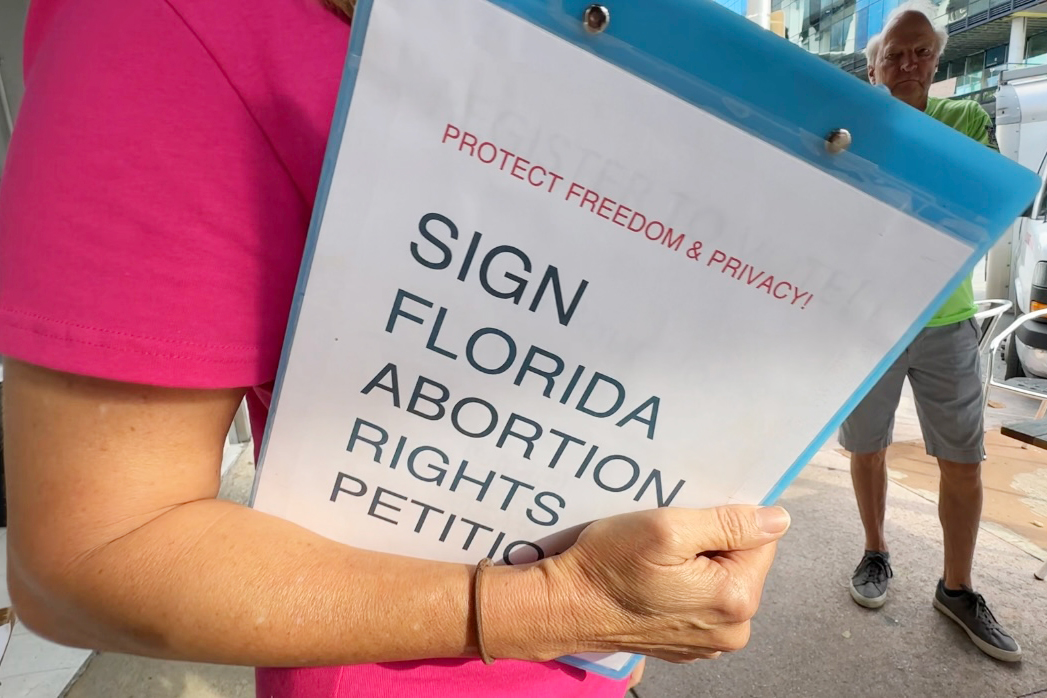
She has been named by two Republican governors — first Rick Scott, then Ron DeSantis — to sit on the Board of Trustees for the State College of Florida, and she says she voted for DeSantis in his 2022 campaign for governor.
But when it comes to the issue of abortion, she’s breaking with her party.
“Women are concerned about what’s happening with our bodies and our right to choose. And there’s a lot of people that you wouldn’t think would be the pro-choice advocates, but they are,” she said. “And the government overreach, it’s huge right now.”
Carter is one of more than 150,000 registered Republican voters who have signed a petition in support of a ballot amendment that would bar the state from restricting abortion “before viability” — which is usually at 24 weeks — or “when necessary to protect the patient’s health.”
That total comes from the Florida Women’s Freedom Coalition, one of several groups working to gather the 891,523 signatures necessary to get the measure on the ballot, working with Floridians Protecting Freedom, the campaign leading the ballot initiative. The group says it has gathered and submitted more than 1.3 million signatures so far. The website of the Florida Division of Elections says it has validated 687,699 signatures as of mid-December.
Florida is one of nine states where groups are pushing to get measures on the ballot that would bar restrictions on abortion rights, following a streak of wins for similar measures in Kansas and Ohio.
And as the Feb. 1 deadline to get the petitions submitted and verified approaches in Florida, some Republican voters are coming out publicly to support and even advocate for it.
Very interesting. I wonder if Ron DeSantis has heard about this yet?
This is the day that House Republicans ordered Hunter Biden to undergo a behind-closed-doors deposition. In a surprise move, Biden held an impressive press conference, in which he reiterated his willingness to answer questions at a public hearing.
Hunter Biden, the president’s son, appeared on Capitol Hill on Wednesday morning to offer to publicly testify in House Republicans’ impeachment investigation into his father, though he insisted he would not appear for a private deposition they scheduled over his refusals.
The younger Mr. Biden, who has been served a subpoena to testify, spoke to reporters in a hastily called news conference outside the Capitol near the Senate, across the complex from a House office building where Republican lawmakers were waiting to question him behind closed doors.
“I am here,” Mr. Biden said. “Let me state as clearly as I can: My father was not involved in my business.”
“There is no evidence to support the allegations my father was involved in my business because it did not happen,” he added.
The younger Mr. Biden has objected to providing private testimony, saying he fears Republicans will selectively leak his remarks and try to distort what he says. He has repeatedly proposed that he appear at a public hearing instead to answer their questions.
“They have lied over and over,” Mr. Biden said of Republicans.
Republicans have threatened to hold him in contempt of Congress if he does not comply.
Hunter Biden will not appear for a closed-door deposition Wednesday, defying a subpoena from House Republicans who are investigating the Biden family’s finances.
“I’m here to testify at a public hearing today,” Hunter Biden said in a statement outside of the Capitol on Wednesday morning. “Republicans do not want an open process where Americans can see their tactics … or hear what I have to say.” [….]
Hunter Biden
Hunter Biden maintained that he would answer questions only in a public hearing. His legal team has pointed to past comments in which House Oversight Committee Chairman James Comer (R-Ky.) all but dared Hunter Biden to testify — publicly or privately — and the team has said they don’t trust House Republicans not to selectively leak his testimony.
“For six years I’ve been targeted by the unrelenting Trump Machine asking ‘where’s Hunter,’” Hunter Biden said. “Here’s my answer: I am here.”
Comer over the past two weeks has rebuffed Hunter Biden’s offer to publicly testify before the committee, and Republicans on Wednesday vowed to move expeditiously to initiate proceedings to hold him in contempt of Congress for defying their subpoena.
Hunter Biden “does not get to dictate the terms of the subpoena,” Comer told reporters outside of an empty hearing room where Hunter Biden was scheduled to be deposed. Pressed about whether he has found evidence that President Biden had engaged in wrongdoing or criminal conduct, Comer said he had found “some very serious evidence,” before citing two examples of banking records he has repeatedly mischaracterized.
The fake charges against President Biden:
The foundation of the impeachment inquiry, outlined by Judiciary Committee Chairman Jim Jordan (R-Ohio) in a briefing with reporters last week, rests on an unsubstantiated accusation that has become the linchpin of allegations regarding the Biden family’s purported corrupt and criminal conduct.
Republicans allege that Joe Biden as vice president pushed for the firing of Ukraine’s top prosecutor, Viktor Shokin, to quash a probe into the former owner of Burisma, the Ukrainian gas company where Hunter Biden sat on the board. That allegation has been widely refuted by former U.S. officials, as well as Ukrainian anti-corruption activists.
As part of the inquiry, House Republicans also have elevated claims that the Biden administration slowed a Justice Department investigation into Hunter Biden’s financial background, but that testimony has been repeatedly disputed by officials involved in the case.
“There is no fairness or decency in what these Republicans are doing. Their false facts have become the beliefs of too many people,” Hunter Biden said Wednesday.
“They have taken the light of my dad’s love for me and presented it as darkness,” he continued. “They have no shame.
It has long been an article of faith on the right that Attorney General Merrick Garland is prosecuting Donald Trump because President Biden wants him to. Even the Trump-skeptical corners of the conservative media casually assert, without bothering to supply any evidence for the charge, that Biden is behind the DOJ investigations.
“Biden Justice Department officials and Democratic prosecutors are currently trying to put the other side’s leading contender for the White House in jail … The vapors over Trump saying he’s going to target his enemies,” argues National Review editor-in-chief Rich Lowry, “is rich coming from people who have targeted their enemy by any means necessary for years now.”
“Meantime, a Justice Department special counsel has filed trumped-up charges against Mr. Trump for allegedly defrauding the U.S. … writes Wall Street Journal columnist Allysia Finley, “Abuse executive power. Ignore the law. Run roughshod over individual liberties. Retaliate against political opponents. Mr. Biden and his allies have done exactly what they warn Mr. Trump will do if he returns to the White House.”
You’d think those conservatives might be questioning this assumption, now that Garland’s Justice Department is prosecuting Joe Biden’s son for tax evasion. But no, they’re just pretending it isn’t happening.
There was never any basis for the charge that Garland is working at Biden’s behest. Garland is well-respected by legal types in both parties — that’s why Barack Obama thought he was the only Supreme Court nominee who stood any chance of confirmation by a Republican Senate in 2016 — and received 70 votes for his confirmation.
Unlike Trump, who repeatedly demanded his attorneys general prosecute his enemies and let his criminal buddies go free, and made these demands privately with even more corrupt intent, there is zero public evidence or reporting to suggest Biden has improperly tried to influence Garland’s decisions.
What’s more, the two Justice Department cases against Trump both flow directly from publicly identifiable sources. Trump is being charged in the documents case because the National Archive asked him to return government property, he refused, and then covered up his crimes when the FBI came looking. The January 6 case comes directly out of an investigation by a House committee that turned up damning evidence….
Indeed, the president is angry with his attorney general. “Biden’s relationship with Garland — which was already tense — has become more frigid amid Biden’s frustration at the lengthy criminal investigation and now prosecution of Hunter by the Justice Department,” reports Alex Thompson, “People close to Biden also have fumed at Garland for appointing a special counsel in August.” Thompson also reports, “One person close to the president unflatteringly compared Garland to the former FBI director James Comey, claiming they both have been obsessed with the appearance of having integrity rather than just trying to make the right decision.”
The Republican-led House is on track to approve a formal impeachment inquiry into President Biden on Wednesday, pushing forward with a yearlong G.O.P. investigation that has failed to produce evidence of anything approaching high crimes or misdemeanors.
Republicans say the vote, which is expected in the evening, is needed to give them full authority to carry out their investigations amid anticipated legal challenges from the White House. Democrats have denounced the inquiry as a fishing expedition and a political stunt.
G.O.P. leaders refrained for months from calling a vote to open an impeachment inquiry, given the reservations of mainstream Republicans, many of them from politically competitive districts, about moving forward without proof that Mr. Biden did anything wrong. But the political ground has shifted considerably, and most of them are now willing to do so, emphasizing that they are not yet ready to charge the president.
“Voting in favor of an impeachment inquiry does not equal impeachment,” Representative Tom Emmer of Minnesota, the No. 3 House Republican, said at a news conference on Tuesday. “We will continue to follow the facts wherever they lead, and if they uncover evidence of treason, bribery or other high crimes and misdemeanors, then and only then will the next steps towards impeachment proceedings be considered.”
Read more at the NYT. I guess we’ll learn later today if the Republicans have the votes for their impeachment inquiry without a shred of evidence to support it.
I wish I had kept a record of my sleep patterns and accompanying political events over the past 7 years. I know I rarely slept through the night during the first couple of years of Trump’s “presidency.” I would stay up late, sleep a couple of hours and wake up at 3AM to obsessively check twitter for news, and still get up early the next day. Now I’m going through a period of time when I can’t get to sleep until very late–around 1:00-2:00AM–and then sleeping until 10:00 or 11:00AM. I’m also getting old–I’ll be 75 soon–and it takes me awhile to get going in the morning. Anyway, I slept until 10:00 today, so I’m once again very late in posting. If only we knew what is going to happen with the Trump investigations, maybe I would be able to go back to sleeping like a normal person.
As everyone knows by now, yesterday Merrick Garland announced the appointment of a special prosecutor to decide whether to indict Trump in the Mar-a-Lago documents and January 6 insurrection cases–including whether Trump has obstructed justice.
Attorney General Merrick Garland on Friday appointed a special counsel to oversee the criminal investigations into the retention of national defense information at former President Donald Trump’s Mar-a-Lago resort and parts of the January 6, 2021, insurrection.
Both investigations implicate the conduct of Trump, who on Tuesday declared his candidacy in the 2024 presidential race, making him a potential rival of President Joe Biden.
“Based on recent developments, including the former president’s announcement that he is a candidate for president in the next election, and the sitting president’s stated intention to be a candidate as well, I have concluded that it is in the public interest to appoint a special counsel,” Garland said at the Justice Department on Friday.
Jack Smith, the former chief prosecutor for the special court in The Hague, where he investigated war crimes in Kosovo, will oversee the investigations….
The prosecutions of those who physically breached the US Capitol have been the most public aspect of the Justice Department’s January 6 probe, and those will remain under the purview of the US Attorney’s office in Washington, DC. But behind the scenes, prosecutors have subpoenaed scores of witnesses close to the former president for documents and testimony in the probe.
White Cat by Igor Galanin
“I intend to conduct the assigned investigations, and any prosecutions that may result from them, independently and in the best traditions of the Department of Justice,” Smith said in a statement Friday. “The pace of the investigations will not pause or flag under my watch. I will exercise independent judgment and will move the investigations forward expeditiously and thoroughly to whatever outcome the facts and the law dictate.” [….]
According to multiple sources, both the Mar-a-Lago investigation and the January 6 investigation around Trump are aiming to gather more information and bring witnesses into a federal grand jury in the coming weeks. Prosecutors sent out several new subpoenas related to both investigations in recent days, with quick return dates as early as next week.
Some of the witnesses being pursued in this round had not spoken to the investigators in these cases before, according to some of the sources.
Most of the TV/Twitter legal experts are saying this was a good decision by Garland. One dissenter is Neal Kaytal, who says it is a big mistake.
"I disagree pretty strongly with the decision by Attorney General Garland to seek a special counsel. I don't think it's needed under the regulations and I think it risks delaying this investigation needlessly… I just don't really see it" – @neal_katyal w/ @NicolleDWallacepic.twitter.com/xBREdQ71e2
Former top DOJ official Andrew Weissmann believes that newly-appointed special counsel Jack Smith will move with haste in his investigations of former President Donald Trump.
Speaking with MSNBC’s Lawrence O’Donnell, after the host said Smith may become the “most important prosecutor in human history,” Weissmann discussed his history with the new special prosecutor.
“So I’ve known Jack for decades,” Weissman said.
“I was the chief of the criminal division when he started in the U.S. Attorney’s office,” he explained.
“And Jack, as you noted, has had all sorts of positions that make him really perfect for this job in the sense of his experience, he’s a career prosecutor, he’s completely apolitical — in public integrity, they prosecuted Democrats and Republicans,” Weissmann said. “They don’t care, if you committed a crime, it doesn’t matter what party you’re in or whether you’re in no party.”
He noted he learned from Robert Mueller that “you can’t slow things down to use as an excuse not to move forward.”
“For people who are worried about this slowing down, I have the exact opposite reaction.”
Marcy Wheeler suggested another reason why Garland might have taken the step of appointing a special counsel:
Thinking out loud: Garland said there several recent developments, plural, that led him to appoint a Special Counsel, one of which was Trump announcing.
What if the other one is that several members of the very narrow majority in Congress are subjects of the investigation?
I think that makes sense. Of course Trump and Republicans will still claim the investigations are political, and I’m pretty sure Garland knows that. This morning at Politico Playbook, Rachel Bade summarized the political reactions so far: A new special counsel sets Washington ablaze.
Attorney General MERRICK GARLAND’s decision to name a special counsel to helm DONALD TRUMP-related probes at the Justice Department roiled the political world on Friday.
In an afternoon statement delivered before cameras at Main Justice, Garland argued the appointment of veteran DOJ hand JACK SMITH was necessary given that Trump and JOE BIDEN could be facing off for the presidency in 2024. “Such an appointment underscores the department’s commitment to both independence and accountability in particularly sensitive matters,” Garland said.
Some good it did him. On cue, Republicans called foul — and rushed forward to defend an ex-president who had appeared to be losing his grip on the GOP following the party’s disappointing election performance.
By François Batet
AT MAR-A-LAGO … After 10 days of midterm recriminations, the announcement put Trump back in his most comfortable posture: portraying himself as the victim of his corrupt enemies. During a fancy black-tie affair at his Florida resort, Trump told Fox News’ Brooke Singman that he won’t participate in the probe and blasted the DOJ for the “worst politicization” of the department ever.
— “I have been proven innocent for six years on everything — from fake impeachments to [former special counsel ROBERT] MUELLER who found no collusion, and now I have to do it more?” Trump told them. “It is not acceptable. It is so unfair. It is so political.”
ON CAPITOL HILL … Rep. MARJORIE TAYLOR GREENE (R-Ga.) tweeted that Republicans should “IMPEACH MERRICK GARLAND!” and insisted her party “refuse to appropriate any funding to Merrick Garland’s Special Counsel and defund any part of the DOJ acting on behalf of the Democrat party as a taxpayer funded campaign arm for the Democrat’s 2024 presidential nominee.”
— The latter is particularly noteworthy: It sets up a new and explosive spending clash that could easily prompt a government shutdown in the next Congress. Why? MTG and likeminded Trump loyalists will press KEVIN McCARTHY (or whoever else manages to become speaker) to toe a hard line while Democrats will absolutely refuse to defund the investigations. Watch this space.
— “No one is above the law, but I am not sure it’s against the law to take bad advice from your lawyers,” he said. Pence went on to suggest that the DOJ has been politicized by Democrats and and to knock the FBI for conducting a raid on Mar-a-Lago to fish out classified information Trump had taken to his post-presidency residence. (Note that Smith won’t only be managing the documents probe, but Jan. 6-related matters as well.).
Bade notes that Republicans were all in on the investigation of Hillary Clinton’s handling of classified documents while she was running for president. You can also read a bit of background on Jack Smith at The New York Times.
Advocates of swift action against Trump no doubt will be alarmed by the announcement, but there is less here than meets the eye. For starters, Smith needs no introduction to the Justice Department. He was appointed first assistant U.S. attorney for the Middle District of Tennessee in February 2015. Before that, he worked as head of the department’s Public Integrity Section and as investigation coordinator in the Office of the Prosecutor at the International Criminal Court. He also worked in the U.S. attorney’s office in the Eastern District of New York.
Hold That Tiger by Jeanette Lassen
Most important, the attorney general announced that the career staff who have been working on these cases will continue in their roles. That, Garland suggested, will mean the query will “not slow down.” Smith will make a recommendation to Garland on whether to prosecute Trump. Until then, Garland will have no direct supervision over Smith.
Did Garland need to wait until Trump’s campaign launch to make the appointment? Perhaps not, but so long as Trump was not an active candidate, there was little reason for Garland to step aside. Now that Trump is a potential opponent to Biden, Garland believes it is essential to add a layer of separation between himself and the line prosecutors.
Constitutional scholar Laurence Tribe tells me, “Looking over Jack Smith’s decades of prosecutorial experience, it’s hard to imagine anyone better prepared to hit the ground running and to sew together whatever loose ends remain as he puts together a comprehensive prosecution of the leaders of the attempted coup, with the former president at its center, as well as a powerful prosecution of the former president for his theft of top secret documents as he absconded to Mar-a-Lago.” He adds that, while he previously “publicly urged that there was no need to appoint a special counsel, my principal concern was the need to avoid delay, and it appears that this appointment will solve that problem.”
Norman Eisen, who served as co-counsel to the House impeachment managers during Trump’s first impeachment, agrees. “I have no concern that a special counsel will shy away from charging, and Jack Smith has outstanding experience,” he tells me. Eisen also thinks the move will not cause much of a delay. He observes: “Mr. Smith should move with alacrity. Here, where any other American who had removed the even one classified document would be subject to likely prosecution, and where the former president took dozens, the rule of law demands fast action.”
As the Supreme Court investigates the extraordinary leak this spring of a draft opinion of the decision overturning Roe v. Wade, a former anti-abortion leader has come forward claiming that another breach occurred in a 2014 landmark case involving contraception and religious rights.
In a letter to Chief Justice John G. Roberts Jr. and in interviews with The New York Times, the Rev. Rob Schenck said he was told the outcome of the 2014 case weeks before it was announced. He used that information to prepare a public relations push, records show, and he said that at the last minute he tipped off the president of Hobby Lobby, the craft store chain owned by Christian evangelicals that was the winning party in the case.
Both court decisions were triumphs for conservatives and the religious right. Both majority opinions were written by Justice Samuel A. Alito Jr. But the leak of the draft opinion overturning the constitutional right to abortion was disclosed in the news media by Politico, setting off a national uproar. With Hobby Lobby, according to Mr. Schenck, the outcome was shared with only a handful of advocates….
Joan Barber, Girl stroking cat
The evidence for Mr. Schenck’s account of the breach has gaps. But in months of examining Mr. Schenck’s claims, The Times found a trail of contemporaneous emails and conversations that strongly suggested he knew the outcome and the author of the Hobby Lobby decision before it was made public.
Mr. Schenck, who used to lead an evangelical nonprofit in Washington, said he learned about the Hobby Lobby opinion because he had worked for years to exploit the court’s permeability. He gained access through faith, through favors traded with gatekeepers and through wealthy donors to his organization, abortion opponents whom he called “stealth missionaries.”
The minister’s account comes at a time of rising concerns about the court’s legitimacy. A majority of Americans are losing confidence in the institution, polls show, and its approval ratings are at a historic low. Critics charge that the court has become increasingly politicized, especially as a new conservative supermajority holds sway.
A Fulton County judge ruled Friday that the Georgia Secretary of State cannot prohibit counties from voting on the Saturday after Thanksgiving, a victory for the state Democratic Party and Sen. Raphael Warnock’s campaign.
The order comes after a brief legal battle between Secretary of State Brad Raffensperger’s office and the Democratic Party of Georgia over the Dec. 6 Senate runoff between Warnock and Republican Herschel Walker.
Raffensperger, a Republican, had maintained that changes to Georgia voting laws meant that there could be no early voting on Nov. 26, the only Saturday when it would have been possible for Georgians to cast an early vote in the hotly contested race.
Democrats and Warnock’s campaign filed suit challenging Raffensperger’s determination, and Judge Thomas A. Cox agreed with their arguments in a ruling late Friday afternoon. “The Court finds that the absence of the Saturday vote will irreparably harm the Plaintiffs, their members, and constituents, and their preferred runoff candidate,” the judge wrote.
By Glenn Harrington
Raffensberger’s office will appeal the decision.
The dispute centers on a provision of Senate Bill 202, signed by Republican Gov. Brian Kemp in March 2021, which stipulates early in-person voting must end the Friday before the runoff. This year, that would be Friday, Dec. 2.
The law also stipulates early in-person voting not be held on any Saturday that follows a “public or legal holiday” on the preceding Thursday or Friday. Raffensperger contended that meant there would be no early in-person voting on Nov. 26, the Saturday following Thanksgiving. (It could not be held this weekend because the general election vote is not being certified until Nov. 21.)
Attorneys for the Democrats and Warnock argued the section of the law Raffensperger cited applies to primaries and general elections, but not to runoffs. Cox agreed.
Of course there is tons of news about Twitter and Musk. Here are some links to check out if you’re interested:
On Monday, the FBI executed a search of Trump’s Mar-a-Lago resort, and took 27 boxes that contained above top secret documents. Trump’s Republican allies viciously attacked the FBI and DOJ.
Predictably, on Thursday one of Trump’s fans entered an FBI office in Cincinnati, fired a nail gun, and pulled out an AR-15 style rifle. He then fled and was eventually shot and killed during a standoff in a cornfield.
While the standoff was in progress, Attorney General Merrick Garland made a public statement about the Mar-a-Lago search. He said that he had personally signed of on the search warrant, which was then approved by a federal magistrate judge in Florida based on probable cause that a crime had been committed. He also said he was requesting the release of the search warrant and the list of items taken in the search as long as Trump did not object.
On Friday Trump released the warrant and receipt for items taken to Breitbart, Fox News, and the Wall Street Journal about an hour before the court approved the public release. Trump did not hide the names of the agents listed in the warrant. Breitbart published the names, opening the agents to terroristic threats and violence from Trump fans. They were also threatening the judge.
The FBI search of former president Donald Trump’s Florida home earlier this week found four sets of top-secret documents and seven other sets of classified information, according to a list of items seized in the high-profile raid and unsealed by a federal magistrate judge on Friday.
Cat art by Rudi Hurzlmeier
The written inventory — a document provided by investigators after a search — says the FBI took about 20 boxes of items from the Mar-a-Lago Club on Monday, including photo binders, information about the president of France, and a variety of classified material.
One set of documents is listed as “Various classified TS/SCI documents,” areference to top secret/sensitive compartmented information, a highly classified category of government secrets, in addition to the four sets of top-secret papers. Agents also took three sets of documents classified as secret, and three sets of papers classified as confidential — the lowest level of classification.
The list of seized material doesn’t further describe the subject matter of any of the classified documents.
“Some of what was in Trump’s possession is mind-boggling,” said Javed Ali, a senior official at the National Security Council during the Trump administration who now teaches at the University of Michigan. “Whenever you leave government — including probably a former president — you can’t just take it with you.”
The search warrant identifies three federal crimes that the Justice Department is looking at as part of its investigation: violations of the Espionage Act, obstruction of justice and criminal handling of government records. The inclusion of the crimes indicates the Justice Department has probable cause to investigate those offenses as it was gathering evidence in the search. No one has been charged with a crime at this time….
While details about the documents themselves remain scarce, the laws cited in the warrant offer new insight into what the FBI was looking for when it searched Trump’s home, an unprecedented step that has prompted a firestorm of criticism from the former President’s closest allies.
Kim Haskins, psychedelic cat painting
The laws cover “destroying or concealing documents to obstruct government investigations” and the unlawful removal of government records, according to the search warrant released Friday.
Also among the laws listed is one known as the Espionage Act, which relates to the “retrieval, storage, or transmission of national defense information or classified material.”
All three criminal laws cited in the warrant are from Title 18 of the United States Code. None of them solely hinge on whether information was deemed to be unclassified.
That last fact–that the items don’t have to be classified in order for a crime to have been committed–is going to short-circuit the excuses that Trump and his allies have been putting forward.
Here’s the claim from the Trump camp as reported by Lawrence O’Donnell on MSNBC last night.
Even Andrew Weissmann who is always as serious as a heart attack couldn’t keep a straight face…. 😂😂 pic.twitter.com/6XKdGYDAY6
Former President Donald Trump said that everyone takes work home sometimes, as he sought to develop a new line to explain why top secret government documents were stored at his Mar-a-Lago residence in Florida.
“As we can all relate to, everyone ends up having to bring home their work from time to time. American presidents are no different,” said the statement from Trump’s office on Friday night read out on Fox News.
Trump further claimed that he had a “standing order” to declassify documents “the moment” they left the Oval Office.
“President Trump, in order to prepare for work the next day, often took documents, including classified documents, from the Oval Office to the residence. He had a standing order that documents removed from the Oval Office and taken into the residence were deemed to be declassified the moment he removed them,” the statement said.
Hahahahahahaha!!!
This new defense – portraying Trump as just another hard-working American – contradicts previous statements by Trump and his lawyers that baselessly claimed the FBI could have planted evidence while on site.
Cat art by Sofia Struk
While the president has the authority to declassify documents, legal experts say they must follow a defined procedure. It is not clear if Trump ever did.
“He can’t just wave a wand and say it’s declassified,” Richard Immerman, a historian and an assistant deputy director of national intelligence in the Obama administration, told NBC News. “There has to be a formal process. That’s the only way the system can work.”
Immerman noted that declassified documents are marked with the date they were declassified. It is not the case with some of the documents returned from Mar-a-Lago to the National Archives this year, per NBC.
When reports of classified documents at Mar-a-Lago emerged in May, former Trump administration official Kash Patel claimed that Trump had declassified the files shortly before leaving office but that the classified markings had not been removed.
But none of this matters, because the espionage act charges do not hinge on whether documents are classified or not.
Democrats in Congress have had to scale back their legislative ambitions since last year, but the Inflation Reduction Act, passed by the House on Friday and sent to President Joseph R. Biden Jr. for his signature, is still a substantial piece of legislation, which will make big investments in the environment and health care, and increase taxes on some key groups.
The bill includes policies lowering the prices of prescription drugs; increasing the generosity of Medicare benefits; and encouraging the development of renewable energy and reducing the impact of climate change.
It would also raise taxes on some corporations and bolster the ability of the Internal Revenue Service to crack down on wealthy tax evaders. It would lower the federal deficit, though modestly.
The bill includes last-minute changes requested by Senator Kyrsten Sinema, Democrat of Arizona, the final holdout among her party’s 50 senators. Democratic leaders agreed to remove a tax on some wealthy hedge fund managers and private equity executives, and to include $4 billion in drought funding for her state.
Head over to the NYT link to see charts and a detailed list of everything in the bill.
A shocking attack on famed novelist Salmon Rushdie
Salman Rushdie,the renowned novelist whose work made him the subject of death threats,was attacked at an event in Chautauqua, N.Y., on Friday by a man who stormed the stage and stabbed the writer in the neck and abdomen, police said.
By Rudi Hurzlmeier
Rushdie was taken by helicopter to a hospital. His agent, Andrew Wylie, told the Associated Press that the writer was on a ventilator, with damage to his liver and nerves in an arm. He also said Rushdie will likely lose an eye.
Police identified Hadi Matar, 24, of New Jersey as the suspect in the attack. They have not yet determined a motive, Maj. Eugene Staniszewski of the New York State Police said, and are working with the local district attorney to decide which criminal charges will be filed. The FBI is also involved in the investigation.
In an instant Friday morning, a literary event in a lakeside town in western New York was transformed into a scene of potentially deadly violence, drawing gasps from the audience gathered in an open-air amphitheater.
The suspect, 24-year-old Hadi Matar, was born in California, but recently moved to New Jersey, according to law enforcement sources familiar with the investigation. His last listed address was in Fairview, a Bergen County borough just across the Hudson River from Manhattan. FBI officials were seen going into the home of Matar Friday evening.
Sources said that Matar also had a fake New Jersey driver’s license on him.
State Police Maj. Eugene Staniszewski said the motive for the stabbing was unclear. A preliminary law enforcement review of Matar’s social media accounts shows he is sympathetic to Shia extremism and Islamic Revolutionary Guard Corps causes, a law enforcement person with direct knowledge of the investigation told NBC News. There are no definitive links to the IRGC but the initial assessment indicates he is sympathetic to the Iranian government group, the official says.
Law enforcement officials briefed on the investigation told ABC News that “a preliminary investigation into the suspected perpetrator’s probable social media presence indicates a likely adherence or sympathy towards Shi’a extremism and sympathies to the Iranian regime/Islamic Revolutionary Guard Corps.”
The officials say investigators found photos on Matar’s phone of Iranian Maj. Gen. Qasem Soleimani and Abu Mahdi al-Muhandis, the leader of Iraq’s pro-Iranian militia movement, who were killed by U.S. forces in a drone strike in Baghdad on Jan. 3, 2020.
Police believe the suspect acted alone and were in the process Friday of obtaining search warrants for items including electronics and a backpack found at the scene that they believe belong to the suspect, Staniszewski said.
The FBI is also assisting with the investigation, he said.
The suspect had a pass to access the event, officials said.
It’s been an unbelievable news week, and I expect we’ll be learning more about these three big stories over the weekend. What are your thoughts? What other stories are you following?
Did you like this post? Please share it with your friends:
William Barr was invited to meet justice department officials last summer, on the same day he submitted an “unsolicited” memo that heavily criticized special counsel Robert Mueller’s investigation into obstruction of justice by Donald Trump.
Barr, who was a private attorney at the time, met the officials for lunch three weeks later and was then nominated to serve as Trump’s attorney general about six months later.
The revelation about the meeting, which was arranged by Steve Engel, the head of the Office of Legal Counsel at the Department of Justice, and which has not previously been publicly disclosed, raises new questions about whether the White House’s decision to hire Barr was influenced by private discussions he had about his legal views on Mueller’s investigation.
None of this surprises me. I’m sure the right. chair of the right committee–most likely oversight and Rep. Elijah Cummings–will get to the bottom of this. Every appointment Trump makes to anything just drips of cronyism.
Today, a Federal Court of Appeals court shortened the time that a decision will be made by the judiciary. This is via Politico and Josh Gerstein: “Appeals court narrows path for disclosure of grand jury info in Mueller report. Court splits, 2-1, in a closely watched case that could affect the release of the special counsel’s review.”
A Federal appeals court on Friday tossed an obstacle in the way of grand jury information in special counsel Robert Mueller’s final report being released directly to the public, but the decision may not slow disclosure of that material to Congress.
The decision from a divided three-judge panel of the D.C. Circuit Court of Appeals did not directly address Mueller’s report, but involved a grand jury investigation more than six decades ago into the disappearance of a Columbia University professor and political activist, Jesús Galíndez.
In the new ruling, the panel majority concluded that federal district court judges lack the authority to order the release of typically secret grand jury material except in situations specially authorized in a federal court rule.
While there is no exception that covers cases of intense political or historical interest, courts have repeatedly held that they have “inherent authority” to make such disclosures in unusual cases.
However, the D.C. Circuit decision Friday sided with a long-standing Justice Department position that those rulings were mistaken and a formal change to the grand jury secrecy rule would be needed to give judges that power.
“We agree with the Government’s understanding of the Rule,” Judge Douglas Ginsburg wrote, joined by Judge Greg Katsas. “The contrary reading … which would allow the district court to create such new exceptions as it thinks make good public policy — would render the detailed list of exceptions merely precatory and impermissibly enable the court to ‘circumvent’ or ‘disregard’ a Federal Rule of Criminal Procedure.”
The impact of the new decision in the current battle over disclosure of the Mueller report could be limited, however, because the Democrat-controlled House is already demanding the special counsel’s full submission including grand jury information.
On Wednesday, the House Judiciary Committee passed a resolution authorizing Chairman Jerry Nadler (D-N.Y.) to subpoena the full report and all supporting materials. Such a subpoena may be sufficient to give the House access to grand jury information under an existing exception covering material sought in connection with “judicial proceedings.”
The Senate has gone “nuclear,” voting 51-48 Wednesday afternoon to change its own rules and slash debate time for some nominees from 30 hours to two hours, paving the way to fast-track certain Trump picks. Republicans — led by Senate Majority Leader Mitch McConnell — have long lamented what they have termed Democratic obstruction of the president’s nominations, particularly judicial nominations.
All Republicans vote for the rule change except Sen. Mike Lee and Sen. Susan Collins, who voted with Democrats, and no Democrats voted with Republicans.
This is what Senator Elizabeth Warren has to say about that even though she her last vote did not reflect this discussion. It’s something to thing on. I really appreciate Warren’s bringing the beef to the hamburger. It’s the women that are discussing actual policy and it’s time they all get some air time and ink.
Today @ewarren will get close to calling for the filibuster's end: "If Mitch McConnell tries to do what he did to Obama, and puts small-minded partisanship ahead of solving the massive problems facing this country, then we should get rid of the filibuster” https://t.co/MX5trlc8ZV
Sen. Elizabeth Warren (D-MA) is expected to issue the strongest indictment of the Senate filibuster of her campaign for president thus far during a speech at the National Action Network convention on Friday morning.
“Last year the Senate passed a bill that would make lynching a federal crime,” Warren will say, according to prepared remarks viewed by The Daily Beast. “Last year. In 2018. Do you know when the first bill to make lynching a federal crime was introduced? 1918. One hundred years ago. And it nearly became the law back then. It passed the House in 1922. But it got killed in the Senate—by a filibuster. And then it got killed again. And again. And again. More than 200 times. An entire century of obstruction because a small group of racists stopped the entire nation from doing what was right.”
Warren goes on to say that the filibuster has been used in recent years “by the far right as a tool to block progress on everything.”
“I’ve only served one term in the Senate—but I’ve seen what’s happening,” she says, according to the remarks. “We all saw what they did to President Obama. I’ve watched Republicans abuse the rules when they’re out of power, then turn around and blow off the rules when they’re in power.”
Democrats running for president in 2020 have been debating Senate rules for months, as activists push for a change that would not necessitate a 60-vote supermajority to pass sought-after legislation like Medicare for All or the Green New Deal, both of which have been endorsed by a large share of the Democratic candidates currently running. But many of the same candidates, including the senators in the race, have been resistant to institutional changes. The one candidate who has affirmatively campaigned on its elimination in order to address climate change is Washington Gov. Jay Inslee. Many others, like Warren before Friday, had said they’d consider it, and she previously said “all the options are on the table.”
Schumer believes other wise. This is from CSPAN. “Senate Minority Leader Chuck Schumer and Majority Leader Mitch McConnell debate the GOP’s decision to make a change to rules reducing the length of post-Cloture debate time of federal district court judges and sub-Cabinet nominations from 30 hours to two hours. ” It happened on April 3rd, the day of the vote.
Once more, they’ve changed Senate rules so they can confirm President Donald Trump’s nominees more expeditiously — a string of actions first kicked off by Democratic leader Harry Reid in 2013. It marks the third time in less than a decade that the Senate majority has used the so-called “nuclear option” — a term used for parliamentary procedure that sets a new precedent with only a simple majority of lawmaker votes.
This time, Republicans have amended Senate rules in order to further limit the amount of time lower-level nominees could be debated on the floor. Previously, if lawmakers voted to limit debate on a nominee, that back-and-forth would still be able to continue for 30 hours. Practically speaking, because there is only so much time the Senate is in session, this meant that there were a finite number of nominees that Republicans could get through — and that’s something they wanted to change.
Republicans argued that this rules change is necessary because Democrats have gone out of their way to slow-walk consideration of Trump’s nominees. Democrats, meanwhile, say that Republicans have gutted other processes, like “blue slips,” that would enable them to otherwise vocalize their concern with different nominees.
“Senate Democrats spent the first two years of the Trump administration dragging out the confirmation process to not only deny the president his team, but also to waste hours of floor time that should have been spent focusing on the American people’s priorities,” Republican Sen. Roy Blunt (R-MO) said in a statement. “This has been nothing more than obstruction for the sake of obstruction and it is outrageous.”
That assertion, however, is laughable to many Democrats, who have noted that Senate majority leader Mitch McConnell’s supposed outrage over the way Democrats have blocked Republican nominees is hypocritical, given the lengths he went to in order to prevent President Barack Obama’s nominee Merrick Garland from even getting considered for a Supreme Court seat.
Dear @POTUS: Your weird belief that windmills somehow cause cancer is concerning. Here's a memo on things that do and don't cause cancer. We've been told you prefer one-page memos with pictures. Hope this is helpful. pic.twitter.com/3O9Auo7N9E
Nancy Pelosi threw some serious shade at a reporter who evidently wasn’t aware that there is a law that says the IRS will hand over tax returns of whoever certain chairs of congress request.
Speaker Nancy Pelosi on Trump's tax returns: "The U.S. tax code section 6103 — remember those numbers, 6103 — provides Congress the legal authority to get the tax returns."
Donald Trump is doing his usual hold it up routine. “All the way to the Supreme Court, Alice!!!”
President Trump privately told his advisers that he will not hand over his tax returns to Congress and "he would fight the issue to the Supreme Court," according to the Washington Post https://t.co/DwFU2SVNQG
The Sky Dancing banner headline uses a snippet from a work by artist Tashi Mannox called 'Rainbow Study'. The work is described as a" study of typical Tibetan rainbow clouds, that feature in Thanka painting, temple decoration and silk brocades". dakinikat was immediately drawn to the image when trying to find stylized Tibetan Clouds to represent Sky Dancing. It is probably because Tashi's practice is similar to her own. His updated take on the clouds that fill the collection of traditional thankas is quite special.
You can find his work at his website by clicking on his logo below. He is also a calligraphy artist that uses important vajrayana syllables. We encourage you to visit his on line studio.







 A lower court ruling that prevented cities from criminalizing the conduct of people who are “involuntarily homeless” forced the U.S. Court of Appeals for the 9th Circuit to confront what it means to be homeless with no place to go and what shelter a city must provide, Gorsuch wrote. “Those unavoidable questions have plunged courts and cities across the Ninth Circuit into waves of litigation,” he wrote.
 The Biden administration and the manufacturer of mifepristone have asked the justices to overturn a lower-court ruling that would make it more difficult to obtain the medication, which is part of a two-drug regimen used in more than half of all abortions in the United States. Oral arguments will likely be scheduled for the spring, with a decision by the end of June, further elevating the issue of abortion, which has proven galvanizing for Democrats, during the 2024 campaign season.
 But when it comes to the issue of abortion, she’s breaking with her party.
 Republicans allege that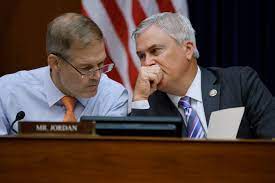











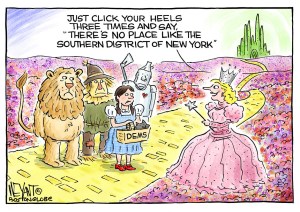 It’s been 2 Fridays since our Last Mueller Friday (March 22nd).
 None of this surprises me. I’m sure the right. chair of the right committee–most likely oversight and Rep. Elijah Cummings–will get to the bottom of this. Every appointment Trump makes to anything just drips of cronyism.
 I wanted to make sure we had a good look and discussion about the various ways that Mitch McConnell is changing the SOP of the Senate.
 peej
peej Carissa
 bostonboomer
 dakinikat
 ecocatwoman
 mablue2
 Mama Lopez
 peggysue22
 quixote
 skydancingguestblogger
 Mona (aka Wonk the Vote)



 Sky Dancing
Recent Comments