




Painting by Albert Anker, 1893
None of these wins guarantee success for the party in 2024. Biden is losing to former President Donald Trump in a host of recent polls, and Democrats are underdogs to hold their Senate majority.


“No big surprise to MAGA. Things are getting interesting.” John Buss, @repeat1968
These posts get more challenging to write each day. This year has been tough on everyone. I haven’t thought about weekends spent watching TV sitcoms with a limited choice of three channels in a while. My only TV is still sitting in its box, untouched. That about sums up my relationship with the old-school way of getting news and entertainment. I’d rather play my guitar or piano, create another watercolor of an old New Orleans building, or walk my dog than stay glued to it the way I did as a kid. However, I grew up in an area where there was not much else to do than join the family to stare into fake realities.
I will admit to spending way too much time on my cellphone or computer now. I can find many better things out there with a virtual library and the chance to interact with friends all over the world. It’s so damn cold out there now that I rushed the walk to sit here and stare at another sort’ve screen. The one that lets me read magazines and newspapers without getting black ink all over my fingers.
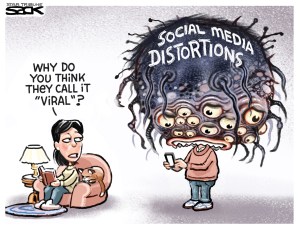 Of course, my entire family watched All in the Family. I admit that The Mary Tyler Moore Show was my favorite, and when I briefly moved to Minneapolis, I had to throw my hat in the air and visit the house on Lake Harriet that was used to style the set. Dick Van Dyke turned 100 this week. Rob Reiner and his wife lost their lives. This year has been full of days I’d rather forget. Family violence is all too common. We still don’t do well helping people with mental health and drug issues. Here’s the headline from USA Today. “Rob Reiner, wife Michele Singer’s son in custody – Live updates.”
An arrest has been made in the killing of Rob Reiner and his wife, Michele Singer.
Their son, Nick Reiner, has been taken into police custody and is being held on $4 million bail, according to Los Angeles Sheriff’s Department records views by USA TODAY. The acclaimed Hollywood director and actor was killed alongside Singer in their California home Sunday night, according to Variety and TMZ.
Their deaths continue to be under investigation by the Los Angeles Police Department after the couple was found dead in their home in the Brentwood neighborhood of Los Angeles. In a press conference on Sunday night, the LAPD said the robbery-homicide division will continue to investigate through the night and expect to release more information in the morning.
Authorities confirmed that “many family members” will be interviewed in the course of their work and that they were obtaining a search warrant to conduct a full crime scene investigation. They did not comment on the injuries sustained by Reiner and Singer.
USA TODAY was unable to reach a representative for Reiner at the time of publication.
 The L.A. Times has background on Nick Reiner. “What we know about Nick Reiner, who struggled with addiction and shared his recovery with the world.”
Nick Reiner spent years struggling with addiction and with help from his father, Hollywood legend Rob Reiner, told his story to the world.
On Monday, Nick was booked into the L.A. County jail on suspicion of murder, hours after Reiner and his wife were found dead inside their Brentwood home.
Nick cycled in and out of rehab centers and experienced bouts of homelessness as a teenager.
He had gotten clean by 2015, when he worked with his father on “Being Charlie,” a semi-autobiographical film about addiction and recovery. Rob Reiner directed and Nick co-wrote the film about a successful actor with political ambitions and a son addicted to drugs.
Many aspects of the movie were inspired by Nick’s relationship with his father — including a line where the father character tells his son, “I’d rather you hate me and you be alive.” Nick said in a 2016 interview with AOL that he “didn’t bond a lot” with his father while he was growing up.
Nick gave an interview about “Being Charlie” alongside his family at the Toronto Film Festival in 2015, saying that his decision to quit heroin was driven by a practical realization.
“I got sick of doing that,” he told The Times. “I come from a nice family. I’m not supposed to be out there on the streets and in homeless shelters doing all these … things.”
During the interview, Rob said he regretted valuing the advice of counselors over the voice of his son.
“When Nick would tell us that it wasn’t working for him, we wouldn’t listen,” he said. “We were desperate, and because the people had diplomas on their wall, we listened to them when we should have been listening to our son.”
Michele added: “We were so influenced by these people. They would tell us he’s a liar, that he was trying to manipulate us. And we believed them.”
Nick talked about the many different rehab centers and programs he tried without success. In 2016, he told People magazine that he lived on the streets because he refused to go to the rehab facilities his parents recommended.
“If I wanted to do it my way and not go to the programs they were suggesting, then I had to be homeless,” he said.
He told the magazine that he could have died on the streets.
“It’s all luck,” he said. “You roll the dice and you hope you make it.”
It’s remarkable to me that we frequently discuss the American Dream, yet it seems we lack a clear understanding of what that means. We’ve been shaped by SitComs, schools, political parties, and many other things that have left us in the dark about the very nature of our lives. Perhaps it is time to find some better ways.
 I’ll keep this post brief today. Most days, I struggle to make sense of things. That’s been the reality of 2025. The reality of 2025 is also one filled with friends locked in their homes and neighbors struggling to protect themselves from our own government. I’m going to take a few days to just bake bread and sit down in front of a TV, not my own, and see if the offerings have improved. Fortunately for me, I’ve found the films of Guillermo del Toro on my last such adventure. I’m hoping to discover more. The documentary about him is also a solid watch. It’s been a long time since I’ve actually watched something without wanting to grab my cell phone instead. That’s a far road from the sixteen-year-old me and the TV console in our family room. Being with friends always brings a good end to a bad year.
So, one more read about today’s media. This is from Dr. Paul Krugman. “MAGA, the Broligarchs and the Media, This isn’t just about business; it’s about democracy.” Be sure to refer to the chart as you read.
Warner Bros. Discovery, which among other things controls CNN, has agreed to sell itself to Netflix. But it isn’t a done deal, because Paramount has made a rival, hostile bid.
Now, most Americans, even those like me who pay a lot of attention to the economy, don’t usually take much interest in insider baseball about corporate wheeling and dealing. But this is a bigger story than usual, for three reasons.
First, there’s an antitrust issue. In an earlier era, when the U.S. government took monopoly power seriously, both proposed acquisitions would probably have been blocked by regulators.
Second, there’s a financial issue. On its own, there is no way that Paramount, which is deeply in debt and whose credit rating is “a notch below ‘junk’” could afford to buy Warner. It’s able to make a semi-credible bid only because of assurances of support from Larry Ellison, one of the world’s richest men thanks to his stake in the software giant Oracle. But when analysts look closely at the details, they find that Ellison’s promises of support are more than a bit squirrely:
[T]he Warner Bros. Discovery board worried that Mr. Ellison did not personally guarantee the bid under his name and is planning to contribute equity for the deal through a trust with holdings that could be modified at any time.
Adding to the risk of Oracle’s deal is the fact that Oracle is itself shaky according to the estimation of gimlet-eyed financial markets due to its huge, debt-financed bets on AI.
As Bloomberg reports, its investment grade debt now “trades like junk.”
But it’s not just about the money. For the average American, there is something fundamentally important about this corporate cage-match to win Warner Bros. Discovery. And it’s not about entertainment, it’s about democracy. You should understand that Paramount’s hostile bid is, above all, a political move in the pursuit of cementing the dominance of MAGA-supporting tech billionaires and further eroding American democracy.
Back in 2018, during Trump I, the political scientists Steven Levitsky and Daniel Ziblatt published How Democracies Die, which described how nations like Hungary had descended into one-party authoritarianism although the formal, but now toothless, institutions of democracy remain. In the latest edition of Foreign Affairs Levitsky, Ziblatt and Lucan Way say that this process is already well underway here in the U.S.:
In Trump’s second term, the United States has descended into competitive authoritarianism—a system in which parties compete in elections but incumbents routinely abuse their power to punish critics and tilt the playing field against their opposition. Competitive authoritarian regimes emerged in the early twenty-first century in Hugo Chávez’s Venezuela, Recep Tayyip Erdogan’s Turkey, Viktor Orban’s Hungary, and Narendra Modi’s India. Not only did the United States follow a similar path under Trump in 2025, but its authoritarian turn was faster and farther-reaching than those that occurred in the first year of these other regimes.
Now, in some ways America is unusually well-positioned to resist this authoritarian push. As Levitsky et al note, we have a “well-organized and rich civil society” — ranging from law firms to universities to nonprofits — that can push back. And while some of these institutions are led by cowards, not all are. We also have unified political opposition in the form of the Democratic Party, which is very different from the splintered opposition thatfaced Viktor Orban in Hungary, for example.
Yet, ominously, Trump and Trumpism have powerful allies that had no counterpart in previous competitive authoritarian regimes. Namely, there is a network of deeply anti-democratic tech billionaires, of which Ellison is a very significant player. The Authoritarian Stack project,which tracks that network, calls it the “Authoritarian Tech Right”. I’ve put their chart of some of the keyplayers at the top of this post. Some of us refer to that network, less formally, as the “broligarchy.”
Have a good week!
What’s on your Reading, Action, and Blogging List today?
TRIGGER WARNING!
Really hate to add this, but this is what Trump had to say today. What an asshole!


‘Louisa Cat Sleeps Late (1929) from the’ The Fairy Caravan, Beatrix Potter
We have just 37 days until Trump takes over the presidency. How bad will it get? Probably much worse than we can begin to imagine right now.
Lots of rich and powerful people are obviously scared to death, because they are obeying in advance. Chris Wray is quitting as FBI director, paving the way for Trump sycophant Kash Patel, who wants to completely shut down the FBI’s intelligence division. Tech bros are donating to the Inauguration fund.
Even some Democrats are indicating openness to some of Trump’s insane appointments. Are any Democrats planning to fight back? I hope so, but it’s not clear right now.
Here’s the latest:
The New York Times: In Display of Fealty, Tech Industry Curries Favor With Trump.
The $1 million donations came gradually — and then all at once.
Meta. Amazon. OpenAI’s Sam Altman. Each of these Silicon Valley companies or their leaders promised to support President-elect Donald J. Trump’s inaugural committee with seven-figure checks over the past week, often accompanied by a pilgrimage to Mar-a-Lago to bend the knee.
The procession of tech leaders who traveled to hobnob with Mr. Trump face-to-face included Sundar Pichai, Google’s chief executive, and Sergey Brin, a Google founder, who together dined with Mr. Trump on Thursday. Tim Cook, Apple’s chief executive, shared a meal with Mr. Trump on Friday. And Jeff Bezos, the founder of Amazon, planned to meet with Mr. Trump in the next few days.
This was the week when many tech companies and their top executives, as reluctant as they may have been, acknowledged the reality of getting business done in Mr. Trump’s Washington. With their donations, visits and comments, they joined a party that has already raged for a month, as a cohort of influential Silicon Valley billionaires, led by Elon Musk, began running parts of Mr. Trump’s transition after endorsing him in the campaign.
While businesses frequently try to get on an incoming president’s good side, the frenzy of tech activity stood out from other industries. Until President Obama’s administration, the tech industry had largely stayed aloof from politics. Some wrote just small checks for Mr. Trump’s first inauguration.
Now the bread-breaking with Mr. Trump has become highly public. Meta and Amazon, whose founders had previously been criticized by Mr. Trump, said they would donate $1 million to Mr. Trump’s inaugural fund this week. Sam Altman, the chief executive of OpenAI, the high-profile artificial intelligence start-up, said on Friday that a $1 million donation to Mr. Trump’s inaugural fund would come from him personally.
“President Trump will lead our country into the age of A.I., and I am eager to support his efforts to ensure America stays ahead,” Mr. Altman said in a statement.
Nonprofit contributions to inaugural committees, which host patriotic-themed events around Jan. 20, are low-stakes, timeworn ways for companies to seek favor under the guise of patriotism without being pegged as overly partisan actors.
Other tech leaders have also praised Mr. Trump. Marc Benioff, the chief executive of Salesforce and the owner of Time Magazine, posted on X on Thursday that it was “a time of great promise for our nation,” after Time awarded Mr. Trump its coveted “Person of the Year” designation.
Now Apple has joined the crowd of suck-ups. Only Microsoft is holding out.
The Hill: Apple CEO visits Mar-a-Lago, joining list of tech execs seemingly courting Trump.
Apple CEO Tim Cook visited Mar-a-Lago on Friday, joining a growing list of tech executives that are seemingly courting President-elect Trump ahead of his return to the White House.
The president-elect and Cook had dinner at Trump’s Florida resort in West Palm Beach, multiple outlets reported. The meeting marked their first interaction since their call two months ago….
Mother Cat and Kittens, Beatrix Potter
The president-elect said in mid-October during his appearance on Patrick Bet-David’s podcast that the Apple executive talked to him about fines the European Union imposed on the company.
“Then two hours ago, three hours ago, he called me,” Trump said. “He said, ‘I’d like to talk to you about something.’ ‘What?’ He said, ‘The European Union has just fined us $15 billion.’ That’s a lot.” [….]
Cook was one of the many tech leaders to congratulate Trump on his win over Vice President Harris in last month’s contest.
“We look forward to engaging with you and your administration to help make sure the United States continues to lead with and be fueled by ingenuity, innovation, and creativity,” he wrote in a post on social platform X.
I imagine a hefty donation will be forthcoming.
Media owners are also caving to Trump in advance. Jeff Bezos ordered the Washington Post not to publish a planned endorsement of Kamala Harris. L.A. Times owner Patrick Soon-Shiong did the same thing. Now Soon-Shiong has gone further.
The Independent: LA Times billionaire owner killed op-ed that was critical of Trump’s cabinet picks, report says.
Los Angeles Times owner Dr. Patrick Soon-Shiong killed an opinion column that was critical of President-elect Donald Trump’s recent Cabinet picks, telling his paper’s editorial board that it could only publish the piece if it also ran an editorial with an opposing view, according to The New York Times.
The spiked column was set to be published in the outlet’s Sunday newspaper and website on November 24. Soon-Shiong intervened just hours before the op-ed was scheduled to be sent to the printer, prompting the editors to pull the piece as the deadline approached.
According to the NY Times, the column was headlined: “Donald Trump’s cabinet choices are not normal. The Senate’s confirmation process should be.” The editorial board decided that after the incoming president had announced a slew of controversial picks, many of which the board members were concerned about, it would have one of its writers pen a piece calling on the Senate to take its job of confirming nominees seriously.
“In addition to saying that the Senate should follow its traditional process, the editorial criticized several of Mr. Trump’s picks as being unfit for their proposed roles, including former Fox News host Pete Hegseth and former presidential contender Robert F. Kennedy Jr.,” The New York Times noted.
After Soon-Shiong’s intervention led to the editorial being pulled, the paper’s editors scrambled to find another column to fill the suddenly open slot. Ultimately, they decided on an already written piece by outgoing editorial board member Karin Klein that took a more sympathetic stance on Trump. That column was headlined, “Trump has a chance to be a true education president.”
CNN’s Reliable Sources reported on Friday morning that besides Soon-Shiong spiking the editorial, several recent opinion section headlines were also “softened” or “made more bland” by editors concerned that “anything too harsh would get rejected” by the billionaire owner. “For the most part, we’re now just writing about state and local issues,” a source told CNN.
What about the Democrats? I could find only one story about Democrats pushing back slightly. Axios: Inside Democrats’ emerging Trump inauguration boycott.
More than a dozen congressional Democrats plan to sit out President-elect Trump’s inauguration, and many more are anxiously grappling with whether to attend, Axios has learned.
Why it matters: Not every Democrat skipping the ceremony will do so to protest Trump — but a formal boycott is materializing as a first act of resistance against the incoming president.
Tabitha Twichit, Beatrix Potter
For many Democrats, the scars of the Jan. 6, 2021, attack on the Capitol remain fresh in the mind, marking Trump as a threat to democracy.
“For somebody who he said he’s going to lock me up, I don’t see the excitement in going to see his inauguration,” former Jan. 6 committee chair Bennie Thompson (D-Miss.) told Axios.State of play: Martin Luther King Jr. Day coinciding with the Jan. 20 inaugural ceremony gives many Democrats an easy out, though others planning to stay away cited a distaste for inaugurations, a loathing of Trump — and even fears for their safety.
- Rep. Delia Ramirez (D-Ill.) said that as a Latina, she doesn’t “feel safe coming” with Trump’s supporters pouring in for the ceremony. “I’m not going to physically be in D.C. on that day,” she told Axios.
- Similarly, Rep. Ilhan Omar (D-Minn.) said that attending MLK Day events instead “makes sense, because why risk any chaos that might be up here?”
- For other members, the reasoning is more mundane: Rep. Adam Smith (D-Wash.) “almost never attends inaugurations” and has only been to two during his 28 years in office, his spokesperson told Axios.
The latest on Trump appointments:
Last week, Robert Kennedy, Jr. and Kash Patel began visiting Senators to push for their nominations to be approved.
On Kennedy, after yesterday, Senators will need to think carefully about how they feel about vaccines to prevent childhood diseases. Yesterday, Dakinikat posted about a top adviser to Kennedy who wants to get reverse approval for the polio vaccine.
Philip Bump at The Washington Post: When depicting the government as bad is more important than stopping polio.
When debates over the efficacy of vaccines emerge, as they increasingly do, there is a go-to example offered: the response to polio in the mid-20th century.
From 1910 to 1950, more than 376,000 Americans were afflicted with polio, with nearly 49,000 dying from the paralyzing disease. Then, in 1955, the polio vaccine was announced and approved. From 1956 to 1970, there were about 41,200 infections and about 2,000 deaths. From 1971 to 2000, 287 cases and 102 deaths. Since then? Essentially nothing at all.
This is why polio is such a good example. There was a lot of polio, with 1 out of every 2,700 Americans infected in 1952. Then there was a vaccine, and now there’s hardly any polio at all. So little, in fact, that one case that was identified in New York in 2022 earned national news headlines.
Despite the data, even the polio vaccine has not escaped the ire of the anti-vaccine movement. In 2022, a lawyer named Aaron Siri filed a citizen petition with the U.S. government seeking to block distribution of the polio vaccine for children until “a properly controlled and properly powered double-blind trial of sufficient duration is conducted to assess the safety of this product,” the New York Times reported Friday. It was one of more than a dozen vaccines Siri sought to block.
Siri, as you probably guessed, is also a longtime adviser to Robert F. Kennedy Jr., President-elect Donald Trump’s selection to run the Department of Health and Human Services. In fact, the Times reports, Siri has been aiding Kennedy as he vets potential administration staffers.
Kennedy himself has been similarly critical of vaccines, making debunked claims about vaccine safety and pushing for restrictions on their use. He has been a prominent member of the anti-vaccine community for years but generally offered his views from the political sidelines.
Kennedy’s views are a mishmash of they’re-wrong-and-I’m-right assertions that span the gamut of credibility offered under the appealing banner of “making America healthy.” But the mishmash means that a lot of obviously dubious stuff gets mixed in with the valid stuff. The valid stuff includes Americans’ eating habits, which are obviously not great. The dubious stuff includes his embrace of the idea that airplane condensation trails are something worthy of concern. And vaccines, thanks to the pandemic and thanks to the long-standing anti-vaccine movement, are a valid element of public health that he presents as dubious.

Samuel Whiskers, Betrix Potter
In the early 1950’s, I was in elementary school in Lawrence, Kansas. My school was included in the pilot program for the Salk (polio) vaccine. One of my friends in the first grade had gotten polio and had to wear leg braces. This disease in no joke. I’m very grateful to have gotten that vaccine in early childhood. I had other childhood diseases–mumps, measles, German measles–before vaccines were available. I never had chicken pox. I think it’s possible that my hearing problem–which was first diagnosed in my early 30s–developed because of mumps or measles.
Apoorva Mandavilli at The New York Times: Are Childhood Vaccines ‘Overloading’ the Immune System? No.
It’s an idea as popular as it is incorrect: American babies now receive too many vaccines, which overwhelm their immune systems and lead to conditions like autism.
This theory has been repeated so often that it has permeated the mainstream, echoed by President-elect Donald J. Trump and his pick to be the nation’s top health official, Robert F. Kennedy Jr.
“When you feed a baby, Bobby, a vaccination that is, like, 38 different vaccines and it looks like it’s been for a horse, not a, you know, 10-pound or 20-pound baby,” Mr. Trump told Mr. Kennedy on a call in July. “And then you see the baby all of a sudden starting to change radically — I’ve seen it too many times.”
On Sunday, Mr. Trump returned to the theme, saying Mr. Kennedy would investigate whether childhood vaccines caused autism, even though dozens of rigorous studies have already explored and dismissed that theory.
“I think somebody has to find out,” Mr. Trump said on NBC’s “Meet the Press.”
But the idea that today’s vaccines are overtaxing children’s immune systems is fundamentally flawed, experts said. Vaccines today are cleaner and more efficient, and they contain far fewer stimulants to the immune system — by orders of magnitude — than they did decades ago.
What’s more, the immune reactions produced by vaccines are “minuscule” compared with those that children experience on a daily basis, said Dr. Yvonne Maldonado, a pediatrician at Stanford University who advises the Centers for Disease Control and Prevention on vaccines.
Sorry to be judgmental, but Trump is a complete idiot, and so are the people who elected him.
Children harbor trillions of bacteria, more than the number of their own cells, and encounter pathogens everywhere — from caregivers and playmates; in kitchens, bathrooms and playgrounds; on toys, towels and sponges.
“That’s just the normal course of growing up, is to have fevers and develop immunity to all of the organisms that are in the environment around you,” Dr. Maldonado said. “We are built to withstand that.”
By Beatrix Potter
A vaccine’s power comes from the so-called antigens it contains — bits of a pathogen, often proteins, that elicit an immune reaction in the body.
Children harbor trillions of bacteria, more than the number of their own cells, and encounter pathogens everywhere — from caregivers and playmates; in kitchens, bathrooms and playgrounds; on toys, towels and sponges.
“That’s just the normal course of growing up, is to have fevers and develop immunity to all of the organisms that are in the environment around you,” Dr. Maldonado said. “We are built to withstand that.”
A vaccine’s power comes from the so-called antigens it contains — bits of a pathogen, often proteins, that elicit an immune reaction in the body.
For once, Mitch McConnell is the good guy in this fight, because he is a polio survivor. The New York Times: McConnell Defends Polio Vaccine, an Apparent Warning to Kennedy.
Senator Mitch McConnell, the Republican leader and a survivor of polio, issued a pointed statement in support of the polio vaccine on Friday, hours after The New York Times reported that the lawyer for Robert F. Kennedy Jr. has petitioned federal regulators to withdraw the vaccine from the market.
Without naming Mr. Kennedy, Mr. McConnell suggested that the petition could jeopardize his confirmation to be health secretary in the incoming Trump administration.
“Efforts to undermine public confidence in proven cures are not just uninformed — they’re dangerous,” said Mr. McConnell, who is stepping down as his party’s Senate leader next month but could remain a pivotal vote in Mr. Kennedy’s confirmation. “Anyone seeking the Senate’s consent to serve in the incoming administration would do well to steer clear of even the appearance of association with such efforts.”
Mr. Kennedy has said he does not want to take away anyone’s vaccines. His lawyer, Aaron Siri, filed the petition in 2022 on behalf of the Informed Consent Action Network, a nonprofit run by Mr. Kennedy’s former communications director. Mr. Siri is advising Mr. Kennedy as he vets candidates for the Department of Health and Human Services.
Mr. McConnell, 82, of Kentucky, contracted polio as a child, more than a decade before the vaccine became widely available. When his left leg was paralyzed, his mother took him for treatment in Warm Springs, Ga., at the same treatment center frequented by another famous polio survivor, President Franklin D. Roosevelt.
On Kash Patel’s nomination for FBI director:
The New York Times: Patel Distorts Justice Dept. Benghazi Inquiry, Inflating His Role.
Kash Patel, President-elect Donald J. Trump’s pick to be F.B.I. director, often burnishes his credentials as a former prosecutor even as he portrays law enforcement agencies as an inept and politicized “deep state.” A critical piece of that narrative is the investigation into the 2012 attack on a diplomatic compound and a C.I.A. annex in Benghazi, Libya, that killed four Americans.
Mr. Patel, who worked at the Justice Department from early 2014 to 2017, was involved in that inquiry. He described it in his 2023 memoir, “Government Gangsters: The Deep State, the Truth, and the Battle for Our Democracy,” and in a conversation on a September podcast of “The Shawn Ryan Show.”
Three Little Kittens, Beatrix Potter
But he has both exaggerated his own importance and misleadingly distorted the department’s broader effort, according to public documents and interviews with several current and former law enforcement officials familiar with the matter. Most spoke on the condition of anonymity for fear of retribution.
“By the time the D.O.J. was moving in full force to compile evidence and bring prosecutions against the Benghazi terrorists, I was leading the prosecution’s efforts at Main Justice in Washington, D.C.”
— “Government Gangsters”“I was the main Justice lead prosecutor for Benghazi for awhile.”
— “The Shawn Ryan Show”Mr. Patel has repeatedly made it sound as if he led the government’s overall effort to investigate and prosecute militants involved in the 2012 attack.
As Mr. Patel himself acknowledges, he worked at the department’s Washington headquarters, or “Main Justice,” and he did not remain for the duration of the investigation.
In fact, Mr. Patel, a former public defender, was a prosecutor in the department’s counterterrorism section, where his assignments included work on the Benghazi investigation. But the section only supported the investigation, which was run by a team of prosecutors at the office of the U.S. attorney in the District of Columbia, along with agents and analysts at the F.B.I.
Mr. Patel took a junior position in the counterterrorism section in late January 2014 — well after the Benghazi investigation started. He left the department in April 2017, about six months before the first Benghazi case went to trial.
A spokesman for the Trump transition did not say for how much of that period he was working on the Benghazi investigation. But Mr. Patel was responsible for handling the section’s contribution to the interagency effort for only part of his time there, the officials familiar with the matter said.
Haley Fuchs at Politico: Assessing Patel’s confirmation chances.
Trump loyalist Kash Patel’s chances to become the head of the FBI are looking better and better.
This week, Patel held meetings with 17 Republican senators, including Utah Sen.-elect John Curtis, around Capitol Hill, many of whom publicly indicated their support for his nomination. The resignation of his would-be predecessor Christopher Wray also smoothed the path for the president-elect’s pick to helm the agency after his confirmation, and Trump world is confident in the road forward.
Asked in the Capitol Hill hallways about Wray’s decision, Patel promised he would “be ready to go on Day One.”
But the Trump transition was prepared for more pushback, as the initial outlook on the nomination was murky. Patel has been known to spout conspiracies about the 2020 election, pushed supplements that he claimed could reverse the Covid-19 vaccine, and suggested he may prosecute journalists. Trump’s former Attorney General Bill Barr reportedly once said Patel would become deputy FBI director “over my dead body.” Patel has suggested he would shut down the FBI headquarters to create a “museum of the deep state” and promised to target political opponents.
The incoming Trump team was “braced for impact,” said one transition official granted anonymity to speak candidly, adding, “We were ready for this to be more of a fight. … It hasn’t turned out that way.”
Reacting to the news of Wray’s resignation, Republican senators said that Patel would have been confirmed regardless of whether Wray left on his own volition. And if he had stayed, Wray was inevitably going to be fired on Day 1, Sen. Ted Cruz (R-Tex.) added.
Greg Sargent at The New Republic: How GOP Senators Are Secretly Getting Ready to Surrender to Trump.
It’s largely passing unnoticed, but Republicans are quietly laying the groundwork to give their full blessing to one of Donald Trump’s more corrupt schemes: Unleashing law enforcement on his political enemies without cause once he’s sworn in again next year. That capitulation is already underway, with an argument they’re beginning to put forward to smooth the path for Trump’s nominee to head the FBI, Kash Patel.
The New York Times has a big piece reporting that Senate Republicans are growing “warm” to Patel, who has explicitly declared that in Trump’s second term, a range of enemies of Trump should be prosecuted for no discernible legal reason whatsoever.
Why are they warming to Patel despite the obvious threat he poses? The Times reports that Republicans now harbor a “deep distrust” of the FBI, that they see it as “rotted by corruption and partisanship,” and that all this has become a new “Republican orthodoxy”:
It is the culmination of a remarkable turnabout that has been years in the making for a party that traditionally had given unyielding support for the nation’s law enforcement agencies.
Senator Markwayne Mullin of Oklahoma claims that Patel will “clean out the FBI.” And Senator Thom Tillis of North Carolina insists he’lll restore the bureau’s “integrity.” In short, we’re meant to believe GOP senators back Patel because he will reform a badly corrupted agency in a way that will better serve our country.
Here’s the thing: All of that is nonsense. Most Republicans don’t actually think those things about the FBI, and they don’t actually believe Trump picked Patel to reform the bureau to address those alleged problems. Nor is there any reason to treat this as any kind of sincere, momentous ideological shift.
We should treat that very idea—that Republicans have in some principled sense begun to deeply question the FBI’s institutional role—as itself being spin. If anything, the GOP embrace of Patel carries echoes of the corrupted, secretive, intrusive FBI of the pre-Watergate days, and the new reformist pose is being hatched as fake cover to support Patel later despite what Republicans all know to be true—that Trump has selected him to transform the agency into a weapon against his enemies.
Read more at the link.
Other politics news:
Nancy Pelosi is recovering from hip surgery.
The Independent: Former House speaker Nancy Pelosi undergoes hip replacement surgery after fall during Europe trip.
Former Speaker of the House Nancy Pelosi has undergone a hip replacement procedure after being hospitalized in Luxembourg on Friday following a fall.
Pelosi, 84, was traveling with the congressional delegation for the 80th anniversary of the Battle of the Bulge – the last major German offensive during the Second World War – when she fell.
Her spokesperson, Ian Krager, said in a statement:“ Earlier this morning, Speaker Emerita Pelosi underwent a successful hip replacement and is well on the mend.
“Speaker Pelosi is grateful to U.S. military staff at Landstuhl Regional Medical Center at Landstuhl Army Base and medical staff at Hospital Kirchberg in Luxembourg for their excellent care and kindness.
“Speaker Pelosi is enjoying the overwhelming outpouring of prayers and well wishes and is ever determined to ensure access to quality health care for all Americans.”
Earlier her office had said she was “receiving excellent treatment from doctors and medical professionals.”
That’s all I have today. Have a great weekend, everyone!

Brunner Frantisek Dvorak, Woman reading
Are you tired of winning yet? Despite the efforts of The New York Times, The Washington Post, and the DC media generally, Democrats won big last night. It must be so frustrating for those media bosses who are Jonesing for another Trump term. Never mind that that would likely mean the end of the free press in the USA. Of course they are still claiming that the Democratic wins happened despite Biden. It couldn’t possibly mean that the polls saying Biden is a loser could be wrong. Meanwhile, Trump has been losing ever since the 2018 midterms. Let’s review last night’s results:
The New York Times: Abortion Rights Fuel Big Democratic Wins, and Hopes for 2024.
Democrats won decisive victories in major races across the country on Tuesday evening, overcoming the downward pull of an unpopular president, lingering inflation and growing global unrest by relying on abortion, the issue that has emerged as their fail-safe since the Supreme Court overturned Roe v. Wade last year.
In races in parts of the South and the Rust Belt, Democrats put abortion rights at the center of their campaigns, spending tens of millions of dollars on ads highlighting Republican support for abortion bans.
The Democratic governor of Kentucky, Andy Beshear, won a second term, after repeatedly criticizing his Republican opponent for initially backing a state abortion ban that contains no exceptions for rape or incest. In Virginia, Democrats won control of both chambers after an avalanche of advertising focused on abortion. In Pennsylvania, Democrats won a seat on the State Supreme Court, in a race that also saw a flurry of abortion-related ads.
And in Ohio, a ballot measure establishing a right to abortion in the State Constitution won by a double-digit margin, a striking demonstration of support for abortion rights in a conservative state that Donald J. Trump won twice by convincing margins.

Woman reading, by Ulisse Caputo
But, the NYT says: What about Biden’s unpopularity? Will these issues still be powerful when he is on the ballot?
The results amounted to a resounding victory for abortion rights, proving once again that the issue can energize a broad coalition of Democrats, independents and even some moderate Republicans. As the country heads into the 2024 presidential election, the Republican Party continues to search for an answer to a topic that has vexed them since the fall of Roe. Democrats, meanwhile, face a daunting question of their own, in a year when President Biden’s record, personal brand and perceptions of his fitness to serve another term will be inescapable.
Will abortion still pack enough of an electoral punch to overcome Mr. Biden’s political weaknesses?
Historically, re-elections have been referendums on the incumbent president and his leadership. Democrats are hoping to transform the 2024 contest into something different — an election that revolves not around the present occupant of the White House but around the previous one, Mr. Trump, and his party’s embrace of abortion bans that are out of step with a majority of voters.
Already, Democrats have launched plans to use referendums, like the one that passed in Ohio, as a way to energize their base in 2024. There are efforts underway to get such measures on the ballot in swing states including Arizona, Florida, Nevada and Pennsylvania. For his part, Mr. Biden’s campaign released an early ad highlighting Mr. Trump’s support for overturning Roe.
Maybe, just maybe, the polls are wrong about Biden too? No, the NYT would never ever ask that question.
More bad news for Biden from Politico: Democrats romp, Youngkin flops: 4 takeaways from Tuesday’s election.
Joe Biden has had a very bad few days. His party just had a banner year.
In Tuesday night’s off-year elections, the incumbent Democratic governor in Kentucky — a state President Joe Biden lost by 26 points — handily won reelection. Democrats not only rebuffed Virginia Gov. Glenn Youngkin’s bid for total control of the state legislature by keeping the state Senate — they flipped the state House, too. And the party held a state Supreme Court seat in the nation’s largest Electoral College battleground of Pennsylvania.
Painting by Albert Anker, 1893
None of these wins guarantee success for the party in 2024. Biden is losing to former President Donald Trump in a host of recent polls, and Democrats are underdogs to hold their Senate majority.
But for now, the results on Tuesday — taken together with a string of special elections throughout the year that showed Democratic candidates outperforming Biden’s vote shares in districts across the country — serve as a powerful counterpoint to the party’s doom-and-gloom over the president’s poll numbers.
Democrats’ victories won’t make those polls go away, but they should prompt a rethinking of the current political moment, with a year to go until the next general election.
Yes, last night’s wins are really bad news for Democrats in 2024. The polls were wrong about Democratic candidates, but they must be right about Biden being in trouble, right?
AP News: Virginia Democrats sweep legislative elections after campaigning on abortion rights.
Virginia Democrats who campaigned on protecting abortion rights swept Tuesday’s legislative elections, retaking full control of the General Assembly after two years of divided power.
The outcome is a sharp loss for Gov. Glenn Youngkin and his fellow Republicans, who exerted a great deal of energy, money and political capital on their effort to secure a GOP trifecta.
“It’s official: there will be absolutely no abortion ban legislation sent to Glenn Youngkin’s desk for the duration of his term in office, period, as we have thwarted MAGA Republicans’ attempt to take total control of our government and our bodies,” Virginia Senate Democratic Caucus Chair Mamie Locke said in a statement referencing Donald Trump’s “Make America Great Again” slogan.
Virginia was one of just four states holding legislative races this year, and it’s something of a microcosm of other closely divided states that will be critical in next year’s presidential election. That fueled outsized interest in the expensive, hard-fought legislative races, as both parties closely monitored the results for signs about voter moods heading into the 2024 campaign.
The AP thinks these results could sort of be good for Biden.
The results in Virginia — along with a win for abortion rights supporters on an Ohio ballot measure and Democratic Gov. Andy Beshear’s reelection in Kentucky — will comfort the national party as President Joe Biden and other Democrats are expected to prioritize abortion rights in next year’s campaign to energize their voters.
Vera Alabaster, Girl Reading
“This is a huge sign of Democrats’ continued momentum heading into 2024. With so much on the line, voters showed up at the ballot box and sent the GOP a stark warning — betting big on the MAGA agenda doesn’t fly with everyday Americans, and it will cost them once again in 2024,” Democratic National Committee Chair Jaime Harrison said of Virginia’s results in a statement.
“This is a huge sign of Democrats’ continued momentum heading into 2024. With so much on the line, voters showed up at the ballot box and sent the GOP a stark warning — betting big on the MAGA agenda doesn’t fly with everyday Americans, and it will cost them once again in 2024,” Democratic National Committee Chair Jaime Harrison said of Virginia’s results in a statement.
The New York Times: Ohio Vote Continues a Winning Streak for Abortion Rights.
Ohio’s resounding approval of a ballot measure enshrining a right to abortion in the State Constitution continued a winning streak for abortion-rights groups that have appealed directly to voters after the demise of Roe v. Wade.
Abortion rights advocates who 18 months ago saw few paths around a conservative Supreme Court and gerrymandered legislatures, have instead found success by tapping into popular support.
Issue 1, as the ballot measure is known, had become the country’s most-watched race in the off-year elections, as both parties try to gauge whether voter anger over the loss of the federal right to abortion could help Democrats in next year’s presidential and congressional races.
National groups on both sides of the debate poured money into Ohio in recent weeks, delivering a frenzy of ads and canvassers, arguments and misinformation.
While abortion-rights groups prevailed in six out of six state ballot measures last year, Ohio was considered the toughest fight yet. And the victory lifted the hopes of abortion-rights groups pushing similar measures next year in red and purple states, including Arizona, South Dakota, Missouri and Florida.
“Seven times abortion has been put on the ballot across the country, and seven times voters have turned out overwhelmingly to defend it,” said Mini Timmaraju, president of Reproductive Freedom for All, formerly Naral. “Once again, voters sent a clear message to Republicans and anti-abortion extremists: We believe in the right to abortion, and we are the majority.”
NBC News: Democratic Gov. Andy Beshear wins re-election in Kentucky.
Democratic Gov. Andy Beshear of Kentucky has won re-election, defying the usual political leanings of the red state, NBC News projects.
Beshear defeated GOP state Attorney General Daniel Cameron in an expensive and hard-fought race.
Beshear’s re-election in a state President Joe Biden lost by 26 percentage points in 2020 was due in part to the unique brand he has built in Kentucky, separate from the national party. But the victory is still a welcome sign for Democrats ahead of next year’s presidential race, with recent governor’s elections in Kentucky having previewed presidential victories to come.
In his bid for a second term, Beshear leveraged the popularity he built over the last four years, touting the state’s economic progress and his response to natural disasters, including devastating floods.
Beshear also ran on abortion.
Kentucky has a near-total ban on abortion, which took effect last year after the Supreme Court overturned Roe v. Wade and eliminated federal protection for the right to an abortion. An ad from the Beshear campaign featured a young woman whose stepfather raped her when she was 12 years old.
“Anyone who believes there should be no exceptions for rape and incest could never understand what it’s like to stand in my shoes,” the woman said in the ad. “This is to you, Daniel Cameron: To tell a 12-year-old girl she must have the baby of her stepfather who raped her is unthinkable.”
It is a powerful ad. I’d like to post it here, but WordPress won’t let me.
A couple of smaller victories for Democrats:

A woman reading, by Gabriel Metsu, 1653-4
The Hill: Democrat flips deep-red New Jersey assembly seat in upset.
Democrats have successfully flipped a seat in New Jersey’s General Assembly in a a deep-red district that has not elected a Democratic legislator in three decades.
Decision Desk HQ projects that Democrat Avi Schnall has won a seat in the assembly, unseating incumbent Republican Assemblyman Ned Thomson. Voters in each New Jersey legislative district choose two assembly members to represent them, so the contest was a four-way race featuring two Democrats and two Republicans.
Schnall was elected alongside incumbent Republican Assemblyman Sean Kean in the 30th District.
Schnall is a former New Jersey director of an organization that advocates for the interests of Orthodox Jews called Agudath Israel of America. He received significant backing from the township of Lakewood’s Orthodox Jewish community.
He’s also reportedly a former Republican and could vote with Republicans in the assembly on some issues. But the flip is still a big win for Democrats.
The Daily Beast: Moms for Liberty Candidates Take a Beating in Some School Races.
Moms for Liberty, the right-wing “parental rights” group advocating a hardline anti-woke agenda in America’s schools, had a rough night in Tuesday’s elections for school board seats around the country.
The organization, considered an extremist group by the Southern Poverty Law Center, endorsed scores of candidates in school districts in several states from Alaska to North Carolina. But the group’s record backing book bans, opposing racially inclusive lessons in classrooms, and pushing anti-LGBTQ messages seemingly failed to connect with voters in multiple ballots.
A key battleground for MfL was Pennsylvania, where the group endorsed over 50 candidates in some 28 districts.In 2021, Moms for Liberty claimed credit for 33 seats in Bucks County, claiming that eight out of 13 districts “now have a majority of school board members that value parental rights.” Ahead of Tuesday’s election, MfL endorsed only a single candidate in the county—though some of this year’s candidates in Philadelphia suburbs sympathetic to the extreme organization may have feared that an outright endorsement from the extreme organization could scare off moderate voters, according to ThePhiladelphia Inquirer.
A “voter guide” from the group earlier this year recommended candidates in five districts but stressed that the messaging was “not an official endorsement.” All five of the Republican candidates in Central Bucks—which has been roiled for years by culture war rows—were included in the guide. But after Tuesday’s vote, the district’s school board was swept by Democrats who won five seats.
More wins described at the link.
Not election related, but a very big win for Biden and Democrats:
NBC News: Senate confirms Biden’s 150th judge.
President Joe Biden has hit a milestone as the Democratic-led Senate confirmed his 150th federal judge.
Back-to-back votes Tuesday made Kenly Kiya Kato and Julia Kobick district court judges in California and Massachusetts, respectively, totaling 113 district court judges chosen by Biden.
Reading Woman, by Patrick Bornemann
He has also secured lifetime appointments for 36 appeals court judges — who have the final word on most matters of federal law — and one Supreme Court justice: Ketanji Brown Jackson.
Senate Majority Leader Chuck Schumer, D-N.Y., called it “a very important day in the Senate.”
“Our 150th judge confirmed under President Biden,” he told reporters. “That’s really a great record: 150 judges who have brought integrity and impartiality to the bench, 150 judges who’ve expanded the diversity and dynamism of our courts, 150 judges who are restoring Americans’ trust in the federal judiciary.”
Schumer added that Kobick, who was confirmed on a 52-46 vote Tuesday evening, is “our 100th female judge” the Senate has confirmed in the Biden era.
“We’re making the bench look more like America. It never did,” he said. “And we’re making giant strides, more than any other Senate has, to get that done.”
Reshaping the courts with more public defenders and greater diversity has been a high priority for Biden and Schumer. In four years, former President Donald Trump and Senate Republican leader Mitch McConnell of Kentucky steered through 234 federal judges — most of them young, conservative and poised to serve for decades — including three Supreme Court justices who tilted the court to the right and paved the way for the landmark ruling last year that overturned Roe v. Wade.
I’ll end with some commentary on last night’s election results:
Noah Berlatsky at Public Notice: Elections are more important than polls.
Some 48 hours ago, pundits were rushing to explain how, why, where, and exactly to what extent the Democratic Party is doomed.
A New York Times/Sienna poll released last weekend showed President Joe Biden catastrophically trailing indicted orange gasbag of hatred former President Donald Trump in virtually every key swing state. According to the poll, Trump leads Biden by five points in Arizona, four in Pennsylvania, six in Georgia, and 11 in Nevada. Analysts like Nate Silver and Matt Yglesias made panicky noises, condemning Dems for not mounting a serious primary challenge to the incumbent. There was weeping, there was gnashing of teeth.
And then, we had an actual election.
Young Woman Reading, by Nagy Vilmos
Tuesday night’s results are difficult to square with the “Biden and Democrats are doomed” narrative. In an off-year election, with the incumbent president’s approval rating mired below 40 percent, you would normally expect the president’s party to be stomped, crushed, spindled, and obliterated.
But instead, Democrats did fine. In fact, they did better than fine, and then even better than that. Tuesday looked a lot like a blue wave, with Democrats romping to victory in blue and purple states and overperforming dramatically in red ones.
It’s difficult to predict what this means for 2024. But we know that in 2022 and now in 2023, Biden’s low approval rating appeared to be entirely disconnected from Democratic performance. That should at least give the likes of Silver and Yglesias a moment’s pause in their punditing of apocalypse….
Instead, Beshear won easily, 52.5 percent to 47.5 percent, far outpacing his narrow .4 percent win in 2019. For the second straight year, Trump’s endorsement backfired in a key race (remember Dr. Oz and Herschel Walker?).
Many analysts attributed Beshear’s win in a Trump +26 state to his personal brand and relentless campaigning. And it’s clear that Beshear is an extremely talented politician. But in general, when your party’s president has an approval rating 17 points underwater, even talented politicians struggle. A five point win for a Democrat in Kentucky cannot be reasonably described as a struggle.
Read more analysis at the link.
David Kurtz at Talking Points Memo: Please, Please, It’s Too Much Winning. We Can’t Take It Any More.
Republicans are licking their wounds and surveying the carnage from yesterday’s election, but there’s no sign that it will break Donald Trump’s grip on the GOP.
You probably remember Trump’s immortal line from 2016: “We’re going to win so much, you may even get tired of winning.” The next line in that riff is the pièce de résistance: “Please, please, it’s too much winning. We can’t take it any more.”
Here’s how all that winning is looking right now 😭😭😭 …
- Former Sen. Rick Santorum (R-PA) on Newsmax: “It was a secret sauce for disaster in Ohio. I don’t know what they were thinking. Thank goodness that most of the states in this country don’t allow you to put everything on the ballot because pure democracies are not the way to run a country.”
- Sean Hannity on Fox News: “Democrats are trying to scare women into thinking Republicans don’t want abortion legal under any circumstances.”
- Newsmax anchor: “It does seem like the Republican Party generally has a real problem with winning.”
Watch the videos at the link, because I’m not allowed to post them here. Santorum really stepped in it, but that’s nothing new for him.
It was a great night, and I don’t believe the polls. They’ve been wrong since 2016. Besides, the 2020 election is a year away. Polls are meaningless at this point, despite what the pundits want you to believe.
Soooo much winning! Can you stand it? Have a great Wednesday everyone!!
I have three excellent long reads for you today. They are each very long, but well worth perusing.
First up, a story about a family breaking away from a long tradition of Christian home schooling.
Peter Jamison at The Washington Post: The revolt of the Christian home-schoolers.
ROUND HILL, Va. — They said goodbye to Aimee outside her elementary school, watching nervously as she joined the other children streaming into a low brick building framed by the foothills of the Blue Ridge Mountains. Christina and Aaron Beall stood among many families resuming an emotional but familiar routine: the first day of full-time,in-person classes since public schools closed at the beginning of the pandemic.
incomprehensible to the parents around them. Their 6-year-old daughter, wearing a sequined blue dress and a pink backpack that almost obscured her small body, hesitated as she reached the doors. Although Aaron had told her again and again how brave she was, he knewit would be years before she understood how much he meant it — understood that for her mother and father, the decision to send her to school was nothing less than a revolt.
Aaron and Christina had never attended school when they were children. Until a few days earlier, when Round Hill Elementary held a back-to-school open house, they had rarely set foot inside a school building. Both had been raised to believe that public schools were tools of a demonic social order, government “indoctrination camps” devoted to the propagation of lies and the subversion of Christian families.
At a time when home education was still a fringe phenomenon, the Bealls had grown up in the most powerful and ideologically committed faction of the modern home-schooling movement. That movement, led by deeply conservative Christians, saw home schooling as a way of life — a conscious rejection of contemporary ideas about biology, history, gender equality and the role of religion in American government.
Christina and Aaron were supposed to advance the banner of that movement, instilling its codes in their children through the same forms of corporal punishment once inflicted upon them. Yet instead, along with many others of their age and upbringing, they had walked away.
 Jamison describes how right wing Christians have used home schooling to indoctrinate their children and tie them to their religious beliefs.
Among conservative Christians, home schooling became a tool for binding children to fundamentalist beliefs they felt were threatened by exposure to other points of view. Rightly educated, those children would grow into what HSLDA founder Michael Farris called a “Joshua Generation” that would seek the political power and cultural influence to reshape America according to biblical principles.
Home schooling today is more diverse, demographically and ideologically, than it was in the heyday of conservative Christian activism. Yet those activists remain extraordinarily influential.
Over decades, they have eroded state regulations, ensuring that parents who home-school face little oversight in much of the country.More recently, they have inflamed the nation’s culture wars, fueling attacks on public-school lessonsabout race and gender with the politically potent language of “parental rights.”
But now younger generations are rebelling.
Former home-schoolers have been at the forefront of those arguing for greater oversight of home schooling, forming the nonprofit Coalition for Responsible Home Education to make their case.
“As an adult I can say, ‘No. What happened to me as a child was wrong,’” said Samantha Field, the coalition’s government relations director.
More about Christina and Aaron Beall:
Christina, 34, and Aaron, 37, had joined no coalitions.They had published no memoirs. Their rebellion played out in angry text messages and emails with their parents, in tense conversations conducted at the edges of birthday parties and Easter gatherings. Their own children — four of them, including Aimee — knew little of their reasons for abandoning home schooling: the physical and emotional trauma of the “biblical discipline” to which they had been subjected, the regrets over what Aaron called “a life robbed” by strictures on what and how they learned.
Aaron had grown up believing Christians could out-populate atheists and Muslims by scorning birth control; Christina had been taught the Bible-based arithmetic necessary to calculate the age of a universe less than 8,000 years old. Their education was one in which dinosaurs were herdedaboard Noah’s ark — and in which the penalty for doubt or disobedience was swift. Sometimes they still flinched when they remembered their parents’ literal adherence to the words of the Old Testament: “Do not withhold correction from a child, for if you beat him with a rod, he will not die.”
The Bealls knew that many home-schooling families didn’t share the religious doctrines that had so warped their own lives. But they also knew that the same laws that had failed to protect them would continue to fail other children.
“It’s specifically a system that is set up to hide the abuse, to make them invisible, to strip them of any capability of getting help. And not just in a physical way,” Christina said. “At some point, you become so mentally imprisoned you don’t even realize you need help.”
I’ve quoted a lot, but there is much more to this fascinating story. Much of it was new to me, although I was not completely surprised. I hope you will check it out.
Next up a story about infighting among Trump’s many lawyers.
Jose Pagliary at The Daily Beast: Trump’s Lawyers Start to Wonder if One Could Be a Snitch.
With three anticipated indictments, two ongoing court cases, and an ever-expanding cadre of lawyers, former President Donald Trump is at a critical juncture—and yet his legal advisers are starting to turn on each other.
According to five sources with direct knowledge of the situation, clashing personalities and the increasing outside threat of law enforcement has sown deep divisions that have only worsened in recent months. The internal bickering has already sparked one departure in recent weeks—and that could be just the beginning.
As Trump’s legal troubles keep growing—with criminal and civil investigations in New York City, Washington, and Atlanta—so too does the unwieldy band of attorneys who simply can’t get along.
The cast of characters includes an accused meddler who has Trump’s ear, a young attorney who lawyers on the team suggested is only there because the former president likes the way she looks, and a celebrity lawyer who’s increasingly viewed with disdain. Worst of all, now that federal investigators have turned the interrogation spotlight on some of Trump’s lawyers themselves, defense attorneys on the team seem to be questioning whether their colleagues may actually turn into snitches.
“There’s a lot of lawyers and a lot of jealousy,” said one person on Trump’s legal team, explaining that the sheer number of lawyers protecting a single man accused of so many crimes is without parallel.
At the center of the controversy is Boris Epshteyn, who has been in Trump’s orbit since 2016 and now is so close to Trump that he’s been compared to a presidential chief of staff.
Part of the concern over lawyers turning on each other is due to the fact that the Department of Justice already has one Trump attorney’s professional notes, which could position him as a future witness against his own client, and the DOJ has another lawyer who said too much in an unrelated case and has positioned herself as yet another potential witness against her client.
But much of the anger from Trump’s lawyers is directed at the former president’s right-hand man, Boris Epshteyn, who’s accused of running interference on certain legal advice from more experienced courtroom gladiators.
Boris Epshteyn
Epshteyn, who’s a lawyer himself, has risen through the ranks in Trumpworld over the years, first as an adviser for Trump’s 2016 campaign, then as a more senior adviser for 2020, and now part of Trump’s innermost circle for 2024.
Ephsteyn seems to have the former president’s supreme confidence, with what’s described as a final say on all matters related to public relations and legal issues. But there’s snickering in the shadows. Several sources ridiculed the way Ephsteyn refers to himself as “in-house counsel”—normally a term for a company’s corporate attorney—noting how it echoes the way John Gotti’s mafia lawyer used to describe his services for the infamous Gambino crime family.
Epshteyn’s meddling has particularly affected the lawyers working to defend Trump from Department of Justice Special Counsel Jack Smith and his investigation into whether the former president broke the law when he took top secret documents on his way out of the White House in January 2021 and hoarded them at Mar-a-Lago.
Another complication is there are separate groups of lawyers working on different cases in Georgia, New York, and Washington DC.
The Manhattan District Attorney’s Office, which indicted Trump in March for faking business records, is about to dump thousands of documents of evidence on defense lawyers Todd Blanche, Susan Necheles, and Joe Tacopina—who aren’t allowed to freely share those documents with the former president. They may even have to fight Trump to prevent him from stupidly posting sensitive details on social media.
The DA’s prosecutors are already trying to fracture Trump’s legal team by attempting to disqualify Tacopina and make him seem like a weak link, because he has a tenuous connection to a key witness in the case, the porn star Stormy Daniels whose hush money payment Trump tried to hide while running for president back in 2016.
Meanwhile, defense attorneys Alina Habba and Christopher Kise are gearing up for a civil trial in October against the New York Attorney General, who seeks to bleed the Trump Organization dry and destroy Trump’s ability to do conduct business in the financial capital of the world by holding him personally liable for bank and insurance fraud.
In Georgia, the defense lawyers Drew Findling, Melissa Goldberg, and Jennifer L. Little are preparing for the Fulton County District Attorney to indict Trump in July or August over the way he intimidated the state’s top elections official in 2021 while trying to overturn his loss there—a recorded phone call where he was advised by yet other lawyers he trusted.
And an entirely different team of lawyers split up between the nation’s capital and his oceanside Florida estate—former federal prosecutors M. Evan Corcoran, John P. Rowley, and Jim Trusty up north and Halligan down south—are gearing up for two different fights with the Department of Justice.
Again, I’ve quote quite a bit, but there is much much more to this story.
The third long read is from Marcy Wheeler at Emptywheel. It’s about the media’s failure to include Trump’s many legal problems in their analysis of his chances at winning the nomination in 2024.
Marcy Wheeler at Emptywheel: All GOP Horserace Analysis is Useless without Consideration of Possible Indictments.
Wheeler specifically responds to a NYT story that completely ignores the possibly effects of likely Trump indictments.
The NYT did a 3-byline 1,700-word story describing how the number of minor Republican candidates joining the race serves Trump’s purpose.
Its analysis of the numbers and Ron DeSantis’ early failures isn’t bad. But because it is silent about how the expanding field might play in the likelihood of Trump indictments, it is entirely worthless.
For example, the content and timing of indictments may have an utterly central impact on the two dynamics described in the piece: Trump’s diehard base and the unwillingness of others in the party to criticize Trump directly.
The rapidly ballooning field, combined with Mr. Trump’s seemingly unbreakable core of support, represents a grave threat to Mr. DeSantis, imperiling his ability to consolidate the non-Trump vote, and could mirror the dynamics that powered Mr. Trump’s takeover of the party in 2016.
It’s a matter of math: Each new entrant threatens to steal a small piece of Mr. DeSantis’s potential coalition — whether it be Mr. Pence with Iowa evangelicals or Mr. Scott with college-educated suburbanites. And these new candidates are unlikely to eat into Mr. Trump’s votes. The former president’s base — more than 30 percent of Republicans — remains strongly devoted to him.
[snip]
The reluctance to go after Mr. Trump, for many Republicans, feels eerily like a repeat of 2016. Then, Mr. Trump’s rivals left him mostly alone for months, assuming that he would implode or that they were destined to beat him the moment they could narrow the field to a one-on-one matchup, a situation that never transpired.
Consider how each of three legal risks (and these are only the most obvious) might affect these issues. This post builds on this series I did last month:
Wheeler then considers each of these investigations and how they could effect the GOP race and likely increase the number of competitors.
The rest is too difficult for me to excerpt, so I recommend reading it at Emptywheel. If only we had a better media!
More interesting stories to check out:
Hugo Lowell at The Guardian: Trump lawyer said to have been waved off searching office for secret records.
Jennifer Rubin at The Washington Post: Biden’s underrated deal-making prowess strikes again.
Stacy Mitchell at The New York Times: The Real Reason Your Groceries Are Getting So Expensive.
NBC News: Drones strike Moscow in first attack on Russian capital’s residential areas since Ukraine war began.
BBC News: Moscow drone attack: Putin says Ukraine trying to frighten Russians.
Geraldo Cordava at The New Yorker: The Rise of Latino White Supremacy.
Politico: Student loan payment pause nixed in debt limit agreement.
I hope you find something here to interest you. Have a great Tuesday everyone!!

The Cat by an open Window (Aix-en-Provence) Charles Camoin
It is just me, or is the political news getting so complex and frightening as to be overwhelming? I’ve been looking around the internet for stories to post today, and it seems to me there is way too much going wrong. Is it my own anxiety and depression interfering with my judgment? Or is the country really on the brink of disaster? I hope it’s just me.
Let’s see, there is the most immediate crisis: the debt ceiling impasse. Then there’s frightening long-term threat of Donald Trump and his followers. There’s the building threat of Ron DeSantis. And there are more frightening issues: the Supreme Court and the effects of their recent decisions on women–abortion bans in many states, and the possibility of limits on birth control. There’s also Russia’s war on Ukraine–which I’ve pretty much given up on following–and the danger to our country posed by Republicans who support Russia in that conflict. And of course, for the longer-term, there are the threats to the environment and to humans from climate change. Have our lives always been this complicated?
I’m going to start by recommending a very long essay by Michael Tomasky at The New Republic: Donald Trump Against America. The subhead is, “He loves an America of his twisted imagination. He hates—and fears—the America that actually exists. And if he gets back to the White House … look out.” I haven’t actually finished reading this article–it’s practically book-length, but I’ve read quite a bit and plan to go back and finish it. It’s a look at the modern history of U.S. politics and an analysis of the current negativity of the Republican party as opposed to what Americans actually believe and want today. Republicans are completely out of step with modern American attitudes, and yet they have outsize power to affect our reality because of their control of the Supreme Court, Congress, and state governments.
Now for the most immediate issue–the debt ceiling fight.
Talking Points Memo: Growing List Of Dems Urge Biden To Cite 14th Amendment To Sidestep McCarthy’s Debt-Ceiling Hostage Crisis.
A growing group of Senate Democrats is urging President Joe Biden to seriously consider invoking the 14th Amendment to declare the debt ceiling unconstitutional, a strategy that — if upheld by the courts — could avert a looming default without any concessions to House Republicans, who have used their slim majority to take the debt ceiling hostage.
Sens. Tina Smith (D-MN), Elizabeth Warren (D-MA), Jeff Merkley (D-OR), Ed Markey (D-MA) and Bernie Sanders (I-VT) have been circulating a letter amongst their colleagues this week to collect support for Biden to invoke the 14th Amendment and lift the debt ceiling without any help from House Republicans.
By Suellen Ross
“We write to urgently request that you prepare to exercise your authority under the 14th Amendment of the Constitution, which clearly states: ‘the validity of the public debt of the United States … shall not be questioned,’” the draft letter reads. “Using this authority would allow the United States to continue to pay its bills on-time, without delay, preventing a global economic catastrophe.”
As the so-called “x-date” — when House Republicans may push the country to default on its debts — draws closer, legal scholars have pointed out that the 14th Amendment seemingly declares the debt ceiling unconstitutional. It’s an argument that also gained traction during the Obama-era debt-ceiling standoffs, though that Democratic administration ultimately chose not to embrace it.
Now, some Democrats are saying the Biden White House should give it a hard look, arguing that the Civil War-era amendment requires the administration to continue to pay the U.S.’s bills regardless of the early 20th century debt ceiling statute, and Republicans’ 21st century attempts to take it hostage. A list of demands passed by the Republican-controlled House last month includes spending cuts to some of Democrats’ most prized priorities.
At Politico, Adam Cancryn claims that’s not likely: Biden’s 14th Amendment message to progressives: It ain’t gonna happen.
Progressive lawmakers renewed their call for President Joe Biden to bypass Congress to avert a default after the abrupt cancellation of debt ceiling talks on Friday.
But the White House remains resistant. It issued a subdued statement indicating it sees no reason to pull the plug on talks. And privately, its message has been even blunter.
Senior Biden officials have told progressive activists and lawmakers in recent days that they do not see the 14th Amendment — which says the “validity of the public debt” cannot be questioned — as a viable means of circumventing debt ceiling negotiations. They have argued that doing so would be risky and destabilizing, according to three people familiar with the discussions.
The White House has studied the issue for months, with some aides concluding that Biden would likely have the authority to declare the debt limit unconstitutional as a last-ditch way to sidestep default. But Biden advisers have told progressives that they see it as a poor option overall, fearing such a move would trigger a pitched legal battle, undermine global faith in U.S. creditworthiness and damage the economy. Officials have warned that even the appearance of more seriously considering the 14th Amendment could blow up talks that are already quite delicate.
“They have not ruled it out,” said one adviser to the White House, granted anonymity to speak candidly about discussions. “But it is not currently part of the plan.”
Well, at least they haven’t completely ruled it out.

A Cat Basking in the Sun, Bruno Lijefors
Sara Chaney Cambon at The Wall Street Journal: Debt-Ceiling Standoff Could Start a Recession, But Default Would Be Worse.
Prolonged debt-ceiling squabbling could push the U.S. economy into recession, while a government default on its obligations might touch off a severe financial crisis.
U.S. lawmakers are negotiating over raising the federal government’s borrowing limit and may have just days to act before the standoff reverberates through the economy.
Treasury Secretary Janet Yellen said that the government could become unable to pay bills on time by June 1. In that case, the Treasury Department could halt payments, such as to federal employees or veterans.
In a worst-case scenario, a failure to pay holders of U.S. government debt, a linchpin of the global financial system, could trigger severe recession and send stock prices plummeting and borrowing costs soaring.
Many economists don’t expect a default for the first time in U.S. history. But they outline three potential ways the standoff could affect the economy and financial system, ranging from not great to extremely scary.
Camon discusses the likely results of three scenarios:
1) Last minute deal
The economy is already slowing due to rising interest rates, with many forecasters expecting a recession this year. While lawmakers haggle, uncertainty could cause consumers, investors and businesses to retrench, increasing the chances of a recession, said Joel Prakken, chief U.S. economist at S&P Global Market Intelligence.
Workers aren’t likely to lose their jobs, but the unpredictability of the economic outlook could cause them to put off purchases.
Stock prices could start to decline as June 1 nears….“Even if we get an agreement before we run out of resources there still could be a legacy effect of the uncertainty that restrains economic growth,” Prakken said.
2) Deal after deadline
If negotiations extend beyond Thursday June 1, economists expect a more severe reaction from financial markets, as the possibility for default looks more real.
“The shock would tend to accelerate quite rapidly” on June 1, said Gregory Daco, chief economist at Ernst & Young.
If consumers’ retirement and investment accounts suddenly shrink, they could sharply curtail their spending, the lifeblood of the U.S. economy. Businesses could pause hiring and investment plans.
3) No deal
If no deal is reached and the government can’t pay all its bills for days or weeks, repercussions would be enormous.
“There would be chaos in the global financial system because Treasurys are so important,” said Wendy Edelberg, an economist at the Brookings Institution. “What happens when that thing that everybody is benchmarking themselves to proves to be one of the riskiest things out there?”
Ernst & Young’s Daco said a default would trigger a recession more severe than the 2007-09 downturn.
Read more details at the WSJ link. If you can’t get in with my link, try using the one at Memeorandum.
A couple more stories on the debt limit impasse:
Jason Linkins at The New Republic: The Beltway Media Is Spreading Debt Limit Misinformation. The political press bears a share of the blame for the fact we are once again on the precipice of default.
Carl Hulse at The Washington Post: Finger-Pointing Won’t Save Anyone if Default Leads to Economic Collapse.

Jacobus van Looy, White Cat at an Open Window, 1895
In other news, if Biden manages to win the debt ceiling war, will Republican missteps on the abortion issue help him win in 2024?
CNN: ‘Reap the whirlwind’: Biden and North Carolina Democrats see 2024 edge in GOP abortion ban.
North Carolina Republicans jumped out on a limb this week when they passed a controversial new abortion ban. Democrats are now rushing to saw it off.
The state GOP legislative supermajority’s decision to override Democratic Gov. Roy Cooper’s veto of the measure sharpened the stakes for next year’s elections – and gave Democrats new impetus to invest up and down the North Carolina ballot.
At the top of the ticket, President Joe Biden’s campaign is already drawing up plans to focus on the ban, which outlaws most abortions after 12 weeks, in its bid to win a state last captured by a Democratic presidential candidate in 2008. Former President Donald Trump’s victory there in 2020 was his narrowest of the election, and North Carolina is critical to any Republican’s path to the White House.
The shock waves from the brief but fierce abortion fight – 12 days that saw the bill pass, get vetoed by Cooper, then resurrected by Republican lawmakers – are also expected to reach into next year’s races for governor, state attorney general and both legislative chambers. With Cooper term-limited, the campaign to succeed him is expected to be the most competitive governor’s race of 2024, potentially pitting far-right GOP Lt. Gov. Mark Robinson against Democratic Attorney General and Cooper protégé Josh Stein.
The race to succeed Cooper, who has for years beat back the Republican agenda in North Carolina with his veto pen, will be especially heated if Robinson wins the Republican nomination. Democrats are already highlighting his absence from the legislature during the abortion votes – arguing that he is trying to distance himself from the ban. The Republican had tried to avoid publicly commenting on the issue in recent weeks – a reversal from his usual posture – though he told a conservative radio host the day after Republicans overrode Cooper’s veto that North Carolina continued to “move the ball” on abortion.
Read more at CNN.
People have been asking where Ron DeSantis got the money to pay for his round the world and cross country political tour, and The New York Times’ Alexandra Berzon and Rebecca Davis O’Brient got the goods: Air DeSantis: The Private Jets and Secret Donors Flying Him Around.
For Ron DeSantis, Sunday, Feb. 19, was the start of another busy week of not officially running for president.
That night, he left Tallahassee on a Florida hotelier’s private jet, heading to Newark before a meet-and-greet with police officers on Staten Island on Monday morning. Next, he boarded a twin-jet Bombardier to get to a speech in the Philadelphia suburbs, before flying to a Knights of Columbus hall outside Chicago, and then home to his day job as governor of Florida.
Rapp and Johan, Bruno Liljefors, 1886
The tour and others like it were made possible by the convenience of private air travel — and by the largess of wealthy and in some cases secret donors footing the bill.
Ahead of an expected White House bid, Mr. DeSantis has relied heavily on his rich allies to ferry him around the country to test his message and raise his profile. Many of these donors are familiar boosters from Florida, some with business interests before the state, according to a New York Times review of Mr. DeSantis’s travel. Others have been shielded from the public by a new nonprofit, The Times found, in an arrangement that drew criticism from ethics experts.
Mr. DeSantis, who is expected to formally announce his candidacy next week, is hardly the first politician to take advantage of the speed and comfort of a Gulfstream jet. Candidates and officeholders in both parties have long accepted the benefits of a donor’s plane as worth the political risk of appearing indebted to special interests or out of touch with voters.
But ethics experts said the travel — and specifically the role of the nonprofit — shows how Mr. DeSantis’s prolonged candidate-in-limbo status has allowed him to work around rules intended to keep donors from wielding secret influence. As a declared federal candidate, he would face far stricter requirements for accepting and reporting such donations.
“Voters deserve this information because they have a right to know who is trying to influence their elected officials and whether their leaders are prioritizing public good over the interests of their big-money benefactors,” said Trevor Potter, the president of Campaign Legal Center and a Republican who led the Federal Election Commission. “Governor DeSantis, whether he intends to run for president or not, should be clearly and fully disclosing who is providing support to his political efforts.”
Read the rest at the NYT.
One more important story on one of our huge problems–the Supreme Court.
Ian Ward at Politico Magazine: The Supreme Court Is Hiding Important Decisions From You.
As the Supreme Court begins to release its written opinions from its most recent term, much of the public’s attention is focused on high-profile cases on affirmative action, election law and environmental regulation. But according to Stephen Vladeck, a professor at the University of Texas Law School, this narrow focus on the most headline-grabbing decisions overlooks a more troubling change in the High Court’s behavior: The justices are conducting more and more of the court’s most important business out of the public eye, through a procedural mechanism known as “the shadow docket.”
Quantitatively speaking, cases arising from the shadow docket — which include everything apart from the court’s annual average of 60 to 70 signed decisions — have long made up a majority of the justices’ work. But as Vladeck documents in his new book, The Shadow Docket, published this week, the court’s use of the shadow docket changed dramatically during the Trump years, when the court’s conservative majority used a flurry of emergency orders — unsigned, unexplained and frequently released in the middle of the night — to greenlight some of the Trump administration’s most controversial policies.
“What’s remarkable is that the court repeatedly acquiesced and acquiesced [to the Trump administration], and almost always without any explanation,” Vladeck said when I spoke with him. “And they did it in ways that marked a pretty sharp break from how the court would have handled those applications in the past.”
It wasn’t just the frequency of the court’s shadow docket decisions that changed during the Trump years; it was also the scope of those decisions. Whereas the justices have traditionally used emergency orders as temporary measures to pause a case until they can rule on its merits, the current court has increasingly used emergency orders to alter the basic contours of election law, immigration policy, religious liberty protections and abortion rights — all without an extended explanation or legal justification. To illustrate this shift, Vladeck points to the court’s emergency order in September 2021 that allowed Texas’s six-week abortion ban to take effect — a move that effectively undermined Roe v. Wade nine months before the court officially overturned it in Dobbs v. Jackson Women’s Health Organization.
“It really highlights a problem that’s endemic to how we talk about the court, which is that we fixate on the formality of the court’s decision and explanations and downplay the practical effect of its rulings, whether or not they come with those explanations,” Vladeck explained.
Read the rest at Politico.
That’s it for me today. What stories are you following?
 peej
peej Carissa
 bostonboomer
 dakinikat
 ecocatwoman
 mablue2
 Mama Lopez
 peggysue22
 quixote
 skydancingguestblogger
 Mona (aka Wonk the Vote)
 Memeorandum Crooks and Liars Democracy NOW The UK Guardian
The Sky Dancing banner headline uses a snippet from a work by artist Tashi Mannox called 'Rainbow Study'. The work is described as a" study of typical Tibetan rainbow clouds, that feature in Thanka painting, temple decoration and silk brocades". dakinikat was immediately drawn to the image when trying to find stylized Tibetan Clouds to represent Sky Dancing. It is probably because Tashi's practice is similar to her own. His updated take on the clouds that fill the collection of traditional thankas is quite special.
You can find his work at his website by clicking on his logo below. He is also a calligraphy artist that uses important vajrayana syllables. We encourage you to visit his on line studio.




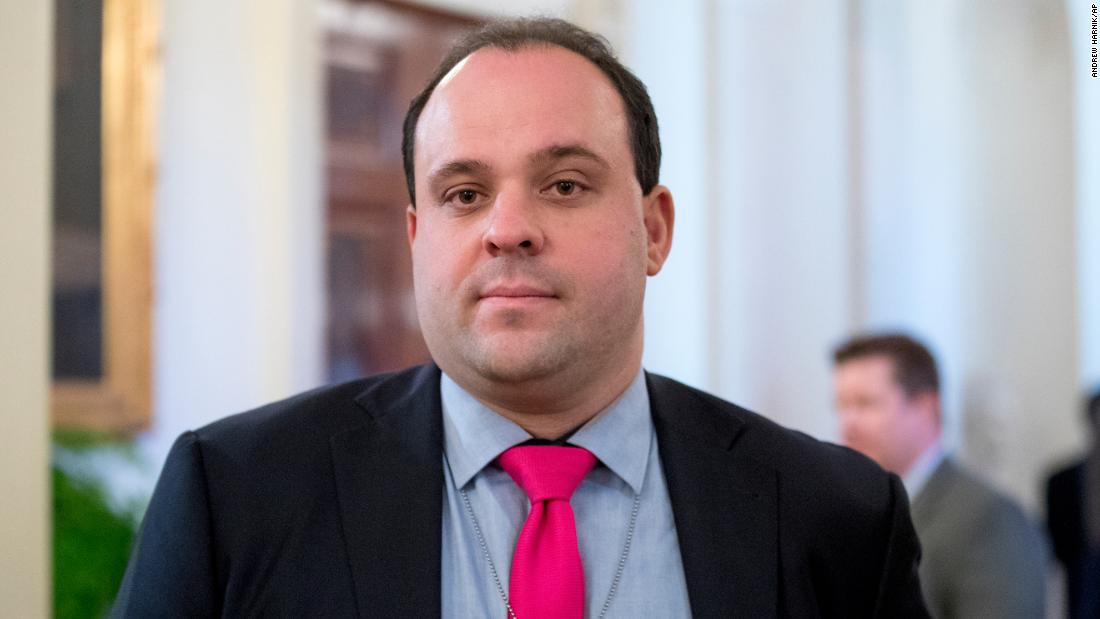



 Sky Dancing
Recent Comments