Last year in Massachusetts we had a winter with almost no snow. Weather people quite often predicted it, but it never came. It really bothered me. I realized how much I love snowstorms and how much I miss snow when it doesn’t arrive. It looks like this year will be another mild winter with very little snow. We got a few inches recently, but mostly we’re getting rain.
I’m far from alone in missing snow. A few days ago, I came across two articles about what climate change is doing to our winters.
In January 1995, when The Atlantic published “In Praise of Snow,” Cullen Murphy’s opus to frozen precipitation, snow was still a mysterious substance, coming and going enigmatically, confounding forecasters’ attempts to make long-term predictions. Climate change registered to snow hydrologists as a future problem, but for the most part their job remained squarely hydrology: working out the ticktock of a highly variable yet presumably coherent water cycle. “We still don’t know many fundamental things about snow,” Murphy wrote. “Nor do we understand its relation to weather and to climate—the dynamics of climate being one of the perennials on the ‘must figure out’ list of science.”
In January 2024, at long last, someone has figured out a formula of sorts for how snow reacts to climate change, and the answer is: It reacts nonlinearly. Which is to say, if we think snow is getting scarce now, we ought to buckle up.
Nonlinear relationships indicate accelerated change; shifts are small for a while but then, past a certain threshold, escalate quickly. In a paper published Wednesday in the journal Nature, two Dartmouth researchers report finding a distinctly nonlinear relationship between increasing winter temperatures and declining snowpacks. And they identify a “snow loss cliff”—an average winter-temperature threshold below which snowpack is largely unaffected, but above which things begin to change fast.
That threshold is 17 degrees Fahrenheit. Remarkably, 80 percent of the Northern Hemisphere’s snowpack exists in far-northern, high-altitude places that, for now, on average, stay colder than that. There, the snowpack seems to be healthy and stable, or even increasing. But as a general rule, when the average winter temperature exceeds 17 degrees (–8 degrees Celsius), snowpack loss begins, and accelerates dramatically with each additional degree of warming.
Already, millions of people who rely on the snowpack for water live in places that have crossed that threshold and will only get hotter. “A degree beyond that might take away 5 to 10 percent of the snowpack, then the next degree might cut away 10 to 15 percent, then 15 to 20 percent,” Alexander Gottlieb, the first author on the paper, told me over the phone as I looked out my window in New York City, where it has rained several times over the past few days. “Once you get around the freezing point”—32 degrees Fahrenheit—“you can lose almost half of your snow from just an additional degree of warming,” he said. New York City, which was recently reclassified as a “humid subtropical” climate, has clocked nearly 700 consecutive days with less than an inch of snowfall. It’s definitely over the snow-loss cliff, and as global temperatures increase, more places will follow.
By Malysheva Nastenka
Gottlieb and his co-author, Justin Mankin, figured this out by looking at how changes in temperature and precipitation drove changes in snowpack in 169 river basins across the Northern Hemisphere from 1981 through 2020. Using machine learning, they found a clear signal that human-induced climate change was indeed forcing changes in the snowpack in the places where most people live. The sharpest declines were in the watersheds of the southwestern and northeastern United States, and in Central and Eastern Europe. “In places where we are able to identify this really clear signal that climate change has reduced spring snowpack, we expect that to really only accelerate in the near term,” he said. “Those are places where the train has already kind of left the station.” Indeed, the Hudson River watershed, in which New York City sits, experienced among the steepest declines over that period. In the Northeast, which is not as reliant on spring snowmelt for water, that loss is felt most keenly as a loss of recreation; whole economies in the Northeast are based on skiing.
In the Mountain West, the stakes are even higher. Hydrologists already worry about the future reliability of the region’s snow-fed water supply: Previous research found snowless winters in the Mountain West are likely to be a regular occurrence by mid-century. But crucially, Gottlieb doesn’t see any room for cheerfulness about individual years with off-the-charts snowfall, such as last year’s record snowpack in the Colorado River basin. “This work really shows that we can definitely still get these one-off anomaly years that are incredibly wet, incredibly snowy, but the long-term signal is incredibly clear,” he said. Once you’re over the cliff, there’s no going back. The snow will keep disappearing.
In this piece, Lora Kelley interviews Zoë Schlanger (author of the previous article) on “the sense of loss when climate change transforms winter”: The Feeling of Losing Snow. Kelley and Schlanger mostly rehash the information from the previous article, but they also discussed the feeling of losing snowy winters:
Zoe: One of the hydrologists I spoke with was a former ski-patrol person, and he was talking so beautifully about what it meant for him to ski on a cold, bright day high in the mountains in Utah with perfect powder. It was just so vital to his enjoyment of life. For future generations, snow could just become slush, or not be there at all.
I don’t ski. I don’t live in the mountains. But even for me, there’s a sense of loss. It makes me think of a word that an Australian philosopher coined a number of years ago: solastalgia, which is essentially the sense of homesickness for an environment that you never left, but is leaving without you in some way. I feel like we’re all experiencing that when there are these touchstones of the year that seem to not be there anymore. It’s a strange sense of in-place homesickness.
Lora: This strikes me as a really stark example of climate change affecting how people experience nature. How do you think about these more obvious losses versus less visible, more incremental changes to the environment?
Zoë: Snow is a reminder that, actually, a lot of the changes we’re dealing with aren’t that incremental. We may not be able to see rising temperatures in quite the same way. But in many cases, those changes are just as sudden and dramatic and are happening faster than people thought they were. The wildfires we saw last year, for example, were wildly out of proportion from anything we’ve seen before. Records aren’t getting broken by small degrees now. They’re getting broken by leaps and bounds.
Climate change is real, it’s happening quickly, and it affects our lives in so many ways.
The Supreme Court will decide this term whether states can force doctors to turn away patients suffering serious, life-threatening medical complications, or if doctors will be allowed to provide standard medical care to those patients: abortions. The court announced last week it will hear arguments over the Emergency Medical Treatment and Active Labor Act, or EMTALA, in April.
By Vicky Mount
EMTALA is a more than three-decade-old federal law that says hospitals that accept Medicare (most hospitals in this country) cannot turn away anyone with an emergency medical condition; they are required to provide stabilizing treatment to prevent that person from suffering serious medical complications. After Roe v. Wade was overruled in 2022, the Biden administration issued guidance clarifying that if a pregnant patient arrives at a hospital with an emergency condition that could only be stabilized with an abortion, the hospital is required to provide that care — regardless of state law.
To the Supreme Court, Idaho has argued that states — not doctors, and not the federal government — should be permitted to decide what kind of emergency medical care women can receive. “The federal government cannot use EMTALA to override in the emergency room state laws about abortion any more than it can use it to override state law on organ transplants or marijuana use,” the state’s attorney general wrote in its petition to the high court.
Lawyers for the Department of Justice sued the state of Idaho last year over the criminal abortion ban passed by the GOP-controlled legislature, which only allows for abortions to prevent a patient’s death — language one Idaho doctor said “is not useful to medical providers because this is not a dichotomous variable.”
The Biden administration argued the Idaho law violates care requirements mandated by EMTALA, and a lower court agreed, blocking the law as it applied to medical emergencies. But on Jan. 5, the Supreme Court lifted the lower court injunction, reinstating the ban and sending the chilling message to Idaho doctors that they cannot offer the care they have been trained to provide to pregnant patients without fear of criminal prosecution.
Nancy Northup, president of the Center for Reproductive Rights, called the Supreme Court’s intervention in the case “deeply troubling.”
“EMTALA is currently the only federal protection for patients who need emergency abortions. If the Supreme Court eviscerates that, there is no doubt that people will die,” Northup said in a statement.
The Supreme Court said Friday it will consider whether state and local officials can punish homeless individuals for camping and sleeping in public spaces when shelter beds are unavailable.
The justices will review a lower court decision that declared it unconstitutional to enforce anti-camping laws against homeless individuals when they have nowhere else to sleep.
Photo by Frank Herfort
The U.S. Court of Appeals for the 9th Circuit, which covers Western states, including California, Oregon and Washington, first held in 2018 that the Eighth Amendment’s protection against cruel and unusual punishment prohibits cities from criminalizing public camping when shelter is unavailable.
The city of Grants Pass, Ore., asked the justices to overturn a similar recent decision involving civil fines and warned that the ruling would paralyze cities across the West from addressing safety and public health risks created by tents and makeshift structures. The 9th Circuit’s decision, the officials said, is standing in the way of a comprehensive response to the growth of public encampments.
“The consequences of inaction are dire for those living both in and near encampments: crime, fires, the reemergence of medieval diseases, environmental harm and record levels of drug overdoses and deaths on public streets,” lawyers for the city told the high court.
The Supreme Court agreed Friday to hear Starbucks’s appeal of a decision ordering the coffee chain to reinstate seven terminated employees, who were part of a high-profile union drive and became known as the “Memphis Seven.”
With implications for labor organizing more broadly, the justices will take up the case to decide the proper standard for court injunctions requested by the National Labor Relations Board (NLRB) as they battle against employers in administrative proceedings.
The injunctions, aimed at keeping the status quo, have forced companies to reinstate employees, keep facilities open and pause corporate policy changes as the NLRB adjudicates alleged unfair labor practices.
Federal appeals courts have been split on what test the NLRB must clear to receive such an order, however.
Starbucks, backed by the U.S. Chamber of Commerce and other business interests, argues that some courts — like the one that ordered the Memphis Seven be reinstated — have been too lenient, emboldening the NLRB to interfere with employers without due cause.
“That split carries enormous consequences for employers nationwide and unacceptably threatens the uniformity of federal labor law,” Starbucks’s attorneys wrote to the justices.
Hunter Biden offered on Friday to comply with any new subpoena and testify in private before House Republicans seeking to impeach his father over alleged but unproven corruption, an attorney for Joe Biden’s son said.
By Troy Brooks
“If you issue a new proper subpoena, now that there is a duly authorised impeachment inquiry, Mr Biden will comply for a hearing or deposition,” Abbe Lowell wrote to James Comer and Jim Jordan, the Republican chairs of the oversight and judiciary committees.
“We will accept such a subpoena on Mr Biden’s behalf.”
Republicans are interested in Hunter Biden’s business dealings and struggles with addiction. Outside Congress, he faces criminal charges over a gun purchase and his tax affairs that carry maximum prison sentences of 25 and 17 years. In Los Angeles on Thursday, he added a not guilty plea in the tax case to the same plea in the gun case.
Biden previously refused to comply with a congressional subpoena for testimony in private, giving a press conference on Capitol Hill to say he would talk if the session were public.
On Wednesday, Comer held a hearing to consider a resolution to hold Biden in contempt of Congress, a charge that can result in a fine and jail time.
The hearing descended into chaos with Biden and Lowell making a surprise appearance, sitting in the audience while Republicans and Democrats traded partisan barbs. The resolution was sent to the full House for a vote. The White House said Joe Biden had not been told of his son’s plan to attend the oversight hearing.
The Internal Revenue Service said Friday that it has collected more than $500 million from wealthy tax dodgers since 2022, thanks to a funding boost that is now in jeopardy as Republican lawmakers work to claw back tens of billions of dollars from the agency.
The IRS has used a budget increase approved under the Inflation Reduction Act to ramp up enforcement efforts, targeting millionaires over significant sums of unpaid taxes. The agency announced Friday that it has retrieved $520 million through its new initiatives.
“This is why we fought for a fully funded IRS, and why it’s so reckless for Republicans to try to slash its budget again,” Rep. Gerry Connolly (D-Va.) wrote in response to the agency’s announcement.
The congressional GOP, which has long worked to starve the IRS of funding in service to rich tax cheats, is aiming to more quickly implement $20 billion in cuts that they secured as part of last year’s bipartisan deal to raise the debt ceiling, potentially compromising tax enforcement. The $20 billion represents a quarter of the $80 billion IRS funding boost in the Inflation Reduction Act, which Republicans unanimously opposed.
Under a spending tentative agreement that congressional leaders announced this past weekend, the $20 billion in IRS cuts would be frontloaded to 2024 instead of being spread out over two years. The deal still must pass Congress—hardly a forgone conclusion as far-right Republicans push House Speaker Mike Johnson (R-La.) to back out of the agreement, complaining that government spending is too high overall.
Even as the Biden reelection campaign forges ahead with preparations for another potential general election match-up between Biden and his predecessor, it is grappling with a stubborn reality: The majority of undecided voters simply do not seem to believe – at least not yet – that Donald Trump is likely to be the Republican presidential nominee.
According to the campaign’s internal research, this is the case for most of the undecided voters that the campaign is targeting – nearly three-in-four of them, senior Biden campaign officials told CNN. Those officials said one of the biggest reasons driving this is the simple fact that many voters are not paying close attention to the election, including the ins and outs of the GOP nomination process.
“You can’t conceive of how tuned out these folks are,” one senior campaign official said.
To that end, Biden campaign officials see the task of helping voters recognize that Trump is a strong frontrunner as one of their most important and urgent challenges, with the first GOP caucus in Iowa now just days away. A key part of that work is painting a vivid picture of what a second term of a Trump White House would look like.
At some point in the near future, Biden campaign officials say they expect that a switch will turn on for many of these voters who are not yet convinced that Trump is likely to be on the ballot in the fall. As one senior official put it, a realization will hit: “Oh s—, it is an election between that guy and that guy.”
But what’s impossible for the campaign to predict at this point in the election cycle is when exactly it will click for voters that “that guy” – Trump – is poised to be the GOP presidential nominee. Just 20% of the public has been paying a lot of attention to the 2024 presidential campaign, according to an AP-NORC poll from the end of last year; meanwhile, 47% said they have paid little or no attention.
Across Iowa, as the first nominating contest approaches on Monday, voters plow through snowy streets to hear from candidates, mingle at campaign events and casually talk of the prospect of World War III, civil unrest and a nation coming apart at the seams.
Four years ago, voters worried about a spiraling pandemic, economic uncertainty and national protests. Now, in the first presidential election since the siege on the Capitol on Jan. 6, 2021, those anxieties have metastasized into a grimmer, more existential dread about the very foundations of the American experiment.
“You get the feeling in Iowa right now that we’re sleepwalking into a nightmare and there’s nothing we can do about it,” said Doug Gross, a Republican lawyer who has been involved in Iowa politics for nearly four decades, ran for governor in 2002 and plans to support Nikki Haley in the state’s caucuses on Monday. “In Iowa, life isn’t lived in extremes, except the weather, and yet they still feel this dramatic sense of inevitable doom.”
Donald J. Trump, the dominant front-runner in the Republican primary race, bounces from courtroom to campaign trail, lacing his rhetoric with ominous threats of retribution and suggestions of dictatorial tendencies. President Biden condemns political violence and argues that if he loses, democracy itself could falter.
Bill Bradley, 80, who served for 18 years as a New Jersey senator, remembered when he ran for the Democratic presidential nomination in 2000, spending more than 75 days in Iowa during his bid. “We debated health care and taxes, which is reasonable,” he said, adding, “Civil war? No. World War III? No, no, no.”
This presidential race, he said, is “a moment that is different than any election in my lifetime.”
Read more at the NYT.
Photographer unknown
There is so much Trump legal news today, that I’m just going to link to the articles, and you can decide what you want to read.
This year, workers across industries in the United States have increasingly walked off the job or threatened to do so. In July, tens of thousands of actors joined screenwriters on the picket line, bringing Hollywood to a halt. Meanwhile, a summertime strike of more than 300,000 United Parcel Service workers had seemed imminent before a deal was reached last month.
Now, another potentially large-scale strike has begun. After the United Auto Workers and the country’s largest carmakers were unable to agree on a new contract before Thursday night’s deadline, union members at General Motors, Ford Motor and Stellantis — which owns Chrysler, Jeep and Ram — have walked off the job.
About 12,700 workers began the strike on Friday, at plants in Michigan, Missouri and Ohio. That’s a small portion of the unionized factories of G.M., Ford and Stellantis across the United States. But the union hasn’t ruled out a full-scale strike.
If all 150,000 of the U.A.W. members go on strike, nearly 460,000 workers will have walked off the job at some point over the course of this year, the highest level since 2018, another notable year for work stoppages.
Strike activity increased slightly in 2021 and 2022 after a lull during the coronavirus pandemic. Much of this can be attributed to a historically strong economic recovery, which has strengthened workers’ bargaining power, said Ruth Milkman, a professor at the City University of New York’s Graduate Center and School of Labor and Urban Studies. “The single most important factor is the tight labor market,” she said.
Despite the recent uptick, overall union activity has fallen since the 1970s and ’80s, when the number of workers on strike in a year regularly surpassed 400,000.
Today’s news is the”UAW strike 2023 against Detroit automakers: Live updates, news from the picket sites.” This is reported by the Detroit Free Press.
The UAW declared a strike against Detroit Three automakers Thursday as contract talks failed to secure new labor agreements before the current deals expired at 11:59 p.m.
UAW President Shawn Fain announced the first wave of plants the union would strike if a new labor agreement was not reached before midnight: Ford Michigan Assembly Plant (Final Assembly and Paint only) in Wayne, Stellantis Toledo Assembly Complex in Ohio and General Motors Wentzville Assembly in Missouri.
The DFP has a number of exciting stories that analyze the impact of the strike on Michigan, the US, and the industry, including the many small suppliers to the Big 3 and the workers.
The UAW’s targeted plan for a possible strike could mean that some workers are on the picket lines making $500 a week in strike pay while others are on the assembly lines making their full wages.
Whether such a situation would breed contempt among workers would depend on the messaging from the United Auto Workers union, said Brett Miller, a labor and employment attorney at Butzel law firm.
“There may be some comfort if the union plans to start small and escalate the strike involving more members or it is making representations that the final result of the strike would be worth the sacrifice,” he said.
As to whether the union strikes a plant that supplies parts to another plant, thereby halting the second, non-striking plant’s production, the automaker could shut down that non-striking plant and essentially it would be a lockout for those workers at the non-striking plant.
Miller said that under the UAW constitution, those on strike or locked out could get strike pay. Generally, unemployment will not cover employees who are on strike, but there are exceptions, such as in New York and New Jersey.
The United Auto Workers union is on strike against General Motors, Ford and Stellantis, the first time in its history that it has struck all three of America’s unionized automakers at the same time.
Workers on Friday walked out of three plants – one each from the Big Three automakers – in Missouri, Michigan and Ohio. Picketers were met with cheers from sign-waving union members.
The UAW referred to its targeted strike of three plants as a “Stand Up Strike,” which it called a strategic “new approach” to walking off the job.
“As time goes on, more locals may be called on to ‘Stand Up’ and join the strike,” the union told members. “This gives us maximum leverage and maximum flexibility in our fight to win a fair contract at each of the Big Three automakers.”
The UAW’s strikes began at GM’s Wentzville Missouri, which has 3,600 UAW members on its staff; Ford’s Michigan Truck plant in Wayne, Michigan, which will have 3,300 strikes; and Stellantis’ Toledo Assembly complex in Ohio, where 5,800 will be be on strike.
In all, fewer than 13,000 of the UAW’s 145,000 members walked off the job.
“These were chosen carefully by the UAW and reflect a strategy that will ensure a large number of suppliers and dealers are affected, while reducing the number of UAW workers that, at least initially, are on strike and receiving strike pay,” said Patrick Anderson. CEO of Anderson Economic Group.
Thousands of striking writers and actors staged a solidarity march through Hollywood Wednesday, culminating in a boisterous rally outside Paramount studios as the dual labor stoppages continue to halt movie and TV production.
The Writers Guild of America has been on strike since early May. The SAG-AFTRA actors’ union joined the writers on the picket lines in July. There have been some negotiations between the WGA and Hollywood studios in recent weeks, but still no indication a resolution is at hand. There has not been any word of talks between the studios and SAG-AFTRA.
On Wednesday morning, thousands of striking writers and actors gathered outside Netflix headquarters in Hollywood, then marched to Paramount studios on Melrose Avenue. Once there, a massive rally was held, featuring speeches and music performances — and forcing closures of streets surrounding the studio.
SAG-AFTRA billed the event as a solidarity march to send a message to studios that actors and writers are standing firm in their push for fair contracts.
“Thank you so much for showing up like this, this is an amazing turnout,” SAG-AFTRA President Fran Drescher told the crowd. “Your strength and your solidarity and your resolve is going to get us to the other side of this, and history is in the making right now. I know that this strike is not easy, in fact, it’s hard. It’s very hard. And with the passing of time its going to even get harder, but the reason why we had the largest strike authorization in our union history is because we stand at an inflection point.
My Granddad was around for the Great Railroad Strike of 1922 while he and Nana had two kids. My Dad was born the year after the strike.
According to Pencavel, many workers are feeling frustrated by seeing their wages suppressed in less competitive labor markets and by the loss of a voice (such as a trade union). Moreover, he argues, a low unemployment rate makes the timing right.
“Strikes tend to be more frequent and longer when workers have opportunities for other possibly temporary work, as indicated by a low unemployment rate,” Pencavel said.
…
Why are so many strikes happening now?
When it comes to measuring earnings inequality, economists tend to be relativists, that is, if all workers get the same x% increase in wages, economists usually conclude wage inequality has not changed. By contrast, many workers are absolutists and measure inequality in terms of absolute dollar differences in wages. This distinction helps to explain why economists are more inclined to accept certain earnings differences that workers do not. An example is provided by examining the U.S. household income and comparing the household whose income is near the top of the income distribution.
Specifically, the household whose income is at the 95th percentile with the household whose income is below the median (specifically at the 20th percentile). Approximately these two households experienced the same 9% increase in income between 2018 and 2019. Given the existing wide income distribution, this 9% increase in income constituted a $2,484 increase for the household at the 20th percentile and a $21,274 increase for the household at the 95th percentile. To the relativist, inequality has not changed; to the absolutist income inequality has increased.
Tending to be absolutists, workers are outraged at the earnings reported for certain managers and business owners. They see the system as basically unfair. Indeed, it is well documented that the share of the nation’s total income that is categorized as profits has risen and the share called wages has fallen.
Amazon workers strike to expose the horror behind ‘Black Friday’ sales The workers in Amazon warehouses in Europe sought to highlight atrocious working conditions, including Injuries from accidents, overworked employees collapsing unconscious on the floor, constant robotic surveillance and workers having to skip toilet breaks to avoid missing the targets. (2018)
There have been work stoppages also for workers in search of Union protection recently. Amazon and Starbucks have experienced nascent unionization efforts. This is an article from VOX that was published in May. “Why unions are growing and shrinking at the same time. Joining the picket line like it’s 1939.” This report was written by Rani Molla.
Based on the news lately, it would seem like unions are growing.
Staffers at the Democratic Congressional Campaign Committee announced on Tuesday they had formed a union. This is after Starbucks workers last week reached 50 union wins across the country, and many more locations are slated to do so in the near future. According to the National Labor Relations Board (NLRB), about 250 total Starbucks stores, representing nearly 7,000 employees, have so far petitioned to unionize. And last month, workers at an Amazon warehouse in New York City defied all odds by winning their first union battle against the second-biggest employer in the United States. People are successfully unionizing across the economy, from retail to tech, and their wins are leading to even more union interest. Petitions for union representation in the first half of 2022 are up nearly 60 percent from last year.
This raft of union organizing, unthinkable just a few years ago, is happening against a very favorable backdrop, including a tight labor market, record inequality, and a pro-union administration, which extends to the leadership at the NLRB, the organization tasked with running union elections and enforcing labor law. Meanwhile, public approval of unions is at its highest level since 1965.
What we don’t know yet is whether these events are enough to meaningfully combat longstanding headwinds, from anti-union policy to the rise of gig work, that have caused union membership to decline for decades. Last year, amid a similar set of circumstances, the number of union members in the US went down by 240,000, leaving the rate of union membership at a low of 10 percent — half what it was in the 1980s. The pandemic has been a sort of double-edged sword for unions, giving people more reasons to organize and also causing union and non-union workers to lose their jobs.
It’s possible the psychic weight of union wins is bigger than their actual weight. A typical Starbucks only has 26 workers, and there hasn’t yet been public union activity at the vast majority of the company’s 9,000 corporate stores. After one Staten Island Amazon fulfillment center won its vote to unionize, a second sort center lost, and there are more than 800 Amazon warehouse facilities across the country.
It’s not clear where this will all net out. This year’s total union membership numbers won’t be available until the Bureau of Labor Statistics releases them early next year. Until then, we do know that a number of individual unions have been successfully bucking the trend in recent years by adding members. Labor organizers have done so by employing a variety of tactics, new and old, and could help other shops do the same. Labor experts laud unions’ efforts but say more is needed at a policy level to ensure these recent wins aren’t just a flash in the pan.
Democrats were quick to back working-class United Auto Workers in their strike against General Motors, delivering doughnuts and holding picket signs outside factories to show solidarity. It’s a union they long have aligned with politically.
There were no doughnuts from Republicans.
Led by President Donald Trump, GOP officials have largely avoided taking sides in the strike that threatens to upend the economy in Michigan, an election battleground, a year before the 2020 vote. Both here and nationally, most Republicans said little about the substance of the dispute beyond hope for a speedy resolution.
The muted response reflects the tricky politics of labor for Republicans.
Trump has made inroads with members of some unions, due partly to promises to get tough on trade and keep manufacturing jobs in the United States. The message pulled key voters away from their Democratic union bosses, who Trump argues are corrupt.
But a strike prompted in part over GM’s plan to close American plants highlights Trump’s unfulfilled promises on manufacturing and gives Democrats a chance to play up their union credentials.
Democratic presidential candidate Elizabeth Warren planned to show up on the picket line in Michigan on Sunday, with rival Bernie Sanders expected this coming week. Nearly all the candidates have tweeted support for the workers.
“Proud to stand with @UAW to demand fair wages and benefits for their members. America’s workers deserve better,” Joe Biden tweeted.
Trump is in a bind.
Backing the union would undermine Trump’s message that labor does not advocate for its workers and give a powerful Democratic force a boost before an election.
Siding with GM would call into question his promises to defend workers and he would risk getting blamed for economic woes in Rust Belt states he needs to win reelection.
I may be a Financial economist, but anyone in the field has had a healthy dose of Labor Economics at some point in their training. Classical labor theory suggests that everyone will be paid based on their contribution (productivity). It fails to account for the differences in salaries for women and minorities. It also underestimated how much the capital side would be given tremendous tax benefits as well as the bonuses and stock plans that are supposed to align management with the stockholders. Labor became the redheaded stepchild and was frequently overlooked in the rise of the service industry. Additionally, the investment in technology to replace workers has been intense, even pushing shoppers to self-checkout when it used to be a radical idea that you would pump your own gas.
Anyway, my bottom line is it’s about time that every person who actually does the work gets the pay, recognition, and benefits they deserve. Hope I haven’t been too wonky or too much of a history nut for you on my wonky thread. All I can say is my life was a lot better when I had a union bargaining for my terms of employment. It hasn’t been the same since. But then, I first taught at a community college where many of the instructors were in trades. I still shudder at the thought that your fundamental English Professor is paid far less than anyone in my field. I was active in the bargaining unit of my Union and was fascinated by the process. Also, the Union does make us strong.
You’ve probably heard about actor Bruce Willis having stopped acting because he has aphasia. Aphasia is most commonly caused by a stroke that affects language areas–usually located on the left side of the brain. It can but it can also follow a severe head injury or other brain trauma. It can result from traumatic brain injuries suffered by athletes in contact sports like football and hockey. Willis’ family has declined to explain the cause of his aphasia, so we don’t know if he had a stroke or some other type of brain injury or if he has Alzheimer’s disease or dementia. There’s an interesting story at the LA Times on other celebrities who have struggled with aphasia, including Sharon Stone, Dick Clark, Kirk Douglas, and Patricia Neal.
After an illustrious career that featured starring roles in movies like Pulp Fiction and The Sixth Sense, Willis had in recent years taken to churning out dozens of low-budget productions. A new Los Angeles Times article reveals just how bad things were on the set of those movies—and gives the impression that the actor was being taken advantage of.
Two crew members from the upcoming film White Elephant told the Times that Willis asked aloud, “Why am I here?” “Someone would give him a line and he didn’t understand what it meant,” a crew member said. “He was just being puppeted.”
The incidents ranged from relatively benign to potentially dangerous: A crew member from the 2020 movie Hard Kill said that Willis repeatedly fired a gun loaded with blanks on the wrong cue. The incident seems particularly stark in light of Alec Baldwin’s gun accidentally firing and killing cinematographer Halyna Hutchins on the set of Rust last year.
So, why were the dozens of people involved in these films so set on working with someone who wasn’t cognitively fit to perform? Well, the money, of course. “His involvement in films—even if for a fleeting few minutes—helped low-budget independent filmmakers sell their films internationally,” the Times explains. “Having Willis’ face on a movie poster or a lineup of streaming service thumbnails helped draw viewers to his films.”
Seems a tad exploitative, no? I’m no Hollywood insider, but I hope these revelations will spur the industry to work toward safer on-set conditions for workers on- and off-screen.
Being rich and famous doesn’t protect you from exploitation.
Over 2,000 employees at the fulfillment center known as JFK8 voted to form a union, organizers said, after facing down months of hostile messaging that workers say included daily mandatory meetings with Amazon’s anti-union consultants.
The victory was especially significant because employees not only appeared to unionize a facility controlled by one of the world’s most powerful companies—but also to join the Amazon Labor Union (ALU). The grassroots group is led by current and former warehouse workers who waged a hard-fought battle frequently billed as Davids battling a $1.6-trillion Goliath.
Outside the National Labor Relations Board (NLRB) office in Brooklyn, ALU president Chris Smalls and other organizers popped champagne once the win was official.
“It’s not about me,” Smalls told reporters at a press conference. “Amazon tried to make it about me from Day 1. And I never said it was going to be Amazon versus Chris Smalls. It’s always going to be Amazon versus the people, and today the people have spoken, and the people wanted a union.”
During his remarks, the new union president took aim at Amazon’s billionaire founder, saying, “We want to thank Jeff Bezos for going to space because when he was up there, we was signing people up.”
The Ginni and Clarence Thomas story continues to develop. Yesterday, Dakinikat posted the Daily Beast story about Thomas’s influence on Trump’s hiring and firing decisions. Jane Mayer, who wrote a book about Clarence Thomas, added this to the story:
Missing from that report is that Ginni Thomas’s consulting firm was paid over $200,000 by Frank Gaffney’s organization- so was she a paid lobbyist when she promoted him for a job? https://t.co/StEQLvZ2Hf
This situation presents serious problems for the Supreme Court and for Congress. It’s unlikely that Clarence Thomas will voluntarily recuse himself from January 6 cases and I doubt if Chief Justice Roberts will take action unless there is a massive public outcry. At The Washington Post, Paul Waldman writes: What can Democrats do about Clarence Thomas?
The controversy over Virginia “Ginni” Thomas, Clarence Thomas and the Jan. 6 insurrection is demonstrating one profound difference between Democrats and Republicans: how they view the value of making a stink….
Given his wife’s role in encouraging the effort to overturn the election that culminated in the awful events of that day, Clarence Thomas should obviously recuse himself from any case having to do with Jan. 6. But what can Democrats do about him?
The way Democrats are answering that question tells us a lot about their party.
This Friday, 17 progressive organizations are releasing a letter calling on Democrats to launch a congressional investigation of Justice Thomas’s “misconduct in his handling of cases regarding the January 6 insurrection, the 2020 presidential election, and other cases involving his wife’s political activities.”
As the groups note in their letter, which is spearheaded by Take Back the Court, Supreme Court justices are bound by a federal statute that says they, like other judges, should recuse themselves from any case in which their “impartiality might reasonably be questioned.”
Patrick Saunders, Opal in the Window
In addition, in the past, Thomas has failed to properly disclose his wife’s income from political groups (he later amended his disclosures after the omissions were revealed), and she reportedly works with groups that have business before her husband.
What might a congressional investigation accomplish? The letter argues that it might determine “whether Justice Thomas’ conduct was consistent with basic principles of judicial ethics, whether he violated federal law and his oath to ‘impartially discharge and perform his judicial duties, and what actions must be taken in response.”
But so far, Democrats have largely been restrained in response to the Ginni Thomas revelations. While a few more liberal lawmakers, including Rep. Alexandria Ocasio-Cortez (D-N.Y.) have said Clarence Thomas should resign or be impeached, Democratic leaders have not.
There’s also more news today about the gap in the White House phone logs during the January 6 Capitol insurrection. Dakinikat also wrote yesterday about the Axios claim that it was no big deal; the Trump executive assistant who kept track of the call log was out that day. I don’t buy it. That’s just too convenient an excuse.
Just days before the US Capitol riot, White House officials started providing fewer details about then-President Donald Trump‘s calls and visits, the person in charge of compiling those activities for the official record told the House select committee investigating January 6, 2021, according to two sources with knowledge of the probe.
The committee interviewed Trump’s presidential diarist roughly two weeks ago. That interview has not been previously reported, nor has the testimony describing a noticeable drop-off in information provided by Oval Office staff leading up to January 6.
By Daniel F. Gerhartz, 1965
Other witnesses also have told the panel there was significantly less information being shared with those involved in White House record-keeping during the same time period, according to three sources familiar with the investigation.
One source described how White House record-keepers appeared to be “iced out” in the days leading up to January 6.
“The last day that normal information was sent was the 4th,” said another source familiar with the investigation. “So, starting the 5th, the diarist didn’t receive the annotated calls and notes. This was a dramatic departure. That is all out of the ordinary.”
The White House diarist normally receives many streams of information, including the phone logs from the switchboard, the president’s movements from the US Secret Service and, critically, the notes from Oval Office operations, which detail calls, guests and activities.
At 2.26pm on 6 January last year, Donald Trump picked up a White House phone and placed a call to Mike Lee, the Republican senator from Utah. The communication came at a very significant moment.
Thirty-seven minutes earlier, a riot had been declared by Washington DC police. Minutes after that the then vice-president, Mike Pence, was rushed out of the Senate chamber, where he had been presiding over Congress’s certification of Joe Biden’s victory in the 2020 election, and put into hiding.
Fifteen minutes before Trump made the call his supporters, exhorted by the sitting president to “fight like hell” against what he falsely claimed was a rigged election, broke through a window in the south front of the Capitol and entered the heart of American democracy.
And we know Trump was watching it on TV.
Yet when you look for recorded details of Trump’s 2.26pm call which was made, as Hugo Lowell of the Guardian revealed, on an official White House landline, they are nowhere to be found. The Lee call was one of an unknown number that Trump made during a mysterious gap of 7 hours 37 minutes that exists in the call logs – precisely the timeframe of the Capitol attack.
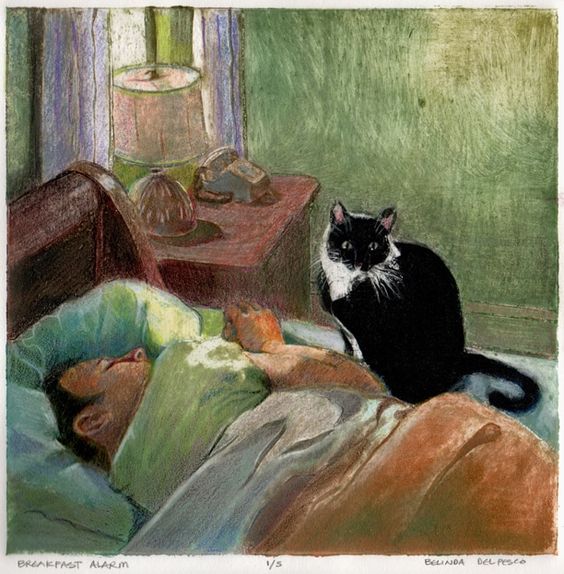
By Belinda Del Pasco
Those missing call logs, disclosed by the Washington Post and CBS News, raise several burning questions – how did the records disappear? who carried out the excising? – but none more urgent than this: what was Trump trying to hide?
“A gap like this doesn’t happen by accident. It’s not a coincidence,” said Charlie Sykes, columnist at the Trump-resistant conservative outlet the Bulwark. “There is no innocent explanation here – somebody made the decision to rip up the record for the crucial hours of January 6 and there has to be a reason why.”
What Trump is trying to hide lies at the heart of the House committee investigation into the January 6 insurrection. The former president has consistently tried to block information flowing to the committee – pressuring his inner circle not to testify, tearing up documents before they were handed over.
The stakes in the tussle over evidence rose sharply this week when a federal judge said in a ruling that Trump “more likely than not … dishonestly conspired to obstruct” Congress on 6 January. That would be a criminal act.
After several recent developments in the January 6 investigations that put the Justice Department in the center of the political whirlwinds, Attorney General Merrick Garland said Friday that the only pressure his agency feels is to “do the right thing” by following “the facts and the law.”
“The only pressure I feel, and the only pressure that our line prosecutors feel, is to do the right thing. That means we follow the facts and the law, wherever they may lead,” Garland said at a news conference Friday, where he was announcing new charges in an unrelated gun trafficking case.
Garland was asked about political pressure on the agency at the end of a momentous week for the efforts to scrutinize the 2020 election reversal plot.
On Monday, a federal judge said that it was “more likely than not that President Trump corruptly attempted to obstruct” Congress’ electoral certification vote. The assertion by US District Judge David Carter came in a documents disclosure case related to the House select committee investigation of the January 6 attack on the Capitol….
On Friday, Garland would not weigh in on the Carter opinion or on the status of the Meadows referral.
“We follow the facts and the law wherever they lead, and that’s all I can say about the investigation,” Garland said when asked about the ruling, as he referenced department policy of not commenting on ongoing investigations. “The best way to undermine an investigation is to say things out of court about how they’re going.”
Asked about the status of the Meadows referral, Garland said, “We don’t comment on ongoing referrals.”
I don’t know what else he is supposed to say. He has said repeatedly that he will follow the evidence up to and including people at the top. But the Garland detractors aren’t going to stop whining.
That’s all I have for you today. What are your thoughts? What stories are you following?
Did you like this post? Please share it with your friends:
I have a mixed bag of interesting reads for you this morning, if I do say so myself. So let’s get right to it.
I’ll start out with that infamous Republican conspiracy theory based on an old UN initiative, “Agenda 21,” which has been in the news again recently. I wrote a post about it about a year ago that I called Dark Ages America.
Unfortunately, we’ll probably be hearing more about this nutty conspiracy, because there’s a new book coming out today–a dystopian novel supposedly authored by Glenn Beck–and it’s titled Agenda 21. Here’s a quote from the book, published on Amazon’s item page:
“I was just a baby when we were relocated and I don’t remember much. Everybody has that black hole at the beginning of their life. That time you can’t remember. Your first step. Your first taste of table food. My real memories begin in our assigned living area in Compound 14.”
Just a generation ago, this place was called America. Now, after the worldwide implementation of a UN-led program called Agenda 21, it’s simply known as “the Republic.” There is no president. No Congress. No Supreme Court. No freedom.
There are only the Authorities.
Citizens have two primary goals in the new Republic: to create clean energy and to create new human life. Those who cannot do either are of no use to society. This bleak and barren existence is all that eighteen-year-old Emmeline has ever known. She dutifully walks her energy board daily and accepts all male pairings assigned to her by the Authorities. Like most citizens, she keeps her head down and her eyes closed.
Until the day they come for her mother.
“You save what you think you’re going to lose.”
Woken up to the harsh reality of her life and her family’s future inside the Republic, Emmeline begins to search for the truth. Why are all citizens confined to ubiquitous concrete living spaces? Why are Compounds guarded by Gatekeepers who track all movements? Why are food, water and energy rationed so strictly? And, most important, why are babies taken from their mothers at birth? As Emmeline begins to understand the true objectives of Agenda 21 she realizes that she is up against far more than she ever thought. With the Authorities closing in, and nowhere to run, Emmeline embarks on an audacious plan to save her family and expose the Republic—but is she already too late?
Except, I found out today that Beck didn’t really write the book; he just purchased the concept from his co-author Harriet Parke, the real author. I never knew you could do that–did you? From “I got duped by Glenn Beck!” by “Sarah Cypher”:
Two weeks ago I discovered, to my surprise, that I had line-edited an early draft of Glenn Beck’s new novel, “Agenda 21.” Glenn Beck! At the time I was working on it, the manuscript belonged to its actual author, a woman named Harriet Parke, who lives a few minutes from my aunt. But a year and a few lawyers later, Glenn Beck purchased the right to call himself its creator, and Ms. Parke agreed to be presented as a ghostwriter.
Cypher doesn’t agree with Glenn Beck’s politics (or Harriet Parke’s), but she thought she was editing a novel for nice lady who lives near her aunt, not Glenn Beck, Inc. In fact, Cypher agrees with the goals of Agenda 21, which is, after all, simply a set of non-binding recommendations for city planning. The book is still the same one written originally written by Harriet Parke, but Cypher worries that having Glenn Beck’s name on it will transform it from a fun futuristic read to a right wing political manifesto.
Glenn Beck is more than just the nice guy whose publishing house is bringing Ms. Parke’s work to a national audience. He’s also a professional ideologue whose establishment confers the full force of its intellectually and morally irresponsible franchise on a novel that distorts the truth about Agenda 21, which is doing good work in the world. Glenn Beck is not writing as an artist, bound by the conventions of his art, plying his craft on the willing human imagination. Hell, he’s not writing at all. He is a brand, with a budget, and with an agenda of his own. Ultimately, by assigning his brand to the novel “Agenda 21,” Beck turns a form of entertainment into a political lie, a tool for politicizing people.
It’s an interesting piece. Do check it out.
Everyone has heard by now that Hostess Brands is going out of business after being taken over by a vulture capitalist firm. Yesterday, a judge talked the company into negotiating a little more with one of its unions.
Hostess Brands Inc. and its second largest union agreed on Monday to try to resolve their differences after a bankruptcy court judge noted that the parties hadn’t gone through the critical step of private mediation. That means the maker of the spongy cake with the mysterious cream filling won’t go out of business yet.
The news comes after the maker of Ho Ho’s, Ding Dongs and Wonder Bread last week moved to liquidate and sell off its assets in bankruptcy court. Hostess cited a crippling strike started on Nov. 9 by the Bakery, Confectionery, Tobacco Workers and Grain Millers International Union, which represents about 30 percent of Hostess workers.
‘‘Many people, myself included, have serious questions as to the logic behind this strike,’’ said Judge Robert Drain, who heard the case in the U.S. Bankruptcy Court in the Southern District of New York in White Plains, N.Y. ‘‘Not to have gone through that step leaves a huge question mark in this case.’’
The mediation talks are set to take place Tuesday, with the liquidation hearing set to resume on Wednesday if an agreement isn’t reached. Jeff Freund, an attorney for the bakers union, said any guess as to how the talks will go would be ‘‘purely speculative.’’
Frankly, I think the world could live without Twinkies and Ding Dongs–I was never a fan. But the jobs are needed, that’s for sure. But as long as we’re talking about Twinkies, we can revisit “the Twinkie defense.” At Counterpunch, the great Paul Krassner recounts the story behind the story:
A dozen police cars had been set on fire, which in turn set off their alarms, underscoring the angry shouts from five thousand understandably angry gays. This was in 1979. I had been covering the trial of Dan White for the San Francisco Bay Guardian. The ex-cop had confessed to killing Mayor George Moscone and Supervisor Harvey Milk.
Dale Metcalf, a former Merry Prankster who had become a lawyer, told me how he happened to be playing chess with a friend, Steven Scherr, one of White’s attorneys. Metcalf had just read Orthomolecular Nutrition by Abram Hoffer. He questioned Scherr about White’s diet and learned that, while under stress, White would consume candy bars and soft drinks. Metcalf recommended the book to Scherr, suggesting the author as an expert witness. After all, in his book, Hoffer revealed a personal vendetta against doughnuts, and White had once eaten five doughnuts in a row.
Hoffer didn’t testify, but his influence permeated the courtroom. White’s defense team presented that bio-chemical explanation of his behavior, blaming it on compulsive gobbling down of sugar-filled junk-food snacks. Psychiatrist Martin Blinder testified that, on the night before the murders, White “just sat there in front of the TV set, binging on Twinkies.” Another psychiatrist stated, “If not for the aggravating fact of junk food, the homicides might not have taken place.”
In my notebook, I scribbled “Twinkie defense,” and wrote about it in my next report. On the 25th anniversary of that double execution, the San Francisco Chronicle reported that, “During the trial, no one but well-known satirist Paul Krassner — who may have coined the phrase ‘Twinkie defense’ — played up that angle.” And so it came to pass that a pair of political assassinations was transmuted into voluntary manslaughter.
It gets much better. Please go read this entertaining piece at the link.
Republican governors are holding a boycott. As the deadline looms large for them to establish state-based exchanges, they are refusing to do so, one after the other.
I applaud them. No, really. I do….
When these Republican governors opt out of the state-based exchanges, they are not opting their states out of Obamacare. I’m sure they’re trying to set up future litigation as yet another roadblock, but fortunately there were safeguards written into the law in order to thwart effective “secession” from the coverage rules.
Each of those Republican governors has just abrogated their authority over the insurance exchanges to the federal government, who is now free to step in and offer people in their state health insurance based on a national risk pool, rather than state based. The bigger the pool, the cheaper it is.
Insurers are already whining about how they’ll be out of the health insurance business altogether in a matter of a few years. Good. This should hasten the process and bring about single payer that much faster.
Read the details at the link.
I love this piece by Scott Terry at HuffPo: Gay Cowboys, Utah and Mitt Romney. You really need to read the whole thing–it’s not long. I’ll just tell you that Terry has written a memoir of growing up gay and a fundamentalist Christian and he has a few choice words about Mitt Romney and his shock at losing the election.
So today I am reading headlines of how the Republican Party leaders are lamenting their election loss and speculating on why their candidate couldn’t carry the Republican Party to victory. In the weeks since his defeat, I’ve read headlines that declare Mitt Romney to be “stunned” at his loss. Stunned? Really?
Here’s a newsflash for Romney: In 1885, when your Mormon great-grandfather had four wives, it would have been acceptable for elected officials to think their obligation was to solely represent their white male constituents. Women didn’t have the right to vote at that time. Neither did most people of color. The world has changed. Perhaps you and Utah and the Mormon Church have a ways to go before you catch up with the rest of society, but it is no longer acceptable to believe that you only need to appeal to white male Christians. If you dare to ask for the privilege to govern the people of this country, you must govern for everyone, even for the two gay guys who would have preferred a king-sized bed in Utah.
Because even though I remain angry at Obama, I’ve “fallen in hate” with Mitt Romney. And I’m horrified at the prospect of that creepy Randroid Paul Ryan being one heartbeat away from the highest office. At any rate, I suspect that Ryan will be the true power in a Romney administration. He’ll be the new Dick Cheney — except his brief will be domestic policy, not foreign policy.
I have just been through yet another national disaster. I’ve had more than my share of them. I just finished my FEMA registration for help. My delightful private insurance company got the state to pass a law to raise my deductible from Hurricane Damage to about what they paid me after Katrina which didn’t cover enough as it was. Now, I pay an exorbitant rate and I’m staring down damage with about a $7,000 hurricane deductible. The good hands people have their hands out for my premiums but that’s about it. I get phone calls, visits, and lip service for that. I’m on my own for whatever nature deals me except for the idea in the US that when our citizens are down and out, we help them back up. This is an idea that is nonexistent in today’s Republican Party and in their candidates Governor “I got mine” and Congressman “I got mine and want yours too” and they are both willing to lie to improve their lots in life and diminish ours.
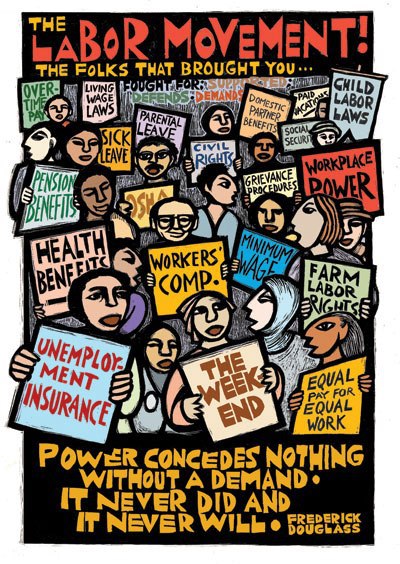
I’m thinking about Labor Day and the things we now have because of the Labor Movement, FDR, LBJ and even (gasp) Richard Nixon, Teddy Roosevelt, and Dwight D. Eisenhower. These were leaders that looked to the needs of the country and the people. Teddy Roosevelt saw our vast national treasures and preserved them for all Americans. Richard Nixon did not deny the impact of pollution on our natural resources or toxins on our hapless workers and families. Eisenhower knew that we needed vast infrastructure to grow our economy and our people. FDR and LBJ knew that if the least among us could not provide for themselves, we needed to give them a hand up and pull them into a growing, educated, and productive, middle class. These are things that the current Republican Dastardly Duo would like to remove from us and have been actively working to remove for us. Their vision for America is an America that works for only them and their select cronies. I will not abide by that.
I’m am thinning out my Facebook friends list rapidly of people I knew around 4 years ago that I thought supported my vision–not the Romney/Ryan vision–because it is also the vision of Bill and Hillary Clinton. I’m all fine with the support of third party candidates but any one that tries to send me propaganda that Romney is a feminist based on hiring a few women years ago back in Massachusetts and therefor deserves my vote can frankly sell their frigging uterus and announce themselves a neutered slave imho. You’re going to be deleted from contact with me on Twitter and Facebook and you’re not going to be very welcome here either. I will not watch everything I care about–our immigrant heritage, our appreciation for the rights of minorities, women, GLBT communities, and others and our heritage of doing right by the least among us–be destroyed by greedy Vulture Capitalists who lie. I don’t care how mad you are at Obama, if you’re encouraging this group of race-baiting, women-hating, middle class destroying, religiously intolerant Republicans then be prepared to axed from my list and be moderated into byte hell here at Sky Dancing. Again, I’m fine with any one that wants to tell me about Jill or Rosanne even though I will argue if you live in some states we should have a frank discussion about Al Gore and Ralph Nader eventually. But, I do not–under any circumstances–want to read any one that tells me that the Romney/Ryan ticket are our friends. I don’t care if you decide to skip the presidential ticket either. Although, again, I’m not sure if I could do that if I lived in a swing state. I am all happy with you criticizing POTUS because on many, many issues, the man deserves criticism.
The new platform — with its call to reshape Medicare to give fixed amounts of money to future beneficiaries so they can buy their own coverage, its tough stance on illegal immigration and its many calls to shrink the size and scope of government — shows just how far rightward the party has shifted in both tone and substance in the decades since it adopted the 1980 platform, which was considered a triumph for conservatives at the time.
Subtitled “We Believe in America,” the platform keeps its focus on the party’s traditional support for low taxes, national security and social conservatism. And it delves into a number of politically charged issues. It calls state court decisions recognizing same-sex marriage “an assault on the foundations of our society,” opposes gun legislation that would limit “the capacity of clips or magazines,” supports the “public display of the Ten Commandments,” calls on the federal government to drop its lawsuits challenging state laws adopted to combat illegal immigration, and salutes the Republican governors and lawmakers who “saved their states from fiscal disaster by reforming their laws governing public employee unions.”
Gov. Bob McDonnell of Virginia, the chairman of the party’s platform committee, described it as “a conservative vision of governance” in his speech at the convention.
There are tons of things in the GOP party platform that are so offensive to me that I cannot believe another human being would consider them anything other than anathema. It includes shit like “we support English as the nation’s official language.” It damns Democrats for “replacing civil engineering with social engineering as it pursues an exclusively urban vision of dense housing and government transit.” Think about this anti-abortion plank which recognizes no dissent and states unequivocally that “the unborn child has a fundamental individual right to life which cannot be infringed.” I have not spent my life as a feminist activist to watch every single thing I’ve worked and fought for burned to the ground.
Is that your vision for our country? If it is, frankly, I do not want to hear from you or know you. Here’s a Bush Republican–Matthew Dowd–talking about today’s Republican ticket. (h/t to RalphB and Joseph Cannon)
I cannot abide with any one who says rescuing people from their flooded-out homes is not the responsibility of our society. I cannot abide with any one that says providing basic social insurance so that the elderly can live their lives out in dignity compared to hoping and praying the money doesn’t run out and the market doesn’t abscond with their retirement savings is just the private sector at work. I do not want our children educated by a bunch of ignorant religious zealots who do not believe in the truth or science. I believe in public education. PERIOD. You can fricking pay for religious indoctrination with your own money. I will gladly pay to preserve our national treasures like Yellowstone, The French Quarter, and other historic and natural places. I do not want them farmed out to the likes of the Koch Brothers as a source of profit to be pillaged, polluted and destroyed. I do not believe you have the right to tell people who to marry and who to love and when life begins. I do not want anything that’s more efficiently put into the public trust turned over to vulture capitalists to leverage, sell, and destroy. I do not want to hear about how evil public workers are because they are willing to take lower pay for good secure pensions, jobs, and benefits. I want every one to have that. If you believe any of that and you can still support Romney and Ryan, you’re a damned fool and I don’t want to hear from you. I don’t want to read you. I don’t want to have anything to do with you. Again, we can disagree completely on the effectiveness or whatever of the Obama administration. I hear you on that. But if you support evil, you’re evil as far as I’m concerned. Go find some hell hole and hang with the other demons.
Meanwhile, I want to raise up the people who did fight for our civilization and who fought to make life better for all of us in this country.
It is essential that there should be organizations of labor. This is an era of organization. Capital organizes and therefore labor must organize. My appeal for organized labor is two-fold; to the outsider and the capitalist I make my appeal to treat the laborer fairly, to recognize the fact that he must organize that there must be such organization, that the laboring man must organize for his own protection, and that it is the duty of the rest of is to help him and not hinder him in organizing
I have always been interested in organizations for labor. I have always felt that it was important that everyone who was a worker join a labor organization, because the ideals of the organized labor movement are high ideals.
They mean that we are not selfish in our desires, that we stand for the good of the group as a whole, and that is something which we in the United States are learning every day must be the attitude of every citizen.
We must all of us come to look upon our citizenship as a trusteeship, something that we exercise in the interests of the whole people.
Only if we cooperate in the battle to make this country a real democracy where the interests of all people are considered, only when each one of us does this will genuine democracy be achieved.
We hope to make the great battle which is before us today a battle of democracy versus a dictatorship.
I could not help thinking as we sang “God Bless America” that you who have seen hardship for so many weeks in your fight to better conditions for everyone involved must sometimes think that things are not as they should be in this country. I am afraid that I agree with you.
I know many parts of the country and there are many that I would like to see changed, and I hope eventually they will be changed.
But in spite of that I hope that we all feel that the mere fact that we can meet together and talk about organization for the worker and democracy in this country is in itself something for which we ought to be extremely thankful.
There are many places where there can be no longer any participation or decision on the part of the people as to what they will or will not do. And so, in spite of everything, we can still sing “God Bless America” and really feel that we are moving forward slowly, sometimes haltingly, but always in the hope and in the interest of the people in the whole country.
“Those who would destroy or further limit the rights of organized labor — those who would cripple collective bargaining or prevent organization of the unorganized — do a disservice to the cause of democracy.
Fifty years or so ago the American Labor Movement was little more than a group of dreamers, and look at it now. From coast to coast, in factories, stores, warehouse and business establishments of all kinds, industrial democracy is at work.
Employees, represented by free and democratic trade unions of their own choosing, participate actively in determining their wages, hours and working conditions. Their living standards are the highest in the world. Their job rights are protected by collective bargaining agreements. They have fringe benefits that were unheard of less than a generation ago.
Our labor unions are not narrow, self-seeking groups. They have raised wages, shortened hours and provided supplemental benefits. Through collective bargaining and grievance procedures, they have brought justice and democracy to the shop floor. But their work goes beyond their own jobs, and even beyond our borders.”
Our unions have fought for aid to education, for better housing, for development of our national resources, and for saving the family-sized farms. They have spoken, not for narrow self-interest, but for the public interest and for the people.”
My daughters likely learned this song in utero because I love it and I sing it so much. This will always be my favorite labor song. Please share yours with us.
Did you like this post? Please share it with your friends:
The Sky Dancing banner headline uses a snippet from a work by artist Tashi Mannox called 'Rainbow Study'. The work is described as a" study of typical Tibetan rainbow clouds, that feature in Thanka painting, temple decoration and silk brocades". dakinikat was immediately drawn to the image when trying to find stylized Tibetan Clouds to represent Sky Dancing. It is probably because Tashi's practice is similar to her own. His updated take on the clouds that fill the collection of traditional thankas is quite special.
You can find his work at his website by clicking on his logo below. He is also a calligraphy artist that uses important vajrayana syllables. We encourage you to visit his on line studio.






According to the campaign’s internal research, this is the case for most of the undecided voters that the campaign is targeting – nearly three-in-four of them, senior Biden campaign officials told CNN. Those officials said one of the biggest reasons driving this is the simple fact that many voters are not paying close attention to the election, including the ins and outs of the GOP nomination process.

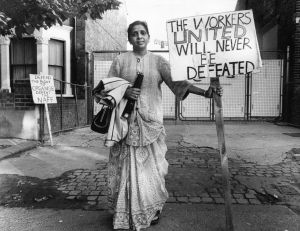

 It is important to note that
 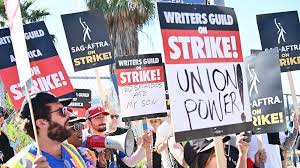 A local L.A. ABC TV station reports that
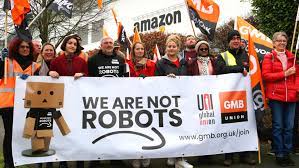

 Over 2,000 employees at the fulfillment center known as JFK8 voted to form a union, organizers

 On Monday, a federal judge

 peej
peej Carissa
 bostonboomer
 dakinikat
 ecocatwoman
 mablue2
 Mama Lopez
 peggysue22
 quixote
 skydancingguestblogger
 Mona (aka Wonk the Vote)



 Sky Dancing
Recent Comments