Yesterday was Super Tuesday, but there were few surprises. Oath-breaking insurrectionist Donald Trump will most likely face President Joe Biden in November unless something happens to either of these old guys. Trump continued his pattern of losing 30-40 percent of the Republican primary votes, and Niki Haley won a second primary–in Vermont. This morning, she withdrew from the race without endorsing Trump.
On the heels of Super Tuesday and Nikki Haley’s departure from the 2024 presidential race, Donald Trump is poised to officially be the GOP nominee for president—despite 91 felony counts, four separate indictments, and being found liable for sexual assault.
In poll after poll, most recently a New York Times/Siena College poll, Trump dominates Joe Biden head-to-head, as well as with key demographics. But those polls seem to be missing a flashing red warning sign for Trump in a general election: his disapproval with Republican voters.
Niki Haley suspends campaign
Haley’s quixotic race for the GOP nomination exposed Trump’s flawed and weakened standing within the Republican Party, but more broadly with the American electorate. A new Associated Press survey found that two in ten Iowa primary voters, a third of New Hampshire Primary voters, and a quarter of South Carolina Republican voters would refuse to vote for Trump in the fall.
voters, 78 percent would not commit to voting for the Republican nominee in November. In California, 69 percent of Haley voters said they wouldn’t vote for Trump in November, according to an NBC News exit poll. Even more striking were exit polls out of North Carolina that found 81 percent of Haley voters would not commit to voting for the eventual GOP nominee.
These numbers are remarkable if you consider that GOP primary voters are historically among the most intense of voters—meaning they will turn out and skew strongly more to the right than the average general election voter.
For hours his fans had partied in the gilded ballroom of his Mar-a-Lago estate in Palm Beach, Florida, accompanied by Abba’s Dancing Queen, Elton John’s Rocket Man, Queen’s We Are the Champions and other golden oldies. Waiters glided between them serving pastries, prawns and sausage rolls. Each time Fox News – displayed on four giant TV screens – declared another state for Trump, they whooped and cheered and chanted “Trump! Trump! Trump! USA! USA! USA!”
Then, after 10pm, into this gaudy pageant walked the Grim Reaper, raining on their parade with a 19-minute speech laden with doom and gloom about the state of the nation.
This was Trump as Eeyore.
No balloons, no confetti, no parade of family members on stage and no mention of opponent Nikki Haley. No fun.
“Some people call it an experiment – I don’t call it an experiment,” Trump said of the United States. “I just say this is a magnificent place, a magnificent country, and it’s sad to see how far it’s come and gone … When you look at the depths where it’s gone, we can’t let that happen. We’re going to straighten it out. We’re going to close our borders. We’re going to drill baby drill.”
As the unhappy warrior spoke, 10 guests headed for the exit, apparently worn down by the misery of it all….
If only he had still been running things, he lamented, Russia would not have invaded Ukraine, Israel would not have been attacked and Iran would be broke. Now inflation is “destroying the middle class, it’s destroying everything”. He added morosely that inflation was called the “country buster”.
But wait, there is one bright spot: the stock market! It’s going gangbusters. According to Trump, this has nothing to do with Biden, “the worst president in the history of our country”, but the Republican frontrunner’s own healthy poll numbers indicating his return.
Then it was back to the bad news of border security and immigration….
“It happens in third world countries,” he said. “And in some ways, we’re a third world country. We live in a third world country with no borders … We need a fair and free press. The press has not been fair nor has it been free … The press used to police our country. Now nobody has confidence in them.”
The grim list kept coming: the deadly coronavirus pandemic, the loss of American soldiers in Afghanistan. And Trump naturally could not resist circling back for another bite at the border – no matter that he was the one who ordered Republicans to torpedo bipartisan legislation that might have begun to fix the crisis.
“We have millions of people invading our country,” he asserted. “This is an invasion. This is the worst invasion probably.” For good measure, he tossed out an uncheckable fact. “The number today could be 15 million people. And they’re coming from rough places and dangerous places.”
Fueled by throat-soothing tea, guided by teleprompters and surrounded by six aides and one historian, President Biden spent hours at Camp David last weekend honing a State of the Union speech that will be watched by one of his biggest audiences before the November election.
So the pressure is on.
Mr. Biden, it should be noted, had with him at Camp David a copy of “Possible: How We Survive (and Thrive) in an Age of Conflict,” a book by William Ury, an international negotiation expert.
“You’ll hear me on Thursday,” Mr. Biden said when reporters asked on Tuesday about his preparations.
White House officials have not said what topics the president will address, or whether he will mention Donald J. Trump, his likely 2024 challenger, by name. But Mr. Biden is almost certain to talk about the war in Ukraine, the war between Israel and Hamas, China, abortion, immigration, trade and other topics in a speech he and his aides have been working on since December.
The final speech, which aides say will be edited up until Mr. Biden gives it, will be delivered by a president under pressure to reassure voters that he is not too old for the job and, more than at any point in his tenure, guard against political outbursts that have become commonplace during such speeches. Mr. Biden’s aides say he has prepared for Republicans to heckle him, as Representative Marjorie Taylor Greene did last year.
Getting the speech into shape played out, in true Biden fashion, inside a circle of aides who have been around the president for years and treat such proceedings like a state secret.
The Camp David weekend group included Bruce Reed, the White House deputy chief of staff, who helped guide policy-related additions to the speech; Mike Donilon, the aide who has the best understanding of Mr. Biden’s voice; Anita Dunn, who oversees communications strategy for the White House; and Jeffrey D. Zients, Mr. Biden’s chief of staff. Rounding out the group was Steve Ricchetti, counselor to the president and a longtime friend, and Vinay Reddy, Mr. Biden’s speechwriter.
The historian Jon Meacham, who is called upon to add historical heft, was also there.
In other Super Tuesday news, Adam Schiff beat out two other Democrats to win the California primary for the U.S. Senate, along with Republican and former pro-baseball player Steve Garvey.
Rep. Adam Schiff (D-CA), using ruthless tactics belied by his cherubic face and upstanding public persona, has won the California Senate primary, according to the Associated Press.
Steve Garvey, a former professional baseball player, is projected to come in second almost entirely thanks to Schiff’s maneuvering. The millions Schiff spent on ads boosting Garvey’s profile with Republican voters helped edge out Reps. Katie Porter (D-CA) and Barbara Lee (D-CA), both of whom would have posed an actual threat to Schiff in the general election (California’s jungle primary lets two candidates of the same party go through to the general).
Porter — Sen. Elizabeth Warren’s (D-MA) protegé, who gained a national profile by taking CEOs to task at committee hearings, armed with her omnipresent whiteboard — and Lee — famous for being the only member of Congress to vote against authorizing military force after 9/11 — are both considered more progressive than Schiff. But a lack of left-wing consolidation around either woman, as well as the lack of involvement by key groups like EMILY’s List, left the progressive flank of the party split. Schiff got the moderate lane to himself.
Schiff has also been incredibly successful in riding his high-profile role in Donald Trump’s impeachment trial to national fame, becoming omnipresent on cable news. It didn’t hurt that he won the endorsement of Rep. Nancy Pelosi (D-CA), a famed fundraiser.
Schiff will virtually certainly win the seat of the late Sen. Dianne Feinstein (D-CA) in the fall, taking over for Sen. Laphonza Butler (D-CA) who was, ironically, appointed by California Gov. Gavin Newsom (D) so a Black woman would again represent the state. The state will now be without a woman in either of its two Senate seats for the first time in over 30 years.
While Schiff lacks the progressive bona fides of Porter and Lee, he does meet what will be a key Democratic litmus test for candidates for the upper chamber from here on out: He supports ending the filibuster, along with more expansive proposals to nix the Electoral College and expand the Supreme Court.
In Arizona, Kyrsten Sinema announced, in a whiny, narcissistic speech, that she won’t be running for reelection to the U.S. Senate. That’s good news for Democrats and specifically for Ruben Gallego. Again from Kate Riga at Talking Points Memo: Kyrsten Sinema Drove Herself Out Of Politics.
In a video replete with her own accomplishments — “I believe in my approach. But, it’s not what America wants right now” — she on Tuesday delivered her constituents a final “it’s not me, it’s you” farewell.
The senselessness of her trajectory is thrown into even starker relief next to that of Sen. Joe Manchin (D-WV), inextricably linked to her throughout Joe Biden’s first two years in the White House due to the pair’s devotion to the filibuster and eagerness to buck their party. Manchin comes from one of the Trumpiest states in the country. He’s the last generation of a dying breed, as red state Democrats and blue state Republicans drop or are forced out of their parties.
Sinema’s state, in contrast, has only trended bluer. While certainly still battleground territory, it’s a more comfortable get for Democrats than at any other time in recent history. Had she acted like a normal Democrat — look no further than fellow Sen. Mark Kelly (D-AZ) — she’d be preparing for her reelection right now, relieved to have the kooky Kari Lake to run against, and swimming in a helpful current of money funneled by the national party organs.
But she habitually took loud, splashy stands on issues that not only set her apart from her party, but did so on issues central to its very ideology (she’s now an independent, though never stopped caucusing with the Democrats). This was not taking some swings to look tough on the border, or to distance herself from super lefty proposals. It was curtseying while voting down an increased federal minimum wage, threatening the Inflation Reduction Act over preserving a tax loophole for hedge fund managers and law firm partners, limiting the lift of the corporate tax rate….
Ruben Gallego
She did all of this with a rare disrespect for norms around the Hill, one of the very few senators who refused to do hallway interviews, even when she was a deciding player on major legislation, leaving the public to learn her views through other sources or rare sit-downs she’d grant to friendly press. It helped keep her a cypher to political observers: a lawmaker who’d come up through very liberal politics, who’d been open and admirably proud about her bisexuality, suddenly tacking to the corporate right and infuriating those who’d supported her rise and who she’d need to run again in the process. Rep. Ruben Gallego (D-AZ), essentially running in her stead, was drafted by Democrats wholly alienated by her decisions.
This means that Ruben Gallego will face insane conspiracy theorist Kari Lake in November. Here’s hoping he wins.
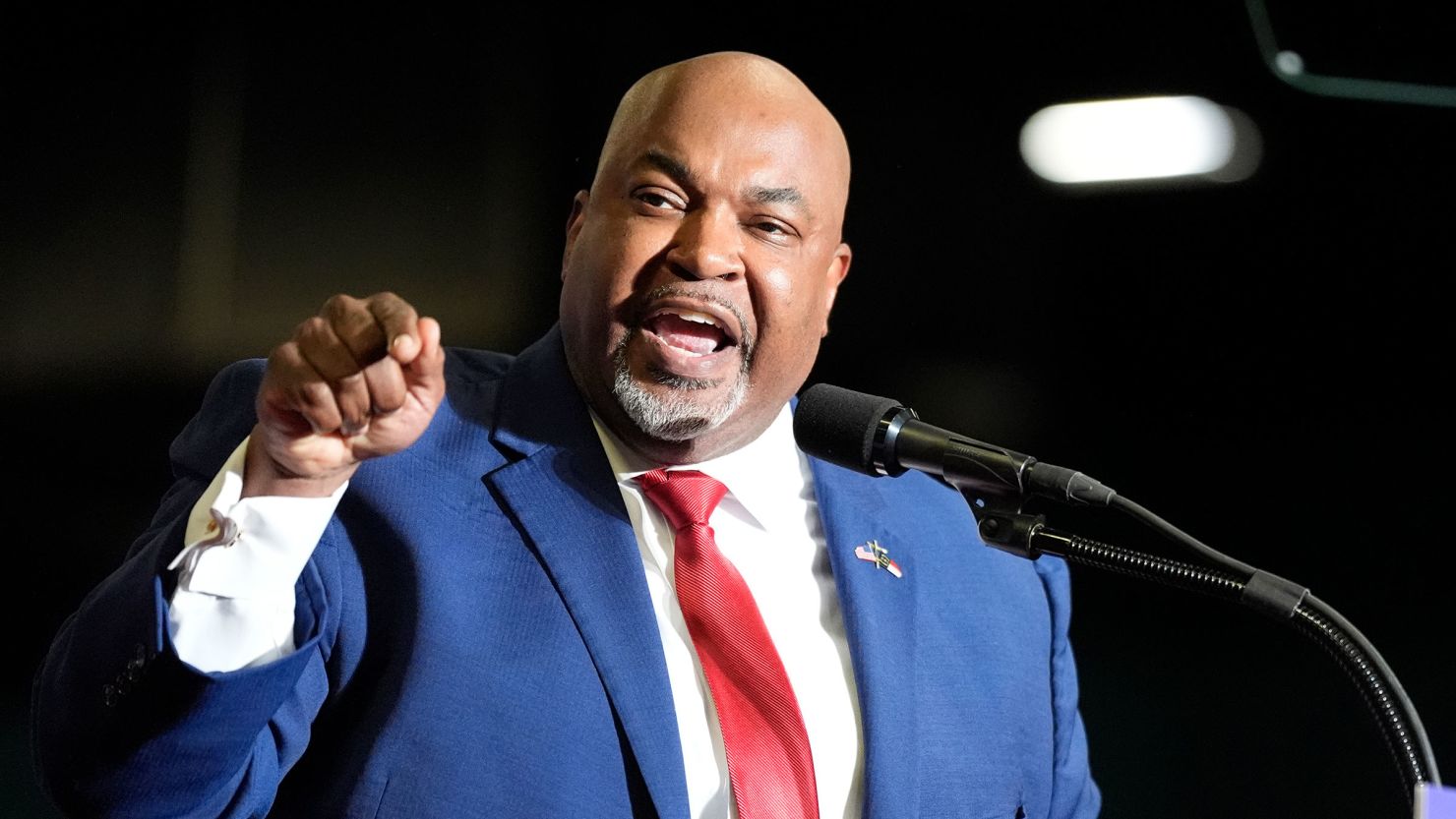
Mark Robinson, who easily won North Carolina’s Republican gubernatorial primary on Tuesday, has the misfortune of having spent years on Facebook without thinking about his future political career. The current lieutenant governor of the state—and the first Black man to hold the position—was a furniture manufacturer who was launched into politics in 2018 when he gave a viral pro-gun speech at a city council meeting in the wake of the Parkland school shooting. Two years later he was elected to his current office. He will face Democrat Josh Stein, the state’s attorney general, in the general election in November. The race is expected to be extremely close.
Mark Robinson
He has not, in the time since his profile rose, worked to purge his social media of controversial content. Nor has he played things safe when speaking at churches and other public events in recorded sermons and speeches. So it doesn’t take a lot of probing to find how Robinson really feels about certain hot-button issues.
Robinson, who is also into conspiracy theories, has voiced enough offensive comments for a full accounting to be too unwieldy. But even a sampling of his views like the one below—not a comprehensive list—showcases just what kind of candidate North Carolina Republicans just selected to be their standard-bearer this November.
Abortion “I don’t care if you’re 24 hours pregnant. I don’t care if you’re 24 weeks pregnant. I don’t care. If you kill that young’un, it is murder.” (Robinson has said he paid for an abortion in 1989 and maintained that that decision was “wrong.”)
Climate Science “… pseudoscience, junk science that has not proven a single solitary thing.”
The Media “See through their lies and look at the big picture of their TRUE intent, which is to push US towards their new world order.”
Jewish People He voiced agreement with a pastor who claimed the “Four Horsemen of the Apocalypse” are the CIA, China, Islam, and the Rothschild family of “international bankers that rule every single … central bank.”
Also, regarding Black Panther: “It is absolutely AMAZING to me that people… can get so excited about a fictional ‘hero’ created by an agnostic Jew and put to film by satanic marxist. How can this trash, that was only created to pull the shekels out of your Schvartze pockets, invoke any pride?”
And that’s just the tip of the iceberg. Read more examples at the Slate link.
I’m going to end there. What do you think? What stories are you following today?
Did you like this post? Please share it with your friends:
The folks in DC are still arguing about whether the U.S. government should pay its bills or not. Republicans think it’s much more important to make poor, disabled, and elderly Americans, as well as federal employees–including the military–suffer than to simply write those checks and then sit down and work on the next budget. If Congress doesn’t get its act together, millions of people in those categories will be unable to pay their rent and bills and buy food. I suppose this will go down to the wire and then be worked out, but I think the whole mess is getting dangerous.
The United States has a few more days than expected before it runs out of money, Treasury Secretary Janet Yellen said in a letter Friday afternoon.
The new deadline to act or risk breaching the debt ceiling is June 5, Yellen said, setting a hard deadline for the first time. She had previously been less specific, saying the breach could occur “potentially as early as June 1.”
The Treasury Department hit the statutory borrowing limit in January and has since been using “extraordinary measures” to pay the country’s bills.
“Based on the most recent available data, we now estimate that Treasury will have insufficient resources to satisfy the government’s obligations if Congress has not raised or suspended the debt limit by June 5,” Yellen wrote to congressional leaders.
This is just about paying the bills that we’ve already run up, but Republicans want hold the funds hostage so they can punish people who need help from the government.
The two parties have been sorting through their differences on spending levels. But a major hangup is the Republican demand to impose tougher work requirements for Americans to receive federal benefits like SNAP, the Supplemental Nutrition Assistance Program, two sources familiar with the talks said.
Rep. Garret Graves of Louisiana, who is leading negotiations for House Republicans, said it’s “totally appropriate” for an older group of able-bodied Americans without dependents to be subject to work requirements in order to get federal aid….
Democrats say work requirements already exist for federal programs and argue that stricter policies would create more red tape and throw eligible Americans who don’t complete the paperwork correctly off the rolls, and that work requirements have little impact on unemployment.
Painting by Quint Bucholz
Republicans know they’d never win this argument without holding the full faith and credit of our country hostage, so that is what they are doing. If only Democrats had listened to Yellen when they still held a majority in both houses for a brief time after the midterms, this wouldn’t be happening now.
In the days after November’s midterm elections, Treasury Secretary Janet L. Yellen was feeling upbeat about the fact that Democrats had performed better than expected and maintained control of the Senate.
But as she traveled to the Group of 20 leaders summit in Indonesia that month, she said Republicans taking control of the House posed a new threat to the U.S. economy.
“I always worry about the debt ceiling,” Ms. Yellen told The New York Times in an interview on her flight from New Delhi to Bali, Indonesia, in which she urged Democrats to use their remaining time in control of Washington to lift the debt limit beyond the 2024 elections. “Any way that Congress can find to get it done, I’m all for.”
Democrats did not heed Ms. Yellen’s advice. Instead, the United States has spent most of this year inching toward the brink of default as Republicans refused to raise or suspend the nation’s $31.4 trillion borrowing limit without capping spending and rolling back parts of President Biden’s agenda.
So what will Yellen do in the worst case scenario?
Ms. Yellen has held her contingency plans close to the vest but signaled this week that she had been thinking about how to prepare for the worst. Speaking at a WSJ CEO Council event, the Treasury secretary laid out the difficult decisions she would face if the Treasury was forced to choose which bills to prioritize.
Most market watchers expect that the Treasury Department would opt to make interest and principal payments to bondholders before paying other bills, yet Ms. Yellen would say only that she would face “very tough choices.”
White House officials have refused to say if any contingency planning is underway. Early this year, Biden administration officials said they were not planning for how to prioritize payments. As the U.S. edges closer to default, the Treasury Department declined to say whether that has changed.
Yet former Treasury and Federal Reserve officials said it was nearly certain that emergency plans were being devised.
Sen. Kyrsten Sinema (I-Ariz.) has inserted herself into the debt ceiling negotiations, working with both sides to try to bridge differences on permitting reform, according to people familiar with the matter.
Why it matters: Her late entrance is a sign that negotiators are willing to explore new avenues to resolve thorny issues before June 5, the new deadline from Treasury Secretary Janet Yellen for when the U.S. government will run out of money.
— Permitting reform — a catch-all category that includes both Republican and Democratic plans to improve energy production and transmission — is emerging as a tough-to-resolve disagreement between the White House and congressional negotiators.
— Republicans want to change the National Environmental Policy Act (NEPA) with the goal of cutting red tape for oil and gas companies when they develop new projects. Democrats want to make it easier for solar and wind farms to access transmission lines.
Negotiators also are at an impasse on a demand from House Speaker Kevin McCarthy (R-Calif.) to add new work requirements to welfare benefits, according to Biden administration officials.
— But the two sides are making progress on overall spending levels, with the goal of capping spending for two years at lower levels. In exchange, the debt ceiling would be raised past the 2024 elections.
After a debt limit negotiating session at the White House this week, House Speaker Kevin McCarthy returned to the Capitol and offered reporters an update.
“Let me be very clear,” he said. “From the first day I sat with the president, there’s two criterias I told him,” McCarthy said, raising two fingers. “We’re not going to raise taxes because we bring in more money than we ever have. And we’re not going to pass a clean debt ceiling. And we’ve got to spend less than we spent this year.”
Let me be very clear, Mr. Speaker. Those are three, er, “criterias.”
Filippo Corelli, Cat in a Doorway, early 20th century
This might be the most worrying aspect of the default standoff: The full faith and credit of the United States hangs in the balance, and the man sitting across the negotiating table from the president seems to be genuinely off-kilter.
Whipsawed by public pressure from the far-right House Freedom Caucus and from former president Donald Trump, McCarthy has at one moment praised the “honesty” and “professionalism” of White House negotiators and the next moment attacked the other side as “socialist.” He gives daily (sometimes hourly) updates packed with fake statistics, nonsense anecdotes and malapropisms. His negotiators have walked out of talks only to resume them hours later. This week, at a meeting of the House Republican Conference during the height of negotiations, he decided it was the right moment to auction off a stick of his used lip balm as a fundraiser for House Republicans’ political campaigns. (Rep. Marjorie Taylor “Jewish Space Lasers” Greene won the bidding at $100,000.)
The speaker’s erraticism has an obvious origin. As usual, he isn’t leading. He’s being buffeted by crosscurrents. If he bends too much in talks, he’ll lose his GOP hardliners and could therefore lose his job. If he pleases the hardliners, he keeps his job but throws the country and perhaps the world into economic calamity. His job security or the world economy? McCarthy just can’t decide.
Prosecutors in former President Donald Trump’s Manhattan criminal case have released to his attorneys a recording of Trump and a witness, whose identity was not disclosed, according to a document the office made public Friday.
The document, called an automatic discovery form, describes the nature of the charges against a defendant and a broad overview of the evidence that prosecutors will present at Trump’s preliminary hearing or at trial. Trump’s attorneys and media organizations, including CBS News, had repeatedly requested that such a form be made public in the weeks since Trump’s arrest on April 4….
The document lists the dates of 34 instances between Feb. 14, 2017 and Dec. 5, 2017 when he allegedly falsified records.
In a section devoted to electronic evidence that will be turned over, a prosecutor for Manhattan District Attorney Alvin Bragg’s office indicated they have disclosed to the defense a “recording of a conversation between defendant and a witness.”
The section also indicates prosecutors intend to disclose recordings of calls between witnesses and others.
Dressed in white coats, Drs. Tracey Wilkinson and Caroline Rouse were among the first to arrive at Caitlin Bernard’s Thursday hearing in front of the Indiana medical licensing board. When the hearing ended nearly 15 hours later, they were among the last to leave.
Six months after Indiana’s Republican attorney general filed a complaint against the Indianapolis obstetrician-gynecologist, the board voted to reprimand and fine Bernard on Thursday, finding that she violated privacy laws in giving a reporter information about a 10-year-old rape victim.
But representatives of the medical community nationwide – from individual doctors to the American Medical Association to an author of HIPAA – don’t think Bernard did anything wrong. Further, they say, the decision will have a chilling effect on those involved with patient care.
“This sends a message to all doctors everywhere that political persecution can be happening to you next for providing health care to your patients,” Wilkinson said.
“It’s terrible,” Rouse said. They’d just spent hours “listening to our friend and our colleague be put on trial for taking care of her patient and providing evidence-based health care, and that is incredibly demoralizing as a physician.”
Guess what? Republicans don’t care.
Ron DeSantis has been announcing some of the things he would do if he were elected president in 2024.
Florida Gov. Ron DeSantis (R) said Thursday that if elected president, he will consider pardoning all the Jan. 6 defendants — including former President Trump — on his first day in office.
“On day one, I will have folks that will get together and look at all these cases, who people are victims of weaponization or political targeting, and we will be aggressive in issuing pardons,” DeSantis said on “The Clay Travis & Buck Sexton Show” podcast when asked about whether he will consider pardoning Jan. 6 defendants, including Trump, who is currently facing a federal investigation over his role on Jan. 6.
Nineteenth Century cat in doorway, Boston School, artist unknown
“I would say any example of disfavored treatment based on politics, or weaponization would be included in that review, no matter how small or how big,” he added.
DeSantis also accused the Justice Department and the FBI of weaponizing its authority by pursuing ongoing investigations into the Jan. 6 attack on the Capitol. The Justice Department said earlier this month that 1,033 arrests have been made in connection to the Capitol attacks and about 485 people have been sentenced due to criminal activity conducted that day.
DeSantis also claimed that the FBI is targeting anti-abortion groups, as well as parents who want to attend school board meetings. He said that if elected, his administration would determine on a “case-by-case” basis if the government was weaponized against certain groups.
“We’re going to find examples where the government’s been weaponized against disfavored groups, and we will apply relief as appropriate, but it will be done on a case-by-case basis,” he said.
Florida Gov. Ron DeSantis (R) said Friday that if elected president, he would call on Congress to repeal the criminal justice reform bill signed into law by then-President Trump, his latest attack on Trump from the right.
DeSantis, appearing on “The Ben Shapiro Show,” criticized the First Step Act, a bipartisan bill passed in 2018 that reduced mandatory minimum sentences, expanded credits for well-behaved prisoners looking for shorter sentences and aimed to reduce recidivism.
The Florida governor, who officially entered the 2024 White House race on Wednesday, called the legislation “basically a jailbreak bill.”
“So one of the things I would want to do as president is go to Congress and seek the repeal of the First Step Act,” he said. “If you are in jail, you should serve your time. And the idea that they’re releasing people who have not been rehabilitated early, so that they can prey on people in our society is a huge, huge mistake.”
DeSantis voted for the initial House version of the bill while serving as a congressman in 2018, something Trump’s team has highlighted.
Top aides to Gov. Ron DeSantis were involved in rounding up endorsements for his presidential campaign from members of the Florida Legislature during a time when lawmaker’s bills and budget priorities were at the mercy of the governor’s office, according to three GOP sources with knowledge of the conversations.
A Republican lawmaker says DeSantis’ top budget official called earlier this month to discuss the lawmaker endorsing DeSantis’ presidential campaign.
The lawmaker and a GOP consultant who was told about the endorsement conversation with DeSantis’ budget chief Chris Spencer immediately after it happened said the call was inappropriate and raised ethical questions.
Blinking in the Sun, by Ralph Hedley, 1881
Having state employees in the governor’s office, instead of staff on the governor’s political team, asking for endorsements raises concerns about whether the governor’s staff was improperly leveraging state resources to help his campaign.
That includes using taxpayer-funded employees for political purposes, which is allowed if it’s not during work hours but still inappropriate in this circumstance in the mind of the lawmaker contacted by Spencer. It also relates to what some saw as an implied threat that lawmakers’ bills and state budget items could be vetoed if they didn’t back DeSantis.
The lawmaker who spoke to Spencer said budget priorities didn’t come up during the call, but the fact that DeSantis’ budget director was calling about an endorsement implicitly tied the budget items to the political ask….
Another top DeSantis aide — legislative affairs director Stephanie Kopelousos — did discuss budget items during calls with multiple lawmakers that included Kopelousos asking them to endorse DeSantis, according to the GOP lawmaker who spoke with Spencer.
That lawmaker later spoke with at least five legislators who were asked by Kopelousos to endorse DeSantis. Another prominent GOP leader in Florida said he spoke to a lawmaker who relayed that he repeatedly was contacted by Kopelousos about endorsing DeSantis.
This guy should never get anywhere near the presidency.
That’s it for me today. What stories have captured your interest lately?
Did you like this post? Please share it with your friends:
“Fox News Media and Tucker Carlson have agreed to part ways,” the network said in a statement. “We thank him for his service to the network as a host and prior to that as a contributor.”
The obviously sudden departure — Carlson gave no indication he was leaving in his last appearance Friday, and the network was still running promos for his show this morning — came less than a week after Fox settled a defamation lawsuit from Dominion Voting Systems, which had sued the network for false claims about the 2020 election. Carlson was among several on-air personalities expected to testify.
Many of Carlson’s private messages were released in motions filed by Dominion, revealing that the host was skeptical of many of the election-fraud claims made on-air by Trump-affiliated attorneys Sidney Powell and Rudy Giuliani.
But it was Carlson’s comments about Fox management, as revealed in the Dominion case, that played a role in his departure from Fox, a person familiar with the company’s thinking told The Post.
Notably, Carlson was not allowed back on air to say goodbye to the mammoth audience he had amassed in his years as a primetime host.
Carlson found himself embroiled in serious controversy throughout his time at Fox News. In recent weeks, a lawsuit from a former booker at the network, Abby Grossberg, accused Carlson’s staff of making anti-Semitic jokes, liberal use of the word “cunt” in the office, and casual misogyny.
Sources at Fox News told Mediaite the news hit like a bomb inside the network, shocking even staffers close to the ex-prime time host.
CNN This Morning host Don Lemon announced on Monday that he has been terminated at the network.
Lemon announced his firing on Twitter, blasting the network’s management and saying “it is clear that there are some larger issues at play.”
“I was informed this morning by my agent that I have been terminated by CNN. I am stunned. After 17 years at CNN I would have thought that someone in management would have had the decency to tell me directly. At no time was I ever given any indication that I would not be able to continue to do the work I have loved at the network. It is clear that there are some larger issues at play. With that said, I want to thank my colleagues and the many teams I have worked with for an incredible run. They are the most talented journalists in the business, and I wish them all the best.”
Lemon’s firing was confirmed by CNN Chairman Chris Licht in a company memo, which was also shared in part by the network’s PR team …
Well, this is certainly an interesting double-header of sorts. But, another drama continues on Twitter. Everyone has the Blue Check Blues there.
I think Mr. Musk should give my blue check to charity. I recommend the Prytula Foundation, which provides lifesaving services in Ukraine. It's only $8, so perhaps Mr. Musk could add a bit more.
It’s not that easy to get a hold of LeBron James’ people. Few celebrities are accessible, but James occupies a rarefied stratum of fame in which even getting his representatives to acknowledge you on some matter or another isn’t a given for most reporters. There are thousands of journalists and millions of other people who would like to ask LeBron something at any given time. Many reporters with serious questions might not even be able to obtain a no comment.
So consider what it must have taken for a reporter from the Verge, a technology website that has essentially nothing to do with the NBA, to quickly get a concise, newsmaking response from James’ people on Thursday. LeBron had previously tweeted that he would not pay for Twitter Blue, the subscription product that Elon Musk is now hawking in order to make a tiny dent in Twitter’s financial woes while alienating large numbers of the platform’s users. But when “legacy” verification check marks started to disappear on April 20, as the emoji purportedly became exclusive to paying subscribers, LeBron’s check did not disappear. He or his retinue apparently wanted to be rapidly clear with a Verge reporter about this fact:
NEW: Have confirmed that LeBron, who has 52 million followers and has said he won’t pay for verification, was emailed by a Twitter employee with the offer to have his sub comped “on behalf of Elon Musk.”
James did not accept but his account is showing that he paid anyway.
LeBron’s media adviser then went on the record that James did not pay, and Musk confirmed thereafter that he was paying for some Blue subscriptions himself, upsetting some of his new fans, who are incensed that their populist champion has decided celebrities should get for free a product for which the plebs pay $8 a month. But the celebs look even less happy. On Saturday night, many accounts with more than 1 million followers—maybe all of them—were slapped with Twitter Blue subscription badges. Dead people got them too, with Musk or someone on his team deciding that Anthony Bourdain, Kobe Bryant, and Jamal Khashoggi should be branded as having paid for Twitter. Living famous people worked furiously to let people know that they had not paid for checks. Chrissy Teigen figured out that by changing her Twitter handle, she could make it go away. Lil Nas X swears “on [his] soul” that he did not buy Twitter Blue. Jason Alexander is exasperated. Sorta-famous media and political figures offered similar clarifications. CNN’s Daniel Dale noted the restored check mark on his account (which has since been unrestored) and said: “Obviously did not do this.”
With the U.S. Supreme Court weighing in on access to mifepristone, a prescription drug used to perform medication abortions, nearly two in three Americans say they oppose laws which ban access to medication abortions, and many believe federal judges should not have the right to overturn the U.S. Food and Drug Administration’s approval of a prescription drug. The Supreme Court’s decision comes at a time when Americans’ confidence in the Court is at a low, and nearly seven in ten residents nationally say justices appointed to the Supreme Court should have limits placed on their tenure on the Bench. These findings are part of a larger survey on the issue of abortion which will be released on Wednesday, April 26, 2023.
A new poll out of Arizona by a well-trusted, independent national pollster, Public Policy Polling, shows that Sen. Kyrsten Sinema (I) stands to lose re-election badly in virtually any potential matchup this November and is deeply unpopular among voters.
The survey results, first obtained by Jezebel via an internal Ruben Gallego campaign memo, show that just 27 percent of voters in the state view Sinema favorably and want her to run again, compared to 50 percent of Arizonans who view her unfavorably and 54 percent who say she shouldn’t run again. Rep. Gallego (D-Ariz.), her likely Democratic challenger, has a net positive favorability, with 39 percent of voters approving of him and 28 percent disapproving.
I have to say it’s a pretty good news day for a Monday these days.
What’s on your reading and blogging list today?
Did you like this post? Please share it with your friends:
Just when you thought the Republicans had cornered the market on crazy, weirdly-dressed women in Congress, Senator Kyrsten Sinema says hold my beer. The Arizona Republic features an op-ed written by the Senator this morning. “Sen. Kyrsten Sinema: Why I’m registering as an independent. Opinion: The Arizona senator explains why she has left the Democratic Party.” Every party needs a pooper, and I’m sure Chuck Schumer’s now singing that song about her.
In catering to the fringes, neither party has demonstrated much tolerance for diversity of thought. Bipartisan compromise is seen as a rarely acceptable last resort, rather than the best way to achieve lasting progress. Payback against the opposition party has replaced thoughtful legislating.
Americans are told that we have only two choices – Democrat or Republican – and that we must subscribe wholesale to policy views the parties hold, views that have been pulled further and further toward the extremes.
Most Arizonans believe this is a false choice, and when I ran for the U.S. House and the Senate, I promised Arizonans something different. I pledged to be independent and work with anyone to achieve lasting results. I committed I would not demonize people I disagreed with, engage in name-calling, or get distracted by political drama.
Helene Schjerfbeck’s Self-Portrait, 1912
She’s obviously missed the part where Mitch McConnell caters obsessively to his base and donors and isn’t interested in anything else. The White House announced that their relationship with the Senator won’t change. It’s hard to miss the impact this will have on the next two years. At least Joe Manchin has stayed with the party to give them power while firmly rooted in his donors and self-interest. Given the recent results in the Arizona midterms, I wonder what she thought this move would do for her chances of reelection and finding campaign staff to work for her. I can’t imagine she’s not going to lose staff over this decision.
Three days ago, we wrote about a few reasons the Georgia Senate runoff — and whether Democrats’ majority would grow to 51-49 — mattered, practically speaking. One of those reasons? The possibility of a party switch.
That has already come to pass: Sen. Kyrsten Sinema (D-Ariz.) announced in a series of interviews, a video and an op-ed Friday that she will re-register as an independent. She becomes the first senator to leave her party since Sen. Arlen Specter (D-Pa.) in 2009.
Like Specter, Sinema looked set to face an arduous primary if she sought reelection with her former party, given the maneuvering of Rep. Ruben Gallego (D-Ariz.) to run against her. So the move makes some sense for her personally.
That sounds like she would effectively caucus with Democrats — that is, align with them for purposes of organizing the Senate — but for some reason is avoiding saying so directly. And she has said she’s not sure whether her desk will remain on the Democratic side of the Senate. Asked by CNN’s Jake Tapper whether her move would change the balance of power in the Senate, she responded, “that’s kind of a D.C. thing to worry about.”
This question doesn’t immediately matter when it comes to whether Democrats will retain the Senate majority, but it does matter. They will have at least a 50-49 edge as long as Sinema doesn’t caucus with the GOP. But if her plan is to leave the Democratic caucus, that would make Sen. Raphael G. Warnock’s (D-Ga.) win in Tuesday’s runoff potentially hugely significant.
Of course, we’ll never know what Sinema might have done if Warnock hadn’t won. At that point a party switch without caucusing with Democrats would have meant shifting the Senate majority to Republicans. (That has happened before; Vermont Sen. Jim Jeffords left the GOP to become an independent who caucused with Democrats 21 years ago, flipping the Senate majority.) Her calculus might have shifted in that scenario: However little Democratic support she’d get in a potential 2024 reelection bid, imagine her trying to appeal to any of the Democrats who elected her in 2018 after having handed the Senate majority to the GOP.
The first thing to note is that it remains unclear whether Sinema will continue to caucus with Democrats, as two other independents in the Senate do. When asked about this, Sinema spokesman Pablo Sierra-Carmona said merely that “she intends to maintain her committee assignments from the Democratic majority. She has never and will not attend caucus messaging or organizational meetings.”
Head of a Woman, Albrecht Dürer, circa 1520
So, did she just decide to be more annoying than Kari Lake and Blake Masters? Well, it did steal the Arizona headlines from Brittney Griner. Maybe she just needs to make it all about her today. Moving on to Brittney, who is now home with her family. We’re glad you’re home!
Brittney Griner returned to the United States early Friday, nearly 10 months after the basketball star’s detention in Russia made her the most high-profile American jailed abroad and set off a political firestorm.
Griner’s status as an openly gay Black woman, her prominence in women’s basketball and her imprisonment in a country where authorities have been hostile to the LGBTQ community heightened concerns for her and brought tremendous attention to the case. Russia’s invasion of Ukraine after her arrest complicated matters further.
The deal that saw Griner exchanged for notorious arms dealer Viktor Bout achieved a top goal for President Joe Biden. But the U.S. failed to win freedom for another American, Paul Whelan, who has been jailed for nearly four years.
Asked if more such swaps could happen, Russian President Vladimir Putin said Friday that “everything is possible,” noting that “compromises have been found” to clear the way for Thursday’s exchange.\
Biden’s authorization to release Bout, the Russian felon once nicknamed “the Merchant of Death,” underscored the heightened urgency that his administration faced to get Griner home, particularly after the recent resolution of her criminal case on drug charges and her subsequent transfer to a penal colony.
Representatives from Puget Sound Energy, the Cowlitz County Public Utility District and Bonneville Power Administration confirmed the attacks took place in November, although the FBI declined to confirm the investigations and it’s not clear whether any of the damage resulted in service disruptions, reported the Seattle Times.
“BPA is actively cooperating with the FBI on this incident and has encouraged other utilities throughout the region to increase their vigilance and report any suspicious or similar activity to law enforcement,” said Douglas Johnson, a spokesman for BPA.
Johnson declined to give details about the equipment that was damaged, but he said a “deliberate physical attack” at a Clackamas, Oregon, substation damaged a fence and equipment over the Thanksgiving holiday.
A spokesman said two Puget Sound Energy substations were damaged last month but declined to provide details, and a spokeswoman said two Cowlitz County Public Utility District substations in Woodland, Washington, were damaged by vandals in mid-November but have since been repaired.
Three Young Surrealist Women Holding in Their Arms the Skins of an Orchestra, Salvador Dalí, 1936
As a right-wing faction threatens to tank his speakership ambitions, House GOP leader Kevin McCarthy delivered a promise: “I’ll never leave,” making clear he has no plans to drop out of the race even if the fight goes to many ballots on the floor.
“I’ll get 218,” McCarthy told CNN, referring to the votes he’d need to become House speaker.
But Rep. Andy Biggs of Arizona, a conservative hardliner who is challenging McCarthy to be the most powerful member of Congress, doubled down on his commitment to stop the California Republican’s ascension.
“I’m not bluffing,” Biggs told CNN on Thursday when asked if he would drop out.
With the increasing likelihood that the speaker’s race could go to multiple ballots – something that hasn’t happened since 1923 – McCarthy’s allies and foes alike are starting to quietly game out the next steps if he can’t get the necessary 218 votes on the first round and they move into uncharted territory.
McCarthy’s supporters are vowing to keep voting for him on multiple ballots, and GOP sources said there are early discussions about a floor strategy for that potential scenario, including whether to recess the House or let the votes keep rolling – no matter how long it takes.
To prevent that from happening, McCarthy and his team have been engaged in serious talks with a group of conservatives, including over potentially giving them influential committee assignments and more power to drive the legislative process. GOP sources said those negotiations are still early in the process and could ultimately end up giving the group some aspect of what the hardliners desperately want: additional power to seek a sitting speaker’s ouster with a vote on the floor.
Asked if he would drop out of the race if he doesn’t get 218 votes on the first ballot, Biggs refused to say.
But in the case of a doomsday scenario – where neither McCarthy nor Biggs can get 218 votes on January 3 and neither drops out – some pro-McCarthy Republicans are signaling support for a different approach. Some said they would be willing to work with Democrats to find a moderate Republican who can get the 218 votes to clinch the gavel – a long-shot idea that underscores the uncertainty looming over the speaker’s race.
Prosecutors have urged a federal judge to hold Donald Trump’s office in contempt of court for failing to fully comply with a May subpoena to return all classified documents in his possession, according to people familiar with the matter — a sign of how contentious the private talks have become over whether the former president still holds any secret papers.
In recent days, Justice Department lawyers have asked U.S. District Judge Beryl A. Howell to hold Trump’s office in contempt, according to the people, who spoke on the condition of anonymity to describe sealed court proceedings. The hearing is scheduled for Friday, according to two people with knowledge of the matter.
The request came after months of mounting frustration from the Justice Department with Trump’s team — frustration that spiked in June after the former president’s lawyers provided assurances that a diligent search had been conducted for classified documents at his Mar-a-Lago Club and residence. But the FBI amassed evidence suggesting — and later confirmed through a court-authorized search — that many more remained.
One of the key areas of disagreement centers on the Trump legal team’s repeated refusal to designate a custodian of records to sign a document attesting that all classified materials have been returned to the federal government, according to two of these people. The Justice Department has repeatedly sought an unequivocal sworn written assurance from Trump’s team that all such documents have been returned, and Trump’s team has been unwilling to designate a custodian of records to sign such a statement while also giving assurances that they have handed documents back.
The official campaign for the 2024 Republican Presidential nomination is barely three weeks old, but there is one clear takeaway so far: Donald Trump is running against himself—and losing. From his low-energy announcement speech at Mar-a-Lago to his dinner with the Hitler-praising Kanye West and the white supremacist Nick Fuentes, Trump has courted more controversy than votes since launching his bid in November. He has held no campaign rallies and hired no campaign manager. He has hosted a QAnon conspiracy theorist and helped raise money for the indicted insurrectionists of January 6th. More classified items have been found in his possession, and his Trump Organization was convicted in New York of a major tax-fraud scheme. He has scared away neither prospective opponents nor prosecutors, and, while openly courting extremists, he seems to be running on a campaign platform that is somehow even more nakedly driven by self-interest than his previous two bids. Just last week, he suggested jettisoning the Constitution so he could be reinstated to the office he was thrown out of by the voters in 2020. “A Massive Fraud of this type and magnitude allows for the termination of all rules, regulations, and articles, even those found in the Constitution,” he wrote in a post on his social network, Truth Social.
The fact that he actually put his objections to the Constitution in writing is a classically Trumpian flourish—one that seems more likely to be used against him in a court of law than to win him any support. In Georgia, when Trump’s handpicked candidate, Herschel Walker, lost the Senate race in a post-election runoff on Tuesday, Walker made a point of conceding his defeat and urging supporters to retain their faith in the legal order. “I want you to believe in America and continue to believe in the Constitution,” he said, in an implicit rebuff of his patron. You know things for Trump are bad when Herschel Walker, a man whom Georgia’s Republican lieutenant governor called “one of the worst Republican candidates in our party’s history,” has started rebuking him.
Since Walker’s loss, Republicans who spent the Trump Presidency lavishing him with public if often insincere praise have piled on as well, blaming Trump not only for inflicting Walker on the Party but for the G.O.P.’s generally bad performance in the midterms. No wonder the shifting conventional wisdom in Washington is that there’s no point in any of his potential Republican rivals formally jumping into the race anytime soon. Trump is doing more damage with his self-sabotage than any opponents could hope to inflict on him right now. Has there ever been a more awful start to a campaign?
Congresswoman Marjorie Taylor Greene is still making a nuisance. This is from the Washington Post‘s Phillip Bump “There’s a reason Republicans didn’t want Greene on the trail.” She’s also been out insulting Lindsay Graham. All we need is Boebert News, and we’ve got the trifecta for crazy.
Enter Rep. Marjorie Taylor Greene (R-Ga.). The fringe-right legislator appeared on the podcast of fringe-right commentator Stephen K. Bannon on Wednesday to identify a central cause for Walker’s loss: The GOP didn’t have Greene do enough rallies.
“Let me lay this out real clear for everyone to understand — and this is especially for the campaign consultants with the 30,000-foot view, where they look down on Georgia and arrogantly think they know how to win races in this state,” she said. “This is for [Senate Minority Leader] Mitch McConnell and [Sen.] Lindsey Graham and the rest of the Republican senators: You guys are the reasons we are losing races all over the country.”
“Let me let you know something, Steve,” she continued. “I was never asked, very often, by the Herschel Walker campaign to come speak at any of his campaign events. They only asked me to come to maybe two, I think? Two or three in my own district when he was campaigning all over the state.” She added that she found this “extremely insulting.”
It’s very easy after the fact to claim that your approach to a campaign would have resulted in victory. People do it all the time in politics; it’s like the guy who always knows how his football team could have pulled out a victory.
Appearing on the Steve Bannon War Room podcast, Greene whined about not having a more high-profile role in Walker’s campaign.
“This is for Mitch McConnell and Lindsey Graham and the rest of the Republican senators; you guys are the reasons why we are losing Republican races all over the country.
I am glad we have women in both houses of Congress and in major roles in the Biden/Harris administration. The Trifecta of Crazy, however, is getting far too much attention, and I think that’s what they’re after. I’m not suggesting women have to go back to floppy bow ties and suited skirts to be taken seriously, but a little professionalism and less drama would certainly be appreciated. Also, it’s not all about you ladies!
What’s on your reading and blogging list today?
Did you like this post? Please share it with your friends:
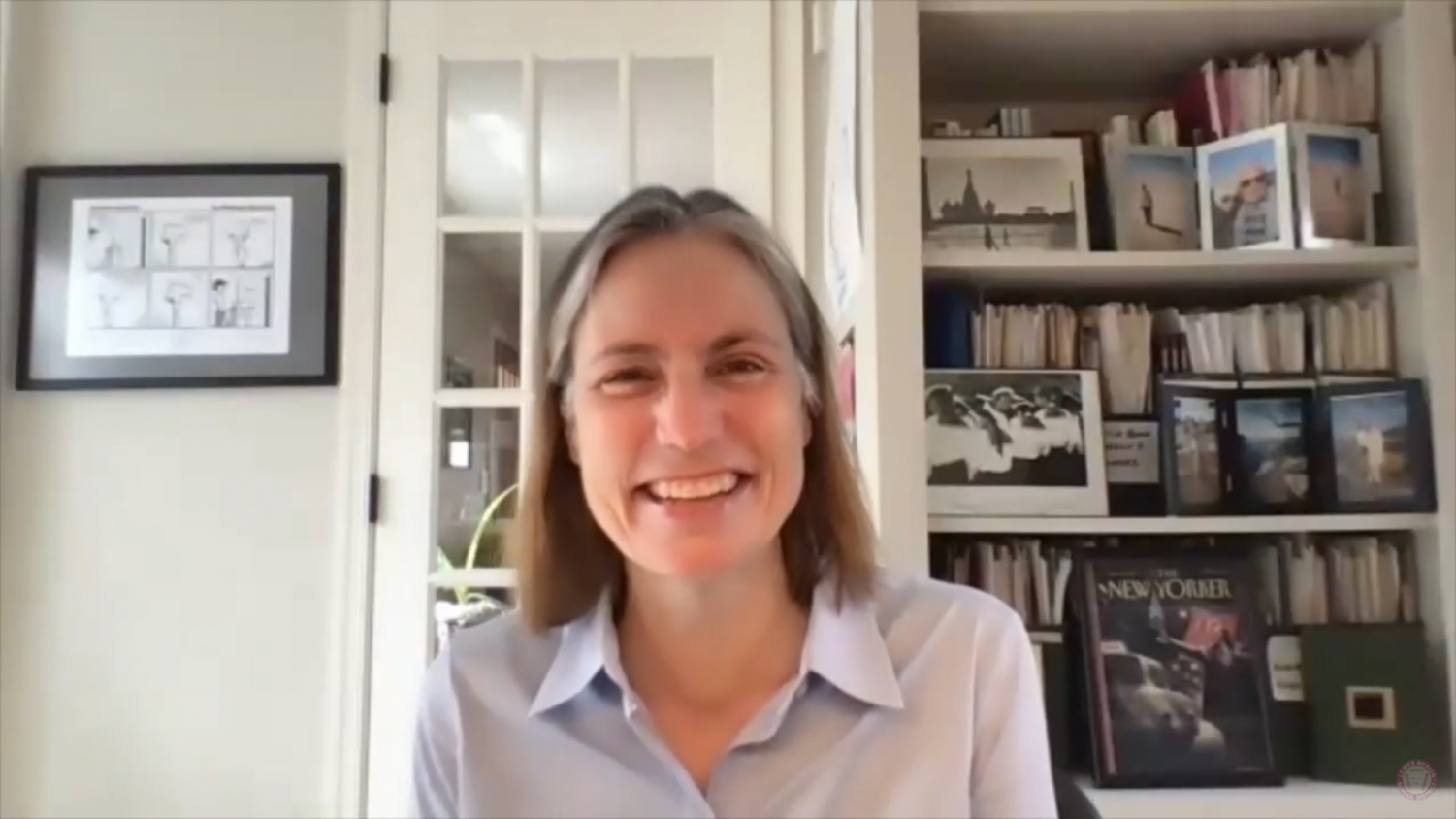
A new book about the Trump Administration was released today, and this one is likely to be much more serious than the many gossipy Trump books that have preceded it. This one is a memoir by Fiona Hill, who served in Trump’s White House as a Russia expert and then testified in the impeachment hearings.
The arresting title of Fiona Hill’s new book, “There Is Nothing for You Here,” is what her father told her when she was growing up in Bishop Auckland, a decaying coal-mining town in North East England. He loved her, and so he insisted that she had to leave.
Hill took his advice to heart — studying Russian and history at St. Andrews in Scotland, sojourning in Moscow, getting a Ph.D. at Harvard and eventually serving in the administrations of three American presidents, most recently as President Trump’s top adviser on Russia and Europe. “I take great pride in the fact that I’m a nonpartisan foreign policy expert,” she said before the House in November 2019, when she delivered her plain-spoken testimony at the hearings for the (first) impeachment of President Trump. But for her, “nonpartisan” doesn’t mean she’s in thrall to bloodless, anodyne ideas totally disconnected from her personal experience. She wrote this book because she was “acutely aware,” she says, “of how my own early life laid the path for everything I did subsequently.”
Sure enough, “There Is Nothing for You Here: Finding Opportunity in the 21st Century” weaves together these two selves, slipping back and forth between the unsentimental memoir reflected in its melancholy title and the wonkish guide promised in its inspirational subtitle. The combination, however unlikely, mostly works — though by the end, the litany of policy prescriptions comes to sound a bit too much like a paper issued by the Brookings Institution, where Hill is currently a fellow. When recounting her life, Hill is a lucid writer, delivering her reminiscences in a vivid and wry style. As much as I wanted more of Hill the memoirist and less of Hill the expert, I began to sense that giving voice to both was the only way she could feel comfortable writing a book about herself.
Looked at from afar, Hill’s story seems like a triumphant tale of striving and accomplishment. Born in 1965, she grew up in a “blighted world.” Her father followed the men in his family into the mines when he was 14; as the industry started to collapse in the 1960s, he found a job as a hospital porter. Hill’s mother worked as a midwife. As late as the 1970s, Hill’s grandparents lived in a subsidized rowhouse without “mod cons,” or modern conveniences, including indoor plumbing. Her grandfather had been pierced by the “windy pick” — the pneumatic drill — and had to wear a brace around his pelvis “to keep his battered insides in” for the rest of his life.
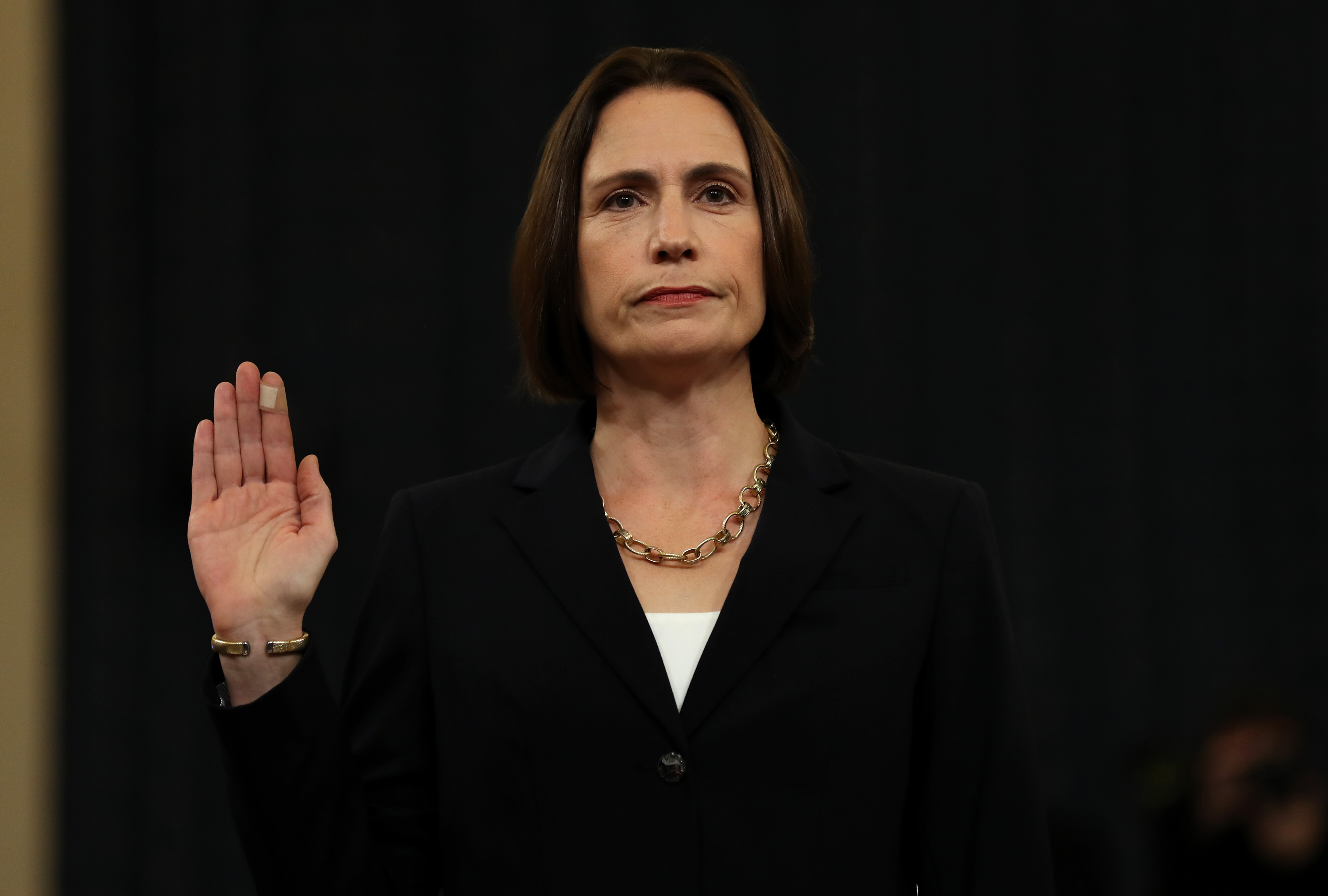
Fiona Hill is worn in at the House Intelligence Committee Open Impeachment Hearings.
Read more about Hill’s early life at the link. Here’s a bit about her experiences in the Trump White House.
Instead of making the usual insider-memoir move of fixating on all the brazenly outrageous behavior — the bizarre comments, the outlandish tweets — Hill notices his insecurities, the soft spots that, she says, made him “exquisitely vulnerable” to manipulation. Yes, she writes, the Kremlin meddled in the 2016 election — but unlike the #Resistance crowd, which insists that such meddling was decisive, Hill is more circumspect, pointing out that Vladimir Putin wasn’t the force that tore the country apart; he was simply exploiting fissures that were already there.
Just as concerning to her was the way that people around Trump would wreak havoc on one another by playing to his “fragile ego” — spreading rumors that their rivals in the administration had said something negative about Trump was often enough to land those rivals on what the president called his “nasty list.” Hill says that watching Trump fulminate made her feel like Alice in Wonderland watching the Queen of Hearts, with her constant shouts of “Off with their heads!” In Hill’s telling, Trump’s norm-breaking was so flagrant and incessant that she compares him, in her matter-of-fact way, to a flasher. “Trump revealed himself,” she writes, “and people just got used to it.”
But neither Trump nor Putin — who was the subject of one of Hill’s previous books — is what she really wants to talk about. What she sees happening in the United States worries her. Economic collapse, structural racism, unrelieved suffering: Even without Trump, she says, none of the country’s enormous problems will go away without enormous efforts to address them. Hill the expert points to heartening examples of benevolent capitalism at work. But Hill the memoirist knows in her bones that the neoliberal approach, left to its own devices, simply won’t do.
I cannot wait to read this book. More articles about it to check out:
In March 2006, as the government veered dangerously close to a default, Senator Mitch McConnell of Kentucky, the No. 2 Republican, let the Bush White House know he was two votes short of what he needed to raise the legal limit on federal borrowing.
Andrew H. Card Jr., then the White House chief of staff, began working the phones. He soon found two Democrats willing to break ranks and vote to put the legislation over the top. But Mr. McConnell was holding out for something else entirely, hoping to extract concessions from President George W. Bush as the price for uniting Republicans around lifting the limit.
“I don’t need your damned votes,” he snapped at Mr. Card. He lifted the debt ceiling with Republicans only.
Mr. Card never learned what the Senate leader wanted, but he tells the story for a reason: Mr. McConnell has long used the periodic need to raise the government’s borrowing limit as a moment of leverage to secure a policy win, as have leaders of both parties.
But two weeks before a potentially catastrophic default, Mr. McConnell has yet to reveal what he wants, telling President Biden in a letter on Monday, “We have no list of demands.”
Instead, he appears to want to sow political chaos for Democrats while insulating himself and other Republicans from an issue that has the potential to divide them.
Mr. McConnell has said the government must not be allowed to stop paying its debts; he has also said he will not let any Republicans vote to raise the limit, while moving repeatedly to block Democrats from doing so themselves. Instead, he has prescribed a path forward for Democrats: Use a complicated budget process known as reconciliation to maneuver around a Republican filibuster that he refuses to lift.
Asked what he wanted, that was his answer: “As I have said for two months, I want them do it through reconciliation.”
So what’s the problem then? Why don’t the Democrats just do it through reconciliation? Of course that is another problem, because Joe Manchin and Kirsten Sinema are standing in the way of the reconciliation bill. And what the hell do they want? A couple of reads on those two:
Democratic Sen. Joe Manchin on Monday pushed back on several politically sensitive positions his party leaders are taking at a crucial time for President Joe Biden’s domestic agenda.
The West Virginia Democrat, who holds a pivotal vote in the 50-50 Senate, indicated to CNN that he disagrees with the strategy top Democrats are pursuing in the standoff with Republicans over raising the national debt limit. Manchin said that Democrats “shouldn’t rule out anything,” including a budget process that Democratic leaders have made clear they will not employ.
Speaking to reporters, Manchin also would not commit to the new timeline set by party leaders to find a deal on the social safety net expansion by October 31. And he sounded resistant to calls from progressives and other top Democrats to raise his $1.5 trillion price tag for the package, which many in his party view as too low to achieve key policy objectives.
On Tuesday, however, Manchin did not rule out a $1.9 trillion to $2.2 trillion price tag for the social safety net package, a range Biden has floated privately. “I’m not ruling anything out,” Manchin said when asked by CNN if he would rule out that number.
In a stark warning sign to progressives, Manchin also indicated the package must include a prohibition against using federal funds for most abortions. “The Hyde Amendment is a red line,” he said. Manchin’s stance puts him at odds with progressives, with Congressional Progressive Caucus Chair Pramila Jayapal saying Sunday she would not support a package that included the Hyde Amendment.
In 2003, Joe Lieberman, at the time one of the worst Democratic senators, traveled to Arizona to campaign for his party’s presidential nomination and was regularly greeted by antiwar demonstrators. “He’s a shame to Democrats,” said the organizer of a protest outside a Tucson hotel, a left-wing social worker named Kyrsten Sinema. “I don’t even know why he’s running. He seems to want to get Republicans voting for him — what kind of strategy is that?”
It was a good question, and one that many people would like to ask Sinema herself these days. People sometimes describe the Arizona senator as a centrist, but that seems the wrong term for someone who’s been working to derail some of the most broadly popular parts of Joe Biden’s agenda, corporate tax increases and reforms to lower prescription drug prices. Instead, she’s just acting as an obstructionist, seeming to bask in the approbation of Republicans who will probably never vote for her.
A “Saturday Night Live” skit this weekend captured her absurdist approach to negotiating the reconciliation bill that contains almost the entirety of Biden’s agenda. “What do I want from this bill?” asked the actress playing Sinema. “I’ll never tell.” It sometimes seems as if what Sinema wants is for people to sit around wondering what Sinema wants.
When Sinema ran for Senate, the former left-wing firebrand reportedly told her advisers that she hoped to be the next John McCain, an independent force willing to buck her own party. Voting against a $15 minimum wage this year, she gave a thumbs down — accompanied by an obnoxious little curtsy — that seemed meant to recall the gesture McCain made when he voted against repealing key measures of the Affordable Care Act in 2017.
But people admired McCain because they felt he embodied a consistent set of values, a straight-talking Captain America kind of patriotism. Despite his iconoclastic image, he was mostly a deeply conservative Republican; as CNN’s Harry Enten points out, on votes where the parties were split, he sided with his party about 90 percent of the time.
Sinema, by contrast, breaks with her fellow Democrats much more often. There hasn’t been a year since she entered Congress, Enten wrote, when she’s voted with her party more than 75 percent of the time. But what really makes her different from McCain is that nobody seems to know what she stands for.
Click the link to read more.
There’s lots more news out there. I’ll post more links in the comments. As always, this is an open thread.
Did you like this post? Please share it with your friends:
The Sky Dancing banner headline uses a snippet from a work by artist Tashi Mannox called 'Rainbow Study'. The work is described as a" study of typical Tibetan rainbow clouds, that feature in Thanka painting, temple decoration and silk brocades". dakinikat was immediately drawn to the image when trying to find stylized Tibetan Clouds to represent Sky Dancing. It is probably because Tashi's practice is similar to her own. His updated take on the clouds that fill the collection of traditional thankas is quite special.
You can find his work at his website by clicking on his logo below. He is also a calligraphy artist that uses important vajrayana syllables. We encourage you to visit his on line studio.

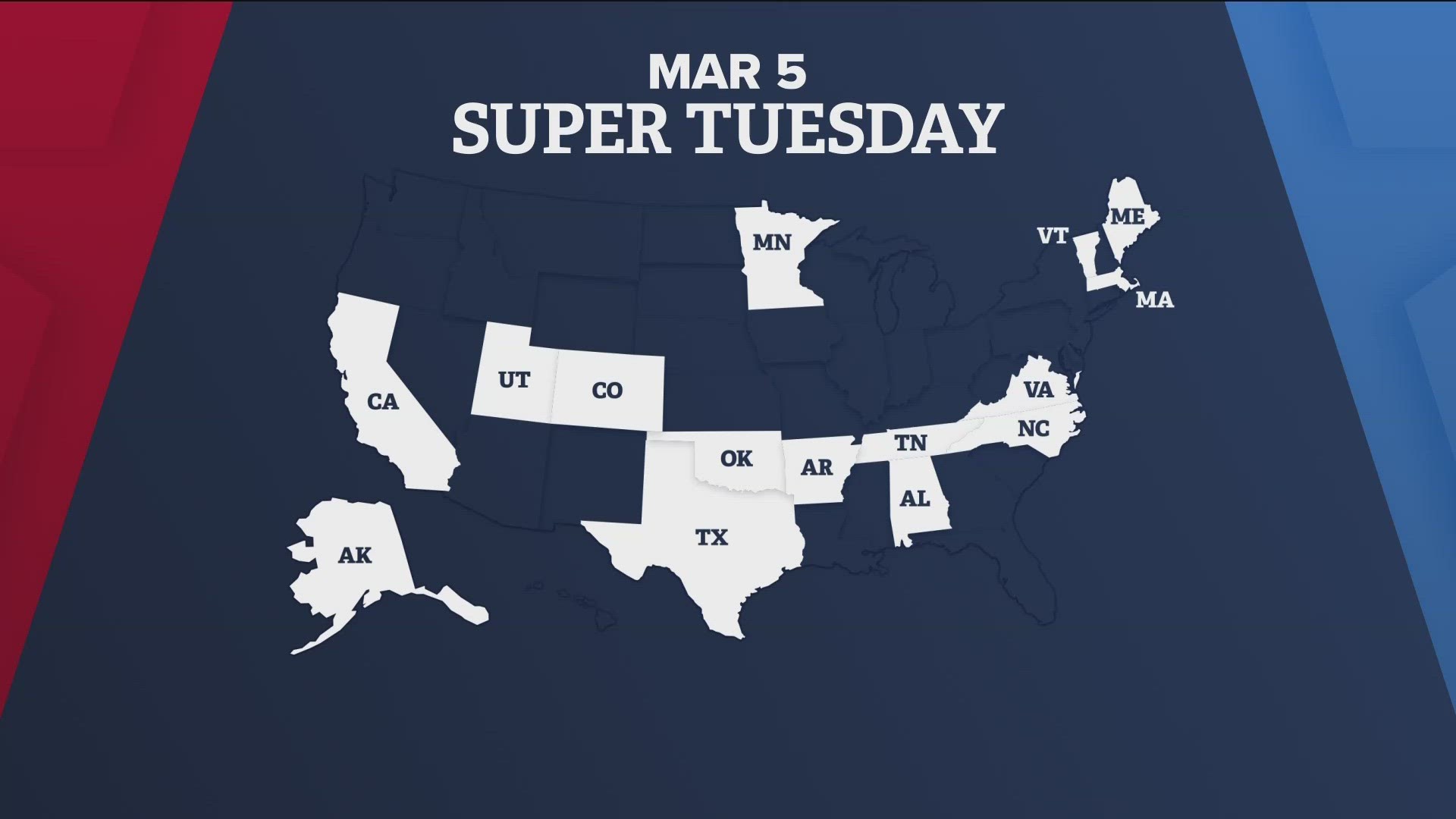 Yesterday was Super Tuesday, but there were few surprises. Oath-breaking insurrectionist Donald Trump will most likely face President Joe Biden in November unless something happens to either of these old guys. Trump continued his pattern of losing 30-40 percent of the Republican primary votes, and Niki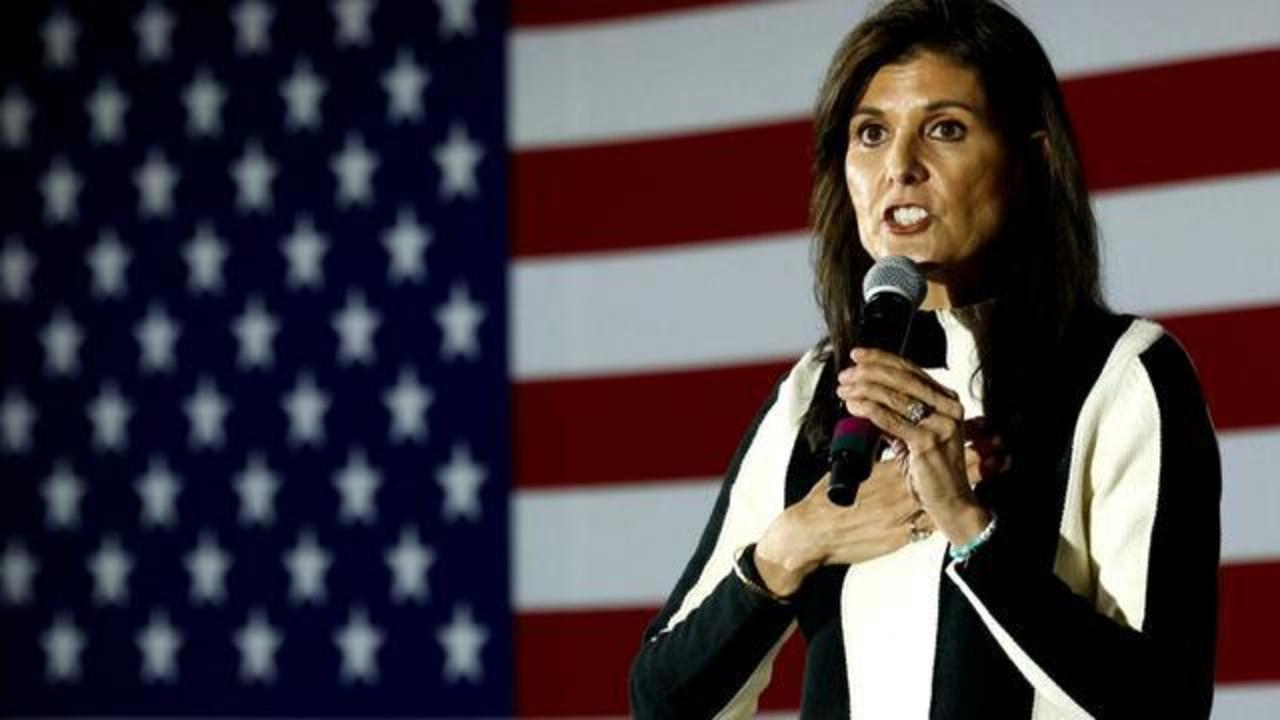
 No balloons, no confetti, no parade of family members on stage and no mention of opponent
 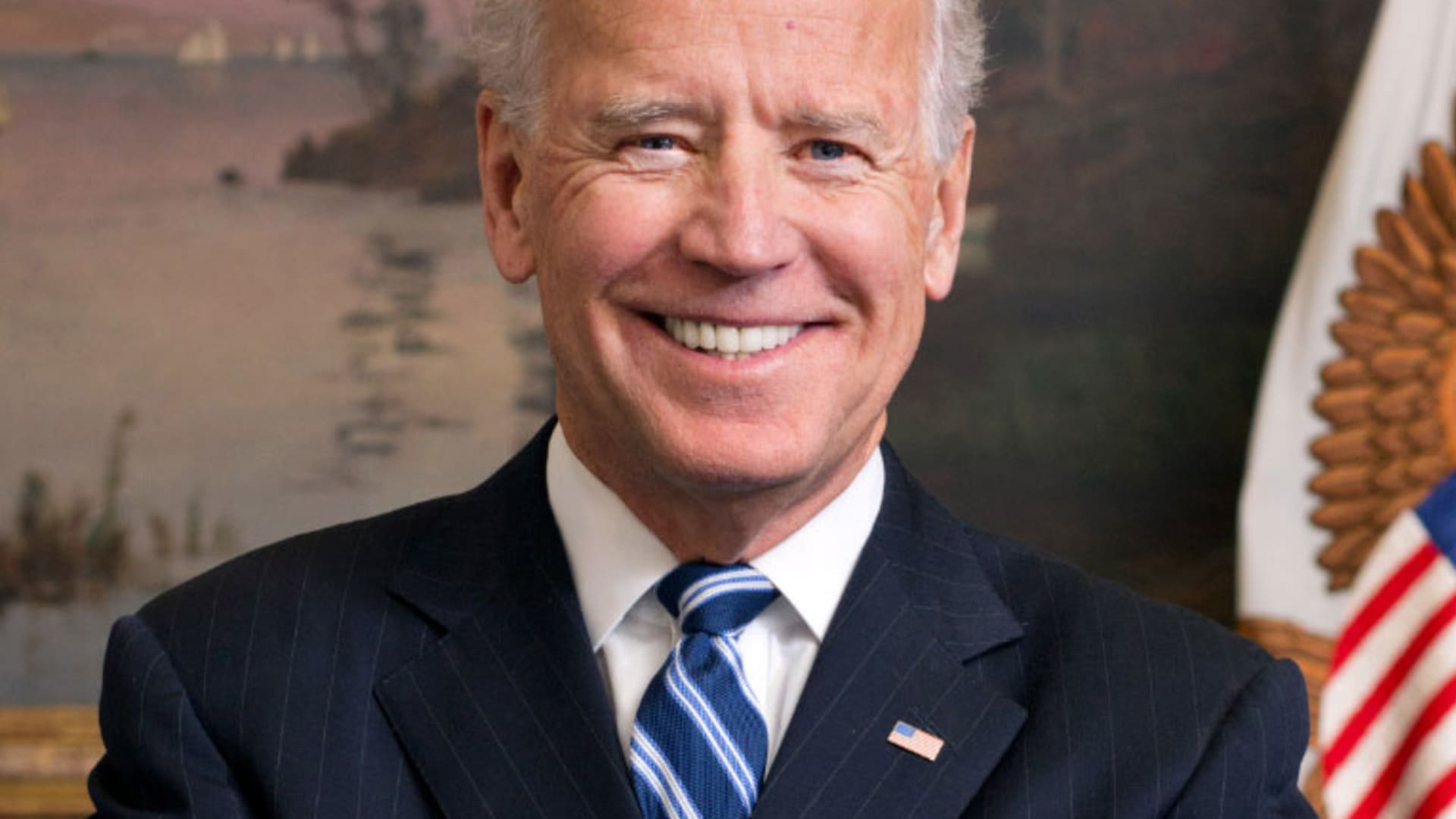 “You’ll hear me on Thursday,” Mr. Biden said when reporters asked on Tuesday about his preparations.
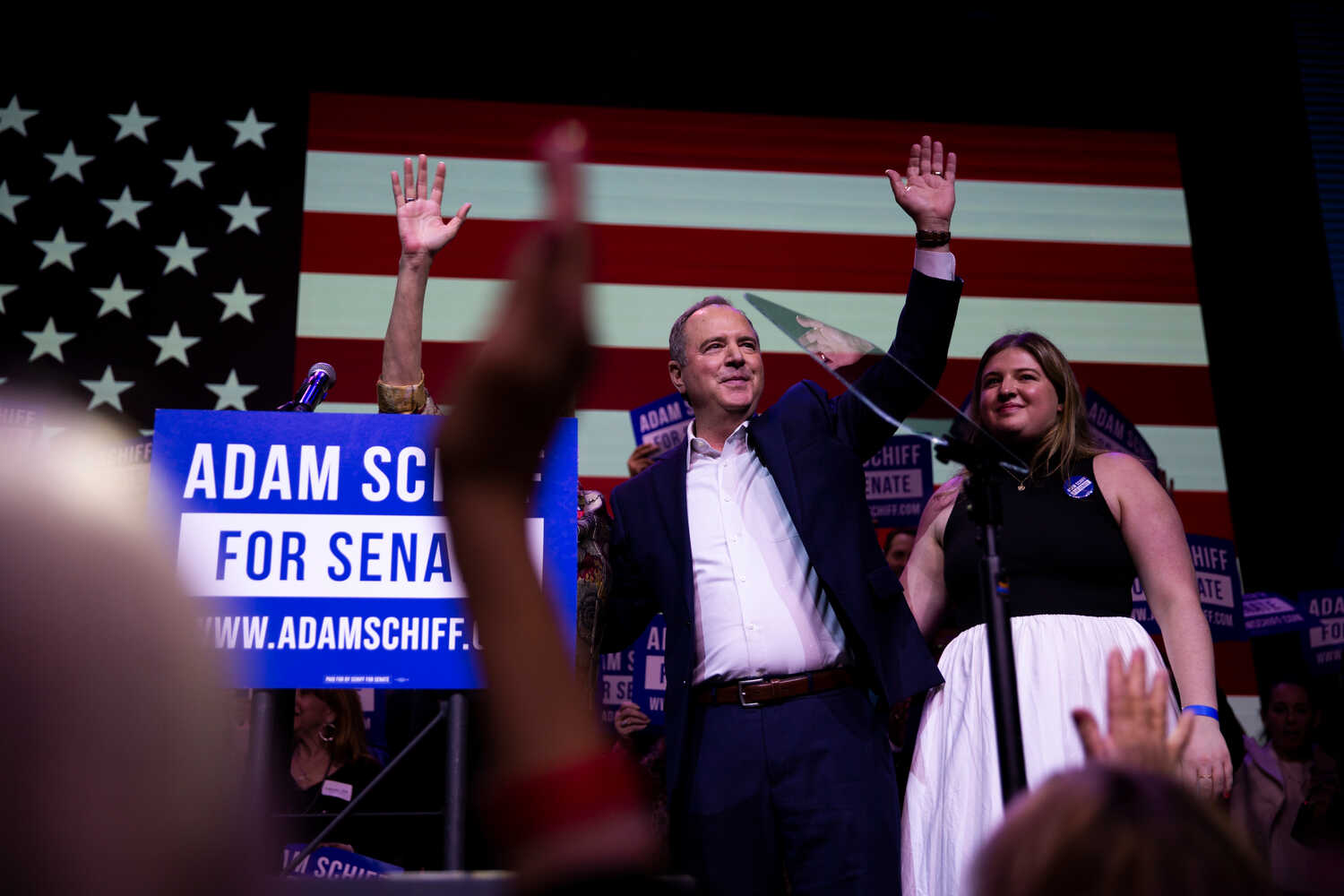 Schiff has also been incredibly successful in riding his high-profile role in Donald Trump’s impeachment trial to national fame, becoming omnipresent on cable news. It didn’t hurt that he won the endorsement of Rep. Nancy Pelosi (D-CA), a famed fundraiser.
 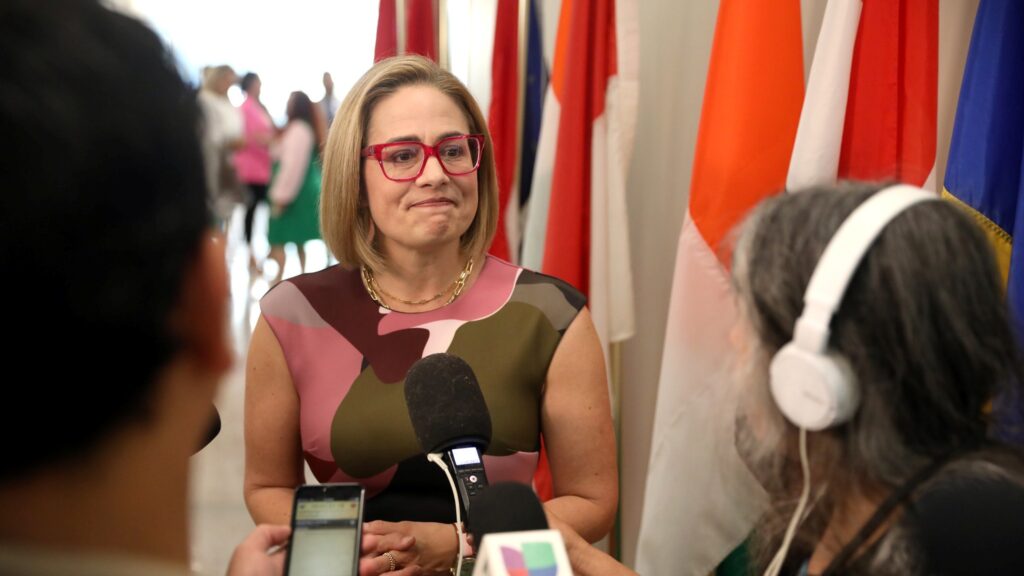 Sinema’s state, in contrast, has only trended bluer. While certainly still battleground territory, it’s a more comfortable get for Democrats than at any other time in recent history. Had she acted like a normal Democrat — look no further than fellow Sen. Mark Kelly (D-AZ) — she’d be preparing for her reelection right now, relieved to have the kooky Kari Lake to run against, and swimming in a helpful current of money funneled by the national party organs.







 Good Day, Sky Dancers!
 Well, this is certainly an interesting double-header of sorts. But, another drama continues on Twitter. Everyone has the Blue Check Blues there.
 Here is a new poll out of Arizona that has me in stitches from Laura Bassett at Jezebel. “







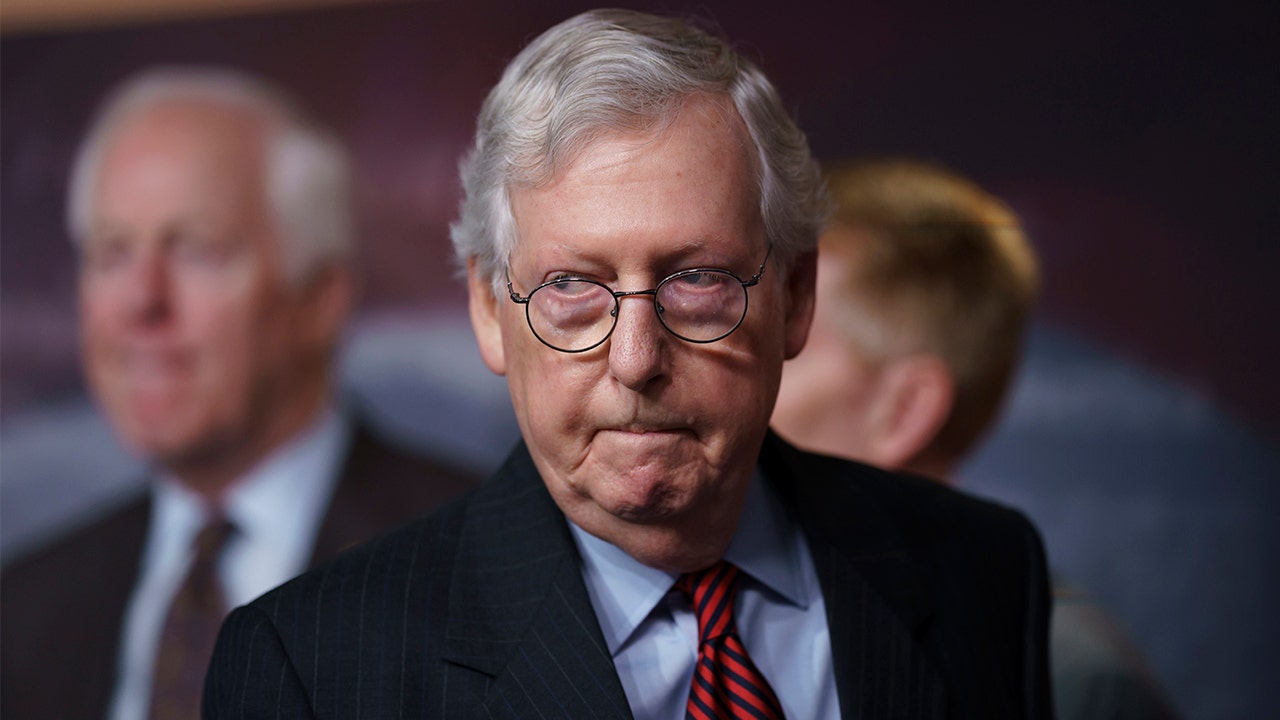 In other news, we’re still facing the possible default of the United States leading to a global financial crisis. Jonathan Weisman at The New York Times:
 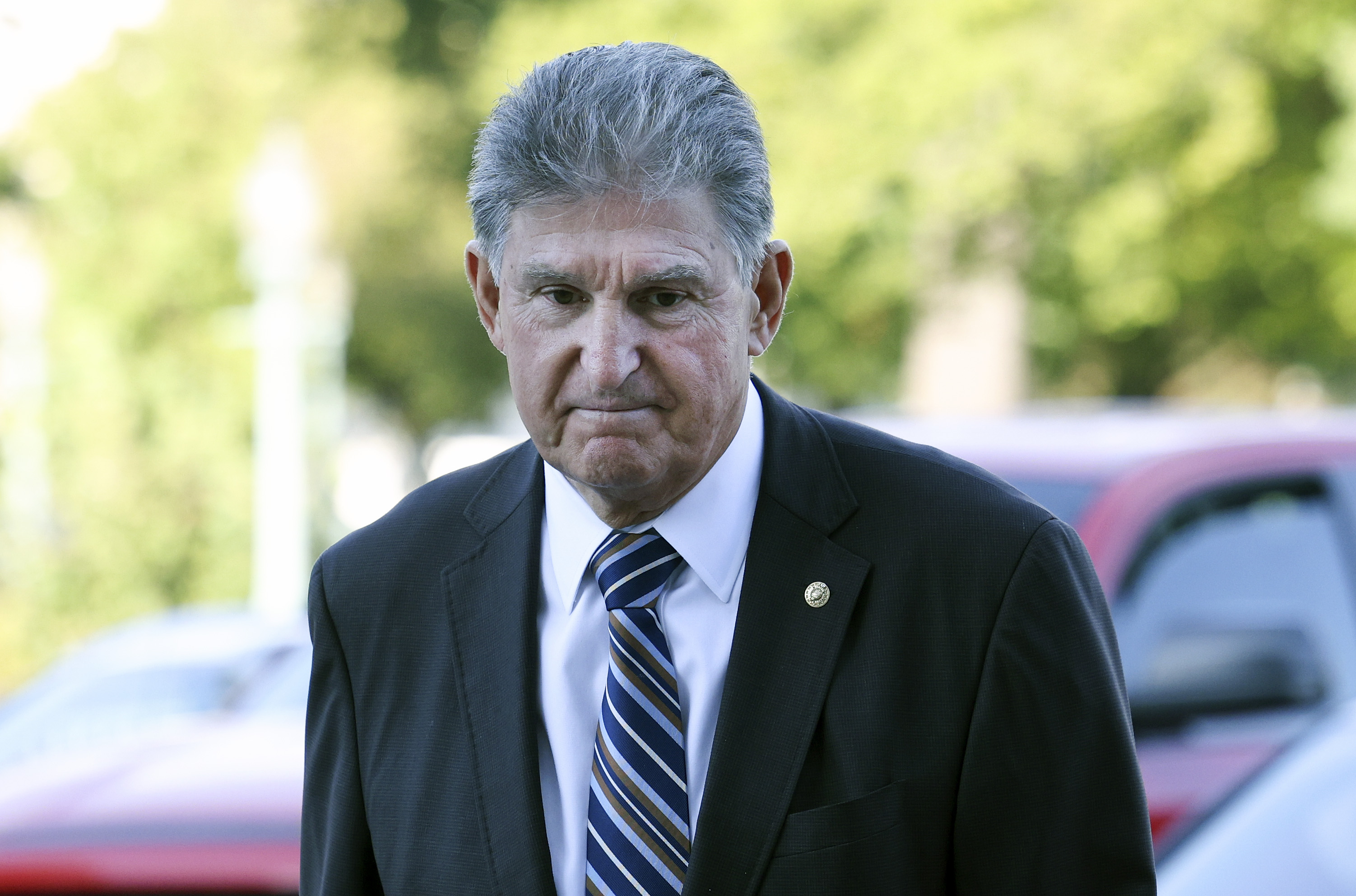 CNN:
CNN: 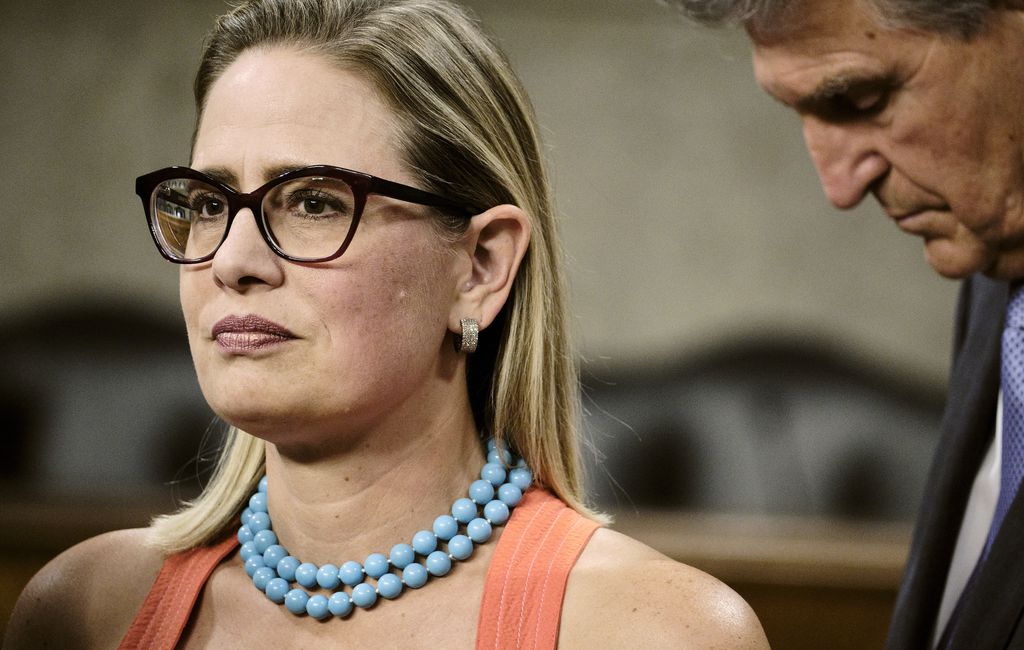 Michelle Goldberg at The New York Times:
 peej
peej Carissa
 bostonboomer
 dakinikat
 ecocatwoman
 mablue2
 Mama Lopez
 peggysue22
 quixote
 skydancingguestblogger
 Mona (aka Wonk the Vote)



 Sky Dancing
Recent Comments