





Trump’s comments came during an interview with conservative syndicated radio host Hugh Hewitt in which the former president was asked for reassurance that he would not be a dictator if he returned to the White House and whether he would peacefully surrender power at the end of his second term.
Wednesday Reads
Posted: January 3, 2024 Filed under: 2024 Elections, 2024 presidential Campaign, just because, Media, polling, The Media SUCKS | Tags: Autocracy, big media, Claudine Gay, democracy, diversity, Greg Sargent, Harvard, journalism, Joyce Vance, Racism, Rick Perlstein, The Washington Post 13 CommentsGood Morning!!
It’s 2024, and the media and the Republicans are gearing up for the presidential election in November. What are the Democrats doing? I’m sure they are raising plenty of money, but when will they wake up and start fighting back against the Republicans and the media? Make no mistake, big media is hoping for another Trump presidency, because it will mean chaos and gobs of money for those who cover the chaos. It will mean riches for the media bosses and reporters alike–think of all the new books they can sell as Trump destroys democracy and attempts to gain dictatorial power?
You’ve probably heard that The Washington Post recently got rid of 240 employees through buyouts. They chose to keep right wing columnists like Hugh Hewitt and dumped liberals like Greg Sargent. Fortunately, Sargent has been hired by The New Republic.
This post by Tom Jones is from Poynter, a site that reports on and critiques the media: Opinion | Washington Post reaches buyout goals to, for now, avert layoffs.
The good news is that the Post has been able to meet its goal of trimming staff through buyouts instead of layoffs. The bad news is the Post will enter the new year with fewer employees — perhaps a couple of hundred.
Greg Sargent
Back in October, the Post announced that it was offering buyouts with the hopes of reducing staff by 240. (At the time, the Post had approximately 2,500 employees.)
Then late last month, Post interim CEO Patty Stonesifer told staff only half of the desired number of staffers — about 120 or so — had accepted the buyouts and that there would be layoffs if not enough employees took the buyouts. At the same time, The Daily Beast’s Corbin Bolies reported that Post executive editor Sally Buzbee told staff in an email that about 36 of the 120 who accepted the buyouts were from the newsroom. She said that was “about 30 percent of our goal across the News department.”
Then came Tuesday’s news that the Post had enough buyouts to avoid layoffs — for now (my words, not the Post’s). The exact number of buyouts isn’t known publicly.
In an email to staff, Stonesifer said the company “will enter the new year with a smaller organization but a better financial position.” Stonesifer also wrote, “I am very aware of how difficult this process has been for everyone involved and I want to thank you for the grace and respect you have shown at every step.”
In July, The New York Times Benjamin Mullin and Katie Robertson reported the Post was on track to lose about $100 million this year.
For the gossip columnists at the WaPo, President Biden is boring. Imagine how much better the paper’s “financial position” will be when Trump gets back in the White House and consolidates his power. The same will be true of The New York Times. Maggie Haberman will be cleaning up, along with her co-writers.
In another positive development, historian and political observer Rick Perlstein will be writing for The American Prospect. I’m seriously thinking about dumping my Washington Post subscription and giving that money to one of these liberal publications.
Perlstein has published his first column. In it, he addresses three issues I worry about: the media focus on polls, the failure of journalists to address real issues, while tending to favor right wing narratives, and the failure of Democratic politicians to fight back hard against those narratives.
Rick Perlstein at The American Prospect: You are Entering the Infernal Triangle: Authoritarian Republicans, ineffectual Democrats, and a clueless media.
Perlstein on Polling:
As a historian who also writes about the present, there are certain well-worn grooves in the way elections get written about by pundits and political journalists from which I instinctively recoil. The obsession with polling, for one. Polls have value when approached with due humility, though you wonder how politicians and the public managed to make do without them before their modern invention in the 1930s. But given how often pollsters blow their most confident—and consequential—calls, their work is as likely to be of use to historians as object lessons in hubris as for the objective data they mean to provide.
Pollsters themselves are often the more useful data to study, especially when their models encode mistaken presumptions frozen in place from the past. In 1980, for instance, Ronald Reagan’s landslide was preceded by a near-universal consensus that the election was tied. The pollster who called it correctly, Lou Harris, was the only one who thought to factor into his models a variable that hadn’t been accounted for in previous elections, because it did not yet really exist: the Christian right.
Polling is systematically biased in just that way: toward variables that were evident in the last election, which may or may not be salient for this election. And the more polls dominate discussions of campaigns and elections, the more they crowd out intellectual energy that could be devoted to figuring out those salient, deeper, structural changes conditioning political reality: the kind of knowledge that doesn’t obediently stand still to be counted, totted up, and reduced to a single number.
On media predictions:
Another waaaaay too well-worn journalistic groove isprediction. I have probably read thousands of newspaper opinion column prognostications going back to the 1950s. Their track record is too embarrassing for me to take the exercise seriously, let alone practice it myself. Like bad polls, pundits’ predictions are most usefulwhen they are wrong. They provide an invaluable record of the unspoken collective assumptions of America’s journalistic elite, one of the most hierarchical, conformist groups of people you’ll ever run across. Unfortunately, they help shape our world nearly as much, and sometimes more, than the politicians they comment about. So their collective mistakes land hard….
Rick Perlstein, author, Reaganland: America’s Right Turn 1976-1980.
And how ritualized? Consider one of elite journalism’s most deeply worn grooves: the morning-after declarations, should any Democrat win a presidential election, that the Republican politics of demagogic hate-mongering has shown itself dead and buried for all time—forgetting how predictably it returns in each new election, often in an increasingly vicious form.
In 1964: When the author of the Civil Rights Act, Lyndon Johnson, defeated a Republican who voted against the Civil Rights Act, Barry Goldwater, one of the most distinguished liberal newspaper editors in the South, Sam Ragan of the Raleigh News & Observer, pronounced that all future American elections would be decided “on issues other than civil rights.” His essay quoted the Los Angeles Times’ Washington bureau chief, who affirmed that conventional wisdom by observing that henceforth, whichever party takes the Black vote would be no more predictable than who would win “freckle-faced redheads and one-armed shortstops.” [There are many more examples of this phenomenon in the essay.]
This particular bias is rooted into elite punditry’s deepest, most dangerous groove of all: a canyon, if you will. On one side of the yawning gulf is the perennial fantasy that America is a nation fundamentally united and at peace with itself, “moderate,” “centrist,” where exceptions are epiphenomena entirely alien to settled American “norms.”
On “Reality”:
On the other side of the gulf is, well, reality.
The media habits that make it so hard to grasp that reality—that made Trump and his merry band of insurrectionists such a surprise to us—are perhaps as systematic as any foisted upon the public by state media in authoritarian nations. A little more innocent than, say, Pravda, however, because one wellspring of this stubborn fantasy, and why audiences are so receptive to it, is simple psychology. To acknowledge the alternative is to stare into a terrifying abyss: the realization that America has never not been part of the way to something like a civil war.But suddenly, in 2024, no one can avoid acknowledging that abyss anymore. And that leaves journalism in a genuine crisis.
Generations of this incumbent, consensus-besotted journalism have produced the very conceptual tools, metaphors, habits, and technologies that we understand as political journalism. But these tools are thoroughly inadequate to understanding what politics now is.
According to polls (which, yes, have their uses, in moderation), something around half of likely voters would like to see as our next president a man who thinks of the law as an extension of his superior will, who talks about race like a Nazi, wants to put journalistic organizations whose coverage he doesn’t like in the dock for “treason,” and who promises that anyone violating standards of good order as he defines them—shoplifters, for instance—will be summarily shot dead by officers of the state who serve only at his pleasure. A fascist, in other words. We find ourselves on the brink of an astonishing watershed, in this 2024 presidential year: a live possibility that government of the people, by the people, and for the people could conceivably perish from these United States, and ordinary people—you, me—may have to make the kind of moral choices about resistance that mid-20th-century existentialist philosophers once wrote about. That’s the case if Trump wins. But it’s just as likely, or even more likely, if he loses, then claims he wins. That’s one prediction I feel comfortable with.
I’ve already quoted too much, but I hope it’s enough so that you’ll want to read the rest at The American Prospect.
Every morning, I read Joyce Vance’s substack, Civil Discourse. Today, she offered “a warning” to all of us who want to save democracy. We have to remember that no everyone is following news and politics closely.
One morning before Christmas, I was working out with a friend who I adore, and workout with regularly. She’s young, smart, and a recent college graduate. In the middle of our session, my phone started going off incessantly and I finally picked it up. It was, of course, breaking news. That day, it was about the Giuliani bankruptcy.
I apologized to her for taking the call. I got off quickly and told her, by way of explanation, “Rudy Giuliani just filed for bankruptcy.”
Joyce Vance
“Who’s Rudy Giuliani?” she asked.
One morning before Christmas, I was working out with a friend who I adore, and workout with regularly. She’s young, smart, and a recent college graduate. In the middle of our session, my phone started going off incessantly and I finally picked it up. It was, of course, breaking news. That day, it was about the Giuliani bankruptcy.
I apologized to her for taking the call. I got off quickly and told her, by way of explanation, “Rudy Giuliani just filed for bankruptcy.”
“Who’s Rudy Giuliani?” she asked.
You know that noise they make in TV sitcoms, the one where the needle scratches across the record, and everything is interrupted? That was what I heard in my head. My mind worked over the implications of her question for the remainder of our time together.
She was born after 9-11. She never knew Giuliani as America’s mayor when the Towers fell and certainly not as the staunch pro-law enforcement mayor in the city in earlier years. But it shocked me that someone of voting age was unaware of Giuliani—didn’t recognize his name and associate it with Trump’s efforts to overturn the 2020 election.
She asked me about the bankruptcy. “Is that a good thing or a bad thing?” I explained that he’d lost a big defamation case in Georgia because he said horrible things about two election workers and disrupted their lives. Still no signs of recognition, but she got the point. “What an a**hole,” she concluded, based on my brief description of what he’d done.
Read the rest at the substack link.
Like Joyce Vance, I grew up in a politically engaged family. It’s always a shock to me when I learn that some people have no idea what’s going on in the government. We need to reach out to the people us and discuss the danger of autocracy.
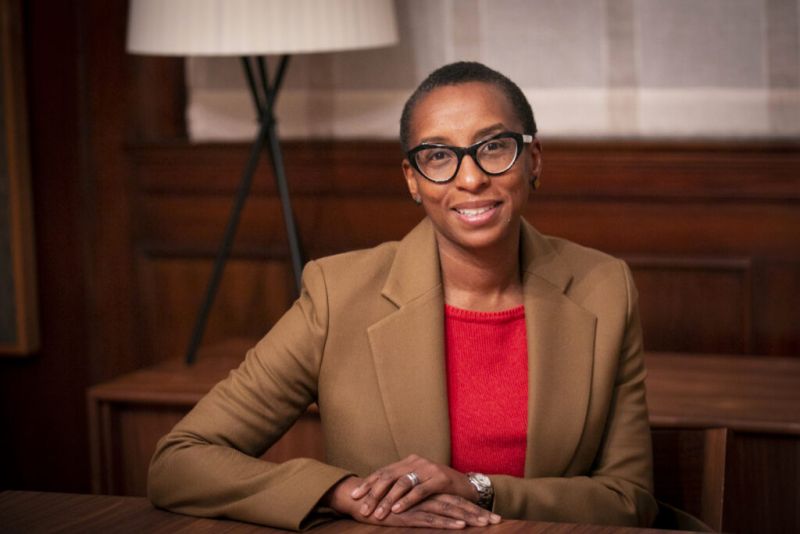
I’m really troubled by what happened to Claudine Gay, Harvard’s first Black president. She may well have some issues with past plagiarism, but if she had been white, I doubt if the issue would have even come up. The truth is, she was set up by Congressional Republicans who hate diversity in education. Two articles:
At The Atlantic, David Graham expresses the typical liberal media response: it’s a shame and of course she was targeted by right wingers, but Harvard still had to do the “right” thing: An Old-Fashioned Scandal Fells a New Harvard President.
Gay, a political scientist, resigned…, making her the second president of an Ivy League institution to bow out in the past month. University of Pennsylvania President Liz Magill stepped down on December 9, but the cases are not as similar as they might initially seem. Magill’s departure stemmed directly from the shaky December 5 congressional testimony by a panel of college presidents about anti-Semitism and the Israeli-Palestinian conflict, and was viewed as a victory for Elise Stefanik, the Republican representative who led the questioning.
What appear to have doomed Gay were the allegations of plagiarism lodged against her. This is an important distinction. Penn’s board of trustees was spooked by pressure from donors and politicians. The Harvard Corporation, an equivalent body, was not. In a December 12 statement, it acknowledged that Gay’s testimony had gone poorly, but said she would remain in her post, describing its position as a defense of open discourse and academic freedom. Although Stefanik is already claiming credit, what ended Gay’s short tenure were not the hot-button issues of campus speech and anti-Semitism but was instead the kind of scandal that one might expect to fell the president of any educational institution, whether a member of the Ivy League or a community college.
Yes, because Harvard initially supported her remaining president, so the right wingers had to find another reason to get rid of her.
On December 5, Gay, Magill, and MIT’s Sally Kornbluth were hauled before Congress to speak about anti-Semitism on campus, though many GOP members really seemed to be upset about what they saw as inconsistent standards for deciding what speech is and isn’t acceptable on campuses. The hearing was remarkable for, among other things, how little intellectual agility the presidents showed in the face of questioning. A college president has to fulfill a dual role, serving not only as an academic officer but also as a sort of front woman for her institution. The failure of these presidents to represent their universities well in such a public setting was bound to raise questions about their leadership, regardless of the subject matter.
Claudine Gay
Gay survived the initial backlash to her testimony, but since then, the furor around allegations of plagiarism has grown. Many of the examples that have been made public represent extremely lazy rewriting of source material—Gay borrowed sentences or paragraphs, making minor changes to their wording or order of clauses without adding much analysis of her own. Some academics have described this as entirely unacceptable, while others have defended Gay—including some, such as David Canon, from whose work she repeatedly drew. “I am not at all concerned about the passages. This isn’t even close to an example of academic plagiarism,” Canon told The Washington Free Beacon….
The origin of the complaints is still murky. Allegations of academic misconduct against Gay had floated around online message boards for some time, The Wall Street Journal reported. One unnamed individual claims to be the source of the current charges. On October 24, the New York Post contacted the university to ask about allegations against Gay. On December 10, the conservative agitator Christopher Rufo and the journalist Christopher Brunet published claims of plagiarism in Gay’s 1997 Harvard dissertation. The next day, The Washington Free Beacon added more reporting….
Conservatives have long had it out for Gay, Harvard’s first Black president, whose appointment they viewed as a sop to progressive diversity, equity, and inclusion initiatives. The identity of the initial anonymous complainant against Gay is unclear, as is when he or she brought the complaints forward. The appearance of the allegations in conservative outlets and their timing, coming shortly after the war in Gaza thrust Gay into the spotlight, certainly suggest a politically motivated effort.
I’ve quoted the parts of Graham’s article that support my point of view. He still thinks she should have been fired.
Nia T. Evans at Mother Jones: What Claudine Gay’s Resignation From Harvard Means for the Rest of Us.
Claudine Gay’s resignation from her post as president of Harvard University is a shocking new twist in the ongoing saga over campus free speech. Gay resigned on Tuesday amid new allegations of plagiarism leveled through an unsigned complaint published in the Washington Free Beacon, a conservative outlet that has long criticized Gay. The news, which was broken by the Crimson, comes after months of attacks on Gay’s response to campus antisemitism and weeks after university leaders reaffirmed their support for her. Gay’s stunning departure is the latest casualty in a growing conservative crusade against “diversity in education” and a chilling reminder of the state of campus free speech amid Israel’s war on Gaza.
“It has become clear that it is in the best interests of Harvard for me to resign,” Gay wrote in a letter to the Harvard community. “It has been distressing to have doubt cast on my commitments to confronting hate and to upholding scholarly rigor—two bedrock values that are fundamental to who I am.”
Gay’s 186-day tenure is the shortest in the school’s 388-year history.
Just six months ago, Gay was heralded as the future of Harvard University. “I stand before you on this stage with the weight and honor of being a first,” she told a rain-soaked crowd during her inauguration ceremony. Her journey to becoming Harvard’s first Black female president felt like the quintessential American dream: she is the daughter of Haitian immigrants, a Stanford graduate with a doctorate from Harvard. An accomplished political scientist with an emphasis on race, democracy, and politics, she was praised by university and political leaders alike after being named Harvard’s 30th president in late 2022. Massachusetts Gov. Maura Healey called her “a leader for our time” driven by the “values to meet the moment” at Gay’s September inauguration ceremony. Harvard’s governing board announced her selection with glee. “We are confident Claudine will be a thoughtful, principled, and inspiring president for all of Harvard,” wrote Harvard Corporation senior fellow Penny Pritzker. “She will be a great Harvard president in no small part because she is such a good person.”
Gay’s brief tenure collided with historic political assaults against diversity and education. In June, the Supreme Court struck down affirmative action in a case in which Harvard was at its center. The October 7 terrorist attack on Israel by Hamas instigated an ongoing war that’s claimed more than 22,000 lives. The war also set off a fierce debate on college campuses across the country over free speech. In one well-documented incident, a conservative group paid for a truck to circle around Harvard Square with a billboard on which the names and photos of opponents of Israel’s actions were displayed. The billboard dubbed them “Harvard’s Leading Antisemites.”
The end result of the controversy and the efforts of right wingers:
Her resignation not only shakes things up at the most prestigious university in the country, it also exposes a larger trend of racial regression that picked up in the years following the 2020 uprisings as Black leaders have been installed in positions of power only to find themselves undermined by the systems they sought to save. Love it or hate it, Harvard sets the tone for national and international debates. To conservative activists celebrating on Twitter, Gay’s ouster is part of a larger project to purge progressive Black leaders from public institutions. Or as Chris Rufo put it, to abolish “DEI ideology from every institution in America.” In the end, Gay’s presidency has created yet another first: Harvard’s first Black female president was also its shortest-serving.
Those are my top stories for today. Lots more is happening, of course. Here are more stories you might find interesting/enraging:
Times of Israel: Israel in talks with Congo and other countries on Gaza ‘voluntary migration’ plan.
The Texas Tribune: Emergency rooms not required to perform life-saving abortions, federal appeals court rules.
Jose Pagliery at The Daily Beast: Jack Smith Keeps Telegraphing Some Seriously Scandalous Trump Crimes.
David Kurtz at TPM’s Morning Memo: The New Argument That Might Save Trump’s March Trial Date.
Newsweek: ‘Storm the Capitol’ Board Game Celebrates Jan. 6 Rioters.
That’s it for me today. What’s on your mind?
Lazy Caturday Reads
Posted: December 23, 2023 Filed under: 2024 Elections, 2024 presidential Campaign, cat art, caturday, Donald Trump | Tags: Christmas, Covid-19, George Conway, israel, Jack Smith, January 6 insurrection, Joyce Vance, Mein Kampf, NASA, peaceful transfer of power, Supreme Court, Trump and HItler, Wisconsin legislative boundaries, Wisconsin Supreme Court 6 CommentsGood Day!!
 It’s a fairly quiet news day today, since we are fast approaching Christmas and the New Year. I’m just going to post a mixed bag of stories that caught my eye this morning.
Before we get into any bad news, here’s a cat story from ScienceAlert: NASA Has Beamed The First High-Def Video Across 19 Million Miles. Featuring a Cat.
NASA on Monday announced it had used a state-of-the-art laser communication system on a spaceship 19 million miles (31 million kilometers) away from Earth – to send a high-definition cat video.
The 15-second meow-vie featuring an orange tabby named Taters is the first to be streamed from deep space, and demonstrates it’s possible to transmit the higher-data-rate communications needed to support complex missions such as sending humans to Mars.
The video was beamed to Earth using a laser transceiver on the Psyche probe, which is journeying to the main asteroid belt between Mars and Jupiter to explore a mysterious metal-rich object. When it sent the video, the spaceship was 80 times the distance between the Earth and Moon.
The encoded near-infrared signal was received by the Hale Telescope at Caltech’s Palomar Observatory in San Diego County, and from there sent to NASA’s Jet Propulsion Laboratory (JPL) in Southern California.
“One of the goals is to demonstrate the ability to transmit broadband video across millions of miles. Nothing on Psyche generates video data, so we usually send packets of randomly generated test data,” said Bill Klipstein, the tech demo’s project manager at JPL.
“But to make this significant event more memorable, we decided to work with designers at JPL to create a fun video, which captures the essence of the demo as part of the Psyche mission.”
Space missions have traditionally relied on radio waves to send and receive data, but working with lasers can increase the data rate by 10 to 100 times….
The ultra-HD video took 101 seconds to send to Earth at the system’s maximum bit rate of 267 megabits per second – faster than most home broadband connections.
”In fact, after receiving the video at Palomar, it was sent to JPL over the internet, and that connection was slower than the signal coming from deep space,” said Ryan Rogalin, the project’s receiver electronics lead at JPL.
The big news yesterday was that the Supreme Court rejected Jack Smith’s request that they immediately decide the question of whether Trump has complete immunity from prosecution for anything he did in office.
Adam Liptak at The New York Times: Supreme Court Won’t Hear Case on Trump’s Immunity Defense for Now.
The Supreme Court declined on Friday to decide for now whether former President Donald J. Trump is immune from prosecution on charges of plotting to overturn the 2020 election.
The decision to defer consideration of a central issue in the case was a major practical victory for Mr. Trump, whose lawyers have consistently sought to delay criminal cases against him around the country.
It is unclear what the court’s order will mean for the timing of the trial, which is scheduled to start on March 4, though it makes postponement more likely. The case will now move forward in an appeals court, which has put it on a fast track, and most likely return to the Supreme Court in the coming weeks or months.
In denying review, the justices gave no reasons, which is typical, and there were no noted dissents.
Jack Smith, the special counsel prosecuting Mr. Trump, had asked the justices to move with extraordinary speed, bypassing the appeals court.
Any significant delays could plunge the trial into the heart of the 2024 campaign season or push it past the election, when Mr. Trump could order the charges be dropped if he wins the presidency.
A speedy decision by the justices was of the essence, Mr. Smith said in his petition seeking immediate Supreme Court review, because Mr. Trump’s appeal of a trial judge’s ruling rejecting his claim of immunity suspended the criminal trial.
Mr. Smith wrote that the case “presents a fundamental question at the heart of our democracy: whether a former president is absolutely immune from federal prosecution for crimes committed while in office or is constitutionally protected from federal prosecution when he has been impeached but not convicted before the criminal proceedings begin.”
“The United States recognizes that this is an extraordinary request,” Mr. Smith added. “This is an extraordinary case.”
The appeals court has already put the cast on a fast track with argument beginning January 9. Trump celebrated the SCOTUS decision as a huge win, but legal experts beg to differ.
Count George Conway among those who are less than impressed by the Supreme Court’s decision Friday to pass on an expedited request to decide whether Donald Trump is protected by immunity in the Jan. 6-related federal case against him….
Christmas Kitty Cat, by Stella Sherman
“I think today’s order is not a big deal,” Conway told MSNBC’s Chris Hayes in an interview you can watch above. “I see a lot of people with their hair on fire. They can just douse their hair in water, because this isn’t a big deal. I don’t think it’s going to affect the trial date that much. Worst case is, the trial gets pushed to the summer.
“The reason is, I think this order shows the weakness of Trump’s immunity case,” Conway added. “And I think the court realizes it’s got the D.C. Circuit that’s going to hear arguments January 9th. It’s not a hard case. I think they’re going to move very quickly. If I was the presiding judge on the panel I’d already be writing the opinion. And once they rule, they can lift the stay, they can issue a mandate and lift the stay, which means, then you’re going to have Donald Trump saying ‘Oh, we need expedition, we need expedition.’”
Conway went on to repeat he thinks the timeline for a trial will be April, May or June and that “Donald Trump is not going to be able to stop it.”
“And the Supreme Court could grant that and hear it in May, hear it in June, and you could still have a summer trial,” Conway continued, regarding a possible post-conviction appeal. “Or better yet they could deny it because he’s already had his argument at a court of appeals before a very distinguished panel. Donald Trump should be frankly treated like every other criminal who’s been convicted in a federal district court and be forced to litigate his arguments after his conviction.”
Joyce Vance also weighed in on her Substack, Civil Discourse: Let’s Debunk This.
This afternoon, the Supreme Court declined Jack Smith’s request to hear Trump’s appeal on presidential immunity, bypassing the court of appeals. Trump’s immunity motion is important because if he wins, it’s game over. The entire indictment would get dismissed if he were immune from prosecution. And while my assessment is in line with Judge Chutkan’s—she denied Trump’s motion—we don’t know for certain what the Supreme Court will do.
Logically, Trump’s motion lacks merit.
To grant it, the Court would have to hold that presidents are above the law. All presidents, not just Trump. Anything they do while they’re president is protected. We’ve seen that same argument rejected repeatedly in a civil context: E. Jean Carroll’s case and the civil suit over January 6 in Washington, D.C., for instance. There’s no analytical reason to believe criminal conduct is any more deserving of protection than civil violations are, once a president is out of office.
Trump claims that even absent total immunity for presidential conduct, the conduct he’s been charged with falls within the “outer perimeter” of a president’s duties, so he’s entitled to immunity. To credit that, the courts would have to believe that the steps Trump took to interfere with multiple states’ votes, elections a president has no role in, are somehow a part of his job. Elections are run by secretaries of state and county officials. The president has no say in the final vote count and no duties, core or outer perimeter, to interfere in those counts or the final report of the Electoral College.
If the Supreme Court granted Trump’s motion, what would prevent Joe Biden or any future president from doing precisely what Trump did in 2020, but with more skill—and succeeding? Nothing. The Supreme Court would have ruled they could do no wrong. And that’s why the Supreme Court has to deny Trump’s motion to dismiss the charges, unless it wants to end democracy by giving a license to the next president to do whatever it takes to stay in power.
Vance goes on to destroy Trump’s claims that this was huge victory for him. Read the details at the link.
A few more Trump stories:
Josh Fiallo at The Daily Beast: Trump Blames His Own Ignorance for Hitleresque Rhetoric.
Donald Trump claimed Friday that his recent comments about immigrants “poisoning the blood” of the U.S. weren’t inspired by similar statements made by Adolf Hitler about Jewish people, saying he’s merely ignorant to the specifics of Hitler’s hateful rhetoric.
To drive home his point, Trump insisted in an interview with the conservative radio host Hugh Hewitt that he really doesn’t “know anything about Hitler.”
Christmas Cat, by Daniel Rodgers
“I’m not a student of Hitler,” Trump said, defending his comments. “I never read his works. They say that he said something about blood, he didn’t say it the way I said it either, by the way, it’s a very different kind of a statement.”
When Hewitt pressed Trump about his rhetoric, Trump insisted again that immigrants are poisoning the blood of Americans.
“They’re coming from mental institutions and insane asylums,” Trump said of immigrants. “They’re terrorists, absolutely, that’s poisoning our country, that’s poisoning the blood of our country.”
Later in that rant, after complaining about immigrant children going to U.S. schools without having learned English already, Trump said again, “We are poisoning our country; we’re poisoning the blood of our country.”
Hewitt informed Trump that Hitler wrote in Mein Kampf that German blood was being poisoned by Jews, and suggested that his comments didn’t sound all that different from the Nazi leader.
Trump said he didn’t mean any racist sentiment with his “poisoning the blood” comments, and insisted he’s “doing incredibly” with Black and Hispanic voters.
As I have noted previously, Trump doesn’t need to read or study Hitler. He has Stephen Miller to write his speeches, which he then reads on a teleprompter.
This is pretty funny, from Amy B. Wang and Isaac Arnsdorf at The Washington Post: Trump claims he peacefully surrendered power, ignoring Jan. 6 attack.
Former president Donald Trump claimed Friday that he peacefully surrendered power at the end of his term in office, despite having urged a crowd of his supporters to converge on the U.S. Capitol, where some staged a deadly attack that interrupted Congress’s certification of Joe Biden’s election on Jan. 6, 2021.
“Of course — and I did that this time,” Trump said, before repeating his false claims that the 2020 presidential election was rigged. “But I did. I did it anyway.”
Trump’s response omits the fact that he urged his supporters to converge on the U.S. Capitol on Jan. 6, 2021, while Congress was certifying Biden’s electoral win. Many in the pro-Trump mob that overran the Capitol that day had chanted “Hang Mike Pence!” in the misguided belief — pushed by Trump — that the then-Vice President Pence could have stopped Congress from certifying Biden’s victory.
In video of the Jan. 6 attack, law enforcement officers outside the Capitol were shown being harassed, beaten and sprayed with noxious liquids by members of the mob. In one video from the attack, a rioter can be seen bashing a fallen police officer with a pole flying the American flag. The unprecedented attack left five people dead, including a police officer and a woman shot by police. Two other officers who were on duty that day later died by suicide, and more than 100 officers were injured.
Trump and his supporters have consistently downplayed the severity of the Jan. 6 attack, but the former president’s insistence that he engaged in a peaceful transfer of power in 2021 has sparked new alarm in light of his recent authoritarian rhetoric.

Christmas Cat by Daniella Vasileva
And from Kierra Frazier at Politico: Trump vows a peaceful transfer of power if reelected. [This story is also based on the Hugh Hewitt interview.]
If reelected president in 2024, Donald Trump vowed Friday that he would turn over power peacefully to the next president after him….
Trump has been indicted for his role in trying to overturn the results of that contest, and he repeated his false claims on Friday that the last election was rigged.
“Of course,” Trump responded to Hewitt when asked if he would hand over power peacefully if reelected. “And I did that this time. And I’ll tell you what. The election was rigged, and we have plenty of evidence of it. But I did it anyway.”
I think the more important question is whether he will step aside peacefully if he loses the 2024 election, and I’m absolutely certain that he wouldn’t.
More stories you might find interesting:
As the holiday season approaches, family gatherings are set to transform homes into microcosms of the national political landscape. In these reunions, conversations can quickly turn from benign banter about sports to the divisive topic of politics. With an election cycle upon us the name “Trump” can be as contentious as it is inescapable, turning a festive gathering of lights and eggnog into an ideological battleground.
This is the challenge many of us face this Christmas: How do we, armed with our morals and convictions, navigate the treacherous terrain of political discourse with those we love — without the feast turning into a fracas?
If you are a lone liberal leaf in a staunchly conservative family tree, you may be dreading the holiday. If you are not alone, and the family is more-or-less divided on political topics, it can be even worse — all holy hell can break loose. It is not an exaggeration to say that families can be — and sometimes are — torn apart in the highly polarized political climate we find ourselves in.
The solution to this problem lies in developing strategies based on an understanding of neuroscience and psychology that can calm the storm within, ensuring that our physiological responses do not commandeer our interactions.
But what if I told you that an understanding of the relevant concepts holds the key to not just surviving these encounters, but potentially bridging family divides? The goal isn’t to convert but to converse, and to plant seeds of thought that might, in time, bear fruit.
Let this article serve as a guide to navigating political discussions with grace and the subtle powers of persuasion.
The first thing we need to know is that two distinct yet interdependent cognitive systems govern our decision-making processes.
If any of this applies to you, read all the details at Raw Story. I’m fortunate that I don’t know and Trump supporters.
Carolyn Kee at Yahoo News: A new COVID variant is dominant in the US: Know these symptoms.
As holiday travel peaks in the United States, a heavily mutated new COVID-19 variant called JN.1 is spreading rapidly and fueling an increasing number of infections. The highly contagious omicron subvariant is now the dominant strain nationwide and accounts for nearly half of all cases.
JN.1 is currently the fastest-growing variant in the country, according to the U.S. Centers for Disease Control and Prevention.
During a two-week period ending on Dec. 23, JN.1 made up an estimated 44% of cases in the U.S., per the CDC’s latest data. After JN.1, the next most common strain was the HV.1 subvariant, which accounted for about 22% of cases nationwide. At the end of November, JN.1 only made up about 8% of cases.
Respiratory virus season has yet to peak in the U.S., which means COVID-19 cases are expected to rise in the coming weeks.
JN.1 is also gaining speed in many other countries. Earlier this week, the World Health Organization classified JN.1 as a “variant of interest” due to its “rapidly increasing spread” globally.
Scientists around the world are closely monitoring JN.1, which has sparked some concern due to its rapid growth rate and large number of mutations. However, the new variant is closely related to a strain we’ve seen before. It’s a direct offshoot of BA.2.86, aka “Pirola,” which has been spreading in the U.S. since the summer.
JN.1 has one extra mutation compared to BA.2.86, which has more than 30 mutations that set it apart from the omicron XBB.1.5 variant. XBB.1.5 was the dominant strain for most of 2023 and it’s the variant targeted in the updated COVID-19 vaccines, TODAY.com previously reported.
All of the most prevalent COVID-19 variants in the U.S. right now are descendants of omicron, which began circulating in late 2021.
Milwaukee Journal Sentinel: Wisconsin Supreme Court rules legislative maps unconstitutional, orders new boundaries for 2024 vote.
MADISON – The Wisconsin Supreme Court on Friday ordered the Republican-controlled state Legislature to draw new legislative boundaries ahead of the 2024 election, arguing their GOP advantage is unconstitutional — delivering a long-sought win for Democrats who have stayed deep in the Legislature’s minority for more than a decade.
The court in a 4-3 decision said the court is also prepared to replace the state’s heavily gerrymandered maps if the Legislature and Democratic governor cannot agree on a new plan.
“Wisconsin is a purple state, and I look forward to submitting maps to the Court to consider and review that reflect and represent the makeup of our state,” Gov. Tony Evers said in a statement.Law Forward, a Madison-based liberal-leaning law firm focused on voting issues, brought the legal challenge straight to the Supreme Court in August — bypassing lower courts in an expedited effort to put new maps in place before the fall.
The court ordered lawmakers to have new maps adopted for the August legislative primary. Wisconsin Elections Commission officials have said new maps must be in place by March 15.
The ruling forces half of the state Senate and the full Assembly to run in new legislative districts. Republicans currently hold 64 of 99 seats in the state Assembly and a supermajority in the state Senate, with 22 of 33 seats.
The ruling delivers a political landmine ahead of the 2024 presidential cycle that will all but certainly focus on the battleground state of Wisconsin. It’s the latest chink in Republican power since GOP dominance in Wisconsin state government began diminishing in 2016, when Donald Trump became president.
Since then, Republicans have lost the governor’s office and control of the state Supreme Court.
Read more at the link.

Cats in Christmas Hats, Ruth Sanderson
Finally, from Nicole Narea at Vox: The US may be flouting its own laws by sending unrestricted aid to Israel.
The recent high-profile killings of three Israeli hostages, two women in a Gaza church, and 11 unarmed Palestinian men in front of their family members have raised new global alarm at Israel’s targeting of civilians amid its war in Gaza. The deaths came as part of its ground assault, and as it continues a bombing campaign that even staunch Israel ally President Joe Biden has called “indiscriminate.” Yet, he continues to push for additional, essentially unconditional aid to Israel — despite the fact that some foreign affairs experts say existing US laws meant to safeguard human rights should have long restricted the flow of such assistance.
“We always treat Israel with kid gloves when it comes to potential human rights violations of any kind,” said Josh Paul, who has become a prominent critic of the Biden administration’s Israel policy since resigning from his post as the director of congressional and public affairs at the State Department bureau overseeing American arms sales over concerns about the Israeli response to the October 7 attack by Hamas, a Palestinian militant group designated as a terrorist organization by many countries. “When it comes to suspending or curtailing lethal military assistance, there’s no sign of anyone willing to take any actual steps.”
The US provides more aid to Israel than to any other country, about $3.8 billion annually in recognition of the two states’ “special relationship” that dates back decades. Now, Biden wants Congress to approve an additional $14.3 billion in aid to Israel as part of a broader package that also includes aid for Ukraine and that has been held up over immigration policy negotiations. He also recently circumvented Congress to sell Israel $106 million worth of tank ammunition.
Biden administration officials told CNN that they are not currently considering placing conditions on aid beyond those that already exist in federal law, saying that the US expects Israel to abide by international humanitarian law and that the Israel Defense Forces conducts internal legal reviews of its strikes beforehand.
“We’re not going to do a damn thing other than protect Israel in the process. Not a single thing,” Biden recently told Democratic donors.
Read the rest at Vox.
Best wishes for a peaceful and relaxing long weekend, regardless of whether or not you are celebrating a religious holiday.
Lazy Caturday Reads: The Supreme Court’s War on Women
Posted: April 22, 2023 Filed under: abortion rights, cat art, caturday, SCOTUS | Tags: abortion pill, Birth Control, Clarence Thomas, Joyce Vance, Judge Matthew Kacsmaryk, mifepristone, Samuel Alito, stalking, Supreme Court 16 Comments
By Hilda Belcher, 1881-1963
Happy Caturday!!
Last night the Supreme Court released their decision in the mifepristone case. They stayed–for now–Texas Judge Matthew Kacsmaryk’s order to ban the abortion pill nationwide. The New York Times reports: Supreme Court Ensures, for Now, Broad Access to Abortion Pill.
The order halted steps that had sought to curb the availability of mifepristone as an appeal moves forward: a ruling from a federal judge in Texas to suspend the drug from the market entirely and another from an appeals court to impose significant barriers on the pill, including blocking access by mail.
The unsigned, one-paragraph order, which came hours before restrictions were set to take effect, marked the second time in a year that the Supreme Court had considered a major effort to sharply curtail access to abortion.
The case could ultimately have profound implications, even for states where abortion is legal, as well as for the F.D.A.’s regulatory authority over other drugs.
If the ruling by the judge in Texas, which revoked the F.D.A.’s approval of the pill after more than two decades, were to stand, it could pave the way for all sorts of challenges to the agency’s approval of other medications and enable medical providers anywhere to contest government policy that might affect a patient.
Judges Alito and Thomas dissented. Only Altio wrote a dissenting opinion. From The Washington Post: Supreme Court preserves access to key abortion drug as appeal proceeds.
In the only noted dissents, Justices Clarence Thomas and Samuel A. Alito Jr. said they would not have granted the Biden administration’s request for a stay of the decision by a panel of the U.S. Court of Appeals for the 5th Circuit.
Thomas did not explain his reasoning. Alito said the administration and the public would not have been harmed by agreeing with the lower court, which wanted to reimpose restrictions loosened by the FDA in recent years.
“It would simply restore the circumstances that existed (and that the Government defended) from 2000 to 2016 under three Presidential administrations,” Alito wrote. He disputed that the court’s intervention at this time would have sent a signal: “Contrary to the impression that may be held by many, that disposition would not express any view on the merits of the question whether the FDA acted lawfully in any of its actions regarding mifepristone.”

By Alice Kent Stoddard
There could have been other dissents; we only know that at least 5 justices voted for the stay. On what happens next:
The 5th Circuit next month will review the merits of the case brought by antiabortion groups against the FDA’s regulation of mifepristone — a review that will be conducted by a separate, and likely different, three-judge panel than the one that made the initial ruling. That merits decision will almost surely be appealed to the Supreme Court no matter the outcome. But until then, the justices’ Friday order says the status quo will remain in place: Mifepristone will be available under existing FDA regulations nationwide.
Joyce Vance wrote a lengthy and detailed discussion of the issues in this case; it’s well worth reading the entire piece at Vance’s Substack page, Civil Discourse: Not Quite Midnight at the Supreme Court. Here is a brief excerpt.
I figured that I’d set my alarm for midnight to see how the Court would rule on the government’s request to stay the Fifth Circuit’s order. That order, you’ll recall, did not side with Texas federal judge Matthew Kacsmaryk’s decision to overrule the FDA’s approval of Mifepristone, a drug proven safe and effective for abortions and miscarriage treatment for over 20 years. But it would have permitted the remainder of the restrictions on Mifepristone that Kacsmaryk ordered to remain in place while the litigation proceeded. That includes requiring the drug be obtained in person and not through the mail, necessitating multiple doctor’s office visits and in-office consumption of the medication, and restricting use to prior to the seventh week of pregnancy—while the litigation proceeded.
When the Supreme Court ruled, they stayed all of it. They preserved the status quo, so Mifepristone will remain available up to 10 weeks, and can be obtained via the mail and used at home while the courts are reviewing the case. But that’s a temporary reprieve.
The stay will last while the case is on appeal to the Fifth Circuit. Presumably the party that loses in that court will appeal to the Supreme Court. They are not required to hear an appeal in a civil case like this. If the Court were to refuse to hear it (“certiorari denied”), then the stay would end and the Fifth Circuit’s order would go into effect. If the Supreme Court agrees to hear the appeal (“cert granted”), the stay will continue until the Court enters final judgment. Because the case involves important issues, it’s very likely the Court will take the case.

Best Friends, by Maxime Dastugue
Vance spends a several paragraphs discussion Altio’s dissent. Not surprisingly, she is quite critical of Alito’s reasoning. Here’s part of it:
Alito rehashed the debate over the use of what has become known as the Court’s “shadow docket”—a docket used for resolving emergency requests. Interestingly, he seemed to take Justice Barrett to task, associating her views with those of progressive justices like Elena Kagan who have objected to the Court’s use of the docket to make decisions without explaining its reasoning (this makes it understandably difficult for lower courts to understand and apply the Court’s logic). Alito notes that Barrett in a 2021 concurrence with a denial of injunctive relief wrote that the Court should not act “on a short fuse without benefit of full briefing and oral argument” in a case that is “first to address the questions presented.” He says that while he agreed with those rulings, if the justices believed that then, they should believe it now. He does not, however, explain why, if he did not believe it back then, it’s okay for him to believe it now. Apparently what’s good for the goose is unnecessary for the gander.
Injunctions present complicated questions, and courts typically, but not always, try to preserve the status quo and protect parties from being harmed or prejudiced while litigation is pending. For instance, in Whole Woman’s Health v. Jackson, one of the cases Justice Alito offered up, Justice Kagan was objecting to the Court’s refusal to keep Texas’s heartbeat law from going into effect while litigation was underway. And that is what the Court ended up doing in this case—preventing any change in the approval status or regulations surrounding Mifepristone’s use while the case is pending. So Justice Alito’s arguments have a tinge of sour grapes, not legal principle.
There’s much more criticism of Alito at the link. Next, Vance addresses the latest news about Judge Kacsmaryk’s bias and dishonesty.
Meanwhile, additional evidence of Judge Kacsmaryk’s anti-abortion bias (there was already plenty) and an improper effort to conceal it has surfaced. In anticipation of his judicial confirmation process in 2019, he requested that his name be removed, pre-publication, from a law journal article he had authored, replacing it with some colleagues from the religious conservative legal group he was working for. The article was critical of legal protections for abortion and transgender people. All federal judicial nominees have to complete a document called a Senate Judicial Questionnaire. The completed application packet is submitted under oath before a nomination can advance. Among other things, it requires nominees to list everything they have published. Kacsmaryk failed to disclose the article and also failed to disclose interviews he gave on Christian talk radio that included his views on abortion and other issues, information the questionnaire calls for.
Again, read more at the Substack link.
Kacsmaryk also has a serious financial conflict of interest. CNN reports: Details about multimillion-dollar stock holding concealed in abortion pill judge’s financial disclosures.
The federal judge who issued a nationwide ruling blocking the approval of a common abortion medication redacted key information on his legally mandated financial disclosures, in what legal experts described as an unusual move that conceals the bulk of his personal fortune.
Woman with Cat, by Theodorus Gerardus Iherminez
In his 2020 and 2021 annual disclosures, Judge Matthew Kacsmaryk wrote that he held between $5 million and $25 million in “common stock” of a company – a significant majority of the judge’s personal wealth. The name of the company he held stock in is redacted, despite the fact that federal law only allows redactions of information that could “endanger” a judge or their family member.
CNN obtained a previous financial disclosure for Kacsmaryk – which is not available online – from 2017, when he was a judicial nominee.
On that unredacted form, Kacsmaryk reported owning about $2.9 million in stock in the Florida-based supermarket company Publix. It’s not clear whether that’s the same holding as the redacted stock, although Publix’s share price had significantly increased by 2020 and 2021 and the company is no longer listed on his more recent disclosures.
Redactions are approved by a judicial committee. The redacted holding accounted for at least 85% of Kacsmaryk’s total reported wealth in 2021, and potentially more.
“The whole point of a disclosure is to explain where you have conflicts,” said Michael Lissner, the executive director of the Free Law Project, a nonprofit that has published judicial disclosures. “If you have stock and you’re not saying what it’s in and it’s this much of your personal wealth, that’s a conflict you have. The public deserves to know.” [….]
The redaction is the latest example of Kacsmaryk not being fully transparent as a judge and judicial nominee, even as he has become one of the most controversial judges in the country.

That’s in addition to his not be fully forthcoming in his Senate confirmation hearing, as Joyce Vance described above.
Two more articles on the Supreme Court from Slate:
Christina Cauterucci at Slate: Birth Control Is Next. If you look closely, attempts to restrict contraception are already in the works.
At first glance, what’s happening right now in Iowa looks like a rosy vision for the future of reproductive rights.
The Republican-controlled state Senate recently passed a bill that would increase access to certain types of contraception by allowing pharmacists to dispense it to patients without a prescription. Their GOP counterparts in the state House have included a similar provision in a larger health care bill. And Republican Gov. Kim Reynolds has indicated that the legislation is one of her top priorities this session.
Girl on Divan with Cat (Eta with the Cat) – Róbert Berény 1919 Hungarian 1887-1953
But look elsewhere in Iowa, and you’ll get a different view. Earlier this month, the state attorney general’s office announced that it would suspend payments for emergency contraception for survivors of sexual assault. The medication had been funded through a program for crime victims, but the Republican attorney general is considering a permanent end to its provision. She is “carefully evaluating whether this is an appropriate use of public funds,” a spokesperson said in a statement.
In other words, counter to a refrain that has taken hold on the left since the overturning of Roe v. Wade, conservatives are not coming for birth control next. They’re coming for birth control now.
Some corners of the right are already in full-blown attack mode. Pulse Life Advocates, one of the Iowa-based anti-abortion groups that is advocating against the over-the-counter contraception bill, states on its website that “contraception kills babies.”
It’s relatively uncommon for an anti-abortion group to state its animus toward birth control so plainly. For years, the major players on the anti-abortion right have claimed to support contraception. They seem to understand that more than 90 percent of Americans are in favor of legal birth control and that most people opposed to abortion likely see contraception as an effective means of reducing demand for it….

Cauterucci writes that it would be foolish to believe Republicans’ reassurances about keeping birth control legal.
Conservatives have tried hard to maintain a veneer of rationality on the issue of contraception. But almost a year into the emboldened post-Dobbs anti-abortion movement, the cracks in that facade are starting to show.
Currently, the right to contraception in the U.S. rests on Griswold v. Connecticut, a landmark 1965 Supreme Court decision that is based, as Roe was, on the right to privacy. In a concurring opinion in Dobbs, Clarence Thomas wrotethat the court “should reconsider” several precedents that concern the right to privacy—including the legality of gay intimacy, the right to gay marriage, and Griswold. And a growing number of Republicans are willing to state that Griswold was wrongly decided, including Republican Sen. Marsha Blackburn and former Arizona Senate candidate Blake Masters.
But the Supreme Court won’t even have to overturn Griswold for conservatives to curtail access to birth control. Across the country, they are executing a game plan that rests on three strategies: Conflate contraception with abortion, claim that birth control is dangerous to women’s health, and let right-wing judges do their thing.
Read more details at Slate.

By Mimi Matthews
This article really shocked me. Mary Anne Franks at Slate: Chief Justice John Roberts’ Mockery of Stalking Victims Points to a Deeper Problem.
Stalking is so closely correlated with lethal violence that experts refer to it as “slow motion homicide”: More than half of all female homicide victims in the U.S. were stalked before they were killed. Despite the terrifying and dangerous consequences, many victims of stalking do not report the abuse to law enforcement for fear they will not be taken seriously.
The reasonableness of that fear was vividly illustrated by the Supreme Court oral arguments in Counterman v. Colorado on Wednesday morning, as members of the highest court of the land joked about messages sent by a stalker to his victim, bemoaned the increasing “hypersensitivity” of society, and brushed aside consideration of the actual harm of stalking to focus on the potential harm of stalking laws.
For nearly two years, Billy Raymond Counterman sent thousands of unsolicited and unwanted Facebook direct messages to C.W., a local musician, ultimately driving her to abandon her career and leave the state. Counterman, who had previously served time in federal prison for making violent threats against his ex-wife and her family, argues that his conduct towards C.W. was free speech protected by the First Amendment. Counterman maintains, supported by amicus briefs from influential civil libertarian organizations such as the ACLU, the EFF, and FIRE, that stalking cannot be criminally prohibited except when the government can prove that the stalker subjectively intended to terrify his victim. The state of Colorado, supported by amicus briefs from First Amendment scholars, stalking experts, and domestic violence victim advocates, argues that it is enough to prove that the stalking would be terrifying to a reasonable person in light of the totality of the circumstances. If the court rules in Counterman’s favor, delusional stalking—no matter how objectively terrifying or threatening—will be transformed into an inviolable constitutional right.
And the ACLU is on the side of the stalkers! The justices got a kick out of the threatening messages sent by the stalker.
During oral argument, Chief Justice John Roberts quoted a handful of the thousands of unsolicited messages Counterman sent to C.W. “Staying in cyber life is going to kill you,’” Roberts read aloud. After a pause, he joked, “I can’t promise I haven’t said that,” prompting laughter from other justices and the audience. Picking out another message, which he described as an “image of liquor bottles” captioned as “a guy’s version of edible arrangements,” Roberts challenged Colorado Attorney General Phil Weiser to “say this in a threatening way,” leading to more laughter from the court. And the laughs didn’t stop there: Counterman’s attorney, John Elwood, shared with the court that his mother would routinely tell him to “drop dead” as a child, but “you know, I was never in fear because of that.”
By Suzy Scarborough
There were more chuckles when Justice Neil Gorsuch returned to Elwood’s anecdote during his questioning of Weiser, but Gorsuch shifted to a more serious tone to express his concern about the reasonable person standard. “We live in a world in which people are sensitive, and maybe increasingly sensitive,” he began. “As a professor, you might have issued a trigger warning from time to time when you had to discuss a bit of history that’s difficult or a case that’s difficult,” Gorsuch continued, a reference to Weiser’s prior experience teaching on a law school faculty. “What do we do in a world in which reasonable people may deem things harmful, hurtful, threatening? And we’re going to hold people liable willy-nilly for that?”
Justice Clarence Thomas echoed the concern, asking whether the reasonable person standard is appropriate given that people are “more hypersensitive about different things now.” [….]
The justices’ message was clear: Stalking is not the problem; sensitivity is. To them, stalking is quite literally a state of mind: If the stalker didn’t mean for his conduct to be frightening, then it isn’t. All the target has to do is understand that; she just needs to lighten up, take a joke, accept the compliment, grasp the lesson. Just because someone has made objectively terrifying statements is no reason to overreact and get law enforcement involved; victims should wait for the stalker to do something really frightening before they jump to conclusions.

That is just plain terrifying! Women’s lives are already in danger in this country; The Supreme Court is making this state of affairs even worse.
More stories to check out, links only:
Heather Cox Richardson on the history of Earth Day, which is today, at Letters from an American.
The New York Times: Airman Shared Sensitive Intelligence More Widely and for Longer Than Previously Known.
The Washington Post: FBI leak investigators home in on members of private Discord server.
The Guardian: A California journalist documents the far-right takeover of her town: ‘We’re a test case.’
Anthony L. Fisher at The Daily Beast: America’s Tragedy Is Its Culture of Fear—Armed With Millions of Guns.
Michelle Goldberg at The New York Times: The Sickening Déjà Vu of Watching Trump Manhandle DeSantis.
The Washington Post: Twitter removes labels from state-controlled media, helping propaganda.
The Washington Post: SpaceX didn’t want to blow up its launchpad. It may have done just that.
Have a great weekend, Sky Dancers!!

 peej
peej Carissa
 bostonboomer
 dakinikat
 ecocatwoman
 mablue2
 Mama Lopez
 peggysue22
 quixote
 skydancingguestblogger
 Mona (aka Wonk the Vote)



 Sky Dancing
Recent Comments