I apologize for not jumping right into the news of the day, but I have a couple of other topics I wanted to write about. The first is a personal experience, and the other is about Trump’s cognitive struggles.
A man surrounded by ghostly presences, Chris Dale, Getty Images
I’ve been having an interesting experience lately. It happens when a I wake up from a nap in the daytime. It has never happened when I wake up in the morning. What happens is that I get a sense that someone is in my apartment with me in another room. It is a very pleasant sensation that lasts for a few minutes.
When I think about who the person could be, it feels like my mother. Of course my mother is gone now, but there could have been times in the past when my mother and I were in the same house together and I had a comforting sensation of her being there when I was taking a nap.
I wondered if this sensation could be known phenomenon like deja vu, in which which we get a sensation of having already experienced something that is happening in the present. It turns out that the experience I’m having has a name: the “sense of a presence.”
But there are lots of different varieties of this phenomenon. Often, it is an unpleasant experience. One example I read about: You go into a dark basement to do laundry or something, and suddenly you sense there is someone there and you are so frightened you run back upstairs. The personal experience I described above has always been pleasant.
Here’s one example of this phenomenon I found on-line on Reddit:
How common is the sensation/phenomenon of sensing or feeling a presence?
I’m not necessarily referring to paranormal mediums who close their eyes and describe some person in the beyond; Feel free to bring that into it though. Also, this is not referring to the creeps we get turning the lights off in the hallway and reaching your bedroom before the boogeyman gets you scenario, but if you feel it’s relevant then please do.
I work in the construction/carpentry/finishing business. I’m in a lot of houses and buildings, new and old merely due to that fact. So, needless to say, people are in and out all the time and I’m familiar with the sensation of being approached or co existing etc.
It’s when the house is empty and all to myself, things are more k Lax or there isn’t much commotion going on that I’m referring to. Example 1) being alone in a room cutting in walls and just have the sensation someone was quietly walking through the house and stopped to watch you work on their wall… like you’re pretty sure the owner or builder is behind you only to turn around and no one be there. Like I said, it happens in New and old houses alike. Not in every house and not all the time. Sometimes multiple times in the same day.
I won’t go on and on about this–I’m supposed to be writing about politics after all. But if you’ve ever experienced something like this, I’d love to hear from you. I plan to keep researching about this phenomenon.
On Trump’s cognitive issues, yesterday he had difficulty finding a word during a press availability during an oval office meeting with Lebanese President Joseph Aoun. He was talking about Venzuela and couldn’t retrieve the word “earthquake.” This is what he said:
“Venezuela is a very happy place. It had a tragic incident with the event that took place a couple of days ago, a couple of weeks ago. What a terrible thing that was, they had a movement, a shifting of earth that was unbelievable in nobody’s ever. They’d never seen anything like it. A lot of people were killed. So it’s all unrelated. And by the way, we were the first ones there to help. They had to help Venezuela. It was an earthquake. I guess you’d call it. It was a pretty massive earthquake. And we were able to do a lot of good. But they lost a lot of people.”
It took 20 seconds for Trump to come up with the word “earthquake.”
I’m 78 years old, and I sometimes have trouble retrieving words. Usually, the word will come to me if I wait a short time, but if I’m in conversation with someone I can’t pause for 20 seconds. I have to try to describe the world like Trump did.
But I’m not trying to be President of the United States. I’m retired and spend my time reading, following politics, and talking with friends and family. I’m functioning pretty well. I don’t wander off like Trump does sometimes. I don’t stare into space looking confused like he does at times.
Shouldn’t reporters be asking him about this or at least writing articles about all these dementia-type incidents? I guess that’s really intimidating, but that’s their job to speak truth to power, isn’t it?
OK, so that ends the off-topic section of this post. Let’s get to the news.
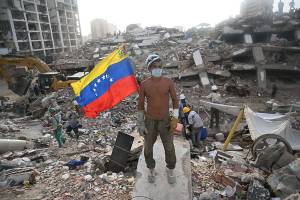
A scene in Venezuela 2 days ago.
The Financial Times has published an investigation of what happened to the money from Venezuela oil that Trump keeps bragging about. It’s behind a paywall, but here’s a discussion at The New Republic by Malcolm Ferguson: What Did Trump Do With the Billions He Collected From Venezuelan Oil?
The Trump administration has raked in about $13 billion after taking over Venezuela’s oil exports in the wake of its kidnapping of President Nicolás Maduro, according to a Financial Times analysis. But six months later, and one month after two devastating earthquakes, that money is nowhere to be found.
When Trump first seized the “millions of barrels” of oil back in January, he assumed complete control. His administration eventually proclaimed that it would use any profit from the sales for “the benefit of the American people and the Venezuelan people.” The State Department has since claimed that “billions of dollars have been disbursed to the Venezuelan economy” and that “financial monitoring is under way to ensure funds benefit the Venezuelan people.”
But none of that has been proven to be true. The Financial Timesreported Wednesday that there has been no evidence of oil money going back into the hands of the Venezuelans Trump claimed to care for, and that Venezuela’s first-quarter gross domestic product was the lowest it’s been in five years….
It seems clear that the most corrupt president in history is withholding oil revenue from Venezuelans who badly need it, as oil makes up nearly a quarter of the entire country’s GDP. In January, Semafor reported that Trump would be keeping proceeds from the first $500 million sale of Venezuelan oil in an offshore bank account based in Qatar. It might be worth checking up on that account.
That is another important topic that reporters could be asking Trump about.
This story is at the top of Memeorandum today, and it is crazy. It appears that the Department of Education may have rigged the outcome of the National Civics Contest.
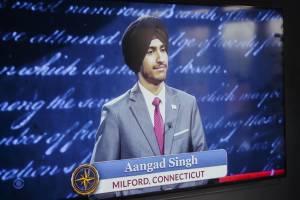
The morning after the competition, Aangad Singh’s family was trying to figure out what went wrong. They were walking through the National Museum of Natural History, going over answers, doing the math.
“It doesn’t make sense,” said his mother, Ramandeep.
Aangad Singh, 15, competes in the Presidential 1776 Award competition. Jalani Morgan for NOTUS
Ramandeep was good at numbers. But she couldn’t make them explain how her 15-year-old son had missed the top three in the Presidential 1776 Award competition, the civics contest for high schoolers that President Donald Trump’s party planners had created to celebrate America’s 250th birthday. She had watched the first round, when the field was whittled from 20 to eight, and the second round, when it went from eight to three. There was celebrity host Mario Lopez, an exclusive broadcast deal with CBS and a Kennedy Center stage that mixed game show spectacle with civic pageantry. The only thing missing was a scoreboard.
She told herself not to complain. She didn’t want to be that mom, a sore loser whose kid could never fail. On their way out, though, other parents kept stopping them.
“Shocked,” said more than one.
Later, a boy stopped her and said a group of contestants had kept score themselves.
“We thought he won,” the boy said.
She approached an official from the Department of Education, which had helped run the contest, and asked for the final scores.
“Proprietary,” the official said.
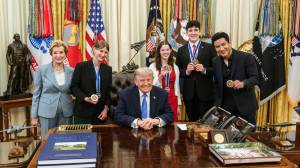
The scores are secret? What the hell? Please read the whole thing. And here’s a clue: these are the top three contestants:
The three finalists meet with President Donald Trump alongside Education Secretary Linda McMahon and contest host Mario Lopez in the Oval Office. Molly Riley, Official White House Photo
In Iran war news, Trump is threatening war crimes again.
President Trump threatened on Wednesday to strike bridges and power plants in Iran if it targeted any more ships in the Strait of Hormuz, as the prospect of a prolonged conflict pushed the price of oil to its highest level in over a month.
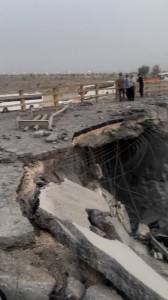
An image taken from social media and verified by The New York Times showing a damaged portion of a bridge in Hormozgan Province, Iran, on Friday.Credit…Social Media, via Reuters
“Any time the Islamic Republic of Iran shoots at a ship” in the strait, Mr. Trump said on social media, U.S. forces would hit the sites, including in or near the capital, Tehran. Deliberate strikes on civilian infrastructure could be considered a war crime under international law.
Mr. Trump has escalated his threats through weeks of rising bluster and deadly military exchanges, in which the United States has failed to either stop Iranian attacks or force the country’s hard-line leaders, who want to prolong the war, back to the negotiating table.
The threats also reflected how much the focus of the war has narrowed into a fight over the strait, a critical passage for global oil and gas, even as Mr. Trump maintains that his wider objective is preventing Iran from building a nuclear weapon. The strait was open and free to transit before the war began, but Iran has proved it can effectively control traffic with threats of strikes and, in doing so, gained powerful leverage over global markets.
The latest escalation came as Iranian officials had already reported recent strikes on bridges, and as Secretary of State Marco Rubio said that the United States would keep waging war as long as Iran tried to control the strait. Iran’s attacks on vessels there have brought ship traffic there to a near-total halt.
While Mr. Rubio left the door open for diplomacy after another night of U.S. and Iranian strikes across the Persian Gulf, he told reporters in Manila that Iran at this point was “not serious about talks,” arguing that Tehran had violated a preliminary agreement that says it should allow ships to transit the strait.
It’s too bad Trump can’t keep his big mouth shut for once.
The book by Maggie Haberman and Jonathan Swan, Regime Change, is doing very well, and Trump is not happy about it.
A book filled with damning revelations about Donald Trump’s second term is on track to be the bestselling nonfiction work of 2026, despite the president’s best efforts to undermine it.
The book, Regime Change: Inside the Imperial Presidency of Donald Trump, by New York Times reporters Maggie Haberman and Jonathan Swan, has sold over 500,000 units since its June 23 publication and has topped the New York Times nonfiction bestseller list for three consecutive weeks, Axios reported on Wednesday. The figure includes hardcover, audio, and e-book sales.
Maggie Haberman and Jonathan Swan, authors of Regime Change, on Meet the Press last month. Photo Shannon Finney, NBC via Getty Images
The strong sales follow a furious public attack by Trump, 80, who lashed out at Haberman in a post on Truth Social shortly after the book’s release.
“Based on a very quick and boring briefing concerning the Magot Hagerman book about me, it is mostly made up, Fake News, largely fiction, as have been most of the things she has written about me for so many years,” Trump, 80, wrote, intentionally using an insulting nickname for the veteran New York Times reporter….
He tore into Haberman, calling her “a third rate writer and intellect” without mentioning Swan.
According to Axios, Simon & Schuster has ordered a seventh printing of Regime Change, bringing the total number of hardcovers in print to 460,000. The publisher had already ordered an additional 150,000 copies on publication day to meet unexpectedly strong demand.
“Maggie and Swan pierced the veil of a White House that has been pretty locked down on scoops and scenes. ‘Regime Change’ is a unicorn of publishing. It goes well beyond political circles to people who are hungry for a narrative and frame to make sense of Trump 2.0. Even Trump and his team aren’t disputing the facts.”
Read some embarrassing tidbits from the book at the Daily Beast link.
PARIS, July 22 (Reuters) – Daniel Siad, a modelling scout with ties to the late convicted sex offender Jeffrey Epstein, has been found dead at his home outside Paris, prosecutors said on Wednesday.
Siad’s body was discovered on Monday evening. An autopsy will be carried out to determine the cause of death, the Nanterre prosecutor’s office said.
Siad’s name appeared nearly 2,000 times in the Epstein files released by the U.S. Department of Justice.
According to French media, at least five women accused Siad, 69, of rape and human trafficking, allegations Siad denied.
Siad’s lawyer told Reuters in an emailed statement that the modelling scout was never formally the subject of judicial proceedings….
Siad told French broadcaster BFM in May that his relationship with Epstein was strictly professional.
“Daniel Siad never stopped proclaiming his innocence,” his lawyer, Meyna Arab-Tigrine, said. Siad had died of a heart attack, she added.
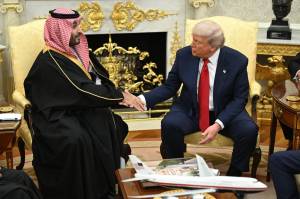
This seems like a very bad idea to me. Trump wants to let Saudi Arabia start down the road to owning nuclear weapons.
The Trump administration plans to announce Wednesday that it has reached a broad nuclear agreement with Saudi Arabia that could lead to the country enriching its own fuel for nuclear reactors, U.S. officials said.
The accord is intended to further bind the United States with the Saudi government as the war with Iran strains the relationship. The Trump administration, according to officials, estimates it will provide billions of dollars for the U.S. nuclear industry — starting with Westinghouse, which designs many of the reactors sold abroad.
Trump and Saudi Prince Mohammed bin Salman in oval office
The Trump administration plans to formally sign and announce the agreement with the Saudis on Wednesday, said two U.S. officials, who spoke on the condition of anonymity to discuss sensitive diplomacy. It would announce the details to Congress soon afterward.
Although the agreement likely would have support among many Republicans, some U.S. lawmakers from both parties along with Israeli officials have expressed opposition to such a plan, fearing that the kingdom could use a civilian nuclear project to eventually develop nuclear weapons.
Secretary of State Marco Rubio told reporters traveling with him in Manila on Wednesday that he had nothing to say about any nuclear agreement with Saudi Arabia. “Maybe later today, once Washington wakes up, there is an announcement,” he said. “I promise you’ll know about it.”
Asked about concerns that the agreement could lead to Saudi Arabia developing nuclear weapons, Mr. Rubio said, “Suffice it to say, the U.S. is not going to reach any agreement with any country in the world that leads to the risk of proliferation.”
The accord has been under discussion for years, and during the Biden administration it was envisioned as part of a broader deal that would include Saudi diplomatic recognition of Israel. But after the Oct. 7, 2023, attacks on Israel by Hamas, that prospect receded. President Trump separated the proposal for U.S.-Saudi civilian nuclear cooperation from any demand that Saudi Arabia recognize Israel.
The agreement will require review by Congress, which under the Atomic Energy Act has the power to vote a resolution of disapproval. But as a practical matter, the agreement would likely pass, because Congress would have to assemble a veto-proof majority to override Mr. Trump’s initiative.
The Trump administration ignored warnings from career staff at the Commerce Department when it granted the United Arab Emirates sweeping access to advanced American semiconductors and other technology, according to three former officials with knowledge of the reports and two other people familiar with the matter.
The Commerce Department’s Bureau of Industry and Security announced on July 10 that it was loosening restrictions on sensitive tech exports to the UAE, a key ally in the war in the Middle East whose leaders pledged last year to invest more than $1 trillion in the U.S. over the coming decade. According to one of the people familiar and two former officials, the announcement surprised staff inside the agency, which is tasked with securing American tech from adversaries and criminals. It also ran directly against recommendations staffers submitted to senior Trump administration officials at the department last year.
The five people said agency staff compiled and circulated multiple internal reports and memos last fall documenting security risks tied to G42, the UAE’s state-backed AI giant, and its affiliated companies. In the assessments, which have not been previously reported, staff warned that expanding the companies’ access to U.S. technology — such as cutting-edge processors from companies like Nvidia, as well as the powerful AI models built with them — made it more likely the technology would get into the hands of adversaries. In particular, they flagged concerns about China’s influence in the Emirates.
“It is an open secret that the UAE is the primary diversion point for sensitive U.S. technologies in the Middle East — by orders of magnitude,” said one of the people familiar, who like others in this story was granted anonymity to describe internal deliberations.
But senior Commerce officials who were presented with the reports, including Jeffrey Kessler, the Commerce undersecretary in charge of BIS, ultimately brushed aside the warnings, the people said.
One more shocking story in this wide-ranging post:
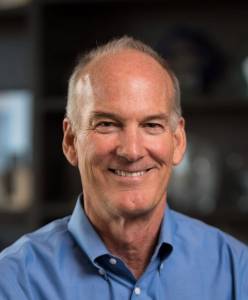
The lettuce supplier at the center of the turbo diarrhea outbreak has spent millions of dollars to sway sentiment around food regulation and elect Donald Trump and other MAGA Republicans, according to public filings.
Taylor Farms donated more than $2 million to conservative political groups in 2025, according to Federal Election Commission filings. That includes a $1 million donation to MAGA Inc., the Trump-centric super PAC, and $1.1 million to other super PACs dedicated to electing Republicans.
Bruce Taylor, CEO of Taylor Farms
From 2020 through the end of 2024, the company donated more than $1.6 million to conservative PACs, including a total of $850,000 to AFP Action, an anti-regulation super PAC with ties to the Koch network.
Bruce Taylor, the chairman and CEO of Taylor Farms, is also a longtime donor to Republican causes. Since 2020, Taylor has personally donated more than $900,000 to Republican PACs and candidates, including contributions to Texas senator John Cornyn and Tennessee senator Marsha Blackburn.
Like many corporate giants, Taylor Farms has also spent big on lobbying related to industry regulation. In early 2025, it hired lobbyists at the firm Sidley Austin to advocate on behalf of the company on “regulation of food safety,” according to disclosure documents. Since then, the company has spent $810,000 on its lobbying efforts.
Marion Nestle, a food policy expert, said that Taylor Farms’ donations are part of a wider problem in the American food industry: that multibillion-dollar companies use their financial resources to push policies that would reduce food safety regulation and accountability when outbreaks occur.
“The FDA has regulations in place for what food producers are supposed to be doing, but nobody wants to do it—because it’s expensive and difficult,” Nestle told WIRED.
In a post on X, the US Department of Health and Human Services emphasized that Taylor Farms’ political donations did not influence the Trump administration’s response to the cyclospora outbreak.
“This is how the FAKE NEWS works: imply collusion, ignore the facts,” the HHS account posted on Monday. “Nothing influences our decisions except science and the safety of the American people.”
Riiiiiight. I don’t believe that for one minute.
That’s all I have for today. Thoughts? Are there other stories you’d like to share?
Did you like this post? Please share it with your friends:
This morning I forced myself to watch and listen to Trump’s full interview with Jonathan Swan of Axios. It wasn’t easy. Of course it was characterized by Trump’s lying, obfuscating, and excuse-making, but oddly my biggest takeaway was that Trump truly sounds like a feeble old man now. His voice seems very different from the way he sounded during the 2016 campaign–it sounds weak and reedy. I think the difference after four years is really striking. Here’s the interview:
“Voice can depend on general health. In general, we start seeing aging problems at age 65,” says Claudio Milstein, associate professor of surgery at Cleveland Clinic Lerner College of Medicine. “The typical change as we get older, is that we get thin, breathy voices … [and] those are the characteristics that make it sound like a person has an old voice.”
Evidence confirms that voices do change with age. The vocal chords should vibrate between 90 and 230 times per minute, with young people experiencing the most movement and older people experiencing the least, explains Amee Shah, associate professor and director of the Research Laboratory in Speech Acoustics and Perception at Cleveland State University.
“In my lab we look at acoustic data because perception can be misleading and the hard numbers confirm it. It is true that as we age our voices change,” says Shah.
When we age our vocal chords weaken and become drier. Our respiratory systems and torsos change, too, with our lungs and chest cavities becoming more rigid, while our spines curve, causing us to stoop over (for some a little, others a lot). Weakened and dry vocal chords become stringy, which prevent normal vibration, causing higher pitched voices that sound thin. And the transformations in the respiratory system and chest mean we have less power behind our voices. Even the joints in our vocal chords can become arthritic, contributing to problems.
“The vocal folds are made up of muscle and collagen among other things. Just like other muscles thin out or atrophy, the vocal folds do as well,” says Gina Vess, a speech pathologist and director of the Clinical Voice Programs at Duke University Medical Center.
As for the content of the interview, I thought it was interesting that Swan began with a question about Trump’s commitment to Norman Vincent Peale’s positive thinking. Like his wealth, this was something that Trump got from his father, according to his niece Mary Trump.
“Affirm it, believe it, visualize it, and it will actualize itself.” Such mantras have characterized much of the Trump story from his childhood when he first absorbed it from the man who first spoke it, Norman Vincent Peale.
Peale was a minister and author much admired by Trump’s father. His most famous book, The Power of Positive Thinking, sold millions of copies in multiple languages and helped spawn a self-help movement and industry that has flourished ever since.
The Trumps attended Peale’s Marble Collegiate Church on Fifth Avenue in Manhattan, and Peale officiated at the first of Donald Trump’s three marriage ceremonies.
Emulating Peale’s ferocious focus on attitude probably helped Trump plow ahead when his presidential prospects seemed hopeless just weeks before Election Day in 2016. The candidate appeared behind in polls and a now-infamous audio recording revealed his toxic comments about women.
But “there are no hopeless situations,” Peale had counseled, “only people who take hopeless attitudes.”
Obstacles, Peale taught, should never be a deterrent: “You will find they haven’t half the strength you think they have.”
Until this year, it is possible Trump took this literally. Arguably, he was getting away with it far more often than not.
He seemed to have been experimenting with this parallel universe approach all his life.
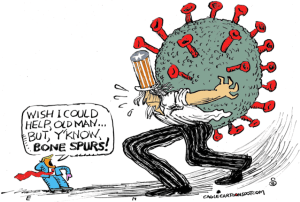
Trump is trying to apply the “power of positive thinking to the coronavirus pandemic, and it’s obviously not working for him, because a virus can’t be hoodwinked like people can.
So what happens when positive thinking fails? What happens when the power goes out? In common experience, when the power goes out, it gets darker.
Trump’s critics and opponents say that is exactly what we are seeing in America today.
Unable to conquer the combination of pandemic effects and civil unrest by the force of his will and a Twitter blizzard of “alternative facts,” Trump is now turning to a set of alternative powers.
Now Trump has turned to outright fascist tactics–sending federal agents into U.S. cities to put down protests against police brutality, trying to delegitimize the upcoming presidential election, working to suppress votes by destroying the Post Office and sabotaging the U.S. Census.
Axios National Political Correspondent Jonathan Swan began the interview by asking Trump if his sometimes “wishful thinking” and “salesmanship” was suitable in a crisis that has killed more than 155,000 people in the U.S.
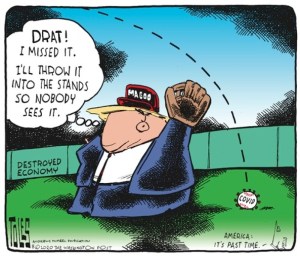
Tom Toles Editorial Cartoon
“I think you have to have a positive outlook, otherwise you would have nothing,” Trump said. As he frequently has done in defending his record on the pandemic, the president pointed to the travel restrictions he imposed on China and Europe, arguing hundreds of thousands – a number he later put in the “millions” – more would have died without those actions. He added that even one death was too many.
“Those people that really understand it, that really understand it, they said it’s incredible the job that we’ve done,” Trump said.
“Who says that?” Swan asked, but Trump continued to talk about the China travel ban. Swan pointed out that the virus was already in the U.S. by the time Trump issued the ban.
Swan pressed Trump on whether his positive spin on outbreak – telling people the outbreak is under control and not to worry about wearing masks – could be putting people in danger by “giving them a false sense of security.” [….]
Trump responded to that criticism by saying he thinks the outbreak is “under control.” Swan asked how he could say that as the average number of daily deaths had climbed back up to over 1,000.
“They are dying, that’s true. And it is what it is,” Trump said. “But that doesn’t mean we aren’t doing everything we can. It’s under control, as much as you can control it.”
1,000 people a day is more deaths than America suffered, on average, during WWII.
It’s sometimes hard to determine whether President Trump is being willfully misleading or if he truly believes what he’s saying. But an astonishing interview clip from Axios appears to show that Trump has genuinely managed to convince himself that his response to the coronavirus pandemic has been effective—because he only considers partial and deceptively flattering statistics to be true. Brandishing childishly simplistic, brightly colored COVID-19 graphs presumably provided to him by aides trying to keep him happy, Trump proudly tells Axios’ Jonathan Swan that the U.S. is “lower than the world,” without elaborating. When Swan looks at the chart, it becomes clear Trump is only considering death as a proportion of coronavirus cases—not as a proportion of population, which shows the U.S. is faring very badly. Trump snaps back: “You can’t do that.” Holding out his charts, he goes on: “You have to go by where… look, here is the United States… You have to go by the cases.” Asked why South Korea has lower deaths by population, Trump hints that he believes the country is faking its stats, without providing any evidence to support himself.
.@jonathanvswan: “Oh, you’re doing death as a proportion of cases. I’m talking about death as a proportion of population. That’s where the U.S. is really bad. Much worse than South Korea, Germany, etc.”@realdonaldtrump: “You can’t do that.”
President Trump raised new alarms about the alleged danger of election fraud in an interview with “Axios on HBO,” warning that “lots of things can happen” with voting by mail if the presidential race isn’t decided on election night.
Why it matters: Trump’s comments — which contradict the lengthy history and widespread use of mail-in voting — could be a preview of the claims he’ll make on election night to undermine trust in the results if he appears to be losing.
Election experts say there’s a good chance that the presidential race won’t be decided on election night, and could drag on for days, because so many people will vote by mail to protect themselves from the coronavirus.
One expert’s scenario suggests that the early returns could favor Trump because most Republicans will vote in person, but that the later returns will swing toward Joe Biden because many Democrats will vote by mail.
Axios: Trump declines to praise John Lewis, citing inauguration snub.
President Trump dismissed the legacy of the late Rep. John Lewis in an interview with “Axios on HBO,” saying only that Lewis made a “big mistake” by not coming to his inauguration.
The big picture: Trump’s comments were a glaring contrast with the praise Republicans and Democrats showered upon Lewis this week, and a default to personal grudges during a week of mourning for a civil rights hero….
When asked if he found Lewis’ life impressive, Trump responded, “He didn’t come to my inauguration. He didn’t come to my State of the Union speeches. And that’s OK. That’s his right. And, again, nobody has done more for Black Americans than I have.” [….]
Trump also declined to say whether he found Lewis personally impressive: “I can’t say one way or the other. I find a lot of people impressive. I find many people not impressive.”
Trump tells #AxiosOnHBO that he “can’t say one way or the other” whether John Lewis was impressive.
There’s much more to the interview, which was a disaster for Trump. I have to say that Swan did an excellent job. If you can stand to, I hope you’ll watch the whole thing. It’s around 30 minutes long. I’d really like to know what you think about Trump’s old-man voice too.
Have a great day everyone! I’ll post some news links in the comment thread below.
Did you like this post? Please share it with your friends:
The Sky Dancing banner headline uses a snippet from a work by artist Tashi Mannox called 'Rainbow Study'. The work is described as a" study of typical Tibetan rainbow clouds, that feature in Thanka painting, temple decoration and silk brocades". dakinikat was immediately drawn to the image when trying to find stylized Tibetan Clouds to represent Sky Dancing. It is probably because Tashi's practice is similar to her own. His updated take on the clouds that fill the collection of traditional thankas is quite special.
You can find his work at his website by clicking on his logo below. He is also a calligraphy artist that uses important vajrayana syllables. We encourage you to visit his on line studio.




 peej
peej Carissa
 bostonboomer
 dakinikat
 ecocatwoman
 jjlo
jjlo mablue2
 Mama Lopez
 peggysue22
 quixote
 skydancingguestblogger
 Mona (aka Wonk the Vote)





Recent Comments