
Thursday Reads: Defense Authorization Bill, Ron Wyden, the Filthy Rich, and Bird Crashes
Posted: December 15, 2011 Filed under: #Occupy and We are the 99 percent!, 2012 presidential campaign, Banksters, Barack Obama, Civil Liberties, George W. Bush, income inequality, indefinite detention, Medicare, morning reads, net-neutrality, Psychopaths in charge, Republican presidential politics, U.S. Economy, U.S. Military, U.S. Politics, We are so F'd, WE TOLD THEM SO | Tags: ACLU, Afghanistan War, AUMF, Carl Levin, CEO salaries, defense authorization bill, Diane Feinstein, Emptywheel, Harry Truman, Human Rights Watch, indefinite detention, Iraq War, John McCain, Newt Gingrich, taxes, terrorism 71 Comments
Good Morning!!
So far I haven’t been locked up in Guantanamo or debtors’ prison. I hope the rest of you Sky Dancers still have your freedom too, such as it is.
Yesterday the U.S. House of Representatives passed the Defense Authorization bill, which includes language permitting indefinite detention by the military of “al Qaeda members” without specific charges or trials. You can read the bill here.
Our craven and cowardly President had promised to veto this bill, but today the White House reneged on that promise, and Obama is set to sign it once it passes the Senate tomorrow or Friday.
The White House backed down from its veto threat of the defense authorization bill Wednesday, saying that the bill’s updated language would not constrain the Obama administration’s counterterrorism efforts.
While the White House acknowledged it still has some concerns, press secretary Jay Carney said President Obama’s advisers wouldn’t recommend a veto, a threat that had been hanging over the Pentagon policy bill for the past month.
Obama and his crew don’t care about the fifth amendment, habeas corpus and all that jazz–just that the president is the one who decides who is an “al Qaeda member” and therefore will be whisked away to indefinite detention. Wanna bet there are suddenly going to be a lot of “al Qaeda members” in the Occupy movement? From Anti-War.com:
As revealed in the Senate deliberations last week, the Obama administration itself requested the principal authors of the provision – John McCain and Carl Levin – to include language authorizing due-process-free military custody for American citizens. The initial threat of veto was apparently nothing more than political theater on the part of the White House.
According to The Hill, the following changes satisfied the White House concerns:
The bill deleted the word “requirement” from the section on the military detention of terror suspects, which was among the most contentious parts of the bill.
The national security waiver allowing the executive branch to move terror suspects from military to civilian courts was placed in the president’s hands rather than the Defense secretary’s, a change Levin said Obama had asked for.
The conference bill was based on the Senate language, which was not as harsh as the House bill when it came to trying terror suspects in civilian courts.
The administration called the provision in the bill that establishes the authority for military detentions unnecessary because the executive branch already was given this authority following Sept. 11.
Carney’s statement said if the administration finds parts of the law “negatively impact our counterterrorism professionals and undercut our commitment to the rule of law,” it expects the bill’s authors will correct those problems.
Oh well, then no worries… Except that lots of people who care about the Constitution aren’t so happy about it. Here’s a statement from Laura Murphy of the ACLU:
“The president should more carefully consider the consequences of allowing this bill to become law,” Laura W. Murphy, director of the ACLU Washington Legislative Office. “If President Obama signs this bill, it will damage both his legacy and American’s reputation for upholding the rule of law. The last time Congress passed indefinite detention legislation was during the McCarthy era and President Truman had the courage to veto that bill. We hope that the president will consider the long view of history before codifying indefinite detention without charge or trial.”
Unfortunately, Barack Obama is no Harry Truman.
Here’s a statement from Human Rights Watch:
“By signing this defense spending bill, President Obama will go down in history as the president who enshrined indefinite detention without trial in US law,” said Kenneth Roth, executive director of Human Rights Watch. “In the past, Obama has lauded the importance of being on the right side of history, but today he is definitely on the wrong side.”
The far-reaching detainee provisions would codify indefinite detention without trial into US law for the first time since the McCarthy era when Congress in 1950 overrode the veto of then-President Harry Truman and passed the Internal Security Act. The bill would also bar the transfer of detainees currently held at Guantanamo into the US for any reason, including for trial. In addition, it would extend restrictions, imposed last year, on the transfer of detainees from Guantanamo to home or third countries – even those cleared for release by the administration.
There are currently 171 detainees at Guantanamo, many of whom have been imprisoned for nearly 10 years. As one of his first acts in office, Obama signed an executive order for the closure of Guantanamo within one year. Instead of moving quickly to close the prison and end the use of the discredited military commissions, he supported modifications to the Military Commissions Act.
“It is a sad moment when a president who has prided himself on his knowledge of and belief in constitutional principles succumbs to the politics of the moment to sign a bill that poses so great a threat to basic constitutional rights,” Roth said.
The bill also requires the US military take custody of certain terrorism suspects even inside the United States, cases that previously have been handled by federal, state and local law enforcement authorities. During debate over the bill, several senior administration officials, including the secretary of defense, attorney general, director of national intelligence, director of the FBI, and director of the CIA, all raised objections that this provision interfered with the administration’s ability to effectively fight terrorism. In the last 10 years over 400 people have been prosecuted in US federal courts for terrorism related offenses. Meanwhile during that same period, only six cases have been prosecuted in the military commissions.
“President Obama cannot even justify this serious threat to basic rights on the basis of security,” Roth said. “The law replaces an effective system of civilian-court prosecutions with a system that has generated the kind of global outrage that would delight recruiters of terrorists.”
The bill also reauthorizes the AUMF that Bush used to get us into Iraq. Emptywheel has a lengthy post in which she wonders: Feinstein’s “Fix” on AUMF Language Actually Authorize Killing American Citizens? You probably should read the whole thing, but here’s the summation:
…by affirming all purportedly existing statutory authority, DiFi’s “fix” not only reaffirmed the AUMF covering a war Obama ended today, but also affirmed the Executive Branch’s authority to use deadly force when ostensibly trying to detain people it claimed present a “significant threat of death or serious physical injury.” It affirms language that allows “deadly force” in the name of attempted detention.
In any case, it’s one or the other (or both). Either the AUMF language became acceptable to Obama because it included American citizens in the Afghan AUMF and/or it became acceptable because it affirmed the Executive Branch’s authority to use deadly force in the guise of apprehending someone whom the Executive Branch says represents a “significant threat.”
My guess is the correct answer to this “either/or” question is “both.”
So DiFi’s fix, which had the support of many Senators trying to protect civil liberties, probably made the matter worse.
In its more general capitulation on the veto, the Administration stated that the existing bill protects the Administration’s authority to “incapacitate dangerous terrorists.” “Incapacitate dangerous terrorists,” “use of deadly force” with those who present a “significant threat of death or serious physical injury.” No matter how you describe Presidential authority to kill Americans with no due process, the status quo appears undiminished.
Finally Al Jazeera asks: Is the principle of indefinite detention without trial now an accepted and permanent part of American life? I wonder if Michelle Obama is still proud to be an American today?
There is some other news, of course. For one thing, it seems as if Rep. Ron Wyden of Oregon must have more energy I can imagine having. As of today he managed to get the decisions on rural post office closings postponed until next May; he joined with Rep. Paul Ryan (!) to propose a medicare overhaul; and he and Darrel Isa (!) have proposed an alternative to the entertainment industry bill that would effectively shut down social networking on the internet. Check out those links if you’re interested.
One of my favorite economists, Robert Reich, has an analysis of Newt’s Tax Plan, and Why His Polls Rise the More Outrageous He Becomes.
Newt’s plan increases the federal budget deficit by about $850 billion – in a single year!
….
Most of this explosion of debt in Newt’s plan occurs because he slashes taxes. But not just anyone’s taxes. The lion’s share of Newt’s tax cuts benefit the very, very rich.
That’s because he lowers their marginal income tax rate to 15 percent – down from the current 35 percent, which was Bush’s temporary tax cut; down from 39 percent under Bill Clinton; down from at least 70 percent in the first three decades after World War II. Newt also gets rid of taxes on unearned income – the kind of income that the super-rich thrive on – capital-gains, dividends, and interest.
Under Newt’s plan, each of the roughly 130,000 taxpayers in the top .1 percent – the richest one-tenth of one percent – reaps an average tax cut of $1.9 million per year. Add what they’d otherwise have to pay if the Bush tax cut expired on schedule, and each of them saves $2.3 million a year.
To put it another way, under Newt’s plan, the total tax bill of the top one-tenth of one percent drops from around 38 percent of their income to around 10 percent.
What about low-income households? They get an average tax cut of $63 per year.
Oh, I almost forgot: Newt also slashes corporate taxes.
Wow!
Dakinikat clued me in to this post at Naked Capitalism: “Let Them Eat Pink Slips” CEO Pay Shot Up in 2010, which links to this article in the Guardian.
Chief executive pay has roared back after two years of stagnation and decline. America’s top bosses enjoyed pay hikes of between 27 and 40% last year, according to the largest survey of US CEO pay. The dramatic bounceback comes as the latest government figures show wages for the majority of Americans are failing to keep up with inflation.
America’s highest paid executive took home more than $145.2m, and as stock prices recovered across the board, the median value of bosses’ profits on stock options rose 70% in 2010, from $950,400 to $1.3m. The news comes against the backdrop of an Occupy Wall Street movement that has focused Washington’s attention on the pay packages of America’s highest paid.
The Guardian’s exclusive first look at the CEO pay survey from corporate governance group GMI Ratings will further fuel debate about America’s widening income gap. The survey, the most extensive in the US, covered 2,647 companies, and offers a comprehensive assessment of all the data now available relating to 2010 pay.
And these oligarchs couldn’t care less if we like it or not. They own the White House and the Congress and we don’t.
I’ll end with a bizarre and very sad story out of Utah:
Thousands of migratory birds were killed or injured after apparently mistaking a Wal-Mart parking lot, football fields and other snow-covered areas of southern Utah for bodies of water and plummeting to the ground in what one state wildlife expert called the worst mass bird crash she’d ever seen.
Crews went to work cleaning up the dead birds and rescuing the injured survivors after the creatures crash-landed in the St. George area Monday night.
By midday Wednesday, volunteers had helped rescue more than 3,000 birds, releasing them into a nearby pond. There’s no count on how many died, although officials estimate it’s upwards of 1,500.
“They’re just everywhere,” said Teresa Griffin, wildlife program manager for the Utah Division of Wildlife Resource’s southern region. “It’s been nonstop. All our employees are driving around picking them up, and we’ve got so many people coming to our office and dropping them off.”
Those are my recommendations for today. What are you reading and blogging about?
Independence Day Reads
Posted: July 4, 2011 Filed under: Bailout Blues, Domestic Policy, Economy, Foreign Affairs, Global Financial Crisis, Greece, investment banking, morning reads | Tags: Bill Clinton, Budget Deficit, debt limit, Fukushima, Greek Debt Crisis, John McCain, nuclear crisis, shadow banking industry, SIVs, taxes 16 Comments Happy Independence Day!
We have a republic and a lot of people have sacrificed a lot over the last several centuries to keep it. Too bad most of our politicians aren’t in that number. They can’t see past their next elections.
It seems that two senators– McCain and Corynyn–say they’re open to tax increases as a way to solve the budget stand off. Guess there are a few of them left that would prefer not to tank our economy. Let’s hope this starts some real negotiations instead of the usual Republican hostage taking and Democratic cave-in that’s been politics as usual the last dozen years or so.
One of the senators, John Cornyn of Texas, said he would consider eliminating some tax breaks and corporate subsidies in the context of changes in the tax code, provided there was not an overall increase in taxes.
“I think it’s clear that the Republicans are opposed to any tax hikes, particularly during a fragile economic recovery,” Mr. Cornyn said on “Fox News Sunday.” “Now, do we believe tax reform is necessary? I would say absolutely.”
But he insisted that any changes in taxes be “revenue neutral,” meaning that the government would not take in any more money from individuals or businesses than it does now.
The other senator, John McCain of Arizona, said he would be willing to consider some “revenue raisers” as part of a broad deal, but he refused to name specific measures.
Mr. Cornyn, a member of the Senate leadership, also said that Republicans would be open to a short-term deal on the debt ceiling to provide more time for a comprehensive agreement.
Let’s also hope that more reasonable and less ideological heads prevail on the right and that the left stands up for what’s right for a change. Former President Clinton had a words of policy advice over the weekend. His advice to President Obama is “not to blink”.
Former President Bill Clinton Saturday night urged President Obama not to “blink” at Republican demands to exclude revenue increases from any agreement to extend the government’s debt ceiling.
If Republicans maintain their opposition to revenue increases, Clinton said, Obama should pursue a short-term deal to extend the debt ceiling based on spending cuts both sides have already accepted in the negotiations between the administration and Congressional leaders from both parties.
“I hope they will make a mini-deal,” Clinton said in an interview conducted with him at the Aspen Ideas Festival here.
The White House and Congressional negotiators from both parties are attempting to assemble a deficit reduction package that could win support in Congress for legislation to extend the nation’s debt ceiling, which the Treasury says the government will reach on August 2. The talks have foundered amid demands from Congressional Republicans to exclude any revenue increases from that prospective deficit reduction package.
Asked what the administration could do if GOP leaders hold to that posture, Clinton replied: “First the White House could blink. I hope that won’t happen. I don’t think they should blink.”
If Republicans will not accept revenues in a package to lift the debt ceiling by August 2, Clinton said, Obama should pursue a short-term agreement based on the spending reductions both sides have already accepted.
“There are some spending cuts they agree on …and he can take those and [get] an extension of the debt ceiling for six or eight months,” Clinton said.
Clinton also called on a package of reforms to US tax policy that includes a corporate tax cut if special interest tax loops are closed. This is something Obama has also supported.
“It made sense when I did it. It doesn’t make sense anymore – we’ve got an uncompetitive rate. We tax at 35 percent of income, although we only take about 23 percent. So, we SHOULD cut the rate to 25 percent, or whatever’s competitive, and eliminate a lot of the deductions so that we still get a FAIR amount, and there’s not so much variance in what the corporations pay. But how can they do that by Aug. 2?”
Clinton also said Grover Norquist, who as president of Americans for Tax Reform is the GOP’s unofficial enforcer of no-new-taxes pledges, has a “chilling” hold on the nation’s lawmaking.
The former president said it has seemed like Republicans need any revenue concessions need to be “approved in advance by Grover Norquist.”
“You’re laughing,” he told the crowd of 800. “But he was quoted in the paper the other day saying he gave Republican senators PERMISSION … on getting rid of the ethanol subsidies. I thought, ‘My GOD, what has this country come to when one person has to give you permission to do what’s best for the country.’ It was chilling.
There’s an extremely interesting piece at The Atlantic Wire on “What Really Happened at Fukushima”. It includes interviews with workers that have been inside the crippled nuclear plant.
Throughout the months of lies and misinformation, one story has stuck: “The earthquake knocked out the plant’s electric power, halting cooling to its reactors,” as the government spokesman Yukio Edano said at a March 15 press conference in Tokyo. The story, which has been repeated again and again, boils down to this: “after the earthquake, the tsunami – a unique, unforeseeable [the Japanese word is soteigai] event – then washed out the plant’s back-up generators, shutting down all cooling and starting the chain of events that would cause the world’s first triple meltdown to occur.”
But what if recirculation pipes and cooling pipes, burst, snapped, leaked, and broke completely after the earthquake — long before the tidal wave reached the facilities, long before the electricity went out? This would surprise few people familiar with the 40-year-old Unit 1, the grandfather of the nuclear reactors still operating in Japan.
The authors have spoken to several workers at the plant who recite the same story: Serious damage to piping and at least one of the reactors before the tsunami hit. All have requested anonymity because they are still working at the plant or are connected with TEPCO. One worker, a 27-year-old maintenance engineer who was at the Fukushima complex on March 11, recalls hissing and leaking pipes. “I personally saw pipes that came apart and I assume that there were many more that had been broken throughout the plant. There’s no doubt that the earthquake did a lot of damage inside the plant,” he said. “There were definitely leaking pipes, but we don’t know which pipes – that has to be investigated. I also saw that part of the wall of the turbine building for Unit 1 had come away. That crack might have affected the reactor.”
The reactor walls of the reactor are quite fragile, he notes. “If the walls are too rigid, they can crack under the slightest pressure from inside so they have to be breakable because if the pressure is kept inside and there is a buildup of pressure, it can damage the equipment inside the walls so it needs to be allowed to escape. It’s designed to give during a crisis, if not it could be worse – that might be shocking to others, but to us it’s common sense.”
Here’s some frightening news on the disaster in Japan. Radioactive Cesium has been found in Tokyo’s water supply.
Radioactive cesium-137 was found in Tokyo’s tap water for the first time since April as Japan grapples with the worst nuclear disaster in 25 years.
Cesium-137 concentration registered at 0.14 becquerels per kilogram in the city’s Shinjuku ward on July 2, compared with 0.21 becquerels on April 22, according to the Tokyo Metropolitan Institute of Public Health. No cesium-134 or iodine-131 was detected, the agency said on its website.
The Nuclear Safety Commission of Japan sets a safety limit of 200 becquerels per kilogram for cesium-134 and cesium-137. The limit for iodine-131 consumption is 300 becquerels per kilogram.
Japan is battling radiation leaks into the air, soil and water after an earthquake and tsunami on March 11 knocked out cooling systems at Tokyo Electric Power Co.’s Fukushima Dai- Ichi nuclear station, resulting in the meltdown of three of the six reactors at the plant.
The UK Guardian lists an interesting set of Greek public assets for sale. Many have no buyers. Bobby Jindal is putting up a lot of Louisiana assets for sale too. I wonder if this is going to be the new way to raise money. The Kochs already rent a big chunk of Yellowstone. Let’s hope we don’t have to put our national treasures on the chopping block.
Up for sale are 39 airports, 850 ports, railways, motorways, sewage works, a couple of energy companies, banks, defence groups, thousands of acres of land for development, casinos and Greece’s national lottery. George Christodoulakis, Greece’s special secretary for asset restructuring and privatisations, said the sell-off would raise €50bn (£44bn) to help pay back the country’s €110bn bailout debt.
The private equity bosses gathered in the hotel’s ballroom for the parade of Greece’s national treasures showed little interest in buying anything.
Nikos Stathopoulous, managing partner of BC Partners, which has invested more than €3.5bn in Greece, said investors are put off by bureaucracy, strong unions, corruption and a lack of transparency. “Even in the good times Greece is not a country that attracts investment. Foreign investors don’t want to invest in a country where there is no flexibility in hiring and firing people,” he said. “You don’t want to invest in a country in which you wake up and a new law has been passed which totally undermines and destroys the value of the investment you’ve just made.”
Stathopoulous said investors were finding it very hard to assess the risk of investing into Greece, which means assets “will be priced at lower than they are worth, lower than the Greek government, and even the European Union, expects”.
Here’s a compelling argument for getting the shadow banking sector into a more regulated, transparent, and standardized order. It’s written by Henry Tabe who is a Founding Partner of Sequoia Investment Management Company Ltd. It particularly addresses the use of the Structured Investment Vehicle (SIV). Complex, nonstandard, and unregulated markets make pricing assets difficult and introduce unnecessary risk and volatility.
Risk management requires identification, measurement, aggregation, and effective management of risks. It should help businesses allocate sufficient capital for survival and growth. The SIV’s extinction highlights risk management failures by the vehicles, their sponsors, rating agencies, policymakers, and regulators.
Financial regulators permitted bank, insurance company, pension, and hedge-fund sponsors to establish SIV “mini-banks” without ensuring that they maintain sufficient capital or back-stop liquidity in the event of a run. Policymakers also seemed unaware of the knock-on effects of the SIV’s demise on the securitisation and global credit markets. The Financial Security Authority’s call for regulators to incorporate sectoral analytical capabilities in their micro-prudential policies should help close the knowledge gap and ensure that timely solutions can be implemented to avert collapses that engender significantly more stress on the financial system (FSA 2009).
Lessons learned include the tightening of regulation governing the sponsorship of off-balance-sheet structures and the sizing of their capital and liquidity needs. These require that regulators adopt a more proactive, dampening role in the wild swings from exuberance to despair that are so characteristic of the financial markets. Discussions around contingent capital and similar products suggest regulators have embraced that dampening role and moved away from the prevailing pre-crisis philosophy of minimal regulation.
Lessons learned also include closer supervision of shadow banks, more skin-in-the-game for their sponsors, in-house retention of risk-analytics capabilities by investors, and less reliance on credit-rating agencies. The agencies themselves are more tightly supervised in order to reduce ratings shopping by issuers and inherent conflicts of interest in the business model (CESR 2009). Tighter regulation will also help to ensure that the agencies improve the monitoring of analyst performance, qualifications, and experience (Dodd-Frank 2010).
These measures should help restore confidence in rating agencies and the global financial system, an outcome more urgently required given on-going turmoil in the sovereign debt market.
So, there’s some wonky goodness to keep you entertained if you’re inside today. Be sure to let us know what you’re reading and blogging! Hope your Fourth of July is a happy one!
Late Night Drifts
Posted: January 27, 2011 Filed under: Barack Obama, Team Obama, the villagers, U.S. Politics, Wikileaks | Tags: Alex Pareene, Barack Obama, Claire Shipman, David Dayen, FBI Raids, Jay Carney, Jay Rosen, John McCain, Mark Salter, Operation Payback, Rick Perlstein, Robert Gibbs, snow, Wikileaks 12 Comments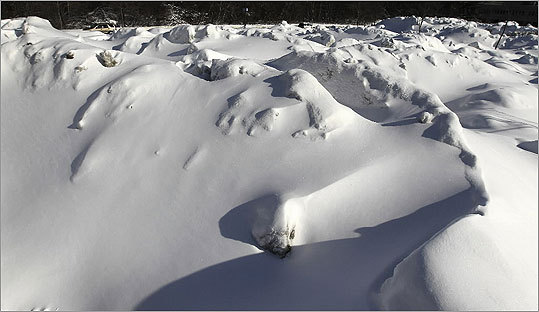
Snowdrifts in a shopping center parking lot South of Boston
I thought I put up a little news for your late night reading pleasure.
I hope all you East Coast folks have finished shoveling your driveways and sidewalks. The drifts in my driveway are almost as high as my car roof, and my sidewalk is just a narrow strip cutting through waist-high snow. When will it end?
You’ve probably heard by now that President Obama has announced his choice for Press Secretary. Jay Carney, formerly of Time Magazine and for the past two years Joe Biden’s communications director, got the nod to replace Robert Gibbs. Frankly, I always thought Carney was a Republican. Oh wait–that makes him perfect for Obama. Also, Carney is married to ABC news correspondent Claire Shipman–isn’t that a bit of a conflict?

Jay Carney and Claire Shipman
Anyway, a few bloggers have been dishing about Carney’s past history.
At FDL, David Dayen reminisced about a Yearly Kos panel that Carney was on in 2007, and also linked to this anecdote by Jay Rosen
Jay Carney is Time magazine’s Washington bureau chief. Andrew Golis interviewed him too, on the sidewalk outside the party that Time threw on Friday night to promote its political blog, Swampland. (I read Swampland and I was there: good party.) “The blogosphere’s critique of the mainstream media has been overwhelmingly healthy and it’s made the mainstream media pay a lot of attention to details it should have been paying attention to,” he said, echoing Scherer and Fournier.
He then added something unintentionally revealing of how political journalists got themselves into the very trouble that’s forcing at least some of them to look inward. “Karen Tumulty and I— we’re not advocates, we’re not columnists.” (Tumulty, a contributor to Swampland, is Time’s national political correspondent.) “It’s our responsibility not to be labeled left or right.”
Is it now?
“That is just so wrong,” said a commenter (Lee) at Swampland, who had watched the interview. “Your job is to tell the truth.” (Regardless of how it gets you categorized.)
He sounds perfect for our post-partisan POTUS.
Did Bush and Obama make a secret deal in 2008?
Posted: December 3, 2010 Filed under: Bailout Blues, Elections, John McCain, Surreality, Team Obama | Tags: Barack Obama, conspiracy theories, domestic spying, economic crisis, George W. Bush, Henry Paulson, John McCain, Spain, TARP, Torture, Wikileaks 40 Comments
Around the time George W. Bush’s memoir was released, Alex Barker posted this bizarre anecdote at the Financial Times’s Westminster Blog.
George W. Bush’s bombastic return to the world stage has reminded me of my favourite Bush anecdote, which for various reasons we couldn’t publish at the time. Some of the witnesses still dine out on it.
The venue was the Oval Office. A group of British dignitaries, including Gordon Brown, were paying a visit. It was at the height of the 2008 presidential election campaign, not long after Bush publicly endorsed John McCain as his successor.
Naturally the election came up in conversation. Trying to be even-handed and polite, the Brits said something diplomatic about McCain’s campaign, expecting Bush to express some warm words of support for the Republican candidate.
Not a chance. “I probably won’t even vote for the guy,” Bush told the group, according to two people present.“I had to endorse him. But I’d have endorsed Obama if they’d asked me.”
Time Magazine later quoted a Bush “spokesman,” who said Barker’s anecdote was “ridiculous and untrue.”
“President Bush proudly supported John McCain in the election and voted for him,” said Bush spokesman David Sherzer to Politico.
Nevertheless, President Obama has gone to great lengths to protect members of the Bush administration from any accountability for the crimes they committed while in office. The Justice Department defended John Yoo, author of the torture memo. Justice also went to court to defend the Bush administration’s use “state secrets privilege” to excuse NSA domestic spying. They defended Donald Rumsfeld against charges related to torture.
Recently it was learned from formerly secret cables released by Wikileaks that the Obama administration pressured Spain to drop criminal charges against six Bush officials. David Corn writes:
In its first months in office, the Obama administration sought to protect Bush administration officials facing criminal investigation overseas for their involvement in establishing policies the that governed interrogations of detained terrorist suspects. A “confidential” April 17, 2009, cable sent from the US embassy in Madrid to the State Department—one of the 251,287 cables obtained by WikiLeaks—details how the Obama administration, working with Republicans, leaned on Spain to derail this potential prosecution.
The Bush officials were charged with
“creating a legal framework that allegedly permitted torture.” The six were former Attorney General Alberto Gonzales; David Addington, former chief of staff and legal adviser to Vice President Dick Cheney; William Haynes, the Pentagon’s former general counsel; Douglas Feith, former undersecretary of defense for policy; Jay Bybee, former head of the Justice Department’s Office of Legal Counsel; and John Yoo, a former official in the Office of Legal Counsel.
The Republicans who helped Obama pressure Spain were Sen. Judd Gregg (R-N.H.) and Sen. Mel Martinez (R-Fla.). Corn again:
Back when it seemed that this case could become a major international issue, during an April 14, 2009, White House briefing, I asked press secretary Robert Gibbs if the Obama administration would cooperate with any request from the Spaniards for information and documents related to the Bush Six. He said, “I don’t want to get involved in hypotheticals.” What he didn’t disclose was that the Obama administration, working with Republicans, was actively pressuring the Spaniards to drop the investigation.
In general, as anyone with half a brain has noticed, the Obama administration has carried on Bush’s policies and sometimes has taken them even further–for example with Obama’s claiming the power to unilaterally order the assassination of American citizens.
Why would Obama defend Bush administration policies so assiduously? Is it just because Obama wants to hold onto the “enhanced” executive powers that Bush claimed during his tenure as president? Or are these two supposed political opponents actually engaged in a collaborative effort to expand the powers of the presidency?
Let’s look back at the 2008 general election campaign. In late September, Barack Obama and John McCain were preparing for the first presidential debate, to be held at the University of Mississippi on September 26, shortly after news of the financial meltdown broke. Treasury Secretary Henry Paulson had proposed the Troubled Asset Relief Program (TARP) to Congress on September 20. Read the rest of this entry »
Defense Department Study Shows Few Problems with Ending DADT
Posted: November 30, 2010 Filed under: Civil Rights, GLBT Rights, Human Rights | Tags: Barack Obama, DADT, Defense Department, John McCain, LGBT rights, Robert Gates 58 Comments
Here is a summary of the report at DOD Live:
U.S. Army Gen. Carter Ham, commander of U.S. Army Europe, said the study found that 50 to 55 percent of people surveyed said there would be no major effect if the repeal passed, while 15 to 20 percent said they’d expect a positive change. Only 30 percent said repeal would have a negative impact.
Ham indicated that he doesn’t think repeal would be harmful, if handled properly and performed deliberately. He said the leadership today has the ability to implement a new policy and maintain unit cohesion.
There is still a lot of discussion required, Ham said, but the military should begin planning now. “The best way for us to think about this is as a contingency plan,” Ham said. “Our report lays out the groundwork for actions that we recommend, if repeal does come.”
You can read the full report here.
From The Boston Globe: Pentagon study finds overturning “don’t ask, don’t tell” will do little long-term harm.
A long-awaited Pentagon report released today concluded that overturning the military’s “don’t ask, don’t tell” policy would do little long-term harm to morale or military effectiveness, dispelling chief arguments opponents have had with allowing gay and lesbian service members to serve openly.
The report’s release shifts the focus on the issue to moderate members of the Senate, including Scott Brown of Massachusetts, who had said they wanted to read the report before voting on whether to end the policy.
The House has passed a bill overturning the policy, but a Republican-led threat of a filibuster halted a similar effort in the Senate in the fall….
The study, conducted over ten months, found that 70 percent of troops surveyed believed that repealing the law would have mixed, positive, or no impact. The other 30 percent felt there would be negative consequences if gays were allowed to serve openly, with opposition strongest among combat troops.
Secretary Gates is strongly recommending that Congress and the President complete the repeal of the law before the end of this year. He held a long press conference earlier today. Lynn Sweet at the Chicago Sun-Times published the transcript. Here is an excerpt:
Earlier this year, the House of Representatives passed legislation that would repeal Don’t Ask Don’t Tell after a number of steps take place – the last being certification by the President, the Secretary of Defense, and the Chairman that the new policies and regulations were consistent with the U.S. military’s standards of readiness, effectiveness, unit cohesion, and recruiting and retention. Now that we have completed this review, I strongly urge the Senate to pass this legislation and send it to the president for signature before the end of this year.
I believe this is a matter of some urgency because, as we have seen this past year, the federal courts are increasingly becoming involved in this issue. Just a few weeks ago, one lower-court ruling forced the Department into an abrupt series of changes that were no doubt confusing and distracting to men and women in the ranks. It is only a matter of time before the federal courts are drawn once more into the fray, with the very real possibility that this change would be imposed immediately by judicial fiat – by far the most disruptive and damaging scenario I can imagine, and the one most hazardous to military morale, readiness and battlefield performance.
Therefore, it is important that this change come via legislative means – that is, legislation informed by the review just completed. What is needed is a process that allows for a well-prepared and well-considered implementation. Above all, a process that carries the imprimatur of the elected representatives of the people of the United States. Given the present circumstances, those that choose not to act legislatively are rolling the dice that this policy will not be abruptly overturned by the courts.
At the San Francisco Chronicle, that was seen as a thinly veiled “warning to John McCain.”
[MABlue here]
BostonBoomer was much faster with her post. I wanted to add this video showing McCain bizarre behavior on DADT. What a creep!
Meanwhile, opponents of repeal are shifting their arguments.
The ball is now in the Congress’s court. What will President Obama do now to prevent gays from serving openly in the military? Or will he actually support repeal of this discriminatory and unjust law?
Stay tuned.

 peej
peej Carissa
 bostonboomer
 dakinikat
 ecocatwoman
 mablue2
 Mama Lopez
 peggysue22
 quixote
 skydancingguestblogger
 Mona (aka Wonk the Vote)



 Sky Dancing
Recent Comments