I’m trying not to let myself fall into despair over what’s happening in our country and the world, but it isn’t easy. I try to distract myself by reading novels and by watching shows on Netflix and Max. But inevitably I open my phone or turn on cable news and get hit with awful news about what new insane thing Trump is doing or saying.
This morning, as I look around at stories in the news, I find myself sinking into sadness over what we have already lost from our democracy and what more losses could be coming. It’s all so tragic. I honestly despise the people who voted for Trump.
There’s one person who never fails to lift my spirits, if only temporarily: MSNBC’s Lawrence O’Donnell. Recently, he has had a great time making fun of Trump’s seeming obsession with American girls’ dolls and how they need to make do with just 2 or 3 or 4 instead of 35 because of his tariffs.
Last night Lawrence made an interesting point about Trump’s cognitive decline. He pointed out that Trump saying “I don’t know,” when asked if people in the U.S. have a right to due process and when asked if he has a duty to defend the Constitution is something new for him. Normally, Trump never admits to not knowing something. He would rather bumble around talking complete nonsense than admit to not knowing.
Lawrence argues that Trump is a pathetic husk of his former self, exhausted and befuddled by his responsibilities. Not that any of this is going to drive Trump from office, but it’s an interesting thought. The danger, of course is that other people like Elon Musk and Stephen Miller could be in control of the presidency.
Lawrence also discussed Trump’s embarrassing appearance yesterday in the Oval Office with newly elected Canadian Prime Minister Mark Carney.
“The Canadian prime minister both humbled and humiliated Donald Trump at the same time without Donald Trump having the slightest idea it was happening,” he said on Tuesday night.
Later in the segment, O’Donnell slammed Trump’s “utterly demented attempt” to turn Canada into a state. Carney, he noted, responded by saying “absolutely no to Donald Trump to his face.”
But Trump, he said, barely noticed.
“Donald Trump had no fight in him today when the very polite Canadian beside him talked rings around Donald Trump like a ring master in a circus with a trained animal, threw in some magic words that sounded flattering enough to Donald Trump so that Donald Trump actually ― and you’ll see this ― ends up nodding and agreeing with the man who is humiliating him and defeating him right there in the room on TV,” O’Donnell said. “No president has ever lost more in one conversation in the Oval Office than Donald Trump lost in these 90 seconds.”
O’Donnell rolled the footage of the meeting, where Carney told him Canada would never be for sale and would not be a U.S. state.
So, on to today’s news.
India and Pakistan–both nuclear powers–appear to be on the verge of war.
India launched military strikes on targets in Pakistan, both countries said on Wednesday and Pakistan claimed it had shot down five Indian Air Force jets, in an escalationthat has pushed the two nations to the brink of wider conflict.
India’s missile strikes early Wednesday morning targeted “terrorist infrastructure” across nine sites in Pakistan’s densely populated Punjab province and Pakistan-administered Kashmir, it said. They came in response to a massacreby militantsof tourists in Indian-administered Kashmir two weeks ago, that New Delhi blamed on its neighbor.
India Pakistan map
Pakistan said at least 26 people were killed in Wednesday’s strikes – including women and a three-year-old girl – and 46 wounded. The country’s Prime Minister Shehbaz Sharif describedthe strikes as “an act of war” and Islamabad has vowed to retaliate.
From early Wednesday the two sides have exchanged shelling across their border, with locals on both sides telling CNN they weretakingshelter. A CNN journalist in Pakistan-administered Kashmir heard multiple loud explosions.
“A shell landed at a house close to the mosque in which two people were injured. Shells also hit other houses in our area and we fled from our area to a safer place,” said Shakeel Butt, a resident of Muzaffarabad, in Pakistani-administered Kashmir. A senior Indian defense source said at least eight people had been killed on the Indian side of the border.
Pakistani military sources later said they shot down five Indian Air Force jets and one drone in “self-defense,” claiming three Rafale jets – sophisticated multi-role fighters made in France – were among those downed as well as a MiG-29 and an SU-30 fighter.
A local resident and government official told CNN that an unidentified fighter aircraft had crashed on a school building in Indian-administered Kashmir.
Tensions between India and Pakistan intensified Wednesday after India’s military launched strikes against the neighboring country in response to a militant attack in Indian-administered Kashmir last month, heightening fears of war between the nuclear-armed rivals….
The strikes have set the region on edge and shattered the fragile ceasefire that has largelyheld since 2021, with analysts warning of escalation in the decades-long conflict that has riven the South Asian subcontinent over the Muslim-majority region of Kashmir, parts of which are controlled by India and Pakistan, though the area is claimed in full by both countries.
Wednesday’s aerial assault is on a far bigger scale than in 2019, when India struck a single, remote Pakistani site in response to a suicide bombing that killed more than 40 Indian soldiersin Kashmir….
The sharp rise in tensions follows a deadly April 22 attack on tourists near the town of Pahalgam in Indian-administered Kashmir.
Gunmen armed with rifles killed 25 Indians and one Nepalese citizen. More than a dozen others were injured. The attack was the deadliest against civilians since the 2008 Mumbai attacks by the Pakistani-based militant group Lashkar-e-Taiba that killed 166 people.
Indian-administered Kashmir is a heavily militarized zone. An armed insurgency — either seeking independence or favoring accession to Pakistan — has continued against Indian rule for more than three decades.
India has long accused Pakistan of fomenting separatist violence in Kashmir. Indian Foreign Secretary Vikram Misri said Wednesday that India had found evidence linking themilitants in the Pahalgam attack to Pakistan.
The Hindu nationalist government of Narendra Modi revoked Kashmir’s semiautonomous status in August 2019 and instituted a crackdown, including imposing the world’s longest internet shutdown in a democracy. Promising development and investment, New Delhi had touted a return to relative peace, citing the surge of tourists to the region, a narrative upended by the deadly attack last month.
Read more at the WaPo.
Joe Biden gave his first major interview since he left the White House.
Former US President Joe Biden has given his first in-depth interview since he left the White House in January, speaking to the BBC about his legacy, foreign policy and his view of President Donald Trump’s first 100 days.
He said that he had few regrets, but he offered grave warnings about global affairs as Europe marks 80 years since the end of World War Two on the continent….
The former president also reflected on his decision to drop out of the 2024 election race – but he had less to say about any mistakes he and the Democrats may have made along the way….
On leaving the 2024 presidential race:
Democratic strategists have lamented that the last-minute handover left their campaign flat-footed, ultimately aiding Trump’s path to the White House, even as Democrats held a financial advantage in the 2024 race.
Biden boasted of being “so successful on our agenda” – a reference to the major legislation enacted in his first two years in office on the environment, infrastructure and social spending, as well as the better-than-expected Democratic performance in the 2022 midterm elections.
“It was hard to say now I’m going to stop,” he said. “Things moved so quickly that it made it difficult to walk away.”
Ultimately, quitting was “the right decision”, he said, but it was “just a difficult decision”.
On Trump and Ukraine:
Biden described the Trump administration’s suggestion that Ukraine give up territory as part of a peace deal with Russia as “modern-day appeasement” – a reference to European allies that allowed Adolf Hitler to annex Czechoslovakia in the 1930s in an ill-fated attempt to prevent a continent-wide conflict.
Joe Biden at BBC interview
“I just don’t understand how people think that if we allow a dictator, a thug, to decide he’s going to take significant portions of land that aren’t his, that that’s going to satisfy him. I don’t quite understand,” Biden said of Russian President Vladimir Putin….
Though Biden’s repeated assertion that Russian tanks would be rolling through central Europe if America and its allies didn’t support Ukraine is impossible to prove, he views the threat posed by Putin as serious and worthy of the comparison.
Biden also said that if the US allowed a peace deal that favoured Russia, Putin’s neighbours would be under economic, military and political pressure to accommodate Moscow’s will in other ways. In his view, the promise of American support to European allies becomes less believable and less of a deterrent.
Until this week, President Biden himself (former presidents keep their titles after they leave office) has largely observed the convention that former presidents do not criticise their successors at the start of their time in office. But from the moment we shake hands it is clear that he is determined to have his say too.
In a dark blue suit, the former president arrives smiling and relaxed but with the determined air of a man on a mission. It’s his first interview since leaving the White House, and he seems most angry about Donald Trump’s treatment of America’s allies – in particular Ukraine’s president, Volodymyr Zelensky….
“I found it beneath America, the way that took place,” he says of the explosive Oval Office row between Trump and Zelensky in February. “And the way we talk about now that, ‘it’s the Gulf of America’, ‘maybe we’re going to have to take back Panama’, ‘maybe we need to acquire Greenland, ‘maybe Canada should be a [51st state].’ What the hell’s going on here?
“What President ever talks like that? That’s not who we are. We’re about freedom, democracy, opportunity – not about confiscation.”
The U.S. is stepping up its intelligence-gathering efforts regarding Greenland, drawing America’s spying apparatus into President Trump’s campaign to take over the island, according to two people familiar with the effort.
Several high-ranking officials under Director of National Intelligence Tulsi Gabbard issued a “collection emphasis message” to intelligence-agency heads last week. They were directed to learn more about Greenland’s independence movement and attitudes on American resource extraction on the island.
The classified message asked agencies, whose tools include surveillance satellites, communications intercepts and spies on the ground, to identify people in Greenland and Denmark who support U.S. objectives for the island.
The directive is one of the first concrete steps Trump’s administration has taken toward fulfilling the president’s often-stated desire to acquire Greenland.
A collection-emphasis message helps set intelligence-agency priorities, directing resources and attention to high-interest targets. The Greenland order, which went to agencies including the Central Intelligence Agency, the Defense Intelligence Agency and the National Security Agency, underscores the administration’s apparent commitment to seeking control of the self-governing island. It forms part of the Kingdom of Denmark, a North Atlantic Treaty Organization member and a decadeslong ally.
James Hewitt, a National Security Council spokesman, said the White House doesn’t comment on intelligence matters, but added: “The president has been very clear that the U.S. is concerned about the security of Greenland and the Arctic.”
In a statement, Gabbard said: “The Wall Street Journal should be ashamed of aiding deep state actors who seek to undermine the President by politicizing and leaking classified information. They are breaking the law and undermining our nation’s security and democracy.”
More at the WSJ. I got past the paywall by clicking the link on Memeorandum.
A Navy fighter jet failed to land on an aircraft carrier and plummeted into the Red Sea on Tuesday, marking the fourth major mishap involving the vessel and the third loss of a fighter jet deployed with it since the warship left home last year.
The F/A-18F Super Hornet fighter jet, worth about $67 million, went overboard after an unsuccessful attempt to slow it down upon landing on the USS Harry S. Truman, the Navy said in a statement. Both aviators aboard the jet safely ejected and were rescued at sea by helicopter with minor injuries, and no one aboard the warship’s flight deck was harmed, the service said.
Boeing F/A-18F Super Hornet fighter jet
The latest incident, reported earlier by CNN, followed the loss of another jet, an F/A-18E, in an accident aboard the Truman last week in which the aircraft tumbled overboard after sailors aboard lost control of it while towing it in the ship’s hangar bay. A third fighter jet from the Truman was shot down accidentally over the Red Sea in December by another Navy warship, the USS Gettysburg, in an incident that triggered concerns about communication among warships and fighter jets in the region.
The Truman also was involved in a collision in the Mediterranean Sea in February, prompting the service to fire its commanding officer, Navy Capt. Dave Snowden. He was replaced by Navy Capt. Christopher Hill, who had just completed the deployment of another carrier, the USS Dwight D. Eisenhower.
While the incidents have not killed any service members, they have raised questions about the strain placed on the aircraft carrier’s crew and its ability to carry out a grueling deployment in which troops have clashed for months with Houthi militants in Yemen, who have repeatedly launched drone and missile attacks against vessels in the region. The mishaps have the attention of senior U.S. military leaders, a defense official familiar with the discussion said Tuesday night, speaking on the condition of anonymity because of the sensitivity of the issue.
Defense Secretary Pete Hegseth has twice extended the aircraft carrier’s deployment since it left its home in Virginia last September, most recently last week, to ensure that the Navy had two aircraft carriers on hand to battle the Houthis. Since March, the carrier has been on the front lines of a full-scale assault that President Donald Trump ordered against the Yemen-based militant group in response to its attacks on commercial and military vessels dating to late 2023.
Pete Hegseth isn’t the only cabinet member who doesn’t seem to care about protecting the nation’s secrets.
Tulsi Gabbard, the director of national intelligence, used the same easily cracked password for different online accounts over a period of years, according to leaked records reviewed by WIRED. Following her participation in a Signal group chat in which sensitive details of a military operation were unwittingly shared with a journalist, the revelation raises further questions about the security practices of the US spy chief.
WIRED reviewed Gabbard’s passwords using databases of material leaked online created by the open-source intelligence firms District 4 Labs and Constella Intelligence. Gabbard served in Congress from 2013 to 2021, during which time she sat on the Armed Services Committee, its Subcommittee on Intelligence and Special Operations, and the Foreign Affairs Committee, giving her access to sensitive information. Material from breaches shows that during a portion of this period, she used the same password across multiple email addresses and online accounts, in contravention of well-established best practices for online security. (There is no indication that she used the password on government accounts.)
Tulsi Gabbard
Two collections of breached records published in 2017 (but breached at some previous unknown date), known as “combolists,” reveal a password that was used for an email account associated with her personal website; that same password, according to a combolist published in 2019, was used with her Gmail account. That same password was used, according to records dating to 2012, for Dropbox and LinkedIn accounts associated with the email address tied to her personal website. According to records dating to 2018 breaches, she also used it on a MyFitnessPal account associated with a me.com email address and an account at HauteLook, a now-defunct ecommerce site then owned by Nordstrom.
Records of these breaches have been available online for years and are accessible in commercial databases.
Gabbard’s spokesperson downplayed this story, saying the information is a decade old and passwords have been changed many times since then. But check out this info on Gabbard:
The password associated with all of the accounts in question includes the word “shraddha,” which appears to have personal significance to Gabbard: Earlier this year, The Wall Street Journal reported that she had been initiated into the Science of Identity Foundation, an offshoot of the Hare Krishna movement into which she was reportedly born and which former members have accused of being a cult. Several former adherents told The Journal that they believe Gabbard received the name “Shraddha Dasi” when she was allegedly received into the group. Gabbard’s deputy chief of staff, Alexa Henning, responded to questions from The Journal at the time by posting them on X and accusing the news media of publicizing “Hinduphobic smears and other lies.”
The U.S. DOGE Service is racing to build a single centralized database with vast troves of personal information about millions of U.S. citizens and residents, a campaign that often violates or disregards core privacy and security protections meant to keep such information safe, government workers say.
The team overseen by Elon Musk is collecting data from across the government, sometimes at the urging of low-level aides, according to multiple federal employees and a former DOGE staffer, who all spoke on the condition of anonymity for fear of reprisals. The intensifying effort to unify systems into one central hub aims to advance multiple Trump administration priorities, including finding and deporting undocumented immigrants and rooting out fraud in government payments. And it follows a March executive order to eliminate “information silos” as DOGE tries to streamline operations and cut spending.
At several agencies, DOGE officials have sought to merge databases that had long been kept separate, federal workers said. For example, longtime Musk lieutenant Steve Davis told staffers at the Social Security Administration that they would soon start linking various sources of Social Security data for access and analysis, according to a person briefed on the conversations, with a goal of “joining all data across government.” Davis did not respond to a request for comment.
But DOGE has also sometimes removed protections aroundsensitive information — on Social Security numbers, birth dates, employment history, disability records, medical documentation and more. In one instance, a website for a new visa program wasn’t set up behind a protective virtual private network as would be customary, according to a Department of Homeland Security employee and records obtained by The Washington Post.
The administration’s moves ramp up the risk of exposing data to hackers and other adversaries, according to security analysts, and experts worry that any breaches could erode public confidence in government. Civil rights advocates and some federal employees also worry that the data assembled under DOGE could be used against political foes or for targeted decisions about funding or basic government services.
“Separation and segmentation is one of the core principles in sound cybersecurity,” said Charles Henderson of security company Coalfire. “Putting all your eggs in one basket means I don’t need to go hunting for them — I can just steal the basket.”
The Supreme Court ruled on Tuesday that the Trump administration may start enforcing a ban on transgender troops serving in the military that had been blocked by lower courts.
The ruling was brief, unsigned and gave no reasons, which is typical when the justices act on emergency applications. It will remain in place while challenges to the ban move forward.
The court’s three liberal members — Justices Sonia Sotomayor, Elena Kagan and Ketanji Brown Jackson — noted dissents but provided no reasoning.
Commander Emily Shilling
The case concerns an executive order issued on the first day of President Trump’s second term. It revoked an order from President Joseph R. Biden Jr. that had let transgender service members serve openly.
A week later, Mr. Trump issued a second order saying that “adoption of a gender identity inconsistent with an individual’s sex conflicts with a soldier’s commitment to an honorable, truthful and disciplined lifestyle.”
The Defense Department implemented Mr. Trump’s order in February, issuing a new policy requiring transgender troops to be forced out of the military. According to officials there, about 4,200 current service members, or about 0.2 percent of the military, are transgender.
The context:
The Supreme Court’s order came against the backdrop of the Trump administration’s broad attacks on transgender rights. The administration has sought to bar transgender athletes from sports competitions. It has tried to force transgender people to use bathrooms designated for their sex assigned at birth. And it has objected to letting people choose their pronouns.
The justices will soon decide the fate of a Tennessee law that bans transition care for transgender youths, challenged in a case brought by the Biden administration. The Trump administration flipped the government’s position in that case in February, after an executive order directed agencies to take steps to curtail surgeries, hormone therapy and other gender transition care for people under 19 years old.
In the case decided on Tuesday, seven active service members, as well as a person who sought to join and an advocacy group, sued to block the policy, saying, among other things, that it ran afoul of the Constitution’s equal protection clause.
One of the plaintiffs, Cmdr. Emily Shilling, who began transitioning in 2021 while serving in the Navy, has been a naval aviator for 19 years, flying more than 60 combat missions, including in Iraq and Afghanistan.
Her lawyers said the Navy had spent $20 million on her training.
In March, Judge Benjamin H. Settle of the Federal District Court in Tacoma, Wash., issued a nationwide injunction blocking the ban, using Commander Shilling as an example of the policy’s flaws.
Faced with the highly secretive and complex ritual of choosing a new pope, Catholic cardinals have turned to Hollywood to learn how it could all play out.
As crazy as it might sound, some of the 133 high-ranking clerics set to enter the Sistine Chapel when the conclave starts on Wednesday have looked to the Ralph Fiennes movie ― handily titled just “Conclave” ― for pointers.
“Some have watched it in the cinema,” a cleric involved in the real thing admitted to POLITICO.
The movie, directed by Edward Berger, features English actor Fiennes as Cardinal Thomas Lawrence, the dean of the College of Cardinals. As the pope-appointed steward of the conclave, he has to deal with fractious clerics, the emergence of scandalous dossiers targeting papal favorites and the appearance of an unknown candidate from an obscure diocese.
It all might sound painfully relevant. The film is seen as remarkably accurate even by cardinals, said the cleric, making it a helpful research tool, especially at a time when so many of the conclave participants have little experience of Vatican politics and protocol.
A majority of the cardinals who flocked to Rome in the weeks since the death of Pope Francis were appointed by the late pontiff, and have never experienced a conclave. Mirroring the Fiennes film, many also come from small, previously overlooked dioceses across the globe.
This has gotten way too long, so I’d better wrap it up. What’s on your mind today?
Did you like this post? Please share it with your friends:
FILE PHOTO: A mob of supporters of U.S. President Donald Trump fight with members of law enforcement at a door they broke open as they storm the U.S. Capitol Building in Washington, U.S., January 6, 2021. REUTERS/Leah Millis/File Photo
Good Afternoon!!
Tomorrow is the fourth anniversary of the Capitol insurrection. Four years later, Trump will be certified as president–without the riot he sicced on Joe Biden in 2021.
The transfer of power to Donald Trump is shaping up to be, well, peaceful.
No mobs are assembling to disrupt Congress’ Jan. 6 counting of electoral votes. No Democratic leaders are questioning the results of the election or concocting elaborate legal theories to thwart the outcome. The greatest risk of obstruction seems likely to come from a storm system threatening to dump a few inches of snow on the region overnight.
If all goes as expected, by late Monday afternoon, Trump’s victory will be certified in a ceremony overseen by his vanquished rival, Vice President Kamala Harris, who will preside over the proceedings in her capacity as the president of the Senate. Harris has been clear she will administer a straightforward transfer of power. In doing so, she’ll follow in the footsteps of all vice presidents before her — including Mike Pence, who resisted Trump’s pressure to refuse to count electors from states Trump lost in 2020….
It’s the utter antithesis of the carnage unleashed four years ago, under clear blue skies, by thousands of Trump supporters, goaded by lies about a stolen election. Hundreds of them bludgeoned police officers guarding the Capitol as the mob fought to stop Congress from counting the electoral votes that would make Joe Biden president.
The meeting of the House and Senate this time, by contrast, is expected to be almost jarringly routine. Harris will convene the joint session at 1 p.m. Lawmakers of both parties will announce the certified electors from each state, and Harris will affirm they have been counted….
Monday’s joint session is also the first governed by a 2022 law designed to prevent efforts to corrupt the transfer of power and limit the ability of lawmakers to mount challenges to the results. That law lowers the already slim odds of any objections that could hamper the proceedings.
Still, the general atmosphere of calm in Washington belies a deep, simmering tension between those who watched the nation’s democratic institutions buckle on Jan. 6, 2021, and those who hope to whitewash it — especially as Trump attempts to rewrite the history of the attack on the Capitol and prepares to pardon many of its perpetrators. The Justice Department has charged more than 1,500 people for their involvement in the attack, and more than 1,200 have pleaded guilty or been convicted.
Trump has promised again and again to free the January 6 “hostages” who violently attacked the center of our government and wounded 174 police officers, and led to the deaths of 5 officers–4 of whom died by suicide.
Brandon Fellows, who broke into the US Capitol on January 6 and smoked marijuana in a senator’s office, stood outside the Washington DC jail where he spent part of his three years’ sentence behind bars, thinking about how Donald Trump might soon help him get his life back on track.
Having served his prison sentence after being found guilty on a slew of federal charges, the 30-year-old is today on probation under terms that have prevented him from leaving the capital region to start a chimney maintenance business in New Jersey. But with Trump returning to the White House on 20 January, Fellows expects his circumstances to change dramatically.
“I’m just going to wait till after the election, make sure I don’t have to partake in a real insurrection if Trump loses, and … then I’ll decide what I’m doing after,” he said about his thinking before November’s presidential election. Now that Trump has won, Fellows is counting on the president-elect to pardon him and other January 6 defendants. “With Trump in office, yeah, I’m starting to plan and [rebuild] my life again,” Fellows said.
As soon as he is back in power, Trump has vowed, he will pardon people prosecuted over the assault on the US Capitol that took place four years ago on Monday. Carried out by a mob of Trump’s supporters after he had addressed them outside the White House, the attack brought political violence into the halls of Congress and has been linked to nine deaths among police and rioters.
“We’re going to look at each individual case, and we’re going to do it very quickly, and it’s going to start in the first hour that I get into office,” Trump told Time magazine in an interview after winning re-election. “A vast majority should not be in jail, and they’ve suffered gravely.”
The pardons would mark the end of a four-year campaign by Joe Biden and his attorney general, Merrick Garland, to hold to account the thousands of rioters who overran police lines and sent lawmakers fleeing the Capitol on the day they convened in 2021 to certify the Democrat’s election victory. The justice department has charged more than 1,500 people with offenses related to the attack in the years since, nearly 600 of whom have faced felony charges of assaulting or impeding law enforcement.
But Trump’s jailed followers are counting the days until they receive the absolution Trump has promised. For more than two years, relatives of those charged in the attack and supporters of the former president have gathered on a sidewalk outside Washington DC’s jail for a nightly vigil called “Freedom Corner”, where January 6 is viewed not as an attack on democracy, but a catalyst for unfair government repression.
In two weeks, Donald J. Trump is to emerge from an arched portal of the United States Capitol to once again take the presidential oath of office. As the Inauguration Day ritual conveying the peaceful transfer of power unfolds, he will stand where the worst of the mayhem of Jan. 6, 2021, took place, largely in his name.
Directly behind Mr. Trump will be the metal-and-glass doors where protesters, inflamed by his lie that the 2020 election had been stolen from him, stormed the Capitol with clubs, chemical irritants and other weapons. To his left, the spot where roaring rioters and outnumbered police officers fought hand to hand. To his right, where the prostrate body of a dying woman was jostled in the bloody fray.
And before him, a dozen marble steps descending to a lectern adorned with the presidential seal. The same steps where, four years earlier, Trump flags were waved above the frenzied crowd and wielded like spears; where an officer was dragged facedown to be beaten with an American flag on a pole and another was pulled into the scrum to be kicked and stomped.
Officer Daniel Hodges was crushed in a doorway by rioter Patrick McCaughey III
In the wake of the attack on the Capitol, Mr. Trump’s volatile political career seemed over, his incendiary words before the riot rattling the leaders of his own Republican Party. Myriad factors explain his stunning resurrection, but not least of them is how effectively he and his loyalists have laundered the history of Jan. 6, turning a political nightmare into a political asset.
What began as a strained attempt to absolve Mr. Trump of responsibility for Jan. 6 gradually took hold, as his allies in Congress and the media played down the attack and redirected blame to left-wing plants, Democrats and even the government. Violent rioters — prosecuted, convicted and imprisoned — somehow became patriotic martyrs.
This inverted interpretation defied what the country had watched unfold, but it neatly fit the persecution narrative that binds Mr. Trump to many of his faithful. Once he committed to running again for president, he doubled down on flipping the script about the riot and its blowback, including a congressional inquiry and two criminal indictments against him, as part of an orchestrated victimization.
That day was an American calamity. Lawmakers huddled for safety. Vice President Mike Pence eluded a mob shouting that he should be hanged. Several people died during and after the riot, including one protester by gunshot and four police officers by suicide, and more than 140 officers were injured in a protracted melee that nearly upended what should have been the routine certification of the electoral victory of Mr. Trump’s opponent, Joseph R. Biden Jr.
But with his return to office, Mr. Trump now has the platform to further rinse and spin the Capitol attack into what he has called “a day of love.” He has vowed to pardon rioters in the first hour of his new administration, while his congressional supporters are pushing for criminal charges against those who investigated his actions on that chaotic day.
Some points of view on Trump upcoming second term as “president”:
The success of President-Elect Donald Trump’s legislative agenda will depend on whether Republicans can close ranks in Congress. They nearly failed on their very first vote.
Mike Johnson won reelection as House speaker by the narrowest of margins this afternoon, and only after two Republican holdouts changed their votes at the last minute. Johnson won on the first ballot with exactly the 218 votes he needed to secure the required majority. The effort he expended to keep the speaker’s gavel portends a tough slog for Trump, who endorsed Johnson’s bid.
Johnson was well short of a majority after an initial tally in the House, which elects a speaker in a long, televised roll call during which every member’s name is called. Three Republicans—Representatives Thomas Massie of Kentucky, Ralph Norman of South Carolina, and Keith Self of Texas—voted for other candidates, and another six refused to vote at all in a protest of Johnson’s leadership. The six who initially sat out the roll call cast their votes for Johnson when their names were called a second time. But it took nearly an hour for Johnson to flip Norman and Self. After huddling with Johnson on and off the House floor, the three men walked together to the front of the House chamber, where Norman and Self changed their votes to put Johnson over the top.
The tense vote marked the second Congress in a row in which the formal, usually ceremonial opening of the House became highly dramatic. Two years ago, conservative holdouts forced Kevin McCarthy to endure 15 rounds of voting and days of horse-trading before allowing him to become speaker. With help from Democrats, the same group ousted him nine months later, leading to Johnson’s election as his replacement….
Mike Johnson elected speaker
Yet the members opposing Johnson were not as numerous or dug-in as McCarthy’s adversaries. And although Trump backed McCarthy two years ago, he was more politically invested in Johnson’s success today. A drawn-out fight for the speakership could have threatened his legislative agenda and even delayed the certification of his election. (The House cannot function without a speaker, so it would not have been able to formally open and count the Electoral College ballots as required by the Constitution on January 6.)
Even with today’s relatively swift resolution, Johnson’s struggle to remain speaker is an ominous sign for the GOP’s ability to enact Trump’s priorities in the first few months of his term. The majority that narrowly elected Johnson will temporarily become slimmer once the Senate confirms two Republican lawmakers to Trump’s Cabinet, creating vacancies pending special elections to replace them. And GOP divisions have already emerged over whether the party should launch its governing trifecta with a push to bolster the southern border or combine that effort with legislation extending Trump’s 2017 tax cuts.
Republicans have a bigger buffer in the Senate, where they control 53 seats. But in the House, the GOP edge is two seats smaller than it was at the beginning of the last Congress, and just one or two members will have the power to defeat party-line votes without support from Democrats. Johnson’s main critics, including Massie, Norman, and Self, support Trump’s agenda in the abstract, but they are not loyalists of the president-elect. (Neither Massie nor Roy backed him in the GOP primary last year.) They are far more hawkish on spending than Trump, who showed little concern for deficits in his first term and has pushed Republicans to raise or even eliminate the debt ceiling before he takes office—a move that could smooth the passage of costly tax cuts.
President-elect Donald Trump will begin his second term stronger and more dominant as a player on the world stage than when he was sworn in eight years ago. The world that awaits him, however, is far different — and more threatening — than when he left the presidency four years ago.
Trump’s “America First” second-term focus purports to be principally on the home front. The deportation of millions of undocumented immigrants was one of his leading campaign pledges, and his initial appointments suggest he is serious about this priority. The proposal is fraught with practical and political questions.
Dealing with the domestic economy through tax and spending cuts and regulatory changes was another key promise. Polls suggest the economy — mostly inflation — counted more than other issues did in Trump’s victory over Vice President Kamala Harris. But many economists have said that Trump’s economic agenda — tariffs and an extension of tax cuts — could lead to a new round of inflation and more debt. Deportations, too, would disrupt the economy.
Trump has also pledged to bring the civil service to heel. An initiative that includes cost-cutting and finding inefficiencies will be led by multibillionaire entrepreneur Elon Musk and onetime rival Vivek Ramaswamy. The two have grand ambitions and, seemingly, the president-elect’s blessing. Nonetheless, they face multiple challenges before they will be able to deliver more than symbolic changes.
Still, Trump could quickly be drawn into foreign policy challenges. He will confront a world of chaos and conflict: a prolonged war in Ukraine with Russian President Vladimir Putin more hostile than ever, and the Middle East still in turmoil after more than 15 months of warfare, with Iran weakened, Syria without Bashar al-Assad and Israel stronger militarily but scarred internationally because of its conduct in the war in Gaza.
China presents other challenges for Trump, who has threatened major new tariffs on a country with serious economic problems and growing military ambitions. As an indication of his intentions, Trump plans to populate his incoming administration with several China hawks. Meanwhile, governments of key U.S. allies in Europe, particularly France and Germany, are weakened, with right-wing, populist parties on the rise.
Trump prides himself as a dealmaker. His approach to foreign policy in his first term appeared to be more personal than strategic. He prefers dealing with autocrats rather than working with traditional alliances. In his second term, he probably will find it more difficult to work with the likes of Putin, Chinese President Xi Jinping and the leader who sent him what Trump called “love letters,” North Korea’s Kim Jong Un.
To hear President-elect Donald J. Trump tell it, he is about to take over a nation ravaged by crisis, a desolate hellscape of crime, chaos and economic hardship. “Our Country is a disaster, a laughing stock all over the World!” he declared on social media last week.
But by many traditional metrics, the America that Mr. Trump will inherit from President Biden when he takes the oath for a second time, two weeks from Monday, is actually in better shape than that bequeathed to any newly elected president since George W. Bush came into office in 2001.
For the first time since that transition 24 years ago, there will be no American troops at war overseas on Inauguration Day. New data reported in the past few days indicate that murders are way down, illegal immigration at the southern border has fallen even below where it was when Mr. Trump left office and roaring stock markets finished their best two years in a quarter-century.
The manufacturing sector has more jobs than under any president since Mr. Bush. Drug overdose deaths have fallen for the first time in years. Even inflation, the scourge of the Biden presidency, has returned closer to normal, although prices remain higher than they were four years ago.
“President Trump is inheriting an economy that is about as good as it ever gets,” said Mark Zandi, chief economist of Moody’s Analytics. “The U.S. economy is the envy of the rest of the world, as it is the only significant economy that is growing more quickly post-pandemic than prepandemic.”
Of course Trump will promptly take credit for the good economy as soon as he gets into office.
Trump hails Italy’s Giorgia Meloni
Since the election, Trump has been behaving as if he is already president. For example, he has met with several foreign leaders–all autocrats–at his private club in Florida. Another one showed up at Mar-a-Lago yesterday. Emma Bubola at The New York times: Italy’s Prime Minister Visits Trump in Mar-a-Lago.
Prime Minister Giorgia Meloni of Italy visited President-elect Donald J. Trump on Saturday at his Florida golf club for an informal meeting.
The trip to the club, Mar-a-Lago, came only a few days before Ms. Meloni is set to welcome President Biden for an official visit to Italy and the Vatican from Jan. 9 to 12.
On Saturday, she appeared in the grand ballroom at Mar-a-Lago. Mr. Trump, according to pool reports, said he was having dinner with Ms. Meloni, whom he called “a fantastic woman,” adding, “She’s really taken Europe by storm, and everyone else.”
They, along with some potential members of the future Trump administration, including the nominee for secretary of state, Marco Rubio, and for Treasury, Scott Bessent, then watched a screening of a film titled, “The Eastman Dilemma: Lawfare or Justice.”
Ms. Meloni and Mr. Trump have expressed mutual appreciation in the past, and her trip is one of the first few visits by a foreign leader to the president-elect’s estate in Florida since his election in November. The meeting reinforces the hopes of Ms. Meloni’s supporters that the conservative Italian prime minister will become Mr. Trump’s go-to ally in Europe.
Much of that role would involve mediating tensions between other European leaders and Mr. Trump, who has threatened to start a trade war with the continent, as well as to reduce American backing for some NATO countries and for Ukraine in its war with Russia.
The agenda of the meeting was unclear on Saturday night, but observers expected the two leaders would discuss those issues.
President Joe Biden plans to deliver two major speeches before leaving office as part of an effort to outline what he sees as key parts of his legacy from more than 50 years in public service, according to two people familiar with the plans.
The first speech is set to focus on foreign policy and is expected to be delivered sometime after Biden returns on Jan. 12 from a trip to Italy, these people said. They said Biden then plans to close out his final days in the White House with a farewell address to the country.
Neither speech has been fully drafted, the sources familiar with the president’s plans said, but the contours and themes of both have been developed.
In his farewell address, Biden is expected to offer a message to Americans for the future and reflect on his decades in public office, including his four years in the White House, according to the people familiar with the president’s plans.
The traditional address is expected to channel a similar spirit to the parting sentiments offered by some of Biden’s recent predecessors, including former Presidents George W. Bush and Bill Clinton, who delivered their farewell speeches from the White House, and former President Barack Obama, who opted to speak to the nation from his hometown of Chicago in front of a large audience of supporters….
Biden’s foreign policy speech is set to focus on his belief that America is stronger when it invests in its alliances across the world, according to the people familiar with the president’s speeches. Biden is expected to highlight his efforts to broaden and strengthen the North Atlantic Treaty Organization and U.S. relations in the Indo-Pacific, as well as his administration’s military and financial support for Ukraine since Russia’s invasion in 2022.
It’s unclear how much the speech might touch on Biden’s decision to order the U.S. withdrawal from Afghanistan in 2021, which has been widely criticized and resulted in the deaths of 13 American service members.
Biden is likely to reference his administration’s efforts to combat terrorist groups, including ISIS, but the speech is not expected to dwell on domestic terrorism threats following the New Year’s Day attack in New Orleans, the people familiar with the president’s plans said.
That’s all I have for you today. It’s still kind of quiet as we wrap up the holiday season.
Did you like this post? Please share it with your friends:
Lesley Ivory, Dandelion, Snowdrop and the Devon Christmas Market
The House and Senate passed the bill to fund the government for 3 more months, thanks to Democratic votes. After unelected President Musk sabotaged the original bipartisan bill, it was touch and go, but the House and Senate both passed a compromise spending bill at the very last minute last night. The Hill: House passes bill to avert government shutdown after whirlwind funding fight.
The House approved legislation to avert a government shutdown hours before the deadline Friday, sending the bill to the Senate for consideration after a whirlwind week on Capitol Hill.
The chamber voted 366-34-1 in support of the legislation, clearing the two-thirds threshold needed for passage since GOP leadership brought the bill to the floor under the fast-track suspension of the rules process. All Democrats except one — Rep. Jasmine Crockett (Texas), who voted present — joined 170 Republicans in voting yes….
Speaker Mike Johnson (R-La.), after the vote, lauded the legislation as “‘America First’ legislation because it allows us to be set up to deliver for the American people.”
“In January, we will make a sea change in Washington. President Trump will return to D.C. and to the White House, and we will have Republican control of the Senate and the House. Things are going to be very different around here. This was a necessary step to bridge the gap, to put us into that, that moment where we can put our fingerprints on the final decisions on spending for 2025,” he said.
The package — which Johnson rolled out shortly before the vote — would fund the government at current levels through March 14, extend the farm bill for one year and appropriate billions of dollars in disaster relief and assistance for farmers.
The legislation does not, however, include language to increase the debt limit, an eleventh-hour demand from President-elect Trump that hurled a curveball into the sensitive government funding negotiations.
The Senate approved legislation to avert a federal government shutdown just after a midnight deadline, capping a chaotic week in which President-elect Donald J. Trump blew up a bipartisan spending deal, only to see his own preferred plan collapse as Republicans defied him.
President Biden is expected to sign the measure, which would extend funding into mid-March and approve disaster relief for parts of the nation still recovering from storms. The White House said early Saturday that it was not instituting a government shutdown, even though funding to run the government technically ran out at midnight.
The Senate passed legislation late Friday that would reauthorize pared-back funding for childhood cancer research after the bipartisan program briefly became a political flash point.
The Senate’s version of the Gabriella Miller Kids First Research Act 2.0 was originally tacked on to a 1,547-page short-term stopgap government funding bill congressional leaders unveiled Tuesday. The program was dropped from the compromise measure after billionaire Elon Musk and President-elect Donald Trump claimed the deal contained unnecessary spending.
Democrats specifically highlighted the cut in cancer research to suggest the GOP favored tax cuts and the bottom line over sick children.
Legislation to expand Social Security benefits to millions of Americans passed the U.S. Senate early Saturday and is now headed to the desk of President Biden, who is expected to sign the measure into law.
Senators voted 76-20 for the Social Security Fairness Act, which would eliminate two federal policies that prevent nearly 3 million people, including police officers, firefighters, postal workers, teachers and others with a public pension, from collecting their full Social Security benefits. The legislation has been decades in the making, as the Senate held its first hearings into the policies in 2003.
“The Senate finally corrects a 50-year mistake,” proclaimed Senate Majority Leader Chuck Schumer, a Democrat from New York, after senators approved the legislation at 12:15 a.m. Saturday.
The bill’s passage is “a monumental victory for millions of public service workers who have been denied the full benefits they’ve rightfully earned,” said Shannon Benton, executive director for the Senior Citizens League, which advocates for retirees and which has long pushed for the expansion of Social Security benefits. “This legislation finally restores fairness to the system and ensures the hard work of teachers, first responders and countless public employees is truly recognized.”
The vote came down to the wire, as the Senate looked to wrap up its current session. Senators rejected four amendments and a budgetary point of order late Friday night that would have derailed the measure, given the small window of time left to pass it.
Explanation of the Social Security Fairness Act:
The Social Security Fairness Act would repeal two federal policies — the Windfall Elimination Provision (WEP) and the Government Pension Offset (GPO) — that reduce Social Security payments to nearly 3 million retirees.
That includes those who also collect pensions from state and federal jobs that aren’t covered by Social Security, including teachers, police officers and U.S. postal workers. The bill would also end a second provision that reduces Social Security benefits for those workers’ surviving spouses and family members. The WEP impacts about 2 million Social Security beneficiaries and the GPO nearly 800,000 retirees.
The measure, which passed the House in November, had 62 cosponsors when it was introduced in the Senate last year. Yet the bill’s bipartisan support eroded in recent days, with some Republican lawmakers voicing doubts due to its cost. According to the Congressional Budget Office, the proposed legislation would add a projected $195 billion to federal deficits over a decade.
This week’s installment of the long-running saga, “House Republicans cannot govern,” will soon be forgotten. Elon Musk’s decision to blow up a bipartisan agreement to keep the government funded through the sheer power of posting (and the latent threat posed by his immense wealth), Donald Trump suddenly calling for the abolition of the debt limit, House Republican Chip Roy telling his colleagues that they lack “an ounce of self-respect” — all these dramas will surely give way to even more ridiculous ones in the new year.
But this week’s government funding fight also revealed something that could have profound implications for the next four years of governance: Trump’s power over the congressional GOP is quite limited.
This did not appear to be the case just days ago. On Wednesday, Trump joined Elon Musk in calling on House Republicans to scrap a bipartisan spending deal that would have kept the government funded through March, increased disaster relief, and funded pediatric cancer research, among many other things. Despite the fact that the GOP needs buy-in from the Senate’s Democratic majority in order to pass any legislation — and failure to pass a spending bill by Saturday would mean a government shutdown — House Republicans heeded Trump’s call to nix the carefully negotiated compromise.
If Trump had little difficulty persuading his co-partisans to block one spending bill, however, he proved less adept at getting them to support a different one.
On Thursday, in coordination with Trump, the House GOP unveiled a new funding bill, one shorn of all Democratic priorities. Over social media, the president-elect instructed his party to “vote ‘YES’ for this Bill, TONIGHT!” Then, 38 House Republicans voted against the legislation, which was more than enough to sink it amid nearly unified Democratic opposition.
House conservatives’ defiance of Trump is partly attributable to ideological differences. The president-elect’s objections to Wednesday’s bipartisan agreement were distinct from those of his donor Elon Musk or the House GOP’s hardliners. The latter disdained the spending bill’s page count and fiscal cost. Trump, by contrast, appeared more preoccupied with the legislation’s failure to increase — or eliminate — the debt limit.
Trump wanted the debt limit raised for his first two years so he could give more tax cuts to billionaires, but Republicans refused to go along with that. Read the rest at Vox.
The latest shock posting from President Musk was a tweet supporting a neo-Nazi party in Germany. Then last night a man who is a fan of both AfD and Musk perpetrated a deadly terror attack. Dakinikat wrote about this yesterday.
At least five people were killed and more than 200 wounded after a man plowed a car into a Christmas market in the central German city of Magdeburg, German leaders said Saturday, hours after authorities identified the suspect as Taleb al-Abdulmohsen, a 50-year-old Saudi doctor who officials said had expressed anti-Islamic views.
Reiner Haseloff, the premier of the state of Saxony-Anhalt, confirmed the new toll during a visit to the scene of Friday’s incident. A child is among the dead.
German Chancellor Olaf Scholz, who appeared alongside Haseloff, said almost 40 of the casualties “are so seriously injured that we must be very worried about them.”
Getting Together, by Pat Scott
Scholz noted that the attack took place just days before Christmas, and that normally “there is no place more peaceful or cheerful than a Christmas market.”
“What a terrible act it is, to kill and injure so many people with such brutality,” Scholz said, adding that it is important that the country “stays together” and did “not allow those who wish to sow hate” to do so.
The suspect, Abdulmohsen, who arrived in Germany in 2006, had expressed anti-Islam views and described himself as a Saudi dissident, according to a German official, who spoke on the condition of anonymity to discuss an open investigation.
Interior Minister Nancy Faeser told reporters Saturday the investigation was ongoing, and “we can only say with certainty that the perpetrator was obviously Islamophobic,” according to Zeit newspaper and Reuters news agency.
The jealousy bone might appeared to have bitten Elon Musk Wednesday, as he reportedly crashed the widely publicized dinner between President-elect Donald Trump and Amazon CEO Jeff Bezos.
Trump’s Mar-a-Lago hosted the dinner dinner for the politician and billionaire, but the two didn’t have privacy for long before Musk appeared. According to the New York Times, the X CEO “was not initially expected to be part of the dinner but joined as it was underway.”
Reactions online to the apparent power move were swift and cutting, with late night hosts and social media commentators mocking Musk as “deranged” and “creepy,” among other unflattering conclusions. The tech mogul was dragged up and down, with many saying it seemed like he was worried about his ongoing “bromance” with the president-elect.
“This two-week bromance is going to fall apart more spectacularly than any in history,” journalist and author Seth Abramson wrote on Bluesky. “Elon Musk is so deranged and creepy — and such a clueless stalker — that he actually crashed a private dinner between Donald Trump and Musk rival Jeff Bezos. I can’t imagine how livid that made both Trump and Bezos.”
He continued his post: “What it also confirms is that Musk not only has no boundaries and believes himself Trump’s superior but has no intention of permitting any other plutocrat to squeeze more juice out of Trump than him. Showing up at that dinner uninvited is a power play intended to cow both other oligarchs and Trump.”
Musk’s choice to crash Trump and Bezos’ meal was a dinner bell to the various late night hosts out there, as well. Just about every single one of them had a joke or two to crack at Musk’s expense this week, with Seth Meyer’s warning Trump he got “‘Cable Guy’-ed” – a reference to the 1996 Jim Carrey stalker comedy.
“Oh my god, you let him do you a favor, and now you can’t get rid of him — you got ‘Cable Guy’-ed by Elon Musk,” Meyers said. “Every time you look out that little keyhole, he gonna be there.”
Jimmy Fallon pondered how these two rival billionaires could claim custody of the president-elect. The answer came from another ’90s classic: “Air Bud.”
“To settle who he loves more, Elon and Bezos are going to put Trump down in the middle of the room and see who he goes to first: ‘All right, here boy!’” Fallon joked.
A nearly two-year investigation by Democratic senators of supreme court ethics details more luxury travel by Justice Clarence Thomas and urges Congress to establish a way to enforce a new code of conduct.
Any movement on the issue appears unlikely as Republicans prepare to take control of the Senate in January, underscoring the hurdles in imposing restrictions on a separate branch of government even as public confidence in the court has fallen to record lows.
The 93-page report released on Saturday by the Democratic majority of the Senate judiciary committee found additional travel taken in 2021 by Thomas but not reported on his annual financial disclosure form: a private jet flight to New York’s Adirondacks in July and a jet and yacht trip to New York City sponsored by billionaire Harlan Crow in October, one of more than two dozen times detailed in the report that Thomas took luxury travel and gifts from wealthy benefactors.
The court adopted its first code of ethics in 2023, but it leaves compliance to each of the nine justices.
“The highest court in the land can’t have the lowest ethical standards,” the committee’s chair, Senator Dick Durbin of Illinois, said in a statement. He has long called for an enforceable code of ethics.
Republicans have said the investigation is a way to undermine the conservative majority court, and all the Republicans on the committee protested against the subpoenas authorized for Crow and others as part of the investigation. No Republicans signed on to the final report, and no formal report from them was expected.
Thomas has said that he was not required to disclose the trips that he and his wife, Ginni, took with Crow because the big donor is a close friend of the family and disclosure of that type of travel was not previously required. The new ethics code does explicitly require it, and Thomas has since gone back and reported some travel. Crow has maintained that he has never spoken with his friend about pending matters before the court….
The investigation found that Thomas has accepted gifts and travel from wealthy benefactors worth more than $4.75m by some estimates since his 1991 confirmation and failed to disclose much of it. “The number, value and extravagance of the gifts accepted by Justice Thomas have no comparison in modern American history,” according to the report.
Justice Clarence Thomas failed to disclose two additional trips from a billionaire patron than have previously come to light, Senate Democrats revealed on Saturday after conducting a 20-month investigation into ethics practices at the Supreme Court.
The findings were part of a 93-page report released by Democratic staff members of the Judiciary Committee along with about 800 pages of documents. It said the two trips, both of which had been previously unknown to the public, took place in 2021 and were provided by Harlan Crow, a real estate magnate in Texas and a frequent patron of Justice Thomas’s.
One trip took place that July by private jet from Nebraska to Saranac, N.Y., where Justice Thomas stayed at Mr. Crow’s upstate retreat for five days. The other came in October, when Mr. Crow hosted Justice Thomas overnight in New York on his yacht after flying him from the District of Columbia to New Jersey for the dedication of a statue.
The disclosures were one of the few new revelations in a report that otherwise largely summarized information about largess accepted by justices — and failures to disclose it — that had already become public. Justice Thomas had not disclosed the trips, even after refiling some of his past financial forms, and the committee learned about them through a subpoena to Mr. Crow, the report said.
Read more details about the investigation at the NYT link.
That’s all I have for you today; I’ll be back here on Wednesday, December 25, Christmas Day. Best wishes to all of you.
Did you like this post? Please share it with your friends:
I don’t think I’ve fully come to terms with the fact that we are once again faced with Donald Trump as “president.” Of course we really don’t know what is going to happen to our country or to us as its citizens, but we know it’s going to be bad.
The first Trump term was horrific, and that was when he believed he needed to listen to his advisers. He appointed somewhat competent people to top positions in his administration, and he occasionally listened to them. There were so-called “adults in the room” who were able to partially control his worst impulses, or sometimes just work around his demands.
This time will be different. He is nominating people who are loyal to him personally but have no expertise in the positions they have been chosen for. They have been picked to destroy the bureaucracies they will control.
Trump knows that some of these people could be rejected by the Senate, so he is demanding the power to use “recess appointments.” He wants the Senate and the House to be in recess after his inauguration so that he can install these loyal incompetents without involving the Senate’s “advise and consent” role. He also plans to grant security clearances to his chosen sycophants without FBI background checks. He means to destroy the independence of the Department of Justice, including the CIA and FBI. He also plans to take full control of the military and enforce loyalty to him, and not to the Constitution.
Thanks to the right wing Supreme Court, he may be able to accomplish these things. They have granted him immunity for anything he does in his role president, including crimes.
During his first term, Trump often praised foreign dictators. He expressed admiration for China’s Xi Jinping’s takeover in China, Turkey’s Recep Tayyip Erdogan, Hungary’s Viktor Orbán, and North Korea’s Kim Jong Un. He praised Xi for making himself president for life. He admires Erdoğan for ending democracy in his country and taking power for the long term. He repeatedly said he would like “my people” to behave obediently like Kim John Un’s audiences–by mindlessly applauding everything he says or does. And of course everyone knows that Trump admires and fears Russia’s Vladimir Putin. We now know that Trump even praised Adolf Hitler during his time in the White House. We have a very good idea of what Trump hopes to do to this country.
Why should we expect that Trump will now behave like any other U.S. president? Why should we be so sure that there will be meaningful elections in 2026 and 2028? The leaders that Trump has praised have made sure that any elections held in their countries are–to use Trump’s term–rigged? Putin, Xi, Erdogan, and Orban are still in control of their countries. North Korea, of course, is a family dictatorship. Perhaps Trump hopes to pass on control of the U.S. to one of his children. We need to be aware of what he may be planning–not imagine that we live in the previous U.S. in which laws and norms protected us from a wannabe dictator.
After the announcement that Trump would forgo background checks on his appointees, investigative journalist Dave Troy wrote (on Twitter, I won’t link to it)
Let me be clear: the country is gone. You may still think you have one, but it’s like phantom limb syndrome. Don’t look yet. It’s too painful. But when you’re ready, gaze upon it. For all its volume and noise and mass… it is but an illusion. What comes next is hell, and chaos.
We had a chance. But today, I think, is the day we lost it. The day the free world fell. We will go through motions and react and laugh, or not laugh, we will be serious and joking and call each other horrible things. But this was the day when the last bulwark fell.
By Lucy Almey Bird
I have to agree with him. Trump fantasizes about being president for life like Putin, Xi, and Orban. We are in serious danger of becoming another Hungary.
I hope I’m overreacting. Maybe PTSD is making me more fearful than I need to be. I know my sleep has been even more disturbed than usual lately. But I’d rather face what Trump is really up to than act like the Democrats, who seem to just assume that politics as usual will be restored after free and fair elections in 2026 and 2028.
I am an optimist at heart, and I still have hope for the future. I hope that everything I’ve written above is wrong. But I’ll have to see it happen in order to truly believe it.
Here are some reads to check out today:
Yesterday, Dakinikat wrote about the term Kakistocracy. This article by Italian journalist Beppe Severgnini in The Atlantic explores the idea: American Kakistocracy. Italy knows a thing or two about what the United States faces—but there are key differences between the two countries’ experiences.
Why is a regular guy attracted to a billionaire candidate? It’s simple: Because the candidate can play to people’s fantasies. The man knows his television, loves girls, hates rules, knows how to make a deal, tells jokes, uses bad language, and is convivial to a fault. He is loud, vain, cheeky. He has a troubled relationship with his age and his hair. He has managed to survive embarrassment, marital misadventures, legal troubles, political about-faces. He’s entangled in conflicts of interest, but he couldn’t care less. His party? A monument to himself.
He thinks God is his publicist, and twists religion to suit his own ends. He may not be like us, but he makes sure there’s something about him that different people can relate to personally. He is, above all, a man of enormous intuition. He is aware of this gift and uses it ruthlessly. He knows how to read human beings, their desires and their weaknesses. He doesn’t tell you what to do; he forgives you, period.
Here in Italy, he loomed over our politics—and our lives—for 30 years. He created his own party in 1994 (Forza Italia, a sort of Make Italy Great Again), and a few months later, he became Italy’s prime minister for the first time. He didn’t last long, but he climbed back into government in 2001, and then again in 2008. Three years later, he resigned amid sex scandals and crumbling public finances, but he managed to remain a power broker until he died last year.
Silvio Berlusconi, like Donald Trump, was a right-wing leader capable of attracting the most disappointed and least informed voters, who historically had chosen the left. He chased them, understood them, pampered them, spoiled them with television and soccer. He introduced the insidious dictatorship of sympathy.
By Steve Danielson
But Silvio Berlusconi is not Donald Trump.
Berlusconi respected alliances and was loyal to his international partners. He loved both Europe and America. He believed in free trade. And he accepted defeat. His appointments were at times bizarre but seldom outrageous. He tried hard to please everybody and to portray himself as a reliable, good-hearted man. Trump, as we know, doesn’t even try.
Berlusconi may have invented a format, but Trump adopted and twisted it. Trump’s victory on November 5 is clear and instructive, and it gives the whole world a signal as to where America is headed.
he scent of winners is irresistible for some people. The desire to cheer Trump’s victory clouds their view. They don’t see, or perhaps don’t take seriously, the danger signs. Reliability and coherence, until recently a must for a political leader, have taken a back seat. Showing oneself as virtuous risks being counterproductive: It could alienate voters, who would feel belittled.
American journalism—what is left of it, anyway—meticulously chronicled Trump’s deceitfulness. It made no difference, though. On the contrary, it seems to have helped him. Trump’s deputy, J. D. Vance, explained calmly in an interview that misleading people—maybe even lying to them—is sometimes necessary to overcome the hostility of the media.
Here’s a gift link if you’d like to read the rest at The Atlantic.
When Donald Trump held a rally in the Bronx in May, critics scoffed that there was no way he could win New York State. Yet as a strategic matter, asking the question “What would it take for a Republican to win New York?” leads to the answer, “It would take overperforming with Black, Hispanic and working-class voters.”
Mr. Trump didn’t win New York, of course, but his gains with nonwhite voters helped him sweep all seven battleground states.
Unlike Democrats, Mr. Trump engaged in what I call supermajority thinking: envisioning what it would take to achieve an electoral realignment and working from there.
Supermajority thinking is urgently needed at this moment. We have been conditioned to think of our era of polarization as a stable arrangement of rough parity between the parties that will last indefinitely, but history teaches us that such periods usually give way to electoral realignments. Last week, Mr. Trump showed us what a conservative realignment can look like. Unless Democrats want to be consigned to minority status and be locked out of the Senate for the foreseeable future, they need to counter by building a supermajority of their own.
That starts with picking an ambitious electoral goal — say, the 365 electoral votes Barack Obama won in 2008 — and thinking clearly about what Democrats need to do to achieve it.
Democrats cannot do this as long as they remain crippled by a fetish for putting coalition management over a real desire for power. Whereas Mr. Trump has crafted an image as a different kind of Republican by routinely making claims that break with the party line on issues ranging from protecting Social Security and Medicare to mandating insurance coverage of in vitro fertilization, Democrats remain stuck trying to please all of their interest groups while watching voters of all races desert them over the very stances that these groups impose on the party.
Achieving a supermajority means declaring independence from liberal and progressive interest groups that prevent Democrats from thinking clearly about how to win. Collectively, these groups impose the rigid mores and vocabulary of college-educated elites, placing a hard ceiling on Democrats’ appeal and fatally wounding them in the places they need to win not just to take back the White House, but to have a prayer in the Senate.
Locked out of power next year, Democrats are hatching plans to oppose President-elect Donald J. Trump that look nothing like the liberal “resistance” of 2017.
Gone are the pink knit caps and homemade signs from the huge protest that convulsed blue America that year, as exhausted liberals seem more inclined to tune out Mr. Trump than fight.
By Lucy Olivieri
Washington is far different, too. The Republicans who stymied some of Mr. Trump’s first-term agenda are now dead, retired or Democrats. And the Supreme Court, with three justices appointed by the former president, has proved how far it will go in bending to his will.
As they face this tough political landscape, Democratic officials, activists and ambitious politicians are seeking to build their second wave of opposition to Mr. Trump from the places that they still control: deep-blue states.
Democrats envision flexing their power in these states to partly block the Trump administration’s policies — for example, by refusing to enforce immigration laws — and to push forward their vision of governance by passing state laws enshrining abortion rights, funding paid leave and putting in place a laundry list of other party priorities.
Some of the planning in blue states began in 2023 as a potential backstop if Mr. Trump won, according to multiple Democrats involved in different efforts. The preparations were largely kept quiet to avoid projecting public doubts about Democrats’ ability to win the election.
“States in our system have a lot of power — we’re entrusted with protecting people, and we’re going to do it,” said Keith Ellison, the attorney general of Minnesota, who said his office had been preparing for Mr. Trump’s potential return to power for more than a year. “They can expect that we’re going to show up every single time when they try to run over the American people.”
The Democratic effort will rely on the work of hundreds of lawyers, who are being recruited to combat Trump administration policies on a range of Democratic priorities. Already, advocacy groups have begun workshopping cases and recruiting potential plaintiffs to challenge expected regulations, laws and administrative actions starting on Day 1.
But Fetterman, who built a blunt, says-what-he-means brand, said Democratic setbacks in 2024 had more to do with unpopular positions progressives promoted than any lack of communication from the party’s center-left establishment.
“It’s not even what you might say as a candidate,” Fetterman said in an interview, adding “all of the very hard-left, kind of ‘woke’ things” Republicans used in advertising this year “are unloaded on the backs of all of us in purple states, and we’re paying for all of the things that our colleagues might say in these hard blue kinds of districts.”
That’s part of Fetterman’s broader post-election message for his party. Moving forward, he says, Democrats can’t get wrapped up in “freaking out” over every controversial move Trump makes, adding that has proven to be a losing formula for the party and its brand. He was speaking after Trump selected former Rep. Matt Gaetz, R-Fla., for attorney general and just before he tapped Robert F. Kennedy Jr. as his pick to run the Department of Health and Human Services.
“I’ve said this before, it’s like, clutch those pearls harder and scold louder — that’s not going to win,” Fetterman, D-Pa., said. “And that’s been demonstrated in this cycle.”
In the interview, Fetterman detailed his thoughts on this month’s election, how he’s readying for his party’s life in the wilderness and whether he has interest in seeking the presidency in 2028.
Black women have long had to navigate being twice as good to get half the amount of credit. Kamala Harris’s presidential run was evidence of this.
Despite the stark difference in the tenor of each candidate’s campaign and the the quality of their policy proposals, many still questioned whether they could trust Harris’s leadership and opted for her opponent. Ultimately, an overwhelming majority of white voters voted Republican.
National exit polls showed that for white voters, their choice was largely a product educational attainment. Fifty-seven percent of college-educated white women voted for Harris, while 63 percent of non-college white women voted for Donald Trump. For white men, regardless of educational level, a majority voted for Trump. Contrast that with the 77 percent of Black men and 91 percent of Black women who voted for Kamala Harris.
The majority of the Black electorate, regardless of educational level, voted for Harris. But it wasn’t enough. The outcome reminded me of the Glass Cliff and the double standards for Black leaders that come along with it.
In my own experience as a Black woman studying economics and policy at Harvard, I’ve seen how leadership roles for women of color, especially Black women, come with a unique set of risks and pressures, especially when taken on during challenging times.
For instance, early this year, Claudine Gay, the former president of my university, resigned after just six months on the job amid a concerted effort by right-wing culture-warriors to force her out. Gay was more than qualified for her job, but she wasn’t given the benefit of the doubt when she was accused of plagiarism and her tenure as the first Black person to lead Harvard ended up being the shortest in history.
By Marcella Cooper
The Glass Cliff refers to situations where women from marginalized groups are promoted into leadership during times of crisis and/or when the risk of failure is high. For example, back in 2021, Yogananda Pittman became the first Black person and first woman to lead the Capitol Police as it faced criticism for its handling of January 6. Minorities and women getting promotions often face impossible circumstances. And if they succeed, the person who gave them the opportunity gets credit.
When Biden dropped out of the race in July, he left Kamala Harris with a challenge that no modern presidential candidate has faced. Biden was losing in the polls, Democrats were divided over his presidency and refusal to get out of the race earlier, and Harris had to compete against a man who not only had been running for president for years, but is also a seasoned purveyor of racism and sexism.
While pundits have busied themselves over the past 10 days nitpicking Harris’s campaign, one thing is abundantly clear: She was held to the highest standards of leadership while Trump was held to no standard at all. Where Harris was pressed to present concrete, detailed policy stances, Trump skated by with crude bigotry and mere “concepts of plans”.
Donald Trump has nominated his attorney D. John Sauer, whom you may remember as the lawyer who argued that the president should be able to kill his political rivals with impunity, to be the country’s next solicitor general.
Earlier this year, Sauer helped Trump win his presidential immunity case before the Supreme Court, which undermined other federal legal battles against Trump, like the time he tried to overturn the government after losing the 2020 election. Now Sauer will oversee all federal lawsuits.
In a statement Thursday, Trump lauded Sauer as the “lead counsel representing me in the Supreme Court in Trump v. United States, winning a Historic Victory on Presidential Immunity, which was key to defeating the unConstitutional campaign of Lawfare against me and the entire MAGA movement.”
While representing Trump, Sauer argued that if the president ordered an assassination on his political enemies, he could not be indicted unless he had first been impeached.
When Justice Sonia Sotomayor drilled him about immunity in the case of assassinating political rivals, he replied, “It would depend on the hypothetical but we can see that would well be an official act.” When she asked if the same rule existed if the president executed people for “personal gain,” Sauer said that immunity still stood.
The White House is finalizing plans to spend Joe Biden’s last months in office putting the finishing touches on his legacy — even as it welcomes a successor determined to tear it all down.
By Marcella Cooper
Senior Biden aides mapping out the remaining 65 days are prioritizing efforts to cement key pillars of the president’s agenda by accelerating manufacturing and infrastructure investments. They’re placing fresh emphasis on the major health and energy policies most at risk of repeal, while coordinating a Senate sprint to fill judicial vacancies. And in a move that could mark the last gasp of tangible American support for Ukraine, officials are rushing out $6 billion of remaining aid and preparing a final round of sanctions against Russia.
New measures targeting the nation’s lucrative energy industry are among the sanctions under consideration, a White House official granted anonymity to describe internal deliberations said, now that the administration is freed from pre-election anxieties over the potential impact on domestic gas prices.
The final flurry of work has provided a renewed sense of purpose within a White House unmoored by Donald Trump’s pending return to power, according to interviews with more than a half-dozen administration officials and outside advisers. Yet there’s also open acknowledgment that for all the activity, little they do in the next two months may matter after Inauguration Day.
Trump is poised to take a sledgehammer to much of what the administration leaves behind — and no amount of tending to Biden’s own reputation can stop it.
“The bottom line,” said Ivo Daalder, a foreign policy expert close to senior Biden officials, “is there just isn’t anything Biden can do today that isn’t reversible in 10 weeks.”
Those are my recommended reads for today. The good news is that the worst hasn’t happened yet. We are still living in a sort of democracy.
Take care, everyone.
Did you like this post? Please share it with your friends:
Tokuriki Tomikichiro, Black Cat Three-Kittens Butterfly
Good Afternoon!!
There are just 3 more days to go until E-Day. I just hope what’s left of our democracy survives the election and whatever horrors the Trump people have in store if he loses. And I think he is going to lose; he certainly seems to be preparing for that outcome.
Things are looking good for Harris at the moment. The polls are definitely moving in her direction, and some experts are questioning whether the race is as close as the media wants to make it.
Kamala Harris is on track to become America’s first female president by a narrow margin thanks to the Democratic vote holding up in the rust belt of old industrial states, according to the final Times poll before the US election.
Of the seven swing states that will decide the White House, Harris is forecast to win three battlegrounds in the north known as the “blue wall”, as well as Nevada in the west, while Donald Trump is favoured to claim back Georgia and hold North Carolina, YouGov found. The two rivals are level-pegging in Arizona….
Of the rust belt states, Harris is four points ahead among likely voters in Wisconsin, and three points ahead in Michigan and Pennsylvania. She is one point ahead in Nevada. Likely voters are evenly split in Arizona, and Trump is one point ahead in both Georgia and North Carolina.
The Times surveyed the seven swing states because the outcome in the other 43 states is far more predictable….
If the results after election day on Tuesday turn out like the YouGov poll, Harris would win the Oval Office by a margin of 276 electoral college votes to 262. This would make it the closest finish since the 2000 election, which was decided by 271 to 266 after a month of legal wrangling about Florida’s result was resolved by the Supreme Court.
Read more and see the data at the link.
The presidential race could very well be decided by women. I still believe that abortion is the number 1 issue in this election.
When Alex Cooper, the popular podcaster behind “Call Her Daddy,” released her widely discussed interview with Democrat Kamala Harris last month, she revealed she had invited the vice president’s Republican opponent, Donald Trump, to appear on her show as well.
“If he also wants to have a meaningful and in-depth conversation about women’s rights in this country, then he is welcome on ‘Call Her Daddy’ anytime,” Cooper told her millions of listeners, most of them women.
Tetsuhiro Wakabayashi, What is for dinner?
Trump’s campaign had received an offer to join the show, according to sources close to the former president, but ultimately decided to pass. Instead, Trump doubled down on a strategy of speaking directly to America’s young men through appearances on right-leaning, male-dominated online shows. He will end his campaign Tuesday having largely avoided podcasts, YouTube channels and daytime TV shows tailored toward female audiences.
And if Trump’s third White House bid falls short, his approach to courting women – who narrowly outnumber men and are more reliable voters – may be among his campaign’s most scrutinized strategies. Trump advisers and allies had argued throughout the late summer and early fall that his appeal among men would make up for the lack of support from female voters, but in recent weeks the widening gender gap has caused alarm for some Republicans.
“We’ve seen a women problem for all Republicans, up and down the ballot,” one Trump-aligned GOP operative told CNN. “It starts at the top.”
Let’s face it. Trump never had much chance to win over very many women who aren’t evangelicals.
Trump’s uncertainty about how to appeal to women has been evident even in the final days of his campaign, leading to public disagreements with his staff over his messaging. At a rally in Green Bay, Wisconsin, on Wednesday, he recounted advice from aides urging him to drop his repeated promise to be women’s “protector” because they saw it as inappropriate.
“‘Sir, please don’t say that,’” he said he was advised. “Why? I’m president. I want to protect the women of our country. Well, I’m going to do it, whether the women like it or not. I’m going to protect them,” Trump told the crowd….
Behind the scenes and on the phone with close allies, Trump will ask why women don’t like him, three sources familiar with the conversations said.
“He thinks women want someone who will keep them safe. Keep their children safe,” one of the sources said.
…[B]eyond his rallies, women do not appear to be responding to the former president’s attempts to reach them. The latest ABC News/Ipsos national poll showed Trump trailing Harris among likely female voters by 14-points – a margin that far outpaces his 6-point lead among men.
Adding to Trump’s challenges is a gender gap in early voting. In the seven most contested battleground states, women have cast 55% of ballots so far, while men account for 45%, according to Catalist, a Democratic-aligned data firm. This 10-point disparity representing nearly 1.4 million ballots, though slightly less than it was four years ago, nevertheless has Trump allies concerned.
Trump is really falling apart in embarrassing and humiliating ways. Last night he appeared to simulate oral sex during his rally in Wisconsin. He also spent about 5 minutes of one of his final chances to reach voters complaining about his microphone and threatening not to pay his audio staff.
Republican nominee Donald Trump faced a fresh controversy on Friday after he suggested former congresswoman Liz Cheney (R-Wyoming) should have guns “trained on her face,” escalating his vilification of a prominent critic from within his party, as well as his use of violent imagery….
Cheney said Trump’s intent was to intimidate anyone who challenges him. Arizona Attorney General Kris Mayes (D) said her office is investigating whether Trump’s comments could have violated state laws involving intimidation of public officials, spokesperson Richie Taylor said.
“This is how dictators destroy free nations,” Cheney, who lost her position in House Republican leadership for condemning Trump’s actions on Jan. 6, 2021, and went on to serve as vice chair of the committee that investigated the attack on the Capitol, said Friday on social media. “They threaten those who speak against them with death. We cannot entrust our country and our freedom to a petty, vindictive, cruel, unstable man who wants to be a tyrant.”
Relationship by Toshuki Fukuda
It appears that frontal lobe damage from his dementia has left Trump with absolutely no inhibitions or filter on what he will say or do in public.
During his Glendale appearance, Trump suggested his Republican critic should face ‘nine barrels shooting at her.’
Arizona’s top prosecutor tells 12News she is investigating whether Republican presidential nominee Donald Trump violated state law by making a “death threat” against former GOP Rep. Liz Cheney during remarks Thursday night at an event in Glendale.
“I have already asked my criminal division chief to start looking at that statement, analyzing it for whether it qualifies as a death threat under Arizona’s laws,” Attorney General Mayes, a first-term Democrat, said during Friday’s taping of “Sunday Square Off.”
“I’m not prepared now to say whether it was or it wasn’t, but it is not helpful as we prepare for our election and as we try to make sure that we keep the peace at our polling places and in our state.”
We know that Trump will challenge the results if Harris wins, and there very well could be violence. The Harris campaign says they expect Trump to claim victory before all the votes are counted–as he did in 2020.
Former President Donald J. Trump and his allies are rolling out a late-stage campaign strategy that borrows heavily from the subversive playbook he used to challenge his loss four years ago.
This time, however, he is counting on reinforcements from outside groups built on the false notion of a stolen election.
With Election Day only three days away, Mr. Trump is already claiming the Democrats are “a bunch of cheats,” as his allies in battleground states spread distorted reports of mishaps at the polls to push a narrative of widespread fraud.
Mr. Trump and his most prominent supporters have pointed to partisan polling and betting markets to claim that he is heading for a “crushing victory,” as his top surrogate Elon Musk recently put it. The expectation helps set the stage for disbelief and outrage among his supporters should he lose.
Black Cat White Cat, by Toshuki Fukuda
And in a direct echo of his failed — and, prosecutors say, illegal — bid to remain in power after the 2020 election, some of his most influential advisers are suggesting he will yet again seek to claim victory before all the votes are counted.
Such a move ushered in his efforts to deny his defeat four years ago and helped set the stage for the attack on the Capitol on Jan. 6, 2021.
In many respects, though, the effort that led to Jan. 6 never ended.
“It’s been four years of spreading lies about elections and recruiting volunteers to challenge the system, filing litigation,’’ said Joanna Lydgate, the chief executive of States United Democracy Center, a nonprofit group that works with state officials to bolster confidence in their elections. “What we’re seeing today is all of that coming to fruition.” [….]
In a statement, Dana Remus, a top lawyer for Vice President Kamala Harris’s campaign, said, “It isn’t surprising that he is already questioning the results of a still ongoing election” and added, “He failed when he tried this in 2020, and he will fail again.”
The authors note that some things are different though.
For all the similarities, there are important differences between now and 2020, some of which reassure the coalition of civil rights lawyers, Democrats, Republicans and election administrators working to prevent a repeat of 2020:
Congress has passed a new law, the Electoral Count Reform Act, meant to make it harder to stop the final certification of the results by Congress on Jan. 6, as Mr. Trump tried to do four years ago.
Mr. Trump no longer has control of the federal government — which he sought to use to press his 2020 case. In the states, there are fewer like-minded Republicans in key positions of power than there were four years ago.
Some of the loudest clarions for stolen election theories have paid heavily for circulating them, including Fox News, which last year paid Dominion Voting Systems $787 million to settle a lawsuit over the network’s promotion of false theories that Dominion’s machines had switched votes.
And the experience of 2020, along with more recent clashes over voting issues, has taught election administrators lessons about fortifying themselves against a similar effort this year.
“You have the benefit of something having happened once before,” said the Pennsylvania secretary of state, Al Schmidt, a Republican. “You learn from it to guide you moving forward.”
Another story could affect the race, although it may be too late and to complicated–the tapes of Jeffrey Epstein talking about Trump that were just revealed. It’s shocking that many in the media have been sitting on these tapes for a long time.
A New York author and journalist has released audio tapes that appear to detail how Donald Trump had a close social relationship with the late sex trafficker Jeffrey Epstein that he has long denied.
The tapes, released as part of the Fire and Fury podcast series by Michael Wolff, author of three books about Trump’s first term and 2020 bid for a second, and James Truman, former NME journalist and Condé Nast editorial director, include Epstein’s thoughts about the inner workings of the former US president’s inner circle.
Wolff says the recordings were made during a 2017 discussion with Epstein about writing his biography. Epstein died by suicide while awaiting trial on sex-trafficking charges two years later. Despite his crimes, the wealthy financier was at the heart of a social circle of the rich and powerful in the US and overseas that contained many famous names.
Wolff claims the excerpt tape is a mere fraction of some “100 hours of Epstein talking about the inner workings of the Trump White House and about his longstanding, deep relationship with Donald Trump”….
By Tetsuhiro Wakabayashi
The Fire and Fury tapes reveal Epstein recalling how then president Trump played his circle off against each other. “His people fight each other and then he poisons the well outside,” he says.
The author names Steve Bannon, Reince Priebus and Kellyanne Conway as being among the acolytes and officials Trump played off each other like courtiers in a competitive court.
“He will tell 10 people ‘Bannon’s a scumbag’ and ‘Priebus is not doing a good job’ and ‘Kellyanne has a big mouth – what do you think?’
“‘[JPMorgan Chase CEO] Jamie Dimon says that you’re a problem and I shouldn’t keep you. And I spoke to [financier] Carl Icahn. And Carl thinks I need a new spokesperson.’”
Epstein continues his exposition of Trump’s approach to management: “So Kelly[anne] – even though I hired Kellyanne’s husband – Kellyanne is just too much of a wildcard. And then he tells Bannon: ‘You know I really want to keep you but Kellyanne hates you.’”
In response to the podcast, Karoline Leavitt, Trump campaign national press secretary, said, “Wolff is a disgraced writer who routinely fabricates lies in order to sell fiction books because he clearly has no morals or ethics” and accused the author of making “outlandish false smears” and engaging in “blatant election interference on behalf of Kamala Harris”.
This could be embarrassing for Trump, but I doubt if most voters be affected by it.
At the end of June, in the afterglow of a debate performance that would ultimately prompt President Joe Biden to end his campaign for reelection, Donald Trump startled his aides by announcing that he’d come up with a new nickname for his opponent.
“The guy’s a retard. He’s retarded. I think that’s what I’ll start calling him,” Trump declared aboard his campaign plane, en route to a rally that evening, according to three people who heard him make the remarks: “Retarded Joe Biden.”
The staffers present—and, within hours, others who’d heard about the epithet secondhand—pleaded with Trump not to say this publicly. They warned him that it would antagonize the moderate voters who’d been breaking in their direction, while engendering sympathy for a politician who, at that moment, was the subject of widespread ridicule. As Trump demurred, musing that he might debut the nickname at that night’s event, his staffers puzzled over the timing. Biden was on the ropes. Polls showed Trump jumping out to the biggest lead he’d enjoyed in any of his three campaigns for the presidency. Everything was going right for the Republican Party and its nominee. Why would he jeopardize that for the sake of slinging a juvenile insult? (A campaign spokesperson, Steven Cheung, said the nickname “was never discussed and this is materially false.”)
By Toshiuki Fukuda
Over the next several days—as Trump’s aides held their breath, convinced he would debut this latest slur at any moment—they came to realize something about Trump: He was restless, unhappy, and, yes, tired of winning. For the previous 20 months, he’d been hemmed in by a campaign built on the principles of restraint and competence. The former president’s ugliest impulses were regularly curbed by his top advisers; his most obnoxious allies and most outlandish ideas were sidelined. These guardrails had produced a professional campaign—a campaign that was headed for victory. But now, like a predator toying with its wounded catch, Trump had become bored. It reminded some allies of his havoc-making decisions in the White House. Trump never had much use for calm and quiet. He didn’t appreciate normalcy. Above all, he couldn’t stand being babysat.
“People are calling this the most disciplined campaign they’ve ever seen,” Trump remarked to friends at a fundraiser this summer, according to someone who heard the conversation. He smirked at the compliment. “What’s discipline got to do with winning?”
It’s a long, detailed article. If you’re interested in reading the rest, here is a gift link.
With much of the attention on the House gravitating towards the battleground states of New York and California, where Democrats are trying to push back GOP gains from 2022, a handful of races scattered around the country heading into Election Day could ultimately be the difference in which party holds the majority.
Logan Phillips, the founder of Race to the WH, has his eyes on a handful of races that he sees as potential flips, including the race in Maine’s Second District, Washington’s Third District and two swing districts the Pennsylvania, where he thinks might serve a bellwhethers.
In Maine’s Second District, Rep. Jared Golden, a Democrat, is defending his seat from the Republican challenger Austin Theriault. The race is closely watched because Golden has held onto the seat since defeating the incumbent Republican in 2018, even though former President Donald Trump carried the rural Second District in both 2016 and 2020. In 2022, Golden won by six points. Golden currently leads in FiveThirtyEight’s average by 1.9 points.
Rep. Marie Gluesenkamp Pérez is in a similar situation in Washington’s Third, as the freshman representative is attempting to hold onto her seat a district that also supported Trump in both 2016 and 2020. Gluesenkamp Pérez won in 2022 by less than a point. In FiveThirtyEight’s polling average, the GOP challenger, Joe Kent, leads by a point.
In general, Phillips gives Democrats a better chance of winning the chamber than other prognosticators. He currently gives Democrats a 70% chance of winning control of the chamber while most forecasters see it as a coin flip. While he cautions that he doesn’t see them as the overwhelming favorite to win, he was also among the most accurate forecasters in 2022, projecting that Republicans would win 223 seats. The GOP ended up winning 222.
“There are plenty of strong incumbents on both sides of the aisle. The reason I view democrats as favored is that Democrats have recruited stronger challengers,” Phillips said. “Democrats are in a stronger position to take on those incumbents.”
Read the rest at Salon.
That’s where things stand today. I guess a lot could happen in 3 days, but I think Harris is going to win. I hope and pray that I’m right.
Did you like this post? Please share it with your friends:
The Sky Dancing banner headline uses a snippet from a work by artist Tashi Mannox called 'Rainbow Study'. The work is described as a" study of typical Tibetan rainbow clouds, that feature in Thanka painting, temple decoration and silk brocades". dakinikat was immediately drawn to the image when trying to find stylized Tibetan Clouds to represent Sky Dancing. It is probably because Tashi's practice is similar to her own. His updated take on the clouds that fill the collection of traditional thankas is quite special.
You can find his work at his website by clicking on his logo below. He is also a calligraphy artist that uses important vajrayana syllables. We encourage you to visit his on line studio.


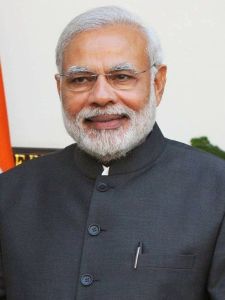 The sharp rise in tensions follows a deadly April 22 attack on tourists near the town of Pahalgam in Indian-administered Kashmir.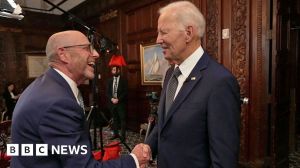


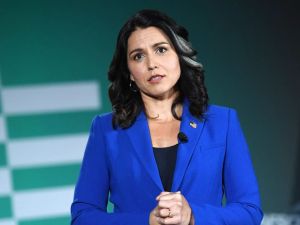

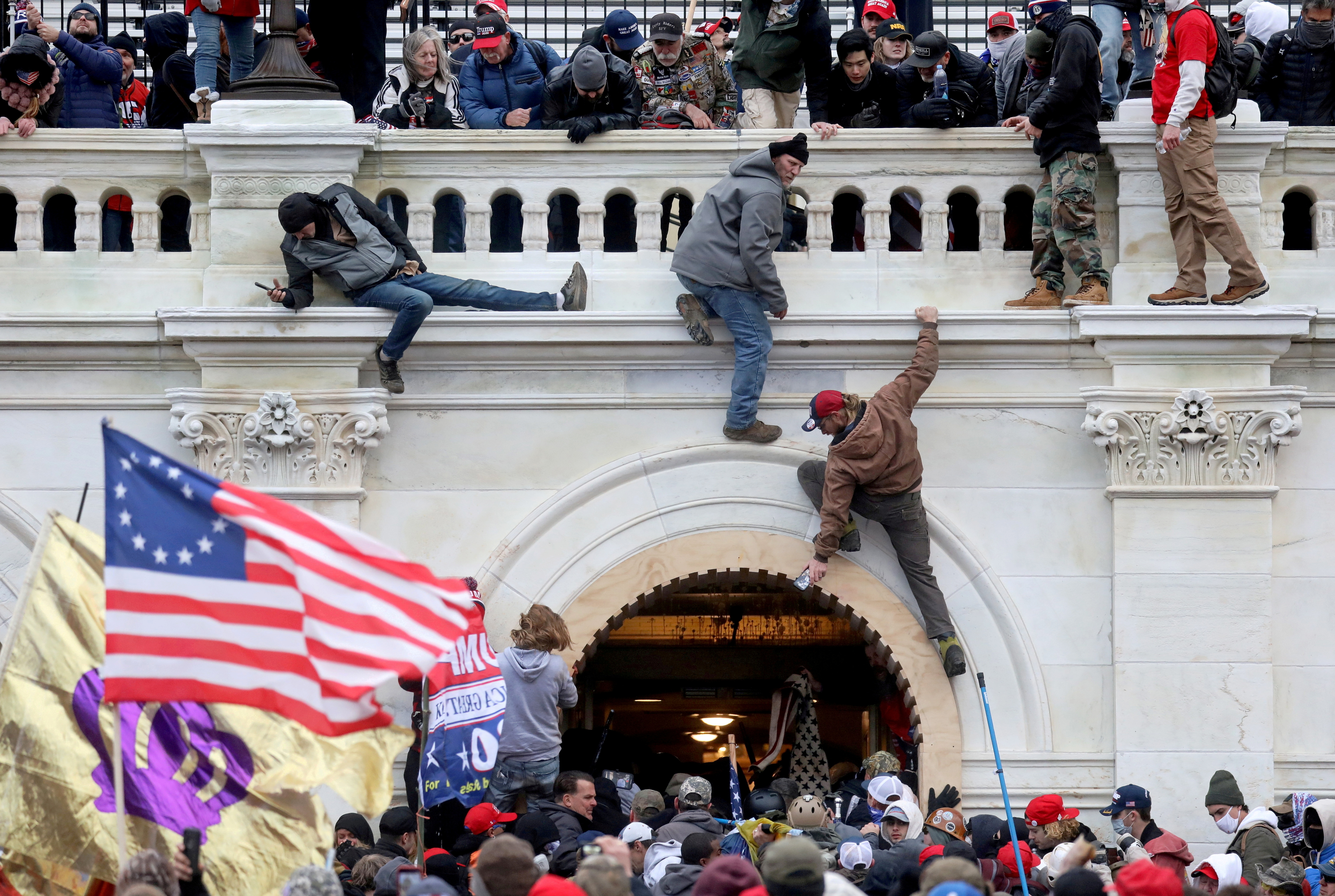
 Trump has promised again and again to free the January 6 “hostages” who violently attacked the center of our government and wounded 174 police officers, and led to the deaths of 5 officers–4 of whom died by suicide.
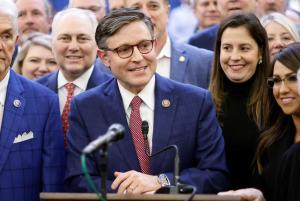
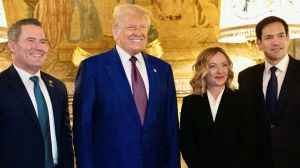


 “The Senate finally corrects a 50-year mistake,” proclaimed Senate Majority Leader Chuck Schumer, a Democrat from New York, after senators approved the legislation at 12:15 a.m. Saturday.
 This did not appear to be the case just days ago. On Wednesday, Trump joined Elon Musk in
 Republicans have said the investigation is a way to undermine the conservative majority court, and all the Republicans on the committee protested against the subpoenas authorized for Crow and others as part of the investigation. No Republicans signed on to the final report, and no formal report from them was expected.













 peej
peej Carissa
 bostonboomer
 dakinikat
 ecocatwoman
 mablue2
 Mama Lopez
 peggysue22
 quixote
 skydancingguestblogger
 Mona (aka Wonk the Vote)



 Sky Dancing
Recent Comments