Posted: September 4, 2024 | Author: bostonboomer | Filed under: 2024 presidential Campaign, Donald Trump | Tags: Afghanistan, Alvin Bragg, Arlington National Cemetery, Ginni Thomas, Jack Smith, January 6 case, Kamala Harris, misogyny, Section 60, Steven Cheung |
Good Day!!
This is getting ridiculous. On August 27, Trump staged a campaign event at Arlington National Cemetery, supposedly to commemorate the deaths of 13 soldiers in a suicide bombing that took place during the U.S. withdrawal from Afghanistan. This was not an official event, even though Trump tried to pretend it was. He was apparently invited to the private ceremony by 2 of the deceased soldiers’ families.
As we all know by now, a woman representative of the cemetery tried to stop Trump’s people from filming and photographing in Arlington’s Section 60, because federal law forbids it. Two Trump staff members verbally abused the woman and roughly pushed her aside. Later they claimed that she was mentally ill.
A report was filed with police, but the woman declined to prosecute because she feared reprisals from Trump’s goons and thugs. There are still many questions about this incident, chief among them: why has no reporter or other witness revealed the names of the staffers who attacked the woman? And why has the army refused to provide any further information?
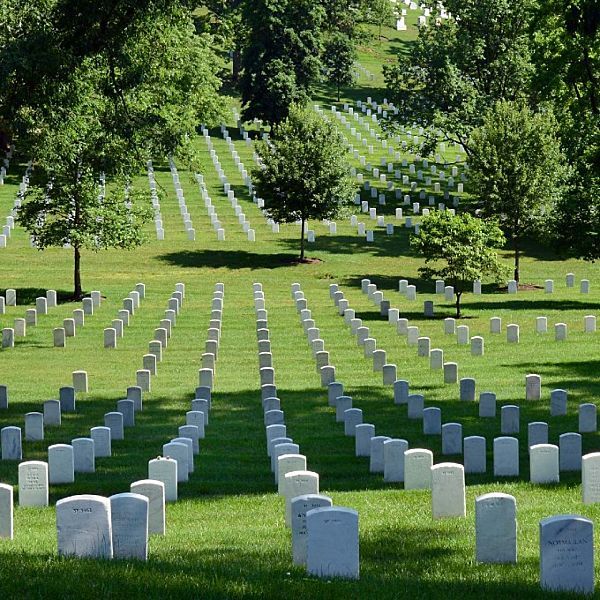
Arlington National Cemetery
Now, a week later, Trump himself is claiming the incident never happened. David Kurtz from TPM’s Morning Memo: Trump: ‘It Was A Made Up Story.’
Since we last touched base on Trump’s Arlington National Cemetery fiasco, none of the big six outstanding questions have been answered – but Trump may have given himself a new self-inflicted wound.
With the Army declaring the case “closed” after the cemetery staffer in fear of MAGA reprisals declined to press criminal charges over the alleged incident and with a holiday weekend allowing attention to drift away from the story, Trump took the curious step of reigniting the firestorm by publicly issuing a complete denial Tuesday that any kind of altercation took place.
Not only did it not happen but the story was “made up,” Trump claimed, by “Comrade Kamala and her misinformation squad.” It was, in Trump’s telling, just a “BEAUTIFUL DAY OF HONOR” with “no fights or problems.”
Here’s what Trump posted, according to NPR:
Former President Donald Trump denied Tuesday there was a conflict or “fighting,” during his visit to Arlington National Cemetery last week, calling it a “made up story,” though Army officials said one of their employees “was abruptly pushed aside” by Trump campaign officials.
“It was a made up story by Comrade Kamala and her misinformation squad,” Trump posted on his Truth Social website using the sobriquet he has coined for Vice President Harris, the Democratic presidential nominee. “She made it all up to make up for the fact that she and Sleepy Joe have BLOOD ON THEIR HANDS for the INCOMPETENT AFGHANISTAN Withdrawal – THE MOST EMBARRASSING DAY IN U.S. HISTORY!!!”
Back to David Kurtz at TPM:
So now we have a situation where the Trump campaign disparaged the cemetery staffer has having a “mental health episode,” said she shouldn’t be in her job, suggested she suffered from Trump Derangement Syndrome – and now Trump himself is claiming nothing even happened.
At the same time, the Army seems desperate to make this all go away.
The Army is currently sitting on the police report filed by the cemetery staffer recounting her version of the incident where she was reportedly verbally abused and shoved aside by two Trump campaign staffers when she tried to enforce cemetery rules against political activities.
As of late last week, Democratic staffers on the Senate Armed Services Committee “have been directly communicating with Army officials about the incident, and are in the process of seeking and receiving the information in the report and about what happened,” according to Greg Sargent.
At the at same time, House Democratic staffers attempting to looking into the matter are “frustrated” about resistance from the Army they’re running into, Sargent reports:
“Meanwhile, senior House Democrats are privately pushing Army officials to say more clearly what laws or regulations they think may have been broken and to reveal more details about what happened, another aide says, noting that Democratic staffers are encountering resistance, leaving them frustrated.”
With Trump issuing a blanket denial of any incident even occurring, is the Army going to release the police report and provide more details about the incident or leave the cemetery staffer twisting in the wind?
Apparently, even the U.S. Army is intimidated by Trump.
Will Bunch at The Philadelphia Inquirer: The ugly truth we’re missing on Trump, Arlington. [Hint: misogyny]
….[D]espite a week of headlines, there’s one critical aspect to this story I feel is being ignored, even though it is central to the very essence of Trump’s warped campaign.
The people closest to Trump allegedly shoved and verbally abused a woman — because that’s what they do.
And when the woman complained in a formal statement to the U.S. Army, Team Trump gaslit her by accusing her of being a psycho — seemingly part of an intimidation campaign which was meant to scare the accuser from pressing criminal charges.
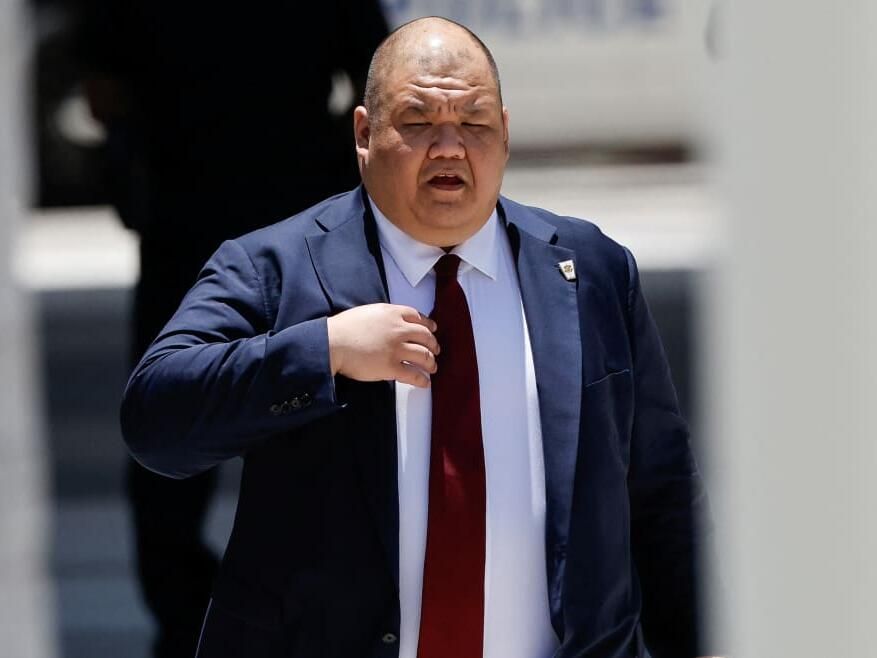
Steven Cheung
This blatantly sexist bullying of the Arlington employee has worked — just as it’s worked so many times for Trump himself during his decades-long trail of sexual abuse and harassment allegations, and just as violence and gross mistreatment of women hasn’t thwarted the careers of Trump’s male-dominated inner circle.
We shouldn’t let the other unseemly aspects of Trump’s behavior at one of America’s most sacred places obscure the fact that rank misogyny is the lifeblood of this authoritarian crusade to retake the White House, and that contempt for women saturates everything they do. It runs the gamut from taking away reproductive rights and ridiculing any female who doesn’t become a “tradwife,” to the inner circle’s 100% tolerance policies toward sexual harassment, to the ultimate goal of creating doubts that any woman — first Hillary Clinton, now Kamala Harris — is fit to lead the United States.
In the Arlington affair, the circumstances and setting are different, but the Team Trump response carries powerful echoes of practically every time Trump or his subordinates have been accused of misconduct involving women. Consider the best-known case: that of Manhattan writer E. Jean Carroll, who accused Trump of sexually assaulting her in a department-store dressing room in 1996 and has won civil court judgments over both the assault — which the judge characterized as a rape — and the campaign of defamation surrounding it.
In both the Carroll case and the physical attack at Arlington, Trump insisted the woman was making it all up. And you can hear the echoes of what Trump and his lawyers falsely said about Carroll — that she was a lying political operative — in spokesman Steven Cheung’s outrageous claim about the cemetery employee that she was “clearly suffering from a mental health episode” and in campaign chair Chris LaCivita branding her as “despicable.”
These aggressive deny-and-defame tactics have enabled a billionaire-turned-president to brush off more than two dozen credible allegations of sexual harassment or assault over his career, and — in a demoralizing moment of clarity about the brute force of misogyny in America — defeat the first major-party woman nominee in 2016, even after he was caught on tape bragging about his propensity for grabbing female private parts.
Of course J.D. Vance fits in with this gang of woman-haters, as Bunch goes on to discuss.
Gee, I wonder why Trump is doing poorly among women voters? Alexander Bolton at The Hill: Republicans fret over Trump’s free fall among women.
Republican pollster Whit Ayres says “it’s going to be a challenge” for Trump to chip away at Vice President Harris’s big lead among women.
“The real challenge right now for Republicans is whether they can perform sufficiently well among men to overcome the deficit among women. Given the prominence of abortion in this year’s race and Trump’s past statements about women, the traditional gender gap could become a gender chasm,” he warned.
An ABC News/Ipsos poll published Sunday showed Harris with a huge lead over Trump among women, 54 percent to 41 percent, while Trump enjoyed a more modest 51 percent to 46 percent lead over Harris among men.
Especially concerning for Republicans, the ABC/Ipsos poll showed Harris’s standing among women had jumped significantly compared to before the Democratic convention in Chicago, when she led Trump by only 6 points among women.
A Reuters/Ipsos poll published Thursday also showed Harris with a 13-point lead among women, 49 percent to 36 percent, and Trump with a smaller lead among men voters.
Both polls showed Harris with a 4-percentage point overall lead nationwide.
Trump has tried to win over college-educated and suburban women by moderating his position on abortion and backing free in vitro fertilization (IVF) treatments.
But those proposals are meeting a backlash from anti-abortion conservatives, and GOP strategists are skeptical about how much they will influence women who have already moved away from Trump….
Glenn Kessler at The Washington Post Fact Checker also addressed the Arlington incident: Trump appears to have misled Gold Star families on troop deaths in Afghanistan.
“We didn’t lose one person in 18 months. And then they took over that disaster.”
— Former president Donald Trump, in a video of him at Arlington National Cemetery speaking to the families of U.S. troops killed at Abbey Gate in Afghanistan, posted on TikTok, Aug. 28
This TikTok of Trump’s controversial visit to Arlington, where he marked the third anniversary of a suicide bombing that killed 13 U.S. troops during the chaotic evacuation of Afghanistan overseen by President Joe Biden,has been viewed more than 11 million times. Federal law prohibits election-related activities at military cemeteries, but Trump’s entourage pushed past a cemetery employee who tried to prevent Trump’s aides from bringing cameras, according to the Army.
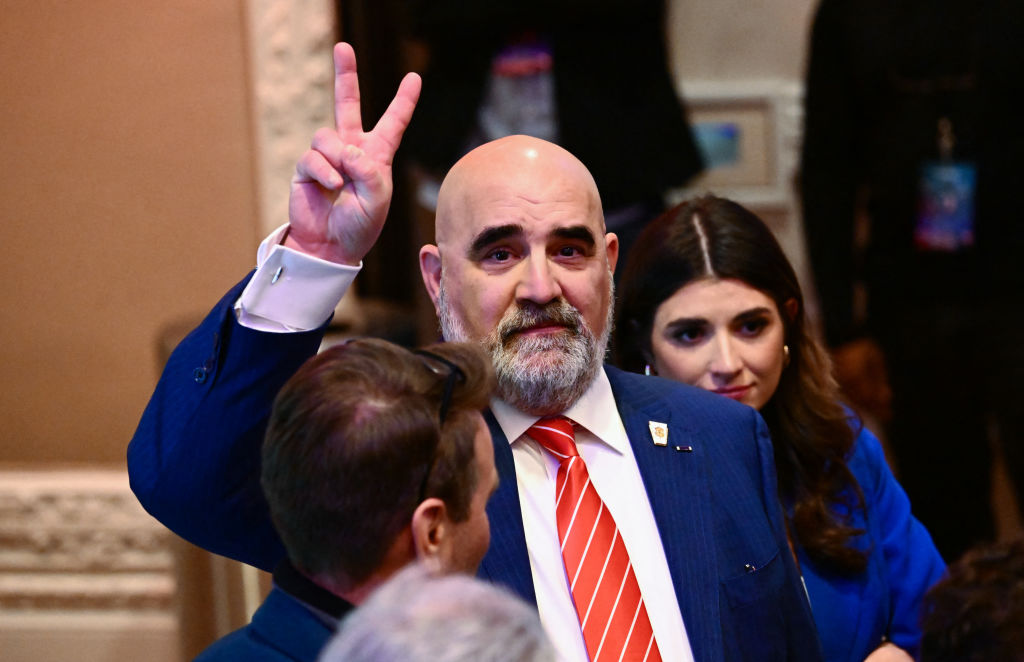
Trump senior adviser Chris LaCivita
Those cameras appear to have recorded Trump saying these words to the Gold Star families. (The TikTok shows him talking to families as the words are spoken as a voice-over.) In his phrasing, it sounds as if no troops were killed in Afghanistan during the last 18 months of his presidency. That’s false, though as we will show, there was an 18-month gap with no fatalities across Trump’s and Biden’s combined presidencies.
A Trump campaign spokesman did not respond to queries about why Trump says there were no fatalities over 18 months. Using the Defense Casualty Analysis System, we first reviewed every 18-month period in Trump’s four years as president, looking only at deaths in hostile action in Afghanistan during Operation Freedom’s Sentinel, not accidental deaths such as in a vehicle or helicopter crash. There was no such period.
Then we focused on the last 18 months of his presidency — July 20, 2019, to Jan. 20, 2021. That makes the most sense since Trump referenced Biden’s taking over. The Defense Department database showed 12 deaths from hostile action in that period. We double-checked with the news releases issued by the Pentagon in that period and confirmed the 12 names.
The last two deaths occurred on Feb. 8, 2020. Javier Jaguar Gutierrez of San Antonio and Antonio Rey Rodriguez of Las Cruces, New Mexico, both 28, werefatally ambushed by a rogue Afghan policeman. Trump, along with Vice President Mike Pence, flew to Dover Air Force Base when the bodies arrived in the United States.
Kessler also notes that Trump initially agreed with Biden’s withdrawal policy, and he (Trump) also bragged that he was the one who set up the process of withdrawal.
In March 2020, Trump approved an agreement with the Taliban (not the Afghan government at the time) for all U.S. forces to leave the country by May 1, 2021. He sealed the deal with a phone conversation with Abdul Ghani Baradar, a co-founder of the Taliban and head of its political office in Qatar. “We had a good long conversation today and, you know, they want to cease the violence,” Trump told reporters at the time. “They’d like to cease violence also.”
Despite abandoning many of Trump’s policies, Biden honored this one, just stretching out the departure by a few months in 2021.
Trump even celebrated Biden’s decision to stick with the withdrawal. “Getting out of Afghanistan is a wonderful and positive thing to do. I planned to withdraw on May 1st, and we should keep as close to that schedule as possible,” he said in a written statement after Biden announced he would continue the departure set in motion by Trump.
At a political rally on June 26 that year, weeks before the collapse of the Afghan government, Trump bragged that he had made it difficult for Biden to change course. “I started the process. All the troops are coming back home. They couldn’t stop the process,” he said. “Twenty-one years is enough, don’t we think? Twenty-one years. They [the Biden administration] couldn’t stop the process. They wanted to, but it was very tough to stop the process.”
Read the rest at the WaPo.
You might also be interested in this piece by Parker Malloy: How the Media Let Trump Off the Hook for His Arlington National Cemetery Stunt.
A couple of updates on Trump’s legal woes:
AP: Federal judge rejects Donald Trump’s request to intervene in wake of hush money conviction.
A federal judge on Tuesday swiftly rejected Donald Trump’s request to intervene in his New York hush money criminal case, spurning the former president’s attempt at an end-run around the state court where he was convicted and is set to be sentenced in two weeks.
U.S. District Judge Alvin Hellerstein’s ruling — just hours after Trump’s lawyers asked him to weigh the move — upends the Republican presidential nominee’s plan to move the case to federal court so that he could seek to have his conviction overturned in the wake of the U.S. Supreme Court’s presidential immunity ruling.
Trump’s lawyers challenged the decision, filing a notice of appeal late Tuesday in the 2nd U.S. Circuit Court of Appeals. Trump and his lawyers “will continue to fight to move this Hoax into federal court where it should be put out of its misery once and for all,” his campaign spokesperson, Steven Cheung, said in a statement.Hellerstein, echoing his denial of Trump’s pretrial bid to move the case, said the defense failed to meet the high burden of proof for changing jurisdiction and that Trump’s conviction for falsifying business records involved his personal life, not official actions that the Supreme Court ruled are immune from prosecution.
Shirin Ali at Slate: Trump’s Last-Ditch Effort to Delay His Sentencing.
Trump has been doing everything he can to avoid his upcoming sentencing in New York, with his attorneys filing a last-ditch motion last week to get the hush money case transferred to federal court. Meanwhile, special counsel Jack Smith filed a new superseding indictment that adjusts for the Supreme Court’s landmark presidential-immunity decision.
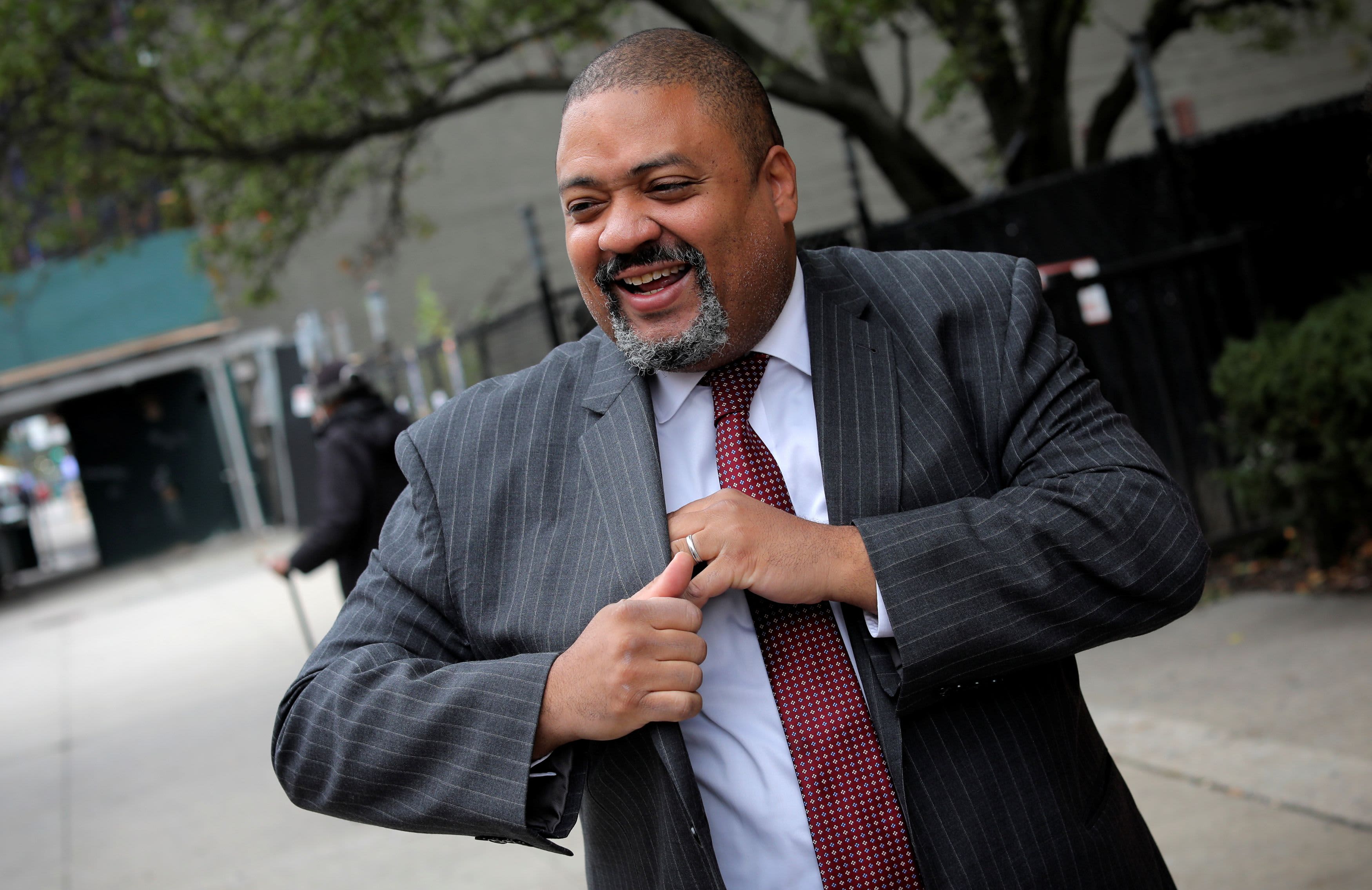
Manhattan District Attorney Alvin Bragg
A few days later, Trump’s attorneys responded by proposing a timeline for resolving the Jan. 6 federal case that extends well beyond the November election.Last week, the former president’s attorneys filed a removal notice that requested that his hush money case be transferred to federal court and out of New York Supreme Court Justice Juan Merchan’s hands, about two weeks before his scheduled sentencing on Sept. 18.
This is the second time Trump’s defense team has asked to transfer this case; a district-court judge denied its first attempt earlier this year. However, this time around, Trump’s team has the Supreme Court’s presidential-immunity decision to point to. In a 65-page notice, the lawyers argue that Manhattan District Attorney Alvin Bragg’s case was “flawed” and that he used evidence that should not have been admissible because it’s related to “official acts” covered by presumptive immunity.
“Post-trial removal is necessary under these circumstances to afford President Trump an unbiased forum, free from local hostilities, where he can seek redress for these Constitutional violations,” write Trump’s attorneys.Just three weeks ago, his attorneys also requested that Merchan delay Trump’s Sept. 18 sentencing. Trump has repeatedly tried and failed to get the judge to recuse himself from the hush money trial as well. On Tuesday, Bragg’s office responded to Trump’s removal request, noting that proceedings in state court can continue even as the federal courts consider the request.
That case appears to be decided, but apparently Trump is trying to appeal once again. Back to the Slate article:
The Special Counsel Files a New Indictment
The Supreme Court’s presidential-immunity decision was considered a big win for Trump, but Jack Smith isn’t giving up yet. Last week, the special counsel filed a new superseding indictment in his federal election-interference case against the former president.
The indictment raises the same four counts against Trump as the original did, including for obstruction of an official proceeding, a charge that could be affected by the Supreme Court’s recent ruling in Fischer v. United States. That decision narrowed the scope of the Sarbanes-Oxley Act—it included a section that seemed to broadly outlaw any obstruction of an official proceeding, and the justices ruled that it should apply only to interference with official documents. Smith’s determination to keep the obstruction charges indicates he’s willing to risk litigating the issue further in court.
The superseding indictment also eliminated any mention of former Trump Department of Justice official Jeffrey Clark and cut back significantly on how much it discusses former Vice President Mike Pence’s role. (Trump’s conversations with former DOJ officials and advisers are now considered “official” acts that are covered by absolute immunity and thus cannot be used as evidence, while his conversations with Pence appear to be covered by presumptive immunity.) [….]
Judge Tanya Chutkan has scheduled a hearing Thursday to determine the next steps in this case. Her biggest priority will be to conclude what portions of Smith’s indictment fall under core official presidential acts and what do not. In order to make those decisions, she could find that evidentiary hearings are necessary and require that witnesses testify, though Smith has reportedly been hoping to avoid this kind of minitrial….
The special counsel and Trump’s attorneys filed a joint proposal late last week that laid out two very different timelines for Smith’s federal election-interference case. The former president also indicated that he plans to file a series of motions challenging Smith’s superseding indictment and his appointment to special counsel.
Trump’s attorneys suggested a timeline in which Chutkan considers a series of motions through the end of this year—stretching well past November’s presidential election. Their timeline would have Chutkan considering a motion to dismiss based on presidential immunity in mid-December and pretrial litigation continuing through spring and fall 2025. The defense also acknowledges Smith’s new superseding indictment, arguing that it “correspondingly requires time to review the new charging instrument as [Trump] determines what steps and procedures to undertake regarding, among other motions, his Presidential immunity defense.”
We are going to have to get Kamala Harris elected if we want any chance of Trump finally facing legal accountability.
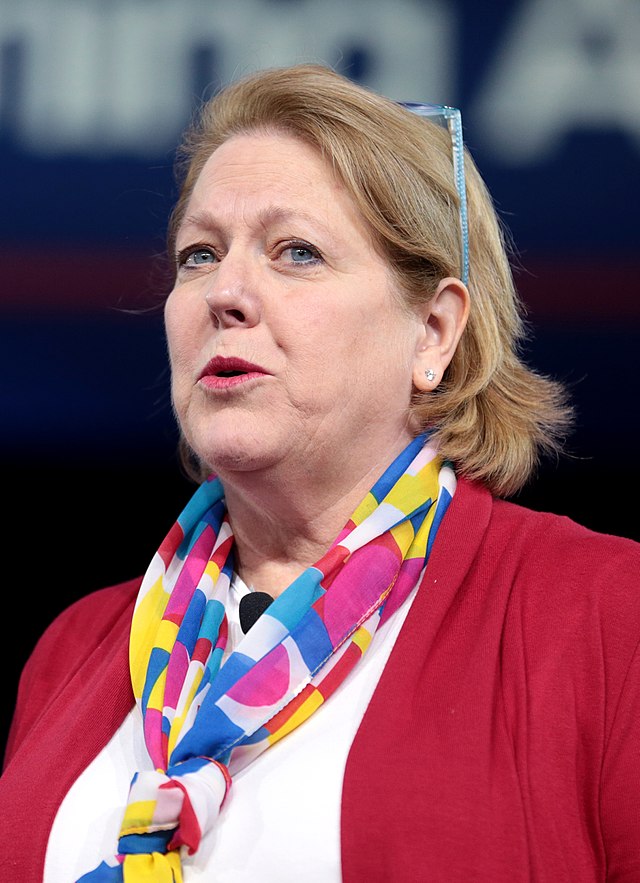
Ginni Thomas
I’ll end with one more interesting story from ProPublica: Ginni Thomas Privately Praised Group Working Against Supreme Court Reform: “Thank You So, So, So Much.”
Ginni Thomas, the wife of Supreme Court Justice Clarence Thomas, privately heaped praise on a major religious-rights group for fighting efforts to reform the nation’s highest court — efforts sparked, in large part, by her husband’s ethical lapses.
Thomas expressed her appreciation in an email sent to Kelly Shackelford, an influential litigator whose clients have won cases at the Supreme Court. Shackelford runs the First Liberty Institute, a $25 million-a-year organization that describes itself as “the largest legal organization in the nation dedicated exclusively to defending religious liberty for all Americans.”
Shackelford read Thomas’ email aloud on a July 31 private call with his group’s top donors.
Thomas wrote that First Liberty’s opposition to court-reform proposals gave a boost to certain judges. According to Shackelford, Thomas wrote in all caps: “YOU GUYS HAVE FILLED THE SAILS OF MANY JUDGES. CAN I JUST TELL YOU, THANK YOU SO, SO, SO MUCH.”
Shackelford said he saw Thomas’ support as evidence that judges, who “can’t go out into the political sphere and fight,” were thankful for First Liberty’s work to block Supreme Court reform. “It’s neat that, you know, those of you on the call are a part of protecting the future of our court, and they really appreciate it,” he said.
On the same call, Shackelford attacked Justice Elena Kagan as “treasonous” and “disloyal” after she endorsed an enforcement mechanism for the court’s newly adopted ethics code in a recent public appearance. He said that such an ethics code would “destroy the independence of the judiciary.” (This past weekend, Justice Ketanji Brown Jackson said she too was open to an enforceable ethics code for the Supreme Court.)
After the call, First Liberty sent a recording of the 45-minute conversation to some of its supporters. ProPublica and Documented obtained that recording.
Have a nice Wednesday, everyone!!
Did you like this post? Please share it with your friends:
Posted: August 22, 2023 | Author: bostonboomer | Filed under: Crime, Criminal Justice System, Donald Trump, just because | Tags: Georgia election interference case, Jack Smith, January 6 case, Jeff Clark, John Eastman, Judge Tanya Chutkan, Mark Meadows |
Good Afternoon!!
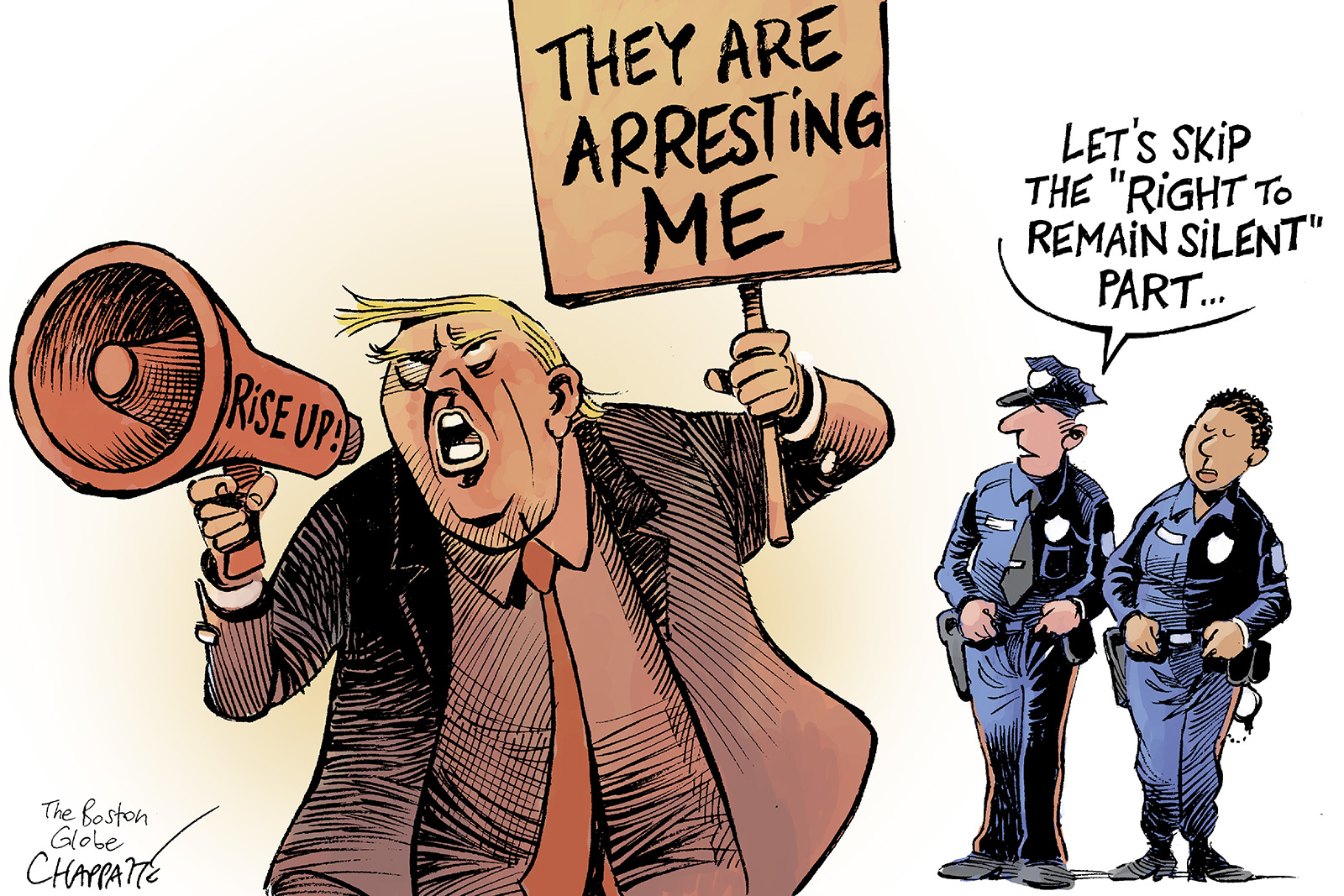 Now that Trump has been indicted and arrested 3 times, the 4th arrest on Thursday seems sort of old hat. Ho hum . . . Trump will surrender at Fulton County Jail in Georgia on Thursday; his bail has been set at $200,000.
Associated Press: Trump says he will surrender Thursday on Georgia charges tied to efforts to overturn 2020 election.
Former President Donald Trump says he will surrender to authorities in Georgia on Thursday to face charges in the case accusing him of illegally scheming to overturn his 2020 election loss in the state.
“Can you believe it? I’ll be going to Atlanta, Georgia, on Thursday to be ARRESTED,” Trump wrote on his social media network Monday night, hours after his bond was set at $200,000.
It will be Trump’s fourth arrest since April, when he became the first former president in U.S. history to face indictment. Since then, Trump, who remains the leading candidate for the Republican presidential nomination, has had what has seemed like an endless procession of bookings and arraignments in jurisdictions across the country. His appearances in New York, Florida and Washington, D.C., have drawn enormous media attention, with news helicopters tracking his every move.
Trump’s announcement came hours after his attorneys met with prosecutors in Atlanta to discuss the details of his release on bond. The former president is barred from intimidating co-defendants, witnesses or victims in the case — including on social media — according to the bond agreement signed by Fulton County District Attorney Fani Willis, Trump’s defense attorneys and the judge. It explicitly includes “posts on social media or reposts of posts” made by others.
This morning, two of Trump’s co-defendants surrendered in the Georgia election interference case.
Atlantic News First, via NBC29 VA:
ATLANTA (Atlanta News First/Gray News): First co-defendants in Trump indictment surrender at Fulton County jail.
The first co-defendants in a sweeping indictment out of Fulton County, Georgia, has surrendered to the jail.
Shortly before 10:30 a.m. Tuesday, former President Donald Trump’s attorney John Eastman turned himself in. A bond agreement for $100,000 was reached Monday in his case.
Eastman, prosecutors say, was deeply involved in some of his efforts to remain in power after the 2020 election. He wrote a memo arguing that Trump could remain in power if then-Vice President Mike Pence overturned the results of the election during a joint session of Congress where electoral votes would be counted. That plan included putting in place a slate of “alternate” electors in seven battleground states, including Georgia, who would falsely certify that Trump had won their states.
In a social media statement, Eastman said he was surrendering “to an indictment that should never have been brought.”
“It represents a crossing of the Rubicon for our country, implicating the fundamental First Amendment right to petition the government for redress of grievances,” Eastman said. “As troubling, it targets attorneys for their zealous advocacy on behalf of their clients, something attorneys are ethically bound to provide and which was attempting here by ‘formally challeng[ing] the results of the election through lawful and appropriate means.’ An opportunity never afforded them in the Fulton County Superior Court.”
A $10,000 bond agreement was reached Monday for Scott Hall, the Atlanta-area bail bondsman who was allegedly involved in commandeering voting information that was the property of Dominion Voting Systems from Coffee County in south Georgia.
On Tuesday, just before 9 a.m., Hall surrendered to authorities, and was booked and processed on charges that include conspiracy to commit a felony, conspiracy to commit election fraud, conspiracy to defraud the state of political subdivision, and violation of the Georgia Racketeer Influenced And Corrupt Organizations Act (RICO).
Jeff Clark, the DOJ official who wanted to send letters to the swing states saying that the DOJ believed there was significant voter fraud in their states, is trying to avoid going to Atlanta to be booked.
https://twitter.com/petestrzok/status/1694008924863602918?s=20
Jeff Clark on the morning his house was searched by the FBI:
This is going to enrage Trump. The New York Times just posted an article on Mark Meadows, another of Trump’s co-defendants in Georgia: How Mark Meadows Pursued a High-Wire Legal Strategy in Trump Inquiries.
This winter, after receiving a subpoena from a grand jury investigating former President Donald J. Trump’s attempts to overturn the 2020 election, Mark Meadows commenced a delicate dance with federal prosecutors.
He had no choice but to show up and, eventually, to testify. Yet Mr. Meadows — Mr. Trump’s final White House chief of staff — initially declined to answer certain questions, sticking to his former boss’s position that they were shielded by executive privilege.
But when prosecutors working for the special counsel, Jack Smith, challenged Mr. Trump’s executive privilege claims before a judge, Mr. Meadows pivoted. Even though he risked enraging Mr. Trump, he decided to trust Mr. Smith’s team, according to a person familiar with the matter. Mr. Meadows quietly arranged to talk with them not only about the steps the former president took to stay in office, but also about his handling of classified documents after he left.
The episode illustrated the wary steps Mr. Meadows took to navigate legal and political peril as prosecutors in Washington and Georgia closed in on Mr. Trump, seeking to avoid being charged himself while also sidestepping the career risks of being seen as cooperating with what his Republican allies had cast as partisan persecution of the former president.
His high-wire legal act hit a new challenge this month. While Mr. Meadows’s strategy of targeted assistance to federal prosecutors and sphinxlike public silence largely kept him out of the 45-page election interference indictment that Mr. Smith filed against Mr. Trump in Washington, it did not help him avoid similar charges in Fulton County, Ga. Mr. Meadows was named last week as one of Mr. Trump’s co-conspirators in a sprawling racketeering indictment filed by the local district attorney in Georgia.
Interviews and a review of the cases show how Mr. Meadows’s tactics reflected to some degree his tendency to avoid conflict and leave different people believing that he agreed with them. They were also dictated by his unique position in Mr. Trump’s world and the legal jeopardy this presented.
Read all the juicy, gossipy details at the NYT link.
There’s also news about the January 6 case against Trump in DC.
The Washington Post: Justice Dept. pushes back against Trump’s bid for a 2026 trial in D.C.
The Justice Department pushed back Monday on former president Donald Trump’s claims that he cannot be ready to go to trial in January on charges that he illegally sought to subvert the results of the 2020 election.
A trial in D.C. federal court in April 2026, which Trump’s attorneys requested, “would deny the public its right to a speedy trial,” attorneys working for special counsel Jack Smith wrote in Monday’s filing. In arguing for its preferred Jan. 2, 2024, date, the office said they do not intend to use classified information against Trump in this case….
In arguing for more time, Trump also made misleading comparisons to trials that were delayed by the coronavirus pandemic, superseding indictments adding defendants, and disputes over incarceration, the government said.
Trump’s legal team argued in a court filing last week that it needs years to prepare for the “unprecedented case” and that the January date proposed by the government would create conflicts with the five other criminal and civil trials Trump faces in the next nine months. They told the court that the 11.5 million pages of material already handed over by the special counsel took over two days to download and if printed out would be eight times taller than the Washington Monument. To read it all before the government’s proposed jury selection date of Dec. 11 would be like reading “Tolstoy’s War and Peace, cover to cover, 78 times a day, every day,” they said.
Smith’s office called those comparisons “neither helpful nor insightful,” because attorneys don’t read evidence cover to cover — they review it online using electronic keyword searches. Much of what was shared with Trump is already in the public domain, the special counsel said, including social media posts, transcripts of interviews with the House committee that investigated the Jan. 6 attack, and court records from legal challenges to the election results. Other documents came from the National Archives, meaning they were already known to Trump. There are also duplicates of documents within the production, the Justice Department said, and likely irrelevant papers handed over “in an abundance of caution and transparency.”
Read the rest at the WaPo.
This is interesting from attorneys Frederick Baron and Dennis Aftergut at The Bulwark: Trump Shoots Himself in the Foot with Demand for Trial Date in 2026.
ON THURSDAY, DONALD TRUMP FIRED his first shot in Judge Tanya Chutkan’s courtroom—straight into his own foot. His lawyers proposed to the district court judge that his federal trial on conspiracy and obstruction charges related to the aftermath of the 2020 election and the events of January 6th should not occur until April 2026.
“I’ll eat my hat if Judge Chutkan agrees with Trump to start this trial in 2026,” tweeted Neal Katyal, the former acting solicitor general of the United States. “He’s just afraid to stand trial. Nothing more.”

Judge Tanya Chutkan
Katyal’s hat is safe. Trump’s proposal on the all-important trial date sends an unintended message: that Trump is pressing his lawyers to take legal positions so extreme that they will be entirely disregarded.
Credibility with judges is the coin of the realm for trial lawyers. Squander it early and it’s hard to retrieve.
Trump’s past pattern is that his lawyers lose credibility by kowtowing to his absurd, uninformed demands. Then he tosses them like bad pennies. Sooner or later, it’s tough attracting the gold standard in the legal profession.
The Trump team’s tissue-thin pretext for their ludicrous trial date request was the volume of discovery materials they need to read.
They wrote that reviewing millions of documents and electronic communications that the government already gave them would be like reading “the entirety of Tolstoy’s War and Peace, cover to cover, 78 times a day” in order to finish by the January trial date proposed by Special Counsel Jack Smith.
The authors explain why that is bullshit:
Sounds daunting. But in the modern litigation world, a high-tech industry has grown up specializing in managing big-document cases. Entire firms exist to tackle discovery jobs like this.
Huge volumes of documents can be scanned rapidly, and put in a single database alongside digital communications and other information. The database is then “deduped” (that is, duplication is reduced) and organized to allow instant retrieval of any important piece of evidence. A lawyer need only search for specified keywords, dates, subjects, titles, witnesses, senders, receivers, contact information, and so on. For example, a search for documents or data related to “January 6/electors/certification” will quickly bring up the relevant items for review, highlighting, organizing, and sharing with team members.
Former U.S. Attorney Joyce Vance, speaking on MSNBC on Friday, mocked the misleading analogy to Tolstoy’s 1,200-page epic. “You don’t need to read War and Peace 78 times a day. You simply search for ‘Natasha,’” Vance said, referring to the novel’s lead female character.
Read more at The Bulwark.
One more interesting story from CNN: Several key cases that could bear on special counsel Jack Smith’s election case against Trump await DC Circuit rulings.
As the US Circuit Court of Appeals in Washington, DC, gets ready to begin its new term next month, the next two weeks could usher in several consequential rulings from the federal appeals court, often called the second most powerful court in the country, that could bear on the federal investigation into and prosecution of former President Donald Trump for his 2020 election reversal schemes.
At least three court cases touching legal issues that could affect special counsel Jack Smith’s approach are ripe for rulings from the DC Circuit. The rulings, once they come, will likely shape how US District Judge Tanya Chutkan may view the law and the charges against the former president in the criminal election subversion proceedings over which she is presiding.
In one case, Trump ally and Republican Rep. Scott Perry is challenging the access federal investigators can have to his phone in the 2020 election subversion probe. Another dispute is over Trump’s sweeping immunity claims in the civil lawsuits that have sought to hold him accountable for his actions and leading up to the January 6, 2021, Capitol assault. The third matter relates to the obstruction statute that has been a central charge in the Capitol riot prosecutions; Smith’s indictment of the former president in the election case includes two charges based on the provision in question.
There’s no guarantee that the rulings will come out in the coming weeks. But the start of the new DC Circuit term in early September puts additional pressure on the circuit judges to clear out their opinions in lingering cases. Regardless, the cases highlight the ongoing uncertainty in the legal terrain the special counsel is navigating as he advances toward a historic trial of the former president while wrapping up the rest of the federal criminal election subversion investigation, which Smith says is ongoing. No matter what the ruling is in each of the cases, the losing party will have the option to appeal it, setting up that the US Supreme Court might ultimately get involved.
Read details of the cases at the CNN link.
That’s it for me today. I guess I’m still mainly obsessed with seeing Trump tried, convicted, and imprisoned. I’ll add more links in the comment thread.
Did you like this post? Please share it with your friends:
Posted: August 12, 2023 | Author: bostonboomer | Filed under: Cats, caturday, Crime, Donald Trump, just because | Tags: extreme heat, first amendment, freedom of the press, Hawaii wildfires, January 6 case, Judge Tanya Chutkan, limits on free speech, Maui |
 Happy Caturday!!
Sadly, I’m unable to post cat art today because WordPress has made it very difficult to resize images to manageable dimensions. Dakinikat seems to have figured out how to do it, but I’m still confused. I’m hoping I’ll be able to master the technique or learn to use one of WordPress’s other god-awful methods of posting. Today I’m reposting Tweets from Lorenzo the Cat.
(Dakinikat note: testing the images thing, so there are a few popping up here now.)
We haven’t talked much about the awful wildfires in Hawaii. Here’s the latest news.
Washington Post Live Updates: Maui death toll reaches 80 amid questions over emergency response.
The death toll from the Hawaii wildfires has risen to 80, Maui county officials said in an update late Friday, as firefighters continued work to contain fires on the island. Government officials are launching a review of the state’s emergency response, as residents criticized relief efforts as insufficient and records indicated that emergency sirens weren’t activated at the state or county level during the wildfires, though alerts were sent to cellphones and broadcast networks.
Here’s what to know
- Hawaii Attorney General Anne Lopez (D) said her department would begin a “comprehensive review of critical decision-making and standing policies leading up to, during, and after the wildfires.” Gov. Josh Green (D) told CNN that officials would investigate why sirens reportedly failed to warn residents in Maui, adding that the telecommunications lines that those sirens relied upon were “destroyed very rapidly” by the fast-moving flames.
- The scale of the damage is becoming clearer, with an assessment from the Pacific Disaster Center estimating that more than 2,207 structures were damaged, and that the vast majority of buildings exposed to the fire were residential.
- Authorities on Maui say more than 1,400 people are in emergency shelters, and urged residents to text rather than call as cell service resumes in affected areas, to ensure limited resources are shared.
- Local officials also advised residents to exclusively drink bottled water, saying that local water systems could contain harmful contaminants. Structures in the Upper Kula and Lahaina water systems were destroyed by the fire, which may have caused benzene — a carcinogen — to enter the water system, they said.
- The Lahaina fire that has surged through Hawaii is already one of the deadliest in U.S. history, and officials warn the toll is likely to rise. It is the second-deadliest fire in the last 100 years, after the 2018 Camp Fire in Northern California that killed 85 people and consumed the town of Paradise.
Read more recent updates at the WaPo.

Pre-Raphaelite Cats, Susan Herbert
From The New York Times, an opinion piece by writer and editor Lawrence Downes, who grew up in Hawaii: After the Shock and Grief, Hawaii Will Reinvent Itself Again.
The disaster that erased the beloved West Maui town of Lahaina this week comes with the bitter taste of bewilderment. Brush fires met high winds whipped by a far-off hurricane, and overnight a historic town was gone, a pile of smoke and ashes. A lush watercolor landscape is redrawn in gray and black. At least 55 people are dead, and many more are missing.
A hurricane just burned down a town. It’s all so weird and horrifying.
Living in Hawaii long enough gives you a familiarity with sudden catastrophes, the kind that can obliterate a community in a week, a day or an instant. To live in my home state or to love it from a distance is to know the continual threat of hurricanes, tsunamis, earthquakes and volcanoes.
But a lethal wildfire? That was new for Hawaii. And everything is changed.
We may not get a definitive verdict on whether Lahaina died for humanity’s environmental sins, but we know that climate change is making Hawaii hotter and drier and that invasive grasses have been allowed to run rampant. Drought on Maui turned the grass into ready fuel and heightened the risk of wildfires, and then a hurricane brushed by.
The planetary crisis is hardly Hawaii’s fault, but like other island areas in our rising oceans, it is unusually imperiled, and it has to do something. And when wildfires swept over Maui and the Big Island, it was a brutal reminder that Hawaii needs to be a serious climate leader, to nurture and spread the environmental consciousness that too many other states lack.
Hawaii will surely find ways to lower the risk of wildfires and get better at fighting them. Lahaina will rebuild, and residents will return. But climate resiliency is a far bigger challenge than adding fire trucks and subduing invasive grasses. It’s an expensive mess of problems across the state.
Will the communities on Oahu’s North Shore be able to retreat from the rising ocean before they are washed away? How will flower and fruit growers on Maui and the Big Island cope with extended drought? What happens if or when the coral reefs die, the native trees and forest birds are gone, weather patterns shift and the cooling trade winds disappear?
All good questions, and we all must “do something.” Climate change is happening. We can see it all around us.
JJ passed along this article about the extreme heat affecting so many people this year.
TechTimes: How Much Heat Can Your Body Take? Scientists Reveal the Maximum Limit.
According to AFP, new research shows the limit, known as the “wet bulb temperature,” representing the maximum combination of heat and humidity before sweat no longer evaporates from the skin, leading to heatstroke, organ failure, and death.
While this threshold occurs at around 35 degrees Celsius (95 Fahrenheit), recent research suggests it could be even lower.
Colin Raymond from NASA‘s Jet Propulsion Laboratory said the wet bulb limit of human survival has been breached only around a dozen times, primarily in South Asia and the Persian Gulf.
Although none of these occurrences extended beyond two hours, they effectively averted widespread mortality events associated with this critical threshold.
Nonetheless, specialists stress that fatalities resulting from intense heat are feasible even at less severe levels. Factors such as age, health, and socio-economic circumstances play a role in determining an individual’s susceptibility.
In Europe last summer, for instance, more than 61,000 fatalities were linked to heat, even in regions where the perilous wet bulb temperature range is seldom attained.
Scientists warn that dangerous wet bulb events will become more frequent as global temperatures continue to rise. The frequency of such events has doubled over the last four decades, driven by human-caused climate change.
According to Raymond’s research, wet bulb temperatures exceeding 35 degrees Celsius could become common worldwide if global temperatures rise by 2.5 degrees Celsius above pre-industrial levels.
To test the wet bulb limit, researchers at Pennsylvania State University evaluated young, healthy participants in a heat chamber. They found that the “critical environmental limit,” where the body can’t prevent further core temperature increase, was reached at 30.6 degrees Celsius wet bulb temperature, lower than previously theorized.
Read the rest at TechTimes.
In other news, here’s a shocking small-town example of the assault on the First Amendment that is happening in red states.
Kansas Reflector: Police stage ‘chilling’ raid on Marion County newspaper, seizing computers, records and cellphones.
MARION — In an unprecedented raid Friday, local law enforcement seized computers, cellphones and reporting materials from the Marion County Record office, the newspaper’s reporters, and the publisher’s home.
Eric Meyer, owner and publisher of the newspaper, said police were motivated by a confidential source who leaked sensitive documents to the newspaper, and the message was clear: “Mind your own business or we’re going to step on you.”
The city’s entire five-officer police force and two sheriff’s deputies took “everything we have,” Meyer said, and it wasn’t clear how the newspaper staff would take the weekly publication to press Tuesday night.
The raid followed news stories about a restaurant owner who kicked reporters out of a meeting last week with U.S. Rep. Jake LaTurner, and revelations about the restaurant owner’s lack of a driver’s license and conviction for drunken driving.
Meyer said he had never heard of police raiding a newspaper office during his 20 years at the Milwaukee Journal or 26 years teaching journalism at the University of Illinois.
“It’s going to have a chilling effect on us even tackling issues,” Meyer said, as well as “a chilling effect on people giving us information.”
The search warrant, signed by Marion County District Court Magistrate Judge Laura Viar, appears to violate federal law that provides protections against searching and seizing materials from journalists. The law requires law enforcement to subpoena materials instead. Viar didn’t respond to a request to comment for this story or explain why she would authorize a potentially illegal raid.
A bit more:
Emily Bradbury, executive director of the Kansas Press Association, said the police raid is unprecedented in Kansas.
“An attack on a newspaper office through an illegal search is not just an infringement on the rights of journalists but an assault on the very foundation of democracy and the public’s right to know,” Bradbury said. “This cannot be allowed to stand.”
Meyer reported last week that Marion restaurant owner Kari Newell had kicked newspaper staff out of a public forum with LaTurner, whose staff was apologetic. Newell responded to Meyer’s reporting with hostile comments on her personal Facebook page.
A confidential source contacted the newspaper, Meyer said, and provided evidence that Newell had been convicted of drunken driving and continued to use her vehicle without a driver’s license. The criminal record could jeopardize her efforts to obtain a liquor license for her catering business.
A reporter with the Marion Record used a state website to verify the information provided by the source. But Meyer suspected the source was relaying information from Newell’s husband, who had filed for divorce. Meyer decided not to publish a story about the information, and he alerted police to the situation.
“We thought we were being set up,” Meyer said.
Police notified Newell, who then complained at a city council meeting that the newspaper had illegally obtained and disseminated sensitive documents, which isn’t true. Her public comments prompted the newspaper to set the record straight in a story published Thursday.
Sometime before 11 a.m. Friday, officers showed up simultaneously at Meyer’s home and the newspaper office. They presented a search warrant that alleges identity theft and unlawful use of a computer.
The paper didn’t even publish the information, but a magistrate judge approved a search warrant! This is the kind of behavior by law enforcement that Trump would promote if he gets back into a position of power.
Speaking of Trump, here are some reports on the hearing yesterday in the January 6 case.
CNN: Judge Chutkan says Trump’s right to free speech in January 6 case is ‘not absolute.’
US District Judge Tanya Chutkan set the tone for how she would preside over the election subversion against Donald Trump in a hearing Friday focused on what limits would be placed on how the former president can handle the evidence prosecutors will be turning over to him.
Chutkan kicked off the hearing – the first in the case before her and one that took place in her courtroom at DC federal court house – noting that while Trump’s rights as a criminal defendant would be protected, his First Amendment right to free speech was “not absolute.”
“In a criminal case such as this one, the defendant’s free speech is subject to the rules,” she said.
The judge closed the hearing with a promise that the case would advance like any normal proceeding in the criminal justice system, but warned that the more “inflammatory” statements were made by a party, the quicker she would need to move toward a trial to preserve a fair jury.
“It is a bedrock principle of the judicial process in this country,” she said, while quoting precedent, “that legal trials are not like elections, to be won through the use of the meeting hall, the radio and the newspaper.”
“This case is no exception,” she said.
Kyle Cheney at Politico: Judge warns Trump: ‘Inflammatory’ statements about election case could speed trial.
U.S. District Judge Tanya Chutkan warned Donald Trump and his attorney Friday that repeated “inflammatory” statements about his latest criminal prosecution would force her to speed his trial on charges related to his bid to subvert the 2020 election.
“I caution you and your client to take special care in your public statements about this case,” Chutkan told Trump lawyer John Lauro during a hearing. “I will take whatever measures are necessary to safeguard the integrity of these proceedings.”
Chutkan’s stark admonition came at the conclusion of her first courtroom session in the newest criminal case against the former president. The aim of the hearing was for special counsel Jack Smith’s prosecutors and Trump’s attorneys to hash out disputes about the handling of evidence in the case. Once Chutkan enters a so-called “protective order” governing evidence, prosecutors say they’re prepared to share millions of pages of documents with Trump’s team, jumpstarting the case and setting it on a path to trial.
But Chutkan, aware of the national spotlight on her oversight of the explosive case, repeatedly emphasized that she intended to keep politics out of the courtroom and treat Trump like any other criminal defendant. That included potential consequences if he makes statements that could be construed as harassing or threatening witnesses.
“The fact that he’s running a political campaign has to yield to the orderly administration of justice,” Chutkan said. “If that means he can’t say exactly what he wants to say about witnesses in this case, that’s how it has to be.”
“Even arguably ambiguous statements from parties or their counsel, if they can be reasonably interpreted to intimidate witnesses or to prejudice potential jurors, can threaten the process,” Chutkan added later. “The more a party makes inflammatory statements about this case which could taint the jury pool … the greater the urgency will be that we proceed to trial quickly.”
Judge Chutkan has obviously grokked that a speedy trial would be Trump’s worst nightmare.
Glenn Thrush and Alan Feuer at The New York Times: Judge Limits Trump’s Ability to Share Jan. 6 Evidence.
The federal judge overseeing former President Donald J. Trump’s prosecution on charges of seeking to overturn the 2020 election rejected his request on Friday to be able to speak broadly about evidence and witnesses — and warned Mr. Trump she would take necessary “measures” to keep him from intimidating witnesses or tainting potential jurors.
The caution from the judge, Tanya S. Chutkan, came during a 90-minute hearing in Federal District Court in Washington to discuss the scope of a protective order over the discovery evidence in Mr. Trump’s case, a typically routine step in criminal matters. Later Friday, Judge Chutkan imposed the order but agreed to a modification requested by the Trump legal team that it apply only to “sensitive” materials and not all evidence turned over to the defense.
She concluded the hearing with a blunt warning to Mr. Trump, and an unmistakable reference to a recent social media post in which he warned, “If you go after me, I’m coming after you!” — a statement his spokesman later said was aimed at political opponents and not at people involved in the case.
“I do want to issue a general word of caution — I intend to ensure the orderly administration of justice in this case as I would in any other case, and even arguably ambiguous statements by the parties or their counsel,” she said, could be considered an attempt to “intimidate witnesses or prejudice potential jurors,” triggering the court to take action.
“I caution you and your client to take special care in your public statements in this case,” she added. “I will take whatever measures are necessary to protect the integrity of these proceedings.”
Have a great weekend, everyone!!
Did you like this post? Please share it with your friends:
Posted: August 8, 2023 | Author: bostonboomer | Filed under: Afternoon Reads, Crime, Donald Trump, just because | Tags: Garcia hearing, grand jury, January 6 case, Judge Aileen Cannon, Judge Tanya Chutkan, protective order, Stanley Woodward, stolen documents case, Walt Nauta |
 Good Afternoon!!
As usual, I’m riveted to the coverage of Trump’s criminal cases. It’s not particularly surprising that he plans to follow his usual method of defense: delay, delay, delay. He hopes to delay the trials until after the 2024 election so that if he’s elected, he can dismiss the cases against him or pardon himself.
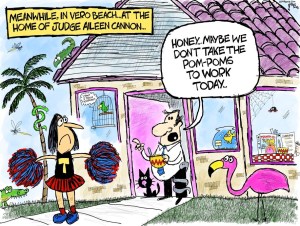
In Florida, Judge Aileen Cannon seems willing to help Trump slow down the stolen documents case as long as possible.
In DC, Judge Tanya Chutkan is less likely to accept his delay tactics in the January 6 case, but, at the moment, he has succeeded in slowing down the discovery process–probably for a couple of weeks.
Here’s the latest on the two cases.
On August 2, Special Counsel Jack Smith asked Judge Cannon for a Garcia hearing to evaluate a possible conflict of interest involving Walt Nauta’s defense attorney Stanley Woodward. Nauta is a co-defendant with Trump in the stolen documents case. NBC News: Special counsel cites potential conflicts for Mar-a-Lago defense attorney.
The special counsel prosecuting former President Trump for his alleged mishandling of government secrets has asked for a hearing to discuss whether the defense attorney for a co-defendant has a conflict of interest stemming from his multiple clients.
According to a court filing on Wednesday, attorney Stanley Woodward’s current and past clients include three people who could be called to testify against Walt Nauta, Trump’s aide who is charged with conspiring to obstruct the government’s efforts to reclaim classified documents.
Woodward’s clients include two aides who worked for Trump at the White House and into his post-presidency, and a Mar-a-Lago IT director identified as “Trump Employee 4” in the updated indictment. The Washington, D.C.-based lawyer also represents at least seven other people who have been questioned by prosecutors in the case. He declined to comment when reached by NBC News.
Trump’s Save America PAC has spent $20 million on legal fees in the first half of this year, according to FEC filings. Woodward’s firm was paid more than $200,000 in the first six months of the year.
In defending Nauta, Woodward may need to cross-examine a witness with whom he has had privileged discussions, which raises the risk of an “attorney’s improper use or disclosure of the client’s confidences during the cross-examination,” or “may cause the attorney to pull his punches during cross-examination, perhaps to protect the client’s confidences or ‘to advance the attorney’s own personal interest,’” the motion filed by special counsel Jack Smith’s office argues.
 Woodward was previously defending Yuscil Taveras, who has now hired a new attorney and appears to be cooperating with the government.
“Employee 4, who is unnamed in the indictment but was identified by NBC News as Yuscil Taveras, secured a new lawyer in July, and did not waive the conflict, according to the motion. Roughly three weeks later, a grand jury charged Trump, Nauta, and Carlos De Oliveira, a Mar-a-Lago property manager, over their efforts to have Taveras delete Mar-a-Lago surveillance footage.
Prosecutors told Woodward earlier this year that they believed Taveras had information that would incriminate Nauta, and that representing both clients at the same time raised a potential conflict of interest. Woodward said he advised both clients of the government’s position, but that he was unaware of anything the employee could say to incriminate Nauta and did not see a conflict, according to the filing.
Judge Cannon was unconvinced, and instead has revealed the existence of secret grand jury still investigating this case in DC., thus delaying the case for who knows how long.
Perry Stein at The Washington Post: Judge asks prosecutors to justify use of 2 grand juries in Trump documents case.
Judge Aileen M. Cannon on Monday asked federal prosecutors to explain the use of grand juries in Florida and Washington in the classified documents case against Donald Trump even though charges were filed in South Florida.
Cannon, the federal judge in South Florida assigned to the case, posed the question in a court filing Monday and told federal prosecutors to respond by Aug. 22.
“The response shall address the legal propriety of using an out-of-district grand jury proceeding to continue to investigate and/or to seek post-indictment hearings on matters pertinent to the instant indicted matter in this district,” Cannon wrote.
Trump and two aides — Waltine “Walt” Nauta and Carlos De Oliveira — were charged this summer in a 42-count indictment that accuses the former president of improperly retaining 32 classified documents at Mar-a-Lago, his Florida residence and private club, and seeking to thwart government attempts to retrieve them….
For many months, Justice Department prosecutors had questioned witnesses in the Florida case before a federal grand jury in Washington. The secret proceedings yielded much of the evidence at the crux of the case. But in May, the grand jury activity appeared to continue at a federal courthouse in Miami. Ultimately, prosecutors filed charges in a West Palm Beach courthouse — a courthouse in the same district as Miami and the area where Mar-a-Lago is located.
Prosecutors said in a court filing last week that they continued to use the grand jury in Washington after they initially charged Trump in June to investigate alleged instances of obstructing the investigation. The focus of the July superseding indictment was on obstruction, alleging that all defendants tried to delete security footage that the government wanted as evidence in the case.
“The grand jury in this district and a grand jury in the District of Columbia continued to investigate further obstructive activity, and a superseding indictment was returned on July 27, 2023,” prosecutors wrote in the filing.
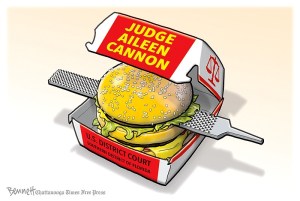 Judge Cannon apparently disapproves, and decided to reveal the information the Special Counsel had given her under seal.
Prosecutors included that revelation in a motion asking the judge to consider holding a hearing to determine whether Nauta’s attorney has too many conflicts of interest to provide his client with adequate legal advice.
The government lawyers said Stanley Woodward — the Nauta attorney — has represented at least seven other clients whom prosecutors have interviewed about Trump’s alleged efforts to keep classified documents in defiance of the government’s demand they be returned. Two of Woodward’s clients could be called as government witnesses in the trial, the filing by the government said.
If that happens, Woodward may need to cross-examine his other clients as part of defending Nauta, said the prosecutors leading the Justice Department investigation.
The requested hearing — known as a Garcia hearing — is fairly common in legal proceedings. At the hearing, prosecutors said Cannon should inform Nauta and the two witnesses, whose names have not been made public, of their legal rights and the potential conflicts their attorney poses. Lawyers are generally required to flag to a judge any potential conflicts of interest they encounter.
Cannon said Nauta’s lawyers are expected to respond to the judge’s question about the two grand jury locations and the prosecutors’ request for the Garcia hearing.
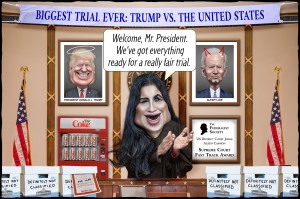 So it’s a normal request, but Cannon is going to drag the process out as long as she can, and, instead of keeping the existence of the secret grand jury under seal, she decided to announce it to the world.
Here’s a longer discussion of Cannon’s behavior by Adam Unikowsky’s Substack legal newsletter: It begins. Today’s order in United States v. Trump does not bode well.
Today [August 7] in the Southern District of Florida’s version of United States v. Trump, Judge Aileen Cannon issued an order denying the Justice Department’s motion to seal and requesting supplemental briefing. While seemingly insignificant, today’s order raises troubling concerns regarding her administration of the case….
Judge Cannon became nationally known in August and September 2022, when, in a civil case brought by Donald Trump, she issued a series of unusual orders blocking the Justice Department from reviewing documents seized at Mar-a-Lago and appointing a special master to oversee the Justice Department’s work. The Eleventh Circuit reversed Judge Cannon’s ruling, holding that the court lacked jurisdiction to interfere with the Justice Department’s review of lawfully-seized documents.
Unikowsky argues that it is important in dealing with Trump’s cases to be scrupulous in following norms. He doesn’t yet see any basis for asking for Judge Cannon to be removed from the case. It isn’t unusual for Judges to have rulings reversed and still continue to preside in the cases. I hope you’ll read the whole post if you’re interested in Unikowsky’s views on the case, but for this post, I’ll just cut to the chase.
The Justice Department’s motion notes: “The Government has advised Mr. Woodward of its intent to file this motion requesting a Garcia hearing and its reasons for doing so. Mr. Woodward has indicated that as a general matter he does not oppose the Court informing his client of the client’s rights or inquiring into potential waivers, but that he will not consent to this motion without seeing it in advance, and he requests the opportunity to respond.” This is a reasonable position for Woodward to take—he can’t possibly object to a hearing intended to safeguard his own client’s constitutional rights, but he wants to see the motion before taking a position.
So, this motion is a hanging curveball for Judge Cannon. It’s obvious how Judge Cannon should respond to this motion. She should wait to hear Woodward’s position on it!
If Woodward agrees a Garcia hearing is warranted, Judge Cannon should hold the hearing to ensure that Nauta’s rights are protected. Maybe there’s some discretionary reason to deny the hearing even if everyone agrees it’s warranted? I can’t think of one, but maybe. But clearly, Judge Cannon should wait until she hears from Woodward before deciding what to do….
Instead, Judge Cannon does something intensely weird. Two things, actually.
First, she denies the Justice Department’s motion to seal.
Second, she requests that Nauta file a response brief to the Justice Department’s motion addressing, among other things, “the legal propriety of using an out-of-district grand jury proceeding to continue to investigate and/or to seek post-indictment hearings on matters pertinent to the instant indicted matter in this district.” She also says Trump and De Oliveira “may, but are not required to” file a brief addressing this issue.
First, the court denies the Justice Department’s motion to seal, and strikes the motion for leave to file under seal, as well as the secret information itself, from the docket.
Here’s the court’s rationale: “The Special Counsel states in conclusory terms that the supplement should be sealed from public view ‘to comport with grand jury secrecy,’ but the motion for leave and the supplement plainly fail to satisfy the burden of establishing a sufficient legal or factual basis to warrant sealing the motion and supplement.”
Seriously?
Grand jury proceedings are supposed to be secret, and the Justice Department is disclosing the identity of grand jury witnesses and the substance of their testimony, so it wants to keep that information secret. That’s not a “legal or factual basis to warrant sealing the motion and supplement”?
There’s a lot more, and it’s pretty useful if you are interested in this case.
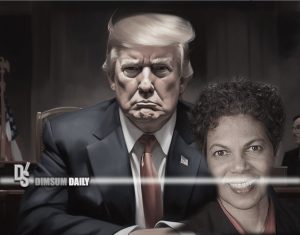 The January 6 Case – Judge Tanya Chutkan
I’m sure you’re familiar with what has happened so far. Trump has been threatening Jack Smith, President Biden, the DOJ, and Judge Chutkan on social media and in speeches, even after he was warned not to commit crimes or tamper with witnesses or the jury pool. Smith requested a protective order before turning over discovery to the Trump team. He is concerned–with good reason–that Trump will release secret grand jury material and other evidence to the public so he can try the case in the media.
Here’s the latest.
Kyle Cheney at Politico: Trump objects to strict limits on sharing evidence in election interference case.
Former President Donald Trump argued Monday that he should be allowed to share evidence in his latest criminal case with “volunteer attorneys” and other unpaid advisers as he prepares to defend himself against charges related to his effort to subvert the 2020 election.
“The government cannot preclude the assistance of those individuals, nor should President Trump be required to seek permission from the Court before any such individual assists the defense,” Trump’s attorney John Lauro wrote in a filing that seeks to govern the handling of the mountains of evidence prosecutors have gathered and are preparing to share with Trump’s team.
“Such a limitation or requirement would unduly burden President Trump and impede the efficient preparation of his defense,” Lauro continued.
In a Sunday email between Trump’s lawyers and prosecutors, appended to Trump’s filing, assistant special counsel Thomas Windom raised concerns about Trump’s plan to broaden the group of legal advisers who might be permitted to review evidence in the case, worrying that the language Lauro proposed was “boundless.”
The dispute is one of several between Trump’s legal team and the special counsel over the handling of evidence in the case and how significantly to restrict Trump’s ability to publicly disclose any of the evidence he receives. Prosecutors have proposed a so-called “protective order” that would prohibit Trump or his legal team from publicly sharing any evidence produced by prosecutors. They say that they can’t begin sharing evidence with Trump and his team until a protective order is in place.
The matter now falls to U.S. District Court Judge Tanya Chutkan, who ordered Lauro to respond to prosecutors’ proposed protective order by Monday at 5 p.m. She may either rule on the matter or seek additional argument at a hearing in the case. Prosecutors are due to propose a trial date by Thursday.
Lauro said the blanket restriction on disclosing any evidence prosecutors provide is draconian and should be narrowed to limit the treatment only of materials deemed “sensitive” — such as those containing personally identifying information, grand jury subpoena returns, sealed search warrant returns and recordings or transcripts of witness interviews.
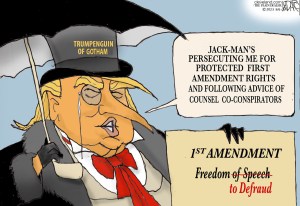 The government asked the judge to simply grant the protective order, which is usually a routine decision. But instead, she ordered the parties to hash it out in a hearing this week–probably on Friday. Again the upshot is more delay, which is just what Trump wants.
ABC News: Judge orders hearing after Trump’s lawyers say proposed protective order would infringe on Trump’s free speech.
Former President Donald Trump’s legal team says that a protective order proposed by special counsel Jack Smith would infringe on Trump’s right to free speech.
Trump’s attorneys made the argument in their response Monday to the special counsel’s motion for a protective order over the discovery evidence in the case against Trump for allegedly seeking to overturn the 2020 election.
Trump has pleaded not guilty to charges of undertaking a “criminal scheme” to overturn the results of the 2020 election by enlisting a slate of so-called “fake electors” targeting several states; using the Justice Department to conduct “sham election crime investigations”; and trying to enlist the vice president to “alter the election results” — all in an effort to subvert democracy and remain in power.
The former president has denied all wrongdoing and has dismissed the probe as politically motivated.
Monday’s filing argues for narrower limits on the protective order, which Trump’s attorneys say would protect sensitive materials while ensuring Trump’s right to free speech.
“In a trial about First Amendment rights, the government seeks to restrict First Amendment rights,” Trump’s attorneys wrote in their filing. “Worse, it does so against its administration’s primary political opponent, during an election season in which the administration, prominent party members, and media allies have campaigned on the indictment and proliferated its false allegations.”
Of course, the trial is not about First Amendment rights. Trump is charged with three criminal conspiracy counts.
Smith asked the judge for the protective order on Friday, referencing a social media post Trump made Friday afternoon in which he said, “IF YOU GO AFTER ME, I’M COMING AFTER YOU!”
The proposed protective order submitted by Smith does not seek to bar Trump from commenting on the case in its entirety, but would restrict Trump and his attorneys from disclosing evidence such as materials returned from grand jury subpoenas and testimony from witnesses and other exhibits shown to the grand jury. It does not limit Trump from discussing materials that were already available to the public separate from the government’s investigation.
Smith’s attorneys have said the proposed order is largely modeled after similar protective orders issued in other cases.
But in their filing on Monday, Trump’s attorneys accuse Smith’s team of asking Judge Tanya Chutkan to “assume the role of censor and impose content-based regulations on President Trump’s political speech that would forbid him from publicly discussing or disclosing all non-public documents produced by the government, including both purportedly sensitive materials, and non-sensitive, potentially exculpatory documents.”
This is the crap we are going to have to deal with, folks. None of these trials is going to be quick or easy.
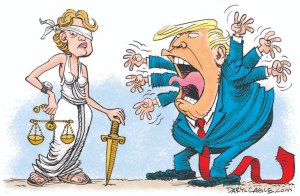 Meanwhile, because of Trump’s threats, Judge Chutkan needs more protection. CNN: Security increases for the judge assigned to Donald Trump’s January 6 criminal case.
Security for the federal judge assigned to oversee the criminal case against former President Donald Trump over his attempts to overturn the 2020 election has been increased in the federal courthouse in Washington, DC.
CNN has observed more security detailed to Judge Tanya Chutkan, and deputy US Marshals discussed security plans for the judge on Monday. The US Marshals Service handles security at the DC District Court and a spokesman for the service said it “take(s) that responsibility very seriously.”
“Ensuring that judges can rule independently and free from harm or intimidation is paramount to the rule of law, and a fundamental mission of the USMS,” spokesperson Drew J. Wade told CNN. “While we do not discuss our specific security measures, we continuously review the measures in place and take appropriate steps to ensure the integrity of the federal judicial process.”
The uptick in security inside the courthouse comes after security measures, including fencing and yellow tape, were taken down following Trump’s arraignment last week. That hearing, where Trump pleaded not guilty, was presided over by a magistrate judge. Chutkan takes the case from there.
Trump has already said he will be asking for Chutkan to recuse herself from the case, writing on social media in all caps: “There is no way I can get a fair trial with the judge ‘assigned’ to the ridiculous freedom of speech/fair elections case.”
So that’s what’s happening in the two federal cases against Trump. It’s going to be a long road, and there will be a lot of stupidity to deal with, but we can get through it together!
Did you like this post? Please share it with your friends:
Posted: July 19, 2023 | Author: bostonboomer | Filed under: 2024 presidential Campaign, Crime, Donald Trump, just because, morning reads | Tags: Arizona Governor Doug Ducey, Bernie Kerik, Climate change, E. Jean Carroll, Georgia 2020 election video, Israeli antiquities, James Hanson, January 6 case, Judge Aileen Cannon, Mar-a-Lago, Michigan fake electors, Special Counsel Jack Smith, stolen documents case, Trump crimes, Trump target letter |
Good Morning!!

Sea, Dark Sky (2021), by Alice Brasser (Netherlands)
Before I get to all the Trump crime news, I want to highlight this piece at The Guardian about climate change: ‘We are damned fools’: scientist who sounded climate alarm in 80s warns of worse to come, by Oliver Milman.
The world is shifting towards a superheated climate not seen in the past 1m years, prior to human existence, because “we are damned fools” for not acting upon warnings over the climate crisis, according to James Hansen, the US scientist who alerted the world to the greenhouse effect in the 1980s.
Hansen, whose testimony to the US Senate in 1988 is cited as the first high-profile revelation of global heating, warned in a statement with two other scientists that the world was moving towards a “new climate frontier” with temperatures higher than at any point over the past million years, bringing impacts such as stronger storms, heatwaves and droughts.
The world has already warmed by about 1.2C since mass industrialization, causing a 20% chance of having the sort of extreme summer temperatures currently seen in many parts of the northern hemisphere, up from a 1% chance 50 years ago, Hansen said.
“There’s a lot more in the pipeline, unless we reduce the greenhouse gas amounts,” Hansen, who is 82, told the Guardian. “These superstorms are a taste of the storms of my grandchildren. We are headed wittingly into the new reality – we knew it was coming.”
Hansen was a Nasa climate scientist when he warned lawmakers of growing global heating and has since taken part in protests alongside activists to decry the lack of action to reduce planet-heating emissions in the decades since.
He said the record heatwaves that have roiled the US, Europe, China and elsewhere in recent weeks have heightened “a sense of disappointment that we scientists did not communicate more clearly and that we did not elect leaders capable of a more intelligent response”.
“It means we are damned fools,” Hansen said of humanity’s ponderous response to the climate crisis. “We have to taste it to believe it.”
This year looks likely to be the hottest ever recorded globally, with the summer already seeing the hottest June and, possibly, hottest week ever reliably measured. Conversely, 2023 may in time be considered an average or even mild year, as temperatures continue to climb. “Things will get worse before they get better,” Hansen said.
“This does not mean that the extreme heat at a particular place this year will recur and grow each year. Weather fluctuations move things around. But the global average temperature will go up and the climate dice will be more and more loaded, including more extreme events.”
Read the rest at The Guardian.
Now on to the Trump Crimes:
The news that Trump received a target letter from Jack Smith warning him he is about to be indicted in the January 6 case has pushed the stolen documents case in Florida into the background. Judge Cannon can dither about setting a date for the stolen documents trial all she wants; the January 6 case will be tried in Washington DC, will likely be on a fast track, and will be higher profile. Trump could be indicted for the third time as early as Friday.

Tao Fung Shan (2019), by Stephen Wong Chun Hei (Hong Kong b. 1986),
ABC News: Special counsel informs Trump he is target in probe of efforts to overturn 2020 election.
Special counsel Jack Smith has informed former President Donald Trump by letter that he is a target in his investigationSp into efforts to overturn the 2020 election, sources familiar with the matter tell ABC News.
Trump also confirmed the development in a post on his Truth Social platform….
The target letter mentions three federal statutes: conspiracy to commit offense or to defraud the United States, deprivation of rights under color of law, and tampering with a witness, victim or an informant, sources familiar with the matter told ABC News.
There are no additional details in the letter and it does not say how the special counsel’s office claims Trump may have violated the statutes listed, sources said.
Trump, appearing Tuesday night at a town hall in Cedar Rapids, Iowa, told Fox News’ Sean Hannity that he received the letter on Sunday.
“It bothers me,” said the former president. “I got the letter on Sunday night. Think of it, I don’t think they’ve ever sent a letter on Sunday night. And they’re in a rush because they want to interfere, it’s election interference, never been done like this in the history of our country and it’s a disgrace what’s happening to our country.”
Target letters are typically given to subjects in a criminal investigation to put them on notice that they are facing the prospect of indictment.
According to Rolling Stone,
The letter mentions three federal statutes: Conspiracy to commit offense or to defraud the United States; deprivation of rights under color of law; and tampering with a witness, victim, or an informant. It does not offer further details, nor does it detail how the special counsel believes Trump may have violated the statutes, the source tells Rolling Stone.
The letter does not mention statutes on sedition or insurrection, according to the source….
The source said the statutes listed likely refer to the prosecutor’s interest in charging Trump with obstructing the election certification process, including Trump efforts to pressure Mike Pence to stop the certification of President Biden’s 2020 victory.
More bad legal news for Trump at HuffPost: Donald Trump Loses Bid For New Trial In E. Jean Carroll Case.
A federal judge on Wednesday rejected Donald Trump’s request for a new trial in a civil case brought by E. Jean Carroll, where a jury found the former U.S. president liable for sexually abusing and defaming the writer and awarded her $5 million in damages.
In a 59-page decision, U.S. District Judge Lewis Kaplan in Manhattan said the jury did not reach a “seriously erroneous result,” and the May 9 verdict was not a “miscarriage of justice.”
Carroll had accused Trump of raping her in a Manhattan department store dressing room in the mid-1990s, and then branding the incident a hoax in an October 2022 post on his Truth Social platform.
Trump had argued that awarding Carroll $2 million in compensatory damages for sexual assault was “excessive” because the jury found he had not raped her, while the award for defamation was based on “pure speculation.”
The judge also found that Trump did rape Carroll, despite his claims of being exhonerated of that charge, according to the “common definition.”
As I’m sure you know, more big legal news hit yesterday from Michigan. The Detroit News: 16 false Trump electors face felony charges in Michigan.
Attorney General Dana Nessel is leveling felony charges against 16 Republicans who signed a certificate falsely stating that Donald Trump won Michigan’s 2020 presidential election, launching criminal cases against top political figures inside the state GOP.
Each of the 16 electors, including former Michigan Republican Party Co-Chairwoman Meshawn Maddock and Shelby Township Clerk Stan Grot, have been charged with eight felony counts, including forgery and conspiracy to commit election law forgery, according to Nessel’s office.

Moonlight Dance, by Paul Batch,, 1979
The revelation capped six months of investigation and produced the most serious allegations yet in Michigan over the campaign to overturn Trump’s loss to Democrat Joe Biden in 2020. Biden won the state by 154,000 votes or 3 percentage points, but Trump and his supporters maintained false and unproven claims that fraud swung the result.
As part of the push to undermine Biden’s victory, Trump supporters gathered inside the then-Michigan Republican Party headquarters on Dec. 14, 2020, and signed a certificate, claiming to cast the state’s 16 electoral votes for Trump.
Eventually, the false certificate was sent to the National Archives and Congress. The document inaccurately claimed the Trump electors had met inside the Michigan Capitol. However, they hadn’t. Biden’s electors convened inside the Capitol, and the building was closed to others on Dec. 14, 2020.
“The false electors’ actions undermined the public’s faith in the integrity of our elections and, we believe, also plainly violated the laws by which we administer our elections in Michigan,” said Nessel, a Democrat, in a statement.
“My department has prosecuted numerous cases of election law violations throughout my tenure, and it would be malfeasance of the greatest magnitude if my department failed to act here in the face of overwhelming evidence of an organized effort to circumvent the lawfully cast ballots of millions of Michigan voters in a presidential election.”
The 16 defendants are:
- Kathy Berden, 70, of Snover
- William (Hank) Choate, 72, of Cement City
- Amy Facchinello, 55, of Grand Blanc
- Clifford Frost, 75, of Warren
- Stanley Grot, 71, of Shelby Township
- John Haggard, 82, of Charlevoix
- Mari-Ann Henry, 65, of Brighton
- Timothy King, 56, of Ypsilanti
- Michele Lundgren, 73, of Detroit
- Meshawn Maddock, 55, of Milford
- James Renner, 76, of Lansing
- Mayra Rodriguez, 64, of Grosse Pointe Farms
- Rose Rook, 81, of Paw Paw
- Marian Sheridan, 69, of West Bloomfield
- Ken Thompson, 68, of Orleans
- Kent Vanderwood, 69, of Wyoming
The Special Counsel is also examining 2020 election crimes in Arizona and Georgia.CNN: Former Arizona governor contacted by special counsel in Jan. 6 probe.
Special counsel Jack Smith’s team has contacted former Arizona Gov. Doug Ducey, who Donald Trump pressured to overturn the 2020 election, a source familiar with the outreach confirmed first to CNN.
A spokesman for Ducey confirmed the outreach from Smith’s team, which has not been previously reported.

Phil Greenwood (UK ,Wales. b.1943), Moon Lights, etching and aquating
“Yes, he’s been contacted. He’s been responsive, and just as he’s done since the election, he will do the right thing,” Ducey spokesman Daniel Scarpinato told CNN.
Trump narrowly lost Arizona to Joe Biden by less than 11,000 votes. Trump publicly attacked Ducey, a former ally, over the state’s certification of the results. As Ducey was certifying the election results in November 2020, Trump appeared to call the governor – with a “Hail to the Chief” ringtone heard playing on Ducey’s phone. Ducey did not take that call but later said he spoke with Trump, though he did not describe the specifics of the conversation.
Ducey, behind closed doors, said that the former president was pressuring him to find fraud in the presidential election in Arizona that would help him overturn the election, a source with knowledge told CNN earlier this month after The Washington Post first reported the news. There was no recording made of that call, a source familiar with the matter said.
Then-Vice President Mike Pence also spoke with Ducey in the wake of the 2020 election.
The Atlanta Journal-Constitution: EXCLUSIVE: Feds sought surveillance video from State Farm Arena in Trump probe.
Federal prosecutors examining former President Donald Trump’s attempt to hold onto power following the 2020 election requested surveillance and other security footage recorded at Atlanta’s State Farm Arena, according to a subpoena obtained by The Atlanta Journal-Constitution.
In a grand jury subpoena dated May 31, the Georgia Secretary of State’s office was directed to hand over “any and all security video or security footage, or any other video of any kind, depicting or taken at or near” State Farm and “any associated data.”
The subpoena, which was obtained by The AJC through an open records request and had not been previously reported, shows the widening interest in Georgia from Justice Department special counsel Jack Smith, who sent a so-called “target” letter to Trump on Sunday.
It also demonstrated the growing areas of overlap between the DOJ probe and the Fulton County investigation of interference in Georgia’s 2020 elections, which is expected to result in indictments against Trump and others next month.
Previous subpoenas and grand jury appearances show that Fulton and federal prosecutors are both interested in the appointment of a slate of “alternate” Trump electors in swing states like Georgia, as well as the pressure the former president placed on Georgia Secretary of State Brad Raffensperger.
Now back to Judge Cannon’s hearing yesterday on the documents case. Alan Feuer at The New York Times: Prosecutors and Trump Lawyers Clash Over Timing in Classified Documents Case.
The federal judge overseeing former President Donald J. Trump’s classified documents case expressed skepticism on Tuesday about the government’s request to go to trial as early as December, but she also seemed disinclined to accede immediately to Mr. Trump’s desire to have the trial put off until after the 2024 election.
Appearing for the first time at a hearing in the case, the judge, Aileen M. Cannon, came to no decision about when to schedule the trial, saying she would issue a written order “promptly.”

George Wesley Bellows (USA 1882-1925), A Fresh Breeze, 1913
The question of the trial’s timing could be hugely consequential, given that the legal proceeding is intertwined with the calendar of a presidential campaign in which Mr. Trump is now the front-runner for the Republican nomination.
For nearly two hours in Federal District Court in Fort Pierce, Fla., Judge Cannon, a Trump appointee, peppered prosecutors and the former president’s lawyers with questions that suggested she was in command of her courtroom and well-versed in the facts of the case.
Her decision about when to schedule the trial will be an early test for the judge, who came under widespread criticism last year after she rendered some decisions in a related case that were favorable to Mr. Trump at an early stage of the investigation.
At one point, Judge Cannon directly asked one of Mr. Trump’s lawyers, Christopher Kise, if he wanted to put off the trial until after the election. When Mr. Kise said he did, Judge Cannon told him that she wanted to focus on near-term issues like the amount of discovery evidence the defense had to review and the types of motions the lawyers planned to file.
As the hearing came to end, Todd Blanche, another one of Mr. Trump’s lawyers, asked Judge Cannon if the defense could return to court in November and reassess the trial schedule then. Appearing to pick up on the judge’s desire to create what she called “a road map” for the case, Mr. Blanche said that if a trial date absolutely had to be chosen, he would ask for one in mid-November 2024, after the election.
Timing is particularly important in this case because if the trial is delayed until after votes are cast and Mr. Trump wins the race, he could try to pardon himself or have his attorney general dismiss the matter entirely.
I imagine the Special Counsel would appeal to the 11th Circuit if Cannon has the nerve to schedule the trial after the election, as Trump wants.
One more tidbit from The Daily Beast: Ex-NYPD Commissioner Bernie Kerik ‘in Talks’ With Jack Smith’s Team, Lawyer Says.
Former New York City police commissioner Bernie Kerik is in talks to be interviewed by special counsel Jack Smith’s team investigating efforts to overturn the result of the 2020 presidential election, Kerik’s attorney said Tuesday. Kerik worked with Rudy Giuliani after the election to find evidence of voter fraud and later provided documents about a plan to keep Donald Trump in power to the House Jan. 6 committee. Tim Parlatore, a lawyer who quit Trump’s legal team in May and who now represents Kerik, was asked by Kaitlan Collins on CNN if he expected the former commissioner to receive a letter like the one Trump received informing him that he was a target of Smith’s investigation. Parlatore said Kerik hasn’t received a target letter and does not expect him to at any point. But when asked if Parlatore is “in talks” about Kerik having an interview with the special counsel, the attorney said: “Yeah sure, absolutely. Mr. Kerik has nothing to hide. He’s happy to sit down and explain everything to them.”
 Finally, news broke of another astonishing Trump crime yesterday–theft of valuable Israeli antiquities.
The New Republic: It Never Ends: Trump Took Precious Israeli Antiquities to Mar-a-Lago.
Trump’s Mar-a-Lago bathrooms and ballrooms were not just filled with top secret government documents. He apparently has also been hoarding temporarily loaned Israeli antiquities there for four years.
Haaretzreports that Israel lent the Trump White House antiquities, including ancient ceramic lamps from its national treasures collection, for a Hanukkah candle-lighting event in 2019. Israel Hasson, the then-director of the Israeli Antiquities Authority, approved the loan of the antiquities so long as they were returned within weeks.
Hasson told Haaretz that “we wanted our man to go and bring it back, but then Covid broke out, and everything got stuck.” So Hasson’s agency had asked Saul Fox, a major Jewish-American donor to the Antiquities Authority, to keep the items in tow until they could be brought back to Israel. But, Haaretz reports, Israeli authorities discovered several months ago that the antiquites instead ended up at Mar-a-Lago, “where they still remain.”
Eli Eskozido, the new Antiquities Authority head, has asked the Israeli government and Trump’s former U.S. ambassador to Israel to coordinate a return of the antiquities, but to no avail. One source told Haaretz that he wouldn’t be surprised if “the items Israel seeks are also eventually found in some bathroom.”
Republicans have bent over backward to show their inextinguishable support for Israel, but it’s unclear whether they will question why Trump has been harboring Israeli antiquities. After all, they had barely any criticism for his stealing of U.S. national security documents.
The extent of Trump criming is breathtaking, but his comeuppance is coming. As we say in the Midwest, he is up shit creek.
Have a wonderful Wednesday, Sky Dancers!!
Did you like this post? Please share it with your friends:


 peej
peej Carissa
 bostonboomer
 dakinikat
 ecocatwoman
 mablue2
 Mama Lopez
 peggysue22
 quixote
 skydancingguestblogger
 Mona (aka Wonk the Vote)



 Sky Dancing
Recent Comments