
America’s Housing Problem
Posted: June 15, 2011 Filed under: The DNC, unemployment | Tags: Foreclosures, home prices, US housing market, US jobs market 11 CommentsThe global financial crisis that resulted from a housing bubble may be over for U.S. banks and financial institutions but the 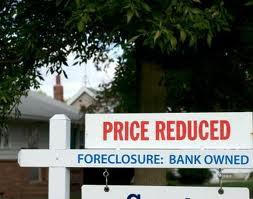 crisis is worsening for U.S. homeowners. Many mortgage holders still have underwater loans. Many home owners have absolutely no chance of selling their homes for any reasonable amount of money in a market that is now worse than the similar conditions present during The Great Depression. For many, the dream of home ownership has turned into a nightmare.
Prices have fallen some 33 percent since the market began its collapse, greater than the 31 percent fall that began in the late 1920s and culminated in the early 1930s, according to Case-Shiller data.
The news comes as the Federal Reserve considers whether the economy has regained enough strength to stand on its own and as unemployment remains at a still-elevated 9.1 percent, throwing into question whether the recovery is real.
“The sharp fall in house prices in the first quarter provided further confirmation that this housing crash has been larger and faster than the one during the Great Depression,” Paul Dales, senior economist at Capital Economics in Toronto, wrote in research for clients.
According to Case-Shiller, which provides the most closely followed housing industry data, prices dropped 1.9 percent in the first quarter, a move that the firm interpreted as a clear double dip in prices.
Moreover, Dales said prices likely have not completed their downturn.
“The only comfort is that the latest monthly data show that towards the end of the first quarter prices started to fall at a more modest rate,” he said. “Nonetheless, prices are likely to fall by a further 3 percent this year, resulting in a 5 percent drop over the year as a whole.”
Home equity has traditionally been a source of wealth and retirement savings for generations of Americans. Falling house prices not only have a negative impact on American wealth, they may be impacting the ability of American households to move where the jobs may be. The ability to move–called labor mobility by economists–is important in a recovery because it leads to stronger job markets.
Economists Colleen Donovan and Calvin Schnure have written an interesting new paper examining whether the fall in house prices since 2007 in the US — which has left many home-owners owing more on their house than it is worth — created a lock-in effect that depressed labor mobility.
This question has significance far beyond either the real estate market or the labor market, because there has been a persistent line of argument from some that the US’s current unemployment problem is not the result of insufficient demand, but is instead a “structural” problem resulting from the inability of the US economy to properly match people with available jobs. A frequent explanation for why it suddenly became difficult to match people with jobs in 2008 is that underwater mortgages have locked people in to their houses, reducing labor mobility and making job-matching more difficult.
The evidence presented in this paper indicates that the fall in house prices has indeed caused a “lock-in” effect, but has not significantly impacted labor market efficiency.
This may be an important factor in explaining persistent unemployment. There has been an argument out there that unemployment is due to ‘structural’ problems which would imply that government programs may not be effective as possible in solving job market issues. This study implies–along with recent data on falling household consumption–that the U.S. continues to have a demand problem. This means that traditional fiscal stimulus and programs could be an effective way to stop both the freefall in home prices and improve the employment outlook. Housing affordability is not an issue in this market. Home prices and mortgage interest rates are have made affordability metrics reach near-historic levels. Other factors are constraining the market.
More than four in every five mortgages now require a down payment of 20 percent, and credit history standards have tightened. At the same time, foreclosures continue at a brisk pace, pushing more supply onto the market and pressuring prices downward.
Then there is the issue of underwater homeowners—those who owe more than their house is worth—representing another 23 percent of homeowners who cannot leave or are in danger of mortgage default.
Indeed, the foreclosure problem is unlikely to get any better with 4.5 million households either three payments late or in foreclosure proceedings. The historical average is 1 million, according to Dales’ research.
We’re basically a situation where the Freddie and Fannie situation is unresolved. The historically low interest rates and high availability of cheap money means that huge institutions are making money from arbitrage and investing rather then lending and investing in non-financial projects. Small-to-medium sized businesses do not have the same funds availability of large corporations. Neither do consumers. Clearly, the Fed is going to start increasing interest rates as signs of price inflation appear on the horizon. This may wring the arbitration profit-seeking behavior of larger firms, but it will further squeeze consumers and small-to-medium businesses that have been hanging on waiting for increased demand.
This is a clear signal that the economy is experiencing demand-side problems which require fiscal policy solutions that stimulate demand. Meanwhile, Washington DC policy makers are focused on the long-term issue of fiscal sustainability. Republicans are still discussing debt default to the point that Fed Chairman Ben Bernanke made a point of mentioning the detrimental impact of that move in a recent speech. The strategy of playing chicken with the federal debt for personal political gain is a form of unpatriotic gamemanship.
Failing to raise the debt ceiling in a timely way would be self-defeating if the objective is to chart a course toward a better fiscal situation for our nation. The current level of the debt and near-term borrowing needs reflect spending and revenue choices that have already been approved by the current and previous Congresses and Administrations of both political parties. Failing to raise the debt limit would require the federal government to delay or renege on payments for obligations already entered into. In particular, even a short suspension of payments on principal or interest on the Treasury’s debt obligations could cause severe disruptions in financial markets and the payments system, induce ratings downgrades of U.S. government debt, create fundamental doubts about the creditworthiness of the United States, and damage the special role of the dollar and Treasury securities in global markets in the longer term. Interest rates would likely rise, slowing the recovery and, perversely, worsening the deficit problem by increasing required interest payments on the debt for what might well be a protracted period.
The focus of fiscal policy discussions should be to relieve downward price pressure in the housing market and provide job creation. Again, there are many ways to do this. The federal government can provide funds to states to keep up levels of public employment. They can fund law enforcement, public health, and education positions for states and municipalities to weather the prolong, slow recovery. These types of initiatives reduce the need for unemployment, medicaid, and other public services. They also maintain people in jobs that pay taxes and will feel safe enough to sustain household spending. This, in turn, creates customers for those small and medium-sized local businesses. It is clear that funding large corporations does not create local jobs. Funding small and medium-sized business through targeted loan programs in either community banks or the SBA could be used to direct monies to businesses that do hire locally rather than use their funds to expand global business.
Additionally, something must be done to help home owners in difficult positions. There appears to be no end to falling real estate prices. The government could help bottom out the market by providing more direct refinancing to under-water homeowners and those home owners who face foreclosure due to prolonged unemployment.
Clearly, the problem is political will. Nearly every administration–Republican or Democrat–facing similar poor economic conditions in the past has realized the gravity of these kinds of situation and have tailored fiscal programs to meet the challenges. This even includes the Reagan administration in the early to mid 1980s. No where in the beltway is there a discussion of policies that have been successfully used to solve these problems in the past. This isn’t even a case of dithering. This is a clear case of willful and deliberate ignorance.
Here’s a good example of the problem.
The dismal housing market news was compounded Wednesday by the National Association of Home Builders’ release of its monthly Housing Market Index. The index, which measures builder sentiment on the market, fell to a level of 13 on its 100-point scale. That’s three points below the previous month and the lowest level since September 2010. Any reading below 50 indicates negative sentiment about the market.
With fewer homes being built, fewer jobs are available and less revenue is generated for local, state and federal governments. Each new home built creates an average of three jobs for a year and generates about $90,000 in taxes, according to the group.
On the bright side, the NAHB noted that a poll it took of 2,000 2012 voters found that housing is still considered by the largest plurality of homeowners as their biggest investment.
Amid the troubling developments in housing, labor and elsewhere, the Obama administration has tried to push several new economic proposals, ranging from new training programs to tax relief.
President Obama is pleading for patience on the economy while at the same time urging the public to stay positive.
“The sky is not falling,” the president said during a stop in North Carolina two days ago.
Monday Reads
Posted: April 4, 2011 Filed under: Civil Rights, collective bargaining, Diplomacy Nightmares, Foreign Affairs, Hamas, Labor unions, Libya, MENA, Middle East, morning reads, Reproductive Rights, Syria, worker rights | Tags: Foreclosures, Libya, Martin Luther King, Syria 68 Comments Good Morning!
This is the anniversary of Dr. Martin Luther King’s assassination. It happened on April 4, 1968. Historian Robert Creamer remembers the day and its meaning in a post at HuffPo. It’s the 43rd anniversary of the activist’s death. He was in Memphis working for the rights of ordinary workers to organize and better their work terms and conditions.
Martin Luther King was in Memphis to support the strike of the city’s garbage collectors who were demanding the right of collective bargaining.
He was there because the right to sit across a table and negotiate wages and working conditions gave otherwise powerless workers, the right to have a say.
Then — as now — collective bargaining was, as the AFSCME banner said in the Wisconsin Capitol Rotunda, about freedom.
At Duke that spring we — and the non-academic employees of the university — took up the same cause. Collective bargaining was the only thing that could systematically, permanently change the relations of power and overcome years of exploitation.
Even in 1968, their $1.15 per hour was a pathetic salary — $2,392 a year. They were exploited every day. They needed a union.
Now, 43 years later, America is relearning the lessons of April, 1968:
- How collective bargaining is an integral part of a truly democratic society.
- How the labor movement is about a lot more than wages and working conditions — that it’s about respect and dignity and hope.
- And finally, it is learning once again that you can’t have the rain without the thunder and lightning. Freedom is earned through struggle. And if you want to have a great life — a life that gives you a sense of fulfillment and meaning — it’s never too late to decide that you will dedicate yours to the struggle for social and economic justice.
The LA Times reports that over 700 Anti-union pieces of legislation have been introduced across the country as part of the Republican party’s war on working Americans. Sounds like a conspiracy to me.
More than 700 bills have been introduced in virtually every state. Nearly half of the states are considering legislation to limit public employees’ collective bargaining rights. Unions are girding for a fight.
Now that the governors of Ohio and Wisconsin have signed bills to limit public workers’ collective bargaining rights, their fellow Republicans in other states are expected to gain momentum in their efforts to take on unions.
Palm Beach, Florida judges have evidently had it with the sloppy recordkeeping practices of mortgage holders and servicers. They’re starting to “routinely” dismiss foreclosure cases.
Angry and exasperated by faulty foreclosure documents, judges throughout Florida are hitting back by increasingly dismissing cases and boldly accusing lawyers of “fraud upon the court.”
A Palm Beach Post review of cases in state and appellate courts found judges are routinely dismissing cases for questionable paperwork. Although in most cases the bank is allowed to refile the case with the appropriate documents, in a growing number of cases judges are awarding homeowners their homes free and clear after finding fraud upon the court.
Still, critics say judges are not doing enough.
“The judges are the gatekeepers to jurisprudence, to the Florida Constitution, to access to the courts and to due process,” said attorney Chip Parker, a Jacksonville foreclosure defense attorney who was recently investigated by the Florida Bar for his critical comments about so-called “rocket dockets” during an interview with CNN. “It’s discouraging when it appears as if there is an exception being made for foreclosure cases.”
Dictator Bashar al-Assad of Syria is undoubtedly one of the most oppressive leaders in the world. He has been a strong supporter of both Hamas and Hezbollah. AJ has an op-ed that talks about how deluded he’s become these days as his people have finally stood up to say enough! It’s an interesting piece that talks about how just being against Israel does not translate into a blank check from your people or other leaders in the region.
The eruption of Arab revolutions has been a reaction to decades of repression and the skewed distribution of wealth; two problems that have plagued anti- and pro-Western Arab governments alike.
And Syria is one of the most repressive states in the region; hundreds, if not thousands, of people have disappeared into its infamous prisons. Some reappear after years, some after decades, many never resurface at all.
Syrians have not been the only victims. Other Arabs – Lebanese who were abducted during the decades of Syrian control over its neighbour, Jordanian members of the ruling Baath party who disagreed with its leadership and members of different Palestinian factions – have also been victimised.
Syrian critics of the regime are often arrested and charged – without due process – with serving external – often American and Israeli – agendas to undermine the country’s “steadfastness and confrontational policies”.
But these acts have never been adequately condemned by Arab political parties and civil society, which have supported Syria’s position on Israel while turning a blind eye to its repressive policies.
Thus while Syrian dissidents, including prominent nationalist and leftist intellectuals, are incarcerated in Syrian jails, other Arab activists and intellectuals have flocked to Damascus to praise its role in “defending Arab causes”.
This hypocrisy has reinforced the regime’s belief that it is immune from the criticisms directed at repressive pro-Western governments in the region.
As some one who studies the region–albeit mostly in economic and trade terms–I’ve found that each country has its unique set of problems and circumstances even though many of them seem to have similarities on the surface. Syria’s been one of the worst of the worst destabilizers in the region. This is one regime that could be replaced by nearly any one and it would be an immediate improvement.
Former President Clinton is on record saying that the US government shouldn’t rule out arming Libyan Rebels.
But Clinton said he wouldn’t completely rule out the idea of supplying arms to Libya’s rebels.
“Let me just say this. I sure wouldn’t shut the door to it. I think … we may need to know a little more,” he said.
Clinton, husband of Secretary of State Hillary Clinton, stressed that he was speaking without “any official sanction” whatsoever.
“I’m just speaking from myself. But I certainly wouldn’t take that off the table, too,” he said.
For some reason, emissaries from Gadhafi are meeting Greek leaders to find a political solution to their civil war and to the UN resolution. Maybe Gadhafi is looking for that special retirement place on a Greek Isle.
Libyan leader Muammar Qaddafi’s acting foreign minister met with Greece’s prime minister yesterday to seek a political solution to hostilities in the north African country, said Greek Foreign Minister Dimitris Droutsas.
“It appears that the regime is also seeking a solution,” Droutsas said, referring to Qaddafi’s government, after Abdul Ati al-Obeidi met with Greek Prime Minister George Papandreou, Droutsas said in a statement.
The talks followed “a series of contacts over recent days” involving Greek and Libyan officials, including the countries’ prime ministers, which led to al-Obeidi’s Athens trip, Droutsas said. Al-Obeidi also planned to visit Malta and Turkey, he said.
“It is necessary for there to be a serious attempt for peace, for stability in the region,” the Greek foreign minister said.
The Daily Mail reports that Moussa Koussa is getting asylum in the UK. I’d say that’s a pretty interesting development considering his role in the Lockabie bombing. I suppose there’s worse places to spend your retirement from “notorious henchmen”.
Libya’s feared ‘torturer-in-chief’ has been offered asylum in the UK in return for his help to topple Muammar Gaddafi and his hated regime.
The secret offer to Libya’s former foreign minister, Moussa Koussa, was made while he was still in Tripoli and helped persuade him to seek sanctuary in Britain.
But any promise of special protection for one of Gaddafi’s most notorious henchmen has provoked anger from those who want Koussa, 62, put on trial for his alleged crimes.
MP Ben Wallace, parliamentary aide to Justice Secretary Ken Clarke, said: ‘This man should not be granted asylum or any other special treatment; the only proper outcome is to bring him to justice.
‘Britain needs to make up its mind quickly. There will be no shortage of courts that will readily seek his extradition. The last thing the UK wants is for Koussa to languish, at taxpayers’ expense, in legal no-man’s-land.’
MI6 officers first made contact with Koussa, who has been linked with the Lockerbie bombing and the killing of WPC Yvonne Fletcher outside the Libyan Embassy in London, in the first few days after the UN-sanctioned attacks on Gaddafi’s military machine on March 19.
A source told The Mail on Sunday: ‘Central to the enticements was the prospect of living in safety in the UK under the protection of the asylum laws. Koussa’s greatest concern was what would happen to him once he left Gaddafi.
I’m going to end with something BB sent me last on what the radical right thinks of women. You can see this onslaught of anti women laws ooze disrespect and the opinion that women aren’t fully competent adults who are capable of making good, moral decisions without some big daddy republican government telling them what to do. Disgusting! They want to turn BP loose on the Gulf of Mexico again, but women can’t even been trusted with their own bodies.
Women sure are impulsive, lying, vulnerable and childlike creatures, aren’t they? That’s the conclusion I’d draw, if my understanding of women were based solely on anti-abortion bills.
These bills are pending and passing at a disturbing pace in multiple states. They don’t just reflect the nation’s chronic and understandable ambivalence about abortion. They also paint a shockingly negative portrait of women.
Here are a few key messages gleaned from the latest bills and anti-abortion advocacy:
* Women are impulsive. Half of states now require women to undergo a waiting period before obtaining an abortion. Usually the waiting period is one day. South Dakota just passed a three-day waiting period, the longest in the nation. The implication is that, without a government-mandated waiting period, women would dash into abortion clinics without first weighing the gravity of their decision.
* Women are prone to lying. Last week, the Indiana House passed a measure that would forbid most abortions after 20 weeks. A version of it is expected to pass into law. Opponents tried to carve out an exception for victims of rape or incest, as well as for women whose lives are threatened by medical complications. However, the bill’s sponsor fended off the amendment by attacking it as a “giant loophole” that women would use to get abortions by pretending they were raped.
* Women need things explained to them. A bill recently passed by the Texas House would require doctors to describe the fetus in some detail to all abortion-seeking patients, including victims of rape and incest. The bill allows women to close their eyes and cover their ears. (It doesn’t specify whether women are permitted to say, “La-la-la, I can’t hear you.”)
Well, that’s about it from me. I’m just waiting for the severe weather to fire up today and trying to heal. What’s on your reading and blogging list today?

 peej
peej Carissa
 bostonboomer
 dakinikat
 ecocatwoman
 mablue2
 Mama Lopez
 peggysue22
 quixote
 skydancingguestblogger
 Mona (aka Wonk the Vote)



 Sky Dancing
Recent Comments