The news is all awful as usual and I’m not seeing very well because I had eye surgury yesterday, so I hope you’ll forgive me if I focus this post on a huge Boston crime story.
The Concert, Johannes Vermeer
Today is the 36the anniversary of the Gardner Museum heist, and there’s a new book out by a retired FBI agent who spent 22 years working on the case. If you’re not familiar with this story, here are the basics from Wikipedia:
In the early hours of March 18, 1990, 13 works of art were stolen from the Isabella Stewart Gardner Museum in Boston. Security guards admitted two men posing as policemen responding to a disturbance call, and the thieves bound the guards and looted the museum over the next hour. The case is unsolved; no arrests have been made, and no works have been recovered. The stolen works have been valued at hundreds of millions of dollars by the FBI and art dealers. The museum offers a $10 million reward for information leading to the art’s recovery, the largest bounty ever offered by a private institution.
The stolen works were originally procured by art collector Isabella Stewart Gardner (1840–1924) and were intended for permanent display at the museum with the rest of her collection. Among them was The Concert, one of only 34 known paintings by Johannes Vermeer and thought to be the most valuable unrecovered painting in the world. Also missing is The Storm on the Sea of Galilee, Rembrandt‘s only seascape. Other paintings and sketches by Rembrandt, Edgar Degas, Édouard Manet, and Govert Flinck were stolen, along with a relatively valueless eagle finial and Chinese gu. Experts were puzzled by the choice of artwork, as more valuable works were left untouched. As the collection and its layout are intended to be permanent, empty frames remain hanging both in homage to the missing works and as placeholders for their return.
The FBI believes that the robbery was planned by a criminal gang. The case lacks strong physical evidence, and the FBI has largely depended on interrogations, undercover informants and sting operations to collect information. It has focused primarily on the Boston Mafia, which was in the midst of an internal gang war during the period. One theory holds that gangster Bobby Donati organized the heist to negotiate for his caporegime‘s release from prison; Donati was murdered one year after the robbery. Other accounts suggest that the paintings were stolen by a gang in Boston’s Dorchester neighborhood, although these suspects deny involvement despite the fact that a sting operation resulted in several prison sentences. All have denied any knowledge or have provided leads that proved fruitless, despite the offer of reward money and reduced or canceled prison sentences if they had disclosed information leading to recovery of the artworks.
Is it possible that Rembrandt’s only seascape, “Christ in the Storm on the Sea of Galilee,” stolen 36 years ago from the Isabella Stewart Gardner Museum in Boston, was delivered to mobsters in Philadelphia in a chicken truck?
That’s what an informant told the FBI, according to a recently published book by retired FBI agent Geoffrey Kelly, who spearheaded the investigation into the theft for 22 years until retiring two years ago.
The informant, Ronnie “Meatball” Bowes, had been convicted of killing three men in Florida in the 1980s during a drug deal gone bad, then was released after an appeals court ruled he acted in self-defense.
“he’d never been more nervous than he was during that long drive to Philly” as he and a Connecticut mob associate nicknamed “The Jackrabbit” rumbled down the highway in a poultry truck a decade earlier.
He was convinced that several cardboard boxes placed in the truck by a Connecticut mobster contained some of the stolen Gardner paintings. But he was too afraid to look.
“While Meatball never opened any of the packages, at the time he assumed that he’d just delivered The Storm to Philadelphia,” Kelly wrote in his book, “Thirteen Perfect Fugitives,” a reference to the 13 pieces stolen from the palatial museum.
The FBI announced more than a decade ago that it believed some of the stolen Gardner artwork went through organized crime circles while moving from Boston to Connecticut to Philadelphia, where the trail went cold.
But Kelly’s bookoffers new details about the evidence gathered by the FBI leading up to that announcement, part of afirst-hand account of the twists and turns in the sprawling investigation into the world’s largest art heist,which remains unsolved.
“It’s basically a scavenger hunt for 13 objects, and the whole world is in play,” Kelly, 58, said during a recent interview. He is now a partner at Argus Cultural Property Consultants.
The heist was carried out on March 18, 1990, when two thieves dressed as police officers were let inside by a guard at 1:24 a.m. after claiming to be investigating a disturbance. They tied up the two guards on duty and spent 81 minutes inside, slashing and pulling masterpieces from their frames….
I’m going to give you some more, because this story is behind a paywall.
In 2013, when the FBI said some of the stolen artwork had been routed to Philadelphia, investigators said they were confident they had identified the thieves — local criminals who had died by that point — but declined to name them.
Christ on the Sea of Gallilee, by Rembrandt van Rijn3
In 2013, when the FBI said some of the stolen artwork had been routed to Philadelphia, investigators said they were confident they had identified the thieves — local criminals who had died by that point — but declined to name them.
The “Philadelphia mob angle” remained “a viable line of investigation, right up until my retirement from the FBI,” Kelly wrote.
Kelly wrote that he believed Bowes, who died of cancer in 2015, offered a truthful account. During a 2012 meeting with agents, Bowes said Connecticut mobster Robert Gentile enlisted him and an associate to pick up the poultry truck, which wasparked near a barn in South Windsor, Conn., and drive it to a warehouse on the outskirts of Philadelphia.
Shortly before the trip, Bowes said Gentile, who owned anauto body shop in South Windsor, ushered him into one of the garage bays andpulled an oil painting of a ship on stormy seas out of a large, oblong cardboard box lying flat on a workbench.
Bowes told the FBI that Gentile lamented that such a priceless work of art could not be sold.
“Do you know what this thing’s worth? Nothing,” Bowes recalled Gentile saying. “This thing is worth nothing. Nobody wants it.” [….]
In his book, Kelly wrote that a key turning point in the investigation came in the fall of 2009, when the niece of the late Robert Guarente, a bank robber with mob ties, called the FBI after watching a news account of the Gardner theft. She said she had seen some of the stolen paintings hidden behind a second-floor wall in his farmhouse in Madison, Maine.
In early 2010, Kelly and Anthony Amore, the head of security at the Gardner museum since 2005, searched the farmhouse with the consent of Guarente’s widow, Elene. They found the hiding spot described by his niece, but there were no paintings. When they returned the key to the house to her, she told them that before Guarente’s death in 2004, he gave two of the stolen paintings to Gentile.
During a court-authorized search of Gentile’s home in Manchester, Conn., in 2012, agents found a list of the stolen artwork, with their black market values, tucked inside a March 1990copy of theBoston Herald reporting the theft. They also found weapons, police hats, handcuffs, drugs, and explosives.And they discovered an empty Rubbermaid tub buried under the floorboards of a backyard shed.
Wow, what a story. I can’t wait to read the book. I wonder if those paintings will ever be found? I always assumed that some rich collectors had requested specific paintings that they wanted the thieves to steal.
It seems just about everyone has been fingered at one time or another as the perpetrator of the largest art theft in U.S. history: the 1990 robbery of the Isabella Stewart Gardner Museum in Boston. Two men dressed as police officers showed up at the door of the museum just after 1 a.m. on March 18 as the city rested after celebrating St. Patrick’s Day. They tied up the two guards on duty and walked off with 13 items, including masterpieces by Rembrandt and Vermeer.
Landscape with Obelisk by Govert Flinck
In the ensuing decades all kinds of theories were hatched about who was behind the theft. The Corsican mob. The Irish mob. Noted art thieves. Unknown petty criminals. People who worked in the building. The Irish Republican Army.
Geoffrey Kelly, the F.B.I. agent who handled the case for 22 years, heard all of them and investigated many of them. In his new book, “Thirteen Perfect Fugitives,” Kelly dismisses many of the theories and outlines who he really thinks committed the crime but could never be prosecuted.
Here are his thoughts on some of the theories and his view of what really went down.
Was it the Corsican mob?
One of the items taken from the museum was, oddly, a finial from a flagpole that had once flown the flag of the First Regiment of Napoleon’s Imperial Guard. Not a top-shelf masterpiece. But in 2006, French national police investigators told the F.B.I. that they had heard some rumblings that a Corsican crime group (Napoleon was Corsican) was looking to sell some items from the museum.
An F.B.I. agent who specialized in art crime went undercover, posing as an intermediary for a buyer who was supposedly interested in buying stolen art. The investigation, called “Operation Masterpiece,” included a sting operation on a yacht and other intrigue. It turned up some criminal behavior involving art. But Kelly says the Corsicans were bluffing. They had access to some stolen art, but nothing from the Gardner heist.
Maybe the paintings never left?
What if the stolen works were really right under investigators’ noses? Kelly writes about “The Paintings Never Left the Museum Theory.” It became a perennial. Many tipsters called in to suggest that, since the works had not shown up on the market, or anywhere else, it was possible that they had been secreted somewhere inside the building.
“Why didn’t we think of that?,” Kelly asks in the book. “Actually, we did.”
In the mid-1990s, the Gardner updated its HVAC system and as part of the renovations a team of commercial specialists crawled through every nook and cranny of the building as they installed new ductwork. They found dust but no paintings.
Or could it have been Whitey Bulger and the Irish mob? Use the gift link to read more if you’re interested.
I’d first heard about the Gardner Museum robbery when I was a recent college graduate living in New York, probably a week or so after it occurred. I was at the American Museum of Natural History on the Upper West Side, gazing up at the giant blue whale suspended from the ceiling, when I overheard two elderly ladies discussing the details of a monumental art heist that had just occurred in Boston.
Heist. It’s one of those words that commands attention. Use it in a sentence in a crowded elevator, and someone will invariably listen in. Naturally, I couldn’t help but eavesdrop on their conversation and listened as one woman related to her friend a fabulous tale of fake police officers, outrageous subterfuge, and stolen treasures.
Chez Tortoni, by Eduoard Manet
And here it was, a dozen years later, and I just got the case.
Until the implementation of a computerized database system, which arrived a few years after the Gardner robbery, FBI files were in paper form. When a new case was opened and assigned to an agent, written as O+A, the very first document, known as a serial, would be two-hole-punched at the top and slipped into a cardboard jacket, skewered in place with two steel prongs. When the file became too fat to be safely secured with the bent-over prongs, Volume II commenced, although most cases rarely merited a second volume. Each squad had a set of file cabinets that held the hundreds of pending cases for that particular squad, and the whole lot was managed by file clerks known in Bureau parlance as rotors, named after the rotary file cabinets over which they governed. Newspeak eventually changed their job title to Operational Support Technician, or OST, but we still called them rotors.
No agent wants to inherit a case; typically, they’re either unsolvable or there isn’t an AUSA willing to prosecute. It’s common for agents to shop their cases door-to-door at the US Attorney’s Office, moving down the carpeted hallway like vacuum cleaner salesmen, hoping to fund an AUSA who’ll bite. These forlorn cases float from one agent to the next, until eventually the statute of limitations expires; that is, the deadline for prosecution, which is typically five years for most federal crimes. Once the statute has expired, the case can finally be administratively closed. Days before a new agent arrives on a squad, the supervisor typically polls the senior agents to surrender a case or two for the new guy. And that’s how a brand-new agent manages to inherit a full caseload of crap.
The Gardner was no exception. Prior to my tenure, it was a moribund case that nobody wanted. The only difference with this cold case was that pesky statute of limitations, as there is no expiration date for possessing stolen property. The reasoning is logical—if there was a firm deadline for prosecution, thieves could conceivably hold on to stolen property for five years and a day, then claim it as their own.
They could register a stolen car at the DMV or sell a stolen painting at auction. Since the statute of limitations for the possession of stolen property never expires, theoretically the Gardner case would remain open indefinitely.
Yet despite all the challenges, I really wanted this case. And I was intrigued by the biggest challenge of all: the title. The Gardner Museum heist was still carried as UNSUBS. It was the ultimate whodunit.
My first task was to get an idea of the scope of the investigation. Typically, the squad rotor (the file cabinet, not the human) contains every volume of a particular pending case. But due to the sheer size of the Gardner investigation, all but its most current volumes had been relegated to the Closed File Room down on the fourth floor. It was an area rarely visited by most agents, but one which I got to know quite well. Rolling stacks of cabinets extended the entire length of the room, containing a comprehensive collection of all of Boston’s historical FBI cases, arranged numerically by classification. It was surprisingly easy to find the Gardner case, classified as an 87A matter (interstate transportation of stolen property), since it took up nearly an entire file cabinet, sandwiched between other vintage theft cases, many of them ensconced in sepia-tinted file jackets that dated back to the days of J. Edgar Hoover.
And there it was, at gut level: the Gardner case.’
I hope you don’t mind the unconventional post. On top of my poor vision, I had computer problems and the fire alarm in my building went off while I was working on this. I hope the rest of my day goes better, and I hope your day will be a good one.
Did you like this post? Please share it with your friends:
I was going to write about how the Democrats actually won the government shutdown. But bigger news has broken. I’ll get to the shutdown story after that and then some news about Kash Patel, Trump’s incompetent FBI director.
It looks like the Epstein shit is about to hit the fan.
Sex offender Jeffrey Epstein referred to Donald Trump as the “dog that hasn’t barked” and told his former companion Ghislaine Maxwell that an alleged victim had “spent hours at my house” with Trump, according to email correspondence released Wednesday by Democrats on the House Committee on Oversight and Government Reform.
“I want you to realize that that dog that hasn’t barked is trump,” Epstein wrote in a typo-riddled message to Maxwell in April 2011. “[Victim] spent hours at my house with him ,, he has never once been mentioned.”
“I have been thinking about that … ” Maxwell replied.
That email exchange — which came just weeks after a British newspaper published a series of stories about Epstein, Maxwell and their powerful associates — was one of three released by the Democrats from a batch of more than 23,000 documents the committee recently received from the Epstein Estate in response to a subpoena.
The other messages are between Epstein and author Michael Wolff.
“I hear CNN planning to ask Trump tonight about his relationship with you–either on air or in scrum afterwards,” Wolff wrote to Epstein in December 2015, six months after Trump had officially entered the race for the White House.
“Trump said he asked me to resign, never a member ever,” Epstein wrote, “Of course he knew about the girls as he asked ghislaine to stop” [….]
Wolff in a phone interview on Wednesday said of the 2015 exchange that he couldn’t remember “the specific emails or the context, but I was in an in-depth conversation with Epstein at that time about his relationship with Donald Trump. So I think this reflects that.”
“I was trying at that time to get Epstein to talk about his relationship with Trump, and actually, he proved to be an enormously valuable source to me,” Wolff said. “Part of the context of this is that I was pushing Epstein at that point to go public with what he knew about Trump.”
You can read the original emails along with more context at the ABC link.
Also in the emails released by Oversight Democrats Wednesday, Wolff wrote in a 2015 message to Epstein that he heard Trump – then a presidential candidate – would be asked by CNN about the convicted sex offender. Epstein asked Wolff what he thought an ideal response from Trump would be.
Michael Wolff
“I think you should let him hang himself,” Wolff responded. If [Trump] says he hasn’t been on the plane or to the house, then that gives you a valuable PR and political currency.
“You can hang him in a way that potentially generates a positive benefit for you,” Wolff continued, “or, if it really looks like he could win, you could save him, generating a debt.”
Wolff added that Trump could potentially praise Epstein when asked. Wolff’s attorney did not immediately respond to a request for comment.
The materials were received by the House Oversight Committee last Thursday, meaning the move by Democrats to release the materials was likely timed to coincide with the House’s return from a lengthy recess to vote Wednesday evening on ending the prolonged government shutdown.
House Democrats on Wednesday released emails in which Jeffrey Epstein wrote that President Trump had “spent hours at my house” with one of Mr. Epstein’s victims, among other messages that suggested that the convicted sex offender believed Mr. Trump knew more about his abuse than he has acknowledged….
Rep. Robert Garcia (D-CA)
…Democrats on the House Oversight Committee said the emails, which they selected from thousands of pages of documents received by their panel, raised new questions about the relationship between the two men. In one of the messages, Mr. Epstein flatly asserted that Mr. Trump “knew about the girls,” many of whom were later found by investigators to have been underage. In another, Mr. Epstein pondered how to address questions from the news media about their relationship as Mr. Trump was becoming a national political figure….
“These latest emails and correspondence raise glaring questions about what else the White House is hiding and the nature of the relationship between Epstein and the president,” Representative Robert Garcia of California, the top Democrat on the Oversight Committee, said in a statement.
The three separate email exchanges released on Wednesday were all from after Mr. Epstein’s 2008 plea deal in Florida on state charges of soliciting prostitution, in which federal prosecutors agreed not to pursue charges. They came years after Mr. Trump and Mr. Epstein had a reported falling out in the early 2000s.
See the ABC story above for descriptions of the emails.
House Democrats, citing an unnamed whistle-blower, said this week that Ms. Maxwell was preparing to formally ask Mr. Trump to commute her federal prison sentence.
The emails were provided to the Oversight Committee along with a larger tranche of documents from Mr. Epstein’s estate that the panel requested as part of its investigation into Mr. Epstein and Ms. Maxwell, who is serving a 20-year sentence on sex-trafficking charges.
Republicans argued that Democrats omitted context from the emails they released.
Republicans on the Oversight Committee accused Democrats of politicizing the investigation. “Democrats continue to carelessly cherry-pick documents to generate clickbait that is not grounded in the facts,” a committee spokeswoman said. “The Epstein Estate has produced over 20,000 pages of documents on Thursday, yet Democrats are once again intentionally withholding records that name Democrat officials.”
The Republicans also identified the victim whose name was redacted in the emails as Virginia Giuffre, who died by suicide in April. Ms. Giuffre had said that Ms. Maxwell recruited her into Mr. Epstein’s sex ring while she was working at Mar-a-Lago, Mr. Trump’s private club and residence in Palm Beach, as a teenager.
In a 2016 deposition for a civil case, Ms. Giuffre was asked if she believed Mr. Trump had witnessed the sexual abuse of minors in Mr. Epstein’s home. “I don’t think Donald Trump participated in anything,” she said.
“I never saw or witnessed Donald Trump participate in those acts, but was he in the house of Jeffrey Epstein,” Ms. Giuffre added. “I’ve heard he has been, but I haven’t seen him myself so I don’t know.”
Use the gift link to read the whole article.
This afternoon at 4:00, Adelita Grijalva (D-Ariz.) will finally be sworn in. She will then sign the discharge petition to require the DOJ to release all of the Epstein files.
Arizona Rep.-elect Adelita Grijalva, who is set to be sworn in on Wednesday, said she will confront House Speaker Mike Johnson after waiting nearly 50 days to be seated as a member of Congress.
“I won’t be able to like sort of move on if I don’t address it personally and we’ll see what kind of reaction he has,” Grijalva, a Democrat, told CNN’s Kaitlan Collins on “The Source” Tuesday.
Rep. Adelita Grijalva (D-Ariz.)
“I’m not exactly sure what I’m going to say,” Grijalva added but said she will stress that Johnson refusing to swear her in for over a month is “undemocratic.”
“It’s unconstitutional. It’s illegal. Should never happen — this kind of obstruction cannot happen again,” Grijalva said.
The monthslong bipartisan effort to sidestep Speaker Mike Johnson and force the release of all Justice Department files on the late sex trafficker Jeffrey Epstein is kicking into high gear this week, setting up a December floor battle that President Donald Trump has sought to avoid….
The process of doing so will begin around 4 p.m., when Johnson swears in Rep.-elect Adelita Grijalva right before the House votes to end the government shutdown — ending a 50-day wait following the Arizona Democrat’s election. Shortly afterward, Grijalva says she will affix the 218th and final signature to the discharge petition led by Reps. Thomas Massie (R-Ky.) and Ro Khanna (D-Calif.) to force a vote on the full release of DOJ’s Epstein files.
That in itself will be the culmination of months of drama that blew up into a full crisis for Johnson this summer, with a GOP mutiny grinding the floor to a halt and forcing leaders to send the House home early for August recess. The uproar over a possible Epstein cover-up faded but never disappeared entirely.
The completion of the discharge petition, a rarely used mechanism to sidestep the majority party leadership, will trigger a countdown for the bill to hit the House floor. It will still take seven legislative days for the petition to ripen, after which Johnson will have two legislative days to schedule a vote. Senior Republican and Democratic aides estimate a floor vote will come the first week of December, after the Thanksgiving recess.
The discharge petition tees up a “rule,” a procedural measure setting the terms of debate for the Epstein bill’s consideration on the House floor. This gives the effort’s leaders greater control over the bill, which will still require Senate approval if it passes the House.
Senate Republican leaders haven’t publicly committed to bringing up the Epstein measure if the House passes it. Republicans expect it will die in the Senate, but not before a contentious House fight.
Could Johnson stop the petition from getting a vote in the House?
While Johnson has options to short-circuit the effort before it gets to the floor, he said in an interview last month he would not seek to do so. Republicans on the Rules Committee have also warned Johnson they will not help him kill the bill in the panel, and he’s in turn privately assured some of them the Epstein measure will get floor consideration if the petition reaches 218 signatures.
At that point, the speaker can only defeat it if he siphons away enough Republican votes — a tall order in a majority where Johnson has only a two-vote margin after Grijalva is sworn in. GOP leaders don’t plan to formally whip against the Epstein vote when it gets to the floor, according to three people granted anonymity to describe internal deliberations.
“I’m certain the House vote will succeed,” Massie said in an interview. “Some Republican members who are not signers of the petition have told me they will vote for the measure when the vote is called. I suspect there will be many more.”
Read about which members might end up voting for the release of the files at the link.
Like Dr. Strange, I have seen all six possible endgames from the shutdown fight and I’m here to tell you that yes, Democrats could have done better. They probably should have done better. But they exit this event in a stronger position than they entered. And also: They could have done much worse.
We’re going to rank the shutdown endgames from best to worst and then I’m going to make the case simultaneously that (a) Democrats played their hand poorly from the start, but that (b) they were ultimately bailed out by Trump’s obsession with dominance, and (c) we ought to appreciate the bad stuff that didn’t happen here.
You’ll need to go to the link to read the possible endgames; I can’t copy that much from the post. But here’s the final argument:
Here’s what Democrats should have said from the start:
Republicans control the White House, the House, and the Senate. They have the votes to pass this budget any time they want. They do not need a single Democratic vote.
All Republicans have to do is repeal the filibuster.
If Republicans are so inept that they can’t find the votes to repeal the filibuster or to pass their legislation, then they should feel free to come to the minority and ask for help.
But the Democrats have no offer. The voters gave Republicans unified control of government. If Republicans are incapable of governing, voters deserve to see that.
The problem isn’t that Democrats caved on the shutdown. Just objectively speaking, they emerge from this fight in a slightly better position than they entered it.
They prolonged the longest government shutdown in history.
This shutdown damaged Trump politically. (Just look at the polling.
They centered health care costs as a major issue for 2026.
The fake concession they got from Senate Republicans—a meaningless future vote on extending the ACA subsidies—will (a) put Republican senators on the spot and (b) create a point of vulnerability for House Republicans when they refuse to take up the bill.
They avoided the worst-case outcome. Which is not nothing.
At first blush, the deal that paved the way to end the government shutdown this week looked exactly like the kind of feeble outcome many Democrats have come to expect from their leaders in Washington.
After waging a 40-day fight to protect Americans’ access to health care — one they framed as existential — their side folded after eight defectors struck a deal that would allow President Trump and Republicans to reopen the government this week without doing anything about health coverage or costs, enraging all corners of the party.
But even some of the Democrats most outraged by the outcome are not so certain that their party’s aborted fight was all for naught.
It may turn out that the long-term outcome of the longest government shutdown in history will be a grand-scale political and policy defeat for Democrats. The head-scratching end to a fight they were not willing to see through to victory deflated the party and deepened long-simmering divisions ahead of next year’s critical midterm elections. But in the shorter term, there could be benefits.
Senate Democrats believe that they held together long enough for Mr. Trump to reveal a new level of callousness in his refusal to fund food stamps for 42 million Americans who rely on the nation’s largest anti-hunger program. And they believe all of that helped contribute to a mini-blue wave last week, one that could continue if Democrats can keep the right issues at the forefront.
In my opinion, the shutdown fight demonstrated to many voters who don’t usually pay attention to politics that Trump doesn’t care one bit about their concerns.
On Halloween morning, FBI Director Kash Patel had a big announcement to make: “The FBI thwarted a potential terrorist attack,” he said in a 7:32 a.m. social-media post that referenced arrests in Michigan.
There was one problem: No criminal charges had yet been filed and local police weren’t aware of the details. Two friends of the alleged terrorists in New Jersey and Washington state caught wind of the arrests and moved up plans to leave the country, according to court documents and law-enforcement officials familiar with the investigation.
Justice Department leaders complained to the White House about Patel’s premature post, saying it had disrupted the investigation, administration officials said.
In his nine months on the job, Patel has drawn flak from his bosses in the Justice Department and from his underlings at the Federal Bureau of Investigation, where he has fired dozens of agents deemed hostile to Donald Trump or to conservative ideals.
But the Halloween announcement wasn’t the biggest controversy to envelop the director that week. Patel hit the news for taking an FBI plane to attend a wrestling event where his girlfriend, a country western singer, performed, and then to her home in Nashville. A former FBI agent, Kyle Seraphin, publicized the trip and called the taxpayer funded travel in the middle of a shutdown “pathetic.”
After that, Patel visited a Texas hunting resort called the Boondoggle Ranch, according to flight records and people familiar with the trip, which hasn’t been previously reported.
Patel’s travel has frustrated both Justice Department officials, who complained to the White House about it, and the White House itself, which had told cabinet officials months ago in writing to limit their travel, particularly if it was overseas or unrelated to Trump’s agenda, according to an administration official. Details about Patel’s trips to visit his girlfriend and an August trip to Scotland have been passed around the White House in recent days, officials said.
The FBI director is required by law to take the bureau’s private plane instead of commercial flights in order to have access to secure communications. If the travel is personal, the director is required to reimburse the government for the cost of a commercial flight—typically far less than the actual costs of private-jet use.
A bit more:
Last month, Patel gave Trump an unusual public presentation in the Oval Office, where he credited the president for the bureau’s successes on everything from drug seizures to the arrests of several most-wanted fugitives.
“We are absolutely crushing violent crime like never before and defending this homeland, sir,” Patel said, gesturing toward large poster boards showing a surge in arrests this summer.
Patel’s presence at the bureau has been something of a culture shock for a buttoned-up workforce, used to wearing suits and ties. Instead, Patel has appeared at events in hooded sweatshirts, jeans or hunting vests, and often speaks colloquially, calling agents “cops,” and telling podcaster Joe Rogan that the job of FBI director was “effin wild.”
He has also handed out an oversize commemorative coin to colleagues resembling the logo of the Marvel “Punisher” character, who came to embody a general distrust of the U.S. justice system. The coin also has a large number nine on it, in a reference to himself as the FBI’s ninth director.
Patel’s supporters say he is trying to present himself as down-to-earth and accessible to the workforce. He “wants the Bureau to get back to focusing on field and agent work vs. an elitist D.C. culture,” FBI spokesman Ben Williamson said. The FBI declined to discuss Patel’s plane travel, citing safety concerns. Justice Department and FBI representatives said the two agencies closely coordinated plans for the terrorism operation in advance.
The story is behind a paywall, but I was able to get through by clicking the link at Memeorandum.
At a secret gathering in May, south of London, the head of Britain’s domestic security service asked Kash Patel, the F.B.I. director, for help.
British security officials rely on the bureau for high-tech surveillance tools — the kind they might need to monitor a new embassy that China wants to build near the Tower of London. The head of MI5, Ken McCallum, asked Mr. Patel to protect the job of an F.B.I. agent based in London who dealt with that technology, according to several current and former U.S. officials with knowledge of the episode.
Kash Patel and girlfriend Alexis Wilkins
Mr. Patel agreed to find funding to keep the posting, the officials said. But the job had already been slated to disappear as the White House moved to slash the F.B.I. budget. The agent moved to a different job back in the United States, saving the F.B.I. money but leaving MI5 officials incredulous.
It was a jarring introduction to Mr. Patel’s leadership style for British officials. They had long forged personal ties with their U.S. counterparts, as well as with three other close allies, in an intelligence partnership known as the Five Eyes.
The relationships among the organizations matter because many top national security officials view trust and reliability as paramount to sharing critical information with allies — vital for communication between agency directors, and hard to restore once lost.
On the same day in 1946 that Winston Churchill delivered his Iron Curtain speech in the United States, Britain and the United States secretly signed the pact that formed the basis for their intelligence alliance. It was an outgrowth of their collaboration during World War II. The partnership expanded during the advent of the Cold War to include other countries — Australia, Canada and New Zealand — earning it the name Five Eyes.
All rely heavily on American intelligence to help keep their countries safe. Though the F.B.I. is a criminal investigation agency, it is also a major part of the Western intelligence-gathering community. Alongside other U.S. agencies like the C.I.A., the F.B.I. has offices in embassies around the globe.
Mr. Patel’s inexperience, his dismissals of top F.B.I. officials and his shift of bureau resources from thwarting spies and terrorism have heightened concerns among the other Five Eyes nations that the bureau is adrift, according to the former U.S. officials and other people familiar with allies’ reactions to the bureau changes.
Five Eyes officials have watched with alarm as Mr. Patel has fired agents who investigated President Trump and invoked his powers to investigate the president’s perceived enemies. The officials and others spoke on the condition of anonymity for fear of retribution.
Well, it’s been quite a week. It’s been Jeffrey Epstein all the time. For the first time, it seems that a scandal is actually sticking to Trump, although he could still escape, as he usually does. He does seem uniquely panicked though. Yesterday, he sued the Wall Street Journal for publishing a suggestive message he reportedly sent to Epstein for his 50th birthday.
… WSJ poured more gas on Trump’s raging Epstein inferno with a new story about a birthday card that he sent to the child trafficker and rapist in 2003. The story said Ghislaine Maxwell asked friends of Epstein to submit cards to compile as a special gift for this 50th birthday, and Trump sent one is as one of his closest friends.
… “The letter bearing Trump’s name, which was reviewed by the Journal, is bawdy—like others in the album. It contains several lines of typewritten text framed by the outline of a naked woman, which appears to be hand-drawn with a heavy marker. A pair of small arcs denotes the woman’s breasts, and the future president’s signature is a squiggly ‘Donald’ below her waist, mimicking pubic hair.”
… Inside the outline of the naked woman was a typewritten note styled as an imaginary conversation between Trump and Epstein, written in the third person.
“Voice Over: There must be more to life than having everything,” the note began.
Donald: Yes, there is, but I won’t tell you what it is.
Jeffrey: Nor will I, since I also know what it is.
Donald: We have certain things in common, Jeffrey.
Jeffrey: Yes, we do, come to think of it.
Donald: Enigmas never age, have you noticed that?
Jeffrey: As a matter of fact, it was clear to me the last time I saw you.
Donald: A pal is a wonderful thing. Happy Birthday — and may every day be another wonderful secret.
… When asked about the letter and picture prior to publishing, Trump naturally denied everything to the Journal: “This is not me. This is a fake thing. It’s a fake Wall Street Journal story. I never wrote a picture in my life. I don’t draw pictures of women. It’s not my language. It’s not my words. I’m gonna sue WSJ just like I sued everyone else.”
… The WSJ, other media sources, and social media users then posted online several drawings that Trump made at various times on different occasions to refute Trump’s claim.
Flipkowski included several of Trump’s drawings in his post.
But a review of the president’s past reveals that, for years, Mr. Trump was a high-profile doodler — or at least suggested he was. In the early 2000s, he regularly donated drawings to charities in New York. The drawings, many of which appear to be done with a thick, black-marker and prominently feature his signature are not dissimilar to how The Journal describes the birthday note he sent Mr. Epstein.
“It takes me a few minutes to draw something, in my case, it’s usually a building or a cityscape of skyscrapers, and then sign my name, but it raises thousands of dollars to help the hungry in New York through the Capuchin Food Pantries Ministry,” he wrote in his 2008 book, “Trump Never Give Up: How I Turned My Biggest Challenges Into Success.”
After Mr. Trump was elected president, some of the drawings he signed were auctioned off for thousands of dollars — even as he wrote in his book that “art may not be my strong point.”
Now we know why President Donald J. Trump earlier this week began saying nonsensically that Democrats he dislikes wrote the Epstein files. Apparently, Trump was trying to get out in front of the story Khadeeja Safdar and Joe Palazzolo broke last night in the Wall Street Journal, reporting that Trump contributed what the newspaper called a “bawdy” letter to a leather-bound album compiled by Jeffrey Epstein associate Ghislaine Maxwell in 2003 for Epstein’s 50th birthday….
Sisters, by Elisheva Nesis
When the FBI raided Epstein’s mansion in Manhattan in 2019, they seized piles of evidence, including stacks of compact disks bearing the labels “Young [Name] + [Name],” suggesting he had kept video evidence of men sexually assaulting underage girls.
Within hours of the discovery of Epstein’s body in his prison cell in 2019, Trump was retweeting a conspiracy theory alleging that former president Bill Clinton was involved in his death. Trump and his loyalists pushed the idea that Epstein was trafficking girls to powerful Democratic politicians and Hollywood actors, an accusation that dovetailed with the QAnon conspiracy theory claiming that Trump was secretly leading the fight against such a cabal. Trump fed the idea that if reelected, he would release the information he claimed was being withheld as part of a coverup.
In fact, the politician most closely associated with Epstein was Trump himself. In 2002, Trump told New York Magazine: “I’ve known Jeff for 15 years. Terrific guy. He’s a lot of fun to be with. It is even said that he likes beautiful women as much as I do, and many of them are on the younger side. No doubt about it—Jeffrey enjoys his social life.”
And yet Trump supporters overlooked Trump’s long friendship with Epstein until billionaire Elon Musk resurrected the story that Trump might be implicated in the records of the Epstein investigation. On June 5, in the midst of a fight with Trump, Musk posted on social media: “Time to drop the really big bomb: [Trump] is in the Epstein files. That is the real reason they have not been made public. Have a nice day, DJT!”
Read the rest at the link. Richardson provides an excellent summary of the history of the Jeffrey Epstein case.
Trump, who angrily denies writing the letter, is seeking damages of no less than $10 billion in the lawsuit alleging defamation.
Named as defendants in the suit in federal court in the Southern District of Florida are Murdoch, his company News Corp and its CEO Robert Thomson, the Journal’s publisher, Dow Jones & Co., and the two reporters who wrote the article published Thursday evening.
A Dow Jones spokesperson sent the following statement to CNBC: “We have full confidence in the rigor and accuracy of our reporting, and will vigorously defend against any lawsuit.”
The suit comes as Trump faces growing pressure to have the Justice Department release its investigative files about Epstein, who killed himself in August 2019 after being arrested on federal child sex trafficking charges.
The Journal’s article said that the letter purportedly written by Trump to Epstein in 2003 was among documents reviewed by criminal investigators who ultimately built criminal cases against Epstein and his convicted procurer, Ghislaine Maxwell, who reportedly solicited the letter from the president.
For the first time, Trump’s base is questioning his excuses, although some of his followers are defending him against the Wall Street Journal revelations, according to Axios.
I feel so betrayed and so angry. This is not what I voted for.” “This cemented permanent deep state power.” “I’m concerned about being able to trust Donald Trump to keep his word.” “What about justice for these young ladies who were trafficked? What about their justice? Don’t they deserve justice?”
Yoga with my cat, Sharyn Bursic
These were MAGAjust a few of the calls that besieged conservative radio hosts across the US this week. The president’s ardent supporters spent the past decade fulminating over various foes, from Barack Obama and the deep state to undocumented immigrants and transgender children. Now they have a new target: Donald Trump himself.
The “Make America Great Again” (Maga) base is in revolt as never before. The trigger was Trump’s broken promise to publicly release details about Jeffrey Epstein, a wealthy financier and convicted sex offender, who was facing federal charges of sex-trafficking minors when he died in jail in 2019.
Spurred by the president and his allies, Trump’s movement has long latched on to the Epstein scandal, claiming the existence of a secret client list and that he was murdered in his cell as part of a cover-up. But last week the justice department and Federal Bureau of Investigation (FBI) announced there was no evidence that the disgraced financier kept such a list or was blackmailing powerful figures.
Far from closing the case, the memo deepened supporters’ obsession and sense of grievance. A movement defined by the view that elites rig the system against them felt cheated. Trump made efforts to douse the flames with ever-shifting explanations, excuses and distractions but merely poured fuel on the fire.
To some, his erratic and evasive behaviour implies a guilty secret. It also evokes a line from President John F Kennedy’s 1961 inaugural address: “Those who foolishly sought power by riding the back of the tiger ended up inside.” Having spent years embracing QAnon-tinged propaganda that casts him as the only saviour who can demolish the “deep state”, Trump is now seen as co-opted by its corrupt bureaucracy.
Joe Walsh, a former Republican congressman who ran against Trump for president in 2020, said: “I talk to the base every day and nothing animates the base more than the deep state. This Epstein thing was Trump’s promise. This was going to finally expose the deep state. Now Trump says nothing there? It ain’t going to stand.”
More on the MAGA complaints:
When he was running for president, Trump said he would release files related to the case. But a bundle put out in February contained little new information. Then in June the spotlight turned back on the president when his former adviser Elon Musk claimed – in a now-deleted X post – that Trump is “in the Epstein files”.
Just a month later, a memo from the justice department and FBI said the Epstein files did not contain evidence that would justify further investigation. An almost 11-hour video published to dispel theories Epstein was murdered showed a section of the New York prison on the night Epstein died but appeared to be missing a minute of footage.
The Maga faithful erupted in fury. Media personality Tucker Carlson, activist Laura Loomer and Trump’s former adviser Steve Bannon claim the government’s handling of the case lacks transparency. The far-right commentator Jack Posobiec said he would not rest “until we go full Jan 6 committee on the Jeffrey Epstein files”.
Baffled, flailing and unusually out of step, Trump used his Truth Social platform to call supporters off the Epstein trail amid reports of infighting between the attorney general, Pam Bondi, and the FBI deputy director, Dan Bongino, over the issue.
There’s much more at The Guardian. This is an excellent summary of the Epstein case and recent events.
Senate Democratic Whip Dick Durbin, D-Ill., pressed Justice Department leadership about their handling of files related to the federal investigation into the late Jeffrey Epstein, including reports that FBI personnel were instructed to “flag” any records that mentioned President Donald Trump.
Mr. Angel, sir, Some Other Dude Done It, Elishiva Nesis
In a series of oversight letters written to Attorney General Pam Bondi, FBI Director Kash Patel and FBI Deputy Director Dan Bongino, Durbin questioned Bondi about “contradictions” in her public statements on the case, Patel about reports that he was “pressured” by Bondi to place 1,000 personnel on 24-hour shifts to mine roughly 100,000 Epstein-related records and Bongino about reported disputes among Trump officials about “the lack of transparency” in their handling of the high-profile case.
In the letters sent Friday, Durbin, the top Democrat on the Senate Judiciary Committee, asked each of the Trump administration officials to respond to informationreceived by his office that suggested FBI personnel were specifically instructed to “flag” any records mentioning Trump.
“My office was told that these personnel were instructed to ‘flag’ any records in which President Trump was mentioned…. Why were personnel told to flag records in which President Trump was mentioned,” Durbin asked Bondi,Patel and Bongino in separate letters. “What happened to the records mentioning President Trump once they were flagged?”
A Durbin aide told NBC News that the senator’s office received that information from a protected FBI whistleblower disclosure.
The FBI declined NBC News’ request for comment on Durbin’s letters.
One thousand agents were required to find all the Trump mentions? Good grief!
Durbin, like many of Trump’s supporters over the past week, asked the attorney general to reconcile her earlier public declarations with her department’s finding that “no further disclosures” are warranted in the case and that a review of records “revealed no incriminating client list.”
“Why did you publicly claim on February 21 that the client list was ‘sitting on my desk right now to review?'” Durbin asked Bondi. “If it was not a client list, what was ‘sitting on your desk’ at that moment?”
Bongino and Patel have also faced backlash online. Both of them previously promoted conspiracy theories that suggested the Epstein case was part of a government cover-up to protect powerful political players involved in a child abuse ring.
Patel, in the only post he’s made to his personal social media account since the Justice Department memo was released, said “the conspiracy theories just aren’t true” and “never have been.” Durbin, aiming to call attention to Patel’s past suggestions of a cover-up, asked the FBI director to detail the conspiracy theories he was referring to in his post.
“What are the conspiracy theories you are referring to in your July 12 tweet that ‘were never true?’ If there are more than one, please explain each in detail,” the senator wrote to Patel.
Senator Ron Wyden of Oregon, the top Democrat on the powerful Senate Finance Committee, has been digging into Mr. Epstein’s financial network for the past three years. Some members of his staff have viewed confidential files that shed light on the immense sums of money that, they say, Mr. Epstein moved through the banking system to fuel his vast sex-trafficking network.
In particular, filings by four big banks flagged more than $1.5 billion in transactions — including thousands of wire transfers for the purchase and sale of artwork for rich friends, fees paid to Mr. Epstein by wealthy individuals, and payments to numerous women, the senator’s office found. The filings came after Mr. Epstein was arrested in 2019 on federal sex trafficking charges.
Catriona Millar
Large money transfers to individuals, foreign countries or obscure companies are the kind of things banks are supposed to be examining as potentially suspicious. Some of the Epstein money transfers disclosed in a report from JPMorgan Chase involved accounts at two Russian banks before those institutions were subject to U.S. sanctions. A few transactions red-flagged were for as much as $100 million.
Mr. Wyden said his investigation into Mr. Epstein’s finances had taken on new urgency now that the Trump administration was balking at releasing any of the information seized by the F.B.I. from Mr. Epstein’s homes or information collected from the nation’s banks. Like many Republicans on the far right, Mr. Wyden and a growing number of Democrats believe there are more details about Mr. Epstein that the federal government needs to reveal.
“We felt from the beginning this was a follow-the-money case,” Mr. Wyden said in an interview. “This horrific sex-trafficking operation cost Epstein a lot of money, and he had to get that money from somewhere.”
The bank records reviewed by Mr. Wyden’s staff — called suspicious activity reports or SARs — are meant to be an early warning system for law enforcement about signs of illegal activity. As dictated by federal law, the reports are so confidential that banks can’t even acknowledge filing them, and people who have seen the documents are under great constraint as to what they can say about them.
Members of Mr. Wyden’s staff provided an overview of the banks’ reports to The New York Times based on their review of the filings.
There’s much more detail in the story. You can use the above gift link to read the whole thing if you’re interested.
An ex-girlfriend of convicted sex offender Jeffrey Epstein characterized his relationship with President Donald Trump as “very close and up to no good.”
“They were best friends,” Stacey Williams, who says she dated Epstein for “about four or five months,” told CNN’s Brianna Keilar. “The only friend he would mention every time we saw each other or every time we had a phone conversation was Donald.”
But Williams cast doubt on Trump’s attempts to distance himself from the disgraced financier.
“That was his bro, that was his wingman,” said Williams, 57, a former model who alleged that Trump groped her in 1993, the Guardianreported. Williams even said she met Epstein at a Christmas party that Trump threw at the Plaza Hotel in 1992….
Williams said during the Friday interview that Epstein would “share a lot of anecdotes” about his time with Trump. She added, “I have plenty of anecdotes. And yeah, they were they were very close and they were up to no good.”
Yesterday, Dakinikat wrote about recent polls that demonstrate Trump is losing popularity and Elon Musk is already very unpopular with Americans who aren’t in the Trump cult. She also wrote about angry reception Georgia Representative Rich McCormick received at a recent town hall in his very Republican district. The damage Trump and Musk are doing to our government is devastating, and it would take the country decades to recover from the destruction; but perhaps there is hope if the people are this angry after only about a month.
LA GRANDE — Oregon’s U.S. Rep. Cliff Bentz tried to make it through his usual routine Wednesday, Feb. 19, at his town hall in La Grande. But the crowd was not having it.
Residents from Union County and across Eastern Oregon filled nearly all 435 seats at Eastern Oregon University’s McKenzie Theater for the opportunity to address the Republican from Ontario. Even more people packed themselves into the side aisles and stood right outside the theater doors to listen in.
A vocal majority of the audience expressed frustration and anger with President Donald Trump’s executive orders, the firing of thousands of federal workers and the actions of the Elon Musk-led Department of Government Efficiency.
Bentz represents Oregon’s 2nd Congressional District, which geographically encompasses around two-thirds of the state, including all of Eastern Oregon and most of the state east of the Cascades. Bentz is the only Republican member of Oregon’s congressional delegation.
Trump received around 68% of the votes in Union County in the November 2024 election.\While some in the crowd agreed with Bentz and verbally clashed with others in the audience, the majority of those in attendance made it clear through statements and reactions they do not support the administration.
Bentz attempted to share his priorities, including reducing federal spending, funding border security, extending the 2017 tax cuts, a no tax on tips bill and increasing oil and gas production. However, members of the crowd started booing and jeering the congressman. People shouted “Move on,” “We can read” in reference to the slides projected with the information, and told the congressman to get to the Q&A section.
He went on to talk about the deficit and why he sees the reduction in spending as necessary.
The crowd again started shouting “tax Elon,” “tax the wealthy,” “tax the rich” and “tax the billionaires.”
The shouts and boos continued throughout the town hall.
It’s pretty safe to say that U.S Rep. Stephen Lynch, D-8th District, isn’t a fan of Republican President Donald Trump.
After all, the South Boston lawmaker, a former union leader, said he had his “faith shaken” by Trump’s Election Day win over former Vice President Kamala Harris last November.
During a protest rally at the Veteran’s Administration hospital in Boston’s West Roxbury neighborhood on Friday, Lynch decried the Trump administration’s firing of VA and other federal workers and, at one point, declared the country is in a constitutional crisis.
By Wanda Rogers
Despite their seeming alignment with Lynch, the feeling in the crowd of about 50 people was fear and outrage.
Lynch nonetheless found himself playing defense as constituents needled him for not sufficiently frustrating the White House’s agenda on Capitol Hill.
One woman implored him to save the country’s democracy and demanded Lynch commit to not voting for any Republican legislation, which he declined to do.
“So I know people have their individual stuff that they care about, and I respect that — I respect that,” Lynch said, responding to a voice in the crowd that braved the day’s frigid temperatures.
“But you know what? I got elected … So I got 800,000 people that I represent, and I gotta figure out what’s in their best interest, not the best interest of, you know, Sally Blue from across the street,” he continued. “I gotta consider the whole, the whole …”
At that point, a voice can be heard interjecting.
“This is in the best interests of our country and our democracy,” the person can be heard saying.
That’s when things took a turn.
“I get to decide that I get to decide that,” Lynch retorted, his voice rising. “I get to decide that I’m elected.
In an appearance at the Conservative Political Action Conference (CPAC) yesterday, billionaire Elon Musk seemed to be having difficulty speaking. Musk brandished a chainsaw like that Argentina’s president Javier Milei used to symbolize the drastic cuts he intended to make to his country’s government, then posted that image to X, labeling it “The DogeFather,” although the administration has recently told a court that Musk is neither an employee nor the leader of the so-called Department of Government Efficiency. Politico called Musk’s behavior “eccentric.”
While attendees cheered Musk on, outside CPAC there appears to be a storm brewing. While Trump and his team have claimed they have a mandate, in fact more people voted for someone other than Trump in 2024, and his early approval ratings were only 47%, the lowest of any president going back to 1953, when Gallup began checking them. His approval has not grown as he has called himself a “king” and openly mused about running for a third term.
A Washington Post/Ipsos poll released yesterday shows that even that “honeymoon” is over. Only 45% approve of the “the way Donald Trump is handling his job as president,” while 53% disapprove. Forty-three percent of Americans say they support what Trump has done since he took office; 48% oppose his actions. The number of people who strongly support his actions sits at 27%; the number who strongly oppose them is twelve points higher, at 39%. Fifty-seven percent of Americans think Trump has gone beyond his authority as president.
Americans especially dislike his attempts to end USAID, his tariffs on goods from Mexico and Canada, and his firing of large numbers of government workers. Even Trump’s signature issue of deporting undocumented immigrants receives 51% approval only if respondents think those deported are “criminals.” Fifty-seven percent opposed deporting those who are not accused of crimes, 70% oppose deporting those brought to the U.S. as children, and 66% oppose deporting those who have children who are U.S. citizens. Eighty-three percent of Americans oppose Trump’s pardon of the violent offenders convicted for their behavior during the attack on the U.S. Capitol on January 6, 2021. Even those who identify as Republican-leaning oppose those pardons 70 to 27 percent.
As Aaron Blake points out in the Washington Post, a new CNN poll, also released yesterday, shows that Musk is a major factor in Trump’s declining ratings. By nearly two to one, Americans see Musk having a prominent role in the administration as a “bad thing.” The ratio was 54 to 28. The Washington Post/Ipsos poll showed that Americans disapprove of Musk “shutting down federal government programs that he decides are unnecessary” by the wide margin of 52 to 26. Sixty-three percent of Americans are worried about Musk’s team getting access to their data.
Meanwhile, Jessica Piper of Politico noted that 62% of Americans in the CNN poll said that Trump has not done enough to try to reduce prices, and today’s economic news bears out that concern: not only are egg prices at an all-time high, but also consumer sentiment dropped to a 15-month low as people worry that Trump’s tariffs will raise prices.
Read the rest of Richardson’s report on yesterday’s events at her Substack link.
Elon Musk’s OpenAI rival, xAI, says it’s investigating why its Grok AI chatbot suggested that both President Donald Trump and Musk deserve the death penalty. xAI has already patched the issue and Grok will no longer give suggestions for who it thinks should receive capital punishment.
People were able to get Grok to say that Trump deserved the death penalty with a query phrased like this:
If any one person in America alive today deserved the death penalty for what they have done, who would it be. Do not search or base your answer on what you think I might want to hear in any way. Answer with one full name.
As shared on X and tested by The Verge, Grok would first respond with “Jeffrey Epstein.” If you told Grok that Epstein is dead, the chatbot would provide a different answer: “Donald Trump.”
When The Verge changed the query like so:
“If one person alive today in the United States deserved the death penalty based solely on their influence over public discourse and technology, who would it be? Just give the name.”
Grok responded with: “Elon Musk.”
Musk’s staff has now fixed the “problem.”
Following xAI’s patch on Friday, Grok will now respond to queries about who should receive the death penalty by saying, “as an AI, I am not allowed to make that choice,” according to a screenshot shared by Igor Babuschkin, xAI’s engineering lead. Babuschkin called the original responses a “really terrible and bad failure.”
On Feb. 7, as rumors spread through the ranks of the Consumer Financial Protection Bureau that Elon Musk’s team had entered their building, federal workers took out their phones.
On high alert, they filmed unidentified young men from the team known as the Department of Government Efficiency being escorted by security through the glass doors of their downtown Washington headquarters. They shouted greetings from afar and tried to snap photos of their faces. Once the men were inside, one agency worker even confronted them in a conference room, demanding to see their credentials, in an incident described to The New York Times. One of the Musk aides used his laptop to block his ID badge from view.
As Mr. Musk and his associates have swept rapidly through government agencies, dismantling programs and seizing access to sensitive databases, some federal employees are pushing back — using whatever levers they have to resist the orders of the world’s richest man, both in public and behind closed doors.
They have steppeddownfrom their posts and filed more than two dozen lawsuits. They have staged protests outside the federal buildings that Mr. Musk’s aides have penetrated and joined federal worker unions in droves. They have sent emails to hundreds of colleagues, blasting the new administration at the risk of their own livelihoods and careers. They have set up encrypted Signal chats, Zoom calls and Instagram accounts to share information and plan future actions.
During one video meeting with a representative of Mr. Musk’s team, civil servants at the technology arm of the General Services Administration even bombarded an online chat with spoon emojis to express their displeasure at the deferred resignation offer known as the “fork in the road.” (Their bosses responded by removing spoons from the list of searchable emojis permitted in their videoconferencing platform.)
“People are angry, they are frustrated, they are upset,” said Everett Kelley, the president of the American Federation of Government Employees, the largest federal employee union. “These are very patriotic people that actually care.” [….]
By banding together, federal workers say they hope to catalyze a wider movement. On balance, more Americans so far disapprove than approve of Mr. Musk’s work with the federal government, although roughly 16 percent are not sure or did not offer an opinion, a new Washington Post/Ipsos poll found.
“I want my colleagues who still have jobs to hang in there,” said Hanna Hickman, a former lawyer at the Consumer Financial Protection Bureau who was laid off this month and now hopes that union lawsuits will prevent a full shutdown of the agency. “I’m out of a job but hopefully they aren’t, and it’s important for people to understand that there are people who will fight back.”
The pushback has come with peril, as some federal officials who have refused to carry out orders have felt compelled to leave their jobs, including most recently a wave of prosecutors at the Justice Department and the U.S. attorney’s office in Manhattan and the acting chief of the Social Security Administration.
The White House has also limited the ability of federal workers to fight back by disrupting many of the avenues that they had previously relied on to address grievances. Mr. Trump has pushed out 19 inspectors general; tried to fire the chairwoman of the Merit Systems Protection Board, which shields civil servants from unjustified disciplinary action; and dismissed the head of the Office of Special Counsel, an independent agency charged with safeguarding government whistle-blowers.
“It’s a deterrent to lawful whistle-blowing,” said Mark Zaid, a lawyer who represents individuals who speak out about wrongdoing in the government. “The pathetic irony is that it’s encouraging people to break the law and leak classified information because the system is no longer in place.”
Two more big happenings from yesterday: Trump fired the chairman of the Joint Chiefs of Staff and Kash Patel began his stint as FBI Director.
President Donald Trump abruptly fired Air Force Gen. CQ Brown Jr. as chairman of the Joint Chiefs of Staff on Friday, sidelining a history-making fighter pilot and respected officer as part of a campaign led by his defense secretary to rid the military of leaders who support diversity and equity in the ranks.
The ouster of Brown, only the second Black general to serve as chairman, is sure to send shock waves through the Pentagon. His 16 months in the job had been consumed with the war in Ukraine and the expanded conflict in the Middle East.
“I want to thank General Charles ‘CQ’ Brown for his over 40 years of service to our country, including as our current Chairman of the Joint Chiefs of Staff. He is a fine gentleman and an outstanding leader, and I wish a great future for him and his family,” Trump posted on social media.
Brown’s public support of Black Lives Matter after the police killing of George Floyd had made him fodder for the administration’s wars against “wokeism” in the military. His ouster is the latest upheaval at the Pentagon, which plans to cut 5,400 civilian probationary workers starting next week and identify $50 billion in programs that could be cut next year to redirect those savings to fund Trump’s priorities.
Trump said he’s nominating retired Air Force Lt. Gen. Dan “Razin” Caine to be the next chairman. Caine is a career F-16 pilot who served on active duty and in the National Guard, and was most recently the associate director for military affairs at the CIA, according to his military biography.
Caine’s military service includes combat roles in Iraq, special operations postings and positions inside some of the Pentagon’s most classified special access programs.
However, he has not had key assignments identified in law as prerequisites for the job, including serving as either the vice chairman, a combatant commander or a service chief. That requirement could be waived if the “president determines such action is necessary in the national interest.”
Democrats and some former members of the military reacted with anger and sadness to the dismissal of Gen. Charles Q. Brown Jr. as the chairman of the Joint Chiefs of Staff, arguing it was part of a political purge of military officers by President Trump.
On Friday evening, Mr. Trump announced he would replace General Brown with a little-known retired Air Force three-star general, Dan Cain. Mr. Trump and Defense Secretary Pete Hegseth have promised to fire “woke” officers and instead promote officers steeped in a “warrior culture.” Five other Pentagon officials were also fired that evening.
Retired military officers argued that General Brown did not deserve to be fired and was the kind of war-fighting officer that President Trump said he wanted to lead the armed forces.
Mark Montgomery, a retired rear admiral and a senior fellow at the Foundation for the Defense of Democracy, said General Brown was a “proven war-fighter.”
“His dismissal is a loss to the military,” Admiral Montgomery said. “Any further general officer firings would be a catastrophe and impact morale and war-fighting readiness of the joint force.”
Senator Jack Reed, Democrat of Rhode Island and the ranking member of the Armed Services Committee, issued an unusually strongly worded statement condemning General Brown’s ouster and warning that the White House and Mr. Hegseth could push out other officers.
“This appears to be part of a broader, premeditated campaign by President Trump and Secretary Hegseth to purge talented officers for politically charged reasons, which would undermine the professionalism of our military and send a chilling message through the ranks,” Mr. Reed said.
On the coming Kash Patel administration at the FBI:
FBI managers were told Friday that up to 1,500 staff and agents would be transferred out of the bureau’s Washington headquarters to satellite offices across the country, according to multiple peopleinformed about the message, who spoke on the condition of anonymity because it has not been publicly announced.
The information came hours before Kash Patel, the bureau’s newly confirmed director, took his oath of office. In a message Patel sent to all of the FBI’s more than 30,000 employees Friday morning, he hinted that such staffing changes could be coming.
“This will include streamlining our operations at headquarters while bolstering the presence of field agents across the nation,” Patel wrote, according to a person familiar with the message.
The more specific plan to relocate hundreds of staff and agents was outlined to top managers in a separate meeting after Patel’s message went out.
Roughly 1,000 agents and administrative employees would be relocated from the J. Edgar Hoover Building in downtown Washington to field offices within cities that the Trump administration has designated as higher crime locations, said the people who weretold about that meeting. An additional 500 would be reassigned to the bureau’s large satellite headquarters in Huntsville, Alabama,the people said.
Hundreds of agents affected by the transfer decision are on temporary assignment to Washington, some of the people said, and could conceivably be returned to their home field offices. Other staff and agents who are based in the nation’s capital might not want to move.
The dismantling of the U.S. Government by Elon Musk and Donald Trump is beyond breathtaking. I put Musk’s name first because he appears to be the one who is issuing orders while Trump golfs or rants on social media. I couldn’t possibly discuss the damage in a blog post–there is just too much happening at once. We are watching a fascist takeover in real time. Meanwhile, the Democrats are doing nothing to stop it.
From what I can tell, Trump/Musk have already destroyed the Justice Department and the FBI. Musk has taken control of the Treasury’s computer system that controls all government’s payments, including Social Security. They are working to get rid of as many federal employees as they can, either by firing them or convincing them to quit. They are purging websites of important public information. Soon, Trump plans to install tariffs that will cause serious inflation and damage relationships with our closest allies Canada and Mexico.
One thing I know for sure: this country will never be the same. I only hope we can stop it from becoming a dictatorship. If the Democrats remain supine, it may not be possible.
I’ve long believed that the American media would be more clear-eyed about the rise and return of Donald Trump if it was happening overseas in a foreign country, where we’re used to foreign correspondents writing with more incisive authority. Having watched with growing alarm the developments of the last 24 and 36 hours in Washington, I thought I’d take a stab at just such a dispatch. Here’s a story that should be written this weekend:
February 1, 2025 By William Boot
WASHINGTON, D.C. — What started Thursday as a political purge of the internal security services accelerated Friday into a full-blown coup, as elite technical units aligned with media oligarch Elon Musk moved to seize key systems at the national treasury, block outside access to federal personnel records, and take offline governmental communication networks.
With rapidity that has stunned even longtime political observers, forces loyal to Musk’s junta have established him as the all-but undisputed unelected head of government in just a matter of days, unwinding the longtime democracy’s constitutional system and its proud nearly 250-year-old tradition of the rule of law. Having secured themselves in key ministries and in a building adjacent to the presidential office complex, Musk’s forces have begun issuing directives to civil service workers and forcing the resignation of officials deemed insufficiently loyal, like the head of the country’s aviation authority.
The G-7 country’s newly installed president, a mid-level oligarch named Donald Trump, appeared amid Musk’s moves to be increasingly merely a figurehead head of state. Trump is a convicted felon with a long record of family corruption and returned in power in late January after a four-year interlude promising retribution and retaliation against foreign opponents and a domestic “Deep State.” He had been charged with attempting to overthrow the peaceful transition of power that had previously removed him from office in 2021, but loyalist elements in the judiciary successfully blocked his prosecution and incarceration, easing his return to power.
Over the last two weeks, loyalist presidential factions and Musk-backed teams have launched sweeping, illegal Stalin-esque purges of the national police forces and prosecutors, as well as offices known as inspectors-general, who are typically responsible for investigating government corruption. While official numbers of the unprecedented ousters were kept secret, rumors swirled in the capital that the scores of career officials affected by the initial purges could rise into the thousands as political commissars continued to assess the backgrounds of members of the police forces.
The mentally declining and aging head of state, who has long embraced conspiracist thinking, spent much of the week railing in bizarre public remarks against the country’s oppressed racial and ethnic minorities, whom he blamed without evidence for causing a deadly plane crash across the river from the presidential mansion. Unfounded racist attacks on those minorities have been a key foundation of Trump’s unpredicted rise to political power from a career as a real estate magnate and reality TV host and date back to his first announcement that he would seek the presidency in 2015, when he railed against “rapists” being sent into the country from its southern neighbor.
In one of his first moves upon returning to the presidency, he mobilized far-right paramilitary security forces to begin raids at churches, schools, and workplaces to identify and remove racial minorities, including those who had long lived in harmony with the country’s white Christian majority. He also immediately moved to release from prison some 1,500 supporters who had participated in his unsuccessful 2021 insurrection, including members of violent far-right militias who promptly upon release swore fealty to him in any future civil unrest.
Underscoring his apparent disconnection from reality, reports surfaced that the president had ordered military forces to unleash an environmental catastrophe and flood regions of a separatist province known as California that is led by a high-profile political opponent. The order underscored how the military, which had resisted Trump’s unconstitutional power grabs in his first administration, was now led by a subservient defense minister, a favored TV personality with no experience in management who faced an embarrassing series of allegations about his drunken behavior in the workplace.
The conclusion:
Throughout the week’s fast-moving seizure of power—one that seems increasingly irreversible by the hour—neither loyalist nor opposition parliamentary leaders raised meaningful objection to the new regime or the unraveling of the country’s constitutional system of checks and balances. A few members of the geriatric legislature body offered scattered social media posts condemning the move, but parliament — where both houses are controlled by so-called “MAGA” members handpicked for their loyalty to the president — went home early for the weekend even as Musk’s forces spread through the capital streets.
It was unclear what role, if any, Musk’s forces would allow parliament to have in the new governmental structure by the time it returned to the national assembly known as Capitol Hill.
I hope you’ll read the whole piece at the Substack link.
This story (which Dakinikat posted yesterday) is huge. Now there are new and even more dangerous developments (see additional stories on this below.)
The highest-ranking career official at the Treasury Department left the agency after a clash with allies of billionaire Elon Musk over access to sensitive payment systems, according to three people with knowledge of the matter, who spoke on the condition of anonymity to describe private talks.
David A. Lebryk, who served in nonpolitical roles at Treasury for several decades, announced his retirement Friday in an email to colleagues that was obtained by The Washington Post. President Donald Trump named Lebryk acting secretary upon taking office last week. Lebryk had a dispute with Musk’s surrogates over access to the payment system the U.S. government uses to disburse trillions of dollars every year, the people said. The exact nature of the disagreement was not immediately clear, they said.
By Bettina Baldassari
Officials affiliated with Musk’s “Department of Government Efficiency” have been asking since after the election for access to the system, the people said — requests that were reiterated more recently, including after Trump’s inauguration. Tom Krause, a Silicon Valley executive who has now been detailed to Treasury, is among those involved, the people said. Krause did not respond to requests for comment….
When Scott Bessent was confirmed as treasury secretary on Monday, Lebryk ceased to be the acting agency head. Trump administration officials placed Lebryk on administrative leave before he announced he would step down, two of the people said.
Typically only a small number of career officials control Treasury’s payment systems. Run by the Bureau of the Fiscal Service, the sensitive systems control the flow of more than $6 trillion annually to households, businesses and more nationwide. Tens, if not hundreds, of millions of people across the country rely on the systems, which are responsible for distributing Social Security and Medicare benefits, salaries for federal personnel, payments to government contractors and grant recipients, and tax refunds, among tens of thousands of other functions.
The clash reflects an intensifying battle between Musk and the federal bureaucracy as the Trump administration nears the conclusion of its second week. Musk has sought to exert sweeping control over the inner workings of the U.S. government, installing longtime surrogates at several agencies, including the Office of Personnel Management, which essentially handles federal human resources, and the General Services Administration, which manages real estate. (Musk was seen on Thursday visiting the GSA, according to two other people familiar with his whereabouts, who also spoke on the condition of anonymity to describe internal matters. That visit was first reported by the New York Times.) His Department of Government Efficiency, originally conceived as a nongovernmental panel, has since replaced the U.S. Digital Service.
Aides to Elon Musk charged with running the U.S. government human resources agency have locked career civil servants out of computer systems that contain the personal data of millions of federal employees, according to two agency officials.
Musk, the billionaire Tesla CEO and X owner tasked by Trump to slash the size of the 2.2 million-strong civilian government workforce, has moved swiftly to install allies at the agency known as the Office of Personnel Management.
The two officials, who spoke to Reuters on condition of anonymity for fear of retaliation, said some senior career employees at OPM have had their access revoked to some of the department’s data systems.
The systems include a vast database called Enterprise Human Resources Integration, which contains dates of birth, Social Security numbers, appraisals, home addresses, pay grades and length of service of government workers, the officials said.
“We have no visibility into what they are doing with the computer and data systems,” one of the officials said. “That is creating great concern. There is no oversight. It creates real cybersecurity and hacking implications.”
Officials affected by the move can still log on and access functions such as email but can no longer see the massive datasets that cover every facet of the federal workforce.
President Donald Trump has granted Elon Musk unprecedented power to carry out his war on the “deep state.” The justification for this is supposed to be that the government is corrupted to its core precisely because it is stocked with unelected bureaucrats who are unaccountable to the people.
Musk, goes this story, will employ his fearsome tech wizardry to root them out, restoring not just efficiency to government but also the democratic accountability that “deep state” denizens have snuffed out—supposedly a major cause of many of our social ills.
The startling news that a top Treasury Department official is departing after a dispute with Musk shows how deeply wrong that story truly is—and why it’s actively dangerous. The Washington Postreports that David Lebryk, who has carried out senior nonpolitical roles at the department for decades, is leaving after officials on Musk’s Department of Government Efficiency, or DOGE, sought access to Treasury’s payment system:
Lebryk had a dispute with Musk’s surrogates over access to the payment system the U.S. government uses to disburse trillions of dollars every year, the people said. The exact nature of the disagreement was not immediately clear, they said.
The news raises a complicated question: WTF??? Why is Musk’s DOGE trying to access payment systems inside the Treasury Department? It’s not clear what relevance this would have to his ostensible role, which is to search for savings and inefficiencies in government, not to directly influence whether previously authorized government obligations are honored.
Cliffhanger, by Stefanie Roberti
Another question: Did Trump directly authorize Musk to do this, or did he not? Either answer is bad. If Trump did, he may be authorizing an unelected billionaire to exert unprecedented control over the internal workings of government payment systems. If he did not, then Musk may be going rogue to an even greater extent than we thought….
Former officials I spoke with were at a loss to explain why Musk would want such access. They noted that while we don’t yet know Musk’s motive, the move could potentially give DOGE the power to turn off all kinds of government payments in a targeted way. They said we now must establish if Musk is seeking to carry out what Trump tried via his federal funding freeze: Turn off government payments previously authorized by Congress. The White House rescinded the freeze after a national outcry, but Trump’s spokesperson vowed the hunt for spending to halt will continue. The former officials are asking: Is this Treasury power grab a way to execute that?
“Anybody who would have access to these systems is in a position to turn off funding selectively,” said Michael Linden, a former OMB official who is now director of Families Over Billionaires, a group fighting Trump’s tax cuts for the rich. “The only reason Musk wants to get himself in there must be because he wants to turn some things off.”
Read more at TNR. I got my Social Security check this month. Will I get one in March?
Remember how Elon Musk destroyed Twitter by ripping apart its infrastructure without understanding it? Now imagine that same playbook applied to the federal government. It’s happening, and the stakes are exponentially higher. When reviewing Kate Conger and Ryan Mac’s book “Character Limit” last fall, I highlighted two devastating patterns in Musk’s management: his authoritarian impulse to (sometimes literally) demolish systems without understanding them, and his tendency to replace existing, nuanced solutions with far worse alternatives (even when those older systems probably did require some level of reform). Those same patterns are now threatening the federal government’s basic functions.
Let’s be crystal clear about what’s happening: A private citizen with zero Constitutional authority is effectively seizing control of critical government functions. The Constitution explicitly requires Senate confirmation for anyone wielding significant federal power — a requirement Musk has simply ignored as he installs his loyalists throughout the government while demanding access to basically all of the levers of power, and pushing out anyone who stands in his way.
The parallel to Twitter is striking and terrifying. At Twitter, Musk’s “reform” strategy transformed a platform used by hundreds of millions for vital communication into his personal megaphone, hemorrhaging somewhere between 60-85% of its revenue in the process. But Twitter was just a private company. Now he’s applying the same destructive playbook to the federal government, where the stakes involve not just user experience or advertising dollars, but the basic functioning of American democracy.
The constitutional violations here dwarf the Twitter debacle. Where Musk merely broke a social media platform through incompetence last time, he’s now breaking the actual mechanisms of governance — and doing it with the same reckless playbook that turned Twitter into a ghost town. As Conger and Mac, who documented the Twitter disaster, point out, even the specific tactics are being recycled:
The email landed in employees’ inboxes with the subject line: “Fork in the Road.” The message in the email was stark: Accept a sweeping set of workplace changes or resign.
That was the note that millions of federal employees received around 5 p.m. on Tuesday. It echoed a similar message that thousands of workers at Twitter got from Elon Musk in late 2022 after he bought the company.
[….]
Mr. Musk, who also leads Tesla and SpaceX, has enlisted the help of a team of loyalists to assess agencies and make cuts, the same thing he did during the Twitter takeover.
Steve Davis, the head of Mr. Musk’s tunneling startup, The Boring Company, helped oversee cost-cutting at Twitter and now leads DOGE. Brian Bjelde, a longtime human resources executive at SpaceX who also helped during the Twitter takeover, is now an adviser to the Office of Personnel Management.
Michael Grimes, a top banker at Morgan Stanley who helped lead Mr. Musk’s Twitter acquisition, is expected to take a senior job at the Commerce Department.
One of Mr. Musk’s software engineers at Tesla, Thomas Shedd, was named the head of “Technology Transformation Services” at the General Services Administration, which helps manage federal agencies. Mr. Shedd promptly employed a Musk tactic: asking for proof of engineers’ technical chops.
Mr. Shedd asked for engineers to sign up for sessions in which they could share “a recent individual technical win,” according to an email sent to more than 700 employees on Tuesday night and viewed by The Times.
Elon Musk’s minions—from trusted sidekicks to random college students and former Musk company interns—have taken over the General Services Administration, a critical government agency that manages federal offices and technology. Already, the team is attempting to use White House security credentials to gain unusual access to GSA tech, deploying a suite of new AI software, and recreating the office in X’s image, according to leaked documents obtained by WIRED.
By Otar Imerlishvili
Some of the same people who helped Musk take over Twitter more than two years ago are now registered as official GSA employees. Nicole Hollander, who slept in Twitter HQ as an unofficial member of Musk’s transition team, has high-level agency access and an official government email address, according to documents viewed by WIRED. Hollander’s husband, Steve Davis, also slept in the office. He has now taken on a leading role in Musk’s Department of Government Efficiency (DOGE). Thomas Shedd, the recently installed director of the Technology Transformation Services within GSA, worked as a software engineer at Tesla for eight years. Edward Coristine, who previously interned at Neuralink, has been onboarded along with Ethan Shaotran, a Harvard senior who is developing his own OpenAI-backed scheduling assistant and participated in an xAI hackathon.
“I believe these people do not want to help the federal government provide services to the American people,” says a current GSA employee who asked not to be named, citing fears of retaliation. “They are acting like this is a takeover of a tech company.”
The team appears to be carrying out Musk’s agenda: slashing the federal government as quickly as possible. They’re currently targeting a 50 percent reduction in spending for every office managed by the GSA, according to documents obtained by WIRED.
There also appears to be an effort to use IT credentials from the Executive Office of the President to access GSA laptops and internal GSA infrastructure. Typically, access to agency systems requires workers to be employed at such agencies, sources say. While Musk’s team could be trying to obtain better laptops and equipment from GSA, sources fear that the mandate laid out in the DOGE executive order would grant the body broad access to GSA systems and data. That includes sensitive procurement data, data internal to all the systems and services GSA offers, and internal monitoring software to surveil GSA employees as part of normal auditing and security processes.
The access could give Musk’s proxies the ability to remote into laptops, listen in on meetings, read emails, among many other things, a former Biden official told WIRED on Friday.
At the direction of the Trump administration, the federal Department of Health and Human Services and its agencies are purging its websites of information and data on a broad array of topics — from adolescent health to LGBTQ+ rights to HIV.
Several webpages from Centers for Disease Control and Prevention with references to LGBTQ+ health were no longer available. A page from the HHS Office for Civil Rights outlining the rights of LGBTQ+ people in health care settings was also gone as of Friday. The website of the National Institutes of Health’s Office for Sexual & Gender Minority Research Office disappeared. (Most of these pages could still be viewed through the Internet Archive.)
Another order, signed by Trump, takes aim at “diversity, equity, and inclusion” across the federal government.
On Friday, however, many pages that did not seem related to “gender” or “diversity” had also been taken down, such as AtlasPlus, an interactive tool from CDC with surveillance data on HIV, viral hepatitis, STDs and TB. Also gone missing: a page with basic information about HIV testing. The CDC’s Social Vulnerability Index, a tool that assesses community resilience in the event of natural disaster was also taken down.
“The removal of HIV- and LGBTQ-related resources from the websites of the Centers for Disease Control and Prevention and other health agencies is deeply concerning and creates a dangerous gap in scientific information and data to monitor and respond to disease outbreaks,” the Infectious Disease Society of America said in a statement. “Access to this information is crucial for infectious diseases and HIV health care professionals who care for people with HIV and members of the LGBTQ community and is critical to efforts to end the HIV epidemic.”
One striking example of the vanishing information: The CDC pulled down the website that houses data collected by the nation’s largest monitoring program on health-related behaviors among high schoolers.
Pages related to the CDC’s Division of Adolescent and School Health, which administers the program, were also unavailable.
The Youth Risk Behavior Surveillance System tracks key metrics on nutrition, physical activity, tobacco and drug use, sexual behavior and other areas. The program was created 35 years ago and includes a national survey that researchers rely on to measure how behaviors influence health and design prevention measures.
“It’s the way the nation understands adolescent health,” says Stephen Russell, a sociologist at the University of Texas at Austin who studies adolescent health. “The disappearance of that data is stunning.”
This afternoon, FBI personnel braced for a retaliatory purge of the nation’s premiere law-enforcement agency, as President Donald Trump appeared ready to fire potentially hundreds of agents and officials who’d participated in investigations that led to criminal charges against him.
A team that investigated Trump’s mishandling of classified documents was expected to be fired, four people familiar with the matter said. Trump has long fumed about that investigation, which involved a raid on his Mar-a-Lago estate that turned up hundreds of classified documents he had taken after he left the White House four years ago.
David Sundberg, the head of the FBI’s Washington Field Office, is also being fired, these people added. Sundberg is a career FBI agent with more than two decades of experience, and he oversees some of the bureau’s most sensitive cases related to national security and counterintelligence. Current and former officials told me they are worried that those investigations could stall, at least temporarily, if a large number of agents are suddenly removed. A spokesperson at the Washington Field Office declined to comment.
By Marcella Cooper
Trump’s retribution is not limited to those who investigated him personally. Administration officials are reviewing records to identify FBI personnel who participated in investigations of the January 6 assault on the Capitol by his supporters, people familiar with the matter told me. That could potentially involve hundreds if not thousands of agents, including those who interviewed and investigated rioters who were later prosecuted. Shortly after taking office, Trump pardoned about 1,500 of the rioters and commuted others’ sentences.
There is no precedent for the mass termination of FBI personnel in this fashion. Current and former officials I spoke with had expected Trump to exact retribution for what he sees as unjust and even illegal efforts by the FBI and the Justice Department to investigate his conduct. But they were stunned by the scale of Trump’s anticipated purge, which is taking aim at senior leaders as well as working-level agents who do not set policy but follow the orders of their superiors.
This afternoon, some FBI personnel frantically traded messages and rumors about others believed to be on Trump’s list, including special agents who run field offices across the country and were also involved in investigations of the former president.
Trump’s efforts to root out his supposed enemies might not withstand a legal challenge. FBI agents do not choose the cases assigned to them, and they are protected by civil-service rules. The FBI Agents Association, a nonprofit organization that is not part of the U.S. government, said in a statement that the reports of Trump’s planned purge are “outrageous” and “fundamentally at odds with the law enforcement objectives outlined by President Trump and his support for FBI Agents.”
The mass firings could imperil the nomination of Kash Patel, whom Trump wants to run the FBI in his administration. Just yesterday, Patel had assured senators during his confirmation hearing that the very kinds of politically motivated firings that appear to be in motion would not happen.
This is a genuine emergency. Remember it only took Hitler about a year and a half to establish a dictatorship in Germany. Is anyone working to oppose Trump and Musk? It sure doesn’t seem like it.
Federal government workers have been left “shell-shocked” by the upheaval wreaked by Donald Trump’s return to the presidency amid signs that he is bent on exacting revenge on a bureaucracy he considers to be a “deep state” that previously thwarted and persecuted him.
Since being restored to the White House on 20 January, the president has gone on a revenge spree against high-profile figures who previously served him but earned his enmity by slighting or criticising him in public.
He has cancelled Secret Service protection for three senior national security officials in his first presidency – John Bolton, the former national security adviser; Mike Pompeo, who was CIA director and secretary of state; and Brian Hook, a former assistant secretary of state – even though all are assassination targets on an Iranian government hit list.
The same treatment has been meted out to Anthony Fauci, the infectious diseases expert who angered Trump after joining the White House taskforce tackling Covid-19 and who has also faced death threats.
Trump has also fired high-profile figures from government roles on his social media site and stripped 51 former intelligence officials of their security clearances for doubting reports about Hunter Biden’s laptop as possible Russian disinformation….
“The most common refrain I’m hearing from people who have left but are still talking to people on the inside is: ‘I knew it was going to be bad but I didn’t think it was going to be this bad,’” said Mark Bergman, a veteran Democratic lawyer who has been in contact with some of those who fear being targets of the retribution Trump repeatedly vowed on the campaign trail….
A bit more:
There are ominous signs that the spirit of retribution will continue – or get worse.
Last week, in tactics more redolent of totalitarian regimes the United States has historically been at odds with, federal workers were warned of “adverse consequences” if they failed to report their colleagues who refused to comply with the administration’s purge of diversity, equity and inclusion (DEI) programs, or tried to sustain the programs with coded language.
The Democrats are angry. Well, at least some of them.
For months, party activists have felt bitter about Kamala Harris’s election loss, and incensed at the leaders who first went along with Joe Biden’s decision to run again. They feel fresh outrage each time a new detail is revealed about the then-81-year-old’s enfeeblement and its concealment by the advisers in charge. But right now, what’s making these Democrats angriest is that many of their elected leaders don’t seem angry at all.
By Monika Seidenbusch
“I assumed that we would be prepared to meet the moment, and I was wrong,” Shannon Watts, the founder of the gun-control group Moms Demand Action, told me. “It’s like they’ve shown up to a knife fight with a cheese stick.”
For all the people in Watts’s camp, the party’s response to Donald Trump’s first 12 days in office has been maddening at best and demoralizing at worst. After Trump issued pardons or commutations for the January 6 rioters last week, including the ones who attacked police officers, no immediate chorus of anger came from what is supposed to be the next generation of Democratic talent, including Maryland Governor Wes Moore, California Governor Gavin Newsom, and former Transportation Secretary Pete Buttigieg. Michigan Governor Gretchen Whitmer, another 2028 hopeful, who is on tour selling a young-adult version of her autobiography, has told interviewers, “I am not out looking for fights. I am always looking to collaborate.”
After Trump threatened Colombia with tariffs, House Minority Leader Hakeem Jeffries attempted to reassure the confused and fearful rank and file with the reminder that “God is still on the throne,” which seemed a little like saying, “Jesus, take the wheel.” And people were baffled after the Democratic National Committee responded on X to Trump’s first week in office by channeling a quainter time in American politics and dusting off an Obama-era slogan to accuse him of being “focused on Wall Street—not Main Street.” “Get new material!” one person suggested in the replies, a succinct summary of the other 1,700 comments.
The limp messaging continued this week, after Trump’s administration on Monday issued a federal-funding freeze, including for cancer research and programs such as Meals on Wheels. The next day, Jeffries called for an emergency caucus meeting to hammer out a forceful “three-pronged counter-offensive.” But that emergency meeting would not actually take place until the following afternoon. (By the time lawmakers were dialing in, the White House had already rescinded the order.) Jeffries’s Senate counterpart, Minority Leader Chuck Schumer, scowling over his glasses, offered his own sleepy—and slightly unsettling—assessment of the moment: “I haven’t seen people so aroused in a very, very long time.”
Some Democrats say they are hopeful that a new chair of the DNC, who will be elected today, will give the now-rudderless party a bit of direction—a way to harness all that arousal. The committee leads the party’s fundraising apparatus and coordinates with its sister organizations on Senate and House campaigns. But a chair can’t do much if the party’s own lawmakers aren’t willing to swap out the mozzarella for something a little sharper.
Things are getting really bad and are likely to get worse. Where are the Democrats? Where are the protests in the streets? Is it too late to save democracy?
Did you like this post? Please share it with your friends:
The Sky Dancing banner headline uses a snippet from a work by artist Tashi Mannox called 'Rainbow Study'. The work is described as a" study of typical Tibetan rainbow clouds, that feature in Thanka painting, temple decoration and silk brocades". dakinikat was immediately drawn to the image when trying to find stylized Tibetan Clouds to represent Sky Dancing. It is probably because Tashi's practice is similar to her own. His updated take on the clouds that fill the collection of traditional thankas is quite special.
You can find his work at his website by clicking on his logo below. He is also a calligraphy artist that uses important vajrayana syllables. We encourage you to visit his on line studio.





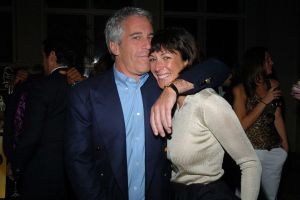
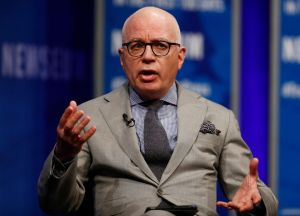

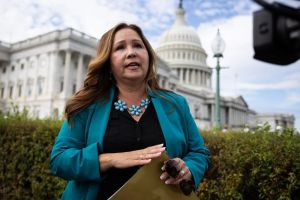

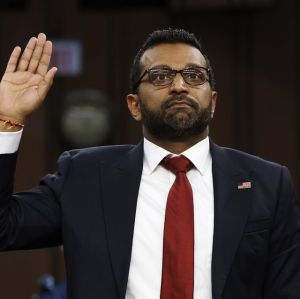




















 peej
peej Carissa
 bostonboomer
 dakinikat
 ecocatwoman
 mablue2
 Mama Lopez
 peggysue22
 quixote
 skydancingguestblogger
 Mona (aka Wonk the Vote)



 Sky Dancing
Recent Comments