
Lazy Caturday Reads
Posted: May 14, 2022 Filed under: Afternoon Reads | Tags: abortion rights, cats relaxing, caturday, Clarence Thomas, January 6 Committee, Mitch McConnell, Rand Paul, Republicans, Roe v. Wade, SCOTUS, Ukraine, women's rights 26 Comments
Liquid Cat, photo by Karen Slagle
Happy Caturday!!
My stress level is sky high lately. If only I could relax like a cat, blissfully unaware of the daily shocks we humans have to deal with these days. At least it’s the weekend, so maybe we’ll get a break–or maybe even some good news? Here’s the latest:
The Guardian: Demonstrators across the US protest expected reversal of Roe v Wade.
With the US supreme court apparently poised to overturn the 1973 landmark decision which made abortion legal, hundreds of thousands of people across America are planning to take to the streets to protest the looming decision.
A coalition of groups such as Planned Parenthood, UltraViolet, MoveOn and the Women’s March are organizing Saturday’s demonstrations, whose rallying cry is “Bans Off Our Bodies”. More than 370 protests are planned, including in Washington DC, New York, Los Angeles and Chicago….
The “Bans Off Our Bodies” gatherings will take place three days after Democrats in the US Senate on Wednesday made a largely symbolic effort to advance legislation that would codify the right to an abortion into federal law. All 50 Republicans and one conservative-aligned Democrat – West Virginia’s Joe Manchin – voted against the measure, leaving it well short of the 60 votes necessary for it to advance.
Also from The Guardian: Protesters rally outside US supreme court justices’ homes ahead of pro-choice marches.
Pro-choice demonstrators continue to turn up outside the homes of supreme court justices, with the latest target being conservative Amy Coney Barrett, who signed on to a majority draft opinion that was leaked to reveal an intention to overturn the constitutional right to seek an abortion in the US.
“The right to your own body – to do what you want with your own body – is the most personal freedom you can have,” one protester said from among a group wearing long red “handmaid” capes and white bonnets earlier this week to symbolize forced childbearing, as members of the Virginia state police watched nearby….
Several organizations, led by Planned Parenthood and the Women’s March, are preparing for a nationwide day of pro-choice marches on Saturday….
Protesters have so far gathered outside the residences in the Washington DC area of Samuel Alito, who wrote the scorching draft opinion, and Brett Kavanaugh, as well as Barrett and the chief justice, John Roberts, who did not sign on to the draft opinion, unlike the other three and Justices Clarence Thomas and Neil Gorsuch.
Yesterday, British medical journal The Lancet released a scathing editorial warning the U.S. Supreme Court that if they overturn Roe v. Wade, they will have women’s “blood on their hands.”
The Lancet: Why Roe v. Wade Must Be Defended.
“Abortion presents a profound moral issue on which Americans hold sharply conflicting views.” So begins a draft opinion by Associate Justice Samuel Alito, leaked from the US Supreme Court on May 2, 2022. If confirmed, this judgement would overrule the Court’s past decisions to establish the right to access abortion. In Alito’s words, “the authority to regulate abortion must be returned to the people and their elected representatives”. The Court’s opinion rests on a strictly historical interpretation of the US Constitution: “The Constitution makes no reference to abortion, and no such right is implicitly protected by any constitutional provision.” His extraordinary text repeatedly equates abortion with murder.
The Due Process clause of the 14th Amendment to the Constitution has been the main foundation underpinning the right of American women to an abortion. That 1868 Amendment was passed during the period of American Reconstruction, when states’ powers were being subjected to certain limitations. The goal of the Amendment was to prevent states from unduly restricting the freedoms of their citizens. That guarantee of personal liberty, so the Supreme Court had previously held, extended to pregnant women, with qualifications, who decided to seek an abortion. Alito rejected that reasoning. He argued that for any right not mentioned in the Constitution to be protected, it must be shown to have had deep roots in the nation’s history and tradition. Abortion does not fulfil that test. Worse, Roe was an exercise in “raw judicial power”, it “short-circuited the democratic process”, and it was “egregiously wrong” from the very beginning. It was now time, according to Alito, “to set the record straight”.
What is so shocking, inhuman, and irrational about this draft opinion is that the Court is basing its decision on an 18th century document ignorant of 21st century realities for women. History and tradition can be respected, but they must only be partial guides. The law should be able to adapt to new and previously unanticipated challenges and predicaments. Although Alito gives an exhaustive legal history of abortion, he utterly fails to consider the health of women today who seek abortion. Unintended pregnancy and abortion are universal phenomena. Worldwide, around 120 million unintended pregnancies occur annually. Of these, three-fifths end in abortion. And of these, some 55% are estimated to be safe—that is, completed using a medically recommended method and performed by a trained provider. This leaves 33 million women undergoing unsafe abortions, their lives put at risk because laws restrict access to safe abortion services.
Read the rest at the link.
At The Washington Post, Dana Millbank writes: Roe’s impending reversal is a 9/11 attack on America’s social fabric.
Washington’s reaction to the leaked Supreme Court draft opinion overturning Roe v. Wade has been typically myopic.
Republicans first tried to make people believe that the issue wasn’t the opinion itself but the leak. Now they’re absurdly trying to portray Democrats as supporters of infanticide. Democrats, in turn, squabbled among themselves before a show vote on a doomed abortion rights bill. And the news media have reverted to our usual horse-race speculation about how it will affect the midterms.
This small-bore response misses the radical change to society that Justice Samuel Alito and his co-conspirators are poised to ram down the throats of Americans. Their stunning action might well change the course of the midterms — but more importantly, it is upending who we are as a people.
Assuming little changes from the draft, overturning Roe would be a shock to our way of life, the social equivalent of the 9/11 attacks (which shattered our sense of physical security) or the crash of 2008 (which undid our sense of financial security). As epoch-making decisions go, this is Brown v. Board of Education, but in reverse: taking away an entrenched right Americans have relied upon for half a century. We remember Brown because it changed us forever, not because it altered the 1954 midterms.
Read more at the WaPo.
Clarence Thomas, husband of Ginni Thomas, who supported a coup against the U.S. government, is still whining about the SCOTUS link, which most likely came from a right wing source. Adam Liptak at The New York Times: Justice Thomas Says Leaked Opinion Destroyed Trust at the Supreme Court.
The leak of a draft opinion has done irreparable damage to the Supreme Court, Justice Clarence Thomas said at a conference in Dallas on Friday night, adding that it had destroyed trust among its members.
“What happened at the court is tremendously bad,” Justice Thomas said. “I wonder how long we’re going to have these institutions at the rate we’re undermining them.”
The leak of the opinion, which would overturn Roe v. Wade, the 1973 decision that established a constitutional right to abortion, was “like kind of an infidelity,” Justice Thomas said.
“Look where we are, where that trust or that belief is gone forever,” he said. “And when you lose that trust, especially in the institution that I’m in, it changes the institution fundamentally. You begin to look over your shoulder.”
Tough shit. My trust in SCOTUS was gone after Thomas was confirmed by lying about his sexual harassment of Anita HIll.
I won’t quote from this one, but if you want to read an argument by a constitutional scholar who is a Democrat who supports abortion rights but opposes Roe, check out this article at The Wall Street Journal by Akhil Reed Amar: The End of Roe v. Wade. I found it interesting but not that helpful for women who are facing a disastrous and traumatic future around pregnancy and childbirth. The article wasn’t behind the paywall when I opened it.
In other news, Republican Senators refused to visit Ukraine with Democrats, but then they organized their own trip. Please note that one of their GOP colleagues, Rand Paul, is currently blocking a bill to provide more aid to help Ukraine defend itself against Russia. The New York Times: McConnell and other Republican senators make a secret visit to Ukraine.
Senator Mitch McConnell of Kentucky, the minority leader, visited Ukraine on Saturday to meet with President Volodymyr Zelensky, leading the latest delegation of American lawmakers to the country as the United States deepens its commitment to Kyiv’s fight against the Russian invasion.
The surprise visit by Mr. McConnell, who was accompanied by three other Republican senators, comes as the Senate is working to pass a $40 billion emergency military and humanitarian aid package for Ukraine. It follows a string of other clandestine visits, including by the first lady, Jill Biden, and Speaker Nancy Pelosi….
“Helping Ukraine is not an instance of mere philanthropy — it bears directly on America’s national security and vital interests that Russia’s naked aggression not succeed and carries significant costs,” Mr. McConnell said this week. “If Ukraine fails to repel Russian aggression, there is no question that the threat to American and European security will grow.”
The trip was disclosed by Mr. Zelensky’s office. Details were not yet available from the lawmakers.
Mr. McConnell was joined by Senators John Barrasso of Wyoming, a member of his leadership team and the Foreign Relations Committee; John Cornyn of Texas, a member of the Intelligence Committee; and Susan Collins of Maine, who sits on both the Intelligence Committee and the Appropriations Committee, which oversees government funding.
In the photos I’ve seen, Zelensky doesn’t look as happy as he did when Jill Biden and Nancy Pelosi visited him.
The New York Times’s Luke Broadwater and Emily Cochrane on the subpoenas of members of Congress by the January 6th committee: Subpoenas for Republicans Raise New Questions for Jan. 6 Panel.
The decision by the House committee investigating the Jan. 6 attack on the Capitol to issue subpoenas to five Republican members of Congress, including Representative Kevin McCarthy, the minority leader, has sent a shock wave through Capitol Hill, heightening tensions in an already hostile environment and raising questions about the future of the inquiry and the institution itself.
The move by the Democratic-led panel set up a showdown with Republicans that could result in the threat of jail time against sitting members of Congress — including Mr. McCarthy, who is in line to be speaker if his party wins control of the House in November. It also had major implications for the investigation, and whether the country will ever get full answers about the deadly mob attack on the Capitol on Jan. 6, 2021, that disrupted the peaceful transfer of power and left more than 150 police officers injured.
Some Democrats immediately began clamoring for Mr. McCarthy and other lawmakers to be held in criminal contempt if they fail to appear at their scheduled depositions in late May, while Republicans warned of retaliation if they take control of the House after the midterm elections.
“I wouldn’t be for it, but turnabout is fair play,” Representative Thomas Massie, Republican of Kentucky, said of retaliatory subpoenas. He called the Jan. 6 committee’s subpoenas a “horrible precedent for the institution,” adding: “It’s a race to the bottom.”
 I’d say the refusal of Republicans and Trump associates to honor Congressional subpoenas looks bad for Republicans, especially if they try to investigate Democrats in the future; but for the NYT, it’s always about how everything that happens is bad for Democrats.
Meanwhile at Axios: More bombshells for Jan. 6 committee before June hearings.
The Jan. 6 committee may seek testimony from additional lawmakers as soon as next week, ahead of blockbuster TV hearings that kick off next month, Axios has learned.
Driving the news: Chiefs of staff and other aides to members of the House select committee were told Friday on their weekly call with committee staff to brace for more bombshells ahead of the June 9 start to public hearings, according to two sources on the call….
The big picture: The committee created a major stir with post-election implications when on Thursday it issued subpoenas to five House Republicans, including two of the GOP’s top brass — House Minority Leader Kevin McCarthy (R-Calif.) and the Judiciary Committee’s ranking member Jim Jordan (R-Ohio).
— Members haven’t said how they would enforce those subpoenas.
— Rep. Jamie Raskin (D-Md.), a member of the committee, told Axios on Thursday that “the fact-gathering process will continue through the hearings.”
What we’re hearing: A U.S. Capitol Police security briefing for members and their chiefs of staff, to prepare for the June hearings, is scheduled for May 20.
That’s what’s happening so far today, as I see it. What’s on your mind?
Lazy Caturday Reads
Posted: April 2, 2022 Filed under: Afternoon Reads | Tags: Amazon, aphasia, Bruce Willis, Clarence Thomas, Ginni Thomas, Hollywood, January 6 insurrection, labor issues, Labor Unions, Merrick Garland, Supreme Court, Trump White House call logs 15 Comments
Gedda Runyon Starlin, “House Prince”
Good Afternoon!!
You’ve probably heard about actor Bruce Willis having stopped acting because he has aphasia. Aphasia is most commonly caused by a stroke that affects language areas–usually located on the left side of the brain. It can but it can also follow a severe head injury or other brain trauma. It can result from traumatic brain injuries suffered by athletes in contact sports like football and hockey. Willis’ family has declined to explain the cause of his aphasia, so we don’t know if he had a stroke or some other type of brain injury or if he has Alzheimer’s disease or dementia. There’s an interesting story at the LA Times on other celebrities who have struggled with aphasia, including Sharon Stone, Dick Clark, Kirk Douglas, and Patricia Neal.
Apparently Willis showed signs of cognitive decline as far back as 2017, but he continued working. His performances apparently deteriorated enough that he received a “Razzie” award (now rescinded) for “worst performance in a 2021 movie.” I’m not sure what to think about this, but it made me uncomfortable when I learned about this. Abigail Weinberg writes at Mother Jones: For Years, Hollywood Suspected Bruce Willis’ Deteriorating Health. They Exploited Him Anyway This is a labor issue.
After an illustrious career that featured starring roles in movies like Pulp Fiction and The Sixth Sense, Willis had in recent years taken to churning out dozens of low-budget productions. A new Los Angeles Times article reveals just how bad things were on the set of those movies—and gives the impression that the actor was being taken advantage of.
Two crew members from the upcoming film White Elephant told the Times that Willis asked aloud, “Why am I here?” “Someone would give him a line and he didn’t understand what it meant,” a crew member said. “He was just being puppeted.”
The incidents ranged from relatively benign to potentially dangerous: A crew member from the 2020 movie Hard Kill said that Willis repeatedly fired a gun loaded with blanks on the wrong cue. The incident seems particularly stark in light of Alec Baldwin’s gun accidentally firing and killing cinematographer Halyna Hutchins on the set of Rust last year.
So, why were the dozens of people involved in these films so set on working with someone who wasn’t cognitively fit to perform? Well, the money, of course. “His involvement in films—even if for a fleeting few minutes—helped low-budget independent filmmakers sell their films internationally,” the Times explains. “Having Willis’ face on a movie poster or a lineup of streaming service thumbnails helped draw viewers to his films.”
Seems a tad exploitative, no? I’m no Hollywood insider, but I hope these revelations will spur the industry to work toward safer on-set conditions for workers on- and off-screen.
Being rich and famous doesn’t protect you from exploitation.
Another labor story from The Daily Beast: Amazon Workers Claim Historic Union Win in Big Blow to Bezos.
An Amazon warehouse in New York City made history on Friday when workers said they had won a vote to form the retail behemoth’s first union, a breakthrough that represented another sign that support for labor unions is resurgent in America.
Over 2,000 employees at the fulfillment center known as JFK8 voted to form a union, organizers said, after facing down months of hostile messaging that workers say included daily mandatory meetings with Amazon’s anti-union consultants.
The victory was especially significant because employees not only appeared to unionize a facility controlled by one of the world’s most powerful companies—but also to join the Amazon Labor Union (ALU). The grassroots group is led by current and former warehouse workers who waged a hard-fought battle frequently billed as Davids battling a $1.6-trillion Goliath.
Outside the National Labor Relations Board (NLRB) office in Brooklyn, ALU president Chris Smalls and other organizers popped champagne once the win was official.
“It’s not about me,” Smalls told reporters at a press conference. “Amazon tried to make it about me from Day 1. And I never said it was going to be Amazon versus Chris Smalls. It’s always going to be Amazon versus the people, and today the people have spoken, and the people wanted a union.”
During his remarks, the new union president took aim at Amazon’s billionaire founder, saying, “We want to thank Jeff Bezos for going to space because when he was up there, we was signing people up.”
The Ginni and Clarence Thomas story continues to develop. Yesterday, Dakinikat posted the Daily Beast story about Thomas’s influence on Trump’s hiring and firing decisions. Jane Mayer, who wrote a book about Clarence Thomas, added this to the story:
This situation presents serious problems for the Supreme Court and for Congress. It’s unlikely that Clarence Thomas will voluntarily recuse himself from January 6 cases and I doubt if Chief Justice Roberts will take action unless there is a massive public outcry. At The Washington Post, Paul Waldman writes: What can Democrats do about Clarence Thomas?
The controversy over Virginia “Ginni” Thomas, Clarence Thomas and the Jan. 6 insurrection is demonstrating one profound difference between Democrats and Republicans: how they view the value of making a stink….
Given his wife’s role in encouraging the effort to overturn the election that culminated in the awful events of that day, Clarence Thomas should obviously recuse himself from any case having to do with Jan. 6. But what can Democrats do about him?
The way Democrats are answering that question tells us a lot about their party.
This Friday, 17 progressive organizations are releasing a letter calling on Democrats to launch a congressional investigation of Justice Thomas’s “misconduct in his handling of cases regarding the January 6 insurrection, the 2020 presidential election, and other cases involving his wife’s political activities.”
As the groups note in their letter, which is spearheaded by Take Back the Court, Supreme Court justices are bound by a federal statute that says they, like other judges, should recuse themselves from any case in which their “impartiality might reasonably be questioned.”
Patrick Saunders, Opal in the Window
In addition, in the past, Thomas has failed to properly disclose his wife’s income from political groups (he later amended his disclosures after the omissions were revealed), and she reportedly works with groups that have business before her husband.
What might a congressional investigation accomplish? The letter argues that it might determine “whether Justice Thomas’ conduct was consistent with basic principles of judicial ethics, whether he violated federal law and his oath to ‘impartially discharge and perform his judicial duties, and what actions must be taken in response.”
But so far, Democrats have largely been restrained in response to the Ginni Thomas revelations. While a few more liberal lawmakers, including Rep. Alexandria Ocasio-Cortez (D-N.Y.) have said Clarence Thomas should resign or be impeached, Democratic leaders have not.

Read the rest at the WaPo. You can also check out this post from Emptywheel today: On Ginni Thomas’ Obstruction Exposure and Clarence’s Former Clerk Carl Nichols.
There’s also more news today about the gap in the White House phone logs during the January 6 Capitol insurrection. Dakinikat also wrote yesterday about the Axios claim that it was no big deal; the Trump executive assistant who kept track of the call log was out that day. I don’t buy it. That’s just too convenient an excuse.
Last night CNN reported: Trump’s presidential diarist tells Jan. 6 committee White House officials provided less detail about his activities days before riot.
Just days before the US Capitol riot, White House officials started providing fewer details about then-President Donald Trump‘s calls and visits, the person in charge of compiling those activities for the official record told the House select committee investigating January 6, 2021, according to two sources with knowledge of the probe.
The committee interviewed Trump’s presidential diarist roughly two weeks ago. That interview has not been previously reported, nor has the testimony describing a noticeable drop-off in information provided by Oval Office staff leading up to January 6.
By Daniel F. Gerhartz, 1965
Other witnesses also have told the panel there was significantly less information being shared with those involved in White House record-keeping during the same time period, according to three sources familiar with the investigation.
One source described how White House record-keepers appeared to be “iced out” in the days leading up to January 6.
“The last day that normal information was sent was the 4th,” said another source familiar with the investigation. “So, starting the 5th, the diarist didn’t receive the annotated calls and notes. This was a dramatic departure. That is all out of the ordinary.”
The White House diarist normally receives many streams of information, including the phone logs from the switchboard, the president’s movements from the US Secret Service and, critically, the notes from Oval Office operations, which detail calls, guests and activities.

The Guardian’s Ed Pilkington doesn’t seem to buy the Axios excuse either. He writes today: What is Trump hiding? The Capitol riot-sized hole in White House call log.
At 2.26pm on 6 January last year, Donald Trump picked up a White House phone and placed a call to Mike Lee, the Republican senator from Utah. The communication came at a very significant moment.
Thirty-seven minutes earlier, a riot had been declared by Washington DC police. Minutes after that the then vice-president, Mike Pence, was rushed out of the Senate chamber, where he had been presiding over Congress’s certification of Joe Biden’s victory in the 2020 election, and put into hiding.
Fifteen minutes before Trump made the call his supporters, exhorted by the sitting president to “fight like hell” against what he falsely claimed was a rigged election, broke through a window in the south front of the Capitol and entered the heart of American democracy.
And we know Trump was watching it on TV.
Yet when you look for recorded details of Trump’s 2.26pm call which was made, as Hugo Lowell of the Guardian revealed, on an official White House landline, they are nowhere to be found. The Lee call was one of an unknown number that Trump made during a mysterious gap of 7 hours 37 minutes that exists in the call logs – precisely the timeframe of the Capitol attack.
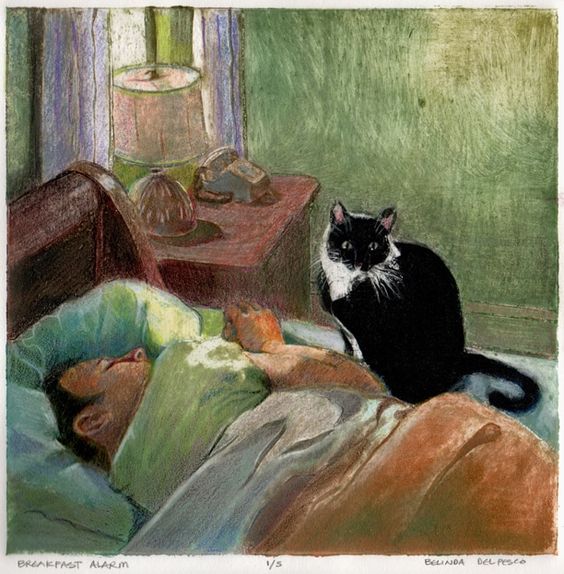
By Belinda Del Pasco
Those missing call logs, disclosed by the Washington Post and CBS News, raise several burning questions – how did the records disappear? who carried out the excising? – but none more urgent than this: what was Trump trying to hide?
“A gap like this doesn’t happen by accident. It’s not a coincidence,” said Charlie Sykes, columnist at the Trump-resistant conservative outlet the Bulwark. “There is no innocent explanation here – somebody made the decision to rip up the record for the crucial hours of January 6 and there has to be a reason why.”
What Trump is trying to hide lies at the heart of the House committee investigation into the January 6 insurrection. The former president has consistently tried to block information flowing to the committee – pressuring his inner circle not to testify, tearing up documents before they were handed over.
The stakes in the tussle over evidence rose sharply this week when a federal judge said in a ruling that Trump “more likely than not … dishonestly conspired to obstruct” Congress on 6 January. That would be a criminal act.
Read the rest at The Guardian.
Finally, Merrick Garland spoke publicly again yesterday. CNN’s Tierney Sneed reports: Garland says the only pressure DOJ feels on January 6 probes is to ‘do the right thing.’
After several recent developments in the January 6 investigations that put the Justice Department in the center of the political whirlwinds, Attorney General Merrick Garland said Friday that the only pressure his agency feels is to “do the right thing” by following “the facts and the law.”
“The only pressure I feel, and the only pressure that our line prosecutors feel, is to do the right thing. That means we follow the facts and the law, wherever they may lead,” Garland said at a news conference Friday, where he was announcing new charges in an unrelated gun trafficking case.
Garland was asked about political pressure on the agency at the end of a momentous week for the efforts to scrutinize the 2020 election reversal plot.
On Monday, a federal judge said that it was “more likely than not that President Trump corruptly attempted to obstruct” Congress’ electoral certification vote. The assertion by US District Judge David Carter came in a documents disclosure case related to the House select committee investigation of the January 6 attack on the Capitol….
On Friday, Garland would not weigh in on the Carter opinion or on the status of the Meadows referral.
“We follow the facts and the law wherever they lead, and that’s all I can say about the investigation,” Garland said when asked about the ruling, as he referenced department policy of not commenting on ongoing investigations. “The best way to undermine an investigation is to say things out of court about how they’re going.”
Asked about the status of the Meadows referral, Garland said, “We don’t comment on ongoing referrals.”
I don’t know what else he is supposed to say. He has said repeatedly that he will follow the evidence up to and including people at the top. But the Garland detractors aren’t going to stop whining.
That’s all I have for you today. What are your thoughts? What stories are you following?
Monday Reads
Posted: March 28, 2022 Filed under: Afternoon Reads, U.S. Politics | Tags: attempted coup, Clarence Thomas, Donald Trump, felony obstruction, Ginni Thomas, January 6 Committee, January 6 insurrection, John Eastman, Judge David Carter, Roman Abramovich, Ted Cruz, Ukraine 23 CommentsGood Afternoon!!
Daknikat has a cell phone emergency, so I’m filling in and starting really late–just beginning to look at the news. There’s quite a bit happening.
The Washington Post’s Michael Kranish has a big story about Ted Cruz and January 6: Inside Ted Cruz’s last-ditch battle to keep Trump in power. It turns out that Cruz and John Eastman, the lawyer who wrote a memo explaining how Pence could supposedly refuse to certify the election, have known each other for 27 years. Not only that, Trump asked Cruz if he would argue the case to overturn the election if they could get the Supreme Court to hear it. From the article:
An examination by The Washington Post of Cruz’s actions between Election Day and Jan. 6, 2021, shows just how deeply he was involved, working directly with Trump to concoct a plan that came closer than widely realized to keeping him in power. As Cruz went to extraordinary lengths to court Trump’s base and lay the groundwork for his own potential 2024 presidential bid, he also alienated close allies and longtime friends who accused him of abandoning his principles.
Now, Cruz’s efforts are of interest to the House committee investigating the Jan. 6 attack on the U.S. Capitol, in particular whether Cruz was in contact with Trump lawyerJohn Eastman, a conservative attorney who has been his friend for decades and who wrote key legal memos aimed at denying Biden’s victory.
As Eastman outlined a scenario in which Vice President Mike Pence could denycertifying Biden’s election, Cruz crafted a complementary plan in the Senate. He proposedobjecting to the results in six swing states and delayingaccepting the electoral college results on Jan. 6 in favor of a 10-day “audit” — thus potentiallyenabling GOP state legislatures to overturn the result. Ten other senators backed hisproposal, which Cruz continued to advocate on the day rioters attacked the Capitol.
The committee’s interest in Cruz is notable as investigators zero in on how closely Trump’s allies coordinated with members of Congress in the attempt to block or delay certifying Biden’s victory. If Cruz’s plan worked, it could have created enough chaos for Trump to remain in power.
“It was a very dangerous proposal, and, you know, could very easily have put us into territory where we got to the inauguration and there was not a president,” Rep. Liz Cheney (R-Wyo.), a Jan. 6 committee member, said earlier this year on the podcast “Honestly.” “And I think that Senator Cruz knew exactly what he was doing. I think that Senator Cruz is somebody who knows what the Constitution calls for, knows what his duties and obligations are, and was willing, frankly, to set that aside.”
Eastman and Cruz both worked for Michael Luttig, who was then on the U.S. Appeals Court. Here’s what Luttig has to say about Cruz’s actions:
Luttig told The Post that he believes that Cruz — who once said that Luttig was “like a father to me” — played a paramount role in the events leading to Jan. 6.
“Once Ted Cruz promised to object, January 6 was all but foreordained, because Cruz was the most influential figure in the Congress willing to force a vote on Trump’s claim that the election was stolen,” Luttig said in a statement to The Post. “He was also the most knowledgeable of the intricacies of both the Electoral Count Act and the Constitution, and the ways to exploit the two.”
The story also says that Eastman took the Fifth when the Committee asked him about communications with Cruz.
Also from The Washington Post: Jan. 6 committee to seek interview with Ginni Thomas.
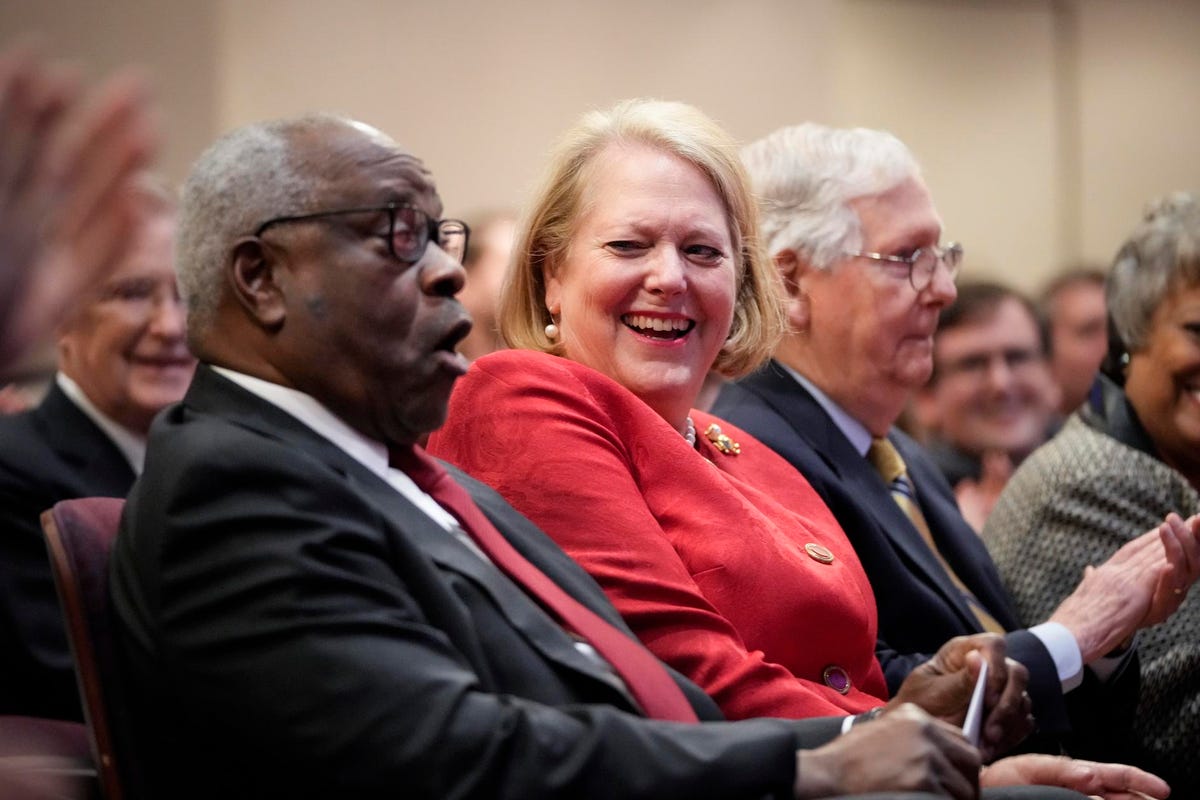 Her story, as well as her election theories, don’t survive even the most basic common-sense tests.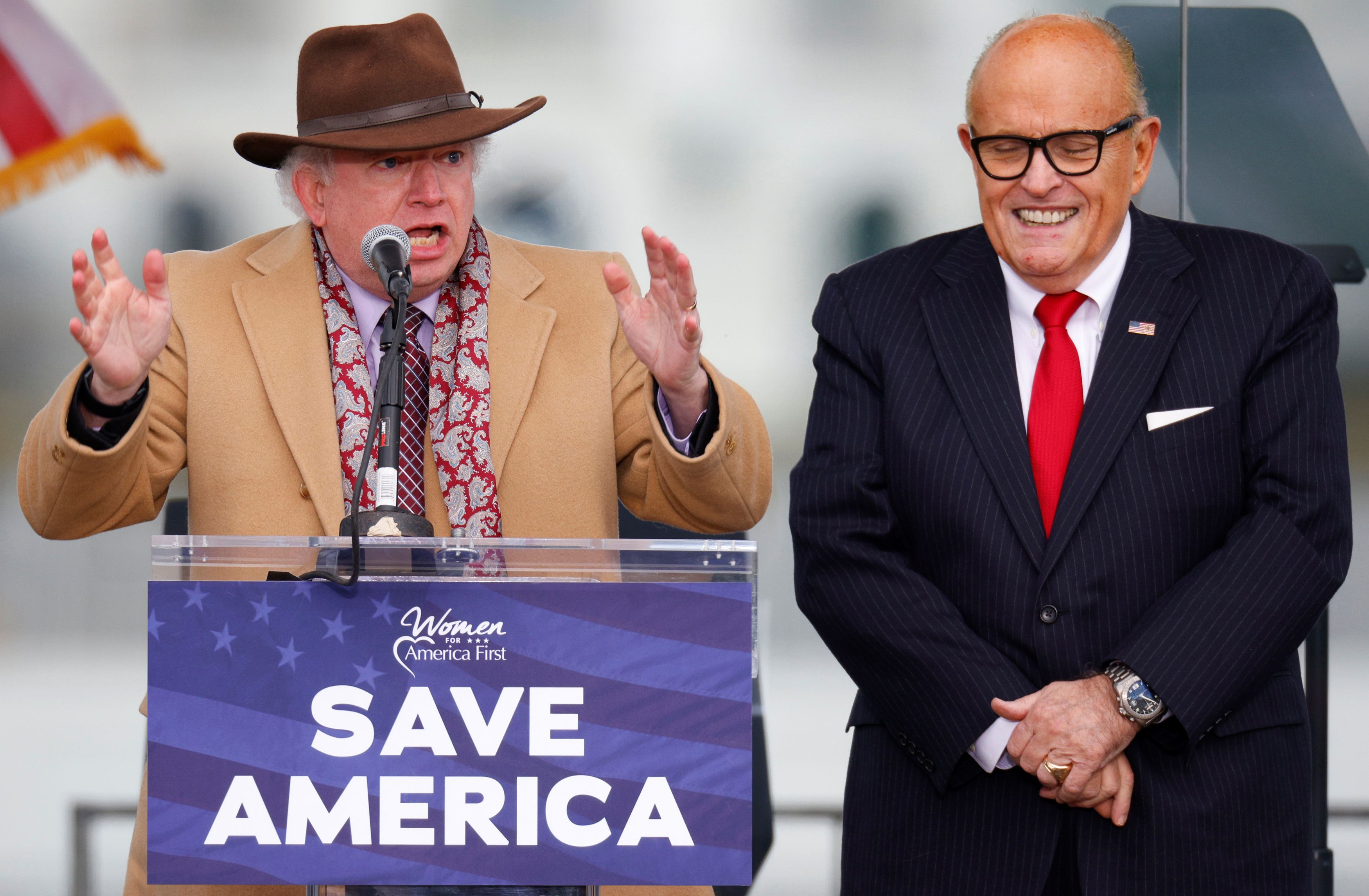
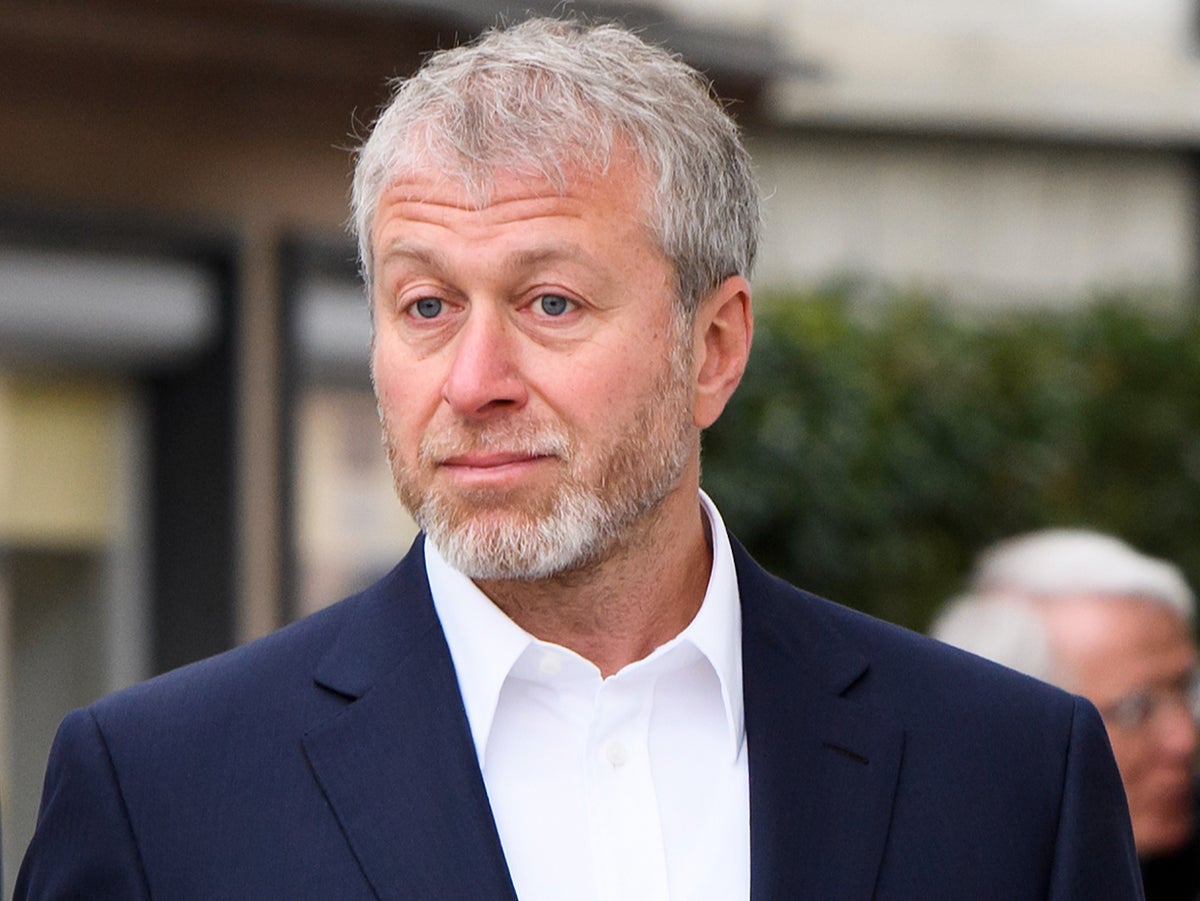 Following the meeting in the Ukrainian capital, Mr. Abramovich, who
 Lazy Caturday Reads: Mostly SCOTUS Stuff
Posted: March 26, 2022 Filed under: Afternoon Reads | Tags: caturday, Clarence Thomas, Ginni Thomas, Harvard, Joe Biden, Ketanji Brown Jackson, Mark Meadows, Poland, SCOTUS, U.S. troops, Ukraine 33 Comments
Willow, the Biden family’s new pet cat at the White House on Wednesday, Jan. 27, 2022. The Washington Monument can be seen in the distance. (Erin Scott/The White House, AP)
Good Afternoon!!
Joe Biden wasn’t my first choice for the Democratic nomination in 2020; in fact, I didn’t want him to run at all. But I was wrong. He has been a good president so far, and his deep foreign policy knowledge and experience have been showcased during the Ukraine crisis. This morning Biden was in Poland meeting with U.S. troops at the Ukraine border. It appears he’s a hit as commander-in-chief.
Yesterday the majority of the Supreme Court acknowledged that Biden is in fact commander-in-chief of the U.S. armed forces, but Alito, Gorsuch, and Thomas disagreed. Ian Millhiser at Vox: The Supreme Court rules that Joe Biden is commander-in-chief. Three justices dissent.
The Supreme Court on Friday evening decided, no, it was not going to needlessly insert itself in the military chain of command above President Joe Biden.
The Court’s decision in Austin v. U.S. Navy SEALs 1-26 largely halted a lower court order that permitted certain sailors to defy a direct order. A group of Navy special operations personnel sought an exemption from the Pentagon’s requirement that all active duty service members get vaccinated against Covid-19, claiming that they should receive a religious exemption.
A majority of the Court effectively ruled that, yes, in fact, troops do have to follow orders, including an order to take a vaccine.
The decision is undeniably a win for the balance of power between the executive branch and the judiciary that has prevailed for many decades. But the fact that the Court had to weigh in on this at all — not to mention that three justices, Justices Clarence Thomas, Samuel Alito, and Neil Gorsuch, dissented from the majority — is a worrisome sign about America’s judiciary.
Brett Kavanagh explained why he sided with the majority:
…laying out why the lower court erred, this court “in effect inserted itself into the Navy’s chain of command, overriding military commanders’ professional military judgments.” Had the Court ruled the other way in SEALs, it would have effectively placed itself at the apex of the military’s chain of command, displacing Biden as commander-in-chief.
Henry (dog) and traveling companion Baloo, by Cynthia Bennett
But as Kavanaugh correctly notes in his concurring opinion, there is a long line of Supreme Court precedents establishing that courts should be exceedingly reluctant to interfere with military affairs.
In Gilligan v. Morgan (1973), for example, the Court held that “the complex, subtle, and professional decisions as to the composition, training, equipping, and control of a military force are essentially professional military judgments,” and that “it is difficult to conceive of an area of governmental activity in which the courts have less competence.”
Nevertheless, Judge Reed O’Connor, a notoriously partisan judge in Texas who is best known for a failed effort to repeal the Affordable Care Act, ruled in favor of the service members who refused to follow a direct order. And the conservative United States Court of Appeals for the Fifth Circuit refused the Navy’s request to stay key parts of O’Connor’s order.
That left the responsibility of restoring the military’s proper chain of command to the Supreme Court. Though the Court’s order does not wipe out O’Connor’s decision in its entirety, it temporarily blocks that decision “insofar as it precludes the Navy from considering respondents’ vaccination status in making deployment, assignment, and other operational decisions.”

In other SCOTUS news, the Ginni Thomas story is still snowballing. Daknikat wrote quite a bit about Thomas yesterday; https://skydancingblog.com/2022/03/25/friday-reads-you-shouldnt-go-back-home/if you haven’t read her post, please check it out.
Scott Wong at NBC News: Ginni Thomas pressed for GOP lawmakers to protest 2020 election results.
Shortly after the 2020 election, Virginia “Ginni” Thomas, the conservative activist and wife of Supreme Court Justice Clarence Thomas, sent an email to an aide to a prominent House conservative saying she would have nothing to do with his group until his members go “out in the streets,” a congressional source familiar with the exchange told NBC News.
Thomas told an aide to incoming Republican Study Committee Chairman Jim Banks, R-Ind., that she was more aligned with the far-right House Freedom Caucus, whose leaders just two months later would lead the fight in Congress to overturn the results of Democrat Joe Biden’s victory.
Cat who thinks he’s a dog by Jack Shepherd. He was raised with and by the dogs.
The RSC was long representative of the most conservative House members, but in the past several years, it has been replaced by the tea party-driven Freedom Caucus.
Thomas wrote to the aide that Freedom Caucus members were tougher than RSC members, were in the fight and had then-President Donald Trump’s back, according to the source familiar with the email contents. Until she saw RSC members “out in the streets” and in the fight, she said, she would not help the RSC, the largest caucus of conservatives on Capitol Hill.
Her November 2020 email came in response to a request from the RSC to offer policy recommendations as Banks was set to take the helm of the group in early 2021. But when Thomas portrayed the RSC as soft in its support for Trump and told its members to take to the streets, the aide thanked her for her suggestions and moved on….
The email exchange suggests Thomas was pressuring Republicans in Congress to get more aggressive in fighting for Trump at a key moment when the lame-duck president and his inner circle were devising a strategy to overturn the results of the 2020 election and keep him in power.

Obviously Thomas has access to powerful politicians only because she is married to Clarence Thomas.
Conservative columnist Matt Lewis at The Daily Beast: If Ginni Thomas’ Big Lie Texts Don’t Shock You, Nothing Will.
“Biden and the Left [are] attempting the greatest Heist of our History.”
“[The] Biden crime family & ballot fraud co-conspirators…are being arrested and…will be living in barges off GITMO to face military tribunals for sedition.”
Oh yeah, and “Watermarked ballots in over 12 states have been part of a huge Trump & military white hat sting operation in 12 key battleground states.”
Another photo of the cat who thinks he’s a dog and his friends, by Jack Shepherd.
These aren’t the rantings of some obscure, tinfoil hat-wearing lunatic. These are just a few of the 29 text messages sent by Ginni Thomas, the wife of Supreme Court Justice Clarence Thomas, to Donald Trump’s Chief of Staff Mark Meadows. These messages were sent in the wake of Joe Biden’s 2020 presidential victory, as Mrs. Thomas sought to push Meadows to try to overturn the 2020 election results—sometimes quoting far-right websites to make her case.
In a world where more tenuous relationships than a spouse have sparked huge controversies (think Barack Obama’s relationships with the Rev. Jeremiah Wright and the former Weather Underground activist Bill Ayers), the level of this conflict of interest should be condemned by intellectually honest conservatives.
As one smart observer put it, “If you had a problem with Bill Clinton meeting with Attorney General Loretta Lynch on the tarmac, you should probably have a problem with Ginni Thomas’s barrage of texts to White House Chief of Staff Mark Meadows in the days preceding a legitimate self-coup attempt.”

Click the link to read the rest.
Another conservative take from David French at The Atlantic: The Worst Ginni Thomas Text Wasn’t From Ginni Thomas. Mark Meadows and the dangerous religious zeal of “Stop the Steal.”
After giving examples of Thomas’s text messages, French writes:
This is the kind of communication that would make you worry about a family member’s connection to reality. When it comes from the wife of a Supreme Court justice who enjoys direct access to the White House chief of staff, it’s not just disturbing; it’s damaging to the Supreme Court….
It is…understandable if ordinary Americans wonder whether she’s made an impact on her husband, and it’s important for Justice Thomas to recuse himself from any future cases that could potentially involve additional disclosures of his wife’s communications with the White House or her involvement in the effort to overturn the election.
Mako the Cat-Dog: raised by cats, he thinks he is one.
But the Ginni Thomas texts were not the most alarming aspect of Woodward and Costa’s story. There was a text in the chain that disturbed me more than anything Ginni Thomas wrote. It came from Meadows, and here’s what it said: This is a fight of good versus evil . . . Evil always looks like the victor until the King of Kings triumphs. Do not grow weary in well doing. The fight continues. I have staked my career on it. Well at least my time in DC on it.
One of the most dangerous aspects of the effort to overturn the election was the extent to which it was an explicitly religious cause. January 6 insurrectionists stampeded into the Senate chamber with prayers on their lips. Prominent religious leaders and leading Christian lawyers threw themselves into the effort to delay election certification or throw out the election results entirely. In the House and Senate, the congressional leaders of the effort to overturn the election included many of Congress’s most public evangelicals.
They didn’t just approach the election fight with religious zeal; they approached it with an absolute conviction that they enjoyed divine sanction. The merger of faith and partisanship was damaging enough, but the merger of faith with lawlessness and even outright delusion represented a profound perversion of the role of the Christian in the public square.

Read the rest at The Atlantic.
More Ginni Thomas stories:
The Washington Post: Ethics experts see Ginni Thomas’s texts as a problem for Supreme Court.
The New York Times: Justice Thomas Ruled on Election Cases. Should His Wife’s Texts Have Stopped Him?
The Washington Post Editorial Board: Justice Thomas’s wife is a political extremist. This is now a problem for the court.
There are quite a few stories today that deal with the disrespectful treatment that Supreme Court Nominee Ketanji Brown Jackson received from Republicans in her Senate confirmation hearings.
I really liked this one from Kevin Cullen at The Boston Globe, because he trotted out an old saying that my Dad often used: You can always tell a Harvard man, but you can’t tell him much.
One of life’s inexplicable wonders is how Harvard can produce someone as grounded and poised and principledas Ketanji Brown Jackson and also someoneas unmoored and annoying and unscrupulous as Ted Cruz.
Providing clear evidence of how pathetic my existence is, I watched Jackson’s confirmation hearing start to finish, a marathon of high drama and low farce.
Am I a loser? Yes, but nothing likethe preening senators who treated Jackson with appalling disrespect, with constant interruptions and cynical questions meant to gin up their base, not ascertain whether Jackson is qualified to sit on the Supreme Court.
If you had to boil down the objections of Republicans to Jackson it is this: She’s a soft-on-crime, pedophile-coddling, racist-baby-kissing, terrorist-hugging Critical Race Theory nut job.
Other than that, they acknowledged, she seems nice enough.
It was hard to decide which senator combined rudeness and pandering to produce the greatest mix of condescension. Besides Cruz, Senators Lindsey Graham, Josh Hawley, and Tom Cotton – another Harvard man! – all covered themselves in something less than glory.
But when it comes unctuousness, Cruz takes the cake.
That he and Jackson served together on the Harvard Law Review didn’t spare Jackson from his unremitting bile.
Senate Judiciary Committee Chairman Dick Durbin repeatedly told Cruz he was going over his allotted time and violating rules. Proving the old adage that you can always tell a Harvard man but you can’t tell him much, Cruz ignored Durbin.
Cruz was too busy yammering about racist babies and fake women and child pornographers to pay attention to something as inconsequential as rules.
When Cruz said, “Under the modern leftist sensibilities, if I decide right now that I’m a woman, then apparently I’m a woman,” I thought, “This guy went to Harvard Law School?”
Read the rest if you can use a laugh.
More follow up stories on the Jackson hearings:
Dana Millbank at The Washington Post: Ivy League Republicans’ phony rebellion against the ‘elites.’
Ruth Marcus at The Washington Post: Forget advise and consent. This is smear and degrade.
The Independent: Hawley attacked Ketanji Brown Jackson’s ‘alarming’ record on sex offenders. He agreed to an abuser getting only probation.
Two articles on Wesley Hawkins, who was sentenced by Jackson as an 18-year-old and was the subject of much of the GOP screaming and yelling about child porn cases:
The New York Times: Who is Wesley Hawkins? Republicans zero in on Jackson’s sentencing of a teen in a child sex abuse case.
The Washington Post: Wesley Hawkins, talk of the Jackson hearings, describes life after pornography sentence.
Sorry this is so late. WordPress deleted my post in progress twice and I had to reconstruct it. Have a great weekend!
Monday Reads: The Supremes Speak
Posted: June 20, 2016 Filed under: Afternoon Reads, SCOTUS, U.S. Politics, War on Women, Women's Healthcare, Women's Rights | Tags: Clarence Thomas, SCOTUS, Texas Trap Laws 26 CommentsGood Afternoon!
I’m in an absolute haze from a summer cold that popped up yesterday and sent me directly to bed. I’m trying to write and work right now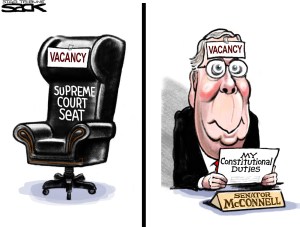 but it’s not easy at all. I want to try to discuss a lot of upcoming things that will be important including the SCOTUS decision on the Texas Trap laws regarding abortion and abortion clinics. These law certainly create an undue burden and they reflect specific religious view rather than medical or biological science. Here’s a few reads to prepare us all because it’s important for all of us to understand this basic constitutional right.
Abortion opponents regularly talk as though no restriction is off the table when it comes to stripping away reproductive rights. And supporters of abortion rights don’t always set them straight. If we don’t know what our established rights are, we can’t defend them. Pro-choicers need to know why abortion is a constitutional right and what boundaries the U.S. Supreme Court has set out to protect it.
1. Abortion is protected by the rights to bodily integrity and to make decisions about family. The Court explained that decades ago.
The 14th Amendment prohibits states from depriving a person of liberty without due process of law. A person has the right to end a pregnancy without undue interference from the government because that right to liberty includes (1) the right to make decisions about family and (2) the right to bodily integrity.
However, in order to portray abortion rights as illegitimate, conservatives like to argue—inaccurately—that the Court legalized abortion in Roe v. Wade by inventing a right to privacy that is not grounded in the Constitution’s actual text.
In the pre-Roe contraception case Griswold v. Connecticut (1965), the Court did hold that “penumbras, formed by emanations” or various interpretations of the First, Third, Fourth, Fifth, and Ninth Amendments protect a right to privacy. But in deciding Roe, the Warren court located the right to privacy in the 14th Amendment’s explicit protection of the right to liberty. Regardless, the Court’s understanding of the rights that protect reproductive freedom expanded beyond just privacy decades ago.
Privacy is barely mentioned in Planned Parenthood v. Casey, which established the current law governing abortion rights more than 20 years ago. “The controlling word in the cases before us is ‘liberty,’” the decision explained. It was settled law prior to Roe that liberty includes “the right to make family decisions and the right to physical autonomy.”
Privacy is also a constitutional right, and it was indeed violated by the laws at issue in Roe and its companion case,Doe v. Bolton. Those laws required a woman seeking an abortion to share her reasons for wanting the procedure with legal or medical authorities to have any hope of receiving legal abortion care. However, the law and discourse around privacy at the time of Roe implied a woman should be permitted to use contraception or end a pregnancy because the state should not interfere in decisions made in secret with the permission of her doctor, husband, father, pastor, or others. Casey instead properly recognized that the 14th Amendment protects a person’s right to control her body and destiny.
So why has the idea persisted that all we’ve got is a privacy right made up out of thin air? A counterintuitive and less textually based right serves abortion opponents, but abortion rights advocates also have a history of telling us abortion restrictions are primarily a threat to privacy. As William Saletan documented in Bearing Right: How Conservatives Won the War on Abortion, in the run-up to Casey, pro-choice leaders emphasized privacy on the advice of pollsters and political consultants to appeal to anti-government, anti-welfare, anti-tax, and anti-integration sentiments. While reproductive rights lawyers argued to the Supreme Court that the Constitution’s protection of autonomy, bodily integrity, and equality protected abortion access, outside of court pro-choice leaders told the public the right at stake was privacy. But, ultimately, the Casey decision provided a much fuller discussion of why abortion is constitutionally protected by rights beyond privacy.
Abortion is protected by the due process clauses of the Fifth Amendment (which restricts the federal government) and the 14th Amendment (which was added to the Constitution to restrict the states). As Casey explained, “It is a promise of the Constitution that there is a realm of personal liberty which the government may not enter.” Using the force of law to compel a person to use her body against her will to bring a pregnancy to term is a violation of her physical autonomy and decisional freedom—which the Constitution does not allow.
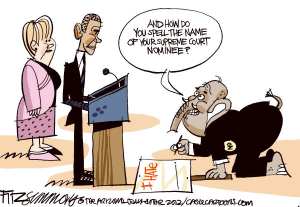 Follow the link to read about the other two basic rights that include:” 2. Any pre-viability ban is unconstitutional. Period.” and “3. Casey‘s “undue burden” standard is a meaningful protection of abortion rights when courts apply it properly.”
There’s no doubt that the Texas Trap Law creates an “undue” burden. Clinic closures have left the few remaining clinics overwhelmed.
The war on abortion access in Texas has already fundamentally shifted the landscape of women’s lives in the state. Now, the fallout continues: The closure of Planned Parenthood (PP) clinics in the state—which once served as primary sources of reproductive health care for women there—has left the few clinics remaining in west Texas underfunded, understaffed, and overwhelmed by demand.
According to new research, 60 percent of women receiving a low salary who were of reproductive age accessed health care through PP before the cuts and defunding which took place in 2013. The majority of those patients have since been directed to Texas Tech University and Midland County Health Services (MCHS) after PP’s clinics in west Texas closed—increasing demand at an overwhelming rate for their capacity to provide services.
“There are women [who] need these services but can’t afford them and we see as many as we can,” Michael Austin, director of MCHS, told Women’s Health Policy Report. “But the state program to help these folks along has basically evaporated. So I’m afraid there are probably a lot of folks flying under the radar who need care and aren’t getting it.” Austin pointed to the challenges of seeking funding in a state that has “eliminated or severely messed up” many of their programs which provide reproductive health care to women.
In 2011, the Texas State Assembly passed legislation which blocked funding to women’s health clinics, including Planned Parenthood, and cut the state’s family planning budget by two-thirds. Two years later, the draconian anti-abortion bill known as HB2 was signed into law by Governor Rick Perry, putting in place numerous obstacles meant to shutter clinics and restrict women’s access to safe and legal abortion. HB2 requires that abortion providers have admitting privileges at a local hospital and clinics are licensed ambulatory centers. It also bans surgical abortion after 20 weeks and medication abortion after seven. (Medication abortion is the most cost- and time-effective abortion procedure.)
HB2’s impact was immediate and drastic. 82 percent of family planning clinics closed. The number of abortion practitioners decreased by over 75 percent. Over half of the clinics performing abortion closed, which in turn drastically increased the time it would take for women to make an appointment to 28 days— essentially rendering the option of medication abortion moot. When it comes to clinics, Texas is in crisis.
The Supreme Court has declined to hear the Connecticut law banning assault weapon as well as the challenge to other state laws. This leaves the bans in place.
SCOTUS will look at certain key rights of jailed inmates that have illegal immigration status.
The Supreme Court announced Monday that it will take up a case exploring when immigrants detained solely for immigration violations have the right to be released from jail.
The justices agreed to consider a federal appeals court decision that essentially found detained immigrants were entitled to a bond hearing after six months in custody and every six months thereafter.
The high court’s announcement comes as immigrant rights advocates are awaiting a Supreme Court decision on the legality of President Barack Obama’s executive actions granting quasi-legal status and work permits to millions of immigrants who entered or stayed in the U.S. illegally.
In that case, the Obama administration is aligned with most immigrants rights groups. However, in the case the court said Monday that it would take up, the Obama administration is pressing for fewer rights for detained immigrants. In fact, the administration is asking the justices to overturn the 9th Circuit Court of Appeals ruling that found immigrants have the right to regular review of their detention.
The newly-accepted case, Jennings v. Rodriguez, could also explore when immigrants accused of ties to terrorism have to be released if authorities are having difficulty deporting them.
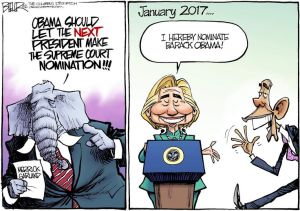 SCOTUS blog has some basic information on the remaining cases in the docket. Here’s a few of the remaining 13.
Between tomorrow morning, when the Justices will take the bench at ten o’clock, and the end of June, the Court is expected to issue thirteen rulings in cases involving everything from tribal-court jurisdiction to abortion, immigration, and the scope of federal laws prohibiting political corruption. Here are summaries of each pending case:
Dollar General Stores v. Mississippi Band of Choctaw Indians (argued December 7, 2015). This case stems from accusations by a thirteen-year-old member of the tribe that a manager at a Dollar General store within the tribe’s reservation had sexually molested him while the boy was interning at the store. The child and his parents filed a lawsuit against the manager and the store in tribal court, arguing that the store was liable for the manager’s conduct. The issue before the Court is whether the tribal court has jurisdiction over tort claims against defendants, like Dollar General, who are not members of the tribe.
Fisher v. University of Texas at Austin (argued December 9, 2015). This case, a challenge to the university’s consideration of race in its undergraduate admissions process, is on its second trip to the Court. In 2013, the Court sent the case back to the lower courts for a more critical look at whether the university really needed to consider race to achieve a diverse student body. After the Fifth Circuit once again upheld the policy, the Court agreed to weigh in. Unlike some of the Court’s other high-profile cases this Term, no one expects the Court to deadlock: Justice Elena Kagan is not participating, which in the wake of Justice Antonin Scalia’s death leaves the Court with just seven Justices to decide the case.
Utah v. Strieff (argued February 22, 2016). When a police officer stops a pedestrian in violation of the law, asks him for identification, discovers that there is a traffic warrant for his arrest, arrests him, and in the process of searching him discovers drug paraphernalia and methamphetamines, can the evidence found in the search of the pedestrian be used against him? Edward Strieff argues that it cannot: because the police officer’s stop was illegal, then anything obtained as a result of the stop is also tainted. The state, on the other hand, contends that the evidence should be admitted because it resulted from the lawful warrant for his arrest, rather than the illegal stop.
Taylor v. United States (argued February 23, 2016). The petitioner in this case, David Taylor, was part of a Virginia gang that robbed drug dealers. The two robberies that led to this case, however, did not yield any drugs – only cellphones, jewelry, and a small amount of money. Taylor was indicted on federal charges that he had violated the Hobbs Act, which punishes robberies and extortion but applies only when the defendant “obstructs, delays, or affects commerce or the movement of any article or commodity in commerce.” The question before the Court is whether the federal government is required to prove facts to show that the defendant’s conduct actually affects commerce.
Voisine v. United States (argued February 29, 2016). Stephen Voisine and William Armstrong, the other petitioner in this case, both pleaded guilty in state court to misdemeanor assaults on their respective domestic partners. Several years later, each man was charged with violating a federal law that prohibits the possession of firearms and ammunition by individuals who have previously been convicted of a misdemeanor crime of domestic violence. Voisine and Armstrong contend their state convictions do not automatically qualify as misdemeanor crimes of domestic violence because the state-law provisions can be violated by conduct that is merely reckless, rather than intentional.
Whole Woman’s Health v. Hellerstedt (argued March 2, 2016). This is a challenge to the constitutionality of two provisions of a Texas law regulating abortion in that state. One provision requires doctors who perform abortions to have privileges to admit patients to a local hospital; the other requires abortion clinics to have facilities that are comparable to outpatient surgical centers. Texas contends that these new laws are constitutional because they were intended to protect women’s health, while the challengers argue that the law was actually intended to close most clinics and therefore limit women’s access to abortions.
RJR Nabisco v. The European Community (argued March 21, 2016). The issue in this case is whether and to what extent the Racketeer Influenced and Corrupt Organizations Act (RICO), a 1970 law that was originally enacted to target organized crime, applies outside the United States. The European Community filed a lawsuit in the United States, seeking to hold RJR liable for what it says is the company’s role in an international money-laundering plot that harmed European countries. RJR counters that nothing in the law suggests that Congress intended it to apply to a situation like this. Justice Samuel Alito is almost certainly writing the Court’s opinion in this case, because he is the only Justice who has not yet written for the Court’s March sitting; based on the oral argument, that could bode well for RJR.
United States v. Texas (argued April 18, 2016). This case is a challenge to an Obama administration policy, announced in November 2014, that would allow some undocumented immigrants to apply to stay in the country and work legally for three years. Before the policy could go into effect, Texas and a large group of other states went to court to block its implementation, arguing that the administration lacks the authority to issue a policy like this. But before the Supreme Court can weigh in on that question, it will also have to agree that the states have the legal right, known as “standing,” to challenge the policy at all; the lower courts ruled that they did, because at least Texas would incur additional costs from the undocumented immigrants who would become eligible for driver’s licenses if the policy goes into effect.
Birchfield v. North Dakota (argued April 20, 2016). Twelve states and the National Park Service impose criminal penalties on suspected drunk drivers who refuse to submit to testing to measure their blood-alcohol levels. The question before the Court is whether those penalties violate the Fourth Amendment, which only allows police to “search” someone if they have a warrant or one of a handful of exceptions to the warrant requirement applies. Three drivers from North Dakota and Minnesota argue that neither of those conditions is met, and so the laws must fall.
Encino Motorcars v. Navarro (argued April 20, 2016). This case requires the Court to weigh in on the interpretation of the Fair Labor Standards Act, which generally requires employers to pay overtime to employees who work for more than forty hours in a week but also contains a variety of exceptions – including for a salesman whose primary job is selling or servicing cars. The respondents in this case are service advisors at a car dealership, who argue that they are not included in the exemption and are therefore entitled to overtime.
You can check out the rest on the link to SCOTUS blog. So, there’s a lot of interesting things coming down the pipe. We’ll definitely be following a lot of them.
There’s one piece of SCOTUS gossip that you might be interested in today. Check out this lede by David Badash: “DC Insider Report SCOTUS Justice Clarence Thomas Thinking of Retiring Throws Twitter Into Frenzy.”
The Washington Examiner Sunday afternoon posted a piece by DC insider columnist Paul Bedard that claims uber-conservative Supreme Court Justice Clarence Thomas “is mulling retirement after the presidential election, according to court watchers.” Those “court watchers” of course are unnamed, so the actual source of the claim is unknown.
It could be true, it could be false, but the implications of course are tremendous. Assuming Republicans in the Senate successfully keeps their vow to not confirm any SCOTUS justice nominated by President Obama, and wait until the next president takes office, this would mean the next president would automatically nominate not one but two justices to the nation’s top court, controlling its destiny for decades.
So naturally, Clarence Thomas began trending on Twitter.
Follow the link for the Twitter Frenzy.
What’s on your reading and blogging list today?
h/t to Delphyne

 peej
peej Carissa
 bostonboomer
 dakinikat
 ecocatwoman
 mablue2
 Mama Lopez
 peggysue22
 quixote
 skydancingguestblogger
 Mona (aka Wonk the Vote)



 Sky Dancing
Recent Comments