Co Edvard Munch, Self-Portrait with the Spanish Flu, 1919.
Good Morning!!
Yesterday the fake “president” tried to calm fears about the growing threat of a coronavirus pandemic by contradicting experts, hyping the stock market, and repeatedly lying about the administration’s preparedness. As health professionals tried to educate Americans about the possible dangers, Trump contradicted them and claimed he has everything under control, even though he has cut funds for the CDC and fired National Security Council staff who were in charge of global pandemic preparedness.
I’m told the president’s anger about the CDC briefing yesterday is focused on Dr. Nancy Messonnier, who said it’s not whether, it’s when the virus will hit the US. “She never should have said that,” a senior administration official told me. “it’s bad.”
“We expect we will see community spread in this country,” said Dr. Nancy Messonnier, director of the CDC’s National Center for Immunization and Respiratory Diseases. “It’s not so much a question of if this will happen anymore, but rather more a question of exactly when this will happen and how many people in this country will have severe illness.”
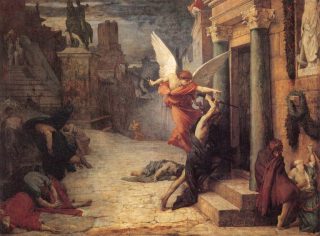
The Plague of Rome, Jules Elie Delauney, 1869
The agency tweeted Tuesday evening that Americans should think about getting ready.
“Now is the time for US businesses, hospitals, and communities to begin preparing for the possible spread of #COVID19,” it wrote, referring to the name the World Health Organization has given the novel coronavirus. “CDC continues to work with business, education & healthcare sectors, encouraging employers to be prepared.”
“We are asking the American public to work with us to prepare in the expectation that this could be bad,” she said.
She said CDC officials have been saying for weeks that while they hope the spread won’t be severe in the United States, they are planning as if it could be.
“The data over the last week, and the spread in other countries, has certainly raised our level of concern and raised our level of expectation” of community spread, she said.
The CDC still doesn’t know what that will look like, she added. Community spread could be reasonably mild or very severe.
Off with her head! How long before Trump starts purging the CDC of people who know anything about viruses and pandemics and replacing them with Trump loyalists who will pretend nothing is happening?
The President spoke at a news conference on Wednesday about the worldwide health emergency that has seen the virus sweep into South Korea, Italy and every continent but Antarctica, sounding as if the danger had already passed rather than was yet to arrive.
“The risk to the American people remains very low,” Trump said, as he unveiled his big announcement: Vice President Mike Pence will head the government effort.
Manuscript illustration depicting the Justinian Plague, from the Omne Bonum by James le Palmer, 14th century
The President’s optimistic performance came hours before the Centers for Disease Control and Prevention said a patient in California who has the novel coronavirus might be the first person to be infected who did not travel to an afflicted region and was not exposed to another known carrier. The case raises the ominous possibility that the virus is already moving through the community….
His upbeat, election-year tone contrasted sharply with predictions from his government experts, who are warning of possible severe disruption to American life if the outbreak swells into a pandemic.
Here’s what two experts had to say when they were allowed to speak for a couple of minutes each:
“Our aggressive containment strategy here in the United States has been working and is responsible for the low levels of cases that we have so far. However, we do expect more cases, and this is a good time to prepare,” said Anne Schuchat, principal deputy director of the Centers for Disease Control and Prevention.
Anthony Fauci, director of the National Institute of Allergy and Infectious Diseases, delivered the sobering news that even with an unusually accelerated process of development and testing, it could be a year to a year-and-a-half before a vaccine becomes available. His assessment contrasts with Trump’s hints that inoculations are just around the corner.
“We’ve had tremendous success, tremendous success beyond what many people would’ve thought,” the president said during a White House news conference that followed days of mixed messages, tumbling stocks and rising death tolls abroad driven by the coronavirus. “We’re very, very ready for this.”
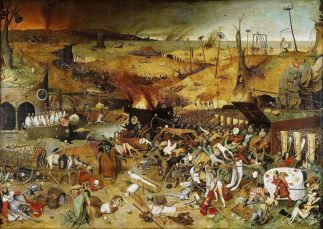
The Triumph of Death, Pieter Bruegel the Elder, c.1562
The president declared that the risk to America was “very low” and predicted a swift end to the outbreak….
“We could be just one or two people over the next short period of time,” Trump said of the virus’s impact in the United States.
Minutes later, Health and Human Services Secretary Alex Azar and CDC Principal Deputy Director Anne Schuchat warned Americans to prepare for the number of cases to grow.
“We can expect to see more cases in the United States,” Azar said.
“We do expect more cases,” Schuchat said.
The case confirmed Wednesday in California brought the total in the United States to 60.
During the press conference, CNN’s Dr. Sanjay Gupta tried to ask Trump a question and Trump repeatedly interrupted and corrected him.
The President is called out on his repeated attempts to try to downplay the mortality rate of Coronavirus by citing flu deaths… His answer falls short pic.twitter.com/XVPXrdNCeM
Stocks continued their downward slide on Thursday, with major indexes falling into correction territory. Investors are worried about the economic toll of a widening coronavirus epidemic.
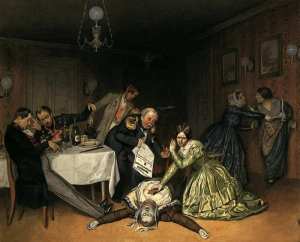
Pavel Fedotov, 1846-1860 Cholera pandemic
The Dow Jones Industrial Average tumbled more than 500 points in the opening minutes of trading. The blue chip index is down more than 10% from its recent peak on Feb. 12. The broader S&P 500 index has also lost more than 10% of its value in just over a week.
President Trump tried to project a note of calm in a news conference Wednesday evening, stressing that the United States is well prepared for any health crisis and predicting the stock market will recover, thanks in part to robust consumer spending. But investors were not immediately reassured….
A poll by Morning Consult this week found that 69% of U.S. adults are either “very” or “somewhat” concerned about the domestic economic impact of the epidemic, a 14 point increase from a few weeks ago.
“We could see a significant impact on Europe, which has been weak to start with, and it’s just conceivable that it could throw the United States into a recession,” Yellen said Wednesday at an event in Michigan. “If it doesn’t hit in a substantial way in the United States, that’s less likely. We had a pretty solid outlook before this happened — and there is some risk, but basically I think the U.S. outlook looks pretty good.”
The global economy was weak but starting to recover before the virus hit, Yellen said. The shutdown of factories due to the outbreak in China will impact supply chains and cause a drop in consumer spending as people have been quarantined or cease traveling.
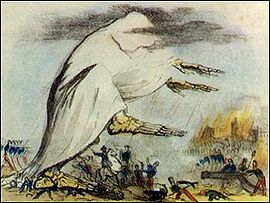
A representation by Robert Seymour of the cholera epidemic of the 19th century depicts the spread of the disease in the form of poisonous air.
Yellen, who spoke about the economy at an event held by the Brookings Institution in Clinton Township, Michigan, also commented on the decline in the 10-year Treasury yield this week to historic lows. Yields have plunged as fears about the spreading coronavirus have rocked global financial markets.
The newly diagnosed Coronaviris patient in California was in the hospital for several days before the CDC agreed to allow a test for the virus. The New York Times:
A California coronavirus patient had to wait days to be tested because of restrictive federal criteria, despite doctors’ requests. The patient, who has tested positive, may be the first person to be infected through community spread in the United States, the Centers for Disease Control and Prevention said Wednesday.
C.D.C. officials said it was possible the patient was exposed to a returning traveler who was infected. At the moment, however, the new case appears to be one in which the source of infection is unknown, suggesting that the virus may be transmitted within the community.
Doctors at the University of California, Davis Medical Center considered the novel pathogen a possible diagnosis when the patient was first admitted last week.
But the federal agency that conducts the testing did not administer the test until days later because the case did not fit the agency’s narrow testing criteria, university officials said in a letter to the campus community late Wednesday.
The C.D.C. has restricted testing to patients who either traveled to China recently or who know they had contact with someone infected with the coronavirus….
The C.D.C. could not be immediately reached for comment.
The patient was transferred to the medical center from another hospital in Northern California with a suspected viral infection, and was already on a ventilator upon arrival, according to the university’s letter.
“Upon admission, our team asked public health officials if this case could be Covid-19,” the letter said. The medical center requested testing from the C.D.C. “Since the patient did not fit the existing C.D.C. criteria for Covid-19, a test was not immediately administered. U.C. Davis Health does not control the testing process.”
So it looks like we have the first coronavirus case that may have been passed from person to person in the U.S., and we have a president and an administration in denial and woefully unprepared to deal with a health crisis.
I’ll add more stories in the comment thread. As always, this is an open thread.
Did you like this post? Please share it with your friends:
I’m dealing with the death of my cousin Ruthie who was closest to me in age and always put in charge of me when I was little in our nearly weekly visits to Kansas City. She died yesterday of ALS which is a disease that is horrid beyond measure and requires a lot of further research to unwind. Death is natural and inevitable but we should be able to find ways of better dealing with horrifying deadly diseases. While the Trump budget is finding ways to give the extremely wealthy more tax cuts and fund more military publicity stunts, its priorities are shameful when it comes to the CDC, funding basic scientific and medical research, and anything that has to do with making medical help available to people that truly need it.
President Donald Trump’s plan to cut billions of dollars in funding to medical and scientific research agencies would cost the country countless jobs, stall medical advances and threaten America’s status as the world leader in science and medicine, advocates said Thursday.
“Cutting the funding in this way will have devastating and generation-long effects,” said Dr. Clifford Hudis, CEO of the American Society of Clinical Oncology, which represents cancer specialists.
“[Medical research] is a fundamental driver of American economic strength and it is being compromised here,” Hudis told NBC News. “It’s a jobs program.”
It would cut the overall Health and Human Services department budget by 18 percent, including the 20 percent budget reduction at NIH, and reassign money from the Centers for Disease Control and Prevention to states.
Most cancer drugs get their start in the basic research funded by the NIH and often done in NIH labs.
“The targeted therapies, the immunotherapies, the conventional chemotherapy drugs — all of these things have roots in the NIH,” Hudis said.
Meanwhile, Team Gleason–including some friends of mine hoping to raise funds to find an ALS cure–is running in the Crescent City Classic this weekend in a subevent called the Race for Team Gleason. My cousin was active in events raising funds for ALS Research. (My friends Cait and Caroline are running in Ruthie’s honor this Saturday! You can get to the donation page here. All proceeds to go Steve Gleason’s ALS efforts!)
Why do we have to have fundraisers for everything but freaking war in this country?
So, I’ve been crying last night and today. Ruthie paved the way for lots of stuff for me. Just as she helped me spend nights away from home in her bedroom and big girl twin beds, she introduced me to Pet Sounds and using juice cans for hair rollers. She got a great job in high school at the local mall at a dress store. I got to visit her at work in all her blue eye shadow, page boy hair, and A-line dress glory and was totally awed. The idea of working during school was a total scandal to my mother and she went on about it for weeks. I’m not sure what exactly passed between then and me 5 years later but my mother had no problem with me working at the local dress store at the local mall when I hit sweet 16.
The Trump administration has failed to fill crucial public health positions across the government, leaving the nation ill-prepared to face one of its greatest potential threats: a pandemic outbreak of a deadly infectious disease, according to experts in health and national security.
No one knows where or when the next outbreak will occur, but health security experts say it is inevitable. Every president since Ronald Reagan has faced threats from infectious diseases, and the number of outbreaks is on the rise.
Over the past three years, the Centers for Disease Control and Prevention has monitored more than 300 outbreaks in 160 countries, tracking 37 dangerous pathogens in 2016 alone. Infectious diseases cause about 15 percent of all deaths worldwide.
But after 11 weeks in office, the Trump administration has filled few of the senior positions critical to responding to an outbreak. There is no permanent director at the CDC or at the US Agency for International Development. At the Department of Health and Human Services, no one has been named to fill sub-Cabinet posts for health, global affairs, or preparedness and response. It’s also unclear whether the National Security Council will assume the same leadership on the issue as it did under President Barack Obama, according to public health experts.
In other words, showy actions that win a news cycle or two are no substitute for actual, coherent policies. Indeed, their main lasting effect can be to squander a government’s credibility. Which brings us to last week’s missile strike on Syria.
The attack instantly transformed news coverage of the Trump administration. Suddenly stories about infighting and dysfunction were replaced with screaming headlines about the president’s toughness and footage of Tomahawk launches.
But outside its effect on the news cycle, how much did the strike actually accomplish? A few hours after the attack, Syrian warplanes were taking off from the same airfield, and airstrikes resumed on the town where use of poison gas provoked Mr. Trump into action. No doubt the Assad forces took some real losses, but there’s no reason to believe that a one-time action will have any effect on the course of Syria’s civil war.
In fact, if last week’s action was the end of the story, the eventual effect may well be to strengthen the Assad regime — Look, they stood up to a superpower! — and weaken American credibility.
Attorney General Jeff Sessions will end a Justice Department partnership with independent scientists to raise forensic science standards and has suspended an expanded review of FBI testimony across several techniques that have come under question, saying a new strategy will be set by an in-house team of law enforcement advisers.
In a statement Monday, Sessions said he would not renew the National Commission on Forensic Science, a roughly 30-member advisory panel of scientists, judges, crime lab leaders, prosecutors and defense lawyers chartered by the Obama administration in 2013.
A path to meet needs of overburdened crime labs will be set by a yet-to-be named senior forensic adviser and an internal department crime task force, Sessions’s statement said.
Gorsuch’s confirmation once again gives the Supreme Court a majority of Republican appointees, as it had before Scalia’s death, last February. But Ginsburg (who was appointed by Bill Clinton) is eighty-four; Anthony Kennedy (the Court’s swing vote, appointed by Reagan) is eighty; and Stephen Breyer (a Clinton appointee) is seventy-eight. If Trump has the opportunity to replace any of these three, much less all of them, the ideological balance of the Court will be transformed for at least a generation.
The confirmation of Justice Neil M. Gorsuch to the Supreme Court has left shattered political conventions in its wake: the refusal to hold hearings for Merrick Garland, the first partisan filibuster of a high court nominee, and the demise of the Senate filibuster for judges altogether.
All this smashed political pottery shows not only how polarized our politics have become, but how dramatically the stakes of filling a vacant Supreme Court seat have increased. Three key factors arebehind this.
First, the average tenure of a justice is much longer now. From 1941 to 1970, justices served an average of about 12 years. But from 1971 to 2000, they served an average of 26 years.
That figure has increased only since 2000. When John Paul Stevens retired from the court in 2010, he had served 35 years. When Antonin Scalia died, he had served 30 years. Anthony M. Kennedy has served 29 years, Clarence Thomas 26 years, Ruth Bader Ginsburg 24 years, and Stephen G. Breyer 23 years. Presidents who might serve only four years can have influence decades later if they can appoint someone to the Supreme Court.
Second, precisely because justices serve so much longer, vacant seats arise less often. From 1881 to 1970, a vacancy arose on average once every 1.7 years. But since 1970, a seat has become vacant only once every three years or so. In the first era, a two-term president typically would appoint four or five justices, or more than half the court. But since 1970, a two-term president would typically appoint two or three justices.
The longer period between vacancies also means that some presidents will not appoint any Supreme Court justices at all. Jimmy Carter was the first president to complete one term without having made a single appointment. If George W. Bush had been a one-term president, the same would have happened to him.
The most anticipated case in the April sitting is probably Trinity Lutheran Church v. Comer, a case about whether a state constitutional provision that prevents state funds from going to religious institutions violates the federal Constitution — both the clause protecting the free exercise of religion and the clause guaranteeing the equal protection of the laws. Here a church that contains a playground applied for a state program that helps nonprofits resurface their playgrounds. The church was denied access to the program because of its status as a church, and it argues that this is unconstitutional.
I’d say the other big cases to watch right now are the various challenges to the president’s second travel ban executive order. Both the 4th Circuit and the 9th Circuit will hear arguments in May on the constitutionality of the travel ban. Whatever happens in those cases, the losing party is virtually certain to seek Supreme Court review. Although the court doesn’t typically hear cases between April and October, it’s certainly not unheard of for it to do so — and I think it’s quite possible here, in particular if the administration loses and asks the court to act quickly. The court could also rule without hearing arguments.
So, this is about all I have room for today in me. I’m hoping to get some work done and find some peace by leaving the TV off and walking away from the news on the internet if I can.
Please, send some money to Team Gleason or to any other group of people fighting horrible diseases. It appears that if we don’t do it, it won’t get done unless it sends money directly to the Trump Family Syndicate.
The photo, which was posted to Reddit, is from Massachusetts Vest-A-Dog, a non-profit that helps provide bulletproof vests, essential equipment, training, and purchase of dogs for police and law enforcement K-9 programs throughout the state.
“As K-9s are trained to give up their lives to protect their partners and all of us, we believe it is every bit as important to protect them,” according to www.mavestadog.org which is why they can run freely without pain
The story says the puppy’s name is Tuco, after a character in Breaking Bad.
Did you see today’s Google doodle? It honors what would have been Jonas Salk’s 100th birthday.
In 1954, I was 6 years old and I was among the first wave of kids who got the experimental polio vaccine at my school. We were living in Lawrence, Kansas then, and I attended Cordley Elementary School. I’m not sure if this was when I was in the first or second grade (I started kindergarten at age 4). Another girl in my class had already gotten polio and one of her legs was paralyzed. I don’t know if I was in the experimental or control group, but I do recall getting another shot the following year. Children from 44 states participated in the tests.
A look back at Salk’s work highlights the vast differences between American culture in the mid-1950s and today. Salk never patented the vaccine, because he wanted it to be distributed to as many children as possible; so he never made a cent from his discovery. In some ways the 1950s were the bad old days, but most Americans still believed in pulling together for the public good–maybe it was a hangover from WWII.
As so many tens of thousands of children suffered from polio into midcentury, his vaccine began as the stuff of dreams; by the mid-’50s, it was the substance of a profoundly life-altering reality.
Dr. Salk had begun his journey a coast away; he got his medical degree in 1939, at the New York University School of Medicine, and was working at the city’s Mount Sinai Hospital before a research fellowship at the University of Michigan — with his mentor — beckoned. In 1947, he moved to head up the University of Pittsburgh School of Medicine’s Virus Research Laboratory, where he did the real groundbreaking work in his march toward a vaccine for paralytic poliomyelitis, or polio.
The goal, of course, was to trigger the body’s own defenses — so it would build immunity against the disease. Salk believed that antibodies could be produced by injecting not a live virus, but rather a deactivated (non-infectious) one.
At this point, enough necessary tumblers clicked into place. For one, the team of Harvard scientist John Enders solved how to grow the pure polio virus in the test tube — a crucial step that enabled Salk’s effective experimentation with a “killed virus.” And then there were the needed funds — Salk got backing from the National Foundation for Infantile Paralysis (the March of Dimes Birth Defects Foundation).
In 1954, at least 1-million children — the Polio Pioneers — were tested across the nation (this followed testing that ranged from monkeys to Salk’s own family). The vaccine was announced as safe and largely effective on April 12, 1955.
“In the two years before [the] vaccine was widely available, the average number of polio cases in the U.S. was more than 45,000,” according to the Salk Institute. “By 1962, that number had dropped to 910.”
Now we have panic over Ebola, and instead of focusing on developing a vaccine we have politicians cutting funds for medical research and ginning up public panic for their own selfish purposes, academics and corporations more interested in profits than saving lives, and ignorant people refusing to vaccinate their children.
It started out as a head cold. Then, the day before Halloween, 6-year-old Frankie Flood began gasping for breath. His parents rushed him to City Hospital in Syracuse, New York, where a spinal tap confirmed the diagnosis every parent feared most in 1953: poliomyelitis. He died on his way to the operating room. “Frankie could not swallow—he was literally drowning in his own secretions,”wrote his twin sister, Janice, decades later. “Dad cradled his only son as best he could while hampered by the fact that the only part of Frankie’s body that remained outside the iron lung was his head and neck.”
At a time when a single case of Ebola or enterovirus can start a national panic, it’s hard to remember the sheer scale of the polio epidemic. In the peak year of 1952, there were nearly 60,000 cases throughout America; 3,000 were fatal, and 21,000 left their victims paralyzed. In Frankie Flood’s first-grade classroom in Syracuse, New York, eight children out of 24 were hospitalized for polio over the course of a few days. Three of them died, and others, including Janice, spent years learning to walk again.
Then, in 1955, American children began lining up for Jonas Salk’s new polio vaccine. By the early 1960s, the recurring epidemics were 97 percent gone.
Salk, who died in 1995, would have turned 100 on October 28. He is still remembered as a saintly figure—not only because he banished a terrifying childhood illness, but because he came from humble beginnings yet gave up the chance to become wealthy. (According to Forbes, Salk could have made as much as $7 billion from the vaccine.) When Edward R. Murrow asked him who owned the patent to the vaccine, Salk famously replied, “Well, the people, I would say. There is no patent. Could you patent the sun?”
Can you imagine that happening today? Read much more about Salk at the Atlantic link.
Here are two seemingly unrelated stories that nevertheless intersect. The first involves a scientific lecture I heard the other day. Without going into details, the story involves the discovery of a naturally occurring small protein that treats some of the symptoms of diabetes when injected into rodents, and also slows the growth of cancer cells grown in culture. It is a marvelous discovery and is supported by numerous control experiments that are very convincing.
The scientist, in a later conversation, explained that the patent on this discovery had already been submitted, even though the scientific papers had not all been written and submitted to journals.
In another lecture a few weeks earlier, but at the same institution, we heard from a venture capitalist. He explained that the pharmaceutical companies are only interested in developments that promise to show a billion dollars in sales.
In yet a third talk by an administrator, the resident scientists and physicians were encouraged to work with the institution’s patent office as early as possible on any patentable application.
The subject of this discussion is the monetization of science and its application to pharmaceutical research. It was not always so. In some ways this is a bad thing, and in other ways it is not.
The great counterargument to the direct monetization of scientific discovery is the story of the polio vaccine. Jonas Salk and his financial supporters made no attempt to patent the Salk vaccine. There are competing stories as to the motives and law that led to this decision. One argument is that the research had been paid for by tens of millions of donations through organizations such as the March of Dimes. Another argument is that the lawyers did not believe that a patent application would be upheld. Salk famously stated that the vaccine presumably belonged to the people, perhaps implying that the mass of Americans through their donations had already earned the right to the vaccine.
Here’s latest on the Ebola panic front. Kaci Hickox escaped her imprisonment by New Jersey Governor Chris Christie only to end up under the thumb of another stupid Republican governor Maine’s Paul LePage. Fox News reports, New fight over Ebola quarantine looms as nurse returns to Maine.
Kaci Hickox left a Newark hospital on Monday and was expected to arrive in the northern Maine town of Fort Kent early Tuesday. Maine health officials have already announced that Hickox is expected to comply with a 21-day voluntary in-home quarantine put in place by the state’s governor, Paul LePage.
However, one of Hickox’s lawyers, Steve Hyman, said he expected her to remain in seclusion for only the “next day or so” while he works with Maine health officials. He said he believes the state should follow the Centers for Disease Control and Prevention guidelines that require only monitoring, not quarantine, for health care workers who show no symptoms after treating Ebola patients.
“She’s a very good person who did very good work and deserves to be honored, not detained, for it,” he said.
LePage defended the quarantine in a news release Monday, saying that state officials must be “vigilant in our duty to protect the health and safety of all Mainers.” Adrienne Bennett, a spokeswoman for the governor, told the Portland Press Herald that authorities would take “appropriate action” if Hickox does not comply with the quarantine, though she did not specify what that action might be.
Bennett, when asked whether a 21-day quarantine was mandatory or voluntary for Hickox, at first told the Portland Press Herald early Monday afternoon that it was “voluntary.” Later in the afternoon, she wrote in an email that Hickox was expected to follow the quarantine.
“We fully expect individuals to voluntarily comply with an in-home quarantine. If an individual is not compliant, the state is prepared to take appropriate action,” Bennett wrote. She was asked repeatedly by the Press Herald to clarify what “appropriate action” was, but did not respond.
Whether Hickox, who worked in Sierra Leone for Doctors Without Borders, would abide by a quarantine is unknown. Her New York attorney, Steven Hyman, emphasized her civil rights.
“There is no basis (for her) to be kept in quarantine or isolation,” Hyman said. “We are prepared to establish that in a court of law.” [….]
The Maine Attorney General’s Office declined to comment. Dr. Dora Anne Mills, a former director of the Maine Center for Disease Control and Prevention, said she does not believe the state could impose a quarantine without a court order.
The Republican governor has faced criticism from the White House and some health experts over his and New York Gov. Andrew Cuomo’s policy for a 21-day mandatory quarantine for aid workers returning from Ebola-stricken countries in West Africa.
Appearing on NBC’s “Today” on Tuesday, Christie said again that mounting evidence shows that the CDC will eventually come around to his policy.
“[T]he CDC has been behind on this. Folks got infected in Texas because they were behind,” Christie said, in reference to the multiple Ebola cases in Dallas. “And we’re not going to have folks being infected in New Jersey and in other states in this country. Governors ultimately have the responsibility to protect the public health and the public safety of the people within their borders when folks come in with this problem.”
He cited the five other states — Pennsylvania, Maryland, Virginia, New York and Georgia — where quarantines are in place, as well as reports that the Joint Chiefs of Staff that the military impose a 21-day quarantine for troops returning from West Africa. A Defense Department spokesman declined to confirm those reports on Monday.
The governor criticized both the CDC and Dr. Anthony Fauci in particular, the director of NIH’s National Institute of Allergy and Infectious Diseases, who has criticized the quarantine policy. Appearing on the Sunday talk shows, Fauci called mandatory quarantine policies not “based on scientific data.”
“I think Dr. Fauci is responding … in a really hyperbolic way because they’ve been wrong before,” Christie said when asked about Fauci’s criticism.
Gov. Andrew M. Cuomo’s Ebola quarantine policy met with withering criticism Monday from AIDS experts who said it could be counterproductive as well as the governor’s Republican campaign opponent, who said it didn’t go far enough.
Three days after Cuomo imposed a 21-day quarantine on health workers returning from Ebola-stricken nations and a day after the governor relaxed that policy to allow people to serve their quarantines at home, more than 100 AIDS activists, researchers and doctors wrote a letter to the governor condemning his actions on Ebola.
The governor’s quarantine policy “is not supported by scientific evidence” and “may have consequences that are the antithesis of effective public health policy,” said the letter, which was signed by AIDS activists such as the head of ACT UP NY as well as more than 35 physicians, including medical school professors at Columbia, Harvard, Johns Hopkins and Yale.
Most notably, quarantines “will potentially have a profound effect on efforts to recruit U.S.-based health care professionals who are desperately needed to help combat the burgeoning epidemic in West Africa while increasing stigma toward persons who come from those countries,” the letter said.
Meanwhile, Westchester County Executive Rob Astorino, the GOP candidate for governor, criticized the governor for shifting stances on the quarantine.
“What we’re getting is a governor who’s winging it, changing the policy all the time,” Astorino said while campaigning in New Rochelle. “It’s very confusing, and it could lead to health risks for many people.”
When you want your puppy to be this cute, hire a dog groomer. Your dog will look so fabulous you would it more.
I have a few more articles that I’ll post in the comment thread. What stories are you following today? See you down below, and have a terrific Tuesday!
Did you like this post? Please share it with your friends:
He was the chief of staff for two vice presidents, Joe Biden and Al Gore, and one attorney general, Janet Reno. He served as a senior White House aide to President Obama….
As Biden’s chief of staff, Klain had a key role in implementing the American Recovery and Reinvestment Act of 2009 and signed off on one of its most controversial projects: a $535 million loan guarantee to solar panel maker Solyndra.
“Sounds like there are some risk factors here — but that’s true of any innovative company that POTUS would visit,” Klain wrote to Department of Energy officials May 24, 2010, a day before Obama visited a company factory. “It looks like it is OK to me, but if you feel otherwise, let me know.”
Earlier in his career, he served as the staff director of the Senate Democratic Leadership Committee and chief counsel of the Senate Judiciary Committee….
Klain served as the top lawyer on the Gore-Lieberman Recount Committee after the 2000 election and was portrayed by actor Kevin Spacey in the 2008 film Recount.
He has no experience with health care issues or control of infectious diseases. Maybe Obama just did this to throw a bone to crazy Republicans, but it’s not working. They’re predictably attacking the choice. On the other hand, good old Beltway Bob Ezra Klein thinks Klain is a perfect pick.
Something I learned during the first two years of the Obama administration, when the staff infighting was at its worst: if you wanted to get somebody to say something nice, ask them about Ron Klain.
Klain entered the administration as Vice President Joe Biden’s chief of staff. This was, itself, notable: Klain has been chief of staff to Vice President Al Gore, too, making him the only person to serve in that position for two different vice presidents.
But the esteem for Klain wasn’t based on his resume. Rather, he had a mix of policy, political and bureaucratic chops that everyone agreed was rare. The policy people spoke admiringly of his policy savvy, and they all agreed he lapped them in political instincts. The political people admired his political instincts, but recognized he was better at policy. And everyone agreed Klain knew how to run an interagency process.
Okay . . .
The Ebola response involves various arms of the Department of Health and Human Services (particularly, though not solely, the Centers for Disease Control and Prevention), the Pentagon, the State Department, the National Security Council, the World Bank, the World Health Organization, President Obama’s office, private stakeholders, and many, many more.
The “czar” position requires someone who knows how these different agencies and institutions work, who’s got the stature to corral their efforts, who knows who to call when something unusual is needed, who can keep the policy straight….
I’ve seen some people arguing that there would be no need for an Ebola Czar if the Senate would simply confirm Dr. Vivek Murthy, Obama’s nominee for surgeon general, who’s being blocked because the National Rifle Association doesn’t believe gun violence is a public-health issue. Murthy should be confirmed, but it would be a mistake to make him Ebola czar; he’s a newcomer to government, and would need to learn, on the job, how to manage the various agencies and principals involved in the response effort. He’d likely get sidelined as players with more weight and bureaucratic skill began going around him.
Actual government experience is badly underrated in Washington. Politicians run for office promising that they know how to run businesses, not Senate offices. “Bureaucrat” is often lobbed as an insult. But in processes like this one, government experience really matters.
Maybe Klein is right. He makes some good arguments anyway.
Scott Brown told Fox News’ Brian Kilmeade Friday that Ebola wouldn’t be a problem for America if Mitt Romney had won in 2012.
“Gosh can you imagine if Mitt was the president right now?” Brown said. “He was right on Russia, he was right on Obamacare, he was right on the economy. And I guarantee you we would not be worrying about Ebola right now and, you know, worrying about our foreign policy screw ups.”
Golly gee willikers, Batman! You can watch the interview at the Buzzfeed link above. New Hampshire Republican agree, according to The Washington Post.
It’s interesting that Texas politicians are attacking Obama’s Ebola response so vehemently. You’d think they would be more concerned about how a Dallas hospital sent Thomas Duncan home with a 103 degree fever, even though he told them he had just arrived from Liberia. And how they let nearly 80 hospital workers care for Duncan for days without any special protective gear. And how they let people who had been exposed to Duncan’s bodily fluids travel travel by air and sea to possibly expose hundreds of other people. But no. Gov. Rick Perry, who could have stopped exposed Texans from traveling, went to Europe during the Ebola crisis and now says President Obama should have handled Texas’ problem for him.
And then there’s Sen. Ted Cruz (R-TX). Here’s what he had to say about the new Ebola Czar. I’m not going to link to it, because it’s at Newsmax:
“We don’t need another so-called ‘czar’; we need presidential leadership. This is a public health crisis and the answer isn’t another White House political operative. The answer is a commander-in-chief who stands up and leads, banning flights from Ebola-afflicted nations and acting decisively to secure our southern border.”
Remember that time Sen. Ted Cruz (R-Canada) was all, “Say health care one more time, and I will shut this government DOWN!” and also something about Green Eggs and Ham and Nazis?
Nuh uh, no you do not, because Cruz would never be so reckless and irresponsible as to suggest the government should have nothing to do with health care because FREEDOM. That’s not leadership, and Cruz is all about leadership. Especially the presidential kind, cough cough, wink wink, nudge nudge, YEAH WE KNOW, CRUZ WANTS TO BE PRESIDENT!
That’s why Cruz is leadershipping so hard in response to President Obama’s announcement that he will appoint an Ebola czar to coordinate all the government agencies tasked with dealing with this mess (which is mostly in Africa, but that doesn’t count). Obama had to Do A Thing because the entire rightwing will not shut up about it. The folks at Fox and on the interwebs know for A Fact we are all dying this second of the terrifying African disease from Africa, spread by African Africans just like Obama, who is African and hates America and dear lord will these people never stop? (No. The answer is no.) ….
Right on, amen, and hells yes! Right now — and at no other time in history — the government has a duty to Do A Thing about Americans facing a public health crisis. And if stupid Obama insists on listening to the director of the Centers for Disease Control instead of Bill O’Reilly, Cruz will have no choice but to launch his 2016 presidential campaign right this second to save America.
And really, who better to just now discover the government serves a purpose and should maybe sometimes do stuff than the guy who wanted to shut it down because doing stuff is the last thing the government should ever do?
Honestly, I’m think some crazy Republicans would like to cause an epidemic just to spite Obama.
By the way, have you heard there’s been another screw up at Texas Health Presbyterian Hospital? A patient who might have Ebola was transferred to the hospital from Baylor Hospital, and then went missing after Presbyterian sent him on his way.
On Friday morning Baylor Hospital in Dallas confirmed a patient with ‘Ebola similar’ symptoms also triggered positive on a verbal screening questionnaire.
Although a positive blood test has not been confirmed, sources say it’s not unusual to have a patient screen positive considering the wider net for Ebola now over Dallas. A positive screening means the patient met some of the criteria to cause concern.
According to Baylor, it was the answers to some of the screening questions — like if a person had been in contact with a known Ebola patient — that triggered the standing protocol by Dallas County Health and Human Services that the person be transferred to Texas Health Presbyterian Hospital Dallas, presumably for further, complete testing.
A source at Baylor said the patient came to the Emergency Room through a private entrance and was then immediately put into isolation.
“The patient was placed in isolation at Texas Health Dallas and evaluated with all appropriate precautions,” the statement read. “The patient was determined to be low risk and wanted to leave the hospital. The CDC and Texas Department of State Health Services were advised of this and did not feel it was necessary to have her detained.”
However, the Globe learned that earlier,
Spokespeople for Texas Health Presbyterian told local news stations that they had not received a transfer patient and could not say whether the patient had been treated or released. There is no confirmation that this patient has Ebola. Texas Health Presbyterian has not responded to Boston.com request for comment.
WTF?! Someone in authority in Texas needs to make sure Texas Presbyterian is not involved with anymore suspected Ebola patients. Period. But Gov. Perry is too busy blaming everything on President Obama to do anything useful in his own state. Where is this patient? Are we really sure she is OK?
“The most comforting thing that I heard from (Dr. Brenda Fitzgerald, commissioner of the Georgia Department of Public Health) was that water kills the Ebola virus. I’ve never heard that before. I thought it was something that was so contagious there wasn’t much you could do to prevent it or anything else, so her advice was ‘wash your hands.’ “ —Georgia Gov. Nathan Deal told the Marietta Daily Journal.
From the experts:
“As with other infectious diseases, one of the most important preventive measures is frequent hand-washing. Use soap and water, or use alcohol-based hand rubs containing at least 60% alcohol when soap and water aren’t available,” the Mayo Clinic said about the prevention and spread of Ebola infection.
We need a travel ban, Ms. Noonan observes, drawing deeply from her vast reservoirs of disease-control expertise. “If we don’t momentarily close the door to citizens of the affected nations, it is certain that more cases will come into the U.S.” It is certain! They will come here with their disease. They will come to America. You may be inclined to note that the broad consensus among public health officials is that closing off West Africa will only make the epidemic there worse, which will in turn increase the risk of transmission to America. The petulant naysayers among you may be wont to point out that imposing a flight ban will only make it harder to track the movements and contacts of potentially infected persons.
But that’s just more gobbledygook, more amphigory, more hurbledy-burbledy. That, as Ms. Noonan writes, is how the government talks, and “everyone who speaks for the government on this issue has been instructed to imagine his audience as anxious children.” No … instead of speaking like children, writes Ms. Noonan, we should bethinking like children:
It is one thing that Dr. Frieden, and those who are presumably making the big decisions, have been so far incapable of making a believable and compelling case for not instituting a ban. A separate issue is how poor a decision it is. To call it childish would be unfair to children. In fact, if you had a group of 11-year-olds, they would surely have a superior answer to the question: “Sick people are coming through the door of the house, and we are not sure how to make them well. Meanwhile they are starting to make us sick, too. What is the first thing to do?”
The children would reply: “Close the door.” One would add: “Just for a while, while you figure out how to treat everyone getting sick.” Another might say: “And keep going outside the door in protective clothing with medical help.” Eleven-year-olds would get this one right without a lot of struggle.
Yes! Trust in the wisdom of 11-year-olds. Unlike disease control officials, they are not burdened by years of experience in dealing with outbreaks, and the things they say are generally easier to understand. And whose heart is not warmed by the delicate innocence of a child’s words as imagined by a former Reagan official?
Much more insanity at the link.
I know there’s lots more news happening, but I’m so fascinated by the crazy responses to Ebola that I just can’t stop reading about them. Please let us know know else is happening in the comment thread, and have a nice weekend.
Did you like this post? Please share it with your friends:
The photo at the top of the page was taken on Mystic Street approaching Massachusetts Avenue in Arlington Center, Arlington, Massachusetts. I’ve lived in this town since the 1970s. The population in 2014 is less than 43,000. The Center has some stores, but it’s not really a shopping district. There’s a Starbucks, the public library, the main Post Office, a number of restaurants, that sort of thing. We don’t have a mayor. There is a town manager and a town meeting with elected members. Basically, Arlington is a small town, but it’s also part of Greater Boston. It’s a close suburb to Boston, situated between Cambridge and Lexington.
Arlington has always been a safe place to live, and I still feel that way about my neighborhood. But recently, big city crime has arrived here, and I’m kind of shocked. In September, the Arlington Police Department was involved in a sex trafficking case involving men from Rhode Island and Massachusetts who exploited a teenage girl and forced her into prostitution. Also in September, a man who worked for Arlington’s Department of Public Works was charged with “upskirting” in a local restaurant bathroom. That’s a crime I hadn’t even heard of before. It when someone uses a camera to look up women’s skirts. Ugh, how creepy. And this morning I woke up to this from The Boston Globe:
An Arlington-based video game developer said she and her husband had to temporarily leave their home after they received graphic threats of sexual assault and death on Twitter—a response, she believes, to her online activism on behalf of women in the tech industry
Brianna Wu, head of development for the indie video game publisher Giant Spacekat, contacted Arlington police Friday evening after a Twitter account named “Death to Brianna”—whose profile description read, “I’m going to kill Brianna Wu and her husband Frank”—posted a number of graphic death threats.
Read some of the tweets at the link.
Arlington Police confirmed that the department is investigating the origin of the message. Twitter has since suspended the account.
Wu said she is “harassed on a daily basis,” often receiving rape threats and unwanted pornographic images, but that Friday night’s messages “crossed a line to the point [she] felt scared.”
“I left the house because I felt unsafe,” Wu wrote in a Facebook message to Boston.com. “I told the officer, and he felt that was reasonable.”
There’s no truly safe place left in America these days, I guess. Maybe it was always like that, and I just didn’t know it. At least we don’t have any Ebola cases yet.
Nina Pham, nurse with Ebola (her identity was revealed by her family)
About 70 staff members at Texas Health Presbyterian Hospital were involved in the care of Thomas Eric Duncan after he was hospitalized, including a nurse now being treated for the same Ebola virus that killed the Liberian man who was visiting Dallas, according to medical records his family provided to The Associated Press.
The size of the medical team reflects the hospital’s intense effort to save Duncan’s life, but it also suggests that many other people could have been exposed to the virus during Duncan’s time in an isolation unit.
On Monday, the director of the Centers for Disease Control and Prevention said the infection of the nurse means the agency must broaden the pool of people getting close monitoring. Authorities have said they do not know how the nurse was infected, but they suspect some kind of breach in the hospital’s protocol.
According to the AP, the hospital shared medical records with the news agency, but “the CDC does not have them.” WTF?! Why?
The CDC has not yet established a firm number of health care workers who had contact with Duncan.
“If this one individual was infected — and we don’t know how — within the isolation unit, then it is possible that other individuals could have been infected as well,” said Dr. Tom Frieden, director of the CDC. “We do not today have a number of such exposed people or potentially exposed health care workers. It’s a relatively large number, we think in the end.”
Caregivers who began treating Duncan after he tested positive for Ebola were following a “self-monitoring regimen” in which they were instructed to take their temperatures regularly and report any symptoms. But they were not considered at high risk.
Typically, the nurses, doctors and technicians caring for a contagious patient in isolation would be treating other people as well, and going home to their families after decontaminating themselves. The hospital has refused to answer questions about their specific duties.
Jesus. It sounds like the hospital is still trying to protect itself rather than doing everything possible to keep this disease from spreading.
This story from Reuters is a must read, Following the mistakes in the Texas Ebola story. As we all know now, Thomas Duncan, the Ebola patient who died at the Texas Health Presbyterian hospital initially went to the emergency room with a fever of 103, and he openly told heath care workers he had recently arrived in Dallas from Liberia. But they sent him home anyway. You’d think his family would be able to sue the hospital for millions, but they probably can’t.
Texas tort-reform measures have made it one of the hardest places in the United States to sue over medical errors, especially those that occurred in the emergency room …. To bring a civil claim in Texas over an emergency-room error, including malpractice, plaintiffs have to show staff acted in a way that was “willfully and wantonly negligent,” meaning that the staff had to have consciously put Duncan or others at extreme risk by releasing him, rather just having made a mistake.
In other words, tort reform in Texas means you can’t sue a doctor or nurse for making a mistake, even a stupid, fatal one. Or even one that might end up causing multiple fatalities if Duncan gave the virus to others after he was allowed to leave the emergency room.
The author of the article, Stephen Brill is currently “researching a coming book on the economics and politics of U.S. healthcare,” and he has some interesting questions based on the Ebola case. He has found that in the U.S. expensive tests are frequently used–supposedly to protect against malpractice suits. Questions:
Have hospitals tightened their own quality-control and disciplinary processes because they know that doctors don’t have to worry about lawsuits and, therefore, want to add accountability measures of their own to deal with staff mistakes?
Or have they loosened discipline because they don’t have to worry about being sued for their staffs’ mistakes?
Brill also wonders why the hospital hasn’t named the nurse or doctor responsible for sending Duncan home after his initial visit to the hospital.
Yes, I would like to read a story about the person who made the mistake. What is his or her record? Was the emergency room busy when Duncan showed up? Or was the staff sitting around with little to do, yet still failed to react carefully enough? And were policies, explicit or implicit, in place encouraging them not to admit uninsured patients whose bills are likely to go unpaid?
What disciplinary action did, or will, the hospital take? What usually happens in a situation like this at that hospital and at hospitals generally?
But more than that, I would like to see a story exploring the issue of personal responsibility and public accountability when private people make mistakes that have huge public ramifications.
The Rev. Jim Khoi, pastor of the Fort Worth church attended by Nina Pham’s family, said she received a transfusion of plasma containing Ebola-fighting antibodies Monday afternoon.
Samaritan’s Purse confirmed the plasma came from Dr. Kent Brantly, the Texas doctor who survived Ebola. Brantly contracted Ebola while working with the nonprofit medical mission group in Liberia.
Samaritan’s Purse spokesman Jeremy Blume says Brantly traveled to Texas Health Presbyterian Hospital in Dallas Sunday to donate the plasma.
Brantly said in a recent speech that he also offered his blood to Thomas Eric Duncan, but that their blood types didn’t match. Duncan died of Ebola on Wednesday.
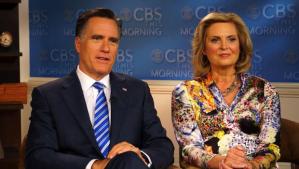
In politics news, it looks like we won’t see a third Romney presidential run, because Ann Romney has laid down the law.
“Mitt and I are done. Completely,” the wife of the two-time Republican presidential candidate has said to quash rumors that another campaign is in the works.
“Not only Mitt and I are done, but the kids are done. Done. Done. Done,” she said, according to the Los Angeles Times.
Mitt Romney, 67, has said repeatedly he wasn’t interested in running again, but in recent weeks he’s been seen as flirting with the prospect.
With no clear Republican frontrunner for 2016, he has taken to the campaign trail to support Senate hopefuls, including Joni Ernst in Iowa on Monday, and has also kept up relationships with key GOP donors.
But his wife, Ann, seems to think a third time is not the charm.
LAS VEGAS (AP) — Former U.S. Secretary of State Hillary Rodham Clinton told a Las Vegas crowd Monday night that more needs to be done to ensure young people can achieve their dreams and free students from onerous college debt “that can feel like an anchor tied to their feet dragging them down.”
“I think our young people deserve a fair shot,” she told about 900 people gathered in a Bellagio resort ballroom for the annual UNLV Foundation dinner benefiting the University of Nevada, Las Vegas.
Later, talking about the American public’s possible reluctance to get involved in conflicts around the world, Clinton referred to the threats posed by the Ebola virus and the Islamic State militant group.
“They want to bring the fight to Europe and the fight to the United States,” she said of the terrorist group.
And Ebola is not going to stay confined, the former first lady said.
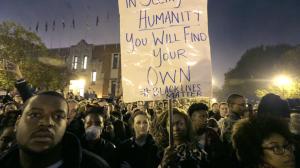
Pounding rain and tornado watches didn’t deter hundreds of protesters Monday outside Ferguson police headquarters, where they stayed for almost four hours to mark how long 18-year-old Michael Brown’s body was left in a street after he was fatally shot by police.
Organizers of the four-day Ferguson October protests dubbed the day “Moral Monday” and committed acts of civil disobedience across the St. Louis region. In addition to the initial march on Ferguson police headquarters, protesters blocked the entrance to a major employer, held a loud rally inside St. Louis City Hall, disrupted business at a Ferguson shopping center and three Wal-Mart stores and tried to crash a private fundraiser for a St. Louis County executive candidate where U.S. Sen. Claire McCaskill was scheduled to appear.
At the Edward Jones Dome Monday night, protesters briefly draped a banner over a Jumbotron video board that read “Rams fans know on and off the field black lives matter.”
More than 50 people were arrested, including scholar and civil rights activist Cornel West.
West was among 42 arrested for peace disturbance at the Ferguson police station. Some protesters used a bullhorn to read the names of people killed by police nationwide. Christian, Jewish and Muslim clergy members — some of whom were among the first arrested — led a prayer service before marching to the station two blocks away.
I’m very glad that the protests are continuing. I’m afraid Ferguson police officer Darren Wilson is going to get away with killing Michael Brown, so I think it’s important to keep the story in the nation’s consciousness.
So . . . what stories are you following today? Please post your thoughts and links in the comment thread, and enjoy your Tuesday!
Did you like this post? Please share it with your friends:
The Sky Dancing banner headline uses a snippet from a work by artist Tashi Mannox called 'Rainbow Study'. The work is described as a" study of typical Tibetan rainbow clouds, that feature in Thanka painting, temple decoration and silk brocades". dakinikat was immediately drawn to the image when trying to find stylized Tibetan Clouds to represent Sky Dancing. It is probably because Tashi's practice is similar to her own. His updated take on the clouds that fill the collection of traditional thankas is quite special.
You can find his work at his website by clicking on his logo below. He is also a calligraphy artist that uses important vajrayana syllables. We encourage you to visit his on line studio.



 I’m dealing with the death of my cousin Ruthie who was closest to me in age and always put in charge of me when I was little in our nearly weekly visits to Kansas City. She died yesterday of ALS which is a disease that is horrid beyond measure and requires a lot of further research to unwind. Death is natural and inevitable but we should be able to find ways of better dealing with horrifying deadly diseases. While the Trump budget is finding ways to give the extremely wealthy more tax cuts and fund more military publicity stunts, its priorities are shameful when it comes to the
  Meanwhile, Team Gleason–including some friends of mine hoping to raise funds to find an ALS cure–is running in the Crescent City Classic this weekend in a
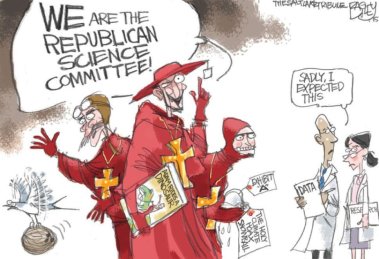
 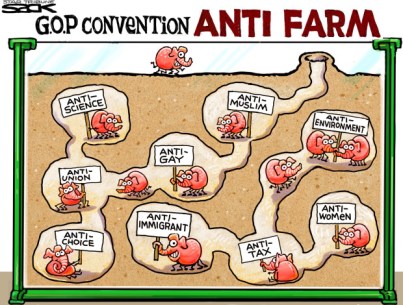 This administration has time for golf galore.
 I
I Gorsuch was quietly
 Gorsuch h















 peej
peej Carissa
 bostonboomer
 dakinikat
 ecocatwoman
 mablue2
 Mama Lopez
 peggysue22
 quixote
 skydancingguestblogger
 Mona (aka Wonk the Vote)



 Sky Dancing
Recent Comments