
Mostly Monday Reads: Barrels of Deplorables
Posted: March 30, 2026 Filed under: just because | Tags: @johnbuss.bsky.social John Buss, Birth Right Citizenship and Racism, Bruce Springstein Smoke and Rubber Burns, Cadet Bonespur's Iran War, Epstein Files, Kash Patel, No Kings, Pete Hegseth's Gawd, Republicans Run Scared in 2026 1 Comment
“Donald and his Trumplican digital army chime in on the worldwide No Kings protests. The attempted pushback is comical. There’s something about electing a clown…” John Buss, @repeat1968
Good Day, Sky Dancers!
It really takes a lot of fortitude to check the headlines today. I can only imagine the effort it takes to be an actual reporter in this environment. I don’t know how anyone could forgive themselves for voting or approving these people. So, buckle up, it’s going to be a bumpy ride today.
Greg Sargent at The New Republic has written some stomach-churning stuff on Pete Hegseth today. “Pete Hegseth Just Revealed the Real Roots of His Sadism and Rage. Does God want America to kill as many of our enemies as we can—in as violent a fashion as possible? We have a defense secretary who apparently thinks so. Why do radical right-wing religious movements always think their messiahs and god think murdering people is righteous?
When Pete Hegseth talks to God, he asks the Almighty to help him kill people—as violently and ruthlessly as possible.
In a potential violation of the separation of church and state, Hegseth has ordered monthly prayer meetings at the Pentagon, and in his first such gathering since launching the war against Iran, the defense secretary pleaded for divine assistance in mowing down the Iranian foe.
“Let every round find its mark against the enemies of righteousness and our nation,” Hegseth intoned to a military audience, reciting a prayer previously given by a military chaplain before the Venezuela raid and applying it to American troops in Iran.
“Give them wisdom in every decision,” Hegseth continued, “endurance for the trial ahead, unbreakable unity, and overwhelming violence of action against those who deserve no mercy.”
Hegseth’s prayer service attracted only scattered media attention. But it helps explain the real impetus behind a development that deserves far more notice: The appointed leader of the world’s most powerful military regularly speaks about his capacity to rain terror and death on the enemy with an undisguised relish that should unsettle us all.
Hegseth appears to be a devotee of Christian Reconstructionism, a theology preached by influential far-right pastor Douglas Wilson that aims to reshape all earthly endeavors around the dictums of what his disciples claim is God’s law. As scholar-of-religion Julie Ingersoll explains on Sarah Posner’s podcast, Wilson believes that “all authority belongs to God,” rendering the state’s authority wholly subordinate to a “higher category of biblical law.” A Pentagon spokesman has confirmed that Hegseth recently met with Wilson and is his “admirer.”
What does this say about Hegseth’s conduct in the Iran war? A lot, it turns out.
During his prayer extolling “overwhelming violence,” Hegseth expanded on this by reading from Scripture. “I pursued my enemies and overtook them,” Hegseth preached, quoting King David recounting his wars against Israel’s ancient foes and likening them to the Iranian enemy. “Those who hated me I destroyed. They cried to the Lord, but He did not answer them.
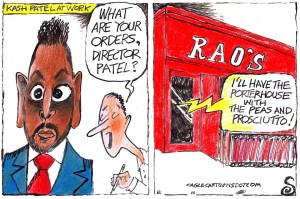 Not exactly the stuff I was taught in Sunday School as a kid. Moving right along, how about the absolute things you never wanted to know about Kash Patel, ripped straight from his files by eager Iranian hackers? This bit of information is from Politico, but the actual images of him doing all kinds of weird, narcissistic things are out there. I’m not sure if any of the Trumperz will be dazed by it, but I found it rather gross and vomit-inducing. Watch it if you dare. “FBI confirms hackers targeted Kash Patel’s personal emails. Iran-linked hacking group Handala posted documents and photos they claimed to have stolen from the FBI director.”
The FBI on Friday confirmed that hackers targeted the personal emails of Director Kash Patel, hours after an Iranian government-linked hacking group posted documents and images online, claiming to have stolen them from Patel.
In a statement, the FBI confirmed the agency was “aware of malicious actors targeting Director Patel’s personal email information, and we have taken all necessary steps to mitigate potential risks associated with this activity.”
“The information in question is historical in nature and involves no government information,” the FBI added. The statement did not include details on who was behind the attack. “The FBI will continue to pursue the actors responsible, support victims, and share actionable intelligence in defense of networks,” it said.
Earlier in the day, Iran-linked hacking group Handala claimed to have hacked Patel’s email and published several pictures of the director, including one showing him brandishing a cigar and another that appears to be his personal resume. Most emails are dated between 2012 and 2014, though there is at least one from 2022, according to files posted by Handala on Telegram and reviewed by POLITICO.
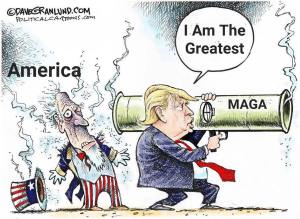
Is it malicious if this guy really did this shit and kept it with some obvious liking of it all? So, let’s just take a look at the entire set of Republican values here with this bit of news from AXIOS. “GOP weighs health care cuts to pay for Iran war.” This analysis is by Peter Sullivan.
Republicans are considering reductions in federal health spending to help pay for a budget bill containing as much as $200 billion to fund the Iran war and immigration enforcement.
Why it matters: New efforts to rein in health programs are sure to be controversial and open the GOP up to election-year attacks that they’re cutting health care to pay for an unpopular war.
Driving the news: Top House Republicans are looking at health care offsets addressing fraud in federal programs, as they did during last year’s debate over the budget law that made deep cuts to federal Medicaid spending and imposed first-time work requirements.
- “There’s other items we’re looking at right now, especially in the areas of fraud and waste and abuse that we’re working through with our members,” House Majority Leader Steve Scalise (R-La.) told Axios.
House Budget Committee chairman Jodey Arrington (R-Texas) is reviving an idea that was considered last year to fund Affordable Care Act payments known as cost-sharing reductions.
- The Congressional Budget Office previously found the move would lower overall benchmark ACA premiums by 11% but result in 300,000 more uninsured people.
- It would cut the subsidy amount that some enrollees receive, thereby increasing out-of-pocket premium costs, while saving the government over $30 billion.
Between the lines: Discussions still are in the early stages, and it’s not clear exactly how the goal of fighting fraud would translate into legislative language.
- The driving force is the need to pay for the war in Iran and fund ICE, the latter of which triggered the partial government shutdown. Democrats oppose both, leaving Republicans ready to use the party-line process known as reconciliation to get around a Senate filibuster.
- Many Republicans want any bill to be fully paid for, which is where potential health care changes come in.
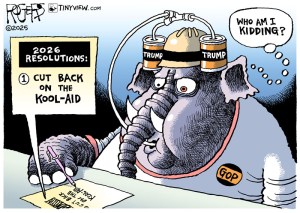 There is some discussion in that article of what “moderates” might do which could be limited, imho, to they cave and/or then decide not to run for office again at best. At least current election polls show they’re on the run. They’re getting all their benefits and heading for the private sector. This is from The Hill. It’s reported by Sudiksha Kochi. “House Republicans flee Congress in record numbers amid growing dysfunction.”
An unprecedented number of House Republicans are opting to retire or pursue other offices, complicating Speaker Mike Johnson’s (R-La.) bid to fend off a potential blue wave in the 2026 midterms and preserve his razor-thin majority.
So far, 36 House Republicans — including the most recent, Rep. Sam Graves (Mo.) — have announced they will leave their seat at the end of their term, pointing to legislative gridlock, family commitments or a wish to make room for the next generation of leaders.
That total exceeds the record set in the 2018 midterm cycle, when 34 House Republicans chose not to run for reelection and Democrats regained control of the lower chamber under President Trump’s first term.
By comparison, 21 House Democrats are not seeking reelection this year.
But the number is only likely to grow in the weeks ahead, as Republicans reassess their roles in Washington amid a Trump 2.0 era and the expectation that the president’s party historically faces losses in a midterm year.
Graves said in a statement Friday that his decision to leave his seat wasn’t an easy one, but the “right one.”
“I believe in making room for the next generation. It’s time to pass the torch and allow a new guard of conservative leaders to step forward and chart a path forward for Missourians,” he said, adding that public service “isn’t easy.”
He joins a roster of Republicans across the ideological spectrum who have also called it quits in Congress, including high-profile conservatives such as Texas Reps. Chip Roy, Jodey Arrington, and Michael McCaul, as well as battle-tested moderates such as Rep. Don Bacon (Neb.), who has repeatedly run for reelection and won in a competitive district.
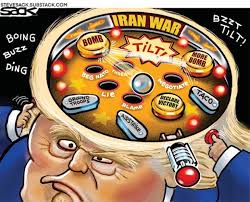 Meanwhile, the incoherent #FARTUS still can’t explain the Iran War situation. This is from the AP. Nothing Trump says these days is coherent or grounded in reality. “Trump again threatens widespread destruction in Iran if a deal is not reached ‘shortly’.”
U.S. President Donald Trump on Monday threatened widespread destruction of Iran’s energy resources and other vital infrastructure, potentially including desalination plants that supply drinking water, if a deal to end the war is not reached “shortly.”
Iran meanwhile struck a key water and electrical plant in Kuwait, and an oil refinery in Israel came under attack. Israel and the U.S. launched a new wave of strikes on Iran, as the war raged with no end in sight.
Trump’s new threat came in a social media post. Earlier comments to the Financial Times suggested American troops could seize Iran’s Kharg Island oil export hub. Trump has repeatedly claimed to be making diplomatic progress— though Tehran denies negotiating directly — while ramping up his threats and sending thousands more U.S. troops to the Middle East.
Trump told the New York Post that the U.S. is negotiating with Iran’s parliament speaker, Mohammad Bagher Qalibaf. The former Revolutionary Guard commander, who has taunted the U.S. on social media, dismissed the talks facilitated by Pakistan as a cover for the latest American troop deployments.
In a social media post, Trump said “great progress is being made” in talks with Iran to end military operations. But he said if a deal is not reached “shortly,” and if the Strait of Hormuz is not immediately reopened, the U.S. would broaden its offensive by “completely obliterating” power plants, oil wells, Kharg Island and possibly even desalination plants.
The strait is a crucial waterway through which a fifth of the world’s oil is shipped in peacetime.
The laws of armed conflict allow attacks on civilian infrastructure such as energy plants only if the military advantage outweighs the civilian harm, legal scholars say. It’s considered a high bar to clear, and causing excessive suffering to civilians can constitute a war crime.
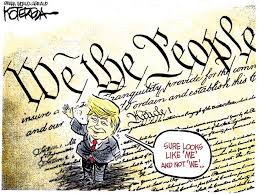 We might as well flip a coin on the decision that come from the White House. No matter what the toss portends, we all lose. What would we do without a day that racism comes into play. This is from what’s left of the Washington Post. “Trump officials cite white supremacists in bid to end birthright citizenship. An argument heading to the Supreme Court is built in part on a post-Civil War campaign that scholars say was steeped in anti-Black and anti-Chinese racism.” The link has been gifted.
Alexander Porter Morse, a Confederate officer during the Civil War and a Louisiana attorney, argued for legalized segregation in the landmark 1896 Supreme Court case that established the “separate but equal” doctrine and buttressed Jim Crow laws.
He is again playing a key role in a monumental case to be argued before the justices Wednesday: The Trump administration has tapped Morse as an authority in its push to upend long-settled law that virtually everyone born in the United States is a citizen.
Over a century ago, Morse was among a trio of thinkers who spearheaded a failed effort — steeped in anti-Black and anti-Chinese racism — to erase birthright citizenship. The Trump administration is reviving their arguments to make its case today, some legal scholars say.
The administration is citing arguments “built on a racist foundation,” Justin Sadowsky, an attorney for the Chinese American Legal Defense Alliance (CALDA), wrote in a friend-of-the-court brief.
Lucy Salyer, a University of New Hampshire history professor who has written on Morse and others, said she was struck that the Trump administration had chosen to elevate those figures and their ideas: “If you know the history and the broader context of what they were trying to achieve, it does ring alarm bells.”
The case, which could redefine who is considered an American, centers on the Citizenship Clause of the 14th Amendment, which grants citizenship to “All persons born or naturalized in the United States, and subject to the jurisdiction thereof.”
When asked for comment about relying on Morse and his compatriots, the Trump administration pointed to a brief in which it wrote “this Court has repeatedly cited their work in other contexts.” Some legal scholars also argued their stance on birthright citizenship was shared by a number of prominent politicians who did not have racist views.
The Trump administration argues the 14th Amendment does not apply to people in the country illegally or on temporary visas. If the high court agrees, and reverses the long-held interpretation, it could render hundreds of thousands of children born to immigrant parents stateless.
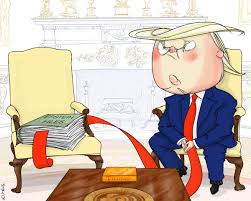 And then, we find out more details about Trump and that 13-year-old girl at the Daily Beast. “Accuser, 13. More information given by the woman has been backed up.” This story is reported by Cameron Adams.
A new investigation has backed up evidence given by a woman who has accused Donald Trump of sexually abusing her when she was 13, according to a report.
The woman conducted four interviews with the FBI in 2019 in which she detailed alleged abuse by Trump and child sex offender Jeffrey Epstein. Her interviews referencing Trump were initially withheld by the Department of Justice.
A report from South Carolina newspaper The Post and Courier released on Sunday has now corroborated key personal details given by the woman about a third man she claims also sexually assaulted her—named Jimmy Atkins. Those details are not directly related to her accusations against Trump, but suggest that she was truthful about other matters she raised with the FBI.
The White House has called the woman’s claims against Trump “completely baseless,” while the president has always denied any involvement in Epstein’s crimes.
The woman claimed Epstein started abusing her and trafficked her to several men when she was aged between 13 and 15. She had met Epstein after he responded to an advertisement for babysitting that her mother, a real estate agent in South Carolina, had given to her clients.
The Post and Courier report says Atkins moved to Hilton Head, South Carolina, in the mid-’80s and took over Harbour Realty and Rentals. That was where he met the teenage girl who would later claim to the FBI during interviews in 2019 that Atkins and Epstein assaulted her.
The Daily Beast is not disclosing the woman’s identity in accordance with its policy on sexual assault victims.
The Post and Courier scoured records to match the woman’s testimony of Atkins’ affiliation with a college in Ohio, as well as his age, hair color, physical appearance, and his employment in Hilton Head.
Today, I’m hoping that all those No Kings protests really got into what’s left of Orange Caligula’s brain.
What’s on your Reading, Blogging, and Action lists today?
And I’m definitely with Snoopy on this:

Finally Friday Reads: Breaking Crazy
Posted: March 27, 2026 Filed under: #FARTUS, #MAGAnomics, #We are so Fucked, Afternoon Reads, American Fascists, Civil Rights, corruption, democracy is threatened, FARTUS, Foreign Affairs | Tags: @johnbuss.bsky.social John Buss, Cadet Bonespur's Iran War, Orange Caligula's cabinet crazy, US Misleadership 3 Comments
“One thing really stands out about trump’s latest Cabinet Love Fest, which can only be interpreted one way, he actually said something factual!” John Buss. @repeat1968
Good Day, Sky Dancers!
You don’t need to be a mental health expert to realize that something is very wrong with Orange Caligula’s brain. As usual, I didn’t watch or listen to his displays of dementia, narcissism, and stupidity because it’s its own form of torture. But I did see some cuts and takes on various social media outlets. I think it’s important to see just exactly how far his deterioration has gone and how that’s impacting policies that are extremely damaging for our country and the world.
The Guardian’s Andrew Feinberg reports the debacle this way. “‘Could only happen to Trump’: President hijacks Cabinet meeting to cry about lawsuits over his radical DC plans. President launches into extended stemwinder of grievances ranging from lawsuits over the Kennedy Center to the Justice Department’s failure to bring sham charges against Federal Reserve Chairman Jerome Powell.”
President Donald Trump spent roughly 15 minutes of a cabinet meeting on Thursday complaining about a historic preservation group’s efforts to block him from shutting down the Kennedy Center for a purported preservation and grousing about the Justice Department being unable to prosecute the chairman of the Federal Reserve over their renovation.
The president was in the middle of a long soliloquy about fixing up the Washington, DC-based arts center — which was built in honor of assassinated President John F. Kennedy — when he began to claim the controversial renovation would be “under budget, ahead of schedule” and unfavorably compared the project to the long-running rehab of the nearly century-old Federal Reserve headquarters.
He quickly pivoted to airing a related grievance about the National Trust for Historic Preservation, a congressionally chartered nonprofit that has filed multiple lawsuits against his administration to block the construction of his planned White House ballroom after he ordered the historic East Wing reduced to rubble last fall.
“Everything I do, I get sued. Under budget, ahead of schedule, I get sued over a ballroom that’s going to be the most beautiful ballroom in the country … we get sued by the National Trust for Historic Preservation. They don’t know what they’re doing,” he said.
He also complained that he’d separately been facing litigation over the Kennedy Center project and suggested the lawsuit was only attributable to the center’s board — made up of loyalists he appointed after taking office and sacking the previous leadership — adding his name to the name of the organization.
“Then I just found out we got sued by that group and another group … I guess on the fixing up of again, I’ll use the old name Kennedy Center — it’s going to be beautiful when you add the name Trump,” he said.
“But we got sued, and all I’m doing is fixing it up. We’re fixing broken marble. We’re putting on a roof because it leaks like a sieve. We’re fixing steel that’s broken. Same building, same exact building we’re fixing. It’s going to be beautiful. It’s going to be so beautiful and safe … but think of it. I get sued because I’m fixing up the Trump Kennedy Center. We’re going to make it gorgeous and safe. We’re fixing new windows, do this, but just all fix up. I got sued by preservationists.”
“This could only happen to Trump,” he added.
The president eventually pivoted back to attacking the Federal Reserve renovation and the central bank’s chairman, Jerome Powell, with whom he has spent years feuding over Powell’s failure to keep interest rates low to help Republicans’ electoral prospects.
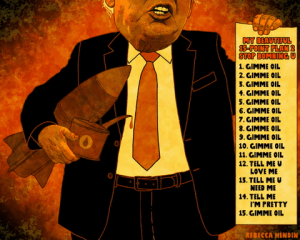 This PBS News headline shows the lies Trump’s spreading on the Iran War. “WATCH: Trump says in Cabinet meeting he doesn’t ‘know if we’re willing’ to make a deal with Iran.”
President Donald Trump insisted Thursday that Iran is “begging” to make a deal.
Watch in our video player above.
The president, speaking at the start of a Thursday Cabinet meeting, said he wanted to “set the record straight” that he isn’t the one pushing for a deal.
WATCH: Iran rejects Trump’s ceasefire terms and issues own demands as war continues
“They’re begging to make a deal, not me,” Trump said.
Iranian officials have denied that they’re negotiating with the U.S. as the war continues in its fourth week. Trump insisted they are.
“Anybody would know they’re talking,” he said. “They’re not fools, they’re very smart actually in a certain way. And they’re great negotiators. I say they’re lousy fighters but they’re great negotiators.”
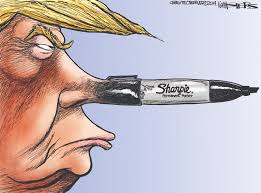 What kind of crazy does it take to negotiate with this kind of language? Lousy fighters? Read more about the meeting at the link. People Magazine reports an incident that sounds like the sounds like the strawberry incident in The Caine Mutiny. “Trump Rambles About Sharpie Pens for 5 Straight Minutes During High-Level Cabinet Meeting amid Iran War. The president said he was sharing “a business story” near the end of his lengthy tangent.”
Donald Trump embarked on an unrelated and rambling story about Sharpie pens during a Cabinet meeting this week.
On Thursday, March 26, the 79-year-old president met with members of his Cabinet, including Secretary of Defense Pete Hegseth and Secretary of State Marco Rubio. During the meeting, they discussed topics ranging from the war in Iran to his decision to vote by mail in a recent Florida special election in his home district of Palm Beach.
At one point, Trump broke into a story about his use of Sharpie-brand pens while discussing renovations that are ongoing at the Federal Reserve. He blasted the project as being unnecessarily expensive, saying that he could have done it for much less and that “it would be better” than the current project.
After blaming “incompetent people” in the government for “a lot of problems” currently affecting the United States, he picked up a Sharpie on the table and started his story.
“See this pen right here? This pen is an interesting example. It’s the same thing. So, this pen is very inexpensive, but it writes well. I like it. But I can’t have the pen the way it was. You know what it is; I don’t want to give too much publicity, but they do treat me well. Sharpie,” he said.
Trump said that when he came to the White House they had “$1,000 pens” [of a different brand] and that he’d often give them away to as many as 30 or 40 people while signing autographs.
“They were $1,000 a piece. Beautiful pen. Ballpoint. Thousand. It was gold, silver, gorgeous. But I’m handing them out to kids that don’t even know what they … ‘What’s this, mommy?’ These kids, they’re getting a pen for $1,000. They have no idea what it is,” he said, adding that he felt “guilty” that he wasn’t saving the government money.
On top of being expensive, the pens “had another problem,” he said. “They didn’t write well. So I take it out, and I sign and there’s no ink. And I’ve got all you people [the assembled press] looking, and you’re saying, ‘There must be something wrong with Trump.’ And I’m signing and there’s no ink the pen and it costs $1,000.”
Irritated by what he implied was government waste, he said that he reached out to Sharpie and said he’d “like to use your pen, but I can’t have a gray thing with a big ‘S’ on it.’ “
Meanwhile, what does it say when you’re base want’s you impeached?
Lisa Needham, writing for Public Notice, asks this great question. “What do you do when you can’t trust the government? The haze of contradictions and confusion is a feature, not a bug.”
We’re a month into President Donald Trump’s increasingly disastrous Iran war, and we have no idea what’s really going on.
In part, that’s because Trump is now nothing but a creature of pure id surrounded by enablers, running the country like an enormous out-of-control toddler. But it’s also because the administration is not at all interested in providing the American people with objective, reliable information.
That erasure of truth leaves us unmoored.
Trump’s increasing instability was always going to lead to chaotic, contradictory statements about the war, blurting out whatever ideas have taken hold in the nest of spiders inside his head.
These constant reversals about what he plans to do next aren’t always random or delusional, but the sheer volume of Trumpian proclamations that seem divorced from reality does a terrific job of obscuring when something is deliberate.
That was the case at least until earlier this week, when Trump decided to use the Iran war to engage in a little light market manipulation. Well, some pretty hefty market manipulation, actually.
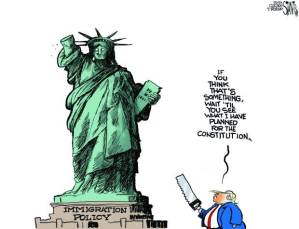 Heather Cox Richardson has some even more damning evidence at her SubStack.
In an interview with Reuters on Monday, Singapore’s minister for foreign affairs, Dr. Vivian Balakrishnan, put in bald language the change in the world order instigated by President Donald J. Trump.
“For 80 years,” Balakrishnan explained, “the US was the underwriter for a system of globalisation based on UN Charter principles, multilateralism, territorial integrity, sovereign equality.” That system “heralded an unprecedented and unique period of global prosperity and peace. Of course there were exceptions. And of course, the Cold War was still in effect for at least half of the last 80 years. But generally, for those of us who were non-communists, who ran open economies, who provided first world infrastructure, together with a hardworking disciplined people, we had unprecedented opportunities.
“The story of Singapore, with a per capita GDP of 500 US dollars in 1965. Now, [it is] somewhere between 80,000 to 90,000 US dollars. It would not have happened if it had not been for this unprecedented period, basically Pax Americana and then turbocharged by the reform and opening of China for decades. It has been unprecedented. It has been great for many of us. In fact, I will say, for all of us, if you look back 80 years.
“But now, whether you like it or not, objectively, this period has ended…. Basically, the underwriter of this world order has now become a revisionist power, and some people would even say a disruptor. But the larger point is that the erosion of norms, processes, and institutions that underpinned a remarkable period of peace and prosperity; that foundation has gone.”
In its place, as scholar of authoritarianism Timothy Snyder said to me in a YouTube conversation yesterday, Trump is aligning himself with international oligarchs like Russia’s Vladimir Putin, Hungary’s Viktor Orbán, Saudi Arabia’s Mohammad bin Salman (MBS), and China’s Xi Jinping. Because of his position as the president of the United States of America, this means he is aligning the United States of America with this oligarchical axis as well, abandoning the country’s democratic principles and traditional allies.
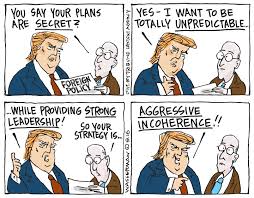 Our foreign policy was never pristine. All you have to do is look at the CIA during the post World War 2 years to see adventurism in South America, Africa, and Southeastern Asia to see that. However, we did assert some global leadership that created some stability, peace, and trade agreements. Now, all bets are off with us under Trump.
The craziness just continues and the disruption to what once was a mostly functioning democratic republic is obvious. How about this bit of narcissim? This is from today’s New York Times. “Trump’s Signature Is Set to Be Added to America’s Currency. President Trump is poised to be the first sitting president to have his signature appear on the U.S. dollar.”
Or just another story coming about some asshole cabinet member. This one from the head of the “Department of War.” It’s also from the New York Times. “Hegseth Strikes Two Black and Two Female Officers From Promotion List, Defense Secretary Pete Hegseth’s highly unusual decision to remove officers from a one-star promotion list has spurred allegations of racial and gender bias.”
They’re rewriting the script on every value this country has held.
Well, I’m off to the long, wretched task of reworking my mortgage just so I can fix somethings on my house. As a person who has been a banker on all kinds of levels from the FED to a communithy bank I can tell you that I have never seen such a mess. I’m certain I have all this AI shit to thank for it. The documentation requirements are just unbelievable.
I hope your weekend goes well and that you can manage to stay above the news and the national fray.
What’s on your reading and blogging list today?
Sweet Goddesses, I miss performaning this song in the Quarter. I need to go back to gigging. Anything’s better than teaching Economics in this damn environment.
Mostly Monday Reads: Nothing Fit to Read
Posted: March 23, 2026 Filed under: Foreign Affairs, morning reads, U.S. Economy | Tags: @johnbuss.bsky.social John Buss, Cadet Bonespur's Iran War, Energy Crisis, ICE in Air Ports, New Orleans, SCOTUS decisions, Strait of Hormuz 7 Comments
“Trump issues heartfelt condolences upon hearing of the death of former republican FBI Director Robert Mueller while golfing.” John Buss, @repeat1968
Good Day, Sky Dancers!
The headlines today demonstrate exactly how far down the drain our country has gone in a very short period. Here in New Orleans, we’re inundated once again by ICE and the National Guard. They’re taking on TSA duties at the Airport. “ICE agents begin patrol at New Orleans airport as security lines surge for second day.” These folks have proved themselves to be violent, untrained cretins, yet our Governor, himself a cretin, welcomes them wholeheartedly. Can you imagine a better way to wreck the tremendous amount of tourist business and the incredible trade that comes here from South America? This NOLA.COM article provides brief details of the unfolding situation.
U.S. Immigration and Customs Enforcement deployed to Louis Armstrong International in New Orleans Monday morning as airports across the country continue to battle delays and security agent sick-outs amid a partial government shutdown.
ICE’s presence comes days after President Donald Trump said he would send agents to airports to help with long lines caused by the shutdown. The New York Times confirmed that the New Orleans airport was one of 14 where ICE would be deployed to assist Transportation Security Administration workers.
“The airport has staff on hand to help keep the lines organized and will continue to coordinate with the TSA as they navigate this issue. The airport has also been advised by the TSA that additional security resources from the federal agency, ICE, are onsite on Monday to support TSA security functions,” MSY spokesperson Erin Burns said in a statement.
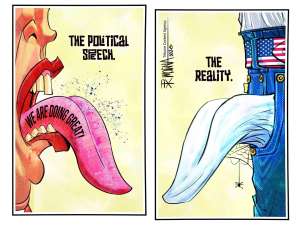
Be sure to take a look at the photos in this article. Our airport looks like it’s undergoing a military takeover. They’re supposedly going unmasked, but the vests and colors just are not a good look imho.
According to TSA experts, this move is useless. This is from the Government Executive, as reported by Eric Katz. “‘No practical use’: TSA experts say Trump’s ICE deployments won’t help with airport security. More than 400 TSA employees have left the agency since the shutdown began last month, White House says.”
President Trump will beginning Monday shift Immigration and Customs Enforcement personnel to airports to provide security there in a move he said will alleviate long lines created by shutdown-induced callouts but which experienced TSA officials said would have minimal impact.
The unusual approach comes as Trump administration officials have repeatedly lamented that Transportation Security Administration employees are calling out and quitting the agency due to the shutdown’s impact on paychecks, lengthening wait times at many airports around the country. Details of the assignments were not clear as of Sunday, despite Trump declaring that the airport deployments would occur on Monday. Tom Homan, the White House’s border czar, told CNNon Sunday that he was “working on the plan” and would come up with one soon.
Several current and former TSA officials told Government Executive that ICE personnel will be limited in what they can accomplish at airports, as they will not have the requisite training to check identification, examine luggage x-rays or provide other key security services. TSA employees go through classroom and on-the-job training before they can staff those roles, the officials said.
“It serves no practical use,” said one former official with decades of federal experience who declined to be named out of fear of professional reprisal. “It’s a political, publicity action, not a practical solution.”
Homan suggested ICE employees could staff the areas where travelers exit their terminals, though former officials noted many airports already use non-TSA personnel for those areas.
A second former senior TSA official added there are almost no functions ICE staff would be capable of offering.
“They can basically provide little help,” the former senior employee said.
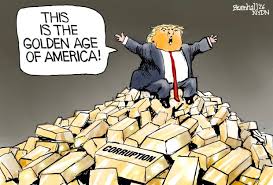 The Iran War is a misguided, mismanaged mess. This is from the AP. “Hormuz strategy raises questions about US war preparation.” The headlines on the war today are as scattered as Orange Caligula’s thought process. The analysis is by Collin Binkley.
At war with Iran, President Donald Trump is cycling through an increasingly desperate list of options as he searches for a solution to the crisis in the Strait of Hormuz. He has jumped from calls to secure the waterway through diplomatic means to lifting sanctions and now escalating to a direct threat against civilian infrastructure in the Islamic Republic.
Trump and his allies insist they were always prepared for Iran to block the strait, yet the Republican president’s erratic strategy has fueled criticism that he is grasping for answers after going to war without a clear exit plan. On Saturday came his latest attempt, via an ultimatum to Iran: Open the strait within 48 hours or the United States will “obliterate” the country’s power plants.
Trump’s aides defended the threat as a hard-edged tactic to press Iran into submission. Opponents framed it as the failure of a president who miscalculated what it would take to get out of a geopolitical mire.
“Trump has no plan to reopen the Strait of Hormuz, so he is threatening to attack Iran’s civil power plants,” said Sen. Ed Markey, D-Mass, adding: “This would be a war crime.”
“He’s lost control of the war and he is panicking,” said Sen. Chris Murphy, D-Conn., responding to Trump’s post.
Over the course of about a week, Trump has repeatedly shifted his approach on the crucial waterway for global oil and gas transport. There is growing urgency for Trump as soaring oil prices rattle global markets and pinch American consumers months before pivotal midterm elections.
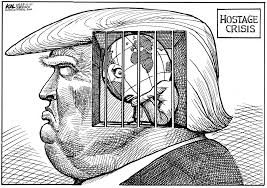 As mentioned before, the cost of this war will be devastating to the Global and U.S. economies. This is from The Economist. “Even the best-case scenario for energy markets is disastrous. Whatever happens, high prices will outlive the Iran war.”
THE THIRD Gulf war is now in its fourth week. Every day that Iranian strikes on ships keep the Strait of Hormuz shut, around a fifth of the world’s output of oil and liquefied natural gas (LNG) remains stranded. Every day, therefore, traders update how much supply is lost for the year. As their estimates rise, so do energy prices. Brent crude, at around $100 a barrel, is 40% dearer than before hostilities began. Gas prices in Europe are up by 70%.
The reason they are not much higher is that investors expect flows to resume soon. On March 23rd Donald Trump postponed a threat to strike Iran’s power plants unless Hormuz reopens, saying he had had “productive conversations [with Iran] regarding a complete and total resolution of our hostilities in the Middle East”. Financial bets that prices will fall (“put” options) outnumber those expecting a rise (“call” options) for July deliveries and onwards (see chart 1). Account for transport lags, in other words, and investors expect normality by May.
To assess those expectations, The Economist calculated how long normalisation would take if the war ended today. Even if Mr Trump’s talks succeed and the strait reopens in a few days, a big “if”, global oil and gas markets would remain undersupplied for months, hurting the world economy.
For energy markets to right themselves once Hormuz reopens, three things need to happen. First, Gulf producers must restore output to pre-war levels. Second, ships must ferry that output to refiners abroad. And third, those refiners must process it into usable fuel. Each stage of this industrial relay takes time.
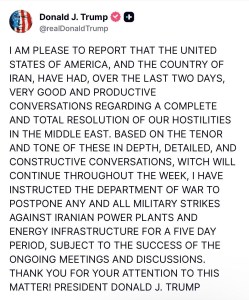
The latest situation is that planned attacks on power plants are being postponed with the usual TACO maneuver. This is reported by The Bulwark‘s William Kristol. “The Least Worst Option. Better to TACO Than Not to TACO. Trump chickened out again . . . for now.” Why is Orange Caligula’s crap always put on Truth Social instead of given the normal press treatment? Also, our attention to anything appears to be what he wants, always.
Early this morning, with about twelve hours left in his 48-hour ultimatum threatening Iran’s civilian power plants, President Trump announced:
Some may cry, “TACO!” And they’d be right. But just over three weeks into his ill-advised and incompetently managed war, Trump had reached a fork in the road from which neither path led to a happy place. He’s chosen the less bad option—for now.
The other, disastrous path would have been escalation. Trump seemed to be heading down that road Saturday afternoon, when he threatened to bomb Iran’s civilian power plants:
If Iran doesn’t FULLY OPEN, WITHOUT THREAT, the Strait of Hormuz, within 48 HOURS from this exact point in time, the United States of America will hit and obliterate their various POWER PLANTS, STARTING WITH THE BIGGEST ONE FIRST!
And he echoed this threat just yesterday, during a phone interview with Israel’s Channel 13: “You’ll find out what’s gonna happen. You’re gonna find out soon. It’s gonna be very good. Total decimation of Iran.”
Though Trump has now delayed this decision for another five days, it’s worth pondering what would have happened (and what could still happen) if he’d chosen escalation.
One assumes that the United States military would have refused to obey orders to commit a war crime like attempting the “total decimation” of a country.
But even if the military had gone ahead with some version of striking Iran’s civilian power plants, Iran would surely have responded by attacking similar targets in the Gulf, which they’ve shown they retain the capacity to do. The war would have widened and its economic effects would have worsened. And then we would have been faced with the possible introduction of ground troops to secure the Strait—which would have invited an extended conflict and an even more severe economic crisis.
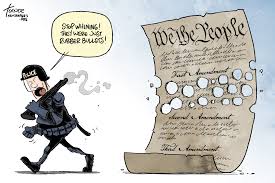 This headline is from Lawrence Hurely reporting for NBC News. “Supreme Court rejects citizen journalist’s case against Texas officials who arrested her for reporting. Officials in Laredo dropped the charges against Priscilla Villarreal but she then filed a civil rights lawsuit, alleging they violated her free speech rights under the First Amendment.”
The Supreme Court on Monday rejected an attempt by a citizen journalist to revive her civil rights claim after she was arrested for soliciting information from a police officer.
At issue in the case brought by reporter Priscilla Villarreal was whether the officials in Laredo, Texas, could claim the legal defense of “qualified immunity,” which would protect them from being sued. The court’s refusal to hear the case means her claim that the officials had violated the Constitution’s First Amendment, which protects freedom of speech, cannot go forward.
Liberal Justice Sonia Sotomayor dissented, saying the court made a “grave error” in declining to take up the case.
“It should be obvious that this arrest violated the First Amendment,” she wrote.
In 2017, Villarreal, who has a large local following via her Facebook page, had texted a police officer to confirm the identities of a suicide victim and a car accident victim, which were not yet public. She then reported what she had learned.
Officials had Villarreal arrested for allegedly violating an obscure state law that prohibits the solicitation of information from a public employee in order to obtain a benefit. The law, if enforced widely, could apply to journalists who routinely seek information from the government and then disseminate it tosubscribers.
Fascism. Are we there yet? Also, may I please have a day without extreme agita and anxiety? This year has quickly turned into one of mass torture. Also, please, I’d like to be able to afford groceries and things again. Can anyone make this go away? I’m way too old for this shit, and my grandchildren are way too young! Insert heavy sigh here. Back to my soothing morning cup of tea.
What’s on your reading and blogging list today?
Finally Friday Reads: Abusing Public Office on Steriods
Posted: March 20, 2026 Filed under: #FARTUS, #MAGAnomics, #Occupy and We are the 99 percent! | Tags: #TrumpCult, @johnbuss.bsky.social John Buss, Cadet Bonespur's Iran War, high gas prices, ICE Helps Trump Friend, Justice for Breonna Taylor, No Justice, No Peace, Trump sells Favors 3 Comments
“Markwayne Mullin seems qualified to head the Department of Homeland Security.” John Buss, @repeat1968
Good Day, Sky Dancers!
Our Executive branch is basically captured by idiots and criminals. A headline in the New York Times today shows that abusing their offices is the only skill the MAGA officeholders and the president have. This story broke last spring. “Trump Friend Asked ICE to Detain the Mother of His Child. Paolo Zampolli, a former modeling agent and a longtime Trump ally, was in a custody battle over his son. An ICE official agreed to help.” While the American people suffer, the Art of the Steal runs amok.
Megan Twohey, Shawn McCreesh, and Hamed Aleaziz share the lede.
Last June, the man credited with introducing President Trump to his wife asked the administration for a favor.
Paolo Zampolli, a former modeling agent turned presidential special envoy, had learned that his Brazilian ex-girlfriend was in a Miami jail, arrested on charges of fraud at her workplace. They had been in a custody battle over their teenage son. Now he saw an opportunity.
He reached out to a top official at Immigration and Customs Enforcement, explaining that his ex was in the country illegally, according to records obtained by The New York Times and a person familiar with the communications. Could she be put in ICE detention? That could help him get his son back.
The official, David Venturella, promptly called the agency’s Miami office to ensure that ICE agents would pick up the woman from the jail before she was released on bail, according to the records and a person with knowledge of the conversation who requested anonymity to discuss it. During the call, Mr. Venturella noted that the case was important to someone close to the White House.
The woman, Amanda Ungaro, was placed in ICE custody and ultimately deported, an outcome that may well have happened regardless of Mr. Zampolli’s meddling. But the ICE official’s willingness to spring into action for a Trump ally — even one in a low-level, largely ceremonial role — reflects a recurring theme of the second Trump administration: The levers of the federal government can be pulled to settle a personal score.
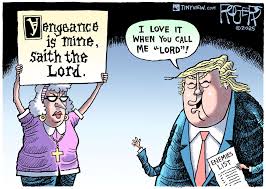 You may read the details at the gifted link above. You may also want to check out MEDIAITE for some analysis by Issac Schorr. “One of Trump’s Friends Reportedly Asked ICE to Arrest the Mother of His Child in Custody Battle Gambit.”
Paolo Zampolli, the man who introduced President Donald Trump to his wife, First Lady Melania Trump, and is currently serving as U.S. special representative for global partnerships at Trump’s behest, asked ICE to arrest the mother of his child last June, according to The New York Times.
After learning that his Brazilian ex-girlfriend, with whom he had a son, Amanda Ungaro, had been arrested on fraud charges in Florida, Zampolli allegedly “saw an opportunity” to land a potentially killing blow in his custody battle with her.
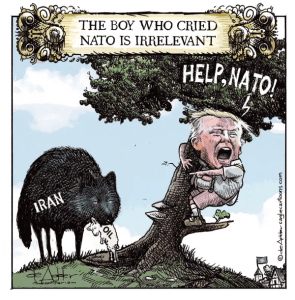 This is just one example of the incompetence, revenge-taking, and grifting that make up the heart of the Trump Regime’s reign of Terror. The story that keeps one like the above in the background is still the Iran War. Greg Sargent of The New Republic discusses some of the incredible ‘madness’ surrounding the machinations behind the War with Congressman Adam Smith. “Transcript: Trump War Takes Dark Turn as Leaks Unnerve Dems: ‘Madness’. In an interview, Congressman Adam Smith, the top Armed Services Democrat, sharply condemns the newly leaked war schemes—and tells us that Dems must not agree to one more dime in war funding.”
Everything we’re learning now strongly suggests that Donald Trump’s war is about to get worse. First, word leaked that the Pentagon may demand $200 billion more from Congress. Second, officials let it be known that Trump is considering the deployment of thousands of troops on the ground. Meanwhile, Trump himself just suggested to reporters that he’s envisioning even more military actions that he hasn’t even explained yet.
All this makes it absolutely clear that Congress will not just be asked to fund Trump’s war, but also that the pressure on Congress to do something about this madness will intensify. So today we’re talking to Congressman Adam Smith, the ranking Democrat on the House Armed Services Committee, about what Democrats will be able to do when that happens. Congressman, thanks so much for coming on.
Adam Smith: Well, thanks for having me. It’s always good to see you.
Sargent: So let’s start with all the leaks about Trump potentially sending in troops on the ground. People familiar with planning told Reuters that Trump may deploy thousands of them. The options being discussed are deploying troops to the shoreline of the Strait of Hormuz to secure passage for oil tankers and possibly sending ground forces to Kharg Island, which is the hub for oil exports, which one official describes to Reuters as “very risky.” Congressman, you talk to people at the Pentagon a fair amount. Are you getting any indications of anything like this, and what’s your overall take on it?
Smith: Yeah, no, it’s very worrisome, because the bottom line is it’s clear that Trump is not going to be able to achieve anything meaningful in Iran—which is a change of the regime and a change of action. I mean, degrading their capability is one thing, but at the cost that we’re currently experiencing—13 service members’ lives already lost, massive economic disruption, 14 countries dragged into this, civilian deaths, the tragic killing of 150 schoolgirls in Iran—massive cost, just to degrade Iran a little bit. He wants regime change. He wants something different. That’s not happening under the current plan.
Now, I don’t think it’s going to happen if he sends in a few thousand troops, either, but the pressure on him to escalate is growing in his own mind. The pressure is also growing on him to end this madness, stop this war, and recognize he’s not going to accomplish that. But we’ve sent 2,500 Marines—they’re now in the area. Another 2,500 are on their way. And you know, Marines don’t just sit in boats—they’re there for a purpose. And sadly, what we’ve learned in the last year is that when Trump masses forces, he uses them.
He did it in Latin America, first with the boat strikes, then with taking out Maduro. He did it in the Middle East when he massed these forces for the war with Iran. So if he sends troops to the region, it is distinctly possible that he’s going to use them. It would be an idiotic decision, because the ability of four or five thousand troops to really fundamentally change this war—I don’t think that’s going to succeed. But Trump doesn’t think in a linear way. He trusts his gut and his bones, apparently.
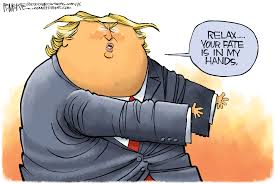 You may watch the interview or continue reading the transcript at the link. Smith and Sargent discuss the implausible reasons given for the war and the difficulty of achieving any real goal from it. As far as I can tell, it just takes the country’s mind off the Epstein files and the constant drip of incompetence and abuse of office. It’s theater that’s costing lives, taxes, and a declining economy.
And a little more dribble from what used to be the Justice Department. “Feds move to dismiss charges against officers accused of falsifying warrant in Breonna Taylor raid.” This is breaking news from the AP.
Federal prosecutors have asked a judge to dismiss the charges against two Louisville officers accused of falsifying the warrant that led police to raid Breonna Taylor’s apartment the night she was killed six years ago.
Prosecutors said in a court filing Friday that their review of the case showed the charges against former Detective Joshua Jaynes and former Sgt. Kyle Meany should be “dismissed in the interest of justice.”
Lawyers for the two didn’t immediately respond to Friday requests for comment.
Judges have twice taken a felony charge against each officer and reduced it to a misdemeanor, saying there wasn’t a direct link between the false information and Taylor’s death. Prosecutors said after the second ruling that they decided to drop the cases.
Taylor was shot to death by police when they broke down the door of her apartment while serving a no-knock drug warrant looking for a former boyfriend who no longer lived there.
Taylor’s boyfriend at the time fired at the officers, and Taylor was killed as police fired back.
Federal prosecutors under former President Joe Biden sought the charges against the officers, while President Donald Trump’s Department of Justice has asked the only officer serving prison time related to Taylor’s killing to be let out of prison while he appeals his conviction.
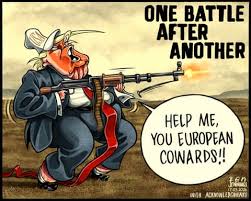 This headline from Wired is due to our insane #FARTUS, and for whatever reason, we got sent to war. “Iran War Puts Global Energy Markets on the Brink of a Worst-Case Scenario. “This will be so, so, so, so, so bad,” one analyst says.” This is reported by Molly Taft.
The war in Iran reached a new extreme this week, as both Israel and Iran launched strikes on oil and gas production and export facilities. The attacks up the stakes in a war that was already choking energy and commodity markets, and will threaten the long-term health of the global economy. On Friday, the International Energy Agency recommended that people work from home, drive slowly, and use gas stoves sparingly in order to alleviate price shocks from the crisis.
The situation in the Persian Gulf is so extreme, analysts told WIRED, that it’s almost unbelievable.
“This scenario is something that you give to the first-year oil analysts to say, ‘OK, if this happens …’ It’s a really interesting illustrative educational thought experiment,” says Rory Johnston, a Canadian oil market researcher. “It’s kind of like, what would happen if gravity just suddenly stopped working for 10 minutes? The things you just give to students to say, ‘Let’s put a thought experiment to something extreme and see how would the system react’? I never thought we would actually see this.”
Ellen Wald, an energy and geopolitics consultant, agrees. “This is like one of those war game simulations in energy markets,” she says.
The initial attacks on Iran earlier this month effectively closed off the Strait of Hormuz, one of the world’s most important shipping routes. The strait is the central lifeline for oil and gas exports from not only Iran, but other countries in the Middle East. The bulk of the Organization of the Petroleum Exporting Countries (OPEC), the world’s largest oil and gas cartel, use the strait to ship oil and gas out of the region to customers. The strait is also a critical hub for oil and gas byproducts like industrial chemicals and fertilizer. Closure of the strait sent shocks through the global economy: After the initial attacks, oil prices shot up above $100 per barrel for the first time since Russia’s invasion of Ukraine in 2022.
“Anytime there is any kind of military activity in the Persian Gulf or even in the Middle East, oil markets tend to get very jittery,” says Wald; closing the strait was a sign that this war could have much more extreme impacts than other conflicts. But for the first few weeks, the oil production facilities themselves remained mostly untouched. “No oil and no products were getting out, and some countries don’t have enough storage, and so they were shutting down production simply because they couldn’t store the oil,” says Wald. “But that’s the kind of thing that can be fairly quickly reversible.”
Over the past few days, however, missile strikes have started heavily targeting oil and gas infrastructure. On Thursday, Israel launched a series of strikes on various oil and gas facilities in the region, most notably the South Pars gas field, the world’s biggest natural gas field, which is jointly controlled by Iran and Qatar. Iran retaliated with counterstrikes, including on the world’s largest oil export facility in Qatar. Oil prices temporarily shot up to nearly $120 a barrel.
 Israel is just doing whatever it wants to because Bibi can flatter the hell out of Trump and make him do anything. This entire thing was a huge disaster just waiting to happen. There’s even some speculation that Israel will use nukes. This is from NPR. “More Marines are headed to Middle East as Iran war reaches the 3-week mark.” This is the most current update.
More U.S. Marines are headed to the Middle East, NPR has confirmed, as the U.S.-Israeli war with Iran reaches the three-week mark.
Israel launched more strikes in and around Tehran early Friday, as Iranians marked Nowruz, the Persian New Year. Muslims around the world are also observing the end of the holy month of Ramadan.
Overnight, Iranian drones hit Kuwait’s Mina Al-Ahmadi oil refinery again, sparking fires as crews worked to contain the blaze. Authorities in the United Arab Emirates said the country’s air defenses responded to missile and drone threats from Iran with explosions echoing across Dubai as worshippers marked the Muslim holiday of Eid
There’s more on the marine deployment and other topics at the link.
Finally, safer and greater today? I sure am not. Just wondering if anyone is singing Bomb. Bomb Bomb Iran today? Never Mind. It says it’s a parody.
What’s on your reading and blogging list today?
Mostly Monday Reads: Making China Great Again
Posted: March 16, 2026 Filed under: #FARTUS, #We are so Fucked, iran, Making China Great Again | Tags: @johnbuss.bsky.social John Buss, Cadet Bonespur's Iran War, Epstein Files, Making China Great Again, NATO 4 Comments
“I’m actually surprised MAGA didn’t put on an alternative Oscar Award Show this year.” John Buss, @repeat1968
Good Day, Sky Dancers!
I’d just like to gripe about one thing today. Humor me. Is it just me, or does everything seem messed up in this country? I’m starting to have visions of us in a Dystopian SyFy movie where the AI in computers decides the best way for financial institutions to make money and gets some sort of cosmic jolly out of making sure something shipped with a commercial deliverer as late as fuck. Also, all inventory systems appear to have certain items that are always gone, even when the company, like Amazon or Walmart, has traditionally had a super inventory system. I’m pretty sure the DOGE thing has messed up student loan and Social Security functions. And wow, now we are completely screwed when it comes to anything that needs petroleum products. It’s like Artificial Intelligence and The Trump Regime Dysfunction have joined together to make our lives miserable.
I’d like to highlight this Substack of Dr. Paul Krugman this morning. “No, America is Not Respected. Thanks to Trump, we’re held in contempt even by our closest allies.” Trump is actually making China great again. They are the obvious winner of all this.
There’s a real Baghdad Bob feel to pronouncements from the Trump administration these days. The war is going great! We’ve been totally victorious! Also, other countries — including China! — must immediately send ships to escort oil tankers through the Strait of Hormuz, which the U.S. Navy isn’t doing because it’s too dangerous.
But this has been the pattern ever since Trump returned to power. Despite repeated failures to deliver on his campaign promises — remember how he was going to cut energy prices in half? — he and his minions have continually insisted that everything is wonderful, that everything they do is a triumphant success story. And he’s still doing it. On Thursday, he told a rally that
Inflation is plummeting, incomes are rising, the economy is roaring back and America is respected again.
As I and others have documented ad nauseam, none of those economic assertions are true. Today, however, I want to focus on the bolded claim. Trump constantly insists, in speeches and social media posts, that he took over a weak, despised nation and restored its international reputation. This is clearly something that matters a lot to him and his sense of self-worth.
It’s also the total opposite of the truth.
A stunning poll from Politico — just released, but taken last month — confirms what I and other observers strongly suspected: America is now widely despised, despised like nobody has ever been despised before.
I don’t mean that we’re disliked, although that too. But this isn’t a case of oderint dum metuant — let them hate so long as they fear. Instead, the world increasingly holds America in contempt.
Our former friends no longer consider us trustworthy.
And they no longer believe that being a U.S. ally offers protection, that a good relationship with America will deter potential enemies from attacking them.
At this point, a plurality of the population in every one of our erstwhile allies considers China a more reliable partner than the United States.
 Check the graphs and more at the link. Jonathan V. Last, writing at The Bulwark, has this analysis today.
If you want to understand the difference in the quality of strategic thinking between Washington and Tehran, consider the messages being sent out over the last three days:
Washington: The war is over. We’ve defeated Iran totally. If other countries don’t come in and help fight Iran they will regret it. Especially our terrible allies, like Great Britain. Please, President Xi, come help us re-open the Strait of Hormuz?
Tehran: We will continue to resist, however we are open to allowing oil transport in the strait that we control provided the product is sold in yuan and not dollars.
I have been saying since the beginning that America is playing checkers while Iran plays chess, but it’s worse than that. American leadership is utterly incoherent: We won, but we need help. We hate our allies; but will our adversaries please come bail us out?
Meanwhile Iranian leadership survived a transition of power in the midst of war, achieved its strategic objective in closing the strait, and is now looking to leverage China’s rising economic ambitions against the United States.
I cannot overstate how significant it would be if Iran and China reached an agreement to allow oil transport under condition of a switch from the dollar to the yuan,1 so here’s European Business:
The condition, if formalised, would represent the most significant challenge to the petrodollar system in its fifty-two-year history, striking at the financial architecture that underpins American global power rather than at US military assets. . . .
To understand why the yuan condition matters, it is necessary to understand what the petrodollar system actually is. Born from the Nixon shock of 1971 and formalised in 1974, the arrangement under which Saudi Arabia and the broader Gulf agreed to denominate all oil sales in US dollars created a self-reinforcing loop that has governed global finance ever since. Because oil—the world’s most traded commodity—must be purchased in dollars, every nation that imports energy must first acquire dollars. Every central bank holds dollar reserves for precisely this reason. The dollar’s status as the world’s primary reserve currency is not an abstract achievement; it flows directly and mechanically from oil. . . .
[Iran] is proposing that access to the world’s most critical energy chokepoint be conditional on currency denomination.
The practical consequence, if even partially adopted, would be a bifurcated global oil market: yuan-denominated barrels flowing through Hormuz for those willing to pay in China’s currency, dollar-denominated barrels rerouted at significant additional cost and time for those who are not. The war premium that Western energy importers are already absorbing would become structural rather than temporary.
I don’t know how to make people care about this except to say that if Iran and China made this deal it would absolutely be the beginning of the end of the dollar backstopping the global financial order. The long-term cost to America would be incalculable.
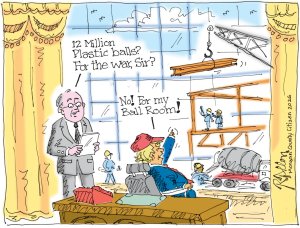
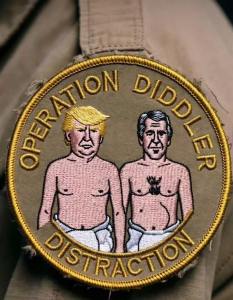 As I said, he’s making China great again. As for NATO, I think Orange Caligula has managed to blow it up. This is from Reuters. It’s the news behind all that analysis. “US allies rebuff Trump’s request for support in Strait of Hormuz.”
BERLIN/BRUSSELS/LONDON, March 16 (Reuters) – Several U.S. allies said on Monday they had no immediate plans to send ships to unblock the Strait of Hormuz, rebuffing a request by President Donald Trump for military support to keep the vital waterway open.Trump called on nations to help police the strait after Iran responded to U.S.-Israeli attacks by using drones, missiles and mines to effectively close the channel for tankers that normally transport a fifth of global oil and liquefied natural gas.
Politico’s Nette Nosslinger has more details. “Germany to Trump: We won’t help you reopen the Strait of Hormuz. Berlin says Iran is “not NATO’s war.”
Germany’s government rejected U.S. President Donald Trump’s demand that NATO allies help secure the Strait of Hormuz, declaring that the alliance had no place in the war.
“This war has nothing to do with NATO. It’s not NATO’s war,” Stefan Kornelius, a spokesperson for German Chancellor Friedrich Merz, told reporters in Berlin on Monday. “NATO is a defensive alliance, an alliance for the defense of its territory,” he added.
Trump had warned NATO allies on Sunday they face a “very bad future” if they refuse to help secure the Strait of Hormuz, pressing Europe to support an American effort to reopen the key maritime corridor.
The German government said it would not assist in that effort as long as the war rages on.
“As long as this war continues, there will be no involvement, not even in an option to keep the Strait of Hormuz open by military means,” Kornelius said, adding that he was not aware of an official request by the U.S. government to Germany to take part in such a mission.
“I would also like to remind you that the U.S. and Israel did not consult us before the war, and that Washington explicitly stated at the start of the war that European assistance was neither necessary nor desired,” Kornelius said.
 Heather Cox Richardson puts it into perspective at her SubStack “Letters from an American.” We had quite the Ides of March yesterday; however, the Roman version was a bit more successful in ridding themselves of the bad guy.
Today, as the country enters its third week of war against Iran, President Donald J. Trump was on the golf course, illustrating the observation of journalist E.J. Dionne in the New York Times that “from the very beginning of this war, we got a sense that there wasn’t a great deal of serious thought put into it by the president of the United States about how it might end, what our objectives were, what needed to be done to protect Americans who are in the Middle East, what might happen to oil in the Strait of Hormuz.”
Although the administration appears to be trying to convince Americans that the U.S. military’s destruction of the Iranian military means the U.S. has won the war, Iranian leadership needed simply to continue in power to declare victory. Then, blocking the 20% of the world’s oil that flows through the Strait of Hormuz would give them leverage over the war’s outcome.
On March 10, Helene Cooper and Eric Schmitt of the New York Times reported that senior defense officials told them the Iranian military is adjusting its tactics to strike at the communications and defense systems protecting U.S. troops. Those tactics include drone strikes. The same day, Marc Caputo, Barak Ravid, and Colin Demarest of Axios reported that Ukrainian officials had tried several months ago to sell the U.S. anti-drone technology for downing Iran-made drones as a sign of thanks for U.S. support and as a way to strengthen ties between the U.S. and Ukraine, but the U.S. did not pursue the offer.
White House spokesperson Anna Kelly responded: “This characterization made by these cowardly unnamed sources is not accurate and proves that they are simply outside looking in. [Defense] Secretary [Pete] Hegseth and the armed forces did an incredible job planning for all possible responses by the Iranian regime, and the undisputed success of Operation Epic Fury speaks for itself.”
And yet the fallout from the strikes on Iran by the U.S. and Israel appears to have caught the administration by surprise. Trump told Kristen Welker and Alexandra Marquez of NBC News yesterday that he was “surprised” that Iran attacked other countries after the U.S. and Israeli strikes. He also said strikes on Saturday on Kharg Island, which is about fifteen miles off the Iranian coast and is home to Iran’s primary oil export terminal, “totally demolished” most of the island but that “we may hit it a few more times just for fun.”
President Donald J. Trump posted on social media Saturday morning: “Many Countries, especially those who are affected by Iran’s attempted closure of the Hormuz Strait, will be sending War Ships, in conjunction with the United States of America, to keep the Strait open and safe. We have already destroyed 100% of Iran’s Military capability, but it’s easy for them to send a drone or two, drop a mine, or deliver a close range missile somewhere along, or in, this Waterway, no matter how badly defeated they are.”
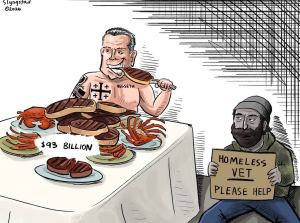 Well, that didn’t happen, did it? China is full-speed ahead in transitioning away from its fossil-fuel-based energy grid. Trump still shakes his fist at windmills. I did enjoy Kyle Cheney’s take at Politico. “Trump is losing one battle after another. Cue the posts. The president’s Sunday night diatribe was most notable for his attacks on the highest court in the land.”
President Donald Trump is increasingly at the mercy of forces he unleashed but can’t control — so he’s taking aim at the umpires.
Gas prices surging. Unemployment climbing. War with Iran threatening to engulf his presidency. The fracturing of his political coalition. The collapse of his signature trade-negotiations-by-tariff strategy. Relentless scrutiny of the Epstein files. A public backlash to his agenda that could swamp Republicans in the midterms. Failure after failure to criminalize the conduct of his political adversaries.
So it was, in a fit of Sunday night fury that set Washington’s armchair psychoanalysts ablaze, that the president channeled his rage at the few functioning checks on his power: the media, independent regulators and — most pointedly — the federal judiciary.
Trump’s Sunday night outburst took on all of them, but it was most notable for how he cast the Supreme Court — one that has staved off the destruction of his agenda and even his own criminal prosecution — as “a weaponized, and unjust Political Organization.”
“This completely inept and embarrassing Court was not what the Supreme Court of the United States was set up by our wonderful Founders to be,” the president blared on Truth Social. “They are hurting our Country, and will continue to do so.”
It was a remarkable attack. Until the Feb. 20 tariff ruling, the Trump administration had been touting its winning streak at the Supreme Court. The justices have salvaged Trump’s broadest efforts to end legal protections for hundreds of thousands of noncitizens in the United States, allowed him to assert unprecedented control of once-independent agencies and unilaterally slash congressionally authorized spending.
The court, as Trump knows, is arguably responsible for his return to power in the first place: The justices blocked an effort by some blue states to keep Trump off the 2024 ballot by labeling him an insurrectionist responsible for the Jan. 6, 2021 attack on the Capitol. And the court’s decision to adopt a sweeping view of presidential immunity helped stave off special counsel Jack Smith’s most potent criminal case against Trump.
But to Trump, that’s ancient history.
The core of the attack is the frustration that Trump often exhibits when he brushes up against the limits of his power. He spent Sunday lashing out at the news media, cheering on FCC Chair Brendan Carr’s threat to revoke broadcast licenses for stations that report unfavorably on the war in Iran, and lamenting his inability to control the independent Federal Reserve’s interest rate decisions.
Trump describes the high court’s recent rejection of his unfettered ability to levy tariffs against American trading partners as a deeply personal affront — one that contradicted the ethos of his entire decade in public life.
Since the stinging tariffs decision last month, Trump has seemed fixated on the ruling, weighing in against the high court every few days.
“Our Country was unnecessarily RANSACKED by the United States Supreme Court,” he wrote Sunday.
I’m not sure I’d call this a Come-to-Jesus moment for the Supreme Court. Maybe Roberts doesn’t want to go down as the worst Chief in history. Your guess is as good as mine. And once more, we have more Epstein stories. Basically, you have to chase them down to read about them. Here’s something from The Guardian. “‘Attention will swing back’: Epstein outrage unlikely to subside despite Trump’s Iran war. Advocates say 24/7 coverage of US attacks will not last for ever – and spotlight will return to Epstein and his crimes.”
As the US woke to news that Donald Trump had bombed Iran, domestic discord was fast simmering.
There was unrelenting outrage over ICE raids. There was frustration with the rising cost of living. There was fear over rocketing healthcare prices, mounting household debt, not to mention many Americans’ nagging sense of desperation in a country, some warned, where democracy itself was under threat.
And then there was Jeffrey Epstein.
During his third presidential run, Trump promised to release investigative files involving someone Trump had once called a “terrific guy”. This pledge served as ideological catnip to the far-right flank of Trump’s base, many of whom believe that a cabal of elite figures participated in Epstein’s trafficking of teenage girls.
Trump’s administration botched the initial release, however, with his justice department disseminating documents in dribs and drabs before announcing in July that there would be no more disclosures – spurring backlash among longtime supporters. In a rare display of bipartisanship, members of Congress took matters into their own hands, conducting their own investigations and passing the Epstein Files Transparency Act in November.
Trump, despite repeatedly calling the Epstein files a “hoax”, signed the bill into law. His justice department had 30 days to disclose publicly all Epstein files, with rare exceptions.
Trump’s DoJ did not meet Congress’s deadline, disseminating one tranche at the 30-day mark and several others days and weeks later – including a 3 million document disclosure on 30 January – prompting still more ire from opponents and some diehard supporters who believe more files remain.
But now US headlines are dominated by the US-Israel attack on Iran – and the economic and diplomatic chaos it has unleashed. Yet advocates and observers say that Epstein-related outrage is still unlikely to die down.
Gretchen Carlson and Julie Roginsky, who pursued sexual harassment claims against former Fox News chief executive Roger Ailes and started the non-profit Lift Our Voices, told the Guardian that the Iran war can draw attention from the Epstein files – but not in perpetuity.
“We all know that the Trump administration is very good at flooding the news market with a lot of different stories every single day, and so it’s very difficult in the news media to keep up with all of them and give them what they all deserve, as far as time [is concerned],” Carlson said.
“The way the news media works, especially on 24/7 cable news, is that you are covering the biggest story of the moment. Right now that appears to be Iran.”
Carlson said she is still seeing Epstein stories – including news that authorities never searched his New Mexico ranch – and said conservative figures’ opposition to the war portends prolonged attention over Epstein.
“Influencers, especially on the right, criticize the Iranian war and the reasons that the United States got involved,” Carlson said. “I believe that will bring us right back to Epstein.”
So, I’ll quit and just say we’re coming apart at the seams in this country. Tech Bros and Bankers and Pedophiles! Oh My!
What’s on your Reading, Action, and Blogging list today?

 peej
peej Carissa
 bostonboomer
 dakinikat
 ecocatwoman
 mablue2
 Mama Lopez
 peggysue22
 quixote
 skydancingguestblogger
 Mona (aka Wonk the Vote)



 Sky Dancing
Recent Comments