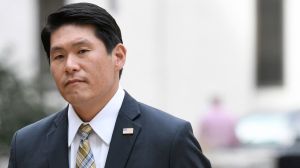
Yesterday Robert Hur testified before the House Judiciary Committee. Before his appearance, Hur resigned from the Department of Justice and reportedly worked with Republicans in preparing his testimony. Hur and his Republican pals made every effort to make Biden look bad, but Democrats were well prepared to counter those efforts. And, unfortunately for Hur, the transcript of his interviews with Biden was also released yesterday.
You probably recall that Hur’s final report included gratuitous claims about President Biden’s age and cognitive abilities. Some observers have compared Hur’s behavior with that of James Comey’s attack on Hillary Clinton just before the 2016 election. Fortunately, we are months away from the 2024 vote.
“Don’t be silly,” said my friend, who I suspect later voted for Trump. The New York Times had the story on the front page: “Emails in Anthony Weiner Inquiry Jolt Hillary Clinton’s Campaign.” On Nov. 8, 2016, Clinton lost the election to Trump 304 to 227. The Comey letter had created just enough muddiness to make it seem like both candidates were ethically challenged. It was the false equivalence that Trump was able to ride to the White House. Data guru Nate Silver wrote that the Comey letter “was probably enough to change the outcome of the Electoral College.” Not only did Comey make Trump president but then he wrote numerous very tedious books. He became a resistance hero, riding his regret all the way to the bank.
Fast-forward to Feb. 8, 2024, when Republican special counsel Robert Hur released his 345-page report. The report is being seen by some as an exoneration, saying that no criminal charges are warranted in the classified documents case against President Joe Biden. But Hur, who used to work for the Trump administration, couldn’t let Biden off the hook entirely, especially 269 days before an election. Hur, a member of a Republican Party that now largely works as a campaign arm for the former president, delivered the goods for his party. Sure, he found no legal basis to charge Biden, but but but… Hur proceeded to editorialize ad nauseam about Biden’s mental acuity, delivering right-wing talking points up on a platter. He wrote, “[At] trial, Mr. Biden would likely present himself to a jury, as he did during our interview of him, as a sympathetic, well-meaning, elderly man with a poor memory.”
Saying you don’t remember stuff in a deposition is pretty much standard. For example, Dr. Anthony Fauci said “I don’t recall” 174 times during a deposition about alleged collusion between the Biden administration and social media platforms — but because there isn’t a narrative about Fauci’s age crafted by Trump World, no one thought this had anything to do with his mental acuity….
Lies, by Edel Rodriguez
Hur’s report was a partisan hit job, but it didn’t matter, as former Obama chief of staff Jim Messina tweeted: “Let’s be clear — the special counsel isn’t a dummy and we should be very careful not to take the bait after Comey pulled this in 2016. Hur, a lifelong Republican and creature of DC, didn’t have a case against Biden, but he knew exactly how his swipes could hurt Biden politically.”
Joe Scarborough put it even more succinctly: “He couldn’t indict Biden legally, so he tried to indict Biden politically.” Yet again, a Republican special counsel had put his finger on the scale, just like Comey did in 2016. Hur isn’t a neurologist; he has no idea what Biden’s mental acuity is. Former attorney general Eric Holder condemned the report: “Special Counsel Hur report on Biden classified documents issues contains way too many gratuitous remarks and is flatly inconsistent with long standing DOJ traditions,” he posted on X, adding: “Had this report been subject to a normal DOJ review these remarks would undoubtedly have been excised.” Shame on Attorney General Merrick Garland for letting this partisan hit job be released.
The special counsel who impugned the president’s age and competence in his report on how Joe Biden handled classified documents will himself be up for questioning this week.
Some Biden aides and allies have suggested that Hur, a Republican appointed to his role as U.S. attorney by Donald Trump, is a political partisan. Hur’s defenders say he has shown throughout his career that his work is guided by only facts and the law — not politics.
A review of Hur’s professional life shows he’s no stranger to politically charged investigations. He prosecuted former elected officials as Maryland’s chief federal law enforcement officer. And as a Justice Department official, he helped monitor special counsel Robert Mueller’s investigation into Russian interference in the 2016 presidential election….
The Naked Truth and the Masked Lies, by Rosita Allinckx
Hur held one of the most powerful jobs in the Justice Department during a tumultuous time in the Trump administration, serving as the top aide to [Rod] Rosenstein, the department’s second-in-command.
As the principal associate deputy attorney general, Hur helped run day-to-day operations of the department in 2017 and early 2018. He also helped Rosenstein stay on top of Mueller’s progress in the Russia investigation. Hur held bi-weekly meetings with the special counsel’s team and reported back to Rosenstein, the former deputy attorney general said in an interview.
Rosenstein said he hired Hur because he knew he would maintain a calm and steady demeanor and “approach cases in a nonpartisan way.”
Um . . . Sure, Jan. Read more background at the link.
Why did Hur resign from the DOJ before testifying? Doesn’t that seem suspicious?
Hur, a Trump-appointed U.S. attorney who was tapped to lead the Biden probe by Attorney General Merrick Garland, formally stepped down one day before his Tuesday appearance at the request of Republicans led by Chairman Jim Jordan, R-Ohio. He drew criticism from Biden and the Democrats for criticizing the president’s memory in the report even as he declined to charge him.
Former Mueller prosecutor Andrew Weissmann explained that the Justice Department “cannot give instructions” to a former employee about what he “can and cannot testify to.”
“That makes it even more problematic from our perspective … if he was still a federal employee, DOJ would have to approve his testimony and they’d be involved in his appearance tomorrow,” a Democratic Judiciary Committee source told The Independent.
“It’s hard not to anticipate some real ugliness with Robert Hur’s testimony,” tweeted former U.S. Attorney Harry Litman. “He already showed his partisan colors in the inappropriate parts of his report. And he and the [Republicans] obviously contemplate he can vilify Biden now that he’s testifying as a ‘private citizen.’”
So it appears Hur’s motivation was to have the freedom to attack Biden without any DOJ influence on what he would say. Before I get to the testimony, here are some stories about Hur’s final report:
“First impressions stick,” writes Serwer. No matter that clarifications follow–it’s what people hear first that stays with them.
Five years ago, a partisan political operative with the credibility of a long career in government service misled the public about official documents in order to get Donald Trump the positive spin he wanted in the press. The play worked so well that a special counsel appointed to examine President Joe Biden’s handling of classified documents, Robert Hur, ran it again.
In 2019, then–Attorney General Bill Barr—who would later resign amid Trump’s attempts to suborn the Justice Department into backing his effort to seize power after losing reelection—announced that Special Counsel Robert Mueller had not found sufficient evidence to indict Trump on allegations that he had assisted in a Russian effort to sway the 2016 election and had obstructed an investigation into that effort. Mueller’s investigation led to indictments of several Trump associates, but he later testified that Justice Department policy barred prosecuting a sitting president, and so indicting Trump was not an option. Barr’s summary—which suggested that Trump had been absolved of any crimes—was so misleading that it drew a rebuke not only from Mueller himself but from a federal judge in a public-records lawsuit over material related to the investigation. That judge, Reggie Walton, wrote in 2020 that the discrepancies “cause the court to seriously question whether Attorney General Barr made a calculated attempt to influence public discourse about the Mueller report in favor of President Trump despite certain findings in the redacted version of the Mueller report to the contrary.”
Truth and Lies, by Louise Fletcher
As my colleague David Graham wrote at the time, the ploy worked. Trump claimed “total exoneration,” and mainstream outlets blared his innocence in towering headlines. Only later did the public learn that Mueller’s report had found “no criminal conspiracy but considerable links between Donald Trump’s campaign and Russia, and strongly suggested that Trump had obstructed justice.”
Now this same pattern has emerged once again, only instead of working in the president’s favor, it has undermined him. Hur, a former U.S. attorney in the Trump administration, was appointed by Attorney General Merrick Garland to investigate Biden for potential criminal wrongdoing after classified documents were found at his home. (Trump has been indicted on charges that he deliberately mishandled classified documents after storing such documents at his home in Florida and deliberately showing them off to visitors as “highly confidential” and “secret information.”)
In Hur’s own summary of his investigation, he concluded that “no criminal charges are warranted in this matter,” even absent DOJ policy barring prosecution of a sitting president. But that part was not what caught the media’s attention. Rather it was Hur’s characterization of Biden as having memory problems, validating conservative attacks on the president as too old to do the job. The transcripts of Hur’s interviews with Biden, released yesterday by House Democrats, suggest that characterization—politically convenient for Republicans and the Trump campaign—was misleading.
When special counsel Robert Hur released his report last month explaining why he wouldn’t charge President Joe Biden with mishandling classified documents, his claim that Biden displayed a “poor memory” and “diminished faculties” in their interview received enormous attention.
But now, the full transcripts of Hur’s interviews with Biden have been released — and they make Hur’s claims about Biden’s memory appear cherry-picked and exaggerated.
Biden sat for more than five hours with Hur’s team over two days. In that time, he said he did not recall specifics about how particular boxes ended up in his residences or offices after his vice presidency. But he engaged at length about his process for handling classified information and many other topics.
Hur’s claim that Biden had demonstrated some sort of general “poor memory” hangs almost entirely on mix-ups by Biden about in what specific year several years-old events occurred. The transcript makes clear Biden remembers all those events. But it seems Biden just doesn’t pay a lot of attention to which specific year stuff happened in.
So why did Hur hype this up so much?
His report and his House testimony Tuesday suggest one reason. Hur proposed a theory, outlined in the report, about Biden’s deliberate wrongdoing — that Biden kept classified documents about Afghanistan policy deliberations to help burnish his reputation and legacy.
However, Hur couldn’t prove this theory, in part because Biden said he couldn’t recall why these documents were in his garage. Hence, the special counsel bashed Biden for his “poor memory” — knowing full well how that would play when the report became public.
Truth Hidden Between the Lies, by Jeff Klena
This is a good article, and it also deals with Hur’s testimony and how Democrats’ countered his claims. After breaking down problems with Hur’s report, Prokop quotes Adam Schiff:
Hur’s report looks less like a smoking gun proving Biden’s supposed age-related decline, and more like dirty pool, Rep. Adam Schiff (D-CA) argued.
“You know this, I know this, there is nothing more common with a witness of any age, when asked about events that are years old, than to say ‘I do not recall.’ Indeed, they’re instructed by their attorney to do that, if they have any question about it,” Schiff said.
Hur argued back that his consideration of Biden’s memory was relevant to his charging decisions, and that he was perfectly willing, indeed required, to explain his thinking on that topic in his report to the attorney general.
Schiff disputed this. “What is in the rules is, you don’t gratuitously do things to prejudice the subject of an investigation when you’re declining to prosecute. You don’t gratuitously add language that you know will be useful in a political campaign.”
“You were not born yesterday,” Schiff added. “You understood exactly what you were doing. It was a choice.”
Why on earth did Merrick Garland appoint this guy?
The White House knew it had a political problem on its hands when a special counsel report questioned President Joe Biden’s memory last month, but Biden saw a much more personal affront as well.
Robert Hur, who had been appointed to investigate whether Biden mishandled classified documents, wrote that the president couldn’t recall in an interview with prosecutors the date when his adult son, Beau, died of cancer. It was a shocking contention about a keystone event in Biden’s life, and it fed into questions about whether the 81-year-old president is fit to serve another term….
Hur didn’t ask the president about his son’s death; Biden brought it up himself during a discussion about how he stored documents at a rental home in Virginia after leaving the vice president’s office in 2017.
And Biden recalled the specific date that Beau died, although he briefly wondered aloud about the year as the conversation toggled between various events.
“What month did Beau die?” Biden mused. “Oh, God, May 30th.”
A White House lawyer interjected by saying, “2015.”
“Was it 2015 he had died?” Biden asked. When someone responded affirmatively, the president added, “It was 2015.” [….]
Hur, in his testimony before the House Judiciary Committee, said his report’s discussion of Biden’s memory was “necessary and accurate and fair” because his state of mind was an important part of evaluating whether he committed a crime.
“I did not sanitize my explanation nor did I disparage the president unfairly,” he said.
What an asshole! As Adam Serwer wrote, Hur made sure that the first impression he gave of Biden’s interviews was on of a doddering old man with cognitive issues.
Although special counsel Robert Hur impugned Joe Biden’s memory in his investigation over whether the president mishandled classified documents, he actually told Biden that he appeared “to have a photographic understanding and recall.”
The comment, which appears in transcripts of Hur’s interviews with Biden, did not make it into Hur’s final report. Hur concluded in the report that Biden should not be charged over the documents, but made sure to mention his doubts about the president’s memory.
The California Democrat asked Hur about a comment that appears on “Day 1, Page 47” of the transcript.
“You said to President Biden, ‘You appear to have a photographic understanding and recall of the House,’” Swalwell said. “Did you say that to President Biden?”
Hur conceded that “those words do appear on Page 47 of the transcript.”
Swalwell pressed further.
“‘Photographic’ is what you said, is that right?” he asked.
“That word does appear on Page 47 of the transcript,” Hur responded.
“Never appeared in your report, though. Is that correct? The word ‘photographic’?” Swalwell asked.
The Special Counsel Robert Hur report has been grossly mischaracterized by the press. The report finds that the evidence of a knowing, willful violation of the criminal laws is wanting. Indeed, the report, on page 6, notes that there are “innocent explanations” that Hur “cannot refute.” That is but one of myriad examples we outline in great detail below of the report repeatedly finding a lack of proof. And those findings mean, in DOJ-speak, there is simply no case. Unrefuted innocent explanations is the sine qua non of not just a case that does not meet the standard for criminal prosecution – it means innocence. Or as former Attorney General Bill Barr and his former boss would have put it, a total vindication (but here, for real).
But even without the prompting of a misleading “summary” by Barr, the press has gotten the lede wrong. This may be because of a poorly worded (we’re being charitable) thesis sentence on page 1 of Hur’s executive summary. Hur writes at the outset: “Our investigation uncovered evidence that President Biden willfully retained and disclosed classified materials after his vice presidency when he was a private citizen.” You have to wait for the later statements that what the report actually says is there is insufficient evidence of criminality, innocent explanations for the conduct, and affirmative evidence that Biden did not willfully withhold classified documents. Put another way, that same sentence about “our investigation uncovered evidence” could equally apply to Mike Pence, who had classified documents at his home, which is similarly some “evidence” of a crime, but also plainly insufficient to remotely establish criminality.
The press incorrectly and repeatedly blast out that the Hur report found Biden willfully retained classified documents, in other words, that Biden committed a felony; with some in the news media further trumpeting that the Special Counsel decided only as a matter of discretion not to recommend charges.
Read a details analysis of the report at the link.
Former special counsel Robert Hur appeared before Congress on Tuesday to explain his investigation into President Joe Biden’s handling of classified documents – which led to no charges against the president but plenty of consternation among Democrats when Hur described Biden as a “well-meaning, elderly man with a poor memory” in his report.
While Hur came ready to defend his investigation, outlining a specific, legal case — or lack thereof – the members of the House Judiciary Committee were fighting a battle over the much more subjective political consequences to Hur’s report just months before the 2024 presidential election.
Truth Lies at the Bottom of the Well, by Frances MacDonald
Republicans attacked Biden as they pressed Hur on his decision not to prosecute the president, while Democrats criticized Hur for his comments about Biden’s memory – while also focusing much of their attention on former President Donald Trump and the differences in the former president’s classified documents case, which led to an indictment last year.
Hur tried his best to stick to what was in his report, even as he was pushed to go further either to criticize Biden – or to declare his innocence.
Hur was clear on Tuesday that he did not want to play ball with Republicans on whether Biden is “senile,” given the former special counsel’s decision to describe Biden as an “elderly man with a poor memory” in his investigative report.
“Webster’s Dictionary defines ‘senile’ as exhibiting a decline of cognitive ability, such as memory, associated with old age,” Republican Rep. Scott Fitzgerald of Wisconsin said. “Mr. Hur, based on your report, did you find that the president was senile?”
“I did not. That conclusion does not appear in my report,” Hur replied emphatically.
Rep. Pramila Jayapal, a Washington state Democrat, tussled with Hur over his conclusions, claiming Hur “exonerated” Biden. But Hur immediately took issue with the term during a tense exchange in which they both repeatedly cut each other off.
“This lengthy, expensive an independent investigation resulted in a complete exoneration of President Joe Biden for every document you discussed in your report, you found insufficient evidence that the president violated any laws about possession or retention of classified materials,” Jayapal said.
“I need to go back and make sure that I take note of a word that you used, ‘exoneration,’” Hur said. “That is not a word that is used in my report and that is not a part of my task as a prosecutor.”
“You exonerated him,” Jayapal retorted.
“I did not exonerate him,” Hur said. “That word does not appear in the report.”
Okay then. But he didn’t charge him either. What can I say. Hur is just an asshole. Also, please note that Hur was question about whether he would accept a role in a second Trump administration, and he refused to answer. We can only hope that this controversy will be forgotten by the time we get to November.
There’s one thing to say about the current Republican party that has so identified with Trump’s mash-up of severe personality disorders. It’s this. If they’re investigating something, it’s bound to be a projection of what they’ve been up to. House Republicans are gearing up a House Select Panel targeting “DOJ and FBI and their ‘ongoing criminal ‘investigations.’ One of the most disgusting things about this panel is that consideration is being given to Republican Representative Scott Perry, who is currently a target of a criminal investigation. This committee will be rife with the craziest of the crazy Freedom Party members and was probably one of the concessions Kevin McCarthy gave to get his very limp and floppy Speaker’s Gavel.
This comes precisely as we learn more about the Barr Department of Justice and the Russian Inquiry and the role of the FBI Agent that was a Russian Asset in the investigation into Trump’s Russian ties. We’ve already heard all the fishy business surrounding the Secret Service and the destruction of evidence during the Trump self-coup. All that stink you smell are fishes rotting at the head.
The Ghost of Vermeer of Delft Which Can Be Used As a Table (1934)
This astounding piece at the New York Times was covered extensively on the news last night. “How Barr’s Quest to Find Flaws in the Russia Inquiry Unraveled.” The review by John Durham at one point veered into a criminal investigation related to Donald Trump himself, even as it failed to find wrongdoing in the origins of the Russia inquiry.” The byline is shared by Charlie Savage, Adam Goldman, and Katie Benner. It’s a story of how John Durham fell down the Trump Rabbit hole only to find the rabbit was Barr, who took him on a visit to an Italian Wonderland where the only whiff of a crime was a financial one committed by Trump himself. It has become the giant nothing burger prepared since the Benghazi Committee and the Clinton Email debacle. This was another one of those projections of Trump’s bad-faith dealings onto Hillary Clinton and the people around her.
You may remember it led to the indictment and trial of two people at the bottom of the ladder that was quickly dismissed. The once esteemed Durham’s career is now one of those dead things killed by Trump.
But after almost four years — far longer than the Russia investigation itself — Mr. Durham’s work is coming to an end without uncovering anything like the deep state plot alleged by Mr. Trump and suspected by Mr. Barr.
Moreover, a monthslong review by The New York Times found that the main thrust of the Durham inquiry was marked by some of the very same flaws — including a strained justification for opening it and its role in fueling partisan conspiracy theories that would never be charged in court — that Trump allies claim characterized the Russia investigation.
The Times investigation uncovered these things about the Barr-Durham collaboration to appease Trump on the charges he colluded with Russia. Which, of course, he did. There was also a leak of the criminal investigation, which set the Fox News propaganda channel on fire. No mention was made that it was Trump who was the target of the investigation.
Interviews by The Times with more than a dozen current and former officials have revealed an array of previously unreported episodes that show how the Durham inquiry became roiled by internal dissent and ethical disputes as it went unsuccessfully down one path after another even as Mr. Trump and Mr. Barr promoted a misleading narrative of its progress.
Mr. Barr and Mr. Durham never disclosed that their inquiry expanded in the fall of 2019, based on a tip from Italian officials, to include a criminal investigation into suspicious financial dealings related to Mr. Trump. The specifics of the tip and how they handled the investigation remain unclear, but Mr. Durham brought no charges over it.
Mr. Durham used Russian intelligence memos — suspected by other U.S. officials of containing disinformation — to gain access to emails of an aide to George Soros, the financier and philanthropist who is a favorite target of the American right and Russian state media. Mr. Durham used grand jury powers to keep pursuing the emails even after a judge twice rejected his request for access to them. The emails yielded no evidence that Mr. Durham has cited in any case he pursued.
There were deeper internal fractures on the Durham team than previously known. The publicly unexplained resignation in 2020 of his No. 2 and longtime aide, Nora R. Dannehy, was the culmination of a series of disputes between them over prosecutorial ethics. A year later, two more prosecutors strongly objected to plans to indict a lawyer with ties to Hillary Clinton’s 2016 campaign based on evidence they warned was too flimsy, and one left the team in protest of Mr. Durham’s decision to proceed anyway. (A jury swiftly acquitted the lawyer.)
Now, as Mr. Durham works on a final report, the interviews by The Times provide new details of how he and Mr. Barr sought to recast the scrutiny of the 2016 Trump campaign’s myriad if murky links to Russia as unjustified and itself a crime.
The original investigation into Trump’s Russia scandal, led by then-special counsel Robert Mueller, led to a series of striking findings: The former president’s political operation in 2016 sought, embraced, capitalized on, and lied about Russian assistance — and then took steps to obstruct the investigation into the foreign interference.
The Trump White House wasn’t pleased with the conclusions, but the Justice Department’s inspector general conducted a lengthy probe of the Mueller investigation, and not surprisingly, the IG’s office found nothing improper.
This, of course, only outraged Trump further, so Barr directed Durham, a federal prosecutor to conduct his own investigation into the investigation. That was more than three years ago.
At this point, Durham’s investigation into the Russia scandal investigation has lasted longer than Mueller’s original probe of the Russia scandal. Indeed, as of this morning, is still ongoing.
On the surface, what matters most is the conclusion: Barr told Durham to prove that the investigation into the Russia scandal was an outrageous abuse. We now know that this aspect of the endeavor was a spectacular failure: Durham apparently found no such evidence, and his prosecutorial efforts were an embarrassing debacle.
Around the Fish, Paul Klee, 1944
In other words, Trump is still the source of each “Crime of the Century”, not Hillary Clinton. Details from the Times investigation continue to stun.
But just below the surface, the details uncovered by the Times paint an even uglier portrait. Instead of allowing the U.S. attorney to conduct an independent probe, Barr effectively oversaw the details of Durham’s probe, as the two met in the attorney general’s office “for at times weekly updates and consultations about his day-to-day work.”
The same article uncovered a series of related and dramatic revelations — too many to reference here — including Durham pressuring the Justice Department’s inspector general, Barr pressuring Durham to release an anti-Clinton memo ahead of Election Day, and internal dissent among members of Durham’s team about the integrity of the investigation, including the resignation of the prosecutor’s top aide.
There was also this amazing tidbit of information:
Mr. Durham used Russian intelligence memos — suspected by other U.S. officials of containing disinformation — to gain access to emails of an aide to George Soros, the financier and philanthropist who is a favorite target of the American right and Russian state media. Mr. Durham used grand jury powers to keep pursuing the emails even after a judge twice rejected his request for access to them. The emails yielded no evidence that Mr. Durham has cited in any case he pursued.
The Times also noted that Durham was ultimately forced to investigate suspected criminal wrongdoing from Trump — a detail that was hidden from the public — which we’ll explore in more detail a little later this morning.
But reading this amazing reporting, I found myself thinking, not of Main Justice, but of Capitol Hill. Among the first priorities of the new House Republican majority was the creation of a special committee that would investigate the political “weaponization” of the federal government.
Federal prosecutors charged McGonigal with money laundering and making false statements in his mandatory employee disclosures to the FBI. He was also charged with taking money from a representative of Oleg Deripaska, a Russian oligarch who McGonigal had once himself investigated, in violation of US economic sanctions against Russia; the indictment alleges that Deripaska paid him to investigate a rival oligarch. He has pleaded not guilty to all charges.
McGonigal was not an ordinary FBI agent. He led the WikiLeaks investigation into Chelsea Manning as well as a search for a Chinese mole inside the CIA. While working at FBI headquarters in Washington, he played a role in opening the investigation into the Trump campaign’s Russia contacts that was later dubbed Operation Crossfire Hurricane.
But it was McGonigal’s final FBI job, special agent in charge of the counterintelligence division at the FBI’s New York field office, that was his most important assignment at the bureau. It was his job to find enemy spies and recruit his own.
“New York City is a global center for espionage and counterespionage,” says one senior law-enforcement insider who was closely familiar with the specifics of McGonigal’s role. “You have visits from foreign business elites and politicians. You have the United Nations. You have ethnic populations. Who runs the pitches to recruit spies from all those other countries? The FBI. So the access you get in that job is extraordinary. It’s almost bottomless. So if you’re running FBI counterintelligence in New York, you can get your hands on almost anything you want, and you don’t always have to make excuses for why you’re asking for it.”
The impact of the McGonigal indictments is still rippling out through the law-enforcement world. The charges accuse an official at the heart of the Trump-Russia investigation of secretly selling his own access, accepting bundles of cash in surreptitious meetings with someone who had ties to Albanian intelligence. McGonigal, a top-tier member of the city’s law-enforcement community, a man who had fully integrated himself into a powerful circle of trust where favors get swapped and sensitive intelligence gets circulated, is accused of himself being on the take. If the indictments are correct, McGonigal was leading a dangerous double life, right under the noses of some of the sharpest cops in America.
But what might be most striking about the case against McGonigal is how cheaply he is alleged to have rented out his law-enforcement powers. One indictment suggests that for $225,000, McGonigal’s associates got him to lobby the Albanian prime minister about the awarding of oil-field drilling licenses and then open an FBI investigation connected to a US citizen who had lobbied for one of the prime minister’s political opponents. Arranging a meeting for an executive from a Bosnian pharmaceutical company with a US official at the United Nations was said to be a pricier item — $500,000, one indictment claims. It is unclear whether that money ever materialized.
Sparky’s Dream,Vicky Knowles, 2008
You can read more at the link. And of course, the fall out from the Secret Service and the Trump Supporters in their ranks continues to gather headlines. This is from a month ago. “Joe Biden Reportedly Struggled to ‘Trust’ Some of His Secret Service Detail Who Were Donald Trump Supporters.”
A new book, The Fight of His Life: Inside Joe Biden’s White House by Chris Whipple, is alleging that Joe Biden has “trust” issues with several members of his security detail. “A bigger problem was Biden’s discomfort with his Secret Service detail; some of them were MAGA sympathizers. He didn’t trust them,” Whipple wrote in an excerpt obtained by The Hill.
Joe Biden was used to a smaller group of Secret Service agents when he was vice president under Barack Obama’s administration and suddenly felt like he was surrounded by people on the Trump train, according to Whipple. The feeling was that “the Secret Service is full of white ex-cops from the South who tend to be deeply conservative.” The author wrote, “Surrounded by a new phalanx of strangers, Biden couldn’t help but wonder, Do these people really want me here?”
I can only imagine what the next few years will be like. This is especially true now that Trump has been let back on to major Social Media Sites. I’ll be really surprised if CSPAN doesn’t have trouble getting the righ access to these hearings too. Welcome to Surreal Dystopia Story Time. I’ll take Drag queens any time over Fish Tales.
What’s on your reading and blogging list today?
Did you like this post? Please share it with your friends:
Cat and kitten, by Théophile Alexandre Steinlen, 1920
Happy Caturday!!
Yesterday we got new information about the highly classified documents Trump stole from the government and carelessly left lying around his office at Mar-a-Lago. In her Friday post, Dakinikat wrote about the empty folders marked classified and the boxes containing classified documents mixed with news clippings, and personal items like clothing. The inventory from the search also shows thousands of unclassified government documents, which also belong in the National Archives.
Twenty-seven documents with classified and top-secret markings were recovered from former President Trump’s office at his Mar-a-Lago estate in Florida, according to a detailed inventory of what the FBI removed during its court-approved search of the home last month.
The eight-page inventory detailing more than 10,000 government documents removed in the search includes the location where each item was found and whether it was classified, but not the subject matter. In many cases, highly classified materials are listed as having been stored in the same boxes as hundreds of unclassified items, including newspaper and magazine clippings and clothing.
Among the boxes were 48 empty folders marked with a classified banner. Those empty folders could be of particular concern as the Office of the Director of National Intelligence assesses the risks to national security that could result from disclosure of the contents, because it could be difficult to determine what information might have been inside and where it is now….
FBI agents removed more than 100 documents containing classified information — including some marked top secret and meant to be available only in special government facilities — from the Trump estate during their Aug. 8 search, along with over 30 boxes of materials including thousands of government records.
What was in those empty folders?
Identifying what was in the empty folders marked classified and where the information is now should be a priority, said Rep. Sean Patrick Maloney (D-N.Y.), a member of the House Intelligence Committee.
“Why are there folders that contained classified information that are now empty? Where are the documents?” Maloney said. “Those questions need to be answered.”
Still LIfe with Flowers and cats, Paul Gauguin, 1899
Without knowing more about the folders, it is difficult to say how alarmed intelligence officials might be, Maloney said.
They could be the type of generic folders in which confidential information is transported within the White House, or they could be folders from intelligence agencies that provide details about the sources of the information, the date it was collected and broad descriptions of what it is about, said Larry Pfeiffer, a high-ranking CIA officer in the George W. Bush administration and senior director of the White House Situation Room in the Obama administration.
“If there were any meticulous records that were kept by the staff secretary, executive secretary or the [director of national intelligence’s] presidential daily briefing staff, they may be able forensically to figure out if there are any missing documents,” Pfeiffer said.
That 48 classified documents could be missing is the “worst-case scenario,” he said.
“That’s terrifying, because then what happened to them? Where are they? Are they still hidden somewhere? Are they hidden in another Trump location? Did he give them away to some people as souvenirs? God knows,” Pfeiffer said.
Immediately after a federal judge released the Dept. of Justice’s detailed list of items the FBI seized from Mar-a-Lago experts agreed among the most concerning details was that there were a large number of empty folders marked “Classified.”
Glenn Kirschner, a former federal prosecutor of 30 years, tweeted out his surprise and concern.
“OMG!” exclaimed Kirschner, who is also an MSNBC/NBC News legal analyst. “Court just released an inventory of evidence of crime seized at Mar-a-Lago.”
“Dozens of EMPTY folders labeled ‘Classified’ or ‘Return to Military Aide.’ Trump didn’t pack up EMPTY folders to take with him to FLA. Things just went from bad to worse to unfathomably dangerous.” [….]
Andrew Weissmann, a former General Counsel of the Federal Bureau of Investigation who has also worked as chief of the criminal fraud section of DOJ observed: “It’s the empty classified folders that are of most concern.”
“Where are the contents? Trump has not addressed that at all in all his bluster and obfuscation. What were you doing with these?” asked Weissmann, who also worked for Special Counsel Robert Mueller….
National security attorney Brad Moss wrote, “Very first question the FBI would ask the person who had in their home office 43 empty folders with classified banners is ‘where did the documents from those folders go????'”
And later he added: “Why. Are. There. Empty. Folders?”
We know very little about what this [the empty folders] means right now, though, and experts say it doesn’t necessarily mean the documents are missing, as some Trump critics theorized. What it does seem to reinforce is how sloppily classified information was handled.
In both the search warrant affidavit released last week and a Justice Department filing in a court case this week, the government has pointed to a February referral from the National Archives. The referral raised concerns about Trump’s potential mishandling of sensitive documents and urged an investigation.
“Of most significant concern was that highly classified records were unfoldered, intermixed with other records, and otherwise unproperly [sic] identified,” the National Archives said.
The biggest question is obviously: Why were those folders empty? Since classified documents were previously returned “unfoldered” — and others were recovered in the search last month — and now we have classified-marked folders without documents in them, it’s possible they match up.
Whether they actually do match is another matter, as is whether the documents can even be traced to a given folder.
From a national security expert:
David Priess, a former CIA officer whose work there included delivering the President’s Daily Brief, said Friday that the presence of empty folders doesn’t mean documents are missing, but also that it’s possible we won’t know for sure. He said the folders could contain markings allowing them to be traced to specific documents (but that’s not certain), or that they could be connected using forensic techniques.
“We cannot rule out that those empty folders contained classified documents that were not discovered in the search and seizure,” he said. “We just don’t know. That’s much harder to determine.”
He also noted it was possible that the folders were separated from the documents when they were still in the White House, before they were taken to Mar-a-Lago.
But mostly, he said, it’s further evidence of something we already knew: The documents were haphazardly stored.
There’s more analysis at the WaPo link.
Family Portrait, Carl Kahler
It’s not just the documents that were found in Trump’s office that were mishandled. The Washington Post published a long read yesterday on the storage room where boxes of documents were stored and why Mar-a-Lago was such a dangerous place for government documents to be kept: Deep inside busy Mar-a-Lago, a storage room where secrets were stashed. The storage room is below the estate’s giant living room.
It was dug into the foundations of the early 20th-century building not long after Trump bought the place, a former employee said, carved out to create more space to store tables, chairs, umbrellas — the stuff necessary to complete Trump’s conversion of what had once been a grand residence for a single family into a private club for 500 members.
At the southeast corner of this area, behind a simple door, is a large closet-type space that workers once called “the mold room” in honor of leftover stonework molds deposited in the corner, the former employee said. Today, staffers think of the room more like the former president’s personal closet, one said. It is here, in this windowless nook, where some of the nation’s most sensitive secrets allegedly were stashed….
Court filings say a top Justice Department official and a gaggle of FBI agents were allowed to tour the storage room when they visited Mar-a-Lago on June 3 to pick up classified documents collected by Trump’s lawyers in response to a grand jury subpoena. A lawyer for Trump saidthe room was where they would find all of documents that had been carted from the White House to Florida after Trump left office.
Two months later, agents returned with a court-approved search warrant and carted off more than two dozen boxes of documents and assorted other items gathered from the storage room and the former president’s office. The raid exposed anew the potential risks of keeping highly sensitive material at a club that hosts weddings, galas and other large events, where outsiders are common and many employees — as well as some visitors — are foreign nationals.
Not yet clear is why Trump chose the basement storage room to keep highly sensitive documents nor who exactly had access to the documents kept there — or who could have gotten access had they tried….
People close to Trump said a variety of Mar-a-Lago and Trump staffers had access to that area beneath the public living room. Access to the closet where the documents were kept was more restricted, they said.
John White Alexander, The Green Dress, 1890-99
More on security concerns at Mar-a-Lago:
Experts said security at the Spanish-style club has long been a headache. The facility has served a frequent residence for Trump and his family during the winter months, including while he was president. But it also boasts tennis courts, a dining room, two pools, a spa and beachfront facilities, all open to its members and their guests. Its giant ballroom and other larger areas are frequently booked for large parties and political and charitable fundraisers, all open to even more visitors, some of them foreign nationals.
Since Trump left office, Republican candidates also have flocked to the club for official events, to genuflect to Trump and attempt to secure his endorsement. Political donors have flocked, too. People who have visited the club since Trump left office said they were allowed in without so much as an identification check.
“I think Mar-a-Lago is a counterintelligence nightmare,” said Joel Brenner, former head of U.S. counterintelligence under the director of National Intelligence and former inspector general for the National Security Agency, citing the flow of hundreds of people, the presence of foreign nationals and Trump’s long-established carelessness with national secrets.
A person who is familiar with the club’s workings and spoke on the condition of anonymity described regular movement from club facilities to the basement and back. “This is an operating property,” this person said. “There’s a kitchen and a guy who does pastries and a liquor cabinet. There’s a restaurant here. You see activity. A guy getting vodka to bring to the bar. A person going to get cupcakes to bring upstairs.”
As I said, this is a very long, but interesting article.
Two more developments on the purloined documents story:
Former Attorney General William P. Barr dismissed former President Donald J. Trump’s call for an independent review of materials seized from his Florida home on Friday — and said an inventory of items recovered in the search last month seemed to support the Justice Department’s claim that it was needed to safeguard national security.
“As more information comes out, the actions of the department look more understandable,” Mr. Barr told The New York Times in a phone interview, speaking of the decision by the current attorney general, Merrick B. Garland, to seek a search warrant of the complex at Mar-a-Lago.
“It seems to me they were driven by concern about highly sensitive information being strewn all over a country club, and it was taking them almost two years to get it back,” said Mr. Barr, who resigned in December 2020, as Mr. Trump pushed him to support false claims that the election had been stolen.
“It appears that there’s been a lot of jerking around of the government,” he added. “I’m not sure the department could have gotten it back without taking action.”
Asked what he thought of the argument for the appointment of a special master, an independent arbiter to review the material that could delay the investigation, Mr. Barr laughed.
Pierre Bonnard, Children and a Cat, 1909
“I think it’s a crock of shit,” he said, adding, “I don’t think a special master is called for.” [….]
Mr. Barr’s comments, which echo the assessment of many Democrats and a few Republicans, including the former Bush adviser Karl Rove, came as Mr. Trump’s supporters tried to downplay the importance of the inventory unsealed by a federal judge in Florida.
The eight-page document, which was made public with the tacit assent of the former president’s lawyers, revealed that the F.B.I. recovered 11,179 documents or photographs without classification markings belonging to the government, and more than 100 others marked top secret, secret or confidential.
“It’s hard to wrap your head around him taking so much sensitive materials,” Mr. Barr said. “I was, let’s just say, surprised.”
Within a week of the FBI search of former President Donald Trump‘s Mar-a-Lago resort, former White House chief of staff Mark Meadows handed over texts and emails to the National Archives that he had not previously turned over from his time in the administration, sources familiar with the matter tell CNN.
Meadows’ submission to the Archives was part of a request for all electronic communications covered under the Presidential Records Act. The Archives had become aware earlier this year it did not have everything from Meadows after seeing what he had turned over to the House select committee investigating January 6, 2021. Details of Meadows’ submissions to the Archives and the engagement between the two sides have not been previously reported….
The records Meadows turned over to the Archives were not classified, and the situation is markedly different from the Archives’ efforts to retrieve federal records from Trump and its referral to the Justice Department earlier this year when classified materials were discovered among documents the agency retrieved from Mar-a-Lago.
The source familiar with the discussions said that the Archives considered Meadows to be cooperating, even though the process started slowly.
“This is how it’s supposed to work,” the source added, saying it was not the kind of situation that needed to be referred to the Justice Department.
As you can see, I’m still totally obsessed with the stolen documents story. There are actually other things happening, and I’ll post some more items in the comment thread. I hope you’ll do the same.
Did you like this post? Please share it with your friends:
“Organ cat, prayer book, Bruges or Ghent c. 1480-1490 (Baltimore, Walters Art Museum
Happy Caturday!!
It has been another busy news week, and today there are some stories that follow up on recent news and others that look further back in time. As we move closer to the midterm elections, things are looking better for Democrats to keep control of the Senate. Of course the fallout continues from the FBI search of Mar-a-Lago. The judge in the case released more information on the search warrant, and there could be more coming. A court has ordered the DOJ to release a memo related to the Mueller investigation that Bill Barr refused to make public. A Michigan judge made an important decision on abortion laws in the state. Finally, the NYT published a fascinating op-ed by two law professors who argue that the U.S. Constitution is “broken.”
On Thursday, Senate GOP Leader Mitch McConnell (R-KY) seemed to admit that the Grand Old Party doesn’t have the highest quality roster of candidates.
“I think there’s probably a greater likelihood the House flips than the Senate,” McConnell said. “Senate races are just different, they’re statewide, candidate quality has a lot to do with the outcome.”
Writing in Vanity Fair, Eric Lutz reported, “He didn’t mention any of those candidates directly, but he almost certainly could have been talking about any of Donald Trump’s handpicked contenders, who earned the former president’s support seemingly for one of two reasons: He knows them from television, or they’re loyalists who have organized their campaigns almost entirely around his 2020 election lies. There’s a lot of crossover there, obviously, but the first camp includes Mehmet Oz, a former TV doctor who apparently believes raw asparagus belongs in a crudité, and Herschel Walker, the former football great whose own campaign staff reportedly regards him as a ‘pathological liar.’” [….]
“Then there’s the second camp of MAGA candidates, which includes the likes of Blake Masters, the Peter Thiel protégé who literally has the backing of some of the Internet’s most well-known white nationalists. (Masters has attempted to distance himself from this community.) One of several extremists on the ballot in Arizona, where election deniers Kari Lake and Mark Finchem are respectively running for governor and secretary of state, Masters is trailing Democrat Mark Kelly by eight points, according to a Fox News poll released this week,” Lutz reported. “None of this to say to say that these bumbling extremists can’t win; if a country is capable of electing Trump president, Georgia is certainly capable of electing a guy like Walker. But McConnell’s apparent sense that this batch of bozos might dash GOP dreams of a Senate majority may be well-founded, even if midterms tend to favor the party that doesn’t control the White House.”
Republican Senate hopefuls are getting crushed on airwaves across the country while their national campaign fund is pulling ads and running low on cash — leading some campaign advisers to ask where all the money went and todemand an audit of the committee’s finances, according to Republican strategists involved in the discussions.
In a highly unusual move, the National Republican Senatorial Committee this week canceled bookings worth about $10 million, including in the critical states of Pennsylvania, Wisconsin and Arizona. A spokesman said the NRSC is not abandoning those races but prioritizing ad spots that are shared with campaigns and benefit from discounted rates. Still, the cancellations forfeit cheaper prices that came from booking early, and better budgeting could have covered both.
“The fact that they canceled these reservations was a huge problem — you can’t get them back,” said one Senate Republican strategist, who like others spokes on the condition of anonymity to discuss internal matters. “You can’t win elections if you don’t have money to run ads.”
The NRSC’s retreat came after months of touting record fundraising, topping $173 million so far this election cycle, according to Federal Election Commission disclosures. But the committee has burned through nearly all of it, with the NRSC’s cash on hand dwindling to $28.4 million by the end of June.
As of that month, the committee disclosed spending just $23 million on ads, with more than $21 million going into text messages and more than $12 million to American Express credit cardpayments, whose ultimate purpose isn’t clear from the filings. The committee also spent at least $13 million on consultants, $9 million on debt payments and more than $7.9 million renting mailing lists, campaign finance data show.
Former President Donald Trump has offered a shifting array of defenses in response to the August 8 FBI search of his Mar-a-Lago resort in Florida, which uncovered a trove of secret documents.
Among them is the claim that he declassified all of the documents while in office under the president’s sweeping powers over national secrets.
But procedural documents unsealed Thursday by federal judge Bruce Reinhart, including the cover sheet of the warrant used in the search, revealed that this defense may not be as effective as Trump hoped, legal experts say.
One implication of the new information is that even if Trump is right about the documents being declassified, he still could have broken the law, Lawrence Tribe, a Harvard constitutional law scholar, tweeted….
[The cover sheet] showed that the FBI believes that Trump may be guilty of the willful retention of national defense information, concealment or removal of government records, and obstruction of federal investigation.
Bradley P. Moss, a national security attorney, told Insider that the new documents “clarify but ultimately do not change much” of what we previously knew.
A striking detail, he said, is that the FBI believes Trump has obstructed its probe.
“Clearly, the FBI currently believes Mr. Trump not only took properly marked classified documents to Mar-a-Lago, but he kept them and resisted turning them over when confronted by the government,” Moss said.
The day after federal agents searched Mar-a-Lago, former President Donald Trump told a group of conservative lawmakers that “being president was hell,” according to three people at the meeting.
But to some he sounded ready to have the job again.
“He was not to be deterred,” said Rep. Randy Weber of Texas, one of a dozen Republican House members who met with Trump on Aug. 9. He described Trump’s state of mind in the immediate aftermath of the search as “pretty miffed, but measured.”
Everything that’s occurred since that Bedminster, New Jersey, meeting — and since federal agents seized a trove of top secret and other highly classified documents from his resort — has put Trump exactly where he and his supporters want him to be, according to people close to him. He’s in a fight, squaring off with Washington institutions and a political establishment he says are out to get him, issues he brought up in the meeting with the lawmakers and in conversations with others.
Taken together, it’s reoriented Trump’s thinking about whether he should announce a presidential campaign before or after the midterm elections, according to those who have spoken with him over the past two weeks. They said Trump feels less pressure to announce early because viable challengers who might otherwise force his hand have faded into the background. But there are other reasons to wait.
Trump is now inclined to launch his candidacy after the November elections, in part to avoid blame should an early announcement undermine the GOP’s effort to win control of Congress, said one person close to him, speaking on condition of anonymity to talk more freely.A post-midterm announcement would suit Republican leaders who’ve been urging Trump to hold off so that he doesn’t overshadow the party’s candidates.Michael Caputo, a former Trump campaign and administration official, described Trump’s attitude in recent days after speaking with him, as “business as usual.”
Business as usual for Trump: the possibility of multiple criminal charges and crappy lawyers who have no clue how to defend a criminal.
Judge orders release of Bill Barr’s memo protecting Trump
A federal appeals court has ordered the release of a secret Justice Department memo discussing whether President Donald Trump obstructed the investigation into Russian interference in the 2016 election.
The unanimous panel decision issued Friday echoes that of a lower court judge, Amy Berman Jackson, who last year accused the Justice Department of dishonesty in its justifications for keeping the memo hidden.
The panel of three judges, led by Chief Judge Sri Srinivasan, said that whether or not there was “bad faith,” the government “created a misimpression” and could not stop release under the Freedom of Information Act.
The memo was written by two senior Justice Department officials for then-attorney general William P. Barr, who subsequently told Congress that there was not enough evidence to charge Trump with obstruction of special counsel Robert S. Mueller III’s inquiry. A redacted version was released last year but left under seal the legal and factual analysis.
Department officials argued that the document was protected because it involved internal deliberations over a prosecutorial decision. But the judges agreed with Jackson that both Mueller and Barr had clearly already concluded that a sitting president could not be charged with a crime. The discussion was over how Barr would publicly characterize the obstruction evidence Mueller had assembled, the Justice Department conceded on appeal.
A federal appeals court ruled Friday that the Justice Department must make public an internal memo senior lawyers there prepared in 2019 about whether then-President Donald Trump’s actions investigated in special counsel Robert Mueller’s probe of ties between the 2016 Trump campaign and Russia amounted to crimes prosecutors would ordinarily charge.
The D.C. Circuit Court of Appeals said the Justice Department failed to meet its legal burden to show that the memo from the department’s Office of Legal Counsel was part of a genuine deliberative process advising then-Attorney General William Barr on how to handle sensitive issues left unresolved when Mueller’s probe concluded in March 2019.
Trump was never charged in Mueller’s probe and the special prosecutor’s final report declined to opine on whether what he did in response to the investigation amounted to a crime.
However, some Trump opponents have called on the Attorney General Merrick Garland to reconsider the issue now that Trump is no longer president. Release of the long-sought DOJ memo could fuel those calls and draw more unwanted attention to Trump’s potential criminal liability at a time when he is besieged by a slew of other legal woes relating to his handling of classified government records, his role in inspiring many of those involved in the Jan. 6 attack on the Capitol and his broader efforts to overturn Joe Biden’s win in the 2020 presidential election.
A Michigan judge ruled Friday prosecutors in the state’s largest counties are barred from bringing criminal charges for months to come under a state law banning most abortions.
The decision from Oakland County Circuit Court Judge Jacob Cunningham comes after two days of hearings and means every county in Michigan with an abortion clinic is at least temporarily immune from the threat of criminal prosecutions over abortion procedures.
“As currently applied, the court finds (the abortion law) is chilling and dangerous to our state’s population of childbearing people and the medical professionals who care for them,” Cunningham said.
“The harm to the body of women and people capable of pregnancy in not issuing the injunction could not be more real, clear, present and dangerous to the court.”
At times, Cunningham seemed to ridicule arguments from conservative prosecutors seeking to enforce the 1931 abortion law. He said prosecutors would suffer zero harm from not having the ability to prosecute abortion providers.
Going much further, he told these prosecutors to instead focus their efforts elsewhere.
“The court suggests county prosecutors focus their attention and resources … to investigation and prosecution of criminal sexual conduct, homicide, arson, child and elder abuse, animal cruelty and other violent and horrific crimes that we see in our society,” Cunningham said.
Is the Constitution broken?
Ryan D. Doerfler and Samuel Moyn, law professors from Harvard and Yale respectively, published this guest essay at The New York Times: The Constitution Is Broken and Should Not Be Reclaimed. You’ll need to go to the NYT link if you’re interested, because it’s very long. The main idea is that the Constitution is dated and favors conservatives; liberals need to change their thinking about “constitutionalism.”
When liberals lose in the Supreme Court — as they increasingly have over the past half-century — they usually say that the justices got the Constitution wrong. But struggling over the Constitution has proved a dead end. The real need is not to reclaim the Constitution, as many would have it, but instead to reclaim America from constitutionalism.
The idea of constitutionalism is that there needs to be some higher law that is more difficult to change than the rest of the legal order. Having a constitution is about setting more sacrosanct rules than the ones the legislature can pass day to day. Our Constitution’s guarantee of two senators to each state is an example. And ever since the American founders were forced to add a Bill of Rights to get their handiwork passed, national constitutions have been associated with some set of basic freedoms and values that transient majorities might otherwise trample.
But constitutions — especially the broken one we have now — inevitably orient us to the past and misdirect the present into a dispute over what people agreed on once upon a time, not on what the present and future demand for and from those who live now. This aids the right, which insists on sticking with what it claims to be the original meaning of the past.
Arming for war over the Constitution concedes in advance that the left must translate its politics into something consistent with the past. But liberals have been attempting to reclaim the Constitution for 50 years — with agonizingly little to show for it. It’s time for them to radically alter the basic rules of the game.
In making calls to regain ownership of our founding charter, progressives have disagreed about strategy and tactics more than about this crucial goal. Proposals to increase the number of justices, strip the Supreme Court’s jurisdiction to invalidate federal law or otherwise soften the blow of judicial review frequently come together with the assurance that the problem is not the Constitution; only the Supreme Court’s hijacking of it is. And even when progressives concede that the Constitution is at the root of our situation, typically the call is for some new constitutionalism.
If that whets your appetite for me, click the link and read the rest.
Those are today’s main political stories as I see it. Maybe we’ll have some time to take a breath before more shocking news breaks. I can use a quite weekend and I wish you the same.
Did you like this post? Please share it with your friends:
As we learn more about Trump’s successful efforts to undermine U.S. democracy, it is becoming evident that Trump and Trumpism will be haunting us for a long time to come. I only hope it isn’t too late for this country to recover.
Yesterday, Dakinikat wrote about the latest Trumpian outrages, and this morning there is much more being reported in the aftermath of yesterday’s revelations about Trump’s corruption of the Department of Justice–specifically about The New York Times’s blockbuster story about the Trump DOJ obtaining phone and email data belonging to members of the House Intelligence Committee.
The Department of Justice sent a broad request in February 2018 to Apple as part of its investigation that collected data on members of Congress, staffers and their families. The department demanded metadata on 73 phone numbers and 36 email addresses from Apple, the company said Friday evening.
Apple received the subpoena from the Justice Department on Feb. 6, 2018, but it contained no information about who the investigation was targeting or why, the company said. Apple also said determining who the targeted accounts belonged to would have required extensive research.
A person familiar with the request said the subpoena requested information on the targeted accounts beginning with the inception of the accounts through the day of the subpoena.
Apple said it limited the information it provided to metadata and account subscriber information and did not provide any content such as emails or pictures. While Apple says it would have normally informed customers, a nondisclosure order prevented it from doing so in this case, the company said.
The nondisclosure order was extended three times, each time for a year, Apple said. When it was not extended for a fourth time, Apple said it informed the affected customers on May 5, 2021.
Apple said they believe that other providers also got subpoenas, and the story reports that Microsoft was ordered to turn over data belonging to a Congressional staffer. This one was also accompanied by a gag order.
According to Reuters, Apple has now “tightened some of its rules for responding to legal requests.”
Former Attorney General Jeff Sessions is telling associates he had no idea his Justice Department seized phone records of two top Democratic congressional critics of then-President Donald Trump.
Painting by Lotte Laserstein
In the hours since The New York Times broke the news on Thursday that prosecutors subpoenaed Apple metadata from Reps. Adam Schiff (D-CA) and Eric Swalwell (D-CA), former Attorney General Sessions has privately told people that he wasn’t aware of, nor was he briefed on, the reported data seizures while he led the Trump DOJ. This week’s revelations were a surprise to him, according to a source familiar with the matter, and another person close to Sessions.
“[What’s been reported] is explicitly the kind of thing that Donald Trump would often say he wanted out of his Justice Department,” said the individual familiar with the matter. “But right now, it’s unclear how many top officials [at the time] even knew about this.”
Former Attorney General William Barr on Friday distanced himself from reports that the Trump Justice Department seized communications records belonging to two prominent Democratic lawmakers who were spearheading investigations into then-President Donald Trump.
In a phone interview, Barr said he didn’t recall getting briefed on the moves.
Barr’s comments came after The New York Times reported that in 2017 and 2018, the Justice Department secretly seized the records of at least 12 people connected to the House Intelligence Committee, including its current chair. Barr became attorney general in 2019….
Barr said that while he was attorney general, he was “not aware of any congressman’s records being sought in a leak case.” He added that Trump never encouraged him to zero in on the Democratic lawmakers who reportedly became targets of the former president’s push to unmask leakers of classified information.
Trump “was not aware of who we were looking at in any of the cases,” Barr said. “I never discussed the leak cases with Trump. He didn’t really ask me any of the specifics.”
Yeah, right. I don’t believe a word of that bullshit.
(CNN)The Justice Department’s leak investigation that targeted lawmakers was more than a year old when Attorney General William Barr took office in 2019. Barr had vowed early on to help answer lingering questions from conservatives about the fairness of the Justice Department’s handling of politically sensitive investigations.
Barr pushed for briefings from national security prosecutors and urged them to move quickly to complete investigations, according to people briefed on the matter. In some cases, he sought to bring in outside prosecutors to help reinvigorate investigations he thought weren’t moving quickly enough….
Painting by Giacomo Ceruti
The probe looking into whether lawmakers briefed on classified information leaked information to reporters was among several that were launched early on during the era of Deputy Attorney General Rod Rosenstein, who was overseeing matters related to Russia, since Attorney General Jeff Sessions was recused….
As part of his effort to crack down on leakers, Barr brought in a well-regarded New Jersey prosecutor, Osmar Benvenuto, in early 2020 to help oversee leak investigations, which raised some eyebrows among Washington-based prosecutors because the line prosecutor had not had extensive counterintelligence or leak investigation experience. Like Trump, Barr had suspicions about leaks and believed the department’s credibility was at stake if it couldn’t show it fully investigated them, people briefed on the matter said.
He also found a set of aggressive career prosecutors leading this and other leak cases who were willing to take extraordinary steps to try to complete the probes.
Good old Rod Rosenstein. He turned out to be a loyal Trumpist too.
It was already a matter of record that William Barr abused his power as attorney general under former President Donald Trump. Turns out, it’s even worse than we knew.
There’s no question that Barr was fundamentally dishonest (to put it charitably). Federal judges nominated to the bench by presidents of both political parties have found that Barr “lack(ed) … candor“; that his public and in-court statements were “disingenuous,” “incomplete,” “inconsistent” with truth and “called into question Attorney General Barr’s credibility.” Others, including former special counsel Robert Mueller, thousands of former Justice Department officials (including me), and members of Congress have expressed doubt or worse about Barr’s truthfulness and integrity.
Photo by Brook Hummer
We already knew that Barr politicized the Justice Department. He used it defensively to shield Trump from potential criminal exposure by misleading the public about Mueller’s findings, and by declaring, contrary to the evidence and the law, that Trump had not obstructed justice. (In his report, Mueller detailed extensive evidence of obstruction, but declined to clearly state whether he concluded that Trump had committed a crime). And Barr intervened in unprecedented fashion to undermine his own Justice Department’s prosecutions of Trump’s political allies Michael Flynn and Roger Stone.
But recent revelations — that prosecutors in Trump’s Department of Justice subpoenaed Apple for data from the accounts of Democratic members of Congress, their staffs and families — are different in kind. According to The New York Times, Barr even moved a New Jersey-based attorney to the main Justice Department to work on a case related to Rep. Adam Schiff of California, one of the House Democrats whose data was sought. (Barr, the Justice Department and Apple declined to comment on the story to the Times, though the Justice Department’s inspector general has said it will investigate.)
In taking such action, Barr used the staggering power of his position to selectively pursue Trump’s perceived political rivals. This is eerily similar to former President Richard Nixon’s “enemies list” and his efforts at retributive action.
Read the rest at CNN.
In other news, a number of media outlets recently reported that an IG report exonerated Trump of accusations that he ordered protesters cleared from Lafayette Square last year so he could do his despicable photo-op holding up a bible. Not so fast.
On June 1, 2020, as the Black Lives Matter protests were escalating, President Donald Trump, in an effort to project power and restore a sense of “law and order,” decided to walk across the street from the White House and hold aloft a Bible outside St. John’s Church, which had been damaged during a protest the night before.
He was able to do so because the crowd of protesters in Lafayette Square, which abuts the church, had been forcibly cleared by law enforcement in what some outlets referred to as an “attack” — officers from various law enforcement groups used horses, riot shields, batons, pepper spray, and tear gas to clear the area.
Girl in the red dress with cat and dog, by Ammi Phillips, 1788-1865
Reporters and onlookers understandably linked Trump’s desire to hold a photo op with the operation to forcibly clear protesters. But the new IG report has prompted a reevaluation of that linkage with its conclusion that “the evidence we obtained did not support a finding that the USPP (United States Park Police) cleared the park to allow the President to survey the damage and walk to St. John’s Church.”
“Instead, the evidence we reviewed showed that the USPP cleared the park to allow the contractor to safely install the antiscale fencing in response to destruction of property and injury to officers occurring on May 30 and 31,” it says.
Again, not so fast.
But the report does not clarify everything about what happened on June 1. For example, it does not offer perspective on whether the injury to officers actually necessitated clearing the park — a question raised immediately after protesters were removed. Nor does it definitively state that Trump had nothing to with how the clearing was carried out.
In fact, the report also suggests that other law enforcement agencies that were on the scene that day, such as the Secret Service, may have had reasons for taking aggressive action to clear protesters that went beyond the desire to install new fencing.
But because the IG report is limited to the actions of the USPP and did not include interviews with the Secret Service or the attorney general at the time of the incident, Bill Barr — who spoke with law enforcement before the operation began — important questions about the chain of events that led to protesters being forcibly cleared from the area on that day remain unanswered.
The Sky Dancing banner headline uses a snippet from a work by artist Tashi Mannox called 'Rainbow Study'. The work is described as a" study of typical Tibetan rainbow clouds, that feature in Thanka painting, temple decoration and silk brocades". dakinikat was immediately drawn to the image when trying to find stylized Tibetan Clouds to represent Sky Dancing. It is probably because Tashi's practice is similar to her own. His updated take on the clouds that fill the collection of traditional thankas is quite special.
You can find his work at his website by clicking on his logo below. He is also a calligraphy artist that uses important vajrayana syllables. We encourage you to visit his on line studio.




















 In a highly unusual move, the National Republican Senatorial Committee this week canceled bookings worth about $10 million, including in the critical states of Pennsylvania, Wisconsin and Arizona. A spokesman said the NRSC is not abandoning those races but prioritizing ad spots that are shared with campaigns and benefit from discounted rates. Still, the cancellations forfeit cheaper prices that came from booking early, and better budgeting could have covered both.
 [The cover sheet] showed that the FBI believes that Trump may be guilty of the willful retention of national defense information, concealment or removal of government records, and obstruction of federal investigation.
 Taken together, it’s reoriented Trump’s thinking about whether he should announce a presidential campaign before or after the midterm elections, according to those who have spoken with him over the past two weeks. They said Trump feels less pressure to announce early because viable challengers who might otherwise force his hand have faded into the background. But there are other reasons to wait.
 A bit more from Politico:
  “The harm to the body of women and people capable of pregnancy in not issuing the injunction could not be more real, clear, present and dangerous to the court.”
 But constitutions — especially the





 peej
peej Carissa
 bostonboomer
 dakinikat
 ecocatwoman
 mablue2
 Mama Lopez
 peggysue22
 quixote
 skydancingguestblogger
 Mona (aka Wonk the Vote)



 Sky Dancing
Recent Comments