
Monday Reads
Posted: February 22, 2016 Filed under: 2016 elections | Tags: Bernie Bros, Bernie Sanders, Dolores Heurta, Donald Trump, Hillary Clinton, March Presidential Primaries 2016, unions 92 Comments It’s Monday!!!
So, most of my friends and family know that politics is my favorite blood sport. I’ve been at this since volunteering in high school for a friend’s father’s re-election to Congress. I also was forced to drop Nixon flyers along with knocking on doors for the Congressman which is something I may never forgive myself for doing. I did drop them a variety of places though, I might add. It was a different time back then as my “very flamboyant” friend Mark who was door knocking with me will tell ya. We didn’t quite have the right words for that sort’ve thing back then other than “very flamboyant”. My grandmother was still thrilled she been given the right to vote in middle age too. Who among us would want to go back to that?
Every wide open primary is like the Super Bowl/March Madness/World Cup all rolled into one big Shindig for me! They just have to put up with my normal issue-centered self and watch me go Super Fan until the nominations get sewed up. Then, there’s my deep hibernation until fall. You know my birthday is usually on an election day too. Maybe that has something to do with it!
So we’re headed towards a ton of primaries! Early voting is on here in Louisiana and many other places!!! Our Sky Dancers in Massachusetts, Georgia and Texas will be voting shortly too! Speak up and let us know what it’s like on the ground in your state!!! We’re going to have our usual live blogs and we just love hearing from every one!!!!
Turnout has not been high among Democrats compared to 2008. Turnout is high among Republicans. This is America folks! We invented democracy here!! Get out there and vote!!!! (Warning this goes to the Washington Times.)
Republicans’ turnout streak continued, with GOP voters shattering their South Carolina primary record Saturday night.
With almost all precincts reporting, more than 737,000 votes had been counted. That was more than 20 percent higher than 2012, when about 603,000 voted.
It follows record GOP turnout in Iowa’s caucuses and New Hampshire’s primary earlier this month.
By contrast, Democrats’ turnout has tumbled from its 2008 records in all three contests, including Saturday’s caucuses in Nevada. About 80,000 voters took part in the caucuses, with was 33 percent less than 2008’s level.
Republicans hold their caucuses Tuesday in Nevada, while Democrats shift to South Carolina next weekend.
Clinton leads in 10 of the 12 early March Primaries. Her win in Nevada was significant. It also looks like Trump is on the way to becoming the Republican nominee according to Mark Halperin.
Only suckers bet on presidential politics or professional wrestling, especially in this most tumultuous campaign cycle in recent memory. But if you were playing the odds, you would have to say that the weekend’s electoral results have, for now, put Hillary Clinton and Donald Trump in extraordinarily commanding positions to become their parties’ de facto nominees as early as mid-March.
The two New Yorkers arrived here by different routes. For Clinton, her solid victory over Bernie Sanders in Saturday’s caucuses in Nevada provided a circuit breaker on her rival’s weeks-long run of momentum, punctuated by his landslide win in the New Hampshire primary.
Such is the inexorable power of the expectations game in determining the meaning of election results that what would have, only a few weeks ago, been seen as a miraculous showing by Sanders in Nevada (losing to Clinton by just 5 points) is now a potentially candidacy-ending loss. The Vermont senator’s campaign compounded some bad luck with some bad judgment. First, after a long period without any credible polling in the Silver State, a CNN survey released three days before the caucuses showed the race effectively tied. Then, Sanders’ team made it clear to reporters that they were playinghard to win on Saturday and their body language suggested they thought they would prevail. Thus, Clinton’s victory was seen as a reassertion of her hold on non-white voters, seniors, and other elements of a majority coalition that can be replicated in almost every upcoming contest.
It is crude and irrational, but the impact of the CNN poll and Team Sanders’ misplaced display of confidence was to take the full measure of his momentum and transfer it to the former secretary of state in one fell swoop Saturday night. Now, Clinton has regained the Big Mo just in time for a three-week stretch after South Carolina and created a potential killing field for Sanders.
 So, a Trump nomination is really interesting for RepublicanLand. I guess the Southern Strategy really is biting the oldtimer’s country club asses. Nate Silver characterizes it as going to war.
If you think the arguments between the Republican candidates have been bad, well, you ain’t seen nothing yet. Pundits, reporters and political analysts are going to really have at it. Two competing theories about the Republican race are about to come to a head, and both of them can claim a victory of sorts after South Carolina.
The first theory is simple. It can be summarized in one word: Trump! The more detailed version would argue the following:
- Trump has easily won two of the first three states.
- Trump is ahead in the polls in pretty much every remaining state.
- Trump is ahead in delegates — in fact, he may win all 50 delegates from South Carolina.
- Trump has been extremely resilient despite pundits constantly predicting his demise.1 He’s been at 35 percent in national polls for months now. That’s as steady as it gets!
So, um, isn’t it obvious that Trump is going to be the Republican nominee?
Not so, say the Trump skeptics. Their case is pretty simple also:
- Trump is winning states, but he’s only getting about one-third of the vote.
- Trump has a relatively low ceiling on his support.
- Trump now has a chief rival: Florida senator Marco Rubio.
What did the Trump skeptics find to like about South Carolina? Quite a lot, actually. They’d point out that Trump faded down the stretch run, getting 32 percent of the vote after initially polling at about 36 percent after New Hampshire, because of his continuing struggles with late-deciding voters. They’d note that Trump’s numbers worsened from New Hampshire to South Carolina despite several candidates having dropped out. They’d say that Rubio, who went from 11 percent in South Carolina polls before Iowa2 to 22 percent of the vote on Saturday night, had a pretty good night. They’d also say that Rubio will be helped by Jeb Bush dropping out, even if it hadalready become clear that Rubio was the preferred choice of Republican Party “elites.”
“So what?” sayeth the Trump optimists. Second place means you’re a loser! There’s no guarantee that the other candidates will drop out any time soon. And as Trump himself has argued, it’s a mistake to assume that all of the support from Bush and other candidates will wind up in Rubio’s column. Some of it will go to Trump!
There’s still plenty of trouble coming from Bernie’s Thralls. Amanda Marcotte discusses the recent attacks on the integrity of Dolores Huerta who is a modern day working class shero for many of the left’s most precious causes. It seems that many of them have a complete misunderstanding of intersectionality and of outreach to minority voters.

Things are tense right now because the Nevada loss is starting to look like a devastating blow to the Sanders campaign. From the beginning, the biggest obstacle to the Sanders campaign was convincing voters that this was about serious change instead of a bunch of privileged people posturing about how radical they are.
It seemed, until Saturday, that the campaign had a real shot at this. Sanders is an articulate candidate who sells his ideas well, and the improved poll numbers and real inroads with voters outside of the privileged white guy tent were heartening.
Unfortunately, Nevada showed that the inroads just weren’t enough. “He lost among women, blacks, nonwhites, and self-described Democrats,” Charles Blow of The New York Times writes. Early reports that Sanders had outperformed Clinton with Latino voters proved unlikely, as caucus results show that Clinton won the more Latino-heavy precincts. The Sanders message of economic populism is not resonating with people of color, women, or union workers— the very people you need to convince people your campaign is a serious one and not the electoral equivalent of the white guy in dreads wearing the Che shirt playing guitar in the quad.
Under the circumstances, it’s understandable why Sanders supporters would be a bit touchy about Dolores Huerta accusing them of disrespect. Huerta sits right at the intersection of three demographics — labor, women, people of colo r— that the Sanders campaign needed, and failed, to win over in order to convincingly argue that this is a real political revolution instead of a social signaling opportunity for people who want to be seen as radical.
So it’s easy to see why Sanders supporters want to yell at Huerta. She’s an easy punching bag for those frustrated with voters they believe should vote for Sanders but stubbornly refuse to do what Sanders supporters want them to do. (It’s similar to way that older female Clinton supporters have gotten bossy with younger women who vote Sanders.) Painting Huerta as delusional, corrupt or a liar makes the loss of these voting blocs easier to swallow, because the alternative possibility, that Clinton voters know what they are doing, is too painful to contemplate.
I still continue to shake my head at the horrible treatment of Congressman Lewis by the Bernie Bros. This just sort’ve doubles down on those reactions. South Carolina does not look like it will be kind to Bernie even though he’s saying many things Black Voters want to hear. This could be because he frames much of his issues and candidacy as a criticism of President Obama.
There are lots of explanations, but the most important one is the most obvious. Sanders committed the cardinal sin for any Democratic presidential hopeful in 2016: He framed his candidacy as a critique of Barack Obama’s legacy. As much as conservatives revile the nation’s first African American president, the base of the Democratic Party reveres him — especially black voters, who can make or break a Democratic primary candidate’s campaign in many states.
What exactly did Sanders do? He suggested in 2011 that Obama needed a primary challenge from the left. He entered the 2016 race suggesting that the progressive agenda hasn’t been adequately advanced under Obama, and that he would do more to fight inequality and to take on the financial elites of Wall Street.
 Clinton also has firm union support which was central to the Nevada win.
In an effort to dispute what they say is a false narrative that union voters are closely split between Hillary Clinton and Senator Bernie Sanders of Vermont, a group of more than 20 unions representing more than 10 million workers released a statement on Monday reaffirming support for Mrs. Clinton.
“Secretary Clinton has proven herself as the fighter and champion working people and their families need in the White House,” says the statement, which was embraced by several large unions, including the American Federation of State, County, and Municipal Employees, the American Federation of Teachers, and the Service Employees International Union. “That is why, of all unions endorsing a candidate in the Democratic primary, the vast majority of the membership in these unions has endorsed her.”
The statement is partly a reaction to the aftermath of the announcement by the A.F.L.-C.I.O., a federation of unions, that it would not vote during its executive council meeting this week on whether to endorse a candidate in the Democratic presidential primaries, essentially postponing an endorsement until the primaries are no longer competitive.
“I have concluded that there is broad consensus for the A.F.L.-C.I.O. to remain neutral in the presidential primaries for the time being,” Richard L. Trumka, the A.F.L.-C.I.O. president, said in an email to union officials last week.
 The dissection of the now-dead Bush campaign is starting. Here’s the take from writers at WAPO.
At what would become a crucial moment, Bush’s team had no clear strategy for a rival who was beginning to hijack the Republican Party that the Bush family had helped to build, other than to stay the course set months earlier of telling Bush’s story to voters.
“There was no consensus,” senior strategist David Kochel said of the discussions about how to combat the threat of Trump’s candidacy. Other campaigns were wrestling with the same problems, but as the front-runner in the polls at the time, Bush would suffer more than the others.
The Republicans have become a party of insurgents and insurrectionists. Many of them also hold extremist religious views. It’s no wonder that the penultimate party insider was an easy target and never got off the ground despite scads of cash. Only Kasich and goofus Rubio continue to be the Great White Hope of the Country Club Set. My guess is that Rubio may get the Trump VP nod eventually. We’ll see how the Terrible Trio feeds on each other going into Nevada and March.
The photos today come via the dazzling Lynda Woolard who has started a twitter handle called @TweetsToHillary and featuring the New Orleans Krewe of Hillary. We’re GOTV for Hillary! How about you?
So, this has been a fairly political post today! What’s on your reading and blogging list?
Friday Reads: This and That, Good and Bad, Policy and Empty Promises
Posted: February 19, 2016 Filed under: Afternoon Reads | Tags: Bernie Sanders, Bobby Jindal, Crisis of Public Health care in Louisiana, Harper Lee, Louisiana financial wreck, Sports stealing from Higher Ed, Ted Cruz, unrealistic policy goals 17 CommentsGood Afternoon!
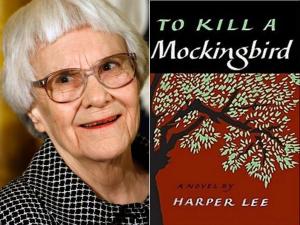 We heard this morning of the passing of the great writer Harper Lee.
Harper Lee, the author of the classic novel To Kill a Mockingbird, has died in her hometown of Monroeville, Ala. The Pulitzer Prize-winning writer was 89.
Monroeville city officials confirmed reports of Lee’s death to Alabama Public Radio. Her publisher, HarperCollins, also confirmed the news to NPR.
Her famous novel about a young girl’s experience of racial tensions in a small Southern town has sold tens of millions of copies and been translated into dozens of languages.
Lee’s family issued a statement Friday morning saying that Lee “passed away in her sleep early this morning. Her passing was unexpected. She remained in good basic health until her passing.”
Family spokesman Hank Conner, Lee’s nephew, said:
“This is a sad day for our family. America and the world knew Harper Lee as one of the last century’s most beloved authors. We knew her as Nelle Harper Lee, a loving member of our family, a devoted friend to the many good people who touched her life, and a generous soul in our community and our state. We will miss her dearly.”
The family says that as Lee had requested, a private funeral service will be held.
Lee’s novel is probably one of the greatest stories showing American Life ever written. It is studied by students and beloved by all that read about Scout and see the movie adaptation.
More than a half-century after its publication, the novel continues to be studied by high school and college students. It has sold more than 30 million copies—still selling nearly a million copies per year by the 50th anniversary of its publication in 2010, according to Publishers Weekly–and has been translated into more than 40 languages.
The film adaptation of the novel, with Gregory Peck as Atticus Finch and Mary Badham as Scout, opened on Christmas Day of 1962 and was an instant hit. It was nominated for eight Academy Awards and won four, including Best Actor for Peck and Best Screenplay for Horton Foote, who wrote the screenplay for the movie based on the book. Lee became close friends with both of them.
The novel also inspired a generation of lawyers with its portrayal of the gentle, wise Atticus Finch, who defends a black man, Tom Robinson, falsely accused of raping Mayella Ewell, a white woman. Meanwhile, the Finches’ strange neighbor, Boo Radley, who strikes fear in Scout’s and Jem’s hearts, turns out not to be the monster the children expect him to be.
Though Lee denied that the novel was autobiographical, many parallels exist between “To Kill a Mockingbird” and Lee’s own childhood. Her father was also a lawyer who owned the town newspaper. Comparisons have been made between Lee and Scout, the 9-year-old tomboy protagonist, especially in her friendship with Dill, a character widely considered to have been based on Lee’s own childhood friend, Truman Capote.
When he was a child, the author of “In Cold Blood” often stayed with his cousins, who lived next door to the Lees. Capote and Lee collaborated on the early stages of his novel and remained lifelong friends.
The interior of the Monroe County Courthouse was reconstructed on a movie set in Hollywood for the film’s pivotal courtroom scenes, and local actors bring the book to life each spring at the courthouse itself, where they stage “To Kill a Mockingbird” to sellout crowds.
BB wrote extensively about Lee’s publication last year of a novel that delves back into the lives of the Finch family .
A Chicago court is scheduled to hear a lawsuit asking for Cruz to be removed from the ballot in Illinois.
A judge will hear arguments on Friday from an Illinois voter alleging that Republican presidential hopeful Ted Cruz is not a “natural-born citizen” and should be disqualified for the party’s nomination.
Lawrence Joyce, an Illinois voter who has objected to Cruz’s placement on the Illinois primary ballot next month, will have his case heard in the Circuit Court of Cook County in Chicago. Joyce’s previous objection, made to the state’s Board of Elections, was dismissed on February 1. He appealed the decision and was granted a hearing for Friday before Judge Maureen Ward Kirby.
Joyce challenges Cruz’s right to be president in the wake of questions put forth by GOP rival Donald Trump about being born in Canada. Cruz maintains he is a natural-born citizen since his mother is American-born.
“What I fear is that Ted Cruz becomes the nominee, come September, Congressman Alan Grayson of Florida will go forward with his threats and probably several other Democrats will file suit to prevent Ted Cruz from being on the ballot,” Joyce, a pharmacist and attorney from Poplar Grove, Ill, told USA TODAY.
Grayson, a Democrat, has told reporters that he will file a lawsuit contesting Cruz’s citizenship if the senator from Texas wins the GOP nomination.
“What Democrats will do at that point is cherry pick which county courthouse they are going to show up in order to file these petitions,” Joyce said. “And at that point, I fear they’ll get a string of victories in the lower courts and the funding for Ted Cruz would dry up, his numbers would plummet in the polls, he may be forced to give up the nomination.”
 The primary and caucus tomorrow continues to be the top headline grabber. I liked this Charlie Pierce item describing the relationship between the Trump Candidacy and the late Lee Atwater. It’s an excellent essay into Atwater’s legacy and life.
What Atwater did was more than inject into Republican politics a modern form of strategic viciousness. With it, he injected an entirely new form of strategic unreality. From that has come the party’s inability to recognize or acknowledge the empirical. By creating an entirely new Dukakis in which his voters could believe, Atwater showed them how to build the bubble and to armor it against reality. The combination of strategic viciousness and strategic unreality has come full flower this year. We have Donald Trump, who is one ring of the circus all to himself, calling his opponents liars and Mexicans rapists, and threatening to sue Ted Cruz, who responds by telling Trump to bring it on, and that he, Cruz, would be happy to depose Trump in discovery personally. And Marco Rubio is telling people that the United States is at the edge of the abyss and that only he can restore it to its former glory. What seemed crude and nasty in 1980 has become sleek and edgeless and as common as milk now.
Both my daughters and I went to public universities where football is so central to the university’s life, fundraising, and culture that everything else seemed underfunded and small by comparison. As a professor and a student I have experienced things that still make me shake my head. Local investigative reporter Lee Zurik dug some things up in our state’s colleges--not the flagship LSU–that will make your toes curl. This is really disheartening given the drain of funds from university’s missions due to the Jindal-caused financial crisis.
Professors laid off. Classes cut. Campus buildings falling apart, and students left wondering why.
These are not simply the risks to higher education in the future. This has been happening, in slow and painful stages, for the last eight years across the state of Louisiana.
Mary Brocato can attest to it.
“I say that I’m the Angelina Jolie of dogs,” she jokes with us at her home in northwest Louisiana, surrounded by her six dogs. “They’re a lot of company for me.”
Brocato lived in New Orleans for 20 years before moving to Natchitoches, where she spent 12 years teaching journalism at Northwestern State University. In the past eight years, Brocato has lost both her job and her husband.
Cutbacks at Northwestern State eliminated the journalism program there; the university fired Brocato, a tenured professor, in the spring of 2011.
“The real sin or crime there was those students… who had started and who had been in the program and got caught in the middle,” Brocato tells us. “And they could not get a degree in journalism.”
The year before Northwestern State cut journalism, chemistry, economics, physics and other programs, the school sent $3,689,522 from its operating budget to athletics. By the time Brocato left, that athletics supplement had increased by almost $300,000.
That’s roughly the same amount as her journalism department’s annual budget; Northwestern State raised its monetary support to athletics while cutting a program that cost about as much money.
“It shows where the emphasis is,” Brocato says, “that there seems to be more emphasis and more accommodation for athletics than there is for academics. And I don’t like it. I think it’s very dishonest… because I don’t think people understand that.”
Brocato’s professorship paid her $77,600 a year. A year after they let her go, the athletics department paid Mississippi Valley State University nearly the same amount of money, $75,000, to come play them in football.
While the school cut professors and programs, administrators paid $75,000 for what’s called a “game guarantee” – essentially trying to guarantee the school a home win in football.
Such guarantees are a surprise to some of the NSU students we spoke with, on campus in Natchitoches.
“I would cry,” one tells us. “Is that like Information that everybody knows? That should be known by everyone.”
Also in 2012, Northwestern State paid another football opponent, Arkansas-Monticello, $37,500. That comes to roughly $112,000 in game guarantees – for a football team that finished that season with a 4-7 record.
“That’s literally throwing money away,” says the student.
“It blows my mind,” says another co-ed.
I taught at one of these regional universities where the football team is like another extension of the local highschool. Maintaining athletics programs at the expense of the education mission of the school is really a disservice to the community and the students. However, most administrators are convinced the school has to try to support the various programs. I’ve basically seen from the viewpoint of student and professor the major coddling these students get. It’s really time and resource intense and as a brainy little girl, I did not appreciate being frequently circled by athletes trying to “borrow” my work.
Schools aren’t the only thing still suffering from the Jindal Reign of Terror. We face the clear possibility that the poorest among us will no longer have access to health care all over the state. Doctor and nurse training are in jeopardy also.
Several of Louisiana’s privatized safety net hospitals, including University Medical Center in New Orleans and Our Lady of the Lake in Baton Rouge, are considering walking away from their contracts with the state under “best case” budget cut scenarios being debated in the Legislature.
The CEOs of seven hospitals told Senate Finance members Wednesday that the $137.8 million in proposed cuts would either cause steep dropoffs in their ability to deliver care to the poor, or cause them to halt operations altogether. All of the hospitals, which represent every major population center in the state, play a pivotal role in treating the poor and uninsured and are considered a centerpiece of Gov. John Bel Edwards’ Medicaid expansion policy. Many of the hospitals educate hundreds of new doctors annually and place them in jobs across the state.
The threat of canceling contracts with the nine safety net hospitals could mean a major setback for Legislators looking to close the state’s $940 million budget gap through a mix of tax increases and spending cuts. If the contracts are canceled, lawmakers risk leaving Baton Rouge after the special session in March to face constituents angry over health care worker layoffs and patients being told they are losing access to care.
“We’re going to have to hit the reset button,” said state Sen. Fred Mills, a Republican who represents Acadiana. “It would be devastating for my area.”
University Medical Center in New Orleans, which is facing a $44 million cut under the best-case scenario, could present the biggest crisis in the entire partnership system if it terminates its agreement. In addition to scattering indigent patients to surrounding emergency rooms that would be flooded with new people seeking care, the hospital is also leasing a brand new facility on Canal Street that represents a $1.1 billion investment for the state.
The hospital also makes millions of dollars in lease payments to the state.
Asked if UMC would be able to continue operating under the $44 million cut, UMC’s CEO, Greg Feirn, told the Senate Finance committee that the funding cut would be “devastating” to nearby university teaching programs. Losing funding would likely mean the system would cancel the contract.
“We can’t risk our balance sheet to fund what’s otherwise a state obligation,” Feirn said. “If we have significant capital investment by way of these payments, or capital expenditures in the future, why would we continue to make those with an uncertain revenue stream?”
We have Jindal, Grover Norquist, and the basic agenda of the Koch Brothers to thank for this. Here’s the one big reason we don’t bring in funds any more to run our most basic services. A close look at Kansas shows similar trends too. Our spineless leges still won’t face up to the damage they’ve done and work to correct it.
Louisiana’s taxes on business are supposed to help government provide its many services.
But the state has paid out $210 million more in tax credits and rebates to corporations so far this year than it has collected in corporate income and franchise taxes, reports the Department of Revenue. That shortfall is contributing to the massive budget gap that the 25-day special legislative session is supposed to address.No one is claiming that large numbers of corporations are violating the law to avoid paying taxes. What has happened is that state lawmakers over the years — and especially during Gov. Bobby Jindal’s two terms – have been increasingly generous in creating the tax subsidies, at the behest of corporate interests and their lobbyists in Baton Rouge.
A tax break here and a tax break there, over time they have added up, as The Advocate reported in a 2014 series of articles: Tax breaks for six major programs alone cost the state $1.08 billion in 2014, up from $207 million in 2004.
You can read more indepth about how Jindal and his cronies gave our state away in this extremely good article from two years ago. It’s the one referenced above. I wrote about it at the time.
 I really meant to spent some time today on the incredible criticism of wonks and economists on the Sanders’ policy suggestions but I’m seriously to tired to do it. I’ll just throw this latest link and we can discuss it down thread. Those of us joining the criticism have been facing charges of being too close to industry to have any kind of integrity.
Bernie Sanders has a problem with the liberal wonkosphere — or, more precisely, the liberal wonkosphere has a problem with Bernie Sanders.
With every upward tick in Mr. Sanders’s poll numbers in the last few months, there has been a corresponding rise in a very specific type of commentary: Left-of-center policy experts and former staffers for Democratic officials have questioned his plans as unwise, unrealistic or both.
On Wednesday, it took the form of a joint letter from four people who led the White House Council of Economic Advisers during the Clinton and Obama administrations. They criticized projections by Gerald Friedman, an economist who has advised Mr. Sanders, of what the candidate’s policy proposals would achieve. Their comments were quickly echoed by the liberal economists Brad DeLong and Paul Krugman. The health care experts Kenneth Thorpe of Emory University and Henry Aaron of the Brookings Institution have also been tough on Mr. Sanders’s health care plan.
Behind the critiques: Mr. Sanders’s advisers have often worked off assumptions that their policies would sharply increase economic growth, reduce health care costs and create other salutary effects, making the policies in question look more affordable and desirable than they would with more cautious assumptions.
This is the analysis that really appealed to me as I watched Christie Romer get criticized last night on twitter for not having particularly good analysis about the financial crisis and need for stimulus. Actually, her number krunching was fine and she had suggested a much bigger stimulus. It was the politics that silenced her and nothing else.
The wonkosphere vs. Bernie clash is not just a story of center-left versus left-left. It is also a clash between those who have been in the trenches of trying to make public policy for the last seven years versus those who can exist in a kind of theoretical world of imagining what public policy ought to be.
Suppose, for a moment, that you worked as a staff member to a Democratic member of Congress, or perhaps in the Obama administration, or in the world of academics and think tank experts advising both.
Perhaps you worked countless all-nighters on the language of the Affordable Care Act or the Dodd-Frank Act — or maybe you were at an agency trying to write the thousands of pages of regulations to institute those laws, or even an advocacy group trying to nudge all of the above to the left.
You know the compromises that were made back in 2010 and why — uniting 55 or 60 senators with wildly different political temperaments and local politics was really hard. You had to come up with a bill that could get a “Yes” vote from both a centrist like Joe Lieberman or Joe Manchin and, well, a democratic socialist like Bernie Sanders.
You’re convinced that those laws — much hated by both conservatives and the industries they overhauled — made the United States a better place, helping millions more people afford health care and reining in the financial industry. You know the laws aren’t perfect — but also believe that future presidents and Congresses should build on them, much as Social Security and Medicare are now much expanded from their original charters.
Now comes a man who has had to answer only to voters in the most liberal state in the nation, who has never had the responsibility to actually pull together the disparate center-left coalition that is the Democratic Party to enact concrete legislation.
When Mr. Sanders argues for scrapping Obamacare’s intricately constructed mix of private health insurance with public subsidies for a single-payer government program, he’s essentially saying your efforts were useless, hopelessly corrupted by the health insurance industry. Same with Mr. Sanders’s call to break up the largest banks, as opposed to the current approach of just regulating them more intensively.
Then, if you criticize Mr. Sanders’s plans, or question their political feasibility, his supporters assail you as a member of a corrupt establishment.
Anyway, there’s a lot here for you to consider. What’s on your reading and blogging list today?
Tuesday Reads: Bernie Sanders, Demagogue
Posted: February 16, 2016 Filed under: morning reads, U.S. Politics | Tags: 2016 Democratic nomination fight, Bernie Sanders, demagogues, dirty tricks, Hillary Clinton, ratfucking, smear campaign 66 Comments
Good Afternoon!!
Once again, I had to give myself several pep talks before I could get started writing this post. The attacks on Hillary Clinton from all sides are getting louder and meaner, but the nastiest rat-fucking is coming from people who claim to be “progressives.” Republicans might as well just sit watch and watch, because Bernie Sanders and his supporters are doing their work with incredible zeal.
I wish the DNC had just let Bernie Sanders run a third party campaign. I really believe trying to hand the White House to Donald Trump or Ted Cruz. Maybe he thinks that would trigger his livelong fantasy of a “political revolution.”
I know you all have seen these quotes from Sanders and his attack dog Tad Devine in the NYT by now, but I’m going to post it here again because it is simply shocking and unprecedented for a Democrat to attack another Democratic candidate in this manner.
But Mr. Sanders said the idea that voters would see Mrs. Clinton as better suited to win in November and do battle with a petulant Republican Congress was “quite a stretch,” adding, “There are people supporting Secretary Clinton who will spin anything for any reason.”
His advisers used the vacancy to highlight Mr. Sanders’s promise to overhaul the campaign finance system. Both he and Mrs. Clinton have vowed to appoint only justices who would overturn the 2010 Citizens United ruling, which allowed for unlimited political contributions. But Tad Devine, a senior adviser to Mr. Sanders, pointed to Mrs. Clinton’s support from a “super PAC” and her acceptance of donations from Wall Street executives.
“She cannot be trusted to appoint someone to the Supreme Court who will take the issue of campaign finance seriously,” he said.
Nevada supporters of Hillary Clinton have reported on Twitter about numerous dirty tricks on the part of the Sanders campaign. Today, @stylistkavin who describes himself as a “Proud SuperVolunteer” for Hillary has been posting about some really slimy behavior by the Sanders campaign, if true.
https://twitter.com/stylistkavin/status/699621020588646400
Kavin said he listend to this call himself. He is also reporting that Sanders supporters are knocking on people’s doors late at night and pretending to be canvassing for Clinton. Voters in Nevada have received calls from the Sanders campaign saying that Hillary is under investigation by the FBI. Finally, I’ve heard that Sanders people are calling. Republicans and asking them to vote for Bernie.
Obviously none of this has been verified, and I don’t expect the mainstream media to investigate; but these reports definitely fit a pattern of dirty tricks on the part of the Sanders campaign going back to Iowa.
Peter Daou: Bernie’s Dark Side: The Reckless War on Hillary’s Integrity.
Democrats have two candidates. Assume for the sake of argument that they each have a 50% chance of winning the nomination. And assume the Democratic nominee will face someone like Donald Trump or Ted Cruz in the general election.
With so much on the line, why is one of them waging an all-out war on the other’s integrity?
Why on earth would Bernie Sanders run a campaign premised on the destruction of Hillary’s public image?
As we’ve written: Hillary let Bernie off the hook in the last debate. She could have asked him a simple question: Does he believe President Obama is corrupt because of financial industry contributions? It’s a yes or no question that is central to the 2016 race.
Does Bernie think President Obama is compromised by Wall Street contributions? If so, he should have the courage to say it. If not, he shouldn’t imply that a female candidate would be influenced by donations or speaking fees. There’s a word for that.
The endless drumbeat that Hillary is dishonest is now driven directly from the top of Bernie’s campaign. The candidate doesn’t say it in so many words, but the inference is crystal clear. It is an “artful smear” where any mention of the “establishment” or Wall Street is a Pavlovian trigger designed to impugn Hillary’s character. The Wall Street Dog Whistle.
No matter how lofty and inspiring Bernie’s message, no matter how much he motivates younger voters, it is deeply unjust – and frankly, reckless – to run a campaign premised on the destruction of Hillary’s character through false innuendo. And make no mistake, Bernie’s campaign message and the behavior of his supporters have become less about something and moreagainst someone. His path to victory runs right through Hillary’s integrity. It’s a deeply regrettable turn of events in an election where Bernie had initially vowed to stay positive and issue-driven.
Daou may be biased toward Hillary, but he speaks the truth.
We can only hope that voters in Nevada and South Carolina will see through Bernie’s smear campaign. I never thought 2016 could get worse than 2008, but it is much worse. I just hope Sanders and his progs don’t force a repeat of what happened in Florida in 2000. The only difference between Sander and Ralph Nader at this point is that Sanders has access to DNC voter data.
There are a few journalists questioning the Sanders campaign’s tactics, but I don’t know if that will filter down to voters who get most of their information from TV and newspapers.
From Buzzfeed: Sanders Campaign Missteps With Influential Nevada Union And DREAMers Anger Activists.
Against the tightening race in Nevada, the Sanders campaign is still trying to catch up organizationally — and the battle for every Latino and union voter has become critical. At a union rally outside Palace Station Hotel on Friday, staffers for both campaigns were handing out leaflets. Some Hispanics approached by the Sanders campaign could be heard saying, “Si ya estoy con el,” or “Yes, I’m already with him.” Others, mainly Latinas, said they’re with “La Hillary.”
Behind the scenes, the Sanders campaign has angered people inside the Culinary Union — in instances both reported and previously unreported. The campaign has also unleashed demolition derby tactics on the DREAMers who have endorsed Hillary Clinton. Both have given the battle for Nevada a harder edge, and made activists, members of the union, and supporters of both candidates question the Sanders campaign’s tactics in the key state.
There have been concerns that the campaign has at times not used union labor. There was the time Sanders was set to stay at a non-union hotel, a big no-no among people close to labor groups, and Yvanna Cancela, the union’s political director called the campaign with a list of hotels he could stay at instead. Sanders never stayed at the non-union hotel. (“I would have done that for any campaign as a courtesy,” Cancela said, when asked to confirm it happened.)
There was the time — last week — when a reporter called Culinary officials to ask: Was it true that Bernie Sanders had personally convinced the powerful Nevada union to stay out of the race and not endorse Clinton, in effect helping him? The union official, according to someone with knowledge of the conversation, said no and asked where the reporter had gotten that information. It came from the Sanders campaign, the reporter said.
In the most publicized instance, in late January, two Sanders staffers wore Culinary Union pins to gain access to employee-only areas in four hotels in an effort to persuade union members to support Sanders. The union was “disappointed and offended,” leader Geo Arguello-Kline said at the time.
Read more at the link about Sanders’ attacks on DREAMers.
From Salon, a mild but interesting pro-Bernie critique: The Sanders campaign is flirting with danger: The two big warning signs coming out of last week’s debate.
It would be extremely premature to say that the media’s begun to turn against Sen. Bernie Sanders. But coming out of Thursday’s Democratic debate, there were signs that, on both the superficial and the substantive level, the media’s treatment of the Sanders campaign is about to lose some of its (relatively) soft touch….
During one of the few tense moments of PBS’s generally “chill” debate, Sanders, responding to Clinton’s explanation of how she will use her “political capital” once she is “in the White House,” sniped, “Secretary Clinton, you’re not in the White House yet.” The remark inspired some audible expressions of displeasure from the audience, and reminded some media observers of Obama’s “likable enough” moment in 2008….
Sanders has profited from the media’s lack of interest in challenging his self-presentation as a kind of non-politician. He’s similarly benefitted from his mostly-unchallenged self-presentation as a kind of happy warrior — angry and loud, yes, but in a lovably earnest kind of way. The Clinton campaign has desperately tried to get the media to challenge this image. Sanders has to be careful not to do it for them.
That brings us to the more substantive criticism that’s dogged Sanders in the past few days; and it’s one, I’d argue, that is more likely to resonate if the campaign press is already becoming less sympathetic toward Sanders on a personal level. It had to do with one of Sanders’ signature big, bold promises — namely, that he’d all but end mass incarceration before wrapping up his first term….As Mark Kleiman, Leon Neyfakh, John Pfaff, Chris Hayes, Tim Murphy and German Lopez all noted, this is not simply a very ambitious goal. It is absurd, outlandish, ridiculous, disconnected — you name it. And not for the usual reasons that people say such things about Sanders’ promises, either. Not because it’s hard to imagine, but because it is impossible, full stop.
I believe that we have got to pass comprehensive immigration reform, something that I strongly supported. I believe that we have got to move toward a path toward citizenship. I agree with President Obama who used executive orders to protect families because the Congress, the House was unable or refused to act. And in fact I would go further….
“Somebody who is very fond of the president, agrees with him most of the time, I disagree with his recent deportation policies. And I would not support those. Bottom line is a path towards citizenship for 11 million undocumented people, if Congress doesn’t do the right thing, we use the executive orders of the president.”
This seems to come close to a promise to use executive action to defer the deportation of all of the undocumented immigrants who would be legalized under the legislative proposals Democrats have championed. (The Senate comprehensive immigration bill aspires to place 11 million on a path to legalization, but in practice would lead to legalization for closer to nine million people, by some estimates.) And indeed, this is what immigration advocates think they heard Sanders say last night….
In saying this, Sanders confirms that he believes the president has significantly more executive authority to grant deportation relief than President Obama believes he has. Obama’s most recent executive action — which is being legally challenged by two dozen states and will come before the Supreme Court this spring — seeks to defer the deportations of some five million people who are the parents of children who are U.S. citizens or permanent residents. But the administration deliberately excluded parents of DREAMers — people who were brought here illegally as children — because administration lawyers thought going that far would be legally questionable.
It seems clear to me at this point that Bernie Sanders is every bit as much of a demagogue as Trump or Cruz. He is making promises he can never fulfill; should be get the Democratic nomination, he may end up breaking the hearts of his young followers and driving them away from politics altogether.
I’ll share more links in the comment thread. What stories are you following today?
Stormy Monday Afternoon Reads
Posted: February 15, 2016 Filed under: Afternoon Reads | Tags: Abraham Lincoln, Antonin Scalia, Bernie Sanders, Hillary Clinton 49 Comments
Good Afternoon!
We’re experiencing some really typical spring weather down here today! It’s going back and forth between torrential downpours and sun. Most of the surrounding areas and states are under tornado watches and warnings. It’s like the weather is really trying to rock and roll us into spring!
So, I’m old enough to remember when we actually celebrated Lincoln’s Birthday and Washington’s Birthday separately. Today is President’s Day which just never has the same feel to me but we do have MLK day to provide some balance and perspective to our national celebrations. I’m still waiting for the day when Columbus day is used to celebrate our indigenous peoples. I’d also like to see the anniversary of votes for women become a national holiday. It’s about time we recognize that every one contributes something to our story.
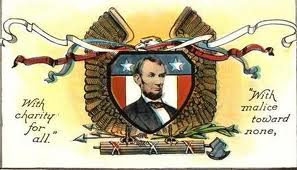
This brings me to the idea of how modern leaders contribute to the national dialogue. Lincoln was one of our greater leaders and orators. Today, one of his phrases comes to my mind. It is doing things with “charity for all, and malice towards none”. This famous phrase comes from Lincoln’s second inaugural address in 1865. It was a speech meant to bring the nation together after the Civil War.
“With malice toward none, with charity for all, with firmness in the right as God gives us to see the right, let us strive on to finish the work we are in, to bind up the nation’s wounds, to care for him who shall have borne the battle and for his widow and his orphan, to do all which may achieve and cherish a just and lasting peace among ourselves and with all nations.”
If ever there was a need to bind the wounds of a divided nation, it would be now. We’re facing an election and the appointment of a Supreme Court Justice. The death of Antonin Scalia ends his 30 year war on modernity. The current election is a continuing battle against it and most of his written and spoken words will not be remembered kindly by historians. Some times I feel like we’re in this place so aptly described by Lincoln.
Both parties deprecated war, but one of them would ‘make’ war rather than let the nation survive, and the other would ‘accept’ war rather than let it perish, and the war came.
There’s been a lot of pearl clutching by folks on how some of us are truly celebratory about whatever it took to get Scalia off the court. I’m frankly of the opinion that not speaking ill of the dead is fine for one’s drunk uncle but when it comes to a person in power that truly did so much damage while hating on so many people that decorum is unnecessary. Scalia spent his life being controversial and his death shows us that he continues to create havoc. This is from First Draft and my friend Peter.
Now that I’ve praised Scalia, I’m glad that we’re burying him. There are a series of important cases that would have pushed the law even further to the right that now look like 4-4 draws. It will be interesting to see how the other Supremes handle these cases. They can put them on hold or allow the lower court rulings to stand. In either event, an eight person Supreme Court isn’t good for the country, which is one of many reasons to be glad the President plans to nominate a replacement some time soon.
It’s obvious that the GOP controlled Senate is going to either slow walk or put in the deep freeze any nomination put forward by President Obama. They’re hoping to win the 2016 election and put a Scalia clone on the court. Ordinarily, I’d give them a 50-50 shot at denying the Dems a third consecutive term but the wild rhetoric in the GOP primary race makes a loss more likely than not. Usually, the Republicans are slyer about calling their opponents liars, leaving the dirty work to surrogates. Slyness has gone by the wayside in the era of the Insult Comedian and Tailgunner Ted. They have the perfect stealth wingnut candidate in John Kasich but he’s not extreme enough for the current GOP; a scary thought given how far to Reagan’s right the Ohio Governor is.
So, the Republicans continue to let loose the dogs of war.
The true character of the man shone through during the time on the court when its “conservative” majority could push through decisions that weakened the Voting Rights Act in particular. His need to continually denigrate GLBT , women, and African Americans came through in many of his minority opinions. Let’s also not forget that no court had ever found a right for the individual to bear arms in the second amendment until Scalia discovered it there. He was an originalist when convenient. I’m not going to praise Scalia because it’s going to take a long time to bury the damage the man did.
Here are some of his worst and incendiary quotes. This one is happened when sodomy was decriminalized in Texas.
‘Today’s opinion is the product of a Court, which is the product of a law-profession culture, that has largely signed on to the so-called homosexual agenda, by which I mean the agenda promoted by some homosexual activists directed at eliminating the moral opprobrium that has traditionally attached to homosexual conduct…. [T]he Court has taken sides in the culture war, departing from its role of assuring, as neutral observer, that the democratic rules of engagement are observed.’
There are many more notable slurs that were totally unnecessary to whatever the finding was of the court. Scalia never held back.
Supreme Court Justice Antonin Scalia’s remarks suggesting African-American students perform better in “less-advanced schools” has stoked a firestorm of criticism.
Scalia has been rebuked by the White House and compared to Donald Trump by Senate Minority Leader Harry Reid (D-Nev.), who called the remarks racist.
The conservative justice made the comment Wednesday during oral arguments in a case challenging the University of Texas’s admissions policy.
Scalia questioned whether considering a prospective student’s race in the admission process actually helped blacks, going on to question whether many might be better off at less-selective universities.
Scalia highlighted a friend-of-the-court brief, making it clear he did not necessarily agree with the arguments in the brief.
“There are those who contend that it does not benefit African-Americans to get them into the University of Texas, where they do not do well, as opposed to having them go to a less-advanced school, a slower-track school where they do well,” he said.
“One of the briefs pointed out that most of the black scientists in this country don’t come from schools like the University of Texas.”
Those comments were far from the first controversial remarks by Scalia.
 One of the best things I’ve read is actually a KOS diary by a lawyer that works with the Death Penalty. Please read this link. It’s a wonderful essay.
I differed most with Scalia on the death penalty and the treatment of condemned people. Today, I’ve watched as fellow criminal defenders have posted pictures of the justice, and even as some lamented the harsh treatment of the justice. One broke down her opinions as a mere “disagreement” on ideological grounds. She acted as if her and Scalia agreed on the importance of educating our children, but disagreed on the proper way to do it. That’s a political disagreement. With Scalia, it’s much deeper than that.
I’m friends with Anthony Graves, the 12th man ever exonerated off of death row in Texas, the 138th exonerated nationally. He’s a black man who was sentenced to death for a mass child murder that he knew nothing about, only after prosecutors hid evidence, coerced witnesses, and manipulated the jury in the media. He was exonerated only after 18 years in custody. He suffered immensely, enduring solitary confinement, missing out on birthdays, Christmas mornings, and Easter egg hunts with his children. That he’s now out and using his voice to change the world does not make up for the wrong that was done to him. My friend petitioned the Supreme Court to take up his case after his appeals were denied in state court and the lower levels of the federal system. As in most death penalty cases, the Supreme Court declined to take up my friend’s case. Antonin Scalia left my friend to die. He didn’t care.
And why would he? Scalia once famously declared:
This Court has never held that the Constitution forbids the execution of a convicted defendant who has had a full and fair trial but is later able to convince a habeas court that he is “actually” innocent. Quite to the contrary, we have repeatedly left that question unresolved, while expressing considerable doubt that any claim based on alleged “actual innocence” is constitutionally cognizable.
For the uninitiated, the justice was saying, in effect, that the constitution is no barrier to executing a man who is actually innocent so long as that death sentence has been obtained in a nominally “legal” manner. He had other death penalty opinions that stood out, too. In 1994, Justice Harry Blackmun wrote an opinion questioning the constitutionality of the death penalty. Scalia responded by picking out what he perceived to be the worst of worst in death penalty cases. He picked Henry Lee McCollum, writing that McCollum’s case was a great example of why the death penalty was still necessary. He wrote:
“For example, the case of an 11-year-old girl raped by four men and then killed by stuffing her panties down her throat. How enviable a quiet death by lethal injection compared with that!”McCollum walked off of death row in 2015 after DNA evidence proved his innocence. So much for Scalia’s model case. You see, Scalia was prone to pronouncements that amounted to little more than demagoguery. His statements contributed to decades of operation of the machinery of death, which took lives in brutal state-sponsored murder.Of course he didn’t stop at the death penalty. He dissented in Lawrence v. Texas, standing short in his belief that states should be allowed to jail gay people for having sex. His most recent headlines came when he suggested in an affirmative action case that black men might be better off at “less advanced schools,” where they might do better.
To cloak these moral distinctions as “political differences” is disingenuous. It’s the sort of stuff that will allow an Antonin Scalia monument to be erected somewhere in honor of his “passion” or “service” in the decades to come, as the younger public is duped into believing that his opinions were just the product of a different kind of legal reasoning. Since when did adjectives like “passionate” become a good thing without context? A man who is passionate about causing pain isn’t one to celebrate. In fact, it would have been better if he’d pursued his agenda with far less passion. The “service” of a man who dedicated his career to marginalizing the already marginalized is not a service we should honor. That man would have been better off choosing a high-dollar law firm, where he could have marshaled his considerable legal skills in favor of money before running himself into the ground.
Death does not wash away the stench of planned cruelty. Scalia holds more moral responsibility for his decisions than the average villain. His weren’t in-the-moment mistakes made under pressure. They were calculated judgments made after hours, days, and weeks of reflection. They were opinions written with the greatest of care.
To reduce these opinions, and these differences to the unmoving label of “political” does a disservice to the pain his decisions brought to actual human beings. Like the little man with the teenage beard, Scalia’s actions weren’t without a victim. When he wrote of the death penalty, he directly weighed on my friend Anthony and plenty of others, too. When he ruled in Lawrence, he laid the groundwork for much of the hate that’s made assaults on gay men and women a thing that we must tackle in 2016. If you call these political differences, as if they’re just different methods of solving a problem, you demonstrate a stunning lack of understanding that when Antonin Scalia spoke and wrote, his words carried unique power that often led to death, added to prejudice, and threatened to set America back a hundred years.
That last statement deserves a mic drop. It’s a total disservice to the people he killed and did great damage to with absolute carefully crafted glee to not be relieved that his pen is now silenced. 
I have to admit that I used to have some degree of admiration for Senator Bernie Sanders. I even wrote about his time spent in symbolic filibuster in 2010. You may remember that we lived blogged it too. Sanders was joined by Senator Sherrod Brown and my then Senator Mary Landrieu. It was about a piece of compromise legislature that essentially extended some of the Bush Tax Cuts.
I’ve always seen him as a gadfly who doesn’t accomplishment much but does these kinds of things so that he provides an important voice that you don’t much hear coming from many places. We really don’t have much of a really leftist movement here in the US . The more his campaign does just plain wicked nasty stuff like stealing data from Senator Clinton’s campaign when given the opportunity, the more I really have started taking an active dislike for the man. I think that his absolute tin ear on the issues of intersectionality of income and wealth inequality and racism and sexism horrifies me more than anything. He appears to live in the 1970s and doesn’t look very interested in updating since then.
So, here’s my suggested reading on Bernie’s treatment of Hillary today by Joe Conason: His Respected Friend: But What Does Bernie Really Think Of Hillary? Joe Conason is my age. He’s a journalist, author and liberal political commentator. This article was written for National Memo but he also a column for Salon and a number of books. You may have heard about Big Lies where he outlines myths told about liberals by conservatives. He points out the hypocrisy in Sanders assumption that Clinton is sullied by taking any Wall Street money while refusing to consider what that infers about his contributions from big Unions including the one that produced the movie that led to Citizens’ United. (Another abomination for which we can thank the late Justice Scalia.)
Still, to Sanders the mere act of accepting money from the financial industry, or any corporate interest, is a marker of compromise or worse. Why do the banks spend millions on lobbying, he thunders, unless they get something in return? The answer is that they want access – and often donate even to politicians who don’t fulfill all their wishes. They invariably donate to anyone they believe will win.
Meanwhile, Sanders doesn’t apply his stringent integrity test to contributions from unions, a category of donation he acceptsdespite labor’s pursuit of special-interest legislation– and despite the troubling fact that the leadership of the labor movement filed an amicus brief on behalf of Citizens United, which expanded their freedom to offer big donations to politicians. (That case was rooted, not incidentally, in yet another effort by right-wing billionaires to destroy Hillary Clinton.)
By his own standard, Sanders shouldn’t take union money because the AFL-CIO opposed campaign finance reform, which he vociferously supports. Or maybe we shouldn’t believe that he truly supports campaign finance reform, because he has accepted so much money from unions.
Such assumptions would be wholly ridiculous, of course – just as ridiculous as assuming that Clinton’s acceptance of money from banking or labor interests, both of which have made substantial donations to her campaign, proves her advocacy of reform is insincere.
Political history is more complex than campaign melodrama. If critics arraign Clinton for the decision by her husband’s administration to kill regulation of derivatives trading, it is worth recalling that she was responsible for the appointment of the only official who opposed that fateful mistake. She had nothing to do with deregulation — but as First Lady, she strongly advocated on behalf of Brooksley Born, a close friend of hers named by her husband to chair the Commodity Futures Trading Commission. One of the few heroes of the financial crisis, Born presciently warned about the dangers of unregulated derivatives.
 You may recall that Sanders voted to deregulate derivatives. That action was most likely a lot more responsible for the Financial Crisis than anything else and I’ve repeatedly written about how we need to standardize and regulate them strictly.
Yet a year later, Sanders voted in favor of legislation to exempt whole swaths of the banking sector from regulation. The discrepancy appears to be due in part to sloppy voting by Sanders, and in part to Gramm’s legislative guile.
“No one has a stronger record on reforming Wall Street and breaking up too-big-to-fail banks than Senator Sanders,” said Warren Gunnels, senior policy adviser to Sanders. “He strongly spoke against repealing Glass-Steagall because he was afraid that it could cause a financial crisis like the one we saw in 2008. And he’s going to do everything possible to break up the too-big-to-fail banks.”
When Sanders voted for the House version of the CFMA in October 2000, the bill was not yet a total debacle for Wall Street accountability advocates. The legislativetext Sanders supported was clearly designed to curtail regulatory oversight. The GOP-authored bill was crafted as a response to a proposal from ex-Commodity Futures Trading Commission Chair Brooksley Born to ramp up oversight of derivatives. But the version Sanders initially voted for was more benign than the final, Gramm-authored version, and it didn’t draw any of the protests that the 1999 repeal of Glass-Steagall did. In October 2000, the bill passed the House by a vote of 377 to 4 (51 members didn’t vote), and then sat on the shelf for weeks.
But in December, Gramm — after coordinating with top Clinton administration officials — added much harder-edged deregulatory language to the bill, then attached the entire package to a must-pass 11,000-page bill funding the entire federal government. After Gramm’s workshopping, the legislation included new language saying the federal government “shall not exercise regulatory authority with respect to, a covered swap agreement offered, entered into, or provided by a bank.” That ended all government oversight of derivatives purchased or traded by banks. He also created the so-called “Enron Loophole,” which barred federal oversight of energy trading on electronic platforms.
So, Secretary Clinton is responsible for what her husband’s administration did while Sanders isn’t responsible for an actual vote.
I guess if I can say anything about today’s post is that I’m tired of folks acting like the horrible shit of some people doesn’t stink when it does. Death doesn’t wipe out the fact that Antonin Scalia was a horrible bigot. He may have gotten a few things right, but it doesn’t excuse how he used his position of power to absolutely denigrate some of the weakest among us. I’ve never been one to mince words. We all do sincerely stupid things and we should own up to them. Clinton has said repeatedly she’d switch that vote for the Iraq Resolution knowing what she knows now.
I just want every one held to consistent standards. Enthrallment and death shouldn’t cause us to lose complete sight of things bigger in life than any one person. Character should will out.
What’s on your reading and blogging list today?
Lazy Saturday Reads: Media Belatedly Begins Vetting Bernie
Posted: February 13, 2016 Filed under: morning reads, The Media SUCKS, U.S. Politics | Tags: 6th Democratic Debate 2016, Bernie Sanders, Hillary Clinton, Income Inequality, Racism, tone-deaf, Wall Street billionaires 47 Comments
Good Morning!!
Before I get started, I want to thank Delphyne for posting the above photo on Facebook. I just couldn’t resist it. Now to the news of the day.
After his big win in the New Hampshire primary, Bernie Sanders is finally beginning to get some serious vetting from the media. It will be interesting to see how he handles the pressure.
Last night, this story popped up at The New York Times: FEC Tells Sanders Campaign That Some Donors May Have Given Too Much. The FEC found more than 100 “small contributors” had given more than the legal limit of $2,700 to Sanders’ campaign. It’s not a huge deal according to the Times, but to me it seems to be part of a pattern of dishonesty on the part of the Bernie’s campaign.
Here’s a more critical take on this story from the Daily News Bin: FEC launches inquiry into hundreds of “excessive” contributions to Bernie Sanders campaign.
In what the FEC has titled “Excessive, Prohibited, and Impermissible Contributions” to the Bernie Sanders campaign, it lists nearly a thousand contributions from hundreds of donors, some of them repeat offenders. Sanders is accused of failing to provide adequate detail on who the contributors are beyond their names, which campaigns are required to make their best effort to do under federal law. The FEC is also informing Sanders that he “may have to refund the excessive amount” if he can’t adequately explain where all the money came from….
The FEC report also accuses the Bernie Sanders campaign of widespread “incorrectly reported” reimbursements for travel purposes and other costs. Sanders has been warned that if he cannot explain the stunningly long laundry list of violations, “failure to adequately respond by the response date noted above could result in an audit or enforcement action.” Read the full FEC report.

Then there’s this from the Wall Street Journal: Sanders’s Record, Filings Show Benefits From Super PACs, Links to Wall Street Donors.
In nearly every speech, Bernie Sanders reminds voters that he doesn’t have a super PAC, doesn’t want money from Wall Street and rejects establishment politics.
Yet the Vermont senator has benefited from at least $1.5 million in backing from super PACs and from political groups that don’t have to fully disclose their donors, according to filings with the Federal Election Commission….
He may not have formed one of his own, but Mr. Sanders is getting help from National Nurses United for Patient Protection, a super PAC that gets its money from the nation’s largest nurses’ union, with nearly 185,000 members.
The union doesn’t have to disclose its donors, but a spokesman said the super PAC money comes exclusively from members’ dues. Representatives from the union have frequently joined the senator at events and this week launched a bus tour across South Carolina ahead of the state’s Feb. 27 primary. At an Iowa campaign stop, Mr. Sanders thanked the group for being “one of the sponsors” of his campaign.
In a five-minute video posted online by the nurses union in October, Mr. Sanders said he was “honored” to have the union’s support and highlighted his work on its members’ behalf.

The rest of the article provides details on Sanders’ fundraising from big donors to the DSCC, which has supported in his House and Senate campaigns.
“He was just like any other senator hobnobbing with lawyers and lobbyists from DC,” said Rebecca Geller, a Washington attorney who attended with her husband, a financial services lobbyist. Ms. Geller, who has donated to Mrs. Clinton’s campaign, said Mr. Sanders was happy to take photos with her family. “My kids have fond memories of him hanging out by the hot tub.”
In addition, Sanders’ claims in debates and other forums are getting more fact checking and scrutiny. Here’s one example from The Washington Post’s Glenn Kessler: Bernie Sanders’s claim that Hillary Clinton objected to meeting with ‘our enemies.’ This is refeering to the exchange in which Sanders claimed that Clinton said that Obama’s proposal to talk to Iran’s leaders without preconditions was troubling. Kessler:
Some arguments never die. For readers who may not recall a pivotal exchange between then-Sens. Barack Obama and Hillary Clinton, here’s what Clinton and Sanders are arguing about.
In a debate on July 24, 2007 hosted by CNN, a question came to the candidates from YouTube:
In 1982, Anwar Sadat traveled to Israel, a trip that resulted in a peace agreement that has lasted ever since. In the spirit of that type of bold leadership, would you be willing to meet separately, without precondition, during the first year of your administration, in Washington or anywhere else, with the leaders of Iran, Syria, Venezuela, Cuba and North Korea, in order to bridge the gap that divides our countries?
Obama took the question first and answered emphatically yes:
I would. And the reason is this, that the notion that somehow not talking to countries is punishment to them — which has been the guiding diplomatic principle of this administration — is ridiculous.
Now, Ronald Reagan and Democratic presidents like JFK constantly spoke to Soviet Union at a time when Ronald Reagan called them an evil empire. And the reason is because they understood that we may not trust them and they may pose an extraordinary danger to this country, but we had the obligation to find areas where we can potentially move forward.
And I think that it is a disgrace that we have not spoken to them. We’ve been talking about Iraq — one of the first things that I would do in terms of moving a diplomatic effort in the region forward is to send a signal that we need to talk to Iran and Syria because they’re going to have responsibilities if Iraq collapses.
They have been acting irresponsibly up until this point. But if we tell them that we are not going to be a permanent occupying force, we are in a position to say that they are going to have to carry some weight, in terms of stabilizing the region.
Closeup of ginger cat lying on old book near spectacles on books background
Then Clinton responded, saying that before any such high-level meetings, diplomatic groundwork first would be necessary:
Well, I will not promise to meet with the leaders of these countries during my first year. I will promise a very vigorous diplomatic effort because I think it is not that you promise a meeting at that high a level before you know what the intentions are.
I don’t want to be used for propaganda purposes. I don’t want to make a situation even worse. But I certainly agree that we need to get back to diplomacy, which has been turned into a bad word by this administration.
And I will purse very vigorous diplomacy.
And I will use a lot of high-level presidential envoys to test the waters, to feel the way. But certainly, we’re not going to just have our president meet with Fidel Castro and Hugo Chavez and, you know, the president of North Korea, Iran and Syria until we know better what the way forward would be.
As president, Obama took the path that Clinton had recommended.
During the PBS debate on Thursday night, Sanders tried to explain away his no vote on a comprehensive immigration bill that was sponsored by Ted Kennedy and supported by most Democrats. Matt Yglesias responded at Vox: What Bernie Sanders told Lou Dobbs in 2007 about why he opposed the Kennedy-McCain immigration bill.
In Thursday night’s debate, Hillary Clinton and Bernie Sanders briefly exchanged words over his vote against the 2007 comprehensive immigration reform bill that John McCain and Ted Kennedy wrote and that both Clinton and Barack Obama supported, while Sanders and most Republicans plus some Democrats were opposed. Sanders cited as his motive opposition to the bill’s guest worker provisions, which he said were bad because a Southern Poverty Law Center investigation had likened conditions in existing agricultural guest worker programs to slavery.
It’s interesting to compare this with what he said about the bill at the time on Lou Dobbs’s show. Dobbs, for those who’ve forgotten, was a business news broadcaster who refashioned himself as a somewhat Trump-esque anti-immigration, anti–trade deal populist in the mid-aughts.
If you watch the interview you’ll see that Sanders isn’t particularly interested in working conditions for guest workers and he’s also not narrowly focused on the H2 programs the SPLC report was about — he also talks about H1 programs for skilled workers that, whatever their flaws, are clearly not slavery.
Dobbs is opposed to the whole idea of “amnesty,” which Sanders was not, but Sanders also doesn’t argue with Dobbs about it. Sanders doesn’t really say anything about the costs and benefits to immigrants themselves — whether that’s people who’ve been living illegally in the United States or potential future guest workers — one way or another. His focus is on the idea that “what happens in Congress is to a very significant degree dictated by big-money interests” and that “I don’t know why we need millions of people to be coming into this country as guest workers who will work for lower wages than American workers and drive wages down even lower than they are now.”


Finally, Sanders got himself in some hot water at the Black citizens’ forum in Minneapolis yesterday. Politico reported on the meeting and Twitter went nuts.
Sanders criticism grows pointed at black community forum
MINNEAPOLIS – A warm, welcoming African-American crowd grew increasingly frustrated with Sen. Bernie Sanders on Friday evening, complaining that he’s too scared to talk about specifically black issues.
Sanders was here for “A Community Forum on Black America,” introduced by the local congressman, Rep. Keith Ellison, one of Sanders’ only two endorsers in the House, But unlike many of the packed rallies that have greeted Sanders in other parts of the country, neither the folding chairs nor the bleachers in the gym here at Patrick Henry High School were full….
Questions from a panel and the crowd drilled down on felon voting rights — which Sanders said he strongly supported restoring — but turned to environmental racism and reparations for slavery, with demands for more exact answers about actions the candidate for the Democratic nomination would take if he was elected president.
The tension quickly rose over his 40-minute appearance, with moderator Anthony Newby repeatedly calling for “specific redress.”
“I know you’re scared to say ‘black,’ I know you’re scared to say ‘reparations,’” said Felicia Perry, a local entrepreneur and artist on the stage. “Can’t you please specifically talk about black people?”
Sanders responded:
“I said ‘black’ 50 times,” he said. “That’s the 51st time.”
But, Sanders said, the issues at hand are more about economics than race.
“It’s not just black,” he said. “It’s Latino. In some rural areas, it is white.”
WTF?! Could this guy be any more tone deaf? Even though he has to know he needs black voters to win Southern primaries, Sanders just can’t break away from his obsession with Wall Street billionaires and income inequality to see that racism is a separate though related issue that affects how people fare in our culture.
You can read about the exchange in a little more detail in this CNN article: Bernie Sanders faces frustrated crowd at race forum in Minneapolis. The story ends with this interesting description of the chaos:
The forum finished inconclusively when activist Clyde Bellecourt commandeered the microphone to talk about issues relating to Native Americans being what he called “completely forgotten” by the federal government.
His statement drew on for several heated and emotional minutes as moderators asked him to get to his question and Bellecourt declared, “If you have to carry me out of here, carry me out of here!”
Sanders rose from his chair, thanked the crowd and scurried offstage.
Sanders simply doesn’t understand racism. As a white person, I can’t claim a deep understanding either, but at least I get that racism is a powerful force keeping Black people down and the problem won’t be solved by breaking up big banks or raising taxes on the wealthy and middle class to pay for free college and single payer health care.

Sanders’ tunnel vision on the income inequality issue blinds him to the systemic effects of racism, sexism, and other forms of prejudice, which interact with economics but cannot be solely explained or remedied by economic policies.
This attitude goes along with Sanders’ odd statement at the debate when he was asked what he would do about systemic racism. From USA Today:
The African-American community lost half of their wealth as a result of the Wall Street collapse, says Sanders. When “you have unbelievable rates of incarceration,” which leaves children without their parents, “clearly we are looking at institutional racism” and an economy in which the rich get richer and the poor get poorer, he says. Race relations would be better under a Sanders presidency, he says, because he’d create millions of jobs for low-income kids “so they’re not hanging out on street corners.”
How does Bernie expect to pull in Black voters when he claims he would do better on this issue than the first Black American president and when he characterizes Black kids as “hanging out on street corners.” Good grief. Kids hang out on street corners in my middle class town and the even wealthier communities nearby. Kids in cities tend to do that.
Bernie just doesn’t get it, and he doesn’t even seem able to tailor his message to groups whose votes he desperately needs.
What stories are you following today? Please post your thoughts and links in the comment thread and have a great weekend!

 peej
peej Carissa
 bostonboomer
 dakinikat
 ecocatwoman
 mablue2
 Mama Lopez
 peggysue22
 quixote
 skydancingguestblogger
 Mona (aka Wonk the Vote)



 Sky Dancing
Recent Comments