
Thursday Reads
Posted: October 24, 2013 Filed under: Barack Obama, Foreign Affairs, morning reads, Republican politics, U.S. Politics | Tags: 2013 World Series, Affordable Care Act, Andrew Sullivan, Angela Merkel, Benghazi, Boston Red Sox, Catholic Church, Dick Durbin, Goldman Sachs, Heidi Nelson Cruz, Hillary Clinton, John Boehner, John G. Taft, right wing christianism, Ted Cruz, William Howard Taft 46 Comments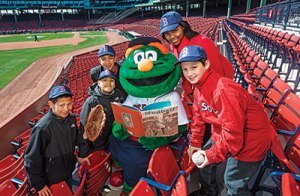
Good Morning!!
I hope you’ll forgive my provincialism, but the only news that really matters to me this morning is that the Red Sox mopped the floor with the Cardinals last night, winning Game 1 of the 2013 World Series 8-1. Chad Finn of The Boston Globe has the story:
If you’re one of those straggling Red Sox fans who still believes in curses and ghosts and various other apparitions despite all of the affirming joys that have occurred since 2004, have I got a cockamamie theory to sell you.
Here goes: I think in Game 1 of the World Series Wednesday night at Fenway Park, the 2013 St. Louis Cardinals were somehow possessed by their baseball forefathers of 100 years ago.
Really. Think about it: The 2013 Cardinals arrived as the National League representative in this World Series with a sterling reputation and a vast reservoir of respect, having just vanquished the talented Dodgers with a combination of a deep lineup, a deeper bullpen, and a starting rotation led by true ace Adam Wainwright.
So what happens when they finally take the field? The Cardinals make three errors, botch a popup to the pitcher, and Wainwright, a strike-throwing machine who walked 35 batters all season, requires 31 pitches to get through the first inning. After the first, the Cardinals were already in a 3-0 hole that became 5-0 an inning later.
The way Jon Lester was dealing for the Red Sox, the five-run hole felt insurmountable, and it was. The outcome was determined long before the final 8-1 score became official.
It was pretty much over in the first inning. Then Red Sox fans could sit back and just enjoy it. I doubt if the rest of the games will be that easy, but winning the first one is a big plus. Game 2 tonight!
Now that I’ve bored everyone but myself, Pat J., and MABlue if he’s lurking out there, I’ll move on to the political news.
Republican disrespect for the President of the United States has reached an all-time low, according to Illinois Sen. Dick Durbin, who claims that an “unnamed GOP leader” told President Obama to his face at the White House, “I can’t stand to look at you.” Todd S. Purdum at Politico:
Such an insult — delivered eyeball to eyeball — would trump Rep. Joe Wilson’s shouted “You lie!” on the House floor during the Obama’s health care speech to Congress in 2009.
It would top former Vice President Dick Cheney’s terse suggestion on the Senate floor in 2004 that Sen. Patrick Leahy (D-Vt.) should perform an anatomically improbable act. And it would make Dick Armey’s heated advice to a scolding Bill Clinton (“Perhaps it’s my Western upbringing, but I don’t listen very well when someone’s pointing a finger in my face!”) during the 1995 government shutdown seem positively polite by comparison.
Perhaps only John Quincy Adams’s dismissal of Thomas Jefferson as “a slur upon the moral government of the world” sounds worse — and Adams made that assessment in the late 1820s, after Jefferson was dead.
The White House and John Boehner are both denying it, but Durbin is sticking by his statement.
In fact, the alleged dis words are so personal, so passionate, so disaffected-high-school-sweetheart in tone — “I cannot even stand to look at you” — that it’s hard to imagine any grown man saying them to another — much less to the president. “What are the chances of an honest conversation with someone who has just said something so disrespectful?” Durbin’s Facebook post asked with understatement.
Frankly, I have no problem believing it. Which “GOP leader” do you think it was?
And how are “old-style” Republicans supposed to deal with the new GOP? John G. Taft, descendant of President William Howard Taft, wrote about their struggle in The New York Times: The Cry of the True Republican:
Five generations of Tafts have served our nation as unwaveringly stalwart Republicans, from Alphonso Taft, who served as attorney general in the late 19th century, through William Howard Taft, who not only was the only person to be both president of the United States and chief justice of the United States but also served as the chief civil administrator of the Philippines and secretary of war, to my cousin, Robert Taft, a two-term governor of Ohio.
As I write, a photograph of my grandfather, Senator Robert Alphonso Taft, looks across at me from the wall of my office. He led the Republican Party in the United States Senate in the 1940s and early 1950s, ran for the Republican nomination for president three times and was known as “Mr. Republican.” If he were alive today, I can assure you he wouldn’t even recognize the modern Republican Party, which has repeatedly brought the United States of America to the edge of a fiscal cliff — seemingly with every intention of pushing us off the edge.
Read the rest at the link; it’s not long.
Another disaffected Republican, Andrew Sullivan, reacted to Taft’s op-ed by suggesting that we are approaching The Decline And Fall Of Christianism.
The fusion of politics and religion – most prominently the fusion of the evangelical movement and the Republican party – has been one of the most damaging developments in recent American history. It has made Republicanism not the creed of realists, pragmatists and compromise but of fundamentalists – on social and foreign policy, and even fiscal matters. And once maintaining inerrant doctrine becomes more important than, you know, governing a complicated, divided society, you end up with the extremism we saw in the debt ceiling crisis. When doctrine matters more than actually doing anything practical you end up with Cruz cray-cray….
But there is some light on the horizon. The Catholic hierarchy has been knocked sideways by the emergence of Pope Francis and his eschewal of their fixation on homosexuality, contraception and abortion. That fixation – essentially a Christianist and de factoRepublican alliance among Protestants and Catholic leaders – has now been rendered a far lower priority than, say, preaching the Gospel or serving the poor and the sick. Francis has also endorsed secularism as the proper modern context for religious faith: “I say that politics is the most important of the civil activities and has its own field of action, which is not that of religion. Political institutions are secular by definition and operate in independent spheres.”
Sullivan claims something similar is happening among younger evangelicals. I don’t buy it, but you can check out Sullivan’s arguments at his blog.

German Chancellor Angela Merkel suspects that the NSA has been bugging her cell phone, and she’s furious about it.
The furore over the scale of American mass surveillance revealed by Edward Snowden shifted to an incendiary new level on Wednesday evening when Angela Merkel of Germany called Barack Obama to demand explanations over reports that the US National Security Agency was monitoring her mobile phone.
Merkel was said by informed sources in Germany to be “livid” over the reports and convinced, on the basis of a German intelligence investigation, that the reports were utterly substantiated.
The German news weekly, Der Spiegel, reported an investigation by German intelligence, prompted by research from the magazine, that produced plausible information that Merkel’s mobile was targeted by the US eavesdropping agency. The German chancellor found the evidence substantial enough to call the White House and demand clarification.
The outrage in Berlin came days after President François Hollande of France also called the White House to confront Obama with reports that the NSA was targeting the private phone calls and text messages of millions of French people.
According to a Merkel spokesperson,
Merkel’s spokesman, Steffen Seibert, made plain that Merkel upbraided Obama unusually sharply and also voiced exasperation at the slowness of the Americans to respond to detailed questions on the NSA scandal since the Snowden revelations first appeared in the Guardian in June.
Merkel told Obama that “she unmistakably disapproves of and views as completely unacceptable such practices, if the indications are authenticated,” Seifert said. “This would be a serious breach of confidence. Such practices have to be halted immediately.”
The Guardian doesn’t report how President Obama responded to Merkel’s outraged complaints. Maybe he just sat there listening passively?
Hillary Clinton was heckled by an audience member during a speech at the University of Buffalo last night, according to WIVB in Amherst, NY.
Former First Lady and Secretary of State Hillary Rodham Clinton spoke to a large crowd at the University at Buffalo Wednesday night, as part of the university’s Distinguished Speaker Series.
Clinton spoke to a sold-out crowd in Alumni Arena, and began her address by talking about the stagnation in Washington and its recent impact on the U.S. economy after a partial government shutdown.
“Recently in Washington, we’ve seen what happens when politicians operate on scorched earth, not on common ground,” Clinton said.
It was shortly thereafter a man stood up and started shouting, “Benghazi, Benghazi, you let them die.”
Clinton did not stop speaking, but addressed the heckler by saying that solutions to problems facing Americans start by sitting down and talking and listening, not yelling, which prompted the audience to give her a standing ovation.
I guess that’s a taste of what we’ll have to deal with if Hillary decides to run for President in 2016. Read more about her speech at the link.

You know how Sen. Ted Cruz wants so much to kill the Affordable Care Act so that millions of Americans will continue to live without health care coverage? And how he voted to take away health care subsidies from Congress and Congressional staffers? Well, it turns out he wouldn’t have been affected if that had happened. From the Atlantic: Ted Cruz Has a Health Insurance Plan from Goldman Sachs.
Senator Ted Cruz’s wife Heidi Nelson Cruz confirmed on Wednesday that her husband has health insurance through her job at Goldman Sachs. That puts to rest a question opened, but never answered, by Senator Dick Durbin during Cruz’s 20-hour talkathon on the Senate floor against Obamacare. The details come from an interesting New York Times profile of Nelson Cruz, a regional head of a Goldman Sachs division in Houston. Here’s the Times:
And while her husband has been evasive about where he gets his health coverage, Mrs. Cruz was blunt.“Ted is on my health care plan,” said Mrs. Cruz, who has worked in Goldman’s investment management division for eight years.
Catherine Frazier, a spokeswoman for the senator, confirmed the coverage, which Goldman said was worth at least $20,000 a year. “The senator is on his wife’s plan, which comes at no cost to the taxpayer and reflects a personal decision about what works best for their family,” she said.
Yes, Teddy-boy is covered by insurance provided by his wife’s employer, yet he would have gladly deprived Congressional staffers of their coverage. What an asshole!
Those are my contributions for today. What are you reading and blogging about? Please post your links in the comment thread.
Tuesday Reads: Margaret Thatcher’s “Dark Legacy,” Death of a Feminist Revolutionary, and Mitch McConnell’s Ugly Plans
Posted: April 9, 2013 Filed under: morning reads, U.S. Politics, War on Women, Women's Rights | Tags: Andrew Sullivan, Ashley Judd, austerity, David Corn, feminist history, Margaret Thatcher, Mitch McConnell, Poverty, Shulamith Firestone, Susan Faludi 33 Comments
Good Morning!!
The death of Margaret Thatcher is still dominating the news this morning. It seems she was one of those public figures that inspired varied but passionate reactions–you either loved her or hated her.
Andrew Sullivan loved her it seems.
I was a teenage Thatcherite, an uber-politics nerd who loved her for her utter lack of apology for who she was. I sensed in her, as others did, a final rebuke to the collectivist, egalitarian oppression of the individual produced by socialism and the stultifying privileges and caste identities of the class system. And part of that identity – the part no one ever truly gave her credit for – was her gender. She came from a small grocer’s shop in a northern town and went on to educate herself in chemistry at Oxford, and then law. To put it mildly, those were not traditional decisions for a young woman with few means in the 1950s. She married a smart businessman, reared two children and forged a political career from scratch in the most male-dominated institution imaginable: the Tory party.
She relished this individualist feminism and wielded it – coining a new and very transitive verb, handbagging, to describe her evisceration of ill-prepared ministers or clueless interviewers. Perhaps in Toynbee’s defense, Thatcher was not a feminist in the left-liberal sense: she never truly reflected on her pioneering role as a female leader; she never appointed a single other woman to her cabinet over eleven years; she was contemptuous toward identity politics; and the only tears she ever deployed (unlike Hillary Clinton) were as she departed from office, ousted by an internal coup, undefeated in any election she had ever run in as party leader.
Her policies “inspired” the revolutionary reactions that created a “cultural transformation.”
Thatcher’s economic liberalization came to culturally transform Britain. Women were empowered by new opportunities; immigrants, especially from South Asia, became engineers of growth; millions owned homes for the first time; the media broke free from union chains and fractured and multiplied in subversive and dynamic ways. Her very draconian posture provoked a punk radicalism in the popular culture that changed a generation. The seeds of today’s multicultural, global London – epitomized by that Olympic ceremony – were sown by Thatcher’s will-power.
And that was why she ultimately failed, as every politician always ultimately does. She wanted to return Britain to the tradition of her thrifty, traditional father; instead she turned it into a country for the likes of her son, a wayward, money-making opportunist. The ripple effect of new money, a new middle class, a new individualism meant that Blair’s re-branded Britain – cool Britannia, with its rave subculture, its fashionistas, its new cuisine, its gay explosion, its street-art, its pop music – was in fact something Blair inherited from Thatcher.
Of course Sullivan no longer lives in Great Britain, and he has the means to avoid the worst effects of the elite’s austerity policies regardless of where he lives. Others aren’t so fortunate.
The Guardian reports: Margaret Thatcher’s death greeted with street parties in Brixton and Glasgow; Crowds shout ‘Maggie Maggie Maggie, dead dead dead’ during impromptu events.
Several hundred people gathered in south London on Monday evening to celebrate Margaret Thatcher‘s death with cans of beer, pints of milk and an impromptu street disco playing the soundtrack to her years in power.
Young and old descended on Brixton, a suburb which weathered two outbreaks of rioting during the Thatcher years. Many expressed jubilation that the leader they loved to hate was no more; others spoke of frustration that her legacy lived on.
To cheers of “Maggie Maggie Maggie, dead dead dead,” posters of Thatcher were held aloft as reggae basslines pounded.
Clive Barger, a 62-year-old adult education tutor, said he had turned out to mark the passing of “one of the vilest abominations of social and economic history”.
He said: “It is a moment to remember. She embodied everything that was so elitist in terms of repressing people who had nothing. She presided over a class war.”
Builder Phil Lewis, 47, a veteran of the 1990 poll tax riots, said he had turned out to recall the political struggles the Thatcher years had embroiled him in. “She ripped the arsehole out of this country and we are still suffering the consequences.”
Just as Ronald Reagan did to the U.S.–and we’re still suffering the consequences.
Here’s a video from Brixton.
Hugo Young, Thatcher biographer, writes in The Guardian: Margaret Thatcher left a dark legacy that has still not disappeared. For Young, a positive was Thatcher’s indifference to her popularity with the public.
I think by far her greatest virtue, in retrospect, is how little she cared if people liked her. She wanted to win, but did not put much faith in the quick smile. She needed followers, as long as they went in her frequently unpopular directions. This is a political style, an aesthetic even, that has disappeared from view. The machinery of modern political management – polls, consulting, focus groups – is deployed mainly to discover what will make a party and politician better liked, or worse, disliked. Though the Thatcher years could also be called the Saatchi years, reaching a new level of presentational sophistication in the annals of British politics, they weren’t about getting the leader liked. Respected, viewed with awe, a conviction politician, but if liking came into it, that was an accident.
But this attitude “didn’t come without a price” and “Thatcher left a dark legacy…”
What happened at the hands of this woman’s indifference to sentiment and good sense in the early 1980s brought unnecessary calamity to the lives of several million people who lost their jobs. It led to riots that nobody needed. More insidiously, it fathered a mood of tolerated harshness. Materialistic individualism was blessed as a virtue, the driver of national success. Everything was justified as long as it made money – and this, too, is still with us.
Thatcherism failed to destroy the welfare state. The lady was too shrewd to try that, and barely succeeded in reducing the share of the national income taken by the public sector. But the sense of community evaporated. There turned out to be no such thing as society, at least in the sense we used to understand it. Whether pushing each other off the road, barging past social rivals, beating up rival soccer fans, or idolising wealth as the only measure of virtue, Brits became more unpleasant to be with. This regrettable transformation was blessed by a leader who probably did not know it was happening because she didn’t care if it happened or not. But it did, and the consequences seem impossible to reverse….
[I]t’s now easier to see the scale of the setback she inflicted on Britain’s idea of its own future. Nations need to know the big picture of where they belong and, coinciding with the Thatcher appearance at the top, clarity had apparently broken through the clouds of historic ambivalence.
At least the British media isn’t trying to canonize Thatcher as the corporate media in the U.S. did to Reagan.
A Less Remarked Upon Death: Shulamith Firestone
At The New Yorker, Susan Faludi pays tribute to a feminist icon of the 1970s, “Death of a Revolutionary: Shulamith Firestone helped to create a new society. But she couldn’t live in it.”
When Shulamith Firestone’s body was found late last August, in her studio apartment on the fifth floor of a tenement walkup on East Tenth Street, she had been dead for some days. She was sixty-seven, and she had battled schizophrenia for decades, surviving on public assistance. There was no food in the apartment, and one theory is that Firestone starved, though no autopsy was conducted, by preference of her Orthodox Jewish family. Such a solitary demise would have been unimaginable to anyone who knew Firestone in the late nineteen-sixties, when she was at the epicenter of the radical-feminist movement, surrounded by some of the same women who, a month after her death, gathered in St. Mark’s Church In-the-Bowery, to pay their respects.
The memorial service verged on radical-feminist revival. Women distributed flyers on consciousness-raising, and displayed copies of texts published by the Redstockings, a New York group that Firestone co-founded. The WBAI radio host Fran Luck called for the Tenth Street studio to be named the Shulamith Firestone Memorial Apartment, and rented “in perpetuity” to “an older and meaningful feminist.” Kathie Sarachild, who had pioneered consciousness-raising and coined the slogan “Sisterhood Is Powerful,” in 1968, proposed convening a Shulamith Firestone Women’s Liberation Memorial Conference on What Is to Be Done. After several calls from the dais to “seize the moment” and “keep it going,” a dozen women decamped to an organizing meeting at Sarachild’s apartment.
I well remember reading Firestone’s book, The Dialectic of Sex: The Case for Feminist Revolution. It was mind-blowing stuff in those days.
In the late nineteen-sixties, Firestone and a small cadre of her “sisters” were at the radical edge of a movement that profoundly changed American society. At the time, women held almost no major elected positions, nearly every prestigious profession was a male preserve, homemaking was women’s highest calling, abortion was virtually illegal, and rape was a stigma to be borne in silence. Feminism had been in the doldrums ever since the first wave of the American women’s movement won the vote, in 1920, and lost the struggle for greater emancipation. Feminist energy was first co-opted by Jazz Age consumerism, then buried in decades of economic depression and war, until the dissatisfactions of postwar women, famously described by Betty Friedan in “The Feminine Mystique” (1963), gave rise to a “second wave” of feminism. The radical feminists emerged alongside a more moderate women’s movement, forged by such groups as the National Organization for Women, founded in 1966 by Friedan, Aileen Hernandez, and others, and championed by such publications as Ms., founded in 1972 by Gloria Steinem and Letty Cottin Pogrebin. That movement sought, as now’s statement of purpose put it, “to bring women into full participation in the mainstream of American society,” largely by means of equal pay and equal representation. The radical feminists, by contrast, wanted to reconceive public life and private life entirely.
What a brilliant tribute by Faludi. It’s well worth the read.
Mother Jones’s David Corn has gotten his hands on a tape of “a private meeting between the Senate GOP leader and campaign aides reveals how far they were willing to go to defeat” Ashley Judd.
On February 2, Mitch McConnell, the Republican leader in the US Senate, opened up his 2014 reelection campaign headquarters in Louisville, Kentucky, and in front of several dozen supporters vowed to “point out” the weaknesses of any opponent fielded by the Democrats. “They want to fight? We’re ready,” he declared. McConnell was serious: Later that day, he was huddling with aides in a private meeting to discuss how to attack his possible Democratic foes, including actor/activist Ashley Judd, who was then contemplating challenging the minority leader. During this strategy session—a recording of which was obtained by Mother Jones—McConnell and his aides considered assaulting Judd for her past struggles with depression and for her religious views….
For much of the Judd discussion, McConnell was silent as aides reviewed the initial oppo research they had collected on Judd and weighed all the ways they could pummel her. The recording was provided to Mother Jones last week by a source who requested anonymity. (The recording can be found here; a transcript is here.) McConnell’s Senate office and his campaign office did not respond to requests for comment.
The aide who led the meeting began his presentation with a touch of glee: “I refer to [Judd] as sort of the oppo research situation where there’s a haystack of needles, just because truly, there’s such a wealth of material.” He ran through the obvious: Judd was a prominent supporter of President Barack Obama, Obamacare, abortion rights, gay marriage, and climate change action. He pointed out that she is “anti-coal.”
But the McConnell gang explored going far beyond Judd’s politics and policy preferences. This included her mental health. The meeting leader noted:
She’s clearly, this sounds extreme, but she is emotionally unbalanced. I mean it’s been documented. Jesse can go in chapter and verse from her autobiography about, you know, she’s suffered some suicidal tendencies. She was hospitalized for 42 days when she had a mental breakdown in the ’90s.
So what? Mitch McConnell is a sick, closeted, hateful old freak who appears to lack any semblance of human feelings.
I’m running out of space, so I’ll add a few more links in the comments. I hope you’ll do the same. What are you reading and blogging about today?
Monday Reads
Posted: October 29, 2012 Filed under: 2012 elections, Libya, morning reads | Tags: Andrew Sullivan, Benghazi, Ohio, Romney Campaign Lies 105 Comments
Good Morning!!!
All things surrounding the elections are now up to 11. I’ve seen some weird things in my days but I’m beginning to check my history books for more bizarre examples of crazy campaign antics. Andrew Sullivan turned my last week’s observation of the similarities between the election maps of 2012 and those of the US directly before the civil war into a national conversation yesterday on ABC. I’m just pointing to ABC right now because I’ve had enough virtual visitations from the KKK for the time being.
During this Sunday’s edition of ABC’s This Week, Daily Beast writer Andrew Sullivan claimed that if Republican nominee Mitt Romney wins back Florida and Virginia in the upcoming 2012 presidential election, especially due to the white vote, then the South’s electoral map will look exactly like the pro-slavery United States Confederacy during the Civil War.
This observation came in response to host George Stephanopoulos noting that the latest polls show that six out of ten white Americans intend to vote for Romney.
PBS reporter Gwen Ifill said that “we can’t ignore” the possible factor racial animus may play in deciding the election, noting that the poll indicates that, on some level, people are still willing to admit “racial bias.”
Sullivan then added: “If Virginia and Florida go back to the Republicans, it’s the Confederacy. Entirely. You put a map of the Civil War over this electoral map, you’ve got the Civil War.”
Perhaps we all really need to have a big conversation on racism in America. It appears white people think they are victims of racism while still using racial stereotypes for people of color. I’m confused. Hasn’t any one had read any literature or history on institutional racism. White people screaming racism is about like the current crop of republican men shouting they’re victims of misogyny.
Racial prejudice has increased slightly since 2008 whether those feelings were measured using questions that explicitly asked respondents about racist attitudes, or through an experimental test that measured implicit views toward race without asking questions about that topic directly.
Fifty-one percent of Americans now express explicit anti-black attitudes, compared with 48 percent in a similar 2008 survey. When measured by an implicit racial attitudes test, the number of Americans with anti-black sentiments jumped to 56 percent, up from 49 percent during the last presidential election. In both tests, the share of Americans expressing pro-black attitudes fell.
“As much as we’d hope the impact of race would decline over time … it appears the impact of anti-black sentiment on voting is about the same as it was four years ago,” said Jon Krosnick, a Stanford University professor who worked with AP to develop the survey.
Most Americans expressed anti-Hispanic sentiments, too. In an AP survey done in 2011, 52 percent of non-Hispanic whites expressed anti-Hispanic attitudes. That figure rose to 57 percent in the implicit test. The survey on Hispanics had no past data for comparison.
The AP surveys were conducted with researchers from Stanford University, the University of Michigan and NORC at the University of Chicago.
The Romney campaign continues its strategy of lying by planning on using an ad in Ohio about a false, conspiracy theory on a jeep plant closing to move to China. It’s been completely denied, debunked, and disproved so, Romney’s continuing to put it out there. They’ve even put together an ad.
As you may have heard, Romney on Thursday scared the bejeezus out of Ohio autoworkers when, during arally, he cited a story claiming that Chrysler was moving Jeep production to China. Thousands of people work at a sprawling Jeep complex in Toledo and a nearby machining plant. Many thousands more work for suppliers or have jobs otherwise dependent on the Jeep factories. It’s fair to say that they owe their jobs to President Obama, who in 2009 rescued Chrysler and General Motors from likely liquidation. If Chrysler moved the plants overseas, most of those people would be out of work.
The story turns out to be wrong. As Chrysler made clear the very next day, in a tartly worded blog post on the company website, officials have discussed opening plants in China in order to meet rising demand for vehicles there. They have no plans to downsize or shutter plants in the U.S. On the contrary, Fiat, the Italian company that acquired Chrysler during the rescue, just spent $1.7 billion to expand Jeep production in the U.S. That includes $500 million to renovate and expand the Toledo facilities, with 1,000 new factory jobs likely to follow. On Monday, about the same number of people will report for their first day of work in Detroit, when Chrysler adds a third shift to a Jeep plant it operates there.
This is as bad as all the false narratives out there being repeated about Benghazi including the completely false narrative that Hillary Clinton asked for more security and Obama denied it. Then, there’s the they didn’t send the military in to help meme that points to the White House too. All of this is patently false but still harped on by Romney surrogates. The desperation of Romney supporters is evident in all these lies. That and the contempt they must have for the American people. Even former Bush SOS Condi Rice says these Republican narratives are ridiculous.
It is being charged that requests for extra security in Benghazi were denied by the administration.
The suggestion is that the attack would have been stopped, and the ambassador still alive, if the requests had been granted.
But at a hearing of the House Oversight and Government Reform Committee this month, Charlene Lamb, the Deputy Assistant Secretary of State and head of the Bureau of Diplomatic Security, testified that the request was for added security in Tripoli, the capital of Libya, and not Benghazi.
The added manpower would have been based 400 miles away from the violence.
In addition, U.S. security officials report more guards could not have repelled heavy weapons used by the attackers.
The Wall Street Journal has reported “a four-man team of armed guards protecting the perimeter and four unarmed Libyan guards inside to screen visitors.”
In addition, “Besides the four armed Libyans outside, five armed State Department diplomatic security officers were at the consulate.”
There is an air of hypocrisy about this second charge from Republican critics.
House Republicans voted to cut nearly $300 million in funding from Embassy Security as part of their most recent budget.
Rep. Jason Chaffetz (R-Utah) conceded this in a CNN interview.
“Absolutely. Look, we have to make priorities and choices in this country… When you’re in tough economic times, you have to make difficult choices how to prioritize this.”
Dean Baker has an excellent article up on the future of Social Security and Why Big Bucks Donors don’t like political discussions that strongly support the program. He argues that any highly vocal support of Social Security by Obama would dry up his campaign contributions.
But there is another set of economic considerations affecting the politics of social security. These considerations involve the economics of the political campaigns and the candidates running for office. The story here is a simple one: while social security may enjoy overwhelming support across the political spectrum, it does not poll nearly as well among the wealthy people – who finance political campaigns and own major news outlets. The predominant philosophy among this group is that a dollar in a workers’ pocket is a dollar that could be in a rich person’s pocket – and these people see social security putting lots of dollars in the pockets of people who are not rich.
Cutting back benefits could mean delays in repaying the government bonds held by the Trust Fund . The money to repay these bonds would come primarily from a relatively progressive income tax revenue. The wealthy certainly don’t want to see changes like raising the cap on wages that are subject to the social security tax, which is currently just over $110,000.
For this reason, a candidate who comes out for protecting social security can expect to see a hit to their campaign contributions. They also can anticipate being beaten up in both the opinion and news sections of major media outlets. While, in principle, these are supposed to be kept strictly separate, the owners and/or top management of most news outlets feel no qualms about removing this separation when it comes to social security – and using news space to attack those who defend social security.
So, that’s my offerings this morning. What’s on your reading and blogging list today?
Thursday Reads: Republican Wars on Women, Children, and the Poor . . . Plus Mormon White Supremacy and Michelle Cottle’s War on Sarcasm
Posted: October 25, 2012 Filed under: 2012 presidential campaign, abortion rights, Barack Obama, morning reads, racism, religion, religious extremists, Reproductive Health, Reproductive Rights, Republican politics, U.S. Politics, Violence against women, War on Women, Women's Healthcare, Women's Rights | Tags: Andrew Sullivan, anonymous sources, Hillaryland, Michelle Cottle, rape 67 Comments
Good Morning!!
Today I’m leaving the Boston area and driving to Indiana to stay with my mother for a few weeks. I should be able to keep up my blogging schedule most of the time. I’m going to miss Sky Dancing today, but I’ll check in when I stop for the night. I should get to Indiana on Friday evening. But before I leave, I have some interesting reads to share with you.
I’ll begin with war on women updates.
Via Kaili Joy Gray at dailykos, CNN posted a piece yesterday in which they claim to have found a “study” that shows that women’s voting behavior is dictated by their menstrual cycles. There must have been quite a backlash, because CNN later took the post down and replaced it with a statement saying that the content didn’t meet CNN’s “editorial standards.” Fortunately Kaili Joy Gray found the the article elsewhere and posted the whole thing. Here’s an excerpt:
The researchers [Kristina Durante of the University of Texas, San Antonio and colleagues] found that during the fertile time of the month, when levels of the hormone estrogen are high, single women appeared more likely to vote for Obama and committed women appeared more likely to vote for Romney, by a margin of at least 20%, Durante said. This seems to be the driver behind the researchers’ overall observation that single women were inclined toward Obama and committed women leaned toward Romney.
Here’s how Durante explains this: When women are ovulating, they “feel sexier,” and therefore lean more toward liberal attitudes on abortion and marriage equality. Married women have the same hormones firing, but tend to take the opposite viewpoint on these issues, if you also take into consideration other hormonal issues, everything intensifies. for example if you look at what are the symptoms of low dhea you´d be surprised at how many of them you already have .she says.
“I think they’re overcompensating for the increase of the hormones motivating them to have sex with other men,” she said. It’s a way of convincing themselves that they’re not the type to give in to such sexual urges, she said.
Durante’s previous research found that women’s ovulation cycles also influence their shopping habits, buying sexier clothes during their most fertile phase.
Um…. Kristina? I have a question. What about us women of a certain age who no longer ovulate? How do we make our voting decisions? Go read the whole thing. You’ll never believe it otherwise.
[UPDATE: I just noticed that JJ posted about the CNN story last night–sorry for any repetition]
As of late last night Mitt Romney was still standing by Indiana Senate candidate Richard Mourdock, who is now internationally famous for saying the following in a candidates’ debate on Tuesday night.
“You know, this is that issue that every candidate for federal or even state office faces. And I have to certainly stand for life. I know that there are some who disagree, and I respect their point of view. But I believe that life begins at conception. The only exception I have to have on abortion is in that case—of the life of the mother. I struggled with it myself for a long time, but I came to realize life is that gift from God. And I think even when life begins in that horrible situation of rape, that it is something that God intended to happen.”
Of course Paul Ryan will support Mourdock because Ryan even more extreme views on abortion–he believes it should be abolished in every case, even if her life is in danger from her pregnancy. Mourdock later claimed that he didn’t mean to say that god wills women to be raped, just that god insists that if a raped women gets pregnant, she must carry and give birth to her rapist’s offspring.
As of last night Mourdock was not backing down.
Mourdock, meanwhile, dove into damage control Wednesday, explaining that he abhors violence of any kind and regrets that some may have misconstrued and “twisted” his comments. But he stood behind the original remark in Tuesday night’s debate.
“I spoke from my heart. And speaking from my heart, speaking from the deepest level of my faith, I would not apologize. I would be less than faithful if I said anything other than life is precious, I believe it’s a gift from God,” Mourdock said at a news conference Wednesday.
I have to say that I think forcing a woman to carry her rapist’s baby is pretty violent and will certainly cause her to endlessly reexperience the violence of the rape.
Yesterday, Ayn Rand fanboy and VP candidate Paul Ryan gave a speech about how he wants to help the poor by taking away the social safety net. Here’s Jonathan Chait’s take on the speech: Paul Ryan: No, I Want to Help the Poor! Really!
Paul Ryan, the celebrated Republican idea man, delivered a speech today entitled “Restoring the Promise of Upward Mobility in America’s Economy.” Upward mobility is a vital concept for Ryan. He is the author of a plan that would, as budget expert Robert Greenstein put it, “produce the largest redistribution of income from the bottom to the top in modern U.S. history.” Upward mobility is Ryan’s constant answer to this objection. In his telling, his plans would make the economy more open and free, making it easier for the poor to rise and the rich to fall. As Ryan says, “We believe that Americans are better off in a dynamic, free-enterprise-based economy that fosters economic growth, opportunity and upward mobility instead of a stagnant, government-directed economy that stifles job creation and fosters government dependency.”
Of course, as Chait points out, Ryan’s plan to “help the poor” is complete bullsh*t.
So, what does Ryan have to offer in defense of his promise to “restore upward mobility?” He offers a riff about the importance of education reform, without either explaining what such a policy would entail or how it would differ from the very aggressive education reforms the Obama administration has implemented. He praises the role of private charity, suggesting that rolling back government assistance for the poor will encourage the private sector to step in, a decidedly shaky proposition.
Mostly, he talks about welfare reform. There is a consensus that welfare as we knew it did create serious cultural pathologies. Ryan cites the case of welfare reform frequently. To him, it proves that large cuts to programs that help poor people of any kind at all are not only harmless but will help the poor. “The welfare-reform mindset hasn’t been applied with equal vigor across the spectrum of anti-poverty programs,” he says. Thus he proposes enormous cuts — to children’s health-insurance grants, Head Start, food stamps, and, especially, Medicaid, which would have to throw about half its current beneficiaries off their coverage under his proposal.
What a guy! And he even has “scientific” support for his policies:
Ryan noted that Americans born into poor families are more likely to stay poor as adults than Americans born into wealthy families.
No kidding! And Ryan knows whereof he speaks, since he was born into a wealthy family. It’s so generous of him to want to help the irresponsible 47 percent.
I’ve been kind of sarcastic in this post, haven’t I? Does that bother you? According to Michelle Cottle of The Daily Beast, women don’t like sarcasm. In fact she wrote a story based largely on anonymous sources claiming that the women of “Hillaryland” were annoyed and offended by the sarcasm that President Barack Obama used on Mitt Romney in the third presidential debate Monday night. I never heard of “Hillaryland” before so I read about it in Wikipedia.
Hillaryland was the self-designated name of a group of core advisors to Hillary Rodham Clinton, when she was First Lady of the United States and again when, as United States Senator, she was one of the Democratic Party candidates for President in the 2008 election.
The group included Huma Abedin, Patti Solis Doyle (credited with coining the name “Hillaryland”), Mandy Grunwald, Neel Lattimore, Ann Lewis, Evelyn Lieberman, Tamera Luzzatto, Capricia Marshall, Cheryl Mills, Minyon Moore, Lissa Muscatine, Neera Tanden, Melanne Verveer, and Maggie Williams.
Now I have no idea if Michelle Cottle actually talked to any of the women listed above, because she doesn’t name names. She just claims that Hillary supporters hated Obama’s debate performance. Cottle writes:
How snarky was President Obama in his final debate with Mitt Romney?
He was scornful enough that, during the midst of the matchup, Hillaryland insiders were circulating amongst themselves a twit pic featuring that kick-ass photo of Hillary in her shades, captioned by Obama’s infamous put-down from one of their ’08 debates: “You’re likable enough, Hillary.”Message: the arch, condescending Obama that so chafed Hillary backers was back with a vengeance.
That was the extent of Cottle’s references to “Hillaryland.” After the first two paragraphs of her piece, Cottle mostly quotes Republicans.
Many Dems cheered the sharp-quipped president, especially those demoralized by his sorry showing two debates ago in Denver. (As @JohnKerry tweeted, “I think POTUS just sank Romney’s battleship.”)
By contrast, Republicans were quick to proclaim shock and disgust at the president’s behavior. “We don’t have as many horses and bayonets as we used to, Mitt!” mimics Republican pollster Whit Ayres, his voice growing higher, shriller, and louder with each word. “I guess you didn’t learn much going to Harvard, did you, Mitt? How stupid are you, Mitt?!”
His voice coming back down to earth, Ayres huffs, “This is the president of the U.S. acting like a schoolyard bully.”

Oooooooh! A schoolyard bully? That sounds more like the Republican candidate to me.
As I noted above, Cottle even refers to “research” (which she doesn’t cite) that shows that women don’t like sarcasm. You couldn’t prove it by me. I think Cottle’s research is about as reliable as the “study” in the CNN piece I described above.
While you’re at The Daily Beast, I recommend reading Andrew Sullivan’s two posts on racism in the Mormon church and Mitt Romney’s failure to challenge it. Here’s the first post and the second post. Sullivan has also published some reader reactions in subsequent posts.
Finally, at Mother Jones, Tim Murphy asks if Romney supports corporal punishment of children. Romney has stated unequivocally that he opposes the UN Convention on the Rights of the Child. I have the answer to Murphy’s question. Yes, Mitt believes in “whacking” children’s “bums,” according to his wife Ann
Ugh! But back to the MJ article. Murphy writes:
In July, the GOP presidential nominee wrote a letter to Virginia conservative activist Michael Farris, an evangelical power broker in the critical swing state, outlining his opposition to the United Nations Convention on the Rights of the Child, which commits ratifying nations to protect children from discrimination. “My position on that convention is unequivocal: I would oppose Senate approval of the convention, and would not sign the convention for final ratification,” Romney wrote. “I believe that the best safeguard for the well-being and protection of children is the family, and that the primary safeguards for the legal rights of children in America is the U.S. Constitution and the laws of the states.”
The UN CRC hasn’t received much mainstream attention, but it’s becoming a rallying cry on the far right, mostly because social conservatives fear that its passage would imperil the rights of parents to, among other things, use corporal punishment on their kids. The first bullet point in Farris’ 2009 fact sheet explaining his beef with the treaty warned that “[p]arents would no longer be able to administer reasonable spankings to their children.” (The second was that juveniles could no longer be sentenced to life in prison.) Thanks to the efforts of Farris and others, at least 37 GOP senators have announced their opposition to the treaty.
The fear of a national spanking ban extends beyond the realm of international law. When the Supreme Court upheld most portions of the Affordable Care Act, Farris fretted that “Congress can regulate every aspect of our lives so long as there is a tax involved. Congress can ban spanking by enacting a $1,000 tax on those who do. Congress can ban homeschooling in a similar fashion.”
These are the same people who want to regulate every aspect of the lives of American women!
OK, those are my recommendations for today. What are you reading and blogging about? I’ll read your comments later tonight.
Thursday Reads: The Not-Quite-Humanness of Mitt Romney
Posted: February 2, 2012 Filed under: 2012 presidential campaign, 2012 primaries, Media, Mitt Romney, morning reads, U.S. Politics | Tags: "Invasion of the Body Snatchers", "The Real Romney", Andrew Sullivan, Book of Mormon, Brigham Young, CNN Florida primary debate, Cougar Club, Declaration of Independence, Genn Beck, George Romney, Joseph Smith, Latter Day Saints, Michael D. Moody, Miles A. Romney, Miles P. Romney, Mitt Romney, Mormon church, Orrin Hatch, polygamy, robots, theocracy, U.S. Constitution, uncanny valley, zombies 53 Comments
Good Morning!!
I had never seen the diagram above before until last night when I was browsing through reactions to Mitt Romney’s latest insensitive remark, “I’m not concerned about the very poor. We have a safety net there.” That’s when I found the above diagram at Andrew Sullivan’s blog.
Here’s an explanation from Wikipedia:
Hypothesized emotional response of human subjects is plotted against anthropomorphism of a robot, following Mori’s statements. The uncanny valley is the region of negative emotional response towards robots that seem “almost human”. Movement amplifies the emotional response.
The idea is you can make an emotional connection to a robot; but a robot that is very close to looking and acting human, but not quite, will elicit disgust. This could explain the reactions of revulsion that many people have toward Mitt Romney. From Wikipedia:
If an entity looks sufficiently nonhuman, its human characteristics will be noticeable, generating empathy. However, if the entity looks almost human, it will elicit our model of a human other and its detailed normative expectations. The nonhuman characteristics will be noticeable, giving the human viewer a sense of strangeness. In other words, a robot stuck inside the uncanny valley is no longer being judged by the standards of a robot doing a passable job at pretending to be human, but is instead being judged by the standards of a human doing a terrible job at acting like a normal person.
Sullivan suggests that Romney is “probing zombie territory.” I found this a very helpful way to think about the way Romney presents himself in public. He is trying very hard to act like a regular human being and he almost succeeds, but not quite–sort of like the fake humans in Invasion of the Body Snatchers.
Mitt Romney is a pod person!
Another behavior I’ve noticed about Romney is his tendency to get almost manic and go way overboard–as he was doing down in Florida in his attack on Newt Gingrich and in his glee at winning the primary (only the second he has won). I mentioned to Dakinikat yesterday that I thought Romney could use some lithium carbonate to bring him back down to earth.
According to Sullivan, others are picking up on this tendency too. Sullivan links to a series of photos by Dan Amira at New York Magazine, with this introduction:
Mitt Romney came into the 2012 presidential race with a reputation as a stiff, humanoid robot. Consequently, he’s been making a concerted effort to seem more warm and friendly when interacting with voters on the campaign trail. But there’s a happy middle ground between “robotic” and “maniac on ecstasy” — a middle ground that seems to elude Romney on a regular basis.
Here’s one of the photos.

I really need to read Andrew Sullivan more often. He writes:
I was chatting with a Mormon friend the other day and asking him what Mormons make of Mitt on this uncanny valley question. The phrase he came up with is “the Mormon mask.” It’s the kind of public presentation that a Mormon with real church authority deploys when dealing with less elevated believers, talking to them, and advising them. The cheery aw-shucks fake niceness in person is a function in part, some believe, of the role he has long played in the church: always a leader.
Because, make no mistake about this: Mitt Romney is a Mormon church leader. I mentioned before that I’ve been reading The Real Romney, by Boston Globe reporters Michael Kranish and Scott Helman. Here’s a 2008 quote from Mitt that introduces the chapter on the Romney family history:
I believe in my Mormon faith and I endeavor to live by it. My faith is the faith of my fathers. I will be true to them and to my beliefs. Some believe that such a confession of my faith will sink my candidacy. If they are right, so be it.
Mitt Romney has served his church in official leadership roles since 1977, when he became a counselor (essentially second in command) to the president of the Boston “stake.” Romney was only about 30, much younger than most who ascend to this position. But Romney was seen as special. He later became a Bishop and then stake President. As such he was in charge of “about a dozen congregations with close to 4,000 members all together.”
Romney’s great great grandfather Miles A. Romney heard Joseph Smith speak in England, and soon after emigrated with his family to the U.S. to become one of the 12 original Smith apostles. Romney’s ancesters helped to build the earliest Mormon temples, and they unquestioningly followed orders from Smith, and later Brigham Young, to marry multiple wives and travel to far away places at the whims of these church leaders. Romney’s great grandfather, Miles P. Romney along with his three wives and twenty-one children, started a polygamous Mormon colony in Mexico. That is where Mitt’s dad George was born. George returned to the U.S. at age seven.
Yesterday I read quite a bit of an e-book by Michael D. Moody, who was a classmate of Mitt Romney’s at BYU. Moody’s ancestors were also among the earliest followers of Joseph Smith. Moody’s book is called Mitt, Set Our People Free! A 7th Generation Mormon’s Plea for Truth. It is written in the form of an open letter to Mitt from one who has “left the cult.” The “letter” was actually written in 2008, but Moody believes it is just as relevant today.
As undergraduates, Romney and Moody belonged to a BYU booster club, the Cougar Club (BYU didn’t permit Greek fraternities). The club raised large amounts of money for the church and the university. Moody writes that
…in 1970-71…the Cougar Club buzzed that you planned to run for President someday and it became a fait accompli by 2006. Early and aggressively, you began your long-planned push for the U.S. presidency. After making all the right business moves and a few snazzy dance steps to the political right, you were suddenly a top tier contender for the Republican nomination with significant insider support and a freshly reinvented persona.
Moody was surprised when he heard Romney repeatedly tell interviewers and supporters that he had never intended to run for office–it just happened somehow. In fact Moody can’t understand a lot of the things Romney says that he (Moody) knows to be lies.
Moody had been somewhat rebellious during his early years at BYU and ended up getting suspended and then drafted and sent to Vietnam. It was there the Moody began having contact with non-Mormons and began to learn the history of the religion that had been hidden from the faithful–like the fact that the Book of Mormon had obviously been written by Joseph Smith himself and that the book contained many sections that had been plagarized from the King James Bible.
Still, even when he came home from Vietnam, he returned to BYU, joined the Cougar Club, and gave the religion he had been born into another chance. After he graduated, Moody went into politics specifically to support Romney’s push for the presidency and to be prepared to be one of Romney’s cabinet members when the time came. He writes:
I did my duty to the Mormon Gods and ran for Governor to expand our Kingdom and help you lead the world into the Millenium. Actually…by then I had begun my long journey out of the cult.
Moody is no longer a Mormon, but he says that Mitt Romney is still a true believer. One of the beliefs that many Mormons hold is the “White Horse Prophecy.” Moody writes:
Like previous generations, we were reared to believe the U.S. Constitution needed saving, and the LDS Church would do it. We knew our reward, because of primordial valience, was a chance to play major roles in the ensuing end day events. Jesus and “God the Father” had told the prophets, and our patriarchs had told us personally. We were a special generation.
That the U.S. Constitution is in [immanent] danger and will “hand by a thread as fine as silk fiber” in the latter days before the LDS Church rides to its rescue….The Church priesthood holders (men like Romney and Moody) will sweep in like knights to save the Constitution then set it aside to reestablish the theocratic Kingdom created by Joseph Smith and nearly perfected by Brigham Young. The stated plan is to pave the way for the political Kingdom of God and Joseph Smith’s version Millenial Kingdom on Earth.
A few days ago, Salon published an article by Sally Denton, another former Mormon and author of books on Mormon history, on Mitt Romney and the White Horse Prophecy.
When Mitt Romney received his patriarchal blessing as a Michigan teenager, he was told that the Lord expected great things from him. All young Mormon men — the “worthy males” of the Church of Jesus Christ of Latter-day Saints, as it is officially known — receive such a blessing as they embark on their requisite journeys as religious missionaries. But at 19 years of age, the youngest son of the most prominent Mormon in American politics — a seventh-generation direct descendant of one of the faith’s founding 12 apostles—Mitt Romney had been singled out as a destined leader.
From the time of his birth — March 13, 1947 — through adolescence and into manhood, the meshing of religion and politics was paramount in Mitt Romney’s life.
In the early 1960s Romney’s father George confided his political ambitions in his youngest son, then a teenager. Mitt actively participated in his father’s campaign for governor of Michigan, and during George’s three terms as governor Mitt was often in his father’s office, privy to major decisions. He attended the Republican convention with his father in 1964, and was kept abreast of his father’s failed campaign for President in 1968 (Mitt was a missionary in France).
Denton writes that [although the official church denies it] the White Horse Prophecy is “ingrained in Mormon culture and passed down through generations by church leaders…” She writes:
In this scenario, Romney’s candidacy is part of the eternal plan and the candidate himself is fulfilling the destiny begun in what the church calls the “pre-existence.”
Several prominent Mormons, including conservative talk-show host Glenn Beck [read more here], have alluded to this apocalyptic prophecy. The controversial myth is not an official church doctrine, but it has also arisen in the national dialogue with the presidential candidacies of Mormons George Romney, Sen. Orrin Hatch, R-Utah, and now Mitt Romney.
Mitt Romney himself has dismissed this notion.
“I don’t think the White Horse Prophecy is fair to bring up at all,” Mitt Romney told the Salt Lake Tribune when he was asked about it during his 2008 presidential bid. “It’s been rejected by every church leader that has talked about it. It has nothing to do with anything.”
Maybe not, but I still want to know more about Romney’s religion. What I’ve learned already is pretty strange–that God was once a man living on another planet, that “priests” like Mitt Romney will be masters of their own planets after death and that they will be able to take as many wives as they wish in the afterlife. That Mormon women can’t get into heaven unless they are married and and their husbands help them through. That women must stay married to the same man even after death and must be prepared to make way for his multiple wives and their children in the afterlife. And BTW, did you know that Romney’s family baptized Mitt’s confirmed atheist father-in-law as a Mormon a year after he died? No wonder Romney doesn’t want to talk about his religion!
I suppose it isn’t any more wacky than a lot of the stuff in the Christian old testament, but the fact that all this nonsense was sold to people in the 19th and 20th centuries and is people like Glenn Beck are still buying it and converting in the 21st century is pretty hard for me to accept. I don’t think that’s bigotry–it’s self-preservation. We’ve already seen what can happen when fanatical fundamentalist Christians start getting control of political parties and throwing their weight around in government and the culture as a whole (Susan Kommen, anyone?).
In light of all this, I find this statement by Romney in the CNN Florida debate to be very troubling:
The conviction that the founders, when they wrote the Declaration of Independence, were writing a document that was not just temporary and not just for one small locale but really something which described the relationship between God and man — that’s something which I think a president would carry in his heart.
So when they said, for instance, that the creator had “endowed us with certain unalienable rights, among them life, liberty and the pursuit of happiness,” I would seek to assure that those principles and values remain in America and that we help share them with other people in the world, not by conquering them, but by helping them through our trade, through our various forms of soft power, to help bring people the joy and — and — and opportunity that exists in this great land.
Am I crazy to be a little concerned about this guy? This post is getting very long, so I’ll end here. But I doubt if this will be the last time I bring up the Romney/religion issue. So far Romney has been allowed to skate on this. No one wants to ask him about it for fear of being labeled a bigot. I don’t care. I just want to keep another theocratic candidate from sneaking past our useless corporate media.
So… that’s it for me and my Romney obsession. What are you interested in today?

 peej
peej Carissa
 bostonboomer
 dakinikat
 ecocatwoman
 mablue2
 Mama Lopez
 peggysue22
 quixote
 skydancingguestblogger
 Mona (aka Wonk the Vote)



 Sky Dancing
Recent Comments