
Tuesday Reads
Posted: October 26, 2021 Filed under: Afternoon Reads | Tags: abortion, Build Back Better plan, Climate change, Federal Spending, Joe Manchin, nor'easter, Roe v. Wade, Supreme Court, weather 18 Comments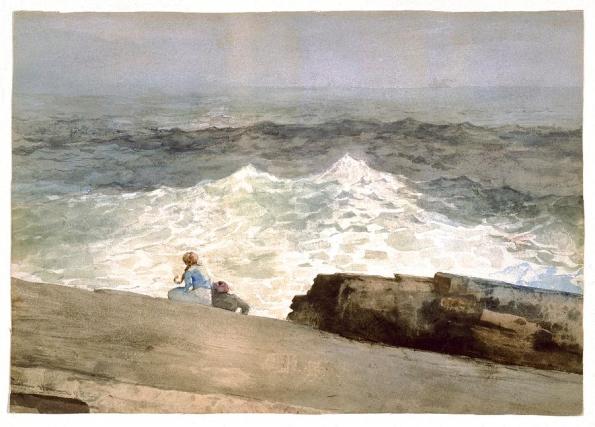
The Northeaster, by Winslow Homer
Good Afternoon!!
A huge nor’easter is moving up the coast and will likely hit us this afternoon. New Jersey and New York have already declared states of emergency. It has already been pouring rain here for the past two days and it will continue into tomorrow. We are expecting 70 mph wind gusts, maybe a bomb cyclone, and, of course, power outages. I just hope I don’t lose power. I need to get a better flashlight.
The Washington Post: Intensifying nor’easter lashing Northeast with flooding rain and high winds.
A storm offshore the Mid-Atlantic explosively intensified Monday night, and it is buffeting the Northeast with strong winds and flooding rains.
Flash flood watches are up from extreme northern Delaware and New Jersey through eastern Pennsylvania and most of southern New England. Up to five inches of rain are possible, falling on soils that are largely saturated following an exceptionally wet summer. Parts of New Jersey have already seen more than 4 inches, with rainfall rates topping an inch per hour….
Wind advisories also stretch from the nation’s capital to the coastline of Maine, with a high-wind warning up for the shorelines of Massachusetts and Rhode Island, where gusts could top 70 mph. The nor’easter is the first of two sprawling storm systems that will bring inclement weather to the East Coast this week. Its rate of intensification is expected to qualify it as a “bomb cyclone,” or a storm that strengthens with unusual haste.
The storm is the final act of a destructive ensemble that brought tornadoes to the Ozarks and Midwest on Sunday and a line of strong thunderstorms to parts of the Mid-Atlantic overnight Monday, which unloaded 1 to 3 inches of rain from Washington to Philadelphia. By Tuesday, rain and downpours were exiting offshore of the Delmarva Peninsula, spiraling into a new developing low pressure center taking shape off the East Coast.
But nearly half of Americans are deluded about what causes climate change, according to a new poll.
Vice News: 45% of Americans Don’t Believe Humans Cause Climate Change, VICE News/Guardian Poll Shows.
This year was marked by several unprecedented natural disasters, including a “heat dome” marked by sweltering temperatures of up to 113 F that plagued the Pacific Northwest, killing hundreds, and record-breaking wildfire seasons that razed entire towns and displaced thousands. Experts linked the string of natural disasters to the climate crisis, and yet, many Americans are still struggling to understand whether and why the generation-defining crisis is happening.
Emil Carlsen, Nantasket Beach Nor’easter, 1882
The poll, which surveyed 1,000 Americans on behalf of VICE News, the Guardian, and Covering Climate Now, by YouGov, comes less than a week before leaders and delegates from around the world meet in Glasgow, Scotland, for COP26, the United Nations’ climate change conference. The data shows that climate change is a top voter issue in the U.S., behind health care and social programs. For college grads and Democrats, climate change jumped to top spot (for Democrats it was tied with health care).
But while 69.5 percent of respondents believe global warming is happening, they were divided on what’s causing it. Forty-five percent don’t think humans are mostly to blame for global warming, opting instead to blame “natural changes in the environment” or “other,” and 8.3 percent denied global warming is happening altogether.
That’s mostly due to Republicans (55.4 percent) and independents (33 percent) though, who were far more likely than Democrats (17.2 percent) to believe “natural causes” have led to global warming. Young people and educated folks too were significantly more likely to believe humans are to blame for climate change.

Republicans aren’t satisfied with destroying U.S. democracy and killing as many people as possible with Covid-19; apparently they are also determined to hasten the end of the human race. Of course Republican are getting help with their goal of ending democracy and doing nothing about climate change–from a so-called Democrat.
John Nichols at The Nation: Joe Manchin’s Surefire Strategy to Ensure That Democrats Lose in 2022.
If Joe Manchin gets what he wants in negotiations with the Biden White House and his fellow Democratic senators regarding climate policy, which now seems likely, it could have a devastating impact on the planet—and on Democrats’ prospects in 2022.
How so? Let’s answer that question by asking and answering two other questions.
First: Name an issue that young people—an increasingly important and frequently decisive voting bloc—are passionate about? When the US Conference of Mayors surveyed potential voters between the ages of 18 and 29 in 2020, 80 percent said the climate crisis was “a major threat to human life on earth as we know it.” By a 3-1 margin, young people said “bold measures” needed to be taken to address that threat.
Greg Cartmell, October Nor’easter
Second: Name the issue that Democrats are now talking about downplaying in the ”Build Back Better” agenda in order to secure the West Virginia senator’s support? The Biden administration is by all accounts preparing to cut from the budget plan the Clean Electricity Performance Program (CEPP), a key climate initiative that would use a combination of incentives and mandates to get utilities to embrace renewable energy.
Much of the serious reporting on the issue has focused on the devastating impact that losing those clean-energy provisions could have on upcoming climate negotiations at the United Nations Climate Change Conference in Glasgow, Scotland. Without them, it will be tougher for Biden to convincingly pledge a 50 percent reduction in US carbon emissions by 2030. That could undermine negotiations on the issue, according to Michael Mann, director of the Earth System Science Center at Penn State. So serious is the threat that Mann greeted the news of Manchin’s push to abandon the CEPP by declaring, “Joe Manchin just launched a hand grenade at Glasgow.”

Read the rest at The Nation.
More depressing articles on Biden’s shrinking “Build Back Better” legislation:
The Washington Post: Additional Medicare, Medicaid benefits may be whittled or cut as Democrats woo moderates.
Democrats’ sweeping plans to bolster Medicare and Medicaid benefits have been scaled back amid an assault from industry groups and opposition from centrists like Sen. Joe Manchin III (D-W.Va.), with popular coverage expansions likely to be narrowed in hopes of reaching a deal this week.
Meanwhile, drug-pricing reforms have come under sustained attack from pharmaceutical lobbyists, with some Democrats now balking at empowering Medicare to negotiate the price of prescription drugs. Scaling back that proposal, which was expected to cut government spending by more than $700 billion over a decade, would complicate Democrats’ ambition to subsidize their coverage expansions.
Manchin told reporters on Monday that he had concerns about some of Democrats’ signature proposals, underscoring the fragile state of negotiations. “You’ve got to stabilize” Medicare’s long-term finances before adding new benefits, the senator said, adding that he thought the Medicaid proposal was “unfair” to states like his, which have already expanded the program under the Affordable Care Act.
The infighting over health care also prompted Democratic leadership this month to consider a plan to delay some of the party’s health agenda to next year, including a plan to repeal a Trump-era ban on prescription drug rebates, hoping that election-year deadlines would force lawmakers to seal deals that are currently proving elusive, said three people with knowledge of the negotiations, who spoke on the condition of anonymity because of the sensitivity of the negotiations.
That won’t excite Democrats about voting in 2022. And Bernie Sanders is fighting back. The Hill: Sanders draws red lines on Medicare expansion, drug pricing plan in spending bill.

Karol Wyckoff, Nor’easter
Robert Reich at The Guardian: Is Biden’s entire agenda about to shrink into nothingness?
This week, Democrats either reach an agreement on Biden’s social and climate agenda or the agenda may shrink into meaninglessness. The climate measures in particular need to be settled before Biden heads to Scotland for the UN climate summit this weekend, so other nations will see our commitment to reduce carbon emissions.
On Sunday, Biden met with key Democrats to work out spending and tax provisions. Yet every senate Republican and at least two senate Democrats continue to assert that Biden’s agenda is too costly.
Too costly? Really? Compare the Biden’s social and climate package’s current compromise tab of $2tn (spread out over the next 10 years) with:
The $1.9 trillion Trump Republican tax cut that went mostly to the wealthy and large corporations.
Americans were promised that its benefits would “trickle down” to average workers. They didn’t. Corporations used them to finance more stock buybacks. The wealthy used them to buy more shares of stock (and shares of private-equity and hedge funds).
The Trump Republican tax cut should be repealed to pay for Biden’s social and climate package. There is no good reason to retain it. But no senate Republican will vote for its repeal, nor will Arizona’s Kyrsten Sinema – making it a political non-starter in a chamber where Democrats have just half the votes.
The $2.1 trillion that America’s 750 billionaires have raked in just since the start of the pandemic.
You might think that at least a portion of this windfall should help pay for Biden’s agenda since much of it has been the result of monopoly power (for example, Amazon’s dominance over e-commerce during the pandemic).
Oregon Senator Ron Wyden, chair of the Senate Finance Committee, is proposing a “Billionaires Income Tax,” to be paid by the roughly 750 Americans with $1bn in assets or $100m in income for three consecutive years. It would be a yearly tax on the increasing value of their assets – such as stocks and bonds – regardless of when they sell. They could still write off losses every year. Interestingly, neither Sinema nor West Virginia Senator Joe Manchin, the other holdout, has voiced opposition to Wyden’s proposal.
The nearly $8 trillion we’ll be spending on the military over the next 10 years.
The United States already spends more on our military than the next 10 biggest military spenders in the world combined.
Last week, the Senate Appropriations Committee unveiled a nearly $726bn budget for the Defense Department in 2022. That was about $20bn more than Biden requested. Some $14bn in other funds are set aside for the Pentagon in separate military construction and energy appropriations bills, bringing the total budget to about $740 billion. Over ten years, that comes close to $8tn.
More at the link. Also see this from The Washington Post Editorial Board: Build Back Better is getting worse and worse.

Karen Blackwood, A Nor’easter Coming
I’ll end with this piece by Erin Gloria Ryan at The Daily Beast: These Aren’t Justices. They’re Used Car Salesmen, and They’re Coming for Your Abortion Rights.
One of the oldest sales tricks in the book is the one where the salesperson presents the potential buyer with an extremely crappy option first, and follows that up with an only moderately crappy second option. The potential buyer, dazzled by the jump in quality between options one and two, won’t scrutinize option two as much, because it’s so much better than option one. This has been employed by slimy realtors, wedding planners, and used car salesmen.
And now, we’ve reached the point in the American experiment where the Supreme Court’s new conservative majority has resorted to a cheap sales tactic in an attempt to rehabilitate its image. Lower the customer’s expectations enough, conventional wisdom goes, and they’ll thank you for ripping them off.
The high court agreed to hear the Biden administration’s challenge to the law on Nov. 1, on an expedited schedule. Legal observers predict that the court will toss the law out. I—and many wary pro-choicers—predict that after tossing the law out, the media will fawn over the court’s newfound social moderation, and the Susan Collinses of the world will crow that they were right, the hysterical feminists were wrong, and the Supreme Court was never going to toss abortion rights on—as Mike Pence would say—“the ash-heap of history.”
The following month SCOTUS will hear oral arguments in the case of Dobbs vs. Jackson Women’s Health, testing the constitutionality of a Mississippi law that directly confronts Roe v. Wade by banning abortion after 15 weeks’ gestation. Roe established in 1973 that the government has no right to interfere with abortion access prior to fetal viability—around 24.5 weeks’ gestation (a full-term pregnancy takes 40 weeks). Dobbs is the direct challenge to Roe that conservative activists have had a hard-on for since Reagan.
Ryan argues that, using the “smokescreen” provided by the ridiculous Texas law, the right wing justices will use the Alabama law to overturn Roe v. Wade.
Sorry this post is so full of woe. Hope you all have a pleasant Tuesday; I’ll be taking a news break for the next few hours at least.
Friday Reads: Now We Know They’re Still Traitors!
Posted: October 1, 2021 Filed under: Afternoon Reads, Right Wing Angst, Trump Trash | Tags: abortion, Racism 10 Comments
Louis Frey, Artist
Sequoia National Park Poster
Good Day Sky Dancers!
One of the weird things I’ve learned growing up in these United States was that no matter how far in the past the Civil War was fought, parts of the Deep South have never got over it or gone much beyond it. This is especially true in rural areas although there are also some Western and Mid-Western states that are mostly rural and as backasswards about stuff as much as the Deep South.
I grew up in the Heartland and spent every moment feeling like I lived in a cultural desert even though the combined area of Council, Bluffs, Iowa, and Omaha. Nebraska is fairly large in terms of middle-of-the-country cities. I’m thankful my daughters are in Denver and Seattle that are big enough population areas to drive the rural parts of their state to mostly obscurity on the state level.
So, this was no surprise to me:

Sabrena Khadija, Artist
Volcanoes National Park
I’ve heard better solutions to the red state/blue state gap and believe me, I was ready to make a movement for France to reclaim New Orleans quite a few times during the entire Hurricane Katrina period. But seriously, who wants to live near this kind of behavior? Gabrielle Hays files this story for the PBS News Hour. This happens to come from my mother’s hometown which I thought was super-sophisticated grown up in comparison to Omaha. “A pro-slavery petition is the latest racist incident at this Kansas City high school. Parents say they’ve had enough.” WTF?
An online petition to reinstate slavery that made its rounds at a high school in Kansas City this month is the latest in a series of incidents sparking outrage from parents and students who say race-related controversies at the school are an all-too-common occurence.
In an email to parents at Park Hill South High School dated Sept. 22, Park Hill School District Superintendent Jeanette Cowherd acknowledged the petition – which was brought to officials’ attention nearly a week prior – by saying many people are “hurting” because of “unacceptable and racist statements online,” adding that Board of Education “prohibits discrimination, harassment and retaliation” and that discipline could equal “suspension or expulsion.” Cowherd did not share any specifics regarding the students involved nor whether they have been disciplined. The email also noted the district will set up meetings to “give people the opportunity to share how they feel.”
But parents say the district is doing little to mitigate the ongoing problems, including individual attacks on students based on their race.
“I have a disheartening feeling about the incident that happened at Park Hill South. I don’t feel like it was addressed properly or at all,” parent Jeff Holmes said during public comment at a Park Hill school board meeting last Thursday, adding that these issues span across the school district.
“I’ve heard all of the nice, kind words and I guess that they are okay, they are what they are but they are meaningless, hollow and insincere if we don’t see action,” he said.
Park Hill South is only the latest school over the past week to make headlines for its handling of racial incidents. Just days after the petition circulated, school officials at Olathe South School, 30 minutes away from Kansas City, Missouri, are investigating a homecoming proposal poster that read “If I was Black I would be picking cotton but I’m white so I’m picking you for HOCO?” A photo of the offensive poster made its rounds on social media before school administrators caught wind of it.
National Education Association President Becky Pringle said these types of derogatory occurrences are not new.
“All students – no matter their race or place – have a right to a public education in a safe learning environment. But right now, many of our students are scared, anxious, and feeling threatened. What happened at Park Hill South High School isn’t an isolated incident nor did it happen by accident,” she said in a statement to the PBS NewsHour.
NEA, a teachers union that advocates on behalf of educators nationwide, has received reports of “hostile and hateful environments” in schools across the country, she said.

Brittney Lewis of Bybrije, Artist
Yosemite National Park
There have been threats made to school board members across the country as well as a documentary by NBC on an incident that sparked the critical race theory kerfuffle which basically erases slavery, Jim Crow, and whatever we happened to stumble across in our history books like the Tulsa Race Massacre. Greg Abbott just signed a law to make white folks feel comfy with their slave-owning, KKK klan, lynch-happy ancestors. Many southern states actually are experiencing an increase in the population of black southerners as many Black Americans are moving to the large, affluent cities of the south. This might be one way of turning more southern states blue.
Then, of course, we’ve spent lots of time on the Abbott anti-women and anti-voting rights legislature making Texas basically into something akin to Texastan with its Cristoban tyrants seeking to make women, people of color, and the LGBT community outcasts and lesser citizens. What the Hell is going on? Why do we have a tyranny of a minority?
But what about the American Outback where many states have fewer people than your normal Chicago, New York, or LA Zip codes. I watched Steve Kornacki show how much political power these states have because they all have two senators.
I mean, what we`re talking about here is the partisan distribution of voters. A couple different ways, I guess, to look at this. First, the map everybody knows. This is the 2020 election. Biden wins. There`s the electoral vote count. Here are the red states. Here are the blue states.
You see, basically, we know Democrats concentrated a lot on the West Coast, the Northeast, somewhat here in the Midwest. Biden was able to flip a couple states. But in that clip you played, you had Michael Steele talking about the county strength.
Now, the 50 states in the country, there`s more than 3, 100 counties in the United States. So this map is going to change here in a second, and you`re going to see all of the counties in the country.
This is the red/blue map for the counties. And, obviously, you see a lot more red here than blue. In the 2020 election, Donald Trump won more than 2, 500 counties. Again, there`s just over 3, 100 of them. More than 2, 500 went for Donald Trump.
Now, obviously, not every county is the exact same size. Here`s like a very dramatic example I could give you. If you were to really Zoom in here in Southern California, I`m going to circle it. What I just circled is Los Angeles County in Southern California.
This is a big blue county, the city of Los Angeles, about 10 million people. There`s about 10 million residents in Los Angeles County. Joe Biden won Los Angeles County overwhelmingly. In terms of population, though, Los Angeles County would be the same size as Utah, Idaho, Montana, Wyoming, North Dakota, South Dakota, Nebraska, roughly.
If you were to combine all of those red states, the population would be about the same as Los Angeles County. And yet obviously the number of counties, the land distribution, there`s a lot more landmass, there`s a lot more red than blue one here, land vs. population. So that gets the story this divide here that you see in the county map.
Here`s the actual number, Trump won 2, 574 counties, Biden 539. This has become — this century, at least, this has become the story of our politics. And Clinton in the 1990s won a ton of counties. He won a lot more of the interior of the country.
But this has become the story. But this, by the way, what you`re looking at here, is if you sized every state in every county relative to its population, this would be the map. But this is just a blob here. It looks like a Rorschach test.
But if you were to size the high population areas to the same scale as low end — in low population areas much lower, this would become what the red/blue map looks like. But, again, Ari, what it basically gets at here is, look, the distribution of the popular, Democrats in cities, increasingly in suburbs.

Sage Aune of Sagepizza, Artist Joshua Tree National Park
We’ve talked about Senator Joe Manchin was has been the focus of disruption in the Senate Democratic Caucus. Eyes recently on Arizona’s Krysten Sinema who is going for the complete enigma look. This is from Axios’ Hans Nicholls: “Cracking the Sinema code.”
Sen. Kyrsten Sinema’s political allies have some free advice for anyone trying to bully the wine-drinking triathlete into supporting President Biden’s $3.5 trillion budget bill: She doesn’t play by Washington’s rules — and she’s prepared to walk away.
Why it matters: For all her flash, Sinema — unlike fellow holdout Sen. Joe Manchin (D-W.Va.) — rarely telegraphs her precise intentions, leaving political adversaries guessing about her ultimate goals.
- In conversation with colleagues, she’ll suggest that her top priority is passing the $1.2 trillion bipartisan infrastructure deal she brokered this spring over late-night, wine-fueled negotiations. Beyond that, you’re piecing together clues.
- President Biden and his top aides met her four times over the course of a day this week without totally cracking the code.
- Sinema on Thursday tweeted a statement saying, “Claims that the Senator has not detailed her views to President Biden and Senator [Majority Leader Chuck] Schumer are false” and they “are fully aware of Senator Sinema’s priorities, concerns and ideas.”
Between the lines: Progressives could be forgiven for presuming that Sinema, 45, the first openly bisexual member of Congress, who’s easy to spot in her trademark sleeveless dresses, wry wigs and acrylic glasses, would share their woke politics.
- They’ve been befuddled, and increasingly enraged, when she behaves more like the late Republican Sen. John McCain, another Arizonan who didn’t mind challenging party orthodoxies.
- At her core, Sinema is something of a fiscal conservative, which disappoints progressives, leading them to whisper about a primary challenge in 2024.
- She’s unconventional (see: recent internship at a Sonoma winery) and a force to be reckoned with. She’s known to rise between 4-5 a.m. to train for her next race, and she was forced to take up aqua jogging after breaking her foot this summer in something called the “Light at the End of the Tunnel Marathon.”
The big picture: While Manchin has been intensely focused on price tag of spending, setting his limit at $1.5 trillion, Sinema has signaled she’s more concerned with the tax side of the equation, including who pays them.
-
- She’s suggested to some allies that she’s reluctant to support any increase in the corporate tax rate, but she’s more likely to accept a smaller increase to the headline rate — likely in the 24% range, well short of Biden’s proposed 28%.
- She’s raised flags about increasing the rate on corporations’ international profits, which she believes could harm their competitiveness.
- On capital gains, she’s also indicated that she’s opposed to Biden’s headline 39.6% rate but could accept a number in the mid-twenties.

Sabrena Khadija, Artist
Death Valley National Park
There are so few conservative Dems and centrist Republicans that the Senate is as split as the country. However, the right-wingers of the Republican base have more cows and coyotes for neighbors than people. The graph shown by Kornacki makes me agree with Dr. Howard Dean.
DEAN: Well, the central problem — there are several central problems.
The biggest problem of all is that the counties and the states that Michael talked about and that Steve talked about are older, getting older and whiter. And they`re terrified of the future. Their kids are leaving. They`re teaching stuff in the schools that`s not useful.
The older people don`t know how to use an Internet. They`re losing their jobs. And if they can`t use the Internet, they can`t get another job. And this is pure fear and anger that`s motivating Trump`s voters. And it`s why he`s so successful.
The problem is that the future, first of all, belongs to the blue areas, at least right now. Young people overwhelmingly vote Democratic, not because they love the Democrats, but because that horrible, pessimistic, furious vision of the Republicans is just totally unacceptable to people who are young.
And it also highlights the structural defects that we have got that are now an emergency after 250 years, the Electoral College, which doesn`t make any sense at all. The corrupt election laws that are being passed, we have had experience with that through Jim Crow.
We have the new Jim Crow in Georgia, and they still voted for two Democratic senators for the first time since segregation was broken. So, the country is really at an inflection point, a point. And the fury and anger between the red and the blue is explainable by how terrified the right-wing is and the conservatives are of the future.
Let me know return to what’s behind that first twitter with a direct link to the study.
The University of Virginia Center for Politics has partnered with Project Home Fire, a new initiative dedicated to finding common ground in American politics, on an innovative new data analytics and polling project to explore the social, political, and psychological divides between those who voted for Donald Trump and those who voted for Joe Biden in 2020.
Some of the key takeaways from today’s release are:
— Majorities of Trump and Biden voters express support for several elements of the bipartisan infrastructure and reconciliation bills being debated in Congress, but there are marked differences in their levels of support. (see Table 1 below)
— Majorities — often large majorities — of both Biden and Trump voters express some form of distrust for voters, elected officials, and media sources they associate with the other side. A strong majority of Trump voters see no real difference between Democrats and socialists, and a majority of Biden voters at least somewhat agree that there is no real difference between Republicans and fascists. (see Table 2 below)
— Significant numbers of both Trump and Biden voters show a willingness to consider violating democratic tendencies and norms if needed to serve their priorities. Roughly 2 in 10 Trump and Biden voters strongly agree it would be better if a “President could take needed actions without being constrained by Congress or courts,” and roughly 4 in 10 (41%) of Biden and half (52%) of Trump voters at least somewhat agree that it’s time to split the country, favoring blue/red states seceding from the union. (see Table 3 below)
The Center for Politics and Project Home Fire will be releasing findings from this study in the coming weeks through a series of articles in Sabato’s Crystal Ball and other publications, as well as public symposiums that will each explore major, divisive subjects in American life. Those topics include: immigration, political violence, pandemic response, and other prominent national issues.
Yup. We’ve got a bunch of secessionists out there but they are not the majority. What are we going to do with this situation?
The National Park Posters are available to purchase to help raise funds for the NPS. You can read more about them and their artists at this link at Forbes. The link is old but still interesting.
What’s on your reading and blogging list today?
Thursday Reads: SCOTUS=American Taliban
Posted: September 2, 2021 Filed under: abortion rights, just because, morning reads, SCOTUS | Tags: abortion, American Taliban, Roe v. Wade, US Supreme Court, women's bodily autonomy, women's reproductive rights 24 Comments
American Taliban
Good Day, Sky Dancers.
As far as I’m concerned, the most important story today is that the corrupt U.S. Supreme Court is signaling the approaching death of reproductive rights for American women. I was so angry that I couldn’t sleep last night, and I’m not thinking too clearly this morning. As I’m sure you know, the Court allowed the insane Texas abortion ban to take effect around midnight on Tuesday, without explanation or comment. Late Wednesday night, the court released the justices’ opinions. The New York Times summarized all of them: Supreme Court, Breaking Silence, Won’t Block Texas Abortion Law.
The vote was 5 to 4, with Chief Justice John G. Roberts Jr. joining the court’s three liberal members in dissent.
The majority opinion was unsigned and consisted of a single long paragraph. It said the abortion providers who had challenged the law in an emergency application to the court had not made their case in the face of “complex and novel” procedural questions. The majority stressed that it was not ruling on the constitutionality of the Texas law and did not mean to limit “procedurally proper challenges” to it.
But the ruling was certain to fuel the hopes of abortion opponents and fears of abortion rights advocates as the court takes up a separate case in its new term this fall to decide whether Roe v. Wade, the landmark 1973 decision establishing a constitutional right to the procedure, should be overruled. It also left Texas abortion providers turning away patients as they scrambled to comply with the law, which prohibits abortions after roughly six weeks.
The “conservatives” were too cowardly to explain their votes, but the other four justices filed dissenting opinions
“The court’s order is stunning,” Justice Sonia Sotomayor wrote in her dissent. “Presented with an application to enjoin a flagrantly unconstitutional law engineered to prohibit women from exercising their constitutional rights and evade judicial scrutiny, a majority of justices have opted to bury their heads in the sand.”
“The court has rewarded the state’s effort to delay federal review of a plainly unconstitutional statute, enacted in disregard of the court’s precedents, through procedural entanglements of the state’s own creation,” Justice Sotomayor wrote. “The court should not be so content to ignore its constitutional obligations to protect not only the rights of women, but also the sanctity of its precedents and of the rule of law.”
Chief Justice Roberts wrote that he would have blocked the law while appeals moved forward.
“The statutory scheme before the court is not only unusual, but unprecedented,” he wrote. “The legislature has imposed a prohibition on abortions after roughly six weeks, and then essentially delegated enforcement of that prohibition to the populace at large. The desired consequence appears to be to insulate the state from responsibility for implementing and enforcing the regulatory regime.”
The chief justice underscored the tentative nature of the majority’s ruling. “Although the court denies the applicants’ request for emergency relief today,” he wrote, “the court’s order is emphatic in making clear that it cannot be understood as sustaining the constitutionality of the law at issue.”
Justice Elena Kagan criticized the court’s practice of deciding important issues in rushed decisions without full briefing or oral argument — on what Supreme Court specialists call its “shadow docket.”
“Today’s ruling illustrates just how far the court’s ‘shadow-docket’ decisions may depart from the usual principles of appellate process,” she wrote. “That ruling, as everyone must agree, is of great consequence.”
“Yet the majority has acted without any guidance from the court of appeals — which is right now considering the same issues,” she wrote. “It has reviewed only the most cursory party submissions, and then only hastily. And it barely bothers to explain its conclusion — that a challenge to an obviously unconstitutional abortion regulation backed by a wholly unprecedented enforcement scheme is unlikely to prevail.”
“In all these ways,” Justice Kagan wrote, “the majority’s decision is emblematic of too much of this court’s shadow-docket decision making — which every day becomes more unreasoned, inconsistent and impossible to defend.”
“Today’s ruling illustrates just how far the court’s ‘shadow-docket’ decisions may depart from the usual principles of appellate process,” she wrote. “That ruling, as everyone must agree, is of great consequence.”
“Yet the majority has acted without any guidance from the court of appeals — which is right now considering the same issues,” she wrote. “It has reviewed only the most cursory party submissions, and then only hastily. And it barely bothers to explain its conclusion — that a challenge to an obviously unconstitutional abortion regulation backed by a wholly unprecedented enforcement scheme is unlikely to prevail.”
“In all these ways,” Justice Kagan wrote, “the majority’s decision is emblematic of too much of this court’s shadow-docket decision making — which every day becomes more unreasoned, inconsistent and impossible to defend.”
 Justices Breyer and Kagan joined Roberts’ dissent, and Breyer also wrote his own dissent. Zoe Tillman at Buzzfeed News:
Breyer — who has spent the past year fending off calls from the left to step aside and let President Joe Biden appoint a successor while he has a Democratic majority in the Senate — wrote that it was true that the lawsuit raised difficult threshold questions about how this type of case could be handled by the courts. But he wrote that there had to be a way for courts to deal with an imminent violation of a party’s legal rights.
“There may be other not-very-new procedural bottles that can also adequately hold what is, in essence, very old and very important legal wine: The ability to ask the Judiciary to protect an individual from the invasion of a constitutional right — an invasion that threatens immediate and serious injury,” Breyer wrote.
Amber Phillips at The Washington Post: What to know about the Texas abortion law.
The law, which was passed in May and went into effect Wednesday, says that any pregnancy in which a heartbeat is detected cannot be aborted. That effectively means if you’re six weeks pregnant, you cannot have an abortion in the state of Texas, because that is around when most fetal cardiac activity can be detected. (Doctors opposed to this legislation say that is misleading language, and that the fluttering detected isn’t always necessarily a heartbeat so early in a pregnancy.)
The law makes no exceptions for rape, sexual abuse or incest.
The law does something else novel: It effectively incentivizes the public to police abortions. It allows people — anyone living in the state of Texas — to sue an abortion provider or anyone else they suspect is “aiding and abetting” abortions after that six-week mark. And the law sets a $10,000 award for any successful lawsuit to stop an abortion.
Taken together, those decisions allowed Texas lawmakers to essentially end abortions in their state, abortion rights activists say.
 On the SCOTUS decision:
The court announced that a five-person conservative majority had decided to let the ban stand. The court’s most conservative justices, including the three President Donald Trump nominated, such as Amy Coney Barrett, decided to let the law stand. In a one-paragraph statement, these justices said there are “serious questions regarding the constitutionality of the Texas law,” but indicated that the way the law was set up, the court is unsure how to stop if from going into effect.
The three liberal justices, joined by Chief Justice John G. Roberts Jr., dissented. Roberts said he would stop the law from going into effect because it is so novel and far-reaching.
The justices didn’t say anything about whether the statute is constitutional. They just said it will stay in place while that question is litigated.
That was an unexpected move that could signal the court is ready to strike down Supreme Court precedent created nearly 50 years ago in Roe v. Wade that guarantees a woman access to abortion services in the first half of her pregnancy before the fetus would be viable outside the womb,said Lisa Soronen, executive director of the State and Local Legal Center, which supports municipalities in cases before the Supreme Court.
“The justices know that this Texas law violates Roe v. Wade. They all know that,” she said. To keep the law in place, “that still doesn’t overturn Roe v. Wade, it just makes a really big statement about what they think of it.”
Phillips notes that other Republican-controlled states are likely to quickly pass similar laws effectively banning abortion. Read about it at the WaPo link.
Joan Biscupic at CNN: In the shadows: Why the Supreme Court’s lack of transparency may cost it in the long run.
Supreme Court justices tout judicial integrity and the importance of public confidence in their decisions, but the court’s midnight silence Tuesday while letting a Texas law that curtails abortion rights take effect — followed by a midnight order Wednesday — offers the latest and most compelling example of its lack of transparency and the cost.
The justices’ secretive patterns have gained new attention as confidence in all government institutions has waned. Witnesses before a bipartisan commission set up by President Joe Biden to consider court revisions — most visibly, the options of term limits and the addition of more seats — have targeted the justices’ secrecy and how it contributes to public distrust of the high court, along with the lopsided advantage the court gives to some litigants.
Such lack of transparency is only part of the context behind the Supreme Court’s silence in the closely watched Texas case. The emboldened conservative majority already is poised to reverse or at least undercut Roe v. Wade, the 1973 landmark ruling that declared women’s constitutional right to end a pregnancy. The court announced last spring that it would take up in the 2021-22 session a dispute over Mississippi’s ban on abortions after 15 weeks. The Texas law goes much further, making it illegal to terminate a pregnancy when a fetal heartbeat is detected, which may be typically around six weeks.
Both laws sharply conflict with Roe v. Wade, which forbade states from interfering with a woman’s abortion decision before the fetus would be viable, that is, able to live outside the womb, at about 22-24 weeks.
The justices have made plain their concerns regarding public mistrust and misunderstanding of the Supreme Court. Chief Justice John Roberts regularly declares that judges differ from elected lawmakers, and Justice Stephen Breyer protested in a speech at Harvard last spring that they should not be regarded as “junior-varsity politicians.” Breyer cited the court’s long-standing preservation of abortion rights as evidence of its nonpartisan, nonideological character.
Separately last spring, Justices Sonia Sotomayor and Neil Gorsuch emphasized in a joint appearance, advocating civics education, the deep reasoning that underlies their opinions. They criticized those who would look only for a bottom-line judgment.
Yet no judgment — or word of any sort — came late Tuesday night, with the clock ticking, anxiety rising among both sides in Texas and a national audience watching.
Read the rest at CNN.
More opinions:
Gail Collins at The New York Times: Texas Is Trying to Overturn Roe v. Wade All by Itself.
Mark Joseph Stern at Slate: The Supreme Court Overturned Roe v. Wade in the Most Cowardly Manner Imaginable.
Dana Millbank at The Washington Post: Opinion: Texas shows us what post-democracy America would look like.
Michelle Goldberg at The New York Times: Republicans Are Giving Abortion Opponents Power Over the Rest of Us.
Any man who expresses “concerns” about women in Afghanistan needs to explain why they aren’t concerned about women in Texas and ultimately the entire U.S. Or they need to STFU!
Hang in there Sky Dancers!!
Thursday Reads: Happy Valentine’s Day
Posted: February 14, 2019 Filed under: Afternoon Reads, U.S. Politics | Tags: abortion, Andrew McCabe, corruption, Donald Trump, ethics, FBI, FinCEN, Fox News, Jamal Kashoggi, James Comey, Jeff Sessions, Maria Ressa, Mary Daly, narcissists, Nazis, obstruction of justice, Paul Manafort, rape, Richard Burr, Richard Nixon, Robert Mueller, Rod Rosenstein, Ryan Adams, Saudi Arabia, Spiro Agnew, Tom Barrack, Tyler McGaughey, Walter Shaub, White House Counsel's office, William Barr 18 Comments
Les Pivoines 1907 par Henri Matisse
Happy Valentine’s Day, Sky Dancers!!
Andrew McCabe’s book The Threat: How the FBI Protects America in the Age of Terror and Trump will be released on Tuesday, and he will be interviewed on 60 Minutes on Sunday night. This might be one 60 Minutes I decide to watch.
McCabe was deputy director of the FBI under James Comey and he became acting director after Trump fired Comey. Trump attacked McCabe repeatedly, and eventually succeeded in driving him out of office. Attorney General Jeff Sessions fired McCabe one day before he could have retired with his full pension.
Today The Atlantic published an article adapted from McCabe’s book: Every Day Is a New Low in Trump’s White House.
On Wednesday, May 10, 2017, my first full day on the job as acting director of the FBI, I sat down with senior staff involved in the Russia case—the investigation into alleged ties between the Trump campaign and the Russian government. As the meeting began, my secretary relayed a message that the White House was calling. The president himself was on the line. I had spoken with him the night before, in the Oval Office, when he told me he had fired James Comey.
Bouquet on a Bamboo Table (1903) Henri Matisse
A call like this was highly unusual. Presidents do not, typically, call FBI directors. There should be no direct contact between the president and the director, except for national-security purposes. The reason is simple. Investigations and prosecutions need to be pursued without a hint of suspicion that someone who wields power has put a thumb on the scale.
The Russia team was in my office. I took the call on an unclassified line. That was another strange thing—the president was calling on a phone that was not secure. The voice on the other end said, It’s Don Trump calling. I said, Hello, Mr. President, how are you? Apart from my surprise that he was calling at all, I was surprised that he referred to himself as “Don.”
The president said, I’m good. You know—boy, it’s incredible, it’s such a great thing, people are really happy about the fact that the director’s gone, and it’s just remarkable what people are saying. Have you seen that? Are you seeing that, too?
He went on: I received hundreds of messages from FBI people—how happy they are that I fired him. There are people saying things on the media, have you seen that? What’s it like there in the building?

McCabe describes the reaction of FBI employees as one of shock and dismay. Trump then said he wanted to come to the FBI and “show all my FBI people how much I love them.” McCabe thought that was a terrible idea, but agreed to meet with Trump about it. Next, Trump:
Flowers and Fruit by Henri Matisse
…began to talk about how upset he was that Comey had flown home on his government plane from Los Angeles—Comey had been giving a speech there when he learned he was fired. The president wanted to know how that had happened.
I told him that bureau lawyers had assured me there was no legal issue with Comey coming home on the plane. I decided that he should do so. The existing threat assessment indicated he was still at risk, so he needed a protection detail. Since the members of the protection detail would all be coming home, it made sense to bring everybody back on the same plane they had used to fly out there. It was coming back anyway. The president flew off the handle: That’s not right! I don’t approve of that! That’s wrong! He reiterated his point five or seven times.
I said, I’m sorry that you disagree, sir. But it was my decision, and that’s how I decided. The president said, I want you to look into that! I thought to myself: What am I going to look into? I just told you I made that decision.
The ranting against Comey spiraled. I waited until he had talked himself out.

After that Trump taunted McCabe about his wife’s losing campaign for the Virginia Senate, asking McCabe, “How did she handle losing? Is it tough to lose?” and later saying “Yeah, that must’ve been really tough. To lose. To be a loser.”
I once had a boss who was a monstrous whack job like Trump. It was crazy-making. The entire department under this man functioned like an alcoholic family with an unpredictable, out-of-control father. You never knew what horrible thing would happen next. It was total chaos, as the White House seems to be. I’m glad McCabe is telling the truth about what he experienced.
Two more articles based on the McCabe book:
CBS News 60 Minutes: McCabe Says He Ordered the Obstruction of Justice Probe of President Trump.
The New York Times: McCabe Says Justice Officials Discussed Recruiting Cabinet Members to Push Trump Out of Office.

Bouquet of Flowers in a White Vase, 1909, by Henri Matisse
I expect Trump will be ranting about McCabe on Twitter and in the Oval Office, but he can’t do anything to shut McCabe up anymore.
Soon we’ll have a new U.S. Attorney General, William Barr, and already the corruption surrounding him has a very bad odor. CNN reports that Barr’s daughter and son-in-law are leaving the Justice Department for new jobs at FinCEN and the White House Counsel’s office respectively.
Mary Daly, Barr’s oldest daughter and the director of Opioid Enforcement and Prevention Efforts in the deputy attorney general’s office, is leaving for a position at the Financial Crimes Enforcement Network (FinCEN), the Treasury Department’s financial crimes unit, a Justice official said.
Tyler McGaughey, the husband of Barr’s youngest daughter, has been detailed from the powerful US attorney’s office in Alexandria, Virginia, to the White House counsel’s office, two officials said.
It’s not clear if McGaughey’s switch is a result of Barr’s pending new role, and the kind of work he’ll be handling at the White House is not public knowledge.
Daly’s husband will remain in his position in the Justice Department’s National Security Division for now.Henri Matisse: Les Anemones
The moves were by choice and are not required under federal nepotism laws, but Walter Shaub, the former director of the Office of Government Ethics, called them “a good idea” to “avoid the bad optics that could come from the appearance of them working for him.”
However, Shaub added that McGaughey’s detail to the White House counsel’s office was “concerning.”“That’s troubling because it raises further questions about Barr’s independence,” Shaub said.

Read more at the CNN link.
If you listened to Rachel Maddow’s podcast about Spiro Agnew (or even if you didn’t) you should read this op-ed at The Washington Post by three attorneys who were involved in that corruption case: We should demand high standards from William Barr. Spiro Agnew’s case shows why, by Barnet D. Skolnik, Russell T. Baker Jr., and Ronald S. Liebman.
In the winter of 1973, 46 years ago, the three of us were assistant U.S. attorneys in Baltimore starting a federal grand jury investigation of a corrupt Democratic county chief executive in Maryland. That investigation ultimately led to the prosecution of his corrupt Republican predecessor — the man who went on to become the state’s governor and then President Richard M. Nixon’s vice president, Spiro T. Agnew.
On Oct. 10, 1973, Agnew entered a plea to a criminal tax felony for failure to report the hundreds of thousands of dollars he’d received in bribes and kickbacks as county executive, governor and even vice president. All paid in cash, $100 bills delivered in white envelopes.
And he resigned.
Henri Matisse. Vase of Irises. 1912
From the beginning of our investigation, months before we had seen any indication that he had taken kickbacks, Agnew, along with top White House and administration officials and even Nixon himself, repeatedly tried to impede, obstruct and terminate the investigation in nefarious ways. Some of those efforts were unknown to us then and have come to light only now thanks to MSNBC’s Rachel Maddow and her “Bagman” podcast.
When newspapers began to report that he was under criminal investigation in the summer of 1973, Agnew aroused his base by screaming “witch hunt” and launching a vicious assault on the “lying” press, the “partisan” Justice Department, and the “biased” and “liberal Democrat” prosecutors in Baltimore.
If Agnew and Nixon had succeeded in derailing our investigation, the most corrupt man ever to sit a heartbeat away might have become the president of our country when Nixon was forced to resign less than a year later. But our investigation was protected — first, by our staunch and courageous boss, the late George Beall, the U.S. attorney for Maryland and a prominent Maryland Republican, and second, by the man who had become the new U.S. attorney general that spring, Elliot L. Richardson.

The authors then go on to explain why Barr should not be confirmed unless he commits to releasing Robert Mueller’s findings to the public. Read the whole thing at the WaPo.
There is so much more news! Here are some links to check out:

Flowers by Henri Matisse
Just Security: Who is Richard Burr, Really? Why the public can’t trust his voice in the Russia probe. (This is an incredibly important story. Corruption is all around us.)
NBC News: ‘Whistleblower’ seeks protection after sounding alarm over White House security clearances.
Politico: Judge rules Manafort lied to Mueller about contacts with Russian.
The New York Times: House Votes to Halt Aid for Saudi Arabia’s War in Yemen.
Gulf News: Trump backer Tom Barrack defends Saudi Arabia.
The Washington Post: Trump confidant Thomas Barrack apologizes for saying U.S. has committed ‘equal or worse’ atrocities to killing of Saudi journalist Jamal Khashoggi.
The New York Times: Maria Ressa, Philippine Journalist Critical of Rodrigo Duterte, Is Released After Arrest.
HuffPost: I Wish I’d Had A ‘Late-Term Abortion’ Instead Of Having My Daughter. (Trigger warning for rape description)
Vice: Being Raised by Two Narcissists Taught Me How to Deal with Trump.
The New York Times: Ryan Adams Dangled Success. Women Say They Paid a Price.
Contemptor: Fox News Rejects Commercial for Documentary that Says Nazis are Bad.
So . . . what stories have you been following?
Tuesday Reads: Trump Nominates Brett Kavanaugh for SCOTUS
Posted: July 10, 2018 Filed under: Civil Liberties, Civil Rights, court rulings, Criminal Justice System, morning reads, SCOTUS, U.S. Politics, Women's Rights | Tags: abortion, Anthony Kennedy, Birth Control, Brett Kavanaugh, Donald Trump, same-sex marriage, U.S. Supreme Court 44 Comments
The Four Justices, Nelson Shanks, National Portrait Gallery, Smithsonian Institution
Good Morning!!
Last night thug “president” Trump did his ridiculous PT Barnum act with his nomination of Brett Kavanaugh to the Supreme Court to replace Anthony Kennedy. Supposedly, Trump was deciding among about four candidates, but it turns out the fix may have been in all along.
https://twitter.com/GeoffRBennett/status/1016642192616706050
Has any other president made a deal with a Supreme Court Justice to appoint a chosen replacement?
https://twitter.com/Susan_Hennessey/status/1016649427577196544
From Politico: How a private meeting with Kennedy helped Trump get to ‘yes’ on Kavanaugh.
After Justice Anthony Kennedy told President Donald Trump he would relinquish his seat on the Supreme Court, the president emerged from his private meeting with the retiring jurist focused on one candidate to name as his successor: Judge Brett Kavanaugh, Kennedy’s former law clerk….
So even as Trump dispatched his top lawyers to comb though Kavanaugh’s rulings and quizzed allies about whether he was too close to the Bush family, potentially a fatal flaw, the president was always leaning toward accepting Kennedy’s partiality for Kavanaugh while preserving the secret until his formal announcement, sources with knowledge of his thinking told POLITICO.
I’m sure we’ll be learning more about this, and I hope Democrats respond aggressively.
Basic background on Kavenaugh
NBC News: Who is Supreme Court nominee Brett Kavanaugh?
President Donald Trump’s Supreme Court pick is no stranger to partisan politics: Before becoming a judge, he was helping make the case for the impeachment of Bill Clinton and later for the election of George W. Bush.
U.S. Court of Appeals for the D.C. Circuit judge Brett Kavanaugh
Twenty years ago, Kavanaugh’s story starts amid the highly politicized independent counsel investigation into Clinton. He worked for Starr as a young Yale Law graduate, first when Kenneth Starr was solicitor general and later in the Office of the Independent Counsel, where Kavanaugh was a key player in the slew of investigations into the Clintons, including the Whitewater scandal, the suicide of White House counsel Vincent Foster and Clinton’s affair with Monica Lewinsky.
The Starr Report to Congress laid out the details of Clinton and Lewinsky’s affair and findings of potential wrongdoing by the president. Kavanaugh was the primary author of the section on the grounds for possible impeachment, Starr would reportedly later say,because “that needed to be very carefully crafted, so I was looking to one of the office’s most talented lawyers — of superb and balanced judgment — to take the lead in drafting.” [….]
He was a member of the GOP legal team fighting to stop the recount in Florida to clear the way for Bush’s election against Al Gore in 2000, later taking a job in the Bush White House in 2001, where he’d serve for five years as counsel and later staff secretary until his confirmation to the U.S. Court of Appeals for the D.C. Circuit in 2006.
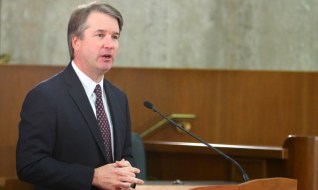
The Washington Post: Brett Kavanaugh, Trump’s Supreme Court pick, has sided with broad views of presidential powers.
Brett M. Kavanaugh, the federal judge nominated by President Trump on Monday to the Supreme Court, has endorsed robust views of the powers of the president, consistently siding with arguments in favor of broad executive authority during his 12 years on the bench in Washington.
Justice Anthony Kennedy
He has called for restructuring the government’s consumer watchdog agency so the president could remove the director and has been a leading defender of the government’s position when it comes to using military commissions to prosecute terrorism suspects.
Kavanaugh is “an unrelenting, unapologetic defender of presidential power” who believes courts can and should actively seek to rein in “large swaths of the current administrative state,” said University of Texas law professor Stephen Vladeck, who closely follows the U.S. Court of Appeals for the District of Columbia Circuit.
Kavanaugh’s record suggests that if he is confirmed, he would be more to the right than the man he would replace, Justice Anthony M. Kennedy, for whom he clerked. Kavanaugh has staked out conservative positions in cases involving gun rights, abortion and the separation of powers.

Read more details at both of those links.
What Kavanaugh Would Likely Do on the Court
Slate: How Brett Kavanaugh Will Gut Roe v. Wade
Kavanaugh is an obvious choice for Trump. A judge on the U.S. Court of Appeals for the District of Columbia Circuit, he has maintained staunchly conservative credentials without earning a reputation for being a bomb-thrower. Unless Republican Sen. Susan Collins grows a spine, which she won’t, he has a clear path to Senate confirmation. During his hearings, Kavanaugh will claim he cannot reveal his true feelings about Roe v. Wade, the 1973 Supreme Court decision establishing a constitutional right to abortion access. But there is little doubt that Kavanaugh will gut Roe at the first opportunity. Indeed, he has already provided a road map that shows precisely how he’ll do it.
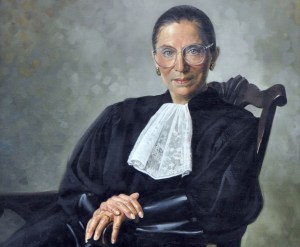
Justice Ruth Bader Ginsburg
Kavanaugh was forced to confront the abortion question in 2017 after the Trump administration barred an undocumented minor, known as Jane Doe, from terminating an unwanted pregnancy. The American Civil Liberties Union sued on Doe’s behalf, and the dispute came before a three-judge panel at the D.C. Circuit. Kavanaugh was joined on the panel by Judge Karen L. Henderson, an arch-conservative, and Judge Patricia Millett, a moderate liberal. Doe, who was being held in a federally funded Texas shelter, had already obtained the necessary judicial bypass to get an abortion. But the Trump administration refused to let her see an abortion provider, instead sending her to an anti-abortion “crisis pregnancy center.”
By that point, Doe would be about 18 weeks pregnant. Texas bans abortion after 20 weeks, and the procedure becomes more dangerous as the pregnancy advances. Moreover, the process of finding and verifying a sponsor for an undocumented minor frequently takes weeks or months. And Doe’s lawyers had already searched for a possible sponsor, to no avail. Kavanaugh’s ostensible compromise, then, was nothing of the sort. At best, it would force Doe to suffer through her unwanted pregnancy for at least two more weeks, increasing the odds of complications when she was finally able to obtain an abortion. At worst, it meant the government could run down the clock to the point that an abortion would become illegal.
Luckily for Doe, the full D.C. Circuit swiftly reversed Kavanaugh’s decision and allowed her to terminate her pregnancy, which she did. This move prompted Kavanaugh to write a bitter dissent explaining why the government’s bar on Doe’s abortion was not, in fact, an undue burden.
Read the rest at Slate.
The Daily Beast: Brett Kavanaugh, Trump’s Supreme Court Pick, Is Probably the End of Abortion Rights and Same-Sex Marriage.
When President Trump Monday nominated Judge Brett Kavanaugh to the Supreme Court, he probably doomed the right to abortion, same-sex marriage, and maybe even contraception….
Future justice Elena Kagan arging a campaign finance reform case before SCOTUS
…while Kavanaugh’s record on women’s and LGBT rights is sparse, it gives good reason to suspect that he could be the swing vote to strike down Roe v. Wade, the abortion-rights case. This, after all, is what Trump promised in 2016: that Roe would be “automatically” be overturned should he be elected. And Kavanaugh has been praised by numerous right-wing organizations.
In the case of Garza v. Hargan, the D.C. Circuit Court of Appeals held that an undocumented teenage immigrant was entitled to obtain an abortion without having to obtain familial consent (as is required in several states).
Kavanaugh vigorously dissented, asking, “Is it really absurd for the United States to think that the minor should be transferred to her immigration sponsor ― ordinarily a family member, relative, or friend ― before she makes that decision?”
Those are strong words, endorsing not only parental consent rules but enforcing them in extreme circumstances. If you are looking for signals that a Justice Kavanaugh would limit or overturn Roe, Garza is a giant red flare.

There’s also a possibility that Kavenaugh might not be right wing enough to satisfy some Republicans.
Kavanaugh may not be conservative enough to survive the confirmation process. There is even talk that conservatives might revolt against Kavanaugh, as they did in 2005 against George W. Bush’s nomination of Harriet Miers. The reason? Many conservatives wanted Kavanaugh to cast doubt on the teenager’s right to get an abortion at all, which another dissenting judge did.
Neal K. Katyal for respondents, Travel Ban case
Legally speaking, that objection is absurd. Not unlike “judicial minimalist” Chief Justice John Roberts, Kavanaugh was discussing the case at issue, not some hypothetical issue. And he was responding to the circuit court’s holding, not writing an essay.
But there’s more. Some conservatives have pointed to dicta in another Kavanaugh opinion, a dissent in Priests for Life v. HHS, a case similar to Hobby Lobby involving the Affordable Care Act’s contraception requirement. While dissenting in favor of the Catholic religious organization objecting to the requirement, Kavanaugh wrote that the “the Government has a compelling interest in facilitating women’s access to contraception” because of a variety of factors, such as “reducing the number of unintended pregnancies would further women’s health, advance women’s personal and professional opportunities, reduce the number of abortions, and help break a cycle of poverty.”
Kavanaugh is writing here about the state’s interest in access to contraception, not whether an individual has a constitutional right to access it. Those are totally different questions. But Kavanaugh’s opinion doesn’t question the constitutional right either, which rests on the same foundations (substantive due process, privacy, family) as the right to obtain an abortion.

This one is a must read–lots of details on Kavenaugh’s record. Head over to The Daily Beast to read the rest.
Read more about Kavenaugh and abortion here:
https://twitter.com/imillhiser/status/1016672606269952001
One more from The New York Times editorial board: There’s So Much You Don’t Know About Brett Kavanaugh. And you probably won’t until it’s too late.
First, the awful lot: Judge Kavanaugh would shift the balance of constitutional jurisprudence to the right, creating a solid right-wing majority on the court possibly until the second half of the 21st century. While the somewhat unpredictable Justice Anthony Kennedy once served as the fulcrum for the court, that role will now go to Chief Justice John Roberts Jr., a far more ideological conservative.
Judge Kavanaugh, who sits on the federal appeals court for the District of Columbia, has been a fixture in conservative politics and is widely respected by the Republican elite. Before becoming a judge, he clerked for Justice Kennedy and worked for Kenneth Starr, the independent counsel who investigated President Bill Clinton, and later in the George W. Bush White House. He successfully portrayed himself in his remarks at the White House as a nice guy who coaches girls in basketball, feeds the homeless and believes in the Constitution.
What Americans can’t know about Judge Kavanaugh: pretty much anything else. That’s thanks to the perversion of the Supreme Court confirmation process, which once provided the Senate and the public with useful information about a potential justice’s views on the Constitution, but which has, ever since the bitter battle over President Ronald Reagan’s failed nomination of Robert Bork in 1987, devolved into a second-rate Samuel Beckett play starring an earnest legal scholar who sits for days at a microphone and labors to sound thoughtful while saying almost nothing.
Read the rest at the NYT.
I know there’s plenty of other news, but this is the biggie for today. Post your thoughts and links on any topic in the comment thread, and try to have a good day despite the horrors all around us.

 peej
peej Carissa
 bostonboomer
 dakinikat
 ecocatwoman
 mablue2
 Mama Lopez
 peggysue22
 quixote
 skydancingguestblogger
 Mona (aka Wonk the Vote)



 Sky Dancing
Recent Comments