
Rafael Struve was eating dinner at his parents’ home in Houston when the mug shot flashed on his cellphone.
Wow, he thought, staring at Donald Trump’s face. This is it.
“It’s one thing to anticipate it, but to actually see it,” said Struve, 31, who works in business development and is a spokesman for Texas Young Republicans. “ … I don’t think it bodes well for our party if we keep this as the center.”
This first booking photo of an American president — of Fulton County, Ga., Inmate No. P01135809 — is proving a Rorschach test of our political moment. If we see the world not as it is, but as we are, the same appears true for what’s shaping up to be the most divisive image of the 2024 election.
Some Americans see a criminal facing 91 charges across New York, Florida, Washington, D.C. and Georgia, a man whom the law is treating like anyone else. Others see a wrongly accused champion, the likely Republican presidential nominee facing off against a biased justice system conspiring to bench him. Still others see an experienced showman working the camera….
Struve, a two-time Trump voter who now supports Florida Gov. Ron DeSantis, considered the jailhouse portrait over a plate of steak with guacamole and yucca.
Trump’s scowl? Calculated, he thought — “part of the game he’s trying to play long-term, this sort of grievance politics.”
In Atlanta, Anthony Michael Kreis dismissed the image as an outdated ritual of the criminal justice system.
To Kreis, an assistant law professor at Georgia State University, mug shots have devolved from an identification tool to a vehicle for shaming. Consider the galleries of arrestees that newspapers once commonly published. Even without a conviction, such photos can haunt someone for life.
“It’s a skeevy thing we do as a society,” Kreis said.
Yet he acknowledged that it might have been just as skeevy to grant a special pass to an enormously powerful man. The mug shot has “a certain degree of symbolism,” he noted, signaling “that no person is above the law.”
Extra Lazy Caturday Reads
Posted: August 26, 2023 Filed under: cat art, caturday, Crime, Criminal Justice System, Donald Trump, just because | Tags: 14th amendment, folk art, Trump mugshot, Twitter aka X, two-tier justice system 8 Comments
Miné Okubo, American artist
Happy Caturday!!
Now that Trump has been indicted and arrested repeatedly, I’m feeling a bit calmer about possibilities for the the future of democracy in America. It will still be a long fight, but the opening battles have been won by the good guys.
Trump reportedly tried to avoid having a mug shot taken, and then used it to fundraise. But, let’s face it, the man is in deep legal trouble. He’s been exposed as a common criminal–the first former president ever to be indicted. I have to believe that most Americans are not going to want to vote for an accused and/or convicted felon for president in 2024.
On the mugshot, The Washington Post looked for reactions: Hero, showman, scoundrel: What Americans see in Trump’s mug shot.

Claudia Olivos, ‘Cats in Love’
The WaPo writers managed to find one Democrat to quote in their article, which mostly focused on Trump voters.
Some 1,400 miles north, in the village of Ephraim on Wisconsin’s northeastern thumb, Monique McClean looked at her Apple watch and thought: What is that?
Without comment, her husband had texted Trump’s mug shot, which she initially mistook for some kind of illustration. “It looked like a Marvel supervillain to me,” she said.
McClean, 61, the owner of Pearl Wine Cottage on Green Bay’s shoreline, felt her mood turn gloomy when she considered the image more closely. A Democrat, she’d been horrified by the way Trump accused poll workers in Georgia of scheming against him. Two women had been forced into hiding.
“I just thought of all the lies he has told for years,” she said.
Trump is back on Twitter AKA X, but he hasn’t made much of a splash so far. At Politico, Jack Shafer argues that: Trump Can’t Go Home Again. Twitter is not the site that it used to be. And he’s not the same man.
After surrendering on Thursday at an Atlanta jail to be booked on state felony charges alleging his involvement in a criminal conspiracy to void the 2020 presidential election, Donald Trump sat for a mug shot in which he scowls like a psychopath out of a Stanley Kubrick film. Trump’s next grand act of surrender was to post the picture on his Twitter account — now called X by owner Elon Musk, pedants and copy desks but by nobody who uses it — marking his first appearance there since being reinstated in November, after being booted by the service 958 days ago following the Jan. 6 riots.
Trump’s post, which garnered a healthy 1.3 million likes and 305,000 retweets, essentially concedes that his plan to build his own social media empire under the Truth Social banner is a bust. Aside from Trump’s regular posts there, Truth Social is a wasteland of brimstone and salt whose finances and corporate structure make a Rube Goldberg machine look like a Swiss watch. Except for when journalists repeat his Truth Social outbursts or report on them, that Trump account goes unnoticed. By returning to the social media outlet that helped make him “great,” Trump’s post may presage an attempt to restart the media fire of his 2016 campaign and his presidency.
Man with black cat, by Gea Zwanink
But no man ever steps in the same river twice — it’s not the same river, and he’s not the same man, as the sage said. Twitter is not the same and neither is Trump, and the media watershed that allowed Trump to politically prosper doesn’t drain the way it once did. Thanks to inertia, changing technology, fickle tastes and Musk’s determination to wreck it, the site has lost its cachet. What does that mean for Trump? [….]
The environment that so nurtured Trump’s nuttism has degraded since he filled our silos with his opinions and policy statements. Many journalists still use Twitter, but the site has lost its cultural and political primacy. During his vacation from Twitter, TikTok became the world’s most popular domain, and his comments on Truth Social or at rallies no longer carried instant weight now that he was an ex-president. Even since announcing his candidacy and leading the polls, Trump has often failed to make himself Topic A in the political conversation (except for during his spurt of indictments). Even Fox News, which pampered him like a pet pig during his presidency, now gives him the cold shoulder.

Read the rest at Politico.
At The Daily Beast, attorney Shan Wu writes: Trump’s Arrest in Georgia Shows a Two-Tier Justice System.
LaShawn Thompson shared something in common with former President Donald J. Trump. Both were defendants charged in Fulton County, Georgia, and booked at the Fulton County Jail—known as “Rice Street.” But that is their only shared commonality with the criminal justice system.
On Thursday, with TV cameras overhead and behind his motorcade following every moment of his journey, Trump arrived with an armed U.S. Secret Service escort, and sped through the process of paperwork and having his fingerprinting and mug shots taken like a VIP being let into a night club. It took only 24 or so minutes for him to be booked and leave the jail. His height was logged at 6-foot-3, his weight at 215 pounds, and his hair color as “blond or strawberry.”
The newly minted Inmate No. Po1135809 was back on his private jet within a matter of moments, after claiming again he had done “nothing wrong.”
Dama Con Gato, 2009, by Pescador
But LaShawn Thompson never got to leave after his booking at Rice Street. He died there at the age of 35.
Thompson died at the Fulton County Jail after being held there for three months. According to his autopsy, contributing factors to his death included dehydration, malnutrition, untreated schizophrenia, and severe insect infestation on his body from lice and bed bugs.
His family’s attorney said he “was eaten alive by insects and bedbugs.” Thompson was charged with a misdemeanor.
By contrast, Trump is charged with racketeering crimes in a 41-count felony indictment and facing a total of four different criminal cases brought by prosecutors at the U.S. Department of Justice, Manhattan District Attorney’s Office, and now the Fulton County District Attorney’s Office. But the Fulton County case is the first time that Trump will experience the normal booking procedures of fingerprinting and likely be photographed for his “mug shot.” He also has release conditions that include bail.

Food for thought. Read the rest of this sickening story at The Daily beast.
As Trump faces legal jeopardy, the fight to use the 14th Amendment to disqualify him from public office is gaining steam.
ABC News: 14th Amendment, Section 3: A new legal battle against Trump takes shape.
Separate from the criminal cases, over the past few weeks a growing body of conservative scholars have raised the constitutional argument that Trump’s efforts to overturn the results of the 2020 election make him ineligible to hold federal office ever again.
That disqualification argument boils down to Section 3 of the U.S. Constitution’s 14th Amendment, which says that a public official is not eligible to assume public office if they “engaged in insurrection or rebellion against” the United States, or had “given aid or comfort to the enemies thereof,” unless they are granted amnesty by a two-thirds vote of Congress.
Advocacy groups have long argued that Trump’s behavior after the 2020 election fits those criteria. The argument gained new life earlier this month when two members of the conservative Federalist Society, William Baude and Michael Stokes Paulsen, endorsed it in the pages of the Pennsylvania Law Review.
“If the public record is accurate, the case is not even close. He is no longer eligible to the office of Presidency,” the article reads.
Since then, two more legal scholars — retired conservative federal judge J. Michael Luttig and Harvard Law Professor Emeritus Laurence Tribe — made the same case in an article published in The Atlantic.
By Andrie Martens
“The disqualification clause operates independently of any such criminal proceedings and, indeed, also independently of impeachment proceedings and of congressional legislation,” they wrote. “The clause was designed to operate directly and immediately upon those who betray their oaths to the Constitution, whether by taking up arms to overturn our government or by waging war on our government by attempting to overturn a presidential election through a bloodless coup.”
The argument even got raised on the Republican presidential debate stage in Milwaukee this week.
“Over a year ago, I said that Donald Trump was morally disqualified from being president again as a result of what happened on January 6th. More people are understanding the importance of that, including conservative legal scholars,” Arkansas Gov. Asa Hutchinson said, eliciting a mix of cheers and boos from the audience. “I’m not going to support somebody who’s been convicted of a serious felony or who is disqualified under our Constitution.”

This is from Shan Wu at The Daily Beast: Trump Can and Should Be Disqualified From Running for President Under the 14th Amendment.
The “Disqualification Clause” found in Section 3 of the 14th Amendment fits Donald J. Trump like a glove.
Or as political podcaster Allison Gill asked on the social media platform formerly known as Twitter: “if section 3 of the 14th amendment wasn’t designed for him, who was it designed for?”
The historical answer to Gill’s query is, of course, that it was designed for Confederates trying to get back into the federal government after losing the Civil War. And that very same historical context draws a direct analogy to Trump’s efforts to get back into the presidency after losing the 2020 election.
Three black cats, by Tacha, Toronto
Here’s what the Disqualification Clause says:
“No person shall be a Senator or Representative in Congress, or elector of President and Vice-President, or hold any office, civil or military, under the United States, or under any State, who, having previously taken an oath, as a member of Congress, or as an officer of the United States, or as a member of any State legislature, or as an executive or judicial officer of any State, to support the Constitution of the United States, shall have engaged in insurrection or rebellion against the same, or given aid or comfort to the enemies thereof. But Congress may by a vote of two-thirds of each House, remove such disability.”
The plain language of this obviously encompasses Trump’s actions to illegally overturn the results of the 2020 presidential election. These actions include but are not limited to asking the Georgia Secretary of State to find additional votes for him, conspiring to put forth slates of unelected “fake” electors for the electoral college, and his call for “wild” protests on Jan. 6 that led to the attack on the Capitol.
But while these actions have resulted in Trump being charged criminally both by the U.S. Justice Department and the State of Georgia, his disqualification does not depend upon him being convicted in either of those cases.

Yu quotes from the piece by Tribe and Luttig mentioned in the previous article along with other experts:
Tribe and Luttig are hardly outliers in their view. A forthcoming law review article written by Federalist Society conservative law professors—William Baude of the University of Chicago and Michael Stokes Paulsen of the University of St. Thomas—not only agrees that the disqualification is self-enforcing but also makes the case that numerous others who supported Trump’s efforts also may be disqualified.
Baude and Paulsen note that this could include people like former National Security Advisor General Michael Flynn (who proposed a plan to seize voting machines), the “fake electors,” Jeffrey Clark of the Justice Department, and “at least one member of Congress” (that would be Rep. Scott Perry (R-PA)) who had supported Clark’s plans—and even lobbied for removal of senior DOJ officials who opposed Clark’s scheme.
Head over to The Daily Beast to read some counterarguments.
All in all, I think things are looking better for the efforts to keep Trump from getting back into power.
That’s it for me today. Have a nice weekend everyone!
Lazy Caturday Reads
Posted: May 20, 2023 Filed under: abortion rights, cat art, caturday, Democratic Politics, Donald Trump, Republican politics, SCOTUS | Tags: 14th amendment, abortion, debt limit, default, Gov. Roy Cooper, Joe Biden, media, North Carolina, recession, Ron DeSantis, Russia, shadow docket, Steve Vladeck, Supreme Court 22 Comments
The Cat by an open Window (Aix-en-Provence) Charles Camoin
Happy Caturday!!
It is just me, or is the political news getting so complex and frightening as to be overwhelming? I’ve been looking around the internet for stories to post today, and it seems to me there is way too much going wrong. Is it my own anxiety and depression interfering with my judgment? Or is the country really on the brink of disaster? I hope it’s just me.
Let’s see, there is the most immediate crisis: the debt ceiling impasse. Then there’s frightening long-term threat of Donald Trump and his followers. There’s the building threat of Ron DeSantis. And there are more frightening issues: the Supreme Court and the effects of their recent decisions on women–abortion bans in many states, and the possibility of limits on birth control. There’s also Russia’s war on Ukraine–which I’ve pretty much given up on following–and the danger to our country posed by Republicans who support Russia in that conflict. And of course, for the longer-term, there are the threats to the environment and to humans from climate change. Have our lives always been this complicated?
I’m going to start by recommending a very long essay by Michael Tomasky at The New Republic: Donald Trump Against America. The subhead is, “He loves an America of his twisted imagination. He hates—and fears—the America that actually exists. And if he gets back to the White House … look out.” I haven’t actually finished reading this article–it’s practically book-length, but I’ve read quite a bit and plan to go back and finish it. It’s a look at the modern history of U.S. politics and an analysis of the current negativity of the Republican party as opposed to what Americans actually believe and want today. Republicans are completely out of step with modern American attitudes, and yet they have outsize power to affect our reality because of their control of the Supreme Court, Congress, and state governments.
Now for the most immediate issue–the debt ceiling fight.
Talking Points Memo: Growing List Of Dems Urge Biden To Cite 14th Amendment To Sidestep McCarthy’s Debt-Ceiling Hostage Crisis.
A growing group of Senate Democrats is urging President Joe Biden to seriously consider invoking the 14th Amendment to declare the debt ceiling unconstitutional, a strategy that — if upheld by the courts — could avert a looming default without any concessions to House Republicans, who have used their slim majority to take the debt ceiling hostage.
Sens. Tina Smith (D-MN), Elizabeth Warren (D-MA), Jeff Merkley (D-OR), Ed Markey (D-MA) and Bernie Sanders (I-VT) have been circulating a letter amongst their colleagues this week to collect support for Biden to invoke the 14th Amendment and lift the debt ceiling without any help from House Republicans.
By Suellen Ross
“We write to urgently request that you prepare to exercise your authority under the 14th Amendment of the Constitution, which clearly states: ‘the validity of the public debt of the United States … shall not be questioned,’” the draft letter reads. “Using this authority would allow the United States to continue to pay its bills on-time, without delay, preventing a global economic catastrophe.”
As the so-called “x-date” — when House Republicans may push the country to default on its debts — draws closer, legal scholars have pointed out that the 14th Amendment seemingly declares the debt ceiling unconstitutional. It’s an argument that also gained traction during the Obama-era debt-ceiling standoffs, though that Democratic administration ultimately chose not to embrace it.
Now, some Democrats are saying the Biden White House should give it a hard look, arguing that the Civil War-era amendment requires the administration to continue to pay the U.S.’s bills regardless of the early 20th century debt ceiling statute, and Republicans’ 21st century attempts to take it hostage. A list of demands passed by the Republican-controlled House last month includes spending cuts to some of Democrats’ most prized priorities.

At Politico, Adam Cancryn claims that’s not likely: Biden’s 14th Amendment message to progressives: It ain’t gonna happen.
Progressive lawmakers renewed their call for President Joe Biden to bypass Congress to avert a default after the abrupt cancellation of debt ceiling talks on Friday.
But the White House remains resistant. It issued a subdued statement indicating it sees no reason to pull the plug on talks. And privately, its message has been even blunter.
Senior Biden officials have told progressive activists and lawmakers in recent days that they do not see the 14th Amendment — which says the “validity of the public debt” cannot be questioned — as a viable means of circumventing debt ceiling negotiations. They have argued that doing so would be risky and destabilizing, according to three people familiar with the discussions.
The White House has studied the issue for months, with some aides concluding that Biden would likely have the authority to declare the debt limit unconstitutional as a last-ditch way to sidestep default. But Biden advisers have told progressives that they see it as a poor option overall, fearing such a move would trigger a pitched legal battle, undermine global faith in U.S. creditworthiness and damage the economy. Officials have warned that even the appearance of more seriously considering the 14th Amendment could blow up talks that are already quite delicate.
“They have not ruled it out,” said one adviser to the White House, granted anonymity to speak candidly about discussions. “But it is not currently part of the plan.”
Well, at least they haven’t completely ruled it out.

A Cat Basking in the Sun, Bruno Lijefors
Sara Chaney Cambon at The Wall Street Journal: Debt-Ceiling Standoff Could Start a Recession, But Default Would Be Worse.
Prolonged debt-ceiling squabbling could push the U.S. economy into recession, while a government default on its obligations might touch off a severe financial crisis.
U.S. lawmakers are negotiating over raising the federal government’s borrowing limit and may have just days to act before the standoff reverberates through the economy.
Treasury Secretary Janet Yellen said that the government could become unable to pay bills on time by June 1. In that case, the Treasury Department could halt payments, such as to federal employees or veterans.
In a worst-case scenario, a failure to pay holders of U.S. government debt, a linchpin of the global financial system, could trigger severe recession and send stock prices plummeting and borrowing costs soaring.
Many economists don’t expect a default for the first time in U.S. history. But they outline three potential ways the standoff could affect the economy and financial system, ranging from not great to extremely scary.
Camon discusses the likely results of three scenarios:
1) Last minute deal
The economy is already slowing due to rising interest rates, with many forecasters expecting a recession this year. While lawmakers haggle, uncertainty could cause consumers, investors and businesses to retrench, increasing the chances of a recession, said Joel Prakken, chief U.S. economist at S&P Global Market Intelligence.
Workers aren’t likely to lose their jobs, but the unpredictability of the economic outlook could cause them to put off purchases.
Stock prices could start to decline as June 1 nears….“Even if we get an agreement before we run out of resources there still could be a legacy effect of the uncertainty that restrains economic growth,” Prakken said.
2) Deal after deadline
If negotiations extend beyond Thursday June 1, economists expect a more severe reaction from financial markets, as the possibility for default looks more real.
“The shock would tend to accelerate quite rapidly” on June 1, said Gregory Daco, chief economist at Ernst & Young.
If consumers’ retirement and investment accounts suddenly shrink, they could sharply curtail their spending, the lifeblood of the U.S. economy. Businesses could pause hiring and investment plans.
3) No deal
If no deal is reached and the government can’t pay all its bills for days or weeks, repercussions would be enormous.
“There would be chaos in the global financial system because Treasurys are so important,” said Wendy Edelberg, an economist at the Brookings Institution. “What happens when that thing that everybody is benchmarking themselves to proves to be one of the riskiest things out there?”
Ernst & Young’s Daco said a default would trigger a recession more severe than the 2007-09 downturn.
Read more details at the WSJ link. If you can’t get in with my link, try using the one at Memeorandum.
A couple more stories on the debt limit impasse:
Jason Linkins at The New Republic: The Beltway Media Is Spreading Debt Limit Misinformation. The political press bears a share of the blame for the fact we are once again on the precipice of default.
Carl Hulse at The Washington Post: Finger-Pointing Won’t Save Anyone if Default Leads to Economic Collapse.

Jacobus van Looy, White Cat at an Open Window, 1895
In other news, if Biden manages to win the debt ceiling war, will Republican missteps on the abortion issue help him win in 2024?
CNN: ‘Reap the whirlwind’: Biden and North Carolina Democrats see 2024 edge in GOP abortion ban.
North Carolina Republicans jumped out on a limb this week when they passed a controversial new abortion ban. Democrats are now rushing to saw it off.
The state GOP legislative supermajority’s decision to override Democratic Gov. Roy Cooper’s veto of the measure sharpened the stakes for next year’s elections – and gave Democrats new impetus to invest up and down the North Carolina ballot.
At the top of the ticket, President Joe Biden’s campaign is already drawing up plans to focus on the ban, which outlaws most abortions after 12 weeks, in its bid to win a state last captured by a Democratic presidential candidate in 2008. Former President Donald Trump’s victory there in 2020 was his narrowest of the election, and North Carolina is critical to any Republican’s path to the White House.
The shock waves from the brief but fierce abortion fight – 12 days that saw the bill pass, get vetoed by Cooper, then resurrected by Republican lawmakers – are also expected to reach into next year’s races for governor, state attorney general and both legislative chambers. With Cooper term-limited, the campaign to succeed him is expected to be the most competitive governor’s race of 2024, potentially pitting far-right GOP Lt. Gov. Mark Robinson against Democratic Attorney General and Cooper protégé Josh Stein.
The race to succeed Cooper, who has for years beat back the Republican agenda in North Carolina with his veto pen, will be especially heated if Robinson wins the Republican nomination. Democrats are already highlighting his absence from the legislature during the abortion votes – arguing that he is trying to distance himself from the ban. The Republican had tried to avoid publicly commenting on the issue in recent weeks – a reversal from his usual posture – though he told a conservative radio host the day after Republicans overrode Cooper’s veto that North Carolina continued to “move the ball” on abortion.
Read more at CNN.
People have been asking where Ron DeSantis got the money to pay for his round the world and cross country political tour, and The New York Times’ Alexandra Berzon and Rebecca Davis O’Brient got the goods: Air DeSantis: The Private Jets and Secret Donors Flying Him Around.
For Ron DeSantis, Sunday, Feb. 19, was the start of another busy week of not officially running for president.
That night, he left Tallahassee on a Florida hotelier’s private jet, heading to Newark before a meet-and-greet with police officers on Staten Island on Monday morning. Next, he boarded a twin-jet Bombardier to get to a speech in the Philadelphia suburbs, before flying to a Knights of Columbus hall outside Chicago, and then home to his day job as governor of Florida.
Rapp and Johan, Bruno Liljefors, 1886
The tour and others like it were made possible by the convenience of private air travel — and by the largess of wealthy and in some cases secret donors footing the bill.
Ahead of an expected White House bid, Mr. DeSantis has relied heavily on his rich allies to ferry him around the country to test his message and raise his profile. Many of these donors are familiar boosters from Florida, some with business interests before the state, according to a New York Times review of Mr. DeSantis’s travel. Others have been shielded from the public by a new nonprofit, The Times found, in an arrangement that drew criticism from ethics experts.
Mr. DeSantis, who is expected to formally announce his candidacy next week, is hardly the first politician to take advantage of the speed and comfort of a Gulfstream jet. Candidates and officeholders in both parties have long accepted the benefits of a donor’s plane as worth the political risk of appearing indebted to special interests or out of touch with voters.
But ethics experts said the travel — and specifically the role of the nonprofit — shows how Mr. DeSantis’s prolonged candidate-in-limbo status has allowed him to work around rules intended to keep donors from wielding secret influence. As a declared federal candidate, he would face far stricter requirements for accepting and reporting such donations.
“Voters deserve this information because they have a right to know who is trying to influence their elected officials and whether their leaders are prioritizing public good over the interests of their big-money benefactors,” said Trevor Potter, the president of Campaign Legal Center and a Republican who led the Federal Election Commission. “Governor DeSantis, whether he intends to run for president or not, should be clearly and fully disclosing who is providing support to his political efforts.”

Read the rest at the NYT.
One more important story on one of our huge problems–the Supreme Court.
Ian Ward at Politico Magazine: The Supreme Court Is Hiding Important Decisions From You.
As the Supreme Court begins to release its written opinions from its most recent term, much of the public’s attention is focused on high-profile cases on affirmative action, election law and environmental regulation. But according to Stephen Vladeck, a professor at the University of Texas Law School, this narrow focus on the most headline-grabbing decisions overlooks a more troubling change in the High Court’s behavior: The justices are conducting more and more of the court’s most important business out of the public eye, through a procedural mechanism known as “the shadow docket.”
Quantitatively speaking, cases arising from the shadow docket — which include everything apart from the court’s annual average of 60 to 70 signed decisions — have long made up a majority of the justices’ work. But as Vladeck documents in his new book, The Shadow Docket, published this week, the court’s use of the shadow docket changed dramatically during the Trump years, when the court’s conservative majority used a flurry of emergency orders — unsigned, unexplained and frequently released in the middle of the night — to greenlight some of the Trump administration’s most controversial policies.
“What’s remarkable is that the court repeatedly acquiesced and acquiesced [to the Trump administration], and almost always without any explanation,” Vladeck said when I spoke with him. “And they did it in ways that marked a pretty sharp break from how the court would have handled those applications in the past.”
It wasn’t just the frequency of the court’s shadow docket decisions that changed during the Trump years; it was also the scope of those decisions. Whereas the justices have traditionally used emergency orders as temporary measures to pause a case until they can rule on its merits, the current court has increasingly used emergency orders to alter the basic contours of election law, immigration policy, religious liberty protections and abortion rights — all without an extended explanation or legal justification. To illustrate this shift, Vladeck points to the court’s emergency order in September 2021 that allowed Texas’s six-week abortion ban to take effect — a move that effectively undermined Roe v. Wade nine months before the court officially overturned it in Dobbs v. Jackson Women’s Health Organization.
“It really highlights a problem that’s endemic to how we talk about the court, which is that we fixate on the formality of the court’s decision and explanations and downplay the practical effect of its rulings, whether or not they come with those explanations,” Vladeck explained.
Read the rest at Politico.
That’s it for me today. What stories are you following?
Live Blog: Negotiating with Tea Party Terrorists
Posted: July 31, 2011 Filed under: U.S. Economy, U.S. Politics, voodoo economics, We are so F'd, WE TOLD THEM SO | Tags: 14th amendment, austerity, budget cuts, Federal debt ceiling, live blog 41 Comments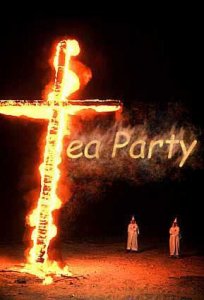
And the worst Tea Party Terrorists are in the White House “negotiating” with themselves. The only explanation for the way Obama is acting is that he doesn’t want a second term. I just don’t see how he can think he’s going to be reelected either way–whether the U.S. defaults on its debts or Congresses passes one of the austerity plans, Obama is toast.
I guess he can’t wait to start raking in the millions he’ll get from the sitting on bank boards after this is all over. I used to think he was looking forward to making big bucks on the lecture circuit, but who will want to hear him speak about how he destroyed the social safety net and brought down the U.S. economy?
I thought I’d put up a post for those of us who want to keep tabs on what the Senate is doing this afternoon. I’ll have more info shortly, but feel free to document the ongoing slow-motion nightmare in the comments while I set up my laptop in front of the TV and turn on C-span.
———————————————–
The Reid plan failed to achieve cloture in the Senate, so it’s looking like whatever McConnell, Boehner, and Obama are cooking up is what we’ll get stuck with. Here is what is known about the plan that is on the table right now.
If Democratic and GOP leaders finalize a deal, they would still face the tough task of convincing their rank and file to swallow a compromise. Fervent liberals and conservatives could scuttle any deal between the White House and congressional leaders. Here are the details of the tentative pact, according to several sources who spoke to NJ on condition that they not be identified:
•$2.8 trillion in deficit reduction with $1 trillion locked in through discretionary spending caps over 10 years and the remainder determined by a so-called “Super Committee.”
•The Super Committee must report precise deficit-reduction proposals by Thanksgiving.
•The Super Committee would have to propose $1.8 trillion in spending cuts to achieve that amount of deficit reduction over 10 years.
•If the Super Committee fails, Congress must send a balanced-budget amendment to the states for ratification. If that doesn’t happen, across-the-board spending cuts would go into effect and could touch Medicare and defense spending.
•No net new tax revenue would be part of the special committee’s deliberation.
That last item remained a potential sticking point. Obama’s advisers insisted on the Sunday talk shows that the president expected tax increases to be part of the Super Committee’s plan. “I think any long-term deficit-reduction is going to include revenues,” Obama adviser David Plouffe told ABC’s This Week.Yet Plouffe was unwilling to commit that revenue increases would automatically kick in — along with spending cuts — if the Super Committee doesn’t hit the $1.8 trillion target. McConnell bluntly said that “job-killing tax increases” are off the table.
The ever-hopeful Ezra Klein says Dems will lose now but could win later.
Democrats are going to lose this one. The first stage of the emerging deal doesn’t include revenue, doesn’t include stimulus, and lets Republicans pocket a trillion dollars or more in cuts without offering anything to Democrats in return.
The second stage convenes a congressional “Supercommittee” to recommend up to $2 trillion in further cuts, and if their plan doesn’t pass Congress, there’s an enforcement mechanism that begins making automatic, across-the-board cuts to almost all categories of spending. So heads Democrats lose, tails Republicans win.
It’s difficult to see how it could have ended otherwise. Virtually no Democrats are willing to go past Aug. 2 without raising the debt ceiling. Plenty of Republicans are prepared to blow through the deadline. That’s not a dynamic that lends itself to a deal. That’s a dynamic that lends itself to a ransom.
But Democrats will have their turn. On Dec. 31, 2012, three weeks before the end of President Barack Obama’s current term in office, the Bush tax cuts expire. Income tax rates will return to their Clinton-era levels. That amounts to a $3.6 trillion tax increase over 10 years, three or four times the $800 billion to $1.2 trillion in revenue increases that Obama and Speaker John Boehner were kicking around. And all Democrats need to do to secure that deal is…nothing.
The only thing that can prevent increased revenue, says Klein, is the Obama administration. That’s pretty pathetic. Even Klein isn’t sure Obama will let the Bush tax cuts expire.
For more background, see my and and Dakinikat’s posts from last night.
I’ll put further updates in the comments.

Capital on fire
The L shaped recovery and a Bogus Debt Crisis
Posted: July 29, 2011 Filed under: Economy, Federal Budget, Federal Budget and Budget deficit | Tags: 14th amendment, debt crisis, economy, recession 20 Comments Our economy continues to scuttle across a bottom set by the huge drop in performance during the Great Recession. This economist was not surprised by the lackluster GDP report released today. No one has used the correct fiscal policy prescription in this country since 1999. The current batch of Washington nimrods are going to set us at a new low shortly. We’ll be lucky to see nasty numbers like these a year from now. It’s as if tanking the economy is job 1 now.
Gross domestic product climbed at a 1.3 percent annual rate following a 0.4 percent gain in the prior quarter that was less than earlier estimated, Commerce Department figures showed today in Washington. The median forecast of economists surveyed by Bloomberg News called for a 1.8 percent increase. Household purchases, about 70 percent of the economy, rose 0.1 percent.
Treasuries rose as the report dimmed prospects for faster growth in the rest of 2011. The faltering economy may get another blow from spending cuts being negotiated in Congress, keeping pressure on Federal Reserve Chairman Ben S. Bernanke to hold interest rates near zero.
“The second-half rebound is melting away,” said Nigel Gault, chief U.S. economist at IHS Global Insight in Lexington, Massachusetts, the only forecaster polled to correctly estimate the gain in GDP. “It’s a very, very difficult situation for policy makers. The Fed could give a pretty strong signal that they are not likely to move on interest rates for a very long time.”
The yield on the benchmark 10-year note decreased to 2.85 percent at 1:22 p.m. in New York from 2.95 percent late yesterday. Stocks pared earlier losses on signs that House Speaker John Boehner’s plan to raise the debt ceiling was gaining support. The Standard & Poor’s 500 Index fell 0.3 percent to 1,296.42 after falling as much as 1.4 percent.
Former Labor Secretary Robert Reich tells it like it is in a post that might as well be entitled “It’s the jobs, stupid”. Too bad he’s not up for the Treasury position now occupied by Secretary Slave to Investment Banks. There’s a false equivalency being spread about raising the debt ceiling and increasing the deficit that’s really hampering policy discourse right now. The two things aren’t the same. The debt is the amount we owe and it builds each year when there is a deficit or when interest accumulates. The deficit is a shortage in one year’s budget. The only real crisis we have right now is a jobs crisis and a complete lack of demand. Again, no business person in their right mind is going to create anything if there’s no customers. Oh, there’s also a confederacy of dunces in the US House of Representatives. But, I won’t go there right now.
Get it? We’re really in a “jobs and growth” crisis – not a budget crisis.
And the best way to get jobs and growth back is for the federal government to spend more right now, not less – for example, by exempting the first $20,000 of income from payroll taxes this year and next, recreating a WPA and Civilian Conservation Corps, creating an infrastructure bank, providing tax incentives for small businesses to hire, expanding the Earned Income Tax Credit, and so on.
But what happens next week if Congress can’t or won’t deliver the President a bill to raise the debt ceiling? Remember: This is all politics, mixed in with legal technicalities. Economics has nothing to do with it.
One possibility, therefore, is for the Treasury to keep paying the nation’s bills regardless. It would continue to issue Treasury bills, which are our nation’s IOUs. When those IOUs are cashed at the Federal Reserve Board, the Fed would do what it has always done: Honor them.
How long could this go on without the debt ceiling being lifted? That’s a legal question. Republicans in Congress could mount a legal challenge, but no court in its right mind would stop the Fed from honoring the full faith and credit of the United States.
One of the biggest right wing memes that drives me crazy is that the economy is bad because we have too much taxes still and that the President’s stimulus didn’t work because it was worthless spending. I knew it wouldn’t do much to stimulate the economy simply because it didn’t take advantage of the government spending multiplier in key areas and wasn’t big enough. Also, it was the Biggest Tax Cut Ever which rarely works as efficiently as direct government spending to get consumption going again. So why are so many idiots arguing that more of the same tax cuts are going to improve the economy and cutting all levels of government spending is considered confidence building when the government spending multiplier will just push recessionary momentum? You got me. It’s insanity.
So, what happens if these debt ceilings talk fail? Well, first, every single financial asset, liability, and contract will reprice all over the world. Most of them will reprice in a bad way that will hamper economies every where. Every business project will be evaluated using a risk free rate that will now be higher and will not be considered risk free any more. That means many projects will now be rejected so expansions, new jobs, or anything like that will be rejected. Remember, this is not because we can’t pay those bills, it’s because a few idiots refuse to pay them. Second, the world will continue to step away from the dollar. Third, there will be strong recessionary pressures. It’s not good, folks. As these recent GDP figures show, we’re far from out of the impact of the last financial shock.
But what if all those options failed? What would be the consequence of even a notional default? The IMF has talked of a global recession if there was a loss of confidence in US solvency although it’s not clear that a failure to roll over debt for a few days would qualify for that description.
Having seen what happened with Lehman’s default, the main worry would be a freeze in the markets. Take the finances of banks, for example. Many use Treasury bonds as the risk-free asset for capital purposes. As Capital Economics points out
“Government debt is only automatically 0% risk-weighted for banks under Basel II if it is rated AA- or higher (although regulators can make exceptions for domestic government debt issued in local currency). In principle, therefore, financial institutions would face significantly higher capital charges in the event of a US government default.In practice, it seems likely that the regulators would move quickly to waive the rules. But there might be a few hairy moments while they did. And what about money-market funds? Having been burned by the credit crunch, many have opted for the safe haven of US Treasury bills. Perhaps they could roll over those bills into some form of IOU from the government. But if investors demanded their money back at a time when Treasury bills were illiquid, money-market funds might be forced to suspend resumptions or “break the buck”. Then there is the repo market, widely used by financial institutions to raise money; Treasury securities are used as collateral for such borrowing.”
Standard & Poor’s has considered this scenario and suggests that
“Failure to pay off maturing debt or missing interest payments (approximately $62 billion of interest is payable on Aug. 15) would constitute a selective default pursuant to our criteria, and Standard & Poor’s expects it would lower the sovereign rating to ‘SD’. Even if the Fed and other central banks managed to keep the financial system functioning, we expect that markets around the world would be severely damaged. In such a hypothetical scenario, we expect that equity markets would generally plunge, borrowing costs and interbank lending rates would soar, and corporate credit markets would be closed to all but the highest quality issuers. We envisage that consumers and businesses would likely stop spending on all but essential items, and the value of the dollar would drop by 10% or more against other major currencies. With the dollar heading lower, investors would likely look for hard assets like oil and other commodities, driving prices higher.Given the fragility of the economic recovery, this is an incredible risk to contemplate. It is also worth noting that, even a freeze on government spending that stopped short of a default, would have a significant impact on demand.”
I still can’t believe that a few people are willing to tank the economy for failed economic hypotheses. It’s as if everything we’ve learned over the past 70 years has been completely thrown to the wind and we’re being run by the myth of Reagan’s ghost. I say myth because what they’re going on didn’t even happen on his watch. He was responsible for the biggest single tax increase in history and was responsible for a lot of the debt they’re whining about today. Speaking of Reagan, one of his economists–Bruce Bartlett–has an excellent analytical piece up on how the Debt Crisis is being Fueled by Obama’s weak negotiations. It’s worth a read.
Unfortunately, Obama is really too young to have the kind of experience that previous presidents like Reagan brought to the White House in terms of understanding intransigent enemies and how to deal with them. Consequently, Obama has really been caught flat-footed by the Tea Party era Republican Party. He believed it would respond positively if he offered it half a loaf on just about every issue.
For example, some 40 percent of the 2009 stimulus legislation consisted of tax cuts even though his economic advisers knew that they would have almost no stimulative effect. But Obama viewed them as an important concession to Republicans. Yet despite total rejection of his stimulus package by the GOP, Obama kept the tax cuts rather than reprogramming the money into more effective programs such as state aid or public works.
Nevertheless, Obama offered Republicans another half-loaf by putting forward a health reform plan almost identical to those that they and conservative groups such as the Heritage Foundation had proposedin the 1990s. Obama’s offer was summarily rejected and Republicans suddenly decided that the individual mandate, which previously had been at the core of their own health reform plans, was unconstitutional.
Now we are in the midst of a debt crisis that stems largely from Obama’s inability to accept the intransigence of his political opponents. Last December, he caved in to Republicans by supporting extension of the Bush tax cuts even though there is no evidence that they have done anything other than increase the deficit. There were those who told Obama that he ought to include an increase in the debt limit, but he rejected that idea, believing that Republicans would behave like responsible adults and raise the debt limit just as they did routinely when their party held the White House.
I join Bartlett, former President Clinton, and others in begging the President to invoke the 14th amendment. Then, he should find some economics advisers who know what they are doing and listen to them for a change.
Try Boehner and Cantor for Treason? What about Obama?
Posted: July 25, 2011 Filed under: Barack Obama, Democratic Politics, Medicaid, Medicare, Republican politics, Social Security, U.S. Economy, U.S. Politics, voodoo economics | Tags: 14th amendment, Barack Obama Abe Lincoln, Eric Cantor, Federal debt limit, full faith and credit, John Boehner, Sky Dancers, Tea Party, U.S. Treasury 40 Comments
Are Sky Dancers cutting edge or what? Nearly two weeks ago, Dakinikat asked whether our government leaders could be charged with treason over the debt ceiling debacle.
Now David Seaman, a blogger at Business Insider argues that Boehner and Cantor are committing treason by catering to a small number of Tea Partiers’ demands while making the U.S. look weak and unreliable to the rest of the world.
I don’t know of a single American business owner or executive who thinks default — economic armageddon — should be on the table, and yet Republicans are acting as if Americans consider this a viable option.
Sadly, it’s already too late: although we still have time to get a deal before the August 2nd hard deadline, this is the equivalent of shoving a check under your landlord’s door at 11:59 p.m. You’ve lost his trust, even if you are technically not in default.
Enough disgusting dramatics to please your small Tea Party base — we are a nation of more than 300 million; the Tea Party is a handful of folks with racist signs, radical agenda, and the favor of a few influential bookers at Fox News.
On Boehner and Cantor:
John Boehner — a full-grown man who cries in public for rhetorical affect (or maybe he’s that imbalanced, I don’t know)… Eric Cantor — a disgusting attention-seeker who doesn’t realize he is one of the country’s actual leaders, and not merely a commentator on a political morning show.
At this point, Americans should be calling for both of their heads. We need to keep an eye on such “leaders” and ensure that they and their kind are not re-elected to Congress. They don’t represent any of us. And their childish Tea Party views — which have no basis in sound economic theory — are making us look like fools to our international partners.
Seaman also points to this column by John Avlon at CNN, “Our stupid self-inflicted debt crisis.”
…if America defaults on its debt, not only will we find ourselves in a far deeper fiscal hole, but the full faith and credit of the United States will be compromised. In our globalized era, that means America will be considered an unpredictable partner and a second-class power.
Worst of all, this will be a self-inflicted wound. It is a direct result of the hyper-partisanship that has been hijacking America’s political debates. Now it is compromising our ability to govern ourselves effectively.
The markets are viewing Washington’s debt dysfunction as badly as Standard & Poor’s and Moody’s, which have raised the possibility of downgrading their ratings of U.S. bonds.
The British government’s business secretary, Vince Cable, summed up the situation as he saw it on the BBC this weekend: “The irony of the situation at the moment, with markets opening tomorrow morning, is that the biggest threat to the world financial system comes from a few right-wing nutters in the American Congress.”
Avlon blames the mess on “hyper-partisanship,” but the problem as I see it is that the Democratic side–especially our Reagan-adoring President–is showing no partisanship at all, just rushing to cave in to every Republican demand. After all, Obama could quickly resolve this situation, as Daknikat pointed out yesterday, by “invoking the 14th Amendment.”
At FDL, David Dayen points out, rather sarcastically, that Obama “has options to raise the debt limit.” He could tell Congress to vote on the debt limit and hold the arguments about cuts and taxes till later, as Elizabeth Drew suggested at Politico. Alternatively, Dayen says he could turn to the 14th amendment. Obama has so far dismissed this possibility.
Finally, Dayen points to an article in Friday’s NYT by two conservatives.
PRESIDENT OBAMA should announce that he will raise the debt ceiling unilaterally if he cannot reach a deal with Congress. Constitutionally, he would be on solid ground. Politically, he can’t lose. The public wants a deal. The threat to act unilaterally will only strengthen his bargaining power if Republicans don’t want to be frozen out; if they defy him, the public will throw their support to the president. Either way, Republicans look like the obstructionists and will pay a price….
Our argument is not based on some obscure provision of the 14th amendment, but on the necessities of state, and on the president’s role as the ultimate guardian of the constitutional order, charged with taking care that the laws be faithfully executed.
When Abraham Lincoln suspended habeas corpus during the Civil War, he said that it was necessary to violate one law, lest all the laws but one fall into ruin. So too here: the president may need to violate the debt ceiling to prevent a catastrophe — whether a default on the debt or an enormous reduction in federal spending, which would throw the country back into recession.
A deadlocked Congress has become incapable of acting consistently; it commits to entitlements it will not reduce, appropriates funds it does not have, borrows money it cannot repay and then imposes a debt ceiling it will not raise. One of those things must give; in reality, that means that the conflicting laws will have to be reconciled by the only actor who combines the power to act with a willingness to shoulder responsibility — the president.
Abe Lincoln did it, but Obama claims he can’t? Seaman, Avlon, and Vince Cable so far are holding their fire on Obama’s role in this embarrassing mess. But he is the one who is ultimately responsible for maintaining the full faith and credit of the U.S. Treasury. That credit has already been harmed by Obama’s failure to act decisively.
I’d say it’s high time to begin impeachment proceedings against this President, or failing that, Democrats should find someone to run against him in the 2012 primaries. This nonsense has gone on long enough. Yes, I understand that Obama wants to gut Social Security, Medicare, and Medicaid, but the Republicans aren’t going to accept a deal when it’s blatantly obvious that they still can get more from this President–he’ll cave on anything. Either Obama needs to get a grip and do the right thing for once, or he needs to find a job he can handle and let someone else lead the United States of America.

 peej
peej Carissa
 bostonboomer
 dakinikat
 ecocatwoman
 mablue2
 Mama Lopez
 peggysue22
 quixote
 skydancingguestblogger
 Mona (aka Wonk the Vote)



 Sky Dancing
Recent Comments