Here in New Orleans, we had a Big Bubble Protest because of some rich guy that moved to the Quarter last year and has filed no less than 15 Criminal complaints over a bubble machine on the balcony of a restaurant that’s been there for over ten years. He thinks that the bubbles will ruin his Porsche and poison his drink when he imbibes on his balcony. This is the typical New Orleans gentrifier. He comes from someplace and expects New Orleans to accommodate his burbie weirdness. Just another old rich white guy trying to rule the world.
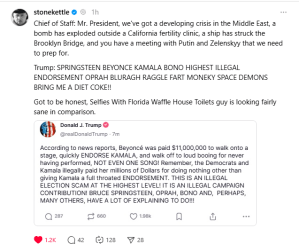
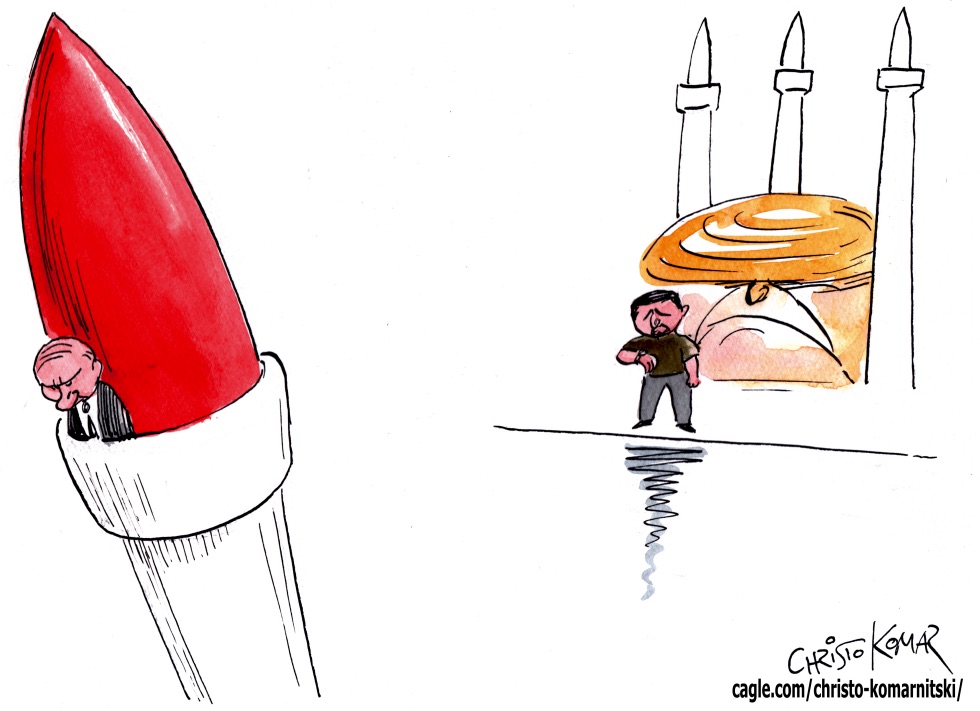
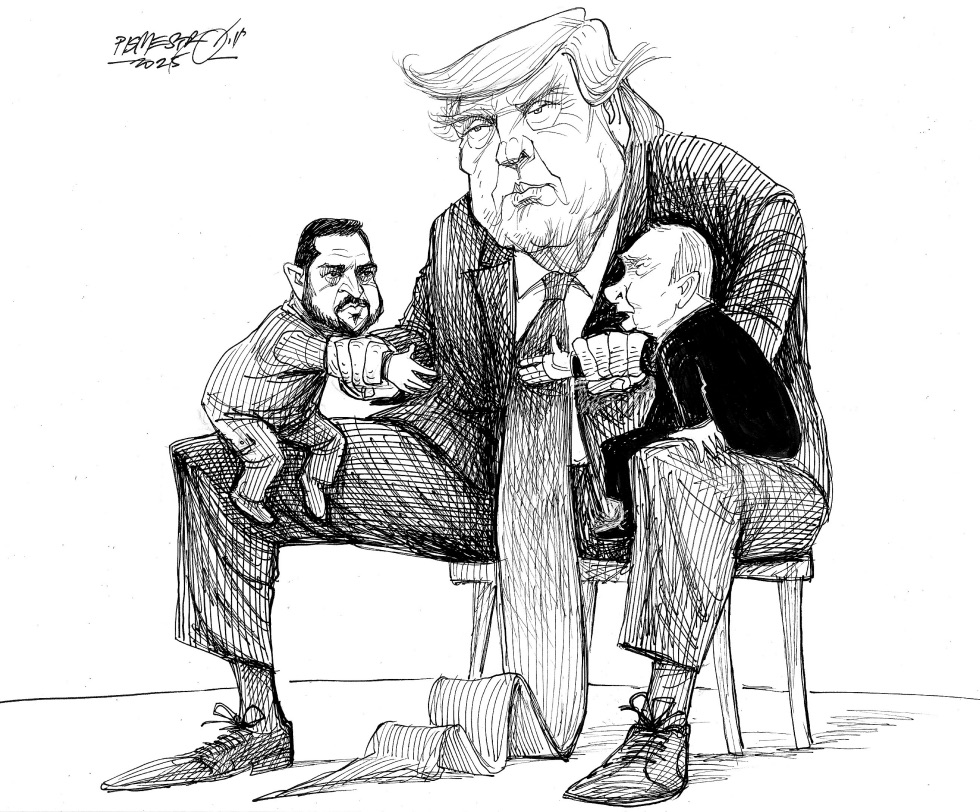
Meanwhile, Trump was posting madly early in the morning about every big music star that ever rejected him. That’s right before he’s supposed to be meeting with Putin and Zelensky over Putin’s invasion of Ukraine. Joe Biden has cancer, and Junior’s been hitting Truth Social and drugs at the same time.
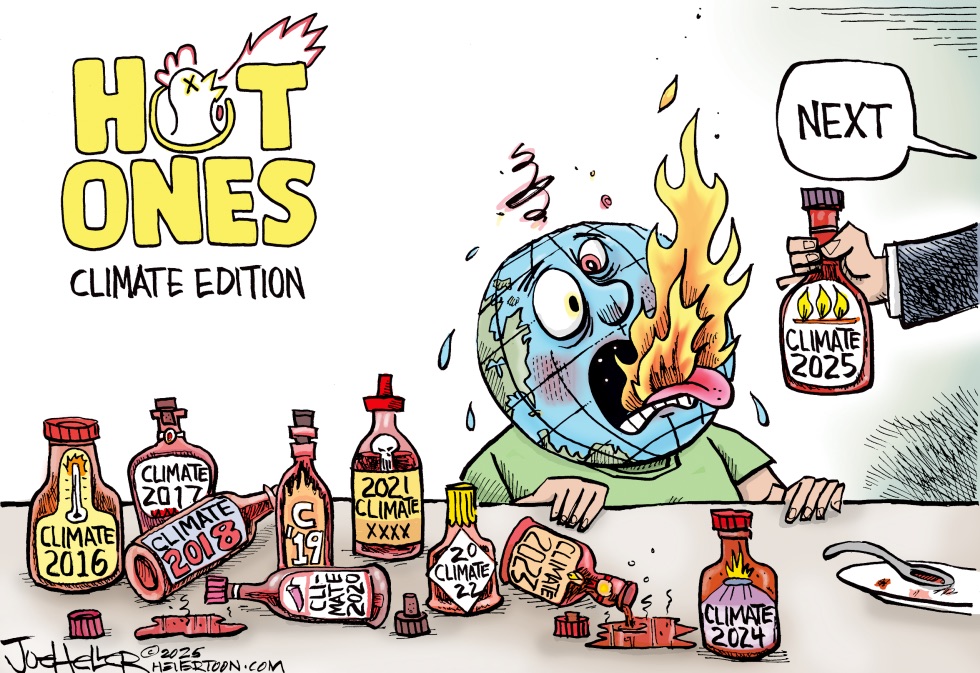
All I can do is quote Chief Meteorologist Emeritus for Channel 2 Action News’ Severe Weather Team 2. AMS certified Glenn Burns. He was talking about the Polar Vortex, but it applies to everything these days. “Nothing is like it used to be anymore.”
You can go read about the selfies of Trump with the Waffle House Toilet guys for yourself. Yes, it’s up there on the Daily Mail.
No wonder the Polar Vortex doesn’t want to be near the United States anymore. Who would?
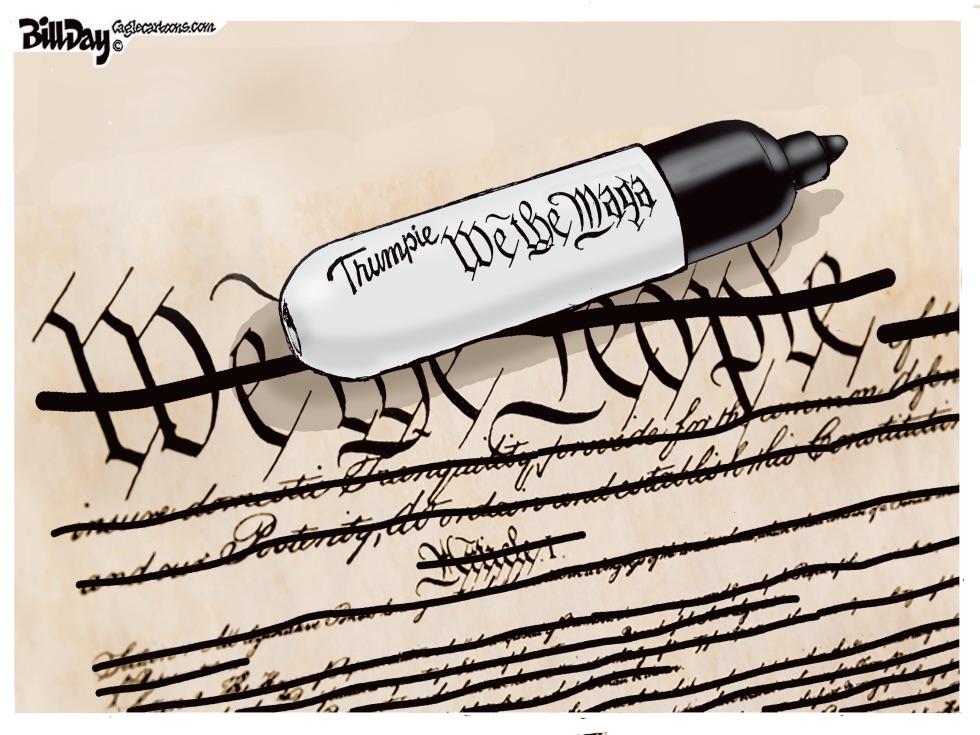
There are a lot of improvements we need in this country, but none of this stands as necessary or wanted. I love this float pic but think Senator Duckworth’s label Cadet Bone Spurs is more appropriate since Yam Tits would have never made it to a rank of sargent. But, yes, we’re getting a big, beautiful parade. It’s going to cost millions. This rather makes it official. We’re a damn Banana Republic. But the best thing is that pissed-off Americans are once more taking to the streets with placards and protests. This is from lawyermonthly. ““No Kings Day” Protests Set to Disrupt Trump’s $45M Birthday Military Parade.”
On June 14, a date that commemorates both the 250th anniversary of the U.S. Army and the 79th birthday of former President Donald J. Trump, the streets of the nation’s capital are expected to swell, not only with tanks, soldiers, and fighter jets, but with thousands of protestors prepared to send a very different message.
In a show of political theater unprecedented in recent years, Trump and his allies are staging what they’ve dubbed a “patriotic celebration,” complete with more than 6,000 uniformed troops, 150 military vehicles, and a dramatic aerial flyover.
The event, organizers say, is intended to honor America’s armed forces. Critics, however, see something more troubling: a public spectacle designed to cement the image of Trump as commander-in-chief, long after leaving office.
But while the parade commands the headlines, another force is quietly gaining momentum and it’s aiming to steal the spotlight.
Born from frustration and sharpened by years of political tension, a broad coalition of advocacy groups is organizing a massive counter-movement under the banner “No Kings Day.”
It’s not just a protest, they say. It’s a rejection of the authoritarian imagery they believe the parade represents.
Organizers from groups including the 50501 Movement and Refuse Fascism say they’re mobilizing demonstrations in over 100 cities nationwide, with Washington, D.C. serving as the focal point.
Estimates suggest between 10,000 to 20,000 demonstrators will gather in Meridian Hill Park before marching toward the National Mall.
“It’s not about hating Trump, it’s about preserving democracy,” said Angela V., a volunteer coordinator in Maryland who’s helping coordinate buses into the city. “We can’t normalize tanks in the streets every time a former president wants a birthday party.”
Though the name “No Kings Day” may sound theatrical, the intentions behind it are serious.
Protestors plan to highlight what they see as Trump’s attempts to centralize power and glamorize military dominance, particularly during a time when the former president faces multiple indictments related to election interference, classified documents, and alleged abuse of power.
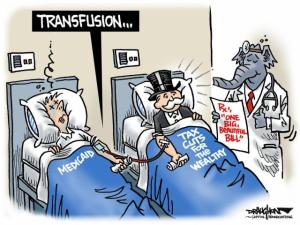
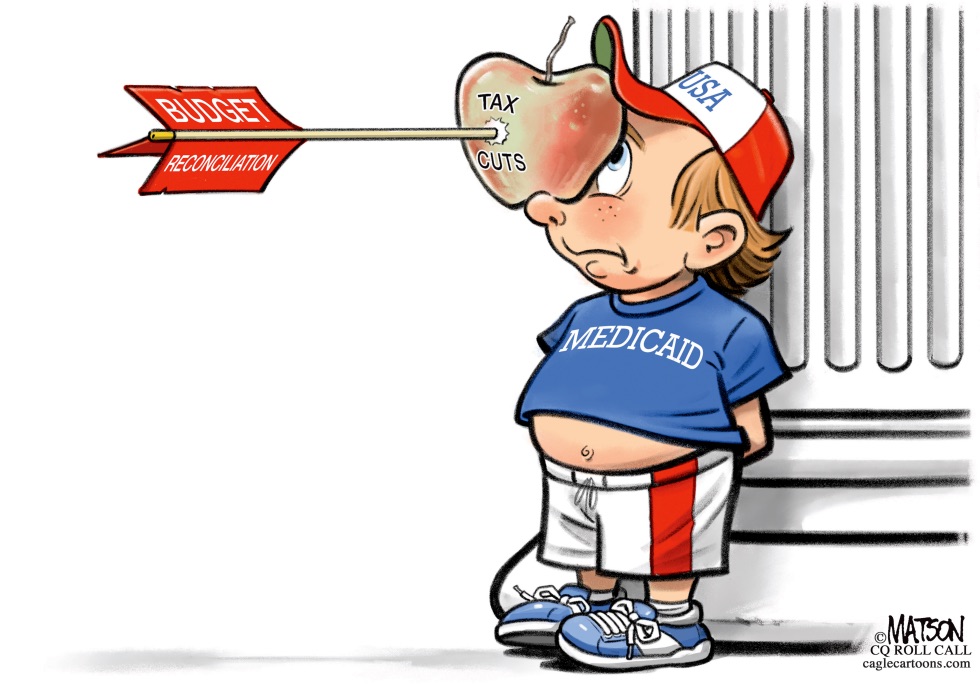
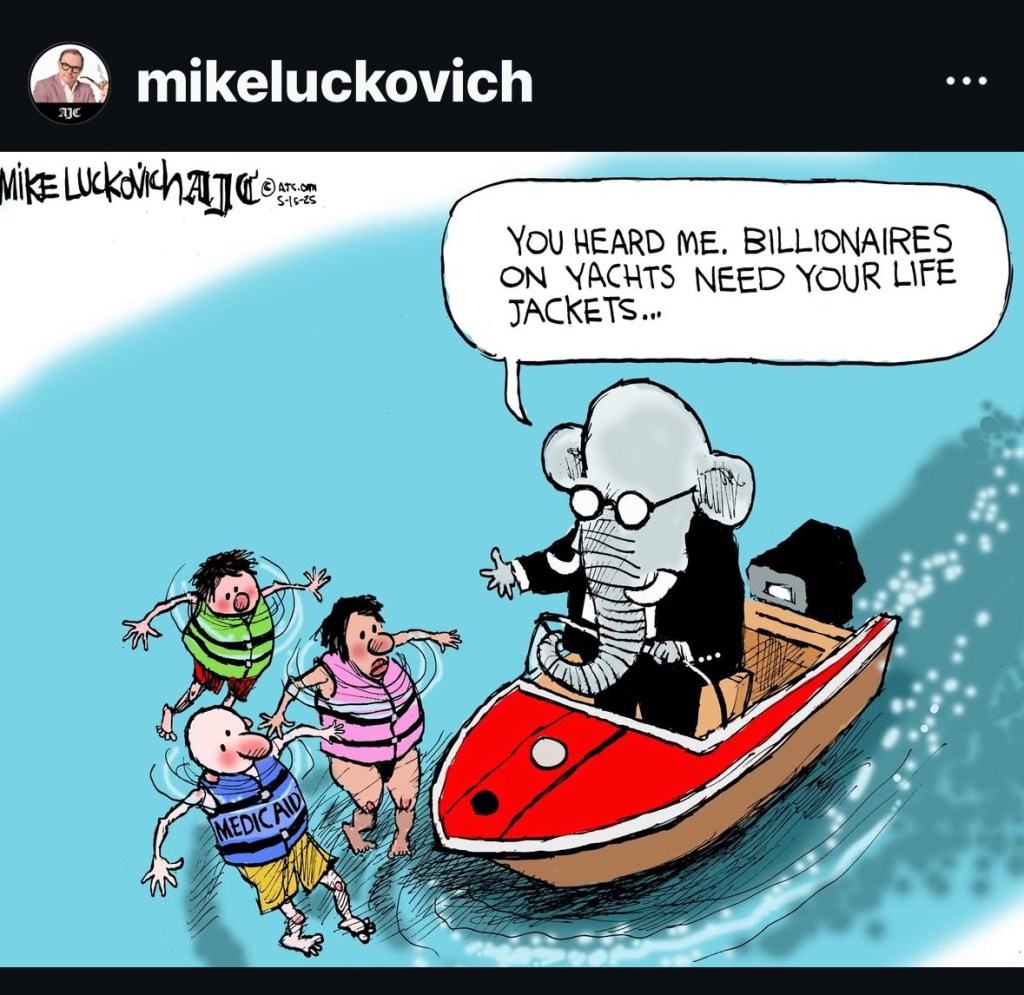
How about we use that $45 million plus whatever it costs to undo the damage Washington D.C. roads to fund the Veterans’ services cut by that ugly budget winding its way to the Senate today? Economist Paul Krugman–writing at his substack–colorfully describes the budget process as “Attack of the Sadistic Zombies. The GOP budget is incredibly cruel — and that’s the point.” Sounds a lot like the guy who doesn’t want bubbles in his drink or on his Porsche.
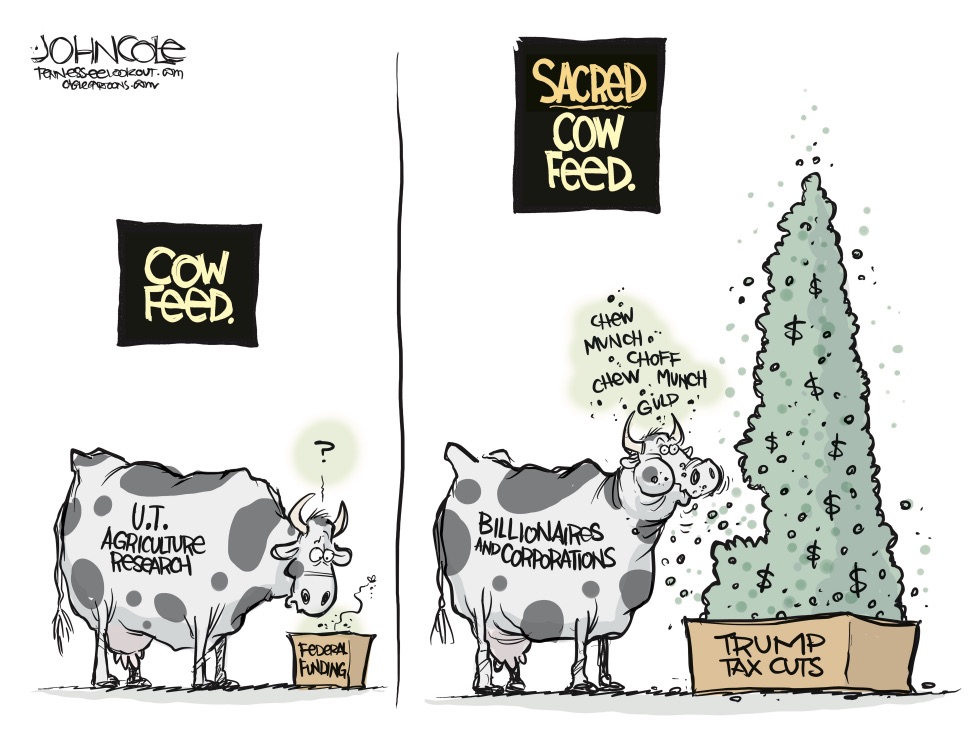
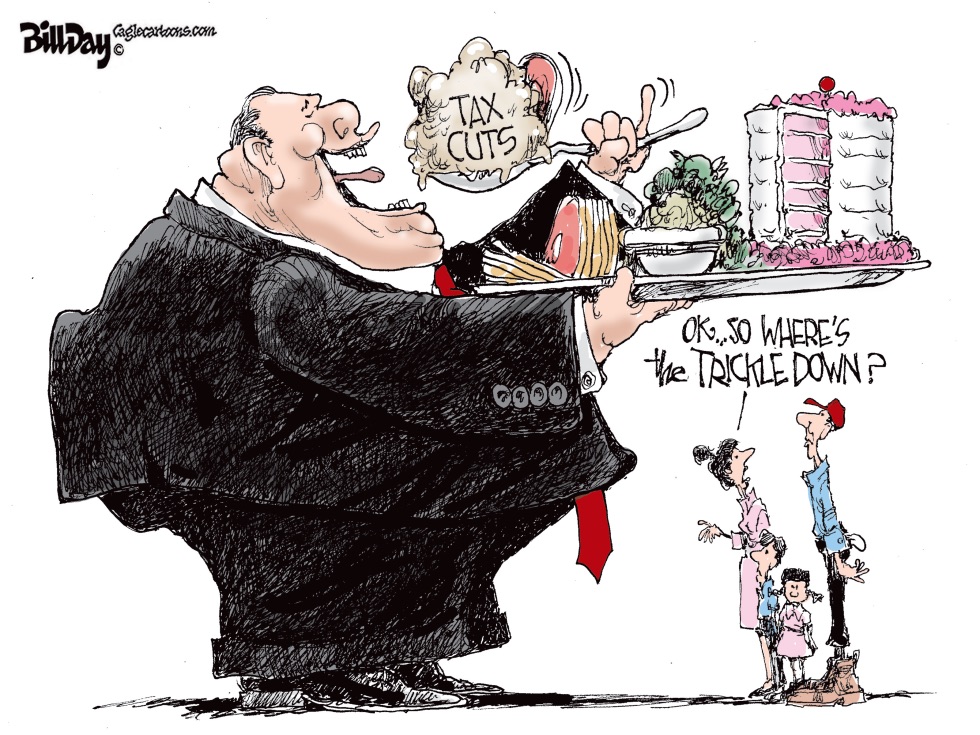
Republicans in Congress, taking their marching orders from Donald Trump, are on track to enact a hugely regressive budget — big tax giveaways to the wealthy combined with cruel cuts in programs that serve lower-income Americans. True, the legislation suffered a setback last week, initially failing to make it out of committee. But that was largely because some right-wing Republicans didn’t think the benefit cuts were vicious enough.
OK, news at 11. Isn’t this what Republicans always do? But this reconciliation bill — that is, legislation structured in such a way that it can’t be filibustered and may well pass with no Democratic votes — is different in both degree and kind from what we’ve seen before: Its cruelty is exceptional even by recent right-wing standards. Furthermore, the way that cruelty will be implemented is notable for its reliance on claims we know aren’t true and policies we know won’t work — what some of us call zombie ideas.
And it’s hard to avoid the sense that the counterproductive viciousness is actually the point. Think of what we’re seeing as the attack of the sadistic zombies.
To get a sense of how extreme this legislation is, do a side-by-side comparison of the impact on different groups of Americans between this bill and Trump’s one major legislative achievement during his first term, the 2017 Tax Cuts and Jobs Act. It looks like this:
Source: Tax Policy Center and Penn-Wharton Budget Model
The TCJA, like the current legislation, gave big tax breaks to the wealthiest Americans. But it also threw a few crumbs to people further down the scale. By contrast, the House Reconciliation Bill, by slashing benefits — especially Medicaid — will cause immense, almost inconceivable hardship to the bottom 40 percent of Americans, especially the poorest fifth.
Medicaid, in case anyone needs reminding, is the national health insurance program for low-income Americans who probably don’t have any other way to pay for medical care. In 2023 Medicaid covered 69 million Americans, far more than Medicare (which covers seniors), including 39 percent of children.
Providing health care to children, by the way, isn’t just about social justice and basic decency. It’s also good economics: Children who receive adequate care grow up to be more productive adults. Among other things they end up paying more taxes, so Medicaid for children almost surely pays for itself.
And although Republican legislation apparently won’t explicitly target childrens’ care, it will impose paperwork requirements that will cause both children and their parents to lose coverage.
Tonight, late on a Sunday night, the House Budget Committee passed what Republicans are calling their “Big, Beautiful Bill” to enact Trump’s agenda although it had failed on Friday when far-right Republicans voted against it, complaining it did not make deep enough cuts to social programs.
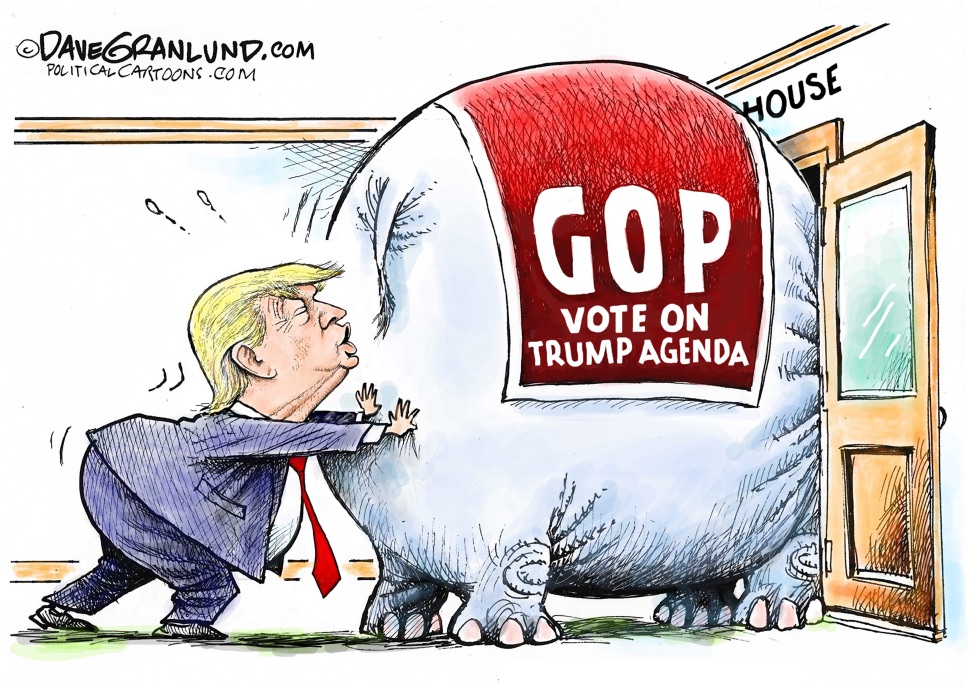
The vote tonight was a strict party line vote, with 16 Democrats voting against the measure, 17 Republicans voting for it, and 4 far right Republicans voting “present.” House speaker Mike Johnson (R-LA) said there would be “minor modifications” to the measure; Representative Chip Roy (R-TX) wrote on X that those changes include new work requirements for Medicaid and cuts to green energy subsidies.
And so the bill moves forward.
In The Bulwark today, Jonathan Cohn noted that Republicans are in a tearing hurry to push that Big, Beautiful Bill through Congress before most of us can get a handle on what’s in it. Just a week ago, Cohn notes, there was still no specific language in the measure. Republican leaders didn’t release the piece of the massive bill that would cut Medicaid until last Sunday night and then announced the Committee on Energy and Commerce would take it up not even a full two days later, on Tuesday, before the nonpartisan Congressional Budget Office could produce a detailed analysis of the cost of the proposals. The committee markup happened in a 26-hour marathon in which the parts about Medicaid happened in the middle of the night. And now, the bill moves forward in an unusual meeting late on a Sunday night.
Cohn recalls that in 2009, when the Democrats were pushing the Affordable Care Act, more popularly known as Obamacare, that measure had months of public debate before it went to the Committee on Energy and Commerce. That committee held eight separate hearings about healthcare reform, and it was just one of three committees working on the issue. The ACA markup took a full two weeks.
Cohn explains that Medicaid cuts are extremely unpopular, and the Republicans hope to jam those cuts through by claiming they are cutting “waste, fraud, and abuse” without leaving enough time for scrutiny. Cohn points out that if they are truly interested in savings, they could turn instead to the privatized part of Medicare, Medicare Advantage The Congressional Budget Office estimates that cutting overpayments to Medicare Advantage when private insurers “upcode” care to place patients in a higher risk bracket, could save more than $1 trillion over the next decade.
Instead of saving money, the Big, Beautiful Bill actually blows the budget deficit wide open by extending the 2017 tax cuts for the wealthy and corporations. The Congressional Budget Office estimates that those extensions would cost at least $4.6 trillion over the next ten years. And while the tax cuts would go into effect immediately, the cuts to Medicaid are currently scheduled not to hit until 2029, enabling the Republicans to avoid voter fury over them in the midterms and the 2028 election.
The prospect of that debt explosion led Moody’s on Friday to downgrade U.S. credit for the first time since 1917, following Fitch, which downgraded the U.S. rating in 2023, and Standard & Poor’s, which did so back in 2011. “If the 2017 Tax Cuts and Jobs Act is extended, which is our base case,” Moody’s explained, “it will add around $4 trillion to the federal fiscal primary (excluding interest payments) deficit over the next decade. As a result, we expect federal deficits to widen, reaching nearly 9% of GDP by 2035, up from 6.4% in 2024, driven mainly by increased interest payments on debt, rising entitlement spending and relatively low revenue generation.”
Steven Beschloss calls for more activism today at his substack, America, America. “Heeding the Warnings! We must avoid normalcy bias, expand our imagination, and both recognize and confront the fascistic danger of the Trump regime.”
Last week On Tyranny author Timothy Snyder warned that the second 100 days of the Trump regime could entail a dangerous escalation that includes some kind of terrorist attack. Imagining this can be hard; it’s understandable to ignore such a warning since it’s not yet true, it’s unpleasant to consider—and yes, it may not happen.
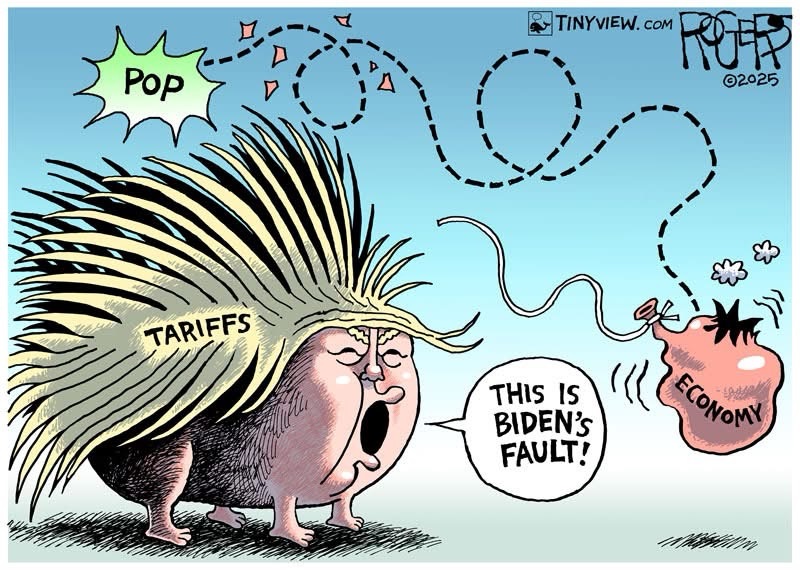
But it’s worth listening to what this historian of authoritarian regimes envisions—a warning layered with advice on how to prepare and how to respond. “I think it’s very important to expect there will now be exogenous surprises,” he said in a short video, including the “bottom falling out” of the economy because of the tariffs, “a major disruption” within the U.S. or even some kind of terrorist attack.
“Don’t fall for language about extremism or terrorism,” Snyder urged if it happens. He also emphasized the importance of staying calm, being active and sticking together. “Be aware that this is the pretext that will be used to push things further…use it as an opportunity to hold the people responsible who should be taking responsibility.”
This mirrors what he said in one of the final chapters of his short book that offers lessons to prepare, one entitled “Be calm when the unthinkable arrives.” His thinking draws on the Reichstag Fire staged by Hitler and the Nazis in 1933.
Modern tyranny is terror management. When the terrorist attack comes, remember that authoritarians exploit such events in order to consolidate power. The sudden disaster that requires the end of checks and balances, the dissolution of opposition parties, the suspension of freedom of expression, the right to a fair trial, and so on, is the oldest trick in the Hitlerian book. Do not fall for it.
As he notes in a Substack piece published last month about the possibility of such an attack, “The people in the White House have no governing skills, but they do have entertainment skills. They will seek to transform themselves from the villains of the story to the heroes, and in the process bring down the republic.”
None of us know if such an attack will happen. But I agree with Snyder that it’s important to expand our imaginations and be prepared if it does. That means not falling victim to normalcy bias.
Yes, millions of Americans failed to grasp the potential for disaster and crisis if Donald Trump were to occupy the White House again. But rather than look backward and rue that misfortune, let’s look forward and do what we can.
Warn the people we know. Warn the people we meet. Reach out on social media and email to our friends and communities. Contact our elected officials. Participate in public demonstrations and bring friends with us.
Let them all know this is an emergency—no time for business as usual and old ways of doing things. There’s an arsonist in the White House aggressively seeking to end our constitutional republic, free speech and the rule of law. And let’s not lose sight of our collective power to ensure that the Trump regime’s desired trajectory is not inevitable.
The Financial Markets are reeling. This is from NYT. “Markets Rattled on Concerns About U.S. Debt. Stocks fell, the dollar slipped, and bond yields jumped after a rating downgrade highlighted worries about the cost of President Trump’s policies and the health of the economy.”
Turbulent trading hit financial markets on Monday, with investors selling U.S. stocks and bonds and the dollar, an ugly combination that suggests sentiment is souring on the outlook for the world’s largest economy.
The S&P 500 index fell about 1 percent in early trading in New York. Bond markets shuddered, with U.S. Treasury prices falling and their yields, which underpin interest rates across the economy, rising. The 10-year yield jumped a tenth of a percentage point, a large move in that market, to 4.54 percent. The dollar also fell, with a gauge of its value against other major currencies slipping 0.8 percent.
One factor jarring markets is a bill in Congress that would make President Trump’s signature 2017 tax cuts permanent and could add trillions of dollars to federal debt. A House committee voted to approve the bill Sunday night, although it was expected to remain a focus of contentious congressional debate.
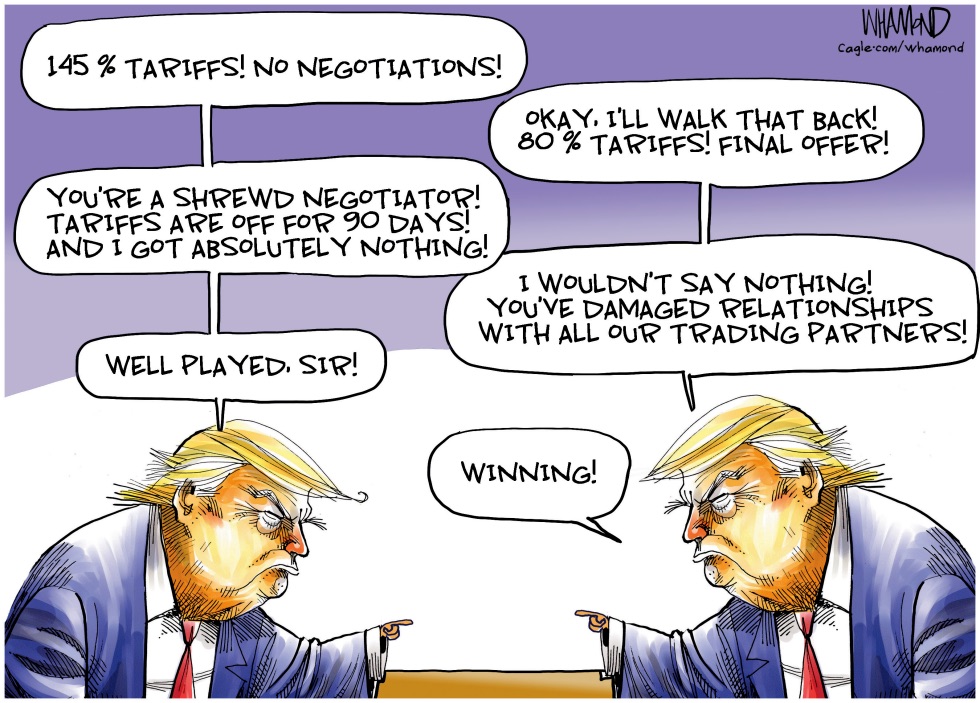
The United States’ loss of its last triple-A credit rating late on Friday and mounting concerns about government debt have threatened to disrupt the relative calm in markets that has prevailed since Mr. Trump paused many of his tariffs in recent weeks.
In downgrading the U.S. credit rating, Moody’s cited the tax cut legislation along with broader concerns about the fiscal deficit and growing debt costs. The move by Moody’s means that all three major rating agencies no longer consider the United States qualified for their top credit ratings.
The U.S. credit rating downgrade and worries about debt and deficits could further upset financial markets if they begin to shake the safe-haven status of Treasury bonds. That would likely spur global investors to demand higher premiums in return for buying U.S. debt.
On Monday, the 30-year Treasury yield rose to its highest level in a year and a half, above 5 percent.
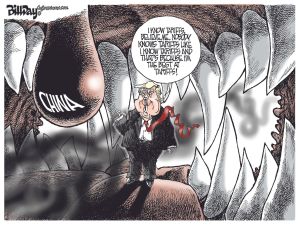
The market has yet to fully absorb the Treasury Bond Dump by China. This is from the Daily HODL (News and Insight for the Digital Economy). Yes, I’m getting seriously nerdy for you know. This is the kind of stuff that drives my research and derivatives class lectures. This is the stuff that should frighten everyone if they ever knew about it. “China Dumps $18,900,000,000 in Treasuries as US Government Faces Major Dilemma: Macro Analyst Luke Gromen.”
Macro investor Luke Gromen warns that the countries buying more USTs won’t be able to simultaneously buy more American-manufactured goods, further hurting America’s trade deficit that President Trump has promised to address.
“Foreign UST holdings rose $133 billion Mar vs. Feb.
UK, Caymans, and Canada were $86 billion of that $133 billion; China sold $19 billion.
UK surpassed China as the 2nd biggest US foreign creditor for 1st time ever in March.
Cayman Islands (pop. ~73,000) is now the fourth biggest US foreign creditor at $455 billion…
How are they going to buy both USTs and more goods from America going forward?”
Analysts reportedly told Reuters that Chinese holdings of USTs have been in a downward trajectory since 2018, even though foreign holdings of Treasuries surged to an all-time high of $9.05 trillion in March.
That means our exports will go down in many of the countries. It’s damned recessionary. Also, if the price of bonds goes down because a country dumps their portfolio of treasuries, the interest rates go up. It will be truly interesting to see what the Fed does with this. Then there’s this. I bet Senator Warren is apoplectic. This report comes from The Guardian. You remember how fun that crash was. “US reportedly plans to slash bank rules imposed to prevent 2008-style crash. Watchdogs could cut capital rules as Trump’s deregulation drive opens door to rollback of post-crisis protections.”
US watchdogs are reportedly planning to slash capital rules for banks designed to prevent another 2008-style crash, as Donald Trump’s deregulation drive opens the door to the biggest rollback of post-crisis protections in more than a decade.
The move follows heavy lobbying by the banking industry, with lenders such as JP Morgan and Goldman Sachs having long complained that competition and lending have been hindered by burdensome rules governing the assets they must hold versus their liabilities.
Regulators are expected to put forward the proposals this summer, aimed at cutting the supplementary leverage ratio that requires big banks to hold high-quality capital against risky assets including loans and derivatives, according to the Financial Times, which cited unnamed sources.
The rules came into force after the 2008 financial crisis, as part of efforts to shockproof the banking system and avoid damaging ripple effects that could cause another global economic meltdown. The crisis forced governments to spend billions of dollars bailing out big lenders that took too much risk.
Changes to bank capital rules have been widely expected, with Trump having promised a bonfire of regulation during his second term in office, with plans to slash 10 regulations for every new one added.
While some critics warn it is the wrong time to slash protections, given growing uncertainty over policy overhauls and market volatility, banks seem to have won the ear of policymakers. Lobbyists have long argued that the rules punish them for holding relatively low-risk assets including US debt, known as treasuries, and hinders their ability to provide more loans.
President Joe Biden’s diagnosis of metastatic prostate cancer has understandably raised concerns and questions: How long has he had cancer, how will he be treated, and what is his prognosis?
As a urologist, I regularly diagnose prostate cancer in my patients, and each time I share the diagnosis with them and their family, it’s never easy. Over time, I’ve learned the importance of keeping conversations simple and straightforward — avoiding sugar-coating and instead using data, statistics and personal experience to help patients begin their cancer journey.
As his public announcement draws attention to this type of cancer, it’s a reminder to regularly check on your own health. Here’s what you need to know about metastatic prostate cancer: how it’s detected, what treatments look like, and why early screening remains essential for men’s health.
The former president’s diagnosis began after he experienced “increasing urinary symptoms,” his office said, and a prostate nodule was discovered.
…
“Metastatic” means the cancer cells have spread beyond the original location (the prostate gland) into other areas — most commonly bones and lymph nodes. Biden’s cancer has specifically spread to his bones, placing him among the 5% to 7% of prostate cancer cases in the United States that are metastatic at initial diagnosis. While this percentage seems small, it represents a significant number given that over 300,000 men in the US and approximately 1.5 million worldwide are diagnosed with prostate cancer every year.
Early-stage prostate cancer carries an excellent prognosis, with nearly a 100% five-year survival rate. However, when prostate cancer is metastatic at diagnosis, the five-year survival rate drops sharply to around 37%. Importantly, these survival rates are statistical averages, and individual outcomes vary considerably based on overall health, age, cancer aggressiveness, and how well a patient responds to treatment.
All of the #FARTUS policies add up to a big mess for the economy. It’s driving me back to research again. But right now, I guess I’ll go blow some bubbles for a while.
What’s on your reading and blogging list today?
Racist bros may carry flaming tiki torches to intimidate and marginalize. But New Orleans carries tiki bubble torches to bring joy and fight entitled rich dudes
The U.S. has lost its last triple-A credit rating.
Moody’s Ratings downgraded the U.S. government on Friday, citing large fiscal deficits and rising interest costs.
Expanding budget deficits mean U.S. government borrowing will rise at an accelerating rate, pushing interest rates up over the long term, Moody’s said. The firm said Friday that it didn’t believe that any current budget proposals under consideration by lawmakers would do anything significant to reduce the persistent gap between government spending and revenues.
The move strips the U.S. of its last remaining triple-A credit rating from a major ratings firm, following similar cuts by Fitch Ratings in 2023 and S&P Global Ratings in 2011. Moody’s downgraded the U.S. to Aa1, a rating also held by Austria and Finland.
“Successive U.S. administrations and Congress have failed to agree on measures to reverse the trend of large annual fiscal deficits and growing interest costs,” Moody’s wrote in a statement….
The Moody’s downgrade comes as Republicans in Congress are trying to fashion a giant tax-and-spending bill that would extend expiring tax cuts, add some new tax cuts, reduce spending on Medicaid and nutrition assistance and boost border enforcement and national defense. It is expected to increase budget deficits by about $3 trillion over the next decade, compared with a scenario where the tax cuts expire as scheduled Dec. 31.
House Republican spending hawks blocked the bill on Friday, trying to accelerate spending cuts and hasten the end of clean-energy tax breaks.
A bit more:
At the margin, the Moody’s downgrade could put pressure on the market for U.S. Treasurys, which has already been hit by expectations for greater borrowing and stubbornly high inflation.
Treasurys, however, rallied after S&P’s 2011 downgrade, in part because the economy was weak, demonstrating that investors still considered the U.S. the world’s safest bet. Few expect the Moody’s downgrade to spur market turmoil this time. The U.S. remains the world’s largest economy and the benchmark against which other countries are measured.
But some investors said the downgrade could exacerbate the damage the recent trade war has done to that exceptional position. And that might compel global investors to lift the premium they demand to buy U.S. debt, which could drive benchmark yields beyond their recent level around 4.5%, likely stressing growth and market sentiment.
“That could generate an even bigger deficit because the cost of servicing our debt would also go up,” said Michael Goosay, global head of fixed income at Principal Asset Management.
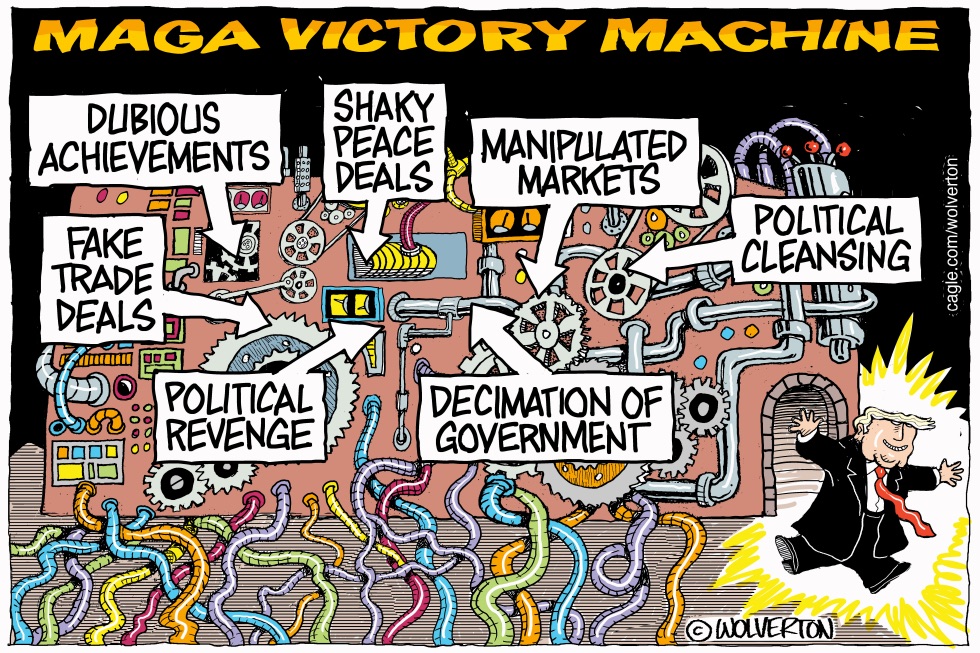
Obviously, Trump couldn’t care less about what happens to the U.S. credit rating. He’s just going to bleed the country dry and grab as much has he can while doing it.
Ultra right wing members of the House budget committee voted against Trump’s “big, beautiful bill” yesterday.
The GOP-led House Budget Committee voted to reject a sweeping package for President Donald Trump’s agenda on Friday, dealing an embarrassing setback to Speaker Mike Johnson, R-La., and Republican leaders.
A glass of milk, Nataliya Bagatskaya, (Ucraina, b.1967)
The vote in the Budget Committee was 16-21, with a band of conservative hard-liners who are pushing for steeper spending cuts joining all Democrats in voting against the multitrillion-dollar legislation, leaving its fate uncertain.
The Republicans who voted “no” were Reps. Chip Roy of Texas, Ralph Norman of South Carolina, Andrew Clyde of Georgia and Josh Brecheen of Oklahoma. Rep. Lloyd Smucker of Pennsylvania changed his vote from “yes” to “no,” he said, as a procedural move to allow Republicans to call the bill up again.
During the hearing, Roy fired a warning shot at Republican leaders, saying he opposes the bill as written because it will increase the deficit.
“I have to now admonish my colleagues on this side of the aisle. This bill falls profoundly short. It does not do what we say it does with respect to deficits,” Roy said. “That’s the truth. Deficits will go up in the first half of the 10-year budget window and we all know it’s true. And we shouldn’t do that. We shouldn’t say that we’re doing something we’re not doing.”
“This bill has back-loaded savings and has front-loaded spending,” Roy added. “I am a no on this bill unless serious reforms are made today, tomorrow, Sunday. Something needs to change or you’re not gonna get my support.”
After the vote tally was read, Rep. Jodey Arrington, R-Texas, the committee chair, adjourned the hearing and told members they would not be meeting again this weekend.
President Donald Trump blasted Walmart on Saturday after the retailer warned this week that it will raise prices because of tariffs.
“Between Walmart and China they should, as is said, “EAT THE TARIFFS,” and not charge valued customers ANYTHING,” Trump wrote on Truth Social. “I’ll be watching, and so will your customers!!!”
Walmart CFO John David Rainey said in an interview on Thursday that “We have not seen price increases at this magnitude, in the speed in which they’re coming at us before, and so it makes for a challenging environment.”
Rainey said he is “pleased with the progress that’s been made by the [Trump] administration on tariffs from the levels that were announced in early April, but they’re still too high.”
He said the company will “try to work with suppliers to keep prices as low as we can.”
Yesterday the Supreme Court dealt a blow to the Trump administration’s deportation plans.
The Supreme Court on Friday blocked President Donald Trump from moving forward with deportations under the 1798 Alien Enemies Act for a group of immigrants in northern Texas, siding with Venezuelans who feared they were poised for imminent removal under the sweeping wartime authority.
The decision is a significant loss for Trump, who wants to use the law to speed deportations – and avoid the kind of review normally required before removing people from the country. But the decision is also temporary and the underlying legal fight over the president’s invocation will continue in multiple federal courts across the country.
By Sandra Batoni
The justices sent the case at issue back to an appeals court to decide the underlying questions in the case, including whether the president’s move is legal and, if it is, how much notice the migrants targeted under the act should receive….
The court’s unsigned opinion was notably pointed about how the government was attempting to handle the removals and also how US District Judge James Hendrix had dealt with the case at an earlier stage.
The court referenced another case that had reached it previously, that of the Maryland man, Kilmar Abrego Garcia, who was mistakenly removed to El Salvador. The court noted that the Trump administration has represented that it is “unable to provide for the return of an individual deported in error to a prison in El Salvador.”
Given that, the court said, “the detainees’ interests at stake are accordingly particularly weighty.” In other words, the court was saying it is important to get the legal questions correct before people are removed, potentially, forever.
Way back on <checks notes> Wednesday, I wrote a long post updating the state of play in the (many) cases challenging President Trump’s attempt to use the Alien Enemies Act of 1798 to remove from the United States, on a mass, summary basis, individuals the government claims to be Venezuelan members of the Tren de Aragua (TdA)….
As I noted then, the Supreme Court had yet to decide the ACLU’s pending emergency application in the case from the Northern District of Texas—with the unhelpful caption “A.A.R.P. v. Trump.” That’s the case in which the Court had temporarily blocked further removals in its after-midnight ruling early on Saturday, April 19 (which I covered here). But a full ruling on the application has been pending ever since.
Well, around 3:45 on Friday afternoon, that ruling came down. And the decision—in “A.A.R.P. II”—is a pretty big deal. So I thought I’d put together this quick post that walks through what happened—and why it matters….
What Did the Court … Hold? There’s a lot of technical stuff in the eight-page, unsigned majority opinion.1 What’s especially important are, by my count, three different holdings: First, that the Fifth Circuit did have jurisdiction to hear the plaintiffs’ appeal of the district court’s refusal to block their removal (it had concluded otherwise). Second, that the plaintiffs were entitled to more notice than they had received as of April 18. And third—and this is the quiet bombshell in the ruling—that “this Court may properly issue temporary injunctive relief to the putative class in order to preserve our jurisdiction pending appeal,” even without resolving whether full class certification is likely….
The post is pretty technical, so if you want the details, read the whole thing at the link. I’ll just quote one more section:
Is It Me, Or is the Majority Opinion … Unusually Pointed? It’s not you. There are at different passages in which the majority openly seems to be expressing … frustration … with the government; the lower courts; and Justice Alito (who wrote a dissenting opinion that was joined by Justice Thomas), respectively.
It appears that at least some of the justices are getting sick and tired of the Trump administration’s dishonesty and refusal to obey the courts.
GREENBELT, Md. — In a contentious court hearing on Friday, Trump administration attorneys argued before a federal judge in Maryland that they should be allowed to withhold information regarding efforts to facilitate the return of a Salvadoran man to the United States.
Kilmar Abrego Garcia remains in the Salvadoran prison system despite orders from a federal judge and the Supreme Court calling for the government to facilitate his return to the United States.
Drawing of old woman with cat, Max Leibermann
U.S. District Judge Paula Xinis said the government’s refusal to provide certain information in the case has been “an exercise in utter frustration.” In a back-and-forth that has continued for weeks,Xinis has ordered the administration to facilitate Abrego Garcia’s release and provide documentation on what steps it has taken, if any, to comply with that order.
Government lawyers said the administration has not been able to answer questions about Abrego Garcia’s case because that information would be considered protected under “state secrets” or “deliberative process” privileges that should not be shared with the public.
On Friday, Xinis said the administration has not made a good-faith effort to comply with the court order. She repeatedly called on the administration to show how turning over evidence of actions it has taken or will take to return Abrego Garcia would pose a reasonable danger to foreign affairs.
“There is simply no detail. This is basically, ‘Take my word for it,’” the judge said.
From Garcia’s attorneys:
Abrego Garcia’s team said the discovery they’ve received from the government thus far has been inadequate, and Xinis appeared to agree. The plaintiffs said they received 164 documents, and 132 of them were photocopies of court filings and their own discovery requests. Rossman said that of the remaining 32 new documents, half were related to Maryland Sen. Chris Van Hollen’s recent trip to El Salvador to see Abrego Garcia.
Rossman said the government logged 1,140 documents as “privileged,” in “every manner of privilege that I’ve ever heard of.”
“My head is spinning, your honor,” he said.
Rossman also said it was “deeply disturbing” that while the administration has claimed in court that it’s complying with the order to facilitate Abrego Garcia’s release, high-ranking officials including Trump himself have contradicted that in public.
The administration’s claims, Xinis says, have been hampering efforts to get to the bottom of whether the government has disobeyed the court order by not facilitating the return of Abrego Garcia to the United States.
When a Guatemalan man sued the Trump administration in March for deporting him to Mexico despite a fear of persecution, immigration officials had a response: The man told them himself he was not afraid to be sent there.
Immigrations and Customs Enforcement officials now say they have no record of anyone being told by the man, identified only by the initials O.C.G. in court papers, that he was unafraid of going to Mexico. The error, they say, was attributable to a “software tool” known as ICE’s “ENFORCE alien removal module” that tracks individual deportation cases and allows staff to insert comments.
“Upon further investigation … ICE was unable to identify an officer or officers who asked O.C.G. if he feared a return to Mexico,” said Brian Ortega, assistant field office director for ICE’s Enforcement and Removal Operations, in a sworn statement to the federal judge overseeing the lawsuit.
The mistake may have been costly: The judge overseeing the lawsuit said last month he did not order the administration to facilitate O.C.G.’s immediate return from Mexico in part because of the dispute. Instead, U.S. District Judge Brian Murphy, a Biden appointee based in Massachusetts, ordered expedited fact-finding, which helped unearth the mistake.
ICE’s acknowledgment is the latest in a string of errors that have led judges to fault the administration for attempting to carry out President Donald Trump’s mass deportation campaign at a breakneck pace — often at the expense of due process.
The U.S. DOGE Service arrived at the Social Security Administration this year determined to slash staff and root out what it claimed was widespread fraud and wasteful spending — a mission Elon Musk’s cost-cutting team has pursued across the government.
But as of this week, many of the major changes DOGE pushed at Social Security have been abandoned or are being reversed after proving ineffective, while others are yielding unintended consequences and badly damaging customer service and satisfaction. The problems come as the agency struggles to cope with a record surge of hundreds of thousands of retirement claims in recent months.
DOGE, which stands for Department of Government Efficiency but is not a Cabinet-level agency, had to cancela plan to cut phone service for retirement and disability claimsafter drawing outrage from lawmakers, seniors and advocates. Staff reductions and reassignments led by DOGE are slowing the pace of claims processingas field offices lose longtime staff and gain a smaller number of inexperienced replacements. DOGE-driven changes to the agency’s website are causing crashes almost every day, and phone customers complain about dropped calls and long wait times. A DOGE-imposed spending freeze is leading to shortages of basic office supplies, from printer cartridges to the phone headsets staff need to do their jobs.
And on Friday, Social Security leaders told employees that the agency was ending a security check, developed at DOGE’s request, that was meant to root out allegedly fraudulent claims filed over the phone, according to three employees familiar with the situation and an email obtained by The Washington Post. But the measure — which involved placing a three-day hold on all phone claims as other staffers checked into the caller’s background — had only identified a couple of potential fraud cases while causing significant delays in claims processing, two employees said.
Kathleen Romig, a former Social Security official who is now at the left-leaningCenter on Budget and Policy Priorities, said there were already safeguards in place to detect fraud through the agency’s phone service. DOGE’s efforts have only delayed claims processing and, like most of the team’s attempts to reshape Social Security, placed serious stress on the agency, she said.
“So much of this is self-inflicted wounds,” Romig said.
At the National Institutes of Health, six directors — from institutes focused on infectious disease, child health, nursing research and the human genome — are leaving or being forced out.
t the Federal Aviation Administration, nearly a dozen top leaders, including the chief air traffic officer, are retiring early.
Siesta, Irina Orazio Orazi (Italian, 1848-1912)
And at the Treasury Department, more than 200 experienced managers and highly skilled technical experts who help run the government’s financial systems chose to accept the Trump administration’s resignation offer earlier this year, according to a staffer and documents obtained by The Washington Post.
Across the federal government, a push for early retirement and voluntary separation is fueling a voluntary exodus of experienced, knowledgeable staffers unlike anything in living memory, according to interviews with 18 employees across 10 agencies and records reviewed by The Post. Other leaders with decades of service are being dismissed as the administration eliminates full offices or divisions at a time.
The first resignation offer, sent in January, saw 75,000 workers across government agree to quit and keep drawing pay through September, the administration has said. But a second round, rolling out agency by agency through the spring, is seeing a sustained, swelling uptick that will dwarf the first, potentially climbing into the hundreds of thousands, the employees and the records show.
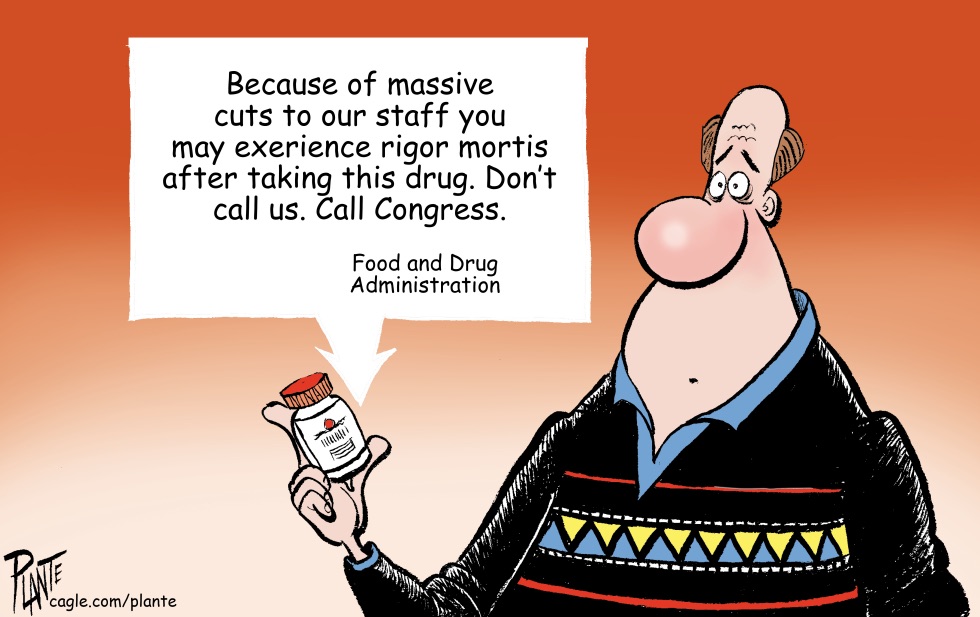
There’s no way I’m trusting anything this government has to say about health and safety.
I’ll wrap this up with a couple of ridiculous stories:
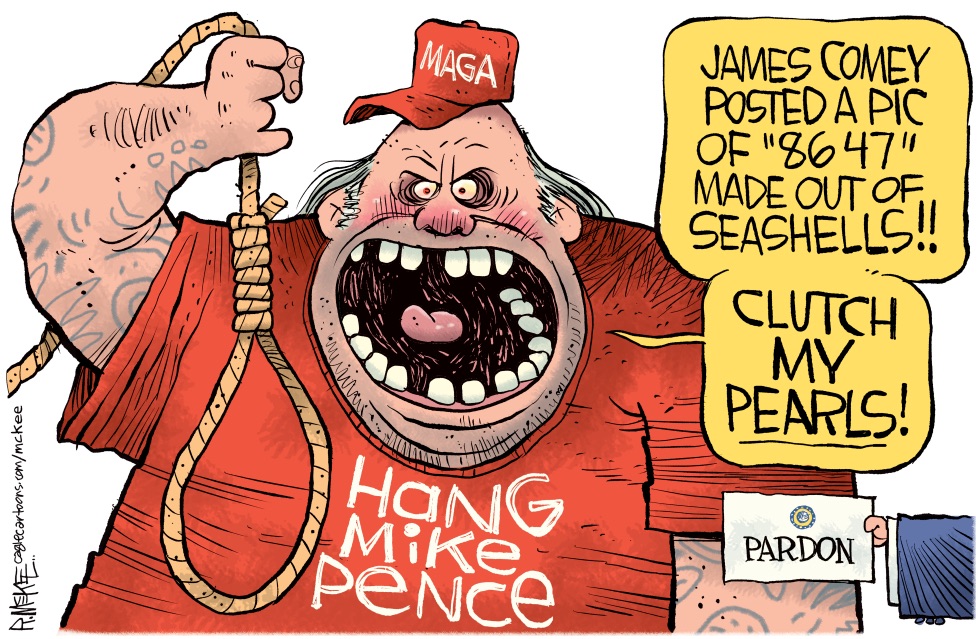
Former FBI Director James Comey was interviewed by US Secret Service agents at their Washington, DC, field office on Friday afternoon, according to law enforcement sources.
Comey was interviewed by agents investigating a social media post he posted Thursdayshowing shells in the sand on a beach spelling out “86 47,” which has become a popular social media code for removing Trump from the presidency.
Comey was not in custody and appeared voluntarily, a source said.
Trump and fellow Republicans have attacked Comey for the post, demanding an investigation.
Comey “knew exactly what that meant,” Trump said in a Fox News interview. “A child knows what that meant. If you’re the FBI director and you don’t know what that meant, that meant assassination.”
In explaining why he removed the post, Comey wrote on Instagram that he had “posted earlier a picture of some shells I saw today on a beach walk, which I assumed were a political message.”
It was expected that Comey will be asked if he intended the message as a threat, or to inspire others who might consider an act of violence against Trump, the source said. Ultimately, a decision on whether the case is chargeable as a threat against the president may lie with the US attorney in Washington.
Funny how no Trumpers were interviewed by the FBI when they posted 86 46 when Biden was president.
Figure with Black Cat, 2020 by Mary Sauer (American, b. 1986)
“I see that Highly Overrated Bruce Springsteen goes to a Foreign Country to speak badly about the President of the United States,” Trump wrote, glossing over the fact that he, too, is currently in a foreign country speaking badly about someone.
Trump also called Springsteen “a pushy, obnoxious JERK” without a hint of self-awareness.
Springsteen opened the first show of his tour with an unambiguous rallying cry for democracy, warning that America “is currently in the hands of a corrupt, incompetent and treasonous administration.”
“Tonight, we ask all who believe in democracy and the best of our American experience to rise with us,” he said. “Raise your voices against the authoritarianism, and let freedom ring.”
That’s it for me today. What’s on your mind?
Did you like this post? Please share it with your friends:
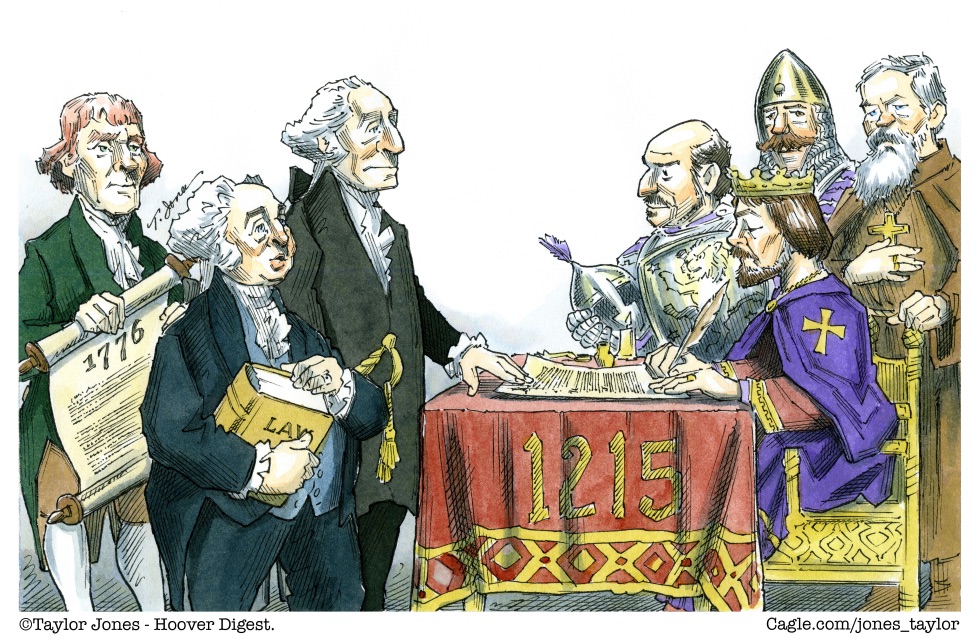
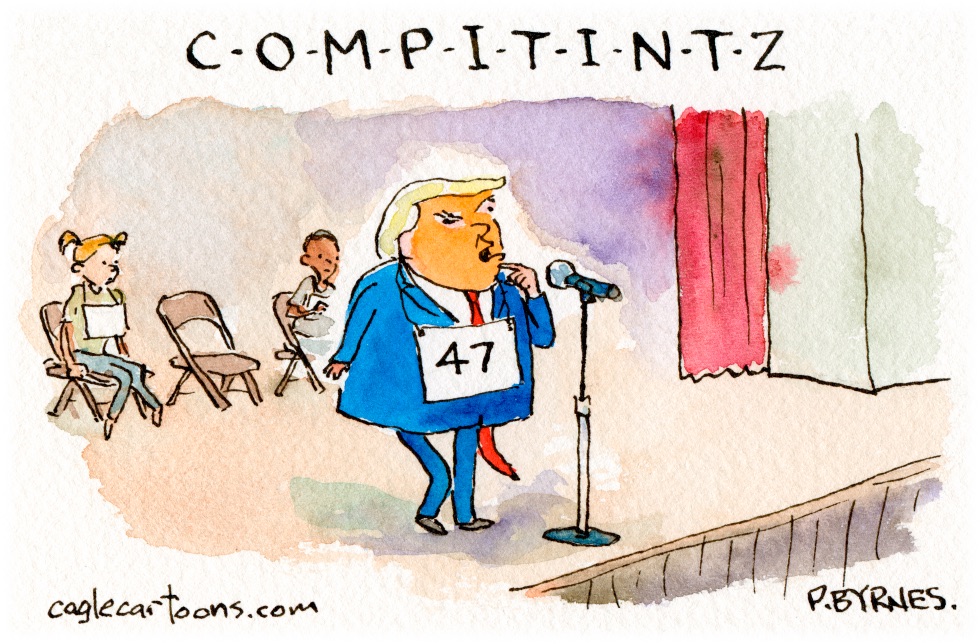
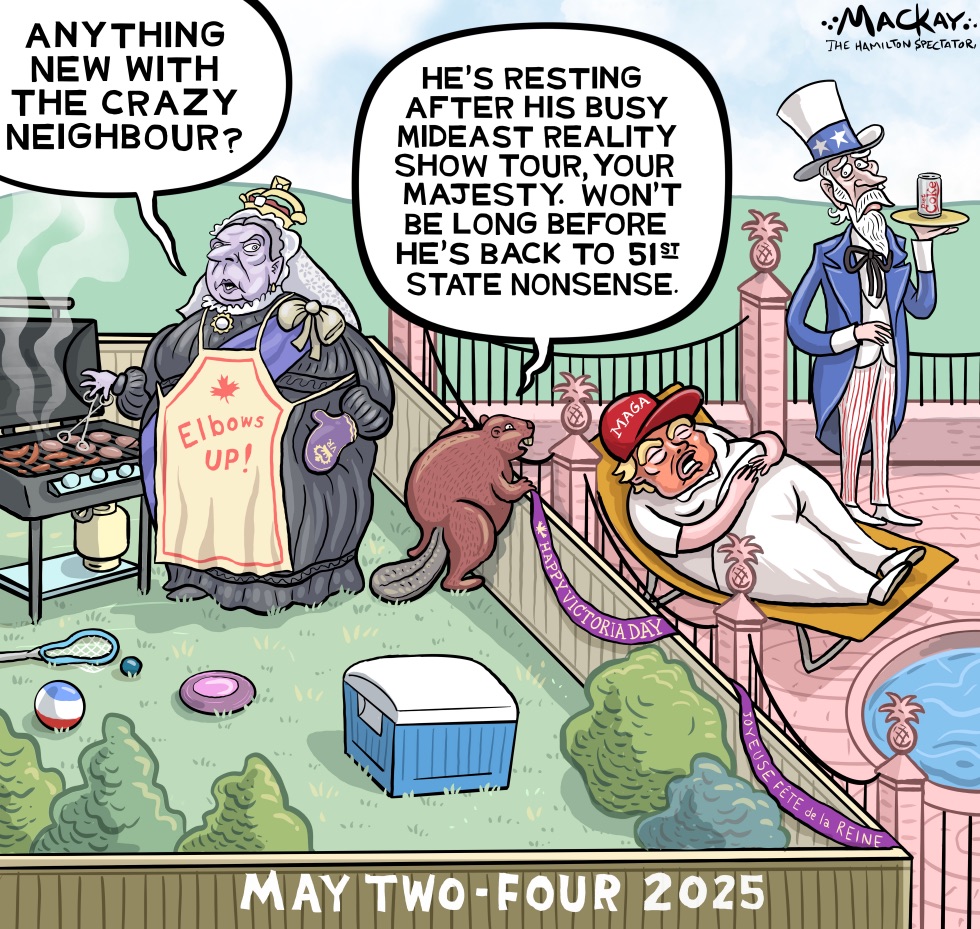
It’s not often I quote the Daily Mail, but it has that British humor touch that just puts the right tone on what should be a Monty Python Sketch. I used to have an apron that said, “Who invited all these tacky people?” Well, it’s Yam Tits and all those Republican Senators that approved the cast of this freak show. Every headline these days about the Regime of Orange Caligula and his cabinet of crazies is outrageous and depressing. Today, we’ll discover both categories. And, btw, I send apologies out to Henry II for messing with his lament. We’ve become the worst caricature of ourselves.
“ICE Barbie Kristi Noem is backing insane reality TV show where immigrants compete for fast-tracked citizenship.” Doesn’t that just have that perfect mixture of cruelty, inhumanity, and pathos that makes the news cringeworthy these days?
She’s been called ‘ICE Barbie’ for treating her Cabinet position like a TV production, but now Homeland Security Secretary Kristi Noem is pushing for an actual reality show pitting immigrants against each other ‘for the honor of fast-tracking their way to U.S. citizenship’.
It may sound like a joke, but the idea is for real and is outlined in a 35-page program pitch put together in coordination with the DHS secretary, DailyMail.com can exclusively reveal.
Noem is even offering up officials from the U.S. Citizenship and Immigration Services to tally votes for the made-for-TV contest.
The pitch comes from Rob Worsoff, a writer and producer known for Duck Dynasty, the A&E reality show about a Louisiana family and its hunting empire, and Bravo’s Millionaire Matchmaker.
The proposed series is called The American, named after the train that contestants would ride around the country, competing in regionally specific ‘cultural’ contests such as rolling logs in Wisconsin.
It would lead to a grand finale with the winner getting sworn in on the steps of the U.S. Capitol.
‘Along the way, we will be reminded what it means to be American – through the eyes of the people who want it most,’ reads Worsoff’s pitch.
Worsoff – who himself was born in Canada – said: ‘I’m not affiliated with any political ideology. As an immigrant myself, I am merely trying to make a show that celebrates the immigration process, celebrate what it means to be American and have a national conversation about what it means to be American, through the eyes of the people who want it most.’
Tricia McLaughlin, the top spokesperson for DHS, acknowledged that agency staff are reviewing this pitch and had a call with the producer last week. She insisted Noem is yet to be briefed on the initiative.
However, DailyMail.com has confirmed that Noem supports the project and wants to proceed.
And McLaughlin said: ‘I think it’s a good idea.’
Worsoff’s project comes as Noem is wanting to showcase what it means to become an American, amid the Trump administration’s crackdown on illegal immigration.
She and her agency have been working for weeks to get such a project greenlit from Netflix or another streaming or cable service, sources tell DailyMail.com.
But while past outreach has fallen flat, they’re hoping this one has a real chance.
In his pitch, Worsoff, 49, expresses confidence that The American would be a commercial hit and ‘lends itself to enormous corporate sponsorship opportunities’.
At the same time, there’s concern among some in DHS about the possible optics of turning the plight of immigrants into a reality game show, sources say.
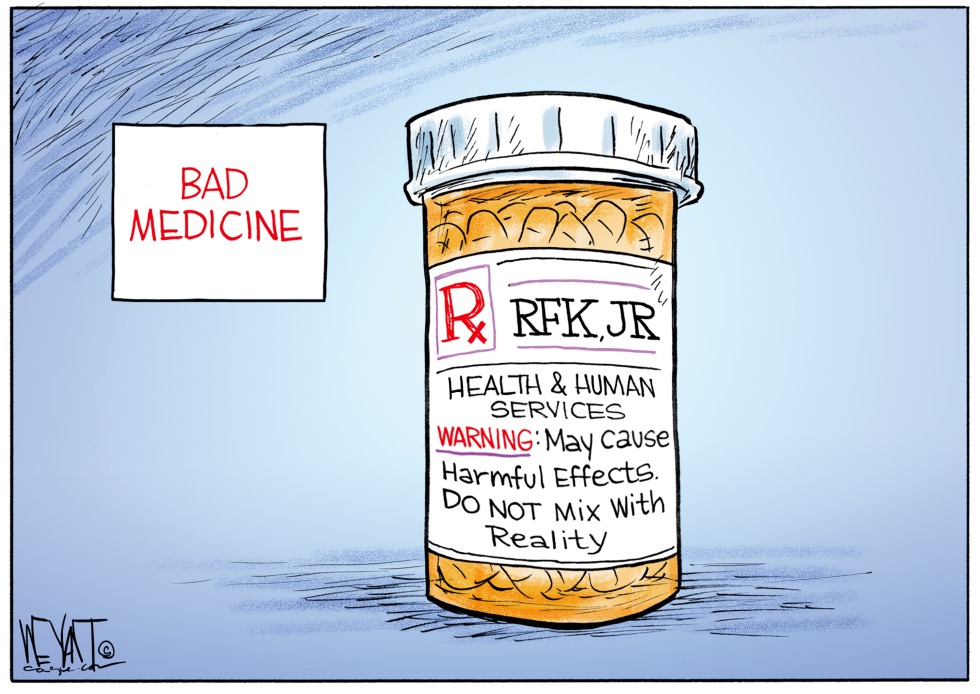
“If you read the speech bubble using RFK Jr’s halting, raspy, tinny voice, it helps get past the grossness.” John Buss, @repeat1968
Isn’t that what brought us here? Illiterate, unhappy people who believe that “reality” shows are real? Cosplay Barbie isn’t alone for being out of her league, but melodramatic enough to keep the big guy happy. Yesterday, I listened to the most surreal edition of a Supreme Court hearing I’d ever seen. How on earth did this thing make it to the docket, and what’s next? This is from Slate. “The Supreme Court May Pick the Worst Possible Case to Cede More Power to Trump.” This analysis is provided by Dahlia Lithwick and Mark Joseph Stern. As usual, the Women on the Bench Rule and the guys drool.
During one of the term’s biggest sets of oral arguments on Thursday, everyone at the Supreme Court seemed to agree that the United States is in the midst of an emergency. But there was far less agreement about what specifically that emergency is. During debate over three nationwide injunctions currently protecting birthright citizenship from President Donald Trump’s attacks, the justices were deeply split over what manner of legal crisis the court—and the country—truly faces. And the growing gender divide emerged once again: The four women seemed concerned that the president is trying to undo the final restraints on his exercise of unconstitutional power, and doing so in ways that include breaking norms and defying courts. The five men, in contrast, sounded irked at allegedly monarchical district court judges who dare issue broad orders blocking the White House’s policies, even when they’re blatantly unconstitutional.
These five men, of course, make up the majority of the Supreme Court. And, as they keep reminding us, they can do anything they want with their authority. But there is reason to believe that one or two of these justices might balk at the mayhem they could unleash by limiting lower courts’ power to constrain the executive branch. And not onejustice even hinted that they think Trump should eventually win on the merits and get the green light to start stripping birthright citizenship from immigrants’ children. What they spent two and a half hours debating, in painstaking detail, is whether nationwide or universal injunctions are the way to stop that from happening.
It’s anybody’s guess how the court will come down on that question. It seems the majority wants to have it both ways, reining in lower courts that are—across all political and ideological lines—battling Trump’s lawlessness, and somehow doing so without itself blessing that lawlessness as the administration would like to deploy it against American children of noncitizens. That may well be an impossible task, and their attempt to pull it off in this case could provoke destabilizing confusion across the judiciary. In trying to resolve one perceived emergency, the majority may end up provoking many more.
During one of the term’s biggest sets of oral arguments on Thursday, everyone at the Supreme Court seemed to agree that the United States is in the midst of an emergency. But there was far less agreement about what specifically that emergency is. During debate over three nationwide injunctions currently protecting birthright citizenship from President Donald Trump’s attacks, the justices were deeply split over what manner of legal crisis the court—and the country—truly faces. And the growing gender divide emerged once again: The four women seemed concerned that the president is trying to undo the final restraints on his exercise of unconstitutional power, and doing so in ways that include breaking norms and defying courts. The five men, in contrast, sounded irked at allegedly monarchical district court judges who dare issue broad orders blocking the White House’s policies, even when they’re blatantly unconstitutional.
These five men, of course, make up the majority of the Supreme Court. And, as they keep reminding us, they can do anything they want with their authority. But there is reason to believe that one or two of these justices might balk at the mayhem they could unleash by limiting lower courts’ power to constrain the executive branch. And not onejustice even hinted that they think Trump should eventually win on the merits and get the green light to start stripping birthright citizenship from immigrants’ children. What they spent two and a half hours debating, in painstaking detail, is whether nationwide or universal injunctions are the way to stop that from happening.
It’s anybody’s guess how the court will come down on that question. It seems the majority wants to have it both ways, reining in lower courts that are—across all political and ideological lines—battling Trump’s lawlessness, and somehow doing so without itself blessing that lawlessness as the administration would like to deploy it against American children of noncitizens. That may well be an impossible task, and their attempt to pull it off in this case could provoke destabilizing confusion across the judiciary. In trying to resolve one perceived emergency, the majority may end up provoking many more.
Thursday’s arguments in Trump v. CASA were a muddle, exacerbated by the Trump Justice Department’s pretzel of a request for emergency resolution of a side issue, and accepted on those narrow terms by the Supreme Court’s own design. The court agreed to consider three different injunctions issued by district courts against Trump’s Jan. 20 executive order abolishing birthright citizenship for thousands of children. These orders would have denied U.S. citizenship to babies born in the United States to immigrants lacking permanent legal status and holders of temporary visas. A small army of plaintiffs—including pregnant women, advocacy groups, and 22 states—promptly sued.
Three district courts, in Maryland, New Jersey, and Washington state, all separately held that Trump’s ban unequivocally violates the 14th Amendment, which expressly grants citizenship to “all persons born” in the U.S., with minor exceptions for the children of diplomats and members of invading armies that are irrelevant here. So each court issued a “universal injunction” prohibiting the Trump administration from implementing the policy nationwide. These courts reasoned that narrower injunctions would fail to fully protect the plaintiffs’ right to complete relief from the unconstitutional policy. As a result, the executive order was paused across the nation. Three federal appeals courts refused to disturb the injunctions.
Trump’s DOJ then asked the Supreme Court to step in, claiming that being thwarted from stripping birthright citizenship from the 14th Amendment represented an emergency that needed to be resolved on the so-called shadow docket. But, perhaps recognizing that it was destined to lose on the constitutional merits, the department did not ask SCOTUS to rule that Trump’s executive order was lawful. Instead, it asked the justices to narrow the injunctions to the named plaintiffs, arguing that it was long past time to crack down on universal injunctions proliferating against the administration, and to resolve the decades-old problems of know-it-all trial court judges and forum-shopping litigants (a problem Republican litigants were far less concerned about when these weapons were wielded aggressively against the Biden administration). The high court agreed to consider whether these sweeping injunctions were appropriate—a question that’s related to, but wholly separate from, the larger and arguably far more pressing issue of whether the underlying executive orders are unconstitutional.
If you squint, you can see the logic of what SCOTUS did here. Maybe the justices thought they could issue a compromise decision that would give Trump a procedural victory by trimming the nationwide injunctions while teeing up a someday defeat for him on the merits in the near future. This was the kind of Solomonic “grand bargain” that some commenters hoped would come with last year’s Jan. 6–related cases, in which the majority ultimately allowed the once and future president to run the table. It became painfully clear during Thursday’s oral arguments that any such vision here was a mirage: There is no clean way to separate the merits of the 14th Amendment’s guarantee of citizenship to everyone born in the United States from the effort to claw back broad injunctions. To allow the states and plaintiffs to lose on the latter is to give away the farm on the former.
“Pretty sure this one’s headed to the trump library too..” John Buss, @repeat1968
Slate’s Mary Ziegler at Slate has another example of the sneaky, backdoor way the Project 2025 Klan has of making things worse for everyone. “Trump’s ‘Big Beautiful Bill’ Is a Sneak Attack on Abortion.”
“With Donald Trump’s “big beautiful bill” of tax and Medicaid cuts up for consideration, abortion might be the last thing on anyone’s mind. But a provision buried in the bill is Republicans’ latest attempt to stop losing on reproductive rights. The current version of the GOP budget reconciliation bill includes language denying Medicaid funding to any “large provider of abortion services.” This marks a big change in the GOP’s recent approach to abortion policy. Through the early months of the Trump administration, Republicans in Congress have been remarkably reluctant to do anything big on abortion. But now they are using the president’s signature legislation to wade back into the fight.
What made this bill different? The idea seems to be that Republicans can reframe unpopular attacks on reproductive rights as more acceptable government cost-cutting measures by relying on the Department of Government Efficiency to do their dirty work. If Americans like saving money, and are prepared to believe Elon Musk’s arguments about fraud and waste, the theory goes, maybe Republicans can deliver for their socially conservative constituents without the plan backfiring. But the GOP’s latest gambit is a reminder that there’s still no magic bullet for conservatives when it comes to reproductive rights.
It’s no surprise that anti-abortion leaders themselves have seized on this strategy. Trump has made some moves to placate abortion opponents, like announcing that no one will be prosecuted for violating the Freedom of Access to Clinic Entrances Act, which protects access to clinics and places of worship, and pardoning several defendants convicted of violating it. But for the most part, he has frozen out the anti-abortion movement. The Department of Justice hasn’t started enforcing the Comstock Act as an abortion ban. When conservative state attorneys general sued to force a shift, the Trump administration just last week asked the court to dismiss the suit for procedural reasons.
That doesn’t mean Trump won’t give anti-abortion leaders what they want later. Just Wednesday, Robert F. Kennedy Jr. announced that the Food and Drug Administration would investigate the safety of mifepristone and potentially impose new restrictions on it. But the anti-abortion movement will have to cajole Trump and hope for the best. He is the one holding all the cards.
For that reason, dressing up an abortion restriction as a DOGE priority makes sense. The administration has cut everything from funding for cancer research to military aid to Ukraine. Republicans in Congress, who seem primarily concerned about pleasing Trump, are also banking on the fact that the president will approve of abortion restrictions as long as they can be sold as something Elon Musk would love. And defunding providers could be consequential. Local clinics have struggled in recent years, as have state Planned Parenthood affiliates. Cutting these providers out of Medicaid will make it harder for them to remain open.
But the new strategy has risks, as the few Republicans who won districts Trump lost recognize. Cutting Medicaid is deeply unpopular. Most Americans see the program positively. One poll found that under 20 percent of Americans want Congress to cut Medicaid funding. So, cutting Medicaid in any way will likely be a political loser.
And “political loser” is a good way to discuss the GOP’s conventional position on abortion. Most Americans want abortion to be legal. The go-to move for Republicans—to argue that Democrats are the true extremists on the issue—is harder when Republican-controlled states are considering ever more sweeping bans, many of them targeting people in states where reproductive rights are protected, or punishing people for donations or speech about abortion.
Still, the GOP may be emboldened because Trump won in 2024, even when Kamala Harris went all in on reproductive rights. Since then, Democrats seem less focused on the issue.
At the same time, if voters actually are paying less attention, it’s probably because less seems to be happening. Republicans in Congress have sat on their hands. Trump has yet to make a big move. The truth is that plenty is still going on, with cases moving through state and federal courts, states poised to pass stringent new bills, and Trump’s future moves still shrouded in uncertainty. The minute one of these events makes news, there’s no reason to believe voters will be any happier with Republicans’ position than they ever were.
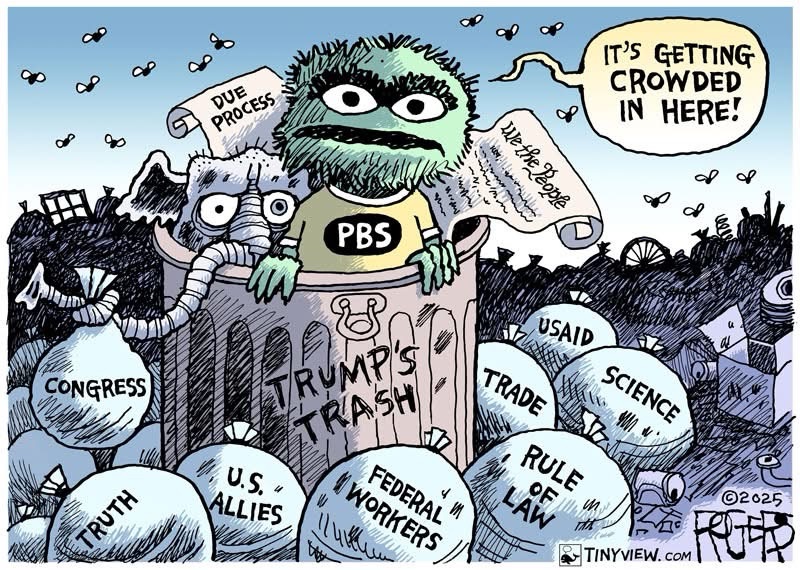
I don’t know about you, but I feel like running for the Canadian border. Why would anyone want to come here under these circumstances? I’m also very afraid of this year’s hurricane season. This is from ABC News. “FEMA ‘not ready’ for hurricane season, internal review finds. The acting agency head told staff that planning is about 80-85% complete.” The season starts on June 1st. There have already been disturbances reported. This administration seems hellbent on killing people. This might make Heckuva Job Brownie look like an efficiency expert.
The acting head of the Federal Emergency Management Agency told staff members on Thursday that he believes President Donald Trump is a bold man with a bold vision for the agency — but that FEMA doesn’t yet have a full plan to tackle hurricane season.
“I would say we’re about 80 or 85% there,” Acting FEMA Administrator David Richardson told staff on a conference call, parts of which were obtained by ABC. “The next week, we will close that gap and get to probably 97-98% of a plan. We’ll never have 100% of a plan. Even if we did have 100% of a plan, a plan never survives first contact. However, we will do our best to make sure that the plan is all-encompassing.”
The conference call came after an internal document prepared for Richardson as he takes the helm of the agency responsible for managing federal disasters indicated the agency was ill-prepared for the upcoming hurricane season, which starts on June 1.
“As FEMA transforms to a smaller footprint, the intent for this hurricane season is not well understood, thus FEMA is not ready,” according to the document, which was obtained by ABC News.
In the conference call, Richardson said he and staff sat down for “about 90 minutes” and started to come up with a plan for this year’s disaster season.
He said the plan would be ready soon.
“Listen closely: The intent for disaster season 2025 (is to) safeguard the American people, return primacy to the states, strengthen their capability to respond and recover, and coordinate federal assistance when deemed necessary, while transforming to the future of FEMA,” Richardson said.
Richardson was placed at FEMA by Department of Homeland Security Secretary Kristi Noem after former acting Administrator Cam Hamilton was fired last week because of his testimony in front of a House panel, according to a source familiar with the matter, which went against the shuttering of the agency.
The acting administrator said this version of FEMA will look different than the agency of the past.
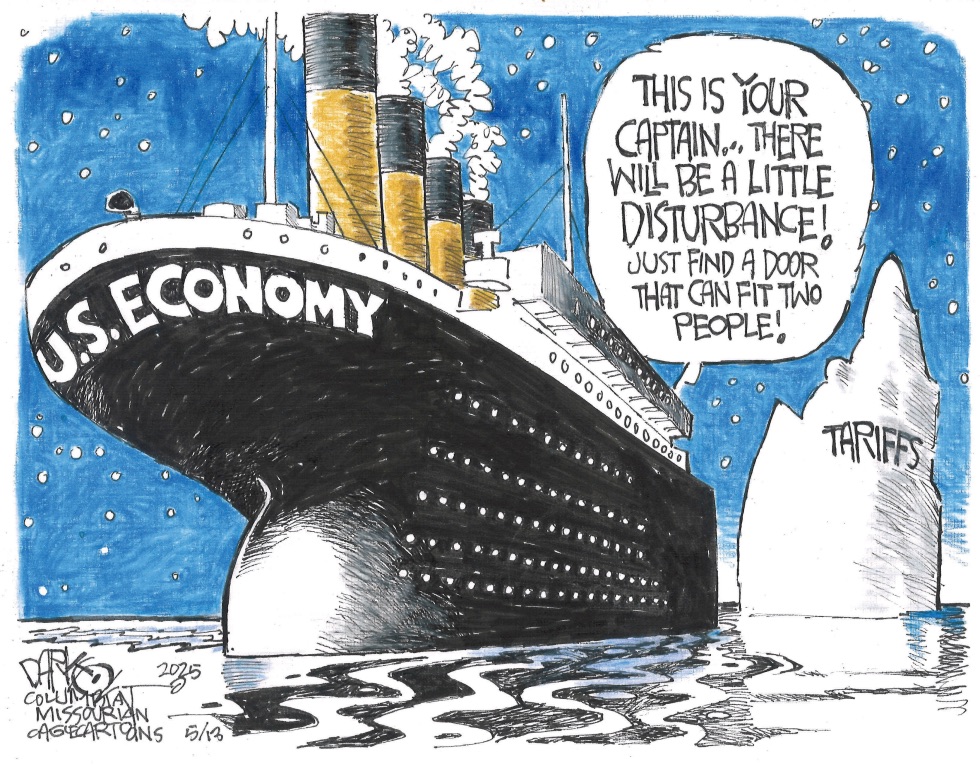
Meanwhile, the Tariff turbulence is coming to fruition. This is from CNBC. “Walmart CFO says price hikes from tariffs could start later this month, as retailer beats on earnings.” Melissa Repko has the story.
Walmart on Thursday fell just short of quarterly sales estimates, as even the world’s largest retailer said it would feel the pinch of higher tariffs.
Even so, the Arkansas-based discounter beat quarterly earnings expectations and stuck by its full-year forecast, which calls for sales to grow 3% to 4% and adjusted earnings of $2.50 to $2.60 per share for the fiscal year. That cautious profit outlook had disappointed Wall Street in February. Wall Street was also underwhelmed by the results Thursday, as shares closed slightly lower.
Walmart also marked a milestone: It posted its first profitable quarterfor its e-commerce business both in the U.S. and globally. The business has benefited from the growth of higher-margin moneymakers, including online advertising and Walmart’s third-party marketplace.
In an interview with CNBC, Chief Financial Officer John David Rainey said tariffs are “still too high” – even with the recently announced agreement to lower duties on imports from China to 30% for 90 days.
“We’re wired for everyday low prices, but the magnitude of these increases is more than any retailer can absorb,” he said. “It’s more than any supplier can absorb. And so I’m concerned that consumer is going to start seeing higher prices. You’ll begin to see that, likely towards the tail end of this month, and then certainly much more in June.”
Reuters reports the bottom line here. There’s only so long you can eliminate loss leaders, lower earnings, and try to slow things down. We will feel it everywhere, and it will be next month. Jennifer Saba has this headline: “Walmart can discount tariffs only so much.” So this is your friendly economist speaking, stock up and hunker down. It’s going to get real real soon.
Walmart (WMT.N), opens new tab wheeled its trolley cart right into President Donald Trump’s ankles. The largest U.S. retailer and a bellwether for consumers said on Thursday that tariffs would force it to raise prices, just a month after it expressed confidence that it would keep them low. Boss Doug McMillon may be able to do both at once, on a relative basis, but it also sends a clear signal to the White House that shelves are stocked with only so many ways to shield shoppers.
Flagship U.S. Walmart locations open for at least a year generated 4.5% sales growth for the three months ending April 30 from the same stretch in 2024, a second consecutive quarterly slowdown. McMillon warned that import levies are starting to take a toll. Supply-chain pressure began in late April and accelerated in May. The $750 billion company is trying to hold the line on food even as the cost of bananas, coffee, avocados and flowers increases, but it is unwilling to eat them everywhere.
McMillon and his deputies took a markedly different tone a few weeks ago. The CEO told investors that U.S. duties, which at the time were 145% on Chinese goods, remained a question mark, but that Walmart would focus on “managing our inventory and our expenses well.” Following news that those levies would be slashed to 30%, at least temporarily, McMillon cautioned of a challenging environment, implying that he can squeeze suppliers only so much.
He’s not alone either. JPMorgan boss Jamie Dimon warned, opens new tab on Thursday that recession remains a threat despite Trump’s trade truce. Taiwanese contract manufacturing giant Foxconn, which assembles iPhones and makes Nvidia servers, also slashed its full-year outlook this week, blaming the stronger Taiwan dollar and “rapid changes” in U.S. tariff policy.
Equity investors took comfort from the lower duty rates, pushing the S&P 500 Index up 5% this week, to higher than where it started the year. Business leaders are clearly less impressed. Sustained gloom from industry titans like Walmart will keep pressure on the president to reconsider his own pricing power.
Every day I read the headlines, all I can think is that we shouldn’t be in this position. But, here it is. Don’t even get me started on Drunk and rapey Pete Hegseth. (Must Read. VF: “VF editors are joined by special correspondent Gabriel Sherman to discuss Pete Hegseth’s tumultuous tenure atop the Department of Defense, and why the president is reluctant to break with his friend from Fox.)
What’s on your reading and blogging list today?
Did you like this post? Please share it with your friends:
The Sky Dancing banner headline uses a snippet from a work by artist Tashi Mannox called 'Rainbow Study'. The work is described as a" study of typical Tibetan rainbow clouds, that feature in Thanka painting, temple decoration and silk brocades". dakinikat was immediately drawn to the image when trying to find stylized Tibetan Clouds to represent Sky Dancing. It is probably because Tashi's practice is similar to her own. His updated take on the clouds that fill the collection of traditional thankas is quite special.
You can find his work at his website by clicking on his logo below. He is also a calligraphy artist that uses important vajrayana syllables. We encourage you to visit his on line studio.




 How about we use that $45 million plus whatever it costs to undo the damage Washington D.C. roads to fund the Veterans’ services cut by that ugly budget winding its way to the Senate today? Economist Paul Krugman–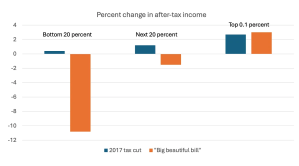
 Here’s some analysis of the late-night passage of the bill on the
  Steven Beschloss calls for more activism today at his substack,
 The Financial Markets are reeling.
 The market has yet to fully absorb the Treasury Bond Dump by China. This is from the
 That means our exports will go down in many of the countries. It’s damned recessionary. Also, if the price of bonds goes down because a country dumps their portfolio of treasuries, the interest rates go up. It will be truly interesting to see what the Fed does with this. Then there’s this. I bet Senator Warren is apoplectic. This report comes from
  I just want to wish Former President the best as he struggles with cancer. I know how that feels. I’m 35 years out from a stage 4 cancer episode. It transforms how you see time.

























































 I don’t know about you, but I feel like running for the Canadian border. Why would anyone want to come here under these circumstances? I’m also very afraid of this year’s hurricane season. This is from
  Meanwhile, the Tariff turbulence is coming to fruition. This is from



































































 peej
peej Carissa
 bostonboomer
 dakinikat
 ecocatwoman
 mablue2
 Mama Lopez
 peggysue22
 quixote
 skydancingguestblogger
 Mona (aka Wonk the Vote)



 Sky Dancing
Recent Comments