Yesterday, Dakinikat wrote about Trump’s crypto dinner, where he briefly spoke to the people who had spent the most on his personal memecoin. The “gala dinner” was held at Trump’s Virginia golf club. The attendees–mostly from foreign countries–had spent their money hoping to gain “access” to Trump, but that didn’t happen, at least at this event. Trump showed up on a “military helicopter,” spoke for less than half and hour and then did his YMCA dance. Then he left again without speaking to anyone personally. And the food was terrible.
Donald Trump left the stage at his golf club near Washington, DC, on Thursday night, he pointed to the crowd, brought his index finger to his temple—as if to say: You know what’s coming—then began to dance. To the beat of “Y.M.C.A” by The Village People, Trump shimmied, gyrated, and pumped his arms above his head.
Looking on were more than 200 people who had been invited to the Trump National Golf Club for a private gala dinner. They had won their seats by purchasing large quantities of Trump’s own crypto coin—TRUMP—some holding millions of dollars’ worth….
By late afternoon, the dinner guests had started to filter through the gates of the golf club. By comparison to Trump’s previous banquets, thronging with DC insiders and members of the Silicon Valley elite, the crypto dinner attracted a mismatched collection of oddballs: independent traders rubbed shoulders with crypto executives, die-hard Trump fans, and even professional sports stars—former NBA player Lamar Odom towered overhead. A handful wore bowties in Bitcoin orange; others sported gold Trump sneakers.
Just after 7 pm, the dinner guests gathered at the window to watch Trump descend in Marine One, his presidential helicopter. A short while later, he appeared from behind a blue velvet curtain to whoops and applause from the crowd. Had they seen the helicopter, Trump asked. “Yeah, super cool!” somebody yelled….
From behind a lectern at one end of the dining room, backdropped by four US flags, Trump delivered a characteristically winding and digressive speech that sources say lasted around 25 minutes. At some point, he got round to crypto.
“We’ve got some of the smartest minds anywhere in the world right here in this room,” said Trump. “You believe in the whole crypto thing. A lot of people are starting to believe in it … This is really something that may be special—who knows, right? Who knows—but it may be special.”
“You don’t get to meet the president easily,” Vincent Liu, chief investment officer at trading firm Kronos Research, told WIRED a few days before the dinner. “To be able to hear his message on crypto directly—I’m definitely looking forward to that.”
Woodblock print from Tsukioka Yoshitoshi’s series One Hundred Aspects of the Moon (1885-1892)
No one got to meet the president, but I Wired says they also wanted to network with each other. On the general presentation and the food, served at circular tables
…each seating 10 people arrayed beneath a set of crystal chandeliers. Waiting on the chairs were gift bags containing Fight Fight Fight-themed hats and posters, and a collectible plastic card (some allege that they didn’t receive merch at their seats.) The four largest coin holders—along with two other attendees selected by raffle, sources say—received a gem-encrusted Trump gold watch.
Between mouthfuls, the attendees discussed trading and investment strategies—and Trump’s speech. “To feel his personal charisma to me was very inspiring,” says Liu. But others complained about the brevity of Trump’s appearance: After his speech, Trump had departed immediately in a golf cart bound for his helicopter. “Trump could have at least given the top people their watches himself,” says Pinto. “He didn’t.”
The food itself had left a bitter taste in the mouth, too. “It was the worst food I’ve ever had at a Trump golf course,” says Pinto, who added he left hungry. “The only good thing was bread and butter.” Another attendee described the meal as “OK, but not top-class.”
Donald Trump’s controversial memecoin dinner Thursday night was shrouded in secrecy, and while it still isn’t clear who all attended — the White House did not make the list public — we do have a report of how good the food was….
According to Fortune, 25-year-old Nicholas Pinto was one of those who attended. The site said he invested “more than $360,000 in Trump’s memecoin.
And for that, he told the site, the dinner that was served was “trash.”
“Walmart steak, man,” he texted Fortune.
The site said the menu for the included a “Trump organic field green salad” and an “entrée duet” of filet mignon and pan-seared halibut.
“Everybody at my table was saying the food was so of the worst they ever had,” Pinto said.
“I was hoping for Big Macs or pizza,” Pinto told Fortune. “That would have been better than the food that we were served.”
Trump is just raking in the dough as quickly as he can with the minimum effort.
The invitees for President Trump’s private dinner for customers of his cryptocurrency business on Thursday included a Chinese billionaire fighting a lawsuit from U.S. regulators, a lawyer for Justice Clarence Thomas and a former basketball star, according to a guest list obtained by The New York Times and social media posts.
The dinner, at which Mr. Trump gave remarks, was an extraordinary moment in which the president leveraged his position to make money — for his crypto business and for his Virginia golf club, which hosted the event.
The event’s invited guests were not known publicly beforehand, even to each other. They were identified only by the pseudonyms they used on the electronic wallets where they kept their $TRUMP memecoins. Most had gained an invitation by becoming one of the top 220 holders of that memecoin over a certain period of time. The top 25 of those were given V.I.P. status and afforded a more intimate gathering before the dinner and an unofficial tour of the White House on Friday.
When they arrived at Mr. Trump’s club outside Washington Thursday evening, the digital world had become physical. The invitees’ names and contact information were delineated on paper lists, checked by staffers at the door. A Times reporter reviewed one of those lists, and used it to identify people who were present. Some other invitees self-identified on social media. A reporter and photographer from The Times also saw some $TRUMP crypto buyers enter and exit the White House on Friday.
Merchant’s Daughter by Mizuno Toshikata
Some top invitees:
Justin Sun, a Chinese crypto billionaire who was sued by the Securities and Exchange Commission under President Joseph R. Biden Jr. for allegedly inflating the value of a cryptocurrency. Mr. Sun is a major investor in a separate crypto venture largely owned by a company tied to Mr. Trump, World Liberty Financial. After Mr. Trump took office, the S.E.C. asked a judge to put Mr. Sun’s case on hold….
Elliot Berke, a Washington attorney who has worked for congressional Republicans and Justice Clarence Thomas of the Supreme Court. The Times identified him because the invitee list included his email address at his law firm, Berke Farah. He was honored as “Republican Lawyer of the Year” in 2021 by the Republican National Lawyers Association….
Evgeny Gaevoy, the founder and chief executive of a digital-asset firm, Wintermute. The Times identified him because the list of invitees included his Wintermute email….
Anil Lulla and Yan Liberman, two co-founders of Delphi Digital, a Miami Beach firm that offers market intelligence for crypto investors. Their corporate emails were included in the list of invitees….
Cheng Lu, 32, a crypto investor from Shanghai, was observed by a Times reporter entering the White House on Friday. He said he did not have a chance to speak with Mr. Trump during the dinner on Thursday or at the Friday tour. “I just want to see President Trump,” he said.
Several more are listed at the NYT link.
Another big story today is Trump’s terrifying persecution of Harvard University. Here’s the latest:
The Trump Administration has frozen billions in federal grants to Harvard University, threatened its tax-exempt status, and sought to dictate its curriculum and hiring. Now the government seems bent on destroying the school for the offense of fighting back. And for what purpose?
That’s how we read the Department of Homeland Security’s move Thursday to bar foreign students from attending the world-renowned institution. That’s 6,800 students, or a quarter of Harvard’s student body, whose futures are suddenly in disarray. It’s also a short-sighted attack on one of America’s great competitive strengths: Its ability to attract the world’s best and brightest.
The latest assault began when DHS demanded that Harvard turn over sundry records on its foreign students, including whether any had participated in illegal activity or left the university owing to “dangerous or violent activity or deprivation of rights.”
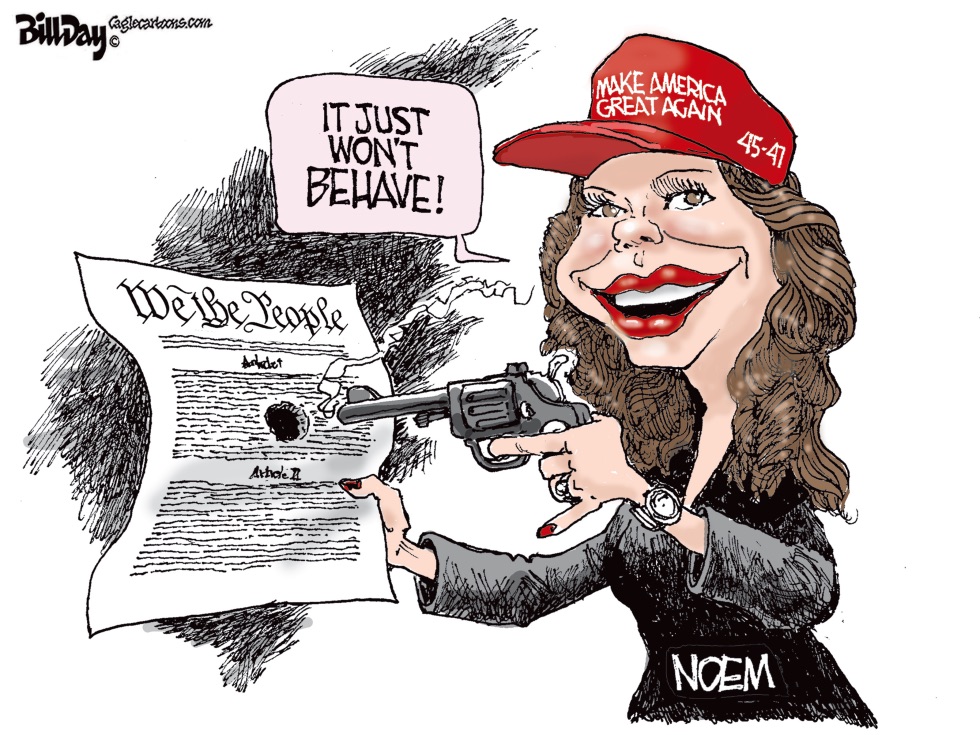
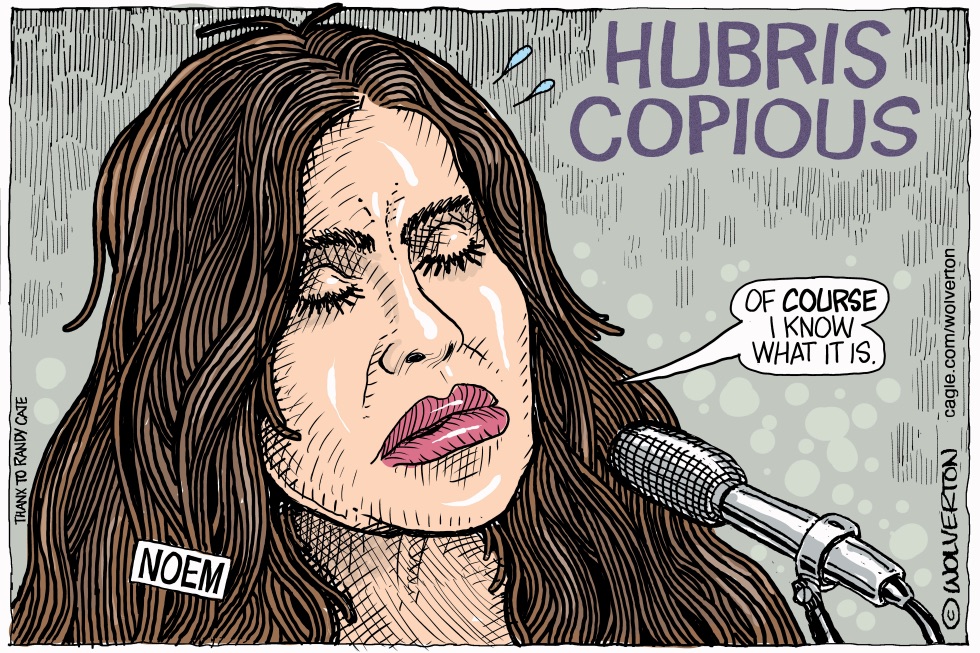
Some of its record requests are reasonable, but some overreached by requiring private student information. DHS also gave Harvard all of two weeks to respond. If it failed to do so, DHS Secretary Kristi Noem said she would “automatically withdraw” the school’s certification in the Student and Exchange Visitor Program. “The withdrawal will not be subject to appeal.”
The SEVP program lets non-citizens enroll at universities on student visas. DHS can bar universities from the program if they fail to comply with “recordkeeping, retention, reporting and other requirements” on foreign students. Harvard says it responded with “information required by law” within two weeks and handed over more records on May 14.
Twin Guardians, by Hawse Sumi
That didn’t satisfy Noem and she banned Harvard from enrolling international students. Harvard soon got a restraining order from a federal court.
Most of Harvard’s foreign students are enrolled in graduate programs. Many assist with scientific research and teaching undergraduate courses. Driving them out of Harvard will disrupt research projects and might cause some professors in the sciences to leave for other universities. This seems to be a goal of freezing Harvard’s research grants.
Harvard sued on Friday, and a federal judge issued a temporary restraining order against the student ban. The university rightly says the Administration’s actions are “clear retaliation for Harvard exercising its First Amendment rights to reject the government’s demands to control Harvard’s governance, curriculum, and the ‘ideology’ of its faculty and students.”
The university seems likely to prevail on the law, but until courts settle the merits, thousands of students who have done nothing wrong will be in legal limbo. Some of them no doubt opposed the anti-Israel protests and may even hail from Israel. Why punish them? [….]
This will be terribly damaging to America’s ability to attract talented young people who bring their enterprise and intellectual capital to the U.S. Non-citizens accounted for more than half of doctoral degrees in AI-related fields in 2022. Many have gone to work at U.S. companies like Nvidia or started their own.
Clearly Trump hates Harvard, higher education, and education generally. But I’m coming to the conclusion that Trump’s goal is to destroy the U.S. in every possible way and at the same time enrich himself and his wealthy friends. He doesn’t even appear to care about the economy anymore. He wants Americans to be poor, ignorant, and isolated from the rest of the world.
The Trump administration’s surprising bid to end Harvard’s international enrollment put the higher education world on edge this week, looming as a larger threat against academic autonomy.
Well beyond the halls of Harvard this week, college leaders were shocked that one swift move by the federal government could eliminate their ability to serve students from abroad, a growing population that has infused their campuses with cachet and wealth.
“This is a grave moment,” Sally Kornbluth, the president of the Massachusetts Institute of Technology, wrote in a message to her campus.
More than 5,000 miles away, Wendy Hensel, the president of the University of Hawaii, said that it was “reverberating across higher education.”
President Trump has already unnerved universities this year by launching investigations, freezing grants, demanding changes in campus practices and attempting to deport international students. He has justified his punitive approach as a means to combat what he considers antisemitism. But he and his allies also have long resented a perceived liberal bias and racial diversity efforts at prestigious colleges.
The Trump administration said Thursday that it revoked Harvard’s international student certification because the university had failed to meet its demands, including a request for records of student protest activity dating back five years.
To many academics, that was a clear signal that Mr. Trump was prepared to use any federal mechanism as leverage if he did not get what he wants.
“While Harvard is the victim of the moment, it’s a warning and unprecedented attempt of a hostile federal government to erode the autonomy of all major universities in the U.S.,” said John Aubrey Douglass, a senior research fellow at the Center for Studies in Higher Education at the University of California, Berkeley.
Yesterday, Trump and Marco Rubio began dismantling the National Security Council.
The Trump administration has put more than 100 officials at the National Security Council at the White House on administrative leave on Friday as part of a restructuring under interim national security adviser and Secretary of State Marco Rubio, according to two US officials and another source familiar with the matter.
Woman and cat, by Toyohara Kunichika
CNN previously reported that a significant overhaul of the body in charge of coordinating the president’s foreign policy agenda was expected in the coming days, including a staff reduction and a reinforced top-down approach with decision-making concentrated at the highest levels.
An email from NSC chief of staff Brian McCormack went out around 4:20 p.m. informing those being dismissed they’d have 30 minutes to clean out their desks, according to an administration official. If they weren’t on campus, the email read, they could email an address and arrange a time to retrieve their stuff later and turn in devices.
The email subject line read: “Your return to home agency,” indicating that most of those affected were detailed to the NSC from other departments and agencies….
With this happening on a Friday afternoon before a long holiday weekend, the official called it “as unprofessional and reckless as could possibly be.”
Those put on leave include career officials, as well as political hires made during the Trump administration….
Staffed by foreign policy experts from across the US government, the NSC typically serves as a critical body for coordinating the president’s foreign policy agenda.
But under President Donald Trump, the NSC’s role has been diminished, with the overhaul expected to further reduce its importance in the White House.
President Trump and Secretary of State Marco Rubio have orchestrated a vast restructuring of the National Security Council, reducing its size and transferring many of its powers to the State and Defense departments.
Why it matters: Trump’s White House sees the NSC as notoriously bureaucratic and filled with longtime officials who don’t share the president’s vision.
A White House official involved in the planning characterized the reorganization as Trump and Rubio’s latest move against what they see as Washington’s “Deep State.”
“The NSC is the ultimate Deep State. It’s Marco vs. the Deep State. We’re gutting the Deep State,” the official said of the move, which will cut the NSC staff to about half of its current 350 members. Those cut from the NSC will be moved to other positions in government, officials said.
“The right-sizing of the NSC is in line with its original purpose and the president’s vision,” Rubio told Axios in a statement. “The NSC will now be better positioned to collaborate with agencies.”
Zoom in: White House officials point to an NSC structure that’s filled with committees and meetings that they say slow down decision-making and produce lots of jargon and acronyms.
There’s a lot more a the link, but I think Trump is just trying to bring every part of the government under his personal control.
Finally, I want to look at what Trump and RFK Jr. are doing with Covid-19 and Covid vaccines.
While high, the number of deaths is decreasing and is lower than the peak of 25,974 deaths recorded the week ending Jan. 9, 2021, as well as weekly deaths seen in previous spring months, CDC data shows.
Public health experts told ABC News that although the U.S. is in a much better place than it was a few years ago, COVID is still a threat to high-risk groups.
“The fact that we’re still seeing deaths just means it’s still circulating, and people are still catching it,” Dr. Tony Moody, a professor in the department of pediatrics in the division of infectious diseases at Duke University Medical Center, told ABC News.
The experts said there are a few reasons why people might still be dying from the virus, including low vaccination uptake, waning immunity and not enough people accessing treatments.
Read more details at the ABC link.
So why is the government limiting access to Covid Vaccines?
Larry Saltzman has blood cancer. He’s also a retired doctor, so he knows getting covid-19 could be dangerous for him — his underlying illness puts him at high risk of serious complications and death. To avoid getting sick, he stays away from large gatherings, and he’s comforted knowing healthy people who get boosters protect him by reducing his exposure to the virus.
Until now, that is.
Vaccine opponents and skeptics in charge of federal health agencies — starting at the top with Health and Human Services Secretary Robert F. Kennedy Jr. — are restricting access to covid shots that were a signature accomplishment of President Donald Trump’s first term and cost taxpayers about $13 billion to develop, produce, and distribute. The agencies are narrowing vaccination recommendations, pushing drugmakers to perform costly clinical studies, and taking other steps that will result in fewer people getting protection from a virus that still kills hundreds each week in the U.S.
“There are hundreds of thousands of people who rely on these vaccines,” said Saltzman, 71, of Sacramento, California. “For people who are immunocompromised, if there aren’t enough people vaccinated, we lose the ring that’s protecting us. We’re totally vulnerable.”
The Trump administration on May 20 rolled out tougher approval requirements for covid shots, described as a covid-19 “vaccination regulatory framework,” that could leave millions of Americans who want boosters unable to get them.
Vaccine opponents and skeptics in charge of federal health agencies — starting at the top with Health and Human Services Secretary Robert F. Kennedy Jr. — are restricting access to covid shots that were a signature accomplishment of President Donald Trump’s first term and cost taxpayers about $13 billion to develop, produce, and distribute. The agencies are narrowing vaccination recommendations, pushing drugmakers to perform costly clinical studies, and taking other steps that will result in fewer people getting protection from a virus that still kills hundreds each week in the U.S.
“There are hundreds of thousands of people who rely on these vaccines,” said Saltzman, 71, of Sacramento, California. “For people who are immunocompromised, if there aren’t enough people vaccinated, we lose the ring that’s protecting us. We’re totally vulnerable.”
The Trump administration on May 20 rolled out tougher approval requirements for covid shots, described as a covid-19 “vaccination regulatory framework,” that could leave millions of Americans who want boosters unable to get them.
Trump simply doesn’t care if Americans die. That’s obvious based on the way he dealt with Covid during his first term. He seems willing to let RFK Jr. do whatever he wants. So who can Americans turn to for guidance and access to vaccines and treatments?
That’s it for me today. What’s on your mind?
Did you like this post? Please share it with your friends:
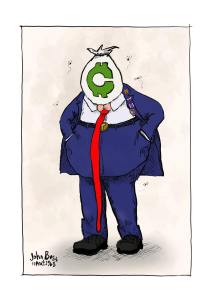
“A modern-day interpretation of a 1871 Thomas Nast work seems fitting to commemorate Trump’s secret crypto dinner.” John Buss, repeat@1968
Good Day, Sky Dancers!
As the old Buddhist and Hobbit saying goes: “We live in Dark Times.” “Kali Yuga” is the Hindu expression. Darkness has always been an expression of decline in European History, hence the label “Dark Ages” for the period from the 5th to about the 8th century. Usually, these periods experience a decline in economic, intellectual, and cultural life. One of the most prevalent things about these times is that there is a paucity of written records. So, it’s difficult to capture the decline until a renaissance occurs. The breakdown of institutions occurred in these past times as well as the present. At the moment, we still have the ability to document the decline in the US. Many relate to it as a rebirth of fascist movements of the 20th century. It is a global feature at the moment, but no matter if it’s the Decline of the Roman Empire or the American Empire, there are signs.
The invention of the printing press is seen as one of the most powerful examples of an invention that can change the course of history. Access to information directly, for personal consideration, tends to create a citizenry with low tolerance of being shut off from thinking for themselves. Perhaps it’s why today’s dark leaders tend to go for education and the press, and why they attract “low information” and angry denizens. They also attract a cadre of greedy followers willing to help attack and grab the wealth of those who are powerless.
These are indeed Dark Times.
The fight for the light in the newly filed Harvard case against the Trump administration’s ban on foreign students is a prime cause of denying the citizenry access to anything that might cause them to question the goings-on here. But it also breaks into the tradition of the United States being the shining light of discovery, science, and reason. It’s why those of us who have had academic careers cherish and enjoy academic freedom. The free exchange of ideas and opinions is essential.
We have traditionally had a small number of women in my field of economics. It was between 4 to 10 percent in the late 70s and early 80s. It once rose to above 30%, but recently has settled on 27%. The STEM fields still reflect the struggle for inclusion. It’s even lower for Black Americans. However, my career has led me to have colleagues from a variety of countries, which is wonderful. In my early career, most of my women colleagues came from the Middle East or China. I was lucky enough to have a professor from Finland. She was brilliant. Believe me. During my academic studies and life, the joy of having colleagues from all over the world who could share things was a blessing in my life. A colleague from the Punjab who now teaches in Canada helped me improve my math chops to get me through some of the most complex models that you could imagine. He stayed with me after Katrina until the campus got its FEMA trailers. I also had a student from Taiwan staying with me. My last biggest joy, however, was writing 2 letters of recommendation for two Black New Orleans students to Rice. The US cannot afford to fall behind in a vast world of research. And, yet, here we are with a professional moron taking down the biggest academic center of research in the World. America’s first University, Harvard. If we do not train the world’s best minds, we will fall deeply behind in everything.
Today, we got the news of the Case Harvard filed against Trump. “Judge Temporarily Blocks Trump Admin From Revoking Harvard’s Ability To Enroll International Students.” This is from The Harvard Crimson. Harvard turned out one of my favorite journalists, Joy Reid, and you can read this article knowing there are more good journalists headed to jobs.
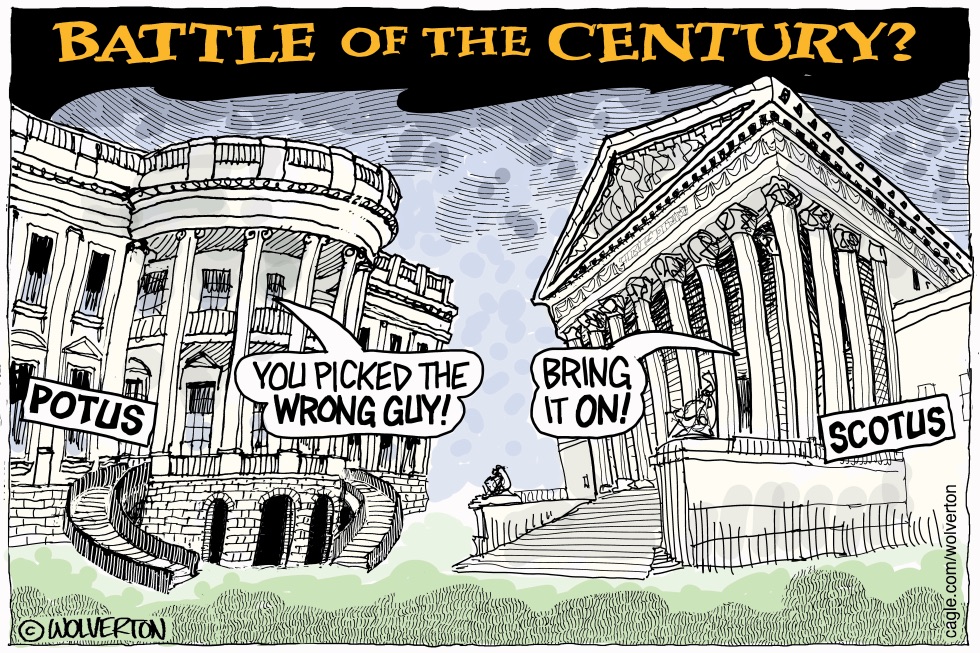
A federal judge granted Harvard a temporary restraining order in its suit to block the Trump administration’s efforts to revoke its authorization to enroll international students.
The order was issued less than two hours after the University requested a halt to the Department of Homeland Security’s attempt to end its Student Exchange and Visitor Program certification. Harvard had described the move as “unprecedented and retaliatory.”
United States District Judge Allison D. Burroughs agreed that if the DHS’ move goes forward, Harvard “will sustain immediate and irreparable injury before there is an opportunity to hear from all parties.”
The TRO will go into effect immediately and will likely last until a hearing in the case. Burroughs has scheduled a May 27 status hearing and a May 29 hearing on whether to issue a preliminary injunction. Harvard would need to file for a preliminary injunction to prevent the DHS’ directive from going into effect after the TRO expires.
Under the terms of the order, the DHS is barred from enforcing the Thursday move to strip Harvard of its SEVP status — and Harvard is no longer legally obligated to turn over the requested documents by Sunday.
Burroughs, a Barack Obama appointee, has adjudicated several cases relating to Harvard in the past. She oversaw a case brought by Harvard and MIT in 2021 against the U.S. Immigration and Customs Enforcement’s effort to force all international students who were enrolled online in the U.S. to leave the country. ICE ultimately rolled back the policy without a ruling from Burroughs.
Burroughs is also overseeing Harvard’s first lawsuit, filed in April, against the Trump administration over its nearly $3 billion funding cut.
I admit: The daily drumbeat of stupidity is exhausting. I wish it were enough for me to simply document the dangerous ignorance of Trump and his sycophants, confident that we’ll soon be free of this regime and its power to spread their poison and cancerous hostility across the land and around the world. But the midterm elections will not arrive for another 17 months. It’s hard to overstate how much damage Trump, his cabinet and his kowtowing Republican Congress can cause between now and then.
That’s why most days I ask myself: Could today be the day Americans decide they’ve had enough and demand change? I have thought that there might be a single event that triggers millions of Americans taking to the streets or committing to a national strike in a public, unavoidable show of solidarity. But I have come to see that the daily drumbeat is numbing too many people, causing them to adapt to the cruelty, the racism, the hostility to democracy, the arrogant rejection of the Constitution and the rule of law. The metaphor of the frog in a slowly boiling pot of water is apt; by the time the frog’s figured out he needs to get out, it’s too late.
We’re not there yet. You can see that dedicated lawyers are filing suit against the corruption and criminality, judges are pushing back, outraged Americans are engaging in protests, some elected Democrats and other awake leaders are ringing alarm bells, a growing number of colleges and universities have refused to buckle under, some independent media are addressing the reality of authoritarianism in no uncertain terms. Americans have not surrendered their sanity or capacity to know what’s right and wrong, what’s true and false. The pot may be beginning to boil, but we can still see and feel what’s happening. We are still able to take action.
But I want to spotlight a series of events in a single 24-hour period that individually outrage me and, taken together, express a level of stupidity and sickness that should motivate more than a shrug of the head or an angry social media post. You may have already focused on—been outraged by—one or even all of these. But it’s important to not look at them as discrete events, but part and parcel of a single plot to convince us that we should accept a fascist regime bent on elevating white nationalism, oppressing people of color, silencing dissent and making the rich richer and the poor and middle class poorer and sicker. This effort is led by a malignant racist and sociopath who’s convinced the people around him to do what he says, no matter how ugly, cruel, blatantly false—or just plain stupid.
Two of the four events were in the Oval Office Wednesday—our Oval Office, the place where real presidents have made some of the most momentous decisions that improved the lives of Americans, created a safety net to overcome the ravages of the Great Depression and soften cap italism’s turbulence, helped defeat the Nazis and fascism, built global alliances that made the world safer, more stable and prosperous, and demonstrated a commitment to bend the arc of history toward justice.
Into this historical place of honor came South African President Cyril Ramaphosa, a calm and skilled diplomat who decades earlier had served alongside Nelson Mandela as his chief negotiator to end apartheid in South Africa. But just like Ukrainian President Volodymyr Zelensky in February, he arrived for an ambush by a spiteful, narrow-minded man who spreads lies like Ukraine not Russia started the still-raging war. On this day he insisted with false information from fringe groups that South Africa, whose leaders are mostly Black, are committing genocide against white farmers, a false narrative that his top donor and South African-born Elon Musk has propagated.
At Trump’s urging, Ramaphosa answered a reporter’s question about what it would take to convince Trump there is no such white genocide. “It will take President Trump listening to the voices of South Africans, some of whom are his good friends, like those who are here,” he calmly said, referencing South African golfer Ernie Els who was in the room. “When we have talks between us around a quiet table, it will take President Trump to listen to them.”
But South Africa’s president was being set up. Trump interrupted him to play a video pushing the lies, then he showed photos meant to “prove” how much death there was, even leading Trump to mutter, “Death, death, death, horrible death, death.”
Except the video clip showing a long line of white wooden crosses were not actual burial sites for white farmers, as Trump insisted, but were from a 2020 protest against farm murders over the years. Except the photo Trump showed of people lifting body bags, insisting they “are all white farmers that are being buried,” was actually of humanitarian workers burying bodies in Congo. Except for all the claims of genocide among white farmers, meant to justify bringing white Afrikaners as preferred refugees to America now, there were a total of 44 murders in farming communities last year, Reuters reports, with over 26,000 in the country overall.
President Ramaphosa came to discuss trade and economic partnership. Yet Trump brought him into the Oval Office to ambush and abuse him, push his white nationalist agenda, spread more widely his egregious lies and showcase that—while illegally deporting people of color—only whites deserve America’s protection from presumed persecution. “We were taught by Nelson Mandela that whenever there are problems, people need to sit down around a table and talk about them,” Ramaphosa noted, but Trump was not listening.
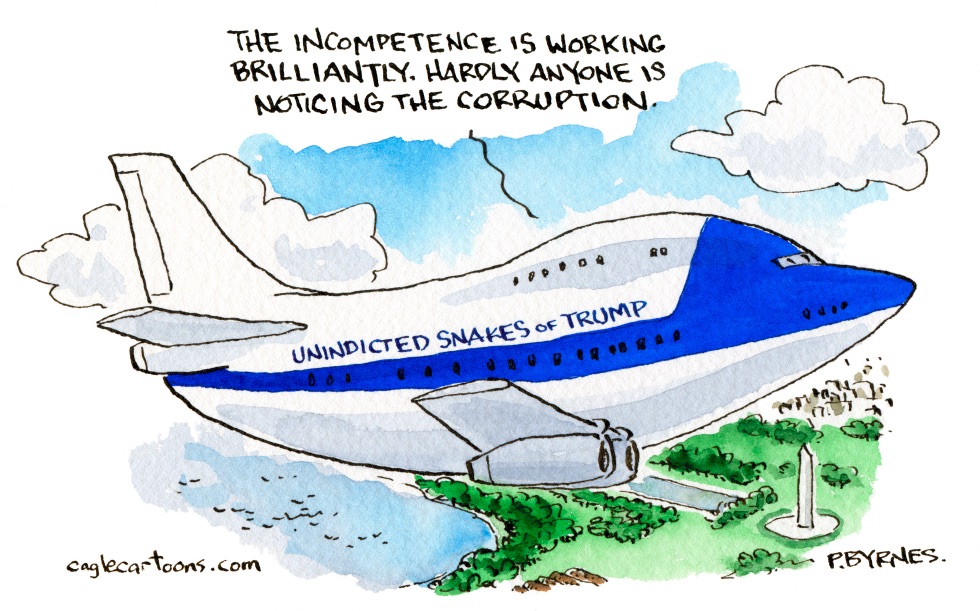
There is a daily drumbeat of stupidity, airing of white grievances, and cruelty. While discriminating harshly against everyone who is not white and Christian, this administration harbors supporters who carry torches and shout “Jews will not replace us,” and has bubble-headed Congress Critters who scream about “Jewish Space Lasers”. Anti-semitism has become transactional. It has become a useful tool in the attack on Academia and the Democratic Party. It assumes that you can’t understand the history of the Jewish people without turning a blind eye to the punishing attacks on Palestinian women, children, and innocents in the Gaza Strip. I do not think there is a bigger way of showing disrespect for a group of people than using their historical struggles as a tool to encourage the murder of innocents. But then, our #FARTUS is planning a Trump Tower, hotel, and golf course in GAZA. The Trump Boyz–in between murdering endangered animals for sport–have been travelling the globe using the Tariff stick as a way to expand their Crime Syndicate. All, at the expense of the United States and its economy. This is from QUARTZ: “8 countries where Trump has been making new business deals, from Pakistan to Vietnam, Residential towers, golf courses, crypto — the deals didn’t stop on Inauguration Day.” This is the art of the steal in full display. All we need to see is Eric and Don Jr. flying in the palace in the sky and sitting at Trump’s Crypto Fundraiser now.
Businesses spearheaded by President Donald Trump have struck numerous deals since Trump returned to the White House in January.
Leading the way is the Trump Organization, a conglomerate privately owned by the president. With more than 250 subsidiaries, it serves as a holding company for Trump’s various hotels, residential real estate, towers, resorts, and golf courses across the world.
World Liberty Financial, a decentralized protocol that merges financial services and cryptocurrency, has also brokered deals. A Trump business entity owns 60% of World Liberty and is entitled to 75% of all revenue from coin sales. Eric Trump and Donald Trump Jr. manage the company.
Here are the countries where the Trump empire has been dealmaking. The slide show that follows lists Vietnam. It’s in Hanoi, which reminds me of the Hanoi Hilton and the late Senator John McCain.
The project consists of a golf course, hotels, and luxury residences, and is slated for completion by 2029. In addition, Eric Trump is scheduled to meet with officials in Ho Chi Minh City on Thursday to discuss a possible Trump Tower in the city, Reuters reports.
In April, the president imposed a “reciprocal” tariff rate of 46% on Vietnamese goods. While that policy is currently on a 90-day pause, it would deal a major blow to the Southeast Asian country if resumed. Goods exported to the U.S. account for 30% of Vietnam’s economy, according to IMF estimates, the largest of all U.S. trading partners. As the specter of these crippling levies looms, Hanoi has pledged to buy more American goods, including Boeing (BA) aircraft and agricultural products.
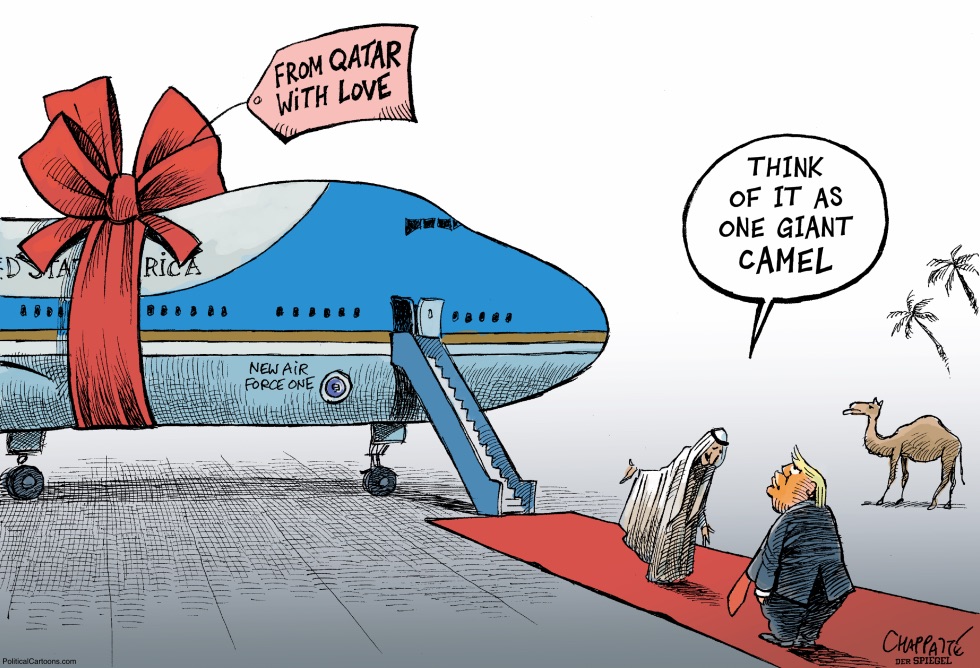
Other countries include Serbia, Oman, Qatar, Saudi Arabia, UAE, Pakistan, and Singapore. Most of these discussions haven’t been covered by the Media other than Qatar, which came with the gift that “Palace in the sky” that will cause millions of dollars to refit before it’s handed over to Trump and his “library.” If there’s a bigger oxymoron than Trump Library, I’m waiting to hear it. Let’s just call it the warehouse facility for all the bribes and emoluments. We have to discuss that big ol’ party Trump threw for his richest customers. This is from the New York Times. “Hundreds Join Trump at ‘Exclusive’ Dinner, With Dreams of Crypto Fortunes in Mind. The guests were the biggest investors in President Trump’s memecoin, and they were greeted with chants of “shame” as they arrived at Trump National Golf Course.”
President Trump gathered Thursday evening at his Virginia golf club with the highest-paying customers of his personal cryptocurrency, promising that he would promote the crypto industry from the White House as protesters outside condemned the event as a historic corruption of the presidency.
The gala dinner held at the Trump National Golf Club in suburban Washington, where Mr. Trump flew from the White House on a military helicopter, turned into an extraordinary spectacle as hundreds of guests arrived, many having flown to the United States from overseas.
At the club’s entrance, the guests were greeted by dozens of protesters chanting “shame, shame, shame.”
It was a spectacle that could only have happened in the era of Donald J. Trump. Several of the dinner guests, in interviews with The New York Times, said that they attended the event with the explicit intent of influencing Mr. Trump and U.S. financial regulations.
“The past administration made your lives miserable,” Mr. Trump told the dinner guests, referring to the Biden administration’s enforcement actions against crypto companies.
The gala attendees made whooping noises while Mr. Trump spoke, and applauded as the president declared: “They were going after everybody. It was a disgrace frankly,” according to a video provided to The Times by a dinner guest.
Mr. Trump promised to change that approach. “There is a lot of sense in crypto. A lot of common sense in crypto,” he said. “And we’re honored to be working on helping everybody here.”
Installations like the one at the power plant near Dresden are appearing across the country, drawn by record-high cryptocurrency prices and cheap and abundant energy to power the computers that do the mining. There are at least 137 Bitcoin mines in the US across 21 states, and reports indicate there are many more planned. According to estimates by the US Energy Information Administration (EIA), Bitcoin mining uses up to 2.3% of the nation’s grid.
The high energy use and its wider environmental impact is certainly causing some concern in Dresden.
But it’s the unmistakable hum that is the soundtrack for discontent in many places with Bitcoin mines – produced by the fans used to cool the computers, it can range from a mechanical whirr to a deafening din.
“We can hear a constant buzzing,” says another Dresden resident, Lori Fishline. “It’s a constant, loud humming noise that you just can’t ignore. It was never present before and has definitely affected the peaceful atmosphere of our bay.”
Such is Ms Campbell’s annoyance with Trump’s Bitcoin backing, her political allegiance to the Republicans is being tested. “Right now I’m not real happy about that party,” she says.
So, build the nastiest factory in the backyard of the people least able to deal with it. That’s the sound of these Robber Barons that should be familiar to anyone who knows US history from its early 20th-century business escapades. The most interesting thing that’s popped up today is that Apple has got Trump in a lather, and the Equity Markets hate it. This is from Yahoo Finance: “Stock market today: Dow, S&P 500, Nasdaq trim losses as Trump threatens Apple, EU with new tariffs.”
US stocks fell on Friday, on pace for weekly losses as investors assessed President Trump’s latest tariff threats and what his giant tax bill means for the deficit and the economy.
The Dow Jones Industrial Average (^DJI) sank 0.4%. The S&P 500 (^GSPC) also fell roughly 0.4%. The tech-heavy Nasdaq Composite (^IXIC) backed off about 0.6%.
All three indexes trimmed steeper losses after Trump said on Friday that Apple (AAPL) must pay a 25% tariff on iPhones sold but not made in the US. The tech giant has begun shifting some manufacturing to India, with China, home to its key suppliers, locked in a trade war with the US. Apple shares fell 3% after Trump’s post on Truth Social.
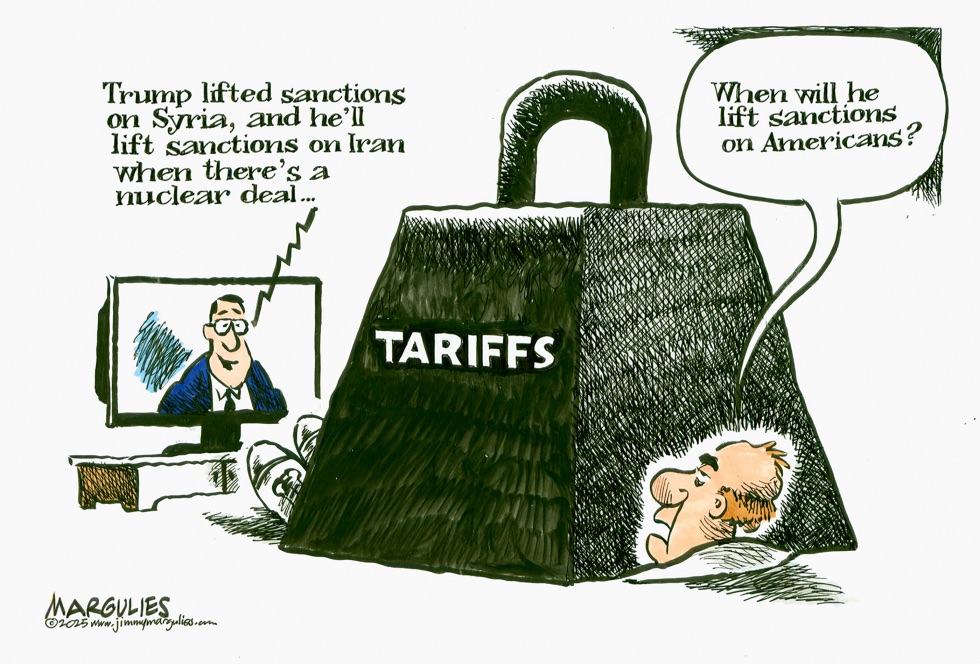
At the same time, Trump threatened to hike the tariff on EU imports to “a straight 50%” beginning June 1 as trade talks between the two have stalled.
The president’s warnings shattered a more muted mood on Wall Street as investors wound down to the Memorial Day trading break on Monday.
It adds another supply chain complication for companies already worried about the potential hit to the economy from Trump’s tariff blitz. Earnings season has seen several companies hold off from providing full annual guidance thanks to uncertainty around tariffs.
All three major gauges are on track for a losing week. Stocks have suffered as deficit worries pushed up Treasury yields, intensified as Trump’s giant tax bill forged ahead. Wall Street is still weighing the economic impact of Trump’s revised bill, which cleared a key hurdle in the House vote for approval.
The price of Bitcoin (BTC) fell below $108,000 early Friday after President Donald Trump called for steep tariffs on EU imports and threatened Apple with similar measures. The digital asset briefly touched $107,300 on Binance, pulling back from session highs above $111,000 as traders responded to fresh geopolitical tensions.
The US president on Friday proposed a 50% tariff on all EU imports starting June 1, 2025, in a post on Truth Social. He cited trade imbalances and regulatory frictions as rationale for the move, declaring current EU-US trade dynamics “totally unacceptable.”
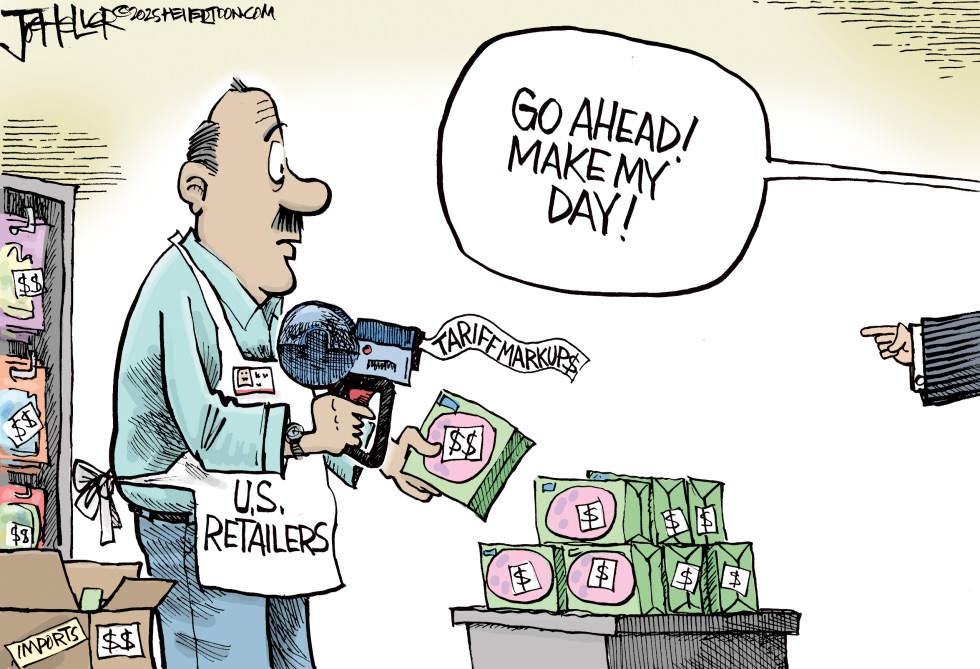
Apple is being threatened with 25% tariffs. Wow, how free market is this? Sounds a lot more like the old Soviet Command and Control model. Is he channeling Putin and Orban or just pissed about something Apple did at his party? This is from CNBC. “Trump says Apple must pay a 25% tariff on iPhones not made in the U.S.” Does he not realize how long it would take to even set up a factory, let alone train everyone? Doesn’t he know what this huge project would take to even break even?
President Donald Trump said in a social media post Friday that Apple will have to pay a tariff of 25% or more for iPhones made outside the United States.
“I have long ago informed Tim Cook of Apple that I expect their iPhone’s that will be sold in the United States of America will be manufactured and built in the United States, not India, or anyplace else. If that is not the case, a Tariff of at least 25% must be paid by Apple to the U.S.,” Trump said on Truth Social.
Shares of Apple fell about 2% on Friday after the post.
Apple’s flagship phone is produced primarily in China, but the company has been shifting manufacturing to India in part because that country has a friendlier trade relationship with the U.S.
Some Wall Street analysts have estimated that moving iPhone production to the U.S. would raise the price of the Apple smartphone by at least 25%. Wedbush’s Dan Ives put the estimated cost of a U.S. iPhone at $3,500. The iPhone 16 Pro currently retails for about $1,000.
This is the latest jab at Apple from Trump, who over the past couple of weeks has ramped up pressure on the company and Cook to increase domestic manufacturing. Trump and Cook met at the White House on Tuesday, according to Politico.
Treasury Secretary Scott Bessent said in an interview with Fox News on Friday that he was not part of the meeting at the White House but that the Apple situation could be part of the Trump administration’s push to bring “precision manufacturing” back to the U.S.
“A large part of Apple’s components are in semiconductors. So we would like to have Apple help us make the semiconductor supply chain more secure,” Bessent said.
Cook gave $1 million to Trump’s inauguration fund and attended the inauguration in January. Apple has announced a $500 billion spend on U.S. development, including AI server production in Houston.
Apple declined to comment for this story.
So, I’m over 4200 words and probably have put you to sleep. You know how I am about Rabbit Holes. How much longer before the economy collapses? I’m actually beginning to wonder that. I know every time I see or hear him act so insane, I just collapse on the couch.
You have a very nice Memorial Day weekend. Please spend your time appreciating the many folks who gave their life for this country and its democracy. Don’t let the ones trying to destroy it get to you. There’s always the June 14th Flag Day “No Kings” protests and actions to look forward to and participate in. Just don’t watch that damn parade. The least we old folks can do is tank the ratings.
What’s on your reading and blogging list today?
How about a little Warren Zevon and Prince?
Did you like this post? Please share it with your friends:
Good morning…now, this past Sunday, John Oliver had a good segment on Trump and the Press. Please take the time and watch this in its entirety:
Obviously…we sound like a broken record here on the blog. But shit is going down, and you need to get yourselves ready. I’m working on my passport now. I even sent away for a new certified copy of my birth certificate. I have my original one from 1970…but the powers that be may give me problems because it is just a small slip of paper. I just don’t want to chance it.
Now that is two video clips of the same conversation. But with a slight difference. I just wanted to make sure you saw all the attitude of the orange turd.
And by the way, what happens when a rich white dude talks?
Representative Gerald E. Connolly of Virginia, a nine-term congressman who was the top Democrat on the House oversight committee, died on Wednesday, his family said in a statement. He was 75.
Mr. Connolly died at his home surrounded by his family, the statement said. It did not give a cause of death. Mr. Connolly had announced in 2024 that he was being treated for cancer of the esophagus.
In April, he announced that his cancer had returned and that he would not seek re-election in 2026. He also said he would soon relinquish his spot on the Committee on Oversight and Government Reform.
U.S. Rep. Gerald “Gerry” Connolly, an outspoken Democrat who sought key reforms in the federal government while bringing transformational development to his populous Virginia district, died Wednesday. He was 75….
The spirited and at times bullheaded Fairfax Democrat became known for his voluble nature and willingness to engage in spirited debates. In one hearing, he accused Republicans of engaging in a witch hunt against the IRS, asking a witness if they ever read Arthur Miller’s “The Crucible.”
“I am heartbroken over the loss of my dear friend,” said Democratic Sen. Mark Warner of Virginia. “To me, he exemplified the very best of public service.” He said Connolly “met every challenge with tenacity and purpose, including his final battle with cancer, which he faced with courage, grace, and quiet dignity.”
A fixture of Virginia politics for three decades, Connolly was first elected to the Fairfax County Board of Supervisors in 1995. On the county board, he steered the transition of northern Virginia’s Tysons Corner from a traffic-heavy mall area to a downtown business hub.
In 2003, Connolly was elected board chairman, and he continued pushing for transportation investment that had been debated among officials for decades. Connolly sought billions in state and federal dollars to develop the regional rail system’s Silver Line connecting the national capital region to Tysons Corner.
Connolly’s dream was realized with the Silver Line’s opening in 2014, and eight years later, the rail line was extended an extra 11 miles (18 kilometers) to reach Dulles International Airport.
What’s happening in politics today:
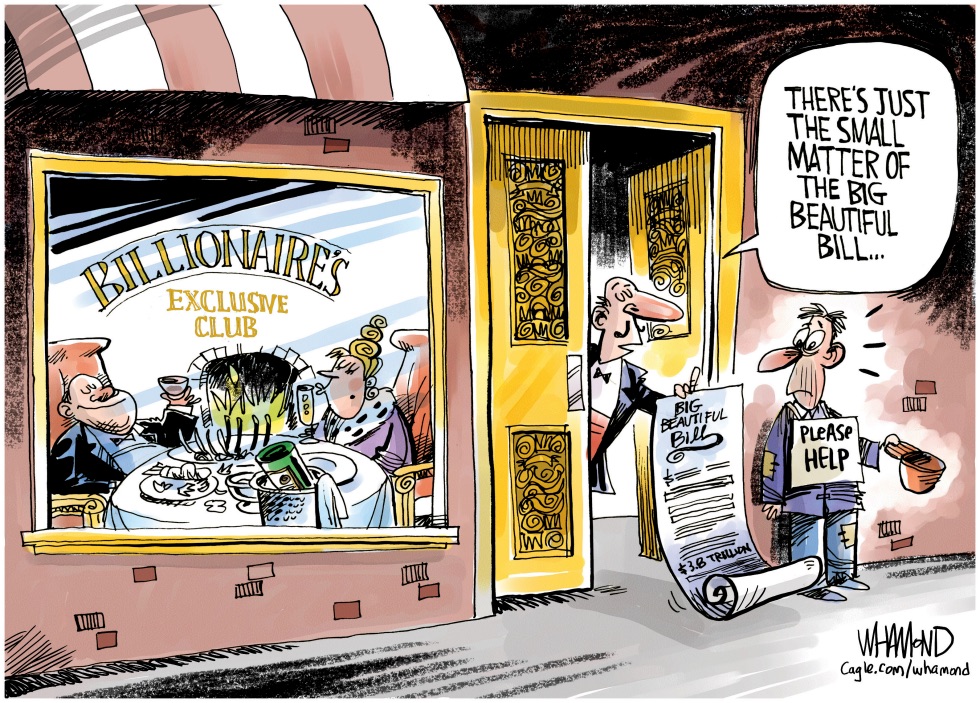
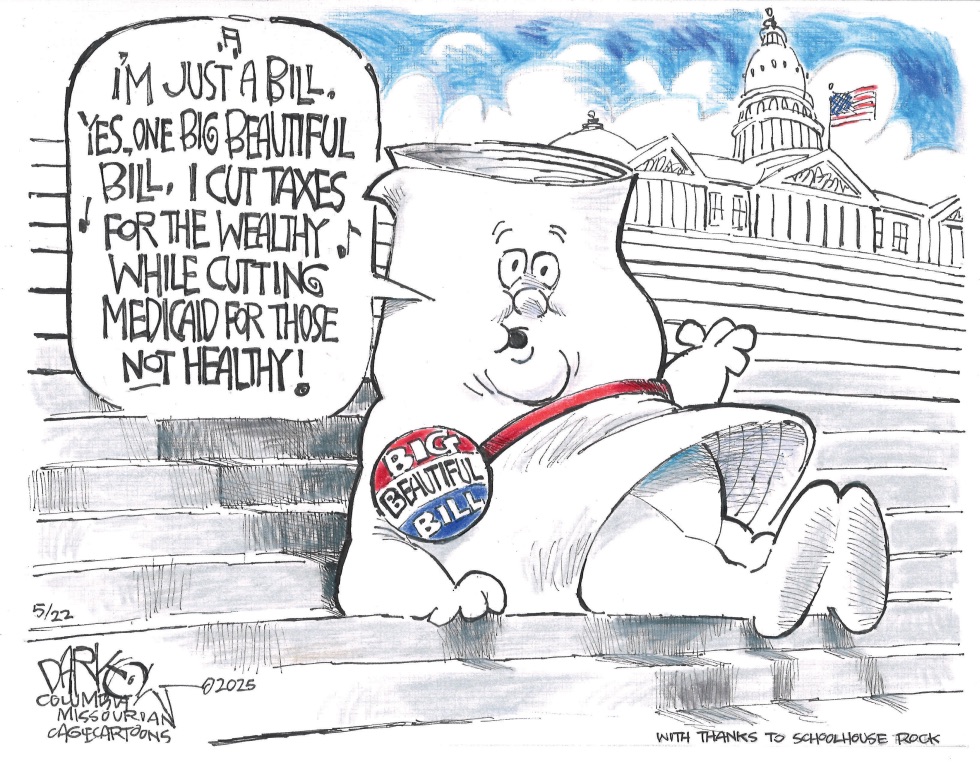
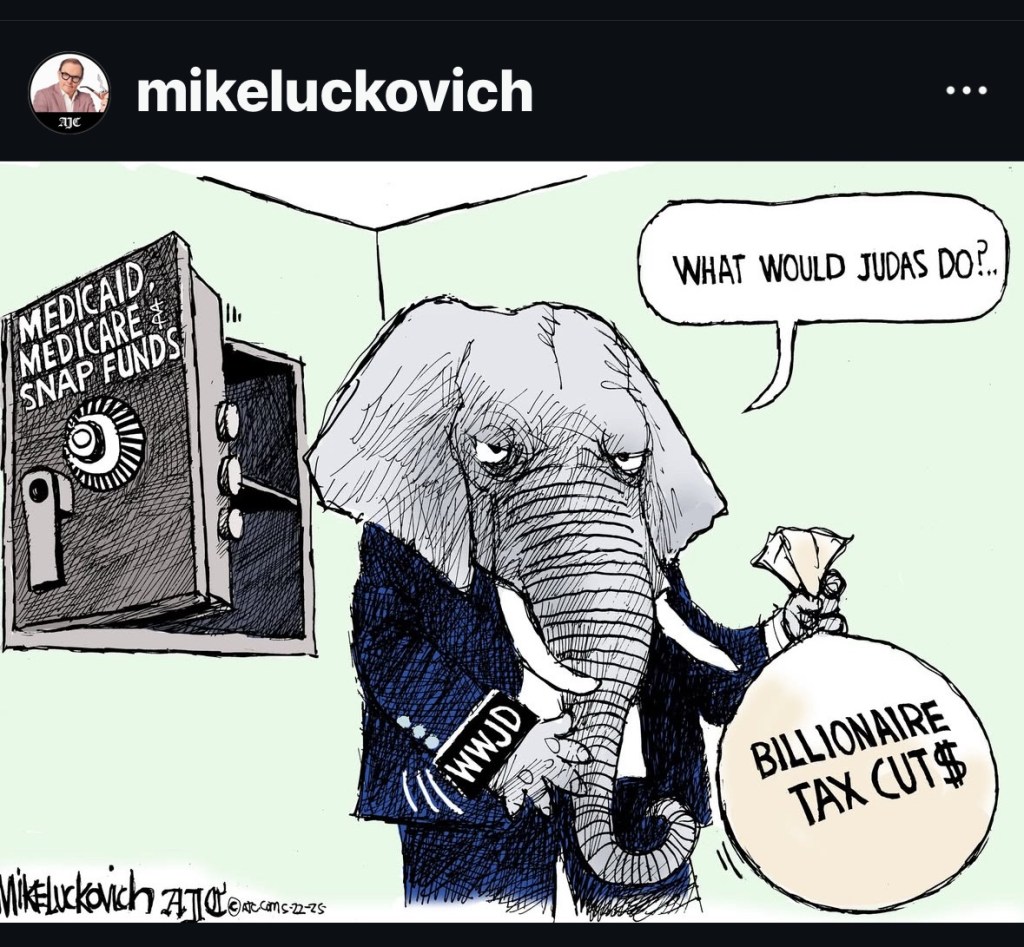
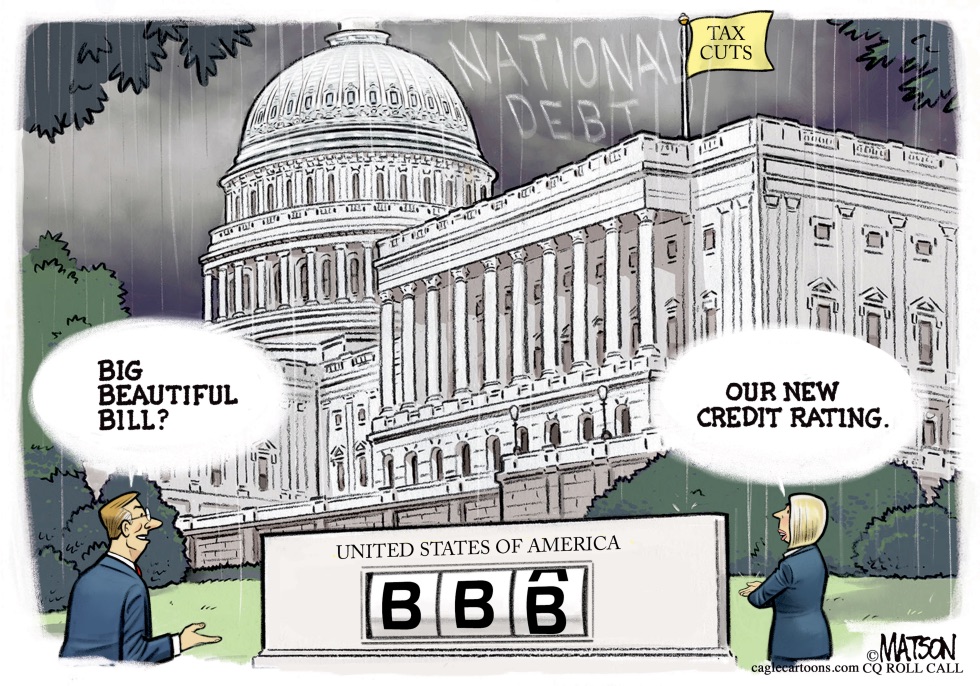
The news getting the most attention today is the so-called “big beautiful bill” that Trump and House Republicans are trying to pass and send to the Senate. Yesterday, we got some shocking news about this nightmare bill. Not only does it cut nearly a trillion dollars from Medicaid. It also cuts Medicare by more than $500 billion from Medicare. If you watched Lawrence O’Donnell’s show last night, you heard all about it. In case you missed it, here is O’Donnell’s interview with Rep. Brendan Boyle:
Rep. Boyle: The one thing I would point out, though, is this bill is actually significantly worse [than the GOP’s ACA repeal attempt in 2017], because this piece of legislation will throw 13.5 million, almost 14 million Americans off their healthcare.
First, you’re cutting people off Medicaid. But second, this does include very deep cuts to Obamacare as well. And finally, I have breaking news for you tonight, that literally just came out in the last few minutes as I’ve been sitting here: The nonpartisan Congressional Budget Office, the official authority on these figures, has now confirmed that this bill, in addition to Medicaid cuts, in addition to Obamacare cuts, includes $500 BILLION WORTH OF CUTS TO MEDICARE that is now in this bill as well.
Lawrence O’Donnell: That is breaking news…$500 billion in cuts to Medicare. That’s the biggest cut to Medicare ever contemplated by the Congress. There have been, over the years, trims to Medicare for budget reasons, but nothing on this order has ever been done to Medicare. What happened? Talk more about that, about that breaking news piece that the CBO has projected in here. Is that because of interactions that Medicare has with the Medicaid program?
Rep. Boyle: Yeah, and forgive me this…given your great experience on the Senate Finance Committee, you’ll understand this, but it does get a bit wonky for normal folks. Basically it’s because of those interactions and specifically because of a provision called “Paygo” that will force a certain amount of Medicare sequestration, again, to the tune–and these aren’t my figures, these are the Congressional Budget Office official figures–$500 billion.
So they take the biggest cuts to Medicaid in American history. They take massive cuts to Obamacare. And then, add on top of that, the impact of all their policies mean a result of the biggest cuts to Medicare in American history on top of all of it.
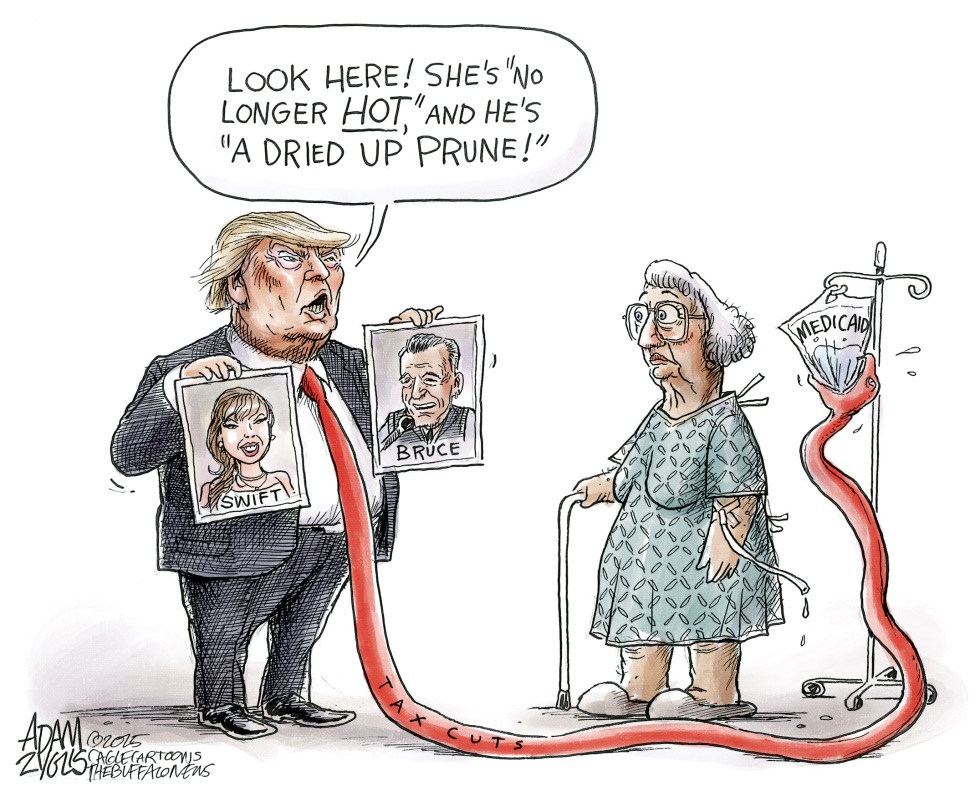
House Republicans are pushing to slash nearly $1 trillion from two of the nation’s bedrock safety net programs, Medicaid and food stamps, as part of their sweeping package aimed at enacting President Donald Trump’s agenda. If the legislation is approved, millions of Americans could lose access to these benefits as a result of a historic pullback in federal support.
Trump has repeatedly vowed not to touch Medicaid, while GOP lawmakers insist that their proposals would largely affect adults who could – and should, in their view – be employed. But the actual impact would likely hit a far broader range of Americans, including some of the most vulnerable people the GOP has promised repeatedly to protect, experts say. They include children, people with disabilities and senior citizens.
A sizeable share of the US population depends on these programs. More than 71 million people are enrolled in Medicaid, and roughly 42 million Americans receive food stamps, according to the federal agencies that oversee them.
Hospitals would also feel the financial fallout of the Medicaid cutbacks, which could prompt some to raise their rates for those with job-based insurance and others to close their doors.
States would have to shoulder more of the costs of operating these programs, which could force them to make some tough decisions. Among their options could be slashing enrollment, benefits and provider rates in Medicaid or pulling back on residents’ access to food stamps. They might also shift spending from other state-supported programs such as education and infrastructure or hike taxes.
In addition, grocery store owners are warning that cuts to the Supplemental Nutrition Assistance Program, or SNAP, as food stamps are formally known, could harm local economies and cost jobs.
Read the details at the CNN link.
The House Rules Committee met under cover of darkness beginning at 1:oo this morning.
House Republicans on Wednesday are set to try to push President Donald Trump’s massive tax and immigration package across the finish line, hoping to conquer internal divisions and tee up a vote that would send Trump’s sprawling agenda to the Senate.
The House Rules Committee worked through the night on the legislation, trying to push the bill past a procedural test that would allow for a final vote. Lawmakers were still debating its provisions early Wednesday after a committee session that began at 1 a.m.
But the GOP’s narrow majority is far from unified around the proposal. And although Trump visited the U.S. Capitol for a conservative pep rally Tuesday, warring Republican factions on both sides dug in to oppose what is now officially called the One Big Beautiful Bill Act. The House GOP’s narrow majority means leaders can afford to lose only a handful of votes — and for now, they don’t have the support they need to pass the measure.
The bill would extend tax cuts that Trump signed into law in 2017 that are otherwise due to expire at the end of this year, along with new changes to reflect Trump’s campaign promises — such as no taxes on tips and overtime wages — and spend hundreds of billions of dollars on border security, the White House’s mass deportation campaign and funding for defense priorities and a “Golden Dome” continental missile defense system.
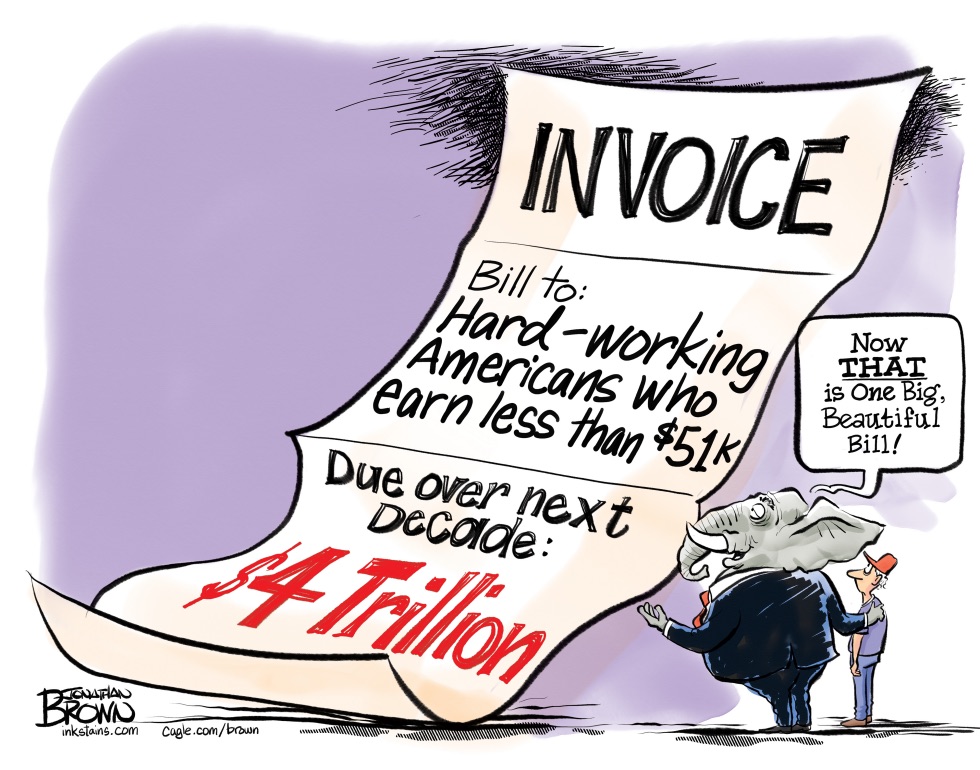
The Congressional Budget Office, lawmakers’ nonpartisan scorekeeper, projects that it will add $2.3 trillion to the deficit over 10 years. The national debt already exceeds $36.2 trillion.
Hard-line conservatives said Tuesday that the legislation did not sufficiently cut spending to pair with trillions of dollars of new tax cuts or extensions of current rates, and they angled for deeper budget reductions to Medicaid and federal benefits programs.
Blue-state Republicans demanded a higher cap on how much people can deduct from their federal taxes to offset what they pay to state and local tax authorities, and they warned that any cuts to the social safety net could cost them their political futures — and hand control of the House to Democrats after the 2026 midterm elections.
The big legislation Republicans are trying to pass this week would shrink economic resources for the poorest Americans while boosting the richest, according to a new analysis by Capitol Hill’s official budget scorekeeper.
The Congressional Budget Office said Tuesday the One Big Beautiful Bill Act, as it’s officially known, would shrink household resources for the lowest-income households by 2% in 2027 and 4% in 2033, mainly because of cuts to health and nutrition programs.
Food Stamps are on the chopping block
”By contrast, resources would increase by an amount equal to 4 percent for households in the highest decile in 2027 and 2 percent in 2033, mainly because of reductions in… taxes they owe,” CBO director Phillip Swagel wrote in a letter to Democrats.
Democratic leader Hakeem Jeffries (D-N.Y.) and Rep. Brendan Boyle (D-Pa.), the top Democrat on the House Budget Committee, requested the CBO analysis of the bill’s distributional effects for the top and bottom 10% of households by annual income.
“This is what Republicans are fighting for – lining the pockets of their billionaire donors while children go hungry and families get kicked off their health care,” Boyle said in a statement. “CBO’s nonpartisan analysis makes it crystal clear: Donald Trump and House Republicans are selling out the middle class to make the ultra-rich even richer.”
The legislation uses about $1 trillion in cuts to Medicaid and the Supplemental Nutrition Assistance Program to help pay for $3.8 trillion in tax cuts that benefit all income groups, but especially wealthier Americans. The CBO has previously estimated the legislation would shrink Medicaid enrollment by more than 7 million, including through increased eligibility checks and limits on benefits for people without jobs.
What will happen to the U.S. debt if the bill passes the Senate in it’s current form?
The United States hit its record debt level at the end of 1945, after a world war and the Great Depression.
That record, in which the debt was briefly larger than the size of the entire economy, is almost certain to be broken in the next several years. Estimates from the Congressional Budget Office published in January showed that the country was on track to overtake it in 2032 — and that was before the Republicans’ large tax and spending bill was taken into account.
Under the G.O.P. megabill being considered in the House, budget experts now say, the U.S. debt would blow past the record even sooner and climb significantly higher in coming decades.
America has had periods of high debt before, but they have tended to occur during wars, recessions or other major shocks. Generally, federal deficits have been lower during periods of low unemployment. Today, there is no war or recession to easily explain the rapidly increasing pace of borrowing.
Because the government has been spending more than it collects in taxes over the past two decades, the debt has been growing. Without any changes to existing law, the Congressional Budget Office predicts the debt will rise to about 117 percent of the economy’s size by 2034, higher than the 1945 record.
The Republicans’ bill would widen the gap further by extending and expanding tax cuts and increasing military spending, partly offset by spending cuts in other areas. The Committee for a Responsible Federal Budget, a nonpartisan group that favors debt reduction, estimates that the nation’s debt could be as high as 129 percent of the economy by 2034 under those plans.
More details at the NYT. I’ve run out of gift links for this month, unfortunately.
The president went to Capitol Hill to urge Republicans to unite behind a budget-busting budget bill, and Axios reported that his strong-arm tactics were putting conservatives into a precarious position.
“Trump’s ‘big, beautiful bill‘ is projected to add trillions to the deficit over the next decade — rattling conservatives who have long warned that the U.S. is barreling toward fiscal catastrophe,” Axios reported. “Some Republicans now find themselves trapped between two of the party’s most animating principles: Deficit reduction vs. absolute loyalty to Trump.”
The White House is hoping the budget bill will receive a vote on the House floor this week, and the president and his aides have brushed off warnings that the tax cuts embedded in the measure would explode the national debt without politically toxic cuts to Social Security and Medicare.
“This tax bill’s enormity is being underplayed … [It] will cost more than the 2017 tax cuts, the pandemic CARES Act, Biden’s stimulus, and the Inflation Reduction Act combined,” Jessica Riedl, a budget specialist at the conservative Manhattan Institute, told Yahoo Finance.
The Trump administration claims Biden created the deficits and Trump policies will lower the debt.
“[Those projections] assume consistent economic growth,” Jim Millstein, a former chief restructuring officer at the Treasury Department, told Bloomberg. “Just imagine the Trump tariffs … cause a recession. They are risking a fiscal disaster.”
For decades, budget hawks warned that America’s debt load was unsustainable and that runaway spending financed with borrowed money was eventually going to scare investors away from lending to the United States. Those fears are now taking hold more strongly in the bond market, and are at risk of spreading further.
Tax cuts pushed by the Trump administration are amplifying debt and deficit concerns among bond investors, a powerful group of market players who strongly influence how much it costs for the government to finance its budget. The buying and selling of government debt, known as Treasuries, also influences interest rates on a wide variety of debt extended to American households and businesses, including mortgages, credit cards and car loans.
Those investors were already on edge over President Trump’s whipsawing tariff policy. Then this week’s attempt to push through sweeping tax cuts without significantly slashing spending — in what the president has called a “big, beautiful bill” — set off a fresh bout of bond market turmoil. Mr. Trump put more pressure on Republican lawmakers on Tuesday, visiting Capitol Hill and warning that failing to advance the bill would lead to higher taxes.
Since dropping below 4 percent in early April, the 10-year Treasury yield has risen back above 4.5 percent, a large move reflecting deficit worries. The moves for the 30-year yield this year have also been stark: It has jumped above 5 percent, its highest level in about a year and a half.
As you probably know, that’s how much we have to pay the bondholders.
Speaking with reporters on Tuesday, Raphael Bostic, president of the Federal Reserve Bank of Atlanta, warned that volatility in the Treasury market could add to already heightened uncertainty about the economic outlook.
That risks making people “even more cautious about how they engage,” he said. “If that happens, then I’ll have to assess the extent to which that should change my outlook on how the economy is going to perform.”
House Republicans’ internal negotiations on the “One Big, Beautiful Bill” went south Tuesday night and early Wednesday morning, with GOP hardliners publicly digging in their heels against the legislation.
Why it matters: Some of the anger centers on a deal House Speaker Mike Johnson (R-La.) is nearing with blue-state Republicans to raise the State and Local Tax Deduction cap.
“I think, actually, we’re further away from a deal because that SALT cap increase upset a lot of conservatives,” House Freedom Caucus chair Andy Harris (R-Md.) said in a Newsmax interview.
Rep. Ralph Norman (R-S.C.), another GOP holdout, told Axios in a text message: “THINGS ARE NOT LOOKING GOOD!!”
State of play: Johnson and a group of House Republicans from New York, California and New Jersey were close to a deal on SALT as of Tuesday night, Axios’ Hans Nichols reported.
The deal would have raised the SALT cap to $40,000 a year for those making up to $500,000.
The income phaseout would grow by 1% for 10 years, and then the deduction would become permanent.
Yes, but: Johnson’s right flank has long been skeptical of the SALT cap, which would increase the deficit and disproportionately benefit taxpayers in high-tax Democratic states.
Some conservative hardliners also feel the bill doesn’t go far enough in cutting Medicaid and nutrition assistance spending.
I don’t buy it. My guess is the right-wingers will vote for it in the end. But if they don’t go with the SALT increase, blue state Republicans are going to lose their seats. In fact, if this bill passes, I think that will guarantee Democrats take the House in 2026.
I’m going to end there. All this talk about tax cuts, cuts to social programs, and the exploding U.S. debt are making me very tired and depressed. Take care, everyone!
Did you like this post? Please share it with your friends:
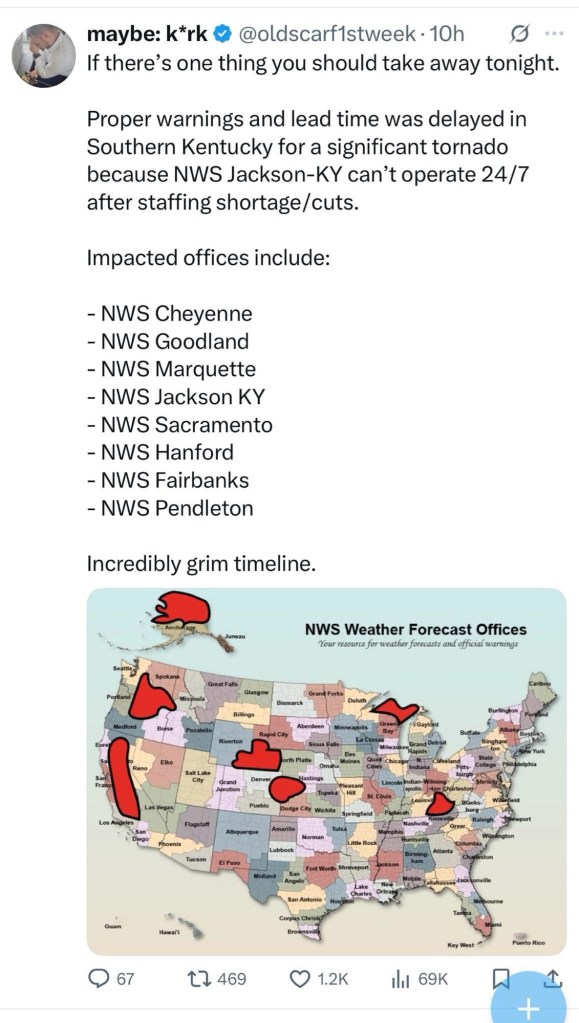
"Some National Weather Service offices, including Jackson, no longer have overnight staff from midnight to 7AM.All three Kentucky offices – Jackson, Paducah and Louisville – are short-staffed.There is no meteorologist in charge at any of the three offices…"www.kentucky.com/news/state/k…
The Sky Dancing banner headline uses a snippet from a work by artist Tashi Mannox called 'Rainbow Study'. The work is described as a" study of typical Tibetan rainbow clouds, that feature in Thanka painting, temple decoration and silk brocades". dakinikat was immediately drawn to the image when trying to find stylized Tibetan Clouds to represent Sky Dancing. It is probably because Tashi's practice is similar to her own. His updated take on the clouds that fill the collection of traditional thankas is quite special.
You can find his work at his website by clicking on his logo below. He is also a calligraphy artist that uses important vajrayana syllables. We encourage you to visit his on line studio.







 Today, we got the news of the Case Harvard filed against Trump. “Judge Temporarily Blocks Trump Admin From Revoking Harvard’s Ability To Enroll International Students.” This is from
 There is a daily drumbeat of stupidity, airing of white grievances, and cruelty. While discriminating harshly against everyone who is not white and Christian, this administration harbors supporters who carry torches and shout “Jews will not replace us,” and has bubble-headed Congress Critters who scream about “Jewish Space Lasers”. Anti-semitism has become transactional. It has become a useful tool in the attack on Academia and the Democratic Party. It assumes that you can’t understand the history of the Jewish people without turning a blind eye to the punishing attacks on Palestinian women, children, and innocents in the Gaza Strip. I do not think there is a bigger way of showing disrespect for a group of people than using their historical struggles as a tool to encourage the murder of innocents. But then, our #FARTUS is planning a Trump Tower, hotel, and golf course in GAZA. The Trump Boyz–in between murdering endangered animals for sport–have been travelling the globe using the Tariff stick as a way to expand their Crime Syndicate. All, at the expense of the United States and its economy. This is from
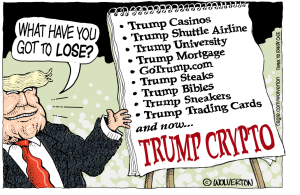 That sure is different than the 2021 #FARTUS who told Fox News. He just couldn’t wait to get into that scam, I guess.
  So, build the nastiest factory in the backyard of the people least able to deal with it. That’s the sound of these Robber Barons that should be familiar to anyone who knows US history from its early 20th-century business escapades. The most interesting thing that’s popped up today is that Apple has got Trump in a lather, and the Equity Markets hate it. This is from
 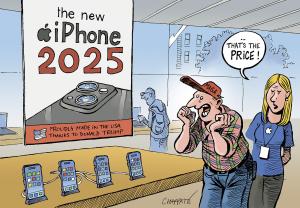 Apple is being threatened with 25% tariffs. Wow, how free market is this? Sounds a lot more like the old Soviet Command and Control model. Is he channeling Putin and Orban or just pissed about something Apple did at his party? This is from CNBC. “Trump says Apple must pay a 25% tariff on iPhones not made in the U.S.” Does he not realize how long it would take to even set up a factory, let alone train everyone? Doesn’t he know what this huge project would take to even break even?






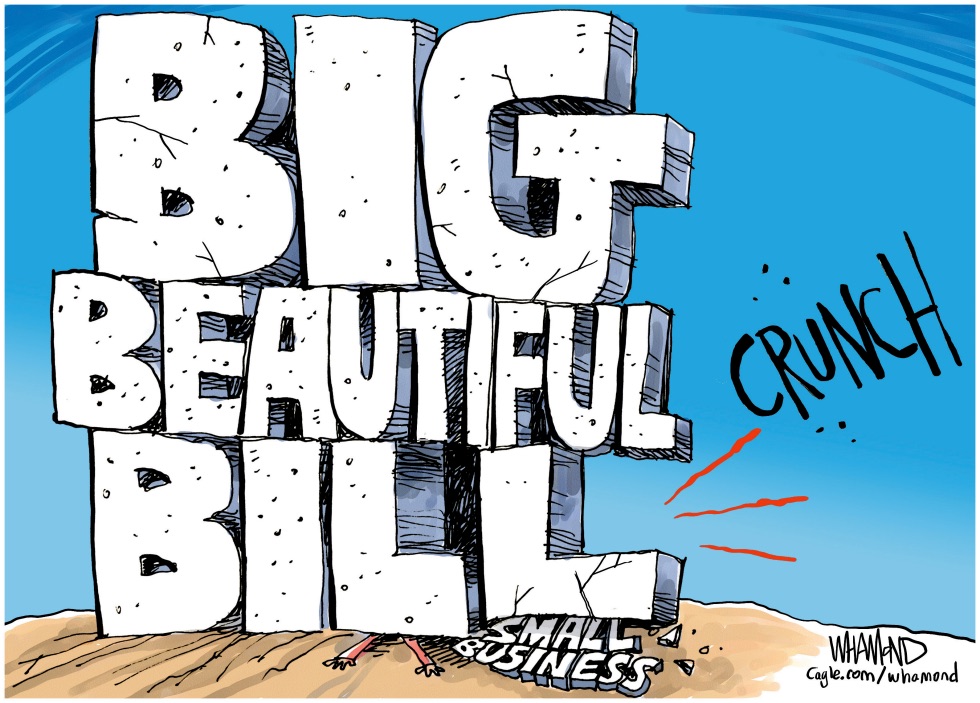

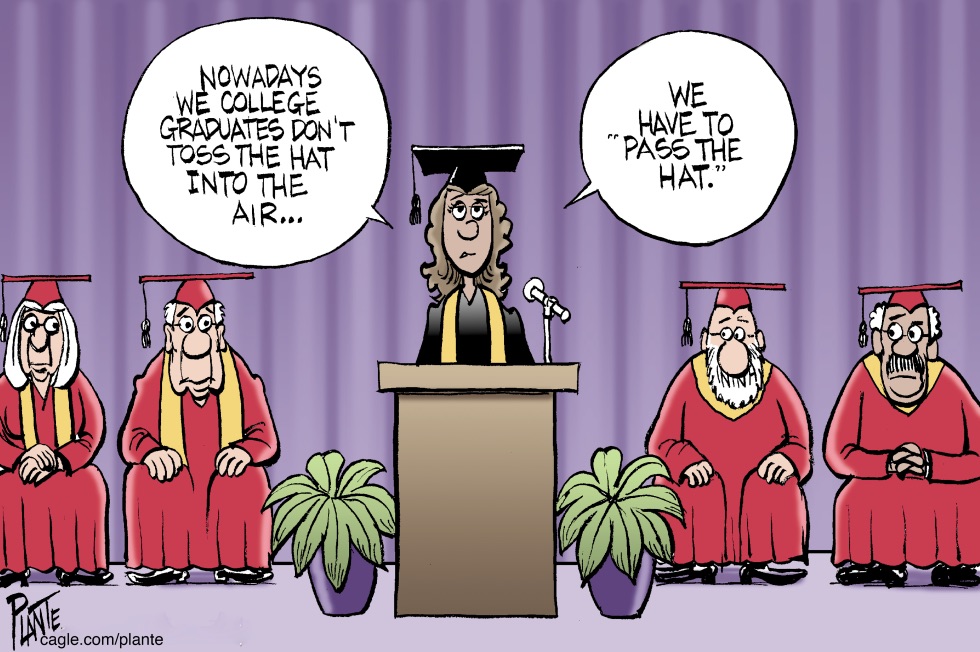
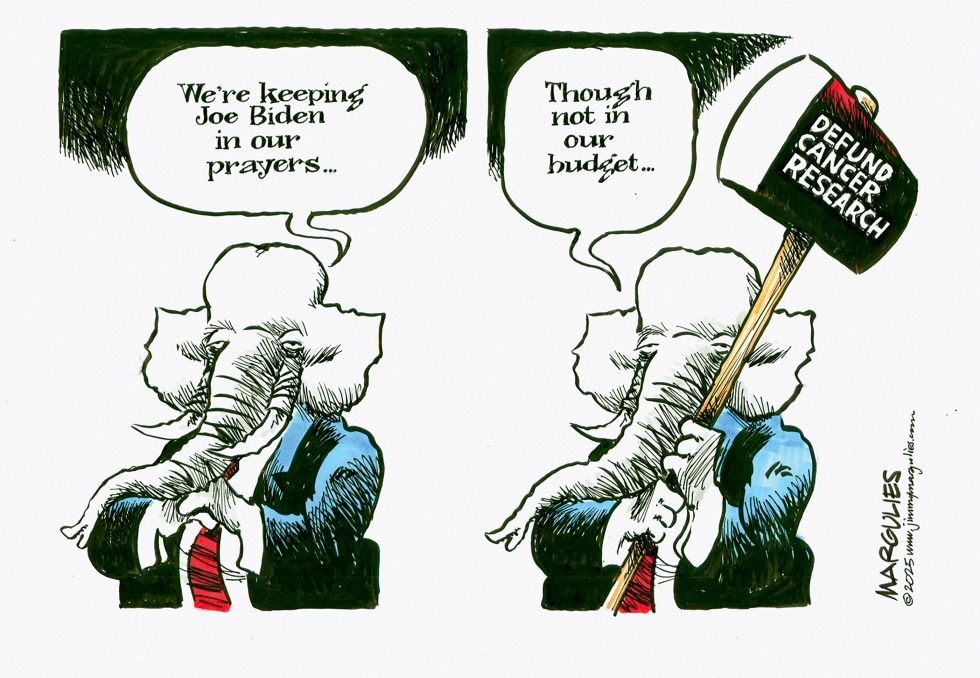
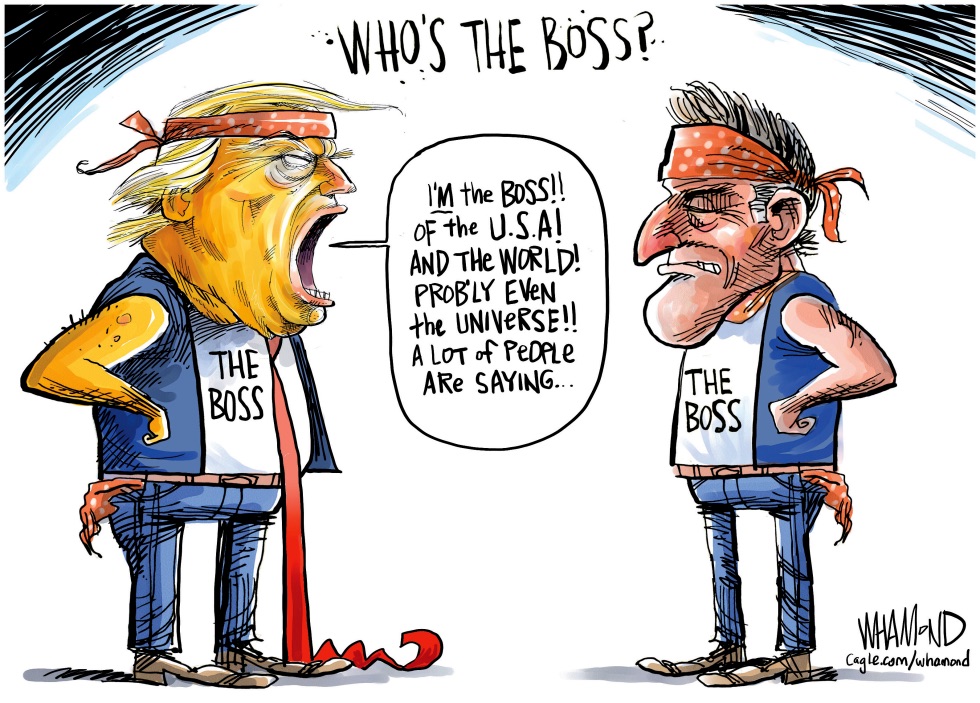
















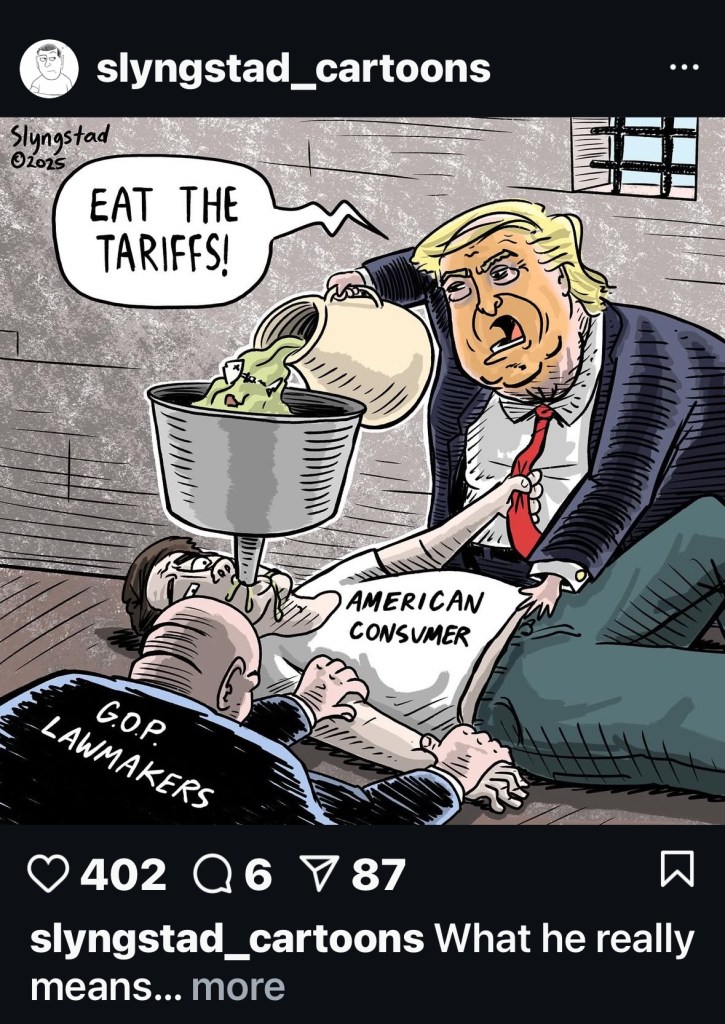



But the GOP’s narrow majority is far from unified around the proposal. And although Trump visited the U.S. Capitol for a conservative pep rally Tuesday, warring Republican factions on both sides dug in to oppose what is now officially called the One Big Beautiful Bill Act. The House GOP’s narrow majority means leaders can afford to lose only a handful of votes — and for now, they don’t have the support they need to pass the measure.

Tax cuts pushed by the Trump administration are amplifying debt and deficit concerns among bond investors, a powerful group of market players who strongly influence how much it costs for the government to finance its budget. The buying and selling of government debt, known as Treasuries, also influences interest rates on a wide variety of debt extended to American households and businesses, including mortgages, credit cards and car loans.


















 peej
peej Carissa
 bostonboomer
 dakinikat
 ecocatwoman
 mablue2
 Mama Lopez
 peggysue22
 quixote
 skydancingguestblogger
 Mona (aka Wonk the Vote)



 Sky Dancing
Recent Comments