I’m trying not to let myself fall into despair over what’s happening in our country and the world, but it isn’t easy. I try to distract myself by reading novels and by watching shows on Netflix and Max. But inevitably I open my phone or turn on cable news and get hit with awful news about what new insane thing Trump is doing or saying.
This morning, as I look around at stories in the news, I find myself sinking into sadness over what we have already lost from our democracy and what more losses could be coming. It’s all so tragic. I honestly despise the people who voted for Trump.
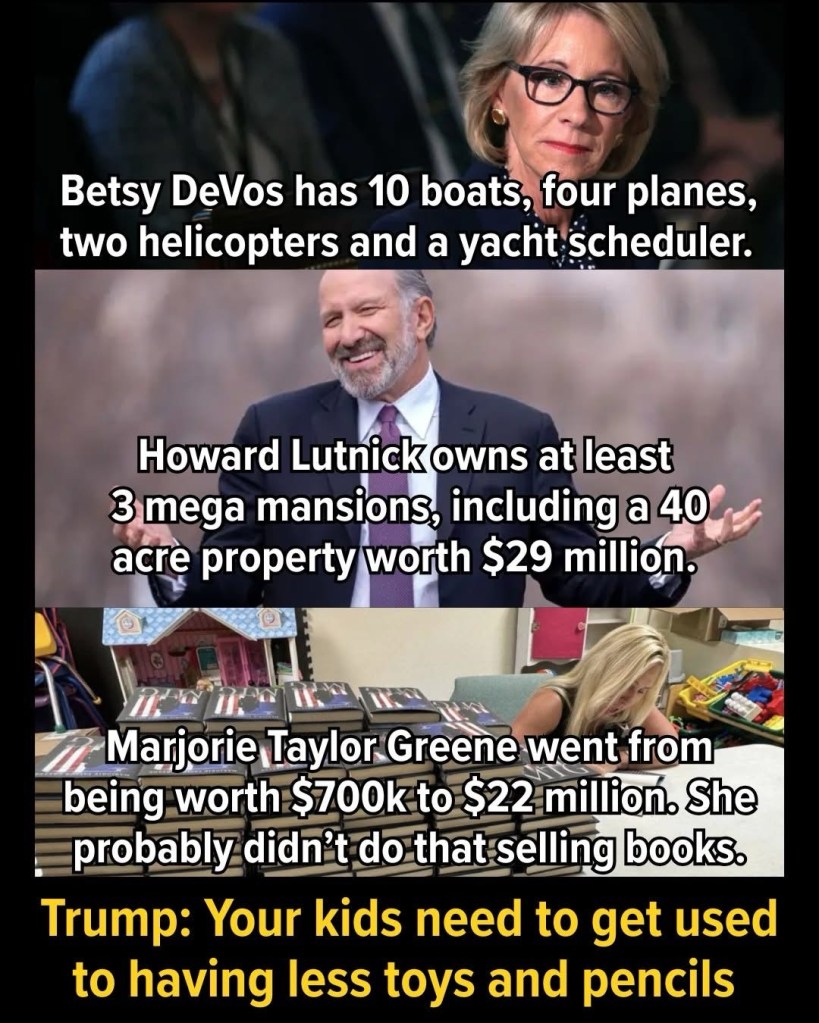
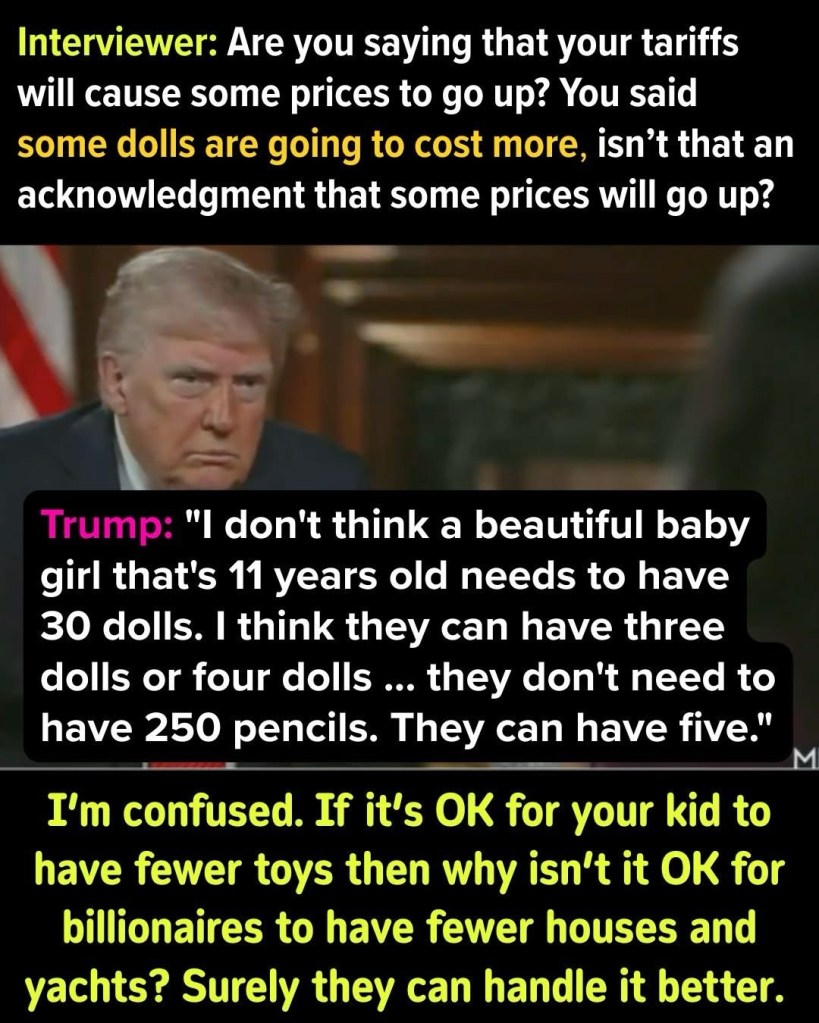
There’s one person who never fails to lift my spirits, if only temporarily: MSNBC’s Lawrence O’Donnell. Recently, he has had a great time making fun of Trump’s seeming obsession with American girls’ dolls and how they need to make do with just 2 or 3 or 4 instead of 35 because of his tariffs.
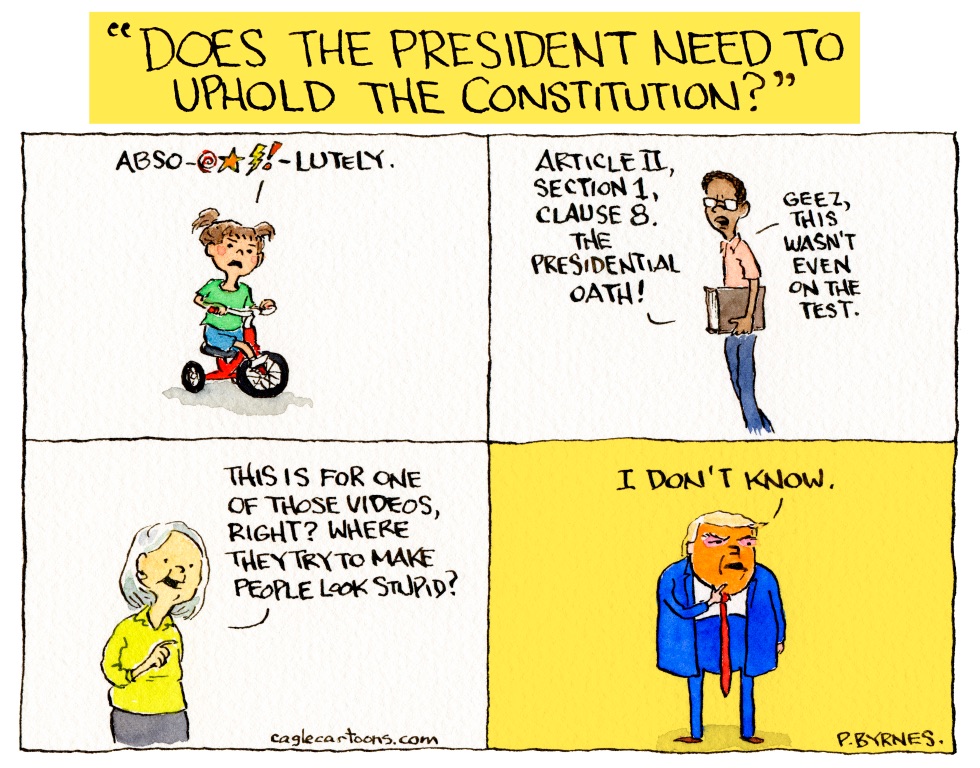
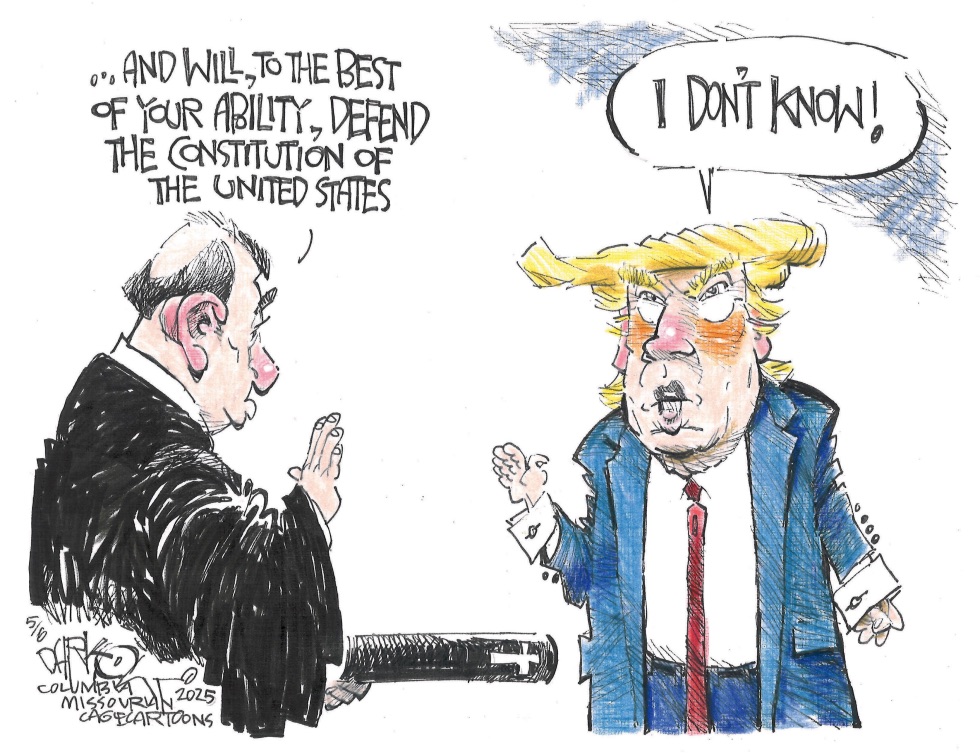
Last night Lawrence made an interesting point about Trump’s cognitive decline. He pointed out that Trump saying “I don’t know,” when asked if people in the U.S. have a right to due process and when asked if he has a duty to defend the Constitution is something new for him. Normally, Trump never admits to not knowing something. He would rather bumble around talking complete nonsense than admit to not knowing.
Lawrence argues that Trump is a pathetic husk of his former self, exhausted and befuddled by his responsibilities. Not that any of this is going to drive Trump from office, but it’s an interesting thought. The danger, of course is that other people like Elon Musk and Stephen Miller could be in control of the presidency.
Lawrence also discussed Trump’s embarrassing appearance yesterday in the Oval Office with newly elected Canadian Prime Minister Mark Carney.
“The Canadian prime minister both humbled and humiliated Donald Trump at the same time without Donald Trump having the slightest idea it was happening,” he said on Tuesday night.
Later in the segment, O’Donnell slammed Trump’s “utterly demented attempt” to turn Canada into a state. Carney, he noted, responded by saying “absolutely no to Donald Trump to his face.”
But Trump, he said, barely noticed.
“Donald Trump had no fight in him today when the very polite Canadian beside him talked rings around Donald Trump like a ring master in a circus with a trained animal, threw in some magic words that sounded flattering enough to Donald Trump so that Donald Trump actually ― and you’ll see this ― ends up nodding and agreeing with the man who is humiliating him and defeating him right there in the room on TV,” O’Donnell said. “No president has ever lost more in one conversation in the Oval Office than Donald Trump lost in these 90 seconds.”
O’Donnell rolled the footage of the meeting, where Carney told him Canada would never be for sale and would not be a U.S. state.
So, on to today’s news.
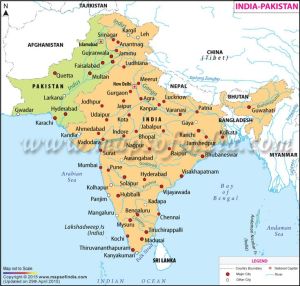
India and Pakistan–both nuclear powers–appear to be on the verge of war.
India launched military strikes on targets in Pakistan, both countries said on Wednesday and Pakistan claimed it had shot down five Indian Air Force jets, in an escalationthat has pushed the two nations to the brink of wider conflict.
India’s missile strikes early Wednesday morning targeted “terrorist infrastructure” across nine sites in Pakistan’s densely populated Punjab province and Pakistan-administered Kashmir, it said. They came in response to a massacreby militantsof tourists in Indian-administered Kashmir two weeks ago, that New Delhi blamed on its neighbor.
India Pakistan map
Pakistan said at least 26 people were killed in Wednesday’s strikes – including women and a three-year-old girl – and 46 wounded. The country’s Prime Minister Shehbaz Sharif describedthe strikes as “an act of war” and Islamabad has vowed to retaliate.
From early Wednesday the two sides have exchanged shelling across their border, with locals on both sides telling CNN they weretakingshelter. A CNN journalist in Pakistan-administered Kashmir heard multiple loud explosions.
“A shell landed at a house close to the mosque in which two people were injured. Shells also hit other houses in our area and we fled from our area to a safer place,” said Shakeel Butt, a resident of Muzaffarabad, in Pakistani-administered Kashmir. A senior Indian defense source said at least eight people had been killed on the Indian side of the border.
Pakistani military sources later said they shot down five Indian Air Force jets and one drone in “self-defense,” claiming three Rafale jets – sophisticated multi-role fighters made in France – were among those downed as well as a MiG-29 and an SU-30 fighter.
A local resident and government official told CNN that an unidentified fighter aircraft had crashed on a school building in Indian-administered Kashmir.
Tensions between India and Pakistan intensified Wednesday after India’s military launched strikes against the neighboring country in response to a militant attack in Indian-administered Kashmir last month, heightening fears of war between the nuclear-armed rivals….
The strikes have set the region on edge and shattered the fragile ceasefire that has largelyheld since 2021, with analysts warning of escalation in the decades-long conflict that has riven the South Asian subcontinent over the Muslim-majority region of Kashmir, parts of which are controlled by India and Pakistan, though the area is claimed in full by both countries.
Wednesday’s aerial assault is on a far bigger scale than in 2019, when India struck a single, remote Pakistani site in response to a suicide bombing that killed more than 40 Indian soldiersin Kashmir….
The sharp rise in tensions follows a deadly April 22 attack on tourists near the town of Pahalgam in Indian-administered Kashmir.
Gunmen armed with rifles killed 25 Indians and one Nepalese citizen. More than a dozen others were injured. The attack was the deadliest against civilians since the 2008 Mumbai attacks by the Pakistani-based militant group Lashkar-e-Taiba that killed 166 people.
Indian-administered Kashmir is a heavily militarized zone. An armed insurgency — either seeking independence or favoring accession to Pakistan — has continued against Indian rule for more than three decades.
India has long accused Pakistan of fomenting separatist violence in Kashmir. Indian Foreign Secretary Vikram Misri said Wednesday that India had found evidence linking themilitants in the Pahalgam attack to Pakistan.
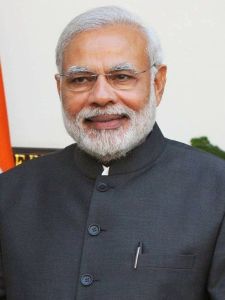
The Hindu nationalist government of Narendra Modi revoked Kashmir’s semiautonomous status in August 2019 and instituted a crackdown, including imposing the world’s longest internet shutdown in a democracy. Promising development and investment, New Delhi had touted a return to relative peace, citing the surge of tourists to the region, a narrative upended by the deadly attack last month.
Read more at the WaPo.
Joe Biden gave his first major interview since he left the White House.
Former US President Joe Biden has given his first in-depth interview since he left the White House in January, speaking to the BBC about his legacy, foreign policy and his view of President Donald Trump’s first 100 days.
He said that he had few regrets, but he offered grave warnings about global affairs as Europe marks 80 years since the end of World War Two on the continent….
The former president also reflected on his decision to drop out of the 2024 election race – but he had less to say about any mistakes he and the Democrats may have made along the way….
On leaving the 2024 presidential race:
Democratic strategists have lamented that the last-minute handover left their campaign flat-footed, ultimately aiding Trump’s path to the White House, even as Democrats held a financial advantage in the 2024 race.
Biden boasted of being “so successful on our agenda” – a reference to the major legislation enacted in his first two years in office on the environment, infrastructure and social spending, as well as the better-than-expected Democratic performance in the 2022 midterm elections.
“It was hard to say now I’m going to stop,” he said. “Things moved so quickly that it made it difficult to walk away.”
Ultimately, quitting was “the right decision”, he said, but it was “just a difficult decision”.
On Trump and Ukraine:
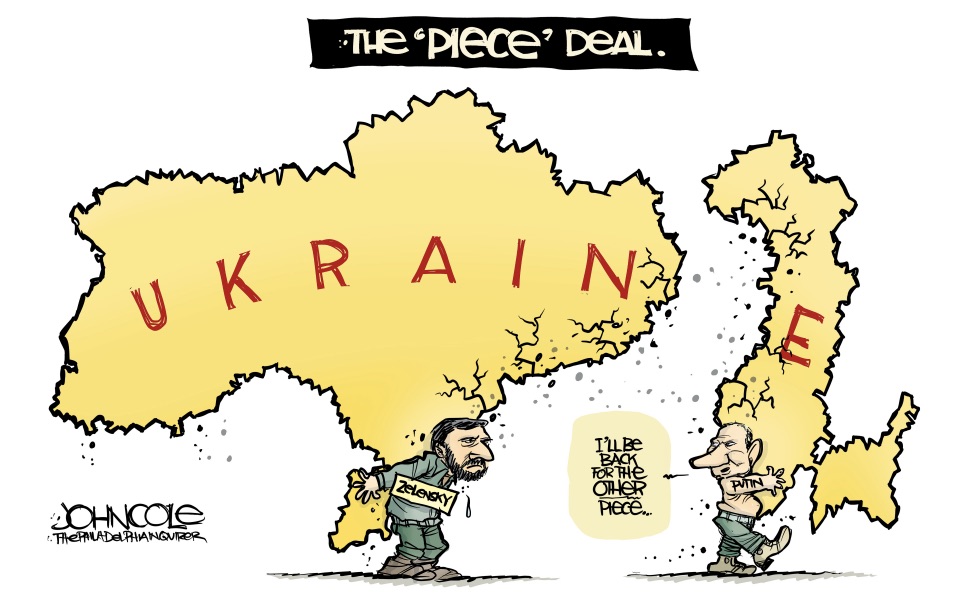
Biden described the Trump administration’s suggestion that Ukraine give up territory as part of a peace deal with Russia as “modern-day appeasement” – a reference to European allies that allowed Adolf Hitler to annex Czechoslovakia in the 1930s in an ill-fated attempt to prevent a continent-wide conflict.
Joe Biden at BBC interview
“I just don’t understand how people think that if we allow a dictator, a thug, to decide he’s going to take significant portions of land that aren’t his, that that’s going to satisfy him. I don’t quite understand,” Biden said of Russian President Vladimir Putin….
Though Biden’s repeated assertion that Russian tanks would be rolling through central Europe if America and its allies didn’t support Ukraine is impossible to prove, he views the threat posed by Putin as serious and worthy of the comparison.
Biden also said that if the US allowed a peace deal that favoured Russia, Putin’s neighbours would be under economic, military and political pressure to accommodate Moscow’s will in other ways. In his view, the promise of American support to European allies becomes less believable and less of a deterrent.
Until this week, President Biden himself (former presidents keep their titles after they leave office) has largely observed the convention that former presidents do not criticise their successors at the start of their time in office. But from the moment we shake hands it is clear that he is determined to have his say too.
In a dark blue suit, the former president arrives smiling and relaxed but with the determined air of a man on a mission. It’s his first interview since leaving the White House, and he seems most angry about Donald Trump’s treatment of America’s allies – in particular Ukraine’s president, Volodymyr Zelensky….
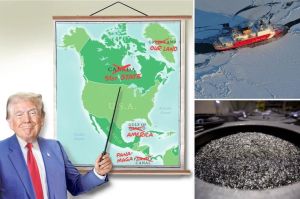
“I found it beneath America, the way that took place,” he says of the explosive Oval Office row between Trump and Zelensky in February. “And the way we talk about now that, ‘it’s the Gulf of America’, ‘maybe we’re going to have to take back Panama’, ‘maybe we need to acquire Greenland, ‘maybe Canada should be a [51st state].’ What the hell’s going on here?
“What President ever talks like that? That’s not who we are. We’re about freedom, democracy, opportunity – not about confiscation.”
The U.S. is stepping up its intelligence-gathering efforts regarding Greenland, drawing America’s spying apparatus into President Trump’s campaign to take over the island, according to two people familiar with the effort.
Several high-ranking officials under Director of National Intelligence Tulsi Gabbard issued a “collection emphasis message” to intelligence-agency heads last week. They were directed to learn more about Greenland’s independence movement and attitudes on American resource extraction on the island.
The classified message asked agencies, whose tools include surveillance satellites, communications intercepts and spies on the ground, to identify people in Greenland and Denmark who support U.S. objectives for the island.
The directive is one of the first concrete steps Trump’s administration has taken toward fulfilling the president’s often-stated desire to acquire Greenland.
A collection-emphasis message helps set intelligence-agency priorities, directing resources and attention to high-interest targets. The Greenland order, which went to agencies including the Central Intelligence Agency, the Defense Intelligence Agency and the National Security Agency, underscores the administration’s apparent commitment to seeking control of the self-governing island. It forms part of the Kingdom of Denmark, a North Atlantic Treaty Organization member and a decadeslong ally.
James Hewitt, a National Security Council spokesman, said the White House doesn’t comment on intelligence matters, but added: “The president has been very clear that the U.S. is concerned about the security of Greenland and the Arctic.”
In a statement, Gabbard said: “The Wall Street Journal should be ashamed of aiding deep state actors who seek to undermine the President by politicizing and leaking classified information. They are breaking the law and undermining our nation’s security and democracy.”
More at the WSJ. I got past the paywall by clicking the link on Memeorandum.
A Navy fighter jet failed to land on an aircraft carrier and plummeted into the Red Sea on Tuesday, marking the fourth major mishap involving the vessel and the third loss of a fighter jet deployed with it since the warship left home last year.
The F/A-18F Super Hornet fighter jet, worth about $67 million, went overboard after an unsuccessful attempt to slow it down upon landing on the USS Harry S. Truman, the Navy said in a statement. Both aviators aboard the jet safely ejected and were rescued at sea by helicopter with minor injuries, and no one aboard the warship’s flight deck was harmed, the service said.
Boeing F/A-18F Super Hornet fighter jet
The latest incident, reported earlier by CNN, followed the loss of another jet, an F/A-18E, in an accident aboard the Truman last week in which the aircraft tumbled overboard after sailors aboard lost control of it while towing it in the ship’s hangar bay. A third fighter jet from the Truman was shot down accidentally over the Red Sea in December by another Navy warship, the USS Gettysburg, in an incident that triggered concerns about communication among warships and fighter jets in the region.
The Truman also was involved in a collision in the Mediterranean Sea in February, prompting the service to fire its commanding officer, Navy Capt. Dave Snowden. He was replaced by Navy Capt. Christopher Hill, who had just completed the deployment of another carrier, the USS Dwight D. Eisenhower.
While the incidents have not killed any service members, they have raised questions about the strain placed on the aircraft carrier’s crew and its ability to carry out a grueling deployment in which troops have clashed for months with Houthi militants in Yemen, who have repeatedly launched drone and missile attacks against vessels in the region. The mishaps have the attention of senior U.S. military leaders, a defense official familiar with the discussion said Tuesday night, speaking on the condition of anonymity because of the sensitivity of the issue.
Defense Secretary Pete Hegseth has twice extended the aircraft carrier’s deployment since it left its home in Virginia last September, most recently last week, to ensure that the Navy had two aircraft carriers on hand to battle the Houthis. Since March, the carrier has been on the front lines of a full-scale assault that President Donald Trump ordered against the Yemen-based militant group in response to its attacks on commercial and military vessels dating to late 2023.
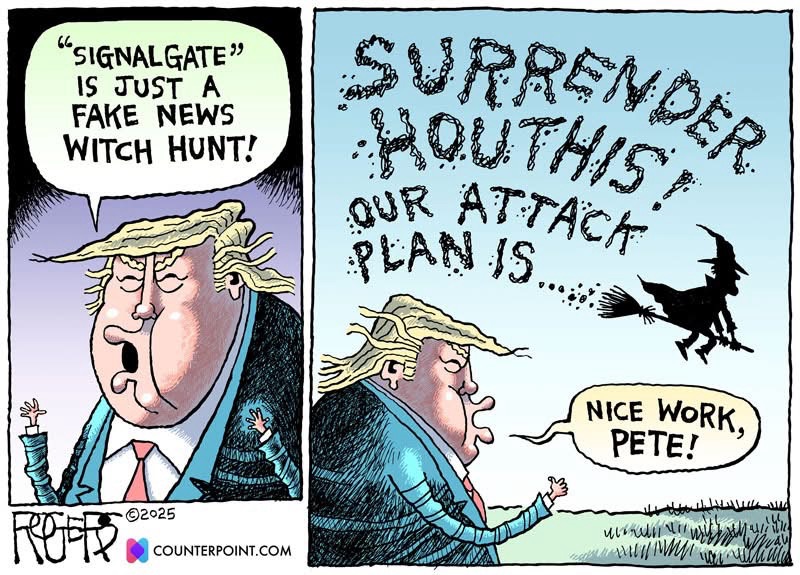
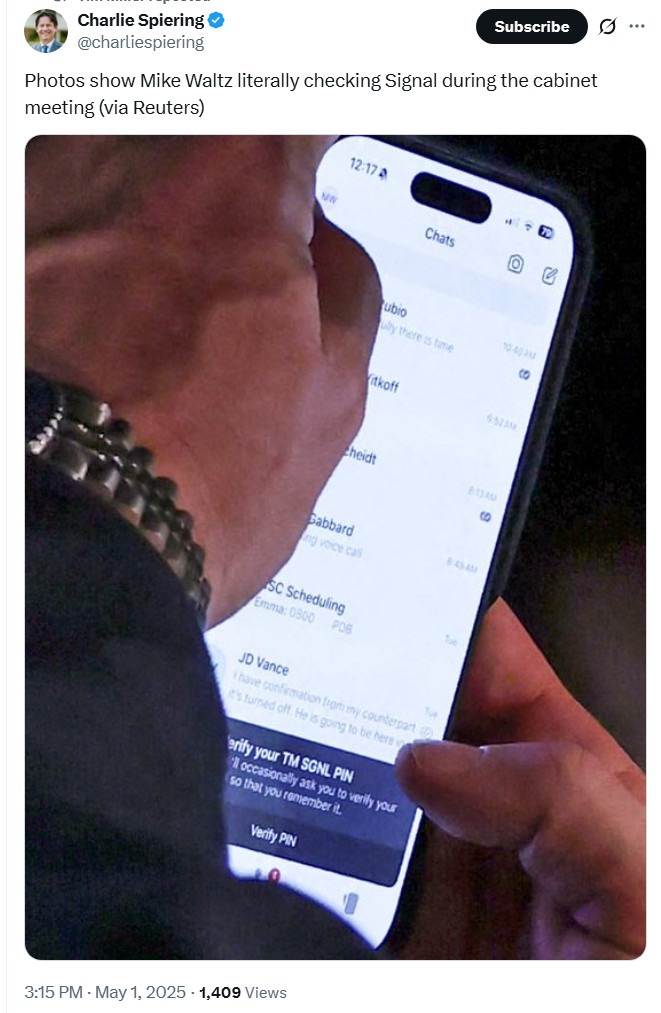
Pete Hegseth isn’t the only cabinet member who doesn’t seem to care about protecting the nation’s secrets.
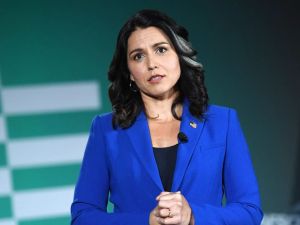
Tulsi Gabbard, the director of national intelligence, used the same easily cracked password for different online accounts over a period of years, according to leaked records reviewed by WIRED. Following her participation in a Signal group chat in which sensitive details of a military operation were unwittingly shared with a journalist, the revelation raises further questions about the security practices of the US spy chief.
WIRED reviewed Gabbard’s passwords using databases of material leaked online created by the open-source intelligence firms District 4 Labs and Constella Intelligence. Gabbard served in Congress from 2013 to 2021, during which time she sat on the Armed Services Committee, its Subcommittee on Intelligence and Special Operations, and the Foreign Affairs Committee, giving her access to sensitive information. Material from breaches shows that during a portion of this period, she used the same password across multiple email addresses and online accounts, in contravention of well-established best practices for online security. (There is no indication that she used the password on government accounts.)
Tulsi Gabbard
Two collections of breached records published in 2017 (but breached at some previous unknown date), known as “combolists,” reveal a password that was used for an email account associated with her personal website; that same password, according to a combolist published in 2019, was used with her Gmail account. That same password was used, according to records dating to 2012, for Dropbox and LinkedIn accounts associated with the email address tied to her personal website. According to records dating to 2018 breaches, she also used it on a MyFitnessPal account associated with a me.com email address and an account at HauteLook, a now-defunct ecommerce site then owned by Nordstrom.
Records of these breaches have been available online for years and are accessible in commercial databases.
Gabbard’s spokesperson downplayed this story, saying the information is a decade old and passwords have been changed many times since then. But check out this info on Gabbard:
The password associated with all of the accounts in question includes the word “shraddha,” which appears to have personal significance to Gabbard: Earlier this year, The Wall Street Journal reported that she had been initiated into the Science of Identity Foundation, an offshoot of the Hare Krishna movement into which she was reportedly born and which former members have accused of being a cult. Several former adherents told The Journal that they believe Gabbard received the name “Shraddha Dasi” when she was allegedly received into the group. Gabbard’s deputy chief of staff, Alexa Henning, responded to questions from The Journal at the time by posting them on X and accusing the news media of publicizing “Hinduphobic smears and other lies.”
The U.S. DOGE Service is racing to build a single centralized database with vast troves of personal information about millions of U.S. citizens and residents, a campaign that often violates or disregards core privacy and security protections meant to keep such information safe, government workers say.
The team overseen by Elon Musk is collecting data from across the government, sometimes at the urging of low-level aides, according to multiple federal employees and a former DOGE staffer, who all spoke on the condition of anonymity for fear of reprisals. The intensifying effort to unify systems into one central hub aims to advance multiple Trump administration priorities, including finding and deporting undocumented immigrants and rooting out fraud in government payments. And it follows a March executive order to eliminate “information silos” as DOGE tries to streamline operations and cut spending.
At several agencies, DOGE officials have sought to merge databases that had long been kept separate, federal workers said. For example, longtime Musk lieutenant Steve Davis told staffers at the Social Security Administration that they would soon start linking various sources of Social Security data for access and analysis, according to a person briefed on the conversations, with a goal of “joining all data across government.” Davis did not respond to a request for comment.
But DOGE has also sometimes removed protections aroundsensitive information — on Social Security numbers, birth dates, employment history, disability records, medical documentation and more. In one instance, a website for a new visa program wasn’t set up behind a protective virtual private network as would be customary, according to a Department of Homeland Security employee and records obtained by The Washington Post.
The administration’s moves ramp up the risk of exposing data to hackers and other adversaries, according to security analysts, and experts worry that any breaches could erode public confidence in government. Civil rights advocates and some federal employees also worry that the data assembled under DOGE could be used against political foes or for targeted decisions about funding or basic government services.
“Separation and segmentation is one of the core principles in sound cybersecurity,” said Charles Henderson of security company Coalfire. “Putting all your eggs in one basket means I don’t need to go hunting for them — I can just steal the basket.”
The Supreme Court ruled on Tuesday that the Trump administration may start enforcing a ban on transgender troops serving in the military that had been blocked by lower courts.
The ruling was brief, unsigned and gave no reasons, which is typical when the justices act on emergency applications. It will remain in place while challenges to the ban move forward.
The court’s three liberal members — Justices Sonia Sotomayor, Elena Kagan and Ketanji Brown Jackson — noted dissents but provided no reasoning.
Commander Emily Shilling
The case concerns an executive order issued on the first day of President Trump’s second term. It revoked an order from President Joseph R. Biden Jr. that had let transgender service members serve openly.
A week later, Mr. Trump issued a second order saying that “adoption of a gender identity inconsistent with an individual’s sex conflicts with a soldier’s commitment to an honorable, truthful and disciplined lifestyle.”
The Defense Department implemented Mr. Trump’s order in February, issuing a new policy requiring transgender troops to be forced out of the military. According to officials there, about 4,200 current service members, or about 0.2 percent of the military, are transgender.
The context:
The Supreme Court’s order came against the backdrop of the Trump administration’s broad attacks on transgender rights. The administration has sought to bar transgender athletes from sports competitions. It has tried to force transgender people to use bathrooms designated for their sex assigned at birth. And it has objected to letting people choose their pronouns.
The justices will soon decide the fate of a Tennessee law that bans transition care for transgender youths, challenged in a case brought by the Biden administration. The Trump administration flipped the government’s position in that case in February, after an executive order directed agencies to take steps to curtail surgeries, hormone therapy and other gender transition care for people under 19 years old.
In the case decided on Tuesday, seven active service members, as well as a person who sought to join and an advocacy group, sued to block the policy, saying, among other things, that it ran afoul of the Constitution’s equal protection clause.
One of the plaintiffs, Cmdr. Emily Shilling, who began transitioning in 2021 while serving in the Navy, has been a naval aviator for 19 years, flying more than 60 combat missions, including in Iraq and Afghanistan.
Her lawyers said the Navy had spent $20 million on her training.
In March, Judge Benjamin H. Settle of the Federal District Court in Tacoma, Wash., issued a nationwide injunction blocking the ban, using Commander Shilling as an example of the policy’s flaws.
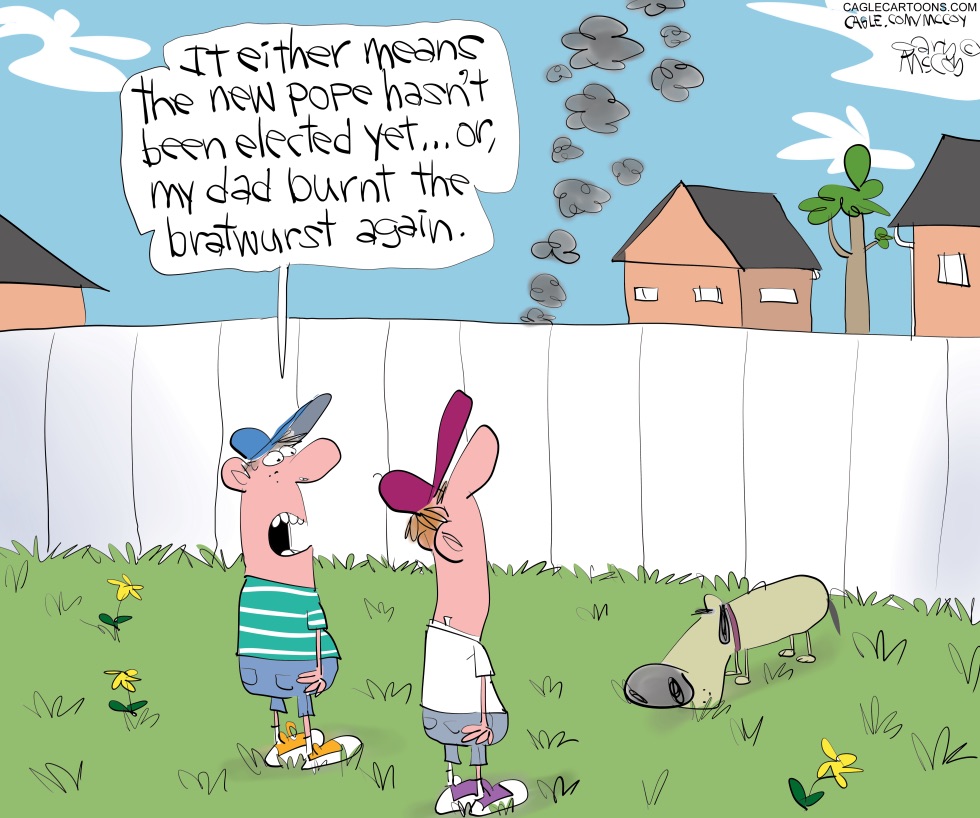
Faced with the highly secretive and complex ritual of choosing a new pope, Catholic cardinals have turned to Hollywood to learn how it could all play out.
As crazy as it might sound, some of the 133 high-ranking clerics set to enter the Sistine Chapel when the conclave starts on Wednesday have looked to the Ralph Fiennes movie ― handily titled just “Conclave” ― for pointers.
“Some have watched it in the cinema,” a cleric involved in the real thing admitted to POLITICO.
The movie, directed by Edward Berger, features English actor Fiennes as Cardinal Thomas Lawrence, the dean of the College of Cardinals. As the pope-appointed steward of the conclave, he has to deal with fractious clerics, the emergence of scandalous dossiers targeting papal favorites and the appearance of an unknown candidate from an obscure diocese.
It all might sound painfully relevant. The film is seen as remarkably accurate even by cardinals, said the cleric, making it a helpful research tool, especially at a time when so many of the conclave participants have little experience of Vatican politics and protocol.
A majority of the cardinals who flocked to Rome in the weeks since the death of Pope Francis were appointed by the late pontiff, and have never experienced a conclave. Mirroring the Fiennes film, many also come from small, previously overlooked dioceses across the globe.
This has gotten way too long, so I’d better wrap it up. What’s on your mind today?
Did you like this post? Please share it with your friends:
Now, people being dragged out of town halls is not something new. It’s just…what the fuck! People need to get madder about this shit!
This is a shockingly mistaken understanding of due process by Stephen Miller. It is likely this misunderstanding that is informing the President’s misunderstanding.
Respectfully, it’s not a misunderstanding. That dignifies it. It’s sheer will to power. This is what they want the law to be, so they’re saying that’s what the law is, and daring any court to stop them.
Trump: "The courts have all of the sudden, out of nowhere, they said, 'maybe you have to have trials.' Trials. We're gonna have 5 million trials? It doesn't work."
Elizabeth Warren: I am not in favor of handing over the keys to our Social Security Administration to a man who says that he will do whatever Donald Trump wants, whatever Elon Musk wants, no matter how much it's there just to help the billionaires.#HandsOff @warren.senate.gov
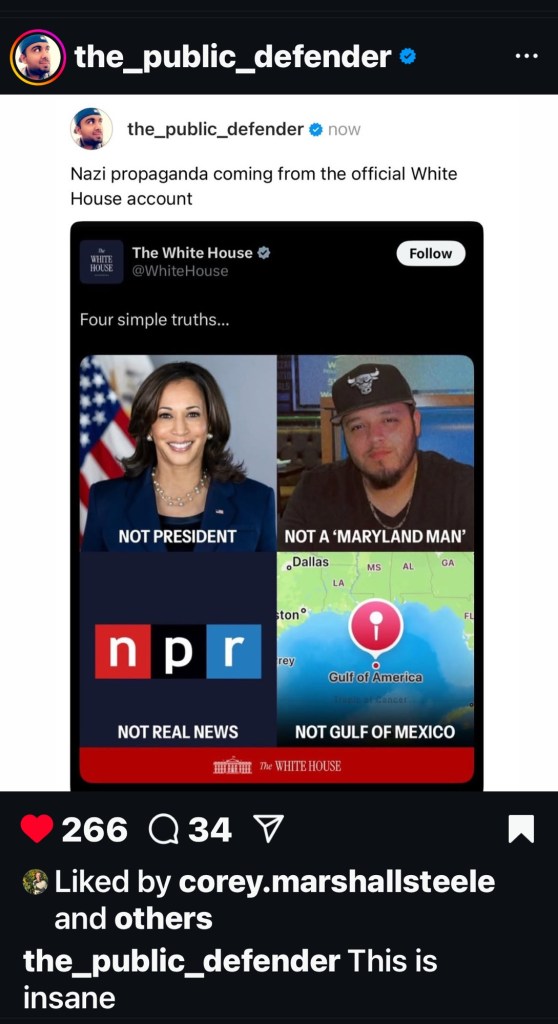
Scanlon: The Gulf of Mexico was so named over 500 years ago. If we want to update that name to reflect our current culture, maybe we should call it the Sea of Emoluments—you know, the place where we can board the Ship of Fools and navigate from a State of Ignorance to the Confederacy of Dunces…
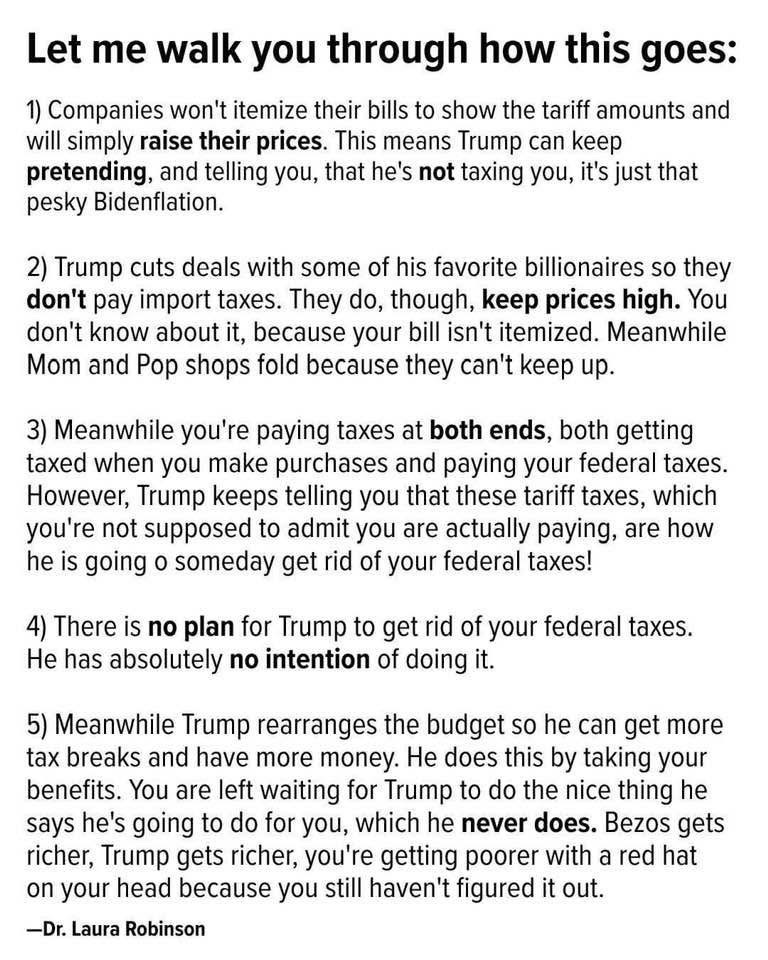
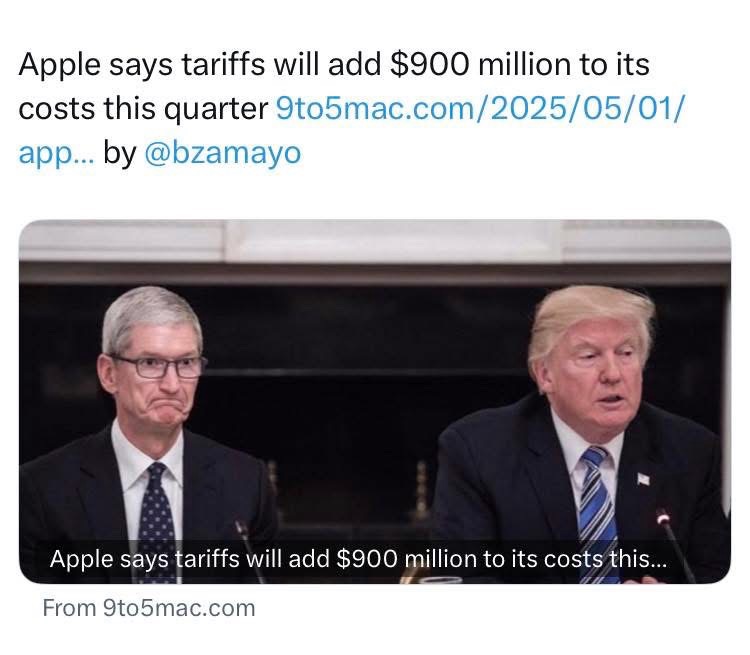
Every time I get the grocery list together these days, I think about what I need to bulk order. It’s really hard to look at a finished consumer good and find all the value-added producers along with their various locations. I wonder how the distributors are going to sort this all out. I noticed prices creeping up in the usual items. I’m pretty sure my sister has hit Costco by now and filled up the pantry. I also watched the last of the Jazz Festers leave with relief. I bet this was their last jaunt of the year. You can see it in the numbers.
USA Today had this analysis by Betty Lin-Fisher. “How will Trump’s tariffs affect grocery store prices? We explain.”
While higher tariffs could still be coming after a 90-day-pause, the baseline 10% tariff on all goods, plus higher duties on Chinese products already in effect are a big increase in food costs for American’s budgets, said Thomas Gremillion, director of food policy at The Consumer Federation of America.
“The 10% ‘default’ tariffs alone represent a truly historic federal tax increase, maybe the largest in my lifetime, with a highly regressive impact,” Gremillion said.
The tariff only applies to the value of the product at the border, Ortega said. Then there are additional costs to the product, which are accrued domestically, like transporting the goods to the store, distribution, wholesale costs and retail markups. Those things are not subject to the tariff, Ortega said.
So that doesn’t mean that the price of a particular product will go up by 10% or whatever the tariff is, Ortega said.
Overall, 15% of the U.S. food supply is imported, including 32% of fresh vegetables, 55% of fresh fruit, and 94% of seafood, according to the Consumer Federation of America, citing the U.S. Food and Drug Administration. Some products, like coffee and bananas, are almost exclusively grown abroad.
Tariffs are causing uncertainty from families checking off their grocery lists to companies importing food, he said.
“For consumers, this can mean added difficulties in managing a food budget. For food companies, this means havoc on supply chains that could lead to more food waste and more food safety risk,” Gremillion said.
Did I mention the youngest son-in-law is a biomedical engineer who is in charge of designing medical, surgical, and prosthetic devices? Plus, the oldest daughter and son-in-law are doctors. It’s just me and my youngest daughter out here trying to figure out what the economy and financial markets are experiencing. The others are just trying to deal with that, and the usual helpful regulations are being replaced with crazy ones.
Since Trump took office in late January, multiple Food and Drug Administration webpages were removed (and then restored); employees were fired from the Center for Devices and Radiological Health (and some were asked back); and the Department of Health and Human Services unveiled a plan to lay off approximately 10,000 employees, including about 3,500 at the FDA.
Meanwhile, the economy has whipsawed due to an unpredictable and aggressive tariff strategy. Later, however, pieces were delayed or walked back.
The Trump administration has reshaped the medtech industry in significant ways, and potentially long-term, in just a few months. Now that Trump has settled into power, new questions have arisen about what the many changes will mean for companies and patients, and what’s coming next.
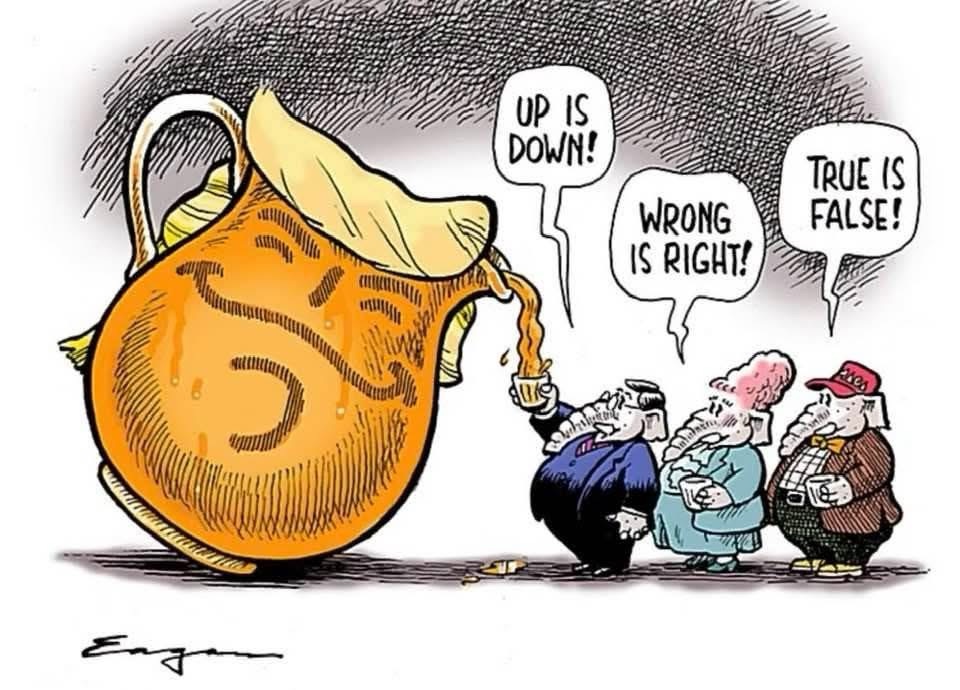
Tom Toles Editorial Cartoon
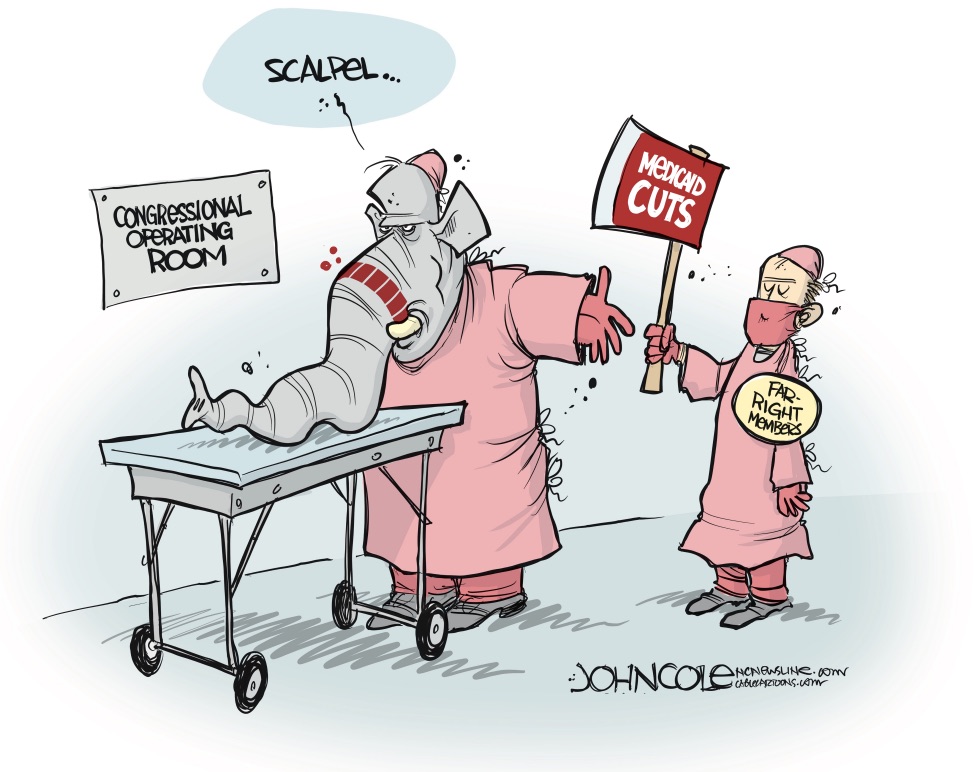
Also, lucky us, Medicare and Medicaid modernization with be the goal of TV snake oil salesman Dr. Mehmet Oz as he takes over both. This is also from the MEDTECHDIVE.
Dr. Mehmet Oz was sworn in as the Centers for Medicare and Medicaid Services administrator on April 18, cementing his role as head of the agency that provides insurance coverage to millions of Americans.
During a ceremony at the Oval Office, Oz, a physician and former TV personality, said he wanted to “save” the nation’s public health programs and focus on reducing chronic disease, “modernizing” Medicare and Medicaid, and targeting fraud, waste and abuse in government insurance offerings.
President Donald Trump reiterated that Republicans wouldn’t cut Medicare or Medicaid. “Just as I promised, there will be no cuts. We’re not going to have any cuts. We’re going to have only help,” he said during the ceremony.
As I’ve spent most of this year being poked, prodded, pricked, shocked, MRI’d, Ultrasound’d, and EMG’d, I sure don’t feel good about any of this. I fret about someone disappearing all of that, plus my Social Security.
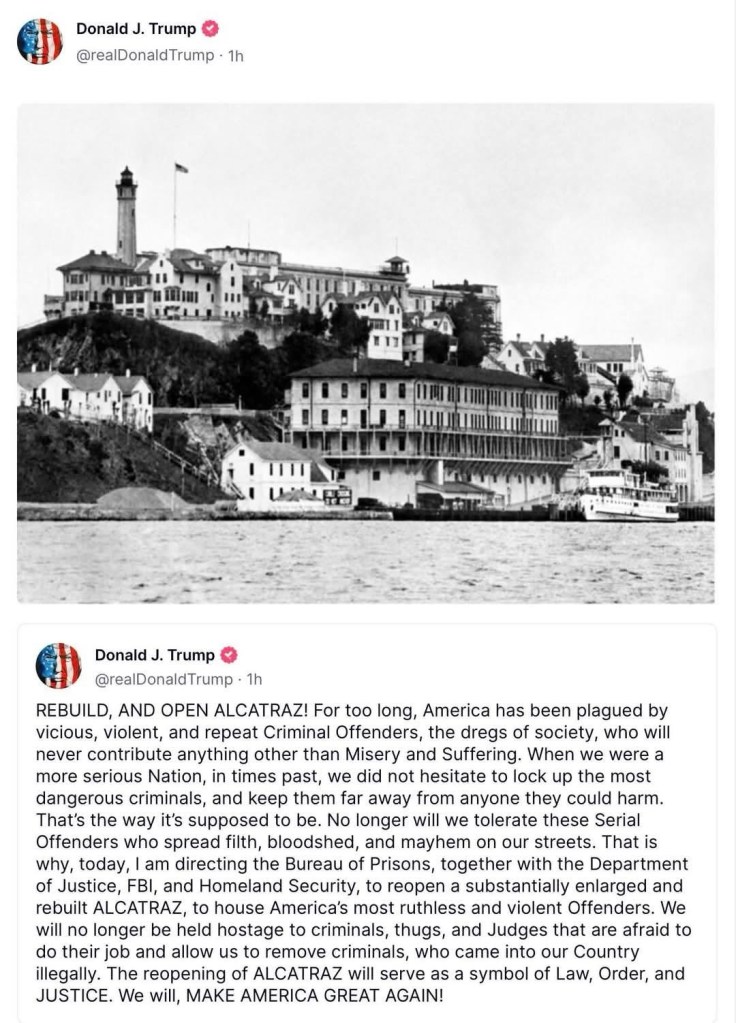
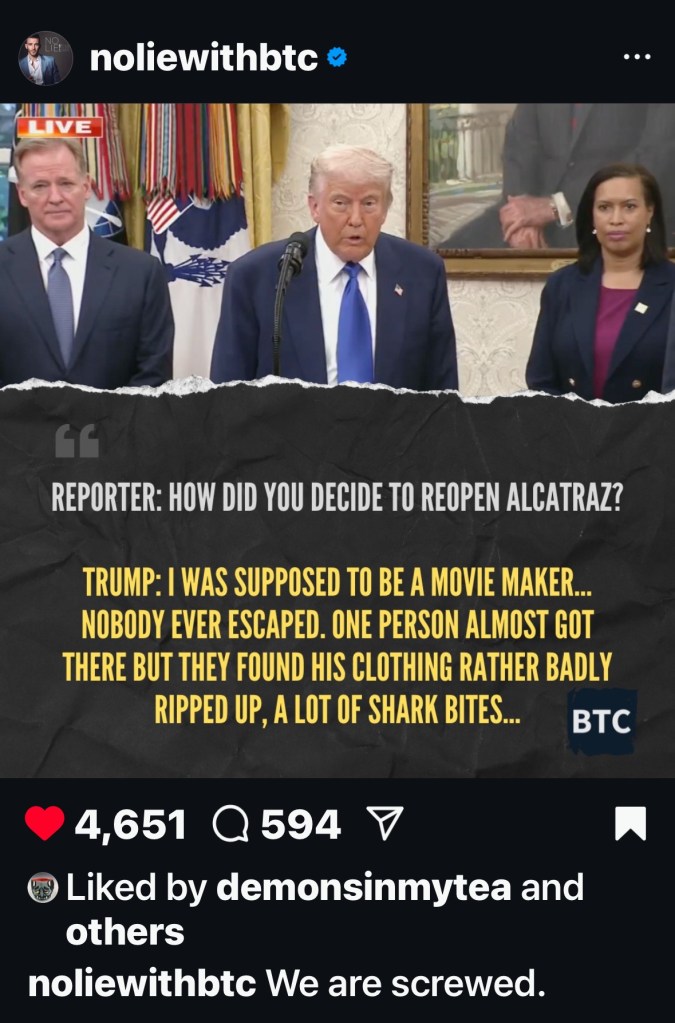
Speaking of crazy policy, I happened on this last night. This is from NBC News. “Trump says he will reopen ‘enlarged and rebuilt’ Alcatraz prison. Alcatraz Island hasn’t been used as a federal penitentiary since 1963. It had a capacity of roughly 300 people.” I’m actually thinking this is another one of his threats to Judges since it’s way too small to hold many prisoners. I suppose that’s one way to destroy a national park and the US Constitution in one sweep.
Alcatraz Island, a former military fortress and prison in San Francisco Bay, was turned into a federal penitentiary in 1934 and over the course of 29 years housed more than 1,500 people “deemed difficult to incarcerate elsewhere in the federal prison system,” according to the National Park Service.
According to aNational Park Service study, it was initially deemed unfit to serve as a federal institution because of its small size, isolated location and lack of fresh water. However, Sanford Bates, the director of the Bureau of Prisons in 1933,later found it “an ideal place of confinement for about 200 of the most desperate or irredeemable types.” It was formally opened as a federal penitentiary the next year.
Trump suggested in his post that he’d like to restore the facility to that purpose.
This is from Ed Mazza writing for HuffPo. This sounds a lot like his real estate deals to me. “‘Clearly Unhinged’: Critics Sink Trump’s ‘Asinine’ Plan To Reopen Alcatraz Prison. The president wants to turn the site back into a penitentiary despite the fact that it would cost a fortune.”
Alcatraz is currently part of Golden Gate National Recreation Area and has about 1.2 million visitors per year. Those who tour the island in San Francisco Bay see facilities in various states of decay. The prison was crumbling even as it was still in operation, and the high cost of maintaining it was a key reason it was shuttered in 1963.
Given those realities, restoring Alcatraz and then expanding it, as Trump called for on his Truth Social platform, would likely cost a fortune ― and then another pile of cash would be needed to maintain it.
Reopening it as a prison would also mean the loss of the tourism revenue the island currently generates as well as a loss of habitat for its thriving bird population.
The president, however, said Alcatraz’s return to use as a prison would “serve as a symbol of Law, Order, and JUSTICE.”
His critics fired back that the idea would be an expensive boondoggle:
President Donald Trump is opening a new salvo in his tariff war, targeting films made outside the U.S.
In a post Sunday night on his Truth Social platform, Trump said he has authorized the Department of Commerce and the Office of the U.S. Trade Representative to slap a 100% tariff “on any and all Movies coming into our Country that are produced in Foreign Lands.”
“The Movie Industry in America is DYING a very fast death,” he wrote, complaining that other countries “are offering all sorts of incentives to draw” filmmakers and studios away from the U.S. “This is a concerted effort by other Nations and, therefore, a National Security threat. It is, in addition to everything else, messaging and propaganda!”
The White House said Monday that it was figuring out how to comply with the president’s wishes.
“Although no final decisions on foreign film tariffs have been made, the Administration is exploring all options to deliver on President Trump’s directive to safeguard our country’s national and economic security while Making Hollywood Great Again,” said spokesperson Kush Desai.
It’s common for both large and small films to include production in the U.S. and in other countries. Big-budget movies like the upcoming “Mission: Impossible — The Final Reckoning,” for instance, are shot around the world.
On Sunday, NBC News aired an interview with Trump in which he expressed ignorance of the black-letter standards of justice established in the country’s founding document.
“The Constitution says every person, citizens and noncitizens, deserve due process,” “Meet the Press” host Kristen Welker pointed out. So why not bring Abrego García back to the U.S. and use legal avenues to potentially remove him?
“Well,” Trump replied, “I’ll leave that to the lawyers, and I’ll leave that to the attorney general of the United States.”
Welker noted that Secretary of State Marco Rubio had admitted that even immigrants had due process rights. Trump again downplayed the idea, saying that holding hearings would mean “we’d have to have a million or 2 million or 3 million trials.” This isn’t as big a hurdle as it may sound. In fiscal 2024, there were more than 900,000 immigration hearings completed. So far in fiscal 2025, there have been more than 460,000. More could be cleared if Trump hadn’t moved to fire a number of immigration judges.
Finally, Welker noted that Trump didn’t really have a choice.
“Even given those numbers that you’re talking about,” she asked, “don’t you need to uphold the Constitution of the United States as president?”
“I don’t know,” Trump replied. “I have to respond by saying, again, I have brilliant lawyers that work for me, and they are going to obviously follow what the Supreme Court said.”
You may recall that, in January, Trump put his hand on a Bible and affirmed to Chief Justice John G. Roberts Jr. that he would “faithfully execute” his role as president and to the best of his “ability, preserve, protect and defend the Constitution of the United States.” But this has never been an oath he has appeared to actually take to heart.
Trump’s dismissiveness of the Constitution has manifested itself in a lot of ways. You may recall his lack of interest in leaving office when he lost the 2020 presidential election. You may be aware that he has readily, if not giddily, accepted personal income from foreign governments while serving as president. He views the law as a cudgel, not a constraint, issuing pardons for variouspolitical allies ensnared in criminal activity while directing federal law enforcement to fish for potential criminal charges against those who work against his political power.
At its heart, Trump’s approach to his role is rooted in his parochial sense of patriotism. He didn’t come to the White House after having worked his way up through lower offices, building consensus and working to appeal to a broad range of constituents. He had no appreciation for how legislation is crafted or for the hard work of reaching compromise. Perhaps most importantly, he has never indicated any robust understanding of American history or of the debates and agreements that led to the country’s creation.
In 2011, for example, Trump was asked by Stephen Colbert if he knew what the 13 stripes on the American flag represent. He said he didn’t.
More recently, Trump was asked by ABC News journalist Terry Moran what the Declaration of Independence (a copy of which the president recently had installed in the Oval Office) means to him personally.
“It means exactly what it says. It’s a declaration,” Trump replied. “A declaration of unity and love and respect, and it means a lot. And it’s something very special to our country.”
It is special to the country, of course, but not because it is a declaration of “love,” much less “unity.” As the name would suggest, it is precisely the opposite.
Trump doesn’t have the Declaration of Independence in the Oval Office because he wants its message to serve as a guidepost for his administration. He doesn’t even appear to know its message. He has it there because it is A Famous American Thing, another decoration in the newly gilded room meant to send a message about his power, not the nation’s.
Dan Froomkin–writing for Press Watch–suggests we need to keep track of all Trump’s oddities. “We need a way to aggregate what Donald Trump is doing to this country.”
News organizations, along with good-government groups and other interested parties, are doing a commendable job of chronicling the damage the Trump regime is doing to the government, the country, and the world.
But none of them, individually, is in a position to give the public the full picture. It’s just too much.
This is a feature of Trump’s strategy of “flooding the zone.” No one entity can possibly keep up.
And as we go forward, how can any one organization keep tabs on all the fallout? It’s not possible.
What we need is a central repository of information so that the full extent of the damage can be found in one place and assessed by the public — and so that there’s a comprehensive record of what needs to be fixed and restored when the time comes to do so. (Sort of like a truth commission, but in real time.)
To aggregate all the existing information, organize it, and collect new data, we need a place, a process, and people.
It makes sense to me since Trump seems to want to undocument more than just people. Who knows how many things Doge has destroyed in the wake of having all-access to every government database and more. He’s disappearing people, children, scientific research, due process, and entire agencies and programs.
This is a site that I was just sent to by a Blue Sky Link. This DNYUZ link has an article by the NYT’s by Jack Goldsmith of Lawfare fame and Harvard Law School. This has been an issue for many people in modern times, with both parties playing the role of enablers. “It’s Not Just Trump. The Presidency Has Become Too Powerful.” So, I need to put this example of both siderisms into perspective. “Mr. Goldsmith, a former assistant attorney general under George W. Bush, is an author, with Bob Bauer, of a newsletter about presidential and executive power.”
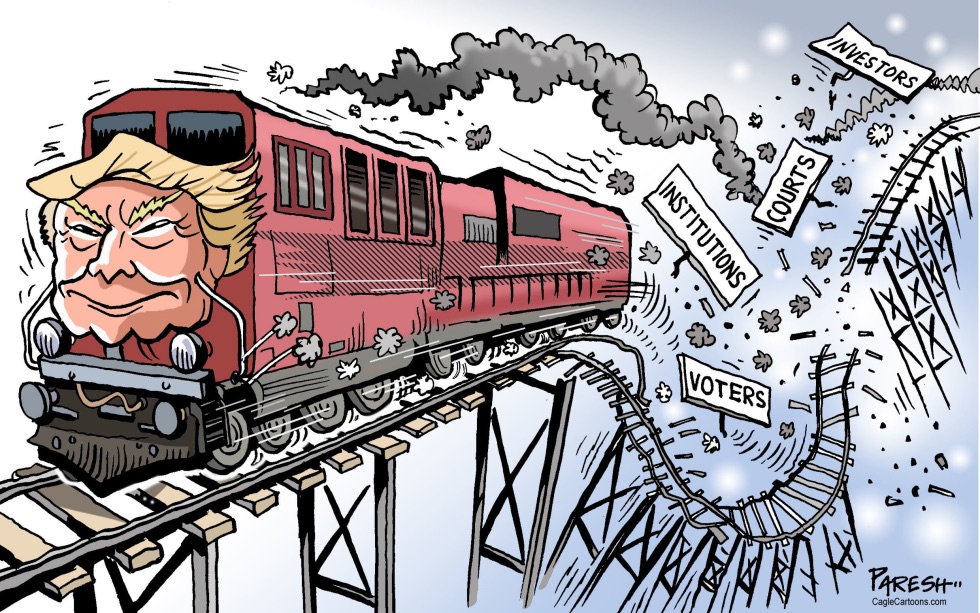
Donald Trump’s wrecking-ball second term has revealed the full latent power of the presidency. His administration has done this most clearly in its comprehensive elimination of legal and norm-based checks inside the executive branch, its systematic disrespect of judicial process, its extortionate abuse of government power to crush foes and its destructive rhetoric and nastiness.
Yet it is important to recognize that many of Mr. Trump’s efforts to expand the powers of the office build substantially on the excesses of recent presidencies. The overall pattern of presidential action over the past few decades reveals an escalation of power grabs that put the country on a terrible course even before Mr. Trump took office again.
The presidency needs reform, and Americans must consider ways — however implausible they may seem in the context of today’s politics — to get there.
Expansionist presidential acts go all the way back to George Washington, who invited charges of monarchism with his use of the Constitution’s broad yet undefined “executive Power.” From there the presidency, with its loose design, grew and grew, with major surges during the Civil War and New Deal era. That trend continued through the 20th century, aided by the rise of mass communication, substantial delegations of power from Congress and an approving Supreme Court.
Mr. Trump’s radical second presidency is, to an underappreciated extent, operating from a playbook devised by his modern predecessors.
His use of emergency powers to impose broad tariffs is similar to a move made in 1971 by President Richard Nixon. His claims of untouchable national security authority echo arguments made after the Sept. 11 attacks by the George W. Bush administration, in which I served.
Presidents for decades have issued pardons as political or personal favors or to avoid personal legal jeopardy. Mr. Trump took this practice to newextremes in his first term, and then President Joe Biden pre-emptively pardoned his son and family as well as members of his administration and Congress, in a similar pattern. Mr. Trump in his second term has already issued many self-serving pardons.
Mr. Trump’s executive-order program is an heir of the strategy used by President Barack Obama for large-scale and sometimes legally dubious policy initiatives, including some (involving immigration) where Mr. Obama had earlier admitted he lacked authority to act. Mr. Biden also confessed a lack of power but then acted unilaterally in seeking to forgive student loans.
Mr. Trump has disregarded statutory restrictions to fire officials in independent agencies including the Federal Trade Commission, the National Labor Relations Board and the Merit Systems Protection Board. But in 2021, Mr. Biden extended the Supreme Court’s unitaryexecutive case law to fire the statutorily protected commissioner of the Social Security Administration. Mr. Biden was “the first unitary executive,” noted the legal writer Mark Joseph Stern in 2021.
Mr. Biden also purged the executive branch of Trump holdover officials who were not protected by statute, including members of arts and honorary institutions, the Administrative Conference of the United States and the Department of Homeland Security Advisory Council. The Biden administration’s defense of these firings resulted in judicialprecedents that Mr. Trump is now wielding to clean house on a broader scale.
The Trump administration has also built on past presidencies in not enforcing federal law — for example, in letting TikTok live on despite a congressional ban. This practice finds its modern roots in the Obama administration, which asserted broad nonenforcement discretion in high-profile cases involving immigration, marijuana and Obamacare, in effect changing the meaning of those laws.
Something similar has happened with spending. As one recent paper noted, “The past several presidents have all taken significant unilateral actions intruding on Congress’s control over federal spending.” The Trump 2.0 version greatly enlarges this unilateralist pattern.
There are a lot of examples here, and it’s worth thinking about. The Unitary Executive Theory has been around for a while, and since the Reagan years, it has picked up steam in the Supreme Court. Here is a recent article from Democracy Docket explaining the theory and relating to it to Yam Tits. The analysis is written by Jacob Knutsen. “What Is Unitary Executive Theory? How is Trump Using It to Push His Agenda?”
Since taking office, President Donald Trump has executed a whirlwind of dismissals across the federal government that violated federal statutes and decreed numerous executive orders, including one that blatantly defied the plain language of the Constitution.
Behind the seemingly scatter-shot opening acts of his second administration, legal analysts see a common goal: to test a once-fringe legal theory which asserts that the president has unlimited power to control the actions of the four million people who make up the executive branch.
If courts — specifically the Republican-appointed majority of the Supreme Court — uphold arguments based on the so-called “unitary executive theory,” it would give Trump and subsequent presidents unprecedented power to remove and replace any federal employee and impose their will on every decision in every agency.
Rulings in favor of the Trump administration would also further jeopardize the independence of key regulatory agencies that are susceptible to conflicts of interest and political interference, like the Federal Election Commission, which oversees federal elections and campaign finance laws.
Trump and his administration have furthered the theory by repeatedly invoking Article II of the Constitution, which vests executive power in the president, to justify the recent dismissals of federal officials. They have framed the article as allowing the president to use the whole of the executive branch for his political ends.
For example, the White House Feb. 18 invoked the article to rationalize an executive order signed that same day that asserted the president’s authority over almost all regulatory agencies that were created by Congress to act independently, or semi-independently, from the president.
Frank Bowman, a scholar of constitutional and criminal law at the University of Missouri School of Law, told Democracy Docket he believes the executive order is a step toward “an open declaration of dictatorship.”
“In essence, what he’s saying is, ‘I am the law. My will is the law. My view of what the law is the only view that can ever be expressed,’” Bowman said.
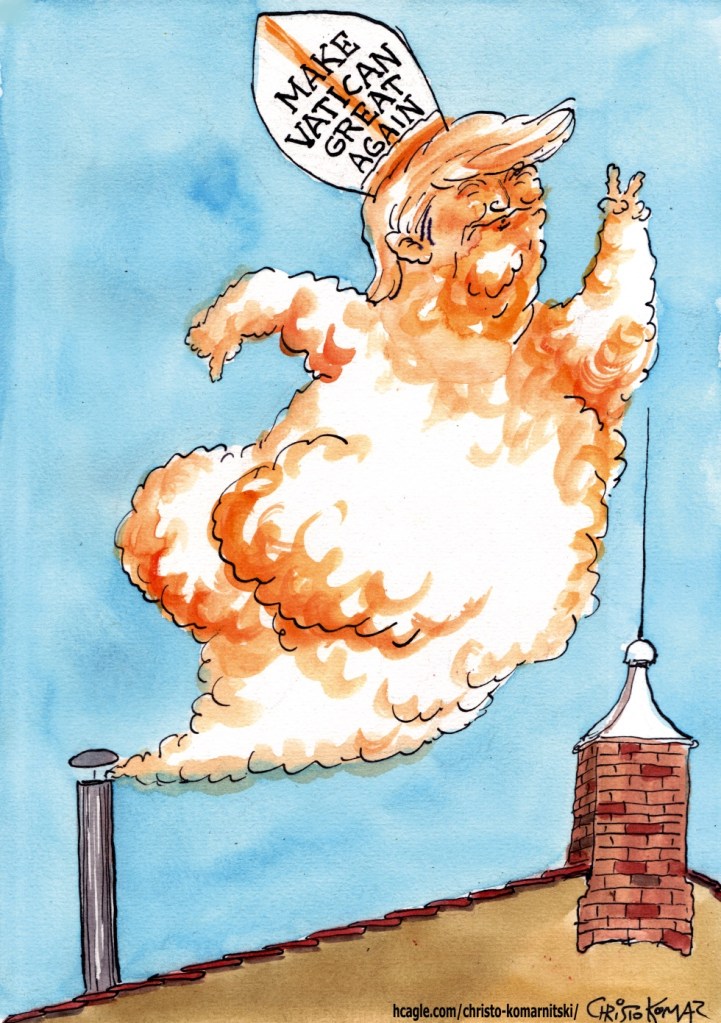
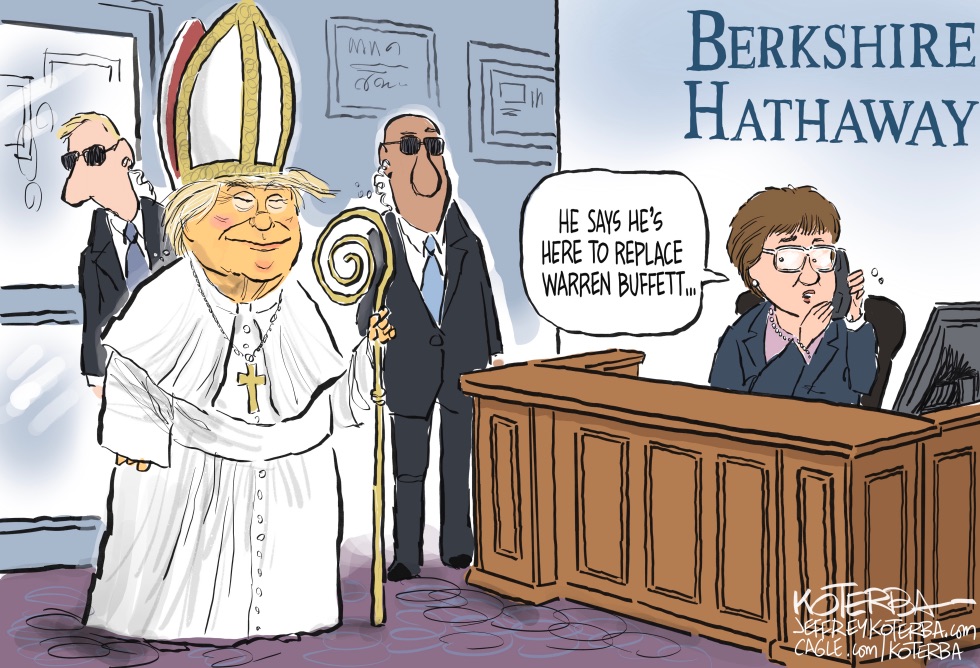
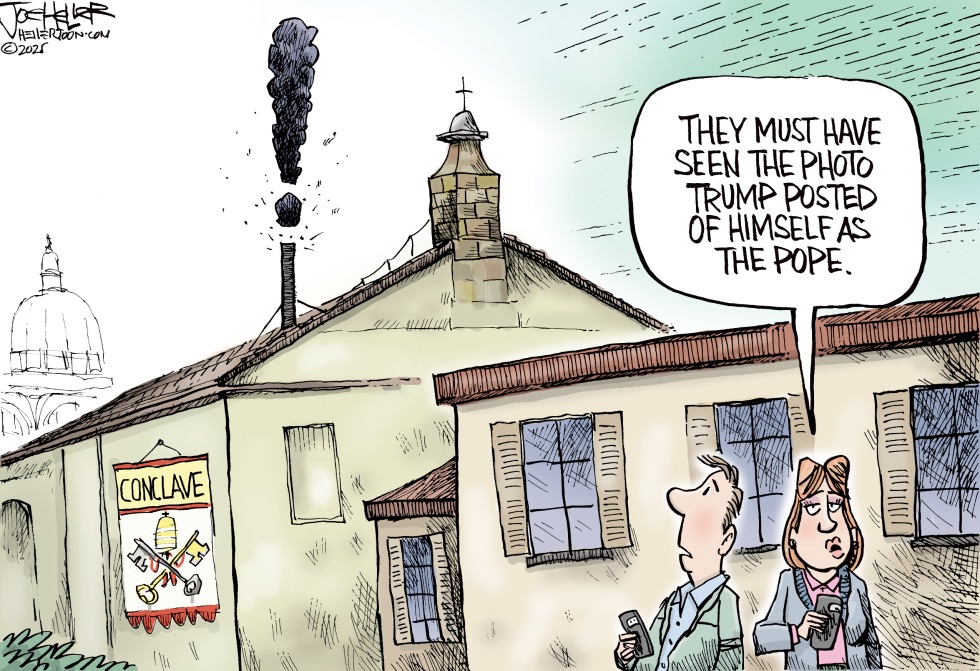
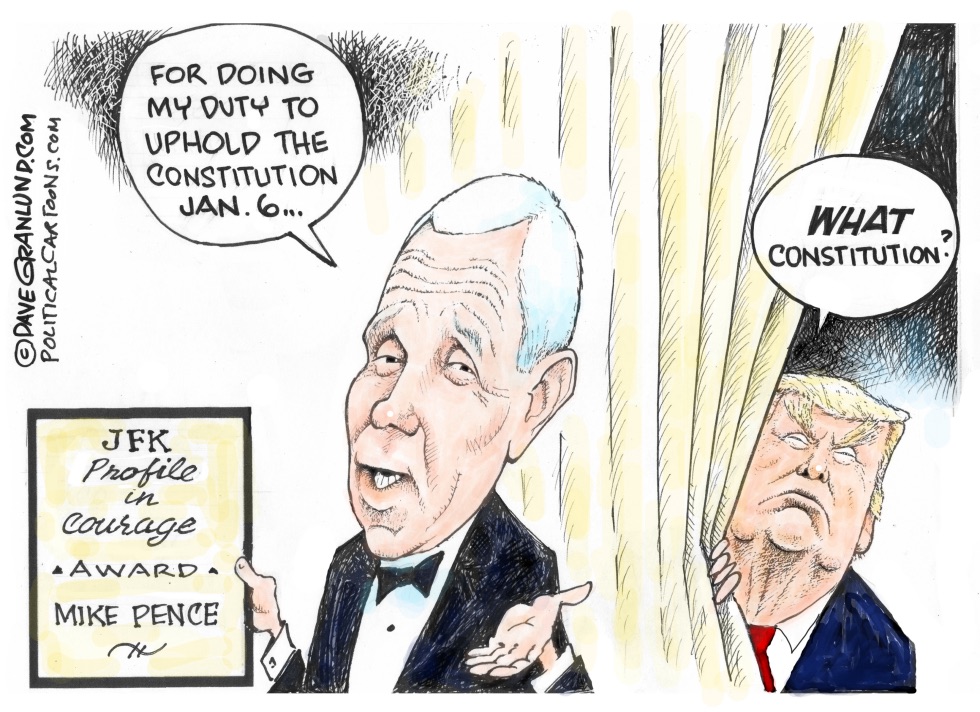
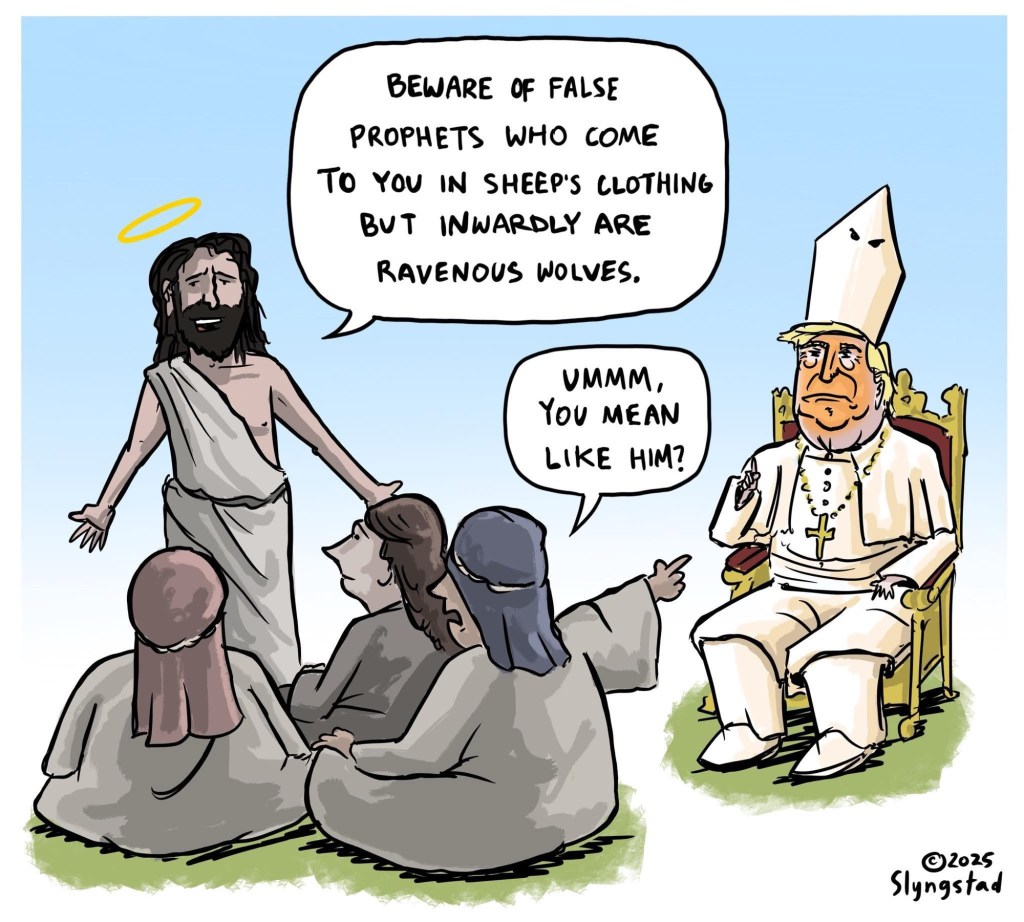
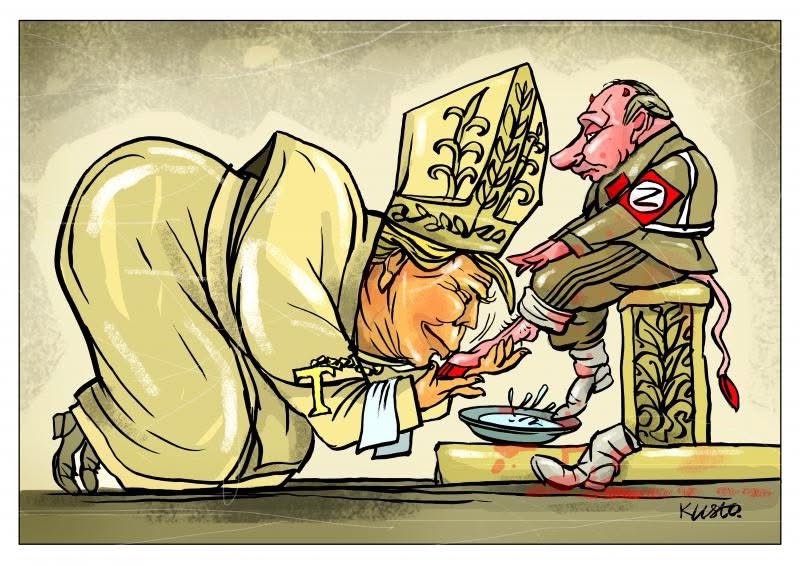
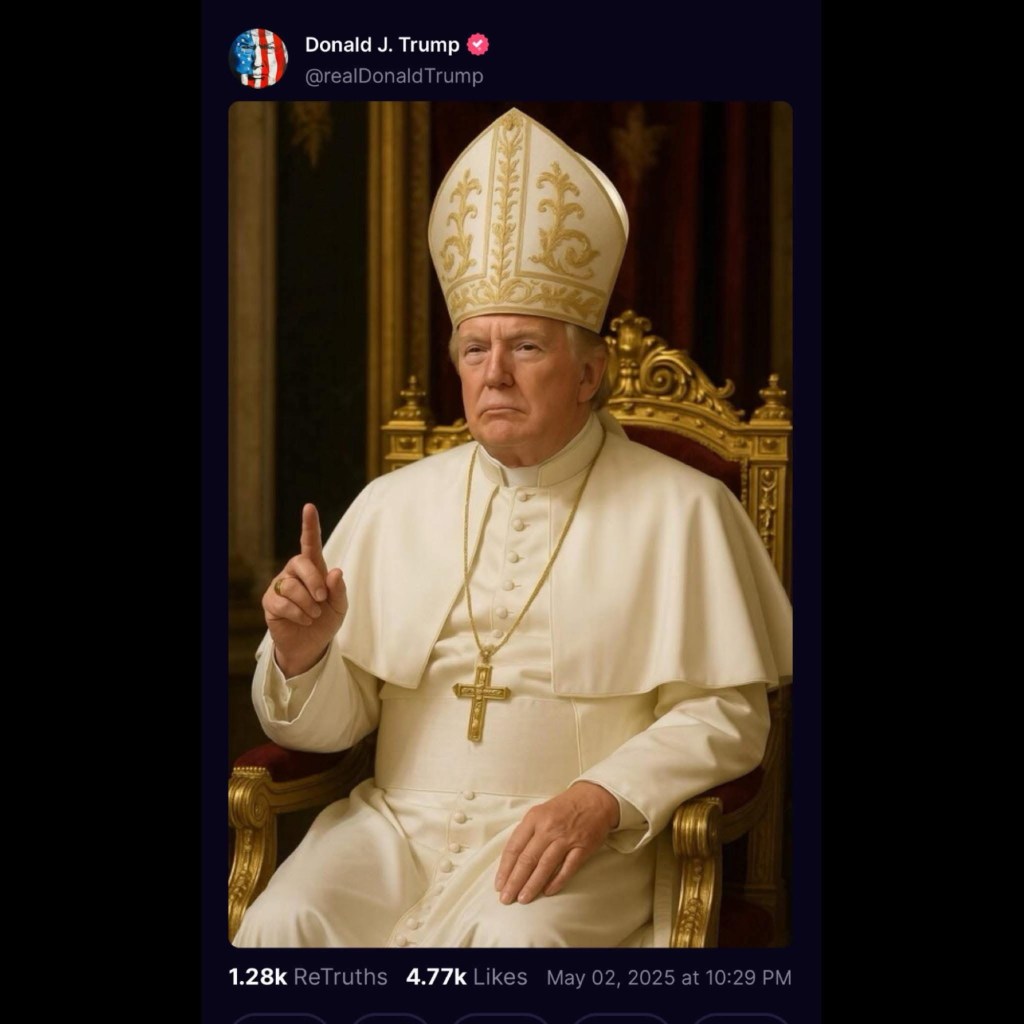
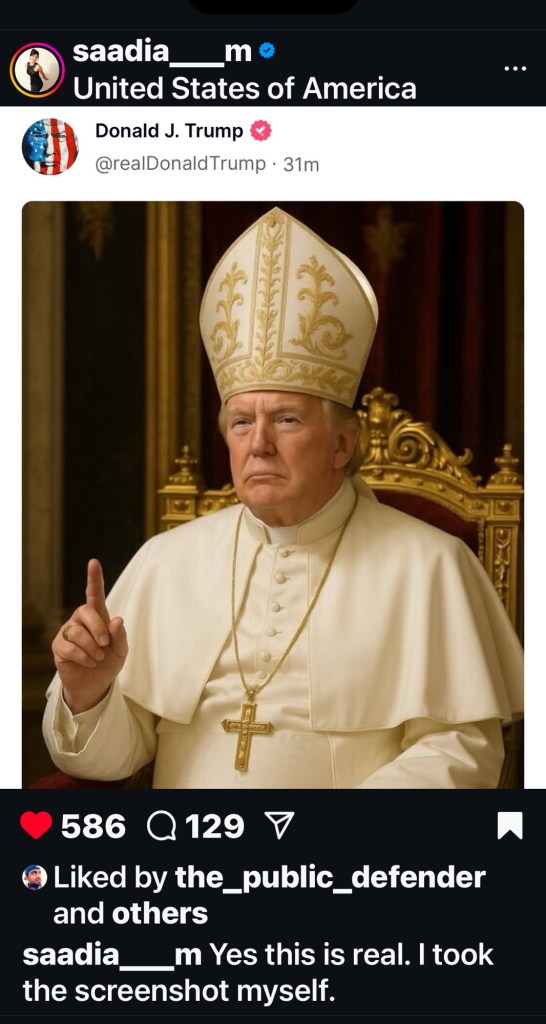
I think this take on executive power is one we should get more familiar with since it’s really taken a powerful rise. The Center for American Progress features an analysis in its series on Project 2025. This one was written back in October.”Project 2025 Would Destroy the U.S. System of Checks and Balances and Create an Imperial Presidency. Far-right extremists have a plan to shatter democracy’s guardrails, giving presidents almost unlimited power to implement policies that will hurt everyday Americans and strip them of fundamental rights.” It is an imperative read. Trump knows that he can be both pope and king.
Project 2025 takes an absolutist view of presidential authority
To wholly reshape government in ways that most Americans would think is impossible, the Project 2025 blueprint anchors itself in the “unitary executive theory.”22 This radical governing philosophy, which contravenes the traditional separation of powers, vests presidents with almost complete control over the federal bureaucracy, including congressionally designated independent agencies or the DOJ and the FBI. The unitary executive theory is designed to sharply diminish Congress’ imperative role to act as a check and balance on the executive branch with tools such as setting up independent agencies to make expert decisions and by limiting presidents’ ability to fire career civil servants for purely political purposes.
The road map to autocracy presented in Project 2025 extends far beyond the unitary executive theory first promoted by President Ronald Reagan, and later espoused by Vice President Dick Cheney, largely designed to implement a deregulatory, corporatist agenda.23 Instead, as discussed further below, Project 2025 presents a maximalist version that does not nibble around the edges but aims to thoroughly demolish the traditional guardrails that allow Congress an equal say in how democracy functions or what policies are implemented. One noted expert at the conservative think tank American Enterprise Institute, Philip Wallach, said, “Some of these visions … start to just bleed into some kind of authoritarian fantasies where the president won the election, so he’s in charge, so everyone has to do what he says—and that’s just not the system the [sic] government we live under.”24
If Congress is robbed of its imperative role as a check and balance on a president’s power, and the judicial branch is willing to bestow a president with almost unlimited authority, autocracy results. And presidents become strongman rulers—free to choose which laws to enforce, which long-standing norms to jettison, and how to impose their will on every executive branch department and agency.
Well, all these pithy reads should keep you busy for the day. I hope your week goes well. I’ve got 2 doctors’ appointments, but gladly no more procedures. And I’d like just to add if they come for professors, that I’d rather be in the gulag that holds the country’s political cartoonists. To think, I used to just use wonderful paintings.
Happy Cinco de Mayo to all the wonderful folks of Mexican descent and to those of us who just enjoy the holiday!
What’s on your Reading and Blogging list today?
Did you like this post? Please share it with your friends:
Personally I would rather have a literal monster…with shit crawling out from its eyes, then the fucking monstrosity we currently have in the White House.
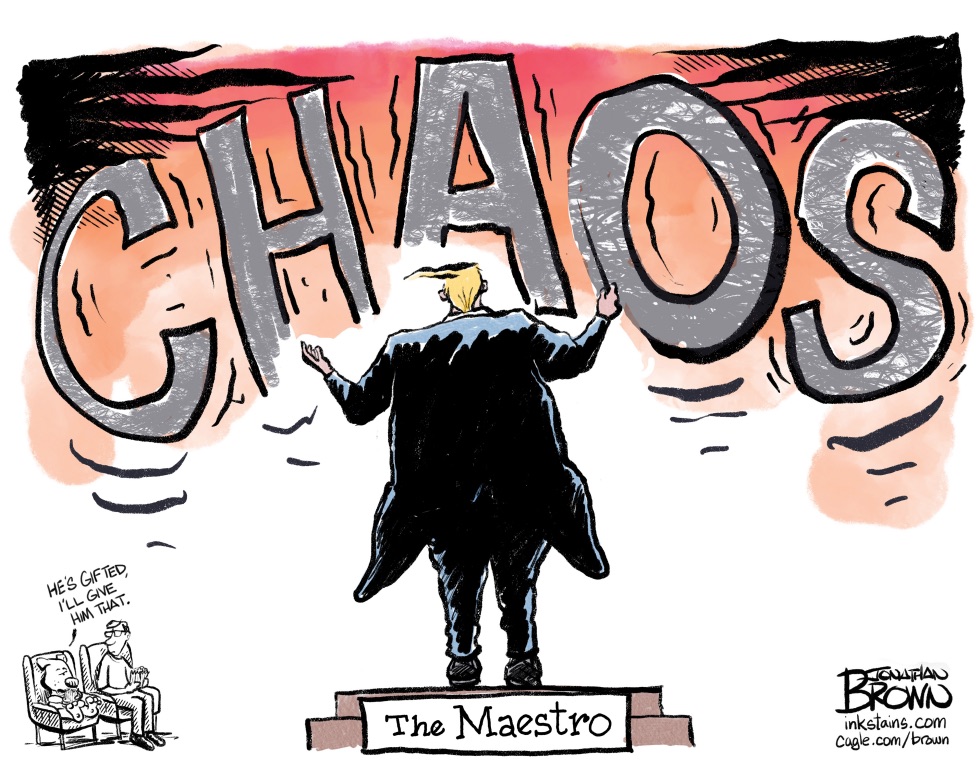
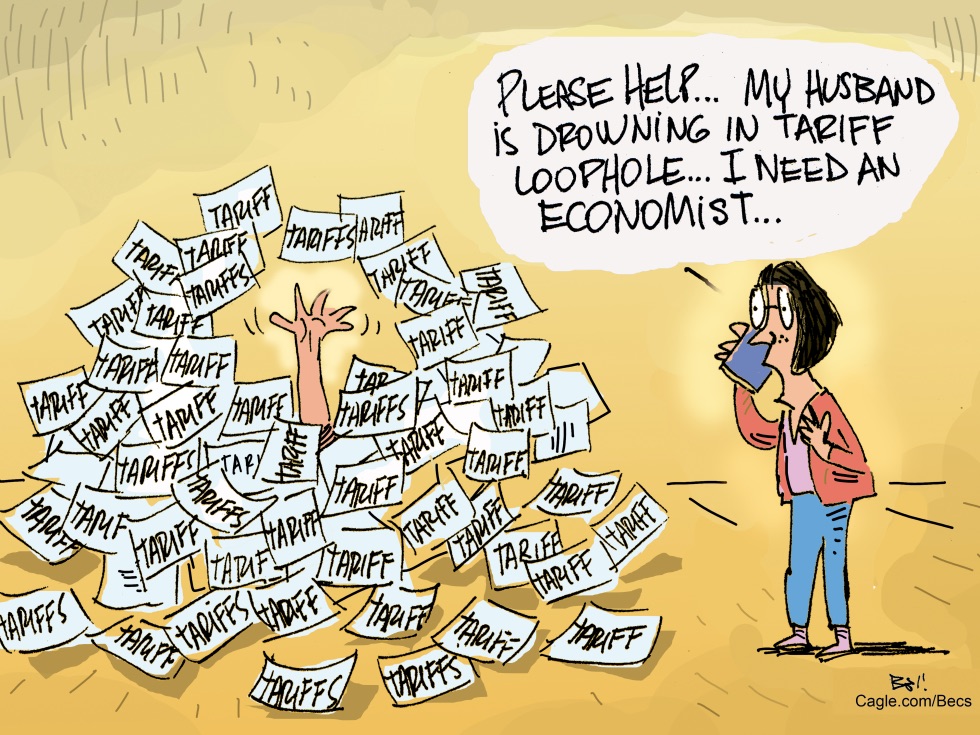
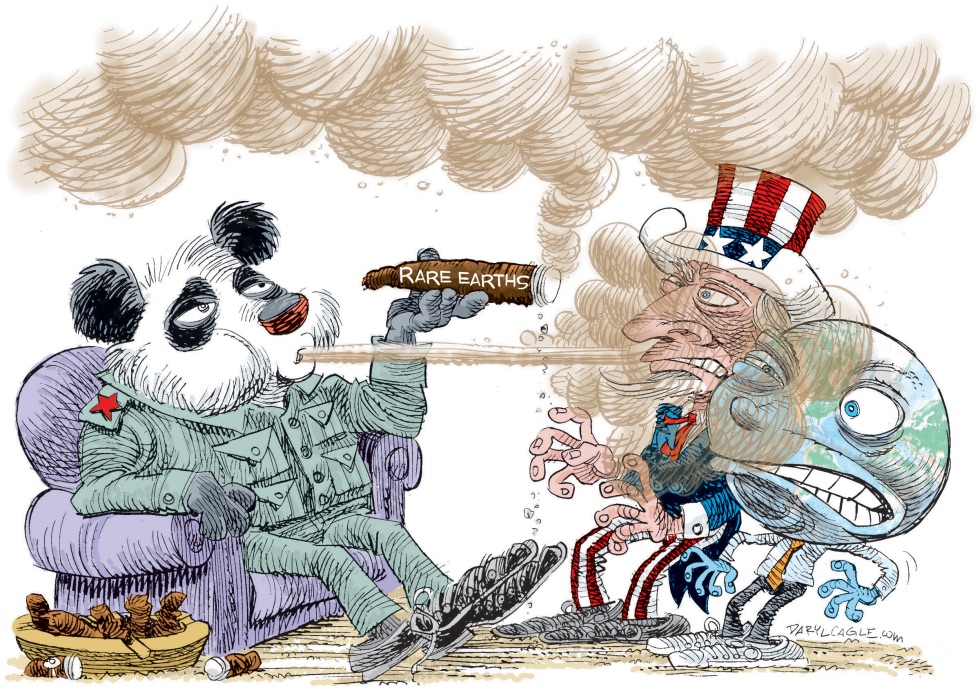
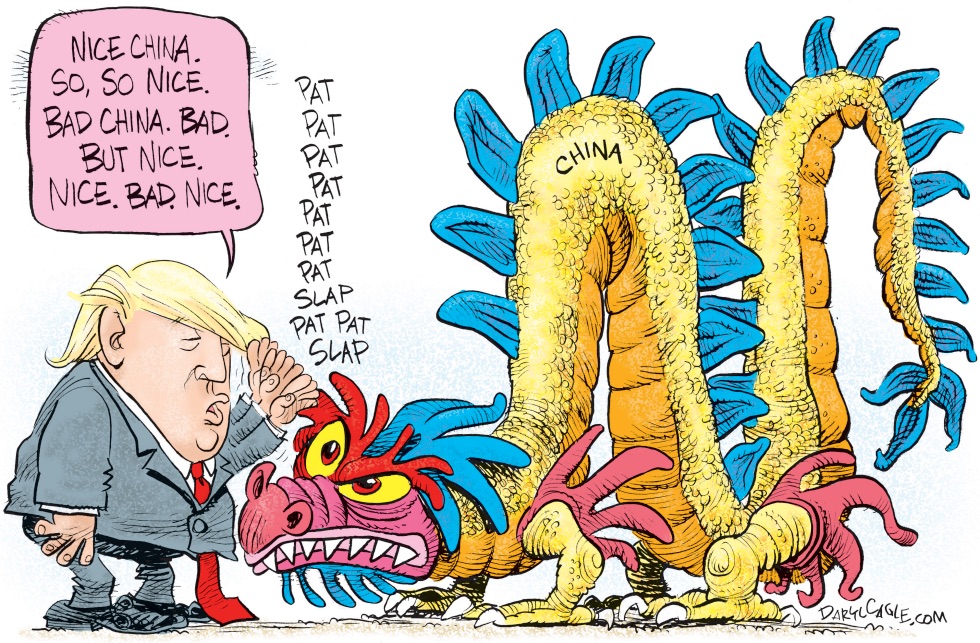
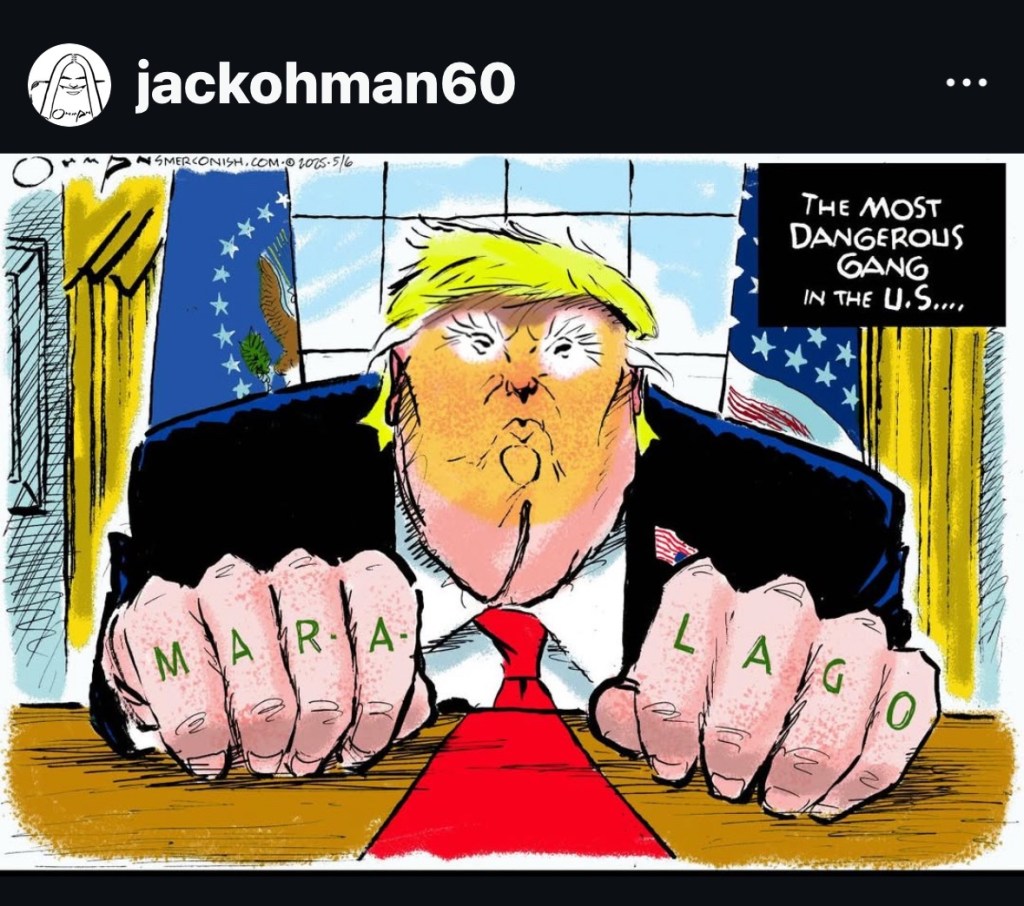
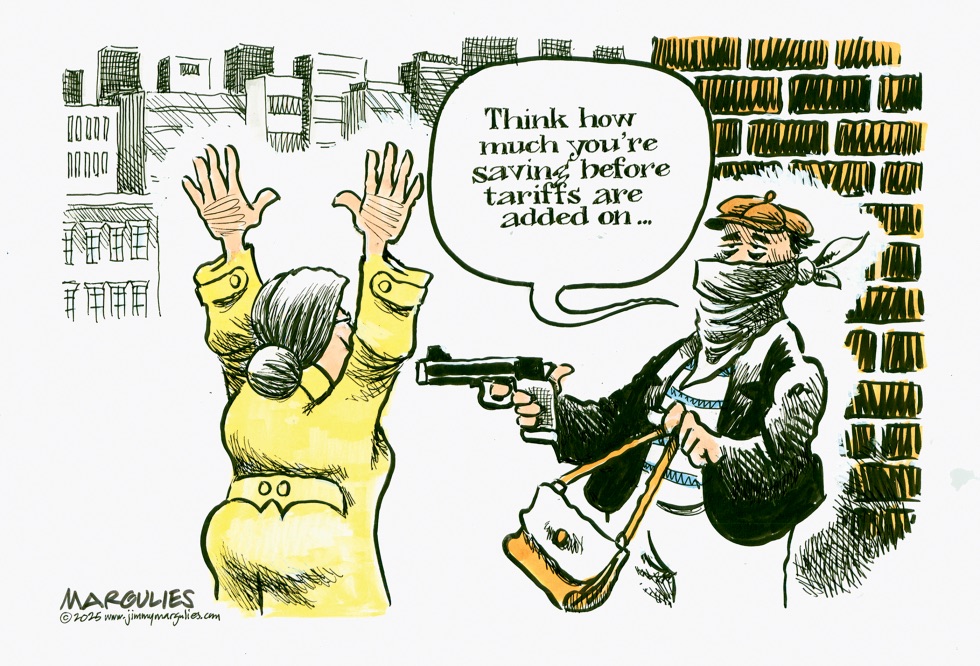
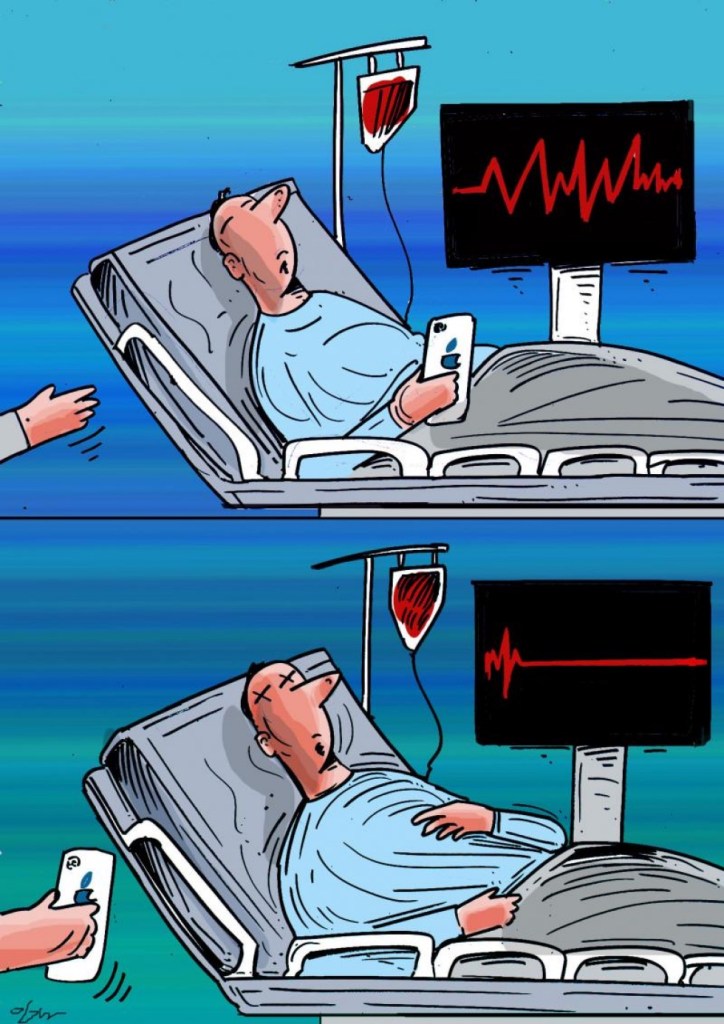
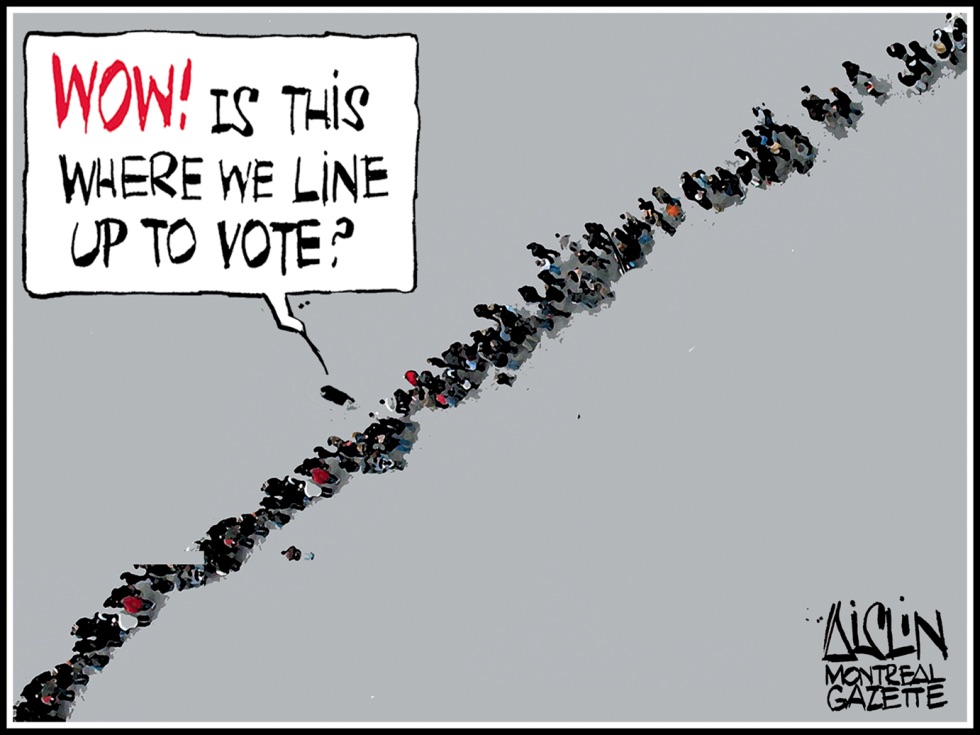
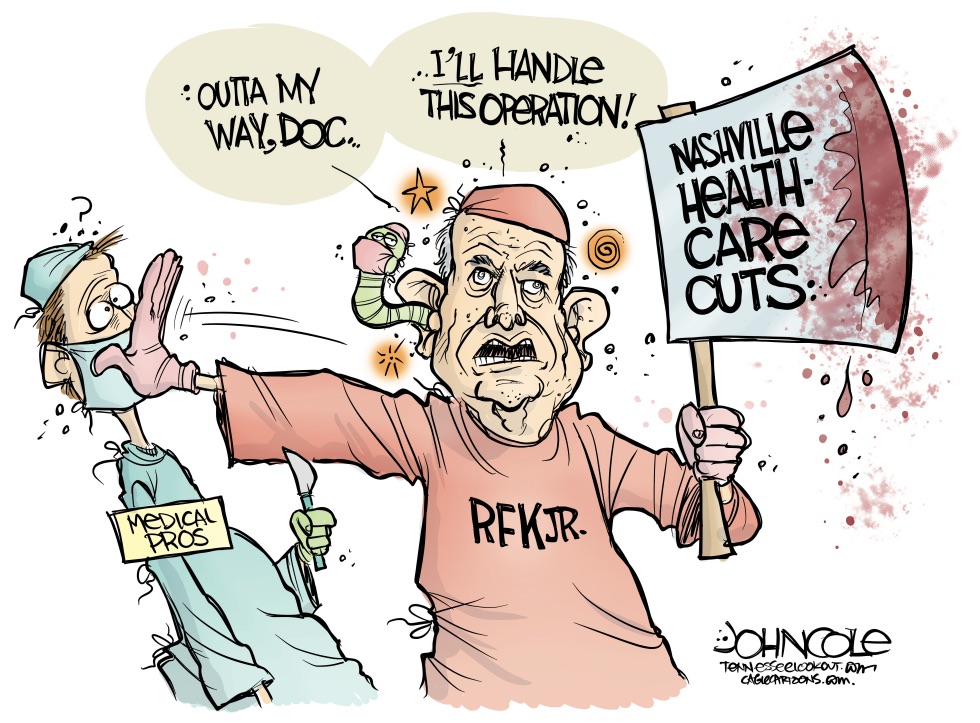
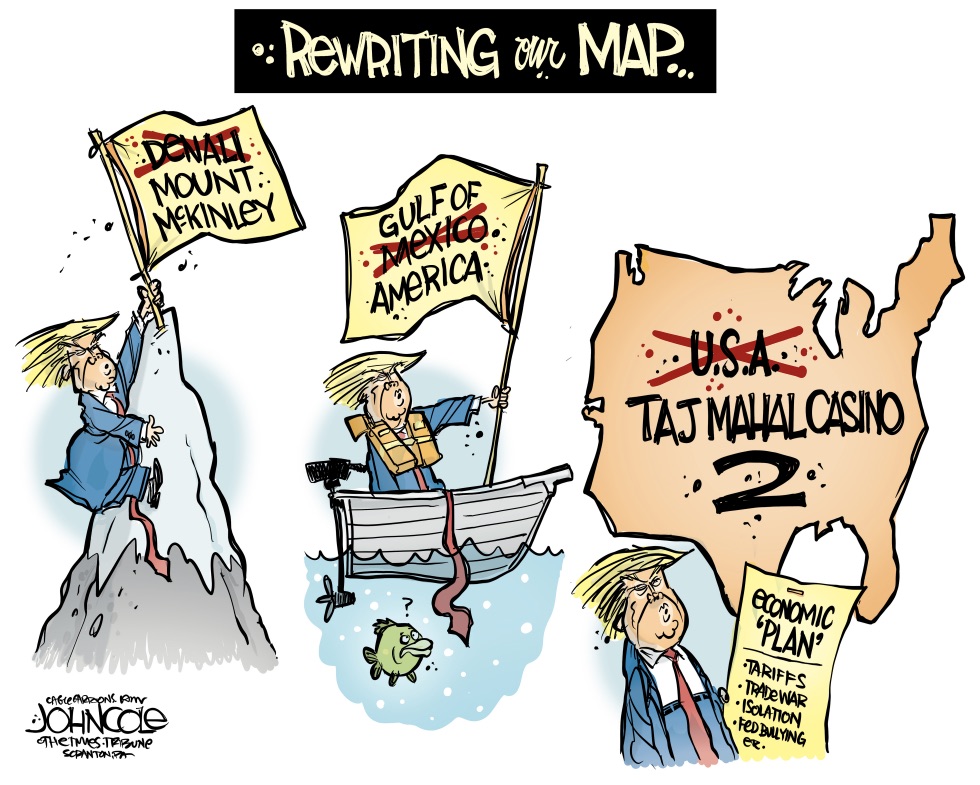
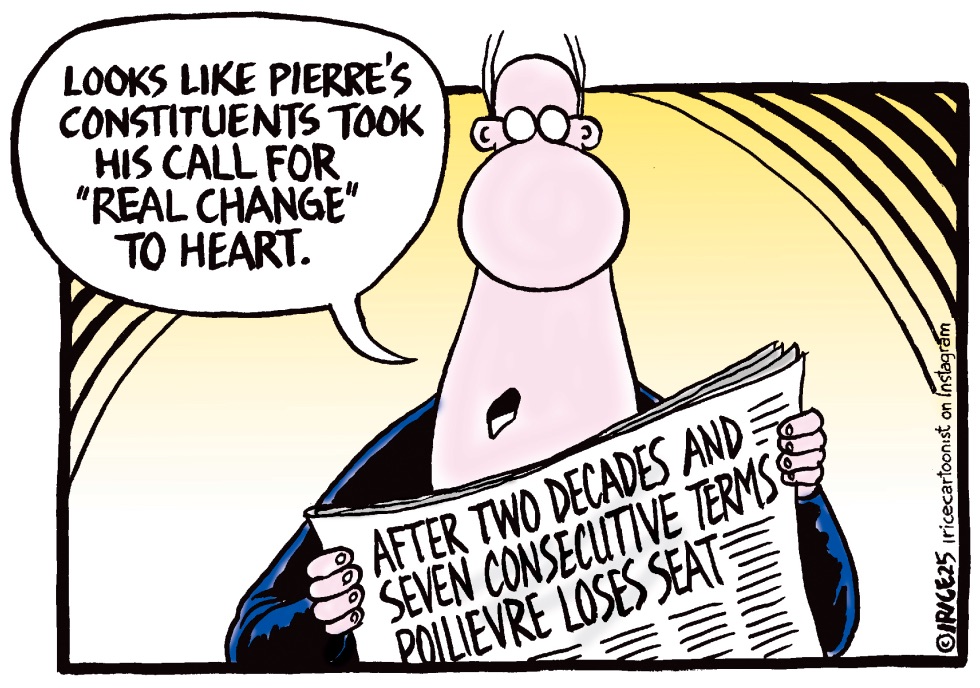
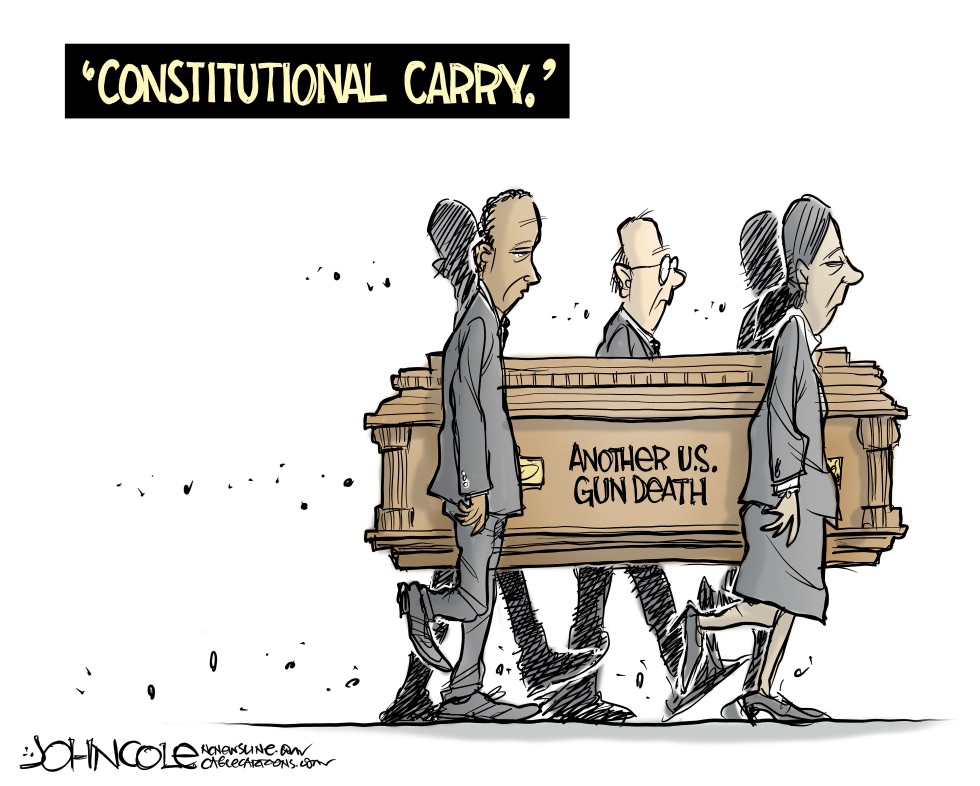
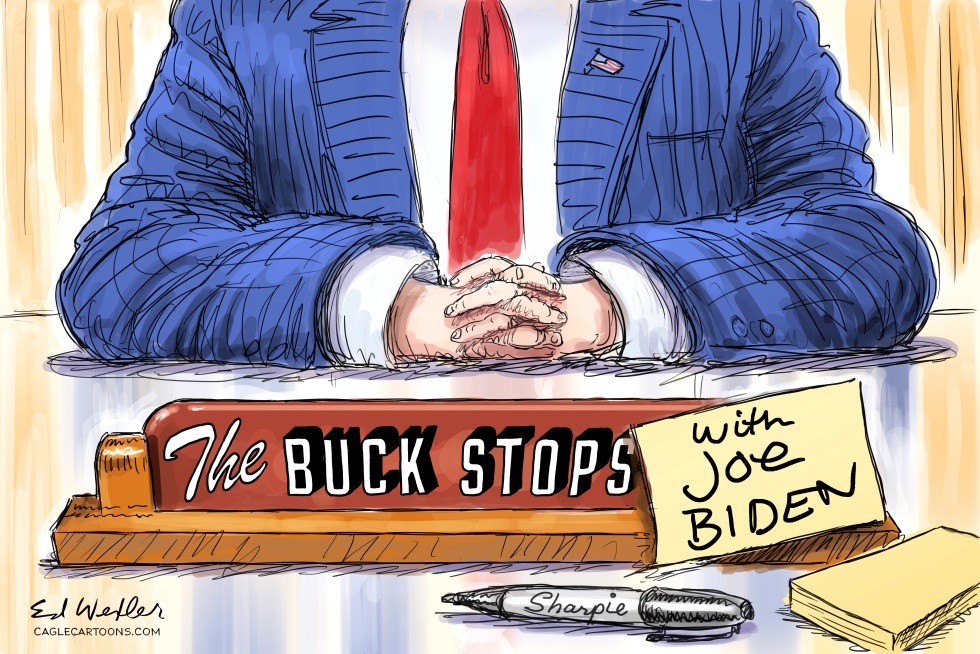
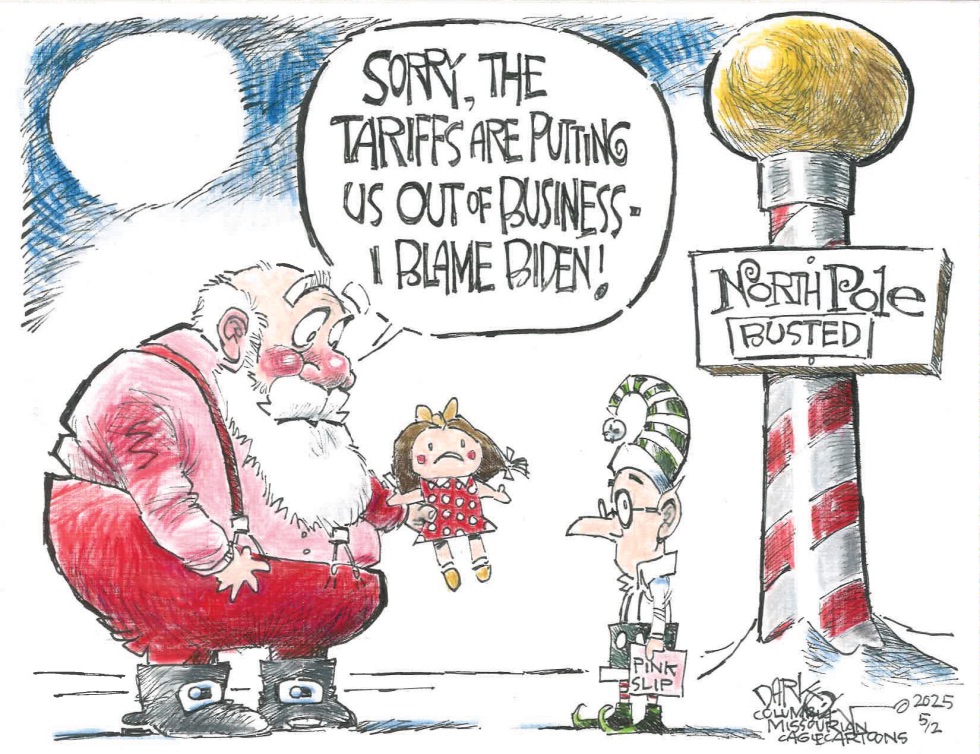
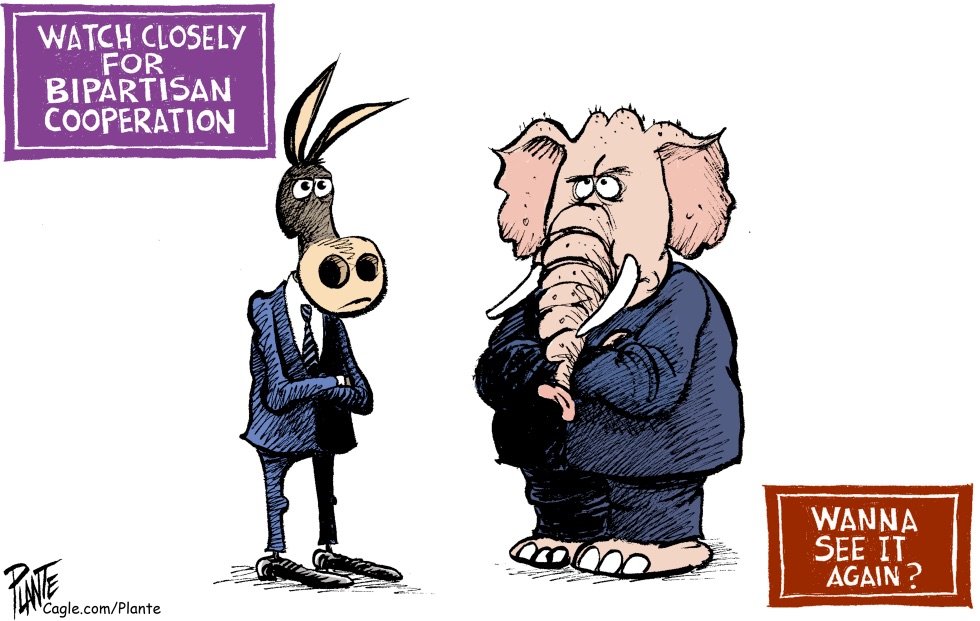
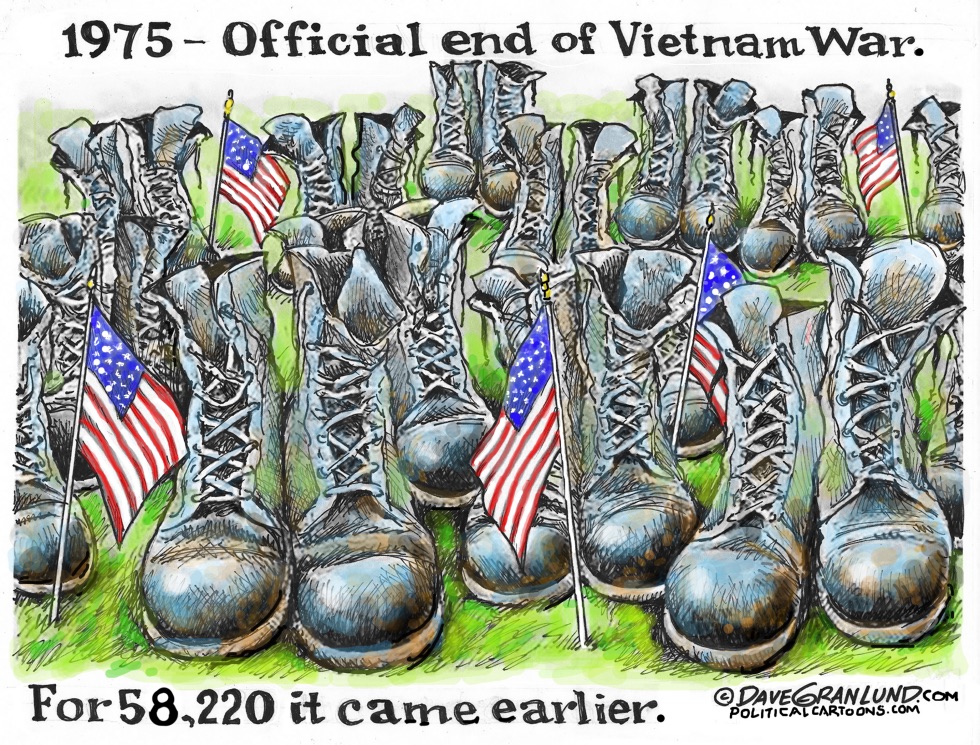
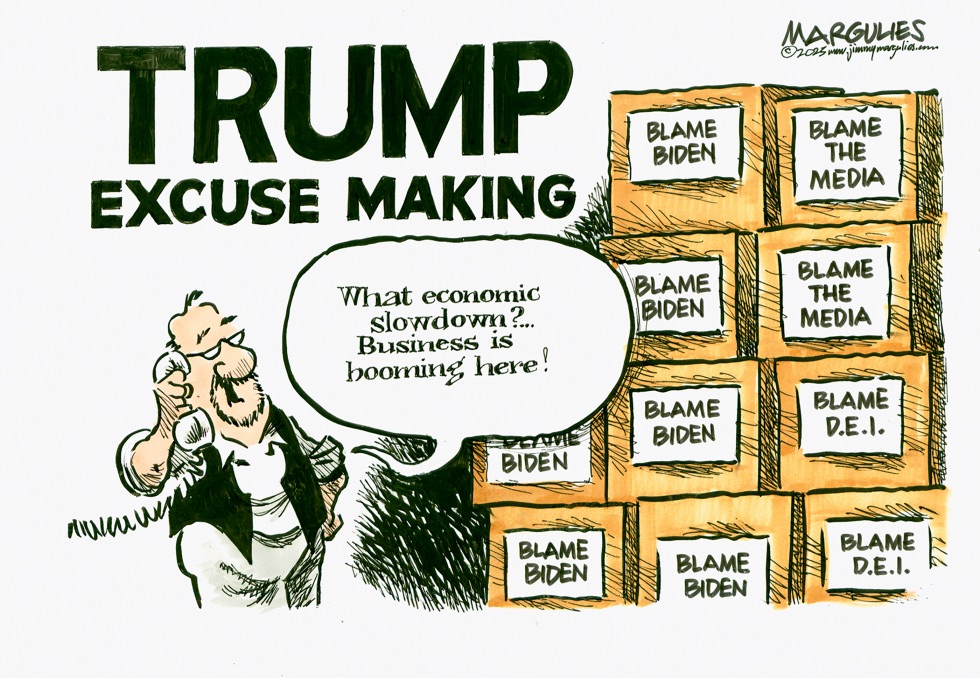
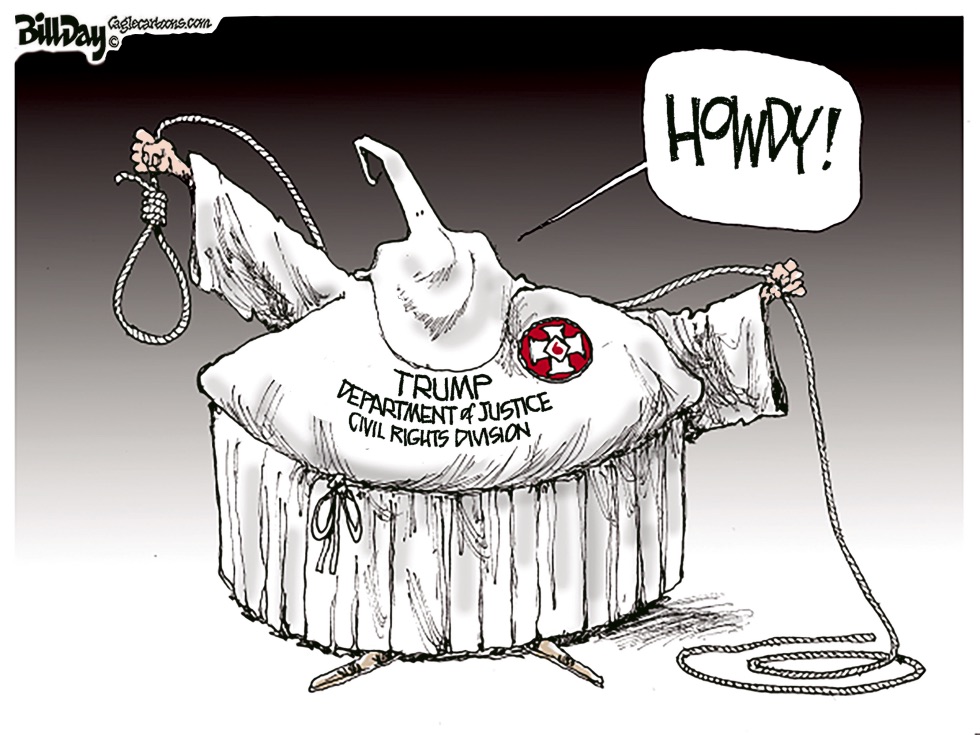
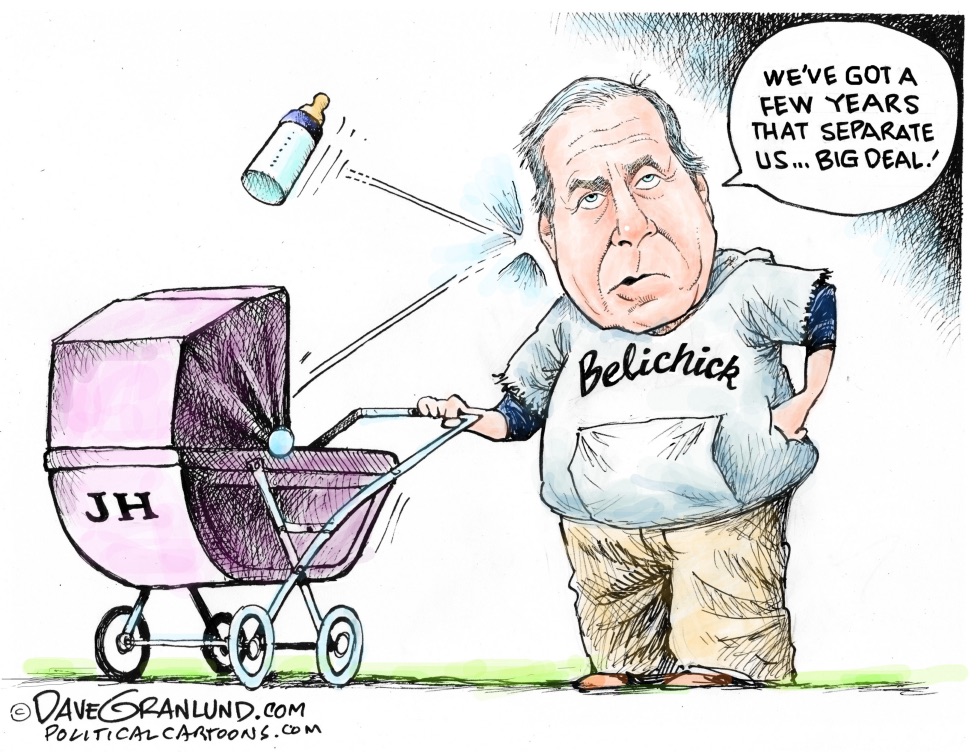
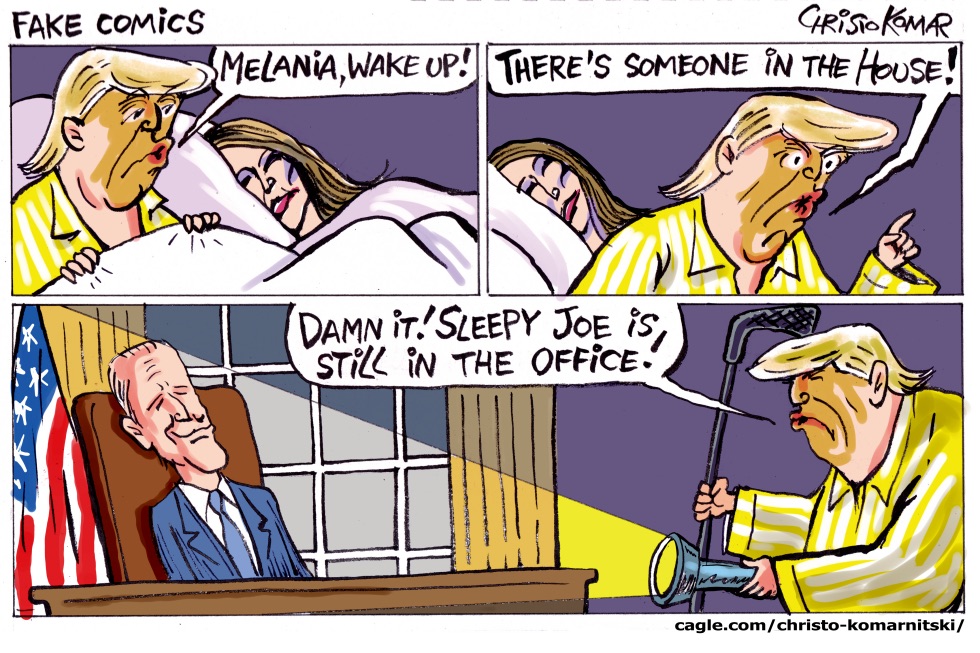
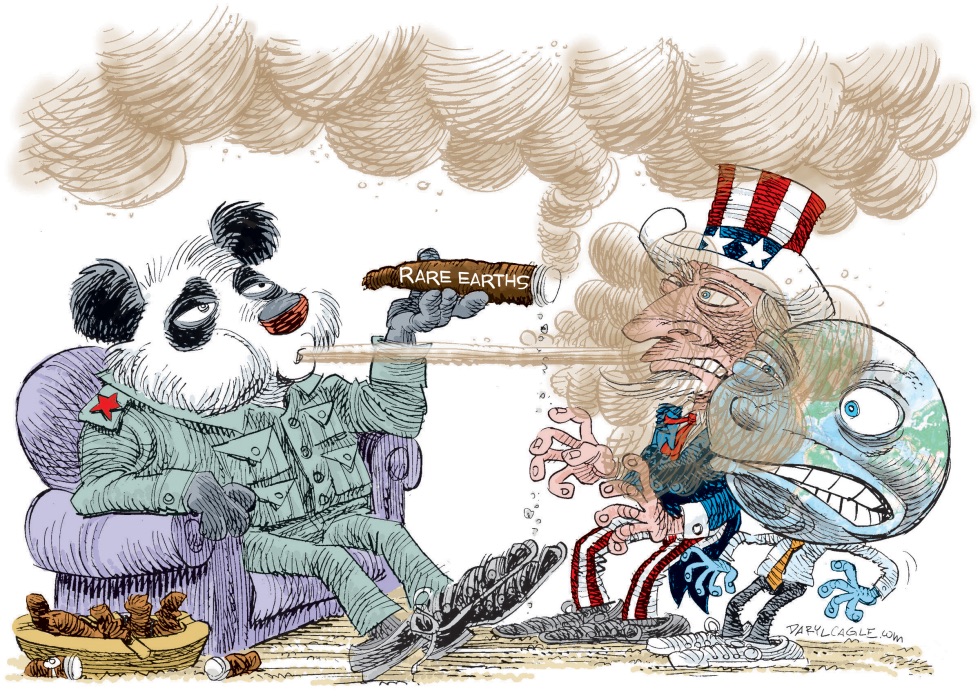
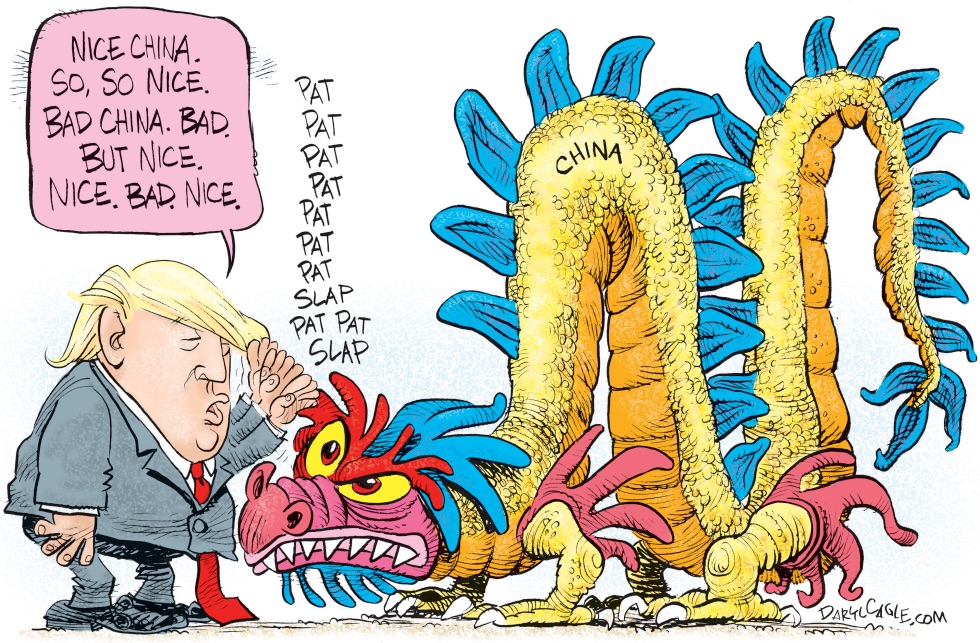
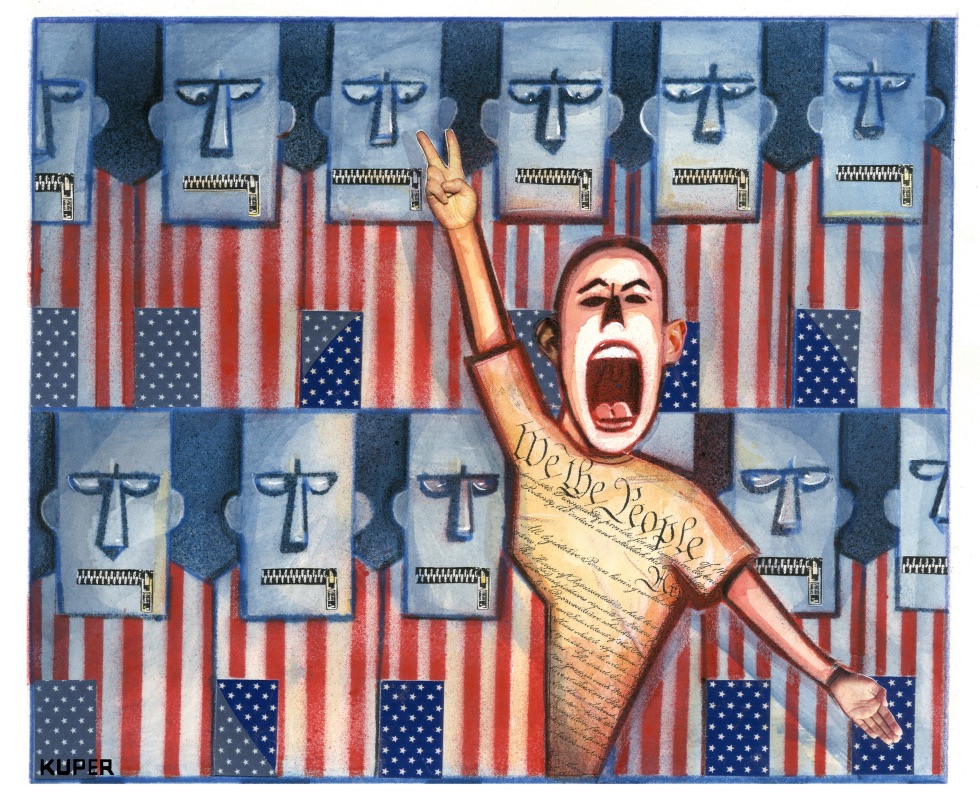
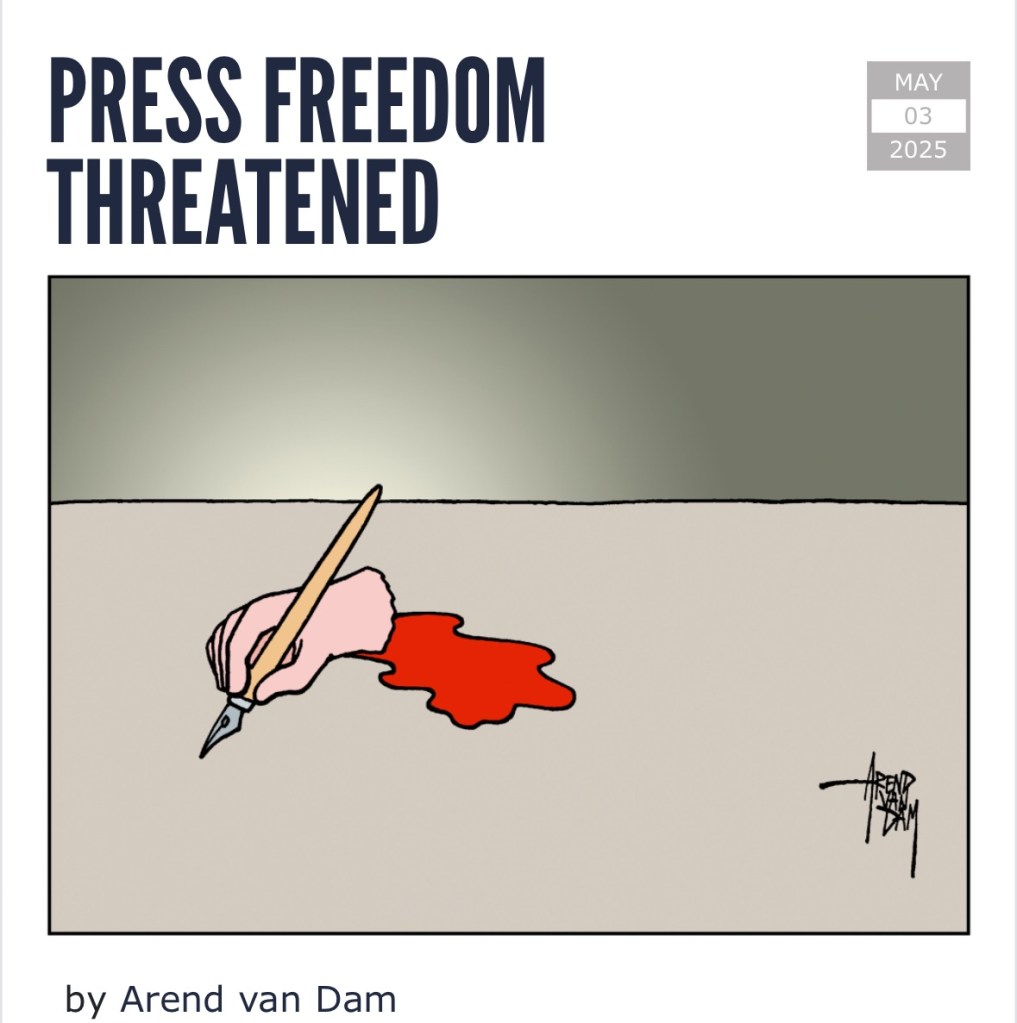
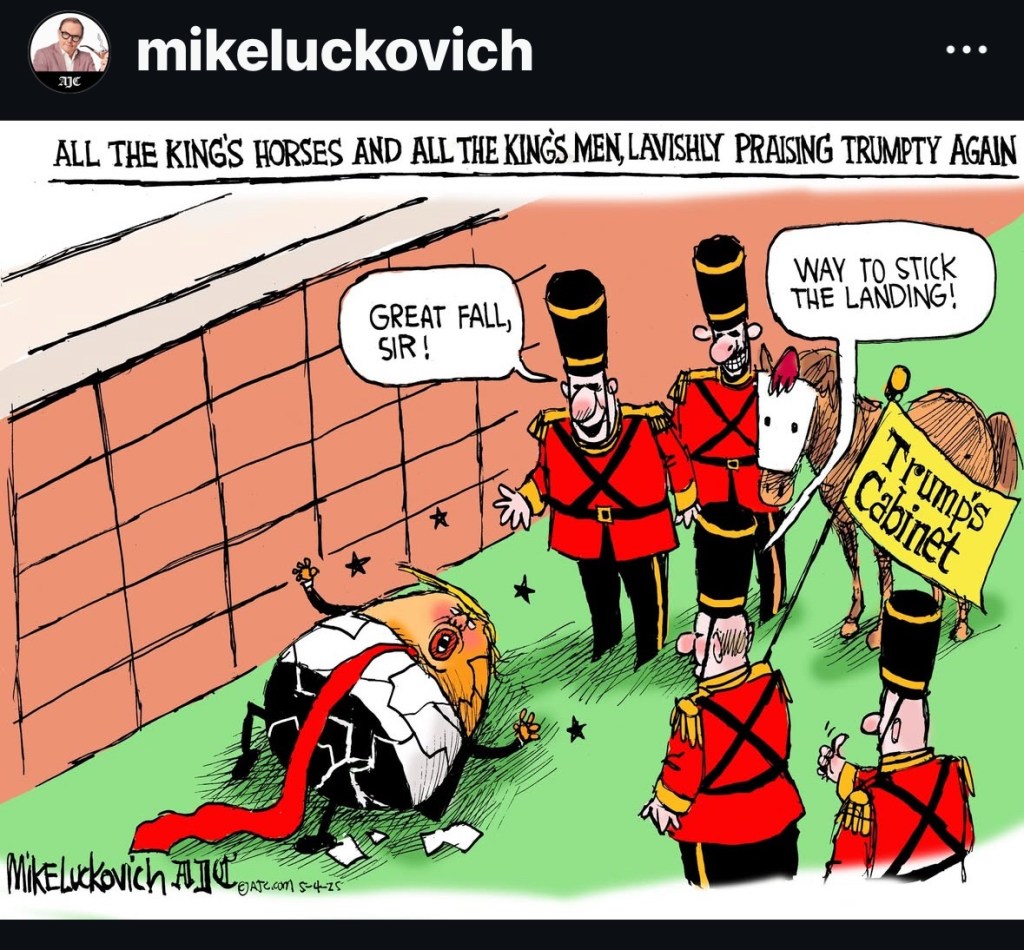
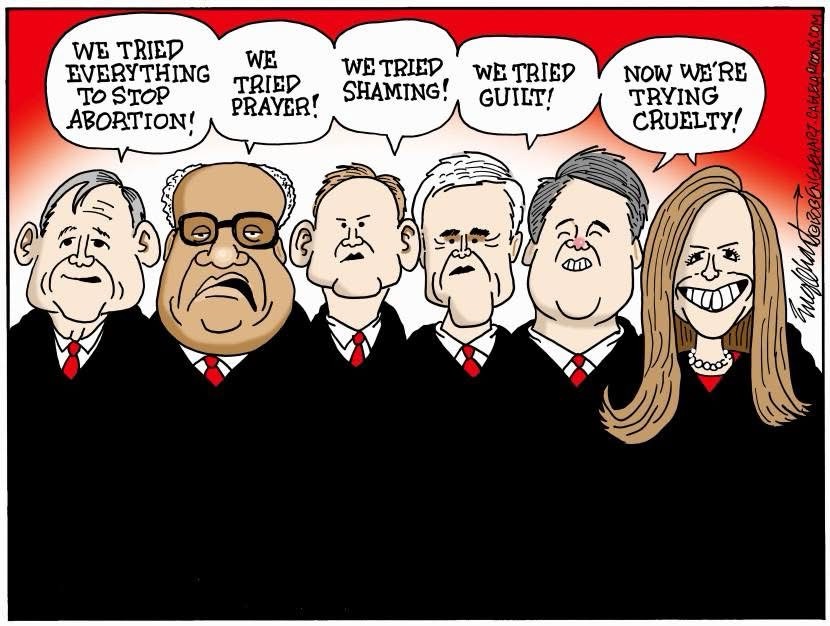
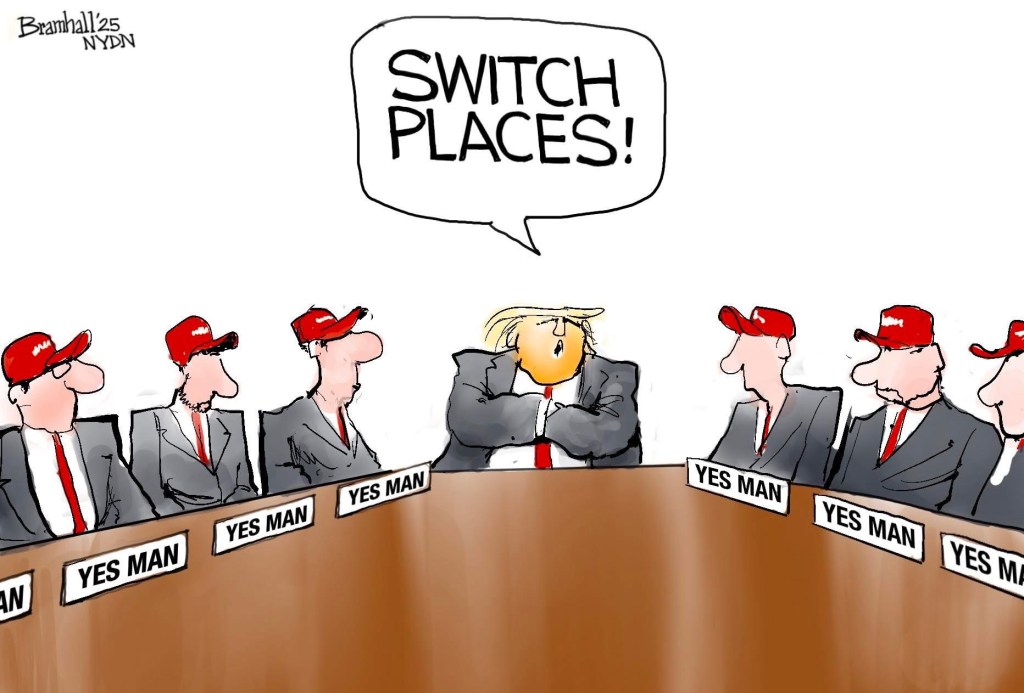
So if you missed Boston Boomer’s round up yesterday, be sure to catch it…I am going to stick with cartoons for today.
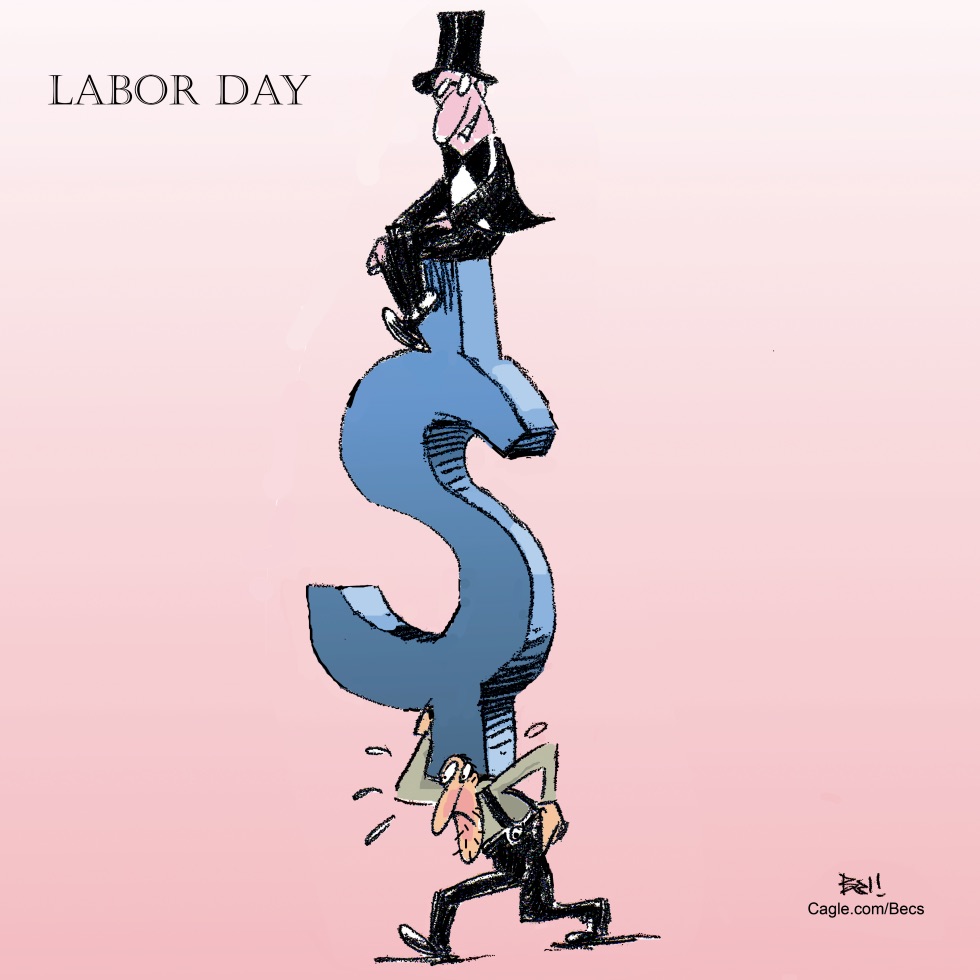
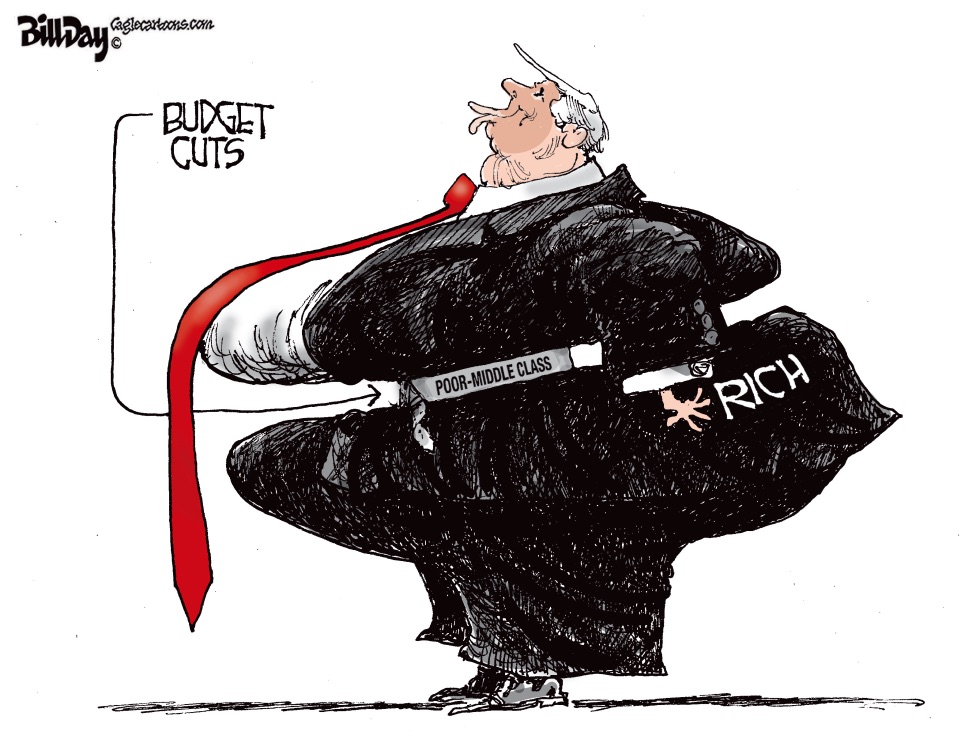
The Economy Only Works For One Group Of Individuals And Not The Rest Of Us….
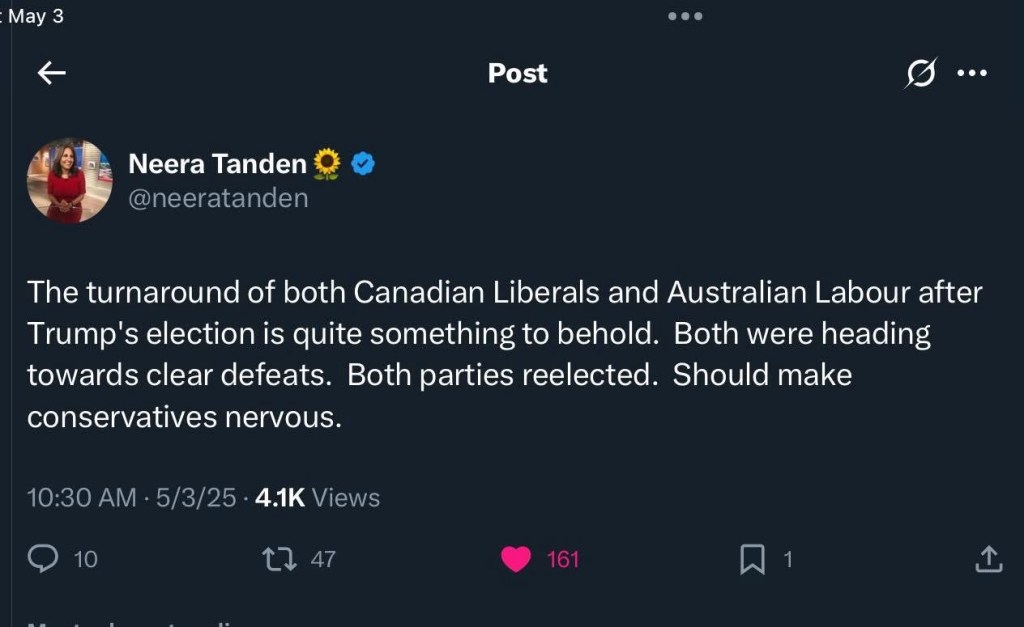
As usual, much of today’s news is awful. Trump is working hard to destroy the U.S. Government, but his actions here have had a positive effect on the leadership of two of our allies. First liberals took over in Canada and now they’ve done it in Australia.
SYDNEY — Australia’s center-left government convincingly won reelection Saturday in a remarkable turnaround driven partly by anger over President Donald Trump’s disruptive trade war and its impact on the close U.S. military ally.
Anthony Albanese became the first Australian prime minister to win a second term in more than two decades as his Labor Partydramatically increased its parliamentary majority. It marked a stunning comeback for the progressive leader, who trailed in the polls two months ago.
In a jubilant victory speech, the 62-year-old struck a tone of unity while also alluding to his opponent’s failed embrace of Trump-like policies.
“We do not need to beg or borrow or copy from anywhere else,” Albanese said to a raucous Sydney crowd. “We do not seek out our inspiration overseas. We find it right here in our values and in our people.”
Trump’s tariffs — first 25 percent on Australia’s aluminum and steel, then 10 percent across the board — had driven voters toward the even-keeled incumbent and away from his conservative opponent, Peter Dutton, whose plans and rhetoric had echoed the American president, said Sean Kelly, a political columnist for the Sydney Morning Herald.
“Trump has absolutely dominated the trajectory of this election,” Kelly said, adding that the global uncertainty unleashed by Trump had made “Albanese’s boringness quite an appealing commodity.”
Australia’s Prime Minister Anthony Albanese has secured a second term in office in a disastrous night for his conservative rivals, as voters chose stability over change against a backdrop of global turmoil inflicted by US President Donald Trump.
Australia’s return of a left-leaning government follows Canada’s similar sharp swing towards Mark Carney’s Liberal Party, another governing party whose fortunes were transformed by Trump. The loss of Liberal Party leader Peter Dutton’s seat mirrors that of Conservative Party leader Pierre Poilievre.
While Australia wasn’t facing the same threats to its sovereignty as Canada, Trump’s global tariffs and policy swings have undermined Australians’ trust in the US, according to recent surveys.
Albanese’s victory makes him the first Australian Prime Minister to win re-election for two decades and he will start his second term with at least 87 seats in the 150-seat lower house, according to the most recent estimates.
A clearly emotional Albanese took the stage to cheers just before 10 p.m. local time to thank Australians for choosing a majority Labor government, defying predictions both major parties would lose seats.
“In this time of global uncertainty, Australians have chosen optimism and determination,” Albanese said, at the Labor victory party in Sydney.
Dutton, who had hoped to end the night as prime minister, lost the outer-suburban Brisbane seat that he’s held for more than 20 years, ending a brutal night for the veteran politician who held senior seats in the last Coalition government.
Here in the USA, things aren’t so great. Trump’s tariffs are kicking in, the economy is struggling, he is trying to destroy education and the arts, RFK Jr. is working to make Americans sick, and Elon Musk and DOGE are wreaking havoc in government agencies. Here’s the latest.
Many Americans might not have felt major effects from President Donald Trump’s sweeping tariffs — until now.
That’s because a major shipping loophole expired at one minute past midnight on Friday. The de minimis exemption, as it’s known, allowed shipments of goods worth $800 or less to come into the United States duty-free, often more or less skipping time-consuming inspections and paperwork.
The loophole helped reshape the way countless Americans shop, allowing ultra-low-cost Chinese e-commerce sites like Shein, Temu and AliExpress to pour everything from yarn to patio furniture, clothes to photography equipment and more into US homes.
Its impending end has rung alarm bells across social media, with a baseline tariff as high as 145% depending on the carrier set to take effect on Chinese imports, potentially more than doubling the cost for all those cheap products deal-hungry Americans scooped up.
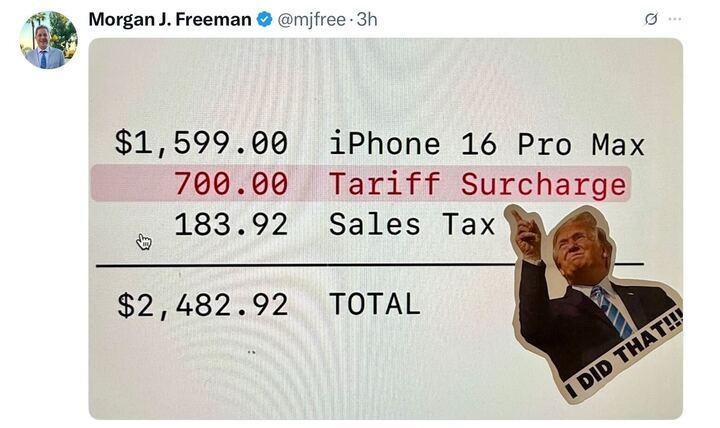
And the end of the de minimis exemption for Chinese goods will also distill abstract, complicated, messy, hard-to-follow trade policy into something much easier to understand: a receipt.
Major carriers like UPS, FedEx, DHL and the United States Postal Service say they’re prepared for the changes. The government says it, too, is set; a US Customs and Border Protection spokesperson told CNN that “We are prepared and equipped to carry out enhanced package screenings and enforce orders effectively.”
But whether regular American shoppers are ready for the changes is another matter.
Read more at CNN.
Caroline Petrow-Cohen and James Rainey at The Los Angeles Times:
Amid a wave of unprecedented tariffs, anxiety is running high for truck drivers like Helen, who makes her living delivering cargo containers from the Los Angeles and Long Beach harbors to warehouses and other customers around Southern California.
After a strong start to the year, the number of jobs has started to slip in recent days and truck drivers have heard reports predicting a sharp decline in incoming cargo for May and June….
“There’s real concern that we’re going to be struggling,” said Helen, a Downey resident who declined to give her last name for fear she might lose work if she is considered disgruntled. “If ships are not coming in and there are no loads, then there is no work. If there is no work there’s no money.”
As President Trump’s aggressive tariffs rattle business owners and shake the foundation of American importing, the men and women who work on the ground at the country’s busiest port are feeling the effects too.
Thousands of dockworkers, heavy equipment operators and truck drivers support a flurry of activity at the Port of Los Angeles, which covers 7,500 acres on San Pedro Bay and processed more than 10 million 20-foot-long cargo units in 2024. The neighboring Port of Long Beach moved 9.6 million 20-foot equivalent units, or TEUs, last year.
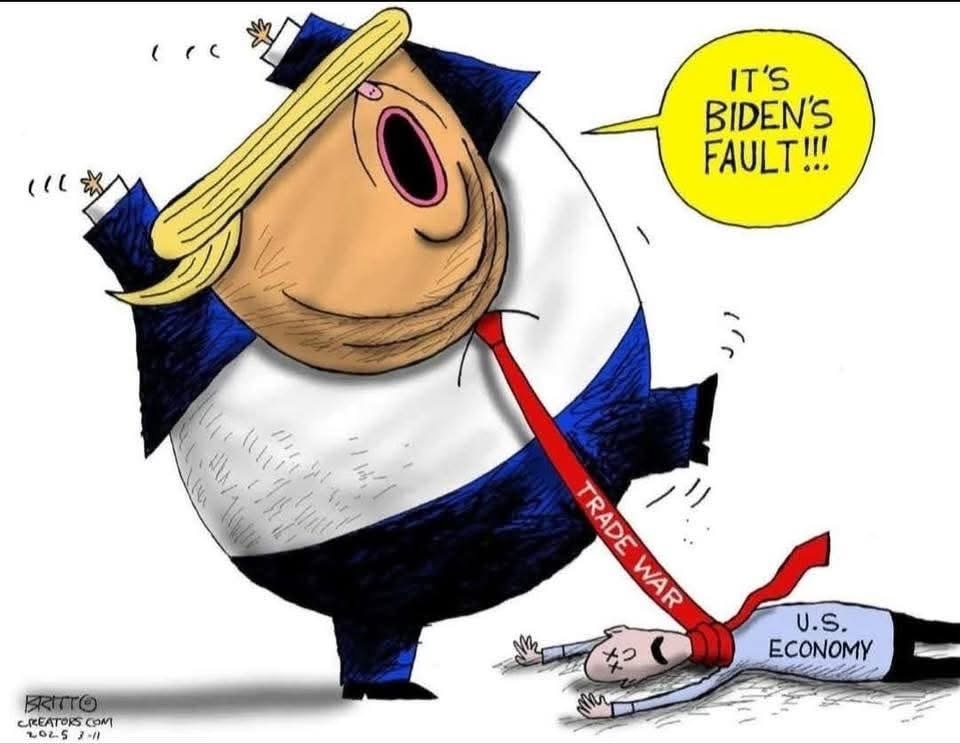
With a 145% tariff on China, a 25% tariff on Canada and Mexico, and 10% tariffs on dozens of other countries, the flow of goods into the U.S. is expected to slow drastically.
Fewer shipments into the ports of Los Angeles and Long Beach mean less work for the Californians who move cargo, said Raman Dhillon, chief executive of the North American Punjabi Trucking Assn.
“The truckers are scrambling right now,” he said. “They are at the verge of collapsing. The administration needs to move quickly, or it’s going to be chaos and price hikes and empty shelves.”
Trump isn’t worried about a recession and he doesn’t care how it will affect Americans. It’s just a transition period, he says.
President Donald Trump on Friday downplayed concerns about potential economic trouble, saying everything would be “OK” in the long term, even if the U.S economy experienced a recession in the short term.
Cat Astronaut, Michael Raiano
Asked twice by “Meet the Press” moderator Kristen Welker whether it would be OK in the long run if there were a recession in the short term, the president said, “Look, yeah, it’s — everything’s OK. What we are — I said, this is a transition period. I think we’re going to do fantastically.”
Following up, Welker asked Trump if he was worried about a recession, to which he responded, “No.” Asked whether he thinks one could happen, Trump replied, “Anything can happen, but I think we’re going to have the greatest economy in the history of our country.”
The remarks come as analysts on Wall Street are increasingly worried that the country could face a recession due to Trump’s changing tariff policy.
“Well, you know, you say, ‘Some people on Wall Street say’ — well, I tell you something else. Some people on Wall Street say that we’re going to have the greatest economy in history. Why don’t you talk about them?” Trump said during the interview at his Mar-a-Lago resort in Florida.
“There are many people on Wall Street say this is going to be the greatest windfall ever happen,” the president added.
Really? Who are those people? Name one.
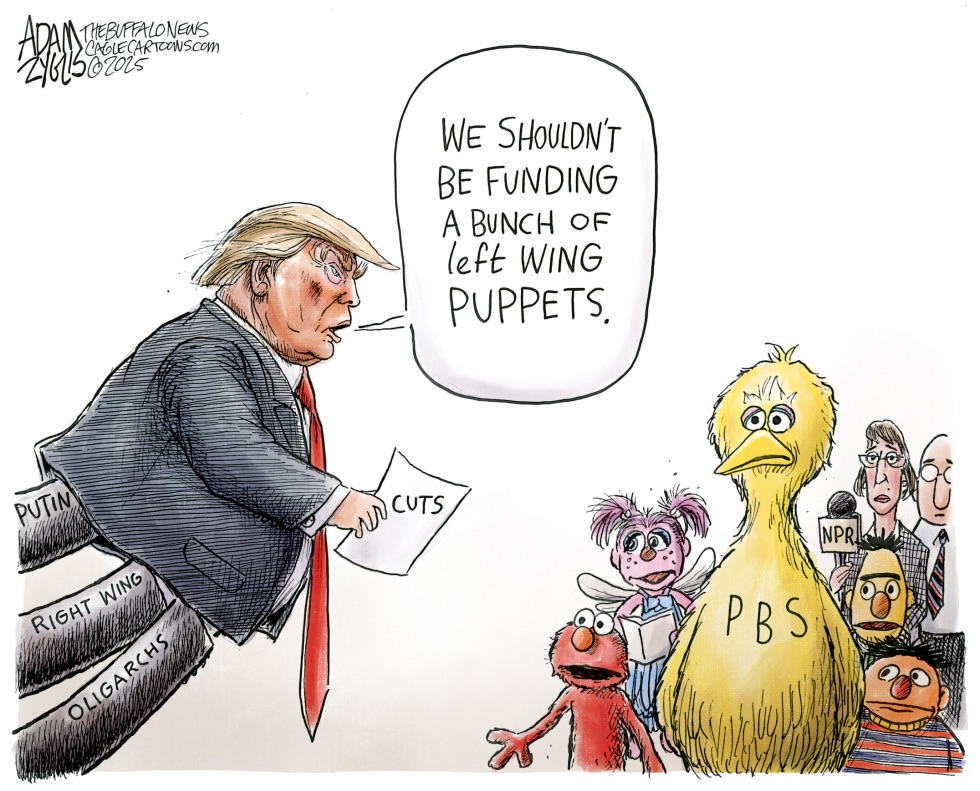
Trump doesn’t want the government to support the arts.
President Trump proposed eliminating the National Endowment for the Arts and the National Endowment for the Humanities in the budget he released Friday, taking aim once again at two agencies that he had tried and failed to get rid of during his first term.
The endowments, along with the Institute of Museum and Library Services, were among the entities listed in a section titled “small agency eliminations” in his budget blueprint for the next fiscal year. The document said that the proposal was “consistent with the president’s efforts to decrease the size of the federal government to enhance accountability, reduce waste, and reduce unnecessary governmental entities” and noted that Mr. Trump’s past budget proposals had “also supported these eliminations.”
Since Mr. Trump returned to office this year, his administration has taken aim at the National Endowment for the Humanities and the Institute of Museum and Library Services, canceling most of their existing grants and laying off a large portion of their staffs. But the arts agency had yet to announce major cuts.
The proposal to eliminate the endowments drew a quick and furious reaction from Democrats. One, Senator Jack Reed of Rhode Island, vowed to fight the plan to eliminate the N.E.A. “tooth and nail.”
“We were able to restore the funding last time,” she said, “but as you know, based on the first 100 days of this administration, they’re in no mood to keep much of government alive anymore, and their attack is focused on everything, and the arts have already got a bull’s-eye on their back.
Outerspace laser cats (greeting card)
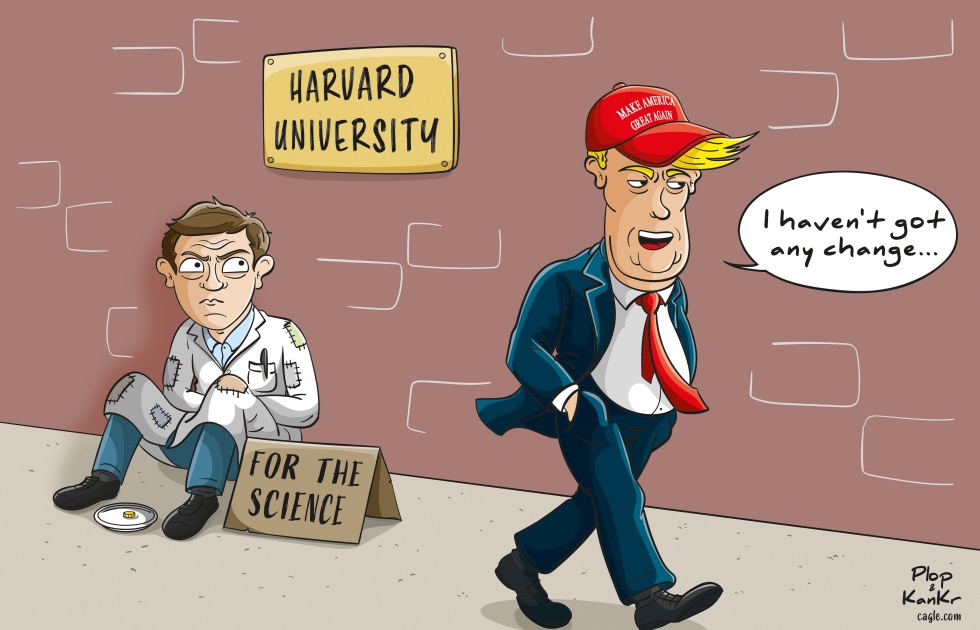
Of course Trump is also attacking our vital educational institutions. The latest is his threat to remove Harvard’s tax-exempt status. Here in Boston, Harvard and MIT are gearing up to fight back.
Harvard University signaled Friday that it would resist President Trump’s renewed threat to revoke the school’s tax-exempt status, a move for which it said there was “no legal basis” as the president escalated his bitter dispute with the nation’s oldest university.
Harvard stopped short of explicitly pledging a legal challenge to a revocation of its tax status, a change that would upend the university’s finances. But a spokesperson for the university said in a statement that there was “no legal basis to rescind Harvard’s tax-exempt status.”
“Such an unprecedented action would endanger our ability to carry out our educational mission,” the statement said. “It would result in diminished financial aid for students, abandonment of critical medical research programs and lost opportunities for innovation. The unlawful use of this instrument more broadly would have grave consequences for the future of higher education in America.”
Mr. Trump declared Friday morning on social media that the government would be “taking away Harvard’s Tax Exempt Status.” Mr. Trump added, “It’s what they deserve.”
Despite Mr. Trump’s assertion online and Harvard’s sharp response, it was not immediately clear Friday whether the I.R.S. was in fact moving forward with revoking Harvard’s tax-exempt status, a change that could typically occur only after a lengthy process. Federal law prohibits the president from directing the I.R.S. to conduct tax investigations, and I.R.S. employees who receive such a command are required to report it to an internal government watchdog.
The unrelenting high-velocity attacks from the Trump administration have forced leaders of the nation’s premier universities to navigate an extraordinary and bruising balancing act, choosing when to take a stand in the face of continued threats while trying to mitigate the loss of federal funding.
Among the schools where that intense drama is playing out is the Massachusetts Institute of Technology, where the sobering realities of the administration’s funding cuts were discussed at a meeting convened by senior leaders in April.
Under one scenario presented at that meeting by treasurer Glen Shor, MIT risks losing the equivalent of 23 percent of revenues for its central budget, according to a recording of the presentation to school staff obtained by the Globe.
“Unfortunately, we should expect a prolonged period of challenge,” MIT president Sally Kornbluth told staff, according to the recording. “We really have to balance things. And I have to say, I feel a grave responsibility to you all . . . to ensure the livelihoods of this community and to make sure that we can continue to function. I need to balance all of these goalsthat are, again, often in great tension with each other.”
Kornbluth also outlined how she is trying to preserve institutional independence while being pragmatic with so much money hanging in the balance. MIT needs to “adapt” where necessary to the priorities of the federal government, she said, but also resist by suing when it feels the administration had overreached. Senior leaders are also working to improve the university’s reputation in Washington, D.C., and among the broader public.
The recording offers a rare inside look into how institutions are trying to respond to a fast-moving and ever-changing dynamic, with new lines of pressure from the administration coming from unforeseen angles.
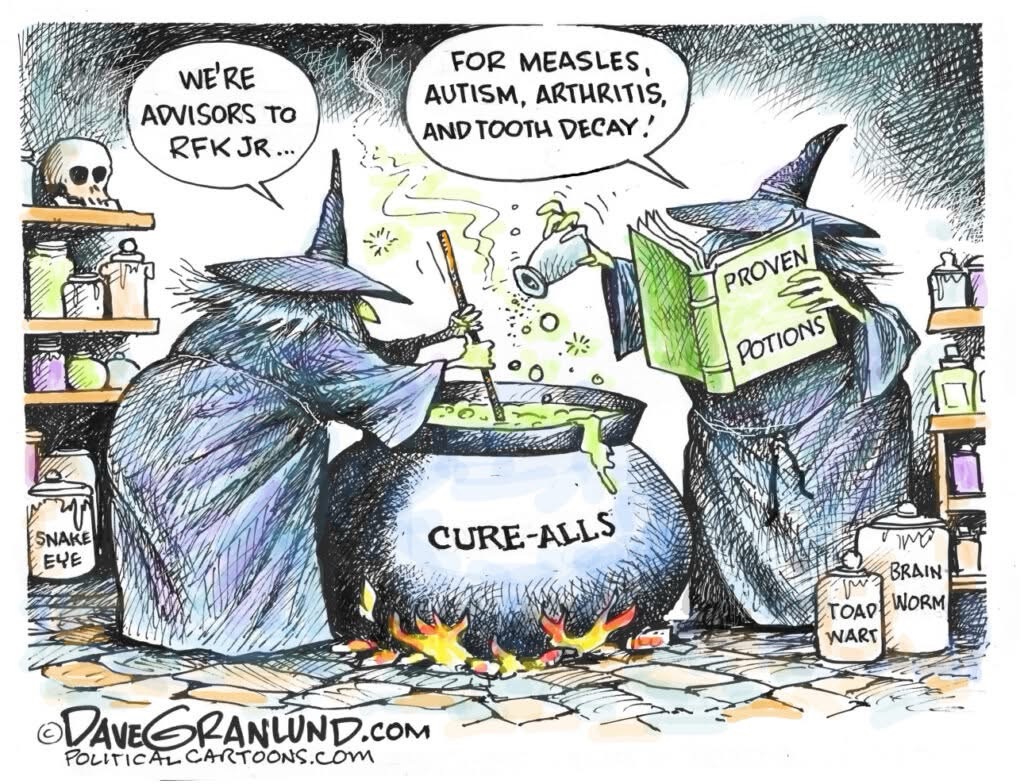
I’m terrified by what is happening to public health under RFK Jr. Here’s the latest on that.
A leading immunologist warned of a “post-herd-immunity world”, as measles outbreaks affect communities with low vaccination rates in the American south-west, Mexico and Canada.
The US is enduring the largest measles outbreak in a quarter-century. Centered in west Texas, the measles outbreak has killedtwo unvaccinated children and one adult and spread to neighboring states including New Mexico and Oklahoma.
“We’re living in a post-herd-immunity world. I think the measles outbreak proves that,” said Dr Paul Offit, an expert on infectious disease and immunology and director of the Vaccine Education Center at Children’s Hospital of Philadelphia.
“Measles – because it is the most contagious of the vaccine-preventable diseases, the most contagious human disease really – it is the first to come back.”
The US eliminated measles in 2000. Elimination status would be lost if the US had 12 months of sustained transmission of the virus. As of 1 May, the US Centers for Disease Control and Prevention (CDC) reported 935 confirmed measles cases across30 jurisdictions.Nearly one in three children under five years old involved in the outbreak, or 285 young children, have been hospitalized.
Three large outbreaks in Canada, Mexico and the US now account for the overwhelming majority of roughly 2,300 measles cases across the World Health Organization’s six-country Americas region, according to the health authority’s update this week. Risk of measles is considered high in the Americas, and has grown 11-fold compared with 2024.
Is RFK Jr. concerned about this situation? Not really.
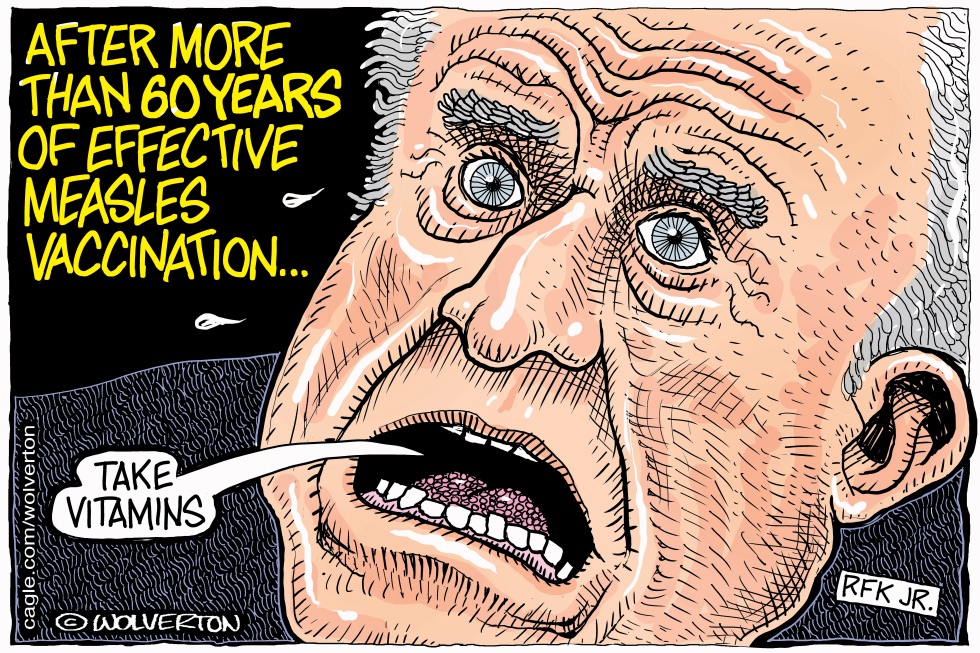
With the United States facing its largest single measles outbreak in 25 years, Health and Human Services Secretary Robert F. Kennedy Jr. will direct federal health agencies to explore potential new treatments for the disease, including vitamins, according to an H.H.S. spokesman. The decision is the latest in a series of actions by the nation’s top health official that experts fear will undermine public confidence in vaccines as an essential public health tool.
The announcement comes as Mr. Kennedy faces intense backlash for his handling of the outbreak. It has swept through large areas of the Southwest where vaccination rates are low, infecting hundreds and killing two young girls. On Friday, the Centers for Disease Control and Prevention reported more than 930 cases nationwide, most of which are associated with the Southwest outbreak.
Critics have said Mr. Kennedy has focused too much on untested treatments — such as cod liver oil supplements — and offered only muted support for the measles vaccine, which studies show is 97 percent effective in preventing infection.
The decision to put more resources into potential treatments, rather than urging vaccination, could have grave consequences at the center of the outbreak….
Scientists have already thoroughly studied various vitamins and medications as potential treatments for measles, said Michael Osterholm an epidemiologist at the University of Minnesota.
Decades of research have turned up no miracle treatment for the measles virus, which can cause pneumonia, making it difficult for patients to get oxygen into their lungs, and brain swelling, which can cause blindness, deafness and intellectual disabilities.
Texas Attorney General Ken Paxton is investigating two leading toothpaste makers over their use of fluoride, suggesting that they are “illegally marketing” the teeth cleaners to parents and kids “in ways that are misleading, deceptive, and dangerous.”
Space cats from Mars, Damien Northmore
The toothpaste makers in the crosshairs are Colgate-Palmolive Company, maker of Colgate toothpastes, and Proctor & Gamble Manufacturing Co., which makes Crest toothpastes. In an announcement Thursday, Paxton said he has sent Civil Investigative Demands (CIDs) to the companies.
The move is an escalation in an ongoing battle over fluoride, which effectively prevents dental cavities and improves oral health. Community water fluoridation has been hailed by health and dental experts as one of the top 10 great public health interventions for advancing oral health across communities, regardless of age, education, or income. But, despite the success, fluoride has always had detractors—from conspiracy theorists in the past suggesting the naturally occurring mineral is a form of communist mind control, to more recent times, in which low-quality, controversial studies have suggested that high doses may lower IQ in children.
These people are insane.
Just a few Elon Musk stories before I wrap this post up.
The Trump administration asked the Supreme Court on Friday to clear the way for Elon Musk ’s Department of Government Efficiency to access Social Security systems containing personal data on millions of Americans.
The emergency appeal is the first in a string of applications to the high court involving DOGE’s swift-moving work across the federal government.
It comes after a judge in Maryland restricted the team’s access to Social Security under federal privacy laws. The agency holds personal records on nearly everyone in the country, including school records, bank details, salary information and medical and mental health records for disability recipients, according to court documents.
The government says the team needs access to target waste in the federal government. Musk, now preparing to step back from his work with DOGE, has been focused on Social Security as an alleged hotbed of fraud. The billionaire entrepreneur has described it as a “ Ponzi scheme ” and insisted that reducing waste in the program is an important way to cut government spending.
Solicitor General John Sauer argued Friday that the judge’s restrictions disrupt DOGE’s important work and inappropriately interfere with executive-branch decisions. “Left undisturbed, this preliminary injunction will only invite further judicial incursions into internal agency decision-making,” he wrote.
I shudder to think what the Supreme Court will do with this.
In the lead up to the April 1 election for the Wisconsin state Supreme Court, a little-known private equity executive by the name of Antonio Gracias joined Tesla billionaire Elon Musk on stage as the latter launched into a tirade clearly inspired by the white supremacist Great Replacement Theory — the discredited canard that the Biden administration was letting in millions of “illegals” to engage in mass voter fraud.
On the dais, Gracias described how his foray into Social Security had revealed something already widely known to immigration policymakers: that the Biden administration had substantially expanded the Temporary Protected Status program, allowing millions of immigrants to enter and work in the country legally. These noncitizens were given Social Security numbers, as is completely standard — in fact, the process was automated during Trump’s first term — but Gracias and Musk, the world’s richest man, treated it like a scandal.
“We started at the top of the system mapping the whole system of Social Security to understand where the fraud was — this is what jumped out at us,” Gracias said. “When we saw these numbers, we asked ‘What is this?’ In ‘21, you see 270,000 people, it goes all the way to 2.1 million in ‘24. These are noncitizens that are getting Social Security numbers. … This literally blew us away. We went there to find fraud, and we found this by accident.” Noting that his parents and siblings, like Musk, are immigrants, Gracias added, “I’m pro-legal immigration — this is about America and the future of America.”
The crowd of conservatives gasped as the billionaires made it sound as if they and their team at Trump’s so-called Department of Government Efficiency had finally found proof of the waste, fraud, and abuse in the Social Security Administration that Musk has repeatedly talked about — examples that might help justify the massive upheaval that DOGE has created within the agency that manages America’s core retirement program.
Check this out:
Despite all of Musk and Gracias’ rhetoric about rooting out waste, fraud, and abuse in Social Security, scant attention has been paid to how the pair has become phenomenally wealthy with support from Americans’ retirement funds.
It’s well-known that Musk’s space company, SpaceX, has long cashed in on federal contracts — a trend turbocharged by Trump’s administration. Gracias, for his part, has relied on significant investments from public retirement systems to fund his firm’s deals. In the past decade, Gracias’ private equity firm, Valor Equity Partners, has received at least $1.7 billion in investment commitments from state and local pension funds — which manage the retirement savings of unionized teachers, firefighters, social workers, bus drivers, and cops — according to a Rolling Stone review of public documents.
Much of this money has come from Democratic states and locales. For its most recent fund, Valor received $800 million in investment commitments from a range of state and local pension funds. Investors include the California Public Employees’ Retirement System; the California State Teachers’ Retirement System; the Illinois Municipal Retirement Fund; the New York State Teachers’ Retirement System; a range of New York City pension funds; the Philadelphia Board of Pensions and Retirement; and the Hartford Municipal Employees Retirement Fund in Connecticut.
There’s much more at the link. If you clear your cache, you should be able to read it.
That’s all I have for you today. What’s on your mind?
Did you like this post? Please share it with your friends:
The Sky Dancing banner headline uses a snippet from a work by artist Tashi Mannox called 'Rainbow Study'. The work is described as a" study of typical Tibetan rainbow clouds, that feature in Thanka painting, temple decoration and silk brocades". dakinikat was immediately drawn to the image when trying to find stylized Tibetan Clouds to represent Sky Dancing. It is probably because Tashi's practice is similar to her own. His updated take on the clouds that fill the collection of traditional thankas is quite special.
You can find his work at his website by clicking on his logo below. He is also a calligraphy artist that uses important vajrayana syllables. We encourage you to visit his on line studio.

 The sharp rise in tensions follows a deadly April 22 attack on tourists near the town of Pahalgam in Indian-administered Kashmir.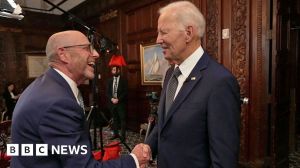







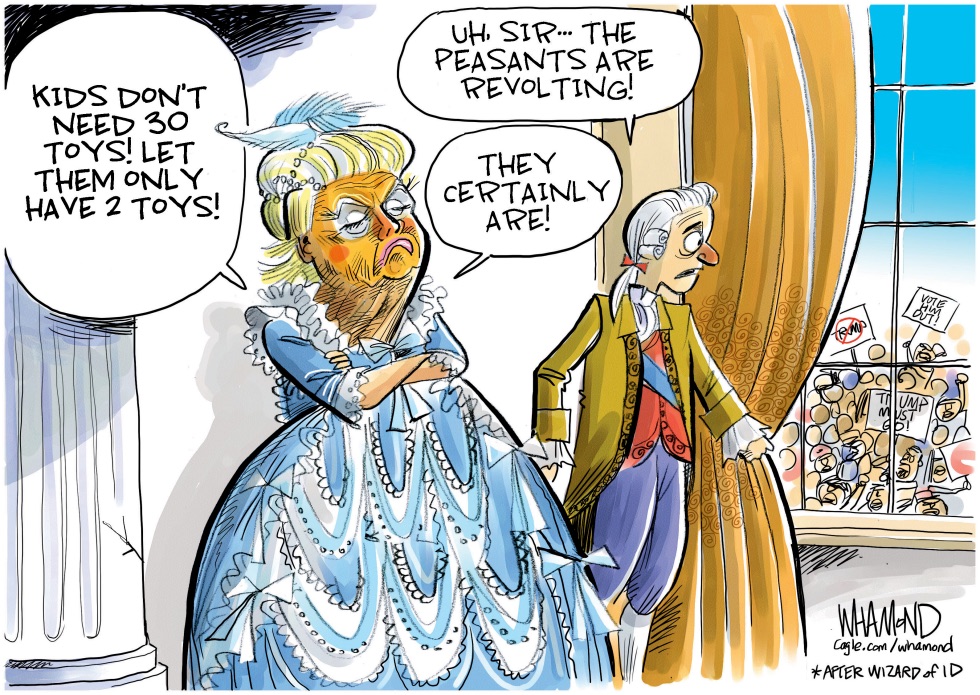
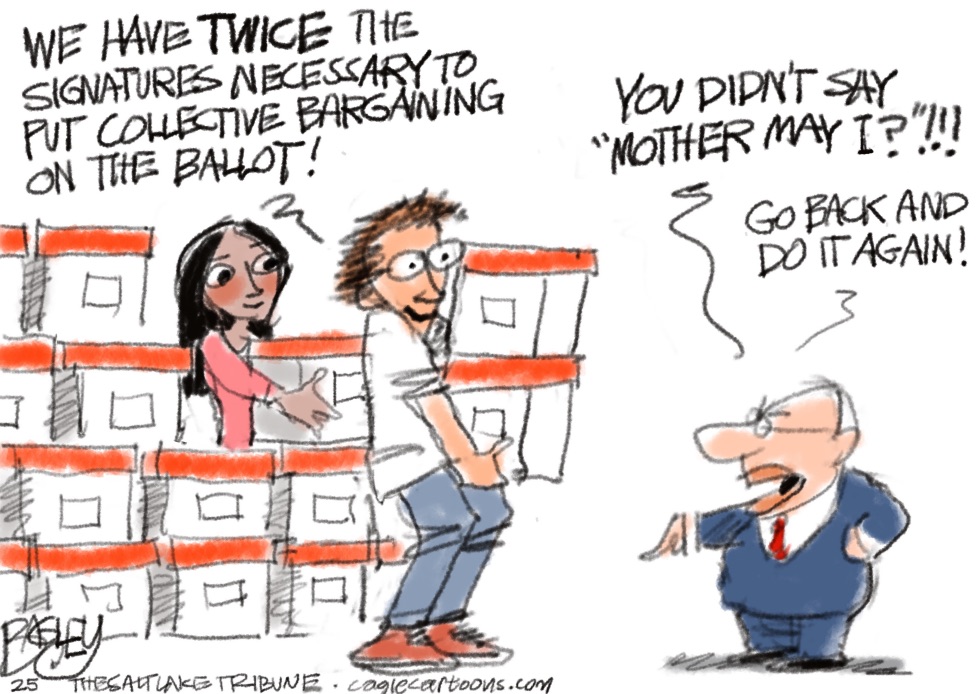
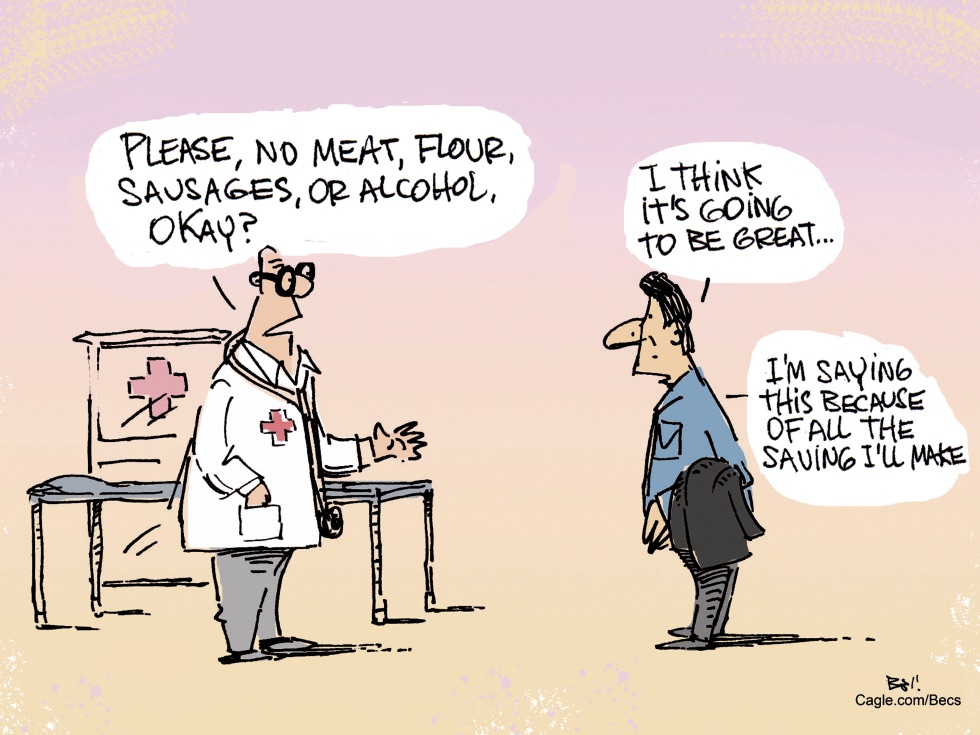
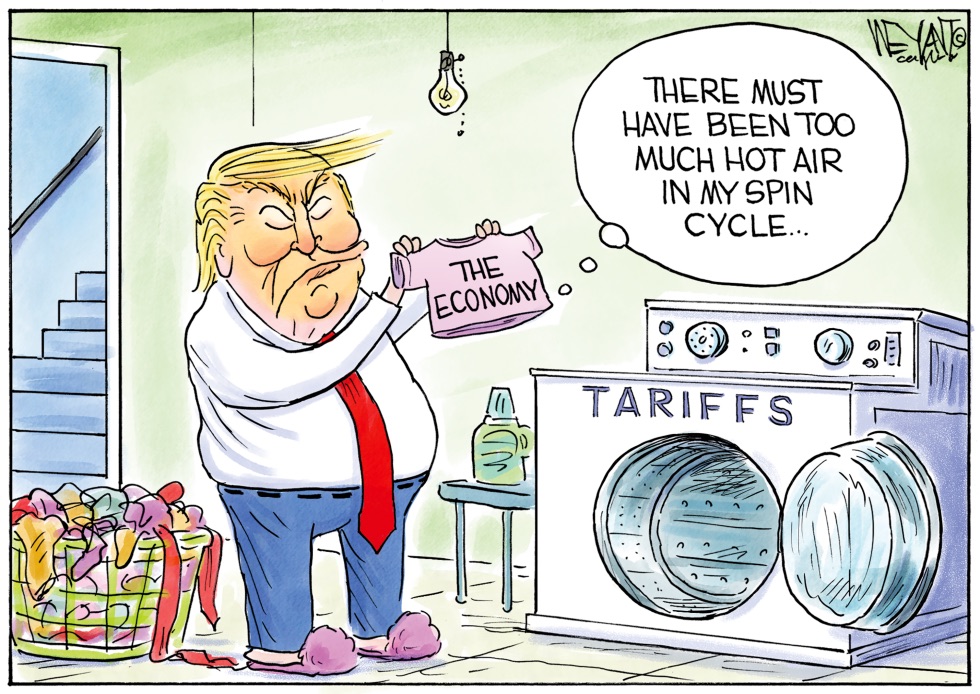











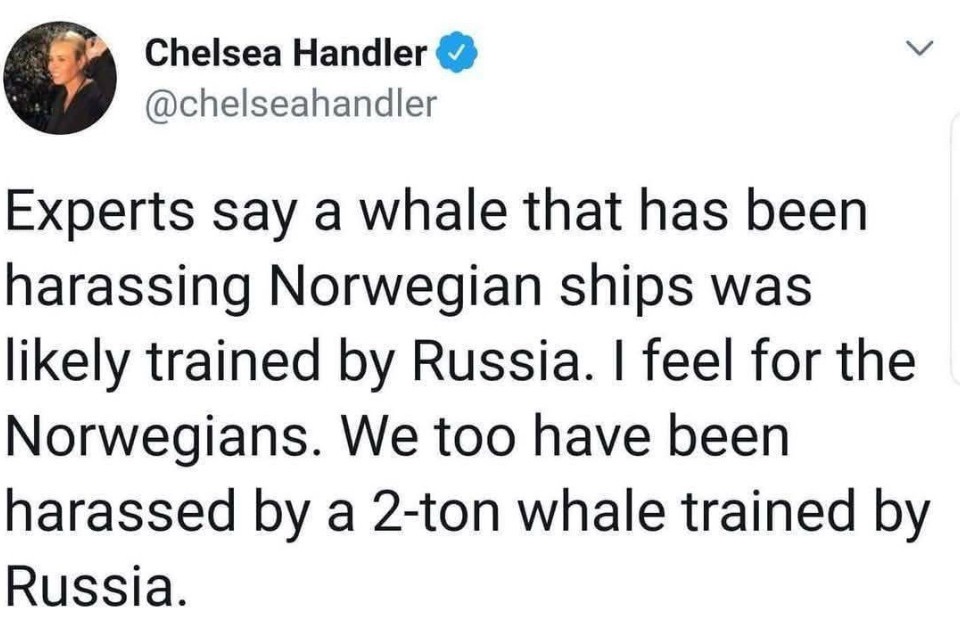

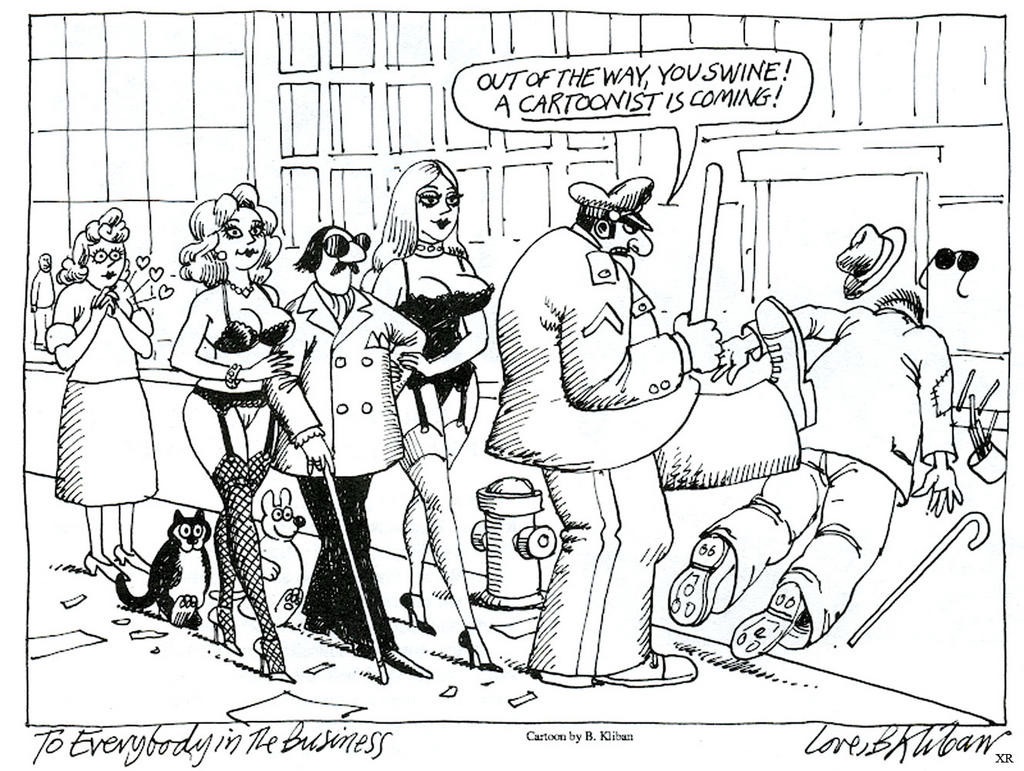
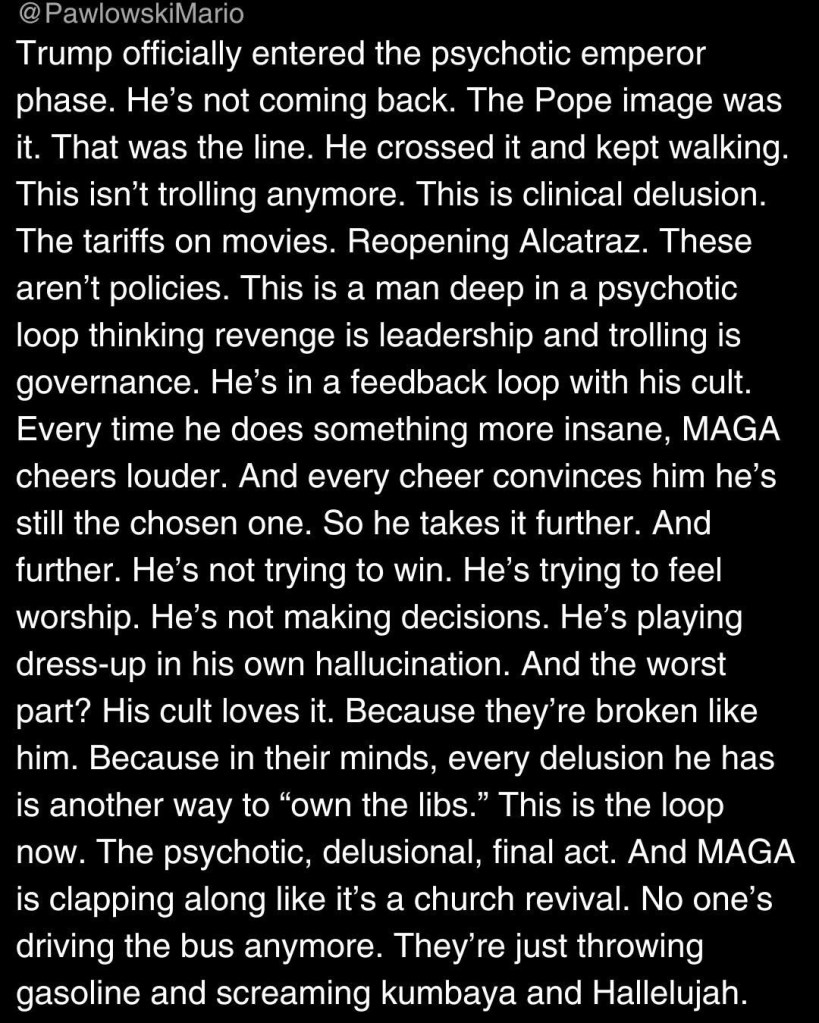
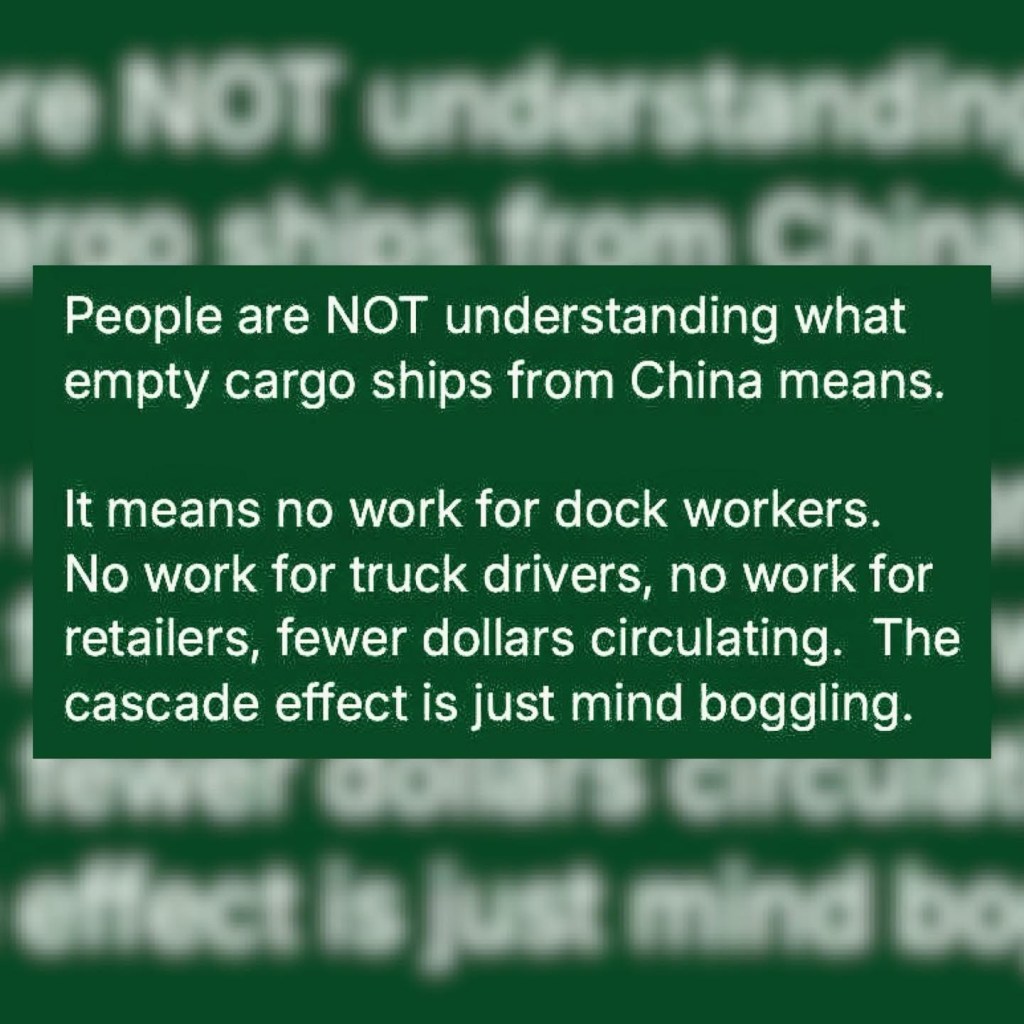

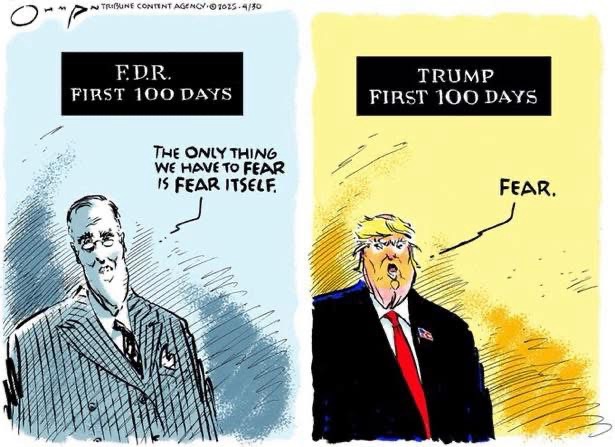







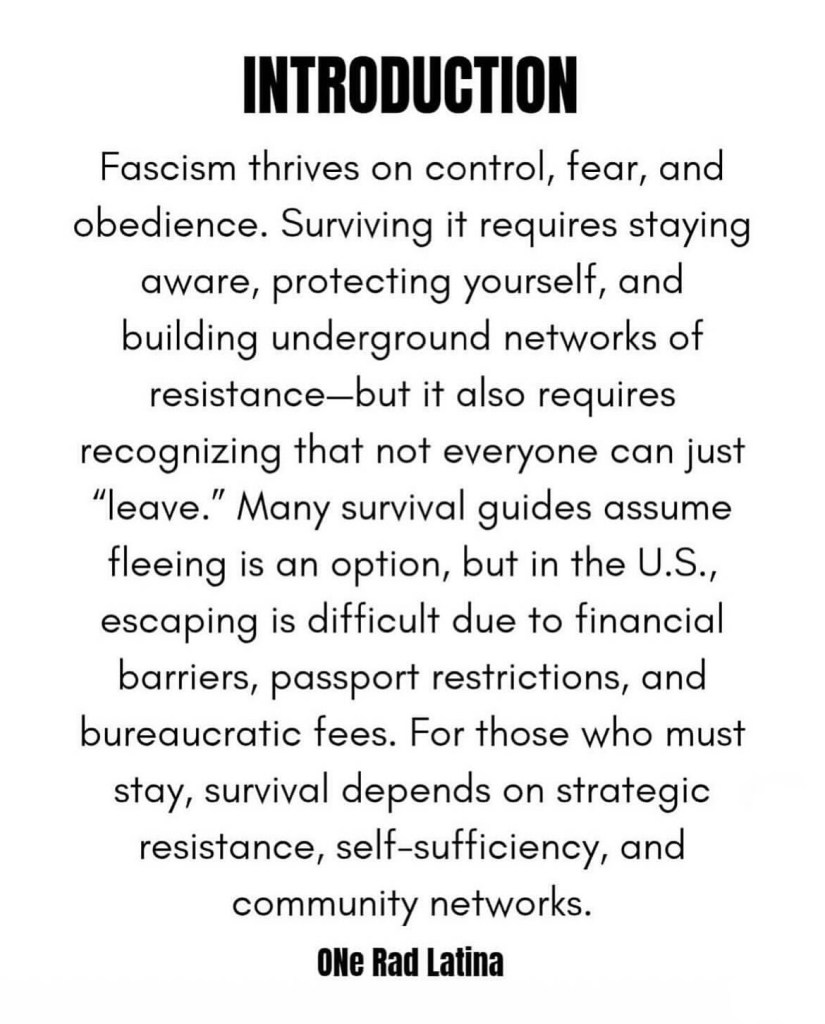
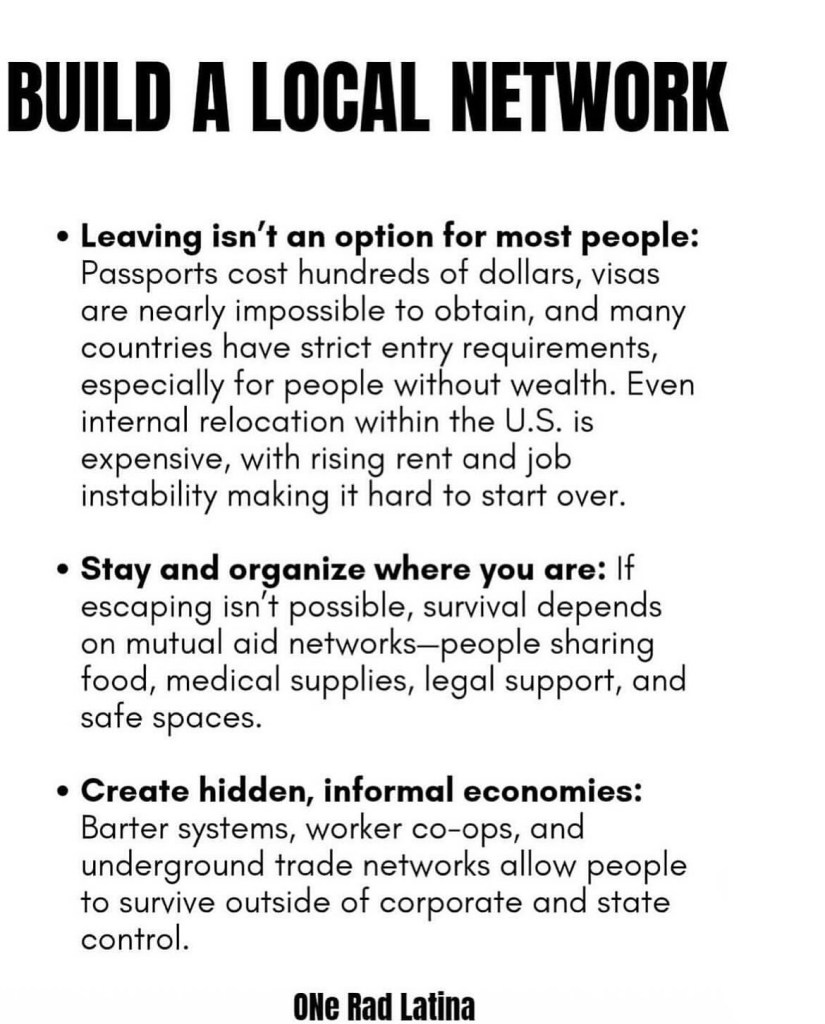

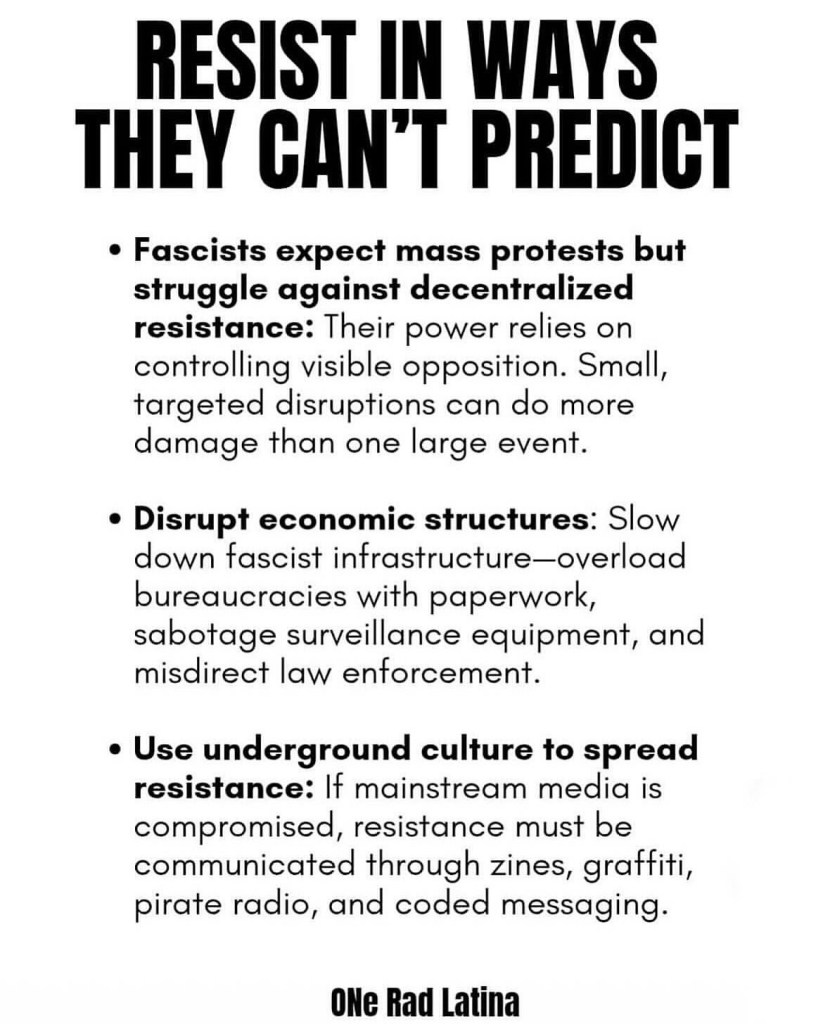
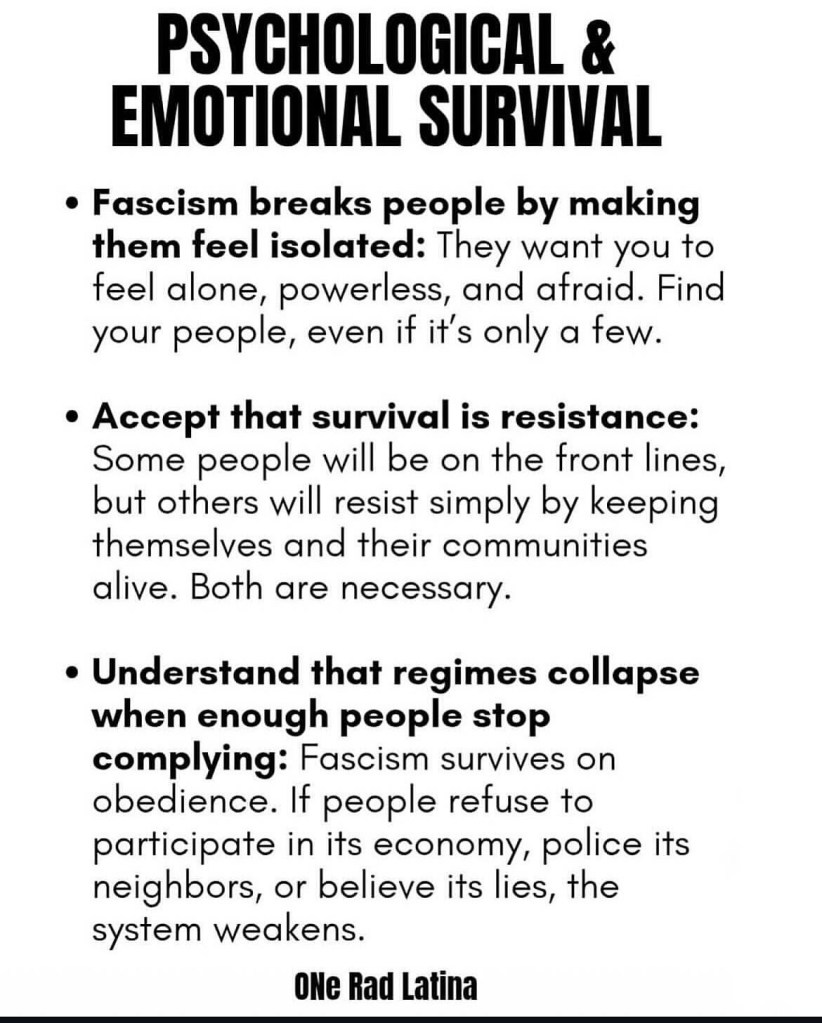
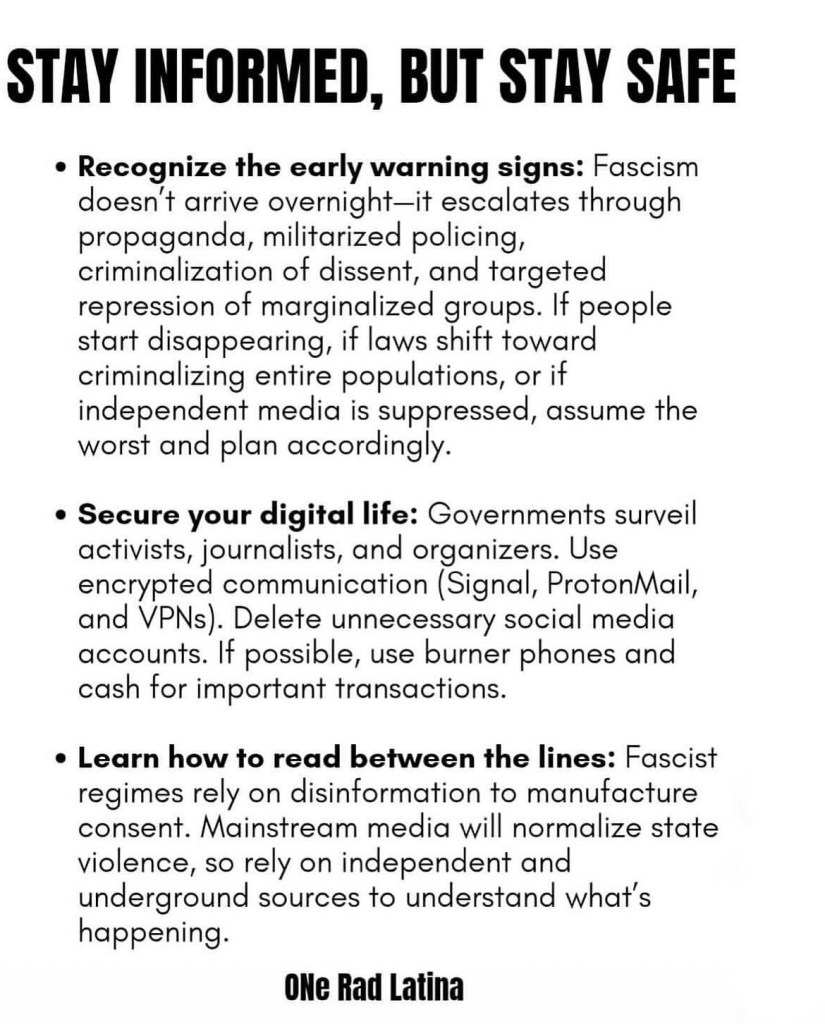

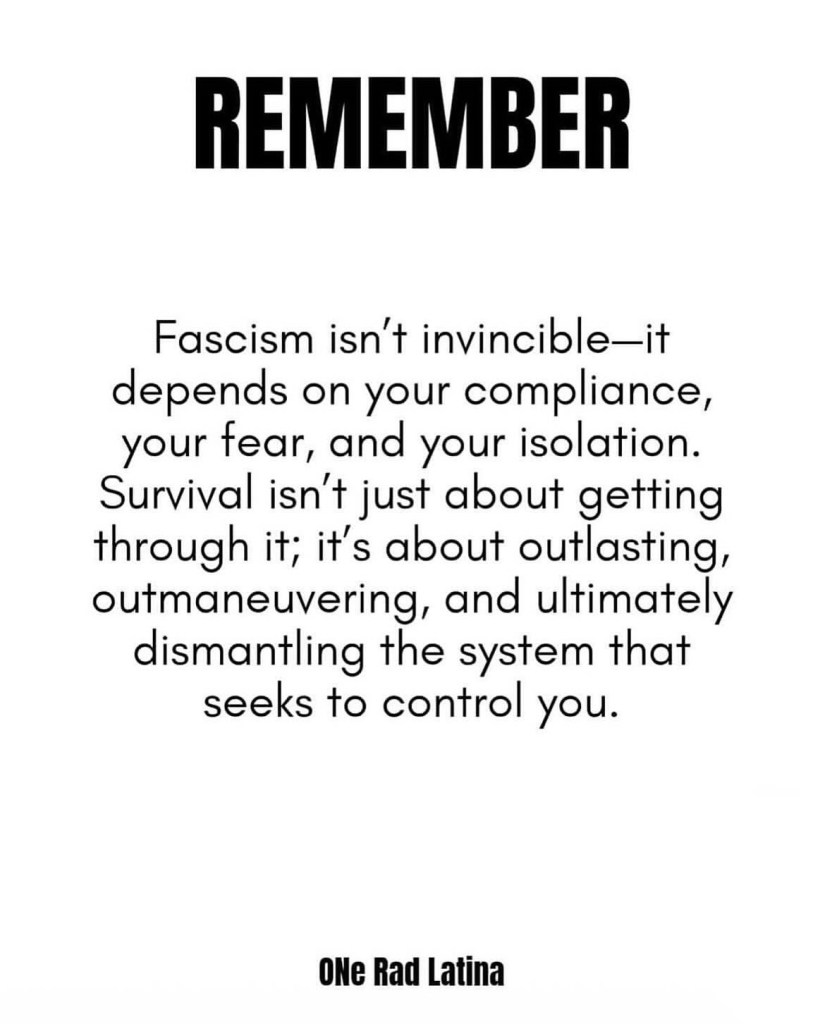

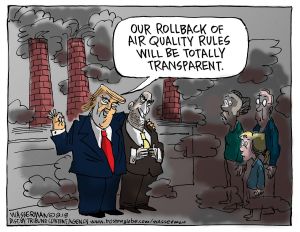 Yup. And the FDA will not be looking around for that food safety risk now. It’s also upending Health Care, but we can rest knowing that all those generic names for medicine and things will be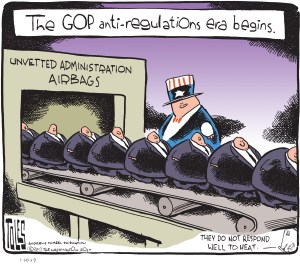
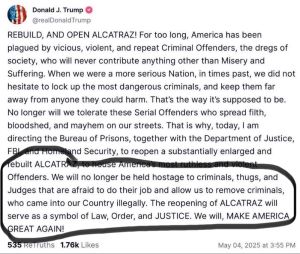 Speaking of crazy policy, I happened on this last night. This is from
  This is from Ed Mazza writing for HuffPo. This sounds a lot like his real estate deals to me. “‘Clearly Unhinged’: Critics Sink Trump’s ‘Asinine’ Plan To Reopen Alcatraz Prison. The president wants to turn the site back into a penitentiary despite the fact that it would cost a fortune.”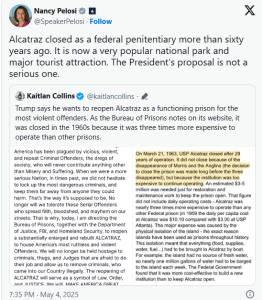
 This just really sounds like how he’d run his business. Also, he now wants tariffs on all incoming films. This is about as insane as it gets.
 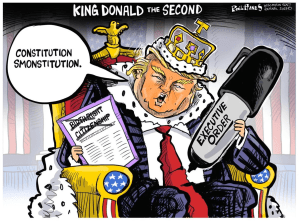 Philip Bump–writing at WAPO–has an interesting Op-Ed up today
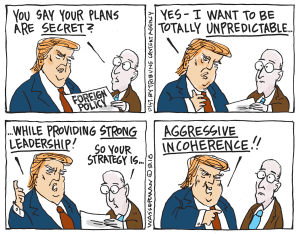 Dan Froomkin–writing for
 It makes sense to me since Trump seems to want to undocument more than just people. Who knows how many things Doge has destroyed in the wake of having all-access to every government database and more. He’s disappearing people, children, scientific research, due process, and entire agencies and programs.
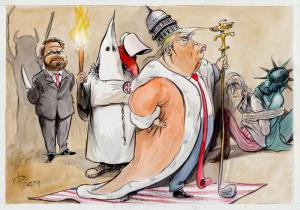 There are a lot of examples here, and it’s worth thinking about. The Unitary Executive Theory has been around for a while, and since the Reagan years, it has picked up steam in the Supreme Court. Here is a recent article from
 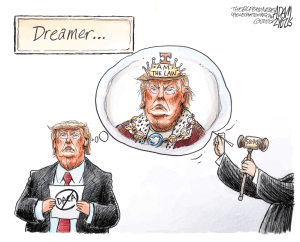 I think this take on executive power is one we should get more familiar with since it’s really taken a powerful rise. The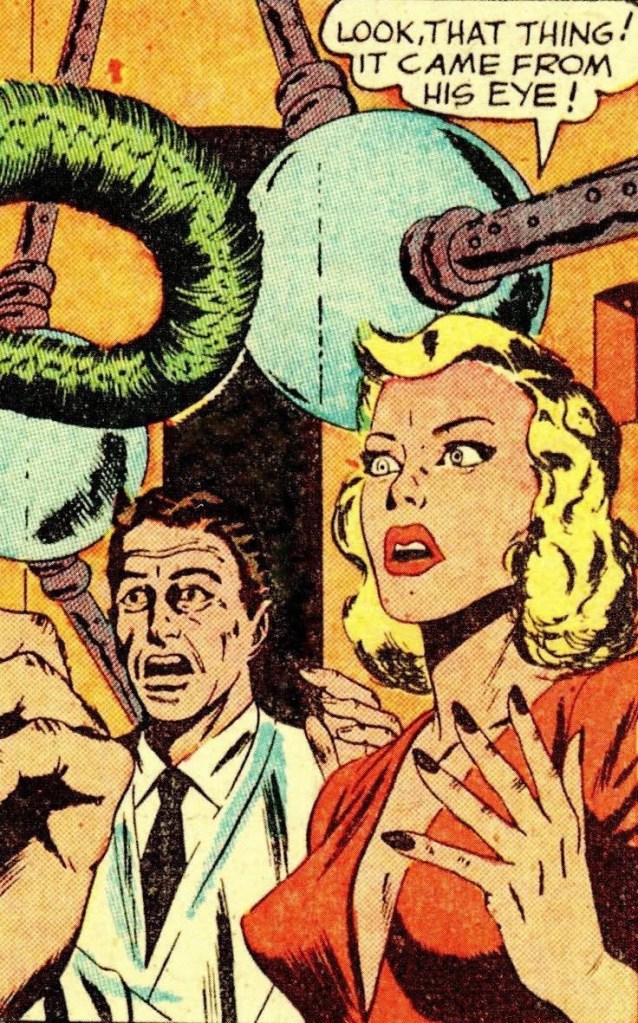





































































 peej
peej Carissa
 bostonboomer
 dakinikat
 ecocatwoman
 mablue2
 Mama Lopez
 peggysue22
 quixote
 skydancingguestblogger
 Mona (aka Wonk the Vote)



 Sky Dancing
Recent Comments