We just can’t seem to get rid of them! It’s like there’s a plague of locusts in every nook, crack, and cranny of our government incessantly making a horrid buzzing sound and devouring everything in sight! I’ve read stories today about these persistent right wing pests in just about every level and branch. Trump’s Deplorables are hunkering down for a long fight.
The chief judge of the federal court in Washington scorched Capitol riot suspects during a hearing on Thursday, calling their actions an assault on American democracy and ruling that a man who had bragged about putting his feet on a desk in House Speaker Nancy Pelosi’s office should stay in jail as he awaits trial.
“This was not a peaceful protest. Hundreds of people came to Washington, DC, to disrupt the peaceful transfer of power,” Chief Judge Beryl Howell of the DC District Court said in the hourlong hearing for Capitol riot defendant Richard Barnett on Thursday.
Howell’s remarks are some of the first from a federal district judge over the more than 150 criminal cases that resulted from the siege. Her decision on Barnett also marks the first ruling in an appeal from the Justice Department after a magistrate judge out of Washington denied its request to keep a Capitol riot suspect in jail. At least four others are awaiting rulings from district judges in Washington after appeals.
Howell made clear she believes the crowd was trying to thwart the federal legislative branch from carrying out its duties.
“We’re still living here in Washington, DC, with the consequences of the violence that this defendant is alleged to have participated in,” she said.
“Just outside this courthouse … are visible reminders of the January 6 riot and assault on the Capitol,” the judge said, noting that she can see National Guard troops from the window in her chambers in the courthouse.
Barnett is charged with entering the restricted grounds of the Capitol, violent entry and disorderly conduct, and for theft of public property, after he allegedly took a letter from Pelosi’s office.
“The titles of those offenses don’t even properly capture the scope of what Mr. Barnett is accused of doing here,” Howell said at the hearing.
The judge noted that Barnett had bragged to a reporter that he had written “a nasty note, put my feet up on her desk and scratched my balls” in Pelosi’s office. Barnett’s lawyer says he hadn’t seen the report of that quote from his client in The Washington Post.
During previously unreported meetings last summer, House Republican leaders discussed — but then largely set aside — fears that QAnon-supporting conspiracy theorist Marjorie Taylor Greene would end up a flaming trainwreck for their party.
Why it matters: Greene has emerged not just as an embarrassment but a challenge for the GOP, with House Minority Leader Kevin McCarthy now forced to weigh whether to maintain his policy of sanctioning members who make dangerous statements.
In a series of conversations described to Axios by sources with direct knowledge of their contents, former Rep. Mark Walker was especially vocal about the “crazy” Greene. Reps. Liz Cheney and Steve Scalise also spoke up. But McCarthy and others ultimately did little to stop her.
A spokesperson for Greene did not respond to a call or email from Axios.
Behind the scenes: John Cowan, Greene’s opponent in August’s primary runoff for Georgia’s 14th District seat, recalls separate conversations he had with McCarthy and Scalise, the House GOP whip, in which both men acknowledged Greene was a serious problem for the party.
Cowan detailed a phone conversation he had with McCarthy in July, during which he warned him about wild opposition research they had against Greene.
“I said, ‘She’s bad for the party,'” Cowan told Axios during a 30-minute interview Thursday. “I said she has real problems and does not represent, at least what I think of as, someone who would be allowed even in a big-tented party. I mean, at some point, you have to say, ‘No shoes, no shirt, no service.'”
While both McCarthy and Scalise condemned Greene, and Scalise endorsed and raised money for and donated to Cowan, it wasn’t enough to overcome the vocal support for Greene from Trump’s then-chief of staff Mark Meadows.
The backing of Meadows, his wife, Debbie, and Rep. Jim Jordan of Ohio was so strong that Cowan never had a real shot against Greene, he said.
“The House Freedom Caucus put their fingers on the scale in a big way,” said Cowan, a neurosurgeon. “By default it was sort of, ‘She must be Trump’s person.’ If those guys are going to bat for her, she must be Trump’s endorsed person.”
Greene also came up repeatedly during McCarthy’s leadership meetings last summer, a source with direct knowledge told Axios.
Scalise, Cheney and Walker gathered for the weekly meeting in the conference room of McCarthy’s office in the Capitol and plotted how they should deal with her.
Walker, now running for North Carolina’s open Senate seat in 2022, strenuously argued they needed to do more to stop this “crazy” woman who threatened to bring down the party, according to a source with direct knowledge.
Cheney (R-Wyo.) also spoke up aggressively in these meetings about the danger of having Greene in the party.
Scalise (R-La.) and McCarthy (R-Calif.) ended up putting out statements condemning her, yet McCarthy didn’t do much beyond that once it was clear she was going to win the race by a healthy margin.
The bottom line: “Everybody was well aware of her previous persona and who she is. I would say they all knew she was going to be a problem,” Cowan told Axios.
“Maybe they just assumed that the awe of winning an election would calm her down a little bit, and so she would actually be interested in governing and be interested in policy, and she’s just clearly not. She is literally there for a stage production.”
The top example of a conservative mischief-maker, presented in perfect symmetry, is Marjorie Taylor Greene.
Greene’s views are just a bit more controversial. They include, but are by no means limited to, the following:
The QAnon conspiracy theory, which holds that Donald Trump is secretly fighting a worldwide child-sex-slavery ring that was supposed to culminate in the mass arrest of his political opposition, is “worth listening to.”
• “Zionist supremacists” are secretly masterminding Muslim immigration to Europe in a scheme to outbreed white people.
• Leading Democratic officials should be executed.
The most recent Greene view to be unearthed comes via Eric Hananoki. Just over two years ago, Greene suggested in a Facebook post that wildfires in California were not natural. Forests don’t just catch fire, you know. Rather, the blazes had been started by PG&E, in conjunction with the Rothschilds, using a space laser, in order to clear room for a high-speed rail project.
The centrists’ worry is that the party is branding itself as the party of insurrectionists and conspiracy theorists. This spells catastrophe for the GOP’s ability to appeal beyond a hardcore base, they say.
Ten House Republicans voted to impeach President Trump for inciting the Jan. 6 ransacking of the Capitol, but the chances of him being convicted in the Senate seem close to zero.
The GOP activist base still loves Trump, and a related ecosystem of bellicose conservative media has lambasted those who have broken from him.
Now the GOP is spending the critical early days of President Biden’s administration squabbling over what to do about Rep. Marjorie Taylor Greene (R-Ga.).
Greene, a backer of the QAnon conspiracy theory, has also backed social media posts calling for the execution of Speaker Nancy Pelosi (D-Calif.). Video has emerged of Greene taunting David Hogg, the young gun control activist who survived the 2018 high school massacre in Parkland, Fla.
Greene has, so far, not been stripped of her committee assignments by House Minority Leader Kevin McCarthy (R-Calif.), even though this fate befell then-Rep. Steve King (R-Iowa) in 2019 when he suggested that white supremacism was not offensive.
Open hostility broke out among Republicans and Democrats in Congress on Thursday amid growing fears of physical violence and looming domestic terrorism threats from supporters of former president Donald Trump, with House Speaker Nancy Pelosi leveling an extraordinary allegation that dangers lurk among the membership itself.
“The enemy is within the House of Representatives, a threat that members are concerned about, in addition to what is happening outside,” Pelosi (D-Calif.) said at a Thursday morning news conference.
But even as she and others sounded the alarm, Republicans continued to deepen their ties to the former president, who has been impeached on a charge of inciting an insurrection at the U.S. Capitol on Jan. 6.
Hours after Pelosi’s remarks, House Minority Leader Kevin McCarthy (R-Calif.) met with Trump in Florida. In a statement, the pair vowed to work together to take back the House. On Thursday afternoon, Rep. Matt Gaetz (R-Fla.), a Trump acolyte, traveled to the district of Rep. Liz Cheney (Wyo.), a member of the House GOP leadership, to hold a rally criticizing her vote to impeach Trump earlier this month.
The events reflected the extent to which the country’s legislative branch, which has for years been mired in partisan bickering, has reached new levels of animosity just as newly inaugurated President Biden is seeking to win passage of a massive bill designed to help lift the country out of the pandemic.
Some Democrats are expressing fears that Republican lawmakers — who in some cases have tried bringing weapons onto the House floor — cannot be trusted. Some have bought bulletproof vests and are seeking other protections.
And Democratic leaders are putting maximum pressure on the Republican leadership to denounce freshman Rep. Marjorie Taylor Greene (R-Ga.), who once endorsed violence against members of Congress. One Democrat advanced a resolution to expel her from Congress.
This about GOP extremism underscores that there's no political symmetry. Left wing Democrats in Congress, e.g. @AOC, hang out with policy analysts and write bills. Right wing Republicans in Congress hang out with violent militias and incite violence https://t.co/e7yxq3042f
The video’s title was posed as a question, but it left little doubt about where the men who filmed it stood. They called it “The Coming Civil War?” and in its opening seconds, Jim Arroyo, who leads an Arizona chapter of Oath Keepers, a right-wing militia, declared that the conflict had already begun.
To back up his claim, Mr. Arroyo cited Representative Paul Gosar of Arizona, one of the most far-right members of Congress. Mr. Gosar had paid a visit to the local Oath Keepers chapter a few years earlier, Mr. Arroyo recounted, and when asked if the United States was headed for a civil war, the congressman’s “response to the group was just flat out: ‘We’re in it. We just haven’t started shooting at each other yet.’”
Less than two months after the video was posted, members of the Oath Keepers were among those with links to extremist groups from around the country who took part in the Jan. 6 attack on the Capitol, prompting new scrutiny of the links between members of Congress and an array of organizations and movements that espouse far-right beliefs.
Nearly 150 House Republicans supported President Donald J. Trump’s baseless claims that the election had been stolen from him. But Mr. Gosar and a handful of other Republican members of the House had deeper ties to extremist groups who pushed violent ideas and conspiracy theories and whose members were prominent among those who stormed the halls of Congress in an effort to stop certification of President-elect Joseph R. Biden Jr.’s victory.
MUST READ: My @washingtonpost OpEd: THE TRUMP INSURGENCY IS COMING. “We’re still too complacent about the threat of violent domestic extremism” https://t.co/uoF9h7VHNZ
This week, the Department of Homeland Security issued a bulletin warning that domestic violent extremists might be “emboldened” by the Capitol assault “to target elected officials and government facilities.” DHS is right to be worried. As an expert in counterinsurgency, I believe we need to take seriously the possibility that Trump’s most zealous supporters are now creating the conditions for long-term conflict — extending, at its worst, to persistent terrorist or paramilitary violence.
The 2014 U.S. Army/Marine Corps Counterinsurgency Field Manual defines insurgency as “organized use of subversion and violence to seize, nullify, or challenge political control of a region.” The insurgent’s goal is to make existing governments seem powerless, feckless and incapable of protecting the common citizen — and then exploiting that vacuum to seize political power. The self-styled militia members, conspiracy theorists and Trump zealots who stormed the Capitol demonstrated their aspiration to thwart the workings of American democracy. How far are they willing to go?
Achieving Trump’s disruptive goals on a national scale might be simpler than we want to admit. An NBC poll reveals Trump commands the loyalty of 87 percent of Republicans — even after the Jan. 6 assault. And his followers have successfully employed a cultural tool so powerful many deny it even exists: White privilege.
During the assault on the Capitol, the deference encountered by some violent insurrectionists — in stark contrast to the massive preemptive deployments of force experienced by Black Lives Matter activists in similar situations — could only have served to confirm their assumption that they were protected by their Whiteness. Despite dire intelligence warnings that seizing the Capitol was the goal of the protest, the sergeants-at-arms for both the Senate and the House viewed it as bad “optics” to have National Guard troops present. The massive surge of insurrectionists, shielded by their inherent White privilege, were able to overpower the police, murder a policeman and freely hunt for elected representatives, including Vice President Mike Pence.
So long as these insurrectionists believe they are thus shielded, any act of defiance is within the realm of possibility. Subversion, sabotage, and attacks using snipers or explosives could be utilized to plague urban areas, damaging water- and power-supply systems or computer networks. Even spectacular deadly terrorist attacks, akin to Timothy McVeigh’s 1995 truck bombing in Oklahoma City, are not out of the question.
Trump’s fledgling insurgents are embracing the narrative that they are a modern-day, hyper-patriotic version of the “Sons of Liberty” or the defenders at Lexington or Concord. For them, this faith in their own purity is a force multiplier, but it is also a major vulnerability. We must attack this belief head-on.
Here’s something from a cultist that got out of it. You’ll also note she was Bernie supporter prior to switching to Trump if you read the article.
Far-right militias are swellin' their masses, pickin' up disillusioned Q's. Cultists either go deeper or leave altogether. https://t.co/fm80sS00Aq
Donald Trump was cultivated as a Russian asset over 40 years and proved so willing to parrot anti-western propaganda that there were celebrations in Moscow, a former KGB spy has told the Guardian.
Yuri Shvets, posted to Washington by the Soviet Union in the 1980s, compares the former US president to “the Cambridge five”, the British spy ring that passed secrets to Moscow during the second world war and early cold war.
Now 67, Shvets is a key source for American Kompromat, a new book by journalist Craig Unger, whose previous works include House of Trump, House of Putin. The book also explores the former president’s relationship with the disgraced financier Jeffrey Epstein.
“This is an example where people were recruited when they were just students and then they rose to important positions; something like that was happening with Trump,” Shvets said by phone on Monday from his home in Virginia.
Shvets, a KGB major, had a cover job as a correspondent in Washington for the Russian news agency Tass during the 1980s. He moved to the US permanently in 1993 and gained American citizenship. He works as a corporate security investigator and was a partner of Alexander Litvinenko, who was assassinated in London in 2006.
As you can probably guess from the images, it is snowing here. It snowed Tuesday night into Wednesday and we might get a bigger snowfall over the weekend. It has been a snow-free January so far, but no longer.
As Congressional Republicans once again circle the wagons around Trump, the death and injury toll from the January 6 attempted coup is growing. A second policeman committed suicide and many more cops were injured than preciously known.
Acting Metropolitan Police Chief Robert J. Contee told the House Appropriations Committee on Tuesday that two police officers have died by suicide since responding to the riot at the Capitol on January 6, according to Contee’s opening statement before the committee, which was obtained by CNN.
This is the first time the force has confirmed that two officers took their own lives after the attack.
“Tragically, two officers who were at the Capitol on January 6th, one each from the Capitol Police and MPD, took their own lives in the aftermath of that battle,” Contee said in his statement.
Another Capitol Police officer, Brian D. Sicknick, died the day after the riot “due to injuries sustained while on-duty,” the Capitol Police said in a statement earlier this month.
Nearly 140 police officers from two departments were injured during the Jan. 6 pro-Trump mob attack on the Capitol, including officers who suffered brain injuries, smashed spinal discs and one who is likely to lose his eye, the Capitol Police union said on Wednesday.
In a statement, the union’s chairman, Gus Papathanasiou, faulted leadership of the Capitol Police for failing to equip officers with proper equipment ahead of the attack.
He was responding to the closed-door testimony on Tuesday of Yogananda D. Pittman, the acting chief of the Capitol Police, who acknowledged that the department had known there was a “strong potential for violence” that day but failed to take necessary steps to prevent what she described as a “terrorist attack.”
Chief Pittman took the reins of the agency after the siege, replacing Steven Sund, who resigned as police chief under pressure.
“We have one officer who lost his life as a direct result of the insurrection,” Mr. Papathanasiou said. “Another officer has tragically taken his own life. Between U.S.C.P. and our colleagues at the Metropolitan Police Department, we have almost 140 officers injured. I have officers who were not issued helmets prior to the attack who have sustained brain injuries. One officer has two cracked ribs and two smashed spinal discs. One officer is going to lose his eye, and another was stabbed with a metal fence stake.”
Chief Pittman testified via videoconference before a meeting of the House Appropriations Committee that officers were outmanned during the riot, that internal communications were poor, and that officers lacked sufficient equipment and struggled to carry out orders like locking down the building.
Nevertheless, Congressional Republicans are mostly back in the Trump cult.
While pundits ponder the GOP’s future — and traditionalists hope to change course out of the wreckage left by Trump’s insurrection — Washington’s power players and state activists have already made their choice.
Highlighting the former President’s lightning fast rehabilitation, the House Minority Leader Kevin McCarthy will visit Trump in Florida on Thursday after repudiating his own criticism of the incitement of the US Capitol riot.
Only a week after Trump left the White House, it’s clear that his party is not ready to let him go. Extremists and Trumpists are on the rise, while lawmakers who condemned his aberrant conduct fight for their political careers. The anti-Trump wing — represented by members of Congress such as Sens. Ben Sasse of Nebraska and Mitt Romney of Utah and Illinois Rep. Adam Kinzinger — look like a small and outmaneuvered force.
This week’s sorting will have significant implications for the GOP’s positioning as it heads into the 2022 midterm elections, and for President Joe Biden’s hopes of draining the poison from Washington in the name of national unity.
But it will also pose a fundamental question for the Grand Old Party itself. Is yet another doubling down on grassroots fury and the Trump base the best way to win back Americans? Especially those in suburban areas who rejected the ex-President who lost the House, the Senate and the White House in a single four-year term?
Immediately following the deadly Jan. 6 riot on Capitol Hill, several leaders and prominent figures in his own party wanted to ditch President Donald Trump, blame him for inciting the mob, or at least move on from him. It took less than a month for almost all of the official GOP to start crawling back to him.
Junco on a branch
GOP bigwigs who were, very briefly, prepared to throw Trump onto the ash heap of history following his primary role in sparking the MAGA riot and for helping the Republican Party lose the presidency and both houses of Congress are now beginning to shield the ex-president, once again, from his liberal foes. Top Republican lawmakers are increasingly signaling that they are ready to let Trump off the hook yet another time, and the former president has been working the phones from his new home base in Florida in an effort to make sure GOP senators vote to acquit him in an upcoming impeachment trial.
Of course Lindsey Graham is leading the pack in their rush back into the Trump orbit.
“He’s very interested in the outcome of the trial and I talked to him yesterday, and I told him the vote yesterday is a sign of things to come,” Sen. Lindsey Graham (R-SC), a close Trump ally, told The Daily Beast on Wednesday.
Graham was referring to a Tuesday vote for which Senate Minority Leader Mitch McConnell (R-KY) sided with Sen. Rand Paul (R-KY) on a measure declaring Senate impeachment proceedings against an ex-president to be unconstitutional. Earlier this month, McConnell had publicly blamed Trump for “provok[ing]” the anti-democratic rioting, and had left open the possibility of voting to convict him in a potential trial.
Minority leader Kevin McCarthy is not far behind.
McCarthy is making nice with the former president—and his family, too. Days after his argument with Donald Trump, McCarthy got on the phone with Donald Trump Jr. Both sides of the conversation walked away believing that they remained on great terms with the other. Trump Jr. is currently planning to do whatever he can to help the GOP take back the House in 2022, according to a person familiar with the matter. “Don wants to see Kevin as speaker of the House,” this source said.
Moreover, multiple news outlets reported on Wednesday that former President Trump and McCarthy are scheduled to meet in person in Florida on Thursday.
Just a short time ago, both of these assholes were denouncing Trump for his attempted coup.
Rose Finch
Yesterday, JJ posted a links to Seth Abraham’s reporting on a suspected planning meeting held on January 5, the day before the Capitol riot. Other news outlets are now reporting on the meeting.
Reporting in the Omaha World-Herald, as well as social media screenshots and videos, confirm a January 5 pre-insurrection war council at DC’s Trump International Hotel. Also confirmed by the evidence is a list of the gathering’s (minimum) fifteen attendees.
The first Proof article on this subject can be found here.
The secretive January 5 meeting—which one attendee, Senator Tommy Tuberville, has already been caught lying about, and which another, Nebraska gubernatorial candidate Charles Herbster, has attempted to scrub his social media to conceal—included eight different components of Trump’s political machine:
Family members: Donald Trump Jr., Eric Trump, and Kimberly Guilfoyle (current girlfriend of Trump Jr., and a former on-air Fox News personality).
Trump’s legal team: Rudy Giuliani.
United States senators: Tuberville and at least two other senators (see below).
Administration officials: Peter Navarro and Charles Herbster.
January 6 organizers: Ali Alexander, Adam Piper, and Michael Flynn.
Trump campaign officials: Corey Lewandowski (former), David Bossie (former).
Cyberintelligence specialists: Flynn (information operations) and possibly Phil Waldron (self-described—see more below—as skilled in “intelligence analysis”).
Trump donors: Mike Lindell, Daniel Beck, and Herbster.
Due to minimal ongoing coverage of this extraordinary pre-January 6 strategy meeting, questions about the Trump International Hotel gathering remain. This article outlines key questions and reveals the answers to several—all uncovered over the last 24 hours.
Alabama Republican Senator Tommy Tuberville through a spokeswoman Tuesday denied meeting with the then-director of the Republican Attorneys General Association and others inside Trump’s private residence at the Trump International Hotel on Jan. 5 — on the eve of the deadly U.S. Capitol attack.
But a photo posted to social media appears to show Tuberville in the hotel’s lobby that day, and a company CEO in a separate post describes meeting with Tuberville and others at the hotel that day and discussing “illegal votes.”
Charles W. Herbster, who was then the national chairman of the Agriculture and Rural Advisory Committee in Trump’s administration, in a Facebook post at 8:33 p.m. on Jan. 5 said that he was standing “in the private residence of the President at Trump International with the following patriots who are joining me in a battle for justice and truth.”
Among the attendees, according to Herbster’s post, were Tuberville, former RAGA director Adam Piper, Donald Trump Jr., Eric Trump, Trump’s former National Security Advisor Michael Flynn, adviser Peter Navarro, Trump’s 2016 campaign manager Corey Lewandowski and 2016 deputy campaign manager David Bossie.
More details:
A photo posted to an Instagram user’s account appears to show Tuberville standing in the lobby of the Trump International Hotel on Jan. 5. The user captioned the photo “Newly elected Senator Tommy Tuberville.” In two other separate photos, the person posted images of Flynn and Donald Trump Jr. inside the hotel on Jan. 5. Attempts to reach the person who posted that photo were unsuccessful Tuesday.
Daniel Beck, CEO of an Idaho technology company, in a Facebook post at 10:27 p.m. on Jan. 5 wrote that he’d spent the evening with Tuberville, Trump Jr. and girlfriend Kimberly Guilfoyle, Michael J. Lindell, Navarro and Trump attorney Rudy Giuliani.
In the weeks before riled-up Trump supporters looking to overturn the election assembled in Washington, DC, Stone worked to raise money for “private security” and equipment for events there on January 5 and 6 that preceded the storming of the Capitol. But the “Stop the Steal” website where Stone solicited funds was subsequently taken down. Though he now claims to have merely encouraged “peaceful” protests of Congress, he struck a fiery and apocalyptic tone in speeches leading up to the Capitol attack. At a DC rally on December 12, he exhorted his rightwing fans to “fight until the bitter end” to prevent Joe Biden from taking office. Speaking at a rally in Freedom Plaza the night before the Capitol riot, Stone urged the crowd to join an “epic struggle.”
At that event, Stone appeared to be receiving protection from a security detail composed of members of the Oath Keepers, a far-right militia group. And Stone for years hasmaintainedclose ties to members of the Proud Boys, whose leaders treat him as a mentor. Members of both groups facecriminalcharges for their role in the assault on Congress.
There’s much more on Stone’s role at Mother Jones.
A clip from a video recorded by the CEO of a text messaging company is going viral after well-known attorney and activist Seth Abramson posted it to Twitter late Tuesday night.
In the original Facebook live video, posted at 11:32 PM the night before the January 6 insurrection, Txtwire CEO Daniel Beck claims to have just finished a meeting with “about 15” people at the Trump Hotel in Washington, D.C., including, he says, Rudy Giuliani, Kimberly Guilfoyle, Donald Trump Jr., My Pillow CEO Mike Lindell, and “several Senators.”
It appears at least one of those Senators has now been identified.
The video itself would be interesting to those investigating the insurrection and Donald Trump’s attempts to overturn the election, but it’s far more interesting given an article in the Omaha World Herald published January 6, that reports a Republican exploring a run for governor of Nebraska, Charles Herbster, appears to have attended that same January 5 meeting.
Read more at Raw Story.
So this could get very interesting. I hope big media will pick up on this story soon. It sure seems significant.
That’s it for me today, but there’s lots more happening. I’ll post more links in the comment thread and I hope you will too.
Did you like this post? Please share it with your friends:
First dogs Champ and Major Biden are seen on the South Lawn of the White House in Washington, DC, on January 25, 2021. (Photo by JIM WATSON / AFP)
Good Morning!!
There is quite a bit happening in the news, and I have to admit that I haven’t been paying as much attention to it as I usually do. It has been such a relief to have Trump gone–at least for a week or two–that I’ve been spending more time reading for pleasure instead of focusing on politics. But looking around this morning, I see there’s a lot going on. There’s Biden’s agenda and Democratic control of the Senate; there’s impeachment; there’s the continuing problem of right wing conspiracy theories and the the people who’ve been sucked in by them; and there’s still Trump and his defenders trying to find ways to remain relevant.
What’s going on in the Senate right now is the biggest story, I think. Mitch McConnell folded last night, and Schumer now controls the Senate.
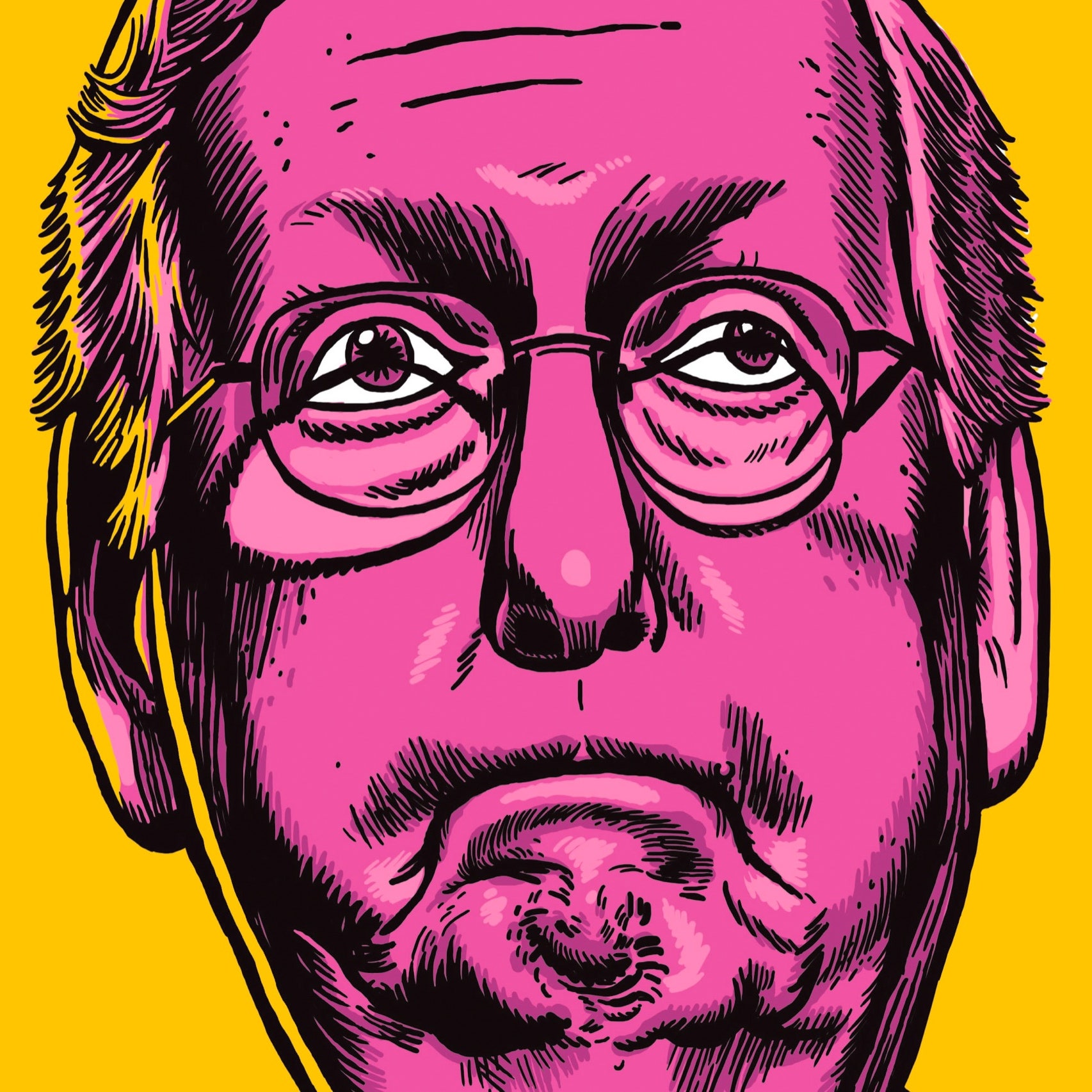
Senate Minority Leader Mitch McConnell on Monday night signaled he would step back from an ultimatum over Senate rules that sparked a partisan showdown and threatened to obstruct President Biden’s early legislative agenda.
McConnell (R-Ky.) said in a statement that he was ready to move forward with a power-sharing accord with Democrats on how to operate the evenly divided Senate, defusing a potentially explosive clash over the minority’s rights to block partisan legislation.
At issue for McConnell was the fate of the filibuster, the Senate rule that acts as a 60-vote supermajority requirement for most legislation. With many Democrats calling for its elimination as their party takes control of the House, Senate and White House, McConnell had sought assurances from the new Senate majority leader, Sen. Charles E. Schumer (D-N.Y.), that the filibuster would be preserved.
Democrats bristled at the request, demanding that McConnell agree to a power-sharing arrangement that followed the model used during the last 50-to-50 Senate, in 2001 — which would give the party with the vice presidency and its tie-breaking powers control of the floor agenda — without any additional provisions.
Without the deal in place, Senate committees remained frozen from the previous Congress, where Republicans held a majority. That has created the unusual circumstance where Democrats have control of the floor while GOP chairs remain in charge of most committees.
McConnell on Monday said he was prepared to move forward on a deal “modeled on that [2001] precedent” after two Democratic senators — Joe Manchin III (W.Va.) and Kyrsten Sinema (Ariz.) — publicly reiterated their previously stated opposition to eliminating the filibuster.
That’s fine. McConnell can tell himself he won, but in the end Manchin and Sinema are Democrats. I like the odd that they would come around in the long term.
Folks mad that *Joe Manchin* hasnt gone on record against filibuster yet are missing the way things are trending
Manchin was always going to be the lagging indicator
The way to judge where things headed is the speed with which the Coonses and Bennets are shifting
This guy used to work for Harry Reid and he wrote a whole book about getting rid of the filibuster.
McConnell didn’t get anything here. Manchin and Sinema said the same thing they’ve said before. Bringing them around to reform is and was always going to be a process that likely requires repeated GOP obstruction. McConnell picked this fight, lost and is now doing a little CYA. https://t.co/pq0qYmFK4C
Adam Jentleson once served as deputy chief of staff to the Senate Democratic leader, Harry Reid, witnessing the deal-making and obstructionism and change-killing up close. He now works for an anti-corruption organization called Democracy Forward. And he has written a new book whose title and subtitle speak for themselves: “Kill Switch: The Rise of the Modern Senate and the Crippling of American Democracy.”
The other day, I asked Adam to do me — and all of us — a favor. I would ask him some of the stupid questions we might be afraid to ask about this strange institution that shapes our lives, and he would answer.
Read the interview at the link. Here’s Jentleson on the history of the filibuster:
Not only was the filibuster not an original feature of the Senate, the framers were explicit that they would have opposed anything like it. For all their vaunted concern for protecting the rights of minority factions, they were very clear that after the minority had been given a role in the process, all decision points were to be majority-rule. This applied to the Senate, too. They were so focused on this because the Articles of Confederation had been a disaster for the exact reason that they required a supermajority threshold to pass most major legislation.
They were also familiar with all the arguments we hear today for why supermajority thresholds foster bipartisanship. And they dismissed them all. Here’s Hamilton in Federalist 22: “What at first sight may seem a remedy, is, in reality, a poison.” Instead of encouraging cooperation, he said, the end result of requiring “more than a majority” would be “to embarrass the administration, to destroy the energy of the government, and to substitute the pleasure, caprice or artifices” of a minority to the “regular deliberations and decisions of a respectable majority.” They were very clear about this. In a way, they saw Mitch McConnell coming.
Historians disagree about when the first filibuster was. In 1806, the Senate got rid of the rule that let a majority vote to end a debate when it turned obstructionist. Since obstruction was not a major problem at the time, no one really noticed that this rule was gone. It took decades for this to matter.
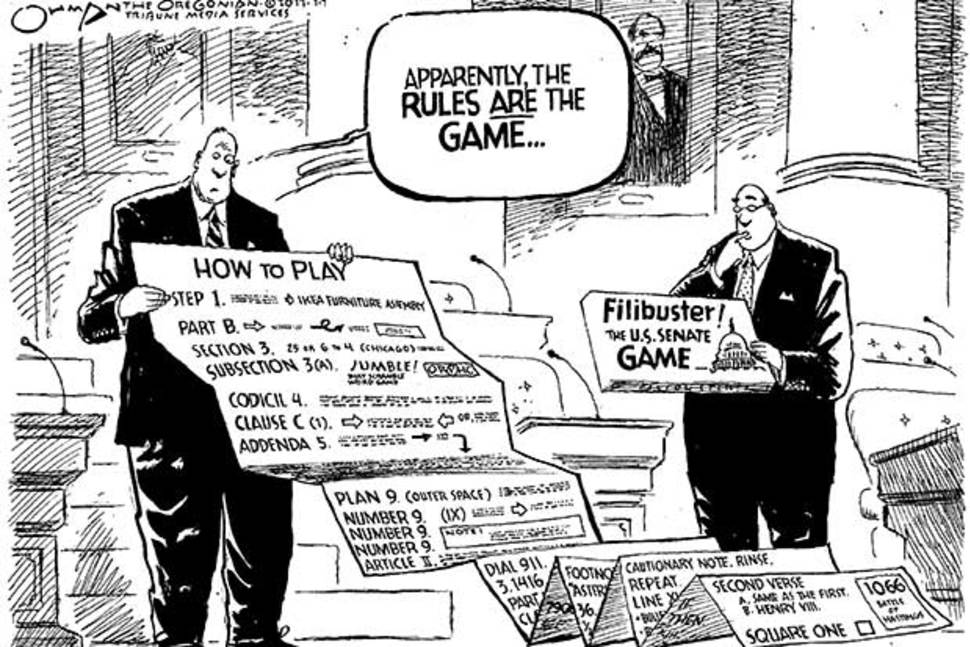
But then in the 1830s, John Calhoun, the virulent racist, scion of slaveowners, and spiritual father of the Confederacy, arrived in the Senate. He exploited this loophole to become the leading innovator in creating what we would recognize today as the talking filibuster: Jimmy Stewart-style, standing on the floor giving a long-winded speech. He was not the only one to use it, but he was its leading innovator. And he did it because the South and the slave power were becoming outgunned. Calhoun needed to increase the power of a numerical minority in the Senate to block things, or else the South was doomed.
Fast forward to the twentieth century. Obstruction has gotten a lot worse. In 1917, the Senate is humiliated in the eyes of the public when a filibuster blocks President Wilson’s bill to arm American merchant ships in response to U boat attacks. After being raked across the coals by Wilson, with senators being burned in effigy, senators come back and pass a new rule designed to end filibusters—to “terminate successful filibustering,” as they put it at the time. This is called Rule 22. It introduces a concept called “cloture,” a.k.a. closure, which is basically that rule that got nixed in 1806 — the idea that when a filibuster has gone on too long, senators can vote to end it.
The problem was that they set the threshold for ending debate at a supermajority, thinking that reasonable senators could agree when a vote had gone on too long, which was consistent with the ethic of the time. Once again, Southern white supremacists were the chief innovators. Jim Crow segregationist senators of the South used this new supermajority threshold to block every civil rights bill that came before the Senate during this period.
This is important to emphasize, because we are taught that there is some noble wisdom in the Senate’s delay: during the Jim Crow era, the country was ready to pass civil rights bills. It was a power play, pure and simple. Southern senators saw they were outnumbered, and they needed a way to increase the power of a numerical minority to block bills in the Senate. This motivation led them to innovate the regular use of the supermajority threshold to block civil rights bills.
There’s much more at the link, and it’s fascinating.
Sen. Rob Portman (R-OH) announced Monday that he won’t seek reelection in 2022. One reason he chose to retire, he said in announcing his decision, is because “it has gotten harder and harder to break through the partisan gridlock and make progress on substantive policy.”
But if Portman didn’t like partisan gridlock, he shouldn’t have spent years supporting it.
A loyal Republican, Portman has been a reliable ally and backer of Mitch McConnell, his party’s leader in the Senate and a key architect of the Senate’s current dysfunction. When Barack Obama won the White House, McConnell attempted to make him a “one-term president” by rallying Republican Senators to block every one of his initiatives. Attempts by Democrats to work across the aisle failed; Obamacare limped across the finish line after the GOP refused to support it for a year. A graveyard of legislation passed by the House of Representatives piled up in the Senate, where McConnell reportedly didn’t mind his nickname of “grim reaper.” “Rarely has a political figure pinned his fortunes on accomplishing so little,” the Associated Press noted of McConnell in 2019.
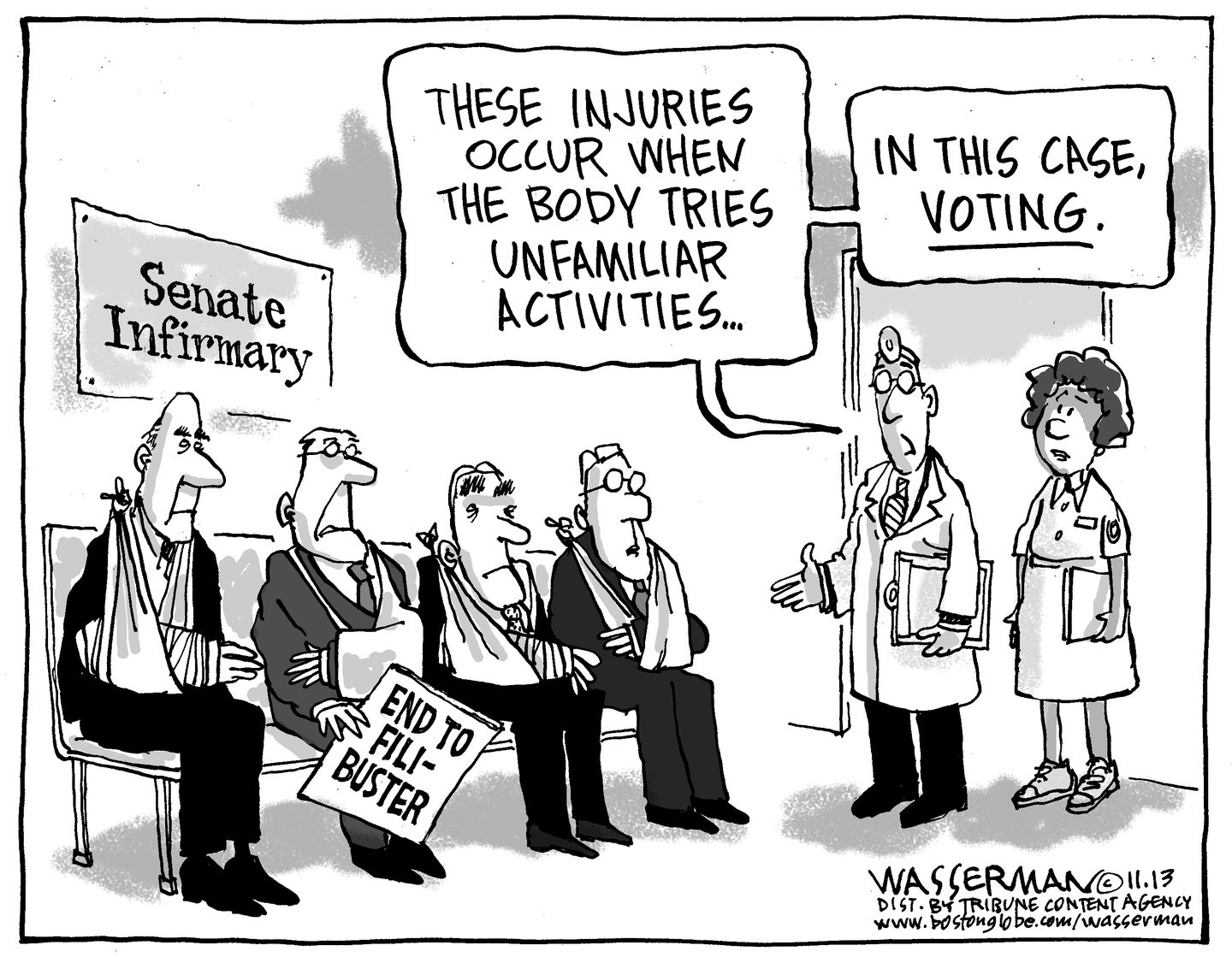
Today, McConnell is preparing to run the same plays that he developed against Obama on President Joe Biden. As a first step, over the last week, he has held up the business of organizing the new Senate in an attempt to protect the filibuster. The modern filibuster, created in the early 20th century to defeat post-Reconstruction civil rights legislation, requires 60 of the 100 senators to greenlight legislation for passage. Under Mitch McConnell, it became a tool to defeat everything Democrats want—the key to his strategy of gridlock and obstruction.
The filibuster is a weapon of minority rule, and McConnell wants to keep it because it will give him the power to kill legislation even in a Senate he no longer controls. Portman, who is now throwing up his hands at the upper chamber’s hopeless gridlock, also supports maintaining the filibuster. The “Senate supermajority…forces us to work together,” Portman claimed in a tweet backing the filibuster on Sunday. “It provides stability.”
It all goes back to white supremacy, doesn’t it? But Portman is leaving, and that’s not good for McConnell and the GOP.
President Joe Biden on Monday offered his most extensive comments since taking office on former President Donald Trump’s impeachment trial, telling CNN, “I think it has to happen.”
Biden made the comment during a brief one-on-one interview with CNN in the halls of the West Wing. He acknowledged the effect it could have on his legislative agenda and Cabinet nominees but said there would be “a worse effect if it didn’t happen.”
Biden told CNN he believed the outcome would be different if Trump had six months left in his term, but said he doesn’t think 17 Republican senators will vote to convict Trump.
“The Senate has changed since I was there, but it hasn’t changed that much,” Biden said.
His comments came the same night the House impeachment managers formally triggered the start of Trump’s second impeachment trial after they walked across the Capitol and began reading on the Senate floor the charge against Trump, the first president in history to be impeached twice.
I’m running out of space already, but here are more important stories to check out, links only:
What a difference a week makes! The headlines today actually contain more news and analysis than melodrama and craziness. Perhaps it’s time to turn some focus to the news outlets and the way their approach to the last four years actually created a good deal of the havoc. A good first place to start is Fox News which basically turned into a propaganda arm of a deranged and out of control President by repeating and reinforcing every deranged lie and conspiracy theory out of his pouty little potty mouth.
However, at the risk of sounding like a broken record, I’ll say again that all the attention being given to social media is basically a distraction. Sure, the insurrectionists used social media to help organize things, but people have organized protests in Washington DC before with little trouble. Nor was social media necessary to inflame to mob. The 2009 tea party movement did just fine without much in the way of social media.
The source of all this was, as usual, Fox News and the mainstream right-wing media empire. It wasn’t social media that convinced 70 percent of Republicans that the election was stolen. It was Fox News. It wasn’t social media that relentlessly took seriously all the moronic lawsuits filed by Donald Trump’s team of idiot lawyers. It was Fox News. It’s not social media that has any serious appeal outside the folks who are already conspiracy theorists. It’s Fox News.
But of course there’s nothing we can do about Fox News, is there? And they all dress so nicely, too. They can’t really want to overturn the peaceful transfer of power after an election, can they?
I have no idea what they really want to do. Maybe it’s all a game, maybe it’s just a way to make money, or maybe they really do want to overturn an election. But it doesn’t matter. Regardless of their intentions, they’re the ones responsible for this insurrection. And we aren’t completely helpless to stop them, either.
Apparently, at a network that specializes in spreading lies, there was a price to pay for getting it right. (“Fox News isn’t a newsgathering organization,” surmised press critic Eric Boehlert, arguing in response to the purge that its White House credentials should be revoked.)
In recent days, Fox has taken a sharp turn toward a more extreme approach as it confronts a post-Trump ratings dip — the result of some of its furthest-right viewers moving to outlets such as Newsmax and One America News and some middle-of-the-roaders apparently finding CNN or MSNBC more to their liking.
With profit as the one true religion at Fox, something had to change. Eighty-nine-year-old Rupert Murdoch, according to a number of reports, has stepped in to call the shots directly. Most notably, the network has decided to add an hour of opinion programming to its prime-time offerings. The 7 p.m. hour will no longer be nominally news but straight-up outrage production.
Why? Because that’s where the ratings are.
And in a move that should be shocking but isn’t, one of those who will rotate through the tryouts for that coveted spot will be Maria Bartiromo, whose Trump sycophancy during the campaign may well have been unparalleled. She was among those (including Lou Dobbs and Jeanine Pirro) recently forced under threat of a lawsuit to air a video that debunked repeated false claims on her show that corrupt voting software had given millions of Trump votes to Biden.
At the same time, Sean Hannity, who likes to blast Biden as “cognitively struggling,” and Tucker Carlson, who tries to sow doubt about the prevalence of white supremacy, have become even more outlandish as they try to gin up anti-Biden rage within their audiences.
Even James Murdoch, while not naming names, blasted the harm that his family’s media empire has done. “The sacking of the Capitol is proof positive that what we thought was dangerous is indeed very much so,” he told the Financial Times. “Those outlets that propagate lies to their audience have unleashed insidious and uncontrollable forces that will be with us for years.”
The Trump era, marked by vitriolic attacks on the media and the failure to stand up for press freedoms abroad, did, however, harbor a cynical silver lining when it came to news organizations’ bottom lines. In 2016, then CBS executive chairman and CEO Leslie Moonves said of Trump’s candidacy, “It may not be good for America, but it’s damn good for CBS.” By admitting the quiet part out loud, the since-disgraced media mogul hit on a truth about the 45th president: whether Americans loved him or loathed him, they couldn’t turn away.
With Trump now ensconced at Mar-a-Lago, stripped of the Twitter account which served as his method for instigating so much madness, the political press is left to confront a as-yet-unanswerable question: What happens when the shiny objects of politics are no longer gilded in Trumpian ratings gold?
Journalists acknowledge Trump’s frequent claims that he was great for their business, unlike so many of his other boasts, were not lies. Newspapers like the New York Times and the Washington Post saw subscriptions surge, while cable news ratings skyrocketed. The Times and Post reportedly tripled their digital subscriber base over the past four years. CNN, Fox News, and MSNBC all notched record audiences in 2020.
Trump was “a controversy factory” in office, says Times chief White House correspondent Peter Baker. “Controversy sells and attracts readers, no question about it. We would get hundreds of thousands, if not millions, of people to tune into a story just because he said or did something outrageous.”
Under Joe Biden, the news, of course, is no less important. Biden has taken office in the midst of a raging pandemic, an economic crisis, a period of racial reckoning, and an impending impeachment trial of his predecessor. While it is unclear if the American public will continue to follow developments from Washington with the same intensity they did over the past four years, journalists are hoping that the audience remains tuned in.
To my colleagues in the media:
We need to do better. Much better.
The media had a role to play in the rise of Trump. It’s time to hold ourselves accountable. https://t.co/4mart1HqpU
Yes, folks in the media, you certainly do need to do better.
Since the Capitol siege of Jan. 6, federal and local officials have been scrambling to fortify Washington and its institutions against the threat of white supremacy and violence, but one national institution remains painfully vulnerable: the mainstream media.
The breaches to our Fourth Estate came long before Jan. 6, of course. From the moment Trump entered the 2016 race, endless oxygen was given to his racism and lies. White supremacists were deemed worthy of profiles noting their haircuts and wardrobes or allowed NPR airtime to rank the intelligence of the races. The breaches continued as ex-Trump officials were allowed to profit from distorting the truth to the American people, through TV analyst spots, book deals and Harvard fellowships.
Our media ushered all this through the door, under the aegis of “balance” and “presenting both sides” — as if racism and white supremacy were theoretical ideas to be debated, not life-threatening forces to be defeated. Never would I have imagined that I would say Biden’s stance on white supremacy is more progressive than the media’s. But here we are.
From the start, many non-White journalists grasped the threat that recognizing and calling out white supremacy was a life-or-death matter. And many paid a price for it. Black on-air commentators were literally laughed at by White counterparts for sounding the alarm. Journalist Jemele Hill was reprimanded by ESPN after calling Trump a white supremacist.
It took White blood being spilled, and elite lawmakers being threatened, for other sectors to confront the need to forcefully guard against extremism. In the wake of the Capitol insurrection, which left five dead, corporations pulled support from GOP politicians who supported the assault. Several Capitol officials resigned. Twitter kicked Trump off its platform, and Apple and Google removed Parler, which has increasingly become a haven for extremism, from their app stores.
But the media still seems unwilling or unable to reform itself. There have been no major efforts as an industry to systematically examine the role we played in America’s journey to the brink.
Then there is the entire debate around the role of social media as platform or publisher?
The Trump problem hardly caught Twitter by surprise. In 2019, Jack Dorsey did a round of podcast interviews and press appearances, hoping to boost “conversational health”—and, surely, Twitter’s stock price—with yet more public conversation. The podcast host Joe Rogan asked Dorsey whether he’d considered getting rid of Donald Trump, one of the most influential and least healthy conversationalists on the platform. Dorsey demurred, arguing that the words of a President are inherently newsworthy. “We should see how our leaders think and how they act,” he said. “That informs voting, that informs the conversation.” In the end, Twitter banned Trump, ostensibly, for two tweets posted on January 8th. The first, in which he referred to the seventy-five million Americans who had voted for him as “patriots,” was hardly one of the most incendiary things he’d ever posted. (It wouldn’t even make the top fifty.) The next tweet read, in its entirety, “To all of those who have asked, I will not be going to the Inauguration on January 20th.” This was, ironically, one of the tiny minority of Trump’s tweets that really was unambiguously newsworthy. Twitter argued that “President Trump’s statement that he will not be attending the Inauguration is being received by a number of his supporters as further confirmation that the election was not legitimate”; to my eyes, on the contrary, it looked like the closest Trump will ever come to a concession. If you take Twitter’s reasoning at face value, then the most generous way to interpret the ban is that the company made the right decision for the wrong reasons. Perhaps the real reasons for the ban were simpler—that Trump is now a lame duck who can no longer punish Twitter with the levers of the federal government; that the siege of the Capitol was simply one bad press cycle too many; that the company is worried about violence in the near future, and is trying to avoid ending up with even more blood on its hands. If Twitter is being coy about its real motivations, or if the thinking leading to this monumental decision was really as muddled as the official explanation suggests, then there is little cause to think that its future decisions will be much more coherent.
“I doubt I would be here if it weren’t for social media, to be honest with you,” Donald Trump said in 2017. He may have been wrong; after all, he uttered those words on Fox Business, a TV network that will surely continue to have him on as a guest long after he leaves the White House, and even if he loses every one of his social-media accounts. Perhaps Trump could have become President without social media. There were plenty of other factors militating in his favor—a racist backlash to the first Black president, the abandonment of the working class by both parties, and on and on. Still: Trump wanted to be President in 1988, and in 2000, and he couldn’t get close. In 2012, just as social media was starting to eclipse traditional media, Trump was a big enough factor in the Republican race that Mitt Romney went to the Trump Hotel in Las Vegas to publicly accept his endorsement. Only in 2016, when the ascent of social media was all but complete, did Trump’s dream become a reality. Maybe this was just a coincidence. There is, tragically, no way to run the experiment in reverse.
We’ve been seeing normal pressers the last few days with Biden’s White House Press Secretary Jen Psaki that are a breath of fresh air compared to days of trying to watch Sean Spicer or Sarah Huckabee Sanders or Kayleigh McEnany McEnany out there on TV giving whining interviews about every one hating on Trump. Huckabee Sanders is trying to run for Governor of Arkansas. We’ll see how that goes. We’ll also see how this new coverage goes. I bet they bothersider Psaki by the end of the month.
Taking stock of TV over the past four years, one thing becomes clear: The shows that dealt most poignantly with the Trump era understood that Trump himself was a distraction. @sophieGG writes: https://t.co/sXlutjQFML
Television during the Trump era faced a paradox: The 45th president was obsessed with TV, was saved by TV (The Apprentice resurrected him as a public figure in one of the lowest periods of his career), was influenced by TV, and seemed made to be analyzed by it. But early on, creators appeared befuddled by the project of portraying someone whose self-satirical physicality and distorted psyche defied pastiche. It didn’t help that so many viewers were, like me, exhausted by the antics of the real-life Trump and emotionally numbed by cortisol spikes of outrage.
And yet, Trump exerted a centripetal force on pop culture. Broad swaths of works that weren’t about him at all seemed newly crucial in understanding his ascent, even as the stakes for shows that tried to deal with him directly as a subject grew impossibly high. What became clear while taking stock of TV over the past four years is that the shows and artists that most clearly and urgently responded to him did so by looking past his theatrics as an individual, and focusing instead on the elements—recurrent throughout American history—that led to his rise.
There are some disturbing things that still needs some focus. Trump basically represented elements that have been recurrent through American History as Gilbert states. The blatant racism, xenophobia, and misogyny were obvious to nearly all of us. However, the media coverage did not originally and still may not fully study the mistakes made when we called your basic White Christian Nationalists present throughout the KKK movement and the American Nazi Party just sympathetic old white dudes misplaced by the economy.
It’s the same way that the Capitol Hill Insurrectionists got so far into the Building. No one thought all theses white police, ex-military, and Karens were truly capable of anything. Trump was the catalyst and the symbol but the underlying currents must be reported in a different way. Also, while holding Biden to account, the media should not go out of its way to prove it’s unbiased by unnecessarily going after any one in the Biden Administration. I’m seeing that now and not only in Fox News. Of course, the New York Times appears to be going right down that road. The Trump administration deserved the microscope. A lot of what Biden will do is likely yawn worthy in its return to normalcy.
Return from Market with Black Cat by Atelier de Jiel
Good Afternoon!!
The shocks to the system from the ousted madman and his crazy coup attempt are still coming. I’m sure you’ve heard about the story that broke in The New York Times last night. It seems Trump actually tried to get the Justice Department to overturn the election results in Georgia. I don’t know what he planned to do in the other states he lost. Will we learn more as time goes on?
The Justice Department’s top leaders listened in stunned silence this month: One of their peers, they were told, had devised a plan with President Donald J. Trump to oust Jeffrey A. Rosen as acting attorney general and wield the department’s power to force Georgia state lawmakers to overturn its presidential election results.
The unassuming lawyer who worked on the plan, Jeffrey Clark, had been devising ways to cast doubt on the election results and to bolster Mr. Trump’s continuing legal battles and the pressure on Georgia politicians. Because Mr. Rosen had refused the president’s entreaties to carry out those plans, Mr. Trump was about to decide whether to fire Mr. Rosen and replace him with Mr. Clark.
The department officials, convened on a conference call, then asked each other: What will you do if Mr. Rosen is dismissed?
Ernst Ludwig Kirchner, 1919-1920
The answer was unanimous. They would resign.
Their informal pact ultimately helped persuade Mr. Trump to keep Mr. Rosen in place, calculating that a furor over mass resignations at the top of the Justice Department would eclipse any attention on his baseless accusations of voter fraud.
More details:
When Mr. Trump said on Dec. 14 that Attorney General William P. Barr was leaving the department, some officials thought that he might allow Mr. Rosen a short reprieve before pressing him about voter fraud. After all, Mr. Barr would be around for another week.
Instead, Mr. Trump summoned Mr. Rosen to the Oval Office the next day. He wanted the Justice Department to file legal briefs supporting his allies’ lawsuits seeking to overturn his election loss. And he urged Mr. Rosen to appoint special counsels to investigate not only unfounded accusations of widespread voter fraud, but also Dominion, the voting machines firm….
Mr. Rosen refused. He maintained that he would make decisions based on the facts and the law, and he reiterated what Mr. Barr had privately told Mr. Trump: The department had investigated voting irregularities and found no evidence of widespread fraud.
But Mr. Trump continued to press Mr. Rosen after the meeting — in phone calls and in person. He repeatedly said that he did not understand why the Justice Department had not found evidence that supported conspiracy theories about the election that some of his personal lawyers had espoused. He declared that the department was not fighting hard enough for him.
“Before the insurrectionist assault on the US Capitol, there was an attempted coup at the Justice Dept. — fomented by the President of the United States,” former Justice Department official David Laufman wrote on Twitter….
Throughout his four years in office, Trump persistently pushed the Justice Department to make moves to benefit himself and his friends, though his moves in his final days in office threatened to be particularly damaging. Even former attorney general William P. Barr — who had been one of Trump’s most loyal and effective Cabinet secretaries — had publicly broken with the president on the issue of voter fraud, declaring publicly that investigators had found no evidence of substantial malfeasance that might affect the result of the election.
Barr’s statements angered Trump, who, along with his allies, had been waging a public campaign to get Barr to appoint a special counsel to investigate election fraud. The men’s relationship was near a breaking point. Trump already had been angry that his attorney general had not taken public steps in two other investigations that might have helped his chances of winning: U.S. Attorney John Durham’s examination into the FBI probe of his 2016 campaign, and the Justice Department’s probe of Hunter Biden, President Biden’s son. On Dec. 14, Barr submitted a resignation letter indicating he would leave the department two days before Christmas.
For the last month of the Trump administration, Rosen would be in charge.
Barr was confident that Rosen shared his views and would thus not succumb to any pressure campaign to upend the election results, people familiar with the matter said. But soon, there emerged a bizarre plot to go around him, the people said.
Clark, the people said, somehow connected with Trump and conveyed he felt fraud had impacted the election results. Then Clark began pressuring Rosen and others to do more on voter fraud — such as holding a news conference to announce they were investigating serious allegations, or taking particular steps in Georgia — though Rosen refused.
Jeffrey Clark, the Justice Department attorney who reportedly schemed with the president to oust the acting attorney general, also played a leading role in bringing the DOJ to the president’s defense in a defamation case filed against him personally….
By Mimi Vang Olsen
Clark also served as one of the lead attorneys for Trump in the suit filed against him by E. Jean Carroll, an advice columnist who accuses him of defamation. Trump has denied Carroll’s claim that he raped her in a Manhattan department store decades ago.
The Justice Department made the controversial move in September to defend Trump in the lawsuit, which was filed against him in his personal capacity, saying Trump was “acting within the scope of his office as President of the United States.” Clark appears to have signed off personally on the decision for the DOJ to intervene, according to the court documents. Carroll wrote on Twitter Friday of Clark, “This is the chump who filed the DOJ case against me, saying it was the President’s job to slander women. The Trump Presidency was corrupt right down to the core of its spleen.”
House Democrats have renewed their long-stalled demand for Donald Trump’s federal tax records, but the Biden administration has not decided whether it will drop its predecessor’s objections and release the Treasury Department records to investigators, Justice Department attorneys told a federal judge Friday.
U.S. District Judge Trevor N. McFadden declined Friday to lift a stay on a pending House lawsuit. Instead, the judge agreed to give Treasury and Justice Department officials two weeks to report back to him, acknowledging that President Biden’s team was just settling in after the inauguration this week.
McFadden also kept in place an order requiring the government to give the former president’s lawyers 72 hours’ notice before releasing his tax return information to allow them to file a request to block the release.
Tiger Cat with Bird, American Folk Art Painting by Diane Ulmer Pedersen
Separation-of-powers issues that have slowed the case “may fall out” now that Trump is no longer in office, the judge noted.
“It would be a former president trying to stop a political branch, rather than one branch suing another. At least that’s my instinct,” said McFadden, a 2017 Trump appointee to the federal bench in Washington.
House General Counsel Douglas N. Letter agreed, saying, “We’re not dealing with a president anymore. We’re dealing with a former president.”
The House has been stymied for months, “numerous investigations have been obstructed,” and “enough is enough,” Letter argued, saying, “The statute here is clear. ‘Shall’ means ‘shall,’ and therefore the Treasury Department should turn over these materials . . . and that should be the end of it.”
Speaking for the Justice Department, attorney James J. Gilligan said the agency has so far not been able to confer with new Treasury Department leaders, “so we still have no idea whether any decision has been reached . . . whether any decision is imminent . . . or even . . . under active consideration.”
Gilligan said he could not guarantee a decision in two weeks but called a delay and the notice requirement a way to balance the interests of all sides.\Trump attorney Patrick Strawbridge supported maintaining the notice requirement to preserve the former president’s right to his day in court to object to any handing over of records.
McFadden said he agreed, adding that he was thinking of “entering an order along those lines if there is a change of view from the Treasury. But I’d love for all of us to agree together on a path forward. Then we can try to get some resolution here.”
Separation-of-powers issues that have slowed the case “may fall out” now that Trump is no longer in office, the judge noted.
“It would be a former president trying to stop a political branch, rather than one branch suing another. At least that’s my instinct,” said McFadden, a 2017 Trump appointee to the federal bench in Washington.
The order declares: “Children should be able to learn without worrying about whether they will be denied access to the rest room, the locker room, or school sports. . . . All persons should receive equal treatment under the law, no matter their gender identity or sexual orientation.” The order purports to direct administrative agencies to begin promulgating regulations that would enforce the Supreme Court’s 2020 decision Bostock v. Clayton County. In fact, it goes much further.
In Bostock, the justices held that Title VII of the Civil Rights Act of 1964 prohibited an employer from firing an employee on the basis of homosexuality or “transgender status.” Justice Neil Gorsuch, writing for a 6-3 majority, took pains to clarify that the decision was limited to employment and had no bearing on “sex-segregated bathrooms, locker rooms, and dress codes”—all regulated under Title IX of the 1972 Education Amendments. “Under Title VII, too,” the majority added, “we do not purport to address bathrooms, locker rooms, or anything else of the kind.”
The Biden executive order is far more ambitious. Any school that receives federal funding—including nearly every public high school—must either allow biological boys who self-identify as girls onto girls’ sports teams or face administrative action from the Education Department. If this policy were to be broadly adopted in anticipation of the regulations that are no doubt on the way, what would this mean for girls’ and women’s sports?
“Finished. Done,” Olympic track-and-field coach Linda Blade told me. “The leadership skills, all the benefits society gets from letting girls have their protected category so that competition can be fair, all the advances of women’s rights—that’s going to be diminished.” Ms. Blade noted that parents of teen girls are generally uninterested in watching their daughters demoralized by the blatant unfairness of a rigged competition.
I’d love to get your reactions to this story. Will there be any legal organizations willing to defend biological women in this context?
The Sky Dancing banner headline uses a snippet from a work by artist Tashi Mannox called 'Rainbow Study'. The work is described as a" study of typical Tibetan rainbow clouds, that feature in Thanka painting, temple decoration and silk brocades". dakinikat was immediately drawn to the image when trying to find stylized Tibetan Clouds to represent Sky Dancing. It is probably because Tashi's practice is similar to her own. His updated take on the clouds that fill the collection of traditional thankas is quite special.
You can find his work at his website by clicking on his logo below. He is also a calligraphy artist that uses important vajrayana syllables. We encourage you to visit his on line studio.

 Good Day Sky Dancers!
 As BB wrote yesterday, Congresswoman Marjorie Taylor Greene is a problem for every one with some of the most extremist, racist views as well as the entire Q Anon list of conspiracy theories as her guiding lights.
  Greene’s a subject of Jonathan Chait’s latest and the list of her belief system just gets more over the top with every finding. You may have seen this little doozy down thread in yesterday’s post by BB.
 The biggest problem is that our democracy is built on the assumption of two functioning parties in charge of the process and system. Today’s Washington Post notes:





 And Mother Jones has info on
 McConnell (R-Ky.) said in a statement that he was ready to move forward with a power-sharing accord with Democrats on how to operate the evenly divided Senate, defusing a potentially explosive clash over the minority’s rights to block partisan legislation.
 But then in the 1830s, John Calhoun, the virulent racist, scion of slaveowners, and spiritual father of the Confederacy, arrived in the Senate. He exploited this loophole to become the leading innovator in creating what we would recognize today as the talking filibuster: Jimmy Stewart-style, standing on the floor giving a long-winded speech. He was not the only one to use it, but he was its leading innovator. And he did it because the South and the slave power were becoming outgunned. Calhoun needed to increase the power of a numerical minority in the Senate to block things, or else the South was doomed.
 A loyal Republican, Portman has been a reliable ally and backer of Mitch McConnell, his party’s leader in the Senate and a key architect of the Senate’s current dysfunction. When Barack Obama won the White House, McConnell attempted to make him a
  I’m running out of space already, but here are more important stories to check out, links only:
 The Washington Post’s Margaret Sullivan writes this Op-Ed :
/arc-anglerfish-tgam-prod-tgam.s3.amazonaws.com/public/KN7A7WWNMZGHZCZNVS4S7NODC4)
 Yes, folks in the media, you certainly do need to do better.
 We’ve been seeing normal pressers the last few days with Biden’s White House Press Secretary Jen Psaki that are a breath of fresh air compared to days of trying to watch Sean Spicer or Sarah Huckabee Sanders or Kayleigh McEnany McEnany out there on TV giving whining interviews about every one hating on Trump.
  There are some disturbing things that still needs some focus. Trump basically represented elements that have been recurrent through American History as Gilbert states. The blatant racism, xenophobia, and misogyny were obvious to nearly all of us. However, the media coverage did not originally and still may not fully study the mistakes made when we called your basic White Christian Nationalists present throughout the KKK movement and the American Nazi Party just sympathetic old white dudes misplaced by the economy.

 Throughout his four years in office, Trump persistently pushed the Justice Department to make moves to benefit himself and his friends, though his moves in his final days in office threatened to be particularly damaging. Even former attorney general William P. Barr — who had been one of Trump’s most loyal and effective Cabinet secretaries — had publicly broken with the president on the issue of voter fraud, declaring publicly that investigators had found no evidence of substantial malfeasance that might affect the result of the election.

 In the comments to Dakinikat’s post yesterday, we were discussing the potential effects of Biden’s executive order on discrimination on the basis of gender identity and sexual orientation. This is from The Wall Street Journal: Joe Biden’s First Day Began the End of Girls’ Sports.
 More stories to check out today:
 peej
peej Carissa
 bostonboomer
 dakinikat
 ecocatwoman
 mablue2
 Mama Lopez
 peggysue22
 quixote
 skydancingguestblogger
 Mona (aka Wonk the Vote)



 Sky Dancing
Recent Comments