The Democratic Congress Critters have abandoned hope for any sort of Voting Rights Act just as we continue to see the Republicans chip away at voting access and the Roberts Court continue to ensure that. I keep wondering what exactly Chief Justice Roberts has against ensuring all citizens have access to their constitutional right to vote.
At times, Chief Justice John G. Roberts Jr. has labored to maintain the Supreme Court’s legitimacy against the gale-force pressures of partisan acrimony and social division. When it comes to voting rights, he has pushed in the opposite direction, presiding over the court’s systematic dismantling of the Voting Rights Act, overriding Congress’s clear intentions and gravely injuring U.S. democracy.
The first major blow came in 2013, when the court eviscerated the act’s Section 5, which required states with a history of racial discrimination to preclear changes to voting rules with the Justice Department. The decision left in place a backstop, Section 2, which allows legal challenges to discriminatory election rules after they have been enacted. On Thursday, the Roberts court sharply limited that provision as well.
The court upheld two Arizona election rules the Democratic National Committee claimed discourage minority voting. The legitimacy of Arizona’s policies could be debated, and the court could have struck them down without indulging in dangerous overreach. But in its reasoning and guidance for future cases, the six justices in the majority, including the chief, flashed a green light to state lawmakers eager to erect new barriers to voting.
The majority imposed stipulations on applying Section 2 that “all cut in one direction — toward limiting liability for race-based voting inequalities,” Justice Elena Kagan pointed out in a dissent. This new list of restrictions, Justice Kagan continued, “stacks the deck against minority citizens’ voting rights. Never mind that Congress drafted a statute to protect those rights.”
The majority invites states to argue that unnecessarily strict voting rules impose no more than mild burdens on casting ballots, despite the fact that the Voting Rights Act was meant to eliminate obvious as well as subtle forms of voting discrimination. What may appear to be mere inconveniences or seemingly race-neutral rules can in practice reduce minority voting. Some of that is fine, the court said. While admitting that one of the Arizona laws in question disproportionately affects Black, Latino and Native American voters, the majority declared that the difference was too small to matter. Yet elections are often decided by fractions of percentage points, and every vote should be seen as precious.
This reminds me of how the’ve been chipping away at Abortion and other privacy-related rights. It also reminds me of how they keep enabling dark money in elections. What’s with Justice Roberts any way? I mean we know that Republican politicians know they’re increasingly a rump party. They also know that gerrymandering and voting restrictions are the only way to slow down the tsunami of voters not in their narrow demographics. Joan Biskupic, CNN Legal Analyst, put it this way: “John Roberts takes aim at the Voting Rights Act and political money disclosures, again.”
The Supreme Court under Chief Justice John Roberts has hollowed out the historic Voting Rights Act, curtailed regulation of big political donors and limited challenges to partisan gerrymandering.
The final two decisions of the court session on Thursday continued this trend of Roberts’ stewardship that cuts to the heart of democracy and generally benefits conservatives over liberals, Republican voters over Democratic voters.
The pattern on voting rights traces to Roberts’ early years serving in the Ronald Reagan administration when the young GOP lawyer opposed racial remedies and argued for a constricted interpretation of the 1965 Voting Rights Act.
The Supreme Court under Chief Justice John Roberts has hollowed out the historic Voting Rights Act, curtailed regulation of big political donors and limited challenges to partisan gerrymandering.
The final two decisions of the court session on Thursday continued this trend of Roberts’ stewardship that cuts to the heart of democracy and generally benefits conservatives over liberals, Republican voters over Democratic voters.
The pattern on voting rights traces to Roberts’ early years serving in the Ronald Reagan administration when the young GOP lawyer opposed racial remedies and argued for a constricted interpretation of the 1965 Voting Rights Act.
That emphasis reemerged again Thursday, just as Attorney General Merrick Garland has pointed to a “dramatic rise in state legislative actions that will make it harder for millions of citizens to cast a vote that counts.” Dissenting liberal justices on Thursday observed that “efforts to suppress the minority vote continue” yet “no one would know this from reading the majority opinion.”
Voting rights advocate Lucy Nicolar Poolaw of the Penobscot Nation casts the first Native American vote allowed on a reservation in Maine, 1955.
Thanks to the six right-wing justices on the Supreme Court, our country has just become less democratic. In twin rulings issued Thursday, they said that states can make it harder for people to vote and they made it easier for big donors to sway elections in secrecy
You wonder if July 1, 2021, might come to be known as Oligarchy Day.
It should certainly be the day when advocates of democracy and equal rights rip off their blinders and stop pretending that the court’s conservative majority is in any way impartial or nonpartisan. The decisions in both cases could have been written by the Republican National Committee, attorneys for the Koch brothers and advocates of voter suppression.
In a much-anticipated case on voting rights, the court let stand Arizona laws requiring election officials to discard ballots cast in the wrong precincts and prohibiting campaign workers, community activists and others from collecting ballots.
The larger implication: The ruling in Brnovich, Attorney General of Arizona v. Democratic National Committee will weaken Section 2 of the Voting Rights Act, the most important part of the law left standing after the court’s 2013 decision gutting Section 5 of the law. That part had required Justice Department pre-clearance of voting rules changes in places that had a history of racial discrimination.
In an eloquent dissent rooted in fact, history and a respect for Congress’s right to legislate under the 15th Amendment, Justice Elena Kagan demolished the majority’s crabbed view of democracy. She noted that the Voting Rights Act “confronted one of this country’s most enduring wrongs” and “pledged to give every American, of every race, an equal chance to participate in our democracy.”
She concluded: “That law, of all laws, deserves the sweep and power Congress gave it. That law, of all laws, should not be diminished by this Court.”
But it was.
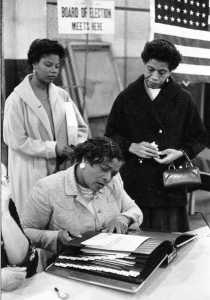
Three African American women at a polling place, one looking at a book of registered voters on November 5, 1957, in New York City or Newark, New Jersey] / TOH, Library of Congress
It took the better part of a century to pass a law saying American women had the right to vote. It took even longer to deliver this right to Indigenous women — which really short-changed all Native Americans.
For the longest time, the word “suffrage” has been aligned with the historic passage of the 19th Amendment, a decree ratified a century ago, this week, outlawing discrimination of voters on the basis of their sex. But in reality, such shorthand, couched in twentieth-century white feminism, was exclusionary. The right to vote in Indian Country tells another side of this struggle in which Indigenous women were on the frontlines from the start.
While the 19th Amendment represents a cornerstone of gender equality in America, few know about the way the vote was won or the limitations it imposed on people of color. Public school curriculum often portrays this history of the suffrage movement through the important advocacy of notable white women, Elizabeth Cady Stanton and Susan B. Anthony.
Leading up to the ratification of the 19th Amendment on Aug. 18, 1920, these Native women participated in suffrage parades, made compelling speeches, and wrote commentary that would likely have gone viral, today. But more intriguing, Indigenous women were the source of inspiration for the movement’s lead organizers, Stanton and Matilda Joslyn Gage.
The women, two New Yorkers who lived on the colonized homelands of the Iroquois Confederacy, wrote how they grew motivated to make lasting voting rights change after recognizing the roles women played in the tribes. Then as now, the Confederacy’s six nations of the Onondaga, Mohawk, Seneca, Cayuga, Oneida, and Tuscarora functioned as a government based on female authority in which Haudenosaunee women maintained authority over their subsistence economy.
They also had final authority over land transfers and decisions about engaging in war. And they practiced a structure of political power shared equally among all clan families and their members — a pure democracy — what also inspired the birth of the United States.
When the 19th Amendment became law on August 26, 1920, 26 million adult female Americans were nominally eligible to vote. But full electoral equality was still decades away for many women of color who counted among that number. The federal suffrage amendment prohibited discrimination on the basis of sex, but it did not address other kinds of discrimination that many American women faced: women from marginalized communities were excluded on the basis of gender and race. Native American, Asian American, Latinx and African American suffragists had to fight for their own enfranchisement long after the 19th Amendment was ratified. Only over successive years did each of those groups gain access to the ballot.
In 1920, Native Americans weren’t allowed to be United States citizens, so the federal amendment did not give them the right to vote. The first generation of white suffragists had studied Native communities to learn from a model of government that included women as equal democratic actors. But the suffragists did not advocate for indigenous women. Nonetheless, Native American activists like Zitkála-Šá continued to organize and advocate with white mainstream suffragists. With the passage of the Snyder Act in 1924, American-born Native women gained citizenship. But until as late as 1962, individual states still prevented them from voting on contrived grounds, such as literacy tests, poll taxes and claims that residence on a reservation meant one wasn’t also a resident of that state.
Native-born Asian Americans already had U.S. citizenship in 1920, but first generation Asian Americans did not. Asian American immigrant women were therefore excluded from voting until the Immigration and Nationality Act of 1952 allowed them to gain citizenship more than three decades after the 19th Amendment. Despite being barred from citizenship and from voting, Asian American suffragists such as Dr. Mabel Ping-Hua Lee worked alongside white Native-born women in the years leading up to 1920; Ping-Hua Lee and others advocated within their communities and even marched in suffrage parades.
Latinx women contributed to the success of the suffrage movement at both the state and federal levels, particularly with their efforts to reach out to Spanish-speaking women. And in Puerto Rico, suffragists like Luisa Capetillo worked to attain women’s voting rights, which were first given to literate women in 1929 and all Puerto Rican women in 1935. Yet literacy tests remained an effective means of keeping some Hispanic and other women of color from voting long after the federal amendment was passed. It took a 1975 extension of the Voting Rights Act, prohibitingdiscrimination against language minority citizens, to expand voting access to women who rely heavily on languages other than English.
Some African American suffragists in the north were able, with the 19th Amendment, to realize the rewards of their activism, but throughout much of the country the same voter suppression tactics that kept black men from the polls kept black women from voting, too. Literacy tests, poll taxes, voter ID requirements and intimidation and threats and acts of violence were all obstacles. The struggle for suffrage, which began for black women in the early 1800s, continued until activists such as Fannie Lou Hamer and Diane Nash won the passage of the Voting Rights Act of 1965, 200 years later.
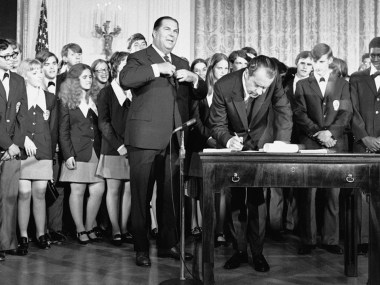
Nixon signs the 26th amendment lowering the voting age from 21 to 18 on July 5, 1971.
There is an interactive display at the link along with some photos of suffragettes of color.
The court’s ruling follows a report finding that as of mid-June, 17 states had passed 28 laws making it harder for constituents to vote in 2021, according to the Brennan Center for Justice at New York University’s School of Law. The report notes that the last year a similar number of laws passed restricting access to the ballot was 2011 – when 14 states had enacted 19 such measures by October.
Eliza Sweren-Becker, a voting rights and elections counsel at the Brennan Center, called the new wave of voting laws “an unprecedented assault on voting rights” as well as “a voter suppression effort we haven’t seen since the likes of Jim Crow.”
The nation’s high court previously gutted a key provision of the Voting Rights Act in 2013, when Chief Justice John Roberts wrote a majority opinion arguing that jurisdictions with a history of racial discrimination in voting should no longer be subject to oversight from the Department of Justice before effecting changes to their voting laws.
The Brennan Center report attributes this year’s batch of restrictive voting laws to “racist voter fraud allegations behind the Big Lie (a reference to former President Donald Trump’s repeated false claims of a rigged election) and a desire to prevent future elections from achieving the historic turnout seen in 2020.”
Commenting on the former president’s claims of mass voter fraud, Sweren-Becker says, “We know that’s false, but we have officials at the state level passing these laws making it harder for people to vote.”
Some of the specific provisions in these laws that can have a negative impact on voter turnout according to the Brennan Center include restrictions on voting by mail – some 63.9 million ballots had been sent as of Election Day 2020, data from the U.S. Elections Project indicated – challenges to in-person voting, and limitations on the number of mail ballot drop boxes in precincts.
Republicans during a U.S. House Judiciary panel hearing on Tuesday argued that a bill that would reinstate a preclearance section of the 1965 Voting Rights Act is unnecessary because there is no discrimination in voting.
The top Republican on the panel, Rep. Mike Johnson, (R-La.), said that the legislation is not needed and that the federal government should not be telling states how to run their electoral processes.
He added that recently voting bills passed by Republicans in Georgia and Florida are meant to “enhance election integrity and increase the public’s waning confidence in our election process.”
“It is outrageous to see the federal government fighting back against these common sense reforms, such as the latest lawsuit filed by the Department of Justice against Georgia over its election law,” Johnson said. The Justice Department announced last week that the agency is suing Georgia in an attempt to overturn the state’s sweeping elections law passed in March.
The comments from the GOP came as Democrats again attempt some type of federal action on elections laws, after a massive legislative package by Democrats known as H.R. 1 was blocked in the U.S. Senate by Republicans. Democrats say the GOP state laws broadly disenfranchise many voters, including those of color, rural residents and people with disabilities.
Rep. Steve Cohen, the Tennessee Democrat who held the House hearing as the chair of the Subcommittee on the Constitution, Civil Rights, and Civil Liberties, contended it is necessary for Congress to pass H.R. 4, the John Lewis Voting Rights Act.
Republicans seem intent on chipping away the rights of ordinary Americans. It is time to stand up against their continued attempts to maintain and expand all vestiges of white nationalism, white male patriarchy, and a dominist christianist oligarchy. The song below sustained me through our fight for the ERA. I got to see and sing this with her in our first Women’s Festival in 1982. I tried desperately to create a festival in 1983 with participation and leadership of black women in the Urban League. We had a successful Festival that follwed Maya Angelou speaking at Equality. Our main speakers were Betty Friedan and Kate Millet. Equal rights and voting rights is important to all our rights in all the various way we participate in American Communities.
Whats on your reading and blogging list today?
Did you like this post? Please share it with your friends:
This morning, Trump Organization Chief Financial Officer Allen Weisselberg turned himself in to prosecutors in Manhattan.
Breaking News: Allen Weisselberg, a top executive at the Trump Organization, surrendered to the Manhattan district attorney’s office to face charges, officials said. https://t.co/7MmwhW22LE
Donald J. Trump’s long-serving chief financial officer, Allen H. Weisselberg, surrendered on Thursday to the Manhattan district attorney’s office as he and the Trump Organization prepared to face charges in connection with a tax investigation, people with knowledge of the matter said.
The exact charges were not yet known. Prosecutors were expected to unseal an indictment later in the day against Mr. Weisselberg and the Trump Organization, the real estate business that catapulted Mr. Trump to tabloid fame, television riches and ultimately, the White House.
Mr. Weisselberg, accompanied by his lawyer, Mary E. Mulligan, walked into the Lower Manhattan building that houses the criminal courts and the district attorney’s office about 6:20 a.m. He is expected to appear in court in the afternoon along with representatives of the Trump Organization.
The charges against the Trump Organization and Mr. Weisselberg — whom Mr. Trump once praised for doing “whatever was necessary to protect the bottom line” — emerged from the district attorney’s sweeping inquiry into the business practices of Mr. Trump and his company.
As part of that inquiry, the prosecutors in the office of the district attorney, Cyrus R. Vance Jr., had been examining whether Mr. Weisselberg failed to pay taxes on valuable benefits he and his family received from Mr. Trump, including private school tuition for at least one of his grandchildren, free apartments and leased cars.
The prosecutors, who are also working with lawyers from the office of the New York State attorney general, Letitia James, have also investigated whether the Trump Organization failed to pay payroll taxes on what should have been taxable income.
The specific indictments will remain sealed until after 2PM today, when we will learn more about the charges against the company and Weisselberg. More information from The Washington Post:
Weisselberg arrived at the Manhattan criminal courthouse through an employee entrance at about 6:20 a.m., according to journalists who saw him arrive. His attorney, Mary E. Mulligan, confirmed the surrender in a text to The Washington Post.
“Mr. Weisselberg intends to plead not guilty and he will fight these charges in court,” Mulligan said in a statement sent on behalf of Weisselberg from herself and co-counsel Bryan C. Skarlatos….
Although the indictments could pose trouble for Trump, exposing his company to potential fines and intensifying pressure on Weisselberg, neither the former president nor anyone else in his firm is expected to face charges this week. Prosecutors hope Weisselberg will offer testimony against Trump in exchange for lessening his own legal risk, according to a person familiar with the case.
From left, Jennifer, Barry, Erica, Jack, Hilary and Allen Weisselberg are pictured at the inauguration of President Donald Trump in 2017.
Weisselberg, who has worked for Trump since the 1980s, is considered the most important figure in the Trump Organization apart from Trump family members. The Washington Post has previously reported that Weisselberg was a key figure in the investigations by Vance and James. Both have scrutinized whether Trump misled lenders or tax authorities, or evaded taxes on forgiven debts or fringe benefits for employees, according to court papers and people familiar with the cases.
In recent months, both sets of investigators have spoken to Jennifer Weisselberg, the chief financial officer’s former daughter-in-law, who said that Weisselberg’s son Barry had been given a free apartment and a hefty salary while he worked at the Trump Organization’s Central Park ice rink. Prosecutors were looking into whether taxes were paid on the benefits, people close to the investigation said.
The now-merged investigations of Trump’s company appear to be the longest-lasting and most extensive prosecutorial examination ever undertaken of the Trump Organization.
Interviews with 18 current and former associates of Mr. Weisselberg, as well as a review of legal filings, financial records and other documents, paint a portrait of a man whose unflinching devotion to Mr. Trump will now be put to the test.
“Allen is a soldier,” said John Burke, a former Trump executive who worked with Mr. Weisselberg in the early 1990s. “Allen was good at doing what Donald wanted him to do.”
A bookkeeper by training who grew up in Brooklyn, Mr. Weisselberg rose steadily within the Trump Organization to become perhaps the former president’s most trusted business adviser. Over decades, Mr. Weisselberg’s personal and family life became increasingly fused with the company and with Mr. Trump, who is just 14 months older.
After raising his sons on Long Island, Mr. Weisselberg and his wife moved into a Trump-branded building on Manhattan’s West Side, where they lived rent-free for years. He bought a home in South Florida, not far from Mr. Trump’s Mar-a-Lago resort, and traveled there and back on weekends on Mr. Trump’s jet. His older son, Barry, went to work for the company managing Wollman Rink in Central Park and acted as the D.J. for Mr. Trump’s Christmas parties, where Allen Weisselberg let loose on the dance floor, according to people who attended. In 2004, Mr. Weisselberg appeared in an episode of “The Apprentice,” Mr. Trump’s reality television show.
“They are like Batman and Robin,” said Barry Weisselberg’s ex-wife, Jennifer, who has aided Mr. Vance’s investigation after a contentious divorce. “They’re a team. They’re not best friends. They don’t spend all their time together, but the world became so insular for Allen that he did not know anything else.”
Mr. Weisselberg had become so woven into the fabric of the Trump Organization that when Mr. Trump moved into the White House in 2017, he entrusted Mr. Weisselberg, along with the former president’s adult sons, with running his company. His earnings reflected his importance: Between 2007 and 2017, his total pay averaged nearly $800,000 a year; in 2018, he earned more than $977,000 in salary and deferred compensation, according to tax return data obtained by The Times as part of an investigation published last year.
In other news, yesterday the House voted to form a committee to investigate the January 6 Capitol attack.
JUST IN: House approves the formation of a select committee to investigate the January 6 Capitol insurrection https://t.co/pAVEg1bwSS
The House voted Wednesday to create a new select committee that will investigate the deadly January 6 attack on the US Capitol, in a vote falling mostly along party lines that signals the political fight to come over the panel’s examination of the insurrection.
The House voted 222-190 to formally create the select panel. Just two Republicans joined with Democrats to support its formation — Reps. Liz Cheney of Wyoming and Adam Kinzinger of Illinois.
Ahead of the vote, House Speaker Nancy Pelosi said on the floor that she was “heartbroken” Congress could not establish a bipartisan commission. Even though the speaker said she was still “hopeful” that a bipartisan commission could happen in the future, Congress had to move forward with the select committee.
“We cannot wait,” Pelosi said Wednesday. “We believe that Congress must in the spirit of bipartisanship and patriotism establish this commission. And it will be conducted with dignity, with patriotism, with respect for the American people, so that they can know the truth.”
Pelosi made the move to establish the committee after Senate Republicans blocked the formation of a bipartisan commission to investigate the January 6 attack.
“Our bipartisan, good-faith proposal was met with a filibuster. Now that Senate Republicans have chosen to block the formation of an independent commission, it falls to the House to stay the course and get the answers they deserve,” said House Homeland Security Chairman Bennie Thompson, who is one of the potential candidates to chair the select committee.
Also yesterday The New York Times published a stunning in-depth video investigation of the Capitol attack. If you haven’t watched it already, I hope you’ll do it today.
From the article:
Congressional committees have looked into police and intelligence failures. The Justice Department has launched a nationwide investigation that has now resulted in more than 500 arrests. And while Republicans in Congress blocked the formation of a blue-ribbon bipartisan committee, House Democrats are poised to appoint a smaller select committee.
Even now, however, Republican politicians and their allies in the media are still playing down the most brazen attack on a seat of power in modern American history. Some have sought to paint the assault as the work of mere tourists. Others, going further, have accused the F.B.I. of planning the attack in what they have described — wildly — as a false-flag operation.
The work of understanding Jan. 6 has been hard enough without this barrage of disinformation and, hoping to get to the bottom of the riot, The Times’s Visual Investigations team spent several months reviewing thousands of videos, many filmed by the rioters themselves and since deleted from social media. We filed motions to unseal police body-camera footage, scoured law enforcement radio communications, and synchronized and mapped the visual evidence.
What we have come up with is a 40-minute panoramic take on Jan. 6, the most complete visual depiction of the Capitol riot to date. In putting it together, we gained critical insights into the character and motivation of rioters by experiencing the events of the day often through their own words and video recordings. We found evidence of members of extremist groups inciting others to riot and assault police officers. And we learned how Donald J. Trump’s own words resonated with the mob in real time as they staged the attack.
I can't stop watching this. If anything at all went differently, there would have been incalculable horror.
The evidence of planning in here by the Proud Boys is staggering.
It's a national shame we don't know more about who was aware of it beforehand.https://t.co/3LZUjIMaOs
Department of Homeland Security officials are warning that the same sort of rhetoric and false narratives that fueled the January 6 attack on the US Capitol could lead to more violence this summer by right-wing extremists.
A growing belief among some Donald Trump supporters that the former President will be reinstated in August, coupled with relaxed Covid-19 restrictions, has DHS officials concerned that online rhetoric and threats could translate into actual violence in the coming months as more people are out and in public places.
The August theory is essentially a recycled version of other false narratives pushed by Trump and his allies leading up to and after January 6, prompting familiar rhetoric from those who remain in denial about his 2020 election loss. But the concern is significant enough that DHS issued two warnings in the past week about the potential for violence this summer.
In a closed-door meeting last Wednesday, DHS officials briefed lawmakers on the role that misinformation and disinformation play in creating circumstances for people to act violently, according to a congressional source familiar with the briefing.
On Monday, DHS issued an intelligence bulletin to state and local law enforcement partners about the increasing opportunities for violent extremist attacks this summer, including concerns that QAnon conspiracy theorists continue to promote the idea that Trump will return to power in August, according to a source familiar.
Stay tuned. I’m sure there are multiple legal experts salivating to get their hands on and analyze the indictments this afternoon. It should be interesting.
Did you like this post? Please share it with your friends:
We’re having another heatwave here in the Boston area–four days of 90 degrees or more–with a high temperature today of 99 degrees. Thunderstorms are expected to break the heat tomorrow night, with temperatures in the 80s on Thursday. But that is nothing compared to what is happening in the Pacific Northwest. I talked to my sister in Portland, OR, yesterday, and she said the temperature was supposed to hit 115 degrees! She said her garden is dying even though she is soaking her plants every morning.
Heat waves and the “heat domes” that can cause them aren’t rare, but the recent weather that’s been smothering the Pacific Northwest has little precedent in at least four decades of record-keeping….
The heat has been not only widespread, but also intense, in some places surpassing previous records by double digits.
In Vancouver, British Columbia, this past weekend’s temperatures were far above norms for this time of year, and a town in British Columbia reached nearly 116 degrees, the highest recorded temperature for any place in Canada in its history. In Seattle, there have been only two other days in the last 50 years with temperatures in the triple digits: in 2009 and 1994.
The heat has resulted from a wide and deep mass of high-pressure air that, because of a wavy jet stream, parked itself over much of the region. Also known as a heat dome, such an enormous high-pressure zone acts like a lid on a pot, trapping heat so that it accumulates. And with the West beset by drought, there’s been plenty of heat to trap.
In Seattle, Portland and other areas west of the Cascades, hot air blowing from the east was further warmed as it descended the mountains, raising temperatures even more.
Beach Scene by Martha Walter, American impressionist painter
Climate is naturally variable, so periods of high heat are to be expected. But in this episode scientists see the fingerprints of climate change, brought on by human-caused emissions of carbon dioxide and other greenhouse gases.
Karin Bumbaco, Washington’s assistant state climatologist, said that any definitive climate-change link could be demonstrated only by a type of analysis called an attribution study. “But it’s a safe assumption, in my view, to blame increasing greenhouse gases for at least some portion of this event,” she said.
On a global average, the world has warmed about 1.8 degrees Fahrenheit since 1900. “When you have that warmer baseline, when you do get these extreme events it’s just going to get that much warmer,” she said.
This heat wave is also unusual because it occurred earlier than most. Those two previous triple-digits days in Seattle, for example, happened in late July, about 30 days later.
This one occurred just a few days after the summer solstice, which may have contributed to the extreme conditions. “The days are longer, and we’re not getting that cool-off at night,” she said.
Read more details at the NYT, with maps and charts.
More than three decades ago, in his seminal study predicting the course of human-caused climate change, NASA scientist Jim Hansen wrote that “temperature changes within several decades will become large enough to have major effects on the quality of life for mankind in many regions.”
Hansen used the analogy of “loaded dice” to describe how climate change would increase the likelihood of extremely hot weather in a given year while decreasing the chance of unusually cold weather.
Even before that, in 1979, the National Research Council published a study led by the late meteorologist Jule Charney that predicted serious global warming would evolve. “It appears that the warming will eventually occur, and the associated regional climatic changes so important to the assessment of socioeconomic consequences may well be significant,” the report said.
Since those prescient projections 30-to-40-plus years ago, heat waves all over the world have intensified. Heat domes, the sprawling zones of high pressure at high altitudes that essentially bake the air underneath them, have strengthened.
Claude Monet, The Beach at Sainte-Adresse
During the European heat wave in 2003, blamed for 70,000 deaths, the average temperature was higher than any year since at least 1851. A study published in 2004 found human influence “at least doubled the risk” of a heat wave of that magnitude.
By 2010, when a historically intense heat wave killed 50,000 people in Russia, the risk of such an event was tripled due to climate change, according to a study published in 2012.
In 2016, a report from the National Academies of Sciences concluded that of the connections between human-caused climate change and extreme weather events, heat waves had among the most straightforward ties.
In other news, Axios analyzed traffic at “partisan” news sites and discovered big drops in clicks since Trump was ejected from the White House: Boring news cycle deals blow to partisan media.
In the months since former President Donald Trump left office, media companies’ readership numbers are plunging — and publishers that rely on partisan, ideological warfare have taken an especially big hit.
Why it matters: Outlets most dependent on controversy to stir up resentments have struggled to find a foothold in the Biden era, according to an Axios analysis of publishers’ readership and engagement trends.
By the numbers: Web traffic, social media engagement and app user sessions suggest that while the entire news industry is experiencing a slump, right-wing outlets are seeing some of the biggest plunges.
A group of far-right outlets, including Newsmax and The Federalist, saw aggregate traffic drop 44% from February through May compared to the previous six months, according to Comscore data.
Lefty outlets including Mother Jones and Raw Story saw a 27% drop.
Mainstream publishers including the New York Times, Wall Street Journal, USA Today and Reuters dropped 18%.
App visits tell a similar story. Both right-leaning (including Fox News, Daily Caller) and left-leaning (including Buzzfeed News, The Atlantic) saw considerable average drops in app user sessions over this time period at 31% and 26%, respectively, according to Apptopia data.
Data from Sensor Tower shows that downloads of fringe-right social networking apps like MeWe, Rumble, Parler and CloutHub have also plummeted.
Engagement on social media has taken the biggest dive, according to data from NewsWhip.
Left-leaning and right-leaning publishers have seen social interactions on stories drop by more than 50%, while mainstream publishers have experienced a slightly more modest drop of 42%.
The big picture: Opposition media traditionally relies on traffic booms when a new party takes office, but right-wing outlets have seen some of the most precipitous declines in readership since a Democratic president took office.
Attorneys for the Trump Organization met with New York prosecutors on Monday to argue that former president Donald Trump’s company should not be criminally charged over its business dealings, according to three people familiar with the meeting.
Previously, the prosecutors — working for Manhattan District Attorney Cyrus R. Vance Jr. (D) and New York Attorney General Letitia James (D) — had set Monday as the last day for the organization’s lawyers to make their case.
After Monday’s session, spokespeople for both Vance and James declined to comment. No charges were announced on Monday. Vance has convened a grand jury in Manhattan to vote on potential indictments in the investigation, but so far, no person or entity connected to Trump has been charged. It remains possible that none will be. Those familiar with the investigation spoke on the condition of anonymity to discuss the private meetings.
Trump issued a lengthy written statement Monday denouncing the prosecutors, saying they were seeking to punish him because of his politics. Trump did not specify what practices prosecutors were focused on, but said they were “things that are standard practice throughout the U.S. business community, and in no way a crime.” [….]
In interviews with Politico and the Associated Press on Monday, Trump’s attorney Ron Fischetti said he believed the charges would focus on whether the proper taxes were paid on benefits that the Trump Organization gave to its executives, such as free apartments or company cars. In a brief call with The Washington Post, Fischetti said he did not attend Monday’s meeting with prosecutors.
The Post previously reported that prosecutors view Weisselberg as a key potential witness in the ongoing investigations, but that they have become frustrated with what they view as a lack of cooperation from him. If Weisselberg was charged with crimes, he could face new pressure to offer testimony against his boss in exchange for a reduction in his legal risk.
I’ll end with two stories on the tragic building collapse in Florida.
John Singer Sargent, En Route pour la peche (Setting Out to Fish), 1878
A correspondence from the board president of Champlain Towers South, part of which unexpectedly crashed to the ground last week in Surfside, Florida, describes the progression of decay at the building since 2018 saying, “the observable damage such as in the garage has gotten significantly worse since the initial inspection.”
Board President Jean Wodnicki addressed the letter to neighbors April 9
“The concrete deterioration is accelerating. The roof situation got much worse, so extensive roof repairs had to be incorporated,” says the letter, acquired by CNN’s “Erin Burnett OutFront.”
Wodnicki further describes issues facing the building saying, “When you can visually see the concrete spalling (cracking), that means that the rebar holding it together is rusting and deteriorating beneath the surface.” [….]
The letter confirms what Surfside Mayor Charles Burkett has been saying all along, he said: “There was something very, very wrong at this building.
“Buildings in America just don’t fall down like this. This is a third-world phenomenon, not a first-world phenomenon. … I think from the perspective of a condominium association, which is just like a homeowner except bigger, they probably don’t grasp the intensity of the issue and probably just thought it was a pro forma sort of operation we have to get around to doing. Obviously, that was a fatal mistake.”
There was nothing unusual about the lobby and pool area at Champlain Towers South condo, which looked clean and well maintained to a commercial pool contractor who visited the building last Tuesday, just 36 hours before half of the building unexpectedly collapsed. Then, he saw the basement-level garage.
At The Beach by Edward Henry Potthast
“There was standing water all over the parking garage,” the contractor, who asked not to be named, told the Miami Herald. He noted cracking concrete and severely corroded rebar under the pool.
He also took photos, which he shared with the Herald.
The contractor visited the condo building last week to put together a bid for a cosmetic restoration of the pool as well as to price out new pool equipment — a small piece of the multimillion-dollar restoration project that just was getting underway at the 40-year-old building.
While he had worked in the industry for decades and had “gone in some scary places,” he said he was struck by the lack of maintenance in the lower level. The amount of water at Champlain Towers seemed so unusual that the contractor mentioned it to a building staff member, Jose, who was showing him around.
“He thought it was waterproofing issues,” the contractor said of the staff member. “I thought to myself, that’s not normal.” He said Jose told him they pumped the pool equipment room so frequently that the building had to replace pump motors every two years, but he never mentioned anything about structural damage or cracks in the concrete above.
There’s much more at the link.
That’s it for me today. Please take care if you’re in one of the areas experiencing extreme heat.
Did you like this post? Please share it with your friends:
There’s some actual news happening which reminds me of the good ol’ bomb bomb bomb Iran days. First, president Joe Biden released the bombers on Iraqi-Syrian militia forces backed by Iran. The link goes to the Statement of the Department of Defense.
“At President Biden’s direction, U.S. military forces earlier this evening conducted defensive precision airstrikes against facilities used by Iran-backed militia groups in the Iraq-Syria border region. The targets were selected because these facilities are utilized by Iran-backed militias that are engaged in unmanned aerial vehicle (UAV) attacks against U.S. personnel and facilities in Iraq. Specifically, the U.S. strikes targeted operational and weapons storage facilities at two locations in Syria and one location in Iraq, both of which lie close to the border between those countries. Several Iran-backed militia groups, including Kata’ib Hezbollah (KH) and Kata’ib Sayyid al-Shuhada (KSS), used these facilities.
As demonstrated by this evening’s strikes, President Biden has been clear that he will act to protect U.S. personnel. Given the ongoing series of attacks by Iran-backed groups targeting U.S. interests in Iraq, the President directed further military action to disrupt and deter such attacks. We are in Iraq at the invitation of the Government of Iraq for the sole purpose of assisting the Iraqi Security Forces in their efforts to defeat ISIS. The United States took necessary, appropriate, and deliberate action designed to limit the risk of escalation – but also to send a clear and unambiguous deterrent message.
You may read more at the link. Additionally, the Supreme Court surprised us today by refusing to hear a school district’s case to return to banning transgender students from using bathrooms that do not reflect their sex at birth. Alito and Thomas were–once again–the outliers.
The Supreme Court has rejected a Virginia school board’s appeal to reinstate its transgender bathroom ban. Two justices dissented, but the court decided not to hear the case. That leaves in place lower court rulings that found the policy unconstitutional.https://t.co/BIPA1WQDxx
The most unhappy real news is the huge number of likely evictions once the moratorium on evictions due to Covid-19 expires. This is from Newsweek. This could be devasting to the economy as well as the lives of 6 million families. Landlords say they can not sustain the financial impact.
The U.S. Centers for Disease Control and Prevention (CDC) on June 24 extended the nationwide ban on evictions from June 30 until July 31, but even with that added time, experts have voiced concern about the estimated 5.7 million to 7 million Americans who owe back rent.
Federal restrictions on evictions for nonpayment of rent took effect soon after the coronavirus pandemic hit in early 2020. The first moratorium, which came with the Coronavirus Aid, Relief and Economic Security (CARES) Act, ran from the end of March 2020 to the end of July 2020.
The CDC put its own evictions ban into place in September 2020. It was set to expire on June 31 before CDC Director Rochelle Walensky announced last week that the agency had extended it through July 31.
A federal appellate court ruled on May 5, before the latest CDC extension, that the agency had overstepped its authority with its moratorium. President Joe Biden‘s administration appealed the decision the same day, and the appeal proved successful. However, that legal action shows the difficulty the CDC would face should it try to enact another extension.
Along with the need to curb the possibility of a sudden surge in homelessness throughout the nation, there is evidence showing that housing evictions increase the threat of coronavirus infections spreading, including one lengthy study published in the April issue of Nature.
David Hockney 1995 Dachshunds Dogs Couple Sleeping. These are the artist’s dogs.
QAnon supporters, some of whom are the former president’s most fanatical online backers, sent a barrage of messages through the Telegram app that expressed boredom and even anger at the speech Trump described as “the very first rally of the 2022 election.” They blasted Trump for not mentioning how his January 6 insurrection supporters are “rotting in jail.” And numerous others said Trump should be booed by the Ohio rallygoers for even “bringing up the word ‘vaccine,'” specifically because they believe COVID-19 was entirely a hoax.
But a majority of the top QAnon user comments simply expressed their outright boredom with Trump’s post-election stump speech, in which he baselessly claimed to have won in November 2020 and blasted any dissenting GOP members as “traitors.”
“I’m 100% with the dude, but literally switched from his speech 3 mins ago. Im [sic] done with his speeches,” wrote QAnon user Jacob.
“Judging by the Trump-supporting normies I live with, they were bored with his speech,” wrote another QAnon user. “I support Trump but this is getting ridiculous.”
Congressman Adam Kinzinger (R-IL) gives his thoughts on the state of the Republican Party, speaking truth, and former President Donald Trump as he hits the road again at rallies.
I went to the Trump rally in Wellington, Ohio. 1. It was not well attended. 2. He was so boring that people left en-masse during his speech.
Here is the video of the empty field showing all the suckers and losers exiting in mass boredom. https://t.co/hewUN1DDB9
Le Chien (The Dog) by Pablo Picasso. The artist’s dog is named Lump.
Ivanka may have found herself in hot water already. This is from David Corn, writing for Mother Jones. “Documents Show Ivanka Trump Didn’t Testify Accurately in Inauguration Scandal Case. She said she played no role in planning inaugural events. These records suggest otherwise.”
During a December 1 deposition—in which she swore to tell the truth—Ivanka Trump, the eldest daughter of Donald Trump who was an executive at the Trump Organization before becoming a White House adviser to her father, was asked if she had any “involvement in the process of planning the inauguration.” She replied, “I really didn’t have an involvement.” Ivanka testified that if her “opinion was solicited” regarding an inauguration event, she “would give feedback to my father or to anyone who asked my perspective or opinion.” And that was as far as her participation went.
But this wasn’t accurate, according to the documents, which indicate she was part of the decision-making for various aspects of the inauguration, including even the menus for events.
One email chain shows that Ivanka Trump was directly involved in the planning of at least one proposed event for the inauguration. On November 29, 2016, Rick Gates, then the deputy chairman of the Presidential Inauguration Committee (known as the PIC), emailed her the current schedule of inauguration events. He noted that Stephanie Winston Wolkoff, a lead producer working with the PIC, “is going to call you to discuss some additional ideas she has about some other events that we would like to see if you would be willing to do based on our meetings.” Ivanka replied to Gates and Winston Wolkoff, “Great. I am looping in my assistant Suzie who can coordinate a time for us to connect.”
A few days later, Winston Wolkoff sent a long “Dear Ivanka and Jared” email to Ivanka Trump and her husband. She thanked them for “our meeting yesterday” and presented them with a “high-level summary” of the inauguration plans “for your review.” This was a detailed report on the assorted events and themes being created for Trump’s inauguration. The “overarching strategic objective,” she reported, was “reinforcing” the theme “With the People: Making America Great.” She laid out “key” messages, including “Our greatest strength is our people” and “Americans deserve to be heard, and their government needs to listen.” She noted that in their recent meeting, she and Ivanka Trump had discussed how to include Donald Trump’s “constituency” in the events, and Winston Wolkoff referred to proposals for doing so. This included inviting “families from all 50 states to attend official functions” and provide them “Airfare. Accommodations. Hair & makeup.”
In this email, Winston Wolkoff also asked Ivanka to confirm that she would host a “Women’s Entrepreneurs Reception/Dinner” as part of the inauguration. “Please let me know who…you would like invited,” she added. And she asked whether Ivanka Trump would prefer for the event to be hosted at the National Museum of African American History or the National Gallery of Art. Winston Wolkoff also attached to the email the communications strategy for the inauguration, the proposed event schedule, and a list of the “100 most influential women in Business, Philanthropy, Fashion, Politics and Finance.” She ended the note saying she would “follow up” with them “at TT”—a reference to Trump Tower.
Archie by Andy Warhol, 1976, Private Collection. Another artist with paints his dachshund.
Donald Trump issued a lengthy and rambling statement late Sunday attacking two of his staunchest allies during his one term in office.
Trump called former attorney general Bill Barr and Senate Minority Leader Mitch McConnell “spineless RINOs” (Republicans in Name Only) after Barr told The Atlantic that Trump’s constant claims of election fraud were “bullshit.” Barr also told the magazine that McConnell urged him to “inject some reality” into Trump as he repeated debunked claims of election fraud and baseless conspiracy theories last winter.
McConnell confirmed that account, the magazine reported. That was enough to trigger the former president.
The only weirdo afraid of him appears to be the Florida Governor who would like to be the next Emperor with no clothes. But enough of that!
What’s on your reading and blogging list today?
Did you like this post? Please share it with your friends:
Today is a pretty busy news day for a Saturday. The building collapse in Florida is looking worse the more we learn about it. The Delta variant is still in the news and looking more dangerous by the day. Trump will begin holding his revenge rallies tonight in Ohio and then continue his pity party in Florida over the Fourth of July Weekend. The Trump Organization may be criminally charged in New York next week. But the scariest news was broken last night in The New York Times by Trump whisperers Michael Schmidt and Maggie Haberman: Trump Aides Prepared Insurrection Act Order During Debate Over Protests
Responding to interest from President Donald J. Trump, White House aides drafted a proclamation last year to invoke the Insurrection Act in case Mr. Trump moved to take the extraordinary step of deploying active-duty troops in Washington to quell the protests that followed the killing of George Floyd, two senior Trump administration officials said.
The aides drafted the proclamation on June 1, 2020, during a heated debate inside the administration over how to respond to the protests. Mr. Trump, enraged by the demonstrations, had told the attorney general, William P. Barr, the defense secretary, Mark T. Esper, and the chairman of the Joint Chiefs of staff, Gen. Mark A. Milley, that he wanted thousands of active-duty troops on the streets of the nation’s capital, one of the officials said.
Mr. Trump was talked out of the plan by the three officials. But a separate group of White House staff members wanted to leave open the option for Mr. Trump to invoke the Insurrection Act to call in the military to patrol the streets of the capital.
They decided it would be prudent to have the necessary document vetted and ready in case the unrest in Washington worsened or the city’s mayor, Muriel Bowser, declined to take measures such as a citywide curfew, which she ultimately put in place….
the new details about internal White House deliberations on a pivotal day in his presidency underscore the intensity of Mr. Trump’s instinct to call on the active-duty military to deal with a domestic issue. And they help to flesh out the sequence of events that would culminate later in the day with Mr. Trump’s walk across Lafayette Park to St. John’s Church so he could pose in front of it holding a Bible, a move that coincided with a spasm of violence between law enforcement and protesters camped near the White House.
Dragon’s Lair Comics and Fantasy, Austin, TX
More details from the story:
…invoking the Insurrection Act, a rarely used authority allowing presidents to use active duty military for law-enforcement purposes, would have been a dramatic escalation. The act has only been invoked twice in the past 40 years — once to quell unrest after Hurricane Hugo in 1989, and once during the 1992 Los Angeles riots.
“We look weak,” Mr. Trump said, according to one of the officials. He complained about having been taken to the bunker below the White House on the night of May 29 when the barricade outside the Treasury Department was pierced. The New York Times had reported the bunker visit a day earlier, infuriating Mr. Trump….
Mr. Trump’s meeting with Mr. Barr, Mr. Esper and Mr. Milley was marked by his rage at being embarrassed on the world stage, according to two of the officials.
Mr. Trump grudgingly went along with their counsel not to deploy active-duty troops, according to the officials. Immediately after the meeting, Mr. Trump joined a call with governors around the country, some of whom were seeing protests increase in their states. Mr. Trump urged them to “dominate” the protesters, as he said the National Guard in Minnesota had.
Mr. Esper told associates that he was so concerned that Mr. Trump would deploy active-duty troops that he echoed the need for them to get control of their states, hoping he could encourage governors to deploy the National Guard to head off federal action. Using Pentagon terminology that he later told associates he regretted, Mr. Esper told the governors to “dominate the battle space,” a sentiment stemming from concern about Mr. Trump’s intentions.
Early this month, as Donald Trump delivered his keynote address to the North Carolina Republican Party’s annual convention, the former U.S. president noticed something: His greatest crowd-pleaser of the night didn’t come when he attacked President Joe Biden, trashed Dr. Anthony Fauci, or repeated his lies about the 2020 election being stolen from him. It came when he railed against critical race theory, declaring that it should be banned from being taught to schoolchildren and government staff….
Clementine’s Books and Coffee, Halifax, Nova Scotia, where you can adopt a kitten
The coming days and months should prove no different, with Trump planning on delivering yet another red-meat-hurling speech on Saturday evening, with plenty of time devoted to dumping accelerant on the flames of the culture wars and asserting his continued, solidified sway over the GOP.
But his return to the rally circuit also serves another purpose: scaring off potential competition for holding dominant power over the Republican Party, and keeping himself positioned as the 2024 GOP frontrunner.
“In [recent] conversations that I’ve had with him, he has said that he wants to be everywhere to remind people, not just Republicans, that he’s still in charge,” a person close to the former president said, paraphrasing Trump. “The message is a pretty straightforward one: I am still leading this party, and if you want to try to challenge me for that, it will get ugly.”
After an initial two rescues, only bodies had been recovered, three of them overnight. The number of people unaccounted for rose to more than 150 — dozens more than officials had estimated a day earlier — and their families were losing their last threads of hope.
Family members of the missing were asked to provide DNA swabs in case they were needed to identify remains. President Biden said federal mortuary services would be available if needed.
Underneath the parking garage of the exposed building at 8777 Collins Ave., search-and-rescue teams drilled through concrete and inserted probes with cameras to peer through the rubble. Specialized hearing devices alerted them to any sounds that could indicate a person was waiting for help — tapping, scratching, falling debris, twisting metal.
On Thursday, crews briefly heard the voice of a woman trapped somewhere under the wreckage, but it went silent before they could find anyone. On Friday, crews were still using dogs trained to sniff out the scent of a living person; the dogs that come later find cadavers.
From the outside, in the stifling humidity and amid intermittent thunderstorms, little of the tunneling work going on below could be seen. Heavy machinery arrived at the site on Thursday night, but some of the families of the missing wondered why they could not see more action atop the mountain of rubble.
“We’re frustrated because we feel as if they are alive,” said Toby Fried, a family friend of Harry Rosenberg, a man missing from Unit 212. “We offered to bring more manpower — professional searchers. There’s nobody to talk to. We are waiting. We want to help out.”
The Manhattan district attorney’s office has informed lawyers for the Trump Organization that it could face criminal charges in connection with benefits it has provided to company employees, a Trump attorney confirmed Friday.
The charges, which could come as soon as next week, would likely involve allegations of a company effort to avoid paying payroll taxes on compensation it provided to employees, including rent-free apartments, cars and other benefits, a person familiar with the matter said….
Prosecutors are also likely to announce charges against Allen Weisselberg, the Trump Organization chief financial officer, as soon as next week, people familiar with the matter said.
Weisselberg’s lawyers recently informed prosecutors that he would not cooperate in the investigation, the people said, although that could change in the future.
Weisselberg is under scrutiny for benefits he received, including a company-funded apartment and car. Prosecutors are also looking into similar benefits given to Matthew Calamari, the chief operating officer of the company. One source familiar with the matter said it’s possible he could also face charges.
The World Health Organization on Friday urged fully vaccinated people to continue to wear masks, social distance and practice other Covid-19 pandemic safety measures as the highly contagious delta variant spreads rapidly across the globe.
“People cannot feel safe just because they had the two doses. They still need to protect themselves,” Dr. Mariangela Simao, WHO assistant director-general for access to medicines and health products, said during a news briefing from the agency’s Geneva headquarters.
“Vaccine alone won’t stop community transmission,” Simao added. “People need to continue to use masks consistently, be in ventilated spaces, hand hygiene … the physical distance, avoid crowding. This still continues to be extremely important, even if you’re vaccinated when you have a community transmission ongoing.”
The health organization’s comments come as some countries, including the United States, have largely done away with masks and pandemic-related restrictions as the Covid vaccines have helped drive down the number of new infections and deaths.
The Sky Dancing banner headline uses a snippet from a work by artist Tashi Mannox called 'Rainbow Study'. The work is described as a" study of typical Tibetan rainbow clouds, that feature in Thanka painting, temple decoration and silk brocades". dakinikat was immediately drawn to the image when trying to find stylized Tibetan Clouds to represent Sky Dancing. It is probably because Tashi's practice is similar to her own. His updated take on the clouds that fill the collection of traditional thankas is quite special.
You can find his work at his website by clicking on his logo below. He is also a calligraphy artist that uses important vajrayana syllables. We encourage you to visit his on line studio.

 Good Day Sky Dancers!
 This reminds me of how the’ve been chipping away at Abortion and other privacy-related rights. It also reminds me of how they keep enabling dark money in elections. What’s with Justice Roberts any way? I mean we know that Republican politicians know they’re increasingly a rump party. They also know that gerrymandering and voting restrictions are the only way to slow down the tsunami of voters not in their narrow demographics. Joan Biskupic, CNN Legal Analyst, put it this way: “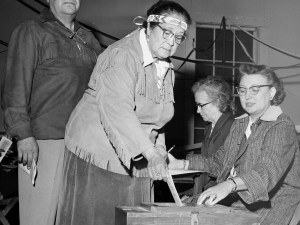

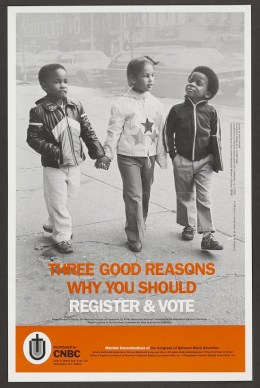 As of now, The John Lewis Voting Rights Act is stalled.















 “People cannot feel safe just because they had the two doses. They still need to protect themselves,” Dr. Mariangela Simao, WHO assistant director-general for access to medicines and health products, said during a news briefing from the agency’s Geneva headquarters.
 peej
peej Carissa
 bostonboomer
 dakinikat
 ecocatwoman
 mablue2
 Mama Lopez
 peggysue22
 quixote
 skydancingguestblogger
 Mona (aka Wonk the Vote)



 Sky Dancing
Recent Comments