Posted: December 6, 2025 | Author: bostonboomer | Filed under: just because | Tags: Affordability crisis, boat strikes, Bruna Caroline Ferreira, Donald Trump, immigrants, Karoline Leavitt, naturalization, Pete Hegseth, Signalgate, Trump Administration Security Strategy |
Good Afternoon!!

By Susan McLaughlin
I wonder if we will ever see another slow news day. Before Trump came on the political scene, I can recall days when I struggled to find interesting stories to post. It has been a decade now since that happened. Even when Biden was president, Trump managed to dominate the news. I’m just so sick and tired of him. But he will continue to be the top story even if Democrats take over the House and Senate next year. If that happens, he’ll be impeached and–I hope–prosecuted. If only he would just go away!
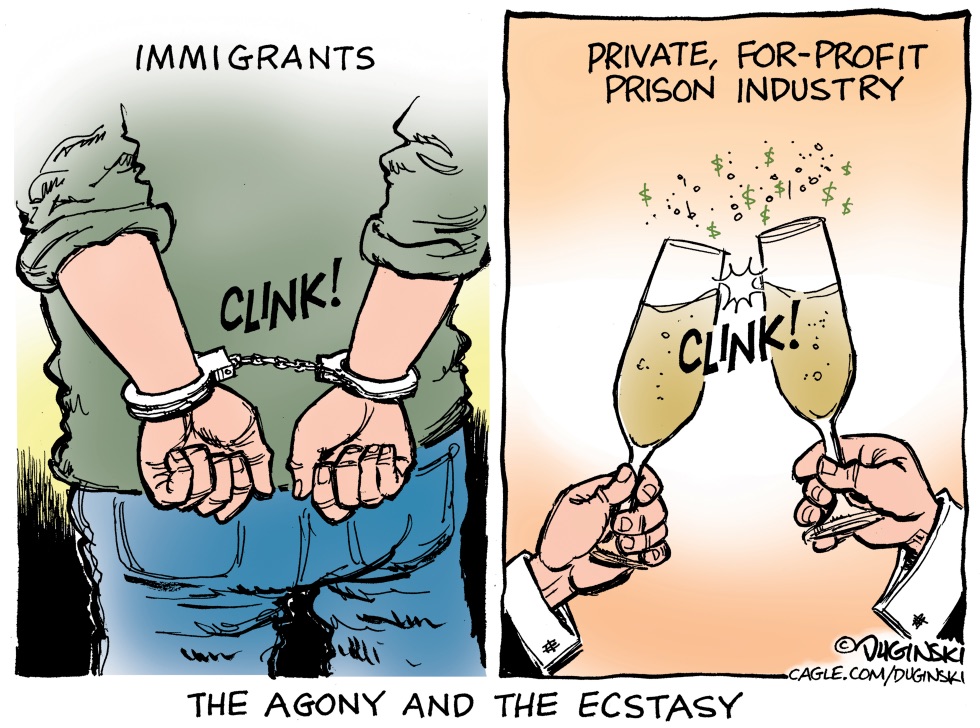
It’s the weekend, and the news is once again overwhelming. I’m going to begin with a couple of immigration stories from my home territory.
Sarah Betancourt at WGBH: Immigrants kept from Faneuil Hall citizenship ceremony as feds crackdown nationwide.
Becoming a U.S. citizen takes years and involves immigrants acquiring a green card, extensive interviews, background checks, classes and a citizenship test. The naturalization ceremony is the final step to the process, where the oath of allegiance and a citizenship certificate are granted.
Immigrants approved to be naturalized went to Faneuil Hall Thursday — known as the country’s cradle of liberty — for that long-awaited moment to pledge allegiance to the United States. But instead, as they lined up, some were told by U.S. Citizenship and Immigration Services officials that they couldn’t proceed due to their countries of origin.
The same situation is playing out at naturalization events across the country as USCIS directed its employees to halt adjudicating all immigration pathways for people from 19 countries deemed to be “high risk”.
“One of our clients said that she had gone to her oath ceremony because she hadn’t received the cancellation notice in time,” said Gail Breslow, executive director of Project Citizenship. “She showed up as scheduled, and when she arrived, officers were asking everyone what country they were from, and if they said a certain country, they were told to step out of line and that their oath ceremonies were canceled.”
That client, a Haitian woman in her 50s, has had a green card since the early 2000s and started working with Project Citizenship in January. She declined an interview request through Breslow.
“People are devastated and they’re frightened,” Breslow told GBH News. “People were plucked out of line. They didn’t cancel the whole ceremony.”
She said many clients with upcoming ceremonies and USCIS appointments have received cancellations via an online portal. She shared an example of the notices they’re receiving, which provide no further guidance or instructions.
“One person was, you know, asking … what did I do wrong? Why is this happening to me? And, you know, needed to be reassured that it wasn’t anything she had done. This wasn’t her fault,” Breslow said.
Read more at the link. This is so heartbreaking. Trump is destroying our country’s image around the world. I doubt if we can recover from his destruction in my lifetime.

Man and Cat by Stu Morris 2020
A couple of weeks ago, I posted about the arrest of the mother of White House spokesperson Karoline Leavitt’s nephew. Her name is Bruna Caroline Ferreira, and she is still in ICE custody in Louisiana.
Here’s an update on this story published at WBUR on Thursday: Brother of White House press secretary Leavitt had contentious custody battle with ex, now in ICE custody.
PLAISTOW, N.H. — In this rural town just across the Massachusetts line, the Leavitt family runs a used-car dealership, with hulking work trucks lined up in the front lot. Inside the lobby, a giant TV blares Fox News, and a framed photo features President Donald Trump, posing with owners Bob and Erin Leavitt.
A New Hampshire family once best known for selling cars and ice cream, the Leavitts were thrust into the national spotlight this year when their 27-year-old daughter, Karoline, was named White House press secretary. Ten months later, the administration’s war on illegal immigration landed in the Leavitts’ backyard.
Bruna Ferreira — a Brazilian immigrant who shares an 11-year-old child with Karoline’s brother Michael Leavitt — was arrested by ICE in mid-November. Ferreira, 33, remains in custody in Louisiana. The boy lives with his father in New Hampshire.
Ferreira’s sister and lawyer had claimed there was no animosity between Ferreira and the Leavitts. But court records, police reports and family text chains reviewed by WBUR tell a vastly different story — one of a bitter custody battle, years-old allegations of a threat to call immigration authorities, and concerns for the well-being of the child when his mother was staying in a vacant mansion in Cohasset.
The arrest, first reported by WBUR, has sparked questions about whether the Leavitts used their inroads to the White House to put ICE onto Ferreira’s trail. Karoline Leavitt has denied any involvement in the arrest. And Michael Leavitt, 35, told WBUR on Thursday that neither he nor anyone else in his family called ICE on the mother of his son: “Absolutely not,” he said in a text response to questions.
ICE accused Ferreira of overstaying a visa that ran out in 1999 and of a battery arrest. Ferreira’s lawyer has said he’s unaware of crimes on her record. He said she’d been unable to renew the legal status she had under the Deferred Action for Childhood Arrivals program.
Leavitt’s brother was asked about this.
Asked whether Karoline Leavitt would do anything to help Ferreira get released, Michael Leavitt told WBUR, “I would never ask my sister to abuse her government position to help anyone, including me — nor would I ever assume she would do so.”
Instead, Leavitt said, he and his father urged Ferreira’s sister to get her to self-deport. Leavitt said by agreeing to be deported — rather than being forced to leave through the removal process — she could one day return to the U.S.
The sister, Graziela Dos Santos Rodrigues, said she called Karoline Leavitt after the arrest. She still hasn’t heard back.
There quite a bit of interesting detail in the story about the relationship between Leavitt’s brother and his ex-wife. Among other things, Ferreira claims that Leavitt owes $70,000 in child support. I would not be at all surprised if Ferreira was specifically targeted by the White House.

Prisac Nicholai, Self, Portrait with My Cat
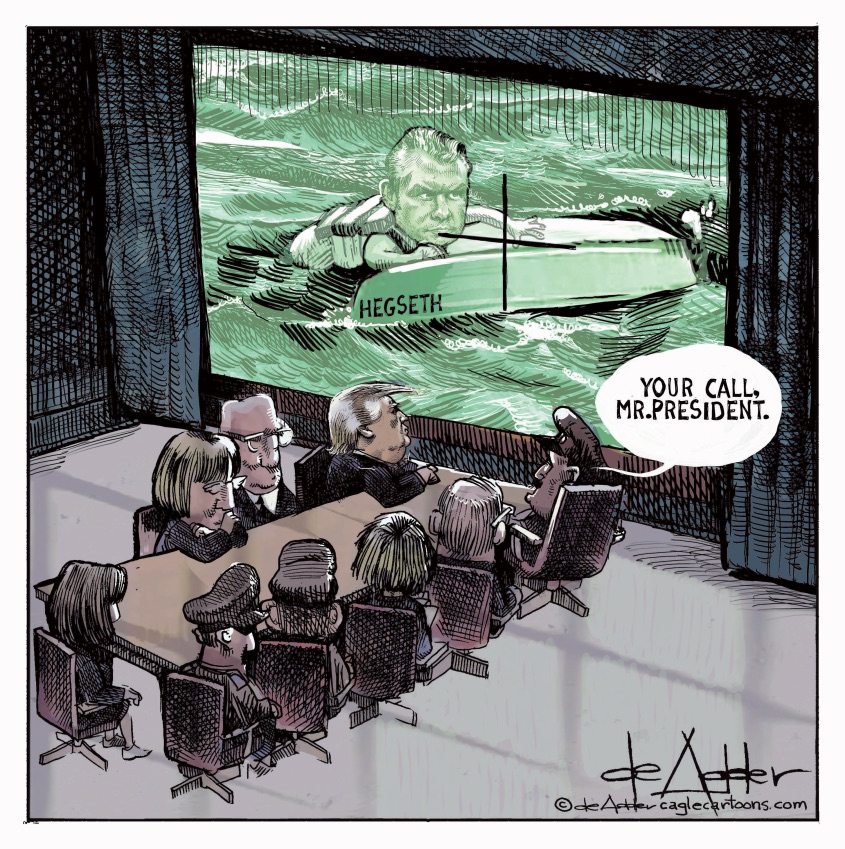
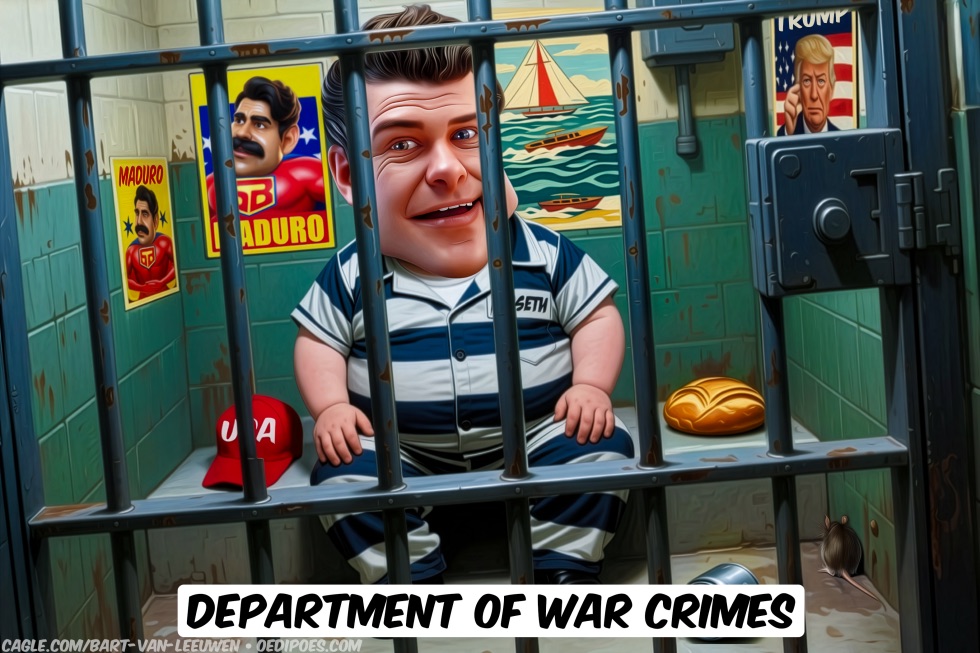
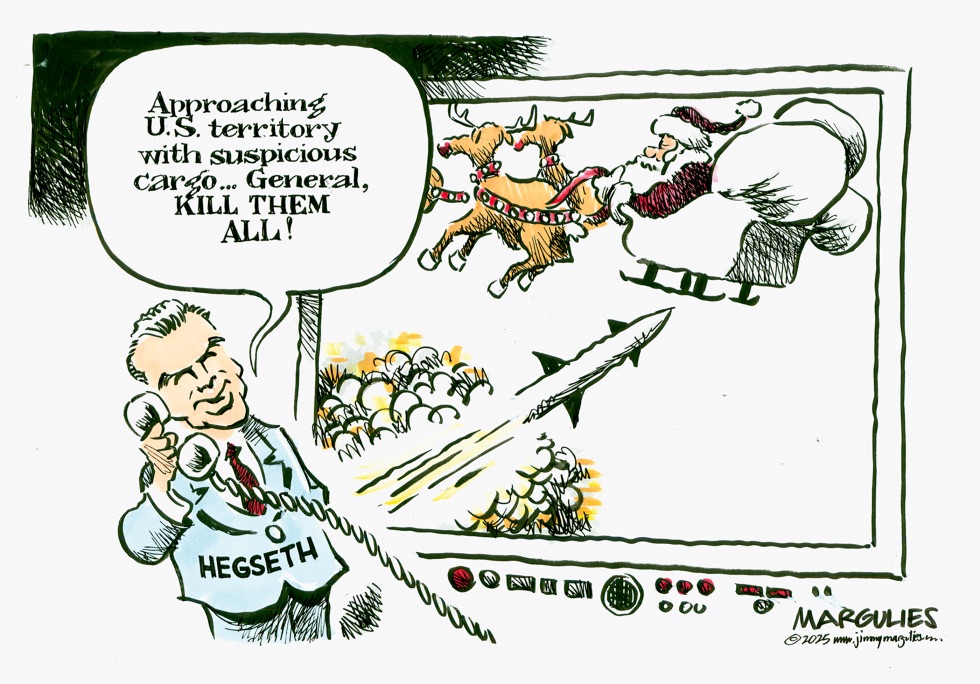
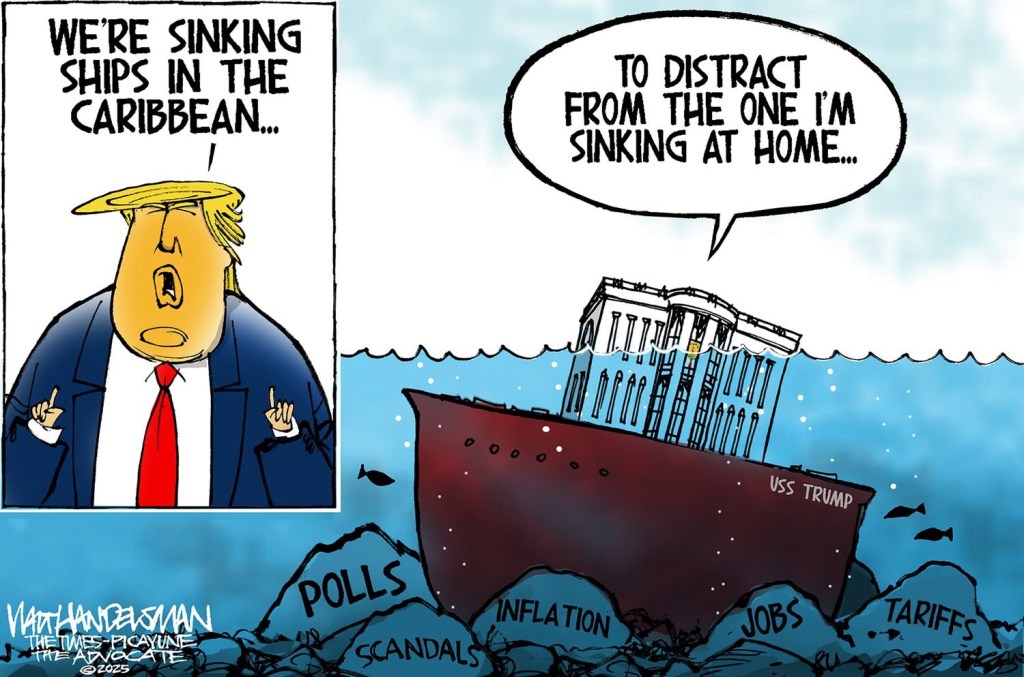
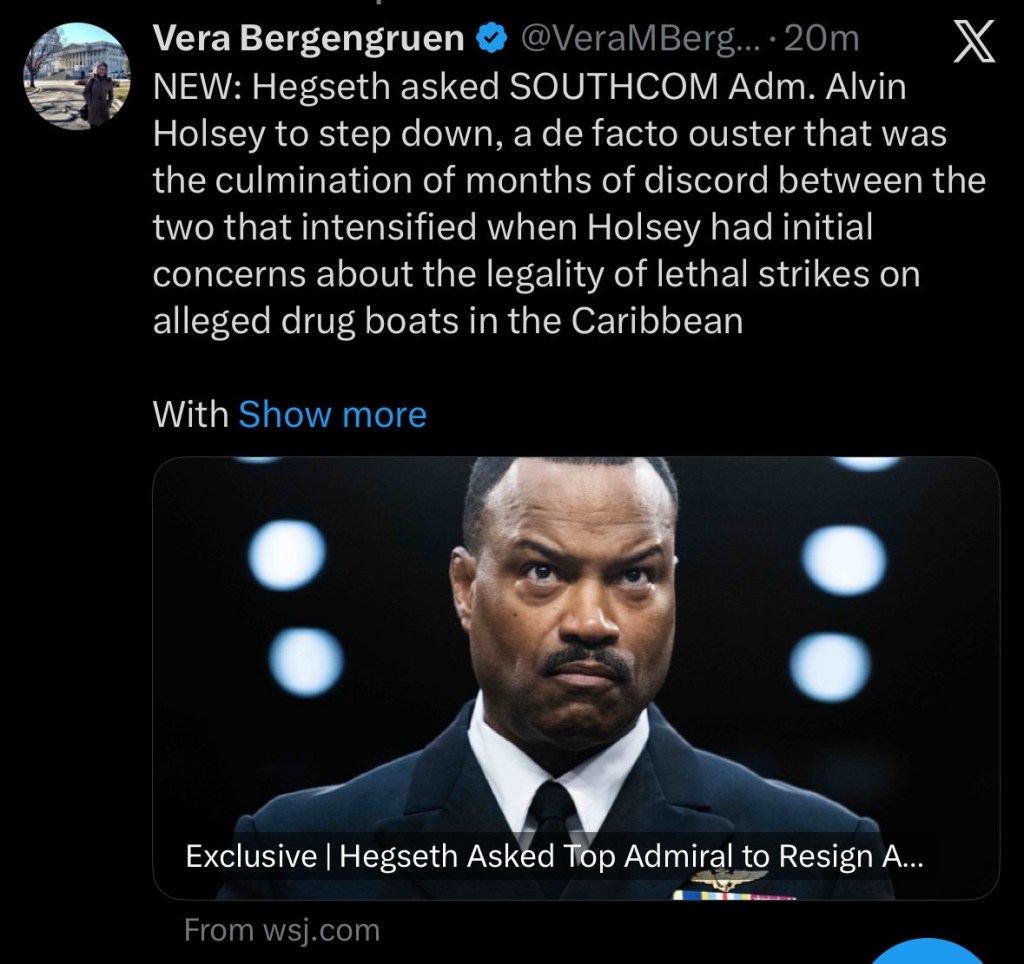
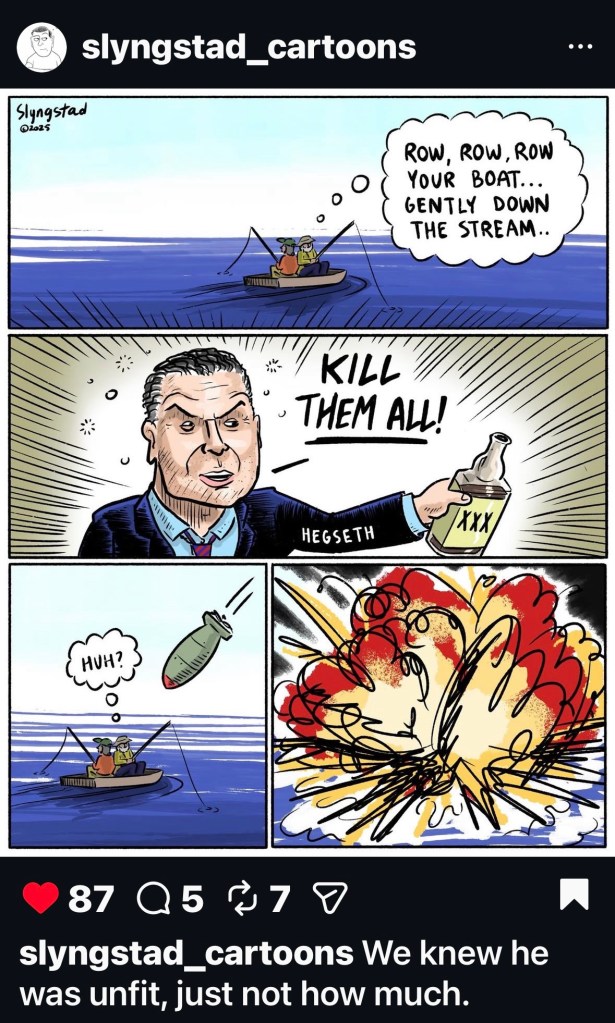
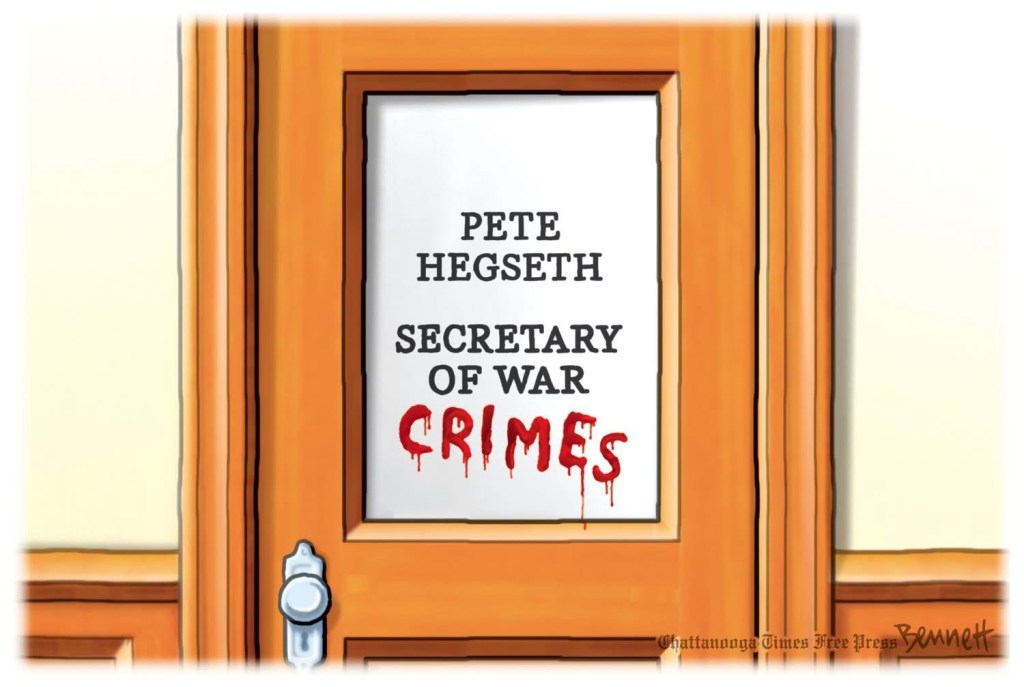
It’s beginning to look like Pete Hegseth may be in trouble following the uproar about the double strike on a “drug” boat in September, reported by The Washington Post and the recent report on “Signalgate,” the scandal about Hegseth using Signal to discuss top secret information.
Joseph Gedeon at The Guardian: Pressure grows on ‘reckless’ Hegseth as twin scandals engulf Pentagon chief.
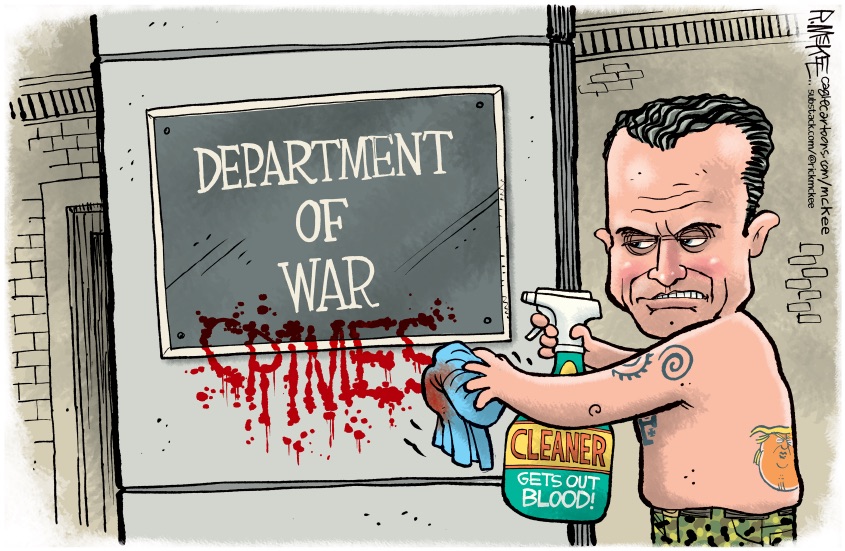
Pete Hegseth is facing the most serious crisis of his tenure as defense secretary, engulfed by allegations of war crimes in the Caribbean and a blistering inspector general report accusing him of mishandling classified military intelligence. Yet despite the long list of trouble and as lawmakers from both parties call for his resignation, Hegseth shows no signs of stepping down and still holds Donald Trump’s support.
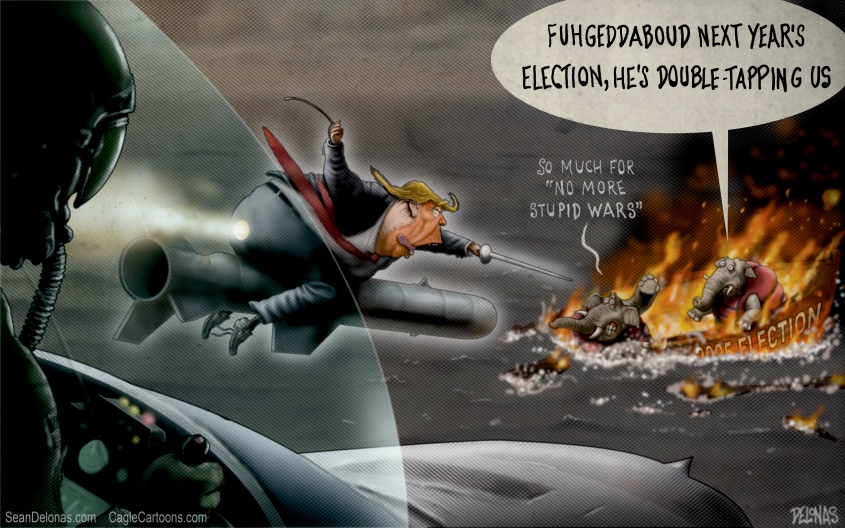
The twin crises have engulfed the former Fox News personality in separate but overlapping allegations that lawmakers, policy experts and former officials say reveal a pattern of dangerous recklessness at the helm of the Pentagon. Democratic legislators have reignited calls for his ouster after revelations that survivors clinging to wreckage from a September boat strike were deliberately killed in a “double-tap” attack, while a defense department investigation released on Thursday concluded he violated Pentagon policies by sharing sensitive details via the Signal messaging app hours before airstrikes in Yemen.
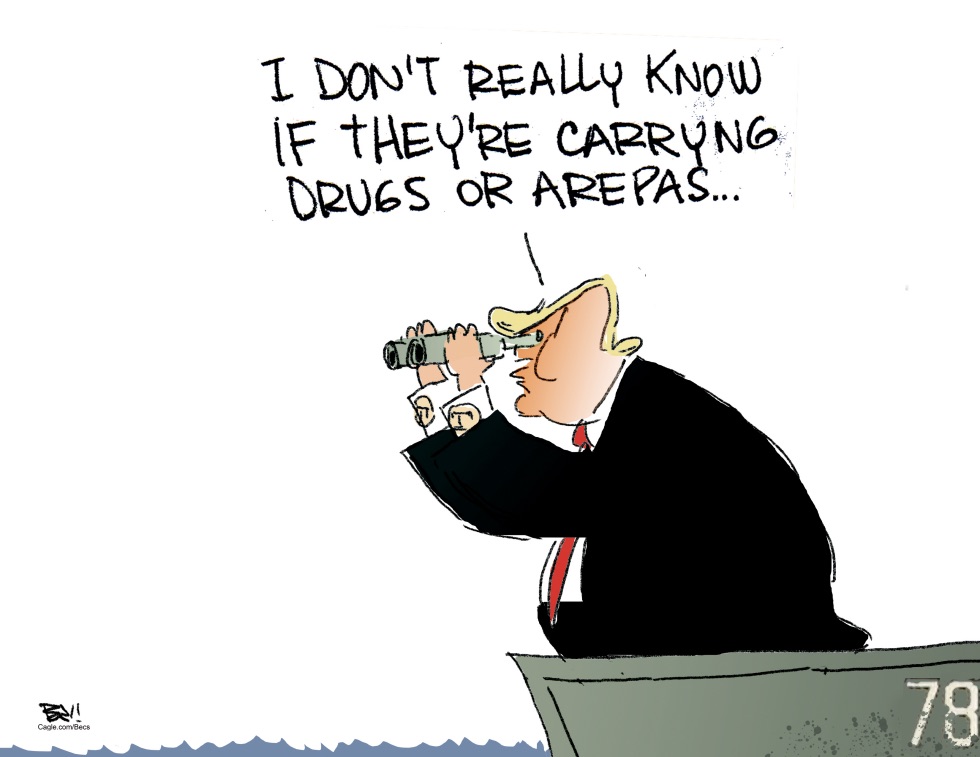
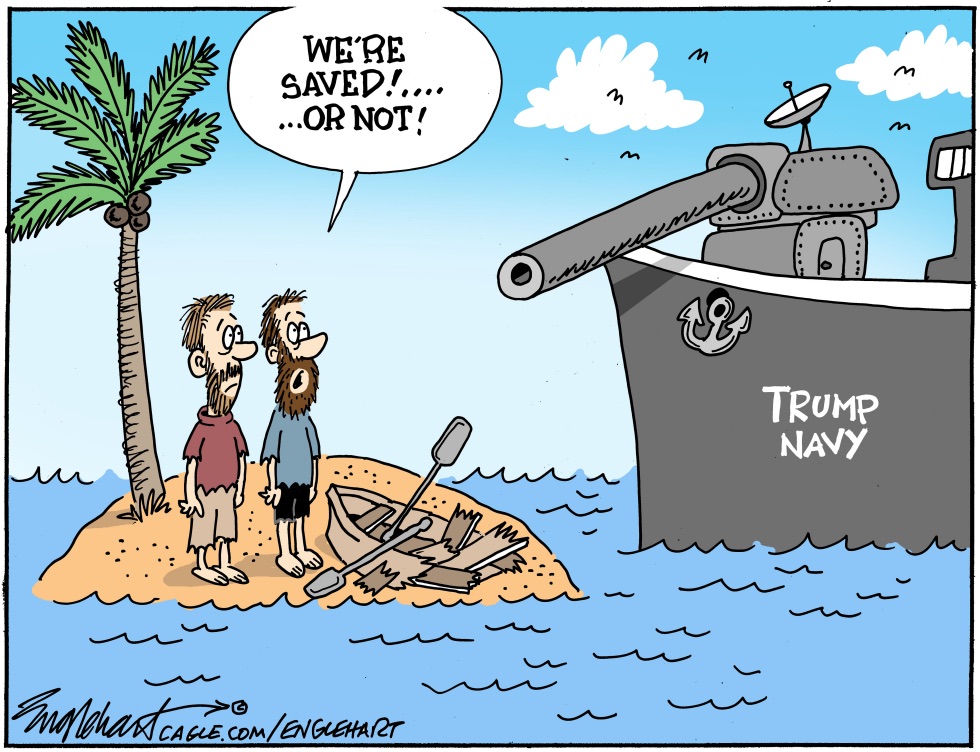
The most recent controversy comes as the Caribbean campaign centers on the Trump administration’s extrajudicial strikes against suspected drug smugglers, which have killed at least 87 people across 22 attacks since September. Trump has justified the operation as essential to combating fentanyl trafficking, claiming each destroyed vessel saves 25,000 American lives, though factcheckers, former officials and drug policy experts have called this figure absurd, noting that fentanyl primarily enters the United States overland from Mexico, not via Caribbean boats from Venezuela.
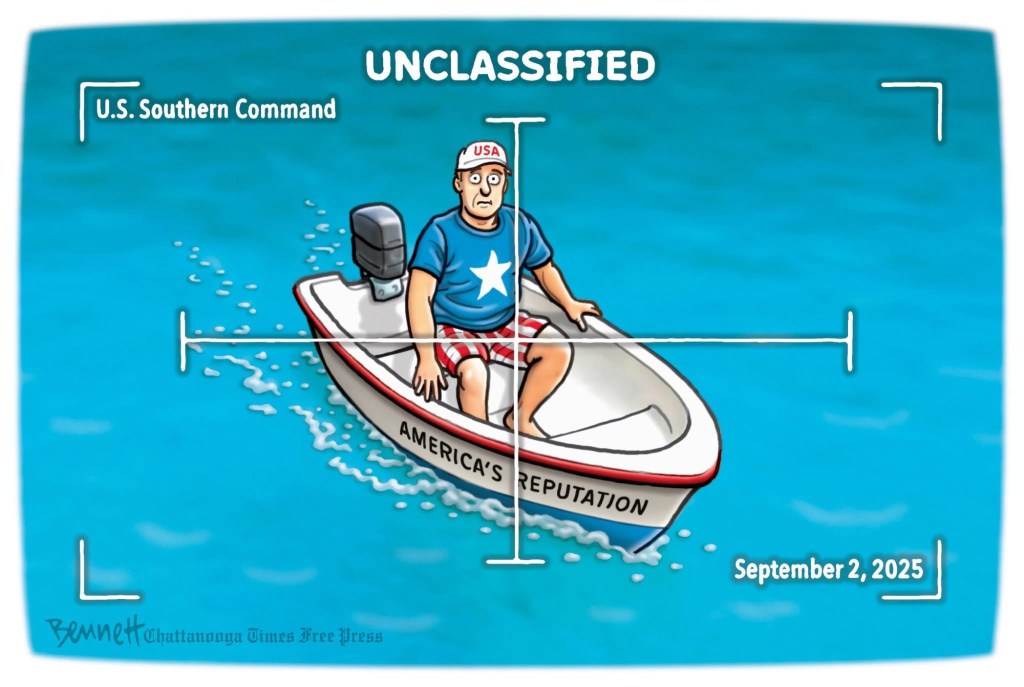
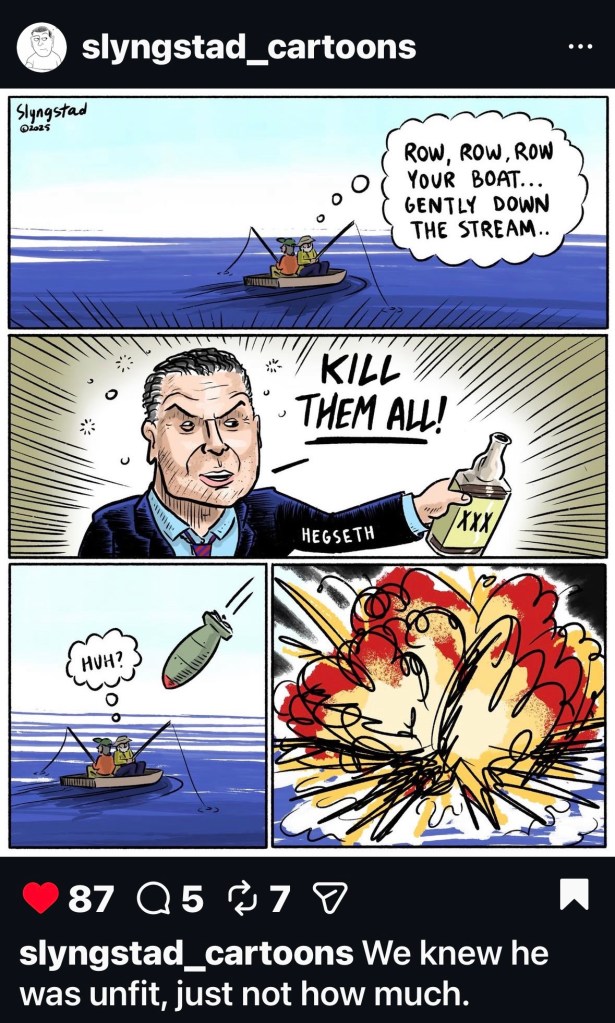
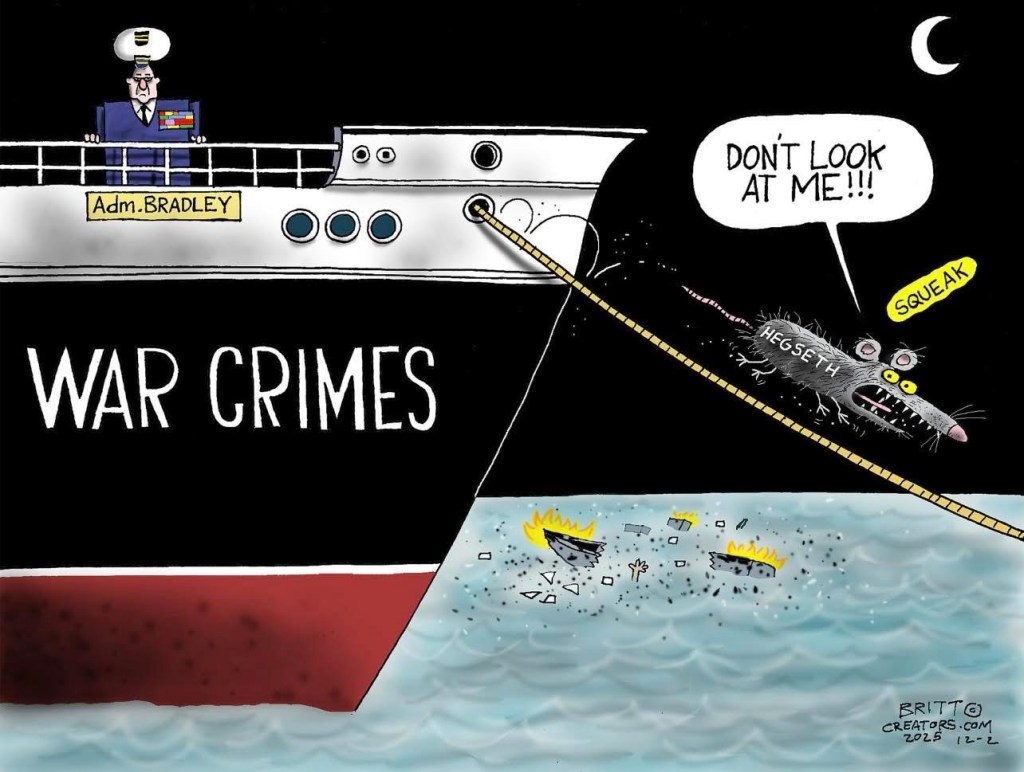
The legality of the strikes came under intense scrutiny after the public learned that two men who survived the initial 2 September attack could been seen amid the wreckage when a lethal follow-up strike was ordered. While Hegseth initially dismissed the reporting as fabricated, he later confirmed the basic facts during a cabinet meeting this week, saying he acted in the “fog of war” but “didn’t stick around” to observe the rest of the mission.
Senator Patty Murray, the Democratic vice-chair of the Senate appropriations committee, called for Hegseth’s firing following a bipartisan briefing on the incident on Thursday. “Between overseeing this campaign in the Caribbean, risking US servicemembers’ lives by sharing war plans on Signal, and so much else, it could not be more obvious that Secretary Hegseth is unfit for the role, and it is past time for him to go,” Murray said.
Hegseth is an incompetent moron, but so are all of Trump’s other cabinet members.
Garrett Owen at Salon: “It’s bad”: Lawmakers shocked at video of strike on survivors of alleged drug boat.
Video footage of a highly controversial second strike on an alleged drug boat in September was shown to lawmakers in Washington, shocking and disgusting some, while others defended the decision to target survivors.
Members of the House Permanent Select Committee on Intelligence and the Senate and House Armed Services committees viewed the footage in a closed-door meeting with military brass involved in the strikes. The video showed a suspected drug boat operating in the Caribbean, being struck, and then being struck again as two survivors appeared to cling to wreckage.
“This is a big, big problem, and we need a full investigation,” Rep. Adam Smith, D-Wash., told The New Republic in an interview. Smith, the ranking Democrat on the Armed Services Committee, was told that the survivors were “capable of returning to the fight.” He disagrees, though he contends that the boats may have been transporting drugs.
“It looks like two classically shipwrecked people,” Smith said, calling it a “highly questionable decision that these two people on that obviously incapacitated vessel were still in any kind of fight.”
Fellow lawmakers Rep. Jim Himes, D-Conn., and Sen. Jack Reed, D-R.I., were appalled by the footage. Himes called it “one of the most troubling scenes I’ve ever seen in my time in public service.” Reed said he was “deeply disturbed” by the video.
“The Department of Defense has no choice but to release the complete, unedited footage of the September 2 strike, as the President has agreed to do,” Reed said.
Some Republican tried to defend the strikes.
Sen. Tom Cotton, R-Ark. called the second strike “righteous” and “highly lawful and lethal.” Rep. Rick Crawford, R-Ark., said the strikes were carried out in a “highly professional manner.”
I guess we’ll find out, since Trump has said he would release the complete film of the attacks.

Cats Painting, by Fred Bell
If you’re interested in a deep dive about Hegseth’s situation, here’s a gift link to a piece at the Atlantic by Missy Ryan, Nancy A. Youssef, Sarah Fitzpatrick, and Jonathan Lemire: Pete Hegseth Is Seriously Testing Trump’s ‘No Scalps’ Rule.
The suspected drug traffickers, the lone survivors of a U.S. airstrike, were sprawled on a table-size piece of floating wreckage in the Caribbean for more than 40 minutes. They were unarmed, incommunicado, and adrift as they repeatedly attempted to right what remained of their boat. At one point, the men raised their arms and seemed to signal to the U.S. aircraft above, a gesture some who watched a video of the incident interpreted as a sign of surrender. Then a second explosion finished the men off, leaving only a bloody stain on the surface of the sea. Footage of the two men’s desperate final moments made some viewers nauseated, leading one to nearly vomit. “It was worse than we had been led to believe,” one person told us.
The video was part of a briefing that Admiral Frank “Mitch” Bradley, the head of U.S. Special Operations Command, gave lawmakers yesterday about the September 2 attack. Bradley told legislators that, after consulting military lawyers, he authorized the follow-on strike, judging that the men still posed a threat because of what they could have done: radioed for help or been picked up with what remained of their cargo of suspected cocaine. The video suggested they didn’t actually do any of that, but Bradley defended his decisions in the first episode of the Trump administration’s newly militarized counternarcotics campaign.
Republicans and Democrats who watched the grainy footage drew different conclusions about whether Bradley’s actions were justified. But many also sounded exasperated that once again they were dealing with controversy sparked by Bradley’s boss, Secretary of Defense Pete Hegseth. And after 10 months of turbulence under Hegseth’s leadership, the Republican-led Congress is now showing signs of exercising its oversight powers.
Read the whole thing at The Atlantic.
Andrew Solender at Axios: Scoop: Democrats call Trump’s bluff on releasing boat strike video.
Democrats on the House Armed Services Committee are pressing Secretary of Defense Pete Hegseth to release video of U.S. military strikes on an alleged Venezuelan drug boat that have inflamed tensions on Capitol Hill.
Why it matters: The lawmakers are seizing on to President Trump’s own comments this week that he would have “no problem” releasing the footage to the public.
“We look forward to your prompt response and release of this footage to the public, as has already been promised by President Trump,” the lawmakers, led by Rep. Pat Ryan (D-N.Y.) wrote in a letter to Hegseth that was obtained by Axios.
“The American people deserve transparency on these attacks,” they wrote, “it is your obligation to release the footage.” [….]
What they’re saying: “We write to request that you release all audio and video footage from the kinetic strikes on alleged drug boats in the Caribbean on September 2, 2025, including the follow-on strikes,” the Democrats wrote in their letter.
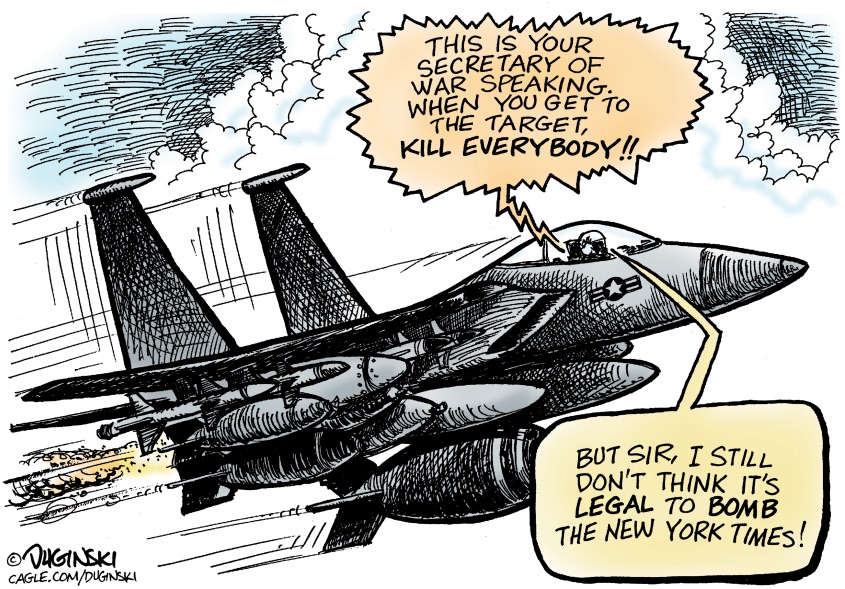
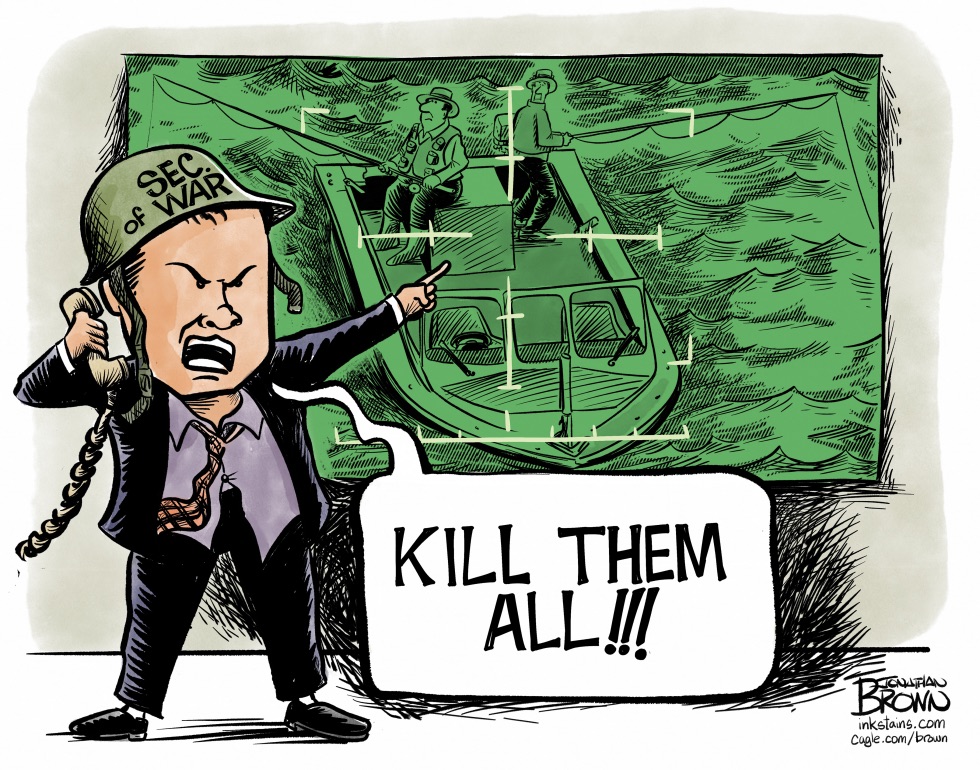
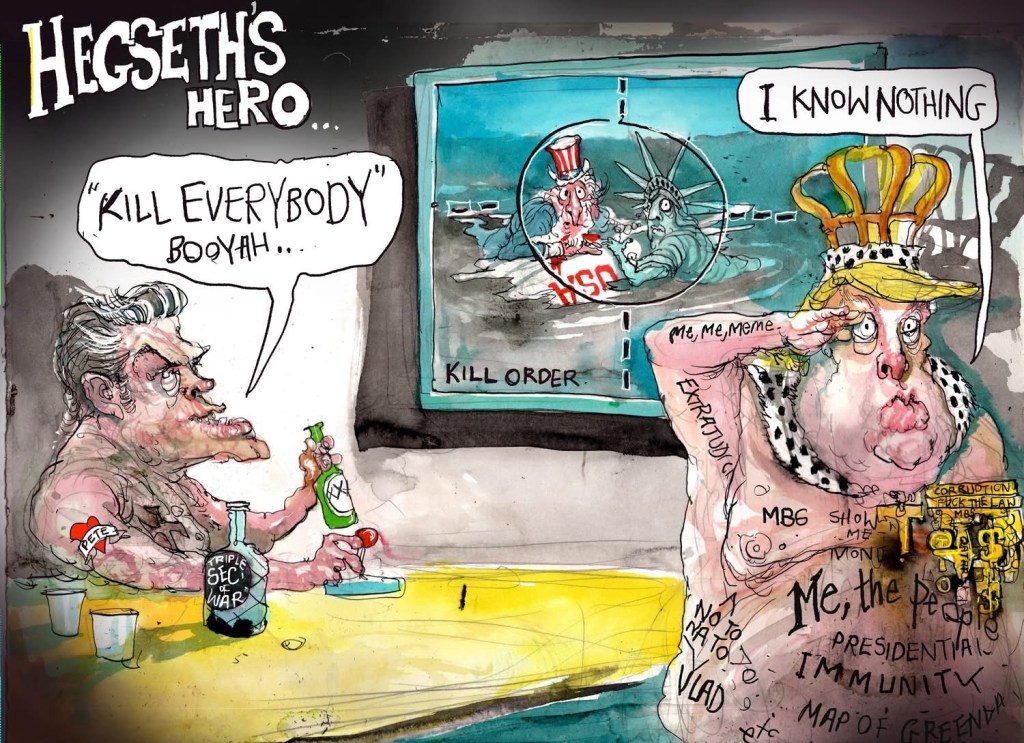
“Our concern stems from reports that you, as Secretary of Defense, issued an order to ‘kill everybody,’ followed by additional strikes seeking to kill the two remaining unarmed, shipwrecked individuals.”
The letter was signed by 19 of the 27 Democrats on the Armed Services Committee. Ryan’s office told Axios they reached out to Republicans as well, but none signed.
Yesterday, Dakinikat posted an article from The Economist about the Trump administration’s newly announced “security strategy” which denigrates Europe and praises Russia.
Here’s another analysis of the “strategy” by Anton Troianovski at The New York Times (gift link): Trump’s Security Strategy Focuses on Profit, Not Spreading Democracy.
Latin American countries must grant no-bid contracts to U.S. companies. Taiwan’s significance boils down to semiconductors and shipping lanes. Washington’s “hectoring” of the wealthy Gulf monarchies needs to stop.
The world as seen from the White House is a place where America can use its vast powers to make money.

Михалыч и Васильич», 2023
President Trump has shown all year that his second term would make it a priority to squeeze less powerful countries to benefit American companies. But late Thursday, his administration made that profit-driven approach a core element of its official foreign policy, publishing its long-anticipated update to U.S. national security aims around the world.
The document, known as the National Security Strategy, describes a world in which American interests are far narrower than how prior administrations — even in Mr. Trump’s first term — had portrayed them. Gone is the long-familiar picture of the United States as a global force for freedom, replaced by a country that is focused on reducing migration while avoiding passing judgment on authoritarians, instead seeing them as sources of cash.
“We seek good relations and peaceful commercial relations with the nations of the world,” it says, “without imposing on them democratic or other social change that differs widely from their traditions and histories.”
The National Security Strategy of Mr. Trump’s first term, by contrast, cast the world as a contest “between those who favor repressive systems and those who favor free societies.”
The National Security Strategy has no binding force, and some analysts cautioned against reading too much into it as a guide to future actions given Mr. Trump’s mercurial nature.
But the release of the strategy, which recent presidents have generally updated just once in every term, did carry significance as a snapshot in time. Amid the debates swirling among Republicans over American policy toward the Middle East, Russia, China and elsewhere, the document showed how the administration has appeared to coalesce around a commitment to avoid military entanglements and promote commerce.
In an interview, Dan Caldwell, a former senior adviser to Defense Secretary Pete Hegseth who argues in favor of American military restraint, hailed the new strategy as a “true break from the failed bipartisan post-Cold War foreign policy consensus.”
Personally, I don’t see that as a good thing. Use the gift link to read more.
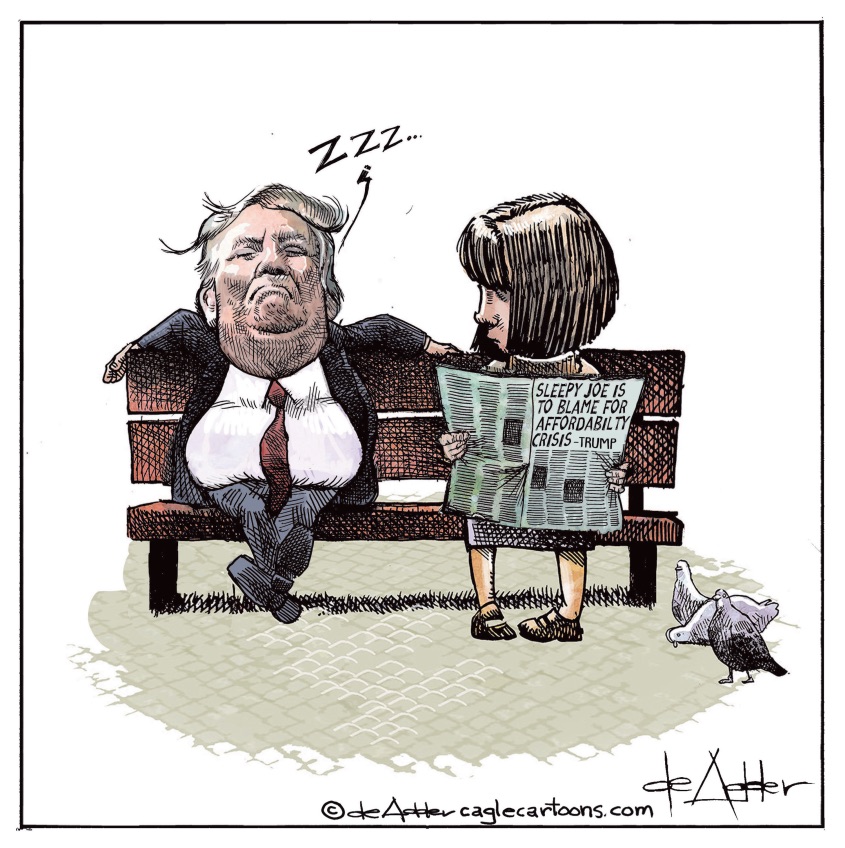
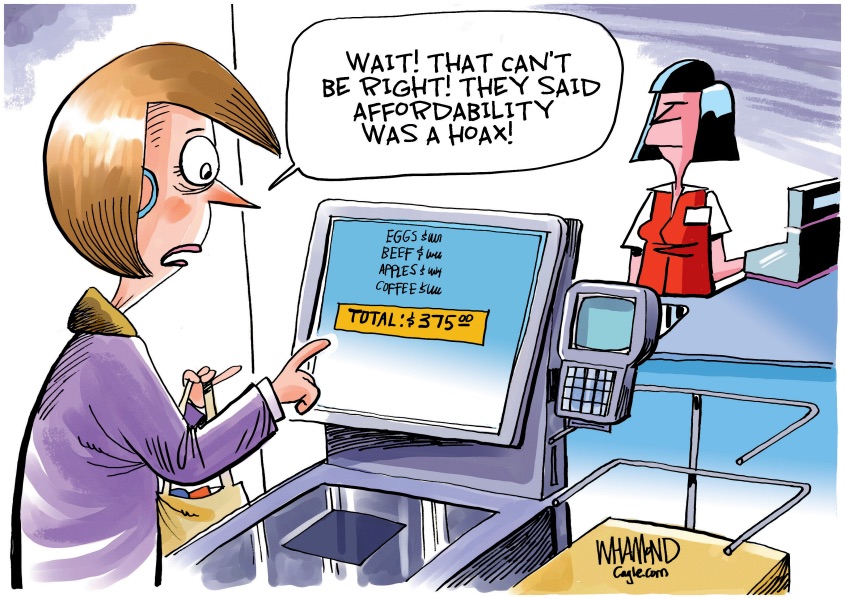
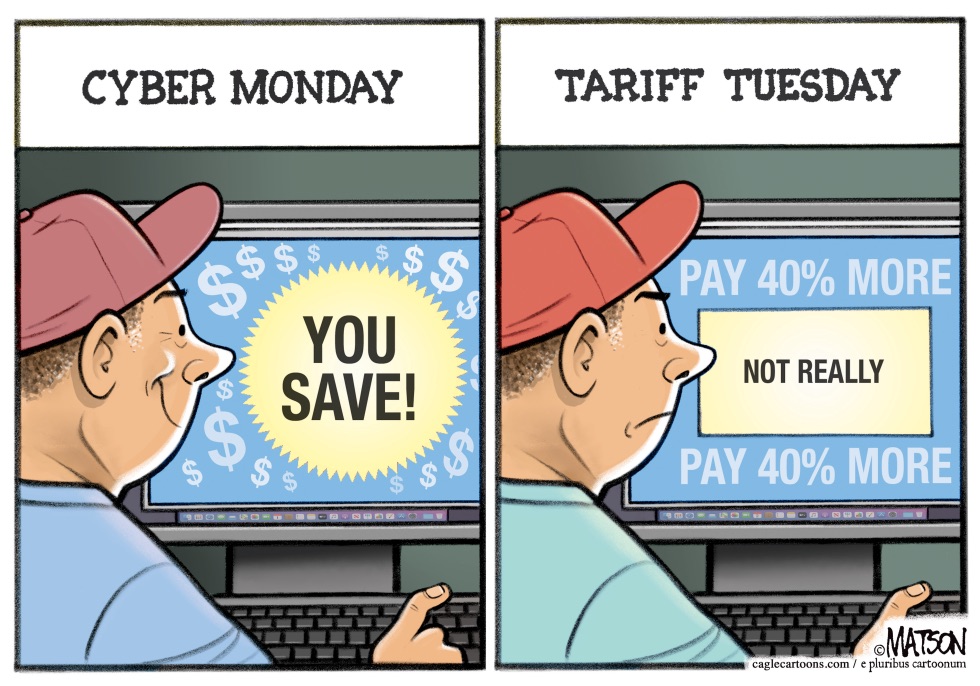
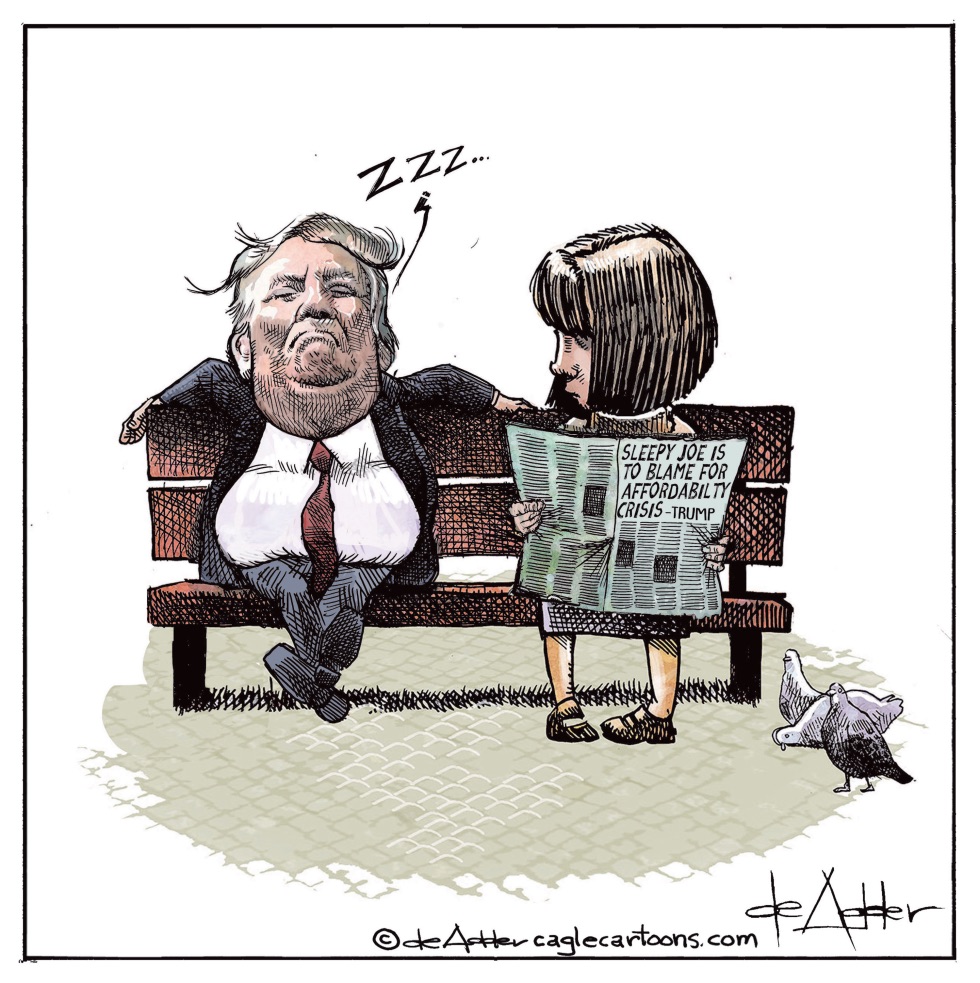
I wonder if Donald Trump has ever been in a grocery store. I really doubt it. He doesn’t seem to understand the lives of ordinary Americans at all. He has no concept of what it’s like to worry about having enough money to pay the bills or to put food on the table. Someone else handles all those things for him. And frankly, he couldn’t care less if children are starving and families can’t pay the rent or mortgage. The only reason he has to care at all is because those people can vote. Right now, he’s making it clear he doesn’t give a shit.
Naftali Bendavid at The Washington Post: Trump struggles to persuade Americans to ignore affordability issues.
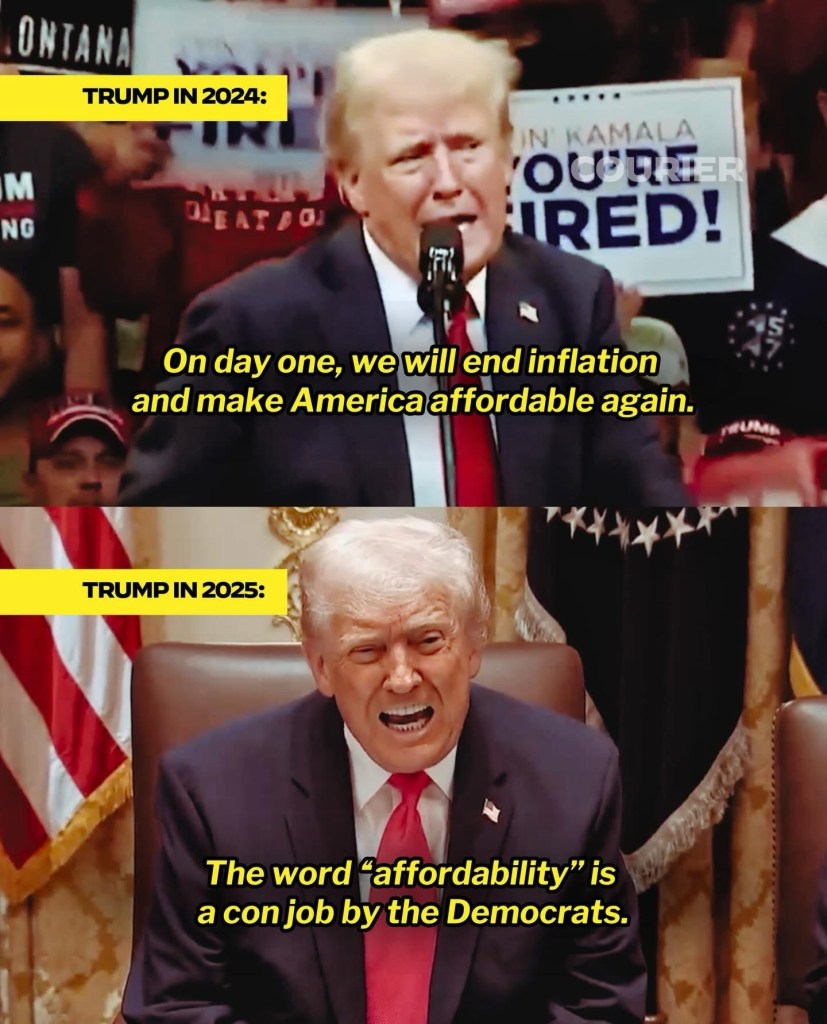
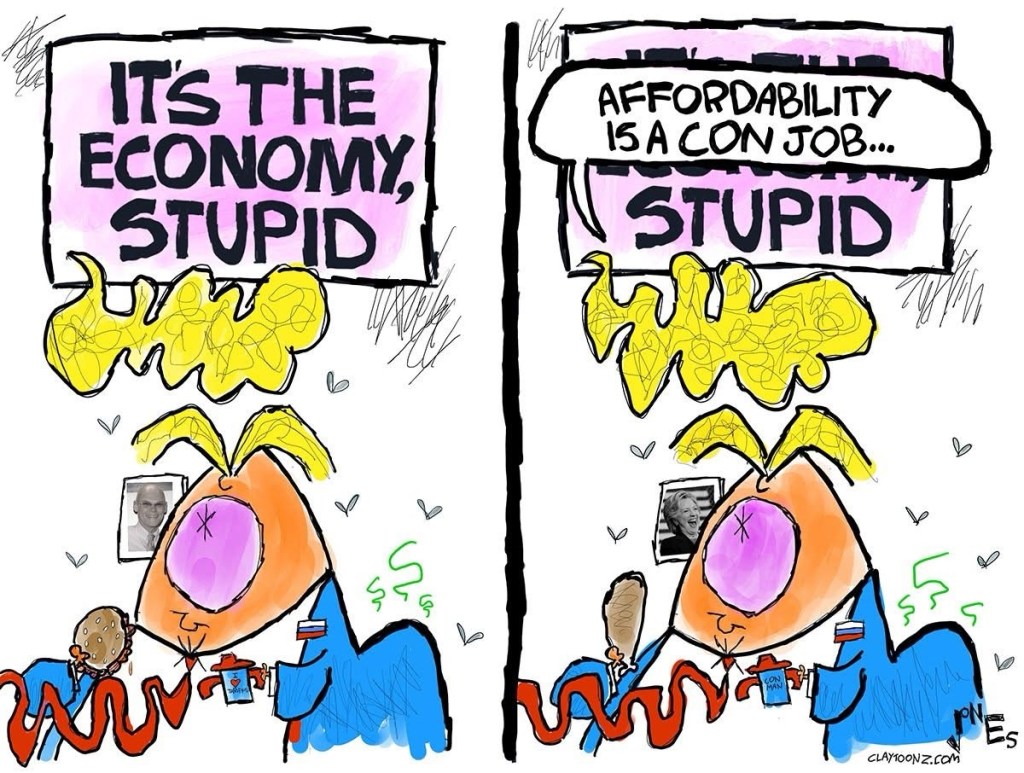
President Donald Trump has said drug prices are falling by as much as 1,500 percent, a mathematical impossibility. He has declared himself “the affordability president,” while dismissing the affordability issue as “a con job by the Democrats.”
Trump also vows that good times are coming. He has predicted that gas prices, which now hover around $3 a gallon, will plummet to $2. He has promised Americans $2,000 refund checks from the revenue raised by tariffs. He has suggested that “in the not-too-distant future,” no one will have to pay income tax.
This flurry of sometimes extravagant claims comes amid a growing Republican fear, fueled by recent election results, that high prices could set the stage for a Democratic sweep in next year’s midterms. So far, there is little evidence that Trump’s urgent attempt to shift the economic storyline is working.

By Sergey Levin
“Any Republican who refuses to admit we have an affordability problem is not listening to the American people,” former House speaker Newt Gingrich (R-Georgia) said. “It’s real because the American people think it’s real. I cannot overstate that — in a free country it’s the people who define what is real, not the politicians.” [….]
Trump’s plight is a striking turnabout. In last year’s campaign, Trump scored political points by highlighting Americans’ inflation concerns, and President Joe Biden faced the almost impossible task of convincing voters they were not as bad off as they thought.
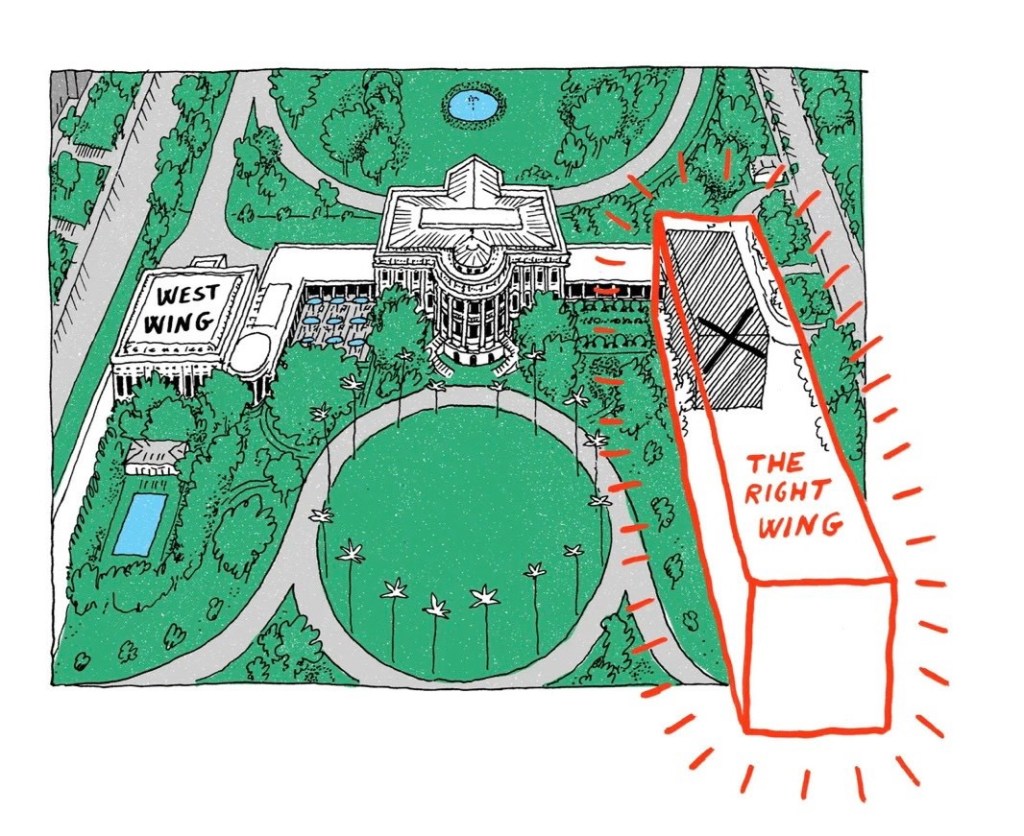
Strategists of both parties note that Trump — who has often seemed to defy the laws of politics — is struggling with the affordability issue as he has with few others. The president shrugged off criticism after he accepted a luxury plane from a foreign country, pardoned unsavory figures and demolished a third of the White House, for example — episodes that might be devastating to another politician.
This seems different. Alarm bells have gone off for Republicans since Democrats swept last month’s off-year elections, then performed better than usual in Tuesday’s House race in a bright-red Tennessee district. A Democrat could capture the Miami mayor’s office next Tuesday in heavily Republican Florida.
“He often exists in an alternative reality that many of his followers are happy to follow him into, but the affordability issue is kryptonite for him, because even his most devoted followers know which way is up when it comes to prices,” said Jared Bernstein, who chaired Biden’s Council of Economic Advisers. “He may be able to convince people of his alternative vision in lots of different areas, but not this one.”
Economic issues are going to kill the Republicans in 2026 if Trump continues to live in a fantasy world.
NBC News: ‘People aren’t dumb’: Republicans worry they’re not doing enough on affordability.
Congressional Republicans are starting to publicly and privately sound the alarm about their party’s disjointed strategy to address Americans’ affordability concerns, with some growing increasingly frustrated with President Donald Trump’s sometimes cavalier attitude toward the subject.
While Republicans say the high cost of living is a problem they inherited from President Joe Biden, many GOP lawmakers still think their party needs to sharpen its own message and platform ahead of the midterms — or else it could cost them their tenuous majorities in Congress.
“If we don’t do that, we would be morons, because the economy is very much on people’s minds,” Rep. Tony Gonzales, a Texas Republican, told NBC News. Democrats “failed to really hammer the economy, and it cost them the election,” he added. “If we as Republicans fail to do the same, it wouldn’t surprise me if we had a similar turnout.”
Nearly two dozen Republican senators, House members, strategists and congressional aides shared their concerns about their party’s handling of affordability in interviews with NBC News. Another six acknowledged the issue but said the party will settle on the right strategy to address it.
Their comments come after Democrats have secured wins in many of this year’s elections, with voters citing economic concerns, and as Trump has dismissed the issue as a Democratic “hoax,” rhetoric that has privately frustrated some Republicans.
Read the rest at NBC News.
Those are the stories that captured my interest today. What’s on your mind?
Did you like this post? Please share it with your friends:
Posted: December 5, 2025 | Author: dakinikat | Filed under: #We are so Fucked, Breaking News, Corruption and Criminal Insanity, Foreign Affairs, GOP Crimes Against Humanity, ICE Immigration and Customs Enforcement, ICE raids, New Orleans, Venezuela | Tags: @johnbuss.bsky.social John Buss, anti-vaccination twits, Attacks on Venezuala, No Quarter, RFK Jr Weirdo, The Media SUCKS |
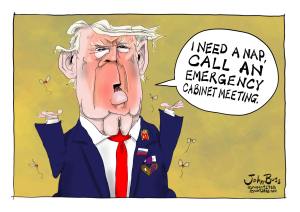
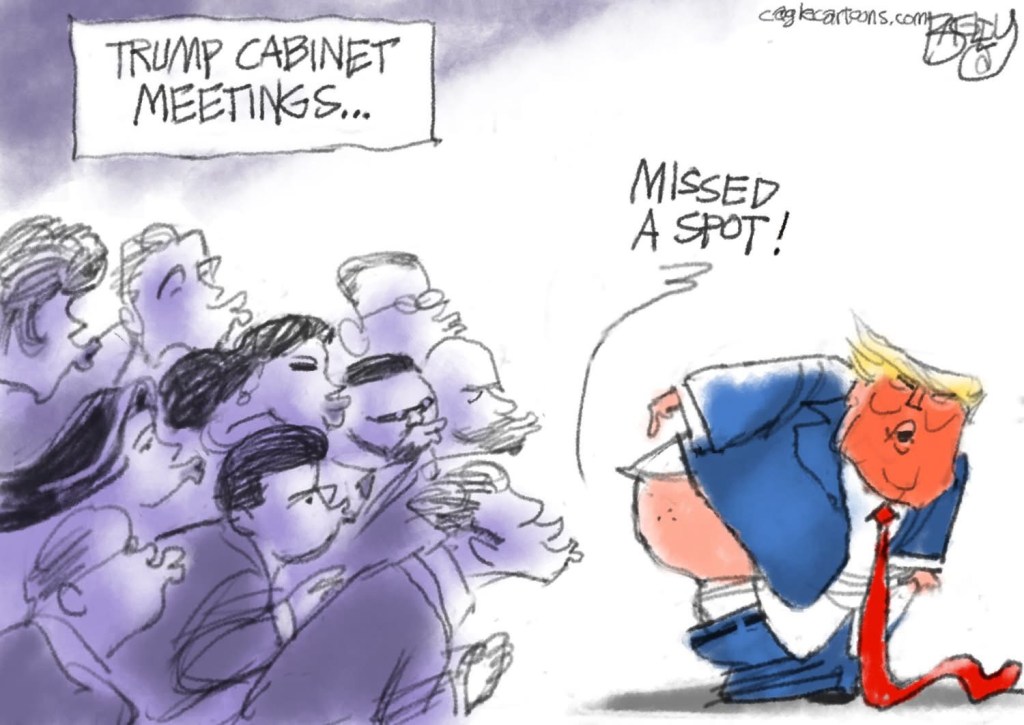
“I’m not sure, but that Cabinet Meeting may have been the most entertaining one yet. Two hours of trump fighting off sleep, like the toddler he obviously is, while his minions heaped praise upon his barely coherent body.” John Buss, @repeat1968
Good Day, Sky Dancers!
And, hello again from Occupied New Orleans. We’ve had cold rainy weather for quite some time. Perhaps it will wash aways some of the dirty ICE terrorizing the city. The stories get more horrific and we’re barely into the first week of it. The complete idiocy with which this administration operates is ruining the country and a lot of it brings unnecessary death. I only wish we had a Congress that would function the way it was designed and a much better press. Let’s dig in while my tea is still hot.
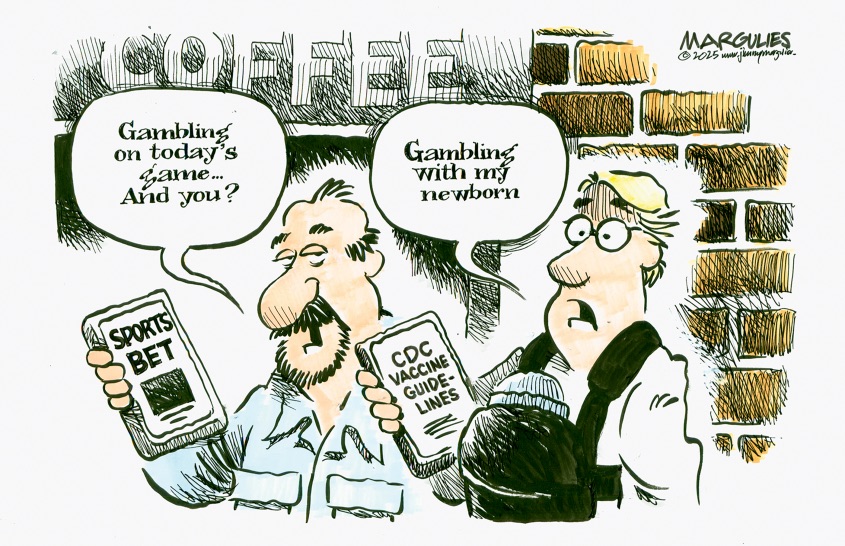
The latest maneuvering of RFK jr’s death panels is once more directed to childhood vacinations. Where are all these supposedly pro-life people when something other than a fertilized egg is involved. No one cares about actually breathing children? This is from the Washington Post. “CDC panel makes most sweeping revision to child vaccine schedule under RFK Jr.. The panel voted to eliminate a long-standing recommendation for every newborn to receive a hepatitis B shot, excluding those born to mothers testing negative.”
An influential vaccine advisory panel on Friday voted to lift a long-standing recommendation that all newborns receive a vaccine for hepatitis B, marking the most significant change to the childhood immunization schedule under Health Secretary Robert F. Kennedy Jr.
The Advisory Committee on Immunization Practices approved the change despite fierce objections from medical groups who said the recommendation had proved a successful public health strategy, nearly eradicating the dangerous virus among U.S. children.
The committee voted 8-3 to eliminate a recommendation, dating to 1991, for every child to receive a first dose of a hepatitis B vaccine shortly after birth. The panel said the newborn shot is no longer necessary for babies born to mothers who test negative for the virus. They suggested parents of those children delay the first dose for at least two months and consult with their doctors about whether or when to begin administering the three-dose series.
Supporters of the change said the universal recommendation regardless of risk was overly broad and undermined informed choice. Retsef Levi, an ACIP panelist who voted to change the language, said he believes the intention is to push parents to consider whether they want to give another vaccine to their child.
“It’s actually suggesting a fundamental change in their approach to this vaccine and maybe more broadly,” said Levi, a professor of operations management at MIT.
The recommendation from the group of outside government advisers goes to the acting director of the Centers for Disease Control and Prevention for final approval.
Medical experts have argued that it’s important to vaccinate all newborns for hepatitis B, even if their mothers test negative, because babies are at risk of infection if their mothers receive a false negative or become infected after testing. Some of the dissenting panel members pushed back on the change — one called the revised guidance on hepatitis B unconscionable, while another said the move was rooted in “baseless skepticism.”
“We will see hepatitis B infections come back,” said panelist Cody Meissner, a professor of pediatrics at the Geisel School of Medicine at Dartmouth. “The vaccine is so effective, it does not make sense in my mind to change the immunization schedule.”
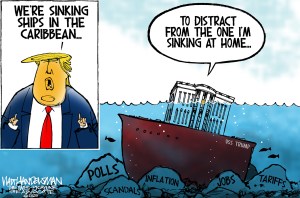 Select lawmakers were around yesterday for a hearing about the lastest, criminal act by our country against Venezuelan boats. The stories offered up by the Department of War were quite different than the story told by the film. This is from CNN. “Exclusive: Survivors clinging to capsized boat didn’t radio for backup, admiral overseeing double-tap strike tells lawmakers.”
The two men killed as they floated holding onto their capsized boat in a secondary strike against a suspected drug vessel in early September did not appear to have radio or other communications devices, the top military official overseeing the strike told lawmakers on Thursday, according to three sources with direct knowledge of his congressional briefings.
As far back as September, defense officials have been quietly pushing back on criticism that killing the two survivors amounted to a war crime by arguing, in part, that they were legitimate targets because they appeared to be radioing for help or backup — reinforcements that, if they had received it, could have theoretically allowed them to continue to traffic the drugs aboard their sinking ship.
Defense officials made that claim in at least one briefing in September for congressional staff, according to a source familiar with the session, and several media outlets cited officials repeating that justification in the last week.
But Thursday, Adm. Frank “Mitch” Bradley acknowledged that the two survivors of the military’s initial strike were in no position to make a distress call in his briefings to lawmakers. Bradley was in charge of Joint Special Operations Command at the time of the strike and was the top military officer directing the attack.
The initial hit on the vessel, believed to be carrying cocaine, killed nine people immediately and split the boat in half, capsizing it and sending a massive smoke plume into the sky, the sources who viewed the video as part of the briefings said. Part of the surveillance video was a zoomed-in, higher-definition view of the two survivors clinging to a still-floating, capsized portion, they said.
For a little under an hour — 41 minutes, according to a separate US official — Bradley and the rest of the US military command center discussed what to do as they watched the men struggle to overturn what was left of their boat, the sources said
During that time, Bradley also consulted with the uniformed lawyer on duty during the operation, he told lawmakers, according to two of the sources. The JAG officer, or judge advocate general officer, assessed it would be legal to move forward with a second strike, the sources added.
Ultimately, Bradley told lawmakers, he ordered a second strike to destroy the remains of the vessel, killing the two survivors, on the grounds that it appeared that part of the vessel remained afloat because it still held cocaine, according to one of the sources. The survivors could hypothetically have floated to safety, been rescued, and carried on with trafficking the drugs, the logic went.
 Another boat was targeted by the Pentagon in the Pacific. This is from The Guardian. “Pentagon announces it has killed four men in another boat strike in Pacific. Strike comes amid congressional turmoil over legality of US attacks on suspected drug smugglers.”
The Pentagon announced on Thursday that the US military had conducted another deadly strike on a boat suspected of carrying illegal narcotics, killing four men in the eastern Pacific, as questions mount over the legality of the attacks.
Video of the new strike was posted on social media by the US southern command, based in Florida, with a statement saying that, at the direction of Pete Hegseth, the defense secretary, “Joint Task Force Southern Spear conducted a lethal kinetic strike on a vessel in international waters operated by a Designated Terrorist Organization”.
“Intelligence confirmed that the vessel was carrying illicit narcotics and transiting along a known narco-trafficking route in the Eastern Pacific. Four male narco-terrorists aboard the vessel were killed,” the statement added.
The footage showed a large explosion suddenly overtaking a small boat as it moved through the water, followed by an image of a vessel in flames and dark smoke streaming overhead.
It is the 22nd strike the US military has carried out against boats in the Caribbean Sea and eastern Pacific Ocean, bringing the death toll of the campaign to at least 87 people since September, when the strikes began.
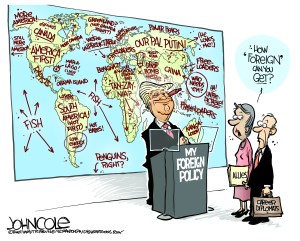
 U.S Foreign and Military policy has become so incoherent, illegal, dangerous, and likely leaked to our country’s traditional enemies, that our European partners no longer trust us. This link was shared to me by BB this morning and comes from The Economist. “Donald Trump’s bleak, incoherent foreign-policy strategy. Allies may panic; despots will cheer.”
YOU MIGHT think that in Trumpworld a new National Security Strategy (NSS) would not count for all that much. John Bolton, a national security adviser in Donald Trump’s first term, frequently laments that his boss had no strategy at all. Instead, the president worked by impulse—and without the encumbrance of too many briefings. From one day to the next, he veered in opposing directions.
Despite that, the new NSS matters. Released, weirdly, in the dead of night on December 4th/5th, it will be pored over by soldiers, diplomats and advisers in America and around the world. It is the latest and fullest statement of what “America First” means in foreign policy. It sets the terms for a soon-expected review of military power, and lays out the priorities for all those trying to interpret the president’s wishes. And, for many of its readers, it will be profoundly alarming.
For the most part, the new NSS rejects the decades-old insight that a common set of values are what cement America’s alliances. It declares that it is “not grounded in traditional, political ideology” but is motivated by “what works for America”. Instead, it embraces what it calls “flexible realism”. That means being “pragmatic without being ‘pragmatist’, realistic without being ‘realist’, principled without being ‘idealistic’, muscular without being ‘hawkish’, and restrained without being ‘dovish’.”
If that sounds like a dog’s breakfast, that is because it is. Shorn of the enlightened values that have long anchored foreign policy, America First becomes a naked assertion of power that owes more to the 19th century than the world that America built after the second world war. And that leads to a document riven by contradictions.
In some parts of the world, in particular in Asia, Mr Trump expects countries to behave as willing allies. In most others they are to submit meekly to America’s economic and military will. In one place the NSS rejects the interventionist idea of urging countries to adopt “democratic or other social change that differs widely from their traditions and histories”. That suits Russia, China and the monarchies of the Middle East. Yet in Europe, where MAGA worries about wokeism, migration and the dominance of liberal values, the NSS bluntly declares that “our goal should be to help Europe correct its current trajectory.”
When the NSS applies this formula to the world, region by region, the full consequences of this shift start to become clear.
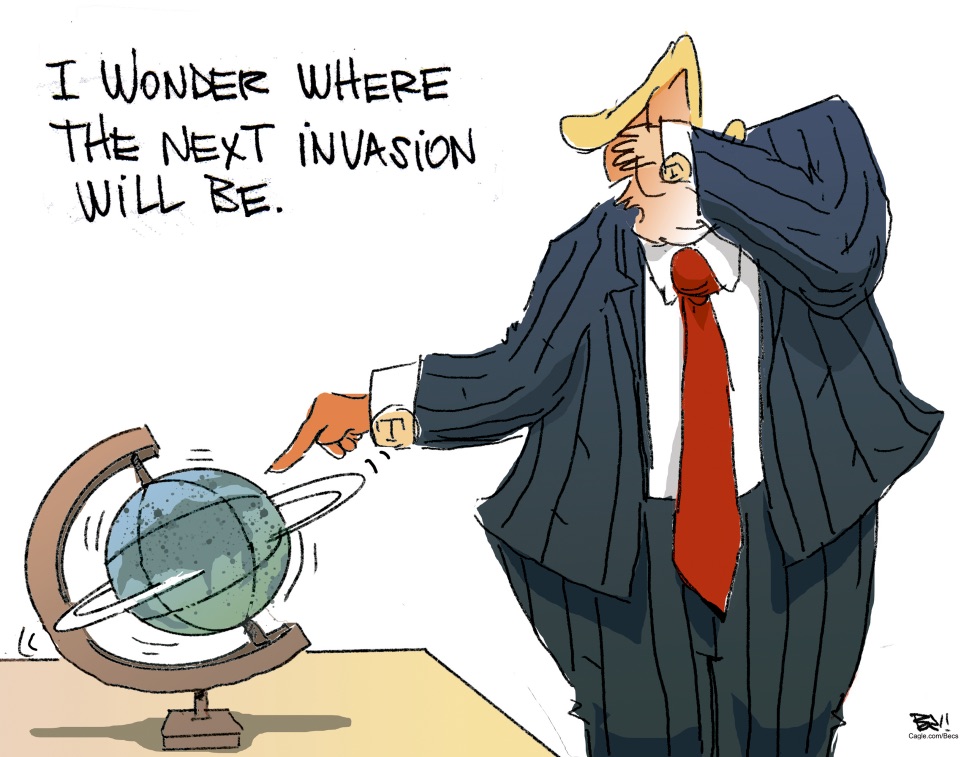
Nowhere is this more evident than in the section covering the western hemisphere. “We want to ensure that the western hemisphere remains reasonably stable and well-governed enough to prevent and discourage mass migration to the United States,” it reads. Governments in the Americas will be enlisted to control migration and curb drug flows. They are expected to grant America control of key assets, resources and strategic locations, or at least a veto over “hostile foreign” ownership of them—a clear warning to refuse Chinese investments that offer a sway over ports or such assets as the Panama Canal. Where law enforcement has failed to halt drug smuggling, America will use armed forces, the NSS warns.
This swaggering right of intervention is called a “Trump Corollary” to the Monroe Doctrine. That is a deliberate tribute to the “Roosevelt Corollary”, President Theodore Roosevelt’s assertion of gendarme-like enforcement rights over the western hemisphere in 1904.
All this seems sure to provoke angry recollections of high-handed American interventions in the region in the 20th century, from military invasions and blockades to CIA-backed coups or security pacts that saw America arming and training autocracies guilty of extra-judicial murders and torture in the cold war. With its talk of conditioning aid and trade on co-operation from Latin American governments, the NSS signals a belief that resentment will not stop Latin Americans from doing as they are told.
In Asia, by contrast, allies will read the NSS with a mixture of immediate relief and long-term gloom. The passages on Taiwan could have been worse. The nightmare scenario for such allies as Japan, the Philippines and South Korea would have involved an NSS declaring that the fate of the democratically ruled island of Taiwan is not an existential interest for America.
Instead, the NSS restates America’s position that it “does not support any unilateral change to the status quo in the Taiwan Strait”. True, there is nothing about Taiwan’s importance as a friendly, pro-Western democracy whose people overwhelmingly oppose coming under rule by China. But the strategy does make a cold-eyed realist case for Taiwan’s importance as a usefully-located redoubt in the middle of the “First Island Chain” that runs from Japan through Taiwan to the Philippines, penning in China’s navies and air forces. In addition, the NSS nods to Taiwan’s importance as the largest source of advanced semiconductors.
Accordingly, America will sustain forces capable of deterring any attempt to take Taiwan or to control the sea lanes near that island, or in the South China Sea. Asian allies must also spend much more on their own defences and grant America more access to their ports and bases. In short, the NSS demands that Asian countries risk China’s wrath by helping America contain Chinese ambitions in the Indo-Pacific. But there is not a word of criticism for China’s (or indeed Russia’s) expansionist ambitions or their desire to overthrow the post-1945 legal and multilateral order.
The NSS spares its sharpest barbs for Europe. The old world, it says, is undergoing a profound crisis, and this is not so much about economic decline or military weakness as it is about the loss of national identity, leading to the “stark prospect of civilisational erasure”.
Warning that “it is more than plausible that within a few decades at the latest, certain NATO members will become majority non-European,” the NSS warns that “it is an open question whether they will view their place in the world, or their alliance with the United States, in the same way as those who signed the NATO charter.” In other words, immigrants will corrupt the values of the societies they move to—a shocking assertion from a country that is itself built on immigration.
The NSS’s prescriptions for Europe flow from this assertion of Judeo-Christian nationalism. The NSS calls for “unapologetic celebrations of European nations’ individual character and history”, encouraging the revival promoted by “patriotic European parties”. That is a reference to the populist right, including National Rally in France, Reform UK in Britain and Alternative for Germany, which the vice-president, J.D. Vance, embraced earlier this year when he spoke at a conference in Munich. If that is the Trump administration’s programme, how are the centrist governments in Europe, who see these parties as a grave threat, supposed to treat America as an ally?
When the NSS applies this rationale to Ukraine, it draws some devastating conclusions. Suggesting that most Europeans want peace even if it means surrendering to Vladimir Putin, and asserting that their governments are standing in the way, the strategy calls for a rapid end to the war in order to prevent escalation. It says that America should curb the sense in Europe that Russia is a threat and warns that NATO cannot be “a perpetually expanding alliance”. Alarmingly, it has nothing to say about the repeated aggression and hostility of Vladimir Putin, the Russian president. To much of Europe, this sort of appeasement will only serve to set up the next conflict.
“In everything we do, we are putting America First,” reads the letter from Mr Trump to the American people that opens the NSS. But it is the preceding sentence that will be read by allies with gloom, and with glee by China and Russia, for it is hopelessly at odds with reality: “America is strong and respected again—and because of that, we are making peace all over the world.” Alas, that claim comes from an administration that is indeed feared, resented and obsessed over, but one that is less respected or trusted than any American government in decades.
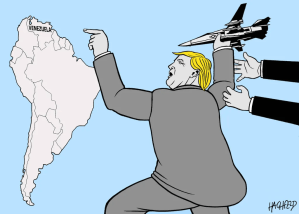 If that doesn’t give you geopolitical goosebumps, I don’t know what will. Meanwhile, we’ve been experiencing press coverage that’s not providing us the information we need. This article is from The Nation. “A New Roosevelt Institute Report Confronts the Roots of Our Media Crisis—and Calls for Breaking Up Corporate Media.” Today’s journalism crisis wasn’t inevitable, but it’s time to free journalism from the straitjacket of turning a democratic obligation into a profit-maximizing business model.” Concentration in this market is dumbing up America big time. This story is reported by Bilal Baydoun, Shahrzad Shams, and Victor Pickard
The desire to attack and ultimately control the media is a through line of modern authoritarian governance across the globe. President Donald Trump’s reign as the defining political figure of the last decade has demonstrated how quickly that tactic can take hold here. In courtrooms, agencies, and White House briefings, Trump and his allies have sought to punish and delegitimize journalists. In the second Trump term, the bully pulpit has been turned into a battering ram, with open or implied threats to withhold the broadcast licenses or block the media mergers of insufficiently loyal companies. But a singular focus on state meddling has, ironically, obfuscated how authoritarians come to wield such great power over the media system in the first place, and why a free press must be protected from both state and commercial coercion.
What we’re experiencing now is a dangerous convergence of the two.
The truth is that the administration’s threats have rippled across a media ecosystem buckling under the weight of commercial pressures—pressures that existed long before that fateful golden escalator ride more than a decade ago. It’s these longstanding commercial imperatives that Trump knows how to weaponize to manipulate media institutions. He understands that newsrooms accountable first and foremost to investors will sell out their accountability function to survive. Likewise, media conglomerates pursuing mergers cannot afford to anger the administration holding the regulatory pen. When journalism is trapped inside a commercial straitjacket, it can’t fight back.
In our oligarchic age, where billionaires can decide which fledgling outlets live or die for pennies on the dollar and even themselves command powerful roles in government, the line between state-run media and state-aligned media through private means becomes vanishingly thin. A press dependent on the whims of the ultra-wealthy cannot claim meaningful independence from the political forces its owners serve. And even though our Constitution protects the press for democratic reasons, our policy regime assumes that news organizations should behave like profit-maximizing firms.
How did we get here? As we show in our new Roosevelt Institute report, today’s media crisis wasn’t inevitable, but the consequence of policymakers embracing a corporate libertarian approach to media policy. This framework treats our information ecosystem as an ordinary market, rather than vital democratic infrastructure, resulting in a media system riddled with structural deficits. The result is a media environment that’s vulnerable to pressure from every direction, from the White House to the C-Suite.
The consequences of this policy failure have been catastrophic. Newsrooms have been gutted as advertising revenue collapsed. Local papers have closed or been absorbed by vulture capitalists whose short-term incentives are fundamentally at odds with journalism’s public mission. More than 1,000 counties now lack the equivalent of a single full-time journalist; the number of journalists per 100,000 residents has fallen 75 percent since the early 2000s. Platforms dominate news distribution, leaving publishers dependent on algorithmic systems designed to maximize engagement rather than inform the public. A handful of billionaires can bend the flow of information with the proverbial push of a button, and conglomerates continue conglomerating: Just earlier today, after a major bidding war, Netflix beat out Paramount Skydance and Comcast in a deal to acquire Warner Bros. Discovery, resulting in a merger that will further concentrate cultural and informational power in fewer hands.
Today, most Americans, and even many policymakers, take these developments and the system that led to them for granted. As the late media scholar Robert McChesney argued, media policy has been rendered invisible, designed behind closed doors in the public’s name, but without the public’s consent—placing core questions related to our information ecosystem outside the purview of democratic contestation. This invisibility has given cover to a set of neoliberal assumptions that define the boundaries of what’s possible, empowering a small set of wealthy private actors to decide, for the rest of us, what our media system looks like, and whose interests it serves.
Such invisibility obscures how our media system’s design—and the many problems ailing it—is the result of policy decisions. Over the course of decades, policymakers diluted the meaning of the media’s public interest responsibilities, refashioning them into something more akin to consumer preferences. At the same time, the media market faced a series of re-regulatory structural moves that shifted power away from the public and into the hands of corporate actors. And well before Trump dismantled the CPB, Congress resisted meaningful public media investment. All these developments were in turn legitimized by a First Amendment media jurisprudence that prioritizes unbridled commercial speech over the public’s “right to know.” Combined, these constraints created a media system that treats commercial imperatives as natural law, and democratic obligations as optional.
 I’ve probably over shared most of the excerpts and it will take you some time to get through them all. BB also wrote yesterday on the many ways our country is run by idiots with an angend American’s do not approve of and in a way that is beyond incompetent. Any of us in cities Occupied by the National Guard and Ice have horrors stories that sound more like NAZI Germany than your backyard. They have no incentive stop and they’re even ignoring court orders. This article is the view point of my home city by the BBC. “New Orleans residents in fear as immigration crackdown descends on their city.” The BBC’s North American Correspondent, Tom Bateman, is here and reports the story.
Two labourers stand on the roof of a house in Kenner, outside New Orleans, as US Border Patrol agents clamber up a ladder, getting closer.
As the agents move in, trying to arrest them, the men step to the roof’s edge, poised in an apparent act of resistance – but it’s too high to jump.
On the ground in the mostly Latino neighbourhood, an officer trains his weapon towards the rooftop while a sniper moves into position. Now, neighbours, activists, and crews of local press are gathering at the scene, watching in bewilderment: US President Trump’s new front line on immigration enforcement has just arrived.
It is day one of “Catahoula Crunch”, as the Department of Homeland Security (DHS) has labelled its operation, taking its name from an American leopard dog known for being well-muscled, powerful and territorial.
“These people came to work today to provide for their families and themselves,” said Zoe Higgins, an activist documenting the Border Patrol operation in New Orleans.
“That they could just be abducted, removed from all stability – I can’t imagine how terrifying that is,” she said, shortly after the agents coaxed the men down and detained them.
According to DHS, its agents were conducting immigration enforcement this week when “several illegal aliens climbed on the roof of a residential home and refused to comply with agent commands”.
An “illegal alien” was arrested, DHS officials told the BBC, but they did not answer questions about the immigration status of the labourers involved, nor whether agents had a warrant to access the property.
 None of this sounds lawful. I’m not a Constitutional lawyer, but I do know that everyone deserves their day in court. Disappearing people is criminal.
So, I’m going off today to see my doctor for just a normal check up. But my body tells me every day that it’s not coping well with any of this. I usually can drop my blood pressure by meditating. My skills are no longer up to this fight or fly response I feel continually. I just put my birth certificate in my purse. I still doing my whistle brigade thing. This country is not going doing on my watch. This city and every one in it is not going to be given the No Quarter treatment here; especially when they’re not really a threat to any of us in any way.
What’s on your Reading. Action and Blogging list today?
Did you like this post? Please share it with your friends:
Posted: December 3, 2025 | Author: bostonboomer | Filed under: just because | Tags: Alejandro Carranza Medina, Colombia, Donald Trump, Dr. Sean P. Barbabella, Former Honduran president Juan Orlando Hernández, Gaza, Ilhan Omar, Jared Kushner, Minnesota, Pete Hegseth, Saudi Arabia, Signalgate, Somali immigrants, Trump MRI, Trump's health, Ukraine |
Good Day!!
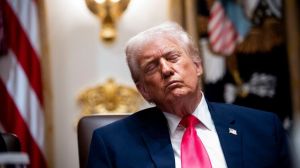
Trump sleeps during yesterday’s cabinet meeting.
Nothing is normal in the U.S. anymore. The government is run by incompetent and corrupt people. Most concerning of all is that the “president is not only ignorant and incompetent, but also physically and mentally unstable. In addition, he lacks any sense of morality or empathy for other people.
Yesterday, historian Garrett Graff wrote about this for the second time at his Substack Doomsday Scenario: It’s time to talk about Donald Trump’s health (again).
In the months since, the evidence has only grown that something serious is afflicting Trump.
And then last night happened.
Overnight, the President of the United States went on what can only be described as an unhinged social media fever dream. He posted on his social media site Truth Social hundreds of times in a short span — somewhere north of 150 times overnight, a wild mix of conspiracy theories, videos, and memes. It was extreme even for him.
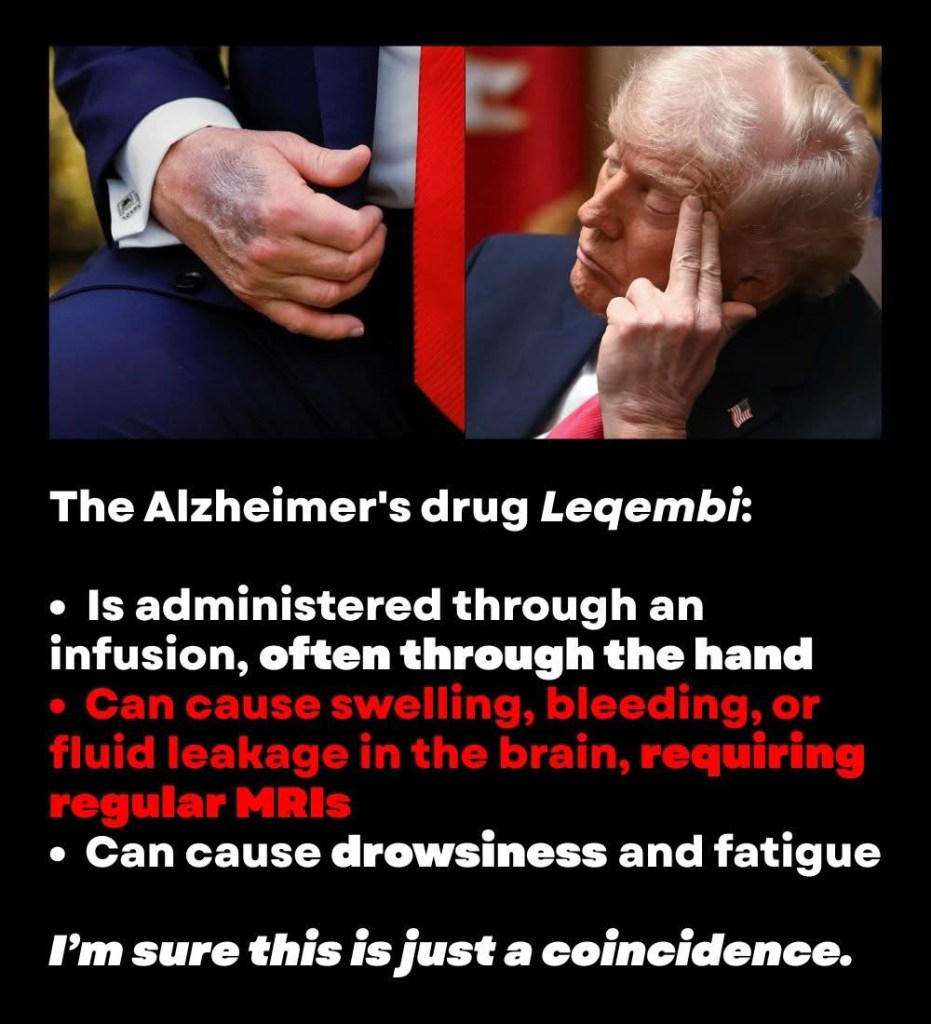
During that end-of-August episode, the major questions were about the president’s physical health — his bruised hands and his swollen ankles — and in the months since, there have been more reasons and evidence that some part of the president is not well:
- He is stumbling, physically, through more of his events. Since August, he appears to be regularly dragging the right side of his body and struggles to walk in a straight line. Just watch this recent video of Trump boarding Marine One, where he appears to be leaning heavily on Melania Trump to stand. And then there was Trump’s Asia trip, where he seemed so lost, wandering aimlessly through a Japanese press event, that the late night shows set it to music.
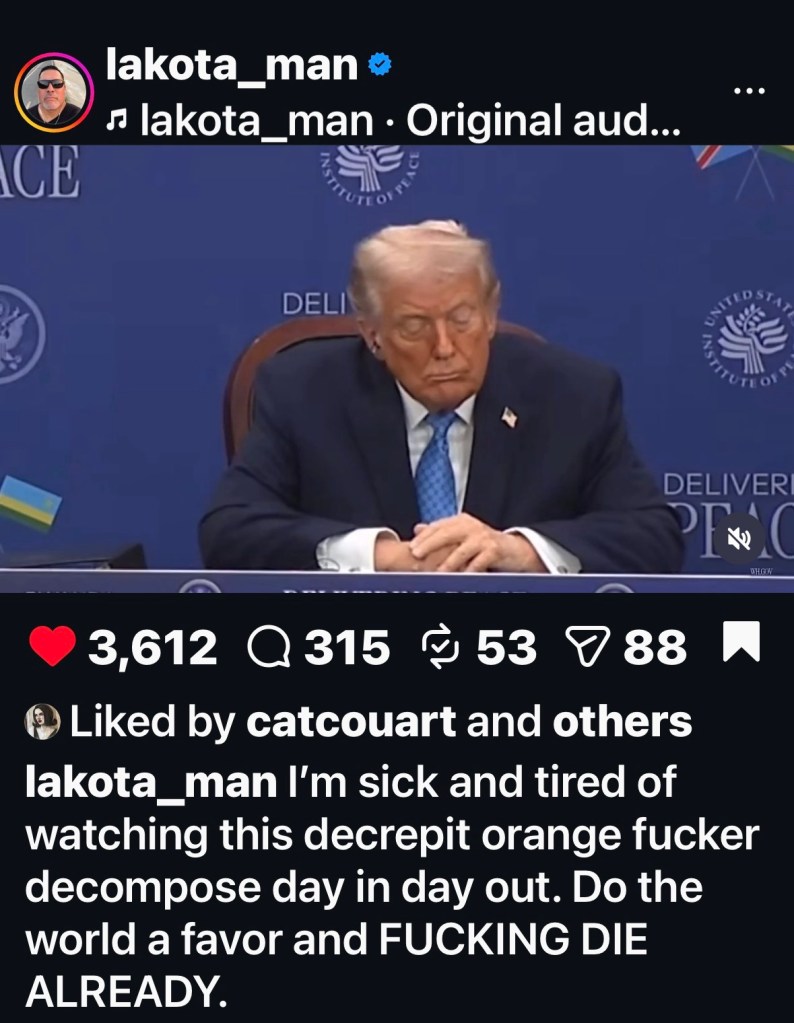
- He appears to have fallen asleep in meetings on multiple recent occasions, including at an Oval Office meeting.
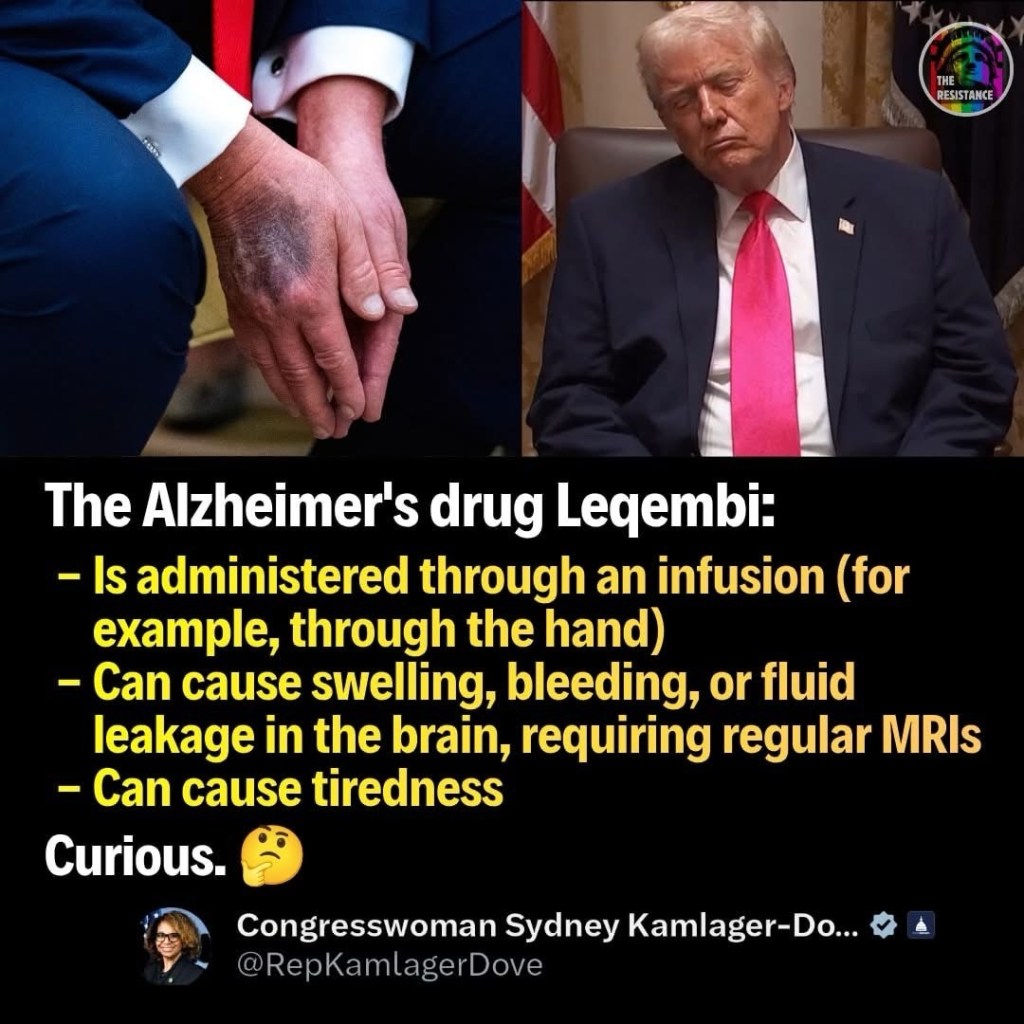
- And then there’s the MRI. In October, he went to Walter Reed for his “annual medical exam,” even though it was barely six months after his last “annual medical exam” at Walter Reed, and had a wide range of tests done, including an MRI. In recent days, Trump has gotten into a high-profile tiff with Minnesota Gov. Tim Walz, who pressed him to release the results of that MRI. When asked, Trump couldn’t explain why he had the test. Finally, yesterday the White House released information saying it was a chest MRI for his cardiovascular and abdominal systems and that, as the White House always says he is, the tests showed everything was “perfectly normal” and in “excellent health.” (Gavin Newsom mocked Trump about the results.)
But that’s not the reason worth having a conversation about Trump’s health today.
Today, we should be having a conversation about Trump’s increasingly clear diminished mental capacity. This is a man, after all, with the sole launch authority for the nation’s nuclear weapons who, on a daily basis, seems increasingly more disconnected from reality, beholden to conspiracy thinking, and — most simply — absent-minded. It is not a recipe for global stability — and deserves more serious conversation than its getting.
Please go read Graff’s specific arguments in support of his claims. It’s not long.
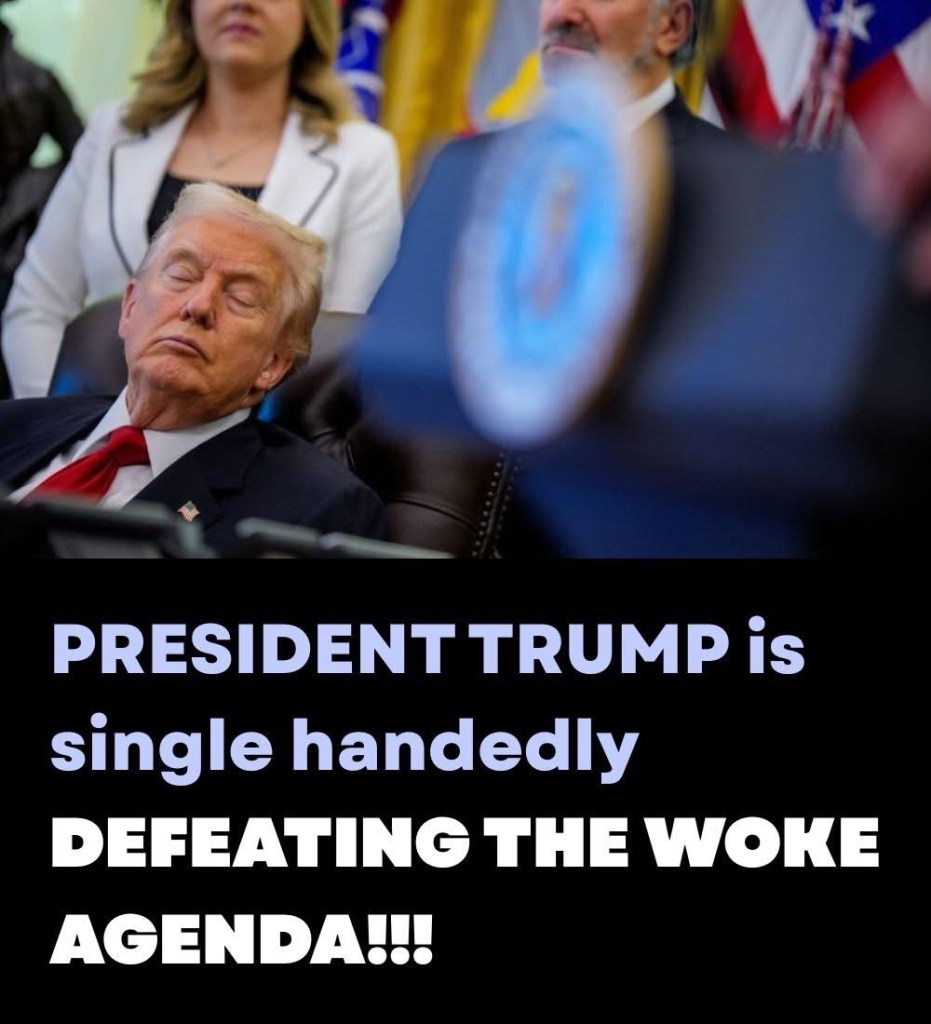
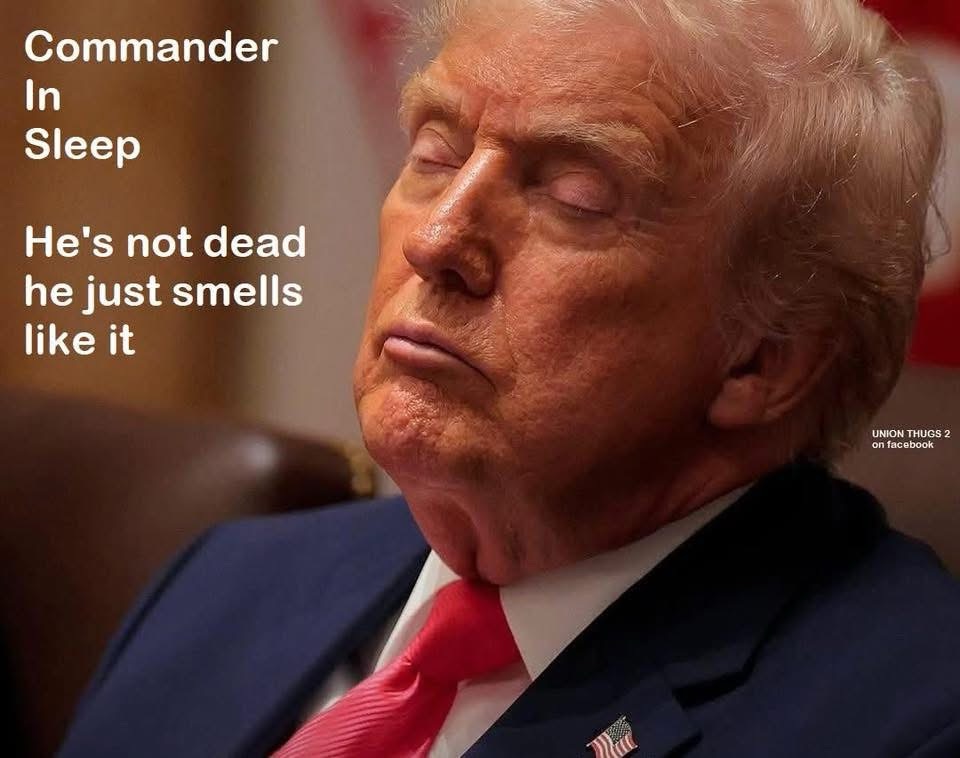
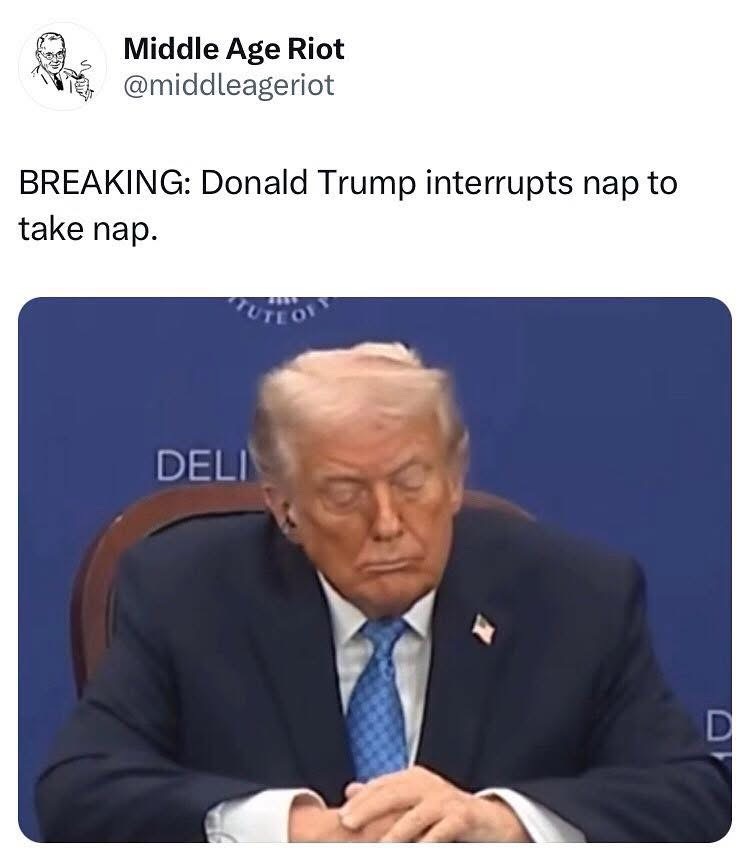
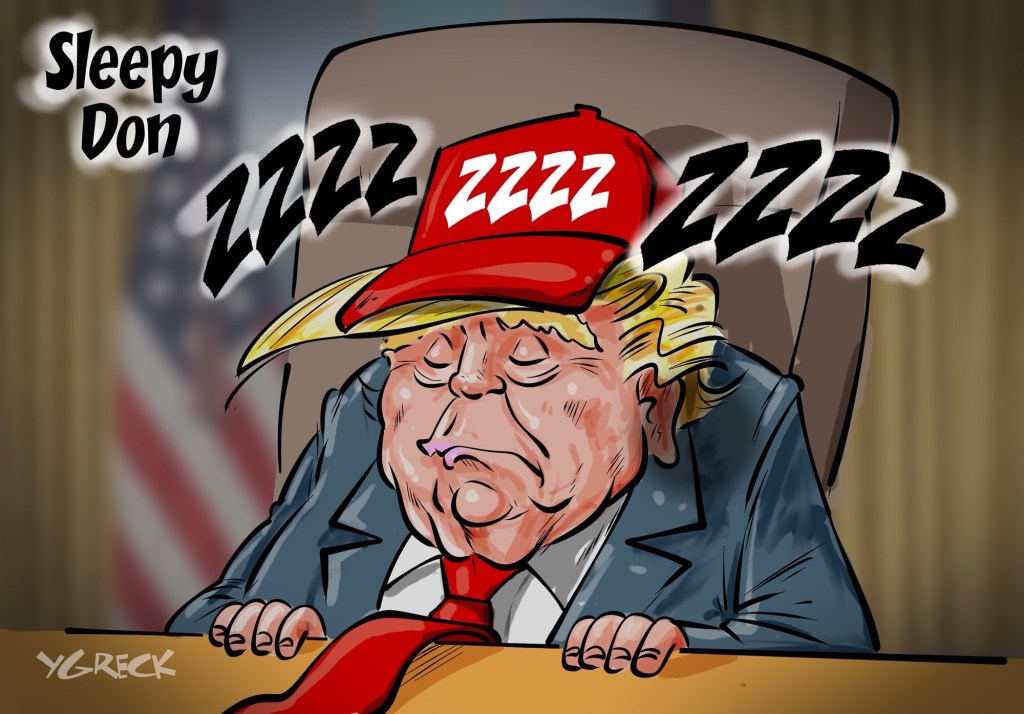
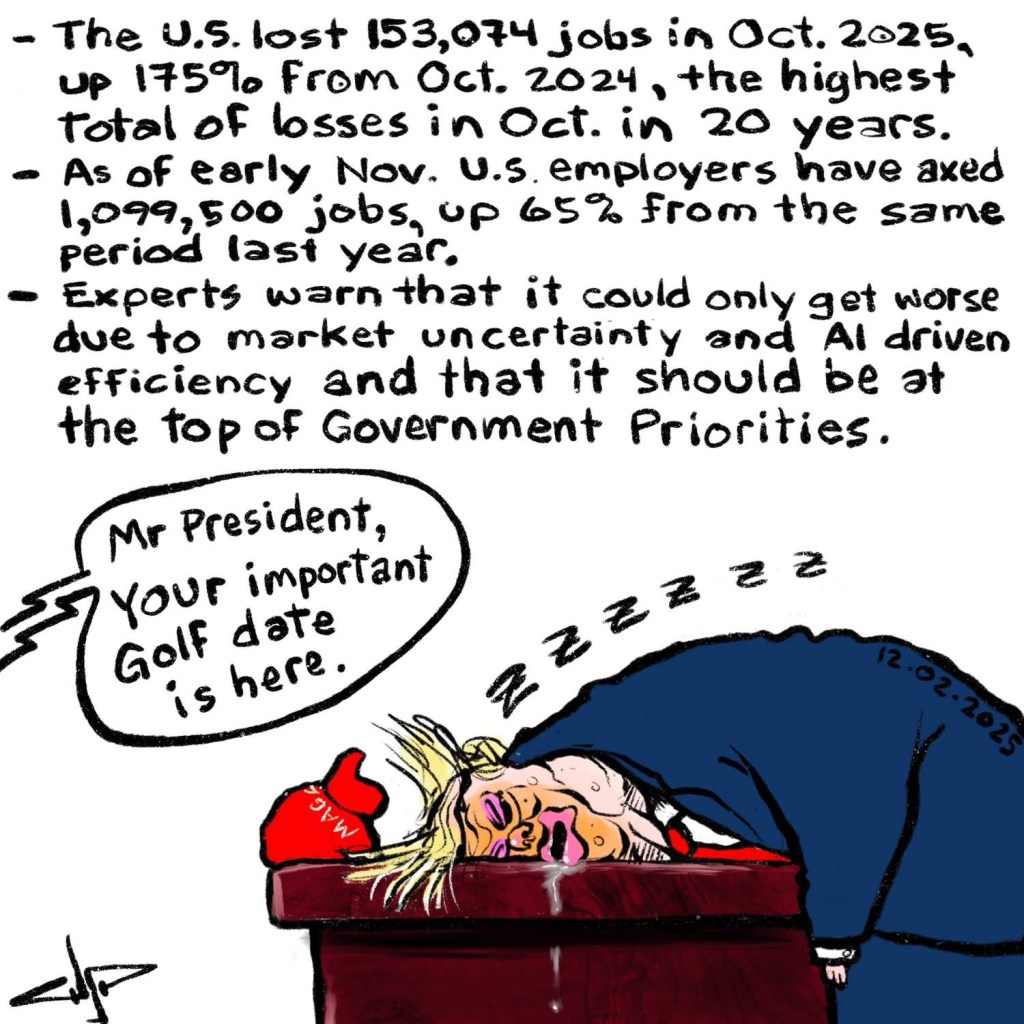
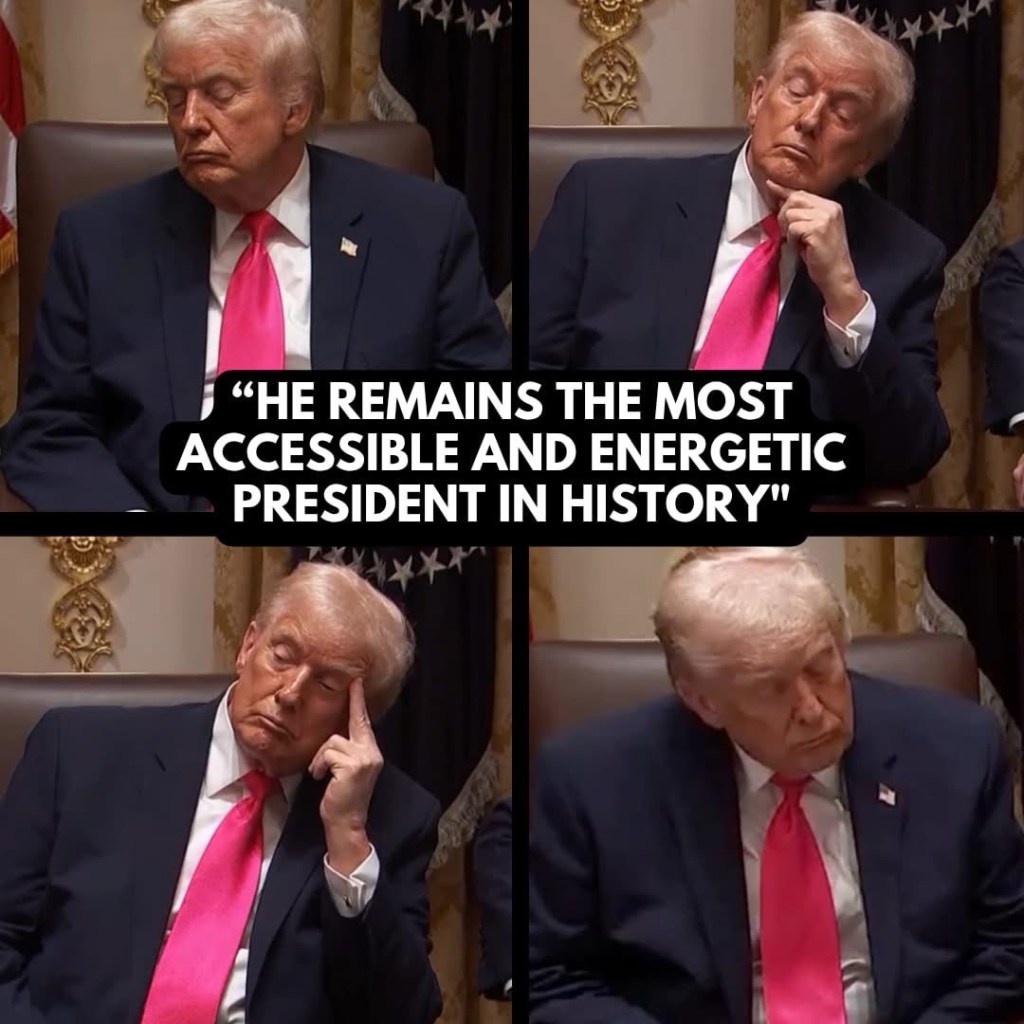
Yesterday Trump held a cabinet meeting on video. He could barely stay awake most of the time. Of course, he had been up most of the night posting insane garbage on Truth Social, but still…
Zolan Kanno-Youngs at The New York Times: Trump Appears to Fight Sleep During Cabinet Meeting.
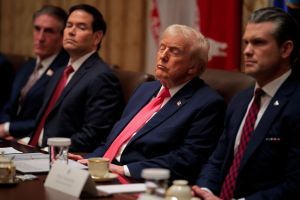
President Trump appeared to be fighting sleep on Tuesday during a cabinet meeting at the White House, closing his eyes and at times seeming to nod off, after he criticized media coverage about him facing the realities of aging in office.
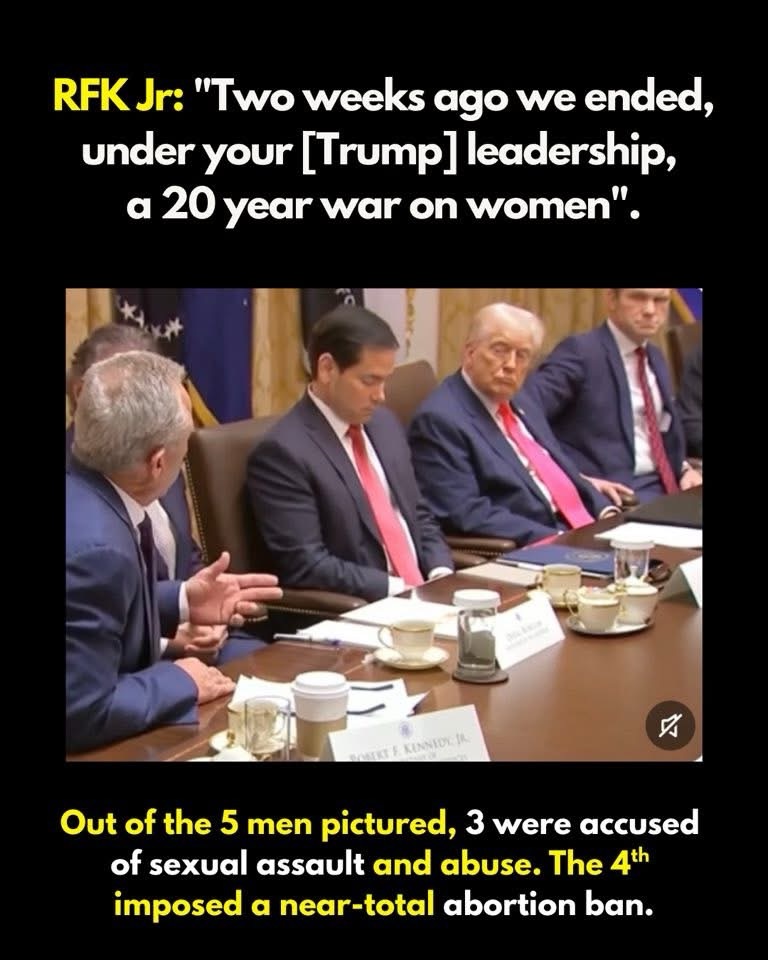
Over the course of two hours and 18 minutes, the president, who is 79, sometimes appeared to struggle to keep his eyes open as cabinet officials went around the room describing their work and heaping praise on him….
 Mr. Trump does appear frequently before the news media, and he takes questions far more often than his predecessor, President Joseph R. Biden Jr., did. He is a regular, outsize presence in public life.
But Mr. Trump also appeared to have had a late night. He shared or posted dozens of times on social media on Monday night until nearly midnight.
Early in the meeting, Mr. Trump had complained that he was getting unfair scrutiny compared to Mr. Biden, who dropped out of the presidential race last year amid concerns in his own party about his age, mental acuity and ability to beat Mr. Trump.
“I’ll let you know when there’s something wrong. There will be someday,” Mr. Trump said. “That’s going to happen to all of us. But right now I think I’m sharper than I was 25 years ago. But who the hell knows?”
A bit more:
Mr. Trump then claimed he got “all A’s” on his physical.
But as Tuesday’s meeting went on, Mr. Trump seemed to grow tired.
About 50 minutes in, as Brooke L. Rollins, the agriculture secretary, spoke, Mr. Trump struggled to keep his eyes open before he leaned back and forth in his chair. More than an hour and a half into the meeting, while Linda McMahon, the education secretary, spoke, he closed his eyes for five seconds before leaning back and looking at the ceiling. Roughly 20 minutes later, as Secretary of State Marco Rubio spoke, the president leaned forward and appeared to close his eyes again.
It was the second time in less than a month that Mr. Trump appeared to doze off in public. During an Oval Office event on Nov. 6, the president’s eyes grew heavy and closed for several seconds.
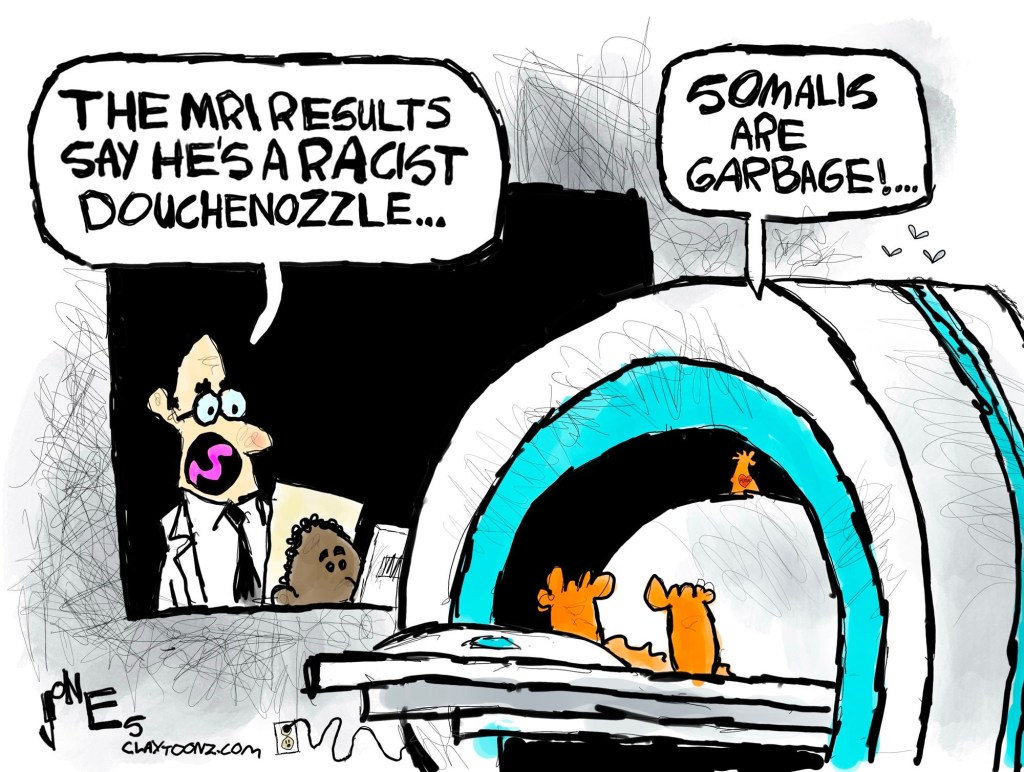
Trump recently announced that he had had an MRI scan at his latest physical exam, but claimed he had no idea what it was for. Experts have questioned that, and finally his doctor released some confusing details.
Gina Kolata at The New York Times: Memo From Trump’s Doctor Cites ‘Excellent’ Scan but Offers Little Clarity.
The White House released a letter from President Trump’s physician on Monday about the results of “advanced imaging tests.” The statement, by Dr. Sean P. Barbabella, said the tests on his cardiovascular system and abdominal region showed the president “remains in excellent overall health.”
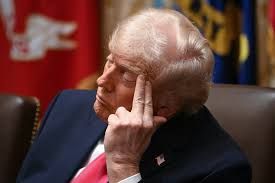
Trump in yesterday’s cabinet meeting.
Some medical experts said it was unclear what tests doctors conducted, why they were done or what the results mean. And, they said, a person without symptoms would not have imaging tests as part of a routine medical exam under ordinary medical circumstances.
Mr. Trump, the oldest president ever sworn into his office, had M.R.I. scans in October as part of a semiannual physical exam. His annual physical was done in April.
On Sunday, during an appearance on “Meet the Press” on NBC News, Governor Tim Walz of Minnesota called on the president to release the results after Mr. Trump had impugned Mr. Walz’s intelligence. Asked by a reporter on Sunday what part of his body was scanned, Mr. Trump said aboard Air Force One, “I have no idea — it was just an M.R.I.” He then said it was not a scan of his brain.
But Dr. Barbabella’s memo did not specify that Mr. Trump had a M.R.I. scan, which uses a magnetic field to produce images of soft tissues that do not show up on X-rays. Instead, the memo describes “advanced imaging” that it said was carried out “because men in his age group benefit from a thorough evaluation of cardiovascular and abdominal health.”
The imaging was part of Mr. Trump’s “comprehensive executive physical,” Dr. Barbabella explained, referring to a detailed medical exam often offered to executives. Such exams can include tests that are not normally done when people have no symptoms of disease.
The memo said Mr. Trump’s cardiovascular imaging is “perfectly normal” with no signs that his arteries are narrowed. His “cardiovascular system shows excellent health,” the statement said.
It added that, “his abdominal imaging is also perfectly normal,” and said, “this level of detailed assessment is standard for an executive physical at President Trump’s age and confirms that he remains in excellent overall health.”
They are obviously hiding something.
Dan Vergano at Scientific American: Trump’s MRI Is Not Standard ‘Preventive’ Care, Say Experts.
Medical experts are questioning the White House’s explanation for President Donald Trump’s MRI tests as “preventive.”
A Monday memo released by presidential physician Sean Barbabella described the results of “a thorough evaluation of cardiovascular and abdominal health” as normal. “This level of detailed assessment is standard for an executive physical at President Trump’s age,” Barbabella said.
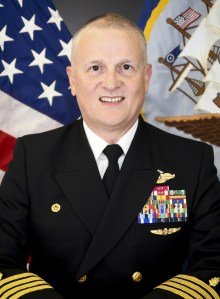
Dr. Sean P. Barbabella, Trump’s doctor
But imaging experts who spoke to Scientific American expressed doubts as to Barbabella’s assertion that magnetic resonance imaging (MRI) screening is typical preventive care. American Heart Association guidelines, for example, note that a cardiac MRI is usually requested because of existing heart conditions and often only after other tests.
“No, it is certainly not standard medical practice to perform screening MRIs of the heart and abdomen,” says radiologist and MRI expert Thomas Kwee of the University of Groningen in the Netherlands. Such imaging is typically only performed in the case of underlying disease, he says, or if there is suspicion of an underlying disease based on the patient’s medical history and physical examination. Barbabella’s memo said the imaging showed Trump was in “excellent health.”
Kwee’s comment echoed those of Medpage Today’s editor in chief, physician Jeremy Faust, who told CNN on Monday that “there’s really no such thing as routine prevention using an MRI.” Faust on Tuesday told Scientific American that the White House memo reference to “advanced imaging” left open questions as to exactly what tests Trump underwent. It could even possibly refer to a CT scan, for example, which is different than MRI. “If we knew exactly what imaging he received, it would give us a better idea of what conditions they are worried about,” Faust says.
More opinions:
“An assessment of a heart MRI and abdominal MRI is not ‘standard for an executive physical,’” says former White House physician Jeffrey Kuhlman, author of the book Transforming Presidential Healthcare. Though it’s not uncommon for physicians who have concierge-type practices to use total or partial body scans on their clients, “this is not evidence-based,” he adds….
Questions around Trump’s health have surfaced repeatedly in recent months. In July the White House reported that the president has chronic venous insufficiency, a blood vessel disease that affects circulation and can cause ankle swelling. And noticeable bruises on the back of Trump’s hands seen in February were attributed to “shaking hands all day” by Leavitt.
There is no solid evidence that executive MRI scans help people, Kwee says, either by diagnosing disease or extending their lifespan. “These scans can also lead to unexpected incidental findings and give false reassurance that there is no underlying disease.”
At least big media is beginning to talk about Trump’s obvious mental and physical health issues. We need them to start focusing on Trump’s age as much as they did Biden’s.
More important stories:
Judd Legum at Popular Information: Kushner’s Moscow mission wasn’t just corrupt. It was unconstitutional.
Jared Kushner, President Trump’s son-in-law, has been traveling the world to participate in high-stakes foreign policy negotiations on behalf of the president. On Tuesday, Kushner traveled to Moscow and sat across the table from Russian President Vladimir Putin to discuss a peace deal to end the war in Ukraine. The entire United States delegation consisted only of Kushner and Special Envoy Steve Witkoff. Kushner and Witkoff were joined at the table by an interpreter.
Kushner’s participation in the Moscow meeting — and the similar role he played in the Gaza negotiations — likely violates the law.
Representing the Trump administration in high-level foreign policy negotiations makes Kushner, at a minimum, a Special Government Employee (SGE). Under the law, an SGE is someone “who is retained, designated, appointed, or employed to perform, with or without compensation, for not to exceed one hundred and thirty days during any period of three hundred and sixty-five consecutive days, temporary duties either on a full-time or intermittent basis.”
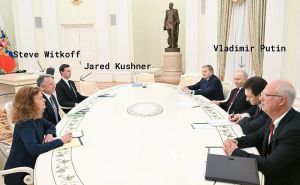 Trump has not named Kushner an SGE. But a seminal 1977 opinion by the Department of Justice’s Office of Legal Counsel (OLC) found “an identifiable act of appointment may not be absolutely essential for an individual to be regarded as an officer or employee in a particular case where the parties omitted it for the purpose of avoiding the application of the conflict-of-interest laws.” In that opinion, the OLC considered the status of an individual who had not been named to any role by the president but “assumed considerable responsibility for coordinating the Administration’s activities in [a] particular area.” The OLC concluded that since the individual was “quite clearly engaging in a governmental function” and is “working under the direction or supervision of the President,” he should be considered an SGE.
Here, Kushner is engaged in activities that can only be conducted by government officials. The Logan Act bars private citizens from engaging in negotiations with foreign governments without authorization. Kushner is acting in an authorized capacity, under Trump’s direction, and that creates a host of legal issues.
A the same time, Kushner is receiving payments from foreign governments.
Since leaving the White House in 2021, Kushner has raised at least $4.8 billion for Affinity Partners, his private equity firm. Nearly 99% of Affinity Partners’ funding comes from foreign sources. The largest investment, $2 billion, came from the Public Investment Fund of Saudi Arabia (PIF).
The Saudi government pays Kushner 1.25% of its investment, or $25 million annually. Other investors, including the governments of Qatar and the United Arab Emirates (UAE), pay annual fees of up to 2%. As of September 2024, Affinity Partners had collected $157 million in fees, mainly from Middle Eastern governments.
Kushner is continuing to collect these fees as he serves in a top foreign policy role for the Trump administration. This is precisely the kind of behavior the Foreign Emoluments Clause was designed to prevent. Kushner was one of two Americans on Tuesday engaged in high-stakes negotiations with Putin. But as the private equity manager for billions of foreign capital, Kushner has a fiduciary duty to advance the financial interests of Saudi Arabia, Qatar, and other foreign governments.
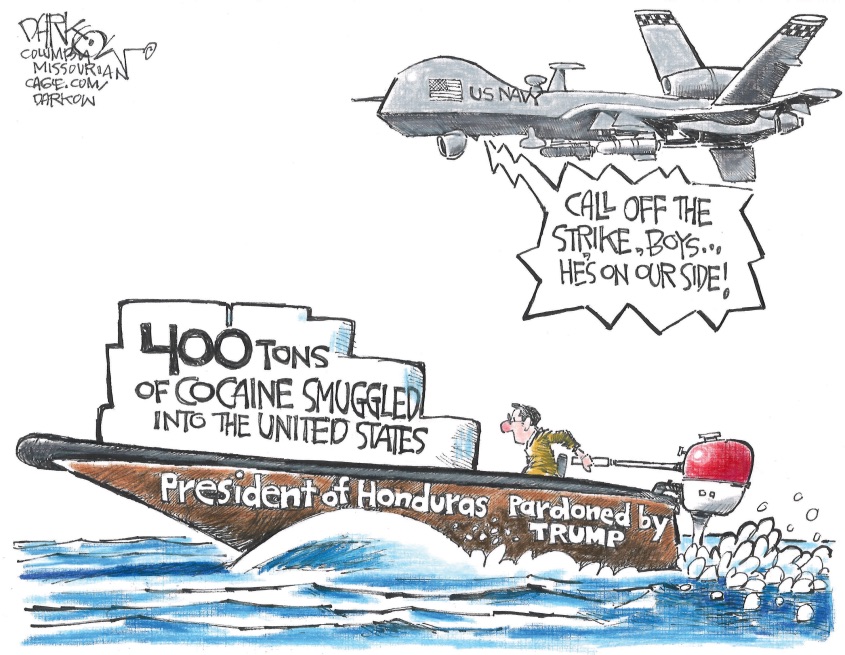
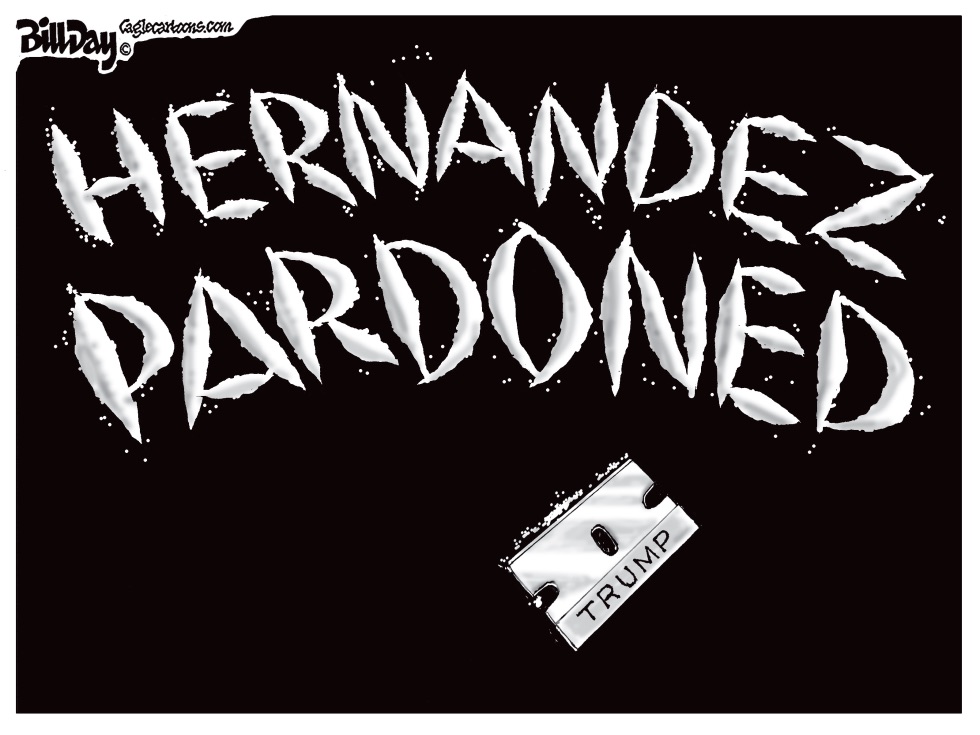
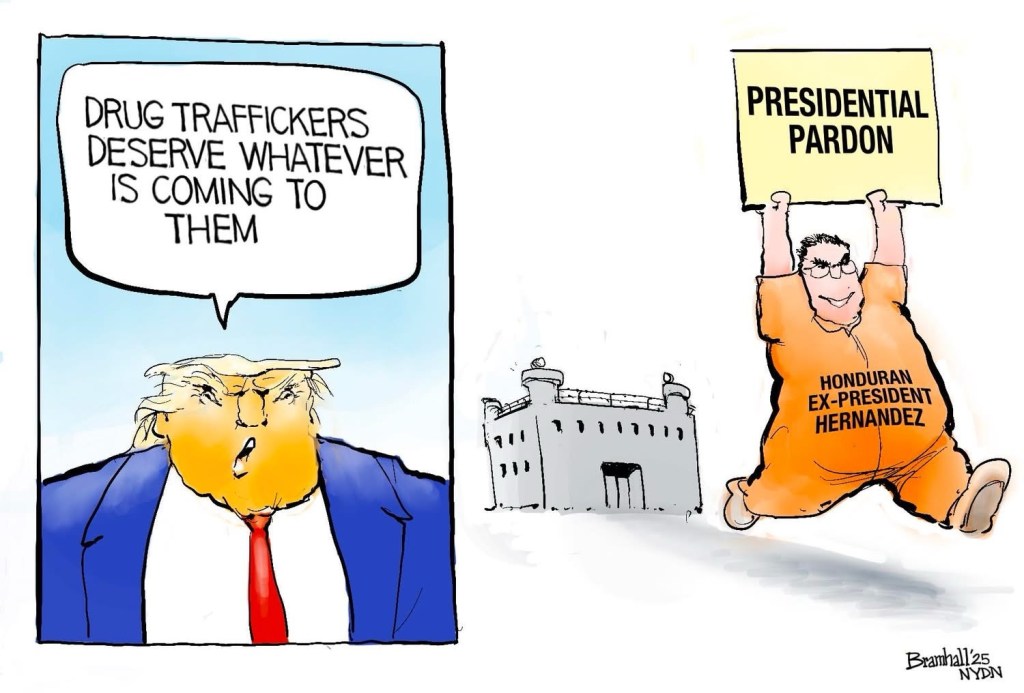
The Washington Post: Ex-Honduras president, convicted of drug trafficking, freed on Trump pardon.
Former Honduran president Juan Orlando Hernández, convicted by a U.S. court last year on charges that he ran the Central American nation as a “narco-state” that helped send South American cocaine to the United States, has been released from federal prison after receiving a “full and unconditional” pardon from President Donald Trump.
Hernández, 57, was released Monday from U.S. Penitentiary Hazelton in West Virginia, according to the Federal Bureau of Prisons website and a BOP spokesperson.
Hernández, who was president of Honduras from 2014 to 2022, was serving 45 years in prison on importation and weapons charges. U.S. prosecutors said he built his political career on millions of dollars in bribes from traffickers in Honduras and Mexico, and as president helped to move at least 400 tons of cocaine to the United States while protecting traffickers from extradition and prosecution.
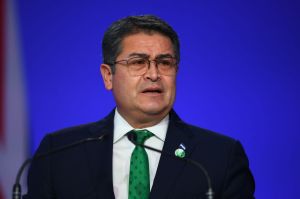
Juan Orlando Hernández
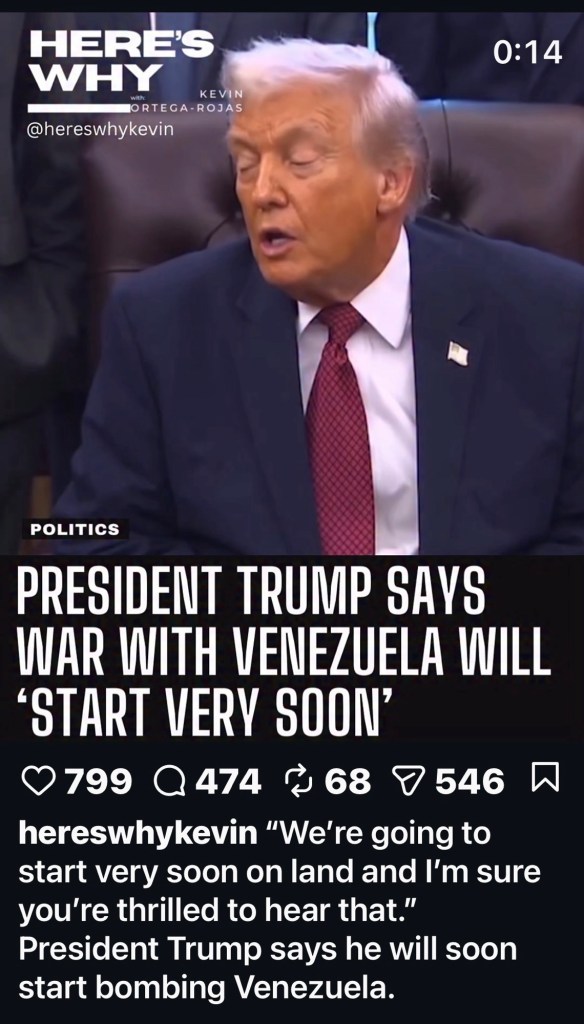
The Trump administration is waging what it says is a counternarcotics campaign off Venezuela. U.S. forces have destroyed at least 21 boats in the Caribbean Sea and Pacific Ocean, killing more than 80 people, that officials say were carrying drugs to the U.S., and U.S. troops and warships are massing in the region. Trump has accused Venezuelan President Nicolás Maduro of sending violent criminals and drugs to the U.S.
But on Friday, Trump said that Hernández had been “treated very harshly and unfairly” and that he would grant him a “Full and Complete Pardon.”
“CONGRATULATIONS TO JUAN ORLANDO HERNANDEZ ON YOUR UPCOMING PARDON,” Trump wrote on Truth Social. “MAKE HONDURAS GREAT AGAIN!”
Trump’s decision to pardon an official who, a federal court found, helped flood the United States with cocaine angered congressional Democrats.
“Hernandez’s conviction last year finally held him accountable for all the Honduran and American blood on his hands and sent an unequivocal message: No drug trafficker is above the law, not even former presidents,” said Sen. Jeanne Shaheen (New Hampshire), the top Democrat on the Senate Foreign Relations Committee. “That is precisely why all Americans should be outraged by President Trump’s pardoning of former president Hernandez.”
I wonder how much Trump was paid for this pardon.
NBC News: Pentagon inspector general investigation into ‘Signalgate’ is complete.
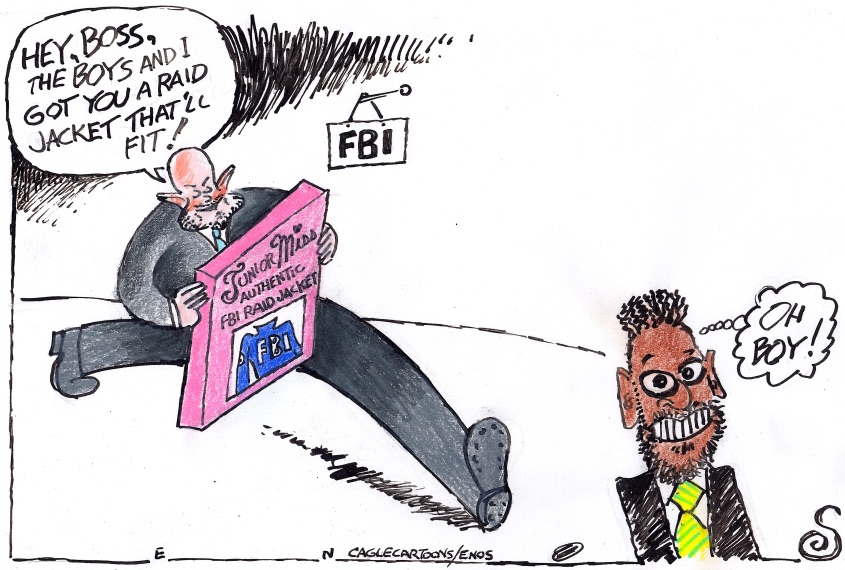
Defense Secretary Pete Hegseth on Tuesday was given a final copy of the completed Defense Department Inspector General report that examined his sharing sensitive military information on a Signal group chat back in March, according to two people familiar with the investigation.
The much-anticipated report is expected to become public as early as this week, these people said.
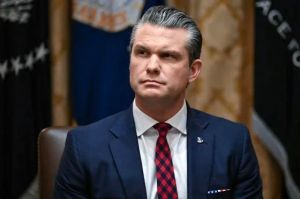
Pete Hegseth
The report outlines the findings of a more than eight-month investigation into Hegseth’s use of Signal, an encrypted but unclassified messaging app, to share details of planned U.S. military strikes in Yemen before they had begun.
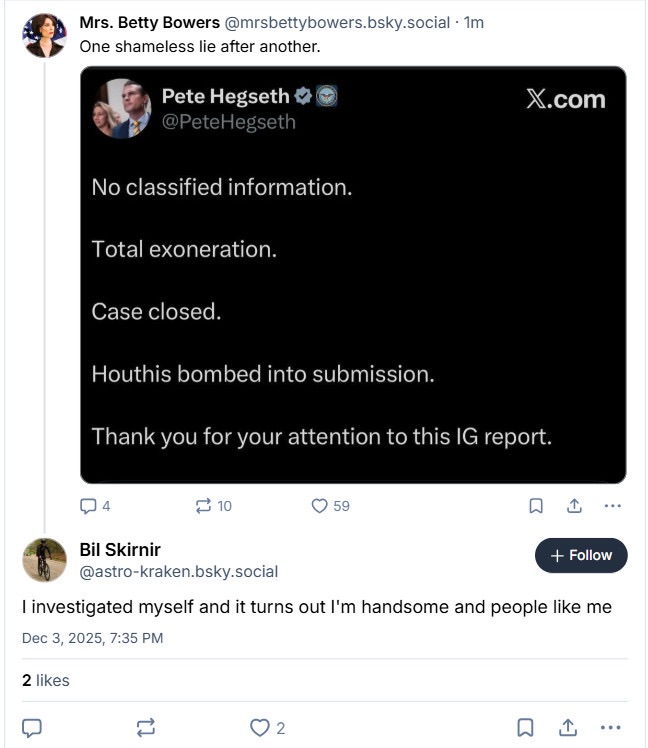
Hegseth has maintained that he shared no classified information on the group chat….
The two people familiar with the inspector general investigation would not say what its conclusions are. The report was requested by the chairman of the Senate Armed Services Committee, Sen. Roger Wicker, R-Miss., and the committee’s ranking member, Sen. Jack Reed, D-R.I., on March 27.
The group chat, which included other top members of President Donald Trump’s national security team, became public after an editor for The Atlantic magazine was inadvertently added.
Let’s hope it’s not a whitewash.
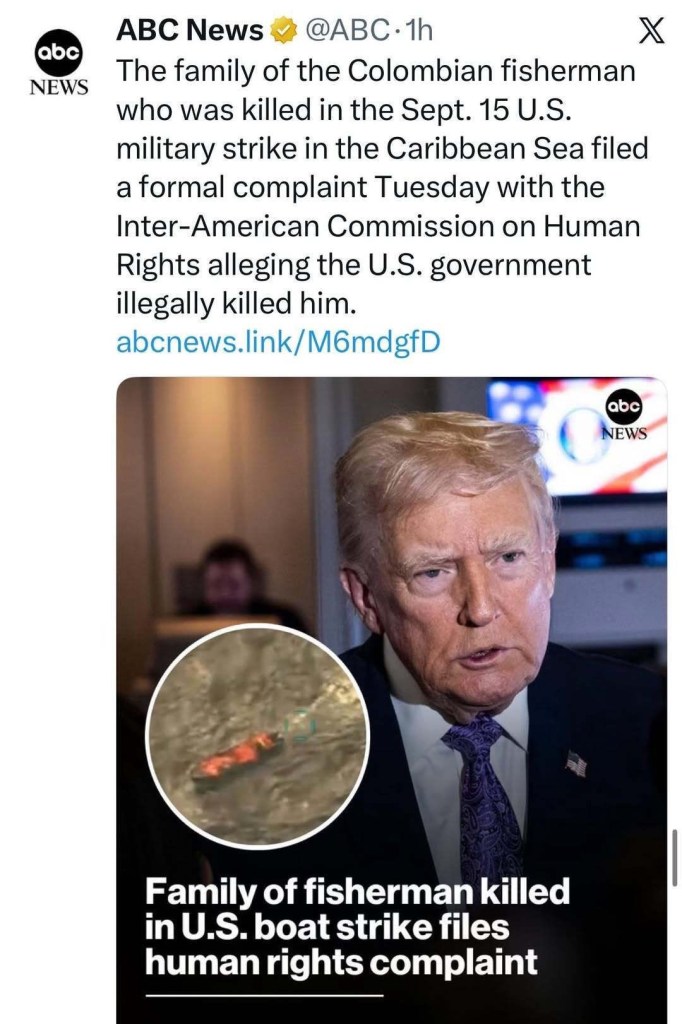
Aram Roston at The Guardian: Family of victim in alleged Trump ‘drug boat’ killings files first formal complaint.
A family in Colombia filed a petition on Tuesday with the Washington DC-based Inter-American Commission on Human Rights, alleging that the Colombian citizen Alejandro Carranza Medina was illegally killed in a US airstrike on 15 September.
The petition marks the first formal complaint over the airstrikes by the Trump administration against suspected drug boats, attacks that the White House says are justified under a novel interpretation of law.

Alejandro Carranza Medina and his son. Photograph Courtesy of Carranza family
The IACHR, part of the Organization of American States, is designed to “promote and protect human rights in the Western Hemisphere”. The US is a member, and in March the Trump administration’s state department wrote: “The United States is pleased to be a strong supporter of the IACHR and is committed to continuing support for the Commission’s work and its independence. Preserving the IACHR’s autonomy is a pillar of our human rights policy in the region.”
The complaint was filed by Pittsburgh-based human rights lawyer Dan Kovalik. “On September 15, 2025, the United States military bombed the boat of Alejandro Andres Carranza Medina,” the filing says, “which Mr Carranza was sailing in the Caribbean off the coast of Colombia. Mr Carranza was killed in the process of this bombing.”
Kovalik identified Pete Hegseth, the US defense secretary, as the perpetrator, based on Hegseth’s own statements. “From numerous news reports, we know that Pete Hegseth, US Secretary of Defense, was responsible for ordering the bombing of boats like those of Alejandro Carranza Medina and the murder of all those on such boats. Secretary Hegseth has admitted that he gave such orders despite the fact that he did not know the identity of those being targeted for these bombings and extra-judicial killings,” the filing goes on.
The complaint adds: “US President Donald Trump has ratified the conduct of Secretary Hegseth described herein.”
NBC News: Trump administration pauses immigration applications from nationals of 19 countries.
The Trump administration on Tuesday halted immigration applications submitted by nationals from 19 countries that already faced restrictions on travel to the United States, according to a U.S. Citizenship and Immigration Services memo.
“USCIS has considered that this direction may result in delay to the adjudication of some pending applications and has weighed that consequence against the urgent need for the agency to ensure that applicants are vetted and screened to the maximum degree possible,” the agency said in a four-page policy memo.
“Ultimately, USCIS has determined that the burden of processing delays that will fall on some applicants is necessary and appropriate in this instance, when weighed against the agency’s obligation to protect and preserve national security,” it added.
The New York Times first reported the immigration pause, which applies to both green card and citizenship applicants.
AP: Federal authorities plan operation in Minnesota focusing on Somali immigrants, AP source says.
Federal authorities are preparing a targeted immigration enforcement operation in Minnesota that would primarily focus on Somali immigrants living unlawfully in the U.S., according to a person familiar with the planning.
The move comes as President Donald Trump again on Tuesday escalated rhetoric about Minnesota’s sizable Somali community, saying he did not want immigrants from the east African country in the U.S. because “they contribute nothing.”

Minnesota Rep. Ilhan Omar
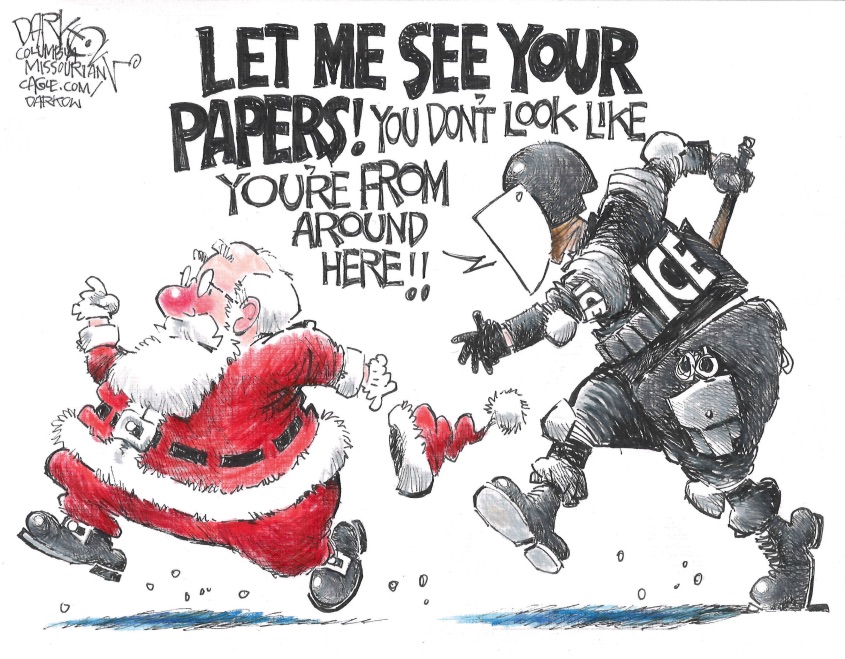
The enforcement operation could begin in the coming days and is expected to focus on the Minneapolis–St. Paul area and people with final orders of deportation, the person said. Teams of immigration agents would spread across the Twin Cities in what the person described as a directed, high-priority sweep, though the plans remain subject to change.
The prospect of a crackdown is likely to deepen tensions in Minnesota — home to the nation’s largest Somali community. They’ve been coming since the 1990s, fleeing their country’s long civil war and drawn by Minnesota’s generous social programs.
An estimated 260,000 people of Somalian descent were living in the U.S. in 2024, according to the Census Bureau’s annual American Community Survey. The largest population is in the Minneapolis area, home to about 84,000 residents, most of whom are American citizens. Ohio, Washington and California also have significant populations.
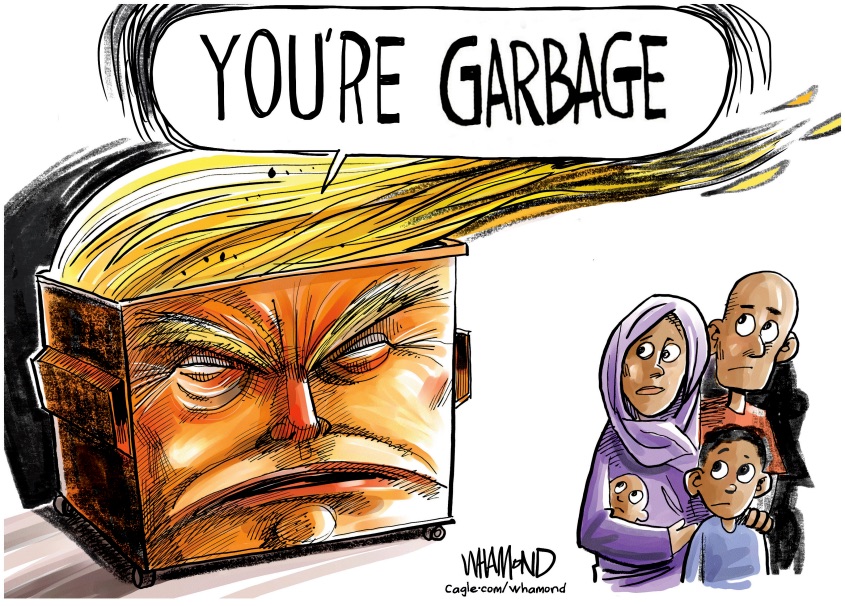
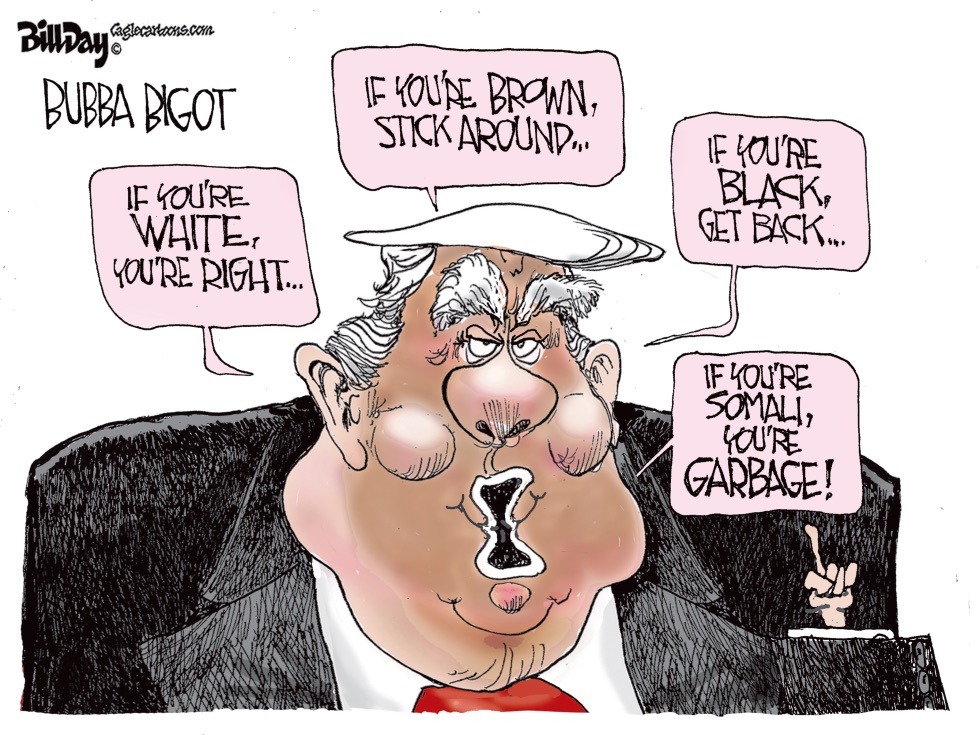
The New York Times: Trump Calls Somalis ‘Garbage’ He Doesn’t Want in the Country.
President Trump unleashed a xenophobic tirade against Somali immigrants on Tuesday, calling them “garbage” he does not want in the United States in an outburst that captured the raw nativism that has animated his approach to immigration.
Even for Mr. Trump — who has a long history of insulting Black people, particularly those from African countries — his outburst was shocking in its unapologetic bigotry. And it comes as he started a new ICE operation targeting Somalis in the Minneapolis-St. Paul region.
“These are people that do nothing but complain,” Mr. Trump said at the tail end of a cabinet meeting at the White House, during which he sometimes appeared to be fighting sleep. But when the subject turned to immigration, Mr. Trump made a point of lashing out.
“When they come from hell and they complain and do nothing but bitch, we don’t want them in our country. Let them go back to where they came from and fix it,” Mr. Trump added as Vice President JD Vance banged the table in encouragement.
He said Somalia “stinks and we don’t want them in our country.” He described Representative Ilhan Omar, Democrat of Minnesota, who came to the United States from Somalia as a refugee and became a citizen 25 years ago, as “garbage.”
“We could go one way or the other, and we’re going to go the wrong way if we keep taking in garbage into our country,” Mr. Trump said. “She’s garbage. Her friends are garbage. These aren’t people who work. These aren’t people who say, ‘Let’s go, come on, let’s make this place great.’”
Mr. Trump has used this kind of rhetoric throughout his rise in politics, including in his first term as president, when he demanded to know why the United States would accept immigrants from Haiti and African nations, which he described as “shithole countries,” rather than, say, Norway.
But he has long been especially fixated on Somalis in the United States, and on Ms. Omar in particular.
“His obsession with me is creepy,” Ms. Omar wrote in a post shortly after the cabinet meeting. “I hope he gets the help he desperately needs.”
Trump is garbage and he should be in prison.
Those are my recommended reads for you today. What’s on your mind?
Did you like this post? Please share it with your friends:


































































































































































 peej
peej Carissa
 bostonboomer
 dakinikat
 ecocatwoman
 mablue2
 Mama Lopez
 peggysue22
 quixote
 skydancingguestblogger
 Mona (aka Wonk the Vote)



 Sky Dancing
Recent Comments