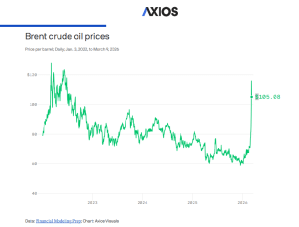
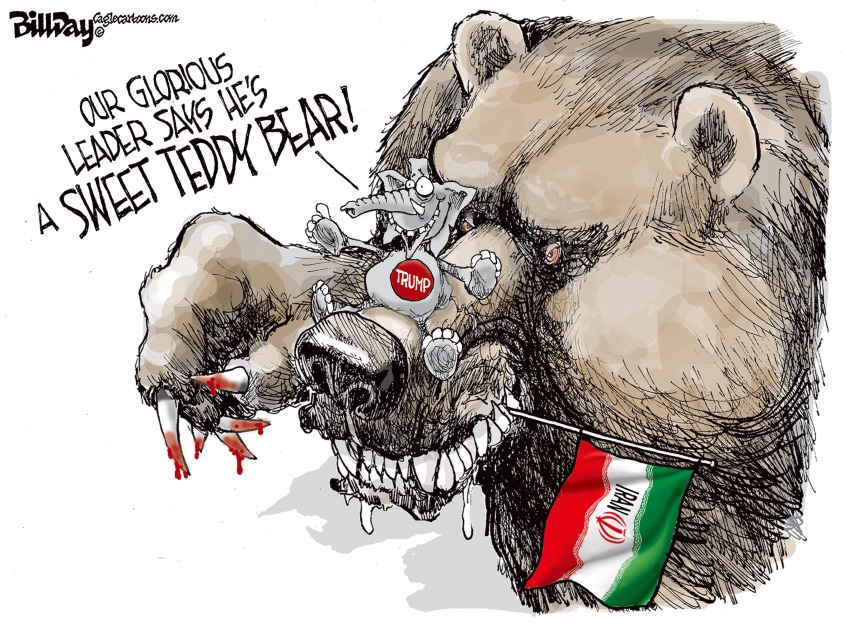
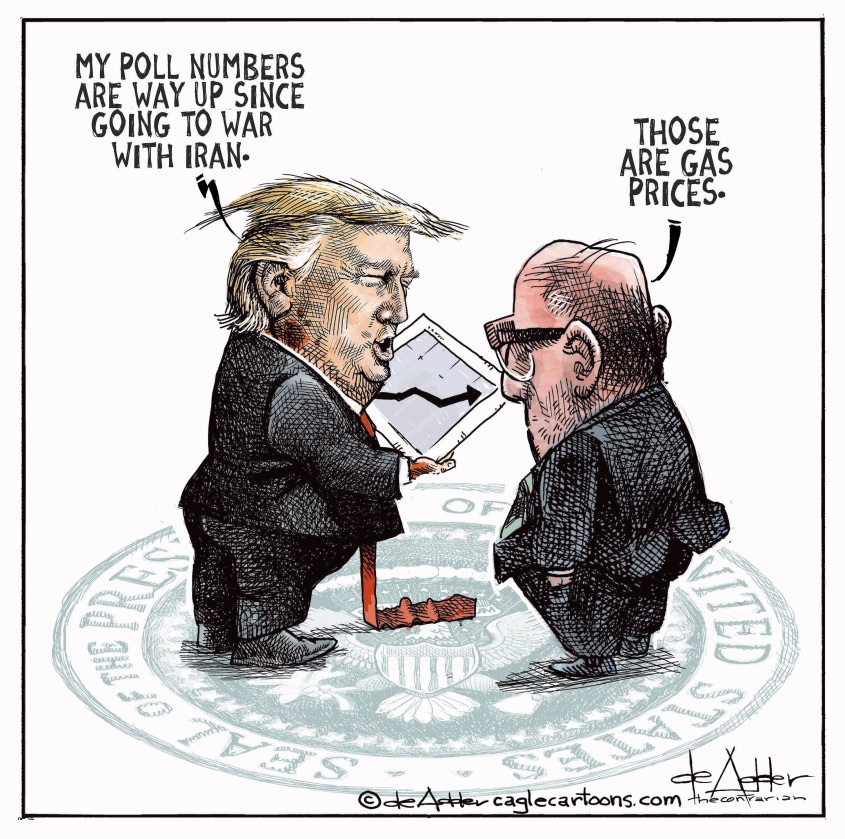
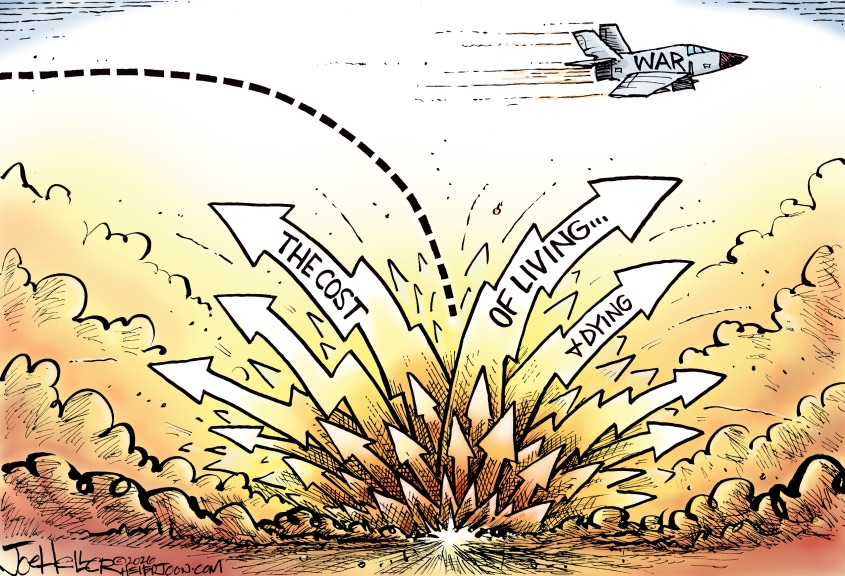
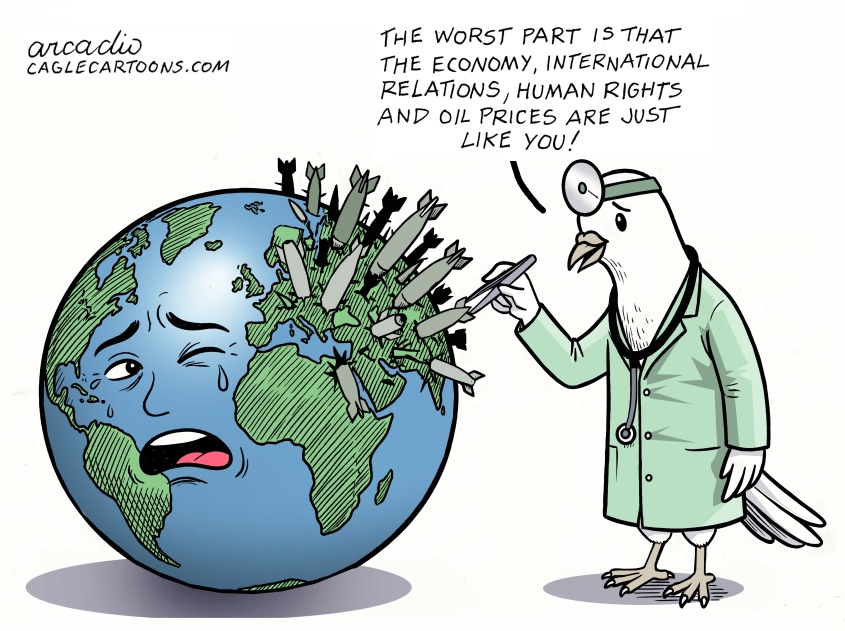
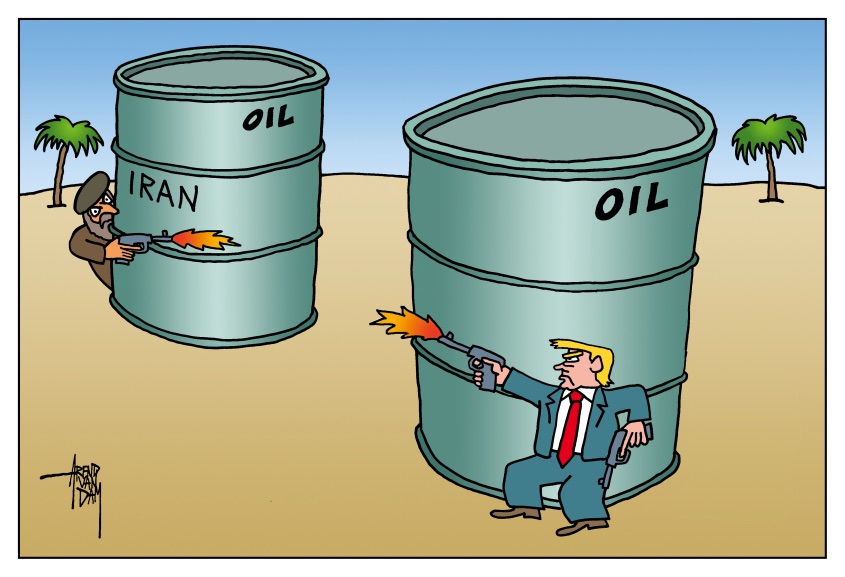
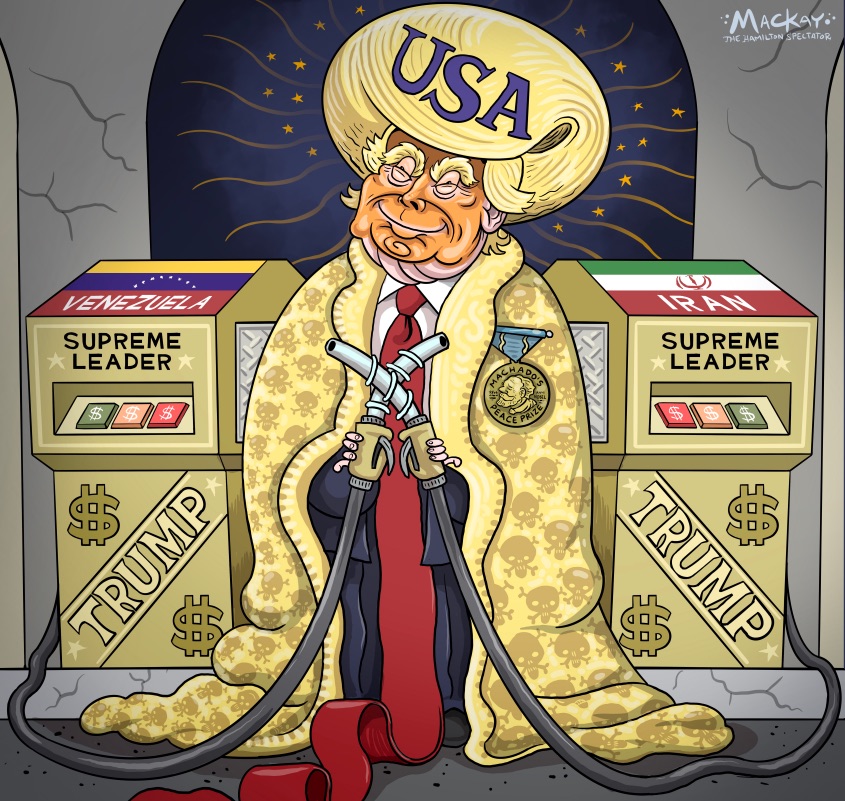
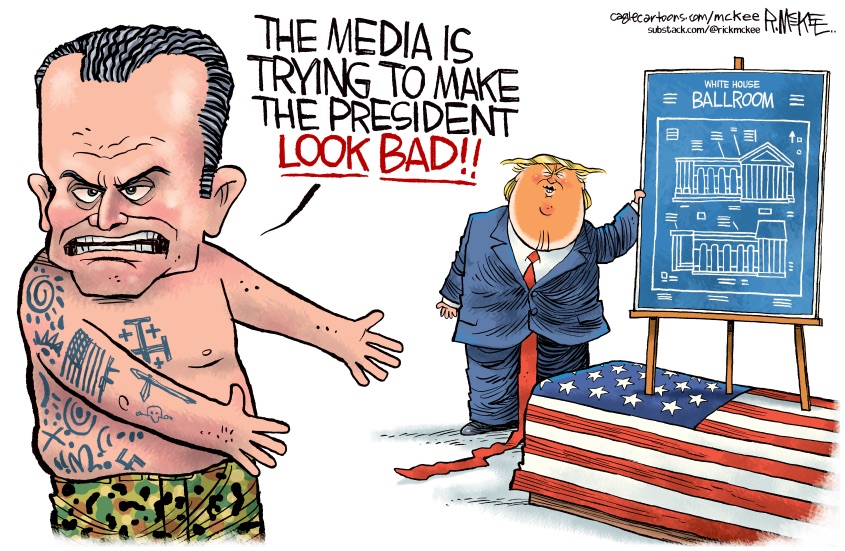
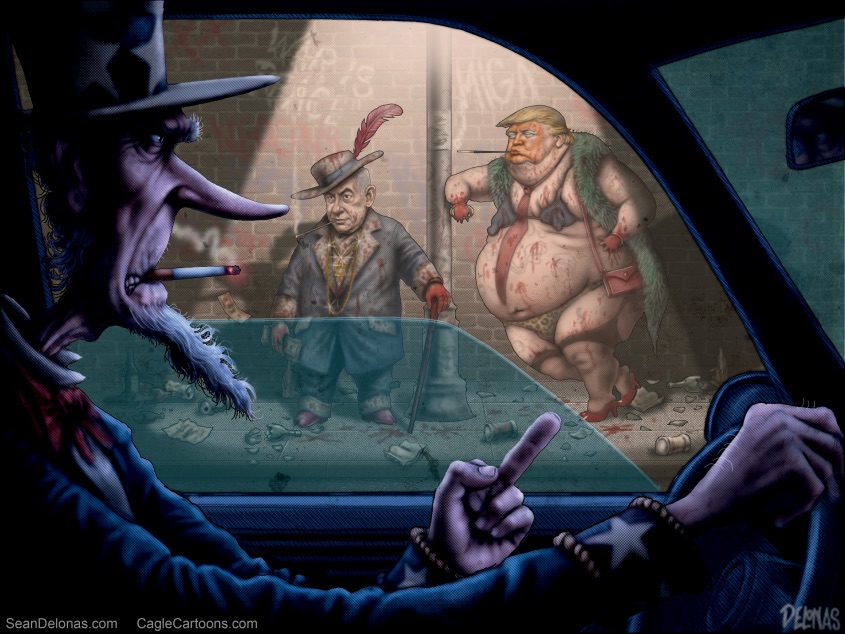
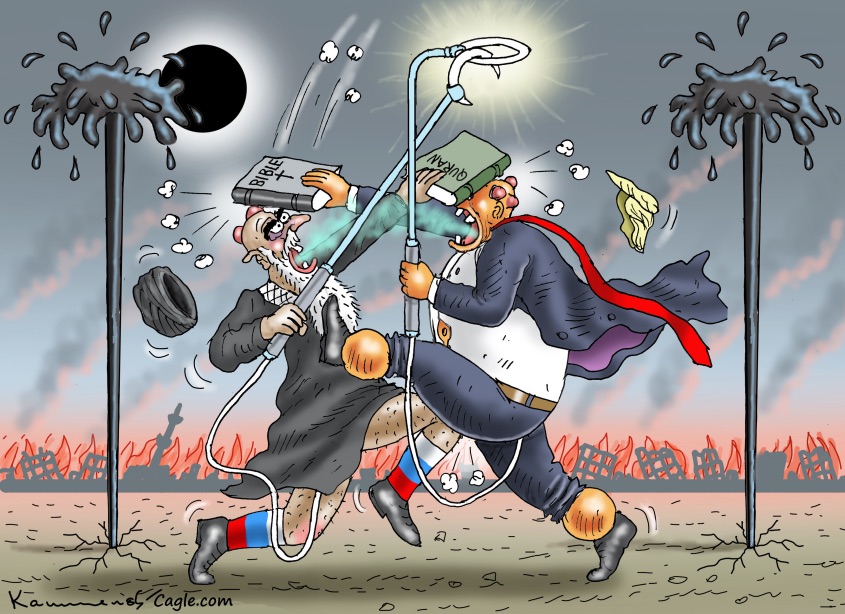
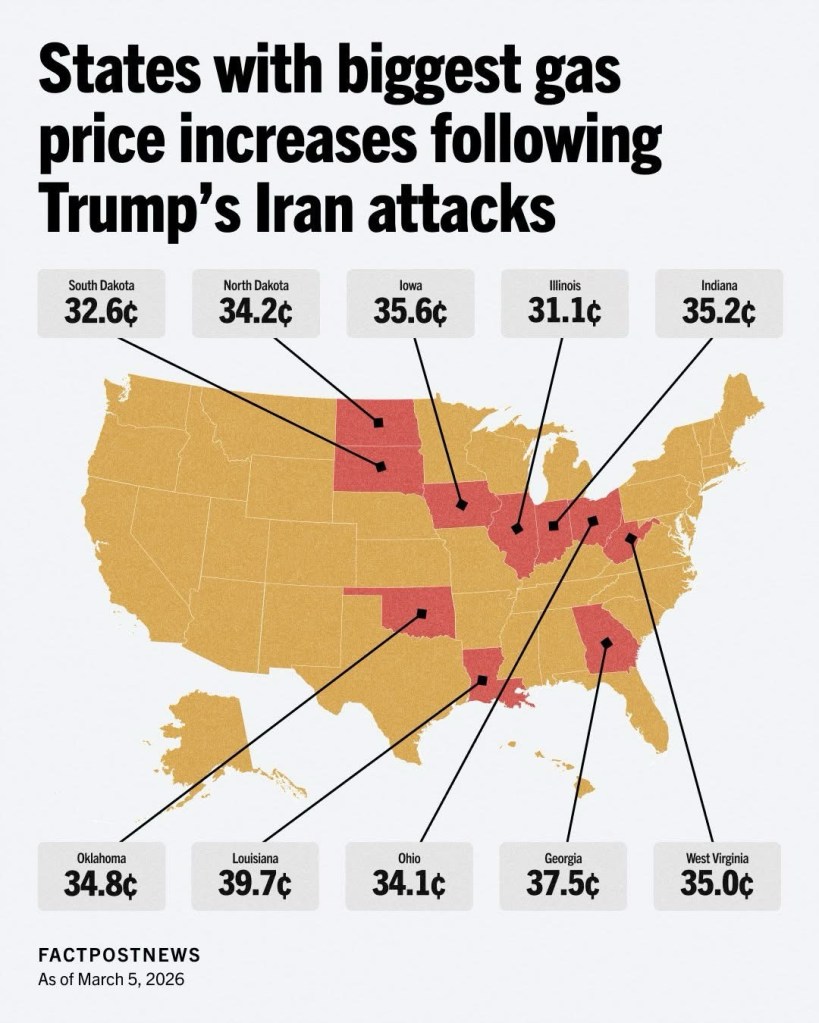
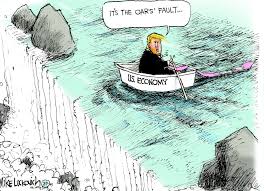
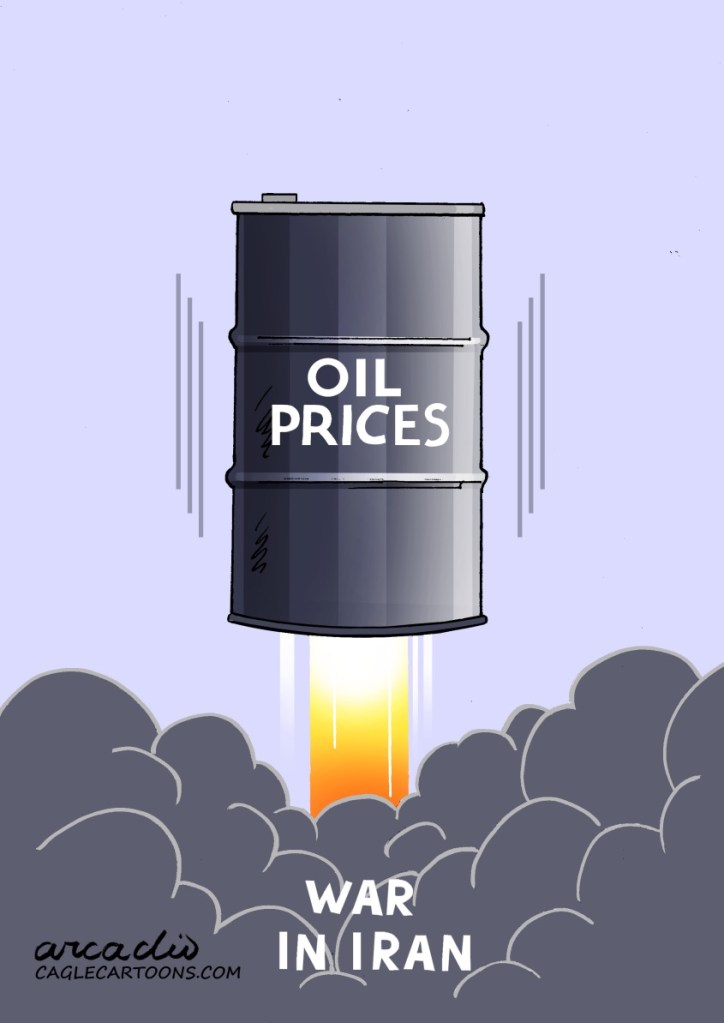
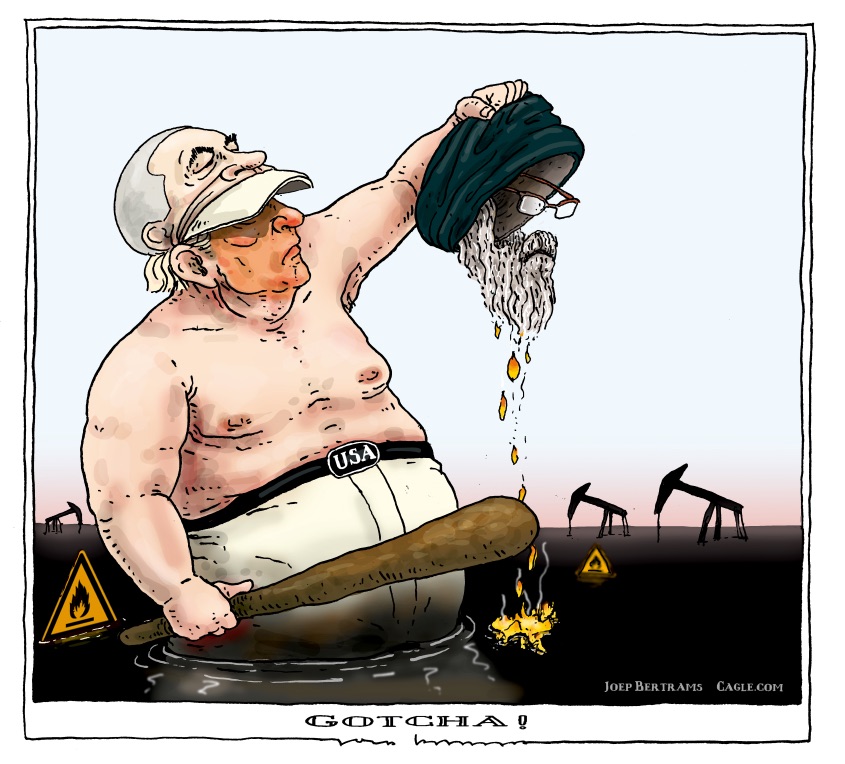
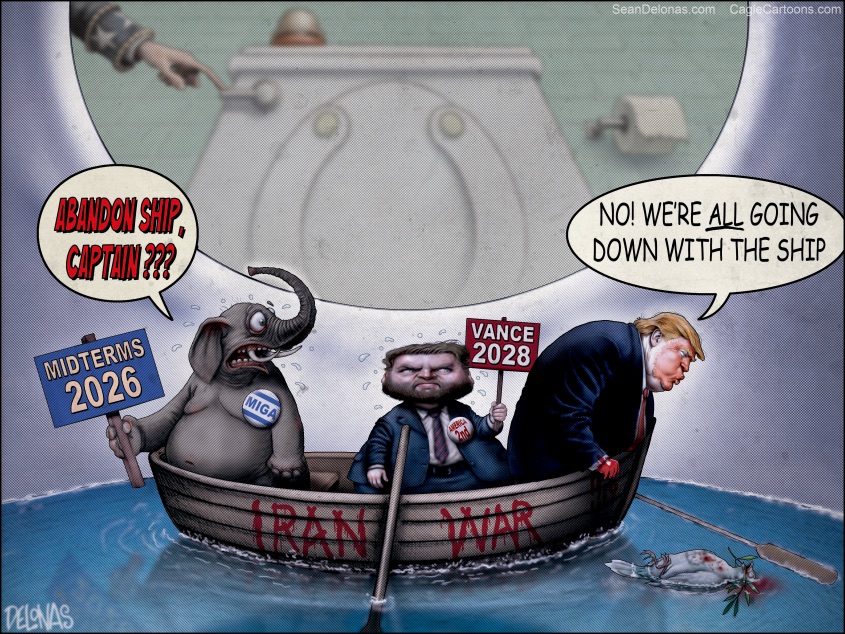
The one thing holding inflation prices down in this country was the price of oil. It peaked in 2023 and began a decline until Orange Caligula launched a full-on attack on Iran and disrupted traffic in the Straight of Hormuz. Such is the result of a madman’s insane policy choices based on revenge, power-grabbing, and greed. It’s like giving a toddler the driving wheel and letting him take you down from a very tall mountain.
It’s not like I didn’t warn everyone to clear out of the stock market and hunker down about a year ago. It’s also just going to get worse. I fortunately cleared out the last of one of my 403(b)s last week to use it to improve the house before it gets any more expensive. I managed to lose only a bit of it, and I’m glad to know the check got cut before the worst hit so far. I can’t promise you that it’s going to get any better either. We’re worse than a Banana Republic. We’ve gone back to something akin to the dark ages with plagues of measles and armed thugs wandering the streets, looking to harm and jail workers and poor people. We can’t even put a bunch of pedophiles in suits into the justice system. What good is our Constitution for if money means you can ignore it
I’m going to start with AXIOS because they always get straight to the point. This analysis is by Neil Irwin, and this absolutely stunning chart provides some visuals. That line covering the first few months of 2026 screams outlier with a discernible reason. To the moon and beyond! It’s also obvious that none of it was Joe Biden’s fault, given the dates accompanying the data points. Okay, I’ll step down from the professor’s podium. I’ll just say economics students will be studying this for as long as universities stand.
In the first week of the American and Israeli attack on Iran, the economic ripples were looking pretty minimal. But as Week 2 begins, the risks to the global economy are growing much more serious.
The big picture: You can’t decapitate the leadership of a country of 90 million people, with expansive military and intelligence capabilities, in the heart of some of the world’s most economically important supply chains, without a huge cost.
The hours and days and weeks ahead are all about quantifying that cost.
Zoom in: Oil skyrocketed 25% overnight, to just under $120 a barrel, fueling worries that higher energy costs will stoke inflation and curb spending by U.S. consumers. Tokyo’s Nikkei 225 index plunged more than 5%.
That’s the highest oil price since about four years ago, when energy prices surged due to Russia’s invasion of Ukraine.
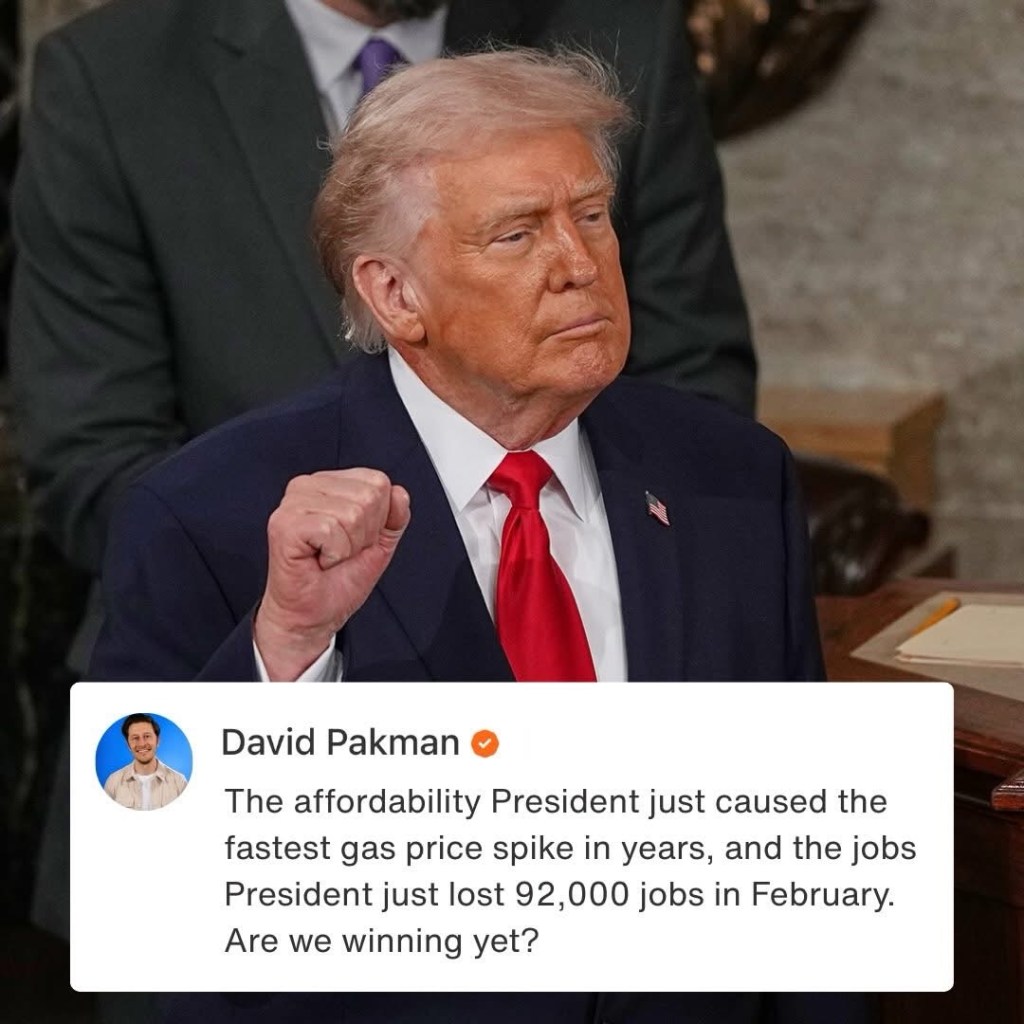
Patrick De Haan — a widely cited gas price expert and an analyst for GasBuddy — estimates there’s an 80% chance the national average gas price will hit $4 per gallon in the next month.
The latest: As of 5am ET, a barrel of the global crude oil benchmark was going for about $107 on futures markets, up 15% from Friday and 47% from 10 days ago, before the Iran attack. Brent crude prices approached $120 overnight before receding on reports of coordinated global action to release oil reserves.
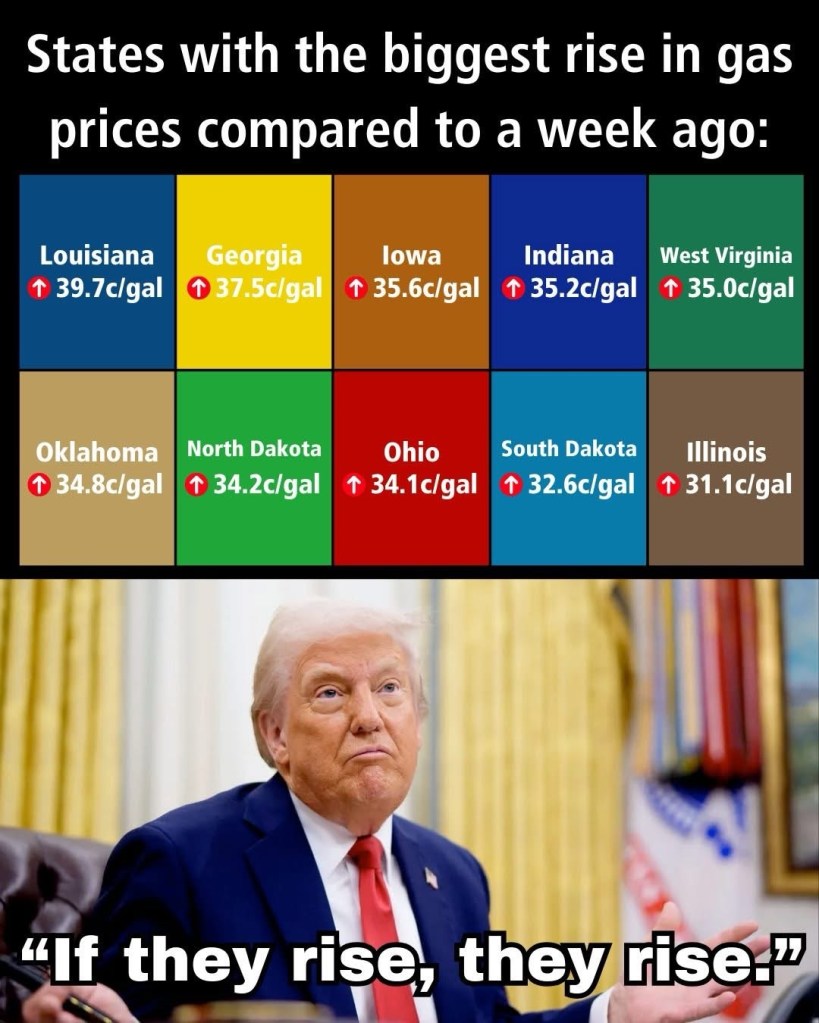
The oil price rise is poised to translate into a rapid increase in the cost of retail gasoline, which was already up about 51 cents per gallon before the weekend run-up in oil prices.
The risk of a broader economic slump is rising with the disruption to oil supplies. S&P 500 futures are down 1.3% overnight, setting Wall Street up for its third consecutive day of losses.
Japan’s Nikkei index was down 5.2% and South Korea’s KOSPI down 6%, reflecting those economies’ more direct dependence on Middle Eastern oil now at risk of a protracted blockade.
Of note: The odds of a U.S. recession this year spiked to 38% in overnight trading on Polymarket, from 24% at the start of the month.
State of play: Iran is seeking to block the Strait of Hormuz, which connects the Persian Gulf with the rest of the world, and is threatening to attack ships that seek to pass through.
The war has already caused the largest oil disruption in history, taking out roughly 20% of the world’s supply, according to Bob McNally, president of Rapidan Energy and a former George W. Bush energy adviser.
That’s double the previous record set during the Suez Crisis in the 1950s, which disrupted just under 10% of global supply.
The weekend also brought apparently successful Iranian attacks on desalination plants in the Gulf region that are critical for drinking water.
President Trump has raised the possibility of U.S. ground forces in Iran.
More at the link. CNBC shows the data with more analysis. “Oil prices topped $100 per barrel on record supply disruption, but are off session highs.” We’ll see if that lasts until the markets close this afternoon.
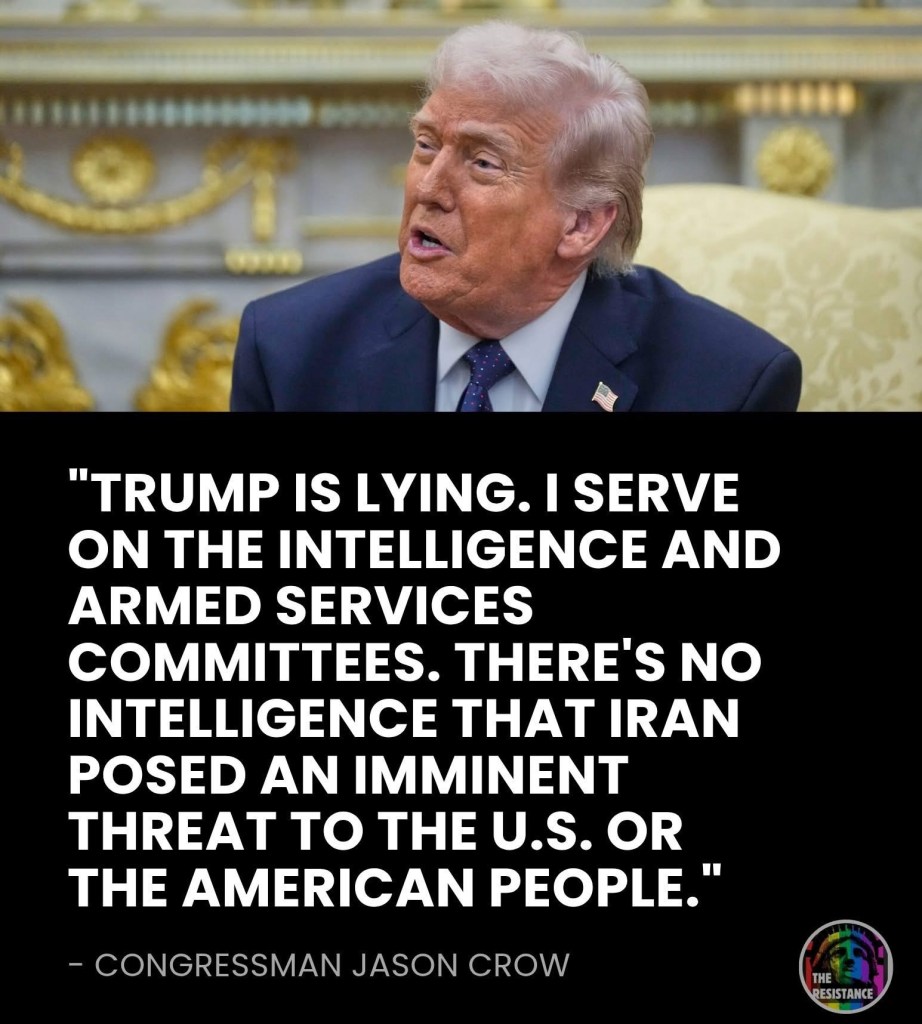
Shortly after oil blasted past $100 at the open of trading Sunday evening, President Donald Trumpposted on Truth Social that a gain in “short term oil prices” was a “very small price to pay” for destroying Iran’s nuclear threat.
“Only fools would think differently!” Trump added.
Gulf Arab states are cutting production because they are running out of storage space, as crude piles up with nowhere to go due to the closure of the Strait. Tankers are unwilling transit the narrow waterway because they are worried Iran will attack them.
The closure of the Strait has triggered the biggest oil supply disruption history, according to an analysis by consulting firm Rapidan Energy. About 20% of the world’s oil consumption is exported through the Strait.
Iran’s foreign ministry spokesman warned Monday that oil tankers “must be very careful.”
“As long as the situation is insecure, I think all tankers, all maritime navigation, must be very careful,” Foreign Ministry spokesman Esmail Baghaei told CNBC in an interview.
Kuwait, the fifth-biggest producer in OPEC, announced precautionary cuts Saturday to its oil production and refinery output due to “Iranian threats against safe passage of ships through the Strait of Hormuz.” The state-owned Kuwait Petroleum Corp. did not detail the size of the cuts.
Output in Iraq, the second-biggest OPEC producer, has effectively collapsed. Production from its three main southern oilfields has fallen 70% to 1.3 million barrels per day, three industry officials told Reuters on Sunday. Those fields produced 4.3 million bpd before Iran war.
And the United Arab Emirates, the third-biggest producer in OPEC, said Saturday that it is “carefully managing offshore production levels to address storage requirements.” The Abu Dhabi National Oil Co., or ADNOC, said its onshore operations are continuing normally.
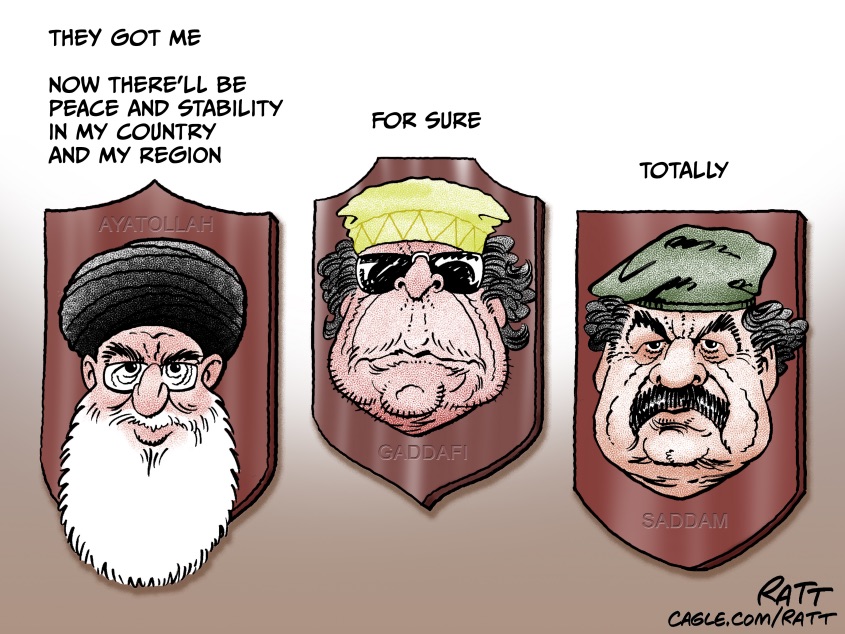
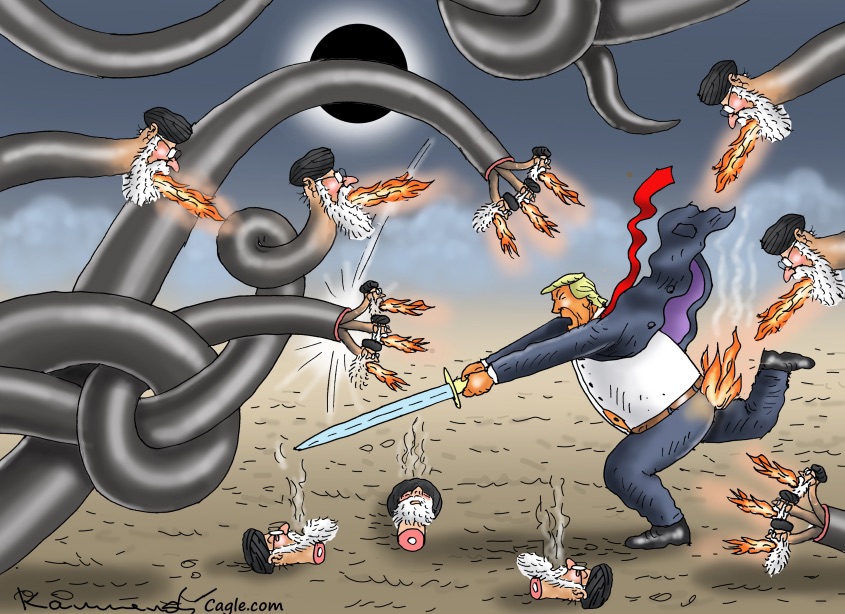
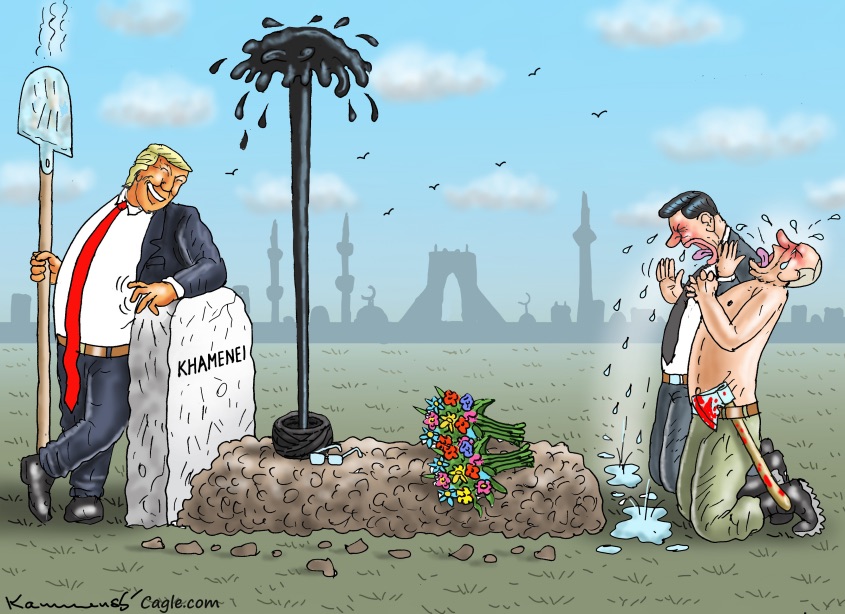
The war showed little signs of easing despite Trump’s claim it was “already won.” Iran named Ayatollah Ali Khamenei’s son, Mojtaba, as its new supreme leader, according to reports. The U.S. and Israel killed Khamenei in the opening days of the war.
Energy Secretary Chris Wright said Sunday that traffic through the Strait will resume after the U.S. has destroyed Iran’s ability to threaten tankers.
It’s really odd to think that I started my career as an economist during the OPEC maneuvers and I’m winding down my career as one with the US maneuvers. Frankly, I think China is sitting pretty right now. They’ve been doing a lot with alternative energy and have the entire Pacific Region — including many Latin American Countries with oil — undoubtedly rooting for them right now.
Alex Harring at CNBC analyzes the market activity. This is fresh off the ticker today. “Stocks pare losses as oil falls back below $100; Dow is down 300 points: Live updates.”
The 30-stock index fell 293 points, or 0.6%, and is coming off its biggest weekly slide in nearly a year. The S&P 500 lost 0.2%, while the Nasdaq Composite gained 0.2%. That signifies a meaningful turnaround for the three indexes, as the Dow was down nearly 900 points, or 1.9%, at its low of the day, and the S&P 500 and Nasdaq were each lower by around 1.5%.
The broader market was helped off its lows by a rise in semiconductor stocks, however. Broadcom jumped more than 3%, while Micron Technology and Advanced Micro Devices gained almost 2% each. Nvidia climbed more than 1%.
West Texas Intermediate crude broke above $100 per barrel in overnight trading to hit more than $119, its first time above the $100 level since 2022, when investors were reacting to the aftermath of Russia’s invasion of Ukraine. It was last up 6% at around $96 a barrel. International benchmark Brent crude added 7% to $99 a barrel. U.S. oil prices began the year below $60 a barrel.
Oil futures jumped after major Middle East producers slashed their output due to the continued closure of the key Strait of Hormuz passageway. Kuwait announced cuts but did not say by how much, while Iraq has reportedly seen its production fall 70%.
Oil prices later came off their highest levels of the session and stocks rose from their lows following a Financial Times report that G7 officials were considering tapping their strategic reserves. But the publication also reported coordinated release was not ready yet, helping to send major indexes lower.
The Cboe Volatility index — Wall Street’s fear gauge measuring investors seeking protection in the options market — topped 30 for the first time since the market’s tariff driven sell-off in April 2025. It was last above 27.
The $100 oil level was seen by many on Wall Street as a breaking point for the economy unless the war is resolved quickly and prices retreat. Trump posted Sunday evening that a gain in “short term oil prices” was a “very small price to pay” for destroying Iran’s nuclear threat.
Trump donors are feeling this immediately. Trump voters will shortly see the impact on their budgets and gas prices. I can’t say I feel sorry for any of them, but there’s not a person who won’t feel this one way or another. The Bulwark’s Andrew Egger examines Trump’s seeming confusion over his War.
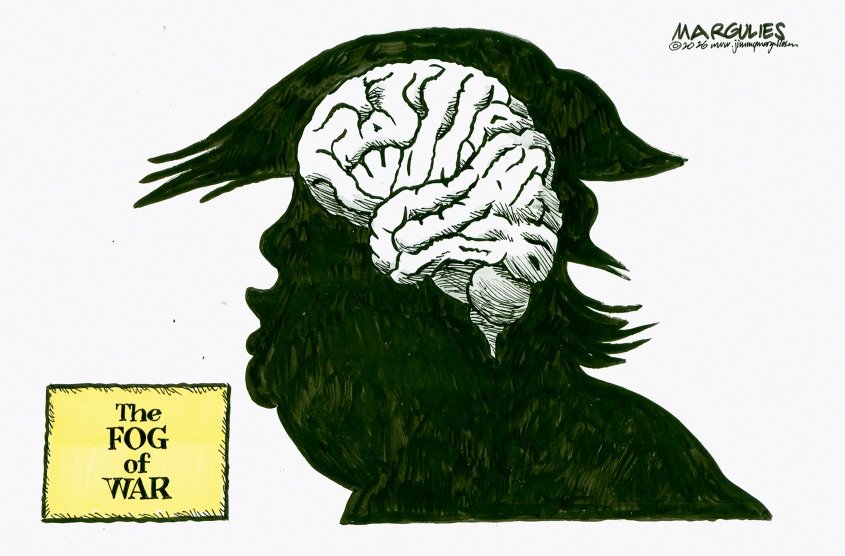
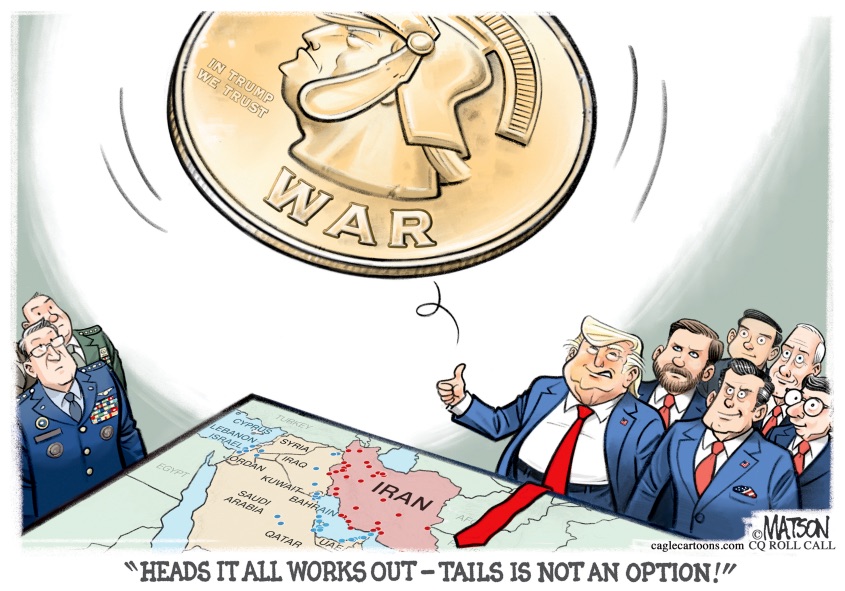
What did the White House think it was getting into in Iran? A strike against Iran’s oppressive and fanatical regime, sure. A display of America’s awesome military might, definitely. But it’s become increasingly, painfully clear: They didn’t think there was going to be a war.
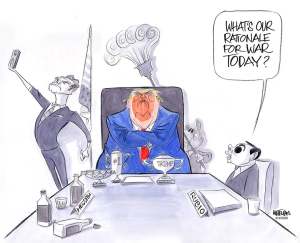
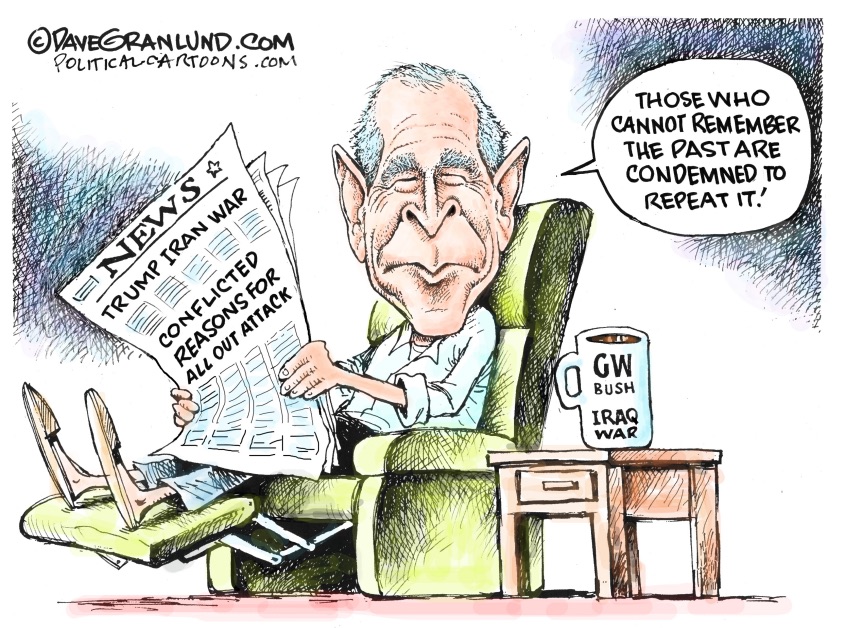
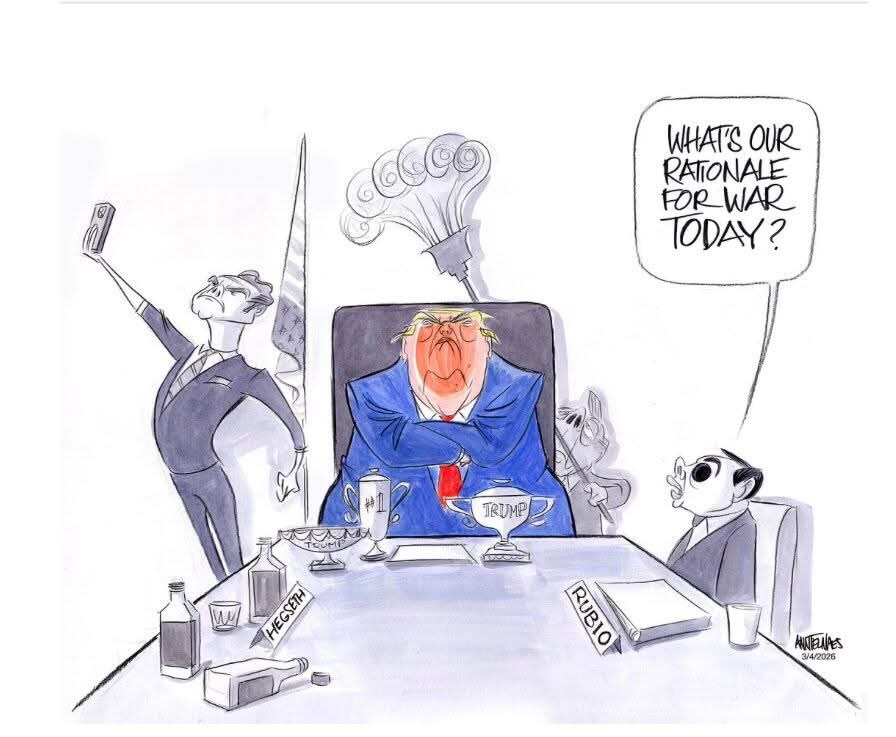
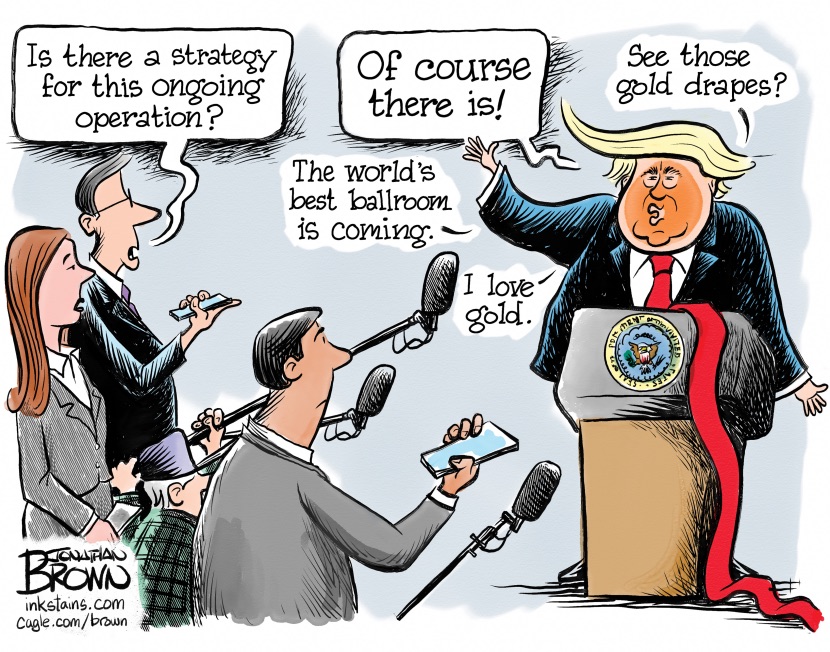
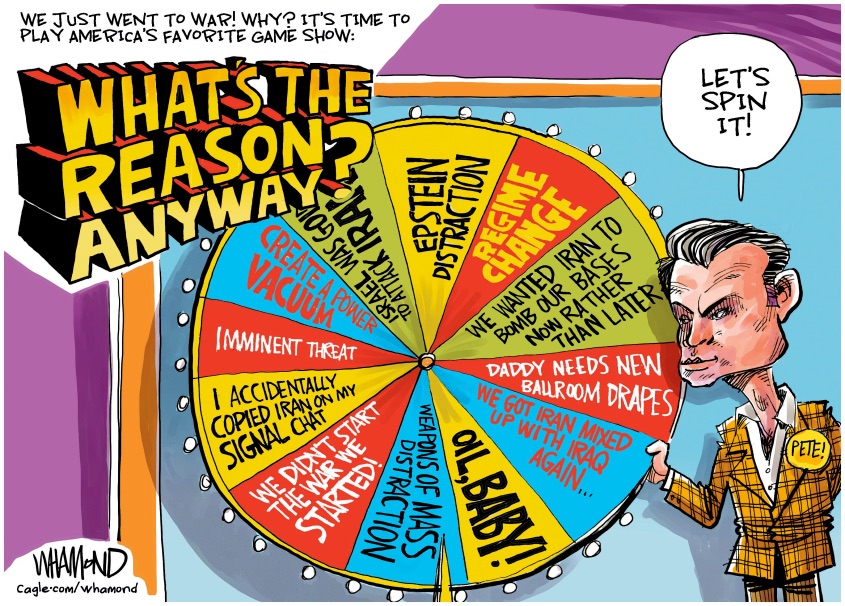
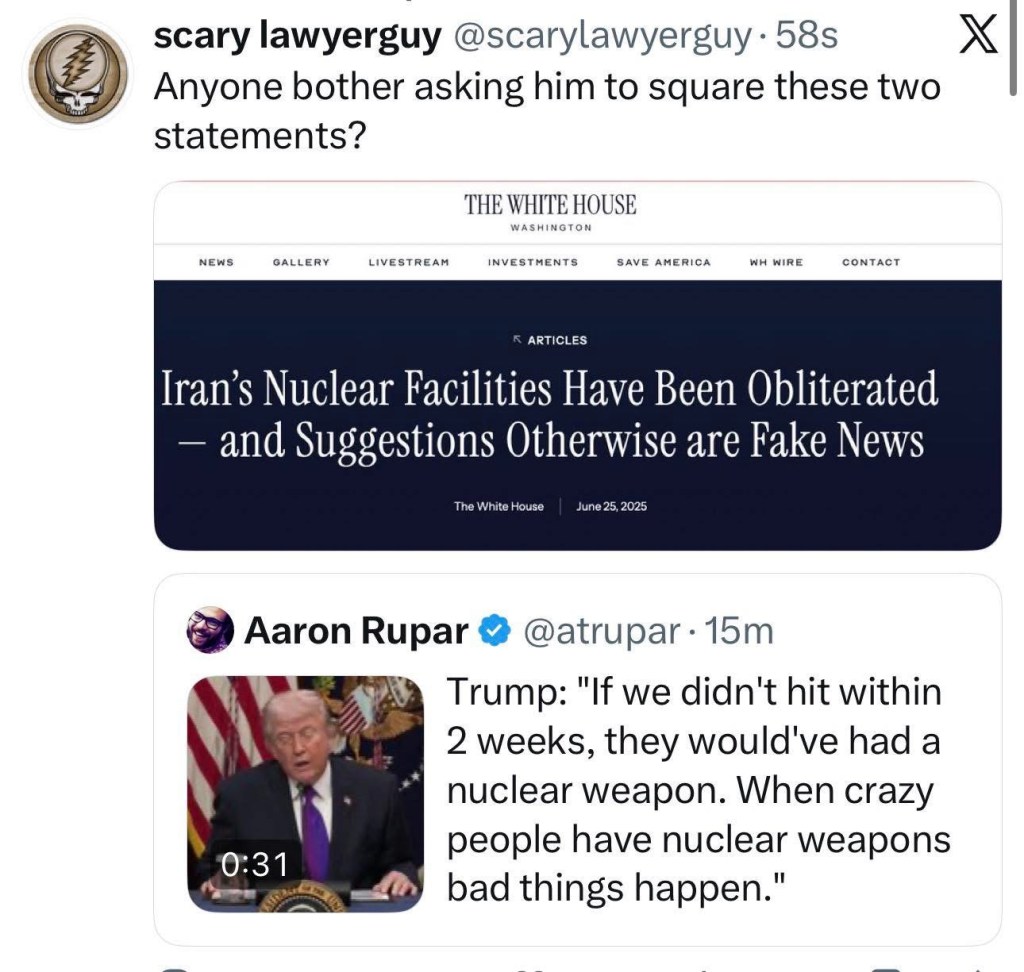
The Trump administration developed no real theory of the objectives of the Iran war, because they didn’t think there was going to be a war. Instead, the administration has backfilled a dizzying array of post-hoc goals for the strikes against Iran. Judd Legum counts seventeen different rationales offered by many different officials, from the president’s “feeling, based on fact” that Iran was about to strike the United Statesto a desire to free the Iranian people to a need to destroy a nuclear program the White House had claimed was already “obliterated.”
The Trump administration made no effort to get the American people on board with war, because they didn’t think there was going to be a war. A majority of the public is already opposed to war with Iran, and what support the war does have seems to be based on the questionable assumption that the conflict will be shortly resolved: 44 percent of Americans support the strikes so far, but only 12 percentwould be in favor of sending U.S. ground troops into the country. But the White House has made no broad effort to convince the public on a bipartisan basis that they should be prepared for a long-haul conflict.
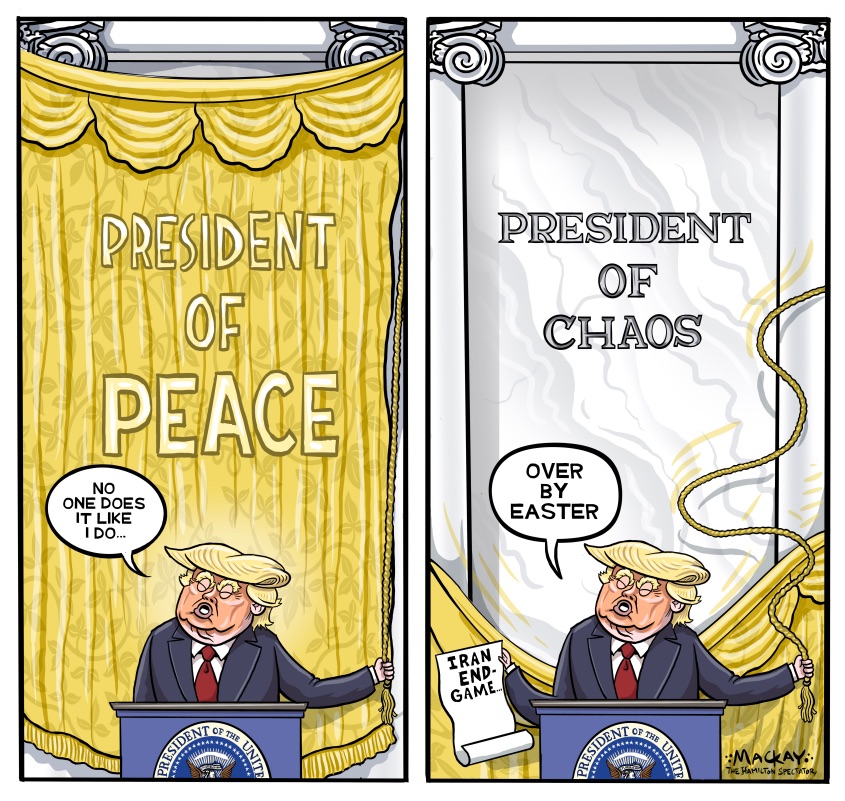
They didn’t think there was going to be a war, and so the White House seemingly gave no thought to what the economic ramifications of war would be. After several days of strikes on Iran, President Trump seemed suddenly to realize last week that the ongoing conflict was going to be terrible for energy prices. He tried to slap a band-aid on the problem by announcing risk insurance and military escorts for all oil tankers through the Strait of Hormuz, but it wasn’t enough: Suddenly, oil prices went through the roof, and the White House was scrambling to contain the damage—rushing to reassure consumers that the price hikes would be temporary and even waiving some sanctions on Russian oil to try to ease pressures on global supply. “Short term oil prices, which will drop rapidly when the destruction of the Iran nuclear threat is over, is a very small price to pay for U.S.A, and World, Safety and Peace,” Trump posted on Truth Social yesterday. “ONLY FOOLS WOULD THINK DIFFERENTLY!”
They didn’t think there was going to be a war, and so the president assumed he’d be in charge of picking Iran’s next political leadership. This plan, admittedly, hit an unexpected snag early on: The initial round of strikes that took out Iran’s top leaders also killed a number of lower-ranking regime figures that the White House had identified as pragmatists who might be willing to negotiate. “The attack was so successful it knocked out most of the candidates,” Trump said a day after the strikes began. “It’s not going to be anybody that we were thinking of because they’re all dead. Second or third place is dead.” Still, Trump made it clear he expected to be involved in picking Iran’s next supreme leader, and absolutely ruled out Mojtaba Khamenei, the son of the slain ayatollah: “They are wasting their time . . . Khamenei’s son is unacceptable to me.” But this morning, Iran went ahead and proclaimed Mojtaba Khamenei their next supreme leader anyway.
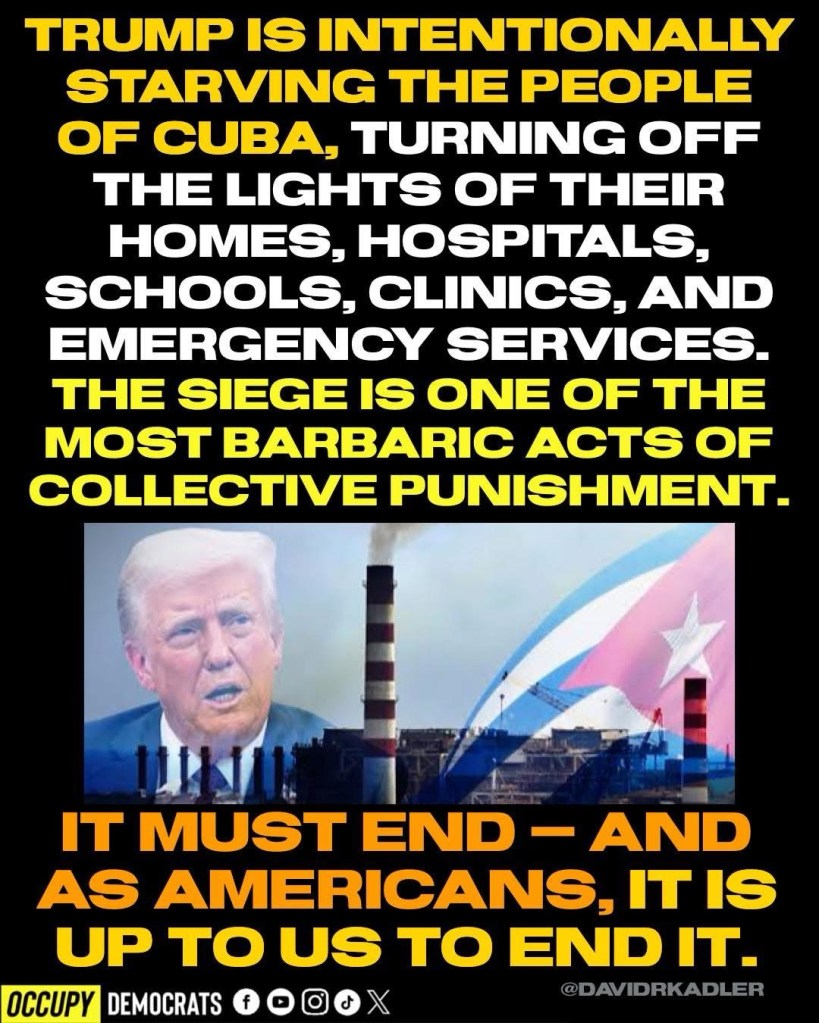
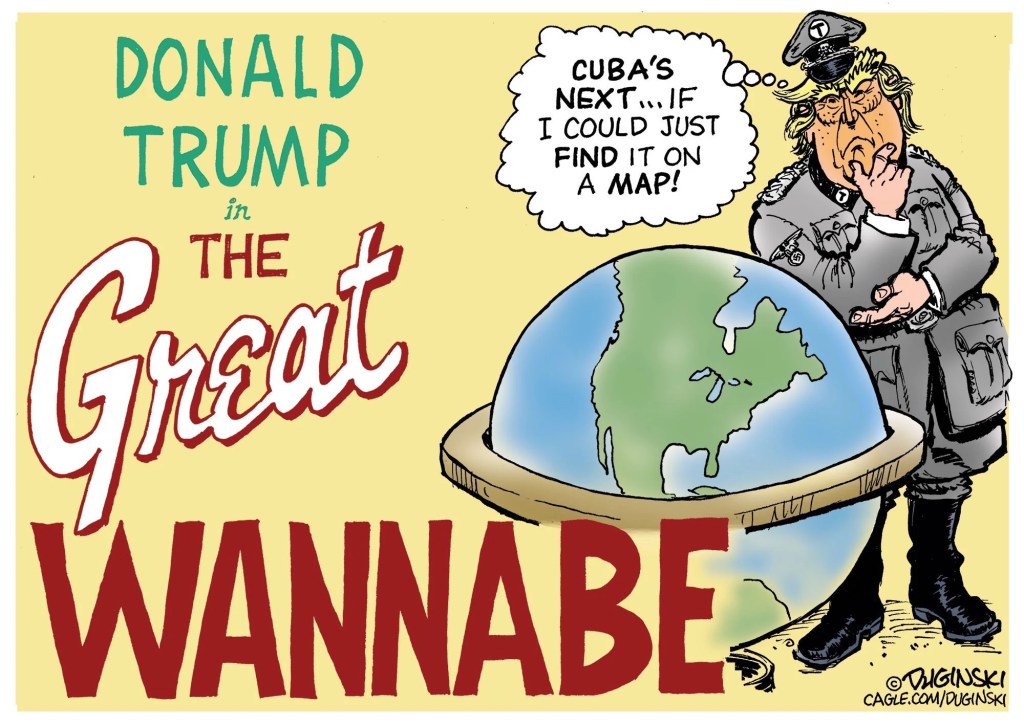
Somehow, the president seems to remain so confident Iran will be buttoned up in no time that he’s already openly licking his chops over the next triumphant blitzkrieg. “Cuba is gonna fall pretty soon, by the way,” Trump told CNN Friday. “I’m going to put Marco over there and we’ll see how that works out. We’re really focused on this one right now.”
Judd LeGum at Popular Information specifies not the unknowables of the attack, but the rationale and plans for the future, which are blowing in the wind. “9 days in, the most basic question about the Iran war remains unanswered. In just over a week, Trump and top administration officials have given at least 17 different responses about why the war began.” Yup. We still don’t know why they did this.
On February 28, President Trump announced that “the United States military began major combat operations in Iran.” The war has claimed the lives of more than 1500 people, including about 1300 Iranians, dozens in neighboring countries, and six U.S. troops. The Pentagon has estimated the conflict is costing U.S. taxpayers about $1 billion per day — and that figure may be too low.
And yet, nine days into the war, Trump and his administration have failed to clearly answer the most fundamental question: Why did the war begin?
Instead, the Trump administration has offered a bewildering series of shifting, contradictory, and factually incorrect answers. In just over a week, Trump and top administration officials have given at least 17 different responses about why the war began:
A brief description of each of those 17 responses is given in the article. You may read it at this fully gifted link. The New York Times reports on information from Iran’s new Supreme Leader. “Live Updates: Oil Price Surge Rattles Markets; Iran’s Choice of Leader Signals Defiance. Stocks fell on fears of the Iran war’s effects on energy prices. Top clerics selected Mojtaba Khamenei as Iran’s supreme leader, despite President Trump’s warning that he was “unacceptable.”
U.S. stocks fell at the start of trading on Monday, after markets in Asia and Europe tumbled, as a spike in oil prices reflected global fears of a prolonged U.S.-Israeli war with Iran. Meanwhile, Iran projected defiance by naming a son of its slain supreme leader as his successor.
Oil prices briefly surged early Monday to almost $120 per barrel, their highest level since the Covid pandemic, as President Trump’s plans for the next steps in the war, let alone its endgame, remained unclear and Iran showed no sign of bowing to his demand for unconditional surrender.
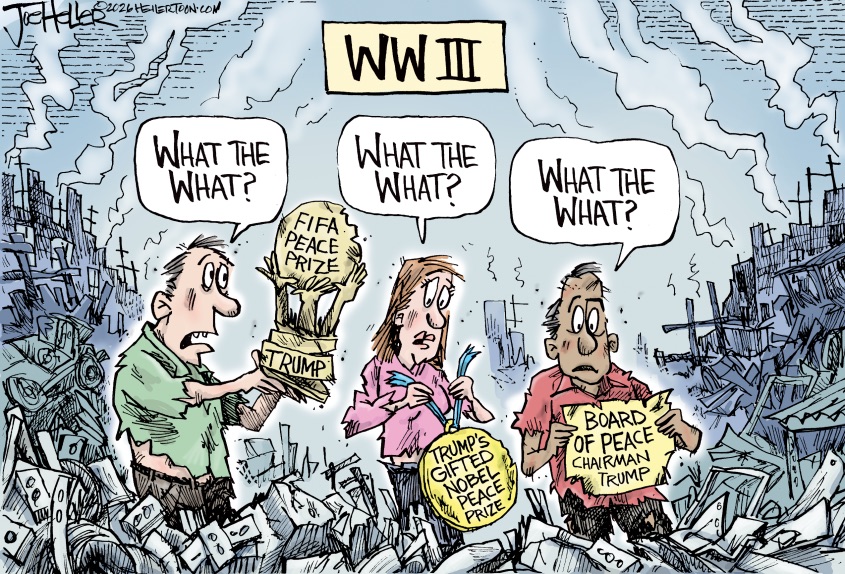
It still looks like the start of World War 3 to me. From the same link above.
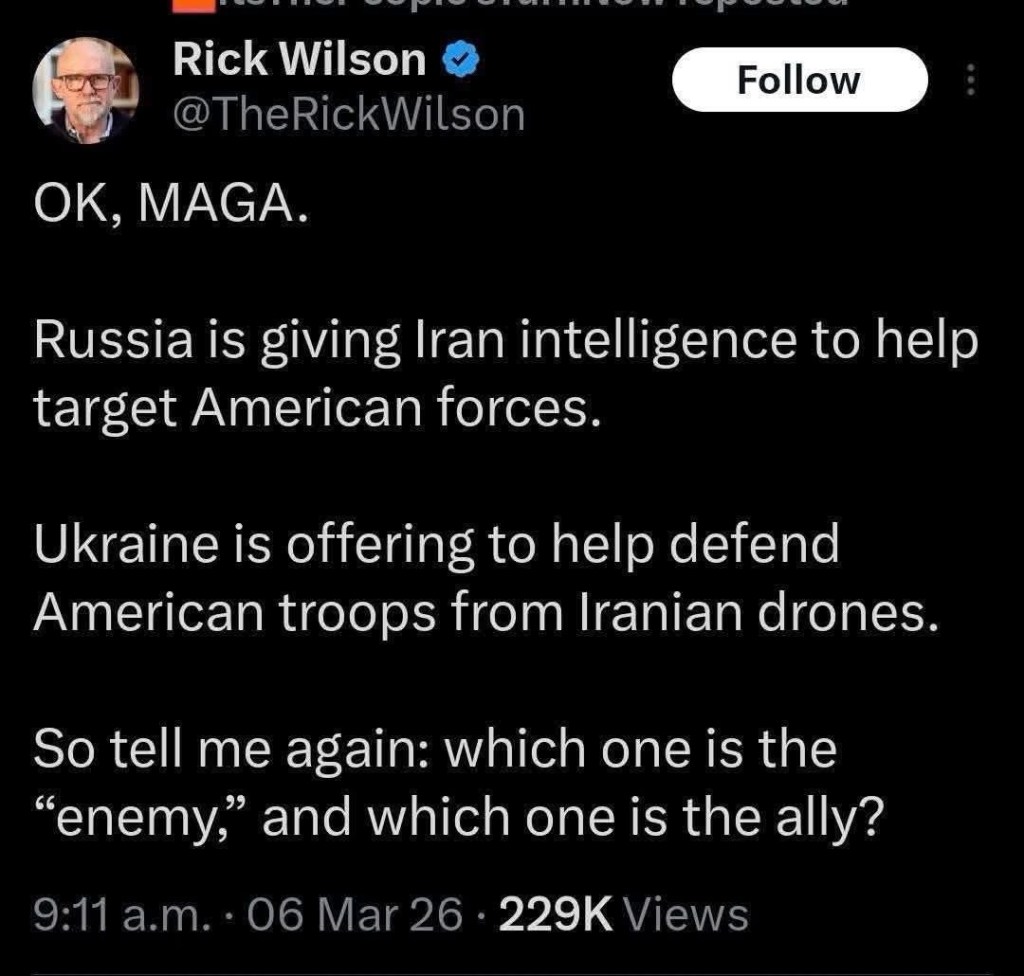
Eleven countries have asked Ukraine for security support to help counter Shahed drones, according to President Volodymyr Zelenskyy. He said in a social media post that the requests have come from countries neighboring Iran, European nations and the United States — and that some “have already been met with concrete decisions and specific support.”
He did not provide further details, though Zelensky earlier told The New York Times that Ukraine sent interceptor drones and a team of experts to protect U.S. military bases in Jordan.
“There is clear interest in Ukraine’s experience in protecting lives, relevant interceptors, electronic warfare systems, and training,” Zelensky added in his post on social media. “Ukraine is ready to respond positively to requests from those who help us protect the lives of Ukrainians and the independence of Ukraine.
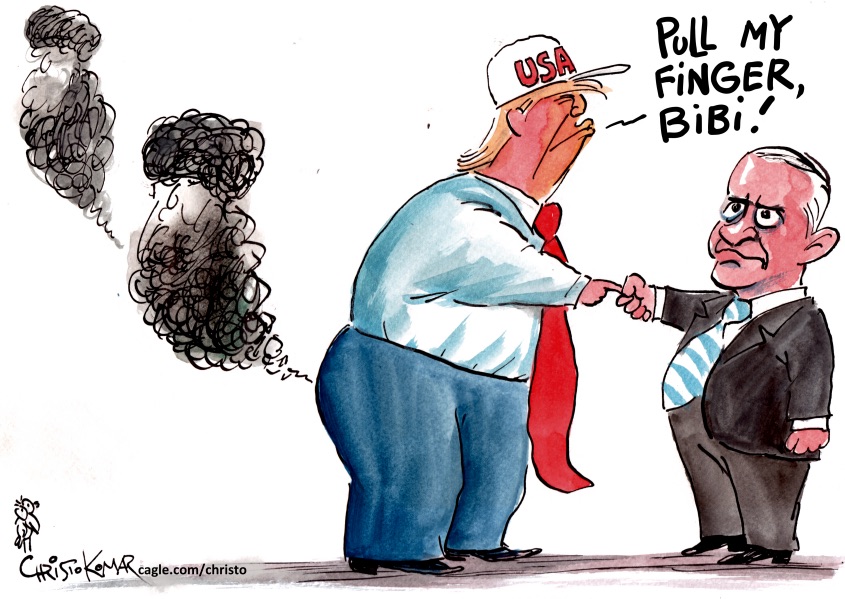
This headline is one that worries me. It’s from the Times of Israel. “Trump to Times of Israel: It’ll be a ‘mutual’ decision with Netanyahu regarding when Iran war ends. US president, in phone interview, clarifies that he’ll make final call to end operation ‘at right time’; says he and PM ‘worked together’ against Islamic Republic: ‘We’ve destroyed a country that would have destroyed Israel’.”
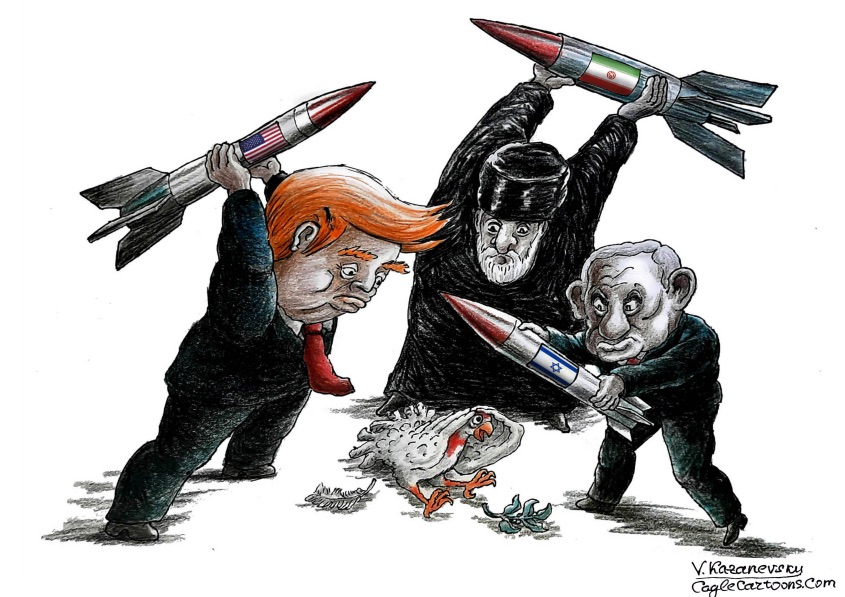
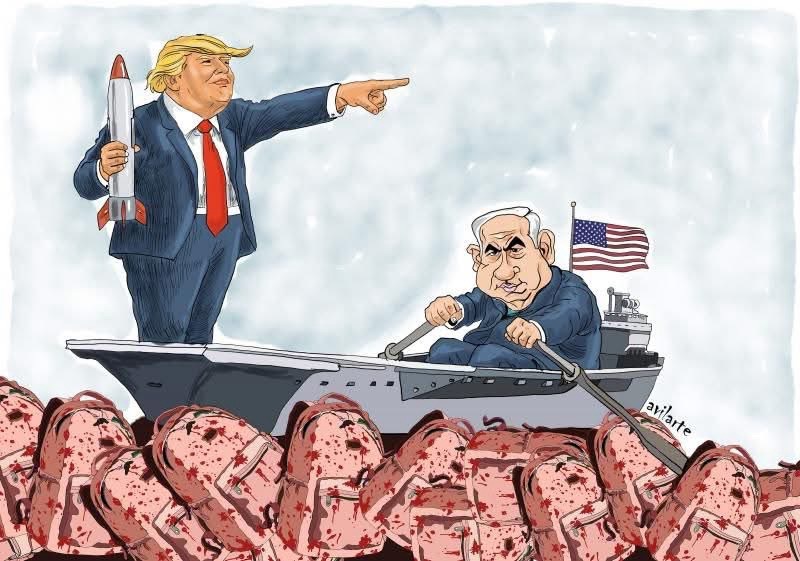
US President Donald Trump told The Times of Israel on Sunday that a decision on when to end the war with Iran will be a “mutual” one that he’ll make together with Prime Minister Benjamin Netanyahu.
Trump also asserted in the brief telephone interview that the Islamic Republic would have destroyed Israel if he and Netanyahu had not been around. “Iran was going to destroy Israel and everything else around it… We’ve worked together. We’ve destroyed a country that wanted to destroy Israel.”
The US president was asked whether he alone would decide when the war with Iran ends or if Netanyahu would also have a say.
“I think it’s mutual… a little bit. We’ve been talking. I’ll make a decision at the right time, but everything’s going to be taken into account,” he responded, indicating that while Netanyahu will have input, the US president will have the final say.
Asked whether Israel could continue the war against Iran even after the US decides to halt its strikes, Trump declined to entertain the theoretical possibility before adding: “I don’t think it’s going to be necessary.”
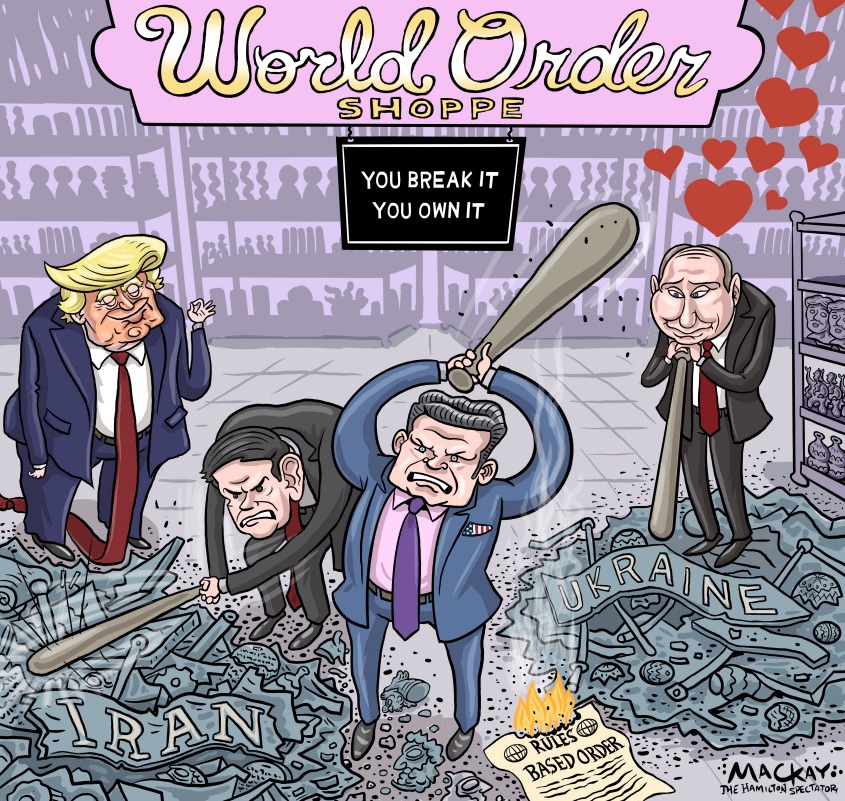
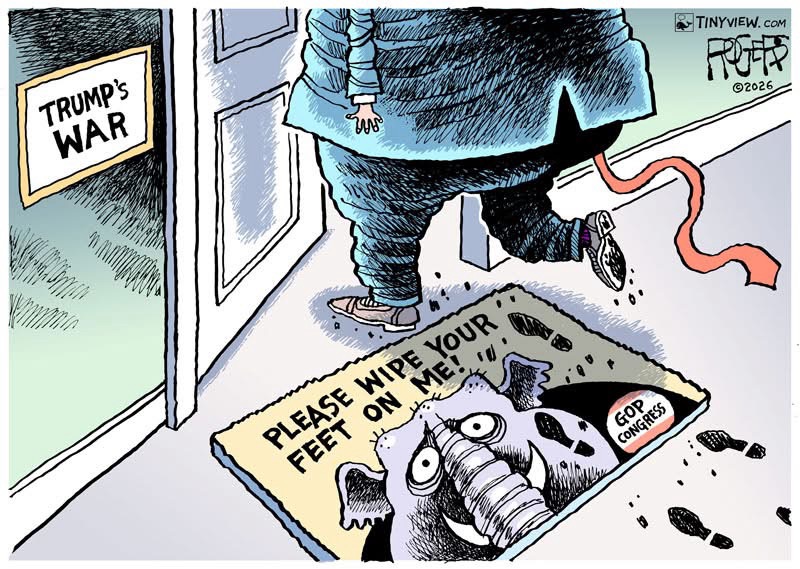
So, it’s still two megalomaniacs avoiding prison sentences running the show. Don’t you feel much better now?
What’s on your Reading, Action, and Blogging list today?
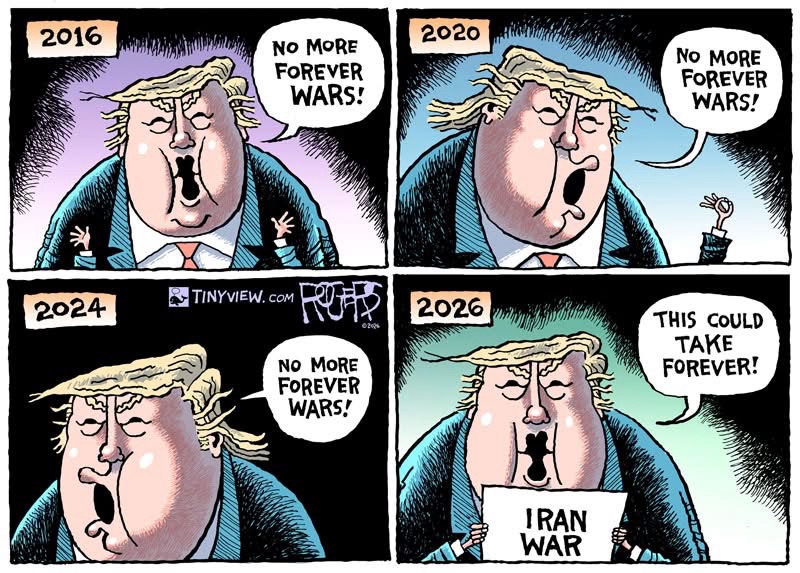
Don’t know about you all, but I am spitting mad…at Trump. I mean, more mad than usual.
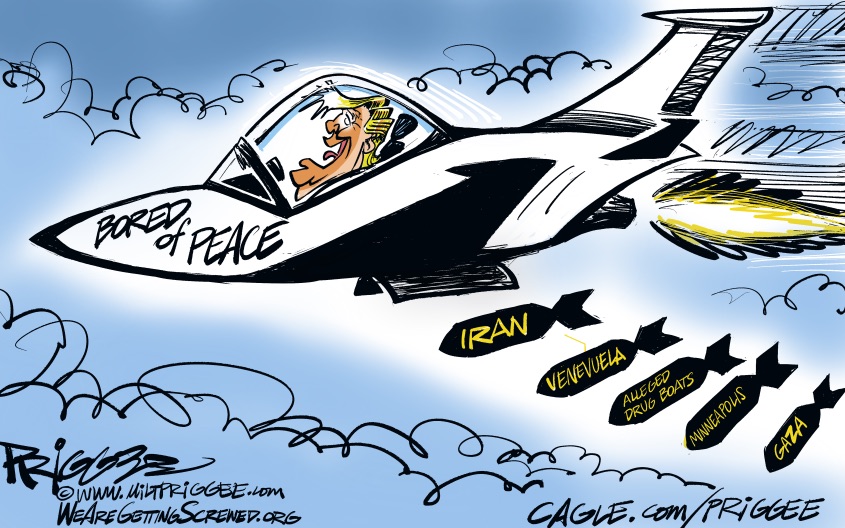
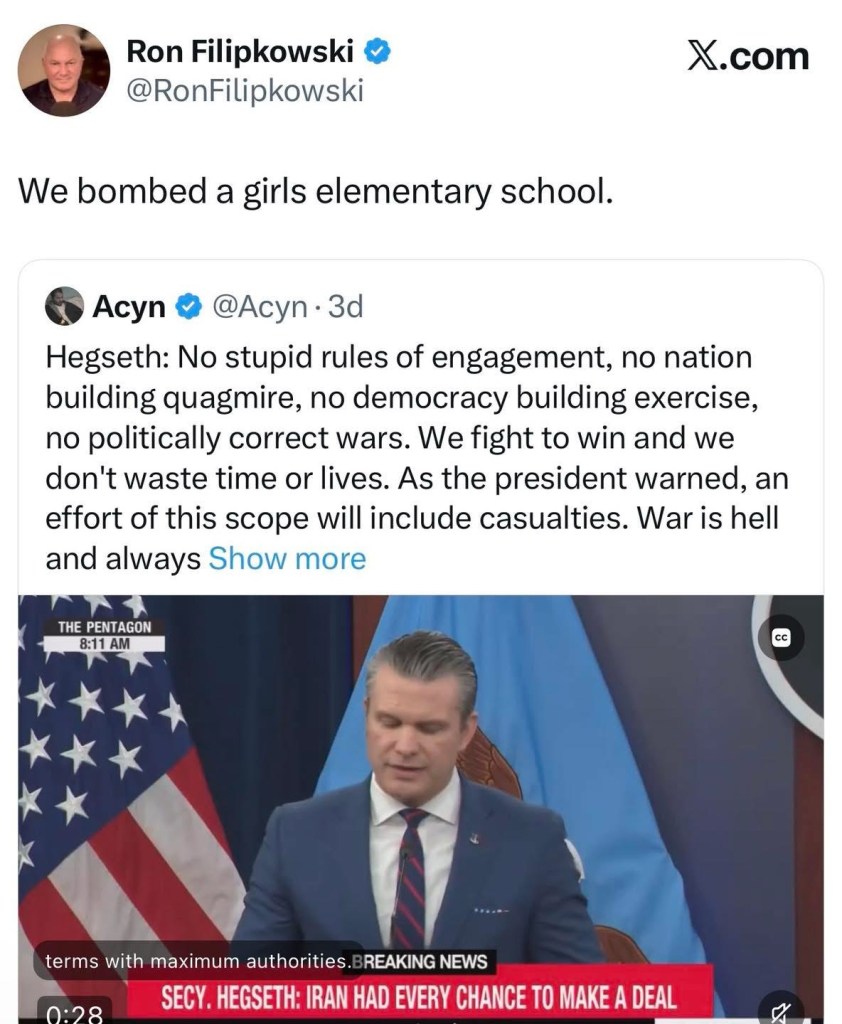
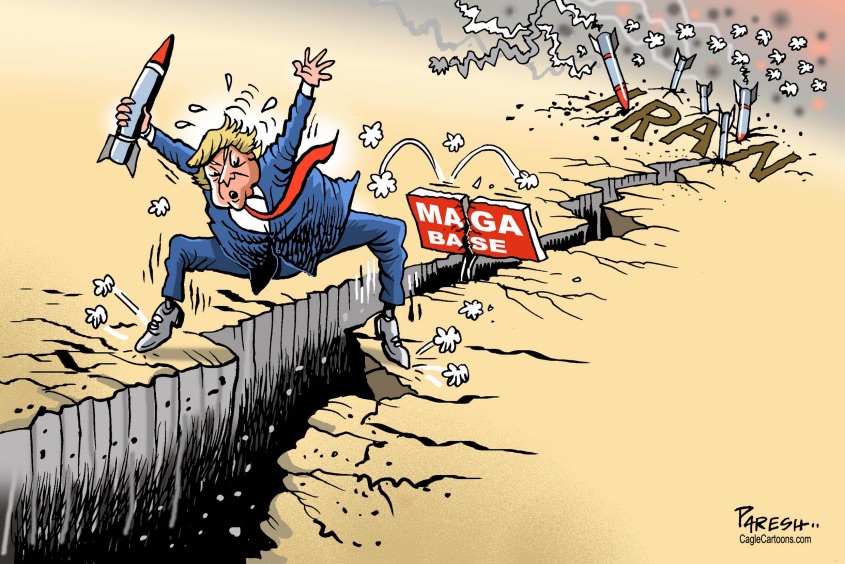
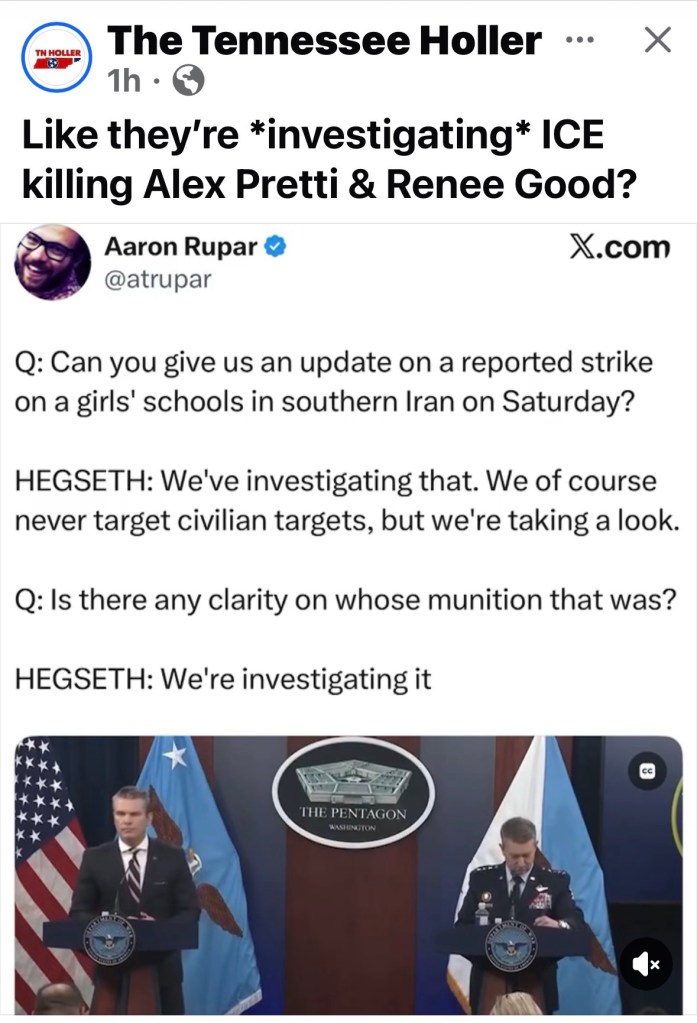
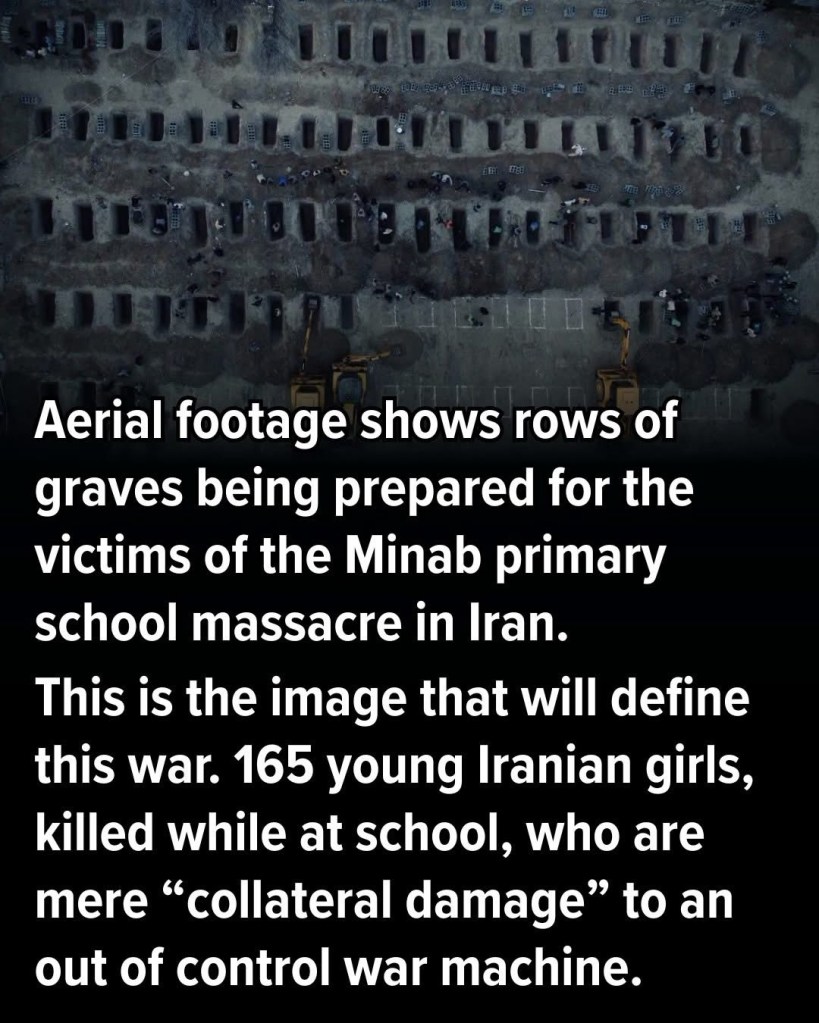
There's something deeply obscene and broken about the fact that Donald Trump and Pete Hegseth are bombing elementary schools in an illegal war of aggression, and there's still a sense among the opposition that it has to be explained in terms of gas prices in order to get American voters to care.
Painting of a cat resting on a pillow next to a Muslim scholar in Cairo, by John Frederick Lewis (1805–1876)
Today I’m featuring Persian cats. It’s not the Iranian people’s fault that Trump is raining down hellfire on their country. According to Wikipedia, cats are the preferred pet in Iran; and Persian cats are the local favorite.
The Persian cat, also known as the Persian Longhair or simply Persian, is a long-haired traditional breed of cat characterised by a round face and petite, but not flat and not smashed in, muzzle. The short flat nose was created in the US from in-breeding and causes breathing difficulties in the breed, whereas, the traditional Persian breed has a petite nose which enables them to breathe without difficulties.
The first documented ancestors of Persian cats might have been imported into Italy from Khorasan as early as around 1620, but this has not been proven. Instead, there is stronger evidence for a longhaired cat breed being exported from Afghanistan and Iran/Persia from the 19th century onwards.[2][3][4] Persian cats have been widely recognised by the North-West European cat fancy since the 19th century,[5] and after World War II by breeders from North America, Australia and New Zealand.[5] Some cat fancier organisations’ breed standards subsume the Himalayan and Exotic Shorthair as variants of this breed, while others generally treat them as separate breeds.
The selective breeding carried out by breeders has allowed the development of a wide variety of coat colours,[5] but has also led to the creation of increasingly flat-faced Persian cats. Favoured by fanciers, this head structure can bring with it several health problems. As is the case with the Siamese breed, there have been efforts by some breeders to preserve the older type of cat, the Traditional Persian, which has a more pronounced muzzle.
In Islam, the domestic cat is regarded as ritually clean and thus holds a unique status in comparison to other companion animals, such as the domestic dog. Under Islamic law, cats are permitted to be kept by Muslims within their homes and other private and public spaces, including mosques. Likewise, if a person’s food or drink is sampled by a cat, it is not rendered impure or unfit for consumption, and water from which a cat has drunk is permissible to use for ablution.
Cats are believed by Muslims to possess barakah, which refers to a blessing power that is said to flow through those who are spiritually closest to God.[1][2] As such, they are widely acclaimed as the “quintessential pet” for a Muslim household.
I hope these cats will provide some respite from the horrible news.
Trump is really sounding drunk with power (what else is new?) on his illegal war on Iran. Yesterday, he demanded “unconditional surrender” from the Iranians.
President Donald Trump said in a social media post on Friday that there would be no deal to end the U.S. war against Iran without an “UNCONDITIONAL SURRENDER” by Iran.
Trump said that after a surrender and “the selection of a GREAT & ACCEPTABLE Leader(s), we, and many of our wonderful and very brave allies and partners, will work tirelessly to bring Iran back from the brink of destruction, making it economically bigger, better, and stronger than ever before.”
“IRAN WILL HAVE A GREAT FUTURE. “MAKE IRAN GREAT AGAIN (MIGA!)” Trump wrote, echoing his “Make America Great” movement’s name.
Trump’s demand came as Iran has yet to pick a leader to replace Supreme Leader Ayatollah Ali Khamenei, who was killed last weekend in an airstrike at the beginning of the war by the U.S. and Israel.
What the hell does that mean? It’s not even a declared war.
President Trump told Axios Friday that his demand for Iran’s “unconditional surrender” could mean the complete destruction of the regime’s military capabilities — not necessarily a formal surrender.
“Unconditional surrender could be that [the Iranians] announce it. But it could also be when they can’t fight any longer because they don’t have anyone or anything to fight with,” he said in a phone interview.
Why it matters: Trump’s explanation came hours after he appeared to leave no visible off-ramp for Iran, ruling out any kind of “deal” as he demanded “UNCONDITIONAL SURRENDER” in a post on Truth Social.
— White House press secretary Karoline Leavitt later said on Fox News that “unconditional surrender” means Trump determining “that Iran can no longer pose a threat to the U.S. and our troops in the Middle East.”
— Leavitt listed U.S. objectives as destroying Iran’s navy, eliminating its ballistic missile threat, ensuring it cannot obtain a nuclear weapon and weakening its regional proxies.
The president of Iran has rejected Donald Trump’s call for the country’s unconditional surrender as a “dream”, while issuing a rare apology for Iranian attacks that hit neighbouring states, even as missiles and drones continued to strike Gulf countries.
Moder type Persian cat
In a prerecorded address broadcast on state television on Saturday, Iran’s president, Masoud Pezeshkian, said the country would never capitulate, responding to remarks by the US president, who said on Friday that only Iran’s total submission could bring the war to an end.
Iran’s enemies, Pezeshkian said, “must take their dream of the Iranian people’s unconditional surrender to their graves”, in remarks that further escalate the eighth day of conflict, which has choked global oil supplies and cut world air travel.
During his speech, Pezeshkian also issued an apology to neighbouring states for Iran’s recent “actions”, in an apparent attempt to ease regional anger after Iranian strikes hit civilian targets in Gulf Arab countries.
Tehran has responded to attacks on its territory by targeting Israel, but also Gulf Arab states that host US military installations, while Israel has also launched intense strikes on Lebanon, where the Iran-backed armed group Hezbollah is based.
President Donald Trump announced plans to launch yet more strikes against Iran on Saturday, escalating his threats as the conflict with Iran enters its second week.
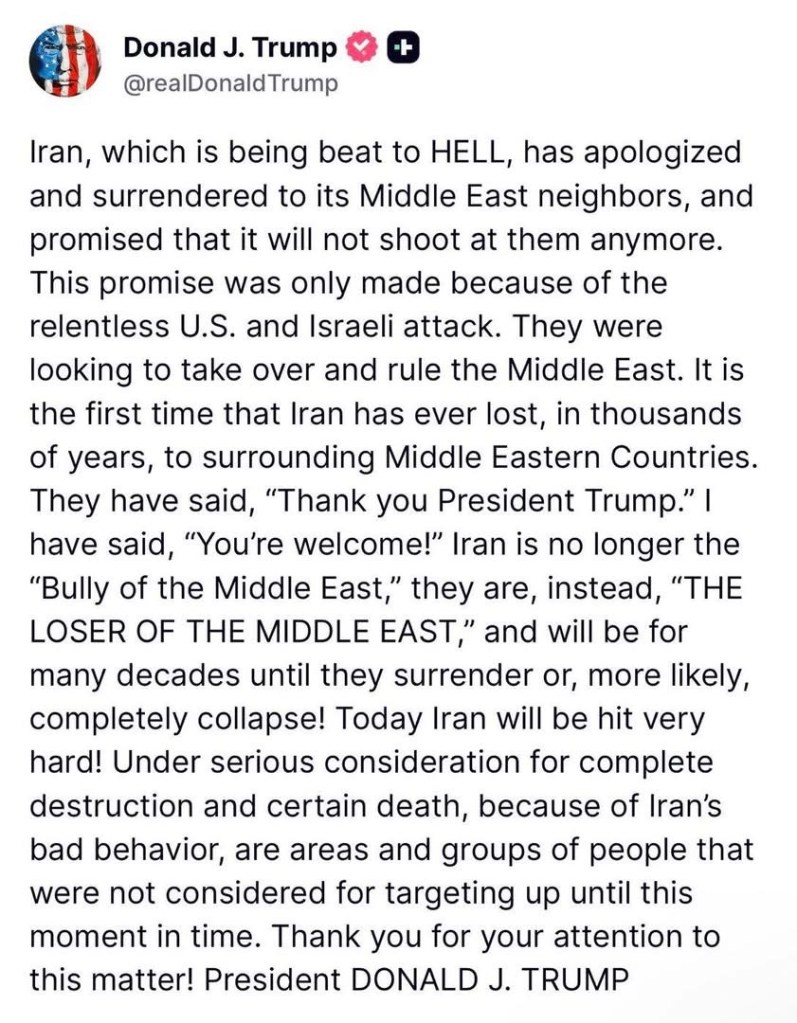
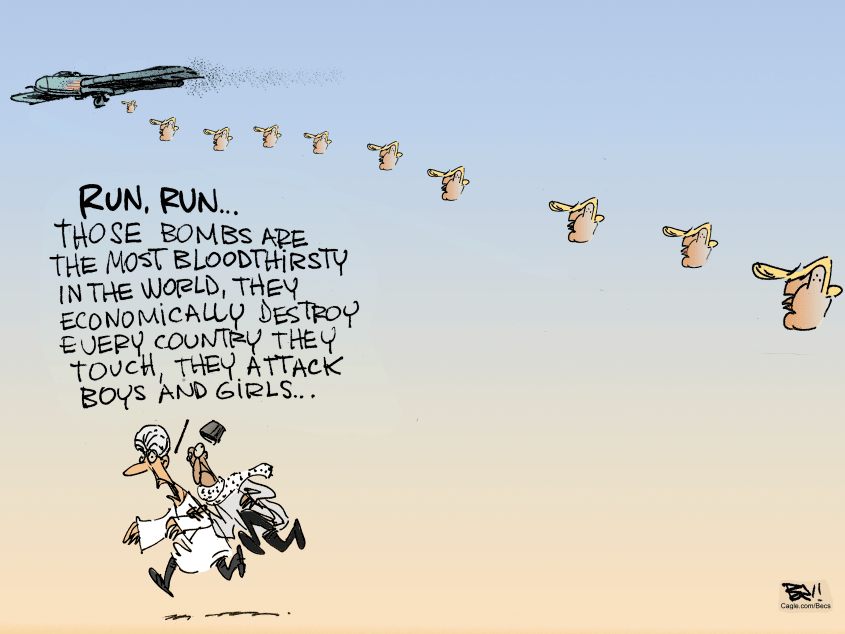
“Today Iran will be hit very hard!” he wrote on Truth Social Saturday morning. “Under serious consideration for complete destruction and certain death, because of Iran’s bad behavior, are areas and groups of people that were not considered for targeting up until this moment in time.”
Islamic miniature depicting Abu Hudhayfa ibn Utba (right) informing As’ad ibn Zurara that he has converted to Islam, with the presence of a cat denoting his home’s ritual purity.
Pezeshkian also said his country would no longer strike its neighbors in the Middle East — so long as attacks against Iran weren’t being launched from those countries. Trump took credit for the new policy, writing on Truth Social that it “was only made because of the relentless U.S. and Israeli attack.”
“It is the first time that Iran has ever lost, in thousands of years, to surrounding Middle Eastern Countries,” he said. “They have said, ‘Thank you President Trump.’ I have said, ‘You’re welcome!’ Iran is no longer the ‘Bully of the Middle East,’ they are, instead, ‘THE LOSER OF THE MIDDLE EAST,’ and will be for many decades until they surrender or, more likely, completely collapse!”
Trump is really full of himself. He even thinks he should help decide who Iran’s next leader will be!
Meanwhile, things here at home aren’t going so well.
Donald Trump won reelection on the promise of restoring the economy and eliminating illegal immigration.
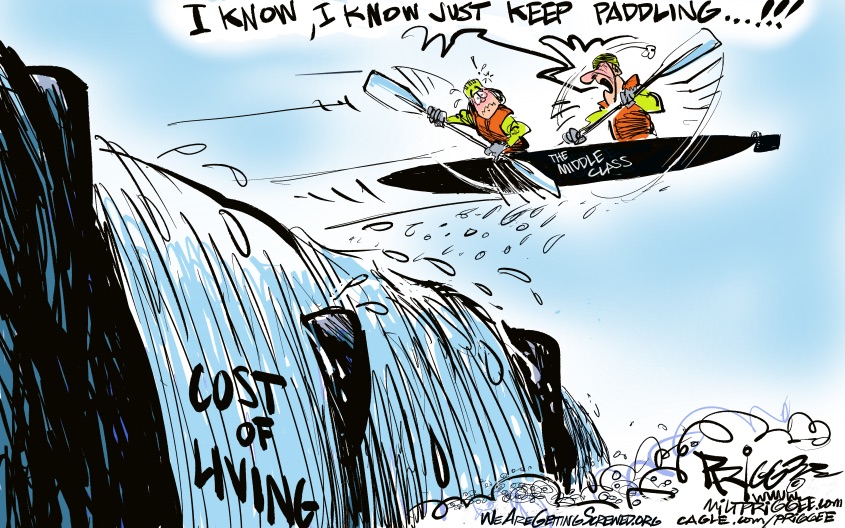
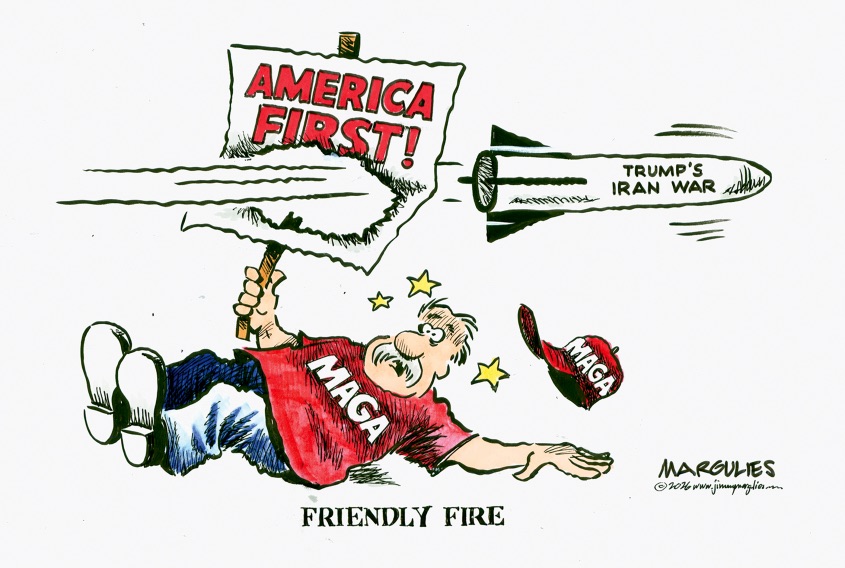
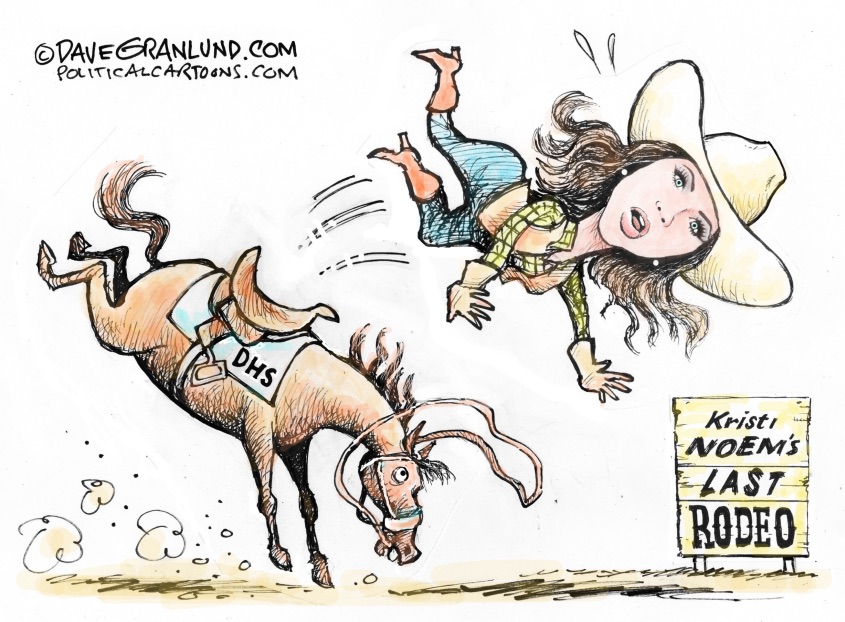
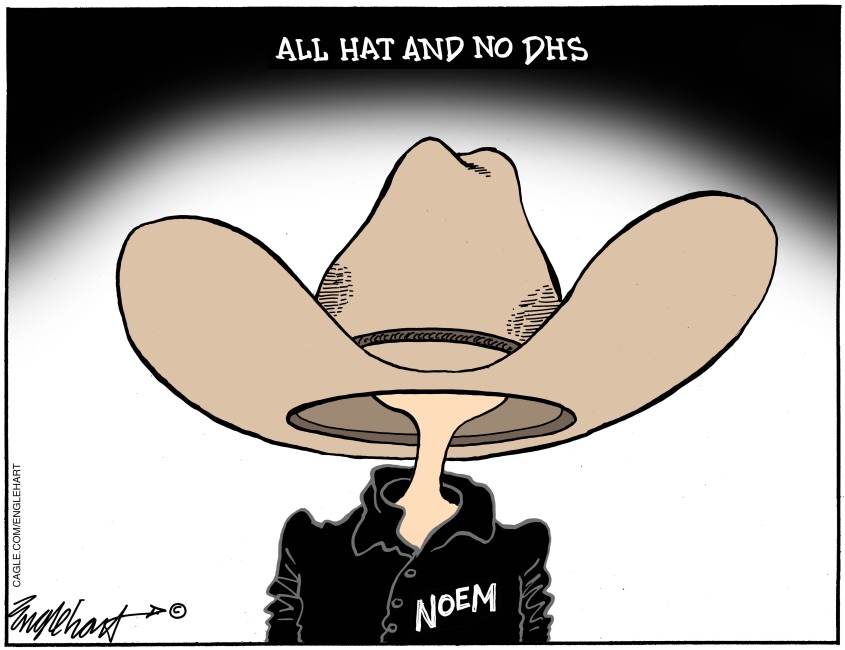
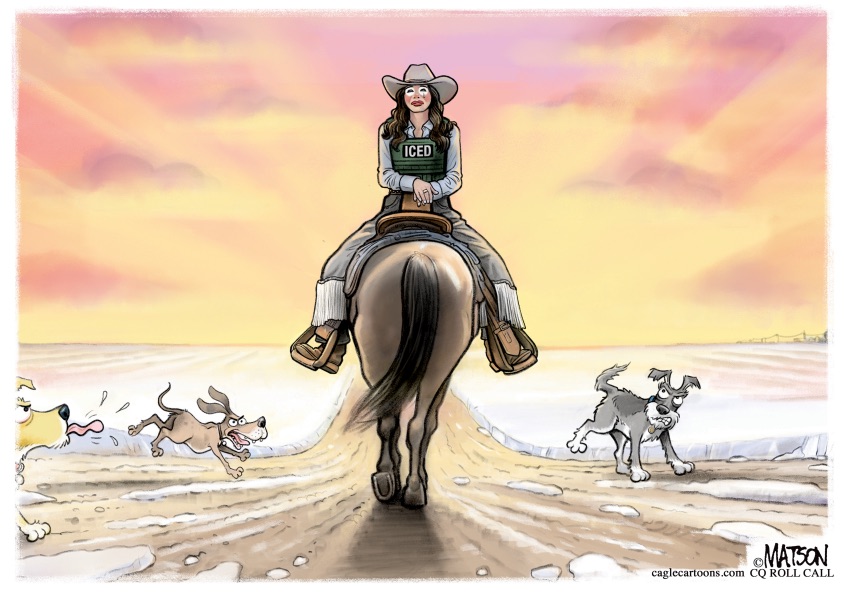
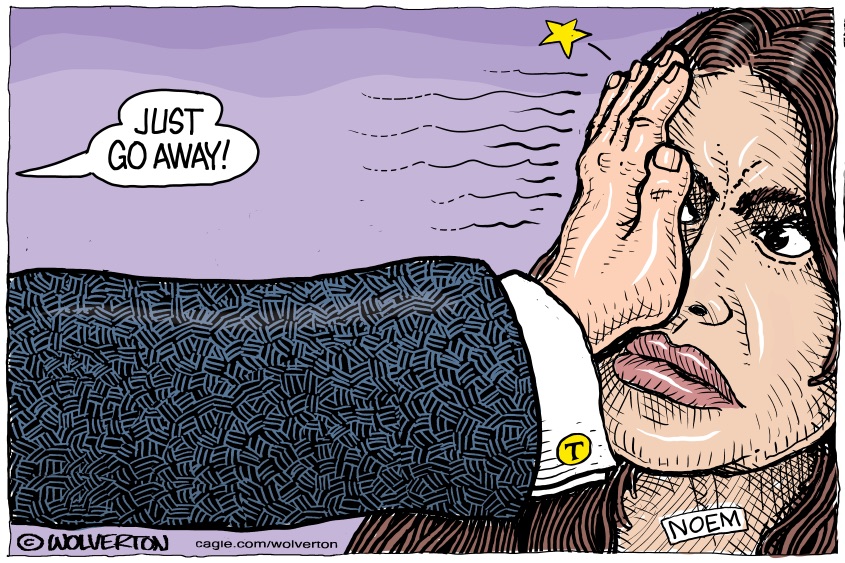
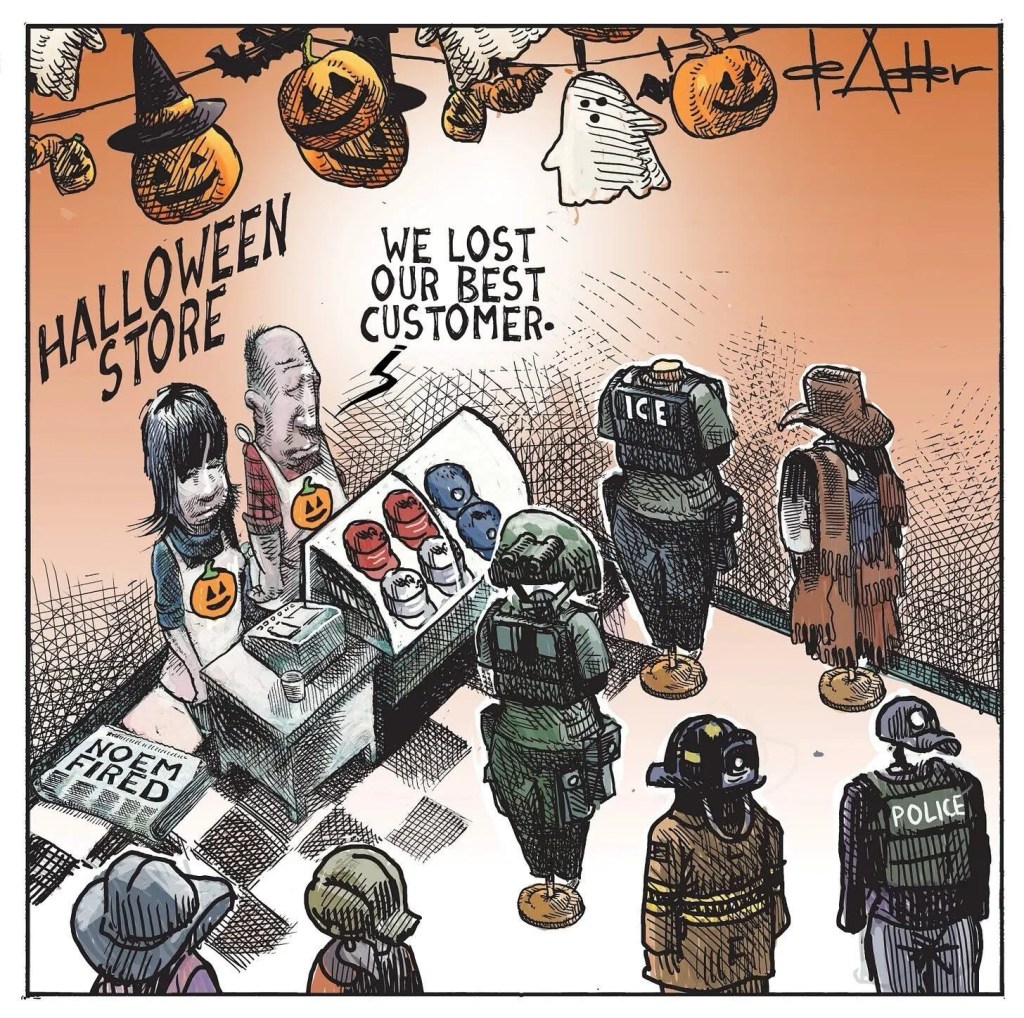
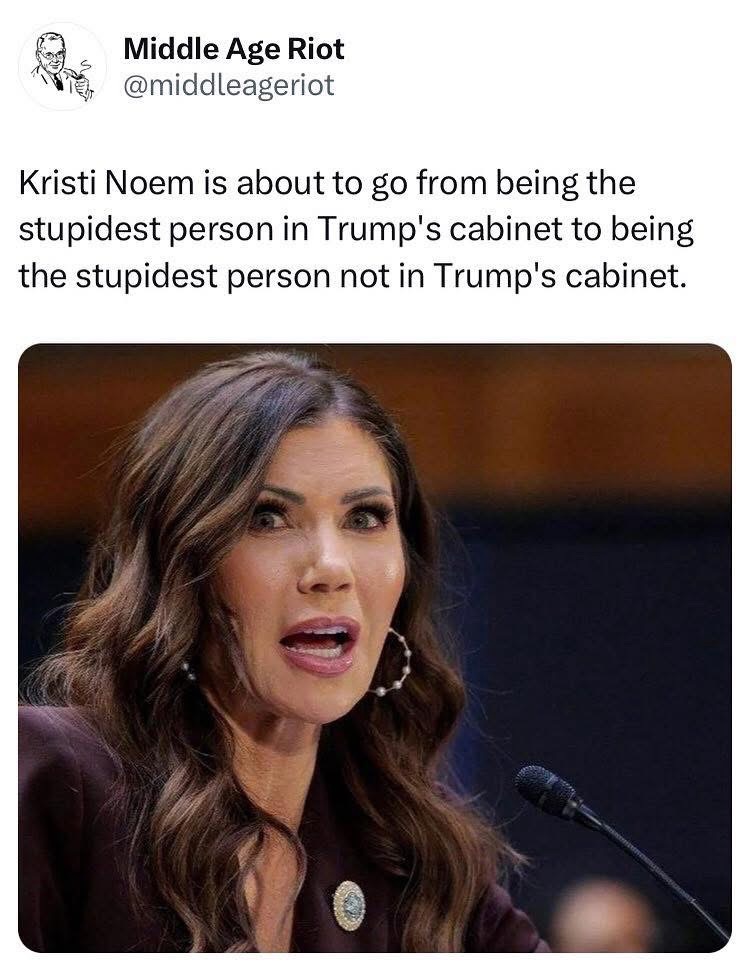
But in the last week, both issues have threatened to turn into liabilities: A stagnant labor market and soaring gas prices amid the Iran conflict are hammering the economy, and the ouster of Kristi Noem from the Department of Homeland Security has cast new light on the administration’s increasingly unpopular immigration agenda. The economic backdrop has grown ominous — Wall Street analysts are warning that surging oil prices could lead to stagflation — and the blitzkrieg of bad news has jeopardized the GOP’s ability to keep voters focused on Trump administration policies that were designed to help with the rising cost of living.
“If you combine an economy that people don’t like with a prolonged war that you know nobody in his base believes they voted for, that’s a toxic problem,” said one Trump ally granted anonymity to speak freely. While Trump isn’t on the ballot this year, his party needs the president’s poll numbers to improve to keep the House and Senate….
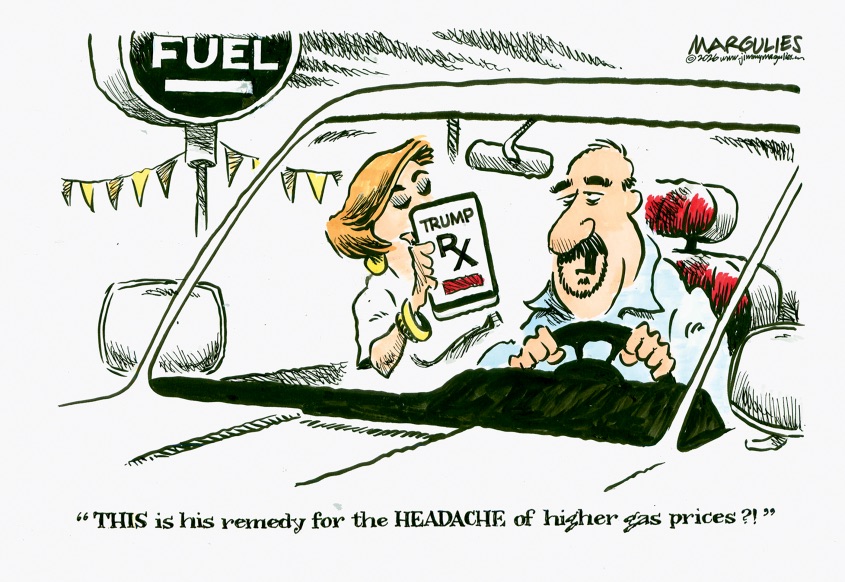
The Iran conflict has put immense upward pressure on oil and gas –- prices at the pump have climbed by more than 11 percent in a week. Now, with employers shedding payroll and Trump pressing reset on who’s leading his immigration agenda, the president is on the backfoot on the two issues he needs to own for his party to win the midterms….
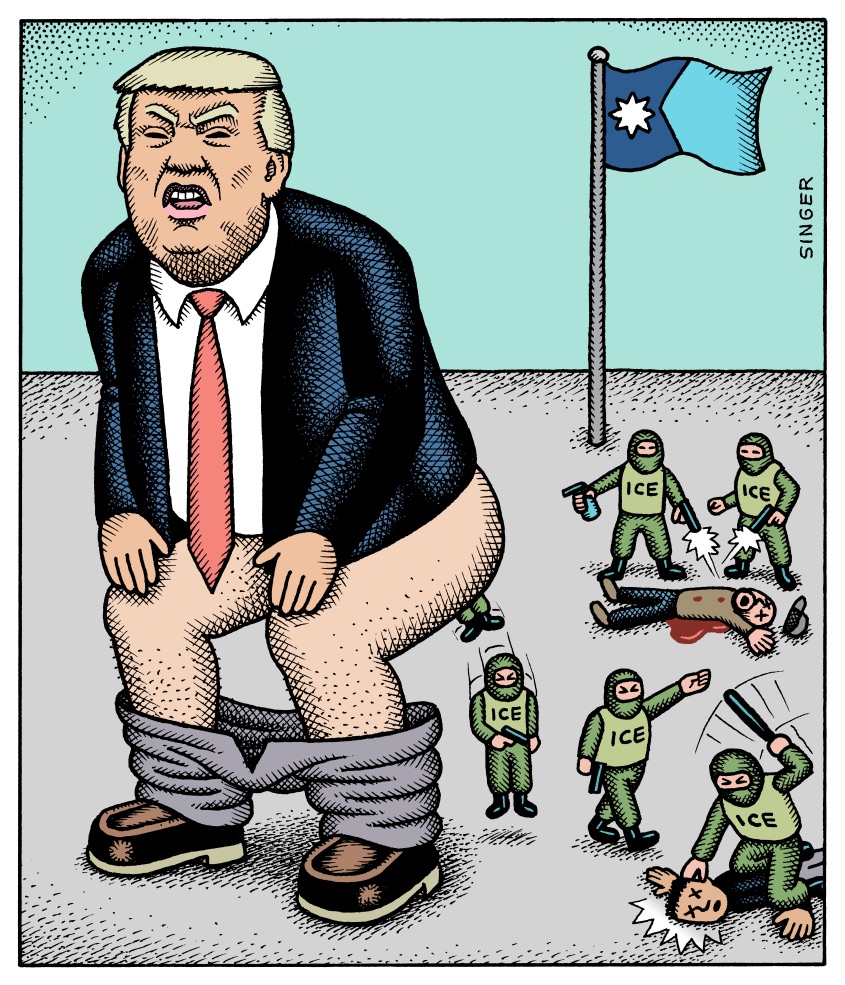
The president, meanwhile, is also struggling with what was once his strongest and most defining issue — immigration. While the number of people crossing the southern border has fallen significantly, in part due to Trump administration efforts, the widely shared images of aggressive enforcement actions across the country have left even some of his supporters wincing. Other conservatives, still, are unhappy that those efforts have not gone far enough, falling short of the “mass deportations” he promised on the campaign trail.
Polling underscores the erosion of support. A recent NBC News poll found that 49 percent of adults strongly disapprove of Trump’s handling of border security and immigration, up from 38 percent last summer. Nearly three-quarters of the poll’s respondents said that Immigration and Customs Enforcement should be reformed or abolished.
Trump’s Thursday dismissal of Noem came after months of increasing frustration inside the White House with how she ran the department.
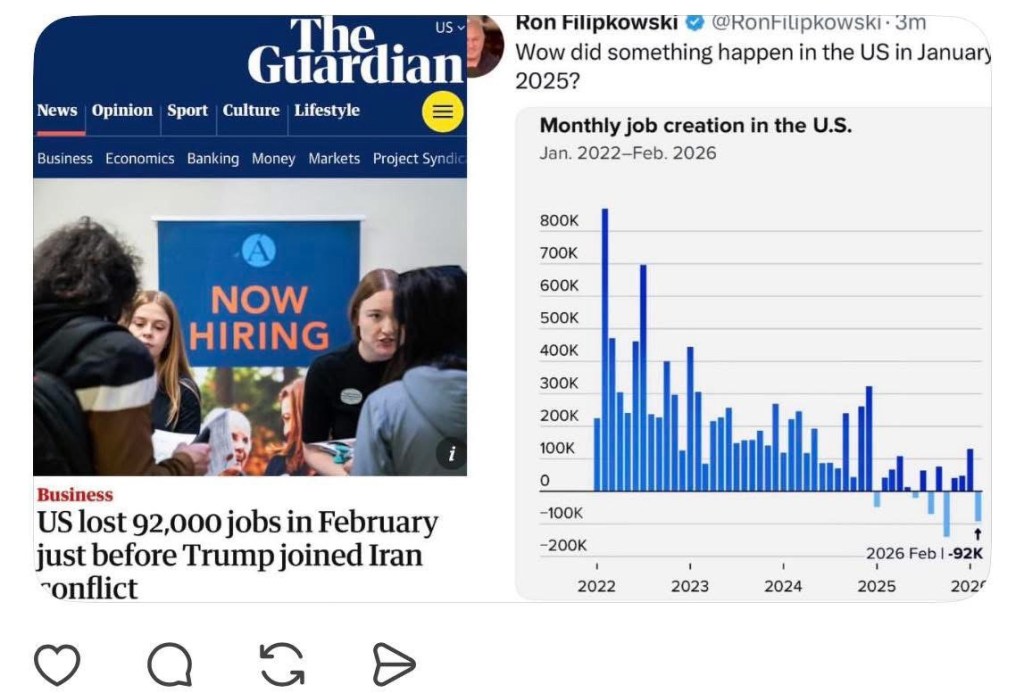
Consider three of the biggest developments in our politics right now: We just learned that the economy lost 92,000 jobs in February, a capstone to a terrible year in terms of job creation. President Trump has fired widely despised Homeland Security Secretary Kristi Noem, a key architect of his mass deportations. And reports are indicating that the killing of scores of Iranian schoolchildren might have been the handiwork of the United States.
What links all these things? In addition to the massive human toll they’re inflicting, they suggest that Trump is about to pull off a unique trifecta. He is squandering the advantage he and Republicans have enjoyed in recent years on three major GOP-friendly issues: The economy, immigration, and national security.
Painting by Tatjana Cechun
This isn’t meant as a political gotcha; it has important ideological and policy implications. When Trump took office last year, it was reasonable to fear that the American public would rally behind mass deportations and tariffs—that is, embrace two of the main tenets of right-wing nationalism. Meanwhile, the launch of the largest military attack in the Mideast in decades might have plausibly produced a rally-around-the-war-president effect.
None of that is happening. And that’s significant in not-so-obvious ways.
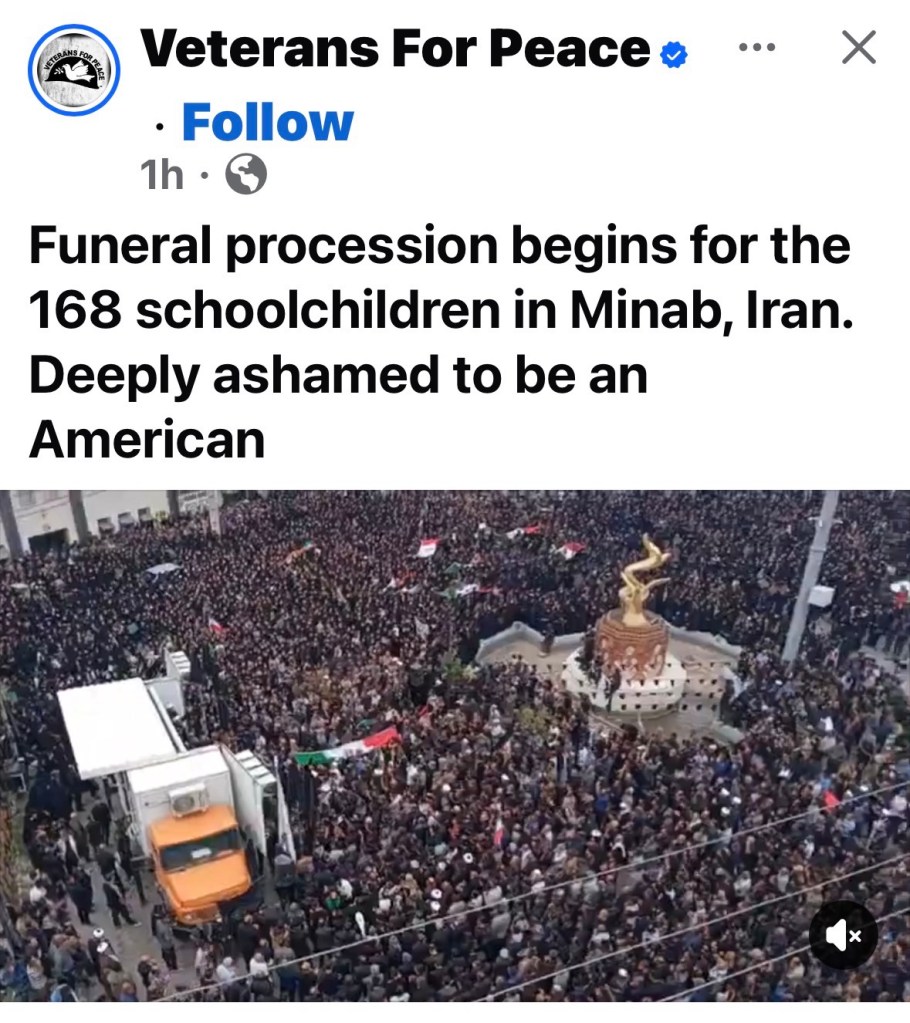
Let’s start with Trump and national security. According to an extraordinary video analysis by The New York Times, the horrific bombing of an elementary school in southern Iran—which killed 175 people, many children—occurred while the United States was conducting missile strikes in the area aimed at a nearby Iranian naval base.
What’s more, Reuters reports that military investigators now believe U.S. forces likely bombed the school. We should suspend final judgement, of course. But it’s looking very much like this atrocity—one of the worst massacres of civilians in memory—is the result of Trump’s war. Whatever we learn about it, there will inevitably be more such horrors.
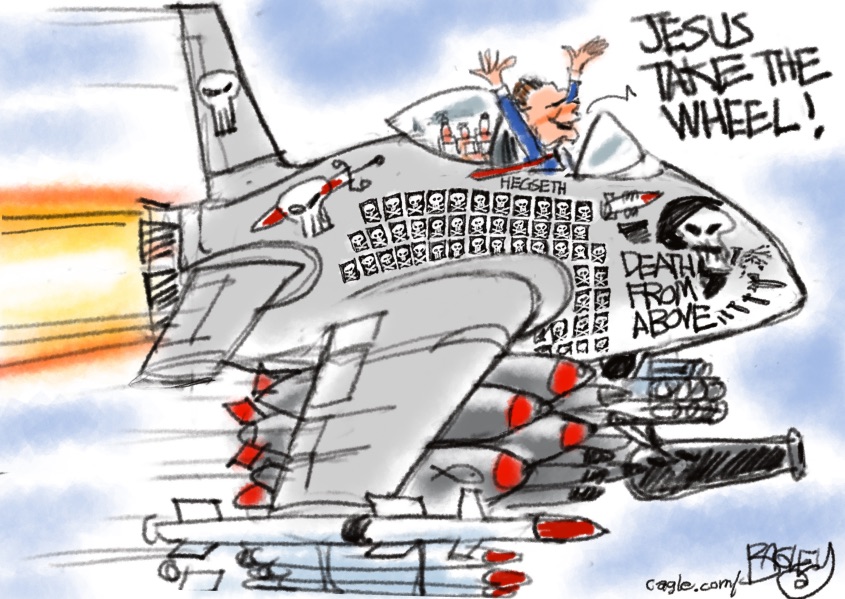
Now look at this in the context of remarks from Defense Secretary Pete Hegseth and White House adviser Stephen Miller. Hegseth recently declared that the United States is dispensing with “stupid rules of engagement” and will no longer fight “politically correct wars.” Miller recently enthused that Trump’s military doesn’t have “its hands tied behind its back,” mocked the very idea of human rights, and insisted that “strength” and “force” and “power” are fundamentally all that matter in the international arena.
But we’re now learning why we have the sort of constraints on military conduct these men ridicule. “Trump, Miller and Hegseth’s FAFO approach to the use of official government force and violence comes with considerable risk,” Democratic Congressman Adam Smith told me, employing the acronym for “Fuck Around and Find Out.” Atrocities like the school bombing, he added, show the perils that come when we “brazenly dismiss any sort of rules of engagement designed to protect the lives and rights of civilians.”
Just a bit more:
The swaggering certainty of Hegseth and Miller, those two giants of American statecraft, is what’s notable here. As Alan Elrod writes at Liberal Currents, at times like this you can almost smell MAGA’s “bloodlust.” Clearly they have no doubt the public will rally behind this supposed display of Trump’s “strength.” Or maybe they don’t think it matters what the public thinks.
But it does matter. Data analyst G. Elliott Morris averaged high quality polling on Trump’s Iran invasion, and found that only 38 percent of respondents approve—the lowest initial support for an American war perhaps ever. Trump’s overall approval has also dropped a hair since the bombing began—it’s hovering at around 39-58—leading Morris to conclude that no rally-around-the-flag effect is materializing.
Also note that a CNN poll just showed that 59 percent don’t trust Trump to make the right decisions regarding the use of force in Iran, suggesting already-entrenched skepticism of Trump’s commander-in-chief abilities exactly when a “war president” boomlet might be expected to kick in. The school bombing will make this worse. In short, Trump has no built-in national security advantage. If anything he’s viewed as bad on it.
Read the rest at TNR.
Two more stories that show the callous nature of Trump’s war:
The U.S. torpedoing of an Iranian frigate off Sri Lanka this week may have violated the Geneva Conventions by failing to help rescue sailors from the stricken warship, an act that could potentially endanger American service members in this and future wars.
The 312-foot Dena and its 130-member crew, many of them musicians in the Iranian navy band, had just finished participating in an Indian government naval exercise and cultural exchange that the U.S. Navy had also participated in and were on the way home on Wednesday. After clearing Sri Lanka, it was struck by a torpedo fired from a U.S. Navy submarine about 20 miles from the island’s southern tip. The weapon appears to have ruptured the hull from beneath, and the warship quickly sank. The submarine did not attempt to rescue Iranian sailors in the water.
Painting of a calico Persian cat, by Lynn Lachapelle Seguin
White House press secretary Karoline Leavitt bragged about how the attack featured the first American use of a torpedo to sink a ship since World War II. Defense Secretary Pete Hegseth, narrating a video clip of the attack, used the same gloating tone. “An American submarine sunk an Iranian warship that thought it was safe in international waters. Instead, it was sunk by a torpedo. Quiet death,” he intoned.
Hegseth had previously mocked the “stupid rules of engagement” that aim to limit civilian deaths and other actions that could constitute war crimes.
“There is an affirmative duty to rescue under the Geneva Conventions,” said Mark Nevitt, a former Navy lawyer in the judge advocate general corps and now a law professor at Emory University.
He and other legal experts warn that disregarding those and other rules invites mistreatment, even death, to Americans who are shipwrecked or captured.
In a preview of an upcoming 60 Minutes interview released on Friday, Secretary of Defense Pete Hegseth mocked “Iranians that think they’re gonna live” while answering a question on reports that Russia provided Iran with intel to target American soldiers in the ongoing conflict.
In the clip, CBS News’ Major Garrett cited three sources “telling us that Russia is providing intelligence to Iran on U.S. positions and movements.”
“The average American might hear that and think that’s a big and dangerous deal,” continued Garrett. “Is it?”
“Well, we’re tracking everything,” responded Hegseth. “We have the best intelligence in the world… President [DonaldTrump] has an incredible knack at knowing how to mitigate those risks, and so the American people can rest assured their commander in chief is well aware of who’s talking to who, and anything that shouldn’t be happening — whether it’s in public or backchanneled — is being confronted and confronted strongly.”
“So the American people can therefore expect conversations with the Russians to stop this?” clarified Garrett.
“Well, I,” Hegseth stumbled. “President Trump, as people have seen, has a unique relationship with a lot of world leaders, where he can get things done that other presidents — certainly [former President] JoeBiden —
“Well, I,” Hegseth stumbled. “President Trump, as people have seen, has a unique relationship with a lot of world leaders, where he can get things done that other presidents — certainly [former President] JoeBiden — never could have. And through direct conversations or indirect, through him one-to-one, or through his cabinet, messages definitely can be delivered.”
We’ll see. I have zero faith that Trump will stand up to Putin on anything.
Russia has provided intelligence to Iran during the U.S.-Israeli war, including satellite imagery showing the locations of warships and military personnel, according to U.S. officials.
The information sharing could complicate relations between the United States and Russia, given that President Trump has often taken a more conciliatory stance toward Moscow than his predecessors.
Persian cat by Carolee Vitaletti
But some of the officials played down the partnership, saying Russia has long provided similar intelligence to Iran. And it is not clear how much Tehran has been able to use the new intelligence, if at all. Iran has advanced missiles, but they lag far behind Russia’s and it is not clear Iran could use the intelligence to target a ship.
Furthermore, given the immense pressure of the combined U.S.-Israeli assault, which began last Saturday, Iran’s ability to launch missiles has been degraded, officials said.
But officials confirmed that Russia has provided updated intelligence on the position of U.S. assets since the beginning of the war, information meant to help Iran target the assets.
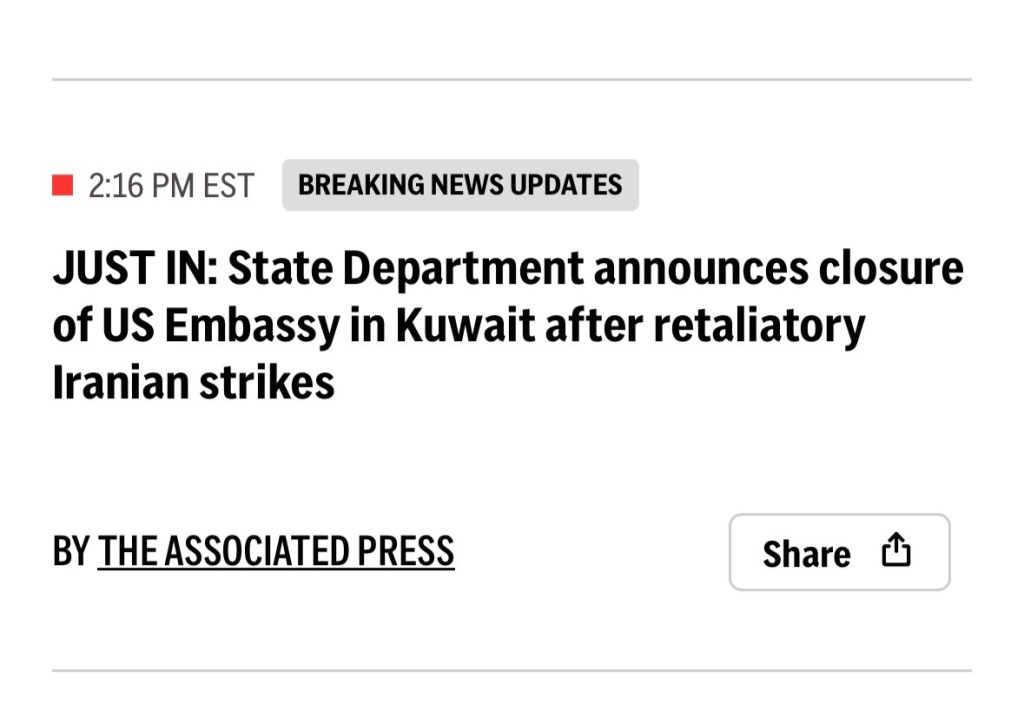
So far Iranian forces have not hit any U.S. warships, but they have struck at U.S. military bases, killing six service members in Kuwait and damaging facilities in Bahrain. Iranian drones have also struck a building housing the C.I.A. station in Riyadh, Saudi Arabia, though no one was injured in that attack, officials said.
I guess we’ll eventually find out how effective Russia’s help is and whether Trump will do anything about it.
Two more stories that address possible outcomes of the Iran “war.”
A classified report by the National Intelligence Council found that even a large-scale assault on Iran launched by the United States would be unlikely to oust the Islamic republic’s entrenched military and clerical establishment, a sobering assessment as the Trump administration raises the specter of an extended military campaign that officials sayhas “only just begun.”
The findings, confirmed to The Washington Post by three people familiar with the report’s contents, raise doubts about President Donald Trump’s declared plan to “clean out” Iran’s leadership structure and install a ruler of his choosing.
The report, completed about a week before the United States and Israel initiated the war on Feb. 28, outlined succession scenarios stemming from either a narrowly tailored campaign against Iran’s leaders or a broader assault against its leadership and government institutions, the people familiar with its findings said. In both cases, the intelligence concluded that Iran’s clerical and military establishment would respond to the killing of Supreme Leader Ayatollah Ali Khamenei by following protocols designed to preserve continuity of power, these people said.
The prospect of Iran’s fragmented opposition taking control of the country was described as “unlikely,” said the people, who spoke on the condition of anonymity to discuss a classified report.
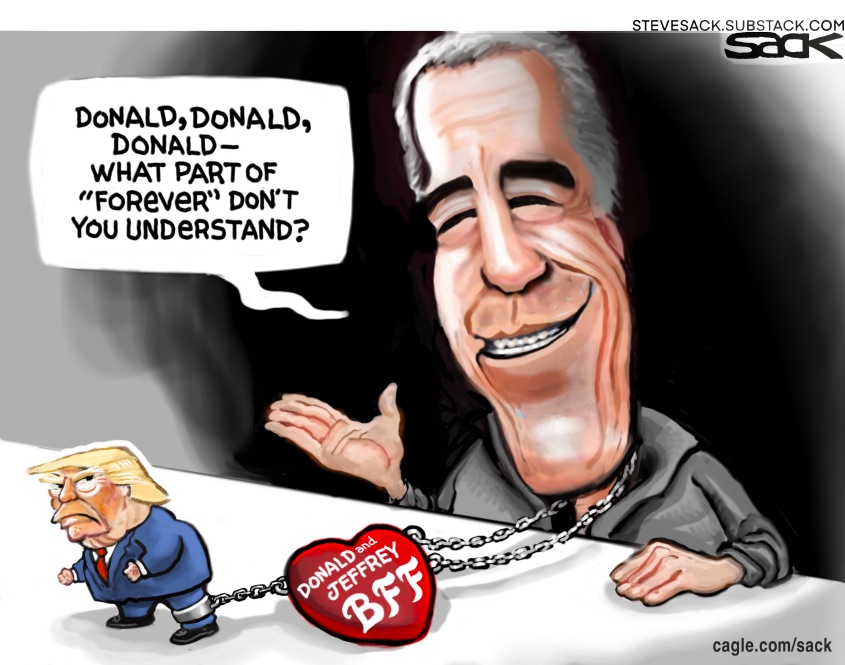
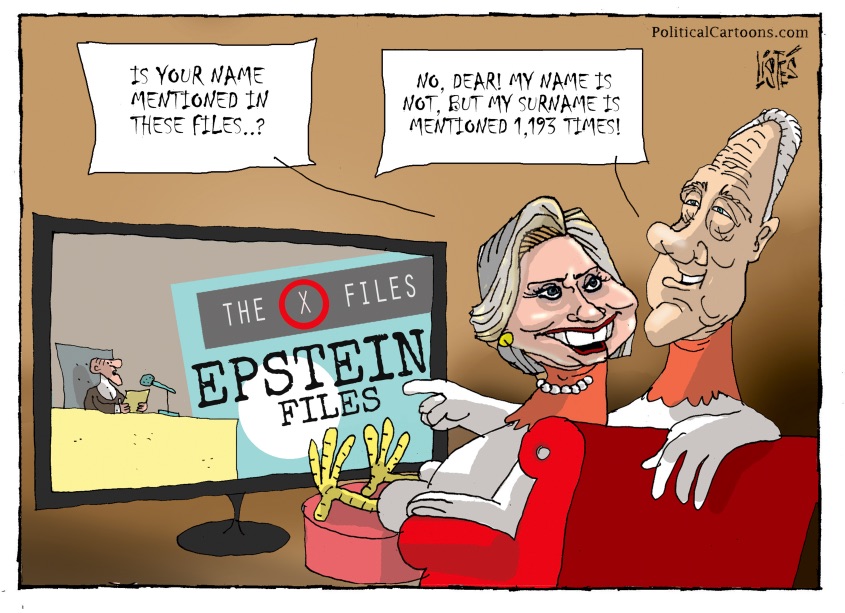
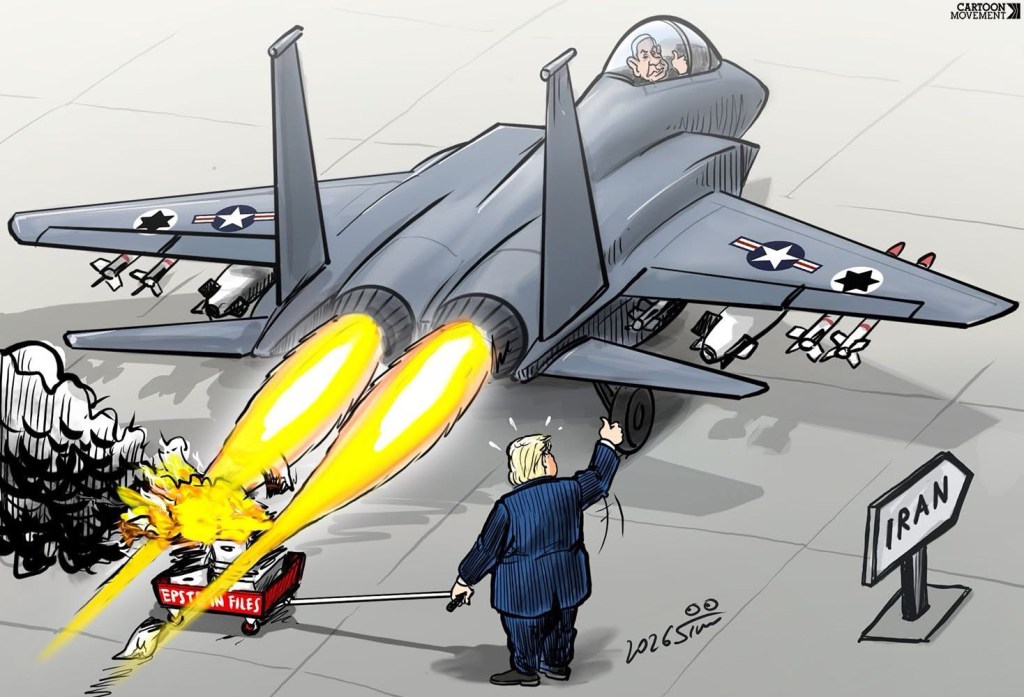
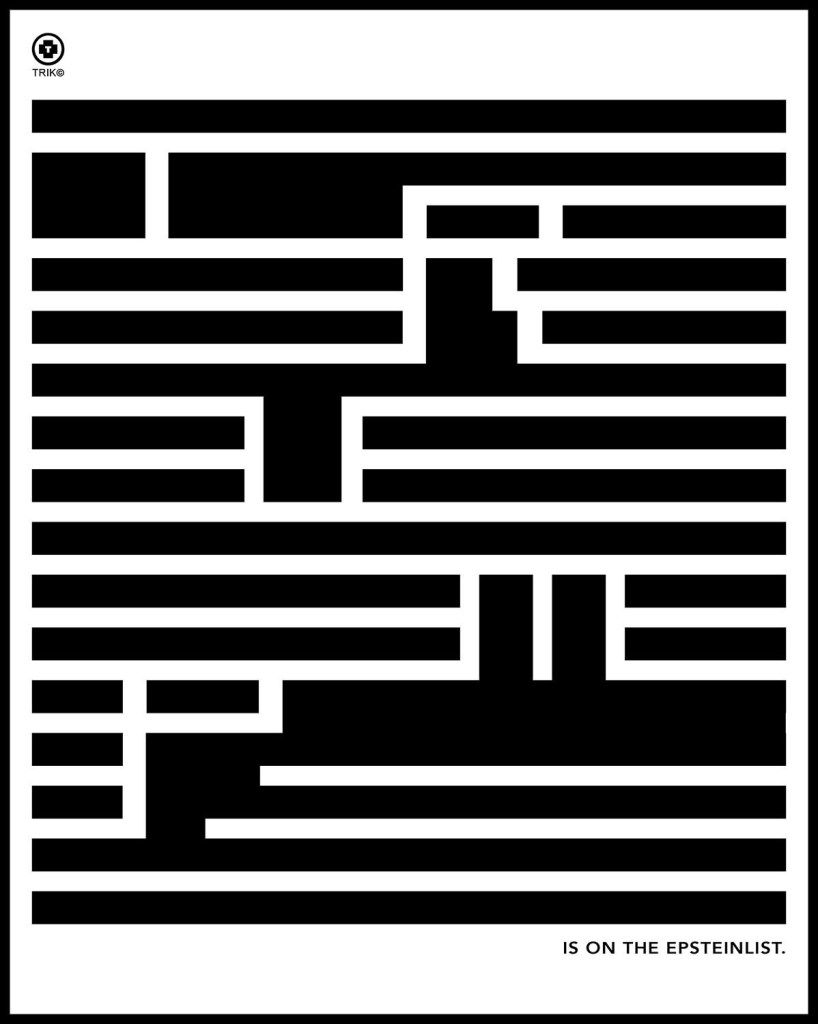
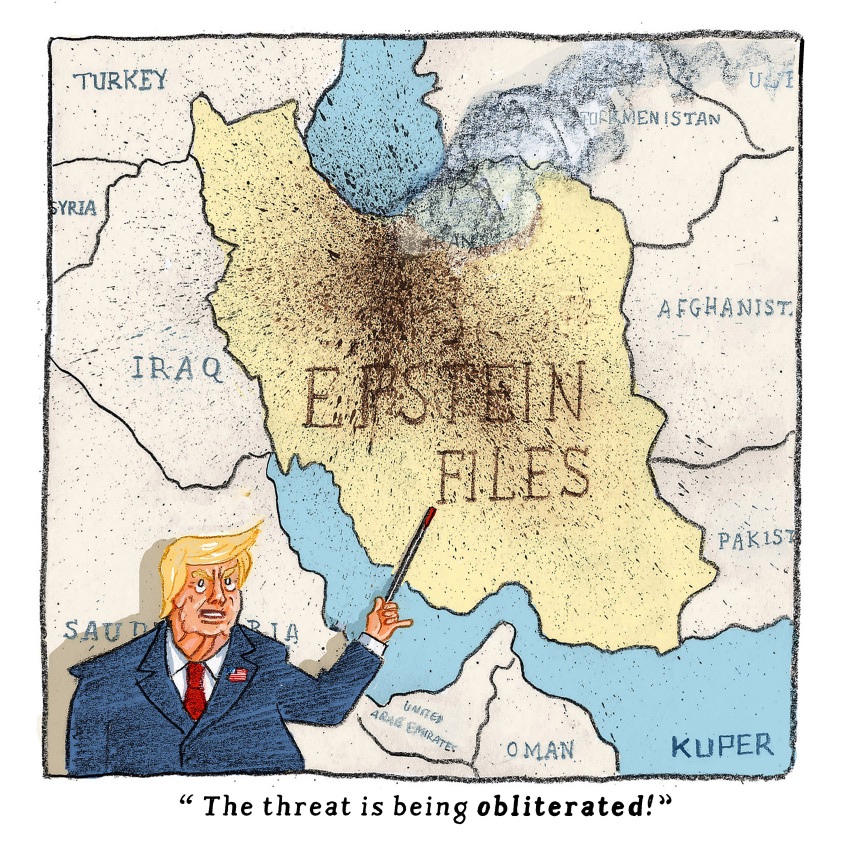
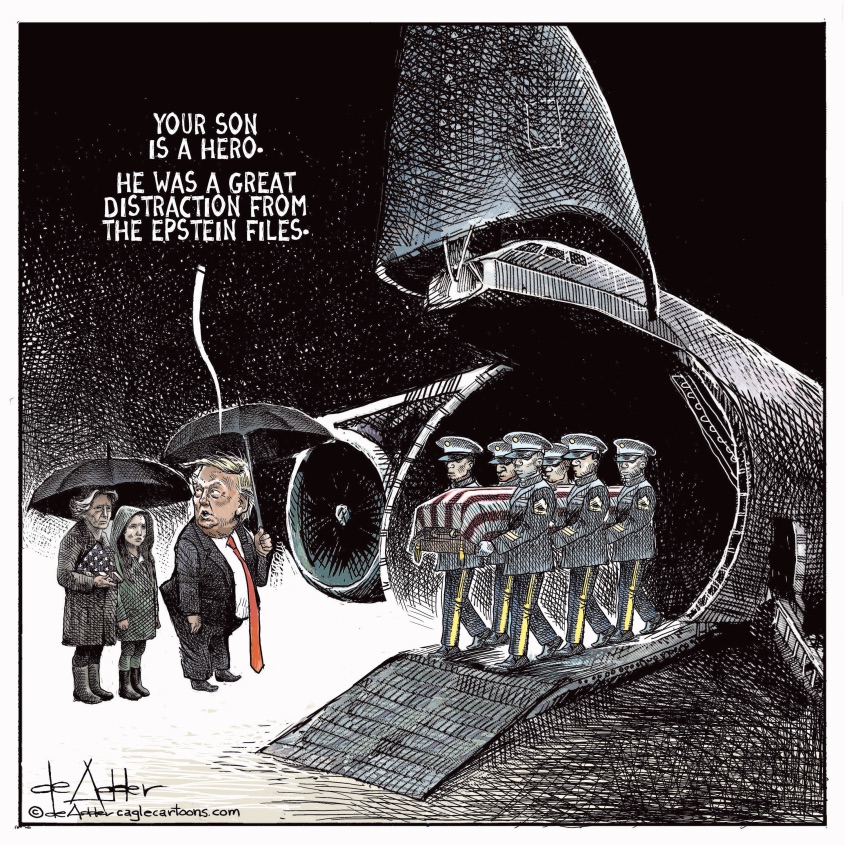
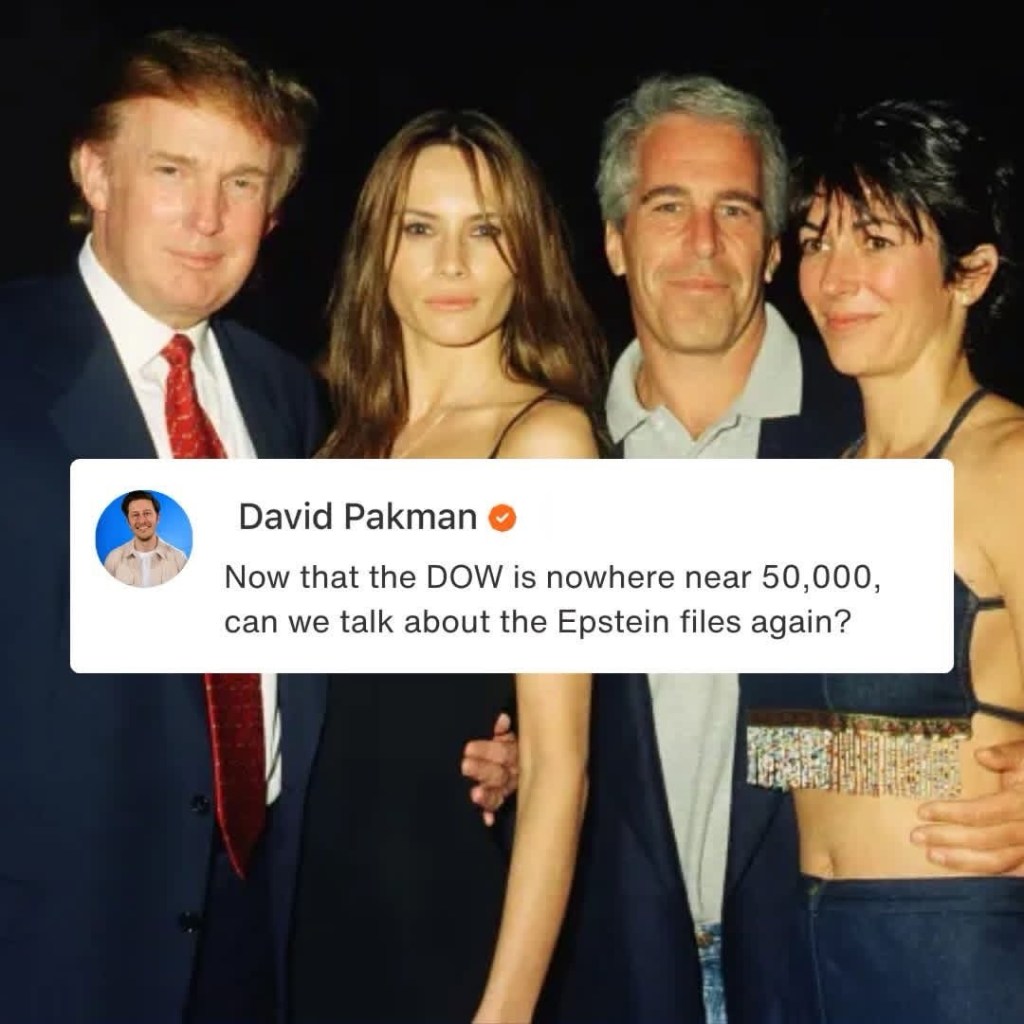
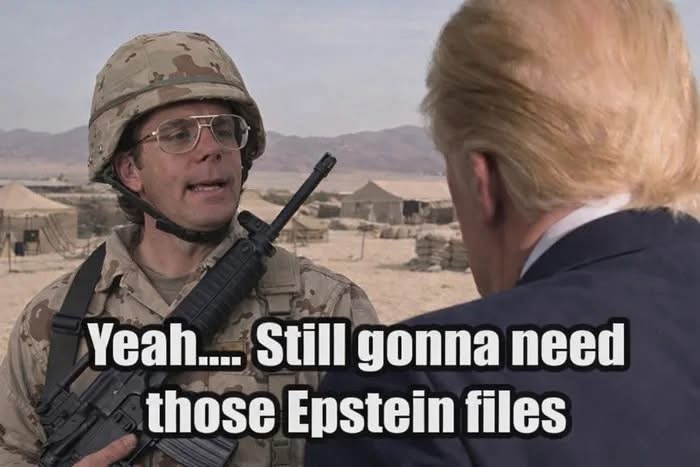
On the other hand, maybe this is all just a distraction from the Epstein files. Read more with the gift link.
President Trump likes to assert that he has accomplished things no other president has. With the opening of his military assault against Iran, he has achieved another distinction: He is the first president in the era of modern polling to take the United States to war without the support of the public.
Traditionally, Americans stand behind their president when he first orders troops into battle, generally sticking with him unless it drags on, casualties mount and victory seems increasingly elusive. With Mr. Trump’s war against Iran, the public has skipped the rally-around-the-president phase this time.
Support for his ferocious bombardment of Iran has ranged from 27 percent in a Reuters/Ipsos poll to 41 percent in a CNN survey, far below the level of public backing that Mr. Trump’s predecessors initially enjoyed when they used force overseas. Given that wars tend to grow less popular over time, the initial negative response portends political challenges for Mr. Trump and his fellow Republicans the longer the fighting continues.
The opposition is revealing about this particular moment in American history. A country already tired of decades of combat in the Middle East has shown little appetite for yet another adventure abroad. And the deep polarization of American politics only makes it harder to build support across lines. Even some Americans sympathetic to the goal of toppling the repressive, terrorist-sponsoring government in Tehran find it difficult to embrace Mr. Trump as commander in chief.
Moreover, unlike his predecessors, Mr. Trump has not done much to bring the public along, forgoing the usual tools of his office to explain to Americans what he is doing, why he is doing it and how it will end. Instead, he and his administration have offered contradictory accounts of what drove this decision and what victory would look like.
“As he has in many other areas, President Trump is pioneering a new approach,” said Peter D. Feaver, a national security aide under President George W. Bush during the wars in Iraq and Afghanistan. “He has enjoyed considerable success in doing other things that previous presidents thought couldn’t or shouldn’t be done, but this is one of the biggest political gambles he has taken.”
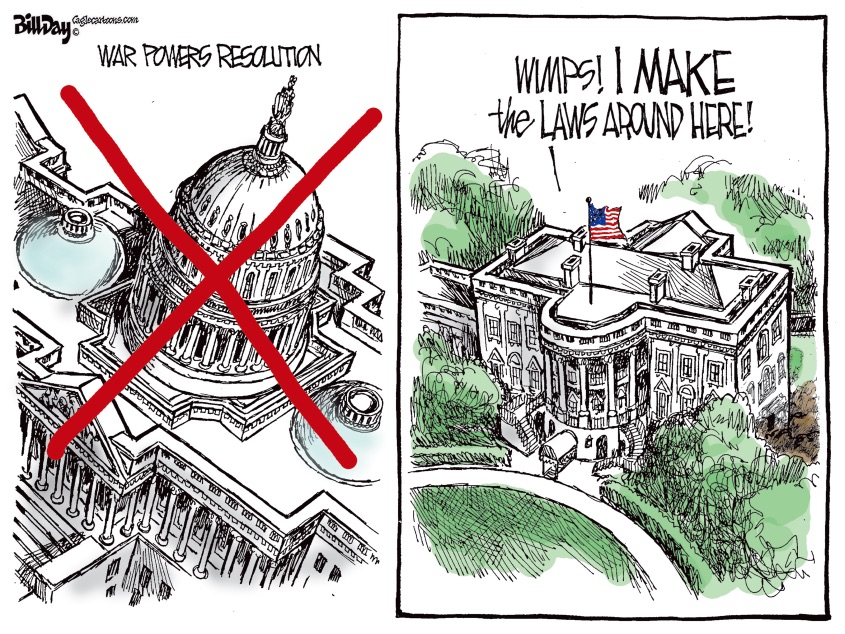
The consequences are enormous for Mr. Trump’s presidency, for the success of the war and for the upcoming midterm elections, with Republicans already facing ominous signs that they could lose one if not both houses of Congress. The war power votes in the Senate and the House this week, in which Republicans backed Mr. Trump, may be featured in Democratic campaign ads this fall.
Use the gift link to read the rest.
Those are my recommended reads for today. What do you think? What else is on your mind?
Did you like this post? Please share it with your friends:
“Meanwhile, in the newly acquired Homeland Security luxury jet’s bedroom…” John Buss, @repeat1968
Good Day, Sky Dancers!
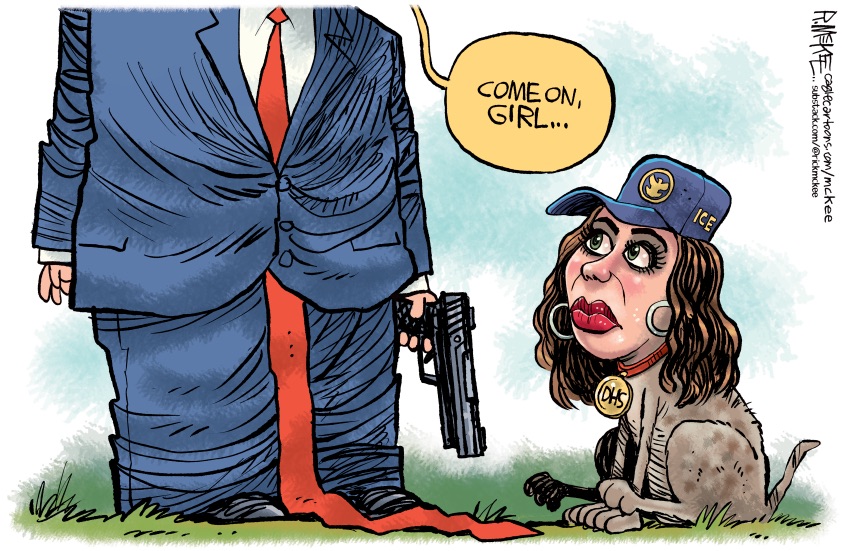
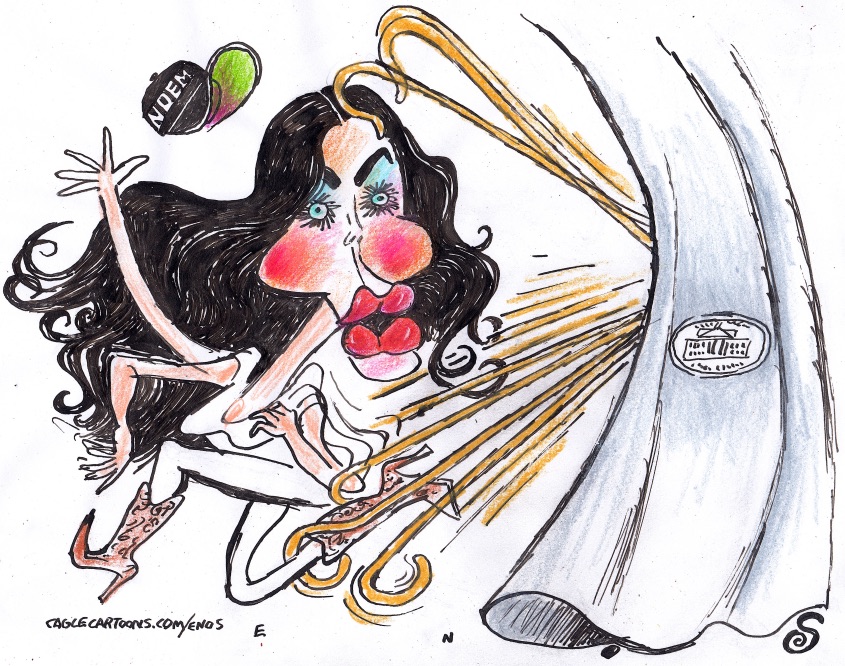
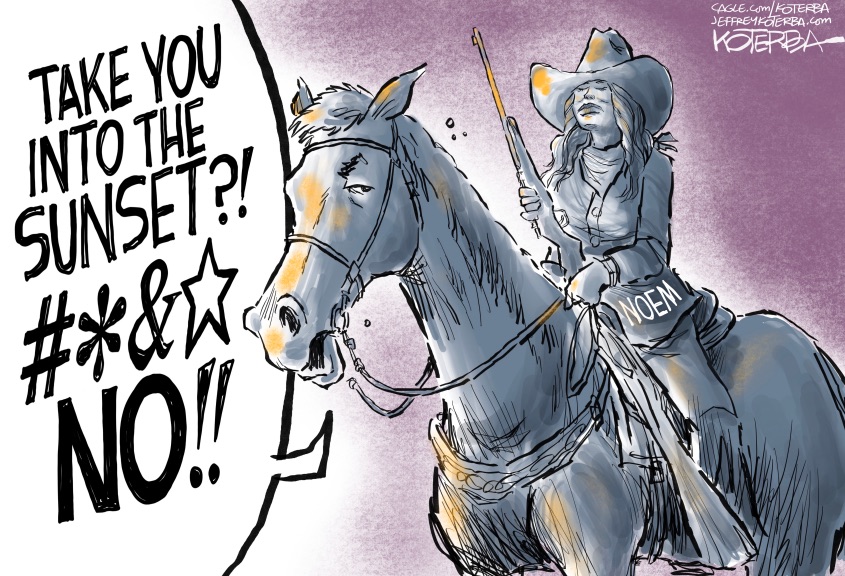
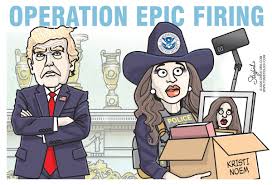
There’s so much news to cover today that I don’t even know where to start. We’ve got information that we’re the ones who struck the elementary school in Iran, killing all those little girls. We’ve also found out that the Russians are helping Iran target us. This sure feels like the start of World War 3. Additionally, the job picture is bleak as stats show that jobs are being eliminated. Finally, don’t start celebrating Kristi Noem’s demise quite yet. She’s headed to another job, and her replacement is a bimbo with some odd kink. Orange Caligula and his Incompetence Legion continue to wreck everything. Steven Miller must be thrilled.
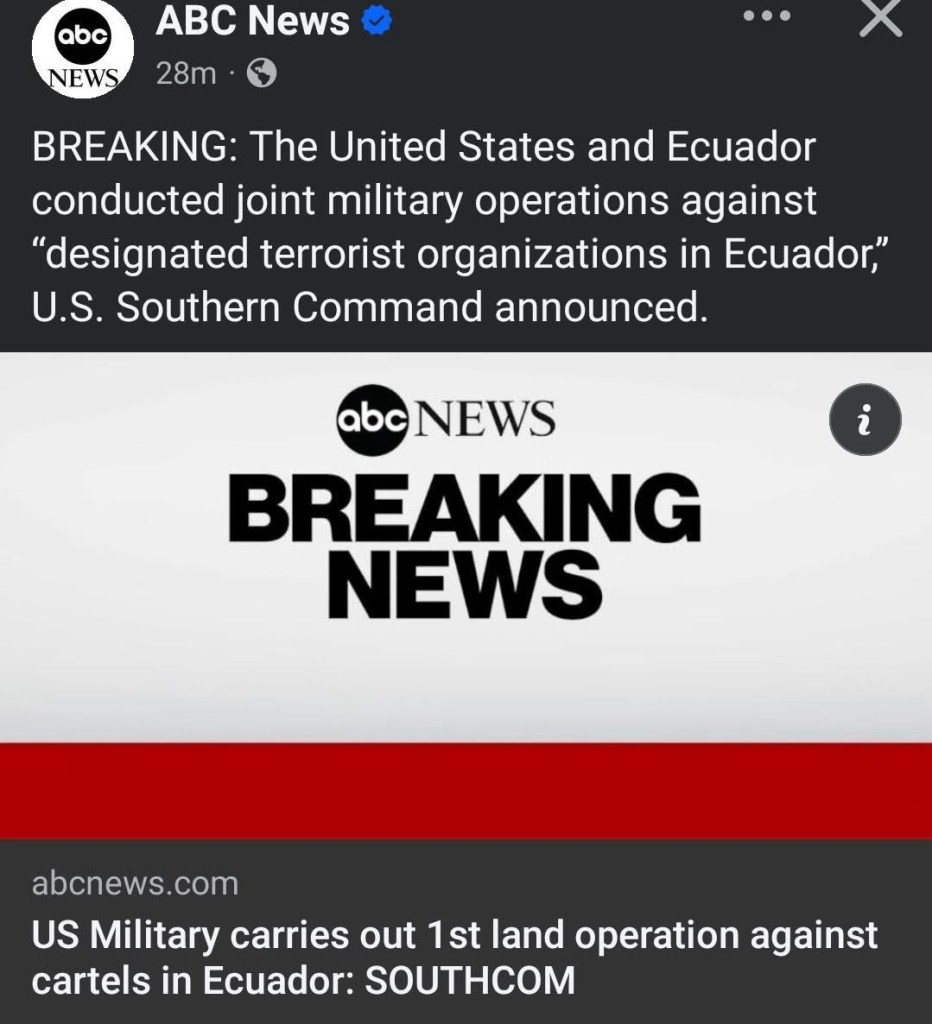
So, how goes the war? My bad, wars. We’ve got yet another frontline in another country as of 2 days ago. We’re now staging attacks in Ecuador. This is from Time Magazine. “Why Is the U.S. Launching Military Operations in Ecuador?” This analysis and reporting is by Chantelle Lee.
The United States and Ecuador announced this week that they’ve begun a joint military operation to combat narcoterrorism in the South American country.
The U.S. Southern Command (Southcom), which oversees the nation’s military activity in Latin America and the Caribbean, said in a press release on Tuesday that Ecuadorian and American military forces had started operations that day “against Designated Terrorist Organizations in Ecuador.”
“The operations are a powerful example of the commitment of partners in Latin America and the Caribbean to combat the scourge of narco-terrorism,” Southcom said in the press release. “Together, we are taking decisive action to confront narco-terrorists who have long inflicted terror, violence, and corruption on citizens throughout the hemisphere.”
Southcom also shared on X a short video in which a helicopter can be seen taking flight and picking up service members. The command didn’t explain what the video was depicting, though, or how it was tied to the operation in Ecuador.
Officials have so far shared little information about the military operation. But here’s what we do know.
Ecuadorian President Daniel Noboa said in a post on X this week that the country will be conducting “joint operations with our regional allies, including the United States” in March. He didn’t provide any details about the scale of the operation or the intended targets.
“The security of Ecuadorians is our priority, and we will fight to achieve peace in every corner of the country,” he said in his post. “To achieve that peace, we must act forcefully against criminals, wherever they may be. The pursuit of justice and national dignity will never be persecution, but rather a promise that we will keep to Ecuadorians.”
The Trump Administration hasn’t publicly shared how the U.S. military is involved in the operation in Ecuador. But one American official, speaking to the New York Timeson the condition of anonymity, said that, in the months leading up to this week’s announcement, U.S. Special Forces have been assisting Ecuadorian soldiers in preparing for raids. American service members, the official told the Times, have been deployed to support the Ecuadorian military with the operation, which is reportedly targeting drug facilities led by violent gangs. U.S. troops, though, will not be directly involved in the operation, the official told the Times.
Dalia Dassa Kaye, reporting for Foreign Affairs, has this analysis. “The Mirage of a New Middle East. War With Iran Won’t Reshape the Region the Way America Wants.”
Eager to show that he can do what no American leader has done before, President Donald Trump has chosen conflict over diplomacy and gone to war with Iran. The Islamic Republic, knowing that this fight is existential, retaliated quickly with deadly missile and drone attacks on Israel, U.S. bases in the Middle East, and targets in Gulf states and beyond. This is now a regional war with global impact, disrupting oil and financial markets, supply chains, maritime commerce, and air travel. Threats to Americans and the death toll in Iran mount by the hour. These growing risks were predictable long before the war became reality, which might help explain why no previous president took the United States down this perilous path.
How this war will end remains uncertain. But when it does, the United States will have to face what comes next. To the extent that the Trump administration has considered plans for “the day after,” it seems to have made a series of overly optimistic assumptions about how the war might reshape Iran and the Middle East. For one, the Trump administration has insisted—including in Trump’s social media post on February 28 announcing the war—that a relentless degradation of Iranian leadership and military capabilities would weaken the regime enough that the Iranian people could rise up and “take over the government.” Even if that doesn’t happen, the administration’s logic goes, Iran would be defanged and so preoccupied with internal problems that it could no longer pose a threat to the region or American interests. Taking the current Iranian regime out of the equation, Washington assumes, would remove one of the largest sources of regional instability and usher in a new Middle East more to the United States’ liking.
But the outcome of this war will likely fall far short of these rosy expectations. After the bombing ends, Iran and the region could look worse, or at least not better, than they did before the war. The fighting could create a power vacuum in Tehran, sour U.S. allies on their partnerships with Washington, and produce ripple effects on conflicts elsewhere in the world, all without removing sources of regional strife that have nothing to do with the regime in Iran. The risks increase the longer the war goes on, so Congress and U.S. allies must press for a cease-fire now if there is to be any hope of mitigating these day-after dangers.
More analysis of the likely deadly results over time, which include the rise of terrorism once more, can be found at the link. Eric Cortellessa has more analysis about “Trump’s War” at Time Magazine.
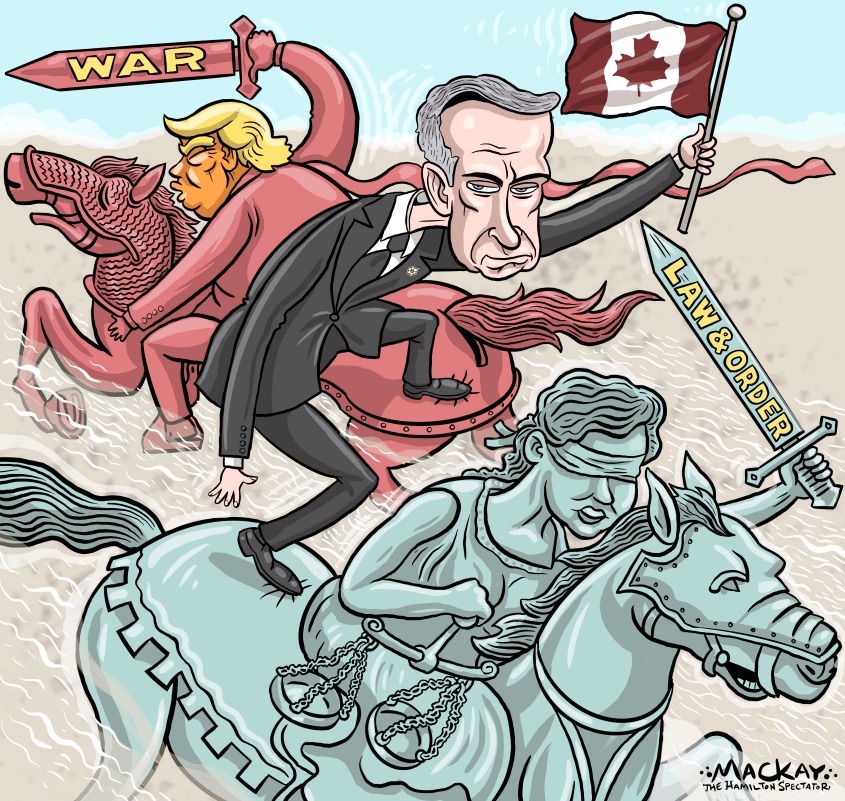
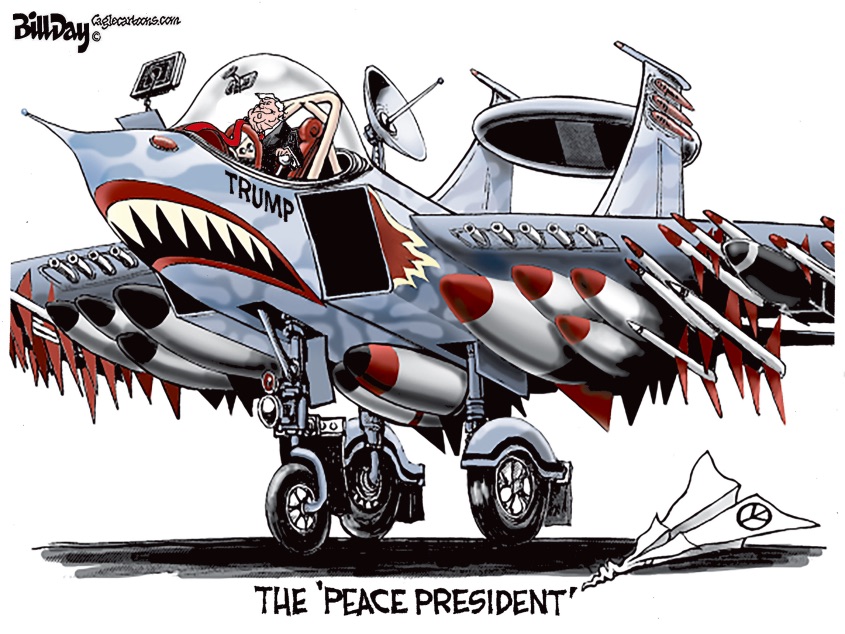
In short, if Trump campaigned as a President of peace, he has governed as the opposite. Now he has drawn the U.S. into the kind of conflict he long pledged to avoid. Having ousted the tyrannical ruler of Iran’s theocracy, he has committed the U.S. anew to regime change in the Middle East, telling TIME he intends to play a role in shaping the next government of a regional powerhouse home to some 90 million people. “One of the things I’m going to be asking for is the ability to work with them on choosing a new leader,” he says. “I’m not going through this to end up with another Khamenei. I want to be involved in the selection. They can select, but we have to make sure it’s somebody that’s reasonable to the United States.”
It’s impossible to know how all this will unfold. There was little sympathy internationally for the Ayatollah, who reigned over a brutal Islamist regime; throughout Tehran and across the Iranian diaspora, crowds have rejoiced in the streets upon hearing the news of his demise. To some, Trump’s attacks are historic in the best sense, eliminating an avowed adversary who sought to destroy the U.S. and whom Washington has long viewed as the head of the world’s foremost state sponsor of terrorism.
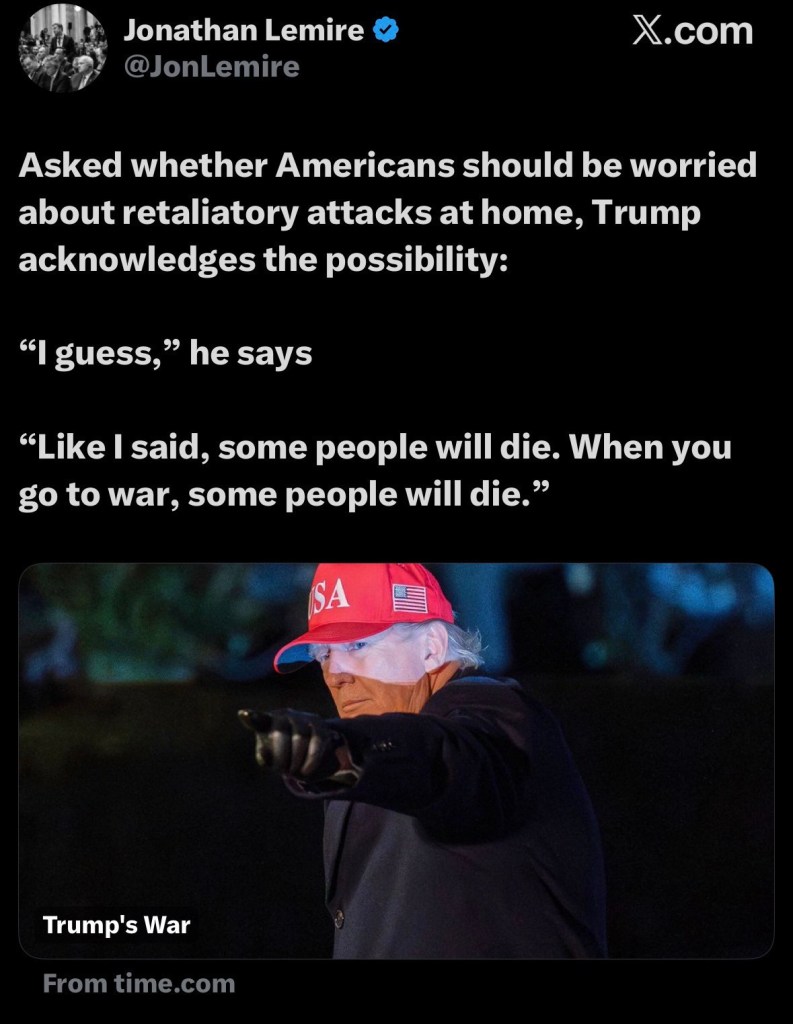
But the gambit carries extraordinary risks—for Trump’s presidency, for Iran’s fragile political future, for regional stability, and for the safety of Americans at home and abroad. The gravest decision a President can make is whether to send American troops into harm’s way. Trump, who once defined himself in opposition to foreign entanglements, has pivoted with astonishing alacrity toward open-ended confrontation across multiple theaters.
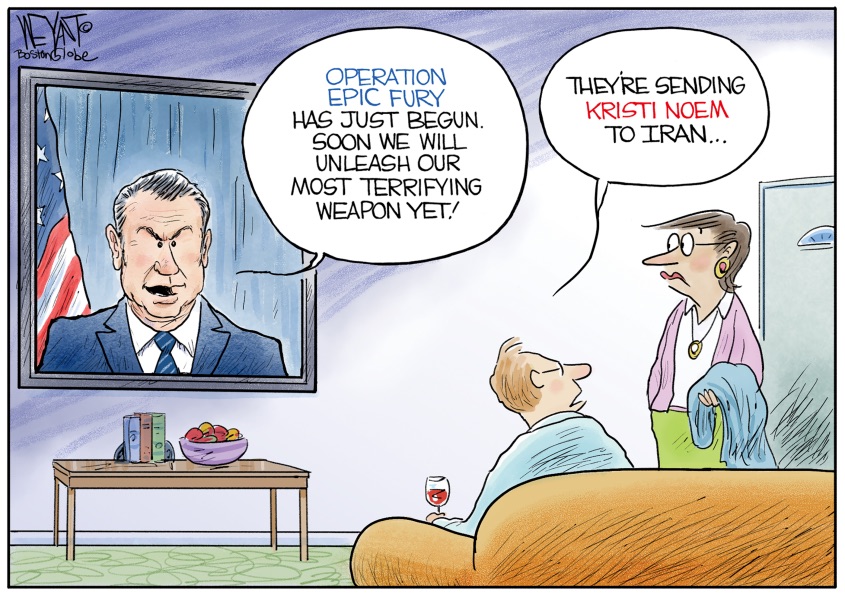
In his interview with TIME, Trump says his goals are to eliminate Iran’s nuclear threat once and for all, to dismantle its ballistic-missile program, and to install a Western-friendly government. “We have to be able to deal with sane and rational people,” he says. Yet Trump launched a war before making a case to the country or to Congress, and his Administration has offered unclear—and at times contradictory—explanations of the mission’s objectives. The most unnerving possibility is that Operation Epic Fury is not the culmination of his shift toward a war presidency, but rather the beginning of a new chapter.
The path to war with Iran was paved by a pair of meetings, one year apart, with Benjamin Netanyahu.
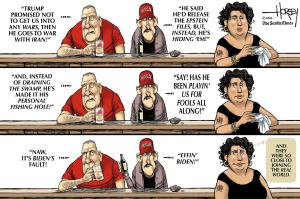
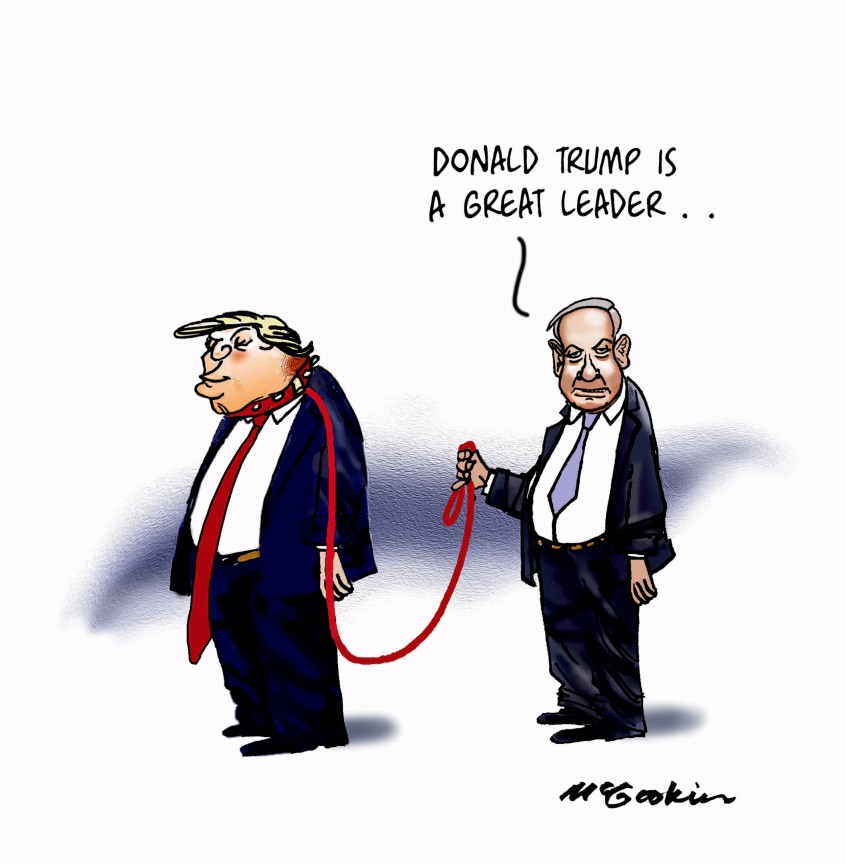
As usual, Trump is easily manipulated by his counterparts with selfish and bad intentions.
On Feb. 4, 2025, the Israeli Prime Minister visited the White House for the first time since Trump’s return to power. Seated at a long table in the Cabinet Room, Netanyahu began with a bracing reminder, according to U.S. and Israeli officials present at the meeting: Iran, he noted, had plotted to assassinate Trump during the 2024 campaign. Law-enforcement officials disclosed that they had disrupted what they described as two Iranian plots to kill Trump. (Tehran denied the allegations.) Trump has long fused geopolitics with grievance, and Iran’s clerical leadership occupied a singular place on his list of adversaries. When TIME asked him in a November 2024 interview about the prospect of war with Iran, Trump did not dismiss it. “Anything can happen,” he said.
Sensing an opening, Netanyahu walked through a slide deck. It showed stockpiles of highly enriched uranium climbing, centrifuges spinning faster, inspectors reporting gaps. Ever since Trump withdrew from President Barack Obama’s nuclear accord in 2018, Tehran had incrementally expanded its enrichment program, moving closer to breakout capacity. By the time Trump was inaugurated a second time, international inspectors assessed that Iran possessed enough weapons-grade uranium to place it mere weeks from assembling a bomb. “Look, Donald,” Netanyahu said, leaning in, “this has to be tackled, because they’re racing forward.” He paused, locking eyes with the President. “You can’t have a nuclear Iran on your watch.”
I wanted to mention the economy signalling a meltdown. This is from Jeff Cox writing for CNBC. “Economy: U.S. payrolls unexpectedly fell by 92,000 in February; unemployment rate rises to 4.4%.”
Nonfarm payrolls in February fell by 92,000, compared with the estimate for 50,000 and below the downwardly revised January total of 126,000. It was the third time in five months that the economy lost jobs.
Health care, the primary growth driver in payrolls, saw a loss of 28,000, due largely to a strike at Kaiser Permanente that sidelined more than 30,000 workers in Hawaii and California.
Wages rose more than expected. Average hourly earnings increased 0.4% for the month and 3.8% from a year ago, both 0.1 percentage point above forecast.
I want to mention a few things about this. Generally, this would indicate that the Fed’s Board of Governors may loosen interest rates. However, we’re still on the high end of the inflation rate target, considering that wages rose by more than expected, the Fed may be reluctant to move on that. Wars generally stimulate an economy but that remains to be seen on the various military advantages Trump has undertaken. There is still concern about the supply inventory needed to support the war. Moving to a wartime economy can create shortages in the consumer sector. International markets are already pricing in oil shortages.
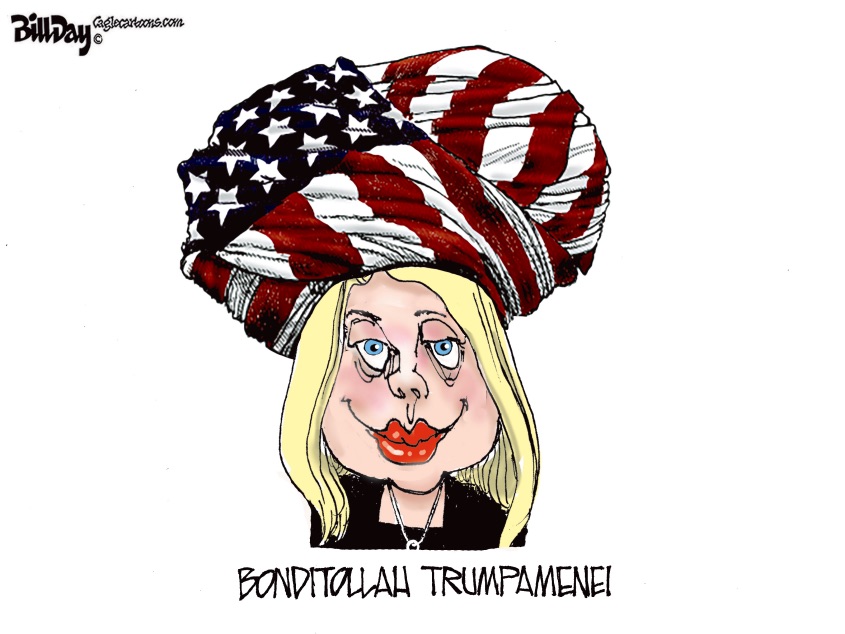
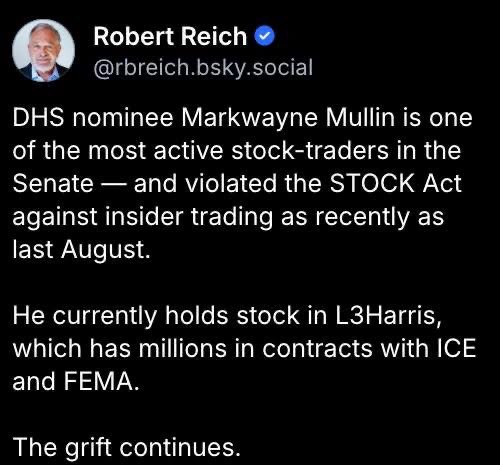
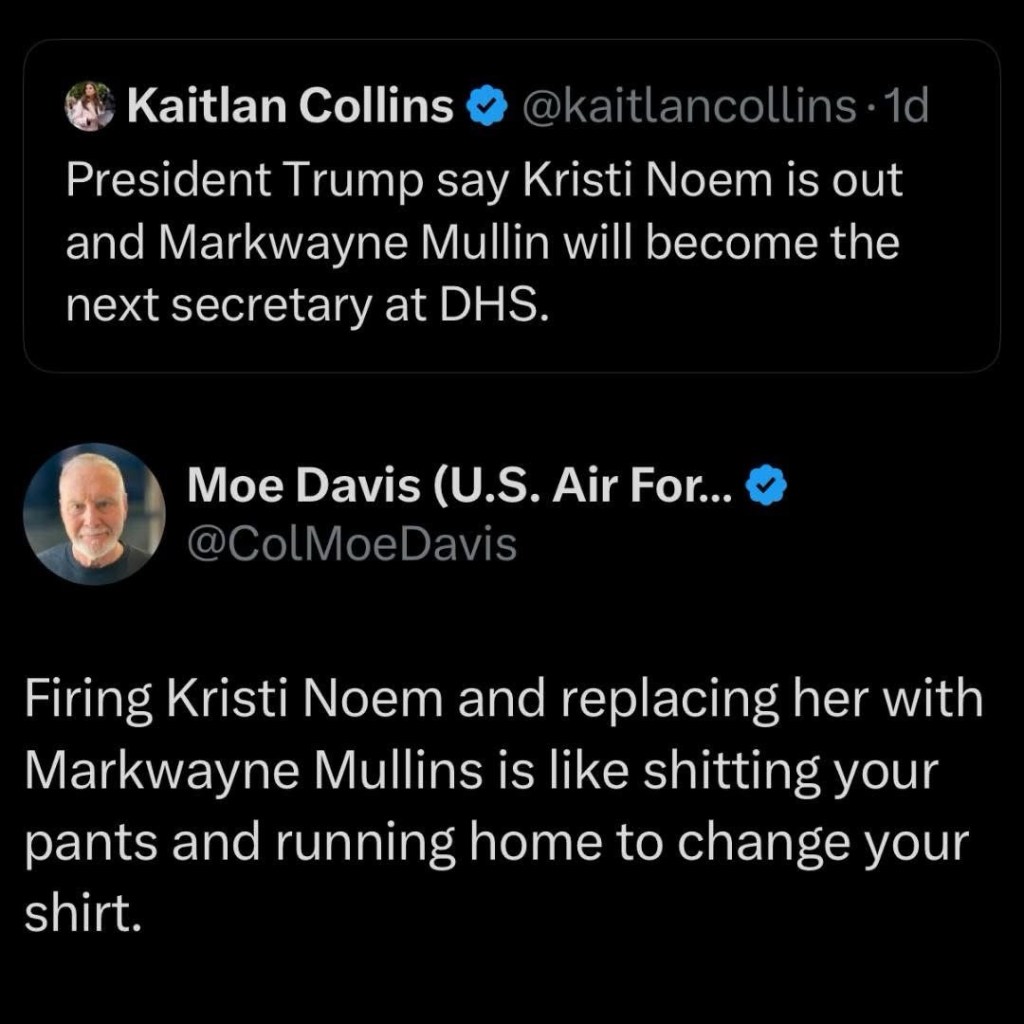
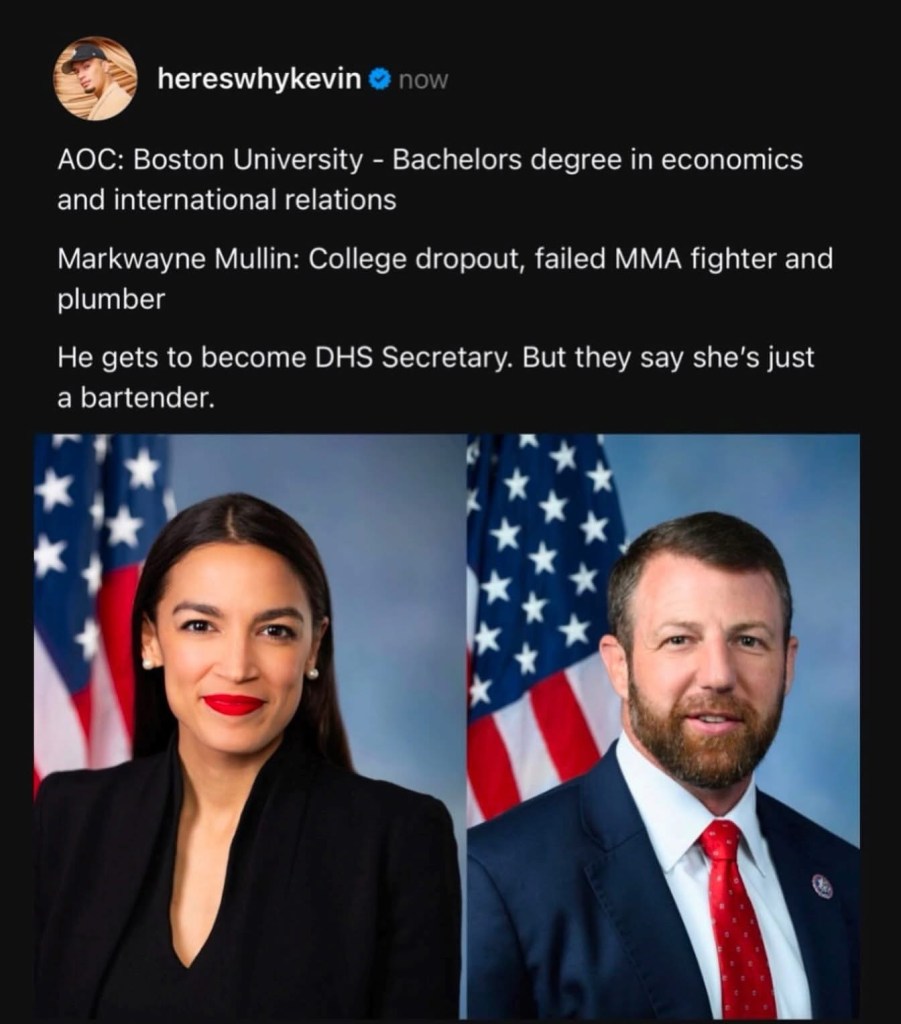
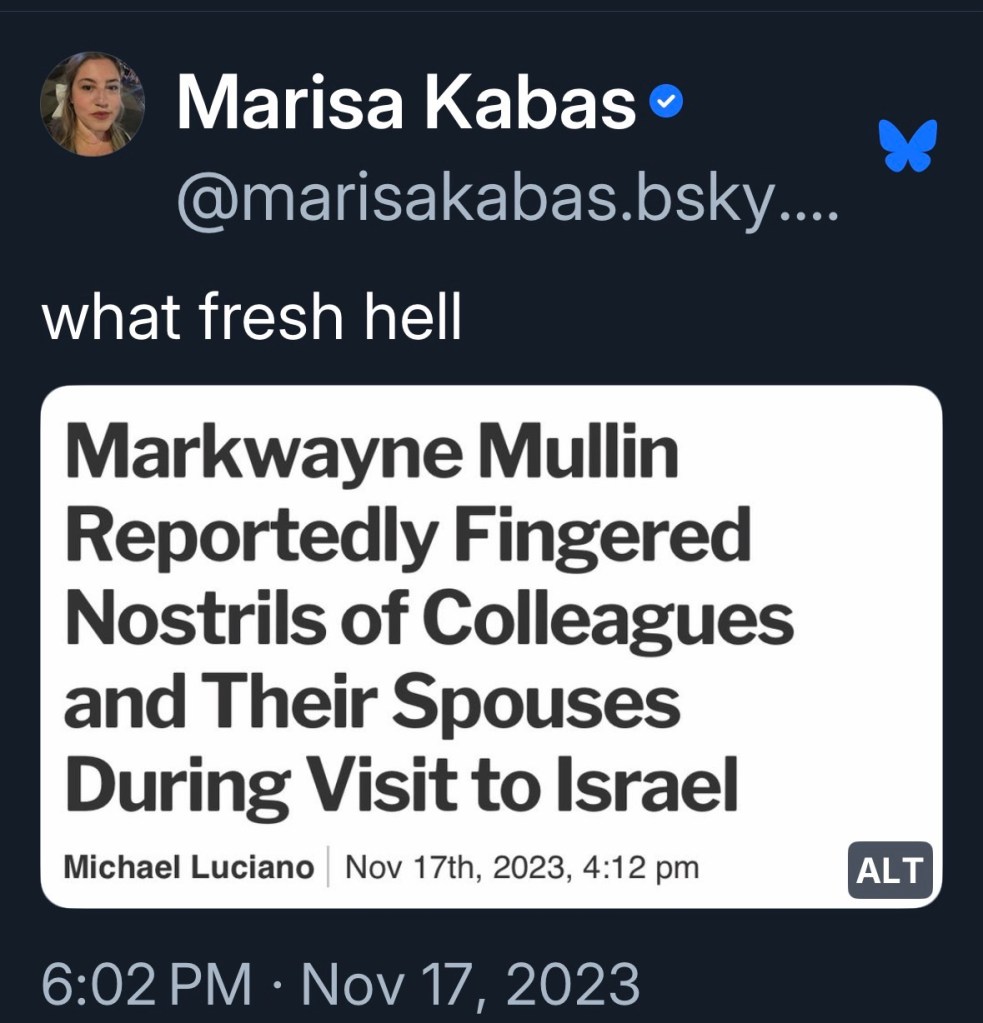
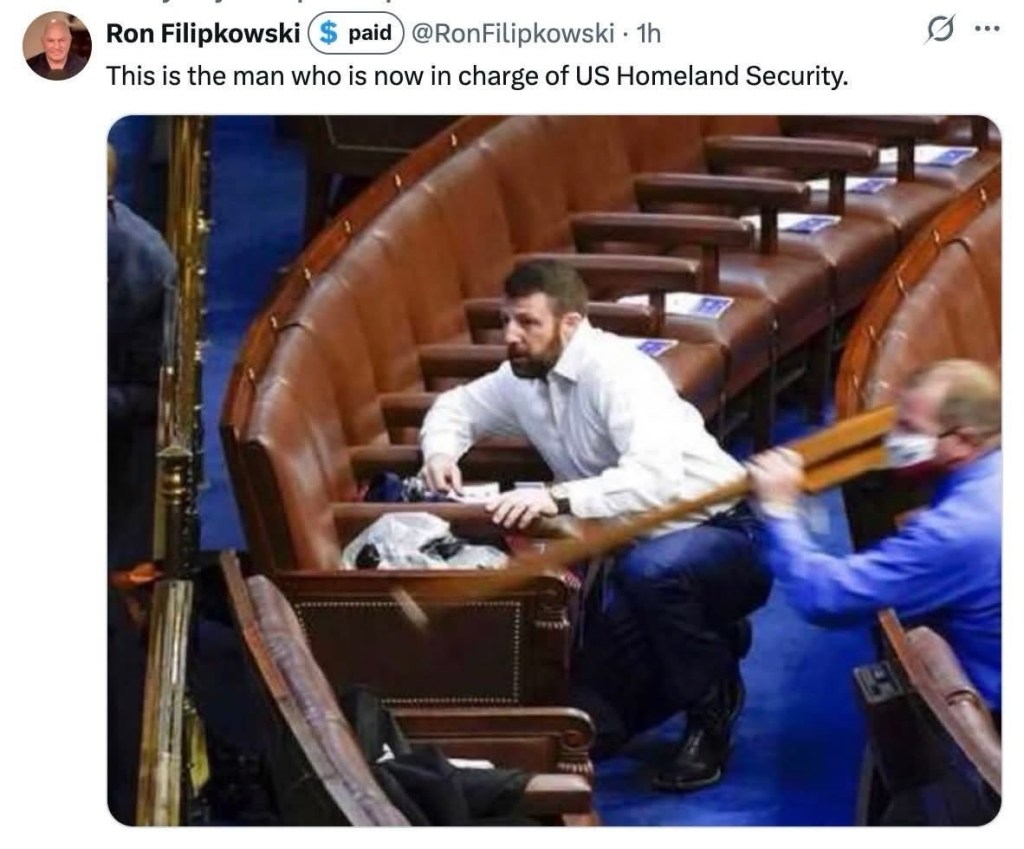
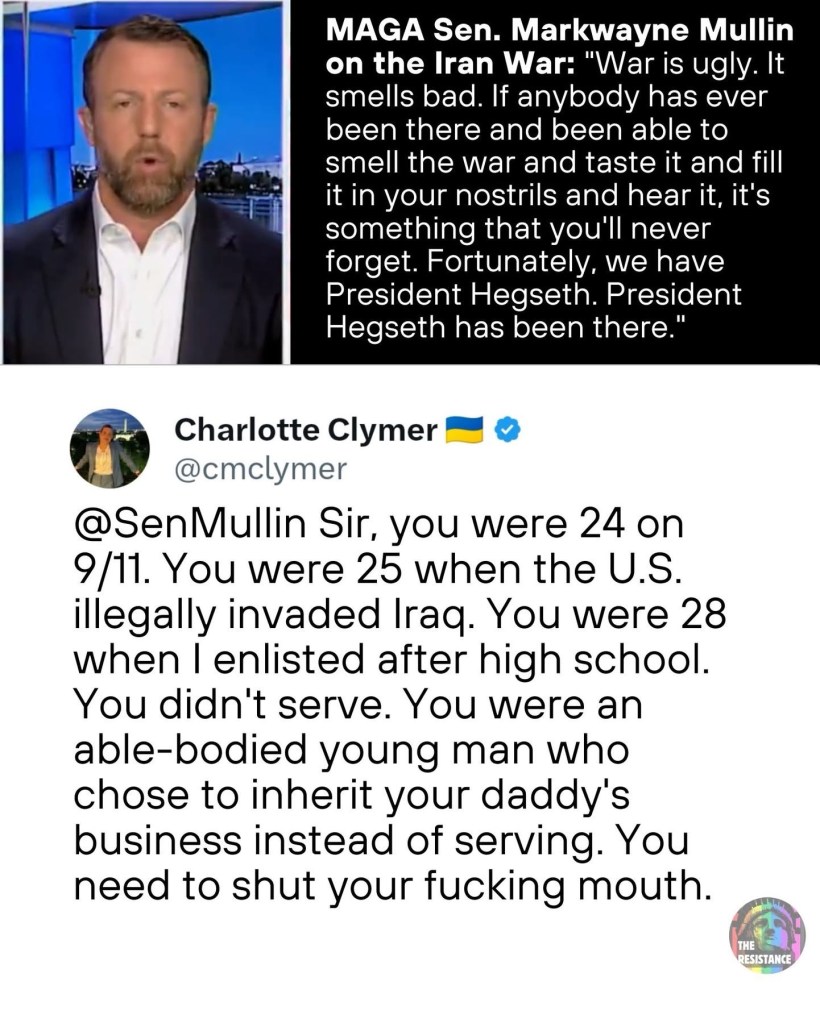
As usual, I am ever the economist. I’m just weirded out about all the Kristi Noem and her likely replacement news. These people are all bimbos and freaks. Noem’s replacement, Senator Markwayne Mullin, appears to have a really odd kink. This is from MEDIAite. It’s a headline from 2023. “Markwayne Mullin Reportedly Fingered Nostrils of Colleagues and Their Spouses During Visit to Israel.” I certainly want the committee hearing to ask about this, but I really don’t want to hear the details.
I do want to know more about Noem’s new job, however. This is from The Hill. WTH is the Shield of the Americans anyway? Ashleigh Fields has this headline. “What we know about Noem’s new ‘Shield of the Americas’ role.”
While the soon-to-be former secretary will no longer head up immigration and other national security agencies under DHS, her work for “Shield of the Americas” will hit on similar topics, including immigrants in the country illegally, transnational trafficking and border crossings.
Here’s what we know about the role: What is ‘Shield of the Americas’?
The regional coalition of countries in Latin America will work together on ideology and policy initiatives that help secure the Western Hemisphere, according to the White House.
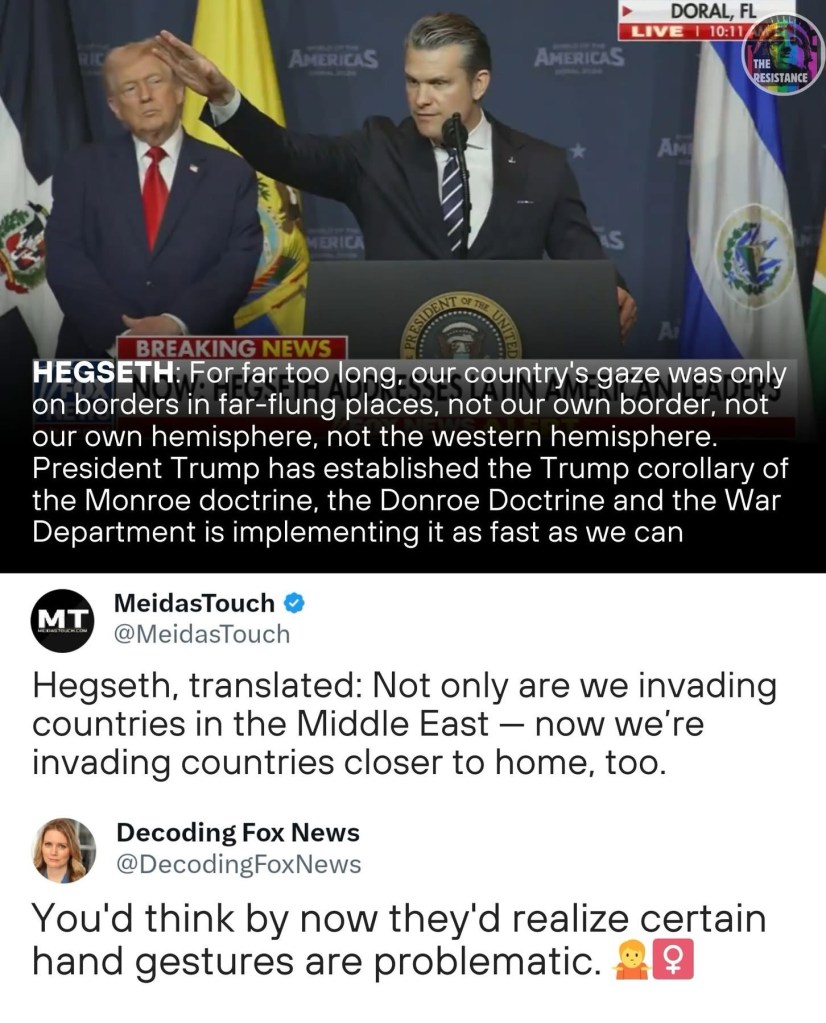
The Shield of the Americas will be guided in part by the president’s foreign policy initiatives dubbed the “Donroe Doctrine,” fashioned after the Monroe Doctrine. The administration has described the doctrine as enlisting “established friends” in the Western Hemisphere to pursue U.S. aims and expanding ties by “cultivating and strengthening new partners.”
Since Trump returned to office last year, he directed the renaming of the Gulf of Mexico to the “Gulf of America,” announced plans to “take back” the Panama Canal, and pushed efforts to acquire Greenland and make Canada the 51st state.
A summit making the Shield of the Americas official is set to take place this weekend in Miami, and it may largely focus on counterterrorism measures in the region as a group of Latin American leaders assemble on American soil.
Noem will work with foreign leaders in both North and South America. The Trump administration has maintained a heavy interest in connecting with Latin American leaders to combat human smuggling, drug trafficking and undocumented immigration.
Thirteen heads of Latin American countries are expected to be present at the Miami summit this weekend. Some notable names, according to the White House, include: Argentine President Javier Milei, Chilean President-elect José Antonio Kast, Salvadoran President Nayib Bukele Ortez and Honduran President Nasry “Tito” Asfura.
NPR has the go-to list on “What you need to know about Sen. Markwayne Mullin, Trump’s new pick to lead DHS.”
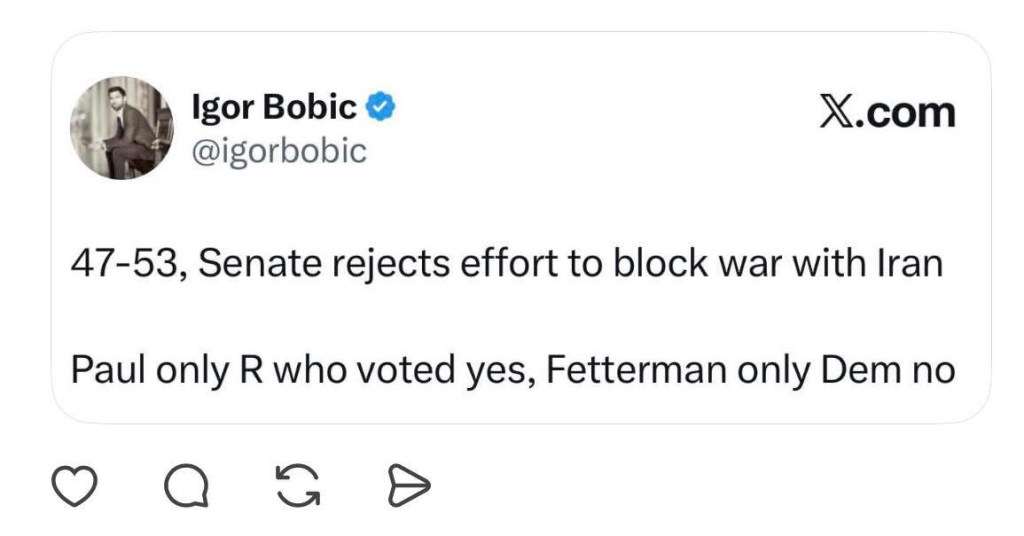
Mullin has been a reliable defender of President Trump in Congress, including just this week, backing the president’s decision to launch strikes against Iran.
Mullin serves on several committees, including Appropriations, Armed Services, Indian Affairs and Health, Education, Labor and Pensions.
In his role on the Appropriations Committee, he helps write and negotiate federal funding, including the ongoing talks to fund DHS, the agency he has been tapped to lead.
Anyway, he has a background in construction. He’s from Oklahoma. Evidently, he and Rand Paul don’t get along, and since Paul is the head of the committee that will approve his appointment, it should be interesting.
So, that’s enough weird Trump news for the day. I need to return to doing something more worthwhile, like the laundry and dishes.
What’s on your Reading, Blogging, and Action list today?
Did you like this post? Please share it with your friends:
The man is like some kind of mutant virus that has no known cure…he just keeps on living. Infecting all life forms with his diseased hate and violence.
I have someone close to me, I call him my other son because I practically raise him…he lives in Kuwait. He teaches in one of the schools that many of the foreign diplomats send their children to, he has been in the thick of all this mess and is “safe” but I worry about him all the time. No, he is unable to leave. No, he was not given any warning to leave prior to the attack. No, the US is not helping him to leave.
So, let me just say the I am utterly disgusted with all this…shit.
The Sky Dancing banner headline uses a snippet from a work by artist Tashi Mannox called 'Rainbow Study'. The work is described as a" study of typical Tibetan rainbow clouds, that feature in Thanka painting, temple decoration and silk brocades". dakinikat was immediately drawn to the image when trying to find stylized Tibetan Clouds to represent Sky Dancing. It is probably because Tashi's practice is similar to her own. His updated take on the clouds that fill the collection of traditional thankas is quite special.
You can find his work at his website by clicking on his logo below. He is also a calligraphy artist that uses important vajrayana syllables. We encourage you to visit his on line studio.

 More at the link.
  It’s really odd to think that I started my career as an economist during the OPEC maneuvers and I’m winding down my career as one with the US maneuvers. Frankly, I think China is sitting pretty right now. They’ve been doing a lot with alternative energy and have the entire Pacific Region — including many Latin American Countries with oil — undoubtedly rooting for them right now.
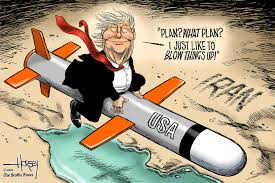 Trump donors are feeling this immediately. Trump voters will shortly see the impact on their budgets and gas prices. I can’t say I feel sorry for any of them, but there’s not a person who won’t feel this one way or another.
 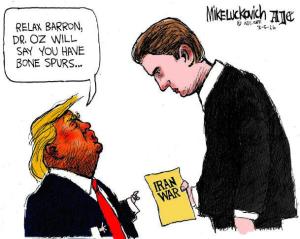 Judd LeGum at
 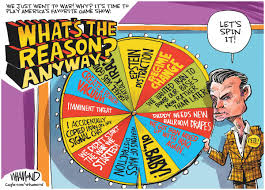 A brief description of each of those 17 responses is given in the article. You may read it at this fully gifted link.
 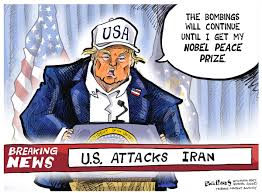 It still looks like the start of World War 3 to me. From the same link above.







































 Dalia Dassa Kaye, reporting for
  More analysis of the likely deadly results over time, which include the rise of terrorism once more, can be found at the link. Eric Cortellessa has more analysis about “Trump’s War” at
  As usual, Trump is easily manipulated by his counterparts with selfish and bad intentions.
 I wanted to mention the economy signalling a meltdown. This is from Jeff Cox writing for CNBC. “
 As usual, I am ever the economist. I’m just weirded out about all the Kristi Noem and her likely replacement news. These people are all bimbos and freaks. Noem’s replacement, Senator Markwayne Mullin, appears to have a really odd kink. This is from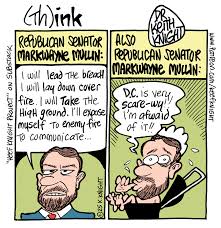





















 peej
peej Carissa
 bostonboomer
 dakinikat
 ecocatwoman
 mablue2
 Mama Lopez
 peggysue22
 quixote
 skydancingguestblogger
 Mona (aka Wonk the Vote)



 Sky Dancing
Recent Comments