There isn’t any big overarching story dominating today’s news, so I have a mixed bag of articles to share.
I’m going to begin with a story that should be a huge scandal, but the mainstream media and cable news stations have been slow to cover it–I’m not sure why. I posted the story a couple of times here after Roger Sollenberger of The Daily Beast broke it on January 5: Herschel Walker Staffer: Matt Schlapp ‘Groped’ My Crotch.
A staffer for Herschel Walker’s Senate campaign has alleged to The Daily Beast that longtime Republican activist Matt Schlapp made “sustained and unwanted and unsolicited” sexual contact with him while the staffer was driving Schlapp back from an Atlanta bar this October.
The staffer said the incident occurred the night of Oct. 19, when Schlapp, chair of the American Conservative Union and lead organizer for the influential Conservative Political Action Conference, “groped” and “fondled” his crotch in his car against his will after buying him drinks at two different bars.
The staffer described Schlapp, who had traveled to Georgia for a Walker campaign event, as inappropriately and repeatedly intruding into his personal space at the bars. He said he was also keenly aware of his “power dynamic” with Schlapp, widely regarded as one of the most influential figures in national conservative politics.
Republican strategist alleges powerful conservative sexually assaulted him. New text messages from that night My reporting with @Gregg Krieg @elizabethstuart coming up on @AC360 https://t.co/sFk3OTsjGP
A Republican strategist alleges that Matt Schlapp, the influential chairman of the American Conservative Union, groped and fondled his groin as he drove Schlapp back to an Atlanta hotel several weeks before the November midterm election.
The strategist, a male in his late thirties who was working for the Georgia GOP and Herschel Walker’s Senate campaign at the time, told CNN that Schlapp made the unwanted sexual advances on the ride back from two area bars on October 19. Schlapp allegedly invited the strategist, who was assigned to drive Schlapp, to join him in his hotel room. The staffer declined the offer, and hours later reported the incident to senior campaign staff….
The staffer says he called and texted friends in real time to tell them what happened. CNN reviewed a text exchange between the staffer and a friend in politics, where the staffer is clearly upset and wondering how to tell the campaign that one of their surrogates had allegedly assaulted him. The exchange is being made public for the first time.
“He’s pissed I didn’t follow him to his hotel room,” the staffer wrote.
“I’m so sorry man,” the acquaintance responded. “What a f**king creep.”
The staffer later texted, “I just don’t know how to say it to my superiors thst heir [sic] surrogate fondled my junk without my consent.” [….]
Schlapp runs the ACU, the organization most widely known for staging the Conservative Political Action Conference, known as CPAC. Both Schlapp and the group occasionally butted heads with Donald Trump before he was elected president in 2016, but have since become fierce loyalists. Schlapp, who served in the George W. Bush White House as director of political affairs, took over the ACU in 2014. His wife, Mercedes Schlapp, worked as Trump’s communications director for nearly two years, from 2017 to 2019.
More on the text messages:
According to text messages reviewed by CNN, Schlapp suggested meeting the staffer for drinks.
“I have a dinner at 7. May grab a beer after if you want to join let me know,” Schlapp texted the staffer. The staffer told CNN he joined Schlapp because of the ACU leader’s standing in conservative political circles.
Once at the bar, the staffer says Schlapp began to inappropriately invade his personal space. After leaving the bar, the staffer alleges Schlapp sexually assaulted him as he was driving Schlapp back to his hotel. The staffer said he did not respond in the moment because he was stunned into silence and was focused on getting Schlapp out of the car as quickly as possible.
Later that evening, Schlapp called the staffer, according to a call log reviewed by CNN, to confirm the staffer would be driving him to another Walker event the next morning. After receiving the call, the staffer says he broke down and memorialized what happened by recording videos of himself describing the alleged assault.
“Matt Schlapp, of the CPAC, grabbed my junk and pummeled it at length. And I’m sitting there (in the car) saying, ‘What the hell is going on that this person with a wife and kids is literally doing this to me, from Manuel’s Tavern to the Hilton Garden Inn there at the Atlanta Airport,’” the staffer says in one of the self-recorded clips, which CNN reviewed. “He literally has his hands on me. And I feel so f**king dirty. Feel so f**king dirty. So I don’t know what to do in the morning.”
The next morning, the staffer told top Walker campaign officials about the alleged incident and they immediately directed him not to drive Schlapp and to pass on a number of a car service.
Why isn’t this story getting more traction? Is it because Schlapp is so powerful within the GOP? He heads up organizations that are virulently anti-gay. I’m waiting for it to come out in The New York Times and The Washington Post.
Next, Joe Biden’s lawyers found a second batch of classified documents in Delaware. There’s no comparison with what Trump did, but I’m worried that this may prevent the DOJ from prosecuting Trump for actually stealing government documents and refusing to return them.
BREAKING: Second Set of Classified Documents Were Found at Biden’s Wilmington Home, White House Says https://t.co/t0R4nMbCbj
The second set of classified documents from President Biden’s time as vice president were discovered at a storage space in the garage of his home in Wilmington, Del., a top White House lawyer said on Thursday….
The White House statement, by Richard Sauber, a special counsel to Mr. Biden, did not answer fundamental questions about the contents of the documents, who packed them and whether anyone had gained access to them after he left office. It also did not say when the second batch had been found.
The statement came after the White House acknowledged this week that an earlier batch had been discovered on Nov. 2 in the closet of an office at a think tank that Mr. Biden had used after leaving the vice presidency.
The statement added that the Biden team immediately notified the Justice Department and arranged for it to take possession of the documents.
Mr. Sauber said Mr. Biden’s team had also searched a house the president owned in Rehoboth Beach, Del., but found no documents stored there.
He said his staff had fully cooperated with the National Archives and the Justice Department, but made no mention of the documents later found in Delaware.
Mr. Biden’s lawyers discovered “a small number” of classified documents in his former office at a Washington think tank last fall, the White House said on Monday, prompting the Justice Department to scrutinize the situation to determine how to proceed.
As you probably know, the Justice Department is investigating and will eventually decide whether a special counsel should be appointed. So far, there isn’t any comparison between what Trump and Biden did, but of course Republicans will make that claim. Here’s a good thread on the differences between the two.
Biden’s lawyers did NOT lie to NARA or the DoJ about having classified documents
Biden’s lawyers did NOT draft a letter saying he had no classified documents
Biden did NOT then have his Diet Coke valet secretly move classified documents to another location and lie about it 2/
Jim Jordan, who will be in charge of the Judiciary Committee and the so-called “weaponization of government” subcommittee, is probably salivating over this story. This is from Loch K. Johnson, Frederick Baron, and Dennis Aftergut at The Bulwark: Jim Jordan, Church Committee Pretender.
“The comparison to the Church committee is preposterous. The new House subcommittee is not remotely up to that committee standard—in origin, composition, or purpose.”https://t.co/l02959L2HV
Members of the new Republican majority in the House of Representatives are trying to stick a civil libertarian label on the subcommittee they’re creating to “investigate the investigators.” Its formal name will be the Select Subcommittee on the Weaponization of the Federal Government. But when talking about it to the press, some Republicans have taken to calling it a reincarnated “Church committee.”
Two of us (Johnson and Baron) served in key staff positions on the Church committee. The comparison is preposterous. The new House subcommittee is not remotely up to the Church committee standard—in origin, composition, or purpose.
To begin with, the Church committee bore serious moral authority, which arose from its truly bipartisan mission: tough-minded rethinking of intelligence agency activities under administrations of both parties stretching back almost twenty years.
Indispensable to its credibility was the energetic participation of steely moderate Republican senators like Howard Baker (R-Tenn.), Charles Mathias (R-Md.), and Richard Schweiker (R-Penn.). These were statesmen—intellectually honest and adept. In particular, Baker performed an indispensable, fair-minded role for Church committee Republicans, as he had done on the Senate Watergate Committee.
One example: Concerned about the Church committee’s probe into FBI activities against Martin Luther King Jr., Baker sought evenhandedness without obstruction. “Let’s have a balance, not just focus on King,” Baker said. “Perhaps a session on FBI infiltration of the KKK, too.”
On the Church committee, GOP senators—including the committee’s vice chairman, the conservative John Tower (R-Texas)—were willing to pursue the truth about the actions of Republican administrations. In turn, Democratic senators, including Church, Walter Mondale (D-Minn.), and Gary Hart (D-Col.), were willing to probe the actions of the Kennedy and Johnson administrations. That commitment to nonpartisan inquiry catalyzed the committee’s powerful, evidence-based critique of intelligence agency misconduct, and serious proposals for agency reforms later adopted in the Ford and Carter administrations.
What the Church Committee did:
The Church committee unearthed dramatic breaches of law and American norms:
CIA assassination plots against foreign leaders such as Fidel Castro in Cuba and Patrice Lumumba in the Congo.
FBI COINTELPRO surveillance, infiltration, and disruption targeting King, his Southern Christian Leadership Conference, and the anti-Vietnam War movement.
CIA and FBI mail-opening programs that snooped on broad swaths of U.S. citizens.
Those legitimate subjects of investigation are a far cry from what the new House subcommittee is setting out to do: fishing for stories about the mythical deep state and looking into “ongoing criminal investigations”—that is, going after the law enforcement officials investigating the January 6th insurrection.
Read the rest at the link.
Republicans are also salivating about the opportunity to “investigate” Hunter Biden. That could come back to bite Trump though.
If Hunter Biden is charged in a tax case with failure to meet filing deadlines & a bad biz expense deduction, it gets increasingly hard to justify DOJ not looking at federal charges stemming from the Manhattan DA's tax conviction of Trump companies. https://t.co/eNZ1l0ifSJ
The way Republicans tell it, President Biden has been complicit in a long-running scheme to profit from his position in public life through shady dealings around the world engineered by his son, Hunter Biden.
Taking a first step in their long-promised investigation, Republicans on the House Oversight Committee on Wednesday demanded information about the Bidens’ banking transactions from the Treasury Department. And in an earlier report on the Bidens intended to lay the groundwork for hearings they plan to hold, they said they had evidence “demonstrating deliberate, repeated deception of the American people, abuse of the executive branch for personal gain, use of government power to obstruct the investigation” and more.
The real Hunter Biden story is complex and very different in important ways from the narrative promoted by Republicans — but troubling in its own way.
After his father became vice president, Hunter Biden, a 52-year-old Yale-educated lawyer, forged business relationships with foreign interests that brought him millions of dollars, raised questions about whether he was cashing in on his family name, set off alarms among government officials about potential conflicts of interest, and provided Republicans an opening for years of attacks on his father.
And after the death of his brother, Beau, in 2015, Hunter descended into a spiral of addiction and tawdry and self-destructive behavior.
He is sober now and no longer entangled in foreign business deals. He is a visible presence in his father’s life — his oldest daughter was married at the White House in November, and he attended a state dinner last month.
But the investigation into his previous dealings may be coming to a head.
David C. Weiss, the U.S. attorney for Delaware, is closing in on a decision about whether to prosecute Hunter Biden on charges stemming from his behavior during his most troubled years.
Investigators have pored over documents related to and questioned witnesses about his overseas business dealings. They include his role on the board of Burisma, a Ukrainian energy company led by an oligarch who at the time was under investigation for corruption — a position that Hunter accepted while his father, as vice president, was overseeing Obama administration policy in Ukraine.
They also include his equity stake in a Chinese business venture, and his failed joint venture with a Chinese tycoon who had courted well-connected Americans in both parties — at one point he gave Hunter Biden a large diamond as a gift — but was later detained by Chinese authorities.
Investigators have similarly sought information about interactions between Hunter Biden’s business associates and his father.
But Mr. Weiss, people familiar with the investigation say, appears to be focused on a less politically explosive set of possible charges stemming from his failure to meet filing deadlines for his 2016 and 2017 tax returns, and questions about whether he falsely claimed at least $30,000 in deductions for business expenses.
Mr. Weiss is also said to be considering charging Hunter Biden, who has openly acknowledged his years of struggle with drugs and alcohol, with lying on a U.S. government form that he filled out to purchase a handgun in 2018. On the form, he answered that he was not using drugs — an assertion that prosecutors might be able to challenge based on his erratic behavior and possible witness accounts of his drug use around that period.
One more sad story for us old fans of 1960’s rock. Yesterday, guitar legend Jeff Beck died suddenly of bacterial meningitis.
Jeff Beck, one of the most skilled, admired and influential guitarists in rock history, died on Tuesday in a hospital near his home at Riverhall, a rural estate in southern England. He was 78.
The cause was bacterial meningitis, Melissa Dragich, his publicist, said.
During the 1960s and ’70s, as either a member of the Yardbirds or as leader of his own bands, Mr. Beck brought a sense of adventure to his playing that helped make the recordings by those groups groundbreaking.
In 1965, when he joined the Yardbirds to replace another guitar hero, Eric Clapton, the group was already one of the defining acts in Britain’s growing electric blues movement. But his stinging licks and darting leads on songs like “Shapes of Things” and “Over Under Sideways Down” added an expansive element to the music that helped signal the emerging psychedelic rock revolution.
Three years later, when Mr. Beck formed his own band, later known as the Jeff Beck Group — along with Rod Stewart, a little-known singer at the time, and the equally obscure Ron Wood on bass — the weight of the music created an early template for heavy metal. Specifically, the band’s 1968 debut, “Truth,” provided a blueprint that another former guitar colleague from the Yardbirds, Jimmy Page, drew on to found Led Zeppelin several months later.
In 1975, when Mr. Beck began his solo career with the “Blow by Blow” album, he reconfigured the essential formula of that era’s fusion movement, tipping the balance of its influences from jazz to rock and funk, in the process creating a sound that was both startlingly new and highly successful. “Blow by Blow” became a Billboard Top 5 and, selling a million or more copies, a platinum hit.
Along the way, Mr. Beck helped either pioneer or amplify important technical innovations on his instrument. He elaborated the use of distortion and feedback effects, earlier explored by Pete Townshend; intensified the effect of bending notes on the guitar; and widened the range of expression that could be coaxed from devices attached to the guitar like the whammy bar.
Drawing on such techniques, Mr. Beck could weaponize his strings to hit like a stun gun or caress them to express what felt like a kiss. His work had humor, too, with licks that could cackle and leads that could tease.
Click the NYT link to read the rest. I saw the Jeff Beck Group at The Boston Tea Party in 1968 or 1969. The warm-up group was Buddy Miles. Rod Stewart was impressive as the lead singer. That was before he went more mainstream. Anyway, it was a great show. The Tea Party was a great big hall–no seats or anything and it was LOUD.
Have a great Thursday everyone!!
Did you like this post? Please share it with your friends:
The GOP clown show has begun. Last night House Republicans voted to gut the House ethics committee as part of a rules package agreed to by Speaker Kevin McCarthy. Also in the rules package, they approved a new subcommittee under the Judiciary Committee headed by Rep. Jim Jordan that will supposedly investigate the “weaponization” of the federal government. In the first bill taken up by the new House, they voted to eliminate funding for new IRS agents that was included in the Inflation Reduction Act.
House Republicans moved to pre-emptively kill any investigations against its members as it curtailed the power of an independent ethics office just as it was weighing whether to open inquiries into lawmakers who defied subpoenas issued by the House January 6 select committee last year.
The incoming Republican majority also paved the way for a new special subcommittee with a wide mandate to investigate the US justice department and intelligence agencies, which could include reviewing the criminal investigations into Donald Trump and a Republican congressman caught up in the Capitol attack inquiry.
The measures took effect as House Republicans narrowly passed the new rules package that included the changes for the next Congress, 220-213, setting the stage for politically charged fights with the Biden administration over access to classified materials and details of criminal investigations.
Seeking to protect itself, the rules package first undercut the ability of the office of congressional ethics (OCE) to function, with changes that struck at its principal vulnerabilities to defang its investigative powers for at least the next two years, according to sources familiar with its operation.
The changes to the OCE are twofold: reintroducing term limits for members of the bipartisan board, which would force out three of four Democratic-appointed members, and restricting its ability to hire professional staff to the first 30 days of the new congressional session.
The issue with the changes, the Guardian previously reported, is that the OCE requires board approval to open new investigations, while new hires are typically approved by the board. The term limits would mean Democrats need to find new board members, which can take months – far longer than the 30-day hiring period.
In essence, the changes mean that by the time the OCE has a board, it may have run out of time to hire staff, leaving it with one counsel to do possible investigations into the new House speaker, Kevin McCarthy, and other Republican lawmakers who defied January 6 select committee subpoenas.
House Republicans are declaring what amounts to an investigative war on the Biden administration, pledging to probe “ongoing criminal investigations” at the Justice Department.
Veterans of some of Congress’ recent major probes, and the department itself, predict that they’ll be told to pound sand.
Evil Clown vs Smiley, by Herr Karl
GOP lawmakers are dramatically escalating their standoff with the administration by launching a wide-ranging investigative panel to probe what they call the “weaponization of government.” It’s a broad mandate that will allow the party to look into any government agency or program that it views as suspect, including the FBI, IRS and the intelligence community — making good on a key demand of a band of hardline conservatives who opposed Speaker Kevin McCarthy’s bid for the gavel.
And it’s an opening salvo that promises to escalate quickly. The Justice Department is certain to fiercely protect its most sensitive investigative files and prosecutors are simply not going to hand over information on open criminal probes, legal experts say. The resulting conflict promises to erode the already strained relationship between DOJ and congressional Republicans.
“This will be a separation of powers hornets’ nest,” said former House General Counsel Stan Brand, who represented witnesses before the Jan. 6 select committee, including Dan Scavino, a top adviser to former President Donald Trump. “In order to insulate the process from taint, [DOJ] will have to draw clearer ‘lines in the sand’ over what they will provide.”
The genesis of the proposed select panel — which would operate underneath the Judiciary Committee, chaired by Rep. Jim Jordan (R-Ohio) — has exacerbated concerns among DOJ allies about how GOP lawmakers will use their broad directive.
Notably, those seeking to access ongoing criminal matters are among the staunchest political allies of the former president whose efforts to overturn the 2020 election are the subject of a special counsel investigation. Several GOP members of Congress — including House Freedom Caucus Chair Scott Perry (R-Va.) — allied closely with Trump, prompting the department to scrutinize their actions.
Both Perry and Jordan were subpoenaed by the Jan. 6 select committee to testify about events surrounding the Capitol attack by a mob of the former president’s supporters. Both declined to comply with the subpoena.
Though GOP leaders have not yet announced any members of the new investigative panel, McCarthy has indicated to House Republicans that he anticipates Jordan will lead it. Rep. Dan Bishop (R-N.C.), who pushed for the investigative body for months, is viewed as a likely member. Rep. Thomas Massie (R-Ky.) has also said publicly he expects to participate.
There’s much more on the plans for the new subcommittee at the link. I can’t imagine these bozos will pry anything from the DOJ. There’s obviously a serious separation of powers issue there.
House Republicans on Monday commissioned a special investigative panel focused on the coronavirus pandemic, hoping to leverage their new, powerful majority to press scientists and federal officials about the origin of the public health crisis and the government’s response to it.
Lovely Clown, by Leonid Afrenov
Party lawmakers officially chartered the new effort in a sprawling package setting the chamber’s rules for the next two years, awarding it a sweeping mandate — from looking into vaccine development, school closures and other mitigation measures to examining the roughly $5 trillion in emergency federal aid approved since early 2020.
Republicans have long derided Democrats, public health experts and others who advocated for an aggressive government response to covid-19, which has claimed millions of lives globally. At the center of GOP criticism is the suspicion that the coronavirus originated out of laboratory experiments in Wuhan, China, potentially backed by U.S. money — a view at odds with peer-reviewed scientific papers pointing to a more likely origin in a Wuhan market.
In the process, Republican lawmakers also have clashed with scientists and doctors on a wide array of policies meant to arrest the spread of the virus — opposing vaccine mandates, blasting in-person capacity limits and rejecting new federal funding for tests, treatments and other tools.
With new control of the House, however, the GOP aims to surface those concerns in a more prominent setting, questioning a wide array of current and former government officials, potentially including Anthony S. Fauci, the former head of the National Institute of Allergy and Infectious Diseases. The panel, officially named as the Select Subcommittee on the Coronavirus Pandemic, essentially replaces a Democrat-led legislative body that had focused its work on monitoring emergency coronavirus aid for fraud. Under Republicans, it does not yet have a leader, but it is expected to hold its first hearing in February.
A private document that only some House Republicans have seen and others refuse to talk about could play an outsized role in the governance of the chamber over the next two years.
Why it matters: The document contains concessions — not included in the rules package passed on Monday night — that House Speaker Kevin McCarthy (R-Calif.) made to rebellious Freedom Caucus members to secure the speaker’s gavel.
— Those members have threatened to kill McCarthy’s speakership as swiftly as they acquiesced to it if he reneges on their handshake agreements.
Driving the news: The existence of a “secret three-page addendum” containing “the most controversial concessions” that McCarthy made in order to get elected was first reported by Punchbowl News on Monday and confirmed to Axios by multiple GOP aides and members.
— One of those concessions is three seats set aside for conservatives on the Rules Committee, as well as representation for them on the powerful Appropriations Committee.
— Other McCarthy giveaways include votes on congressional term limits and a select committee on the weaponization of the federal government, a debt limit strategy and a more open amendment process on appropriations bills.
— One thing the document doesn’t contain, according to NRCC Chair Richard Hudson (R-N.C.), who said he’s seen it, is promised committee chairmanships for specific members: “No names, just representation [on panels].”
The House GOP’s first policy bill out of the gate didn’t address inflation or gas prices or immigration, but instead went after the Internal Revenue Service.
Dark Clown, by BERTOLINO Florent
The bill was passed Monday evening on a straight party line vote of 221 to 210 to reverse much of the $80 billion in extra funding set aside for the agency by 2022’s Inflation Reduction Act. need of reform.” [….]
The claim from countless Republicans, from Speaker McCarthy on down, is that the influx of money will lead to a flood of 87,000 new IRS agents who will then turn and harass everyday Americans. Some critics of the agency go even further and claim these new agents will be armed.
The viral claims are “absolutely false,” Rettig wrote at the time, adding his agency “is often perceived as an easy target for mischaracterizations,” but he promised the new money will not lead to increased audit scrutiny on households making under $400,000.
The plan is instead for much of the money to go toward wealthy tax cheats. IRS estimates of the so-called “tax gap” — the difference between what taxes are owed to the government and what is actually paid — is hundreds of billions of dollars a year.
Much of the $80 billion will be focused on taking a bite out of the gap, focusing on wealthy tax payers. The investment is projected to pay for itself and then bring in over $100 billion in increased tax revenue over the coming decade.
By contrast, a new analysis from the Congressional Budget Office released Monday afternoon found that the net effect of the House GOP bill’s to defund the agency would increase the deficit by more than $114.3 billion over the coming decade if enacted.
Fortunately, this bill will most likely die in the Senate, and if it somehow gets to Biden’s desk, he will veto it.
In other news, Republicans are gleeful, because a small number of classified documents were found while lawyers were cleaning out an office used by Joe Biden before he became president. The lawyers immediately contacted the National Archives and turned over the documents, and the DOJ is now looking into what happened. There’s no comparison between this and Donald Trump’s stealing of hundreds of classified documents and refusing to return them, but Republicans will have a field day anyway. One hopes the press will recognize the differences.
After serving as Barack Obama’s vice president for eight years, Joe Biden did what high-profile former politicians so often do: He set up a think tank at a prominent university.
Biden’s was called the Penn Biden Center for Diplomacy and Global Engagement, headquartered at the University of Pennsylvania. But unlike other elected officials and other such institutions, Biden’s engagement with the Penn Biden Center was soon back-burnered. By April 2019, he was a candidate for the presidency.
In November, almost exactly two years after Biden’s election, attorneys for the president were emptying an office at the center when, according to their account, they discovered about 10 documents bearing classification markings. The next day, the documents were turned over to the National Archives. The Justice Department is now reviewing them.
In its most concise distillation — documents with classification markings found in president’s office — the scenario seems like a mirror of the controversy that swirled around Donald Trump for much of last year, including the FBI search of his Mar-a-Lago property. Trump and his allies have, predictably, tried to draw this comparison, looping in funding that Penn (broadly; not the Biden center) has received from China.
355 days with this clown, by Ylli Haru
“When is the FBI going to raid the many homes of Joe Biden, perhaps even the White House?” Trump fumed on the social media platform he owns. “These documents were definitely not declassified.”
But, just as the fundamental issue with the Trump documents is not whether they were classified, the situations with the two presidents are not obviously comparable in the way that Trump suggests.
At this point, we don’t know much about the Biden documents beyond what his team has made public, which is certainly an important caveat. According to the Biden team’s statement, the documents were found in a locked closet and quickly turned over to the government. What they contain is unclear, as is their current classification level or status. (There are, of course, numerous existing documents that are no longer classified but which may nonetheless still carry classification markings.) One person, tongue presumably in cheek, told CBS News that the documents did not contain nuclear secrets.
Obvious differences are that Biden didn’t take the documents deliberately and his attorney turned them over to the National Archives as soon as they discovered them. Read the rest at the WaPo.
The US justice department is intensifying its investigation of Donald Trump’s unauthorized retention of national security materials as it prepares to question the people who searched the former president’s properties at the end of last year and found more documents with classified markings.
The department was given a general explanation from Trump’s lawyers at the time about who conducted the search – a company said to be known to Trump with experience handling classified records cases – when the new documents marked as classified were returned to the government around Thanksgiving last year.
But the department, unsatisfied with that accounting, last week convinced a federal judge in a sealed hearing to force Trump’s lawyers to give the names of the people who retrieved the documents with an intent to question them directly, according to sources familiar with the matter.
The move by prosecutors to ask a federal judge to compel the information marks the latest escalating twist in the criminal investigation into Trump’s potential unauthorized retention of highly sensitive government documents as well as obstruction of justice.
The pattern of prosecutors now seeking judicial intervention at every turn signals an aggressive posture from the special counsel Jack Smith, who is overseeing the investigation after being appointed to insulate the department from accusations of political conflicts with Trump, who is now a 2024 presidential candidate.
The justice department told Trump’s legal team in October that it suspected the former president was still in possession of additional documents with classified markings even after the FBI seized hundreds of sensitive materials when agents searched his Mar-a-Lago property on 8 August.
After initially resisting suggestions to retain an outside firm to search his properties for any classified documents, Trump retained people to search his other properties including Trump Tower in New York, Trump Bedminster golf club in New Jersey, Mar-a-Lago, and a storage unit in Florida.
The search, carried out by a company described as being a known entity to the former president, turned up at the storage unit at least two more documents with classified markings that Trump’s lawyers then hurriedly turned over to prosecutors on the documents case.
That’s it for me today. What else is happening? What stories are you following?
Did you like this post? Please share it with your friends:
The United States Policy in South and Central American countries haunts us again. Two distinct events point to the actions of the past. We’ve never really been held to account for “the Banana Wars” of the early 20th Century, US Imperialism in the 1890s to the 1930s, and the resulting territories we took after the Spanish-American War.
Don’t even get me started on states like Texas, California, etc., that were clearly not US entities until they were taken by war. Our failed drug policies and the egregious, illegal actions of the Reagan administration poisoned the well.
We were active in ‘regime’ change by continuing to back right-wing juntas against leftist regimes like those of the Bay of Pigs in Cuba and Niagara. The JFK and LBJ administrations backed actions that led to the 1964 Brazilian Coup. This weekend’s news resembles a lot of our activity in Brazil then. Vincent Bevins is a scholar on the US policy of toppling regimes. He considers the topping of João Goulart In Brazil to be a significant victory for the U.S. during the Cold War. It established a military dictatorship in Brazil. Brazil is the fifth most populous nation in the world. Bevins writes in his 2020 book TheJakarta Method that this action “played a crucial role in pushing the rest of South America into the pro-Washington, anticommunist group of nations.”
If you read the commentary coming out of New York and Washington, or speak with elites in Western Europe, it’s easy to find people panicking about the loss of “American leadership.” From Joe Biden’s campaign pledges to trans-Atlantic think tanks, exhortations to revive American supremacy and contain China are everywhere.
They have reason to be worried: This moment is shaking the foundations of America’s hegemony. It is painfully clear that the United States is ill-equipped to deal with the coronavirus pandemic, which does not play to American strengths (we can’t shoot it, after all). President Trump has for years been dismissing allies and antagonizing international institutions. And China is seemingly laying the groundwork for its arrival as a great power. American officials are now talking openly about a “new Cold War” to confront Beijing, and China now seems such a threat that Hal Brands of the American Enterprise Institute wonders whether the United States should get back in the business of covertly toppling unfriendly governments.
It’s unsurprising that establishment pundits, American policymakers and their allies would be alarmed about American decline. The United States and Western Europe have been the winners of the process that created this globalized world, the main beneficiaries of Washington’s triumph at the end of the Cold War. But a lot of people feel very differently.
Morro da favela, Tarsila do Amaral, 1924
I remember the Reagan years as a continuation of regime change policies, which meant installing right-wing and military dictatorships in places like Nicaragua as long as they weren’t communist and accepted American Economic expansion. The Reagan administration’s actions were against the law established to stop the Banana Wars. Once again, we have U.S. interests stoking a junta in Brazil. From the BBC: “How Trump’s allies stoked Brazil Congress attack.”
The scenes in Brasilia looked eerily similar to events at the US Capitol on 6 January two years ago – and there are deeper connections as well.
“The whole thing smells,” said a guest on Steve Bannon’s podcast, one day after the first round of voting in the Brazilian election in October last year.
The race was heading towards a run-off and the final result was not even close to being known. Yet Mr Bannon, as he had been doing for weeks, spread baseless rumours about election fraud.
Across several episodes of his podcast and in social media posts, he and his guests stoked up allegations of a “stolen election” and shadowy forces. He promoted the hashtag #BrazilianSpring, and continued to encourage opposition even after Mr Bolsonaro himself appeared to accept the results.
Mr Bannon, the former White House chief strategist, was just one of several key allies of Donald Trump who followed the same strategy used to cast doubt on the results of the 2020 US presidential election.
And like what happened in Washington on 6 January 2021, those false reports and unproven rumours helped fuel a mob that smashed windows and stormed government buildings in an attempt to further their cause.
The day before the Capitol riot, Mr Bannon told his podcast listeners: “All hell is going to break loose tomorrow.” He has been sentenced to four months in prison for refusing to comply with an order to testify in front of a Congressional committee that investigated the attack but is free pending an appeal.
Along with other prominent Trump advisers who spread fraud rumours, Mr Bannon was unrepentant on Sunday, even as footage emerged of widespread destruction in Brazil.
“Lula stole the Election… Brazilians know this,” he wrote repeatedly on the social media site Gettr. He called the people who stormed the buildings “Freedom Fighters”.
Ali Alexander, a fringe activist who emerged after the 2020 election as one of the leaders of the pro-Trump “Stop the Steal” movement, encouraged the crowds, writing “Do whatever is necessary!” and claiming to have contacts inside the country.
For more than four years, the most fundamental of questions has loomed over Brazil: Would its young democracy survive the presidency of Jair Bolsonaro?
Latin America’s largest country embarked on what amounted to a test of its democratic strength in 2018 when it elected the former army captain who openly lamented the collapse of the country’s military dictatorship, once threatened to reinstall its rule on the first day of his presidency and sought at every turn to sow doubt in elections.
During his time in office, he did little to soften his bellicosity. He warned of a government “rupture” like the military coup of 1964. If he were to lose his reelection bid, he said, it could only be through fraud, and Brazil would “have worse problems” than the United States did on Jan. 6, 2021, when a mob of Trump supporters assaulted the U.S. Capitol.
His son Eduardo, a federal congressman, once warned that “there will arrive a moment when the situation will be the same as it was in the 1960s.”
For many Brazilians, Sunday afternoon was the arrival of such a moment, when Bolsonaro supporters laid siege to the three pillars of the federal government — the presidential palace, the supreme court and the congress — bringing democracy here to a sudden standstill. The scenes of smoke and violence were at once both shocking and predictable, the tragic realization of a prophecy Bolsonaro has repeatedly uttered to mobilize his base and terrify his adversaries.
If I’m removed from power, he often hinted, violence will follow.
Bolsanaro remains out of the country having broken precedent by refusing to attend his successor’s inauguration. Some reports claimed that he had fled to escape possible criminal charges over a range of alleged offences while in power. The former president turned up in Florida where, according to reports, he is due to meet Donald Trump at his home, Mar-a-Lago.
There have been immediate and predictable comparisons between what happened in Brasilia and the attack on the Capitol by Trump supporters two years ago. The images from both assaults were similar: flag-draped intruders lounging on office chairs, ransacking and stealing property, assaulting guards.
Both sets of protesters were following authoritarian populist leaders who claimed they had been victims of electoral fraud. In Brazil, as in the US, the discontent has been fuelled by conspiracy theories in the social media.
As the Brasilia attack unfolded, well-known Trump supporters egged on the rioters, with Steve Bannon lauding them as “freedom fighters” who knew “criminal, atheistic, Marxist Lula stole the election”. Ali Alexander, a fringe activist who became prominent in Trump’s “ stop the steal” movement, exhorted: “Do whatever is necessary.”
The links between the camps of Trump and Bolsanaro, who revelled in his “Trump of the Tropics” moniker, began long before the Brazilian election and its aftermath, with Bannon one of the main conduits.
During the Brazilian election campaign, Trump wrote on his social platform: “President Jair Bolsonaro and I have become great friends over the past few years for the people of the United States… He is a wonderful man and has my complete and total endorsement
Biden is making his first border visit of his life—a photo op—while pushing for amnesty for millions of immigrants who have crossed into the US illegally.
House Republicans will hold him and Mayorkas accountable for creating the most dangerous border crisis in American history.
President Biden is headed to the border to signal his intention to ensure his immigration and asylum initiatives are fully implemented. Once again, Republicans are trying to equate the Asylum process with crossing the border illegally. Notice Caveman Kevin’s latest crusade. This is from Politico. “Migration issues cast long shadow over Biden’s visit to ‘3 Amigos’ summit. U.S.-Mexico border tension looms over trade, environment and other issues on the table for Biden, AMLO and Trudeau.”
Joe Biden has no shortage of topics to tackle in his first presidential trip to Mexico.
There’s the major shift in border policy that came just days before the trip. There’s the arrest of an alleged drug trafficker in Mexico long sought by U.S. authorities. And there’s the border itself, which Biden visited for the first time as president when he made a stop in El Paso, Texas, on Sunday evening.
All that casts a shadow over the president, who arrived in Mexico City hours after the El Paso swing. Biden’s Monday and Tuesday schedule at the North American Leaders’ Summit is packed: One-on-one discussions, trilateral meetings, working lunches, dinners and, of course, photo opportunities.
“We have a big agenda that ranges from the climate crisis to economic development and other issues. But one important part of that agenda is strengthening our border between our nations,” Biden said during a speech Thursday on border security at the White House.
Biden will be the first U.S. president to visit Mexico since Barack Obama in 2014. For decades, presidents traditionally made their first overseas trip to either Mexico or Canada as a sign of solidarity among the trio of leaders. Often, the “Three Amigos” would pledge to be a (mostly) unified North American front. But that informal tradition ended in 2017 when President Donald Trump opted to make Saudi Arabia his first international destination. And then, with the globe in the grasp of the Covid-19 pandemic, Biden delayed his first foreign trip for nearly five months before traveling to the United Kingdom to meet with G-7 leaders in June 2021.
Since then, Biden has crisscrossed the globe to several world summits. But he had yet to make the trip south of the border. And while Biden has met with Canadian Prime Minister Justin Trudeau repeatedly, he’s spent far less time with Mexican President Andrés Manuel López Obrador, which has only added to the feeling in Latin America of being snubbed by the United States.
That has added another layer of pressure to this week’s long-awaited gathering, as the three leaders prepare to discuss key issues including border security, trade and economic development, and climate and energy.
The Biden administration rolled out several new policies to curb illegal migration last week, some of which rely on Mexico’s cooperation. Immigration will be atop the president’s agenda, but stopping the flow of fentanyl from Mexico will also be a priority as the drug and other lab-produced synthetic opioids now drive an overdose crisis deadlier than any the U.S. has ever seen. It’s a pressure point that Biden may be forced to address even as drug control advocates and experts say an anti-drug policy that relies on tighter border security is far from certain to work.
This week Republicans must try to coalesce around the concessions McCarthy made and pass a package of rules to govern the House for the next two years. It’s an open question whether the party’s moderates, such as they are, will all buy in to the cut, cut, cut mentality McCarthy has agreed to.
Unlike the Senate, which has standing rules that carry over from year to year, the House adopts a new rules package for each Congress. This year, in particular, as they take over from Democratic control, Republicans want to make their mark in the rules package. The Rules Committee has posted a text and summary of the proposed rule changes.
Some of the new elements include things that amount to framing – replacing “pay as you go” language for budget matters with “cut as you go.”
Other elements could have more concrete consequences, like forcing specific votes to raise the debt ceiling and enacting spending cuts before the debt ceiling is raised. That debate will come to a head in the coming months as the government runs out of authority to add to the $31 trillion national debt.
On Sunday, Republicans all said they would try to avoid cutting defense and Medicare spending, which leaves a relatively small portion of the federal budget – think the Environmental Protection Agency and other regulatory arms of the government – from which to carve out spending.
The other way, besides spending cuts, for the government to cut down on deficit spending, is to raise taxes. The proposed rules reinstate a requirement that a House supermajority of 3/5, rather than a simple majority, sign off on any tax increases.
An Atlanta-area grand jury investigating efforts by former president Donald Trump and his allies to overturn Trump’s 2020 election loss in Georgia has concluded its investigation, according to the judge overseeing the panel.
Fulton County Superior Court Judge Robert McBurney issued a court order Monday morning saying the special grand jury had completed a final report on its investigation. He said the report was accepted by a majority of the county’s judicial bench and that the 26-member panel was being officially dissolved.
The grand jury’s recommendations were not made public, including whether criminal charges should be filed. McBurney scheduled a Jan. 24 hearing to determine whether to release the report. His order noted the grand jury had “voted to recommend that its report be published” and appeared to make its release “mandatory” — though the judge said he would hear “argument” on the issue.
Fingers Crossed.
What’s on your reading and blogging list today?
Did you like this post? Please share it with your friends:
After an insane week of Republican tantrums, Kevin McCarthy is finally Speaker of the House. But it doesn’t sound like he’ll have much control over his caucus. He seems to have given in to all of their demands in order to have a title with very little power. It was an embarrassing week for the Republican Party and for the country, capped by a scene in which Rep. Mike Rogers of Alabama and Matt Gaetz of Florida nearly came to blows.
McCarthy and his allies confidently predicted he would be elected Speaker of the House Friday night after a breakthrough in negotiations earlier in the day that saw 15 holdouts abandon their opposition.
The expectation was a critical mass of remaining holdouts would switch sides or vote present to seal his inevitable election as speaker.
Rep. Lauren Boebert, R-Colo. earned wild applause when she voted “present” for the first time, helping lower the threshold for a McCarthy win — just as his team had hoped would happen.
Members did the same for Rep. Wesley Hunt, R-Texas, who had flown back from tending to his wife and newborn premature baby in order to attend the crucial vote, and Ken Buck, R-Colo., who had rushed back from Colorado after undergoing a medical procedure.
But four holdouts, including a freshman from Arizona, Eli Crane, voted for other candidates. Then, after deliberately skipping his initial vote, Gaetz waited to the end of the roll call to vote “present” — leaving McCarthy one vote short.
Pandemonium ensued. An enraged Rep. Mike Rogers, R-Ala. had to be physically restrained as he charged to confront Gaetz with the C-SPAN cameras rolling.
Wild scene as Rep. Mike Rogers has to be physically restrained by another member while going after Gaetz as McCarthy tries to secure final votes pic.twitter.com/c0u2lZxgYr
Rep. Hudson, R-N.C., left, pulls Rep. Rogers, R-Ala., as he confronts Rep. Matt Gaetz, R-Fla., during the 14th round of voting for speaker as the House meets for the fourth day to try and elect a speaker in Washington, Friday, Jan. 6, 2023. (@AP Photo/@andyharnik) pic.twitter.com/ok3K8ERtfU
Afterwards, a stunned Rep. Patrick McHenry, R-N.C., who had just nominated McCarthy and was seen animatedly working Gaetz over during the vote, took to the podium to ask that the House be allowed to adjourn until Monday.
As members tried to get their bearings, President Trump placed quick calls ahead of the 15th ballot — just before midnight — to Reps. Andy Biggs, who had voted for Rep. Jim Jordan, and Gaetz, a source familiar with the situation told Semafor.
Another photo from earlier showed Marjorie Taylor Greene trying to reach a holdout after the failed vote, Rep. Matt Rosendale, R-Montana with a phone call from a “DT” as Rosendale appeared to rebuff her.
In the next ballot, more holdouts voted “present” and McCarthy was finally elected to thunderous applause and deep sighs of relief, completing his long rise through leadership across three presidential administrations.
Cat in the evening on the bench with birds, Paul Kulsha2
I stayed up until the bitter end, but I nodded off a few times and somehow I missed the fight scene. What I saw was Matt Gaetz approaching McCarthy, after which McCarthy rushed to the voting table to change his vote to no on adjournment. McCarthy looked thrilled after he finally won the 15th vote, but what did he actually win?
After four days of deadlock and embarrassing defeats not seen in a century, House Speaker Kevin McCarthy finally carved out a path to placate a faction of rebels and secure the job early Saturday, with promises that could come back to haunt him.
McCarthy flipped 14 of his holdouts and convinced the rest to stand down, securing election as the 53rd speaker of the House on the 15th ballot after overcoming a last-minute wrench that scuttled his best-laid plans on the previous ballot. In doing so, he made a series of concessions that weaken the power of his office and expand the clout of far-right members of the House Republican conference, which critics say could complicate his job of governing under a wafer-thin majority.
McCarthy and his allies sensed they were on the verge of a breakthrough on Thursday night after Rep. French Hill, R-Ark., and others tapped by the now-speaker met with a group of right-wing holdouts — including Reps. Scott Perry of Pennsylvania, Chip Roy of Texas and Byron Donalds of Florida. The mutiny was led by members of the far-right House Freedom Caucus, which is known for wielding raw power and having a high tolerance for chaos to force House GOP leaders to bend to their wishes.
McCarthy’s team presented them with a “framework” of House rules changes and other promises that would appease the group — and that ultimately prompted six House members to vote “present,” a crucial move that lowered the threshold for a majority and paved the way for him to succeed….
Perry, the Freedom Caucus chairman, said Friday he decided to vote for McCarthy after that framework was put on the table. But he also made clear his support for McCarthy was conditional on the terms of the deal holding up.
The concessions were mostly about the Rules Committee.
The Republican rules package released Friday includes those concessions. It will allow any one member to force a “motion to vacate” the speaker’s chair and overthrow McCarthy. It makes it harder for the House to raise spending, taxes and the debt limit. And Perry said the agreement includes “conservative representation” across the House, including by adding members of the right flank to key committees.
Perry and Roy declined to divulge details, but two sources with knowledge told NBC News that the Freedom Caucus was demanding three seats on the powerful Rules Committee, which controls the bills that make it to the House floor…
Illustration by Irina Zeniuk
The deal is poised to enhance the power of far-right Republicans, at the expense of moderates who want to advance legislation that can win the approval of a Democratic-controlled Senate and President Joe Biden. It could make McCarthy’s task of passing must-do bills like funding the government and lifting the debt ceiling much harder under a slim majority if a group of five Republicans can effectively force him out at any time.
Still, the more moderate or mainstream Republicans put up little resistance to the pact that party leaders agreed to, with some accepting it as the cost of doing business under narrow margins….
Democrats say the reported concessions will make the House ungovernable and cause crises.
“What we’re seeing is the incredibly shrinking speakership,” former House Speaker Nancy Pelosi said in an interview Friday. “It is not a good thing for the House of Representatives. We are the people’s house. We have to negotiate with the Senate. We have to negotiate with the White House. And instead, we are diminishing the leadership role of the House.”
A proposed subcommittee to investigate “weaponization” of the federal government — a key demand of House conservatives who delivered Speaker Kevin McCarthy the gavel — would be given sweeping investigatory powers that include explicit authority to review “ongoing criminal investigations.”
The language of the proposed “select subcommittee,” which would operate under the Judiciary Committee expected to be chaired by Rep. Jim Jordan (R-Ohio), also gives the panel power to access any information shared with the House Intelligence Committee. That panel typically receives the highest-level classified intelligence and briefings of any committee in Congress.
Both provisions appear to have been added during final negotiations between McCarthy and a band of hardline detractors that briefly denied him the speakership. An earlier version of the proposal made no mention of ongoing criminal investigations or the Intelligence Committee and limited the probe to the FBI, Department of Homeland Security and the Department of Justice.
Illustration by Vladimir Rumyantzev
The panel’s expected formation comes as the Justice Department continues to arrest and prosecute hundreds of rioters charged with breaching the Capitol on Jan. 6, 2021, and amid two ongoing criminal investigations connected to former President Donald Trump. Those include the probe of his effort to overturn the 2020 election and his decision to warehouse highly sensitive national security documents at his Mar-a-Lago estate after leaving office.
Both Trump-related probes are now overseen by special counsel Jack Smith, who was appointed by Attorney General Merrick Garland in November to manage the sensitive grand jury investigations
The subcommittee proposal would permit McCarthy to name 13 members to the panel, including five after consultation with Democratic Leader Hakeem Jeffries — a structure similar to the Jan. 6 select committee. Pelosi opted to reject two of McCarthy’s picks to that panel, prompting him to withdraw from any participation.
Unlike the Jan. 6 committee, however, the GOP-led probe would be housed under Jordan’s committee. Subpoenas issued by the panel would be authorized by Jordan.
That is just plain terrifying. So Jordan wants to be able to horn in on the investigations of Trump and other insurrectionists–which include Jim Jordan!
KEVIN MCCARTHY WAS well aware he was going to lose his bid to become Speaker of the House of Representatives on the first ballot, three people with knowledge of the situation told Rolling Stone. What he was not privately predicting was that the beatings would continue for an entire week. “He knew he was going to get fucked — he just didn’t know they were going to fuck him this many times, or this hard,” explained one congressional aide.
Among the major factors in McCarthy losing more than a dozen speakership ballots, people familiar with the matter say, was the severity of Florida Rep. Matt Gaetz’s enmity toward the Republican leader. Gaetz’s intense and personal distaste for McCarthy has been an open secret in Washington political circles for years, so much so that Gaetz and McCarthy’s colleagues would argue it isn’t even a “secret” at all.
Illustration by Vladimir Rumyantzev
But Gaetz’s hatred curdled into something even more powerful after it was revealed in early 2021 that the MAGA congressman was the target of a federal investigation into the sex trafficking of a minor. (No charges were filed against Gaetz, but his “wingman” Joel Greenberg was sentenced to 11 years in prison.) McCarthy, in Gaetz’s opinion, failed to mount a forceful enough defense on his behalf. According to two sources familiar with the matter, Gaetz has been furious at McCarthy for the perceived lack of support ever since — despite the fact that McCarthy did not strip him of any committee assignments during the probe.
The enmity between the two Republicans spilled into open view on the floor of the House during the 14th vote Friday night that McCarthy had bragged would finally put him over the top to secure the speaker’s gavel. Gaetz placed himself at the center of the drama. He skipped his turn in the alphabetical role call vote, setting himself up to vote at the end of the proceeding. With McCarthy needing one more yes vote, Gaetz instead voted “present” — leaving McCarthy with 50 percent of the vote, a hair short of victory. McCarthy strode up to Gaetz on the House floor, and a the foes had a heated exchange that did not change the total. McCarthy again was left hanging. (Gaetz again voted “present” along with the other Never Kevin rebels in the 15th vote that finally gave McCarthy the gavel.)
The original source of Rep. Gaetz’s acute loathing of McCarthy is less clear. Rolling Stone contacted members of Congress, sources on Capitol Hill, and activists in conservative organizations to ask what the root cause was. They all just knew Gaetz hated the House GOP leader. One Republican who knows both Gaetz and McCarthy says they even once asked the latter why Gaetz dislikes him so much. This source recalls McCarthy answering: “I don’t know.”
McCarthy has the Speaker’s gavel now, but there may be more disagreements coming on Monday when the House votes on the rules package that McCarthy agreed to. There are reportedly some McCarthy supporters who aren’t going to support it.
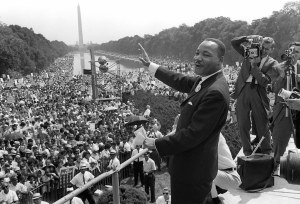
Aug. 28, 1963 — Martin Luther King Jr.’s “I Have a Dream” speech
Good Day Sky Dancers!
When I started this blog as a file cabinet for my writing else blog, I knew I’d commemorate days of celebration and sadness. We’ve had both and other highly emotional anniversaries. For me, it’s the day that Hurricane Katrina made landfall. For JJ, it’s undoubtedly September 11th. For BB, it’s likely the day of the Boston Marathon bombing. Most of us remember the assassination of JFK, RFK, and MLK. We have memories of Watergate. Then, there are those passed on from our grandparents and parents, like the bombing of Pearl Harbor. We have days to commemorate our War dead and those who fought for our democracy and preservation of the Union, and for the abolition of slavery.
Today is the second anniversary of the January 6th insurrection. Everything dealing with that day and events before, after, and surrounding it stands out as the day a violent minority decided they’d prefer a tyrant to the democratic republic left to us by those who formed the country and those who have ensured we expand the dream of liberty and justice for all.
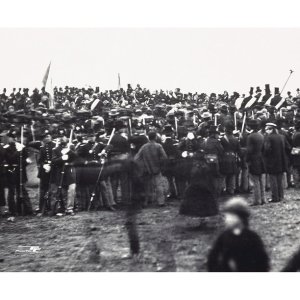
Abraham Lincoln gave his speech at the dedication of the Gettysburg National Cemetery before this crowd on November 19, 1863, at Gettysburg.
It’s hard to keep track of all the things that have been banned and censored here in the “Free State of Florida” — from middle school math books to live entertainment.
But some of the most-banned commodities in the Sunshine State are the books allowed in prisons.
As the Orlando Sentinel’s Amanda Rabines recently reported, Florida’s prison system is a leading book-banner, restricting everything from issues of The Economist magazine to “Betty Crocker’s Good and Easy Cookbook.”
And when the researchers from The Marshall Project, a nonprofit focused on the U.S. justice system, describe Florida as a leading book-banner, they mean leading by a country mile.
In Georgia, they banned 28 books. In Kansas, it was 99.
In Florida, the number was 20,200.
Florida’s goal seems to be to keep incarcerated people bored and uneducated — a dangerous combination for correctional guards while prisoners are still behind bars, and for the public if and when they’re ever released.
Unless you believe society is better off when prisoners are prohibited from reading books like “How to Draw and Paint Flowers”?
The biggest question remains how resilient our institutions of governance are? It took decades to deal with Jim Crow laws in the South after the end of reconstruction. It took decades to extend access to voting beyond the original white, rich male landowners. It also took decades and a constitutional amendment to make the US Senate a democratically elected body.
Enemy troops did not storm our Capitol during the Civil War. We have a law that prevents insurrectionists from running for office. How can we deal with those holding public positions today if we can’t even block modern insurrectionists from the highest positions in the country? How is it that Trump can run for the office of President again?
In a week defined by dramatic contrasts between a White House at work and a House Republican majority in chaos, Friday’s event will serve as an almost visceral coda. It will give Biden the opportunity to highlight the extremist risk to the nation and its politics that he sees as still very real – even as signs that the fever driven by his predecessor has started to break in concrete ways. That risk, in the view of some White House officials, will serve as a literal, if unintentional, split screen to Biden’s remarks.
Officials say Biden doesn’t plan to directly address the chaos on the House floor that has blocked Republican Leader Kevin McCarthy from the speakership the last four days. But the connection is unmistakable.
Many in the House commemorated the occasion with a moment of silence. We’re now back to live coverage of the next vote, where we will not have a congress or a Speaker of the House who is second in line to the Presidency. Will today change anything?
Texas Governor John Connally adjusts his tie (foreground) as President and Mrs. Kennedy, in a pink outfit, settled in rear seats, prepared for motorcade into the city from the airport, Nov. 22, 1963, in Dallas.
Representative Clyburn is giving a heartfelt speech on “liberty, justice, and freedom” for all. He’s the Representative putting Jeffries’s name up for Speaker right now. He’s speaking about two years ago and the abnormal number of votes being held this week. “America is great because she is good. If America ceases to be good, she will not be great.”
Several Republican House members fighting to stop Rep. Kevin McCarthy from becoming speaker of the House met Friday morning at the offices of the Conservative Partnership Institute, an organization run by Mark Meadows and Jim DeMint.
Meadows, a former Republican congressman from North Carolina, was chief of staff to former President Donald Trump and played a central role in efforts to overturn the 2020 election. He joined CPI as senior partner in January 2021, a few weeks after Trump supporters stormed the U.S. Capitol, on Jan. 6.
There just was one switch to McCarthy. It was from Dan Bishop of South Carolina. And now a second.
I’m opening this post now so we can be live.
March 17, 1973 — “Burst of Joy” Sal Veder, In this Pulitzer Prize–winning picture, released prisoner of war Lt. Col. Robert L. Stirm is greeted by his family at Travis Air Force Base in Fairfield, California, as he returns home from the Vietnam War.
The Sky Dancing banner headline uses a snippet from a work by artist Tashi Mannox called 'Rainbow Study'. The work is described as a" study of typical Tibetan rainbow clouds, that feature in Thanka painting, temple decoration and silk brocades". dakinikat was immediately drawn to the image when trying to find stylized Tibetan Clouds to represent Sky Dancing. It is probably because Tashi's practice is similar to her own. His updated take on the clouds that fill the collection of traditional thankas is quite special.
You can find his work at his website by clicking on his logo below. He is also a calligraphy artist that uses important vajrayana syllables. We encourage you to visit his on line studio.




















 peej
peej Carissa
 bostonboomer
 dakinikat
 ecocatwoman
 mablue2
 Mama Lopez
 peggysue22
 quixote
 skydancingguestblogger
 Mona (aka Wonk the Vote)



 Sky Dancing
Recent Comments