There are a lot of headlines today on all the Trump Crime Sprees. Today’s news focuses on the insurrection, the stolen secret documents, and the racketeering law that will likely hold the Gang that Can’t Shit Straight’s election interference.
A federal grand jury indicted a former FBI agent from Bend Thursday on felony charges stemming from his alleged involvement with the Jan. 6, 2021, riot at the U.S. Capitol.
The Washington, D.C., grand jury accused Jared Wise, 49, of civil disorder and assaulting, resisting and impeding officers, both of which are felonies, according to a Thursday press release from the U.S. Department of Justice.
Wise allegedly called on rioters to kill police officers as they fought back against the mob that attempted to disrupt a joint session of Congress certifying President Joe Biden’s victory in the 2020 election, the justice department said.
Federal prosecutors say that police body camera footage shows Wise — who moved to Bend in June 2022 — shouting expletives as law enforcement was being knocked to the ground in front of him and that he said: “Yeah, kill ‘em!”
An Atlanta-area investigation of alleged election interference by former president Donald Trump and his allies has broadened to include activities in Washington, D.C., and several other states, according to two people with knowledge of the probe — a fresh sign that prosecutors may be building a sprawling case under Georgia’s racketeering laws.
Fulton County District Attorney Fani T. Willis (D) launched an investigation more than two years ago to examine efforts by Trump and his allies to overturn his narrow 2020 defeat in Georgia.Along the way, she has signaled publicly that she may use Georgia’s Racketeer Influenced and Corrupt Organizations (RICO) statute to allege that these efforts amounted to a far-reaching criminal scheme.
In recent days, Willis has sought information related to the Trump campaign hiring two firms to find voter fraud across the United States and then burying their findings when they did not find it, allegations that reach beyond Georgia’s borders, said the two individuals, who spoke on the condition of anonymity to speak candidly about the investigation. At least one of the firms has been subpoenaed by Fulton County investigators.
Willis’s investigation is separate from the one at the Department of Justice being led by special counsel Jack Smith, but the two probes have covered some of the same ground. Willis has said she plans to make a charging decision this summer, and she has indicated that such an announcement could come in early August. She has faced stiff criticism from Republicans for investigating the former president, and the ever-widening scope suggests just how ambitious her plans may be.
The state’s RICO statute is among the most expansive in the nation, allowingprosecutors to build racketeering cases around violations of both state and federal laws — and even activities in other states. If Willis does allege a multistate racketeering scheme with Trump at its center, the case could test the bounds of the controversial law and make history in the process. The statute calls for penalties of up to 20 years in prison.
“Georgia’s RICO statute is basically two specified criminal acts that have to be part of a pattern of behavior done with the same intent or to achieve a common result or that have distinguishing characteristics,” said John Malcolm, a former Atlanta-based federal prosecutor who is now a constitutional scholar at the conservative Heritage Foundation. “That’s it. It’s very broad. That doesn’t mean it’s appropriate to charge a former president, but that also doesn’t mean she can’t do it or won’t do it.”
Attorneys for Donald Trump turned over material in mid-March in response to a federal subpoena related to a classified US military document described by the former president on tape in 2021 but were unable to find the document itself, two sources tell CNN.
Prosecutors issued the subpoena shortly after asking a Trump aide before a federal grand jury about the audio recording of a July 2021 meeting at Trump’s golf course in Bedminster, New Jersey. On the recording, Trump acknowledges he held onto a classified Pentagon document about a potential attack on Iran.
Prosecutors sought “any and all” documents and materials related to Mark Milley, Trump’s chairman of the Joint Chiefs of Staff, and Iran, including maps or invasion plans, the sources say. A similar subpoena was sent to at least one other attendee of the meeting, another source tells CNN.
The sources say prosecutors made clear to Trump’s attorneys after issuing the subpoena that they specifically wanted the Iran document he talked about on tape as well as any material referencing classified information – like meeting notes, audio recordings or copies of the document – that may still be Trump’s possession.
The fact that Trump’s team was unable to produce the document underscores the challenges the government has faced in trying to recover classified material that Trump took when he left the White House and in understanding the movement of government records that Trump kept.
Over the course of the Justice Department’s investigation, prosecutors have expressed skepticism that all classified documents had been returned. The federal government recovered dozens of documents with classified markings from Trump at various points throughout 2022.
The sources say prosecutors made clear to Trump’s attorneys after issuing the subpoena that they specifically wanted the Iran document he talked about on tape as well as any material referencing classified information – like meeting notes, audio recordings or copies of the document – that may still be Trump’s possession.
The fact that Trump’s team was unable to produce the document underscores the challenges the government has faced in trying to recover classified material that Trump took when he left the White House and in understanding the movement of government records that Trump kept.
Over the course of the Justice Department’s investigation, prosecutors have expressed skepticism that all classified documents had been returned. The federal government recovered dozens of documents with classified markings from Trump at various points throughout 2022.
The man who famously disassembled Sen. Marco Rubio on a Republican presidential debate stage in 2016 may be prevented from doing the same to coup-attempting former President Donald Trump under rules being considered by the Republican National Committee for its 2024 primary debates.
Chris Christie, the former New Jersey governor and loyal Trump supporter who broke from him over his words and deeds after the 2020 election, is expected to announce his presidential campaign next week. He has openly said he plans to confront Trump about his “stolen” election lies and his actions leading up to and during the Jan. 6, 2021, assault on the U.S. Capitol, even as other candidates have shied away from criticizing Trump at all.
“If it takes a bully to beat a bully?” said one Christie adviser on condition of anonymity, acknowledging the criticisms of his brash personality. “At least Chris believes in the system. He’s read the Constitution.”
But such a showdown may not come to pass because of a proposed requirement that candidates must have at least 40,000 unique donors to make the first scheduled debate in August ― a threshold Christie, who had difficulty raising small-dollar donations when he ran in 2016, may not be able to meet in just two months.
“I definitely think the RNC rules were built to help Trump,” said Tim Miller, a former RNC communications director.
“In 2020, the RNC canceled 22 primaries and caucuses to protect their king,” said Joe Walsh, the former Republican congressman who ran against Trump in the 2020 primary. “This time around they can’t cancel primaries and caucuses, but they’ll still do all they can do to protect their king, like making it as hard as possible for challengers to debate him. Yes, the RNC will do all they can to keep Christie and any other Trump-critical candidate off that stage.”
Florida Gov. Ron DeSantis was surely hoping for abump from his presidential campaign launch last week. But a new Yahoo News/YouGov poll shows no sign of improvement.
In fact, the survey of 1,520 U.S. adults, which was conducted from May 25-30, suggests that DeSantis may have actually lostgroundagainst frontrunner and former President Donald Trump since officially entering the race for the 2024 GOP nomination during a glitchy Twitter Spaces event with the platform’s billionaire owner Elon Musk.
Among potential Republican primary voters — registered voters who identify as Republicans or GOP-leaning independents — Trump now leads the full field of seven declared candidates with 53%. That’s up from 48% in early May, before DeSantis threw his hat in the ring. And DeSantis now lags further behind than he did just a few weeks ago; his 25% is down from 28% in early May.
Put another way, DeSantis trailed Trump by 20 points in the previous Yahoo News/YouGov poll. Today, he trails by 28 points.
None of the remaining candidates — former U.N. Ambassador Nikki Haley (3%), Arkansas Gov. Asa Hutchinson (1%), South Carolina Sen. Tim Scott (3%), tech entrepreneur Vivek Ramaswamy (3%) or radio host Larry Elder (1%) — clear the 5% threshold.
A hypothetical two-way matchup, meanwhile, is no better for DeSantis, with Trump leading 55% to 31% (up from 50% to 36% in early May).
And they tell us women are too emotional to be president….
Iowa was the site of Trump’s town hall. Seven people showed up to see Hannity play softball.
Unlike during the CNN program last month, Sean Hannity let the coup-attempting former president’s rapid-fire lies and complaints go unchallenged. https://t.co/9omKtoKhsf # via @HuffPostPol
The evidence against Trump keeps coming out bit by bit. Yesterday was a big day for news about the stolen documents case. CNN first broke the news that Trump was caught on tape discussing a classified document that he retained after leaving the White House. Then The New York Times, The Guardian, and The Washington Post added more information to the story.
Federal prosecutors have obtained an audio recording of a summer 2021 meeting in which former President Donald Trump acknowledges he held onto a classified Pentagon document about a potential attack on Iran, multiple sources told CNN, undercutting his argument that he declassified everything.
The recording indicates Trump understood he retained classified material after leaving the White House, according to multiple sources familiar with the investigation. On the recording, Trump’s comments suggest he would like to share the information but he’s aware of limitations on his ability post-presidency to declassify records, two of the sources said….
Special counsel Jack Smith, who is leading the Justice Department investigation into Trump, has focused on the meeting as part of the criminal investigation into Trump’s handling of national security secrets. Sources describe the recording as an “important” piece of evidence in a possible case against Trump, who has repeatedly asserted he could retain presidential records and “automatically” declassify documents.
Prosecutors have asked witnesses about the recording and the document before a federal grand jury. The episode has generated enough interest for investigators to have questioned Gen. Mark Milley, one of the highest-ranking Trump-era national security officials, about the incident.
Ramo de gladiolos, lirios y margaritas (1878), Claude Monet
It’s interesting and significant that the meeting at which Trump talked about the document was at his Bedminster golf club in New Jersey. The incident took place at a meeting with two ghost writers who were working on Mark Meadows’ autobiography. Other attendees were “communications specialist” Margo Martin, and other Trump aides. It appears that Martin may be the source of the recording.
Back to the CNN story:
Meadows’ autobiography includes an account of what appears to be the same meeting, during which Trump “recalls a four-page report typed up by (Trump’s former chairman of the Joint Chiefs of Staff) Mark Milley himself. It contained the general’s own plan to attack Iran, deploying massive numbers of troops, something he urged President Trump to do more than once during his presidency.”
The document Trump references was not produced by Milley, CNN was told….
The meeting in which Trump discussed the Iran document with others happened shortly after The New Yorker published a story by Susan Glasser detailing how, in the final days of Trump’s presidency, Milley instructed the Joint Chiefs to ensure Trump issued no illegal orders and that he be informed if there was any concern. The story infuriated Trump.
Glasser reported that in the months following the election, Milley repeatedly argued against striking Iran and was concerned Trump “might set in motion a full-scale conflict that was not justified.” Milley and others talked Trump out of taking such a drastic action, according to the New Yorker story.
Glasser reported that in the months following the election, Milley repeatedly argued against striking Iran and was concerned Trump “might set in motion a full-scale conflict that was not justified.” Milley and others talked Trump out of taking such a drastic action, according to the New Yorker story.
Trump appeared to be holding the secret document he was describing because the recording picked up the “sound of paper rustling.” Even if he didn’t show it to the others, he never should have had the document in an unsecured meeting room with people without security clearances.
Some observers were wondering if Trump could be charged with espionage if this recording is “top secret,” because then it might not be able to be used in court. But Hugh Lowell reports at The Guardian that it is only classified as “secret”: Trump regretted not declassifying retained military document in recording.
The document at issue is understood to be classified as “secret” – significant as the justice department typically prefers to charge espionage cases involving retention of materials at that level, rather than “top secret” papers that might be too sensitive or “confidential” papers that are too low.
The recording was made at Trump’s Bedminster golf club in July 2021, when the former president met with people helping his former chief of staff Mark Meadows write a book, by his aide Margo Martin who regularly taped conversations with authors to ensure they accurately recounted his remarks.
Apple Tree In Blossom, 1898c, Carl Larsson (Swedish 1853-1919
For several minutes of the audio recording, the sources said, Trump talks about how he cannot discuss the document because he no longer possesses the sweeping presidential power to declassify now out of office, but suggests that he should have done so when he was still in the White House.
But the previously unreported suggestion that he should have declassified the document presents a potentially perilous moment, as it indicates Trump knew that he had retained material which remained sensitive to national security – as well as the limitations on discussing it with unauthorized people. CNN earlier reported that prosecutors had the recording.
Prosecutors in the office of special counsel Jack Smith appear to have obtained the recording around March, as the criminal investigation targeting Trump intensified and numerous Trump aides were subpoenaed to testify before the federal grand jury hearing evidence in the case in Washington.
The tape was played to multiple witnesses, including Martin, when she testified in mid-March after having her laptop and phones imaged by prosecutors, the sources said. The first time the Trump lawyers learned about the tape was after Martin testified, one of the sources said.
As I suggested earlier, it appears that Martin’s laptop was the source of the recording. The New York Times also reported that Martin attended the meeting and doesn’t quite claim she is the source, but it seems pretty likely, since prosecutors had her laptop. A bit more from The New York Times story:
Bouquet de Mimosa sur la Table 1938, Édouard Vuillard
In an interview with CNN on Wednesday night, James Trusty, a lawyer representing Mr. Trump in the case, indicated that the former president was taking the position that he had declassified the material he took with him upon leaving office.
“When he left for Mar-a-Lago with boxes of documents that other people packed for him that he brought, he was the commander in chief,” Mr. Trusty said. “There is no doubt that he has the constitutional authority as commander in chief to declassify.”
Mr. Trusty said officials could prove that Mr. Trump had declassified material. But when pressed on whether Mr. Trump had declassified the document in question at the Bedminster meeting, Mr. Trusty declined to say.
For the past six months, prosecutors working for the special counsel Jack Smith have sought to determine whether former President Donald J. Trump obstructed the government’s efforts to retrieve a trove of classified documents he took from the White House.
More recently, investigators also appear to be pursuing a related question: whether Mr. Trump and some of his aides sought to interfere with the government’s attempt to obtain security camera footage from Mar-a-Lago that could shed light on how those documents were stored and who had access to them.
The search for answers on this second issue has taken investigators deep into the bowels of Mar-a-Lago, Mr. Trump’s private club and residence in Florida, as they pose questions to an expanding cast of low-level workers at the compound, according to people familiar with the matter. Some of the workers played a role in either securing boxes of material in a storage room at Mar-a-Lago or maintaining video footage from a security camera that was mounted outside the room.
Two weeks ago, the latest of these employees, an information technology worker named Yuscil Taveras, appeared before a grand jury in Washington, according to two people familiar with the matter.
So now we know the name of the aide who helped Walt Nauta move the boxes around.
Mr. Taveras was asked questions about his dealings with two other Trump employees: Walt Nauta, a longtime aide to Mr. Trump who served as one of his valets in the White House, and Carlos Deoliveira, described by one person familiar with the events as the head of maintenance at Mar-a-Lago.
Phone records show that Mr. Deoliveira called Mr. Taveras last summer, and prosecutors wanted to know why. The call caught the government’s attention because it was placed shortly after prosecutors issued a subpoena to Mr. Trump’s company, the Trump Organization, demanding the footage from the surveillance camera near the storage room.
The call also occurred just weeks after Mr. Deoliveira helped Mr. Nauta move boxes of documents into the storage room — the same room that Mr. Deoliveira at one point fitted with a lock. The movement of the boxes into the room took place at another key moment: on the day before prosecutors descended on Mar-a-Lago for a meeting with Mr. Trump’s lawyers intended to get him to comply with a demand to return all classified documents.
The Trump Organization ultimately turned over the surveillance tapes, but Mr. Smith’s prosecutors appear to be scrutinizing whether someone in Mr. Trump’s orbit tried to limit the amount of footage produced to the government.
They asked Mr. Taveras an open-ended question about if anyone had queried him about whether footage from the surveillance system could be deleted.
The Times doesn’t know what Taveras told the grand jury. Read more at the link.
Trump lawyer Jim Trusty’s frustrations with the legal team emerged over dinner at the five-star Breakers hotel hours after the special master hearing. He was overheard by this @guardian reporter who happened to be sitting at the table next to them. https://t.co/S0oWBMdvnipic.twitter.com/2qUydqvIoL
Donald Trump’s legal team for months has weathered deep distrust and interpersonal conflict that could undermine its defense of the former president as the criminal investigation into his handling of classified documents and obstruction of justice at Mar-a-Lago nears its conclusion.
The turmoil inside the legal team only exploded into public view when one of the top lawyers, Tim Parlatore, abruptly resigned two weeks’ ago from the representation citing irreconcilable differences with Trump’s senior adviser and in-house counsel Boris Epshteyn.
But the departure of Parlatore was the culmination of months of simmering tensions that continue to threaten the effectiveness of the legal team at a crucial time – as federal prosecutors weigh criminal charges – in part because the interpersonal conflicts remain largely unresolved.
It also comes as multiple Trump lawyers are embroiled in numerous criminal investigations targeting the former president: Epshteyn was recently interviewed by the special counsel, while Parlatore and Trump lawyer Evan Corcoran testified to the grand jury in the classified documents inquiry.
The turmoil has revolved around hostility among the lawyers on the legal team who have come to distrust each other as well as their hostility directed at Epshteyn, over what they regard as his oversight of the legal work and gatekeeping direct access to the former president.
In one instance, the clashes became so acute that some of the lawyers agreed to a so-called “murder-suicide” pact where if Parlatore got fired, others would resign in solidarity. And as some of the lawyers tried to exclude Epshteyn, they withheld information from co-counsel who they suspected might brief him.
Read all the details at The Guardian link.
So . . . that’s the latest on just one of the Trump investigations. Will we learn more today? Drip, drip, drip.
Did you like this post? Please share it with your friends:
ROUND HILL, Va. — They said goodbye to Aimee outside her elementary school, watching nervously as she joined the other children streaming into a low brick building framed by the foothills of the Blue Ridge Mountains. Christina and Aaron Beall stood among many families resuming an emotional but familiar routine: the first day of full-time,in-person classes since public schools closed at the beginning of the pandemic.
incomprehensible to the parents around them. Their 6-year-old daughter, wearing a sequined blue dress and a pink backpack that almost obscured her small body, hesitated as she reached the doors. Although Aaron had told her again and again how brave she was, he knewit would be years before she understood how much he meant it — understood that for her mother and father, the decision to send her to school was nothing less than a revolt.
Aaron and Christina had never attended school when they were children. Until a few days earlier, when Round Hill Elementary held a back-to-school open house, they had rarely set foot inside a school building. Both had been raised to believe that public schools were tools of a demonic social order, government “indoctrination camps” devoted to the propagation of lies and the subversion of Christian families.
At a time when home education was still a fringe phenomenon, the Bealls had grown up in the most powerful and ideologically committed faction of the modern home-schooling movement. That movement, led by deeply conservative Christians, saw home schooling as a way of life — a conscious rejection of contemporary ideas about biology, history, gender equality and the role of religion in American government.
Christina and Aaron were supposed to advance the banner of that movement, instilling its codes in their children through the same forms of corporal punishment once inflicted upon them. Yet instead, along with many others of their age and upbringing, they had walked away.
Jamison describes how right wing Christians have used home schooling to indoctrinate their children and tie them to their religious beliefs.
Among conservative Christians, home schooling became a tool for binding children to fundamentalist beliefs they felt were threatened by exposure to other points of view. Rightly educated, those children would grow into what HSLDA founder Michael Farris called a “Joshua Generation” that would seek the political power and cultural influence to reshape America according to biblical principles.
Over decades, they have eroded state regulations, ensuring that parents who home-school face little oversight in much of the country.More recently, they have inflamed the nation’s culture wars, fueling attacks on public-school lessonsabout race and gender with the politically potent language of “parental rights.”
But now younger generations are rebelling.
Former home-schoolers have been at the forefront of those arguing for greater oversight of home schooling, forming the nonprofit Coalition for Responsible Home Education to make their case.
“As an adult I can say, ‘No. What happened to me as a child was wrong,’” said Samantha Field, the coalition’s government relations director.
More about Christina and Aaron Beall:
Christina, 34, and Aaron, 37, had joined no coalitions.They had published no memoirs. Their rebellion played out in angry text messages and emails with their parents, in tense conversations conducted at the edges of birthday parties and Easter gatherings. Their own children — four of them, including Aimee — knew little of their reasons for abandoning home schooling: the physical and emotional trauma of the “biblical discipline” to which they had been subjected, the regrets over what Aaron called “a life robbed” by strictures on what and how they learned.
Aaron had grown up believing Christians could out-populate atheists and Muslims by scorning birth control; Christina had been taught the Bible-based arithmetic necessary to calculate the age of a universe less than 8,000 years old. Their education was one in which dinosaurs were herdedaboard Noah’s ark — and in which the penalty for doubt or disobedience was swift. Sometimes they still flinched when they remembered their parents’ literal adherence to the words of the Old Testament: “Do not withhold correction from a child, for if you beat him with a rod, he will not die.”
The Bealls knew that many home-schooling families didn’t share the religious doctrines that had so warped their own lives. But they also knew that the same laws that had failed to protect them would continue to fail other children.
“It’s specifically a system that is set up to hide the abuse, to make them invisible, to strip them of any capability of getting help. And not just in a physical way,” Christina said. “At some point, you become so mentally imprisoned you don’t even realize you need help.”
I’ve quoted a lot, but there is much more to this fascinating story. Much of it was new to me, although I was not completely surprised. I hope you will check it out.
Next up a story about infighting among Trump’s many lawyers.
With three anticipated indictments, two ongoing court cases, and an ever-expanding cadre of lawyers, former President Donald Trump is at a critical juncture—and yet his legal advisers are starting to turn on each other.
According to five sources with direct knowledge of the situation, clashing personalities and the increasing outside threat of law enforcement has sown deep divisions that have only worsened in recent months. The internal bickering has already sparked one departure in recent weeks—and that could be just the beginning.
As Trump’s legal troubles keep growing—with criminal and civil investigations in New York City, Washington, and Atlanta—so too does the unwieldy band of attorneys who simply can’t get along.
The cast of characters includes an accused meddler who has Trump’s ear, a young attorney who lawyers on the team suggested is only there because the former president likes the way she looks, and a celebrity lawyer who’s increasingly viewed with disdain. Worst of all, now that federal investigators have turned the interrogation spotlight on some of Trump’s lawyers themselves, defense attorneys on the team seem to be questioning whether their colleagues may actually turn into snitches.
“There’s a lot of lawyers and a lot of jealousy,” said one person on Trump’s legal team, explaining that the sheer number of lawyers protecting a single man accused of so many crimes is without parallel.
At the center of the controversy is Boris Epshteyn, who has been in Trump’s orbit since 2016 and now is so close to Trump that he’s been compared to a presidential chief of staff.
Part of the concern over lawyers turning on each other is due to the fact that the Department of Justice already has one Trump attorney’s professional notes, which could position him as a future witness against his own client, and the DOJ has another lawyer who said too much in an unrelated case and has positioned herself as yet another potential witness against her client.
But much of the anger from Trump’s lawyers is directed at the former president’s right-hand man, Boris Epshteyn, who’s accused of running interference on certain legal advice from more experienced courtroom gladiators.
Boris Epshteyn
Epshteyn, who’s a lawyer himself, has risen through the ranks in Trumpworld over the years, first as an adviser for Trump’s 2016 campaign, then as a more senior adviser for 2020, and now part of Trump’s innermost circle for 2024.
Ephsteyn seems to have the former president’s supreme confidence, with what’s described as a final say on all matters related to public relations and legal issues. But there’s snickering in the shadows. Several sources ridiculed the way Ephsteyn refers to himself as “in-house counsel”—normally a term for a company’s corporate attorney—noting how it echoes the way John Gotti’s mafia lawyer used to describe his services for the infamous Gambino crime family.
Epshteyn’s meddling has particularly affected the lawyers working to defend Trump from Department of Justice Special Counsel Jack Smith and his investigation into whether the former president broke the law when he took top secret documents on his way out of the White House in January 2021 and hoarded them at Mar-a-Lago.
Another complication is there are separate groups of lawyers working on different cases in Georgia, New York, and Washington DC.
The Manhattan District Attorney’s Office, which indicted Trump in March for faking business records, is about to dump thousands of documents of evidence on defense lawyers Todd Blanche, Susan Necheles, and Joe Tacopina—who aren’t allowed to freely share those documents with the former president. They may even have to fight Trump to prevent him from stupidly posting sensitive details on social media.
The DA’s prosecutors are already trying to fracture Trump’s legal team by attempting to disqualify Tacopina and make him seem like a weak link, because he has a tenuous connection to a key witness in the case, the porn star Stormy Daniels whose hush money payment Trump tried to hide while running for president back in 2016.
Meanwhile, defense attorneys Alina Habba and Christopher Kise are gearing up for a civil trial in October against the New York Attorney General, who seeks to bleed the Trump Organization dry and destroy Trump’s ability to do conduct business in the financial capital of the world by holding him personally liable for bank and insurance fraud.
In Georgia, the defense lawyers Drew Findling, Melissa Goldberg, and Jennifer L. Little are preparing for the Fulton County District Attorney to indict Trump in July or August over the way he intimidated the state’s top elections official in 2021 while trying to overturn his loss there—a recorded phone call where he was advised by yet other lawyers he trusted.
And an entirely different team of lawyers split up between the nation’s capital and his oceanside Florida estate—former federal prosecutors M. Evan Corcoran, John P. Rowley, and Jim Trusty up north and Halligan down south—are gearing up for two different fights with the Department of Justice.
Again, I’ve quote quite a bit, but there is much much more to this story.
The third long read is from Marcy Wheeler at Emptywheel. It’s about the media’s failure to include Trump’s many legal problems in their analysis of his chances at winning the nomination in 2024.
Over the weekend I argued that all horserace coverage of the GOP primary is useless if it doesn't account for possible Trump indictments. https://t.co/5Gxud33hvJ
Its analysis of the numbers and Ron DeSantis’ early failures isn’t bad. But because it is silent about how the expanding field might play in the likelihood of Trump indictments, it is entirely worthless.
For example, the content and timing of indictments may have an utterly central impact on the two dynamics described in the piece: Trump’s diehard base and the unwillingness of others in the party to criticize Trump directly.
The rapidly ballooning field, combined with Mr. Trump’s seemingly unbreakable core of support, represents a grave threat to Mr. DeSantis, imperiling his ability to consolidate the non-Trump vote, and could mirror the dynamics that powered Mr. Trump’s takeover of the party in 2016.
It’s a matter of math: Each new entrant threatens to steal a small piece of Mr. DeSantis’s potential coalition — whether it be Mr. Pence with Iowa evangelicals or Mr. Scott with college-educated suburbanites. And these new candidates are unlikely to eat into Mr. Trump’s votes. The former president’s base — more than 30 percent of Republicans — remains strongly devoted to him.
[snip]
The reluctance to go after Mr. Trump, for many Republicans, feels eerily like a repeat of 2016. Then, Mr. Trump’s rivals left him mostly alone for months, assuming that he would implode or that they were destined to beat him the moment they could narrow the field to a one-on-one matchup, a situation that never transpired.
Consider how each of three legal risks (and these are only the most obvious) might affect these issues. This post builds on this series I did last month:
A small group picnics on ledger-style tombstones in Historic St. Luke’s Ancient Cemetery. The photo is not dated but is believed to have been taken prior to St. Luke’s 1957 Pilgrimage Service. COURTESY HISTORIC ST. LUKE’S
Good day and I hope your Holiday weekend is peaceful, Sky Dancers!
This day reminds me of my family’s picnics in small-town Missouri and Kansas graveyards, where we would clean up the family plots. I don’t even remember where they are, although I could dig my scrapbooks up if I had a ladder to get up there. We paid particular attention to the Civil War Veterans. Many had their own good size monuments. I don’t think anyone does this anymore, but I remember it clearly. “Remembering When Americans Picnicked in Cemeteries. For a time, eating and relaxing among the dead was a national pastime.”
Now I would just like to do it to remind the NeoConfederates they freaking lost.
With apologies to Peggy Lee: Is that all there is?
Late Saturday night, the White House and House Speaker Kevin McCarthy (R-Calif.) announced broad outlines of a deal to resolve the debt limit standoff. Their agreement would suspend the debt ceiling through 2025 — which means, hopefully, taking the threat of default and ensuing global financial crisis off the table at least untilafter the next presidential election.
In exchange, Congress would expand spending on defense and veterans’ programs; leave Social Security, Medicare, Medicaid and tax rates untouched; keep most other domestic spending roughly flat; trim funding for the Internal Revenue Service; modestly amend the permitting process for energy projects; and tweak the existing work requirements in the food-stamp program.
We’re still waiting on details, of course. But from what we know so far, this much-ballyhooed “deal” doesn’t seem terribly different from whatever budget agreement would have materialized anyway later this year, during the usual annual appropriations process, under divided government. To President Biden’s credit, the most objectionable ransoms that Republicans had been demanding are all gone. For example, there are no longer sharp cuts to safety-net programs, nor measures to effectively block all agency regulations nor new work requirements for Medicaid.
Arlington Cemetery. Illustration: The Library of Congress
Check out the deal Biden got. For starters and very importantly, it raises the debt ceiling for two years—not one as the GOP wanted. That means during the 2024 presidential election the House GOP can neither hold our economy hostage in exchange for massive cuts—nor cause a default that would be horrific for our economy but could be perceived as good for the 2024 GOP presidential candidate.
In addition, the budget cuts agreed–to per a NY Times analysis Sunday–amount to only “a fraction of the cuts Republicans originally sought.” In addition, Biden’s student loan relief program and climate change policies all remain intact. The deal also meets the requests in Biden’s budget to increase spending for the military and veterans affairs in line with inflation. However, the deal will include increasing work requirements—temporarily—as demanded by the GOP for certain federal programs but at the same time it expands food stamp benefits for veterans and the homeless.
The reality is that this deal—if approved—was much more than just about raising the debt ceiling. Like many of us, I believed—as I wrote last week–that President Biden should invoke the untested, yet legally plausible approach of invoking Section 4 of the 14th Amendment to authorize the Treasury to pay bills above the debt limit. (The history behind that post-Civil War Amendment makes using it today against the same GOP responsible for the Jan 6 attack was especially fitting.)
But it became clear late last week from President Biden that these negotiations were more focused on reaching a broader budget deal. As the President stated Thursday afternoon: “I want to be clear that the negotiations were happening with Speaker McCarthy is about the outlines of what the budget will look like, not about default.” He added, “It’s about competing visions for America. Speaker McCarthy and I have a very different view of who should bear the burden of additional efforts to get our fiscal house in order.”
Russia’s Interior Ministry on Monday issued an arrest warrant for U.S. Sen. Lindsey Graham following his comments related to the fighting in Ukraine.
In an edited video of his meeting on Friday with Ukrainian President Volodymyr Zelenskyy that was released by Zelenskyy’s office, Graham, a Republican from South Carolina, noted that “the Russians are dying” and described the U.S. military assistance to the country as “the best money we’ve ever spent.”
While Graham appeared to have made the remarks in different parts of the conversation, the short video by Ukraine’s presidential office put them next to each other, causing outrage in Russia.
Later, Zelenskyy’s office issued video of Graham’s actual remarks showing the shorter version had been edited. The Reuters news agency made the video available.
I’m keeping it short today because I’ve been sick the last few days and the fever finally broke last night but I’m still exhausted. Hope you’re enjoying the day!
What’s on your reading and blogging list today?
This definitely is an open thread.
Did you like this post? Please share it with your friends:
The folks in DC are still arguing about whether the U.S. government should pay its bills or not. Republicans think it’s much more important to make poor, disabled, and elderly Americans, as well as federal employees–including the military–suffer than to simply write those checks and then sit down and work on the next budget. If Congress doesn’t get its act together, millions of people in those categories will be unable to pay their rent and bills and buy food. I suppose this will go down to the wire and then be worked out, but I think the whole mess is getting dangerous.
The United States has a few more days than expected before it runs out of money, Treasury Secretary Janet Yellen said in a letter Friday afternoon.
The new deadline to act or risk breaching the debt ceiling is June 5, Yellen said, setting a hard deadline for the first time. She had previously been less specific, saying the breach could occur “potentially as early as June 1.”
The Treasury Department hit the statutory borrowing limit in January and has since been using “extraordinary measures” to pay the country’s bills.
“Based on the most recent available data, we now estimate that Treasury will have insufficient resources to satisfy the government’s obligations if Congress has not raised or suspended the debt limit by June 5,” Yellen wrote to congressional leaders.
This is just about paying the bills that we’ve already run up, but Republicans want hold the funds hostage so they can punish people who need help from the government.
The two parties have been sorting through their differences on spending levels. But a major hangup is the Republican demand to impose tougher work requirements for Americans to receive federal benefits like SNAP, the Supplemental Nutrition Assistance Program, two sources familiar with the talks said.
Rep. Garret Graves of Louisiana, who is leading negotiations for House Republicans, said it’s “totally appropriate” for an older group of able-bodied Americans without dependents to be subject to work requirements in order to get federal aid….
Democrats say work requirements already exist for federal programs and argue that stricter policies would create more red tape and throw eligible Americans who don’t complete the paperwork correctly off the rolls, and that work requirements have little impact on unemployment.
Painting by Quint Bucholz
Republicans know they’d never win this argument without holding the full faith and credit of our country hostage, so that is what they are doing. If only Democrats had listened to Yellen when they still held a majority in both houses for a brief time after the midterms, this wouldn’t be happening now.
In the days after November’s midterm elections, Treasury Secretary Janet L. Yellen was feeling upbeat about the fact that Democrats had performed better than expected and maintained control of the Senate.
But as she traveled to the Group of 20 leaders summit in Indonesia that month, she said Republicans taking control of the House posed a new threat to the U.S. economy.
“I always worry about the debt ceiling,” Ms. Yellen told The New York Times in an interview on her flight from New Delhi to Bali, Indonesia, in which she urged Democrats to use their remaining time in control of Washington to lift the debt limit beyond the 2024 elections. “Any way that Congress can find to get it done, I’m all for.”
Democrats did not heed Ms. Yellen’s advice. Instead, the United States has spent most of this year inching toward the brink of default as Republicans refused to raise or suspend the nation’s $31.4 trillion borrowing limit without capping spending and rolling back parts of President Biden’s agenda.
So what will Yellen do in the worst case scenario?
Ms. Yellen has held her contingency plans close to the vest but signaled this week that she had been thinking about how to prepare for the worst. Speaking at a WSJ CEO Council event, the Treasury secretary laid out the difficult decisions she would face if the Treasury was forced to choose which bills to prioritize.
Most market watchers expect that the Treasury Department would opt to make interest and principal payments to bondholders before paying other bills, yet Ms. Yellen would say only that she would face “very tough choices.”
White House officials have refused to say if any contingency planning is underway. Early this year, Biden administration officials said they were not planning for how to prioritize payments. As the U.S. edges closer to default, the Treasury Department declined to say whether that has changed.
Yet former Treasury and Federal Reserve officials said it was nearly certain that emergency plans were being devised.
Sen. Kyrsten Sinema (I-Ariz.) has inserted herself into the debt ceiling negotiations, working with both sides to try to bridge differences on permitting reform, according to people familiar with the matter.
Why it matters: Her late entrance is a sign that negotiators are willing to explore new avenues to resolve thorny issues before June 5, the new deadline from Treasury Secretary Janet Yellen for when the U.S. government will run out of money.
— Permitting reform — a catch-all category that includes both Republican and Democratic plans to improve energy production and transmission — is emerging as a tough-to-resolve disagreement between the White House and congressional negotiators.
— Republicans want to change the National Environmental Policy Act (NEPA) with the goal of cutting red tape for oil and gas companies when they develop new projects. Democrats want to make it easier for solar and wind farms to access transmission lines.
Negotiators also are at an impasse on a demand from House Speaker Kevin McCarthy (R-Calif.) to add new work requirements to welfare benefits, according to Biden administration officials.
— But the two sides are making progress on overall spending levels, with the goal of capping spending for two years at lower levels. In exchange, the debt ceiling would be raised past the 2024 elections.
After a debt limit negotiating session at the White House this week, House Speaker Kevin McCarthy returned to the Capitol and offered reporters an update.
“Let me be very clear,” he said. “From the first day I sat with the president, there’s two criterias I told him,” McCarthy said, raising two fingers. “We’re not going to raise taxes because we bring in more money than we ever have. And we’re not going to pass a clean debt ceiling. And we’ve got to spend less than we spent this year.”
Let me be very clear, Mr. Speaker. Those are three, er, “criterias.”
Filippo Corelli, Cat in a Doorway, early 20th century
This might be the most worrying aspect of the default standoff: The full faith and credit of the United States hangs in the balance, and the man sitting across the negotiating table from the president seems to be genuinely off-kilter.
Whipsawed by public pressure from the far-right House Freedom Caucus and from former president Donald Trump, McCarthy has at one moment praised the “honesty” and “professionalism” of White House negotiators and the next moment attacked the other side as “socialist.” He gives daily (sometimes hourly) updates packed with fake statistics, nonsense anecdotes and malapropisms. His negotiators have walked out of talks only to resume them hours later. This week, at a meeting of the House Republican Conference during the height of negotiations, he decided it was the right moment to auction off a stick of his used lip balm as a fundraiser for House Republicans’ political campaigns. (Rep. Marjorie Taylor “Jewish Space Lasers” Greene won the bidding at $100,000.)
The speaker’s erraticism has an obvious origin. As usual, he isn’t leading. He’s being buffeted by crosscurrents. If he bends too much in talks, he’ll lose his GOP hardliners and could therefore lose his job. If he pleases the hardliners, he keeps his job but throws the country and perhaps the world into economic calamity. His job security or the world economy? McCarthy just can’t decide.
Prosecutors in former President Donald Trump’s Manhattan criminal case have released to his attorneys a recording of Trump and a witness, whose identity was not disclosed, according to a document the office made public Friday.
The document, called an automatic discovery form, describes the nature of the charges against a defendant and a broad overview of the evidence that prosecutors will present at Trump’s preliminary hearing or at trial. Trump’s attorneys and media organizations, including CBS News, had repeatedly requested that such a form be made public in the weeks since Trump’s arrest on April 4….
The document lists the dates of 34 instances between Feb. 14, 2017 and Dec. 5, 2017 when he allegedly falsified records.
In a section devoted to electronic evidence that will be turned over, a prosecutor for Manhattan District Attorney Alvin Bragg’s office indicated they have disclosed to the defense a “recording of a conversation between defendant and a witness.”
The section also indicates prosecutors intend to disclose recordings of calls between witnesses and others.
Dressed in white coats, Drs. Tracey Wilkinson and Caroline Rouse were among the first to arrive at Caitlin Bernard’s Thursday hearing in front of the Indiana medical licensing board. When the hearing ended nearly 15 hours later, they were among the last to leave.
Six months after Indiana’s Republican attorney general filed a complaint against the Indianapolis obstetrician-gynecologist, the board voted to reprimand and fine Bernard on Thursday, finding that she violated privacy laws in giving a reporter information about a 10-year-old rape victim.
But representatives of the medical community nationwide – from individual doctors to the American Medical Association to an author of HIPAA – don’t think Bernard did anything wrong. Further, they say, the decision will have a chilling effect on those involved with patient care.
“This sends a message to all doctors everywhere that political persecution can be happening to you next for providing health care to your patients,” Wilkinson said.
“It’s terrible,” Rouse said. They’d just spent hours “listening to our friend and our colleague be put on trial for taking care of her patient and providing evidence-based health care, and that is incredibly demoralizing as a physician.”
Guess what? Republicans don’t care.
Ron DeSantis has been announcing some of the things he would do if he were elected president in 2024.
Florida Gov. Ron DeSantis (R) said Thursday that if elected president, he will consider pardoning all the Jan. 6 defendants — including former President Trump — on his first day in office.
“On day one, I will have folks that will get together and look at all these cases, who people are victims of weaponization or political targeting, and we will be aggressive in issuing pardons,” DeSantis said on “The Clay Travis & Buck Sexton Show” podcast when asked about whether he will consider pardoning Jan. 6 defendants, including Trump, who is currently facing a federal investigation over his role on Jan. 6.
Nineteenth Century cat in doorway, Boston School, artist unknown
“I would say any example of disfavored treatment based on politics, or weaponization would be included in that review, no matter how small or how big,” he added.
DeSantis also accused the Justice Department and the FBI of weaponizing its authority by pursuing ongoing investigations into the Jan. 6 attack on the Capitol. The Justice Department said earlier this month that 1,033 arrests have been made in connection to the Capitol attacks and about 485 people have been sentenced due to criminal activity conducted that day.
DeSantis also claimed that the FBI is targeting anti-abortion groups, as well as parents who want to attend school board meetings. He said that if elected, his administration would determine on a “case-by-case” basis if the government was weaponized against certain groups.
“We’re going to find examples where the government’s been weaponized against disfavored groups, and we will apply relief as appropriate, but it will be done on a case-by-case basis,” he said.
Florida Gov. Ron DeSantis (R) said Friday that if elected president, he would call on Congress to repeal the criminal justice reform bill signed into law by then-President Trump, his latest attack on Trump from the right.
DeSantis, appearing on “The Ben Shapiro Show,” criticized the First Step Act, a bipartisan bill passed in 2018 that reduced mandatory minimum sentences, expanded credits for well-behaved prisoners looking for shorter sentences and aimed to reduce recidivism.
The Florida governor, who officially entered the 2024 White House race on Wednesday, called the legislation “basically a jailbreak bill.”
“So one of the things I would want to do as president is go to Congress and seek the repeal of the First Step Act,” he said. “If you are in jail, you should serve your time. And the idea that they’re releasing people who have not been rehabilitated early, so that they can prey on people in our society is a huge, huge mistake.”
DeSantis voted for the initial House version of the bill while serving as a congressman in 2018, something Trump’s team has highlighted.
Top aides to Gov. Ron DeSantis were involved in rounding up endorsements for his presidential campaign from members of the Florida Legislature during a time when lawmaker’s bills and budget priorities were at the mercy of the governor’s office, according to three GOP sources with knowledge of the conversations.
A Republican lawmaker says DeSantis’ top budget official called earlier this month to discuss the lawmaker endorsing DeSantis’ presidential campaign.
The lawmaker and a GOP consultant who was told about the endorsement conversation with DeSantis’ budget chief Chris Spencer immediately after it happened said the call was inappropriate and raised ethical questions.
Blinking in the Sun, by Ralph Hedley, 1881
Having state employees in the governor’s office, instead of staff on the governor’s political team, asking for endorsements raises concerns about whether the governor’s staff was improperly leveraging state resources to help his campaign.
That includes using taxpayer-funded employees for political purposes, which is allowed if it’s not during work hours but still inappropriate in this circumstance in the mind of the lawmaker contacted by Spencer. It also relates to what some saw as an implied threat that lawmakers’ bills and state budget items could be vetoed if they didn’t back DeSantis.
The lawmaker who spoke to Spencer said budget priorities didn’t come up during the call, but the fact that DeSantis’ budget director was calling about an endorsement implicitly tied the budget items to the political ask….
Another top DeSantis aide — legislative affairs director Stephanie Kopelousos — did discuss budget items during calls with multiple lawmakers that included Kopelousos asking them to endorse DeSantis, according to the GOP lawmaker who spoke with Spencer.
That lawmaker later spoke with at least five legislators who were asked by Kopelousos to endorse DeSantis. Another prominent GOP leader in Florida said he spoke to a lawmaker who relayed that he repeatedly was contacted by Kopelousos about endorsing DeSantis.
This guy should never get anywhere near the presidency.
That’s it for me today. What stories have captured your interest lately?
Did you like this post? Please share it with your friends:
The Sky Dancing banner headline uses a snippet from a work by artist Tashi Mannox called 'Rainbow Study'. The work is described as a" study of typical Tibetan rainbow clouds, that feature in Thanka painting, temple decoration and silk brocades". dakinikat was immediately drawn to the image when trying to find stylized Tibetan Clouds to represent Sky Dancing. It is probably because Tashi's practice is similar to her own. His updated take on the clouds that fill the collection of traditional thankas is quite special.
You can find his work at his website by clicking on his logo below. He is also a calligraphy artist that uses important vajrayana syllables. We encourage you to visit his on line studio.

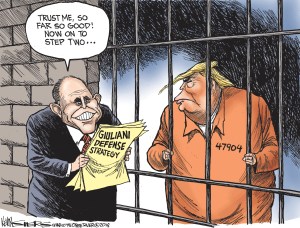 Good Day, Sky Dancers!
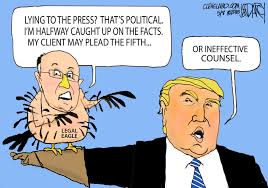 This one is from The Washington Post. “
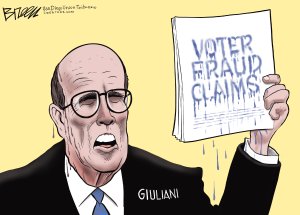 This is from CNN. “
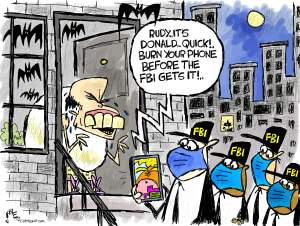 Most of these folks are headed to Iowa right now, but more interesting is this from HuffPost. “



 So now we know the name of the aide who helped Walt Nauta move the boxes around.
 Jamison describes how right wing Christians have used home schooling to indoctrinate their children and tie them to their religious beliefs.


 If you want a good smile this morning, try this headline from CBS News.







 peej
peej Carissa
 bostonboomer
 dakinikat
 ecocatwoman
 mablue2
 Mama Lopez
 peggysue22
 quixote
 skydancingguestblogger
 Mona (aka Wonk the Vote)



 Sky Dancing
Recent Comments