Juanita McNeely, “Is it Real? Yes It Is!” from 1969, a series of nine panels about the painter’s illegal abortion and medical emergency, It is displayed at the Whitney Museum of American Art
Good Day, Sky Dancers!
When my parents were trying to sell me in 4th grade on moving across the Missouri River, I clearly remember sitting in the back seat and telling them I didn’t like it here. I couldn’t really articulate how awful the boxy brick grade school looked compared to mine, which was built of granite by the WPA. Across the main road was a set of equally bricky and boxy stores in a shopping center.
All I could remember were the beautiful stores in the downtown area of Council Bluffs. There was the Hotel Ogden that looked straight out of a Western Movie, plus my Dad’s original dealership location, which was a typical auto dealership storefront straight out of the 1920s. I loved the old Victorian Houses nestled into the Bluffs and longed to own one when I grew up. I had dreams like that until we moved to Omaha. Then, my dreams were mostly of getting out of there as soon as possible. I could’ve graduated early and begged my parents to let me attend university and get out of here. My mother kept telling me these were the best days of my life. Then, I realized my mother was speaking for herself because I mostly remember her being as bored as I was. And we both hated football in a state where that’s about it for entertainment.
I can tell you that with certainty the best decades of my life came when I finally packed a car and headed out for good.
My daughter is 20 weeks pregnant, and her water broke last week at 19. The first question I get now is what state she is in. I don’t want to go into that, but you can google how exactly bad that is for a pregnancy. She was a high-risk pregnancy for me. I was placenta previa. I can tell you that my oldest daughter is an OB/GYN because of that pregnancy and the inoperable and incurable cancer that followed. I found out that the Insurance Company covering us and employing him wanted to send me to a Catholic Hospital. I said I’d pay to go to Methodist with my last dime if I had to. I badgered him to talk to the clerk, calling the shots on me and getting them to send me to Methodist. Luckily, Methodist Hospital had the only neontologist in my backward city. My husband worked for what I was told by my fifth-grade teacher was basically the employer of last resort. If we didn’t get grades, we would get stuck working in the land of endless file cabinets, evil bosses, and taxidermy animal decorations. I was due mid-December and drove myself to the hospital, bleeding profusely on Halloween.
The only good thing about that damned insurance company was it covered everything from the pre-birth trauma to the cancer treatment and surgery. It took my husband, a Vice President, to pressure them to let me go to Methodist Hospital with a good Jewish neonatologist(who later supervised Dr. Daughter’s Residency) that’s situated right across the street from Children’s Hospital’s Neonatology Unit. I gave my daughter a purple stethoscope when she entered Med school. I gave her an autographed copy of “This Common Secret ” when she graduated. My Journey as an Abortion Doctor.” She said, “But Mom, this won’t be my central practice.” She hadn’t read it when I last asked at the fall for Roe. I told her to just learn the procedure and ensure she could do it. One day, you may have to teach it secretly to save lives.
Yet in setting down her story, Wicklund has done something brave, not only by refusing to cower in the shadows but also by recounting experiences that don’t always fit the conventional pro-choice script. Before receiving her medical training, Wicklund had an abortion herself. She was asked no questions, offered no advice and left the clinic feeling violated. Years later, she terminated the pregnancy of a woman who’d been raped and wanted an abortion. Afterward, Wicklund examined the product of conception and discovered the pregnancy had occurred two weeks earlier, meaning it was not a consequence of the rape. Both she and the patient were horrified.
Opponents of abortion might view such episodes as proof that abortion is evil. For Wicklund, they are what drove and inspired her to help each woman she encountered make an informed, truly independent choice. At a clinic she ran in Montana, this meant placing the emphasis on counseling, which sometimes strengthened a patient’s resolve to terminate her pregnancy and other times led her to reconsider and bear the child instead. Wicklund may never convince the protesters who demonized her that women should be free to make such decisions on their own. But in sharing her secrets, she has shown why there is much honor in having spent a lifetime attempting to ensure they do.
Until now, very few can spend a lifetime ensuring they do. Count the states, remember the map, and be prepared to help someone you know. Be prepared for fines, jail, and neighbors reporting you.
I’ve always been a fighter, and fighting the patriarchy has been my thing ever since I found out I couldn’t play Little League baseball and was forced to wear a dress to school. One story that typifies the entire state came from one of the two Physicians performing abortions in Omaha. The biggest, most nasty of the protestors in front of his clinic was this woman and her daughter. One Sunday, he opened his clinic just for her so her daughter could have an abortion. The next day they both were out screaming crap that obviously they believed was for everyone else but them. Our bodies are in the hands of religious freaks, politicians, and insurance bureaucrats. This is not the world I planned for the girls and women coming after me.
I never thought we’d lose Roe completely. But we have. I live on an island at the edge of the rest of the state, which is primarily insane from too much religion and neo-Confederate rage. Almost all of us would love to be a city-state. But, since cancer took the one thing these nuts want to regulate the most, I don’t have to worry about the things I used to. It’s only for my daughters and now granddaughters. Location. Location. Location is everything if you have a functioning uterus. One is in Washington State. The other is in Colorado. Right now, they’re safe, but hopefully not in the way Anne Franck thought she would be in a hidey hole in the attic.
Here in Lousyana and up there in Nebraska, the state owns women’s bodies. We are chattel. The doctors, the parents, and confidants guiding such decisions in a free society no longer matter. This old, stale religion used to burn women and Jewish people at the stake and African-Americans on a cross wants its Dark Ages back. They’re in Africa trying out the death penalty for not loving and fucking their idea of the proper sex. Will we never be rid of these patriarchal missionaries who consider us chattel? I’ll shut up now. Just know that my child is safe and has her bills covered right now because she is not poor and is in Colorado. None of this makes it easier for me as I look at the faces of young women who walk my neighborhood streets, wondering if they’ll be able to make it to the Promised Land if need be.
Jessica Burgess, a Nebraska mother accused of helping her teenage daughter use pills to end her pregnancy, was sentenced on Friday to two years in prison.
Burgess and her daughter, Celeste Burgess, stand accused of working together to end Celeste Burgess’s pregnancy in April 2022.
According to prosecutors, after the pair bought pills to end the pregnancy, Celeste Burgess gave birth to a stillborn fetus. At the time, Nebraska law banned abortion after 20 weeks of pregnancy. Celeste Burgess’s pregnancy was well past that point, according to court records.
Police say that the Burgesses buried the fetal remains. An examination of the remains suggested they may have also been burned, according to court documents.
Jessica Burgess pleaded guilty in July to charges of false reporting, providing an abortion after 20 weeks of gestation, and concealing, removing or abandoning a dead human body. She was sentenced to one year in prison each charge, but the sentences for false reporting and tampering with human remains will run concurrently, with the sentence for the illegal abortion to served consecutively with the sentences for the other charges, a spokesperson for the Madison county courthouse said.
Celeste Burgess also took a plea deal and was sentenced to 90 days for concealing or abandoning a dead body earlier this year.
Although the case occurred before the US supreme court overturned Roe v Wade, it has been seen as a harbinger of how law enforcement may prosecute people for ending their own pregnancies in a post-Roe era – and how giant tech companies could go along with it.
One of the worst states of the Union is Texas. You can tell precisely how Pro-life Governor Abbott is from this headline from ABC News yesterday. “3-year-old dies while crossing the Rio Grande near Eagle Pass, Texas. The family was attempting to cross the river near a floating marine barrier.
The fetish fetishists omit this once-breathing, speaking, and walking child in the same class as a fertilized egg. This child already had dreams.
The Texas Tribune examined the reality of Abbot’s reign of terror. One year before, Grand Inquisitor Alito followed a judge who liked Witch Burning to decide that women’s reproductive health should be criminal. “A year after the Dobbs decision, Texas has settled into a post-abortion reality. The impact of Texas’ near-total ban on abortion is coming into focus as patients and providers leave the state, legal challenges languish, and the state’s social safety net braces for a baby boom.: This is reported by Eleanor Klibanoff.
A year after the Dobbs v. Jackson decision, an uneasy acceptance has settled over Texas, as even the most ardent abortion advocates acknowledge these new laws aren’t changing anytime soon.
“I don’t see the legal landscape of our state shifting in a major way, certainly not in the short-term future,” said Neesha Davé, executive director for the Lilith Fund for Reproductive Equity, an Austin-based abortion fund. “And so, unfortunately, we have had to figure out how to navigate the current legal landscape, if for no other reason than there are people who need abortion care today, yesterday, tomorrow.”
There are ongoing court challenges to Texas’ laws, but they are narrow and could drag through the courts for years. There is still momentum around meaningful political change, but that is the work of decades and much of the focus has shifted to shoring up the social safety net as a stop-gap measure.
Meanwhile, despite exceptions to the law, the number of monthly abortions in Texas has dropped into the low single digits. Women are nearly dying from pregnancy complications, or actually dying after having to travel out-of-state for abortions, or facing million-dollar lawsuits for helping friends acquire abortion medication. An unknown number are having babies they never planned for.
A year after the U.S. Supreme Court ruled in Dobbs v. Jackson that there is no constitutional right to abortion, some long-time advocates see hope in the hopelessness. They’ve been sounding the alarm about the overturn of Roe and its consequences for years, and finally, people are forced to pay attention.
“There are so many more conversations happening about abortion today than there were two years ago,” Davé said. “I do think a tide is turning. It just takes time.”
Two states are trying to come out of the Reproductive Health Care Dessert. The next battlefield is Pennsylvania. This is one of the reasons you really have to watch your state legislature. Forced Birthers are learning the numbers are against them if voters get their way. They’re not for states making their own decision. Now, they’re going straight for a Federal law banning all abortions. Every vote counts for this. Lousyana will invariably get worse after our election. A lot of us will vote with our feet. Women and children are not safe in Red State America. Neither are members of the LGBTQ+ community, immigrants, or people of color.
A battle over abortion rights is set to play out on multiple fronts this coming November with votes that could affect access to the procedure in several states.
Voters will go to the polls for key elections in half a dozen states this year, but abortion rights advocates in particular are looking at votes in Ohio, Pennsylvania and Virginia.
A battle over abortion rights is set to play out on multiple fronts this coming November with votes that could affect access to the procedure in several states.
Voters will go to the polls for key elections in half a dozen states this year, but abortion rights advocates in particular are looking at votes in Ohio, Pennsylvania and Virginia.
But the contests in Virginia and Pennsylvania will also be seen as proxy elections for the broader battle over abortion rights.
Virginia Gov. Glenn Youngkin (R) has devoted much of his time and energy to working to help elect Republicans in this November’s state legislative races. He received a political boost in June after the slate of candidates he endorsed for these seats won their primaries.
But Youngkin has been unable to achieve the 15-week abortion ban he has called for with Democrats controlling the state Senate and Republicans controlling the state House.
The state of Idaho has a law that will not even allow an Art Exhibit of Abortion Art in its Universities and Colleges. This is dated from yesterday from the Democrat & Chronicle. Rochester gives haven to censored art, letting people see an abortion health exhibit. The exhibition entitled “Unconditional Care: Listening to People’s Health Needs” is on display through Sept. 21.
An art exhibit censored at an Idaho college because of references to abortion can be seen at the Rochester Contemporary Art Center, known as RoCo.
But that school removed six pieces from it. The college cited a 2021 state law that bars public dollars from funding speech that would promote abortion rights, according to the Idaho Capital Sun.
RoCo stepped in to share the exhibition without censorship, and “Unconditional Care” is on display at the Rochester art center through Friday, Sept. 22.
“It’s one of the first examples of art censorship in the post-Rowe era,” said Bleu Cease, RoCo’s executive director. “The artworks are touching on abortion and abortion care, not advocating for it. We’re really proud to support the artist and the overall exhibition and the educational component.”
“Unconditional Care” is curated by artist Katrina Majkut, who said she avoided including protest art in the exhibition to help people move past politics and into spaces of empathy and reflection.
Some of the themes explored in “Unconditional Care” include:
Maternal mortality rates
Racial disparity
Chronic illness
Body autonomy and safety
Cease said that once news of the censorship went national, he reached out to Majkut, eventually providing her the opportunity to curate an exhibit in Rochester that would give the pulled pieces a platform.
Among the works:
Majkut’s piece titled “Medical Abortion” is a cross-stitch showing bottles of mifepristone and misoprostol, medicines that will yield a miscarriage.
Lydia Nobles made three documentary videos from a series titled “As I Sit Waiting,” featuring women describing their abortion experiences.
Michelle Hartney’s work showcases handwritten letters written in the 1920s by a woman seeking information about birth control from Planet Parenthood founder Margaret Sanger.
“The show is really not about abortion, but abortion gets all the attention because the issue is so divisive,” Cease said. “The common thread with all the artworks in the exhibition is that they relate to the human right to health wellness and body autonomy, especially in the U.S.”
We’re not well, America.
What’s on your reading and blogging post today?
(p.s. I’m sorry this took so long. It took a lot out of me today to write this. I’ve spent the week feeling unable to do any good for any life circumstances. Please keep my personal stories here, especially the current one.)
Did you like this post? Please share it with your friends:
If you’re watching cable TV, you know that the House Judiciary Committee is questioning Attorney General Merrick Garland this morning. The purpose of this, of course, is for Republicans to berate Garland about Hunter Biden and about the refusal of the Justice Department to reveal details of ongoing investigations that Republicans want to interfere with. It is maddening to watch. At least Democratic members like Adam Schiff and Eric Swalwell are providing some pushback.
Attorney General Merrick Garland is testifying Wednesday morning before the House Judiciary Committee, a session that has been contentious at times as Republicans press the nation’s top law enforcement official on a host of politically charged cases. It is Garland’s first congressional appearance since federal grand juries indicted former president Donald Trump — twice — and since he appointed a special counsel to handle the investigation and prosecution of President Biden’s son Hunter Biden. The hearing also comes as the GOP-controlled House moves toward impeachment proceedings against the president.
Here’s what to know:
Rep. Sheila Jackson Lee (D-Tex.) asked the attorney general if the rhetoric from Republicans “had any basis in reality.” Garland answered with a simple, “No, it does not.”
Early questions from Republican lawmakers centered on special counsel David Weiss’s authority in the Hunter Biden case. Garland said he gave him full authority from the start. “I had promised that I would not interfere with this investigation,” Garland said.
As Republicans criticize Attorney General Merrick Garland for picking David Weiss to oversee the special counsel investigation into Hunter Biden after the collapse in July of a plea deal that Biden’s lawyers had negotiated with Weiss, Democratic lawmakers on the dais have stated repeatedly that Weiss was appointed U.S. attorney in Delaware by Donald Trump.
“Mr. Weiss was appointed by then-President Trump,” Rep. Zoe Lofgren (D-Calif.) said, addressing Garland. “Your decision was to leave the Trump-appointed attorney on this — hands off from you,” she added.
Expect Democrats to continue to remind the room that Weiss is a Trump appointee as Republicans continue to try to tie Weiss to President Biden and press Garland on decisions made to keep him on the investigation in a special counsel capacity. Republicans have charged that Weiss hatched what they’ve called a “sweetheart” deal with Hunter Biden’s lawyers and can’t be trusted to aggressively prosecute the president’s son….
Attorney General Merrick Garland repeatedly told lawmakers that special counsel David Weiss, who is heading the Hunter Biden investigation, had full authority and independence to pursue charges in jurisdictions across the country.
Upon questioning from Rep. Dan Bishop (R-N.C.), Garland insisted that Weiss, who is the top federal prosecutor in Delaware, had authority to bring charges outside Delaware — despite allegations to the contrary.
Attorney General Merrick Garland addressed what he described as an “astounding number of threats” that American public servants have received over the past few years, tying them to incendiary political rhetoric.
Judiciary Committee Chair Jim Jordan, by DonkeyHote
He said that flight attendants, poll workers and Justice Department workers have been on the receiving end of them.
He told Rep. Sheila Jackson Lee (D-Tex.) that the Justice Department will “not be intimidated” and will continue to do its job amid these violent threats. He specifically said Wednesday that FBI agents working on the Hunter Biden investigation have been targeted.
In his opening statements, Garland also mentioned the threats.
“All of us recognize that with this work comes public scrutiny, criticism, and legitimate oversight. These are appropriate and important given the matters and the gravity of the matters before the Department,” Garland said in his opening statement. “But singling out individual career public servants who are just doing their jobs is dangerous — particularly at a time of increased threats to the safety of public servants and their families.”
There are many more helpful updates at the WaPo live update page. The hearing has been surprisingly substantive, despite efforts of Republican wackos.
Quite a few stories today deal with the ongoing struggle of House Speaker Kevin McCarthy to pass a budget and prevent an immanent government shutdown.
Speaker Kevin McCarthy is struggling to pass a bill to fund the government — and the White House isn’t about to throw him a lifeline.
With just days to go before the government runs out of money, Biden’s team is watching Congress steam toward a shutdown, resigned to the reality that there’s little they can do now to fix the situation and confident the politics will play out their way.
President Joe Biden has steered well clear of the chaos engulfing the House, where Republicans are battling each other over a government funding bill. Within the White House, aides have settled on a hard-line strategy aimed at pressuring McCarthy to stick to a spending deal he struck with Biden back in May rather than attempt to patch together a new bipartisan bill.
Kevin McCarthy
“We agreed to the budget deal and a deal is a deal — House GOP should abide by it,” said a White House official granted anonymity to discuss the private calculations. Their “chaos is making the case that they are responsible if there is a shutdown.”
Biden world’s wait-and-see approach comes against the backdrop of an increasingly likely shutdown, which would be the first of the Biden era.
For now, the White House is staying out of the mix, trying instead to draw a contrast between the House majority that can’t complete the task of keeping the government’s lights on and Biden, who on Tuesday addressed the United Nations General Assembly in New York. It’s also highlighting the price of the latest GOP plan, such as, in their estimation, cutting 800 Customs and Border Protection agents and 110,000 Head Start positions for children.
Michael Wolff has a new gossipy book out, this time about Fox News.
Gov. Ron DeSantis may have kicked Tucker Carlson’s dog, Rupert Murdoch may have called his longest-running primetime star an ableist slur, and Lachlan Murdoch has a knack for anti-Trump toiletries—these are some of the many outrageous pieces of gossip revealed in provocative author Michael Wolff’s upcoming new book about the Fox News universe.
The Fall: The End of Fox News and the Murdoch Dynasty, due out Sept. 26 via Henry Holt & Co., purports to give readers a behind-the-curtains look into Fox’s handling of the Dominion defamation lawsuit over its 2020 election lies, its post-election clashes with former President Donald Trump, its shocking firing of Carlson, and the Murdoch family’s Succession-like turmoil.
In Wolff’s telling, both Fox News and the Murdoch empire are in a slow-motion decline….
The book, which The Daily Beast has obtained and reviewed, is billed as a juicy tell-all and is chock full of eye-opening and at-times absurd anecdotes that occasionally strain credulity. During one chapter, Wolff writes that prior to being fired from his top-rated primetime perch, Carlson considered a run for president in order to escape his Fox News contract. The author also details a bizarre incident that allegedly occurred when Carlson shared a meal with DeSantis.
Rupert Murdoch
With Fox urging its stars to be “open-minded” about the Florida governor, then Murdoch’s “favored candidate” for 2024, Wolff writes, Carlson and his wife Susie welcomed DeSantis and his wife Casey to their Florida home for lunch. Despite hoping to impress Carlson—arguably a top GOP kingmaker—the presidential hopeful and Trump rival failed the “Susie Carlson test” during the visit, Wolff claims.
The DeSantis couple allegedly failed “to read the room,” especially with Carlson’s wife, “a genteel, stay-at-home woman, here in her own house,” Wolff notes. “For two hours Ron DeSantis sat at her table talking in an outdoor voice indoors, failing to observe any basics of conversation ritual or propriety, reeling off an unselfconscious list of his programs and initiatives and political accomplishments.”
Making matters worse, Wolff claims, an “impersonal” DeSantis seemed dismissive and may have used physical force against one of the Carlson family’s four beloved spaniel pups.
During the dinner, Wolff writes, “DeSantis pushed the dog under the table. Had he kicked the dog? Susie Carlson’s judgment was clear: she did not ever want to be anywhere near anybody like that ever again. Her husband agreed. DeSantis, in Carlson’s view, was a ‘fascist.’ The pot calling the kettle even blacker. Forget Ron DeSantis.”
Rupert Murdoch loathes Donald Trump so much that the billionaire has not just soured on him as a presidential candidate but often wishes for his death, the author Michael Wolff writes in his eagerly awaited new book on the media mogul, The Fall: The End of Fox News and the Murdoch Dynasty.
According to Wolff, Murdoch, 92, has become “a frothing-at-the-mouth” enemy of the 77-year-old former US president, often voicing thoughts including “This would all be solved if … ” and “How could he still be alive, how could he?”
The Fall was announced last month and will be published in the US next Tuesday. The Guardian obtained a copy.
Author Michael Wolff
Wolff has written three tell-all books about Trump – Fire and Fury, Siege and Landslide – and one about Murdoch, The Man Who Owns the News. In his second Murdoch book, he says he may be “the journalist not in his employ who knows [Murdoch] best”.
Wolff also describes his source material as “conversations specifically for this book, and other conversations that have taken place over many years … scenes and events that I have personally witnessed or that I have recreated with the help of participants in them”.
After Trump entered US politics in 2015, winning the White House the following year, he, along with an increasingly extreme Republican party, Fox News and other properties in Murdoch’s rightwing media empire formed a symbiotic relationship.
ut Murdoch has long been reported to have soured on Trump – a process which, according to Wolff, saw Murdoch personally endorse the Fox News call of Arizona for Joe Biden on election night in 2020 that fueled Trump’s campaign of lies about voter fraud, culminating in the deadly January 6 attack on Congress.
By the beginning of this year, Wolff writes, what Murdoch “adamantly didn’t want … was Trump.
“Of all Trump’s implacable enemies, Murdoch had become a frothing-at-the-mouth one. His relatively calm demeanor from the early Trump presidency where, with a sigh, he could dismiss him merely as a ‘fucking idiot’ had now become a churning stew of rage and recrimination.
“Trump’s death became a Murdoch theme: ‘We would all be better off …?’ ‘This would all be solved if …’ ‘How could he still be alive, how could he?’ ‘Have you seen him? Have you seen what he looks like? What he eats?’”
Read more at The Guardian.
There’s an excerpt from the book at New York Magazine. The page isn’t letting me copy anything, but you can read it at this link if you’re interested. They usually let you have one free article.
Cassidy Hutchinson, the former Trump aide turned crucial January 6 witness, says in a new book she was groped by Rudy Giuliani, who was “like a wolf closing in on its prey”, on the day of the attack on the Capitol.
Describing meeting with Giuliani backstage at Donald Trump’s speech near the White House before his supporters marched on Congress in an attempt to overturn the 2020 election, Hutchinson says the former New York mayor turned Trump lawyer put his hand “under my blazer, then my skirt”.
“I feel his frozen fingers trail up my thigh,” she writes. “He tilts his chin up. The whites of his eyes look jaundiced. My eyes dart to [Trump adviser] John Eastman, who flashes a leering grin.
“I fight against the tension in my muscles and recoil from Rudy’s grip … filled with rage, I storm through the tent, on yet another quest for Mark.”
Mark Meadows, Trump’s final chief of staff, was Hutchinson’s White House boss. Hutchinson’s memoir, Enough, describes the now 27-year-old’s journey from Trump supporter to disenchantment, and her role as a key witness for the House January 6 committee. It will be published in the US next Tuesday. The Guardian obtained a copy.
And that wasn’t the end of Rudy’s attacks:
Describing the events on January 6, the deadly culmination of Trump’s attempt to overturn his defeat by Joe Biden, Hutchinson writes that she “experience[d] anger, bewilderment, and a creeping sense of dread that something really horrible [was] going to happen”.
“I find Rudy in the back of the tent with, among others, John Eastman,” she continues. “The corners of his mouth split into a Cheshire cat smile. Waving a stack of documents, he moves towards me, like a wolf closing in on its prey.
“‘We have the evidence. It’s all here. We’re going to pull this off.’ Rudy wraps one arm around my body, closing the space that was separating us. I feel his stack of documents press into the small of my back. I lower my eyes and watch his free hand reach for the hem of my blazer.
“‘By the way,’ he says, fingering the fabric, ‘I’m loving this leather jacket on you.’ His hand slips under my blazer, then my skirt,” Hutchinson writes.
Federal prosecutors are scrutinizing personal benefits Tesla may have provided Elon Musk since 2017—longer than previously known—as part of a criminal investigation examining issues including a proposed house for the chief executive.
Elon Musk by Ricardo Galvao
The U.S. Attorney’s Office for the Southern District of New York also has sought information about transactions between Tesla and other entities connected to the billionaire, people familiar with the investigation said. Prosecutors have referenced the involvement of a grand jury.
The new information indicates that federal prosecutors have a broader interest in the actions of Musk and Tesla than was previously known and that they are pursuing potential criminal charges. The Wall Street Journal reported last month that the Justice Department is investigating Tesla’s use of company resources on a secret project that was described internally as a house for Musk.
The house effort was known within the carmaker as “Project 42,” and plans called for an expansive glass building to be constructed near Tesla’s Austin-area factory and headquarters.
The Securities and Exchange Commission has opened a separate civil investigation into the project, the Journal has reported.
On X, the social-media platform formerly known as Twitter, Musk hassaid there isn’t a glass house “built, under construction or planned.” He didn’t address past work or plans; neither he nor his representatives have responded to requests for comment.
There’s more at the WSJ. I got in by clicking on the Memeorandum link.
President Biden on Friday will announce the creation of a new office for gun violence prevention, an escalation of the administration’s efforts to tackle the issue amid stalled progress in Congress, according to four people briefed on the action who spoke on the condition of anonymity to discuss plans that were not yet public.
Biden and Vice President Harris are scheduled to announce the new office at an event in the White House Rose Garden on Friday afternoon, the people said.
Greg Jackson, a gun violence survivor who is the executive director of the Community Justice Action Fund, and Rob Wilcox, the senior director for federal government affairs at Everytown for Gun Safety, are expected to have key roles in the office, the people said.
The new office will report up through Stefanie Feldman, the White House staff secretary and a longtime Biden policy aide who has worked on the firearms issue for years, the people said. Feldman previously worked on the Domestic Policy Council and still oversees the gun policy portfolio at the White House….
Since Biden was elected, gun violence prevention groups have pressed the White House to create such an office, arguing that it would help coordinate efforts across the federal government to reduce gun violence. Activists say this type of office would also allow the White House to exert more leadership on the issue.
“If this announcement is, in fact, the creation of a single point of leadership on gun violence in the administration, it’s a very big deal for the movement,” Shannon Watts, the founder emerita of Moms Demand Action, a group working to stop gun violence, said in a statement after The Washington Post approached her with the news.
Thousands of LGBTQ+ veterans who were kicked out of the military because of their sexuality could see their honor restored under a new initiative the Defense Department announced Wednesday, on the 12th anniversary of the repeal of “don’t ask, don’t tell” policy banning gays and lesbians from openly serving in the military.
In a statement commemorating the anniversary of the repeal, Defense Secretary Lloyd Austin acknowledged the military fell short in correcting the harms of its past policies against LGBTQ+ service members.
“For decades, our LGBTQ+ Service members were forced to hide or were prevented from serving altogether,” Austin said. “Even still, they selflessly put themselves in harm’s way for the good of our country and the American people. Unfortunately, too many of them were discharged from the military based on their sexual orientation — and for many this left them without access to the benefits and services they earned.”
In a statement commemorating the anniversary of the repeal, Defense Secretary Lloyd Austin acknowledged the military fell short in correcting the harms of its past policies against LGBTQ+ service members.
“For decades, our LGBTQ+ Service members were forced to hide or were prevented from serving altogether,” Austin said. “Even still, they selflessly put themselves in harm’s way for the good of our country and the American people. Unfortunately, too many of them were discharged from the military based on their sexual orientation — and for many this left them without access to the benefits and services they earned.”
More details at the link.
That’s it for me today–lots of gossip in the news today. Have a great Wednesday, everyone!!
Did you like this post? Please share it with your friends:
I remember thinking how the Reagan years reminded me of George Orwell’s 1984 back before it was deeply embbeded in the Republican policies. We read it in school, along with Lord of the Flies and Brave New World. It’s on banned book lists in your fundamental Republican Dystopian Red State. Florida found it “pro-communist” and “sexually explicit.” I don’t remember being titillated or lustily singing the Internationale after my first read of the book or any of my rereads. I reread many of these classics during Republican Administrations, remembering I read about it first in any one of the dystopian novels I was assigned in literature classes.
Six months earlier, two of Wood’s Advanced Placement English Language and Composition students had reported her to the school board for teaching about race. Wood had assigned her all-White class readings from Ta-Nehisi Coates’s “Between the World and Me,” a book that dissects what it means to be Black in America.
The students wrote in emails that the book — and accompanying videos that Wood, 47, played about systemic racism — made them ashamed to be White, violating a South Carolina proviso that forbids teachers from making students “feel discomfort, guilt, anguish, or any other form of psychological distress” on account of their race.
Reading Coates’s book felt like “reading hate propaganda towards white people,” one student wrote.
At least two parents complained, too. Within days, school administrators ordered Wood to stop teaching the lesson. They placed a formal letter of reprimand in her file. It instructed her to keep teaching “without discussing this issue with your students.”
Wood finished out the spring semester feeling defeated and betrayed — not only by her students, but by the school system that raised her. The high school Wood teaches at is the same one she attended.
It had been a long summer since. Wood’s predicament, when it became public in a local newspaper, divided her town. At school board meetings, and in online Facebook groups, the citizens of wealthy, White and conservative Chapin debated whether Wood should be fired. Republican state representatives showed up to a June meeting to blast her as a lawbreaker. The next month, a county NAACP leader declared her an “advocate for the education of all students.” The county GOP party formally censured the school board chair for failing to discipline Wood.
This is something I could never dream up. Someone’s point of view can be censored by an arm of the government because it hurts your feelings. I can only tell you how many times Algebra tests hurt my feelings, but sheesh, buckle up, chucko. Then, decide you’re not going to be like that because Coates’ book outlines actual harm done to people of color by the actions and attitudes of thoughtless white people and not some idle adventure into name-calling. We should be ashamed that one group controls everyone’s destiny and grants favor to their own. The country has run like that since the days of slavery and the mass slaughter and removal of indigenous nations from their property.
Things that some of us label Orwellian have become everyday events in totalitarian-tilting Red States that chase women who go to other states or who transport pregnant women to other states, then fine them and jail them or worse. Will we even find justice for this in the courts, given that the majority of the Supreme Court appears to be Theocratic Tolatarians?
“Doublespeak” and “groupthink” came straight from Orwell’s frightening vision of a totalitarian future in which children spy on their parents, and the ultimate punishment for independent thinking is to be confronted by the thing that frightens one most. Anyone who has ever read 1984 cannot possibly forget Winston Smith and the rats.
This is from NBC News. (Yes, the NBC News that gave Big Brother an interview on Meet the Press yesterday.) “Indiana attorney general sues hospital system over privacy of Ohio girl who traveled for abortion. The lawsuit, filed Friday in Indianapolis federal court, marked Attorney General Todd Rokita’s latest attempt to seek disciplinary legal action against Dr. Caitlin Bernard.”
Indiana’s attorney general has sued the state’s largest hospital system, claiming it violated patient privacy laws when a doctor publicly shared the story of an Ohio girl who traveled to Indiana for an abortion.
The lawsuit, filed Friday in Indianapolis federal court, marked Attorney General Todd Rokita’s latest attempt to seek disciplinary legal action against Dr. Caitlin Bernard. The doctor’s account of a 10-year-old rape victim traveling to Indiana to receive abortion drugs became a flashpoint in the abortion debate days after the U.S. Supreme Court overturned Roe v. Wade last summer.
“Neither the 10-year-old nor her mother gave the doctor authorization to speak to the media about their case,” the lawsuit stated. “Rather than protecting the patient, the hospital chose to protect the doctor, and itself.”
The lawsuit named Indiana University Health and IU Healthcare Associates. It alleged the hospital system violated HIPAA, the federal Health Insurance Portability and Accountability Act, and a state law for not protecting the patient’s information.
Indiana’s medical licensing board reprimanded Bernard in May, saying she didn’t abide by privacy laws by talking publicly about the girl’s treatment. It was far short of the medical license suspension that Rokita’s office sought.
So the state is suing, but the girl and her mother aren’t part of any case? I’m confused. Plus, none of this would even be necessary if Ohio hadn’t turned a ten-year-old into state chattel and denied healthcare she desperately needed.
Hunter Biden sued the Internal Revenue Service on Monday, alleging its agents illegally released his tax information and that the agency failed to protect his private records.
President Joe Biden’s son alleges the IRS unlawfully disclosed his tax return information and did not establish safeguards to ensure the confidentiality of his records. He is seeking, among other things, all documents involving the disclosure of the tax information, $1,000 for each unauthorized disclosure and attorneys fees.
The lawsuit, which was filed in federal court in Washington, DC, does not name the two IRS agents turned whistleblowers as defendants. But the lawsuit is centered on disclosures made by the agents, Gary Shapley and Joseph Ziegler, and their lawyers in public statements, congressional testimony and interviews.
Judge Timothy Kelly, a Donald Trump appointee, has been assigned to the case.
It’s being filed amid a swirl of other legal issues facing Hunter Biden, who was indicted by special counsel David Weiss on three felony gun charges last week and is potentially facing additional tax charges by Weiss.
“Despite clear warnings from Congress that they were prohibited from disclosing the contents of their testimony to the public in another forum, Mr. Shapley and Mr. Ziegler’s testimony only emboldened their media campaign against Mr. Biden,” the lawsuit states. “And finally, since their public testimony before the House of Representatives on July 19, 2023, the agents have become regular guests on national media outlets and have made new allegations and public statements regarding Mr. Biden’s confidential tax return information that were not previously included in their transcripts before the Committee on Ways and Means.”
Specifically, Hunter Biden’s attorneys point to details Shapley shared in an interview with CBS News that aired in late June. During the interview, Shapley alleged that Biden took certain personal expenses as business expenses, including “prostitutes, sex club memberships, hotel rooms for purported drug dealers,” and that Biden owed $2.2 million in unpaid taxes, the lawsuit alleges.
Trump, attacking Democrats on abortion policy, claimed, “You have some states that are allowed to kill the child after birth.” He also said specifically, “You have New York state and other places that passed legislation where you’re allowed to kill the baby after birth.”
Facts First: This is false. Killing a child after birth is not allowed in any state, and New York did not pass legislation permitting infanticide.
A law New York approved in 2019 makes abortion illegal after 24 weeks with the exception of cases where the fetus is not viable or the abortion is “necessary to protect the patient’s life or health.” The law does not legalize post-birth murder. Since its passage, however, it has been the subject of online misinformation falsely claiming it does.
There are some cases in which parents decide to choose palliative care for babies who are born with deadly conditions that give them just minutes, hours or days to live. That is simply not the same as killing the baby.
Donald Trump decided to mark the Jewish New Year by sharing an antisemitic message stating that “liberal Jews” voted to “destroy America and Israel” by supporting President Joe Biden.
“Just a quick reminder for liberal Jews who voted to destroy America & Israel because you believed in false narratives!” the image said. “Let’s hope you learned from your mistake & make better choices moving forward! Happy New Year!”
The image posted by Mr Trump also included a flyer from JEXIT, a group based in Florida working to push the message to Jewish Americans “that the Democratic Party has abandoned them and Israel,” The Times of Israel has reported.
“Wake Up Sheep. What Natzi /Anti Semite ever did this for the Jewish people or Israel?” the flyer states.
The comments to NBC’s “Meet the Press” directly address a central premise of special counsel Jack Smith’s case against Trump over his efforts to subvert the 2020 election results: that Trump knew the election claims he was making were false after being told by several close aides that he had lost.
“It was my decision, but I listened to some people,” Trump said.
In his first broadcast network interview since leaving office, the 2024 Republican front-runner also criticized members of his party over how they’ve approached abortion policy, discussed pardoning himself in the final days of his presidency and said he would testify under oath he did not direct an employee to delete security footage.
The former president said he didn’t listen to his attorneys who told him he had lost the election because he didn’t respect them and that he “respected many others that said the election was rigged.”
“I was listening to different people, and when I added it all up, the election was rigged,” Trump told NBC’s Kristen Welker.
He added, “You know who I listen to? Myself. I saw what happened.”
In the indictment against Trump, prosecutors detailed the “prolific lies” Trump made in the wake of the 2020 election, including knowingly pushing false claims of voter fraud and voting machines switching votes despite state and federal officials telling him the claims were wrong.
Prosecutors put forward several examples of Trump being told by his aides that fraud claims he was promoting were false. The indictment cites instances where Trump was informed that his claims were false by then-Vice President Mike Pence, the director of national intelligence, senior members of the Justice Department, the Department of Homeland Security’s Cybersecurity and Infrastructure Security Agency, his own staffers, state lawmakers as well as state and federal courts.
“But the defendant disseminated them anyway – to make his knowingly false claims appear legitimate, create an intense atmosphere of mistrust and anger, and erode public faith in the administration of the election,” the indictment reads.
So, what fools would want a President who takes lousy advice? Uh, that’s rhetorical.
“Talking to her, he realized how easy it was to present an appearance of orthodoxy while having no grasp whatever of what orthodoxy meant. In a way, the world-view of the Party imposed itself most successfully on people incapable of understanding it. They could be made to accept the most flagrant violations of reality, because they never fully grasped the enormity of what was demanded of them, and were not sufficiently interested in public events to notice what was happening. By lack of understanding they remained sane. They simply swallowed everything, and what they swallowed did them no harm, because it left no residue behind, just as a grain of corn will pass undigested through the body of a bird.”
Do your remember a time when pretty much all of us agreed that NAZIs and Fascists were terrible?
What’s on your reading and blogging list today?
Did you like this post? Please share it with your friends:
Dakinikat turned me on to the world of truck drivers who have cat companions along for the ride. Here’s an article that discusses the phenomenon. CharityPaws.com: Trucker Cats May Be The Coolest Cats!
For what it’s worth, having a pet is hard work.
Love is easy enough to provide while on the road – but food, water, space, and entertainment are all needs too, and sometimes hard to come up with.
In the case of dogs especially, playtime is the hardest need to fill for truckers. After several hour-long walks, a game of tug-of-war, and an afternoon in the sun spent playing fetch, who wouldn’t be tired? But for truckers this can be time consuming and delay important deliveries!
That’s why many truckers have turned to cats as the solution for those lonely road trips. Trucker cats are the coolest cats with their chill laid back personalities and ability to make truckers feel awesome. They also have some great hearing which is why the made it to our list of “what animal has the best hearing” list. Having a companion with good hearing on board can help you find critters that may sneak around while you are sleeping or even alert you to danger!
With most of their time spent on the road in a little truck cab, cats are the perfect companion for truckers– and here’s some of the best reasons why according to one trucker’s resource:
Cats are low-maintenance: they eat less than their canine counterparts, take up less room, and don’t need as much playtime.
They’re loving and affectionate: cats are just as sweet as any other animal, once they have a chance to warm up to you.
They’re obedient, and trainable: cats can do tricks and walk on leashes, with the proper time and training!
They’re protective: though not as scary as a dog, cats are perfectly capable of altering truckers if something looks, sounds, or even smells off.
Other reasons topping truckers’ lists include cleanliness, cuteness, and the fact that having a cat in a truck is a pretty good conversation starters. Some even say that having a feline friend is a constant reminder to drive and act safely during the long haul. They are also incredibly loyal as shown by the Room 8 cat – and having that kind of loyalty on the road will make any trucker feel amazing!
Read more at the link above.
Here’s a video about trucker cats, posted on YouTube by Cheezburger.
Long Read: Are Americans Experiencing Collective Trauma?
I want to call your attention to an excellent, but very long read in The New Republic by Anna Marie Cox: We Are Not Just Polarized. We Are Traumatized. Subhead: “The pandemic. The mass shootings. Insurrection. Trump. We’ve been through so much. What if our entire national character is a trauma response?”
This is a very long piece, so I’m just going to give you some samples to help you decide if you want to tackle reading the whole thing.
As of last year, four in 10 Americans knew at least one person who died from Covid. This year, three in 10 Americans say they know someone who has been affected by an opioid addiction, and one in five knows someone who’s died from a painkiller overdose. In 2022, more than three million adults were displaced by some form of natural disaster—that’s more than three times as many displaced per year between 2008 and 2021. Last year, some cities saw a 50 percent increase in evictions over pre-pandemic levels. One in five knows someone who’s died due to gun violence; one in six has witnessed a shooting; 21 percent have been personally threatened by a gun. Half of Americans know someone personally who has experienced at least one of those events.
After Trump’s “grab her by” tape became public, calls to the national sexual assault hotline jumped up by 35 percent (as Michelle Goldberg observed, Trump was a walking trigger for assault survivors). During the Brett Kavanaugh hearings, calls to the sexual assault hotline spiked 201 percent. Lockdown—the first two months of the pandemic—saw a rise in intimate partner violence of 101 percent, with the rate stabilizing at an increase of about 8 percent from pre-pandemic numbers as of 2022.
Another photo of Trucker cat Percy, by Paul Robertson
And then there are the frontline workers and “essential personnel,” those who risked their lives for our safety and comfort during the spring of 2020. I assume that we agree health professionals faced trauma (and may well still). There are 22 million of them in the United States, and after the pandemic, 55 percent reported experiencing burnout, and three in 10 said they were now considering leaving the profession. The 55 million essential personnel who worked through the worst days of Covid suffered a similar toll: A year into the pandemic, the American Psychiatric Association found that 34 percent of essential workers had been treated by a mental health professional, 80 percent had trouble over- or under-sleeping, and 39 percent said they were drinking more alcohol than they had before….
These are traumas at the individual level in numbers so large that they demand national attention because there are national consequences—think of the nationwide therapist shortage and “the Great Resignation.”
So, what if the reason so many people identify as trauma survivors is that they are? What if the horrors of the last seven years do translate into a nation that is suffering more than mere political dysfunction? What if the polarization, paranoia, conspiracism, and hopelessness that bog us down have a more holistic origin than structural malfunctions or individual malfeasance?
What if our entire national character is a trauma response?
Before you say “bullshit,” remember: Cynicism is a trauma response.
Next Cox explores expert opinions about the concept of “collective trauma.”
The origin of the academic study of “collective trauma” has been credited to Kai Erikson’s 1977 book, Everything in Its Path, an account of the aftermath of the Buffalo Creek flood in Logan County, West Virginia, five years prior, which killed 125 people and destroyed 550 homes in a small mining community. In the book, Erikson writes of grappling with “thousands of pages of transcript material, whole packing boxes full of it,” that confounded him “not because the material is contradictory or difficult to interpret but because it is so bleakly alike.” He found respondents echoing one another to a frustrating degree, so much so that “a researcher is very apt to conclude after rummaging through these data that there is really not very much to say.” Eventually, however, he came to believe that the uniformity itself was meaningful; the damage done at Buffalo Creek was something more than a mere collection of individual harms.
Collective trauma, he wrote, means “a blow to the basic tissues of social life that damages the bonds attaching people together and impairs the prevailing sense of communality.” Collective trauma happens in slow motion, “A form of shock all the same…. ‘I’ continue to exist, though damaged and maybe even permanently changed. ‘You’ continue to exist, though distant and hard to relate to. But ‘we’ no longer exist as a connected pair or as linked cells in a larger communal body.”
Trucker Abdirahman Abdul and Aisha
In other words, the defining characteristic of collective trauma—and what makes it almost impossible to self-diagnose—is that people who have been through it no longer believe in the integrity of their community. How does anyone see themselves as a traumatized collective if no one feels that they belong?
So, pull back to the macro level. For a moment, put aside your or anyone else’s individual experience. Think of the country itself as a patient.
In the past seven years, the country has sustained significant, repeated damage to its institutions. The courts, elections, law enforcement, and so on are its vital organs. Trump has been punching America in the kidneys since he first floated the idea of a “rigged election.” January 6 was a heart attack. The musculature that is the justice system, well, it was always spasmodic. The murders of George Floyd, Breonna Taylor, and Ahmaud Arbery shocked many white people into awareness of our already dysfunctional law enforcement apparatus, and then the Dobbs decision drove home how easily the rights that support us can be yanked away. Were we ever really as strong as we thought?
The country was already weakened by Trumpism when the pandemic attacked our nervous systems more than figuratively. It cut away at the millions of tiny threads that knit up our towns and cities. Think of the loose social ties that grow from just seeing the same people at the grocery store (or the office) every day—think of the mail. Our national proprioception—our awareness of where our parts are in relation to one another—deteriorated. Our creaky supply chain is another symptom of this disconnect. So is “you’re on mute.”
I won’t quote any more, but these excerpts are just from the introductory part of the article. Cox later demonstrates with examples how the notion of trauma can apply to our collective experience as a nation. There is so much in the piece, that I wonder if Cox is planning to turn it into a book.
I’m not sure how the MAGA world fits into this hypothesis, but after my reading about the traumas of Appalachia–from poverty, drugs, unemployment, and breakdown of families (see my Wednesday post), I wonder if an argument could be made that the attraction to Trump as powerful father figure could also have arisen out of trauma. At any rate, I highly recommend this article.
Citing threats against individuals former President Donald Trump has targeted, special counsel Jack Smith has asked a federal judge for a narrowly tailored gag order that restricts the 2024 presidential candidate from making certain extrajudicial statements about the election interference case brought against him.
A redacted copy of a government filing — released Friday, after an order from U.S. District Judge Tanya Chutkan — comes in connection with the election interference case, one of four criminal cases the former president is facing, two of which are federal.
“The defendant has an established practice of issuing inflammatory public statements targeted at individuals or institutions that present an obstacle or challenge to him,” the special counsel’s office wrote.
Whispur and DanDan, photo by Whispurer on Reddit
The government said Trump “made clear his intent to issue public attacks related to this case when, the day after his arraignment, he posted a threatening message on Truth Social.”
Trump’s Aug. 4 post read: “IF YOU GO AFTER ME, I’M COMING AFTER YOU!”
Trump, the office wrote, “has made good on his threat,” spreading “disparaging and inflammatory public posts on Truth Social on a near-daily basis regarding the citizens of the District of Columbia, the Court, prosecutors, and prospective witnesses.
“Like his previous public disinformation campaign regarding the 2020 presidential election, the defendant’s recent extrajudicial statements are intended to undermine public confidence in an institution—the judicial system—and to undermine confidence in and intimidate individuals—the Court, the jury pool, witnesses, and prosecutors,” the prosecutors wrote.
Naturally, Trump responded publicly to the filing:
At an event in Washington, Trump made his first public remarks on the filing by attacking Smith, arguing that the special counsel “wants to take away my rights under the First Amendment, wants to take away my right of speaking freely and openly.”
Steven Cheung, a spokesperson for the Trump campaign, responded earlier Friday by calling the filing “nothing more than blatant election interference because President Trump is by far the leading candidate in this race.”
The federal prosecutors who charged former President Donald J. Trump with a criminal conspiracy over his attempts to overturn the 2020 election obtained 32 private messages from his Twitter account through a search warrant this winter as part of their investigation, court papers unsealed on Friday said.
Questions have lingered about what prosecutors were looking for in Mr. Trump’s Twitter account ever since it was revealed last month that the government had served the warrant on Twitter in January. In an earlier release of documents, prosecutors disclosed that they had obtained some private messages from Mr. Trump’s account but not how many.
The 32 messages, whose content has not been disclosed, were only a small fraction of the larger body of data that Twitter was forced to turn over under the terms of the warrant, the new court papers said. Much of the legal wrangling over the matter focused on the Justice Department’s demand that Twitter, purchased last year by Elon Musk and now known as X, not inform Mr. Trump of the search warrant.
Mr. Trump’s posts on the platform in the chaotic months after the election were mentioned several times in the indictment that the special counsel, Jack Smith, filed against him in Washington last month. What remains unclear is whether Mr. Smith’s team sought the warrant for Mr. Trump’s account merely to confirm that he had posted the messages that appeared in public, or whether they suspected that some private data in the account might also be important.
What were investigators looking for in the private messages?
The newly unsealed documents — an exhaustive record of the legal fight between Twitter and the Justice Department over whether to hide the execution of the warrant from Mr. Trump — added a few new details about what the government may have been seeking.
Waylon the Trucker Cat, photo by owner Nick
For example, the materials showed that prosecutors wanted to learn if there were other accounts that Mr. Trump had been logging into from the same internet address he used for his Twitter account, which during his presidency was a main channel for his public statements. But it was not clear whether looking for other accounts was merely a routine step or whether investigators had a specific reason to be asking.
The new materials — unsealed at the request of a coalition of news media organizations, including The New York Times — opened a broader window into the back and forth between the special counsel’s office and Twitter. The dispute touched on how to balance the government’s need to protect a sensitive investigation with the social media company’s desire to be transparent with its most famous user.
The documents were particularly sharp in describing Mr. Trump’s repeated attempts to obstruct federal inquiries — an argument that prosecutors used in securing permission from a judge in Washington not to tell the former president for months that they had obtained the warrant for his account.
In detailing Mr. Trump’s “pattern of obstructive conduct,” the new papers cited his attempts to interfere with the special counsel’s other inquiry — one in which the former president stands accused of illegally holding on to dozens of classified documents after leaving office.
The attorney for President Joe Biden’s son Hunter Biden, who is facing felony gun charges, said Friday that the statute is “likely unconstitutional” and he expects “the case will be dismissed before trial.”
“On the facts, we think we’ll have a defense,” Abbe Lowell told ABC News’ George Stephanopoulos in an interview on “Good Morning America.”
The younger Biden has been indicted by special counsel David Weiss on three felony gun charges, bringing renewed legal pressure on him after a plea agreement he struck with prosecutors imploded in recent months.
The conduct described in the indictment dates back to October 2018, when Hunter Biden procured a Colt Cobra 38SPL despite later acknowledging that he was addicted to drugs around that time.
While the criminal statutes cited in the indictment are clear — it is a crime to lie on a gun application form or to possess a firearm as a drug user – Hunter Biden’s attorney suggested that the charges could be unconstitutional, citing a recent appeals court ruling that drug use alone should not automatically prevent someone from obtaining a gun.
“The only change that has occurred between when they investigated [this alleged crime] and today is that the law changed,” Lowell said. “But the law didn’t change in favor of the prosecution. The law changed against it.”
With Republicans launching an impeachment inquiry on Capitol Hill, Lowell suggested that political pressure on prosecutors played into their decision, questioning the timing of the charges in light of revelations from whistleblowers about the investigation.
No kidding. The political pressure from right wing Congresspeople has been off the charts. And Special Counsel David Weiss himself was appointed by Bill Barr after political pressure from Donald Trump.
“History is also our best teacher. Yes, our past is filled with too much violence, too much hatred, too much prejudice. But can we really say that we are not confronting those same evils now?” Jackson said at the church in Birmingham, Alabama.
Trucker cat, photo by abbenquesnel on flicker
“We have to own even the darkest parts of our past, understand them and vow never to repeat them. We must not shield our eyes. We must not shrink away lest we lose it all,” she said.
The justice didn’t invoke a particular case, but as a whole her speech nodded to efforts targeting the teaching of critical race theory in schools and books about the struggle for racial equality and other topics.
“If we are going to continue to move forward as a nation, we cannot allow concerns about discomfort to displace knowledge, truth or history. It is certainly the case that parts of this country’s story can be hard to think about,” she said. “I know that atrocities like the one we are memorializing today are difficult to remember and relive. But I also know that it is dangerous to forget them.”
At times, Jackson, the first Black woman to serve on the Supreme Court, drew a personal connection to the tragedy, in which a bomb exploded at the church on September 15, 1963, killing Denise McNair, Cynthia Wesley, Addie Mae Collins and Carole Robertson. Nearly two dozen others were injured.
“As a mother of two young women who will always be my little girls, I can imagine no greater horror than to lose a child this way,” Jackson said.
“And even now, six decades later, the magnitude of that tragic loss weighs heavily on all of us because those girls were just getting started. They could have broken barriers. They could have shattered ceilings. They could have grown up to be doctors or lawyers or judges appointed to serve on the highest court in our land,” she added.
Read more at CNN.
That’s a sampling of today’s news. Feel free to discuss anything and everything in the comment thread.
Did you like this post? Please share it with your friends:
This year, workers across industries in the United States have increasingly walked off the job or threatened to do so. In July, tens of thousands of actors joined screenwriters on the picket line, bringing Hollywood to a halt. Meanwhile, a summertime strike of more than 300,000 United Parcel Service workers had seemed imminent before a deal was reached last month.
Now, another potentially large-scale strike has begun. After the United Auto Workers and the country’s largest carmakers were unable to agree on a new contract before Thursday night’s deadline, union members at General Motors, Ford Motor and Stellantis — which owns Chrysler, Jeep and Ram — have walked off the job.
About 12,700 workers began the strike on Friday, at plants in Michigan, Missouri and Ohio. That’s a small portion of the unionized factories of G.M., Ford and Stellantis across the United States. But the union hasn’t ruled out a full-scale strike.
If all 150,000 of the U.A.W. members go on strike, nearly 460,000 workers will have walked off the job at some point over the course of this year, the highest level since 2018, another notable year for work stoppages.
Strike activity increased slightly in 2021 and 2022 after a lull during the coronavirus pandemic. Much of this can be attributed to a historically strong economic recovery, which has strengthened workers’ bargaining power, said Ruth Milkman, a professor at the City University of New York’s Graduate Center and School of Labor and Urban Studies. “The single most important factor is the tight labor market,” she said.
Despite the recent uptick, overall union activity has fallen since the 1970s and ’80s, when the number of workers on strike in a year regularly surpassed 400,000.
Today’s news is the”UAW strike 2023 against Detroit automakers: Live updates, news from the picket sites.” This is reported by the Detroit Free Press.
The UAW declared a strike against Detroit Three automakers Thursday as contract talks failed to secure new labor agreements before the current deals expired at 11:59 p.m.
UAW President Shawn Fain announced the first wave of plants the union would strike if a new labor agreement was not reached before midnight: Ford Michigan Assembly Plant (Final Assembly and Paint only) in Wayne, Stellantis Toledo Assembly Complex in Ohio and General Motors Wentzville Assembly in Missouri.
The DFP has a number of exciting stories that analyze the impact of the strike on Michigan, the US, and the industry, including the many small suppliers to the Big 3 and the workers.
The UAW’s targeted plan for a possible strike could mean that some workers are on the picket lines making $500 a week in strike pay while others are on the assembly lines making their full wages.
Whether such a situation would breed contempt among workers would depend on the messaging from the United Auto Workers union, said Brett Miller, a labor and employment attorney at Butzel law firm.
“There may be some comfort if the union plans to start small and escalate the strike involving more members or it is making representations that the final result of the strike would be worth the sacrifice,” he said.
As to whether the union strikes a plant that supplies parts to another plant, thereby halting the second, non-striking plant’s production, the automaker could shut down that non-striking plant and essentially it would be a lockout for those workers at the non-striking plant.
Miller said that under the UAW constitution, those on strike or locked out could get strike pay. Generally, unemployment will not cover employees who are on strike, but there are exceptions, such as in New York and New Jersey.
The United Auto Workers union is on strike against General Motors, Ford and Stellantis, the first time in its history that it has struck all three of America’s unionized automakers at the same time.
Workers on Friday walked out of three plants – one each from the Big Three automakers – in Missouri, Michigan and Ohio. Picketers were met with cheers from sign-waving union members.
The UAW referred to its targeted strike of three plants as a “Stand Up Strike,” which it called a strategic “new approach” to walking off the job.
“As time goes on, more locals may be called on to ‘Stand Up’ and join the strike,” the union told members. “This gives us maximum leverage and maximum flexibility in our fight to win a fair contract at each of the Big Three automakers.”
The UAW’s strikes began at GM’s Wentzville Missouri, which has 3,600 UAW members on its staff; Ford’s Michigan Truck plant in Wayne, Michigan, which will have 3,300 strikes; and Stellantis’ Toledo Assembly complex in Ohio, where 5,800 will be be on strike.
In all, fewer than 13,000 of the UAW’s 145,000 members walked off the job.
“These were chosen carefully by the UAW and reflect a strategy that will ensure a large number of suppliers and dealers are affected, while reducing the number of UAW workers that, at least initially, are on strike and receiving strike pay,” said Patrick Anderson. CEO of Anderson Economic Group.
Thousands of striking writers and actors staged a solidarity march through Hollywood Wednesday, culminating in a boisterous rally outside Paramount studios as the dual labor stoppages continue to halt movie and TV production.
The Writers Guild of America has been on strike since early May. The SAG-AFTRA actors’ union joined the writers on the picket lines in July. There have been some negotiations between the WGA and Hollywood studios in recent weeks, but still no indication a resolution is at hand. There has not been any word of talks between the studios and SAG-AFTRA.
On Wednesday morning, thousands of striking writers and actors gathered outside Netflix headquarters in Hollywood, then marched to Paramount studios on Melrose Avenue. Once there, a massive rally was held, featuring speeches and music performances — and forcing closures of streets surrounding the studio.
SAG-AFTRA billed the event as a solidarity march to send a message to studios that actors and writers are standing firm in their push for fair contracts.
“Thank you so much for showing up like this, this is an amazing turnout,” SAG-AFTRA President Fran Drescher told the crowd. “Your strength and your solidarity and your resolve is going to get us to the other side of this, and history is in the making right now. I know that this strike is not easy, in fact, it’s hard. It’s very hard. And with the passing of time its going to even get harder, but the reason why we had the largest strike authorization in our union history is because we stand at an inflection point.
My Granddad was around for the Great Railroad Strike of 1922 while he and Nana had two kids. My Dad was born the year after the strike.
According to Pencavel, many workers are feeling frustrated by seeing their wages suppressed in less competitive labor markets and by the loss of a voice (such as a trade union). Moreover, he argues, a low unemployment rate makes the timing right.
“Strikes tend to be more frequent and longer when workers have opportunities for other possibly temporary work, as indicated by a low unemployment rate,” Pencavel said.
…
Why are so many strikes happening now?
When it comes to measuring earnings inequality, economists tend to be relativists, that is, if all workers get the same x% increase in wages, economists usually conclude wage inequality has not changed. By contrast, many workers are absolutists and measure inequality in terms of absolute dollar differences in wages. This distinction helps to explain why economists are more inclined to accept certain earnings differences that workers do not. An example is provided by examining the U.S. household income and comparing the household whose income is near the top of the income distribution.
Specifically, the household whose income is at the 95th percentile with the household whose income is below the median (specifically at the 20th percentile). Approximately these two households experienced the same 9% increase in income between 2018 and 2019. Given the existing wide income distribution, this 9% increase in income constituted a $2,484 increase for the household at the 20th percentile and a $21,274 increase for the household at the 95th percentile. To the relativist, inequality has not changed; to the absolutist income inequality has increased.
Tending to be absolutists, workers are outraged at the earnings reported for certain managers and business owners. They see the system as basically unfair. Indeed, it is well documented that the share of the nation’s total income that is categorized as profits has risen and the share called wages has fallen.
Amazon workers strike to expose the horror behind ‘Black Friday’ sales The workers in Amazon warehouses in Europe sought to highlight atrocious working conditions, including Injuries from accidents, overworked employees collapsing unconscious on the floor, constant robotic surveillance and workers having to skip toilet breaks to avoid missing the targets. (2018)
There have been work stoppages also for workers in search of Union protection recently. Amazon and Starbucks have experienced nascent unionization efforts. This is an article from VOX that was published in May. “Why unions are growing and shrinking at the same time. Joining the picket line like it’s 1939.” This report was written by Rani Molla.
Based on the news lately, it would seem like unions are growing.
Staffers at the Democratic Congressional Campaign Committee announced on Tuesday they had formed a union. This is after Starbucks workers last week reached 50 union wins across the country, and many more locations are slated to do so in the near future. According to the National Labor Relations Board (NLRB), about 250 total Starbucks stores, representing nearly 7,000 employees, have so far petitioned to unionize. And last month, workers at an Amazon warehouse in New York City defied all odds by winning their first union battle against the second-biggest employer in the United States. People are successfully unionizing across the economy, from retail to tech, and their wins are leading to even more union interest. Petitions for union representation in the first half of 2022 are up nearly 60 percent from last year.
This raft of union organizing, unthinkable just a few years ago, is happening against a very favorable backdrop, including a tight labor market, record inequality, and a pro-union administration, which extends to the leadership at the NLRB, the organization tasked with running union elections and enforcing labor law. Meanwhile, public approval of unions is at its highest level since 1965.
What we don’t know yet is whether these events are enough to meaningfully combat longstanding headwinds, from anti-union policy to the rise of gig work, that have caused union membership to decline for decades. Last year, amid a similar set of circumstances, the number of union members in the US went down by 240,000, leaving the rate of union membership at a low of 10 percent — half what it was in the 1980s. The pandemic has been a sort of double-edged sword for unions, giving people more reasons to organize and also causing union and non-union workers to lose their jobs.
It’s possible the psychic weight of union wins is bigger than their actual weight. A typical Starbucks only has 26 workers, and there hasn’t yet been public union activity at the vast majority of the company’s 9,000 corporate stores. After one Staten Island Amazon fulfillment center won its vote to unionize, a second sort center lost, and there are more than 800 Amazon warehouse facilities across the country.
It’s not clear where this will all net out. This year’s total union membership numbers won’t be available until the Bureau of Labor Statistics releases them early next year. Until then, we do know that a number of individual unions have been successfully bucking the trend in recent years by adding members. Labor organizers have done so by employing a variety of tactics, new and old, and could help other shops do the same. Labor experts laud unions’ efforts but say more is needed at a policy level to ensure these recent wins aren’t just a flash in the pan.
Democrats were quick to back working-class United Auto Workers in their strike against General Motors, delivering doughnuts and holding picket signs outside factories to show solidarity. It’s a union they long have aligned with politically.
There were no doughnuts from Republicans.
Led by President Donald Trump, GOP officials have largely avoided taking sides in the strike that threatens to upend the economy in Michigan, an election battleground, a year before the 2020 vote. Both here and nationally, most Republicans said little about the substance of the dispute beyond hope for a speedy resolution.
The muted response reflects the tricky politics of labor for Republicans.
Trump has made inroads with members of some unions, due partly to promises to get tough on trade and keep manufacturing jobs in the United States. The message pulled key voters away from their Democratic union bosses, who Trump argues are corrupt.
But a strike prompted in part over GM’s plan to close American plants highlights Trump’s unfulfilled promises on manufacturing and gives Democrats a chance to play up their union credentials.
Democratic presidential candidate Elizabeth Warren planned to show up on the picket line in Michigan on Sunday, with rival Bernie Sanders expected this coming week. Nearly all the candidates have tweeted support for the workers.
“Proud to stand with @UAW to demand fair wages and benefits for their members. America’s workers deserve better,” Joe Biden tweeted.
Trump is in a bind.
Backing the union would undermine Trump’s message that labor does not advocate for its workers and give a powerful Democratic force a boost before an election.
Siding with GM would call into question his promises to defend workers and he would risk getting blamed for economic woes in Rust Belt states he needs to win reelection.
I may be a Financial economist, but anyone in the field has had a healthy dose of Labor Economics at some point in their training. Classical labor theory suggests that everyone will be paid based on their contribution (productivity). It fails to account for the differences in salaries for women and minorities. It also underestimated how much the capital side would be given tremendous tax benefits as well as the bonuses and stock plans that are supposed to align management with the stockholders. Labor became the redheaded stepchild and was frequently overlooked in the rise of the service industry. Additionally, the investment in technology to replace workers has been intense, even pushing shoppers to self-checkout when it used to be a radical idea that you would pump your own gas.
Anyway, my bottom line is it’s about time that every person who actually does the work gets the pay, recognition, and benefits they deserve. Hope I haven’t been too wonky or too much of a history nut for you on my wonky thread. All I can say is my life was a lot better when I had a union bargaining for my terms of employment. It hasn’t been the same since. But then, I first taught at a community college where many of the instructors were in trades. I still shudder at the thought that your fundamental English Professor is paid far less than anyone in my field. I was active in the bargaining unit of my Union and was fascinated by the process. Also, the Union does make us strong.
The Sky Dancing banner headline uses a snippet from a work by artist Tashi Mannox called 'Rainbow Study'. The work is described as a" study of typical Tibetan rainbow clouds, that feature in Thanka painting, temple decoration and silk brocades". dakinikat was immediately drawn to the image when trying to find stylized Tibetan Clouds to represent Sky Dancing. It is probably because Tashi's practice is similar to her own. His updated take on the clouds that fill the collection of traditional thankas is quite special.
You can find his work at his website by clicking on his logo below. He is also a calligraphy artist that uses important vajrayana syllables. We encourage you to visit his on line studio.


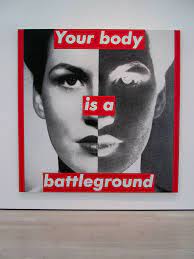

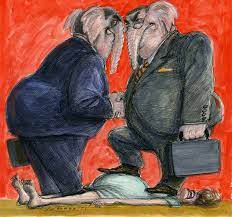

 . This is one of the reasons you really have to watch your state legislature. Forced Birthers are learning the numbers are against them if voters get their way. They’re not for states making their own decision. Now, they’re going straight for a Federal law banning all abortions. Every vote counts for this. Lousyana will invariably get worse after our election. A lot of us will vote with our feet. Women and children are not safe in Red State America. Neither are members of the LGBTQ+ community, immigrants, or people of color.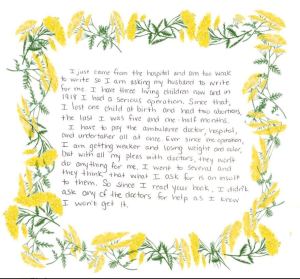






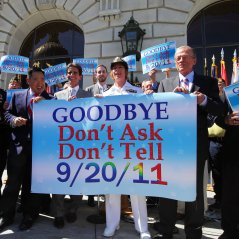 One more from CBS News:
 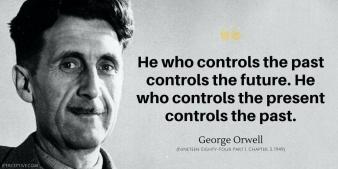 Good Day, Sky Dancers!
 “I read the News today; oh Boy.” A day in my life usually includes at least moving one of these books from my hallway library to the small bookshelf by my bed for easy reference. I may need a bigger shelf. Here’s an article from the Washington Post on scenic South Carolina. “
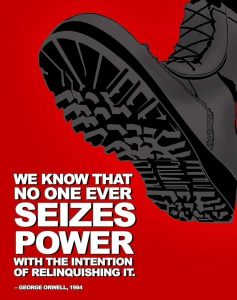 This is something I could never dream up. Someone’s point of view can be censored by an arm of the government because it hurts your feelings. I can only tell you how many times Algebra tests hurt my feelings, but sheesh, buckle up, chucko. Then, decide you’re not going to be like that because Coates’ book outlines actual harm done to people of color by the actions and attitudes of thoughtless white people and not some idle adventure into name-calling. We should be ashamed that one group controls everyone’s destiny and grants favor to their own. The country has run like that since the days of slavery and the mass slaughter and removal of indigenous nations from their property.
 This is from NBC News.
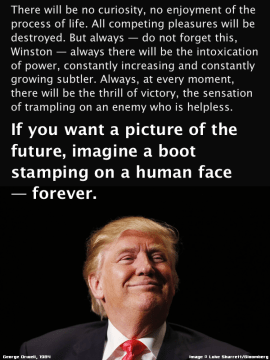 So the state is suing, but the girl and her mother aren’t part of any case? I’m confused. Plus, none of this would even be necessary if Ohio hadn’t turned a ten-year-old into state chattel and denied healthcare she desperately needed.
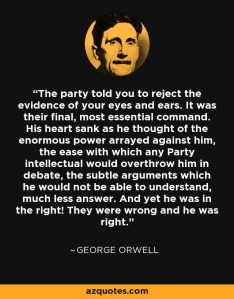 Everyone is talking about Meet the Press and Kristen Welker’s first interview. She chose poorly.
  So, this one is the strange one to me. I think he just admitted to a lot of felonies. This is from CNN again.
 So, what fools would want a President who takes lousy advice? Uh, that’s rhetorical.





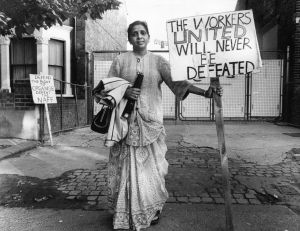

 It is important to note that
 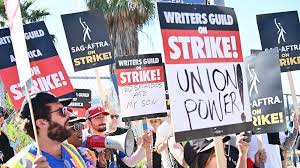 A local L.A. ABC TV station reports that


 peej
peej Carissa
 bostonboomer
 dakinikat
 ecocatwoman
 mablue2
 Mama Lopez
 peggysue22
 quixote
 skydancingguestblogger
 Mona (aka Wonk the Vote)



 Sky Dancing
Recent Comments