Last year in Massachusetts we had a winter with almost no snow. Weather people quite often predicted it, but it never came. It really bothered me. I realized how much I love snowstorms and how much I miss snow when it doesn’t arrive. It looks like this year will be another mild winter with very little snow. We got a few inches recently, but mostly we’re getting rain.
I’m far from alone in missing snow. A few days ago, I came across two articles about what climate change is doing to our winters.
In January 1995, when The Atlantic published “In Praise of Snow,” Cullen Murphy’s opus to frozen precipitation, snow was still a mysterious substance, coming and going enigmatically, confounding forecasters’ attempts to make long-term predictions. Climate change registered to snow hydrologists as a future problem, but for the most part their job remained squarely hydrology: working out the ticktock of a highly variable yet presumably coherent water cycle. “We still don’t know many fundamental things about snow,” Murphy wrote. “Nor do we understand its relation to weather and to climate—the dynamics of climate being one of the perennials on the ‘must figure out’ list of science.”
In January 2024, at long last, someone has figured out a formula of sorts for how snow reacts to climate change, and the answer is: It reacts nonlinearly. Which is to say, if we think snow is getting scarce now, we ought to buckle up.
Nonlinear relationships indicate accelerated change; shifts are small for a while but then, past a certain threshold, escalate quickly. In a paper published Wednesday in the journal Nature, two Dartmouth researchers report finding a distinctly nonlinear relationship between increasing winter temperatures and declining snowpacks. And they identify a “snow loss cliff”—an average winter-temperature threshold below which snowpack is largely unaffected, but above which things begin to change fast.
That threshold is 17 degrees Fahrenheit. Remarkably, 80 percent of the Northern Hemisphere’s snowpack exists in far-northern, high-altitude places that, for now, on average, stay colder than that. There, the snowpack seems to be healthy and stable, or even increasing. But as a general rule, when the average winter temperature exceeds 17 degrees (–8 degrees Celsius), snowpack loss begins, and accelerates dramatically with each additional degree of warming.
Already, millions of people who rely on the snowpack for water live in places that have crossed that threshold and will only get hotter. “A degree beyond that might take away 5 to 10 percent of the snowpack, then the next degree might cut away 10 to 15 percent, then 15 to 20 percent,” Alexander Gottlieb, the first author on the paper, told me over the phone as I looked out my window in New York City, where it has rained several times over the past few days. “Once you get around the freezing point”—32 degrees Fahrenheit—“you can lose almost half of your snow from just an additional degree of warming,” he said. New York City, which was recently reclassified as a “humid subtropical” climate, has clocked nearly 700 consecutive days with less than an inch of snowfall. It’s definitely over the snow-loss cliff, and as global temperatures increase, more places will follow.
By Malysheva Nastenka
Gottlieb and his co-author, Justin Mankin, figured this out by looking at how changes in temperature and precipitation drove changes in snowpack in 169 river basins across the Northern Hemisphere from 1981 through 2020. Using machine learning, they found a clear signal that human-induced climate change was indeed forcing changes in the snowpack in the places where most people live. The sharpest declines were in the watersheds of the southwestern and northeastern United States, and in Central and Eastern Europe. “In places where we are able to identify this really clear signal that climate change has reduced spring snowpack, we expect that to really only accelerate in the near term,” he said. “Those are places where the train has already kind of left the station.” Indeed, the Hudson River watershed, in which New York City sits, experienced among the steepest declines over that period. In the Northeast, which is not as reliant on spring snowmelt for water, that loss is felt most keenly as a loss of recreation; whole economies in the Northeast are based on skiing.
In the Mountain West, the stakes are even higher. Hydrologists already worry about the future reliability of the region’s snow-fed water supply: Previous research found snowless winters in the Mountain West are likely to be a regular occurrence by mid-century. But crucially, Gottlieb doesn’t see any room for cheerfulness about individual years with off-the-charts snowfall, such as last year’s record snowpack in the Colorado River basin. “This work really shows that we can definitely still get these one-off anomaly years that are incredibly wet, incredibly snowy, but the long-term signal is incredibly clear,” he said. Once you’re over the cliff, there’s no going back. The snow will keep disappearing.
In this piece, Lora Kelley interviews Zoë Schlanger (author of the previous article) on “the sense of loss when climate change transforms winter”: The Feeling of Losing Snow. Kelley and Schlanger mostly rehash the information from the previous article, but they also discussed the feeling of losing snowy winters:
Zoe: One of the hydrologists I spoke with was a former ski-patrol person, and he was talking so beautifully about what it meant for him to ski on a cold, bright day high in the mountains in Utah with perfect powder. It was just so vital to his enjoyment of life. For future generations, snow could just become slush, or not be there at all.
I don’t ski. I don’t live in the mountains. But even for me, there’s a sense of loss. It makes me think of a word that an Australian philosopher coined a number of years ago: solastalgia, which is essentially the sense of homesickness for an environment that you never left, but is leaving without you in some way. I feel like we’re all experiencing that when there are these touchstones of the year that seem to not be there anymore. It’s a strange sense of in-place homesickness.
Lora: This strikes me as a really stark example of climate change affecting how people experience nature. How do you think about these more obvious losses versus less visible, more incremental changes to the environment?
Zoë: Snow is a reminder that, actually, a lot of the changes we’re dealing with aren’t that incremental. We may not be able to see rising temperatures in quite the same way. But in many cases, those changes are just as sudden and dramatic and are happening faster than people thought they were. The wildfires we saw last year, for example, were wildly out of proportion from anything we’ve seen before. Records aren’t getting broken by small degrees now. They’re getting broken by leaps and bounds.
Climate change is real, it’s happening quickly, and it affects our lives in so many ways.
The Supreme Court will decide this term whether states can force doctors to turn away patients suffering serious, life-threatening medical complications, or if doctors will be allowed to provide standard medical care to those patients: abortions. The court announced last week it will hear arguments over the Emergency Medical Treatment and Active Labor Act, or EMTALA, in April.
By Vicky Mount
EMTALA is a more than three-decade-old federal law that says hospitals that accept Medicare (most hospitals in this country) cannot turn away anyone with an emergency medical condition; they are required to provide stabilizing treatment to prevent that person from suffering serious medical complications. After Roe v. Wade was overruled in 2022, the Biden administration issued guidance clarifying that if a pregnant patient arrives at a hospital with an emergency condition that could only be stabilized with an abortion, the hospital is required to provide that care — regardless of state law.
To the Supreme Court, Idaho has argued that states — not doctors, and not the federal government — should be permitted to decide what kind of emergency medical care women can receive. “The federal government cannot use EMTALA to override in the emergency room state laws about abortion any more than it can use it to override state law on organ transplants or marijuana use,” the state’s attorney general wrote in its petition to the high court.
Lawyers for the Department of Justice sued the state of Idaho last year over the criminal abortion ban passed by the GOP-controlled legislature, which only allows for abortions to prevent a patient’s death — language one Idaho doctor said “is not useful to medical providers because this is not a dichotomous variable.”
The Biden administration argued the Idaho law violates care requirements mandated by EMTALA, and a lower court agreed, blocking the law as it applied to medical emergencies. But on Jan. 5, the Supreme Court lifted the lower court injunction, reinstating the ban and sending the chilling message to Idaho doctors that they cannot offer the care they have been trained to provide to pregnant patients without fear of criminal prosecution.
Nancy Northup, president of the Center for Reproductive Rights, called the Supreme Court’s intervention in the case “deeply troubling.”
“EMTALA is currently the only federal protection for patients who need emergency abortions. If the Supreme Court eviscerates that, there is no doubt that people will die,” Northup said in a statement.
The Supreme Court said Friday it will consider whether state and local officials can punish homeless individuals for camping and sleeping in public spaces when shelter beds are unavailable.
The justices will review a lower court decision that declared it unconstitutional to enforce anti-camping laws against homeless individuals when they have nowhere else to sleep.
Photo by Frank Herfort
The U.S. Court of Appeals for the 9th Circuit, which covers Western states, including California, Oregon and Washington, first held in 2018 that the Eighth Amendment’s protection against cruel and unusual punishment prohibits cities from criminalizing public camping when shelter is unavailable.
The city of Grants Pass, Ore., asked the justices to overturn a similar recent decision involving civil fines and warned that the ruling would paralyze cities across the West from addressing safety and public health risks created by tents and makeshift structures. The 9th Circuit’s decision, the officials said, is standing in the way of a comprehensive response to the growth of public encampments.
“The consequences of inaction are dire for those living both in and near encampments: crime, fires, the reemergence of medieval diseases, environmental harm and record levels of drug overdoses and deaths on public streets,” lawyers for the city told the high court.
The Supreme Court agreed Friday to hear Starbucks’s appeal of a decision ordering the coffee chain to reinstate seven terminated employees, who were part of a high-profile union drive and became known as the “Memphis Seven.”
With implications for labor organizing more broadly, the justices will take up the case to decide the proper standard for court injunctions requested by the National Labor Relations Board (NLRB) as they battle against employers in administrative proceedings.
The injunctions, aimed at keeping the status quo, have forced companies to reinstate employees, keep facilities open and pause corporate policy changes as the NLRB adjudicates alleged unfair labor practices.
Federal appeals courts have been split on what test the NLRB must clear to receive such an order, however.
Starbucks, backed by the U.S. Chamber of Commerce and other business interests, argues that some courts — like the one that ordered the Memphis Seven be reinstated — have been too lenient, emboldening the NLRB to interfere with employers without due cause.
“That split carries enormous consequences for employers nationwide and unacceptably threatens the uniformity of federal labor law,” Starbucks’s attorneys wrote to the justices.
Hunter Biden offered on Friday to comply with any new subpoena and testify in private before House Republicans seeking to impeach his father over alleged but unproven corruption, an attorney for Joe Biden’s son said.
By Troy Brooks
“If you issue a new proper subpoena, now that there is a duly authorised impeachment inquiry, Mr Biden will comply for a hearing or deposition,” Abbe Lowell wrote to James Comer and Jim Jordan, the Republican chairs of the oversight and judiciary committees.
“We will accept such a subpoena on Mr Biden’s behalf.”
Republicans are interested in Hunter Biden’s business dealings and struggles with addiction. Outside Congress, he faces criminal charges over a gun purchase and his tax affairs that carry maximum prison sentences of 25 and 17 years. In Los Angeles on Thursday, he added a not guilty plea in the tax case to the same plea in the gun case.
Biden previously refused to comply with a congressional subpoena for testimony in private, giving a press conference on Capitol Hill to say he would talk if the session were public.
On Wednesday, Comer held a hearing to consider a resolution to hold Biden in contempt of Congress, a charge that can result in a fine and jail time.
The hearing descended into chaos with Biden and Lowell making a surprise appearance, sitting in the audience while Republicans and Democrats traded partisan barbs. The resolution was sent to the full House for a vote. The White House said Joe Biden had not been told of his son’s plan to attend the oversight hearing.
The Internal Revenue Service said Friday that it has collected more than $500 million from wealthy tax dodgers since 2022, thanks to a funding boost that is now in jeopardy as Republican lawmakers work to claw back tens of billions of dollars from the agency.
The IRS has used a budget increase approved under the Inflation Reduction Act to ramp up enforcement efforts, targeting millionaires over significant sums of unpaid taxes. The agency announced Friday that it has retrieved $520 million through its new initiatives.
“This is why we fought for a fully funded IRS, and why it’s so reckless for Republicans to try to slash its budget again,” Rep. Gerry Connolly (D-Va.) wrote in response to the agency’s announcement.
The congressional GOP, which has long worked to starve the IRS of funding in service to rich tax cheats, is aiming to more quickly implement $20 billion in cuts that they secured as part of last year’s bipartisan deal to raise the debt ceiling, potentially compromising tax enforcement. The $20 billion represents a quarter of the $80 billion IRS funding boost in the Inflation Reduction Act, which Republicans unanimously opposed.
Under a spending tentative agreement that congressional leaders announced this past weekend, the $20 billion in IRS cuts would be frontloaded to 2024 instead of being spread out over two years. The deal still must pass Congress—hardly a forgone conclusion as far-right Republicans push House Speaker Mike Johnson (R-La.) to back out of the agreement, complaining that government spending is too high overall.
Even as the Biden reelection campaign forges ahead with preparations for another potential general election match-up between Biden and his predecessor, it is grappling with a stubborn reality: The majority of undecided voters simply do not seem to believe – at least not yet – that Donald Trump is likely to be the Republican presidential nominee.
According to the campaign’s internal research, this is the case for most of the undecided voters that the campaign is targeting – nearly three-in-four of them, senior Biden campaign officials told CNN. Those officials said one of the biggest reasons driving this is the simple fact that many voters are not paying close attention to the election, including the ins and outs of the GOP nomination process.
“You can’t conceive of how tuned out these folks are,” one senior campaign official said.
To that end, Biden campaign officials see the task of helping voters recognize that Trump is a strong frontrunner as one of their most important and urgent challenges, with the first GOP caucus in Iowa now just days away. A key part of that work is painting a vivid picture of what a second term of a Trump White House would look like.
At some point in the near future, Biden campaign officials say they expect that a switch will turn on for many of these voters who are not yet convinced that Trump is likely to be on the ballot in the fall. As one senior official put it, a realization will hit: “Oh s—, it is an election between that guy and that guy.”
But what’s impossible for the campaign to predict at this point in the election cycle is when exactly it will click for voters that “that guy” – Trump – is poised to be the GOP presidential nominee. Just 20% of the public has been paying a lot of attention to the 2024 presidential campaign, according to an AP-NORC poll from the end of last year; meanwhile, 47% said they have paid little or no attention.
Across Iowa, as the first nominating contest approaches on Monday, voters plow through snowy streets to hear from candidates, mingle at campaign events and casually talk of the prospect of World War III, civil unrest and a nation coming apart at the seams.
Four years ago, voters worried about a spiraling pandemic, economic uncertainty and national protests. Now, in the first presidential election since the siege on the Capitol on Jan. 6, 2021, those anxieties have metastasized into a grimmer, more existential dread about the very foundations of the American experiment.
“You get the feeling in Iowa right now that we’re sleepwalking into a nightmare and there’s nothing we can do about it,” said Doug Gross, a Republican lawyer who has been involved in Iowa politics for nearly four decades, ran for governor in 2002 and plans to support Nikki Haley in the state’s caucuses on Monday. “In Iowa, life isn’t lived in extremes, except the weather, and yet they still feel this dramatic sense of inevitable doom.”
Donald J. Trump, the dominant front-runner in the Republican primary race, bounces from courtroom to campaign trail, lacing his rhetoric with ominous threats of retribution and suggestions of dictatorial tendencies. President Biden condemns political violence and argues that if he loses, democracy itself could falter.
Bill Bradley, 80, who served for 18 years as a New Jersey senator, remembered when he ran for the Democratic presidential nomination in 2000, spending more than 75 days in Iowa during his bid. “We debated health care and taxes, which is reasonable,” he said, adding, “Civil war? No. World War III? No, no, no.”
This presidential race, he said, is “a moment that is different than any election in my lifetime.”
Read more at the NYT.
Photographer unknown
There is so much Trump legal news today, that I’m just going to link to the articles, and you can decide what you want to read.
The headlines are tough out there for the Orange One. Since he’s such a toddler, will he actually thrive on the lousy attention today?
This is from Politico. It’s written by Michael Krause. “‘This to Him Is the Grand Finale’: Donald Trump’s 50-Year Mission to Discredit the Justice System. The former president is in unparalleled legal peril, but he has mastered the ability to grind down the legal system to his advantage. It’s already changing our democracy.” I’m waiting for Don the Con to become Don the Con if you catch my drift.
What happened in Room 300 of the New York County Courthouse in lower Manhattan in November had never happened. Not in the preceding almost two and a half centuries of the history of the United States. Donald Trump was on the witness stand. It was not unprecedented in the annals of American jurisprudence just because it was a former president, although that was totally true. It was unprecedented because the power dynamic of the courtroom had been upended — the defendant was not on defense, the most vulnerable person in the room was the most dominant person in the room, and the people nominally in charge could do little about it.
It was unprecedented, too, because over the course of four or so hours Trump savaged the judge, the prosecutor, the attorney general, the case and the trial — savaged the system itself. He called the attorney general “a political hack.” He called the judge “very hostile.” He called the trial “crazy” and the court “a fraud” and the case “a disgrace.” He told the prosecutor he should be “ashamed” of himself. The judge all but pleaded repeatedly with Trump’s attorneys to “control” him. “If you can’t,” the judge said, “I will.” But he didn’t, because he couldn’t, and audible from the city’s streets were the steady sounds of sirens and that felt absolutely apt.
“Are you done?” the prosecutor said.
“Done,” Trump said.
He was nowhere close to done. Trump’s testimony if anything was but a taste. (In fact, he said many of the same things in the same courtroom on Thursday.) This country has never seen and therefore is utterly unprepared for what it’s about to endure in the wrenching weeks and months ahead — active challenges based on post-Civil War constitutional amendments to bar insurrectionists from the ballot; existentially important questions about presidential immunity almost certainly to be decided by a U.S. Supreme Court the citizenry has seldom trusted less; and a candidate running for the White House while facing four separate criminal indictments alleging 91 felonies, among them, of course, charges that he tried to overturn an election he lost and overthrow the democracy he swore to defend. And while many found Trump’s conduct in court in New York shocking, it is in fact for Trump not shocking at all. For Trump, it is less an aberration than an extension, an escalation — a culmination. Trump has never been in precisely this position, and the level of the threat that he faces is inarguably new, but it’s just as true, too, that nobody has been preparing for this as long as he has himself.
BB, JJ, and I had another one of those conversations yesterday where we basically admitted that we can no longer watch him, listen to him, or see his pictures. Most of what I saw was a new, very icky hairstyle that was reminiscent of Dennis the Menace. The people who surround him–mostly lawyers right now–are weird, too. Please, make him go away somehow. Trump’s last words for the Trump Family Crime Syndicate’s fraudulent activity are hard to describe. I cannot imagine any crook already found guilty would get an opportunity like this. This is from the Washington Post. “Trump assails his fraud trial in courtroom speech as case winds down.” Who, but Trump, would insult a judge that’s deciding how many hundreds of millions of dollars to grab from you as they shut down your ability to ever do business in New York State again? State AG Leticia James and her team brilliantly executed the prosecution case. Trump forced his lawyers to ask the judge for an opportunity to speak. It was the usual Trump shitshow.
On Thursday in court, Kise revived his request for Trump to be able to speak as part of his side’s closing remarks. Engoron asked if Trump would agree to stick to subjects related to the case, echoing his emailed request. Instead of answering directly, Trump launched into a speech from his seat in the courtroom.
“What’s happened here, sir, is a fraud on me,” Trump said. “If I’m not allowed to talk about [the political motivation] — it really is a disservice. I would say that’s a big part of the case. I would say it’s 100 percent.”
Engoron asked Kise to “please control your client,” but Kise did not appear to make any effort to do so. Engoron audibly sighed and gave Trump one minute to wrap up his remarks.
“I know this is boring to you,” Trump said. “You have your own agenda. You can’t listen for more than one minute.”
Engoron also challenged Trump on a claim that he had never been in trouble with banks before.
“By the way, you said you’ve never had a problem — haven’t you been sued before?” Engoron said.
“I should have won it every time,” Trump replied.
After Trump spoke, Engoron said the defense had used its allotted time and that the court would break for lunch. Later in the afternoon, Trump spoke to reporters, repeating his complaints about James and the case.
The New York case is a civil matter, not criminal, so nobody faces possible time behind bars as a result. Trump has also been charged in four separate criminal cases in New York, D.C., Florida and Georgia. He has denied wrongdoing in all of those cases, as well.
This unwanted speech came on the same day as the Judge and his family endured a bomb threat. Trump’s creepy cult swatted the Judge. This is from the New York Times. “Judge in Trump’s Civil Fraud Trial Is Swatted at His Home. Authorities responded to a fake bomb threat at the home of Justice Arthur F. Engoron on the day he was set to hear closing arguments in New York’s suit against Donald Trump.
Nassau County authorities on Thursday responded to a hoax bomb threat at the house of the judge presiding over the civil fraud trial of Donald J. Trump.
A spokesman for the Nassau County Police Department confirmed that there had been a swatting incident — a fake threat intended to prompt a mass police response — at the house of the judge, Arthur F. Engoron, who is currently hearing closing arguments in Mr. Trump’s case. Two people with knowledge of the matter said that the threat involved a bomb and that the bomb squad came to the house.
The threat came the morning after Mr. Trump again attacked Justice Engoron on Truth Social, his social media site, saying that the judge and the New York attorney general, who brought the fraud case, were trying to “screw me.” And it came just days after the police in Washington were called to the home of the federal judge overseeing Mr. Trump’s election interference case.
Mr. Trump planned to speak in his own defense at closing arguments Thursday. Justice Engoron said he would have to abide by rules that apply to lawyers giving closing arguments and refrain from delivering a “campaign speech.”
Swatting by the Trump Cult is an orchestrated event these days. Jamelle Bouie has this Op-Ed in the New York Times. “Trump Is Playing With Fire. To be a Republican politician in the age of Trump is to live under the threat of violence from his most fanatical and aggressive followers.”
In the aftermath of the Civil War — when political allegiances were up for grabs in much of the former Confederacy — opponents of Black suffrage, of Black governance and of the Republican Party used violence and intimidation to dissuade and discipline those whites who either contemplated cooperation or had already reconciled themselves to the new order.
There is also a parallel to draw with the present in the way that this and other forms of Reconstruction-era violence interacted with the political system. “The objective was not simply to destroy the Republican governments by attacking and dispersing their supporters,” the historian Michael Perman noted in a 1991 essay on the subject, “but to enable the Democrats to regain power by winning elections. Ironically, the intention was to use violent and illegal means to win power legitimately, through the electoral process.”
You can get a good illustration of what this looked like in the historian George C. Rable’s account of the 1875 Mississippi statewide elections, in his 1984 book “But There Was No Peace: The Role of Violence in the Politics of Reconstruction.” On Election Day in one county, Rable points out, Democratic partisans “placed an old cannon on a hill ominously aimed toward the polls.”
You should think of the intimidation and death threats — along with Trump’s recent warning that there will be “bedlam in the country” if he’s disqualified from the ballot — as a more modern cannon on a hill, ominously aimed toward the polls.
The former president is no longer in a position to try to subvert an election outcome using the power of the federal government. But Trump can try, whether he is the nominee or not, to use the fervor of his followers and acolytes to tilt the playing field in his direction. He can use the threat of violence to make officials and ordinary election workers think twice about their decisions. And he can use the example of those Republicans who have crossed him as a warning to wavering lawmakers — to anyone who resists the force of his will.
The story we like to tell about American democracy is that for the most part, our experiment in self-government has been characterized by restraint and nonviolence more than the reverse. The opposite is true, of course; violence is deeply entwined with the American experience of democracy.
But there are times when the violence is more pervasive than not, when the conflicts are more acute. And the thing to keep in mind is that political violence doesn’t simply wind down of its own accord. There is almost always a settlement. There is almost always a winner. The violent campaign against Reconstruction ended with the so-called Redemption of the South — with the defeat of Southern Republicans and the victory of counter-revolutionaries and recalcitrant ex-Confederates.
He’s also back to his old antics of birtherism. This is from NPR. It’s written by Franco Ordoñez, “Bringing birther back, Donald Trump questions Nikki Haley’s right to be president.” There’s no one that can go lower than Trump.
As Nikki Haley surges in Republican polls, former President Donald Trump has turned to his social media outlet where he is promoting a “birther” conspiracy theory against the former South Carolina governor.
Trump posted an article on his Truth Social account from a right wing outlet that claims Haley is ineligible to be president because her parents were not U.S. citizens when she was born.
While her parents became citizens after her birth, Haley was born in South Carolina. Under the 14th Amendment of the U.S. Constitution, being born in the United States makes her a natural-born citizen. She is therefore eligible to become president.
The Trump campaign has long said that he would target whoever was most threatening him in the Republican primaries. Haley has emerged as his top rival in recent weeks. A new University of New Hampshire/CNN poll shows Haley trailing Trump in the Granite State by just single digits.
This is not the first time, Trump has raised birther claims. For five years, Trump routinely questioned former President Barack Obama’s birthplace – a lie that many saw as a racist dog whistle.
The Haley campaign did not respond to requests for comment.
Famously, Trump also has a parent born outside of the U.S. His mother, Mary, is from Scotland.
This opinion is from the Op-Ed pages of the New York Times. It is written by David French. “The Greatest Threat Posed by Trump.”
I dread the division and conflict of a second Trump term, and I don’t minimize the possibility of Trump doing permanent political damage to the Republic. But the problem I’m most concerned about isn’t the political melee; it’s the ongoing cultural transformation of red America, a transformation that a second Trump term could well render unstoppable.
To put the matter as simply as possible: Eight years of bitter experience have taught us that supporting Trump degrades the character of his core supporters. There are still millions of reluctant Trump voters, people who’ve retained their kindness, integrity and good sense even as they cast a ballot for the past and almost certainly future G.O.P. nominee. I have friends and family members who vote for Trump, and I love them dearly. But the most enduring legacy of a second Trump term could well be the conviction on the part of millions of Americans that Trumpism isn’t just a temporary political expediency, but the model for Republican political success and — still worse — the way that God wants Christian believers to practice politics.
Already we can see the changes in individual character. In December, I wrote about the moral devolution of Rudy Giuliani and of the other MAGA men and women who have populated the highest echelons of the Trump movement. But what worries me even more is the change I see in ordinary Americans. I live in the heart of MAGA country, and Donald Trump is the single most culturally influential person here. It’s not close. He’s far more influential than any pastor, politician, coach or celebrity. He has changed people politically and also personally. It is common for those outside the Trump movement to describe their aunts or uncles or parents or grandparents as “lost.” They mean their relatives’ lives are utterly dominated by Trump, Trump’s media and Trump’s grievances.
You can go to social gatherings here in the South and hear people whisper to friends, “Don’t talk about politics in front of Dad. He’s out of control.” I know that rage and conspiracies aren’t unique to the right. During my litigation career, I frequently faced off against the worst excesses of the radical left. But never before have I seen extremism penetrate a vast American community so deeply, so completely and so comprehensively.
Greg Sargent–writing from his new home at The New Republic–offers this up about Trump’s political acolytes. “Elise Stefanik’s Ugly “Hostages” Barb Points to Serious GOP Mayhem Ahead. Not all House Republicans agree that the January 6 criminals are hostages. This is a division that is sure to deepen between now and Election Day.”
GOP Representative Elise Stefanik no doubt thought it was shrewd to describe the rioters who attacked the Capitol as “January 6 hostages.” This sort of talk hits a sweet trifecta for a GOP leader with seemingly limitless ambition. It reassures the right-wing media that the GOP leadership is fully behind Donald Trump. It fires up the MAGA base’s small-dollar donors. And it infuriates the libs, which excites the right-wing media and MAGA voters all over again.
But it turns out vulnerable House Republicans aren’t too thrilled about Stefanik’s barb. TheWashingtonPostreports that many are distancing themselves from it, a sign that being associated with pro-insurrection sentiments is politically dangerous in swing districts across the country
News flash, vulnerable Republicans: This will almost certainly get much worse. If you think some throwaway sound bite designed to pump up Sean Hannity creates political problems for you, what will it mean for you if Trump goes to trial this year or even earns a criminal conviction?
Here’s an overlooked possibility to contemplate: While commentators often assume the prosecutions of Trump are only driving the GOP to unite behind Trump, it’s perfectly plausible that when his legal travails grow more serious, it will ensure that GOP divisions grow deeper—perhaps much deeper.
Stefanik’s insurrectionist outburst suggests a misplaced confidence that none of this threatens the party. Last month, Trump said of the hundreds of people charged or convicted in relation to January 6, “I don’t call them prisoners. I call them hostages.” Then on Meet the Press last Sunday, Stefanik brashly echoed his language: “I have concerns about the treatment of January 6 hostages.”
The way vulnerable Republicans ran from this is telling. “They’re criminal defendants, not hostages,” said Representative Brian Fitzpatrick of Pennsylvania. “I don’t defend people who hit cops, who vandalized our Capitol,” added Nebraska’s Don Bacon, pointedly adding of the “hostage” language: “The broad, broad electorate doesn’t like it.”
Given that Fitzpatrick and Bacon represent two of the 17 districts held by Republicans that Trump lost in 2020, that’s an indication of how politically outside the mainstream it is to deny the gravity of January 6 and smear the justice system’s response to it as illegitimate.
The really horrifying thing is watching the Grand Inquisitors of the White Christian Nationalist movement preach this crap from a pulpit. This is from Axios.It’s written by Sophia Cai. “Tectonic shift in power”: How MAGA pastors boost Trump’s campaign.” It’s easy to see the historical role of religion in oppression and supporting evil in this campaign.
How we got here: “It’s a tectonic shift in power,” said Matt Taylor, a scholar at the Baltimore-based Institute for Islamic, Christian and Jewish Studies, who has a book coming this fall on charismatic evangelicals and their ties to Trump.
“You have all these pastors who would have been laughed out of the room 20 years ago,” Taylor said.
Now, they’re “driving the dynamics.”
The author and another contributor have a list of some horrifying people and their role in the Iowa Caucuses. Iowa has been a hotbed of this kind of activity since the Pat Robertson campaign for President. It’s poisoned the wells of the surrounding states, too. As you know, I’ve been in the middle of these creepy, angry crazies, and they’re scary.
But then, Trump surrounds himself with fellow evildoers. This is from MediaIte. “EXCLUSIVE: Here’s The Tape of Roger Stone Discussing Assassination of Democrats — Which He Denied Ever Doing.” All the bottom-feeders are attached to Trump.
Roger Stone has contested Mediaite’s reporting this week regarding comments he made on tape floating the assassination of two members of Congress.
“I never spoke about assassinating anyone,” Stone wrote in an X post Thursday. “Fake Mediaite can’t produce the recording they claim to have.” In another post he wrote that Mediaite “has produced NO audio of me threatening 2 Dem Congressmen. Where is it? Post it !”
Mediaite is now publishing an excerpt of the audio, which was recorded in person at Caffe Europa, a public restaurant in Fort Lauderdale, Florida, weeks before the 2020 election. It has been lightly edited in order to protect our source, who requested anonymity out of fear of repercussions from Stone, whom they believe to be dangerous.
“Roger spent election day and the months prior calling for acts of violence,” the source told Mediaite.
The conversation, which can be heard above, was between Stone and his associate Sal Greco, who at the time served as both an NYPD officer and security for the longtime political operative and confidant to Donald Trump. During the discussion, Stone speaks with Greco about assassinating two prominent House Democrats, Jerry Nadler and Eric Swalwell.
“It’s time to do it,” Stone told Greco. “Let’s go find Swalwell. It’s time to do it. Then we’ll see how brave the rest of them are. It’s time to do it. It’s either Swalwell or Nadler has to die before the election. They need to get the message. Let’s go find Swalwell and get this over with. I’m just not putting up with this shit anymore.”
How many sheriffs, federal marshalls, and other law-enforcement officials will be needed to protect people this year? Why can’t we stop this?
Monday is our national celebration of Reverend Doctor Martin Luther King, who spent time in prison. Here’s a section from one of his Letters from a Birmingham Jailfrom April 1963. This was just over 60 years ago. I chose this section because he addresses the idea that “justice too long delayed is justice denied.” I think about this as Trump whines daily about the Justice Department’s dealings with him. His reign has left women bereft of reproductive healthcare, pitted family members against each other, supported Dictators over struggling democracies and allies in the fight for genuinely representative democracies, and you may add to the list because I’ve gone on long enough. King spent time in jail for just being there and speaking up for those unable to do so. What a difference in human character that is from the perpetually aggrieved Orange Shitgibbon.
We know through painful experience that freedom is never voluntarily given by the oppressor; it must be demanded by the oppressed. Frankly, I have never yet engaged in a direct-action movement that was “well timed” according to the timetable of those who have not suffered unduly from the disease of segregation. For years now I have heard the word “wait.” It rings in the ear of every Negro with a piercing familiarity. This “wait” has almost always meant “never.” It has been a tranquilizing thalidomide, relieving the emotional stress for a moment, only to give birth to an ill-formed infant of frustration. We must come to see with the distinguished jurist of yesterday that “justice too long delayed is justice denied.” We have waited for more than three hundred and forty years for our God-given and constitutional rights. The nations of Asia and Africa are moving with jetlike speed toward the goal of political independence, and we still creep at horse-and-buggy pace toward the gaining of a cup of coffee at a lunch counter. I guess it is easy for those who have never felt the stinging darts of segregation to say “wait.” But when you have seen vicious mobs lynch your mothers and fathers at will and drown your sisters and brothers at whim; when you have seen hate-filled policemen curse, kick, brutalize, and even kill your black brothers and sisters with impunity; when you see the vast majority of your twenty million Negro brothers smothering in an airtight cage of poverty in the midst of an affluent society; when you suddenly find your tongue twisted and your speech stammering as you seek to explain to your six-year-old daughter why she cannot go to the public amusement park that has just been advertised on television, and see tears welling up in her little eyes when she is told that Funtown is closed to colored children, and see the depressing clouds of inferiority begin to form in her little mental sky, and see her begin to distort her little personality by unconsciously developing a bitterness toward white people; when you have to concoct an answer for a five-year-old son asking in agonizing pathos, “Daddy, why do white people treat colored people so mean?”; when you take a cross-country drive and find it necessary to sleep night after night in the uncomfortable corners of your automobile because no motel will accept you; when you are humiliated day in and day out by nagging signs reading “white” and “colored”; when your first name becomes “nigger” and your middle name becomes “boy” (however old you are) and your last name becomes “John,” and when your wife and mother are never given the respected title “Mrs.”; when you are harried by day and haunted by night by the fact that you are a Negro, living constantly at tiptoe stance, never knowing what to expect next, and plagued with inner fears and outer resentments; when you are forever fighting a degenerating sense of “nobodyness” — then you will understand why we find it difficult to wait. There comes a time when the cup of endurance runs over and men are no longer willing to be plunged into an abyss of injustice where they experience the bleakness of corroding despair. I hope, sirs, you can understand our legitimate and unavoidable impatience.
So, who among us needs the sweet relief of justice received and the scales of Themis, and who needs to feel her sword? Who are the oppressed, and who are the oppressors? Donald Trump does not confuse the majority of us. We need to make that known.
Have a very good long weekend! I’ll see you on the other side.
What’s on your reading and blogging list today?
Did you like this post? Please share it with your friends:
Peder Mørk Mønsted, Sunny winter landscape with a road, 1907
I was just about to get going on my post when I glanced at the TV screen (sound muted) and noticed a wild scene in the House Oversight Committee hearing. The Republicans scheduled the meeting today to hold Hunter Biden in contempt for ignoring their subpoena to appear for a secret deposition.
You’ll recall that Rep. James Comer originally said that Hunter could testify either in a public hearing or behind closed doors with committee staff. Hunter offered to testify publicly under oath but Comer freaked out and said it would have to be in a closed deposition. Obviously, they have no evidence of wrongdoing and Comer wanted to be able to lie about what happened in a closed hearing.
Anyway, Hunter showed up at the hearing today with two of his attorneys and sat in the audience. The media was all a-flutter.
Republicans were outraged. Nancy Mace yelled at Hunter and accused him of not having the “balls” to respond to the subpoena. After a long, idiotic rant by Mace, it was Margery Taylor Greene’s turn. Unfortunately for her, Hunter and his attorneys left the meeting as she began to speak, and all of the press followed them out the door, leaving Greene with no one to record whatever stupid things she planned to say.
The son of the president arrived on Capitol Hill on Wednesday morning to attend in person congressional committee meetings called to hold him in contempt of Congress — setting up an unprecedented standoff on live television between Hunter Biden and House Republicans who have long sought his testimony as part of their impeachment inquiry into his father.
Hunter Biden was accompanied by his attorneys Abbe Lowell and Kevin Morris. He did not initially respond to questions.
House Republicans on the Oversight and Judiciary Committees are holding separate committee votes on Wednesday recommending that Hunter Biden be charged with contempt of Congress.
Hunter Biden is at odds with Republicans over their demand that he testify behind closed doors. The president’s son, who is facing two separate criminal indictments, has agreed to testify publicly, an offer Republicans have refused, continuing to insist that the testimony be given behind closed doors.
During the Oversight Committee’s markup Wednesday morning, Rep. Nancy Mace, R-S.C., called for Hunter Biden’s arrest on the spot for defying the congressional subpoena.
“Hunter Biden you are too afraid for a deposition, and I still think you are today,” she said.
“Play stupid games, win stupid prizes,” she added.
Outside the chamber, Lowell said committee Republicans were motived by “improper partisan motives.” He said he and his client had offered to work with Republicans on the committees on a half dozen occasions since February of last year to see “how relevant information to any legitimate inquiry could be provided,” but their first five offers were ignored. He called the subsequent GOP subpoena for a closed-door deposition “a tactic that the Republicans have repeatedly misused in their political crusade to selectively leak and mischaracterize what witnesses have said.”
Asked by NBC News shortly after leaving the Oversight hearing whether he would testify today if asked, Hunter Biden replied “yes.” He and his team left the building afterwards.
But a review of dozens of tax, real estate, and business filings in Kentucky and Tennessee indicate that Comer’s own personal “books and records” are opaque at best—and improper at worst.
Jef Bourgeau (American, b.1950), The Gloaming, 2024
Those records include the dealings of Comer’s shell company, Farm Team Properties LLC, which the state of Kentucky has dissolved twice for failure to file annual reports—first in 2020, then again in 2022.
Kentucky law states that an administratively dissolved business “continues its existence but shall not carry on any business except that necessary to wind up and liquidate its business and affairs.” An official with the Kentucky Department of Revenue told The Daily Beast that a company in administrative dissolution may not legally conduct business in the state—such as executing deals and leases, securing loans, or collecting rent as an LLC.
But in response to questions about the shell company last month, Comer told Fox Business that Farm Team Properties not only holds properties, it also “manages” them, “leases hunting on my 1,600 acres of farmland,” and generates “lots of revenue, legitimate revenue.” (The previous month, he denied having an LLC during a committee hearing.)
While Comer and his wife rectified the first dissolution within a few weeks, they allowed the October 2022 dissolution to languish for more than a year, only reinstating the entity last month, after The Daily Beast first reported on the company and flagged the dissolution on social media. It’s not clear from Comer’s filings whether Farm Team Properties ceased business activity for those 14 months.
The “books and records” questions also run to Comer’s real estate holdings, which directly contradict his recent public statements about his LLC. For one, Comer reports rental income from all of his farmland holdings, but it’s not clear whether that income derives from Farm Team’s alleged hunting leases. If so, experts told The Daily Beast, his records should reflect that, and they do not.
The opacity of Comer’s disclosures—along with his contradictory defenses of the shell company—mean the public still doesn’t have a clear picture of his finances. And Comer’s broadsides targeting Hunter Biden’s cloudy corporate entities would seem to invite parallel scrutiny into the similar haze that has settled over his own business dealings….
On personal financial disclosures starting from 2017—the year Comer’s wife created Farm Team Properties—and continuing through his most recent statement covering 2022, Comer has listed the income from the company as “none.” But after recent reports from The Daily Beast and the Associated Press raised questions about the shell company, Comer has called into question whether he’s really making no money from the entity.
House ethics rules state that members who “own an interest in a partnership or limited liability company established for the purpose of holding real estate,” must describe “each individual property held by the company.” Members also “must disclose each asset held by the company in which your interest (or that of your spouse or dependent child) had a period-end value of more than $1,000” or had recorded “more than $200 in income during the reporting period.”
Brendan Fischer, an ethics expert and deputy director of watchdog Documented, told The Daily Beast that it seems as if Comer should disclose more information.
“For a company created to hold investment properties—which sounds like Farm Team Properties, LLC—a Congressperson not only must disclose the company, they must also provide details about the properties it owns, and the amount of any income (such as rental income) from those properties,” Fischer said, noting that the rules apply “regardless of whether the entity is taxed as a partnership or corporation.”
Comer’s disclosures list his FTP ownership as a business interest, not as investment or real estate, despite the fact that it owns properties and is engaged in “real estate speculation.” This was true in 2017, when Farm Team Properties was created to hold property and obscure Comer’s co-ownership with a campaign donor, the Associated Press reported last month.
Sollenberger notes that Comer is a millionaire, because his father handed over two valuable properties for $10 apiece. Read much more about Comer’s shady dealings at The Daily Beast link.
The House Judiciary Committee, chaired by Jim Jordan (who refused to honor a subpoena from the House January 6 Committee) is also meeting today in order to decide whether to hold Hunter Biden in contempt.
In a different committee room, Jordan gaveled in the Judiciary panel’s meeting.
“Rather than come before us and answering questions about these and other concurring instances of the Biden family trading cash for influence, Hunter Biden held a press conference a few hundred yards from here, a press conference where he said I’m happy to answer questions in public but when he finished his statement he abruptly left, taking no questions from the press,” Jordan said.
“We have no choice but to hold Mr. Biden in contempt,” he added.
The pair of markups on Wednesday kick off a lengthy process and underscore that the Republican effort to obtain testimony from the president’s son will remain difficult. If the contempt resolution passes out of committee, it is referred to the full House for a contempt vote.
If an eventual House floor vote succeeds, the Department of Justice, which is already pursuing two criminal cases against the president’s son, would have to determine whether to prosecute the president’s son for evading a congressional subpoena.
Yesterday, Trump showed up in person for the hearing on his appeal of Judge Tanya Chutkan’s denial of his claim of “absolute presidential immunity” from criminal prosecution. The hearing didn’t go well for him. Joyce Vance wrote about it at Civil Discourse: Trump’s Bad Day in Court. The first of many to come.
Following Tuesday morning’s oral argument in the District of Columbia, Donald Trump made some predictable comments to the press from a Washington, D.C., hotel. As he finished, a reporter shouted out a request that he use the moment to tell his followers, “No violence.” The former president walked out of the room without responding.
The Judges came prepared for oral argument on Trump’s immunity motion. Let’s start with the key figures in the argument:
Judges: Bush appointee Karen LeCraft Henderson. Biden appointees Florence Y. Pan and J. Michelle Childs.
Lawyer for Trump: Former Missouri Solicitor General John Sauer.
Lawyer for the Special Counsel: James I. Pearce, a career federal prosecutor who has worked in both DOJ’s public integrity section, which Jack Smith previously led, and in the Criminal Division’s appellate section.
The top line from the argument: a broad consensus among observers that the panel didn’t buy Trump’s immunity argument. None of the Judges seemed to believe Trump should be immune from prosecution. But each Judge came at it from a different vantage point. While they may end up agreeing on a single rationale for their decision, it’s also possible we could have an opinion with concurrences by one or more of the Judges, using different reasoning.
Mr. Sauer argued first because Trump is the petitioner—he lost in the trial court and is asking the Court of Appeals to reverse Judge Chutkan’s decision. Mr. Pearce, who argued second, began by telling the court that no other president in history claimed his immunity from prosecution extended beyond his time in office. A president’s role is unique, Pearce said, “but not above the law.”
The most telling points in the oral argument centered on hypotheticals offered by Judge Pan. Judges frequently use hypotheticals to help them understand what a ruling would mean both for the case at hand and in future cases. Judge Pan posed three to Sauer, asking whether, under his view of immunity, a president could:
order Seal Team 6 to execute a political rival, and get away with it
accept a payment for issuing a pardon, and get away with it
sell nuclear secrets to a foreign power, and get away with it
Landscape with Snow, Vincent Van Gogh
Sauer argued that presidents can only be prosecuted if they are first impeached and convicted by the Senate. He, of course, has to argue this because otherwise, his client Donald Trump is in trouble.
It’s an unappetizing position. Sauer ran into still more trouble as the hypothetical was played out with both lawyers in turn, exploring the ways a president could avoid being impeached and convicted. They ranged from a president who resigns to avoid conviction, succeeds in concealing criminal conduct until he leaves office so he is never impeached, or even one who orders the deaths of his opponents in the Senate to prevent conviction. Under Trump’s theory of immunity, no prosecution would be available in these cases.
You don’t have to be a high-end appellate lawyer to understand that this argument is a stone-cold loser. At least in a democracy.
Read the rest of Vance’s analysis at the link above.
Former U.S. Army prosecutor Glenn Kirschner on Tuesday said Donald Trump’s demeanor as he appeared before the D.C. Circuit Court of Appeals — while his attorneys argued his “absolute immunity” for acts he committed during his presidency ― was “kind of jarring.”
The former president and Republican 2024 front-runner behaved “entirely like a defendant, not like a politician,” Kirschner told MSNBC’s Lawrence O’Donnell.
It was in stark contrast to Trump’s usual bluster.
“I think I know what retail politics means,” said Kirschner. “He didn’t look anybody in the eye, he didn’t take an interest in anyone around, he kept his head down. He sort of lumbered forward to counsel table and plopped down.”
Trump “seemed like a defeated defendant who was kind of resigned to his fate,” he added.
Kirschner later described the argument being put forward by Trump’s legal team as “harebrained.”
Former President Donald Trump’s attorney John Sauer failed catastrophically in selling an absolute immunity argument the appellate judges considering whether special counsel Jack Smith’s election conspiracy prosecution can move forward, argued former federal prosecutor Harry Litman on MSNBC Tuesday.
“He basically threatened some sort of unrest or bedlam if things didn’t go his way,” said anchor Chris Hayes. “He didn’t take any questions … and the headline comes from a hypothetical that appears in Jack Smith’s own briefs, which is to say the argument that Trump and his lawyers are making proves too much, obviously goes too far. It cannot be the case. Under the Constitution and under the rule of law, in a democracy and such as ours, it would allow it to be possible to order Seal Team Six to assassinate a political rival and not face accountability but for some impeachment and conviction.”
“Cannot be, that is the headline, all three judges will reject that proposition,” agreed Litman. “Basically after Judge Pan asked that hypo about Seal Team Six, Sauer … was a dead man walking. He will lose. He should lose. Legally, historically, logically, et cetera. So in that sense there is the satisfaction that this vampire will have a stake in its heart.”
“But below the headline, Chris, there’s more drama, I would say, because this is one of the cases in which the three judges were kind of probing different theories, and one at one stage Judge Henderson said maybe we need to remand, to Judge Chutkan, this. They were probing different ideas, none of which was in lockstep with what Chutkan said. There are two reasons it matters. Depending on how they decide, even if they were unanimous, and you could see it concurring with Judge Henderson, if they were unanimous it could affect the prospects for a remand, and remand might entail a subsequent round of appeals under the remanded standard by Trump and a little bit more delay. And also could affect whether the Supreme Court takes review. So that lower level, there was some drama.”
George Conway wrote a long piece about yesterday’s hearing at The Atlantic: Trump’s Lawyer Walked Into a Trap. It’s pretty entertaining, if you can get through the paywall. They usually allow one free article, before they cut you off.
Until recently, the former president’s lawyers had been preparing for the upcoming defamation trial as if the first one never happened—seeing it as a chance to rewrite history and try to clear Trump’s name after a jury last year concluded he sexually assaulted the journalist E. Jean Carroll decades ago.
But on Tuesday, U.S. District Judge Lewis Kaplan made it clear that Trump is not getting another go at whether he raped Carroll.
“In other words, the material facts concerning the alleged sexual assault already have been determined, and this trial will not be a ‘do over’ of the previous trial,” Kaplan wrote in an order.
In the 27-page order, the federal judge reiterated that the jury will merely be deciding how badly to reprimand Trump for dragging Carroll’s name through the mud while he was at the White House in 2019—when he denied a coercive sexual encounter that did, according to a jury last year, occur.
The previous iteration of this case dealt with the defamatory denials Trump made after leaving office, a trial that cost him $5 million in damages (which he apparently paid).
The second defamation trial, which begins next week, deals with the denials Trump made as U.S. president, with all the additional attention and gravitas his former position of power bestowed upon him at the time he made those comments.
Kaplan’s order on Tuesday clarified that Trump will have the obligation—but not the right—to remain silent about nearly everything the billionaire intended to say in court.
“Mr. Trump and his counsel are precluded, in the presence of the jury, from claiming that Mr. Trump did not sexually abuse (“rape”) Ms. Carroll, that Mdid not make his… 2019 statements concerning Ms. Carroll with actual malice… or that Ms. Carroll fabricated her account,” he wrote.
In other (not new) news, Republican politicians are showing themselves to be sadistic psychopaths when it comes to women’s abilities to make choices about their bodies and health care. Dahlia Lithwick and Mark Joseph Stern at Slate: Republican Officials Openly Insult Women Nearly Killed by Abortion Bans.
For many years before S.B. 8 passed in Texas and was then swept into existence by the Supreme Court, and before Dobbs ushered in a more formal regime of forced childbirth six months later, the groups leading the charge against reproductive rights liked to claim that they loved pregnant women and only wanted them to be safe and cozy, stuffed chock-fullof good advice and carted around through extra-wide hallways for safe, sterile procedures in operating rooms with only the best HVAC systems. Then Dobbs came down and within minutes it became manifestly clear that these advocates actually viewed pregnant people as theproblem standing in the way of imaginary, healthy babies—and that states willing to privilege fetal life would go to any and all lengths to ensure that actual patients’ care, comfort, informed consent, and very survival would be subordinate.
We are only beginning to understand the extent to which pregnant women are dying and will continue to die due to denials of basic maternal health care, candid medical advice, and adequate treatment. The issue of emergency abortions, though, has already rocketed to the U.S. Supreme Court, which agreed on Friday to decide whether federal law compels hospitals to terminate dangerous pregnancies regardless of state bans. No matter how SCOTUS rules, the fallout is already all around us. The stories of Kate Cox in Texas, devastated would-be mothers in Tennessee, and a horrifying prosecution of a mother who miscarried in Ohio all surface the brutal reality of the post-Dobbs zeitgeist: Any woman who seeks to terminate a pregnancy is wicked, any woman who miscarries is evil, and any woman who—for reasons of failing health, circumstance, or simple bad luck—does not prove to be an adequate incubator deserves whatever she gets. Every unborn fetus is the priority over the pregnant person carrying it and must be carried to term at all costs. So goes the moral calculus of the death-panel judges who now determine how to weigh the competing interests between real, existing human life and a state’s dogmatic fixation with a fetus that, by definition, must be seraphically innocent.
Frosted Evening, by Paul Evans
One need only look at red states’ scramble to defend their draconian abortion bans to witness this perverse moral hierarchy in action. In the wake of Roe v. Wade’s demise, the victims of these laws are no longer hypothetical: They are flesh-and-blood women, directly and viscerally injured by the denial of basic health care, and some of them have even had the gall to fight for their rights. Republican attorneys general have responded with furious indignation, openly demeaning these women as liars, wimps, partisans, and baby killers.
A recent filing by the office of Tennessee Attorney General Jonathan T. Skrmetti, a Republican, captures the dynamic all too well. Skrmetti has been fighting a lawsuit filed by a group of Tennessee women denied emergency abortions under the ultranarrow medical exception to that state’s ban. The women plaintiffs suffered an appalling range of trauma, including sepsis and hemorrhaging, because they could not terminate their pregnancies. The attorney general’s response to their complaint is a scathing, shockingly personal broadside against the victims of the ban. He accused them of attempting to draw “lines about which unborn lives are worth protecting” by imposing a medical exception “of their own liking.” He mocked them for asserting that ostensibly minor conditions like “sickle cell disease” might justify an abortion. And he insisted that the lead plaintiff, Nicole Blackmon, lacks standing, because she underwent sterilization after the state forced her to carry a nonviable pregnancy and deliver a stillborn baby. The attorney general viciously suggested that, if Blackmon really wanted to fight Tennessee’s ban, she could have tried for another doomed pregnancy.
Perhaps Skrmetti deserves half credit for candor, because he did not even pretend to treat these plaintiffs like compelling moral human beings. Instead, he wrote that Tennessee may allow different standards of care for pregnant and nonpregnant women. A pregnant woman, the attorney general averred, may be refused a treatment if it “has the potential to harm unborn lives—an issue not implicated” when treating nonpregnant women. “No equal-protection rule,” he concluded, “bars lawmakers from acting on that difference to protect unborn babies.” In other words, once a woman is pregnant, she becomes a vessel for “unborn babies,” giving the state authority to cut off her access to urgently necessary health care. Since nonpregnant women don’t immediately suffer the consequences of abortion bans, those bans don’t discriminate on the basis of sex.
Mr Austin, 70, was admitted to hospital on 1 January and then to the intensive care unit for complications following surgery in December.
He has faced criticism for not telling senior officials about it for days.
He has since apologised for not “ensuring the public was appropriately informed”.
The lag in notifying the White House raised potential national security concerns and issues of transparency within the Biden administration.
The defence secretary sits just below the president in the chain of command for the US military, and is one of the most important members of the president’s Cabinet.
The Pentagon confirmed Mr Austin remained hospitalised on Tuesday.
At a press briefing on Tuesday, National Security Council spokesman John Kirby said that President Biden was only informed that day about the diagnosis of prostate cancer.
“Nobody at the White House knew that Secretary Austin had prostate cancer until this morning,” he said.
While he emphasised the president’s initial reaction was concern for the secretary’s health, Mr Kirby acknowledged the communications were “not optimal.”
“This is not the way it is supposed to go,” Mr Kirby said.
Mr Biden and Sec Austin have not spoken since their last interaction over the weekend, according to Mr Kirby.
Mr Austin’s deputy, Kathleen Hicks, was not informed of his hospital stay despite being asked to assume some of his responsibilities.
This seems pretty odd. It’s not clear what is going to happen to Austin yet.That’s it for me today. What stories have you been following?
Did you like this post? Please share it with your friends:
“The only thing great about a trump rally is the end. I always laugh and laugh.” John Buss @repeat1968
Good Day, Sky Dancers!
The entire eastern half of the United States seems inundated with some kind of precipitation. New Orleans has pretty much shut down while awaiting an afternoon and evening of heavy rains and likely tornadoes. I’m sitting in the very dark, quiet before the storm. It’s a bit of a metaphor for what’s going to be a tumultuous year. I started with this quote today because mediocre white men are still ruining the country. Louisiana inaugurated one as its Governor yesterday, who’s a pallbearer for the Christian White Supremacists we already have terrorizing the country. LSU–supposedly our flagship university–is already cleansing itself of professors who are experts in climate change and white-washed its student recruitment outreach through its renamed Office of Diversity and Inclusion and its Mission.
Jeff Landry with the Sword of Mediocre White Men. The sword was his prop for his inaugural speech.
Former AGA Landry, now Governor, was elected by only 10% of the Louisiana electorate. A low voter turnout handed him the office. He gave his inaugural address from behind a sword. It’s going to get ugly here. There were literally a handful of people at the ceremony. Speaker of the House Ayatollah Mike Johnson was there. So was Sleazy Steve. All the short little bully guys were there. This is from the AP.
Louisiana Gov.-elect Jeff Landry, a Republican endorsed by former President Donald Trump and known for his conservative positions on issues like abortion, was inaugurated Sunday evening — marking a political shift of leadership in a state that has had a Democratic governor for the last eight years.
During his 30-minute speech, Landry called for unity and expressed his love for the Bayou State while also laying out some of his priorities, including an aggressive response to addressing “uncivilized and outrageous” violent crime and safeguarding schools from “the toxicity of unsuitable subject matter.”
Walt Handelsman, political cartoonist for The Advocate and Times Picayune, has some really great takes on the radicalism of Landry
We know him. He hates New Orleans and will likely throw the state’s power into eliminating the independence that our charter provides. He does not want unity. He wants compliance and complacency. The First Amendment means nothing to him. You already see LSU scramble to be compliant.
Landry has vowed to call a special legislative session in his first few months in office to address the issue. He has pushed a tough-on-crime rhetoric, calling for more “transparency” in the justice system and continuing to support capital punishment. Thank goddesses that my LSU alumni daughters have left the state.
“I pledge to do all I possibly can to make our state safer and to bring an end to the misguided and deadly tolerance for crime and criminals that plague us,” Landry said Sunday.
Landry, who has served as the state’s attorney general for eight years, won the gubernatorial election in October, beating a crowded field of candidates and avoiding a runoff. The win was a major victory for the GOP, reclaiming the governor’s mansion. Edwards was unable to seek reelection due to term limits.
“Our people seek government that reflects their values,” Landry said Sunday. “They demand that our children be afforded an education that reflects those wholesome principles, and not an indoctrination behind their mother’s back.”
Ever notice how these guys just ooze white male privilege while screaming they are the most persecuted people on the planet? WBUR interviewed author Ijeoma Oluo in 2020 to explain the Mediocre White Man Syndrome. She also explains how dangerous it is.
White male mediocrity protects the belief that white men are perceived as stronger and more successful than women and people of color regardless of skill or achievements, she says.
“It’s a system that protects mediocrity, that sets [mediocrity] as the goal,” she says. “And the idea that anything would ask for more of our systems — let alone the people within these systems — becomes a threat to the status quo and to our systems of power.”
This ideology serves as one of capitalism’s primary protections by convincing people to participate in the system, she says.
White men believe that greatness and prosperity are coming despite the realities of their financial situation or career, she says. But when the paycheck doesn’t come, white men often blame women and people of color for taking it away.
Every person deserves to feel safe and thrive, she says, but society’s leaders need to show they can make that happen.
“Who leads us and [who] we reward for their contributions should actually be making meaningful contributions that improve the lives of people in our society,” she says, “should be leaders that can effectively lead and bring prosperity to everyone, regardless of race and gender or skill or talent.”
In the book, Oluo highlights key moments to show how this system works from the way women were kicked out of the workforce after the Great Depression, to how women of color in politics are challenged for holding different views on equity than their white male colleagues.
While she says she could write 100 books on this topic, Oluo started by asking “fundamental questions about white male identity in America as a political and social construct” throughout history. She collected hundreds of stories and looked for common threads.
So, I buried the lede. Yes! I did. That quote up top is from the former guy for whom even mediocre is a struggle. This is from USA Today. “‘I was entitled’: Donald Trump previews his Tuesday courtroom appeal on presidential immunity. Trump is juggling court hearings in criminal and civil cases while also campaigning for the White House.”
Donald Trump is opening 2024 in what is likely to be a familiar place for him this election year: the courtroom.The former president and 2024 GOP frontrunner previewed on social media Monday his reasons why he should be shielded from charges of election interference. The crux of his argument, which his lawyers will make in a D.C. appeals court hearing Tuesday: he was president when the events occurred, so he is immune.
“Of course I was entitled, as President of the United States and Commander in Chief, to Immunity,” Trump said in a post Monday on Truth Social.
The case just one of the matter’s on Trump’s courtroom docket for the week. On Thursday, lawyers will make their closing arguments in the New York real estate fraud case in which $370 million in damages are at stake.
Don’t expect Trump himself to take the stand in either case this week. That’s for the lawyers, with lots of questions from the judges. But Trump may weigh in outside the courtroom, and most certainly will make his case on social media.
This argument is basically the mantra of the mediocre white man. This is from CNN. “Trump wants Georgia election subversion case dismissed, arguing he has presidential immunity.” If anyone would’ve thought this was a rational, legal argument, it would’ve been Richard Nixon. He just up and quit in the face of charges. Trump seems to be confused between the DOJ policy of avoiding election cycles and the U.S. Constitution. He seems to think he has a “Get out of Jail Free” card. It does appear that way with all of the things he’s done the normal person out awaiting trial would not.
Former President Donald Trump is seeking to have the sweeping criminal conspiracy case against him in Georgia thrown out by arguing he is protected from prosecution under presidential immunity.
Trump’s immunity claims in the Georgia case, filed on Monday as part of a motion to dismiss state-level criminal charges against the former president, are similar to those argued by his defense team in the federal election subversion case.
“The indictment in this case charges President Trump for acts that lie at the heart of his official responsibilities as President. The indictment is barred by presidential immunity and should be dismissed with prejudice,” the motion filed by Trump’s lawyer in the Georgia case reads.
Monday’s filing in the Georgia case reiterates what the former president’s lawyers have repeatedly asserted – that Trump was working in his official capacity as president when he allegedly undermined the 2020 election results and therefore has immunity.
Entitlement just oozes from these guys. This is from the Washington Post. “Business Insider story on Harvard antagonist’s wife draws owner’s scrutiny. The news site’s German owner, Axel Springer, plans to review a story about alleged plagiarism by former MIT professor Neri Oxman, whose billionaire husband, Bill Ackman, sought to oust Harvard’s president for similar academic transgressions. Its editor defends the story.” The hypocrisy is evident when the spotlight is turned on them.
Business Insider and its German parent company appear to be at odds over its reporting on plagiarism allegations against the wife of a high-profile hedge fund manager.
The financial news site published two stories last week alleging that Neri Oxman, a prominent former Massachusetts Institute of Technology professor, had plagiarized repeatedly in her academic work, including lifting from Wikipedia more than a dozen times in her dissertation.
Those stories came after her husband, billionaire investor Bill Ackman, spent weeks pressuring his alma mater, Harvard University, to oust its president — initially over his contention that she had mishandled incidents of antisemitism on campus but later over reports that she had committed plagiarism earlier in her career. At one point, Ackman wrote that a Harvard student who committed “much less” plagiarism than Claudine Gay would be forced out of the university. Gay resigned from the presidency last week.
But when Business Insider raised plagiarism concerns about his wife’s work, Ackman excoriated the publication, accusing it of unethical journalism, promising to review its writers’ work and predicting that it would “go bankrupt and be liquidated.” In one social media post, he implied that Business Insider’s investigations editor (whom he called “a known anti-Zionist”) may have been “willing to lead this attack” because Oxman is Israeli.
Neither Ackman nor Oxman, whose companies didn’t respond to requests for comment, have pointed to any factual errors in the articles.
Donald Trump’s lawyer Alina Habba has said that Supreme Court Justice Brett Kavanaugh would be among the judges to throw out the decision disqualifying the former president from the ballot in Colorado as Trump “went through hell” to get him to the bench.Speaking to Fox News‘ Sean Hannity, Habba singled out Kavanaugh as one of those on the SCOTUS bench who will “step up” for Trump after the Colorado Supreme Court made a historic ruling in December to ban Trump from running for president in the state over violating the Constitution’s insurrection clause around the January 6 attack.
Trump has appealed the decision to the Supreme Court and has denied that his actions related to the Capitol riots violated Section 3 of the 14th Amendment. The section, brought in after the Civil War, states that a person who “engaged in insurrection or rebellion” after taking an oath of office to support the Constitution cannot run for office again.
The conservative majority Supreme Court bench, which includes three justices nominated to the bench by Trump—Kavanaugh, Amy Coney Barrett, and Neil Gorsuch—is expected to take on the case, and rule on whether to allow or throw out the Colorado decision.
Habba predicted that the Supreme Court would make a “slam dunk” ruling in Trump’s favor while suggesting Kavanaugh is one of the nine justices who will want to overturn the decision to ban Trump from running for office in Colorado.
“People like Kavanaugh, who the president fought for, who the president went through hell to get into place, he’ll step up,” Habba said.
“Those people will step up, not because they’re pro-Trump, but because they’re pro-law, because they’re pro-fairness and the law on this is very clear.”
Here are legal sources with annotations on Article 2, Section 3 of the U.S Constitution on the idea of Presidential Immunity from Judicial Direction. This has been a topic considered the Court for some time. Some of the Presidents who have taken the concept to court include Richard Nixon, Bill Clinton and Andrew Johnson. These are annotations from Justia. on the Johnson case and the Nixon case. It’s elucidation in the court on Article Two, Section 3 of the U.S. Constitution about Presidential responsibilities which includes the State of the Union Address from Court Cases.
In Mississippi v. Johnson,807 in 1867, the Court placed the President beyond the reach of judicial direction, either affirmative or restraining, in the exercise of his powers, whether constitutional or statutory, political or otherwise, save perhaps for what must be a small class of powers that are purely ministerial.808 An application for an injunction to forbid President Johnson to enforce the Reconstruction Acts, on the ground of their unconstitutionality, was answered by Attorney General Stanberg, who argued, inter alia, the absolute immunity of the President from judicial process.809 The Court refused to permit the filing, using language construable as meaning that the President was not reachable by judicial process but which more fully paraded the horrible consequences were the Court to act. First noting the limited meaning of the term “ministerial,” the Court observed that “[v]ery different is the duty of the President in the exercise of the power to see that the laws are faithfully executed, and among these laws the acts named in the bill. . . . The duty thus imposed on the President is in no just sense ministerial. It is purely executive and political.”
“An attempt on the part of the judicial department of the government to enforce the performance of such duties by the President might be justly characterized, in the language of Chief Justice Marshall, as ‘an absurd and excessive extravagance.’”
“It is true that in the instance before us the interposition of the court is not sought to enforce action by the Executive under constitutional legislation, but to restrain such action under legislation alleged to be unconstitutional. But we are unable to perceive that this circumstance takes the case out of the general principles which forbid judicial interference with the exercise of Executive discretion.” . . .
“The Congress is the legislative department of the government; the President is the executive department. Neither can be restrained in its action by the judicial department; though the acts of both, when performed, are, in proper cases, subject to its cognizance.”
“The impropriety of such interference will be clearly seen upon consideration of its possible consequences.”
“Suppose the bill filed and the injunction prayed for allowed. If the President refuse obedience, it is needless to observe that the court is without power to enforce its process. If, on the other hand, the President complies with the order of the court and refuses to execute the acts of Congress, is it not clear that a collision may occur between the executive and legislative departments of the government? May not the House of Representatives impeach the President for such refusal? And in that case could this court interfere, in behalf of the President, thus endangered by compliance with its mandate, and restrain by injunction the Senate of the United States from sitting as a court of impeachment? Would the strange spectacle be offered to the public world of an attempt by this court to arrest proceedings in that court?”810
Rare has been the opportunity for the Court to elucidate its opinion in Mississippi v. Johnson, and, in the Watergate tapes case,811 it held the President amenable to subpoena to produce evidence for use in a criminal case without dealing, except obliquely, with its prior opinion. The President’s counsel had argued the President was immune to judicial process, claiming “that the independence of the Executive Branch within its own sphere . . . insulates a President from a judicial subpoena in an ongoing criminal prosecution, and thereby protects confidential Presidential communications.”812 However, the Court held, “neither the doctrine of separation of powers, nor the need for confidentiality of high-level communications, without more, can sustain an absolute, unqualified Presidential privilege of immunity from judicial process under all circumstances.”813 The primary constitutional duty of the courts “to do justice in criminal prosecutions” was a critical counterbalance to the claim of presidential immunity, and to accept the President’s argument would disturb the separation-of-powers function of achieving “a workable government” as well as “gravely impair the role of the courts under Art. III.”814
Present throughout the Watergate crisis, and unresolved by it, was the question of the amenability of the President to criminal prosecution prior to conviction upon impeachment.815 It was argued that the Impeachment Clause necessarily required indictment and trial in a criminal proceeding to follow a successful impeachment and that a President in any event was uniquely immune from indictment, and these arguments were advanced as one ground to deny enforcement of the subpoenas running to the President.816 Assertion of the same argument by Vice President Agnew was controverted by the government, through the Solicitor General, but, as to the President, it was argued that for a number of constitutional and practical reasons he was not subject to ordinary criminal process.817
Oops, I’m down a history rabbit hole now. I guess it’s time to close. I love the song “Call me Rose” by Bruce Cockburn because of it’s implied karmic rebirth of Richard Nixon as a single woman on welfare with a child.
Anyway, this week should be another show stopper. Take care! I see the rain has started here. I wonder if BB is still getting that snowstorm. Bet thing to ponder is when exactly is this Former Guy shitstorm ending?
What’s on your reading and blogging list today?
Did you like this post? Please share it with your friends:
Today is the third anniversary of the January 6, 2001 Capitol insurrection, which Trump incited and applauded. It was a failed coup attempt–a last ditch effort to keep Trump in power after all his legal efforts had failed.
Yesterday, President Biden spoke about the insurrection in the first speech of his campaign for reelection, and it was a barn-burner.
This time it’s personal. On Friday Joe Biden tore into his predecessor Donald Trump as never before. He brimmed with anger, disdain and contempt. He apparently had to stop himself from swearing. So much for “when they go low, we go high” – and plenty of Democrats will be just fine with that.
If Biden was seeking to jolt his half-conscious 2024 re-election campaign into life, this may have done the trick. The palpable loathing of Trump took a good 10 or 20 years off him. Keep hating like this and he might do a Benjamin Button all the way to election day.
There is no better illustration of Biden’s evolution than a speech he delivered on the first anniversary of the January 6 insurrection. On that occasion, he denounced a “web of lies” but never mentioned Trump by name, preferring to cite the “former president”. Those were still the days when he would talk about “the former guy” and get a laugh.
Two years on, in an address near Valley Forge, Pennsylvania, Biden spoke the name “Trump” more than 40 times in less than an hour as he warned that his likely 2024 opponent would sacrifice American democracy to put himself in power. The 81-year-old president generally seems like a grandfatherly figure predisposed to give people the benefit of the doubt, which makes his detestation of Trump all the more striking.
Trump’s failure to act as a violent mob stormed the US Capitol, despite the pleas of staff and family members, was “among the worst derelictions of duty by a president in American history”, Biden said, noting that Trump went on to lose 60 court cases that took him back to the truth “that I had won the election and he was a loser”….
The president went on to recall how Trump has called the insurrectionists “patriots” and claimed there was a “lot of love” on January 6. At that, Biden shook his head, blinked and let out a gasp of disbelief, as if stunned anew by the assertion. “The rest of the nation, including law enforcement, saw a lot of hate and violence,” he said.
Biden furiously denounced political violence and Trump’s habit of joking about the big lie-influenced intruder who attacked Paul Pelosi, the former House speaker Nancy Pelosi’s husband, with a hammer, saying: “And he thinks that’s funny. He laughed about it. What a sick – ”
He halted. At the last moment, the president of the United States had saved himself from uttering a profanity. The urge coursed through his body and found relief in his hands, which clenched into fists, as the crowd filled in with laughter and whooping. “My God,” Biden said. “I think it’s despicable, seriously, not just for a president but for any person to say that.”
Read the rest at The Guardian. Read the full transcript of Biden’s speech at The White House site.
President Biden on Friday delivered a ferocious condemnation of Donald J. Trump, his likely 2024 opponent, warning in searing language that the former president had directed an insurrection and would aim to undo the nation’s bedrock democracy if he returned to power.
On the eve of the third anniversary of the Jan. 6, 2021, attack on the Capitol by Mr. Trump’s supporters, Mr. Biden framed the coming election as a choice between a candidate devoted to upholding America’s centuries-old ideals and a chaos agent willing to discard them for his personal benefit.
“There’s no confusion about who Trump is or what he intends to do,” Mr. Biden warned in a speech at a community college not far from Valley Forge in Pennsylvania, where George Washington commanded troops during the Revolutionary War. Exhorting supporters to prepare to vote this fall, he said: “We all know who Donald Trump is. The question is: Who are we?”
In an intensely personal address that at one point nearly led Mr. Biden to curse Mr. Trump by name, the president compared his rival to foreign autocrats who rule by fiat and lies. He said Mr. Trump had failed the basic test of American leaders, to trust the people to choose their elected officials and abide by their decisions.
“We must be clear,” Mr. Biden said. “Democracy is on the ballot. Your freedom is on the ballot.”
The harshness of Mr. Biden’s attack on his rival illustrated both what his campaign believes to be the stakes of the 2024 election and his perilous political standing. Confronted with low approval ratings, bad head-to-head polling against Mr. Trump, worries about his age and lingering unease with the economy, Mr. Biden is turning increasingly to the figure who has proved to be Democrats’ single best motivator.
In a speech in New Hampshire, Liz Cheney also issued a dire warning.
On the eve of the third anniversary of the Jan. 6 insurrection, former Rep. Liz Cheney (R-WY) warned the 2024 election could be the nation’s last.
Speaking to a room full of Dartmouth College students, Cheney expressed her belief that former President Donald Trump would refuse to hand over the reins of power if elected to a second term.
“He won’t leave office,” Cheney said. “He already tried not to leave office once. So I think there’s a lot of living in a fantasy world that’s going on with Republicans telling themselves, ‘Look, we’ll vote for him, it won’t be so bad.’ It may well be the last real vote you ever get to cast. It will be that bad.”
Giant Cats, artist unknown
What’s more, Cheney looks at her former colleagues in Congress and sees a group of enablers who would happily acquiesce to Trump’s designs and help muscle him back to power if the 2024 election result is in doubt.
The biggest enabler of all, Cheney said, might be her former “good friend” Mike Johnson—the backbencher turned Speaker of the House.
If no presidential candidate is able to secure 270 electoral votes in November, the decision could head to a House floor controlled by Johnson, the architect of the House GOP’s legal efforts to swing the last election to Trump.
“I think we need to be concerned about a Mike Johnson speakership, particularly in an instance where there’s a contested election,” Cheney said on Friday. “It’s a dangerous situation if the Republicans are in the majority.”
Authorities are still working to identify more than 80 people wanted for acts of violence at the Capitol and to find out who placed pipe bombs outside the Republican and Democratic national committees’ offices the day before the Capitol attack. And they continue to regularly make new arrests, even as some Jan. 6 defendants are being released from prison after completing their sentences.
The cases are playing out at the same courthouse where Donald Trump is scheduled to stand trial in March in the case accusing the former president of conspiring to overturn his 2020 election loss in the run-up to the Capitol attack….
More than 1,230 people have been charged with federal crimes in the riot, ranging from misdemeanor offenses like trespassing to felonies like assaulting police officers and seditious conspiracy. Roughly 730 people have pleaded guilty to charges, while another roughly 170 have been convicted of at least one charge at a trial decided by a judge or a jury, according to an Associated Press database.
Only two defendants have been acquitted of all charges, and those were trials decided by a judge rather than a jury.
About 750 people have been sentenced, with almost two-thirds receiving some time behind bars. Prison sentences have ranged from a few days of intermittent confinement to 22 years in prison. The longest sentence was handed down to Enrique Tarrio, the former Proud Boys national chairman who was convicted of seditious conspiracy for what prosecutors described as a plot to stop the transfer of power from Trump, a Republican, to Joe Biden, a Democrat….
Defense attorneys and prosecutors are closely watching a case that will soon be heard by the U.S. Supreme Court that could impact hundreds of Jan. 6 defendants. The justices agreed last month to hear one rioter’s challenge to prosecutors’ use of the charge of obstruction of an official proceeding, which refers to the disruption of Congress’ certification of Biden’s 2020 presidential election victory over Trump.
More than 300 Jan. 6 defendants have been charged with the obstruction offense, and so has Trump in the federal case brought by special counsel Jack Smith. Lawyers representing rioters have argued the charge was inappropriately brought against Jan. 6 defendants.
The justices will hear arguments in March or April, with a decision expected by early summer. But their review of the obstruction charge is already having some impact on the Jan. 6 prosecutions. At least two defendants have convinced judges to delay their sentencings until after the Supreme Court rules on the matter.
On the pipe bombs:
One of the biggest remaining mysteries surrounding the riot is the identity of the person who placed two pipe bombs outside the offices of the Republican and Democratic national committees the day before the Capitol attack. Last year, authorities increased the reward to up to $500,000 for information leading to the person’s arrest. It remains unclear whether there was a connection between the pipe bombs and the riot.
Giant Cat with a Wireless Tail, by 3d1viner
One of the biggest remaining mysteries surrounding the riot is the identity of the person who placed two pipe bombs outside the offices of the Republican and Democratic national committees the day before the Capitol attack. Last year, authorities increased the reward to up to $500,000 for information leading to the person’s arrest. It remains unclear whether there was a connection between the pipe bombs and the riot….
The explosive devices were placed outside the two buildings between 7:30 p.m. and 8:30 p.m. on Jan. 5, 2021, but officers didn’t find them until the next day. Authorities were called to the Republican National Committee’s office around 12:45 p.m. on Jan. 6. Shortly after, a call came in for a similar explosive device found at the Democratic National Committee headquarters. The bombs were rendered safe, and no one was hurt.
Video released by the FBI shows a person in a gray hooded sweatshirt, a face mask and gloves appearing to place one of the explosives under a bench outside the DNC and separately shows the person walking in an alley near the RNC before the bomb was placed there. The person wore black and light gray Nike Air Max Speed Turf sneakers with a yellow logo.
In other news, the Supreme Court has agreed to decide whether Trump can be kept off the Colorado primary ballot. Their decision will obviously affect the other similar cases in multiple states. This week, efforts to disqualify Trump based on the 14th Amendment were initiated in Illinois and Massachusetts.
The Supreme Court agreed on Friday to decide whether former President Donald J. Trump is eligible for Colorado’s Republican primary ballot, thrusting the justices into a pivotal role that could alter the course of this year’s presidential election.
The sweep of the court’s ruling is likely to be broad. It will probably resolve not only whether Mr. Trump may appear on the Colorado primary ballot after the state’s top court declared that he had engaged in insurrection in his efforts to subvert the 2020 election, but it will most likely also determine his eligibility to run in the general election and to hold office at all.
Not since Bush v. Gore, the 2000 decision that handed the presidency to George W. Bush, has the Supreme Court taken such a central role in an election for the nation’s highest office.
The case will be argued on Feb. 8, and the court will probably decide it quickly. The Colorado Republican Party had urged the justices to rule by March 5, when many states, including Colorado, hold primaries.
The case is one of several involving or affecting Mr. Trump on the court’s docket or on the horizon. An appeals court will hear arguments on Tuesday on whether he has absolute immunity from prosecution, and the losing side is all but certain to appeal. And the court has already said that it will rule on the scope of a central charge in the federal election-interference case in a decision expected by June.
Mr. Trump asked the Supreme Court to intervene after Colorado’s top court disqualified him from the ballot last month. That decision is on hold while the justices consider the matter.
Cathedral of St. Paul, by JReischl on Deviant Art
The Supreme Court also agreed to hear an abortion case yesterday, and, since it *only* involves women’s lives and safety, it was overshadowed by the Trump eligibility case. But this one is horrific.
The Supreme Court said Friday it will review a case challenging Idaho’s strict abortion ban, which the Biden administration says conflicts with a federal law requiring emergency room doctors to perform the procedure in some circumstances.
Idaho’s attorney general asked the justices to intervene after a lower-court judge blocked a section of Idaho’s abortion statute targeting doctors. The judge said the provision violates a federal law that requires hospitals receiving Medicare funding to guarantee emergency care. In its brief order Friday, the justices allowed the Idaho law to take full effect for now and said they would review the matter on an expedited basis in April.
The Biden administration turned to the Medicare law as a narrow way to challenge state-level abortion bans in federal court after the Supreme Court’s conservative majority overturned the fundamental right to an abortion established decades earlier in Roe v. Wade. The effort was seen as one of the few paths the administration could pursue to preserve access to abortion, which remains a galvanizing and divisive issue across the country in the lead-up to the 2024 presidential election.
The issue of access to abortion in health emergencies is not the only reproductive-rights case to reach the high court this term. The justices also will decide whether to limit access to the widely used abortion medication mifepristone, first approved by the Food and Drug Administration more than 20 years ago.
Idaho was one of several states to pass a “trigger” law before the 2022 decision in Dobbs v. Jackson Women’s Health, with the expectation that it would automatically take effect if the high court overturned Roe. The Idaho law, passed in 2020, bans most abortions and imposes penalties of up to five years in prison on doctors who perform the procedure, with an exception when “necessary to prevent the death of a pregnant woman.”
Abortion rights advocates and medical experts say the Idaho law, and similar bans in more than two dozen other states, have put doctors and hospitals at legal risk as they navigate life-or-death decisions for pregnant patients and seek to interpret vague medical exceptions to decide whether it is permissible in some circumstances to terminate a pregnancy.
The Supreme Court on Friday allowed Idaho to enforce its strict abortion ban, even in medical emergencies, while a legal fight continues.
The justices said they would hear arguments in April and put on hold a lower court ruling that had blocked the Idaho law in hospital emergencies, based on a lawsuit filed by the Biden administration.
The Idaho case gives the court its second major abortion dispute since the justices in 2022 overturned Roe v. Wade and allowed states to severely restrict or ban abortion. The court also in the coming months is hearing a challenge to the Food and Drug Administration’s rules for obtaining mifepristone, one of two medications used in the most common method of abortion in the United States.
In the case over hospital emergencies, the Biden administration has argued that hospitals that receive Medicare funds are required by federal law to provide emergency care, potentially including abortion, no matter if there’s a state law banning abortion.
U.S. District Judge B. Lynn Winmill in Idaho agreed with the administration. But in a separate case in Texas, a judge sided with the state.
Idaho makes it a crime with a prison term of up to five years for anyone who performs or assists in an abortion.
Today’s Supreme Court order allows Idaho’s extreme abortion ban to go back into effect and denies women critical emergency abortion care required by federal law. The overturning of Roe v. Wade has enabled Republican elected officials to pursue dangerous abortion bans like this one that continue to jeopardize women’s health, force them to travel out of state for care, and make it harder for doctors to provide care, including in an emergency. These bans are also forcing doctors to leave Idaho and other states because of laws that interfere with their ability to care for their patients. This should never happen in America.
The Vice President and I believe that health care decisions should be made by women and their doctors, not politicians. We will continue to defend a woman’s ability to access emergency care under federal law. As this case continues, the stakes could not be higher for women across America. Congress must immediately restore the protections of Roe v. Wade so that women in every state can access the health care they need.
That’s it for me today. What else is happening?
Did you like this post? Please share it with your friends:
The Sky Dancing banner headline uses a snippet from a work by artist Tashi Mannox called 'Rainbow Study'. The work is described as a" study of typical Tibetan rainbow clouds, that feature in Thanka painting, temple decoration and silk brocades". dakinikat was immediately drawn to the image when trying to find stylized Tibetan Clouds to represent Sky Dancing. It is probably because Tashi's practice is similar to her own. His updated take on the clouds that fill the collection of traditional thankas is quite special.
You can find his work at his website by clicking on his logo below. He is also a calligraphy artist that uses important vajrayana syllables. We encourage you to visit his on line studio.






According to the campaign’s internal research, this is the case for most of the undecided voters that the campaign is targeting – nearly three-in-four of them, senior Biden campaign officials told CNN. Those officials said one of the biggest reasons driving this is the simple fact that many voters are not paying close attention to the election, including the ins and outs of the GOP nomination process.


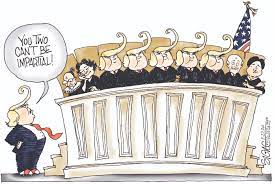 BB, JJ, and I had another one of those conversations yesterday where we basically admitted that we can no longer watch him, listen to him, or see his pictures. Most of what I saw was a new, very icky hairstyle that was reminiscent of Dennis the Menace. The people who surround him–mostly lawyers right now–are weird, too. Please, make him go away somehow. Trump’s last words for the Trump Family Crime Syndicate’s fraudulent activity are hard to describe. I cannot imagine any crook already found guilty would get an opportunity like this. This is from the
 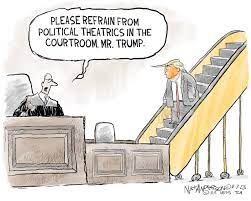 This unwanted speech came on the same day as the Judge and his family endured a bomb threat. Trump’s creepy cult swatted the Judge. This is from the
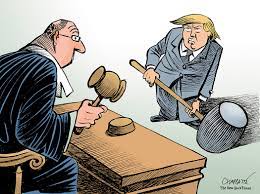 Swatting by the Trump Cult is an orchestrated event these days. Jamelle Bouie has this Op-Ed in the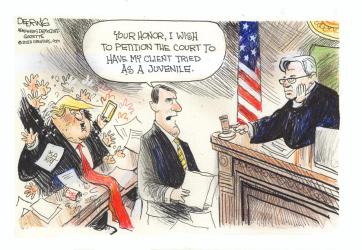
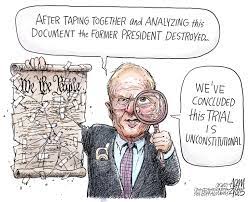 This opinion is from the Op-Ed pages
 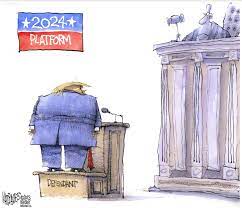 Greg Sargent–writing from his new home at
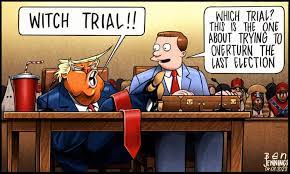 The really horrifying thing is watching the Grand Inquisitors of the White Christian Nationalist movement preach this crap from a pulpit.
 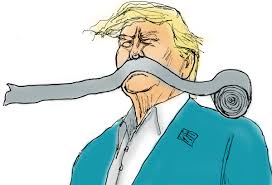 But then, Trump surrounds himself with fellow evildoers. This is from
 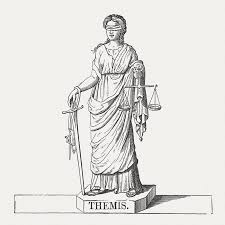 Monday is our national celebration of Reverend Doctor Martin Luther King, who spent time in prison. Here’s a section from one of his Letters from a






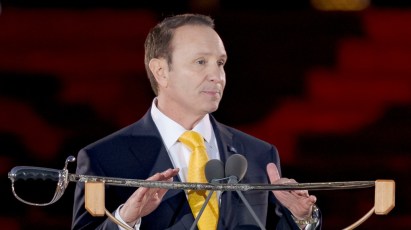
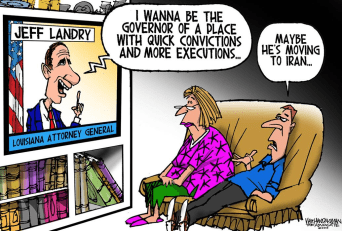
 Ever notice how these guys just ooze white male privilege while screaming they are the most persecuted people on the planet? WBUR interviewed author Ijeoma Oluo in 2020 to explain
 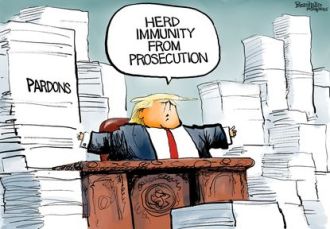 So, I buried the lede. Yes! I did. That quote up top is from the former guy for whom even mediocre is a struggle. This is from
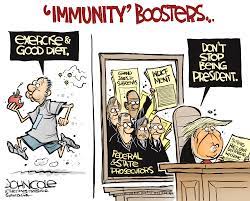 This argument is basically the mantra of the mediocre white man.
 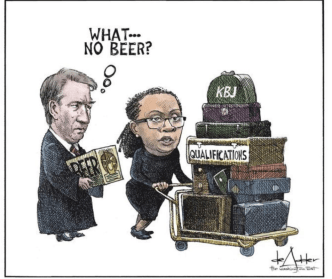 Entitlement just oozes from these guys. This is from the
 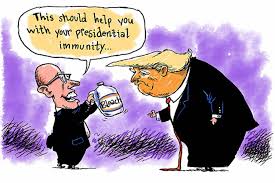 Remember this? It’s like the patented hand shake of thee Mediocre White Man Club.
  Here are




 The Idaho case gives the court its second major abortion dispute since the justices in 2022
 peej
peej Carissa
 bostonboomer
 dakinikat
 ecocatwoman
 mablue2
 Mama Lopez
 peggysue22
 quixote
 skydancingguestblogger
 Mona (aka Wonk the Vote)



 Sky Dancing
Recent Comments