
Tuesday Reads: Two Business Models and Their Effects on Workers, Customers, and Corporate Profits
Posted: August 5, 2014 Filed under: morning reads, Psychopaths in charge, U.S. Politics, worker rights | Tags: Arthur S. Demoulas, Arthur T. Demoulas, Frederick Childe Hassam, Market Basket, Massachusetts, news headlines, Robert Reich, the color orange, worker protests, workers' pay and social worth 35 Comments
Good Morning!!
I love this painting by American impressionist Frederick Childe Hassam. Just looking at it relaxes me. The colors are gorgeous and somehow surprising. I wouldn’t normally expect orange to have a calming effect, but it does for me in this work. It’s interesting that Childe Hassam used the color orange quite a bit in his paintings. The subject of this painting is a startling contrast to what’s happening in the world right now, and that’s why I decided to use it and others by Childe Hassam today as a reminder that there is still beauty in the world despite the ugliness of world events.
I’m going to focus on a local Massachusetts story today, and I hope you’ll share your thoughts on it; but please feel free to discuss any topics you wish in the comment thread. I’m going to be focusing on working people and working conditions, so I’m going to begin with this great piece by Robert Reich at Truthdig, The Disconnect Between Workers’ Pay and Social Worth.
What someone is paid has little or no relationship to what their work is worth to society.
Does anyone seriously believe hedge-fund mogul Steven A. Cohen is worth the $2.3 billion he raked in last year, despite being slapped with a $1.8 billion fine after his firm pleaded guilty to insider trading?
On the other hand, what’s the worth to society of social workers who put in long and difficult hours dealing with patients suffering from mental illness or substance abuse? Probably higher than their average pay of $18.14 an hour, which translates into less than $38,000 a year….
Or consider kindergarten teachers, who make an average of $53,590 a year.
Before you conclude that’s generous, consider that a good kindergarten teacher is worth his or her weight in gold, almost.
One study found that children with outstanding kindergarten teachers are more likely to go to college and less likely to become single parents than a random set of children similar to them in every way other than being assigned a superb teacher.
And what of writers, actors, painters, and poets? Only a tiny fraction ever become rich and famous. Most barely make enough to live on (many don’t, and are forced to take paying jobs to pursue their art). But society is surely all the richer for their efforts.
At the other extreme are hedge-fund and private-equity managers, investment bankers, corporate lawyers, management consultants, high-frequency traders, and top Washington lobbyists.
They’re getting paid vast sums for their labors. Yet it seems doubtful that society is really that much better off because of what they do.
Read the rest at the link. Robert Reich is a treasure, isn’t he? He never gives up.

Childe Hassam, French Tea Garden
Now to the local story, which I see as related. I have posted links recently in morning posts and comments about a work stoppage that has been going on here in Massachusetts and that has implications for retail and other low-wage workers around the country. I posted this article from Esquire last week, but I’m going to link to it again: The Last Stand for the Middle Class is Taking Place in a Parking Lot in Massachusetts, by Chris Farone.
Americans have grown to accept that corporations will invariably take advantage of their low wage workers, and executives have done nothing recently to pretend like this isn’t the case. When asked if his multinational beast would fight a federal hike in employee compensation, Walmart U.S. President Bill Simon told reporters in May, “We are not opposed to a minimum wage increase, unless it’s directed exclusively at us.” Compassionate stuff.
It’s a dangerously low bar set by the nation’s largest retailer — don’t expect your bosses to support an acceptable living wage for workers, let alone bonuses or a 401k, or even respect.
But at one of the most popular grocery store chains in New England–Market Basket–there is a struggle going on that could be turning point similar to the fight by fast food workers for better pay and benefits. Farone writes:
Here’s the most unusual part: Protesting employees are demanding the return of their beloved CEO, ousted by a board focused solely on the bottom line. After store workers were fired for skipping shifts to rally outside Market Basket headquarters last week, their then-chief executive, Arthur T. Demoulas, said in a statement, “This is not about me. It is about the people who have proven their dedication over many years and should not have lost their jobs because of it.”
Demoulas was ousted by his cousin Arthur S. Demoulas, who had managed to take over control of the company’s board of directors and whom workers suspect want to take the company in a different (anti-worker) direction. The reason Arthur T. is beloved is that he paid his workers a living wage, provided them with outstanding benefits, all the while attracting customers with quality local produce and low prices–underselling every other grocery chain in New England, including Walmart–all this while making handsome profits.
Market Basket’s formula proves that executives and managers and cashiers can all profit, together. Employees get the benefits of a 15 percent profit sharing plan provided by Market Basket, while the groceries the store sells are less expensive, on average, than Walmart’s. As for the register: Market Basket rang in $4.6 billion in revenue last year, and is the 127th biggest privately owned company in America.
And it proves that none of this matters in the American economy if those at the top aren’t getting more than enough. Executive pay is the only beast America’s brand of the free market is designed to feed in 2014. CEOs made 331 times what an average worker made in 2013, and it’s clear that there will be no exceptions.
The American economy no longer exists to support a thriving middle class, or to help the weakest among us attain a livable wage for an honest day’s work. It is solely in existence to add to the pile of wealth for the unchecked at the top.

Childe Hassam, Church at Old Lyme (Connecticul)
You can see how the Market Basket formula threatens other corporate bosses. Because it’s successful.
As it turns out, the Market Basket formula does work. In a recent study of Massachusetts grocery store chains, the nonprofit Washington DC-based Center for the Study of Services found “DeMoulas Market Basket’s prices averaged about 22 percent lower than the average prices at the Shaw’s stores [they] checked and 10 to 21 percent lower than the prices at the Stop & Shop stores.” Despite paying starting full-timers $12 an hour and having many career employees on the payroll who make six figures, the survey found that Market Basket had, on average, lower prices than all of their competitors — including Walmart.
Despite such presumably tight profit margins, Market Basket pays its roughly 19,000 workers yearly bonuses that often equal up to several months worth of salary, plus invests the equivalent of 15 percent of every paycheck into a retirement plan. At the same time, the company is impressively profitable. Shareholders have pocketed in excess of $1 billion since 2000, while the business is currently the 127th biggest privately owned American company according to Forbes. In 2013, Market Basket reportedly rang in $4.6 billion in revenue.
Demoulas workers began protesting in store parking lots, store shelves are empty because the workers who deliver goods and stock the shelves aren’t doing so, and loyal customers are refusing to shop at Market Basket until Arthur T. is back in charge. And please note these are non-union workers.
Last week, Arthur T. offered to buy out Arthur S’s share in the company. That offer is still on the table. But over the weekend, the board announced that workers who had been protesting would be fired if they didn’t come to work yesterday. They also announced a job fair to attract replacement workers. The protesting workers announced they would continue to protest. So how did the job fair work out?
From the Boston Globe: Few Show Up for Market Basket Job Fair as Protests Enter Third Week.
Day one of Market Basket’s job fair did not seem to turn out many current employees looking to change positions within the company. Dozens of protesters marched back and forth across the entrance to the company’s Andover facility, continuing the remarkable worker and customer protest into its third week. At one point a shuttle bus brought in fresh protesters, who took a shift on the picket line as grateful protesters handed off signs and pictures to them.
Few vehicles took the left turn into the facility’s parking lot. Those that did were met with leers and jeers from the crowd, which quickly followed police orders whenever a car did come through.
“I don’t think anyone will show up,” said Mike, a North Andover Market basket employee who declined to give his last name for fear of retribution from the company. “Most of us believe this is a scare tactic to get us back to work.”

Childe Hassam, Acorn Street, Boston
After the failure of the job fair, executives announced that people could apply for Market Basket jobs secretly by e-mail.
AP, via ABC News: Market Basket Workers Plan Huge Rally for Ex-CEO.
Employees who have organized massive protests over the past two weeks say they are expecting up to 15,000 employees, customers and supporters to attend a rally Tuesday outside a Market Basket store in Tewksbury.
The family-owned chain has been in turmoil since June, when a board controlled by Arthur S. Demoulas fired his cousin, CEO Arthur T. Demoulas.
Hundreds of warehouse workers and drivers who support Arthur T. Demoulas have refused to deliver food to the chain’s 71 stores, leaving store shelves severely depleted and prompting customers to defect to other supermarkets.
Workers are hoping Arthur S. Demoulas’ side of the family will accept an offer from his cousin to buy the company, which is known for its low prices.
As for the firings that took place yesterday, Mass, NH Attorneys General warn Market Basket.
The Attorneys General in both New Hampshire and Massachusetts have sent the Market Basket CEOs a warning saying if anyone is fired they better get the wages they are owed.
“Even though they may have the right to terminate employees we want to make sure the company knows that for payment, wages, for benefits may have accrued over a time period, those are due on the day of termination,” said Attorney General Martha Coakley.
And there will be lawsuits, Fired Market Basket Supervisors Plan To Sue. So, to sum up, the board of directors of Market Basket seems willing to bring down the company to support one side of a family dispute over contrasting business models–on the one hand, a focus on the bottom line and making profits for the fat cats; on the other, a focus on sharing profits with workers, making customers happy, and in the process making plenty of money for all concerned. Who will win? I don’t know, but, IMHO, this is an important struggle.
What do you think?

Childe Hassam, Bowl of Goldfish
More Headlines:
The Guardian: US fast-food workers fight McDonald’s as battle for better wages heads to court.
Bloomberg: Israel Pulls All Troops From Gaza as New Cease-Fire Holds.
New York Times: Eight Days in Gaza: A Wartime Diary, by Atef Abu Saif.
AP on a crazy scheme to bring down the Cuban government–why do we keep doing stupid stuff like this? US Sent Latin Youth Undercover in Anti-Cuba Ploy.
New York Times: Behind Toledo’s Water Crisis, a Long-Troubled Lake Erie.
The Guardian: The case of baby Gammy shows surrogacy for the repulsive trade it is, by Suzanne Moore.
The Hill: US won’t turn back flights over Ebola.
Politico: Congress approval hits new low (poll).
The Daily Beast Exclusive: ‘Pro-Troop’ Charity Pays Off Tea Party Cronies Instead.
What else is happening?
Friday Reads: Bigots Among Us
Posted: May 16, 2014 Filed under: Bobby Jindal, Capital Punishment aka Death Penalty, Civil Liberties, Civil Rights, Crime, Criminal Justice System, Discrimination against women, Domestic terrorism, morning reads, The Right Wing, Women's Rights, worker rights 89 Comments Good Morning!
I have read the most horrifying stories this week. It makes me wonder if a good portion of humanity has a death wish. I’m going to share a variety of links that I’ve found; and a lot of them aren’t the most uplifting, I’m afraid.
Knowledge is power. Ignorance may be bliss to the holder but not to the folks around them. There is no lack of headlines in the area of bigotry and intolerance. This is truly discouraging to those of us that care passionately about social justice.
Crime rates have been falling recently but our incarceration rates are not. There’s a huge study out on the economic costs of our prison society and its 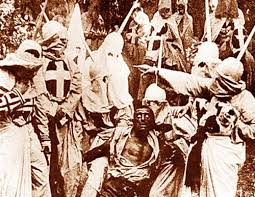 findings are not pretty. We’re spending billionaires of dollars locking up the poor, the uneducated, and the mentally ill in a distinctly racist way.
While crime rates have fallen 45 percent since 1990, the memo said that the incarceration rate is now at a “historically unprecedented level,” jumping 222 percent between 1980 and 2012. An African-American man who never graduated from high school has a 70 percent likelihood of being imprisoned by his mid-30s; for similarly educated white men, the rate is about 15 percent. And the United States imprisons at a rate six times greater than most peer nations, including those of the European Union, Japan, Israel, and Mexico.
The U.S. Department of Justice announced rules last month that would give the Obama administration wider latitude to extend clemency or reduce sentences for drug-related prisoners who don’t present a threat to public safety. In addition, the U.S. Sentencing Commission voted unanimously in April to reduce sentencing guidelines for certain nonviolent criminals, a move now before Congress that could go into effect Nov. 1 if lawmakers don’t take any further action.
Ronald S. Sullivan Jr. is a clinical professor of law and director of the Criminal Justice Institute at Harvard Law School. The program focuses on criminal practice, education, and research, and hosts a teaching clinic for third-year law students to represent indigent criminal defendants in local and juvenile courts. Sullivan spoke with the Gazette about racial and national sentencing disparities, the economic and social costs of mass incarceration, and the sentencing reforms now under consideration.GAZETTE: According to the memo, while the overall crime rate fell 45 percent between 1990 and 2012, the rate of imprisonment has spiked 222 percent between 1980 and 2012. What’s behind this disparity? Is that strictly the result of policy decisions like mandatory minimum sentencing, repeat-offender laws, and the growth in for-profit prisons? Or are other factors at work?
SULLIVAN: That’s certainly a big piece of it. … policy decisions in respect of mandatory minimums drive the huge incarceration rate. But there are other factors as well. What those factors are is the subject of a lot of academic debate nowadays. And to be honest, we’re not exactly sure what it is. We do know that on a per-capita basis the U.S. incarcerates more people than any country in the world, including Rwanda, Russia, Cuba, all of the places one does not associate with a robust tradition of liberty. And that’s in many ways shocking.
The theory would be … with the high rates of incarceration that the crime rate would go down and then that would be followed by less incarceration because there just wouldn’t be as many crimes committed. But those numbers have gone in opposite directions. Mandatory minimums simply don’t explain all of it. Part of it, at least I think, has to do with selective law enforcement — the over-policing of certain neighborhoods, particularly minority neighborhoods and poor neighborhoods. That is to say, if police are there and looking for crimes, and over-police certain neighborhoods, you’re going to produce more defendants in particular areas. And if the populations are drawn from poor populations, they’re unable to afford to be released on bail, they’re unable to afford good lawyers, and studies show that if you’re not released on bail you tend to stay in jail after sentencing. An unfortunate reality of the United States is that far too often the justice you receive is a function of how much money you have.
The prison-industrial complex is also an important factor. It doesn’t take an economist to know that if … you make your money by people going into prison, then there’s going to be higher incarceration rates. So I think that certainly plays a role as well.
GAZETTE: What are the areas of debate among scholars?
SULLIVAN: One explanation has to do with the United States’ articulated goals of punishment. Back in the ’70s and before, rehabilitation was an articulated goal of the criminal justice system. The Supreme Court has said clearly now rehabilitation is no longer a penological goal. We look at incapacitation, we look at deterrence, and we look at retribution as goals that the penal system serves. When you take rehabilitation out of the mix, then that de-incentivizes the system from having shorter sentences because there’s no longer an affirmative goal of reintegrating people meaningfully back into the community. That’s one of the things that scholars argue drive up the incarceration rate.
The other has to do with our system of elected judges in most states. Judges who are elected, the argument runs, respond to democratic pressures. We live in a political economy where people think that more and harsher punishment is better, even though most competent data suggests that longer sentences, after a certain point … make people worse as opposed to making them better. But you have democratically elected judges who respond to the will of the people, and if that will is for longer sentences, no matter how misinformed, then judges oftentimes acquiesce to those pressures.
The other issue has to do with legislators. It, again, has to do with the political economy in which we live. With this mantra of being “tough on crime,” legislators essentially race to see who can draft legislation with the harshest, longest penalties. I think that legislators don’t believe that prosecutors will attempt to enforce the most harsh provisions of particular laws, and in that sense, from the vantage point of the legislator, it’s sort of a win-win situation: They can get the political credit for drafting an incredibly harsh law, but not really have to deal with the effects because the notion is the prosecutor will sort it out and will recommend a fair sentence. That assumption, though, just hasn’t really been borne out in reality.
GAZETTE: The current incarceration gap between white men and African-American men is particularly striking. Does that figure surprise you, and what accounts for this gap? Is access to justice a factor?
SULLIVAN: The figure does not surprise me, and it is unfortunate that the figure does not surprise me. The figure reaffirms that race insinuates itself into almost every aspect of our life still, and it has a particular salience in the criminal justice system. … Here we see the effect of over-policing much more dramatically. In our culture, unfortunately … blackness is seen as a proxy for criminality. So the same or similar conduct engaged in by a person of color is seen through a lens that views that conduct as criminal, where others simply are not taxed in the same way.
The debate over the use of lethal injections and the drugs used for state executions continues. Three newspapers–including the UK Guardian–have sued to  make public the source of drugs for these injections. Most states are trying to make that information private. Many of the recent botched executions came from simple druggists compounding the formulations because many of the major drug manufacturers–especially those in Europe–refuse to do so. Should the formulation and the source of death penalty drugs be kept from the public?
The growing secrecy adopted by death penalty states to hide the source of their lethal injection drugs used in executions is being challenged in a new lawsuit in Missouri, which argues that the American people have a right to know how the ultimate punishment is being carried out in their name.
The legal challenge, brought by the Guardian, Associated Press and the three largest Missouri newspapers, calls on state judges to intervene to put a stop to the creeping secrecy that has taken hold in the state in common with many other death penalty jurisdictions. The lawsuit argues that under the first amendment of the US constitution the public has a right of access to know “the type, quality and source of drugs used by a state to execute an individual in the name of the people”.
It is believed to be the first time that the first amendment right of access has been used to challenge secrecy in the application of the death penalty. Deborah Denno, an expert in execution methods at Fordham University law school in New York, said that more and more states were turning to secrecy as a way of hiding basic flaws in their procedures.
“If states were doing things properly they wouldn’t have a problem releasing information – they are imposing a veil of secrecy to hide incompetence.” “This is like the government building bridges, and trying to hide the identity of the company that makes the bolts,” said Richard Dieter of the Death Penalty Information Center. “Those involved in public service should expect public scrutiny in order to root out problems, particular when the state is carrying out the most intimate act possible – killing people.”
A Guardian survey has identified at least 13 states that have changed their rules to withhold from the public all information relating to how they get hold of lethal drugs. They include several of the most active death penalty states including Texas, which has executed seven prisoners so far this year, Florida (five), Missouri (four) and Oklahoma (three). Attention has been drawn to the secrecy issue by the botched execution of Clayton Lockett in Oklahoma on 29 April in which the prisoner took 43 minutes to die, apparently in great pain, from an untested cocktail of drugs whose source was not made public.
Lockett’s lawyers had argued in advance that he might be subjected to cruel and unusual punishment as a result of the lack of information surrounding the drugs, but the state supreme court allowed the procedure to go ahead having come under intense pressure from local politicians, some of whom threatened to impeach judges.
In the wake of the events in Oklahoma, in which the prisoner writhed and groaned over a prolonged period, the state has agreed to pause for six months before carrying out any further judicial killings to give time for an internal investigation to be completed. President Obama described the Lockett execution “deeply troubling” and has asked US attorney general Eric Holder to review the way the death penalty is conducted.
Until last year, Missouri which is now executing prisoners at a rate of one a month, was open about where it obtained its lethal injection chemicals. But like many death penalty states, its drug supplies have dwindled as a result of a European-led pharmaceutical boycott, and in a desperate move to try to find new suppliers it has shrouded their identity in secrecy. In October, the state changed its so-called “black hood law” that had historically been used to guard the identity of those directly involved in the death process.
The department of corrections expanded the definition of its execution team to include pharmacies and “individuals who prescribe, compound, prepare, or otherwise supply the chemicals for use in the lethal injection procedure”. Six inmates have been executed by Missouri since the new secrecy rules came in –they went to their deaths entirely ignorant of the source or quality of the drugs used to kill them. All that is known is that the pentobarbital that Missouri deploys in executions probably came from a compounding pharmacy – an outlet that makes up small batches of the drug to order in the absence of stringent regulation.
We continue to see GLBT civil rights characterized by the right as an attack on their religious rights and their homobigoted behavior and language  wrapped up as a first amendment issue. How does the right play the victim card in a debate about limiting the rights of others? It is doing the same things with women’s reproductive rights.
While Religious Right leaders are quick to equate criticism as an attack on their freedom of speech and religion, some of them are all too happy to limit the free speech or religious liberty of the people they disagree with. That includes the Benham brothers.
In the flurry of public appearances in the wake of the HGTV cancellation, the Benhams and their right-wing fans have portrayed themselves as committed to the principle that everyone in America should have a chance to express themselves. On the O’Reilly Factor, David Benham denounced the gay agenda for seeking “to silence those that disagree with it, and it begins with Christians.” Jason warned that “when an idea seeks to silence any other idea that may disagree with that, then we have ourselves a problem on hand.”
But as blogger Jeremy Hooper recently pointed out, back in November 2004, David, Jason, and Flip Benham were all part of a group of about 15 people who went to a Charlotte, North Carolina city council meeting to complain about the gay pride celebration that had taken place in a city park six months earlier. They were among a group of people who had gone to the Pride event to, in Jason’s words, “tell them that Jesus loves you just the way you are, but he refuses to leave you that way.” But the Benhams and their friends were appalled at what they saw. “This is filth, this is vile and should not be allowed in our City,” said David. Jason urged city council members to reject future permits for Pride celebrations – and seemingly for any LGBT-themed event:
They have a right to apply for this permit, but you have a right and responsibility to deny it. I [implore] you not to be governed by the fear in which you feel. If you deny them this permit you will open a can of worms but you in your leadership position have to take that responsibility and you have to not allow the fear of making this homosexual community mad. You have to accept that responsibility and deny them every permit that they ask for.
In the words of Charlotte Pride organizers, “The Benham brothers once tried to silence us. They failed.”
Some Benham fans, like the American Family Association’s Bryan Fischer, say flat-out that the First Amendment’s religious liberty protections were only meant for Christians and don’t apply to Muslims, Mormons or other minority faiths. Back when many self-proclaimed “religious liberty” advocates were opposing efforts by Muslims in New York to build a community center – which critics gave the inaccurate and inflammatory name of “Ground Zero Mosque” – David Benham and his father Flip were among them. According to the Anti-Defamation League, David participated in protests against the Center, calling it a “den of iniquity” and labeling Muslims “the enemy” that was attacking America.
In these public debates, “Christian” as used by Religious Right leaders often doesn’t really apply to all Christians, but only to a subset of Christians who share their right-wing politics. Other Christians don’t count. The Family Research Council’s Tony Perkins, who has bemoaned “cultural elites” who want to “silence” and “bully” people like the Benhams, recently said that pro-gay-equality Christians don’t deserve the same legal protections as he does because “true religious freedom” applies only to those with religious views that align with those of the political Right.
Gov. Bobby Jindal’s commencement speech at Liberty University was a masterpiece in this type of dishonest projection. Posing as a champion of free speech and freedom of religion, he actually made a chilling argument in favor of stripping both of those freedoms away from ordinary Americans, businesses and anyone who might disagree with turning this country into a theocratic state. He started by defending Hobby Lobby for trying to strip contraception coverage out of their employees’ own healthcare plans. “Under the Obama regime,” he argued, “you have protection under the First Amendment as an individual, but the instant you start a business, you lose those protections. And that brings us to the second front in this silent war: the attack on our freedom of association as people of faith.”
It’s all nonsense, of course. In fact, Hobby Lobby’s intention here is to reduce religious freedom by forcing their employees to adhere to certain religious rules in order to get the benefits they already earned. ( They have a history of trying to impose their religious dogma on non-believers through other means as well.) The only people in any real danger of losing freedom are women, who are in danger of losing their freedom to use their insurance benefits in a way that fits their personal beliefs.
But Jindal was just warming up, claiming the “Obama administration” was gunning to decide “who can preach the Gospel.” This outrageous conspiracy theory was justified, in his opinion, by supposed other attacks on “free speech,” namely that TV networks are reluctant to house the opinions of open bigots. “The left no longer wants to debate. They simply want to silence us,” he said of Phil Robertson from Duck Dynasty, who was never silenced and has, to this date, been allowed to say any fool thing he wants. But he was briefly suspended from A&E, leading conservatives to decide that “free speech” means you have a right to your own TV show.
All of this has gotten me interested in again in White Supremacist movements. I really believe that most of these Southern Republicans fall squarely 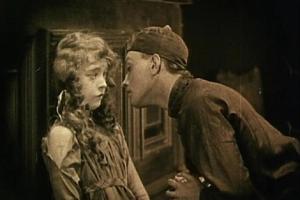 into the neoconfederate mold and aren’t that far off the KKK tree.
White supremacy is referenced in relation to specific news events as well. For example, the murder rampage by the neo-Nazi Frazier Glenn Miller, the recent weeks-long debate between pundits Ta-Nehisi Coates and Jonathan Chait about “black pathology”; birtherism; stand-your-ground laws; and the open embrace of the symbols and rhetoric of the old slave-holding Confederacy by the Republican Party have been framed and discussed in terms of white supremacy.
Conservatives and progressive often use the phrase “white supremacy” in divergent ways. Conservatives use the phrase in the service of a dishonest “colorblind” agenda, evoking extreme images of KKK members and Nazis as the exclusive and only examples of white racism in American life and politics. Conservatives use extreme caricatures of white supremacy in order to deflect and protect themselves from charges that the contemporary Republican Party is a white identity organization fueled by white racial resentment. Liberals, progressives and anti-racists use the phrase “white supremacy” to describe the overt and subtle racist practices of movement conservatism in the post-Civil Rights era, and how American society is still structured around maintaining and protecting white privilege. This analysis is largely correct: however, it often conflates concepts such as racism, white privilege, and white supremacy with one another. Language does political work. In the age of Obama, the phrase “white supremacy” is often used in political discussions like an imprecise shotgun blast or a blockbuster bomb. If the Common Good and American democracy are to be protected—countering how the right wing has used the politics of white racial resentment, racial manipulation, and hate to mobilize its voters in support of a plutocratic agenda—a more precise weapon is needed. A necessary first step in that direction requires the development of a more detailed and transparent exploration of the concept known as “white supremacy.”
 One of the sure signs to me of either a racist or a misogynist or a homophobic bigot is that they all insist they have no problem women, racial minorities, and/or gay people. The believe they are the victims by being forced to deal with any one else in terms other than their own choosing. Therein lies the problem. Here’s a perfect example from Kristen Powers writing at USA Today. You can’t call out bigotry without being called a bully obsessed with political correctness. Then, you’re told that the real victims are white conservative christians.
Each week seems to bring another incident. Last week it was David and Jason Benham, whose pending HGTV show was canceled after the mob unearthed old remarks the brothers made about their Christian beliefs on homosexuality. People can’t have a house-flipping show unless they believe and say the “right” things in their life off the set? In this world, the conservative Tom Selleck never would have been Magnum, P.I.
This week, a trail-blazing woman was felled in the new tradition of commencement shaming. International Monetary Fund Managing Director Christine Lagarde withdrew from delivering the commencement speech at Smith College following protests from students and faculty who hate the IMF. According to the Foundation for Individual Rights in Education, this trend is growing. In the 21 years leading up to 2009, there were 21 incidents of an invited guest not speaking because of protests. Yet, in the past five-and-a-half years, there have been 39 cancellations.
Don’t bother trying to make sense of what beliefs are permitted and which ones will get you strung up in the town square. Our ideological overlords have created a minefield of inconsistency. While criticizing Islam is intolerant, insulting Christianity is sport. Ayaan Hirsi Ali is persona non grata at Brandeis University for attacking the prophet Mohammed. But Richard Dawkins describes the Old Testament God as “a misogynistic … sadomasochistic … malevolent bully” and the mob yawns. Bill Maher calls the same God a “psychotic mass murderer” and there are no boycott demands of the high-profile liberals who traffic his HBO show.
The self-serving capriciousness is crazy. In March, University of California-Santa Barbara women’s studies professor Mireille Miller-Young attacked a 16-year-old holding an anti-abortion sign in the campus’ “free speech zone” (formerly known as America). Though she was charged with theft, battery and vandalism, Miller-Young remains unrepentant and still has her job. But Mozilla’s Brendan Eich gave a private donation to an anti-gay marriage initiative six years ago and was ordered to recant his beliefs. When he wouldn’t, he was forced to resign from the company he helped found.
Got that? A college educator with the right opinions can attack a high school student and keep her job. A corporate executive with the wrong opinions loses his for making a campaign donation. Something is very wrong here.
The right seems to be really confused about the first amendment, which clearly deals with the relationship between the federal government, religion, the press, and the people’s free speech. The same idiots that scream that Hobby Lobby can deny its employees contraception and say that businesses should be able to refuse to serve GLBTs will shout out a corporation that says they don’t want to be known for bigotry of any kind. They also misunderstand the protection given to University professors when it comes to academic freedom. Companies have to comply with the law. They do not have to keep employees that don’t represent their corporate values. PERIOD.
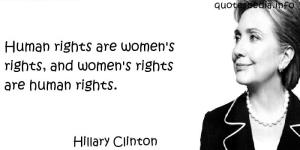
Anyway, it just amazes me that this intense amount of uncivil bigotry and hatred seemed to have burbled up again after all these years. All it took was an African American President and a few powerful women–namely Hillary Clinton–to bring the crazy out.
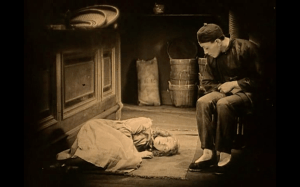
I just wanted to mention that most of these silent film images come from “Birth of a Nation” but one comes from “Broken Blossoms” also known as the “Yellow Man and the Girl”. Both of these films were directed by DW Griffith around 1919. Both movies starred Lillian Gish and were received differently by white audiences than by the racial minorities they also depicted.
What’s on your reading and blogging list today?
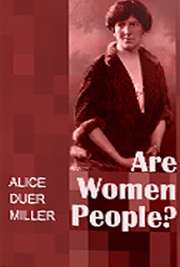
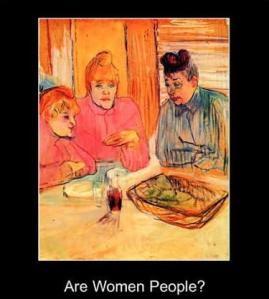
Tuesday Reads: Are Women People?
Posted: March 25, 2014 Filed under: morning reads, Real Life Horror, religion, religious extremists, Reproductive Health, Reproductive Rights, SCOTUS, U.S. Politics, War on Women, Women's Healthcare, Women's Rights, worker rights | Tags: abortion, Affordable Care Act, Antonin Scalia, Are Women Human?, Are Women People?, Birth Control, Citizen's United, contraception, Hobby Lobby, Manhattan Declaration, Obamacare, religious freedom, Sandra Fluke, U.S. Constitution 47 Comments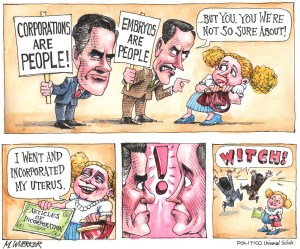
Good Morning!!
Question for today: Are women human? Are we people in the eyes of our government? We’ve been told that corporations are people. We know that white men are people–that was established by the U.S. Constitution when it was ratified in 1789. Since that time, there have been amendments that granted some rights to non-white men and to women. We can vote now. Does that mean our government recognizes our humanity?
Today our ultra-conservative, mostly Catholic Supreme Court will hear two cases that bring this question to the forefront, and the Court’s decisions may give us some answers to the question of whether American women are officially people with individual rights.
From MSNBC: Supreme Court to hear birth control case
Depending on whom you ask, Tuesday morning’s oral argument at the Supreme Court is about whether Obamacare can keep treading on religious liberty – or it’s about a woman’s right to access contraception on her employee insurance plan, no matter what her employer thinks of it. Either way, it is the first time the Affordable Care Act will be at the nation’s highest Court since it was first largely upheld as constitutional. The same two men as in that case, current Solicitor General Don Verrilli and former Bush administration solicitor general Paul Clement, are facing off to argue over a narrower provision.
Before the Supreme Court decides whether the contraceptive coverage required of insurance plans under the Affordable Care Act violates a 1993 law governing religious liberty, it has to settle the threshold question: Does a corporation even have religious liberty?

I think the question about the rights of women is far broader than that. Without access to birth control and abortion, a woman has no real autonomy as a human being. If she becomes pregnant–even through rape–she loses the ability to make choices about her future life. It has been a relatively short period of time since women have had the power to make those choices. But that power has led to other advances for women–such as the right to prosecute a rapist or an abusive boyfriend or husband, the right to have credit in her own name, the right to an education, and entry into careers from which women were previously blocked. We can only hope that the justices see clearly what their decisions will mean for women’s lives and women’s personhood.
Back to the MSNBC article:
Hobby Lobby Stores, an Oklahoma-based, evangelical-owned craft chain with about 13,000 employees, and Conestoga Wood Specialties, a small Mennonite-owned cabinet maker in Pennsylvania, sued the administration and got two very different answers from the lower courts. The Tenth Circuit Court of Appeals declared of Hobby Lobby that “such corporations can be ‘persons’ exercising religion.” In ruling on Conestoga’s bid for exemption from the requirement, the Third Circuit disagreed: “For-profit secular corporations cannot exercise in religious exercise.”
The companies are among the 47 for-profit corporations that have objected to their company plans complying with the minimum coverage requirements under the Affordable Care Act. Under those regulations, contraception is covered fully, without a co-pay, as preventive care. Hobby Lobby and Conestoga Wood object to a handful of contraceptives that they speculate can block a fertilized egg, which is neither documented in the science nor the medical definition of abortion. Other for-profit plaintiffs object to any birth control coverage at all….
The Obama administration says that the government has a compelling interest in women’s health and in gender equality. The Department of Health and Human Services agreed to classify contraceptives as preventive care after considering testimony from medical experts, who cited the country’s high rate of unintended pregnancy and the persistence cost barriers to accessing effective birth control.
Some legal experts argue that to rule for Hobby Lobby would be imposing religion on others, by forcing the women who work for such companies to pay the cost of their employers’ religion. Frederick Gedicks, a law professor at Brigham Young, has even argued in a brief before the Court that doing so would violate the establishment clause of the First Amendment.
What will SCOTUS decide?
At NPR, Nina Totenberg offers some scary quotes from Steve Green, the president of Hobby Lobby:
“We believe that the principles that are taught scripturally is what we should operate our lives by … and so we cannot be a part of taking life,” explains Hobby Lobby President Steve Green.
“It’s our rights that are being infringed upon to require us to do something against our conscience,” adds CEO and founder David Green.
Using birth control is “taking a life?” Apparently one of the arguments Hobby Lobby is using that–contrary to scientific facts–some forms of birth control are equal to abortion. So is every sperm is sacred too? Should men be prosecuted for masturbating? But those questions are not likely to be asked, because it is already legally established that men are people.
At the WaPo, Sandra Fluke writes: At the Supreme Court, a potential catastrophe for women’s rights.
Unlike my congressional testimony in 2012, which was about Georgetown University — a Catholic-affiliated university — refusing to include contraception in student insurance because it was a religiously affiliated school, the institutions arguing before the Supreme Court are not houses of worship or religious non-profits. The Affordable Care Act already includes special arrangements for those types of organizations. These are private, for-profit corporations — a craft store and a cabinet manufacturer — that want to be excluded from health insurance and employment laws because of bosses’ personal views.
Laws that include religious protection have never given corporations the right to have religious views, and it would be a terrible idea to make such an enormous change to our legal precedent now. Our laws protect individuals’ private religious beliefs, but when you cross over into the public sphere to become a corporation and make a profit off of the public, you must abide by the public’s laws.
Depending on the court’s rulings, the cases’ outcomes could deny millions of women coverage of any or all forms of birth control, limiting women’s ability to control their reproductive health, plan their pregnancies and manage their lives. As I testified, women also need birth control for many other medical reasons, including relief of painful health problems like endometriosis.
And, Fluke argues, recognizing a right for corporations to hold religious views will open the door to
Allowing any private employer to dictate which laws fit inside its religious beliefs could upset the necessary balance of both religious liberty and employee health and safety laws. Depending on the exact ruling, any for-profit corporation could cut off its employees’ insurance coverage for blood transfusions, vaccinations or HIV treatment — all of which some Americans have religious objections to. Any critical health coverage the boss doesn’t agree with could be eliminated.
Furthermore, SCOTUS could not limit these proposed “religious freedoms” to Christians.
Although this country predominantly descends from a Judeo-Christian tradition, our valuable religious protection laws ensure that anyone is free to practice any religion they want, including religions whose belief systems and practices many of us would disagree with vehemently. In fact, far-ranging beliefs that are not associated with any organized religion could be used to justify a corporation’s practices as well.
Sahil Kapur of TPM points out that Justice Scalia, who might be expected to vote in favor of a corporate “right to religious freedom,” will have to deal with one of his previous rulings: Justice Scalia’s Past Comes Back To Haunt Him On Birth Control.
In 1990, Scalia wrote the majority opinion in Employment Division v. Smith, concluding that the First Amendment “does not require” the government to grant “religious exemptions” from generally applicable laws or civic obligations. The case was brought by two men in Oregon who sued the state for denying them unemployment benefits after they were fired from their jobs for ingesting peyote, which they said they did because of their Native American religious beliefs.
“[T]he right of free exercise does not relieve an individual of the obligation to comply with a valid and neutral law of general applicability,” Scalia wrote in the 6-3 majority decision, going on to aggressively argue that such exemptions could be a slippery slope to lawlessness and that “[a]ny society adopting such a system would be courting anarchy.”
“The rule respondents favor would open the prospect of constitutionally required religious exemptions from civic obligations of almost every conceivable kind,” he wrote, “ranging from compulsory military service, to the payment of taxes, to health and safety regulation such as manslaughter and child neglect laws, compulsory vaccination laws, drug laws, and traffic laws; to social welfare legislation such as minimum wage laws, child labor laws, animal cruelty laws, environmental protection laws, and laws providing for equality of opportunity for the races.”
That opinion could haunt the jurist if he seeks to invalidate the birth control rule.
“Scalia will have to reckon with his own concern in Smith about the lawlessness and chaos created by liberal exemptions to generally applicable law,” said Adam Winkler, a constitutional law professor at UCLA. “For him to uphold an exemption now is to invite more of the lawlessness that he warned about.”

At Think Progress, Ian Millhiser addresses the right wing organizations that have waged a concerted war against women’s rights during the past several years: Read This One Document To Understand What The Christian Right Hopes To Gain From Hobby Lobby.
2009 was a grim year for social conservatives. Barack Obama was an ambitious and popular new president. Republicans, and their conservative philosophy, were largely discredited in the public eye by a failed war and a massive recession. And the GOP’s effort to reshape its message was still in its awkward adolescence. If the conservative movement had a mascot, it would have been a white man dressed as Paul Revere and waving a misspelled sign.
Amidst this wreckage, more than two hundred of the nation’s leading Christian conservatives joined together in a statement expressing their dismay at the state of the nation. “Many in the present administration want to make abortions legal at any stage of fetal development,” their statement claimed, while “[m]ajorities in both houses of Congress hold pro-abortion views.” Meanwhile, they feared that the liberals who now controlled the country “are very often in the vanguard of those who would trample upon the freedom of others to express their religious and moral commitments to the sanctity of life and to the dignity of marriage as the conjugal union of husband and wife.”
The signatories to this statement, which they named the “Manhattan Declaration,” included many of America’s most prominent Catholic bishops and clergy of similar prominence in other Christian sects. It included leaders oftop anti-gay organizations like the National Organization for Marriage, and of more broadly focused conservative advocacy shops such as the Family Research Council. It included university presidents and deans from Christian conservative colleges. And it included the top editors from many of the Christian right’s leading publications.
Perhaps most significantly, however, the document’s signatories includes Alan Sears, the head of one of the two conservative legal groups litigating what are likely to be the two most important cases decided by the Supreme Court this term. Indeed, the Manhattan Declaration offers a virtual roadmap to understanding what religious conservatives hope to gain from Sebelius v. Hobby Lobby and Conestoga Wood v. Sebelius, two cases the justices will hear Tuesday which present the question whether a business owner’s religious objections to birth control trump their legal obligation to include it in their employee’s health plan.
Read the gory details at the link.
Finally, I ask that everyone read this year-old article at Time Magazine by Jessica Winter, Subject for Debate: Are Women People? It is both darkly humorous and deadly serious.
All my adult life, I’ve been pretty sure I’m a sentient, even semi-competent human being. I have a job and an apartment; I know how to read and vote; I make regular, mostly autonomous decisions about what to eat for lunch and which cat videos I will watch whilst eating my lunch. But in the past couple of months, certain powerful figures in media and politics have cracked open that certitude.
You see, like most women, I was born with the chromosome abnormality known as “XX,” a deviation of the normative “XY” pattern. Symptoms of XX, which affects slightly more than half of the American population, include breasts, ovaries, a uterus, a menstrual cycle, and the potential to bear and nurse children. Now, many would argue even today that the lack of a Y chromosome should not affect my ability to make informed choices about what health care options and lunchtime cat videos are right for me. But others have posited, with increasing volume and intensity, that XX is a disability, even a roadblock on the evolutionary highway. This debate has reached critical mass, and leaves me uncertain of my legal and moral status. Am I a person? An object? A ward of the state? A “prostitute”? (And if I’m the last of these, where do I drop off my W-2?)
Please go read the whole thing. It’s not long.
So . . . those are my recommended reads for today. What stories are you following? Please post your links on any topic in the comment thread.
No, I don’t want Republican Son in Laws
Posted: January 17, 2014 Filed under: religious extremists, right wing hate grouups, War on Women, worker rights 66 Comments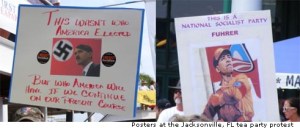 I so badly want to write on your blog, Bob, or at NOLA.com about your op ed because it sounds so, well, reasonable. However, I’m going to do it here where I am totally surrounded by my friends. Yup, you’re reasonable, my friend, like most democrats I know. Y’all will compromise on just about anything because y’all so reasonable. I’ve got the President in mind when I say that one, actually, let alone most of the senators and congressmen in the democratic caucus. I’m a political independent, Because y’all tend to be so reasonable,
I don’t really mind that my oldest daughter grew up to be a democrat and that she married one. However, I would completely totally freak if either daughter registered republican or brought one home to me. I say this with the caveat that up until the Clinton years, I was a republican and I ran for office in Nebraska as a republican. You may be reasonable, but today’s republicans are not. There is no compromise with them. There is no one reasonable left in the party unless you count the people that don’t believe the dogma but enable it any way to either get re-elected or to have their businesses get preferential tax treatment and subsidies. I don’t want these folks in my home or near my daughters.
So you ask “Would you be troubled if your son married a Republican? What if your daughter married a Democrat?” and I’m answering you here because I don’t want to sully up the nola.com site or your blog site. My answer will be trolled beyond anything reasonable people can imagine and it won’t be by my fellow independents or your democrats. You can read my response here where I am surrounded by loving friends who will agree with me and will give you their own stories as Latinas, feminists, GLBTs, atheists or religious and racial minorities, and people that are not only reasonable but will stand up for what’s right.
According to a 2010 national survey, 40 percent of us would be “upset” with such a marriage. That’s worrisome, but almost as interesting as the historical trend. In 1960, when a pollster asked a similar question, only 5 percent said they would be “displeased” if a child married into the opposite party.
Doesn’t it feel some days that the entire, polarized country is obsessed with politics, down to the political affiliation of our children’s spouses?
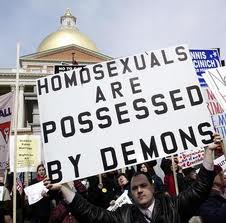 I may have agreed that you were oh, so reasonable if I haven’t witnessed so much disrespect coming from the Republican Party towards women, gays, racial minorities and non-christians. I have the perspective of having been republican, having ran for office as a republican, and
  being basically drummed out of the republican party for being pro-choice and having “marched in the streets with lesbians” in support of an anniversary of women’s voting rights like it was some kind of immoral act.
As a matter of fact, I just had this conversation at a friend’s house last month. I met a woman who had a son undergoing gender reassignment surgery. I was telling her that one of my best friend’s nephews was having the same surgery and was a doctoral candidate at UC Berkley in the AI robotics program. We both laughed and said it could be worse, they could’ve become born again and republicans. I thought about it and decided that’s about the only thing that would cause me never to speak to either of my children. The idea of having a Michelle Bachmann as a daughter or a Ted Cruz, or a David Vitter or a Steve Scalise any where near my daughters let alone married to them would cause me to worry about their safety and their sanity.
Let’s check legislation proposed by today’s Republicans.
Here’s a new proposed law in Arizona.
A veteran state lawmaker is pushing legislation that would allow businesses to discriminate against gays — and maybe even women and Jews — as long as they were acting on sincerely held religious beliefs.
SB 1062 would allow those sued in civil cases to claim that they have a legal right to decide not to provide their services to any individual or group because it would “substantially burden” their freedom of religion. That specifically means doing something that the person feels is contrary to their religious teachings.
Sen. Steve Yarbrough, R-Chandler, said the measure is aimed specifically at preventing what happened in New Mexico where courts there said a gay couple could sue a wedding photographer who turned away their request to take pictures at their nuptials. He said that should not be allowed to happen here.But Yarbrough said his legislation could also be interpreted broader than that, allowing motel operators with vacant rooms to refuse to rent to gays.
Potentially more significant, Yarbrough acknowledged there may be individuals who have religious beliefs about unmarried women, or even employing people who do not share their same beliefs.

On the morning of December 11th, Gretchen Whitmer, the charismatic 42-year-old minority leader of the Michigan Senate, stood before her colleagues in the Statehouse in Lansing, and told them something she’d told almost no one before. “Over 20 years ago, I was a victim of rape,” she said. “And thank God it didn’t result in a pregnancy, because I can’t imagine going through what I went through and then having to consider what to do about an unwanted pregnancy from an attacker.”
No one in the gallery said a word. Instead, with just hours to go before it broke for Christmas recess, Michigan’s overwhelmingly male, Republican-dominated Legislature, having held no hearings nor even a substantive debate, voted to pass one of the most punishing pieces of anti-abortion legislation anywhere in the country: the Abortion Insurance Opt-Out Act, which would ban abortion coverage, even in cases of rape or incest, from virtually every health-insurance policy issued in the state. Women and their employers wanting this coverage will instead have to purchase a separate rider – often described as “rape insurance.” Whitmer, a Democrat known as a fierce advocate for women’s issues, described the new law as “by far one of the most misogynistic proposals I’ve seen in the Michigan Legislature.”
And it’s not just Michigan. Eight other states now have laws preventing abortion coverage under comprehensive private insurance plans – only one of them, Utah, makes an exception for rape. And 24 states, including such traditionally blue states as Wisconsin and Pennsylvania, ban some forms of abortion coverage from policies purchased through the new health exchanges. While cutting insurance coverage of abortion in disparate states might seem to be a separate issue from the larger assault on reproductive rights, it is in fact part of a highly coordinated and so far chillingly successful nationwide campaign, often funded by the same people who fund the Tea Party, to make it harder and harder for women to terminate unwanted pregnancies, and also to limit their access to many forms of contraception.
 Here’s a great list of what right wing, christianist republicans say about women and their bodies. They believe it’s perfectly acceptable to deem women property of the state and endanger their lives.
1. Texas State Senator Wendy Davis is a “terrorist” because she filibustered an anti-choice bill.
2. “If it’s a legitimate rape, the female body has ways to try to shut that whole thing down.”
3. Who needs abortion when victims of sexual assault can just get “cleaned out” by a rape kit?
4. Women shouldn’t terminate pregnancies resulting from rape because it’s what God intended.
5. Women shouldn’t complain about forced transvaginal ultrasounds, because they’ve already had sex.
6. “If babies had guns, they wouldn’t be aborted.”
7. “Abortion is much more serious than the rape of children by priests.”
8. Abortion rights caused the Sandy Hook massacre.
9. Ban abortions because of masturbating fetuses.
10. Abortion is just like the Holocaust.

I would worry about the safety of my daughters because of this: Virginia GOP candidate: Spousal rape isn’t a crime if she is ‘wearing a nightie’.
“I do not know how you could validly get a conviction of a husband-wife rape, when they’re living together, sleeping in the same bed, she’s in a nightie and so forth,” Black says. “There’s not injuries, there’s no separation or anything.”
or this: Medical Records Confirm The Pregnant Texas Woman On Life Support Is Actually Dead
Did I mention that my oldest is actually an ob/gyn and she went to practice some place where these folks aren’t second guessing her medical expertise? You’ll excuse me if I say that with their guns, their onward christian soldiers zealotry, and their anger/meanness that I believe that the only thing safe around these people might be a clump of cells called a zygote.
Then, there’s the laws they want enacted to teach specific creation mythology as science. Oh, and we taxpayers get to foot the bills for christianist madrassas.
When public-school students enrolled in Texas’ largest charter program open their biology workbooks, they will read that the fossil record is “sketchy.” That evolution is “dogma” and an “unproved theory” with no experimental basis. They will be told that leading scientists dispute the mechanisms of evolution and the age of the Earth. These are all lies.
The more than 17,000 students in the Responsive Education Solutions charter system will learn in their history classes that some residents of the Philippines were “pagans in various levels of civilization.” They’ll read in a history textbook that feminism forced women to turn to the government as a “surrogate husband.”
Responsive Ed has a secular veneer and is funded by public money, but it has been connected from its inception to the creationist movement and to far-right fundamentalists who seek to undermine the separation of church and state.
The opening line of the workbook section declares, “In the beginning, God created the Heavens and the Earth.”
Infiltrating and subverting the charter-school movement has allowed Responsive Ed to carry out its religious agenda—and it is succeeding. Operating more than 65 campuses in Texas, Arkansas, and Indiana, Responsive Ed receives more than $82 million in taxpayer money annually, and it is expanding, with 20 more Texas campuses opening in 2014.
Charter schools may be run independently, but they are still public schools, and through an open records request, I was able to obtain a set of Responsive Ed’s biology “Knowledge Units,” workbooks that Responsive Ed students must complete to pass biology. These workbooks both overtly and underhandedly discredit evidence-based science and allow creationism into public-school classrooms.
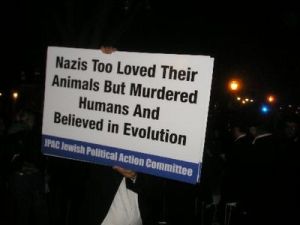 I’m a political independent but frankly, if my daughters came home spouting this stuff or with some man in tow that thought it was okay, I frankly would see if they need to be institutionalized and thoroughly checked by a psychiatrist. Fortunately, my son-in-law is a nice registered Democrat and Hindu. My other potential son-in-law is also a democrat and is as agnostic as they get. My son in law is a doctor and my youngest’s SO has degrees in biological engineering so both of them are reality based.
However, I could go on and on and on about the climate change denial, the treatment of the poor in this country, the unemployed, and just about any one else who isn’t a big political donor to the Republican party and ask you to rethink your treatise. The leader of GOPround just quit because he couldn’t take the bigotry any more.
Jimmy LaSalvia co-founded political action group GOProud to prove to America that the Republican Party is a safe home for gay conservatives. But he no longer believes his own arguments. On Monday, he announced on his blog that he could no longer take his own party’s refusal to stand up to bigotry: he was leaving the Republican Party and had registered as an Independent. “I am every bit as conservative as I’ve always been, but I just can’t bring myself to carry the Republican label any longer,” he wrote.
His condemnation of the GOP was even stronger when he explained his decision to TIME on Wednesday. The Republican brand,
he says, is so tarnished that he no longer believes it is salvageable. “I’ve come to the conclusion that it’s time to pull the plug on the patient. It’s been brain-dead for a long, long time.”
In a wide-ranging interview with TIME, included before in an abbreviated form, LaSalvia explains the journey that led him to abandon the party ship:
TIME: You are someone who once had lots of hopes for the GOP. What happened?
LASALVIA: I have been my whole life the ultimate team player. I was ‘The Gay for Mitt’ last year. I think that what I did should cause the leadership in the Republican Party to ask themselves, How bad must it be if we’ve even lost Jimmy?
I spent my career working to create an atmosphere in the conservative movement where gay conservatives can be open and honest and live their lives and work within the conservative movement. I wanted it to be a place where straight conservatives could publicly support gay Americans and even eventually come to support civil marriage for gay couples. I feel like I have accomplished that. I had hoped that would be enough to melt the anti-gay bigotry that runs through the ranks of some in the Republican Party. I’ve come to realize that it is not, and that the leadership of the party tolerates bigotry, not just antigay bigotry, but anti-Muslim, any people who are not like us it seems like, because they are afraid of losing that sliver of their base who are anti-gay. And the truth is they are turning off millions more Americans by kowtowing to a group that frankly is losing and who most Americans think are wrong.
The entire party has become a safe haven and magnet for neoconfederates and bigots. Jimmy just came to the realization about 20 years later than me. I am sure there are some folks that seem like reasonable people. But try telling your conservative “friend” you’ve decided that you’re not a christian anymore and see what happens. Reasonable people do not tolerate and enable unreasonable and mean ideas, actions, and speech. My elderly father is the only Republican I allow near me any more and he just about does me in when he spouts all those Fox lies and Republican talking points that are about as far from the truth as they can be. Some times what he says horrifies me but he’s 90.
Our current democratic president and nearly all of his policies are just about as Nixonian as one can get. He’s pushing the new trade agreements. The Affordable Health Care Act was the republican response–called Chaffecare or Dolecare at the time–and the individual mandate is the cost demanded by private insurers for taking on people with pre-existing conditions like ovaries, HIV, or cancer. His budget and the level of government spending represents draconian cuts. His national security programs are still pretty extreme. Yet, every Republican sees him as a socialist. It’s total balderdash and racism!
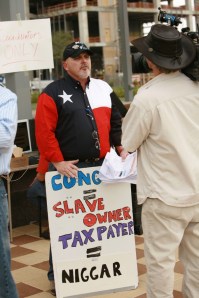 Here’s a nice South Carolina Republican Senator advocating gun violence to get his views enacted.
South Carolina Sen. Lindsey Graham’s top-polling primary challenger, state Sen. Lee Bright, stood on the steps of the South Carolina statehouse (Confederate flags proudly displayed behind him) and said:
“If the Tenth Amendment won’t protect the Second, we might have to use the Second to protect the Tenth.”
Lee Bright’s insinuation being, if you don’t let South Carolina do as they want then South Carolinians will take up arms against you.
Go read some of the quotes from this darling of the Tea Party.
Let’s face it. It doesn’t take long for the congress and the U.S. Senate to come in and say, ‘Y’know what? These states are a lot of trouble. They’re gettin’ in the way. They’re organizing these people. They’re having these rallies. They got, you know, they got, some of them are even talking about militias. I mean, we gotta do something about this. So let’s just go ahead and dissolve them.
Today’s republicans and today’s republican party are no where near even Barry Goldwater or Ronald Reagan who had some pretty  outrageous things to say in their day. They would hate Nixon, Ford, Eisenhower, and they dis Lincoln. All you have to do is talk to a Rand Paul follower and you’ll hear nothing but criticism of Lincoln. I don’t even have time to describe how absolutely crazy they are about regulation, the Federal Reserve Bank, balanced budget amendments, and policies that should be fairly noncontroversial that would get people back to work again.
Yes, Bob, I would absolutely say yes to your question: DEMOCRAT? REPUBLICAN? ARE WE REALLY ALL THAT DIFFERENT?
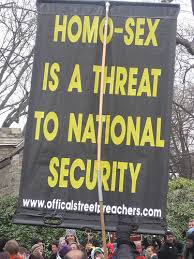
I wouldn’t let people like these near my home, let alone near my daughters. I wouldn’t even let Senator David Vitter near my home or near my daughters. Would you?
If you don’t believe me, ask another person who used to be a big reasonable republican party insider and is another economist. That would be Reagan advisor Bruce Bartlett. Hit him up on his facebook page or just watch his thread. He calls them all wankers now. Frankly, I’ve got worse words for them after my experiences trying to be pro-choice, pro-era, and pro-equal wages for equal work back in the day.
Anyway, that’s my rant illustriously peppered with republican rally signs. You know those great people that did things like boo at gay soldiers and believe in secession, they’re as reasonable as you so I’m sure I’m gonna hear from them here. That way, I wont sully your website.
Thursday: A Mixed Bag of Reads
Posted: January 16, 2014 Filed under: Barack Obama, Crime, Foreign Affairs, morning reads, U.S. Politics, War on Women, Water, Women's Healthcare, Women's Rights, worker rights | Tags: "Paysage Bords de Seine", art theft, Baltimore Museum of Art, Brian Schweitzer, David Sirota, Elkhart Indiana, foreign espionage, grocery store shooting, Jamie Bouie, Martha Fuqua, NSA, phone metadata, Pierre-Auguste Renoir, Ron Paul, telephone companies 38 Comments
Good Morning!!
I’m going to begin with a quirky story about a stolen painting by Pierre-Auguste Renoir: Renoir painting allegedly sold at flea market returning to museum. From the LA Times:
A small Pierre-Auguste Renoir painting that a woman said she purchased for just $7 at a flea market will return to a Maryland museum that argued that the painting was stolen from its premises in 1951.
A federal judge in Virginia ruled on Friday that Renoir’s “Paysage Bords de Seine,” which was painted in 1879, is the rightful property of the Baltimore Museum of Art. The decision brought to an ostensible end a bizarre case that pitted a driving teacher against the museum in a battle over an Impressionist work estimated to be worth $22,000.
Martha Fuqua, who reportedly teaches driving in Virginia, had said that she acquired the painting from a flea market in West Virginia in 2009. She later attempted to sell the work at an auction, which came to the attention of the Baltimore Museum of Art.
The weird part is that people who knew Fuqua claimed they had seen the painting in her mother’s home. So who stole the painting? From the Washington Post:
…a number of people who know Fuqua have cast doubt on her flea market story, including her brother. Some family acquaintances told The Post that they remember seeing the Renoir in the 1980s and 1990s at the Fairfax County home of her mother, Marcia Fouquet, who attended art college in Baltimore at the time of the painting’s theft in 1951. (The mother passed away five months ago at the age of 85.)
Apparently, Marcia Fouqua was an art thief. Here’s the original police report (PDF).

Unfortunately, there’s more bad news today–another shooting, this time in a grocery store in Elkhart, Indiana. NBC News reports:
A gunman killed a member of staff and a customer at an Indiana grocery store before being shot dead by police, officials said early Thursday.
The man had his gun pointed at a third person when officers arrived at Martin’s Super Market in the city of Elkhart, Indiana State Police Sgt. Trent Smith said in a press conference early Thursday.
When he trained his weapon on the officers they shot him dead, Smith said…
Smith said it was a “huge crime scene” and that shots had been fired from one end of the store to the next. The victims were found 10 to 12 aisles apart.
Police rushed to the scene shortly after 10 p.m. on Wednesday after receiving a 911 call. They heard gunshots when they arrived and rushed to the section of the store from which the shots were fired.
Smith described the gunman as white man in his twenties who lived in the area. He said he was armed with a semiautomatic handgun and a large knife.
A little more from Reuters:
The three dead were believed to be a female store employee in her late teens or early 20s, a female shopper in her mid-40s, and the shooter, who was thought to be in his late teens or early 20s, Smith said.
Details such as what motivated the violence and whether there was any connection between the gunman and store employees were not immediately known, he said.
Police found a large knife and a semi-automatic handgun inside the store near the suspect, who was believed to live in the area, Smith said.
Police were withholding the suspect’s name pending notification of his family.

David Sirota was up to his old tricks yesterday on Twitter. Once Sirota pretended to support Barack Obama–that was in the days when you couldn’t blog on Dailykos unless you behaved like a zombie Obot. But even Kossaks mocked Sirota for his constant bragging about receiving a phone call from then-Senator Obama in 2006 and then being invited to interview Obama and his staff.
In those days, Sirota was critical of Obama. In the build-up to the 2012 election, Sirota became a Ron Paul Fan, calling him a “real progressive.” After Obama was elected to a second term Sirota became so “unhinged” by Obama Derangement Syndrome that he compared Obama to George Zimmerman!
These days, Sirota has fastened his presidential hopes on Brian Schweitzer, former governor of Montana. And so when Jamie Bouie dared to suggest that by “positioning himself as a liberal repudiation of Obama,” Schweitzer was in danger of alienating African American voters who still strongly support the President; Sirota responded by strongly implying that Bouie (an African American) is a racist by calling Bouie’s post at The Daily Beast an “[e]xample of how communities of color are condescendingly portrayed as monolithic & unthinking voting blocs.”
Wow.
Here’s a little bit of good news from yesterday’s LA Times: U.S. accuses Wal-Mart of labor violations.
The National Labor Relations Board, an independent federal agency tasked with policing bad behavior by employers, is targeting Wal-Mart Stores Inc. over the retail behemoth’s alleged crackdown on its protesting workers.
The NLRB filed a formal complaint Wednesday against the Bentonville, Ark. chain, alleging that the company violated the rights of more than 60 employees rallying over workplace conditions in 14 states — including California….
The Wednesday filing stems from NLRB findings released in November that deemed unlawful Wal-Mart’s reactions to employees who participated in strikes around Black Friday in 2012.
The rallies spread to 100 cities. Nineteen employees were discharged from the company, allegedly as a reprimand for their involvement in the rallies, according to the NLRB.
The agency said that efforts to broker a settlement between Wal-Mart and its workers failed, leading to Wednesday’s complaint. The filing names more than 60 Wal-Mart supervisors — 19 in California — and corporate communications vice president David Tovar.
The article quotes experts who speculate that the NLRB may be trying to signal to corporations that it is going to stand up for not only unionized workers, but also those in non-unionized businesses. If true, that is excellent news.

Last night Cincinnati acted to protect residents from the chemical plume that is making its way down the Ohio River from West Virginia. From WLW 700: Cincinnati Water Works Prepares to Close Water Intake Valves.
(Cincinnati)–Days after a hazardous chemical leaked into the Elk River in West Virginia the chemical has flowed into the Ohio River and the Cincinnati area.
The Chemical known as 4-methylcyclohexane methanol leaked from a 48,000-gallon storage tank owned by Freedom Industries, in West Virginia. Investigators believe the leak began on Thursday Jan, 9. and the chemical foaming agent seeped though a one inch hole, in the storage tank and into the River….
Lisa Cochran the Communication Coordinator with The Ohio River Valley Water Sanitation Commission (ORSANCO) said the Chemical MCHM was first detected Sunday Jan 12. in the Ohio River.
She adds (ORSANCO) is coordinating with multiple organizations, including Cincinnati Water Works, Northern Kentucky Water, Kentucky Division of Water, US Coast Guard, West Virginia American Water and others to monitor the progress of the spill. “We have field crew members who actually go out and take samples” to determine the concentration of the chemical.
Cincinnati Waterworks is prepared to close their Ohio River water intake valves when the hazardous chemical plume is found. Cochran says “they (Cincinnati Water Works) do plan to shut down when the plume reaches their water intake”.
In NSA news, The New York Times published more “revelations” from the material that Edward Snowden stole. As has become the accepted technique with NSA stories, the article begins with supposedly terrifying news: the NSA uses mysterious “radio technology” to attack computer that aren’t even connected to the internet! Aiiiiiiiiiieeeeeee!
But read on. So far the software has only been used on 100,000 computers since 2008, primarily in countries like China, Russia, and Pakistan, and the software must be physically installed by a human spy with a flash drive. It has never been used domestically.
The N.S.A. calls its efforts more an act of “active defense” against foreign cyberattacks than a tool to go on the offensive. But when Chinese attackers place similar software on the computer systems of American companies or government agencies, American officials have protested, often at the presidential level.
Among the most frequent targets of the N.S.A. and its Pentagon partner, United States Cyber Command, have been units of the Chinese Army, which the United States has accused of launching regular digital probes and attacks on American industrial and military targets, usually to steal secrets or intellectual property. But the program, code-named Quantum, has also been successful in inserting software into Russian military networks and systems used by the Mexican police and drug cartels, trade institutions inside the European Union, and sometime partners against terrorism like Saudi Arabia, India and Pakistan, according to officials and an N.S.A. map that indicates sites of what the agency calls “computer network exploitation.”
So basically, the NSA uses this technology to do its job–spying on foreign countries to protect U.S. interests. Horrors!
And as for the phone call metadata program, Phone companies don’t want the job of spying on customers’ calls. PBS Newshour:
President Barack Obama is expected to announce Friday what changes he is willing to make to satisfy privacy, legal and civil liberties concerns over the NSA’s surveillance practices. One of the most important questions is whether the government will continue to collect millions of Americans’ phone records every day so that the government can identify anyone it believes might be communicating with known terrorists.
The president’s hand-picked review committee has recommended ending the phone records program as it exists. It suggested shifting the storage of the phone records from the NSA to phone companies or an unspecified third party, and it recommended new legal requirements before the government could search anyone’s phone records.
The phone companies don’t want the job. Executives and their lawyers have complained about the plan in confidential meetings with administration officials and key congressional intelligence and other committees, according to interviews by The Associated Press. Two phone executives familiar with the discussions said the cellular industry told the government that it prefers the NSA keep control over the surveillance program and would only accept changes if they were legally required. The executives spoke on condition of anonymity because they were not authorized to disclose the private discussions. But there have been public complaints, too.
Frankly, I’ve never trusted the phone company. I’d much rather have this data stored on government computers, where it can’t be accessed without a warrant approved by the FISA court.
Finally, Rolling Stone is highlighting the Republican war on women’s reproductive rights with a long read by Janet Reitman: The Stealth War on Abortion. I haven’t read the article yet, but I hope it’s good. We need more high-profile publications to highlight what’s happening to women’s rights in red states.

 peej
peej Carissa
 bostonboomer
 dakinikat
 ecocatwoman
 mablue2
 Mama Lopez
 peggysue22
 quixote
 skydancingguestblogger
 Mona (aka Wonk the Vote)



 Sky Dancing
Recent Comments