
Late Night: Is Tim Pawlenty Secretly Pro-Choice?
Posted: June 29, 2011 Filed under: 2012 presidential campaign, Reproductive Health, Republican politics, Republican presidential politics, U.S. Politics, Women's Rights | Tags: anti-abortion, lying liars, Minnesota, Mitt Romney, pro choice, Shawn Lawrence Otto, Tim Pawlenty 12 Comments
Tim Pawlenty, "closet moderate"
Wow, breaking news! I know Mitt Romney isn’t really anti-abortion, but Tim Pawlenty? In an op-ed headlined “The Manufactured Candidate,” Shawn Lawrence Otto, a long-time acquaintance of the Minnesota Governor and GOP presidential candidate, claims that Pawlenty told him he was “personally pro-choice.”
I’ve known Pawlenty since he was a young Republican state representative from Eagan, Minn. We had some of the same friends and used to golf together once in a while. His campaign treasurer was my accountant…
Pawlenty is a very talented guy, and I respected his opinion. His first question was, “What’s your position on choice?” I hadn’t ever been asked the question quite so pointedly. “You’ve got to take a stand on that first,” he said. “Well,” I said, “OK. I don’t like abortion; I think it’s a really tough personal decision, but not something the government should be getting into one way or the other, so I guess I’m pro-choice.”
He looked at me over his lunch and said, “Well personally, so am I, but here’s the thing. You’ve got to find a way to get your mind around the language of saying ‘pro-life.’ It’s in how you phrase it.”
I’ve since learned I’m not the only one Pawlenty has said this to.
This is the political reality for Republicans. You have to pretend to be crazy to get elected.
Otto isn’t comfortable with what he sees happening in the GOP:
This integrity issue doesn’t seem to bother Pawlenty the way it bothers me. He’s wanted to be president for as long as I’ve known him, and ambition can cause principles to take a back seat. He has shown a similar cynicism in his more recent about-faces on climate change and health care, stunning many Minnesotans and former allies and causing some to wonder: Do you really have to sell your soul to succeed in Republican politics?
The answer seems to be yes. And judging by the non-reaction of Democrats to the war on women taking place around the country, they are learning to accept same “reality.” And as a result, millions of women will suffer and die because of the disgusting cowardice of these amoral politicians.
As Bob Dylan wrote in another context, “we’re only a pawn in their game.”
France’s Christine Legarde Set to head IMF creating another ‘first’ for Women
Posted: June 28, 2011 Filed under: Economic Develpment, financial institutions, Global Financial Crisis, Women's Rights | Tags: Christine Legarde, French Minister of Finance, IMF, President of IMF 7 Comments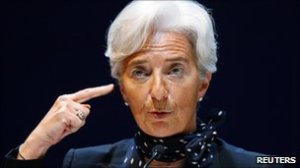 One of the world’s best economists and France’s Minister of Economics, Finance, and Industry–Christine Legarde–will likely be the newly appointed head of the International Monetary Fund (IMF). Thankfully, the U.S. joined with other members of the IMF board to approve Legarde which virtually assures her appointment. Legarde will be the first woman to head the IMF. She is widely regarded as the best Finance minister in the Eurozone. She will inherit an IMF still reeling from the sex scandal surrounding Dominique Strauss-Kahn as well as an IMF dealing with the Greek sovereign debt meltdown. The IMF is an important development vehicle for many of the world’s struggling economies. It has been controversial in the past since it has been seen to implement ideological as well as development strategies.
Lagarde’s presence itself as the first female head of the IMF will go a long way toward reinvigorating any demoralization of the staff. Granted, Lagarde is poised to earn the job because she’s the most qualified and best positioned to help the organization deal with its pressing economic crises. And while putting an extremely successful woman atop the IMF certainly won’t erase the Strauss-Kahn scandal or stop every unwanted advance, it should go a long way toward reminding the IMF’s staffers how much the organization values gender equality and won’t tolerate such behavior at any level. At the very least, having someone in charge who doesn’t have the reputation of being a womanizer is surely a good thing.
It’s unclear how much the internal culture at IMF actually needs fixing. A May New York Times story laid out an image of the IMF as a place “in which romances often flourish—and lines are sometimes crossed,” and where a pressured, “sharp-elbowed” place left complaints of harassment unanswered and where “rules are more like guidelines.” Some 676 women in the organization filed a response to the story, saying they were insulted by the way their workplace was depicted.
Still, Lagarde herself says the organization will need to “take pains to show the outside world” that it is a leader in ethical behavior. And she acknowledges that staff morale will need some mending following the august organization’s embarrassing time in the spotlight.
Legarde has a formidable intellect and is well-known for her straight and tough talk. Finance and economics are areas dominated by men with swagger. She has succeeded in ways that many men have not.
Ms Lagarde was appointed France’s Trade Minister in 2005 and under her watch, French exports reached record levels.
In 2007 she became finance minister, the first woman to hold this post not just in France but in any of the G8 major industrial countries.
Never afraid of speaking her mind, she has blamed the 2008 worldwide financial crisis partly on the male-dominated, testosterone-fuelled culture at global banks.
One of France’s most popular right-wing politicians, in 2009 she came second in a poll carried out by broadcaster RTL and newspaper Le Parisien on the country’s favourite personalities, beaten only by singer and actor Johnny Hallyday.
But her popularity has stretched beyond French shores and she is viewed with high regard in the international arena.
In 2009, the Financial Times voted her the best finance minister in Europe.
She has won international respect for promoting France’s negotiating clout in key forums like the G20, for which France currently holds the presidency.
She has also received plaudits for the key role she played in approving a bail-out mechanism to aid struggling members of the eurozone last May.
Lagarde has played a large role in the many challenges facing the Eurozone since the U.S. financial market meltdown. Unlike the U.S. which has basically coddled the very executives whose risky behavior and bad business practices have gone largely unpunished, Largarde has worked hard to reform the system to avoid a repeat. She not only has to herd French politicians but also create consensus among the other members of the EU community.
Lagarde has won praise for steering France through the financial crisis, notably by dispensing $48 billion in aid to French banks, which are repaying the money with interest after stabilizing themselves. She also fought successfully to provide corporate tax relief, aid to small businesses, and tax credits to stimulate research. “None of those things would have happened without Christine Lagarde,” says Frédéric Gonand, an economics professor at Paris-Dauphine University who recently stepped down after four years as Lagarde’s chief economic adviser. “She placed her own mark on economic policy.” A May poll by Ipsos for the magazine Le Point put her approval rating at 51 percent, far above her boss Sarkozy’s 37 percent.
Still, France has fallen behind Germany in making the kinds of changes that could give the economy a serious boost, such as reducing government bureaucracy and labor market restrictions. The need to carry out policies dictated by Sarkozy has also put her in awkward situations at times. In 2009 she had to defend his plan to invest $51 billion in research and development and other projects at a time when France was under attack by other euro zone countries for running a 7.5 percent budget deficit, far above the 3 percent that member countries had agreed on. And despite her role in negotiating the euro rescue package, the terms of that deal, such as automatic sanctions against aid recipients if they didn’t meet agreed-upon targets, were dictated largely by Germany. “France’s game seemed to be, ‘Let’s stick to the Germans as closely as possible,'” says Philip Whyte, a senior research fellow at the London-based Centre for European Reform. “She’s a great facilitator and chair, but she’s probably not in the absolute center of influence.”
I actually can’t tell you how excited I am about this development. As I’ve said before, she’s been a great success in France. This shows she can once again bust through a major glass ceiling that’s been there for ages for women in my profession.
States continue Radical christianist assault on Women’s Health
Posted: June 27, 2011 Filed under: abortion rights, right wing hate grouups, Violence against women, Women's Rights | Tags: fetal pain myth, Planned Parenthood, restrictions on abortion rights, Wisconsin 36 Comments In an appalling attack on women’s right to abortion and basic health services for poor women, Republicans in many states have injected personal religious agendas into budgets and laws. It was just announced that Wisconsin Governor Scott Walker has defunded the state’s Planned Parenthood clinics as a result of budget deficits created by excessive tax cuts. Planned Parenthood Clinics in Wisconsin provide preventative services. Loss of these services will undoubtedly cost women their lives and the state much larger bills in the long run. This is clearly nothing but a religionist agenda and an attempt to coerce state law into compliance with radical christianist concerns.
Wisconsin Gov. Scott Walker signed a budget Sunday that cuts education and health clinics — including Planned Parenthood clinics — to plug a $3 billion shortfall without raising taxes, AP reported.
The two-year, $66 billion budget passed in the state legislature without a single Democratic vote.
The Planned Parenthood Federation of America denounced the budget, which eliminated state and federal funding for the organization’s clinics.
Planned Parenthood of Wisconsin says it has 27 health centers across the state, which provide birth control, cancer screenings, annual exams, and sexually transmitted disease testing and treatment to 73,000 patients every year.
Wisconsin is the fourth state to target Planned Parenthood because of conservative-led objections to the group’s abortion services — even though they are funded separately and make up a small fraction of the services Planned Parenthood provides.
“If organizations want to do that, we’re not saying they don’t have the right to do that under the law. While we disagree with abortions entirely, they do have that right,” Wisconsin’s Channel3000.com quotes Julaine Appling of Wisconsin Family Action as saying. “We don’t have to use taxpayer money to do that.”
The budget eliminates state and federal funding to nine Planned Parenthood of Wisconsin health centers in small communities and cuts off 12,000 women who do not have health insurance from getting preventive health care, the group said in a statement.
“The budget also threatens Wisconsin’s BadgerCare family planning program, which currently helps more than 53,000 women and men get preventive health care at providers throughout the state, including Planned Parenthood. According to the Department of Health’s own estimations, the BadgerCare family planning program saves Wisconsin nearly $140 million per year,” Planned Parenthood said.
Radical christianists are also driving a number of laws with no medical or scientific basis outlawing abortion procedures after 20 weeks on the ridiculous and unproven notion that nonviable fetus can ‘feel’ pain. Again, this is clearly driven by an attempt to impose radical christianist law on our country.
Last fall, Danielle and Robb Deaver of Grand Island, Neb., found that their state’s new law intruded in a wrenching personal decision. Ms. Deaver, 35, a registered nurse, was pregnant with a daughter in a wanted pregnancy, she said. She and her husband were devastated when her water broke at 22 weeks and her amniotic fluid did not rebuild.
Her doctors said that the lung and limb development of the fetus had stopped, that it had a remote chance of being born alive or able to breathe, and that she faced a chance of serious infection.
In what might have been a routine if painful choice in the past, Ms. Deaver and her husband decided to seek induced labor rather than wait for the fetus to die or emerge. But inducing labor, if it is not to save the life of the fetus, is legally defined as abortion, and doctors and hospital lawyers concluded that the procedure would be illegal under Nebraska’s new law.
After 10 days of frustration and anguish, Ms. Deaver went into labor naturally; the baby died within 15 minutes and Ms. Deaver had to be treated with intravenous antibiotics for an infection that developed.
Ms. Deaver said she got angry only after the grief had settled. “This should have been a private decision, made between me, my husband and my doctor,” she said in a telephone interview.
Based on current knowledge, medical organizations generally reject the notion that a fetus can feel pain before 24 weeks. “The suggestion that a fetus at 20 weeks can feel pain is inconsistent with the biological evidence,” said Dr. David A. Grimes, a prominent researcher and a professor of obstetrics and gynecology at the University of North Carolina School of Medicine. “To suggest that pain can be perceived without a cerebral cortex is also inconsistent with the definition of pain.”
In one recent review, in March 2010, the Royal College of Obstetricians and Gynecologists in Britain said of the brain development of fetuses: “Connections from the periphery to the cortex are not intact before 24 weeks of gestation and, as most neuroscientists believe that the cortex is necessary for pain perception, it can be concluded that the fetus cannot experience pain in any sense prior to this gestation.”
Observations of physical recoiling and hormonal responses of younger fetuses to needle touches are reflexive and do not indicate “pain awareness,” the report said.
Six states have no passed some form of these laws. It is crucial that women realize that these laws are based on radical religious views and not science. The doors to these laws was opened by none other than Supreme Court Justice Kennedy who has no background in medical science but has been drug into considering religious positions instead of law by several supreme court justices that allegedly have connections to the religious cult Opus Dei.
SOS Clinton backs “Brave Saudi Women”
Posted: June 21, 2011 Filed under: Foreign Affairs, Hillary Clinton, Saudi Arabia, Women's Rights | Tags: Driving Rights 12 Comments US Secretary of State Hillary Clinton said the U.S. supports the move by Saudi Women to seek the right to drive in the kingdom.
We’ve made clear [to the Saudi government] our views that women everywhere, including women in the kingdom, have the right to make decisions about their lives and their futures,” Clinton said. “They have the right to contribute to society and provide for their children and their families, and mobility such as provided by the freedom to drive provides access to economic opportunity, including jobs, which does fuel growth and stability.”
“What these women are doing is brave and what they are seeking is right, but the effort belongs to them,” said Clinton. “I am moved by it and I support them, but I want to underscore the fact that this is not coming from outside of their country. This is the women themselves, seeking to be recognised.”
The protests have put the Obama administration, and Clinton in particular, in a difficult position. While she and many other top US officials personally oppose the Saudi ban on female drivers, the administration is increasingly reliant on Saudi authorities to provide stability and continuity in the Middle East and Gulf amid uprisings taking place across the Arab world.
Thus, some officials have been reluctant to antagonise the Saudis.
On Monday, a coalition of Saudi activists urged Clinton to support publicly the campaign to end male-only driving in the ultra-conservative Muslim country.
Clinton said on Tuesday that she and other US officials had raised the matter “at the highest level of the Saudi government”.
“We have made clear our views that women everywhere, including women in the kingdom, have the right to make decisions about their lives and their futures,” she said. “They have the right to contribute to society and provide for their children and their families, and mobility, such as provided by the freedom to drive, provides access to economic opportunity, including jobs, which does fuel growth and stability.
“And it’s also important for just day-to-day life, to say nothing of the necessity from time to time to transport children for various needs and sometimes even emergencies,” Clinton said. “We will continue in private and in public to urge all governments to address issues of discrimination and to ensure that women have the equal opportunity to fulfill their own God-given potential.”
Driving as Act of Radical Feminism
Posted: June 17, 2011 Filed under: Foreign Affairs, Saudi Arabia, Women's Rights | Tags: civil disobedience, Saudi Women, wheels of change 19 CommentsToday has been a very special day in Saudi Arabia. Some Saudi women are participating in “Wheels of Change” by driving 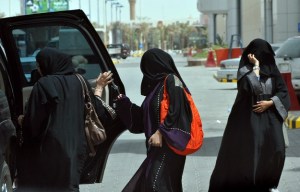 their vehicles as an act of civil disobedience against treatment of women in the nation.
Saudi activists, encouraged by the Arab Spring and by the outlets for expression offered through Facebook and Twitter, declared Friday a day for Saudi women to take to the streets, behind steering wheels.
Saudi Arabia remains perhaps the only country in the world where women are banned from driving — even though no law explicitly bars Saudi women from driving. Saudi leaders from King Abdullah on down have said they believe Saudi women should be allowed to drive.
Inside and outside Saudi Arabia, some tend to see the ban as a frivolous issue — the stereotype being a Saudi woman princess in sunglasses wanting a little independence as she drives to Starbucks for a latte.
Activists and writers like Eman Fahad al Nafjan, a blogger, doctoral student, and mother in Riyadh, call the impact of the ban profound, saying that it limits women’s mobility into female employment and education, despite efforts by King Abdullah to boost both. And in a kingdom that the International Labor Organization says is the only country in the Gulf Cooperation Council with a significant poverty rate, the ban is a drain on the resources of women, forcing many households to pay thousands of dollars a year for drivers, opponents say.
AJ is also reporting on these acts of civil disobedience against one of the most conservative monarchies in the area. This is truly an act of bravery in this country. Saudi Arabia has not yet experienced much civil unrest during the so-called “Arab spring’.
The subject of women driving was as puzzling as every woman-related issue in the tribal, patriarchal, and religious alloy of the Saudi mindset.
Women have driven in rural areas and in some compounds within cities all the time. There were no religious or legal pretexts to prevent women from driving. The opposition came from a group of religious scholars – purportedly for fear of “gender mixing” and anticipated sins – a fallacy that is obviously refuted by the fact that gender mixing is already in effect, whether women are in the back or the front seats of the cars – unless a parallel public world can be created for each sex, an idea which must occupy many scholars’ minds.
This was nothing new; religious views opposing women’s autonomy were the norms of Saudi scholars, fearing changes in the traditional gender roles. And when religious unrest contradicts official plans, the government often acts to keep the clerics in check. Examples are many, such as the beginnings of women’s education half a century ago and the opening of KAUST, the first co-educational university – which cost a known scholar his elevated position at the supreme committee of scholars.
I would like every one here to be aware of the bravery of the people in Saudi Arabia–the women and men–who are trying to bring modernity and women’s rights to what is unquestionably a misogynist society. For more information on the role of social media in this movement, see the BBC’s story here. Many Saudi women are posting videos and stories like the one above.

 peej
peej Carissa
 bostonboomer
 dakinikat
 ecocatwoman
 jjlo
jjlo mablue2
 Mama Lopez
 peggysue22
 quixote
 skydancingguestblogger
 Mona (aka Wonk the Vote)





Recent Comments