
Tuesday Reads: Romney’s Gaffe-tastic European Tour, #NBCfail, the War on Women, and More
Posted: July 31, 2012 Filed under: 2012 presidential campaign, abortion rights, Barack Obama, Foreign Affairs, George W. Bush, Israel, Mitt Romney, morning reads, Palestine, Reproductive Rights, Russia, The DNC, the GOP, U.S. Economy, U.S. Politics, War on Women, We are so F'd, Women's Healthcare | Tags: #NBCfail, Arizona, Bill Clinton, Bob Dylan, Dick Cheney, Ehud Barack, Elizabeth Warren, fetal pain myth, Jonah Lehrer, journalistic fraud, Olympics, Poland, The New Yorker, Virginia anti-abortion laws 30 Comments
Good Morning!!
Mitt Romney is going to wrap up his gaffe-tastic European vacation today, but the gaffes may not be over yet. I read in JJ’s late night post last night that he’s going to make a speech in which he attacks Russia and Putin and criticize Obama for making efforts to cooperate with Russia on some issues like controlling nukes. Whatever happened to Romney’s promise that he wasn’t going to criticize current U.S. policies while overseas?
After all of Romney’s pandering during his visit to Israel, Ehud Barak spoke highly of President Obama in an interview with CNN’s Wolf Blitzer yesterday.
Israel’s Deputy Prime Minister and Minister of Defense Ehud Barak said the Obama White House has been the most supportive administration throughout the two countries’ diplomatic relations on matters of Israeli security, in an interview to air Monday on “The Situation Room with Wolf Blitzer.”
Barak -also a former prime minister of Israel – said that though historically administrations from both political parties have supported the Jewish state President Obama’s support, security-wise, is unparalleled.
“I think that from my point of view as defense minister they are extremely good, extremely deep and profound. I can see long years, um, administrations of both sides of political aisle deeply supporting the state of Israeli and I believe that reflects a profound feeling among the American people,” said Barak. “But I should tell you honestly that this administration under President Obama is doing in regard to our security more than anything that I can remember in the past.”
I’d love to be a fly on the wall when Romney finds out about that.
As JJ also noted last night, NBC is not getting rave reviews on its delayed and edited coverage of the Olympic games. In just one of their #NBCfail updates the Independent reports that Bob Costas, whom I usually like, “made a series of jingoistic remarks, including a joke about Idi Amin when Uganda’s team appeared.” Of course the loudest complaints have been about NBC’s refusal to show any of the events live.
There was feverish anticipation for the debut of the USA men’s basketball “dream team”, who began their hugely hyped Olympic campaign yesterday afternoon. But you wouldn’t have known it by turning on a television in their home country.
While Kobe Bryant and other big names in US sport were completing a 98 to 71-point victory, viewers of American network NBC were forced to watch edited highlights of a women’s cycling race that had been completed several hours earlier.
It was the latest in a string of mistakes by the broadcaster, whose coverage is sparking ridicule from TV critics and outrage from the US public. For most of the weekend, the phrase “NBC Fail” was trending on Twitter.
Why would I bother to watch when the winners and losers have already been announce earlier in the day? I wouldn’t bother watching a delayed broadcast of a Red Sox game either, but sometimes I stay up till all hours watching them when they’re out on the West Coast.
In another update, The Independent reports that one of their reporters, Guy Adams, was suspended from Twitter after NBC complained of his many negative tweets about their coverage.
The NYT Media Decoder reports that another yuppie journalist has bitten the dust.
A publishing industry that is notoriously ill-equipped to root out fraud. A magazine whose famed fact-checking department is geared toward print, not the Web. And a lucrative lecture circuit that rewards snappy, semi-scientific pronouncements, smoothly delivered to a corporate audience.
All contributed to the rise of Jonah Lehrer, the 31-year-old author, speaker and staff writer for The New Yorker, who then executed one of the most bewildering recent journalistic frauds, one that on Monday cost him his prestigious post at the magazine and his status as one of the most promising, visible and well-paid writers in the business.
An article in Tablet magazine revealed that in his best-selling book, “Imagine: How Creativity Works,” Mr. Lehrer had fabricated quotes from Bob Dylan, one of the most closely studied musicians alive. Only last month, Mr. Lehrer had publicly apologized for taking some of his previous work from The Wall Street Journal, Wired and other publications and recycling it in blog posts for The New Yorker, acts of recycling that his editor called “a mistake.”
By Monday, when the Tablet article was published online, both The New Yorker and Mr. Lehrer’s publisher, Houghton Mifflin Harcourt, made it clear that they had lost patience with him.
Fabricating quotes from Bob Dylan? How stupid can you get? This guy must have a fear of success.
The War on Women continues apace. In Arizona a judge (a Clinton appointee yet) has ruled that the state’s restrictive abortion law can take effect.
U.S. District Judge James Teilborg said the statute may prompt a few pregnant women who are considering abortion to make the decision earlier. But he said the law is constitutional because it doesn’t prohibit any women from making the decision to end their pregnancies.
The judge also wrote that the state provided “substantial and well-documented” evidence that an unborn child has the capacity to feel pain during an abortion by at least 20 weeks.
Republican Gov. Jan Brewer signed the measure into law in April, making Arizona one of 10 states to enact types of 20-week bans.Arizona’s ban, set to take effect Thursday, prohibits abortions starting at 20 weeks of pregnancy except in medical emergencies. That is a change from the state’s current ban at viability, which is the ability to survive outside the womb and which generally is considered to be about 24 weeks. A normal pregnancy lasts about 40 weeks.
The New York-based Center for Reproductive Rights and another group filed a notice that they would be appealing Teilborg’s decision to the 9th U.S. Circuit Court of Appeals.
The law will result in more babies being born even though they have no chance of survival.
Under a new Arizona abortion law that takes effect Thursday, more babies with fatal fetal defects are expected to be carried to term, even though they will die within minutes, hours or days. But more will also be done to help their families get through the trauma of losing a child.
House Bill 2036 forbids doctors from aborting most fetuses with a gestational age of 20 weeks or older, even in situations where the doctor discovers the fetus has a fatal defect. The law also defines gestational age as beginning on the first day of the woman’s last period, meaning abortions are actually banned starting at 18 weeks of pregnancy — typically about the same time a doctor would perform ultrasounds where most abnormalities are detected.
Eight other states also ban abortions after 20 weeks, but Arizona is the only one with a law that actually pushes the ban back to 18 weeks into the pregnancy.
At Salon Irin Carmon spells out the “insanity” that “prevails in Arizona.
The Clinton-appointed district court judge in Arizona just did something, well, unprecedented. He upheld Arizona’s ban on abortions after 20 weeks, claiming it didn’t actually “ban” abortions before viability, it just “regulates” them down to the most grueling emergencies.
Worse, Teilborg even regurgitated the suspect science of “fetal pain,” a first in the federal courts, though his decision was based on the contorted “regulation” versus “ban” finding. The Supreme Court has repeatedly held that the state can only ban abortions after viability, regardless of the rationale, but Teilborg found that Arizona’s H.B. 2036 “does not impose a substantial obstacle to previability abortions,” because a woman can still get an abortion after 20 weeks if she’s about to die or suffer major physical impairment.
“It’s such a game of semantics, to the point of Alice in Wonderland,” ACLU staff attorney Alexa Kolbi-Molinas told Salon. “When the Supreme Court said you cannot ban any abortions prior to viability, regardless of whether there are any exceptions to that ban, that’s exactly what they meant.”
And Virginia’s abortion clinics are still struggling to meet the ridiculous requirements they have been given by the state’s General Assembly.
Rosemary Codding has tried for months to scrape together enough to pay for a costly renovation to her Falls Church clinic, where women get checkups, Pap smears and abortions.
Codding is still short of the up to $1 million it would take to update the 50-year-old building — it needs wider hallways, new ventilation systems and additional patient rooms — after Virginia enacted some of the nation’s toughest restrictions on abortion clinics.
The General Assembly voted last year to require the guidelines, which were quickly adopted by the state’s Board of Health. In a surprise move, the panel later exempted the state’s existing clinics, including Codding’s on busy Lee Highway.
But Attorney General Ken Cuccinelli II (R) refused to sign off on the board’s decision, arguing that it lacked the legal authority to exclude the operating clinics.
Bill Clinton will play a “key role” at the Democratic Convention.
Former President Bill Clinton will have a marquee role in this summer’s Democratic National Convention, where he will make a forceful case for President Barack Obama’s re-election and his economic vision for the country, several Obama campaign and Democratic party officials said Sunday.
The move gives the Obama campaign an opportunity to take advantage of the former president’s immense popularity and remind voters that a Democrat was in the White House the last time the American economy was thriving.
Obama personally asked Clinton to speak at the convention and place Obama’s name in nomination, and Clinton enthusiastically accepted, officials said. Clinton speaks regularly to Obama and to campaign officials about strategy.
In contrast, George W. Bush and Dick Cheney will not attend the Republican Convention. We still don’t know if Mitt the Twit will invite Sarah Palin.
Elizabeth Warren will also speak in prime time, but will not deliver the keynote speech.
Elizabeth Warren will not deliver the keynote speech at this year’s Democratic National Convention, but instead will speak immediately before former President Bill Clinton on what party officials hope will be an energetic penultimate night.
Warren and Clinton will speak in primetime on Wednesday, Sept. 5, and form a one-two punch aimed at crystallizing the choice between President Obama and Republican Mitt Romney in the general election, the Obama campaign said.
The Massachusetts Senate candidate will contrast the president’s economic plan with Romney’s, and outline the impact it will have on middle-class families across the country.
“At the president’s side, Elizabeth Warren helped level the playing field for all Americans and put in place safeguards to ensure that everyone, from Wall Street to Main Street, play by the same set of rules,” said Stephanie Cutter, a deputy Obama campaign manager.
That’s all I’ve got for today. What are you reading and blogging about?
Entitled One-Percenter Bill Keller Wants Baby Boomers to Give Up Social Security and Medicare
Posted: July 30, 2012 Filed under: Catfood Commission, Medicare, Mitt Romney, Social Security, The Media SUCKS, U.S. Economy, U.S. Politics, unemployment, voodoo economics, We are so F'd | Tags: Bill Keller, Charles P. Pierce, Dean Baker, Income Inequality, infrastructure, Iraq War, Judith Miller, one-percenters, Paul Ryan, Simpson-Bowles 32 Comments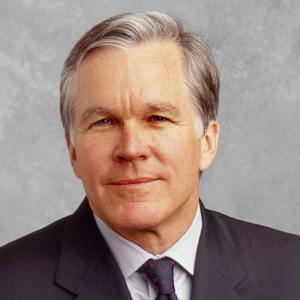
Smarmy former NYT editor Bill Keller
From today’s New York Times: “The Entitled Generation.”
The notion that our generation has been spoiled rotten is not a terribly new thought. A dozen years ago Paul Begala (of Bill Clinton and CNN fame) published in Esquire the classic of boomer-loathing, “The Worst Generation.” “The Baby Boomers are the most self-centered, self-seeking, self-interested, self-absorbed, self-indulgent, self-aggrandizing generation in American history,” he declared. It’s a sturdy genre. Perhaps while Googling yourself you have come across the blog Boomer Deathwatch (“Because one day, they’ll all be dead”), a checklist of famous boomers who hit their actuarial sell-by dates. Even Barack Obama, who styles himself post-boomer though he was born in 1961, complained in “The Audacity of Hope” that today’s hyperpolarized political discourse began with the “psychodrama of the baby boom generation.”
Yeah, we’re all evil just because our parents returned from WWII and proceeded to have lots and lots of babies. Supposedly not one of us ever did a decent thing in our pathetic, useless lives, right? I’m sick to death of hear this crap–and I’ve been hearing it since I was a kid.
See Keller says it’s our fault that the government isn’t rebuilding the infrastructure. He says it won’t do any good to tax super-rich guys like him–we’re going to have to take it out of the hides of old ladies who are trying to eke out a living on $1200 a month or less.
Guys like Bill Keller don’t even have to pay into Social Security on the bulk of their income, but he doesn’t even mention the possibility of changing that. So what does super-rich one-percenter Bill Keller think we should do about it besides learning to loathe ourselves and wish we’d never been born?
So the question is not whether entitlements have to be brought under control, but how. The Republican plan espoused by Mitt Romney and his fiscal lodestar Paul Ryan would cut the cost of entitlements largely by moving toward privatization: personal investment accounts for Social Security, vouchers for Medicare. And it’s not at all clear the Republicans would assign any of the savings to investing in our future.
At least the Republicans have a plan. The Democrats generally recoil from the subject of entitlements. Centrists like those at Third Way and the bipartisan authors of the Simpson-Bowles report endorse a menu of incremental cuts and reforms that would bring down costs without hitting the needy or snatching away the security blanket from those nearing retirement. They include gradually raising the retirement age to compensate for the fact that we now live, on average, 14 years longer than when F.D.R. signed Social Security into law. They include obliging those of us who can really afford it to pay a larger share. They also include technical fixes like aligning the automatic cost-of-living formula with reality.
At least now we know which candidate Keller will be voting for in November. So much for the supposedly “liberal media.” Oh, and about that “technical fix” Keller brushes off so dismissively, Matthew Yglesias explains why it isn’t a “technical fix” and “doing the switch comprehensively would constitute a de facto tax increase.” Furthermore, there was no “Simpson-Bowles report,” because the two co-chairs were unable to get a majority of members of the Catfood Commission to sign off on one.

Judith Miller with patron Bill Keller
I have a terrific idea. Let’s hold Bill Keller responsible for his choice to assign Judith Miller to help the Bush administration lie us into the Iraq War. Let Bill Keller pay back the trillions of dollars of taxpayer money those lies cost us. That ought to provide some funds to invest in infrastructure here in the U.S.
Here’s what Dean Baker had to say about Keller’s lying op-ed:
That is really brave for Mr. Keller to stand up and call for sacrifice from his age cohort. Does Keller know that the typical near retiree has total wealth of $170,000. This includes everything in their 401(k), all their other financial assets and the equity in their homes. Another way to put this is that the typical near retiree (between the ages of 55-64) could take all their wealth and pay off their mortgage. After that they would be entirely dependent on their Social Security to cover all their living costs.
Does this situation describe Mr. Keller’s finances? My guess is that it doesn’t. If that is true, how does Keller claim to speak for people who are in a hugely different financial situation than him? Is he really that ignorant of the issues that the NYT gives him a column to write about or is he dishonest? Readers will have to debate that in the months and years ahead.
Baker says the real problem we have is the increase in income inequality over the past thirty years, but he’s not holding his breath for Keller to “appeal to his fellow one-percenters….He probably doesn’t have the courage or integrity to do that.”
I saved the best review of Keller’s op-ed for last. You guessed it, it’s by Charlie Pierce: “The Things Bill Keller Doesn’t Have to Worry About.”
I defy Bill Keller to last a week living only on those benefits available to the greedy boomers, especially after the Simpson-Bowles cargo cult — to say nothing of the zombie-eyed granny-starver Paul Ryan himself — are through with them. I defy him to make it for a day. The “we” sprinkled throughout this bag of pus is probably the most noxious thing about it. Look around, Bill. You and Mitt Romney have far more in common than do you and the overwhelming majority of your “fellow” boomers. One catastrophic illness, and many of our families die on the vine. This is not hyperbole. This is how it works in the world. And, to the surprise of absolutely nobody, Keller signs on with the clowns at Third Way, who assure us that the real problem is that the elderly moochers are the ones keeping us from building new bridges, or flying to the moons of Neptune. Jesus H. Christ on a Lipizzaner, we’ve had forty years of demonized government, and 40 years of quack economics, and tax-cuts until hell won’t have them, and the reason our infrastructure is falling apart is because some retired ironworker gets $1200 a month? How much of a courtier do you have to be before the taste of caviar makes you nauseous?
If we want to invest in infrastructure, which we desperately need to do, then we should just borrow money at the current historically low rates and fix the damn infrastructure…. People Got No Jobs. People Got No Money. Bill Keller never will have to worry about the last two, so I think he should shut up about the first.
Falling from the Middle with You
Posted: July 24, 2012 Filed under: 2012 presidential campaign, Economy, income inequality, Voter Ignorance, We are so F'd 20 Comments I spend a lot of time writing on US income issues partly because it’s one of those economist things and a lot because I know that so many of us have been struggling since the turn of the century. Our country’s economic growth has been extremely paltry since 2001. Also, what US growth has occurred has benefited very large corporations and extremely wealthy individuals. Compounding the issue of low growth is the fact that these very large corporations and extremely wealthy individuals don’t keep their money, their jobs, and their investments in the USA any more. All of this has led to a very sad situation for the backbone of the historical US economy; the middle class.
Economix blog at the NYT is going to have a series of articles examining the recent fall from grace that we’ve experienced since our economy has morphed into something that focuses its policies on enabling these rich people and huge corporations to abandon our country and our citizens. This first article sums up the problem. We’ve been progressively giving up Keynesian economics and replacing it with “Supply Side” economics that continues to show opposite results of what’s promised. Yet, our policy makers scream for more of the same punishment! Our last Keynesian-policy embracing President was probably Richard Nixon. Since then, elements of Supply Side economics have provided terrible results like huge deficits, income inequality, and the return of financial panics.
First, economic growth in this country has been relatively slow in recent years, which means the total bounty that the American economy produces, to be shared by all of its citizens, has not been growing very rapidly. Even before the financial crisis began in 2008, economic growth in the decade that started in 2001 was on pace to be slower than growth in any decade since World War II.
Then of course came a deep recession that caused the economy to shrink.
In addition to the slow growth in overall size of the pie, the share that has been going to anyone but the richest Americans has been declining. The top-earning 1 percent of households now bring home about 20 percent of total income, up from less than 10 percent 40 years ago. The top-earning 1/10,000th of households — each earning at least $7.8 million a year, many of them working in finance — bring home almost 5 percent of income, up from 1 percent 40 years ago.
In the simplest terms, the relatively meager gains the American economy has produced in recent years have largely flowed to a small segment of the most affluent households, leaving middle-class and poor households with slow-growing living standards.
One of the major things that’s upsetting to me is the absolute denial by the current extremists that have taken over the Republican party is acknowledgement that their policies have caused disaster. I can’t imagine any one voting for Romney who is pushing these failed policies to the extreme. Republicans actually think just talking about this problem and the middle class in general is instigating class warfare. It’s like if we don’t coddle the extremely rich all the time they will throw a hissy fit and the economy will collapse. This is a proverbial crock of crap and at this point, who cares? Huge corporations and extremely rich folks like Equity Capital managers don’t create the majority of jobs. Those come from middle-to-large businesses that operate consistently within the boundaries of our nation.
Speaking on the Senate floor, Kyl claimed that the president’s usage of the phrase “middle class” is “misguided and wrong and even dangerous.” Calling for an end to rhetoric about classes, Kyl blasted Obama for “incessantly” talking about class, “particularly the middle class”:
KYL: Most prominently, we have a president who talks incessantly about class, particularly the middle class. Maybe you’ve noticed that. He defines class strictly by your income. In the president’s narrative, someone who makes $199,000 a year is a member of one class and someone who makes $200,000 belongs to another class. Does that make sense? Indeed, each day the president’s out on the campaign trail championing himself as the great protector of what he calls the middle class and pitting these Americans against their fellow citizens by arguing that the wealthiest class is victimizing them through the tax code.
Again, we can’t talk about our issues as ordinary Americans because no one wants to hear the servants complaining, I guess. We can’t complain when they take national wealth, jobs, and investments out of the country while being subsidized by our tax dollars. Again, I have to argue that Mitt Shady represents everything that’s created this horrible situation. He’s like the poster child for our modern, self-destructive policies.
Phillip Longman characterizes this as a “Hole in our Bucket”. We’ve blown up just about everything that helps the middle class build wealth recently. One of the first things that disappeared in the Carter years and Reagan years was our traditional approach to usary laws. You can read about the history at the link. However, here’s the impact of that alone.
This short history of usury laws puts into perspective just how bizarre the credit markets of the United States have become over the last forty years. Usury law is, in the words of one financial historian, “the oldest continuous form of commercial regulation,” dating back to the earliest recorded civilizations. Yet starting in the late 1970s, some powerful people decided we could live without it.
First to go were state usury laws governing credit cards. Before 1978, thirty-seven states had usury laws that capped fees and interest rates on credit cards, usually at less than 18 percent. But in 1978 the Supreme Court, in a fateful decision, ruled that usury caps applied only in the state where the banks had their corporate headquarters, instead of in the states where their customers actually lived. Banks quickly set up their corporate headquarters in states that had no usury laws, like South Dakota and Delaware, and thus were completely free to charge whatever interest rates and fees they wanted. Meanwhile, states eager to hold on to the banks headquartered within their borders promptly eliminated their usury laws as well.
Later, in 1996, the Supreme Court handed usurers another stunning victory. In Smiley v. Citibank it ruled that credit card fees, too, would be regulated by the banks’ home states. You might think that market forces would set some limits on how high credit card fees and interest can go—after all, there are only so many creditworthy borrowers, and much competition for their business. But with shrewd use of “securitized” debt instruments and hidden fees, banks and other lenders found they could make more money from those who could not afford credit cards than from those who could.
And this was only the beginning. By the early 2000s, thanks to the combination of deregulation and “financial engineering” on Wall Street, middle- and lower-class neighborhoods across America were being flooded with what could be called financial crack. In the years between 2000 and 2003 alone, the number of payday lenders more than doubled, to over 20,000. Nationwide, the number of payday lender franchisees rivaled that of Starbucks and McDonald’s combined.
If you read this article you will become very aware that the finance industry has created laws and removed laws that has created a situation that has transferred the benefits of traditional savings and borrowing vehicles of the middle class to themselves. This has happened in concert with the decrease in real incomes resulting from corporations moving away from US job sources and huge wealth portfolios disappearing to offshore havens. All this has been enabled by policies that started during the Carter years, went full blast during the Reagan years, continued through the Clinton years, went on steroids during the Bush years, and have basically stayed in place during the Obama years. Most of us have a sense that things have changed. It’s been a bit like boiling the frog by raising the temperature slowly. Forty years of policy that favors the global multinational companies and the finance industry coupled with favorable tax treatment for rich individuals has created the hole. We no longer are assured that good university degrees give us good paying jobs. We are no longer seeing our 401(k)s and other investment vehicles provide safe, reliable returns and we no longer are assured decent pension or retirement plans. We also are subject to gaming when we borrow money. Plus, we have no way to get out from under any of this that blows up on us because bankruptcy laws have also been changed to benefit our creditors. It’s the perfect storm of reckless policy. It’s been bought and paid for by lobbyists for the Finance Industries who have been on the leading edge of profiteering too. Top this off with the high cost of health insurance and the ever volatile commodity prices and you’ve got a recipe to kill off the livelihoods of the majority of your population.
Probably the main reason that Romney refuses to share his agenda, his taxes, and anything specific and only touts lies is that he really wants a continuation of this agenda. His accident of birth has put him in the best of places to be the modern day version of a Pirate of the Caribbean. Mitt Shady is a privateer. All he does is pound away at the President and try to use rhetorical flourishes that bring back the myth of Reagan.
At Mr. Romney’s pancake breakfast stop, more than a thousand people braved the stormy weather, lining up hours in advance with their umbrellas and waterproof trash bags for protection. Thunder clapped periodically, but when Mr. Romney finally took the stage, the rain slowed to a light spit and the sun crested, prompting him to reflect on the improving weather.
“But it looks like the sun is coming out, and I think that’s a metaphor for the country,” he said. “The sun is coming out, guys! Three and a half years of dark clouds are about to part. It’s about to get a little warmer around this country, a little brighter.”
Whatever this passage indicates about Romney’s rhetorical powers, it really is a pretty accurate reflection of his economic message: relentlessly unspecific, focused on framing the election as an up-or-down referendum on how people feel about Life Under Obama, and implicitly offering himself as a non-ideological Mr. Fix-It whose reassuring presence will make the clouds part. Romney does, of course, have a specific economic agenda, much of it encompassed by his endorsement of the Ryan Budget and his various pledges to reflect his party’s hostility to regulation, progressive taxation, workers’ rights and fiscal or monetary stimulus. But what he seems determined to convey is that there’s a great big confidence fairy in the sky who will make the economy boom at the very sight of his rugged visage and fine posture. And while his weather forecast at the pancake breakfast may not truly be a “metaphor for the country,” it’s definitely the metaphor for his campaign message.
We’re going to have a bottomless bucket if this man is elected and we continue sending Republicans and Democrats to Washington that promote policies that screw over the middle class. The only politician I know right now that really gets this is Elizabeth Warren. President Obama has been cribbing from her play book. We can only hope that he actually means it. We should know that Romney is the poison and not the antidote to what ails us. His vagueness, dodges, and overall shadiness should force every one to buy a clue.
Just Call me a Conscientious Objector in the Mommy Wars
Posted: June 26, 2012 Filed under: War on Women, We are so F'd, Women's Healthcare, Women's Rights, worker rights | Tags: Mommy Wars Redux 24 CommentsI have no idea why this war even needs to be fought. I also object to the frame that redefines feminism as something it isn’t and then casts it in the catalyst role.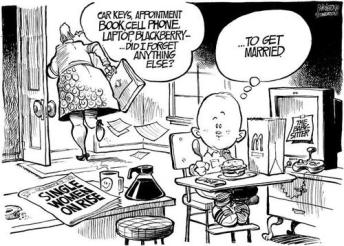 Frankly, my lifestyle choices are no one’s damn business. I also don’t want to hear any whining about put upon stay at home mothers or selfish working moms or whatever freaking black and white witchy stereotype folks dream up and embrace. This would include the appalling cartoon I used for this post. There seems to be a media obsession at the moment with painting women into corners and guilt tripping them for which ever corner they wind up in. Women are even participating in the self immolation. We’ve been regaled by lectures like this one on “Why Women Still Can’t Have It All“. Like we need some other woman defining what “all” is for the rest of us. We also don’t need a bunch of self righteous right wing wind bags that continue to blame all of the world’s problems on mothers.
It’s enough to make Betty Friedan spin in her grave.
Katrina Vanden Heuvel took up the keyboard today at WAPO with a reminder that most working mothers aren’t struggling to “have it all”. They are struggling to feed their kids and provide homes. For some reason, a lot of folks seem to think there’s all these great, supportive, bread-winning men out there just dying to reproduce and do right by their wives and families. I frankly don’t recommend marriage to any woman. Most husbands are bigger pains-in-the asses than colicky babies. A lot of them can’t even hold down jobs these days and then there’s the entire emotional trip that goes along with marriage. You know the TV sitcom stint that goes like this. Asking men to do the right thing by their families puts them in the position of being the oppressed, hypernagged hubbie who goes to work and takes it out on the resident working women and stirs up the other men in one big woe-is-me session. There’s a lot of reality out there that these BS narratives miss. Even the best intentioned man can get pulled back into the old boys club after a number of years of marriage and fatherhood. The media, their jobs and the entertainment industry absolutely empower them to be reckless with their family relationships.
This is the reality that faces millions of working women. More than 70 percent of all mothers and more than 60 percent of mothers with children under 3 are in the workforce. Two-thirds of them earn less than $30,000 a year. Nine of 10 less than $50,000. In the Rev. Jesse L. Jackson’s powerful image, “They catch the early bus,” or, in Vasquez’s case, the late bus. They work out of need, whether they want to or not. Half are their family’s primary breadwinner.
These mothers don’t have the luxury of flexible time or the ability to leave when a child is in trouble or sick. Most can’t afford to take unpaid sick leave to care for their children — and many would lose their jobs if they did, despite the federal law guaranteeing unpaid leave. Many work in jobs — as home-care workers, farm workers, cleaning people — that have scant protection of minimum wage and hours standards. Many cobble together two or three part-time jobs. Child care gets done by grandmothers, neighbors or simply the TV.
Okay, so this is the deal. The problem is not with WOMEN. The problem is with the way “work” and “income” is structured in this country. It doesn’t change because most men in power don’t want it to change. Things used to be different when most businesses were family run and family owned or when most families lived off farms. Working for some one else in this country but a few enlightened companies basically means placing your family outside your major time commitments. That is not the way it should be.
Here’s something that caught my eye as I thought about this. This is written by a journalist as a response to the articles run by The Atlantic recently in the vein of mommy wars. I like it because it states what I find is obvious. Feminism is about finding options and accepting and empowering women’s choices. It’s not about pitting our various roles against each other. Every woman should make her choice. There is no sainthood or martyrdom prize for whatever that choice is so can’t we just knock it off now?
The average American worker gets something like 14 days of paid vacation. In my school, you’d use up ten of those taking care of your kids on teacher professional days, then tack on a couple more for kids getting sick. When you do the simple math, the American workplace seems utterly inhumane in its unwillingness to adapt to the fact that women make up half of all workers.
Economist Claudia Goldin has made a career out of studying what she calls the “career cost of family.” The industries that thrive and hold onto talented women are the ones that figure out how to minimize the cost of taking time off for your family. It’s not all that complicated. They take advantage of technologies to let parents work at home or be more efficient, they schedule shifts, they minimize face time, they let people do what Sheryl Sandberg says she does: go home at 5:30 and pick up again later after her kids are in bed.
Feminism was about making women’s lives less constrained and giving them more choices. Right now, most women have none — not because they are spoiled and unrealistic and want to do lunchtime yoga, but because they are working hard to support their families and everyone is colluding in the fiction that they have nothing else on their minds. I return to a modest proposal I made last week in Slate, inspired by Slaughter: Mothers, fathers, don’t lie to your employers about the kid things you have to (or want to) do during the day. If you are taking a kid to the doctor, say so. Ditto for parent teacher conferences or the school play. At this point, honesty would be a radical act.
One of the bottom lines to me is that if men would actually do something about making the country, the work place, and their family more children friendly, we wouldn’t be having these problems or this discussion. Our situation exists because men do not treat women or children as anything valuable unless there’s something at the time that they need from them. There are work environments out there that are family friendly. They are very successful. They got that way because the men in charge made them that way to attract and maintain talent. They attract men and women to work for them that value families. There are far too few companies that do that because there’s a lot of men that get away with ignoring their families. They’re rewarded for it. European countries do not do this. France doesn’t do it. Germany doesn’t do it. None of the Scandinavian countries do it. It’s an American value to fuck over you family because you have to work.
The other interesting thing in all of this is the role of birth control and the empowerment of controlling when you have children. Economist Claudia Goldin calls this The Quiet Revolution. I have no doubt that there is an equal role in all the re-ignition of the mommy wars with the attack on birth control. Reproductive rights is essential to women’s freedom and children’s well being. It’s also necessary to the transformation that could occur in the work place if more women got into positions of power and more men were motivated by family concerns and demanded the work place empower them to parent. Taking away this important right means undoing women’s autonomy.
All of this just continues to impress upon me how little this country actually cares about its children. There seems to be this silly idea that if you just strand a woman at home with children and giver her a husband with a paycheck then all the problems of the world will just fade away. This couldn’t be farther from the truth. Just reading literature on depression and unhappiness should put this damaging canard to bed. Again, look at that damn cartoon up there. We need to be a society that supports family choices and provides resources to all our children to be in the environment in which each child thrives. This will never happen in less our institutions stop prioritizing the wrong things and until every one refuses to participate in the Mommy Wars.
Forging the Middle Path while taking Friendly Fire
Posted: June 21, 2012 Filed under: 2012 elections, John Birch Society in Charge, right wing hate grouups, The Right Wing, We are so F'd | Tags: christofascists, moderate republicans, republican politics, right wing radicals 32 CommentsI’ve seen several articles in Business Week recently bemoaning the loss of moderation in the Republican Party. I wonder where these folks were when hordes of evangelicals were overtaking county parties with orders written on recipe cards back in the 1980s? I had a front row seat to the insanity. I couldn’t get any one to listen back then. However, now it’s a major topic in the press. The first article showed up in May. I got a pretty good  laugh out of this quote by Dwight Eisenhower who was thought to be a Communist infiltrator by Daddy Koch and his John Birch Society. They were marginalized back then and now are front and center at the leadership table.
“Their number is negligible and they are stupid,” Dwight Eisenhower once said of conservatives, according to another panelist, Geoffrey Kabaservice, the author of Rule and Ruin: The Downfall of Moderation and the Destruction of the Republican Party, From Eisenhower to the Tea Party. Alas, moderates have all but disappeared. “They might even be forced into breeding programs to keep them alive,” Kabaservice said, citing a recent Onion article. (Worth a click for the picture alone.)
The article discussed a panel that was wondering where all the moderate Republicans went. I have a pretty good answer for that. There’s been an ongoing purge since the 1980s. Most of the state parties have a litmus test on several issues. You’re made to suffer if you don’t goose step along to the evangelicals and voodoo economics true believers. Any one not capable of lies or magical thinking is decidedly unwelcome and hounded out.
The second article of interest interviews some senators that are exiting because they can’t take the atmosphere any more. Here’s a few choice comments from retiring pro-choice Republican Olympia Snow. I used to write a lot of good sized checks to her campaigns in the 1980s.
BBW: Senator Snowe, you’ve deviated from your party more than just about anyone. What is it really like when you go against the leadership?
SNOWE: People within your party used to understand that it is essential. People have to represent either their district or their state on the issues that matter and take those positions accordingly. But today there is no reward for that. In fact, there is this party adherence, and as a result if we don’t get past the party platforms that are offered by either side of the political aisle, then we can’t solve the problem. And we are not transcending those differences. That is a huge departure from the past.
Here’s another interesting comment on the role of money and the Citizens United ruling by SCOTUS. The other senators interviewed include Senators Olympia Snowe (R-Maine) and Kent Conrad (D-North Dakota), and Congressmen Gary Ackerman (D-New York) and Geoff Davis (R-Kentucky).
BBW: What harms the process more, the media or money?
CONRAD: Money is a huge problem. There are really two reasons I decided not to run again. One is I really wanted to come here to do big things, and we haven’t been doing big things. The second was I saw super PACs coming and I knew as a centrist who was not particularly supported very strongly by any group, I could have [a super PAC] roll in and just dump a load of money on me and I’m not going to be able to answer.
DAVIS: I don’t believe we should check speech by any measure or merit, but left unchecked, you could end up with the 21st century version of Tammany Hall, where you have a small number of political bosses who control the flow of money around the country, limiting the discourse and debate for personal advantage, whether left, right, or center.
SNOWE: I regret that the Supreme Court rolled back 100 years of case law and precedence. It was my initial provision in the McCain-Feingold bill that was struck down a second time in the court. But then obviously they went quantum leaps further, unfortunately, and unraveled all the case law, allowing corporations and unions to dump unlimited money into these campaigns.
What Kent says is true. Because we are trying to build what I describe as a sensible center, you don’t have a base in terms of raising money. You are almost always confined to the MSNBC or the Fox News prism. That’s the way I describe it because it’s true. People see you in one channel or another and nothing in between.
ACKERMAN: We are probably the only ones who watch both Fox and MSNBC. The public watches either one or the other, and they watch one or the other hoping that the guys on my side will kill the guys on the other side. You can accuse any and every one of us, at least at times, of going for the ratings and doing and saying things that are popular or to try to raise more money so that we can get reelected. The media does that in spades. They really do.
These seem to be the same topics we spend a lot of time on here. The media has taken sides in order to attract audiences and returns to stockholders. The more partisan hoopla they can drum up, the better it is for them. Fox News is nothing more than a propaganda channel and MSNBC is trying to find a niche offering up an alternative. Papers are so dumb downed and watered down these days that it’s hard to find much use for them. Corporate money and profit seeking has completely gummed up the process and it uses the anger of specific interest groups like the fetus and gun obsessed to further its power and money grab.The Tea Party is totally orchestrated, yet, its members are so angry they can’t see the strings that pull them.
Reading basic obituaries of whatever was left of commonsense in the party of Lincoln is a saddening experience. I say this as we watch Ron Paul’s delegates play the same game on the radical right that they played 30 years ago on the Rockefeller Republicans. Can you imagine the Republican party’s soul is up for grabs by Ayn Rand groupies now? Basically, Republicans adhere to works of fiction and drive off any attempt to ground them in reality.
Paul has stopped actively campaigning and has conceded that Romney will be the GOP nominee. It’s unclear whether Paul’s name will be submitted for nomination; mathematically, he does not have the numbers to derail Romney. But his supporters can have an effect on the party in other ways.
“We want to have a real big voice on the platform; we want to influence the direction of the party more than anything else,” said Joel Kurtinitis, a Paul supporter who was pleased after the Saturday vote.
He was Paul’s state director in Iowa until Paul suspended his presidential bid in May, and he said that although he would love to see Paul awarded a prime speaking spot at the convention, his followers’ efforts are about more than one man.
“We’re going to hold up our values and we’re going to bring conservatism back to the mainline of the Republican Party. That’s where my hopes are at and that’s my hope for this convention more than seeing Ron Paul do X, Y and Z,” Kurtinitis said.
What exactly happens to a republic built on a two party system when one of those parties becomes captured by purists? Perhaps, the Republican christofacist army is about to have its tables turned. I still have the feeling, however, that the corporate money will rule no matter what the platform says.
By working arcane rules at district, county and state gatherings around the country, his supporters have amassed an army of delegates who will try to ensure that his libertarian message about the economy, states’ rights and a noninterventionist foreign policy is loudly proclaimed.
Paul’s backers will also try to shape the party platform as they dare Republicans to take them for granted – much as social conservatives did years ago before they ascended in importance.
“We want to influence the direction of the party more than anything else,” said Joel Kurtinitis, who was Paul’s state director in Iowa until the congressman effectively ended his presidential bid in May. He said efforts by followers of Paul, a 76-year-old who will retire when his current term ends, are about more than him or his son Rand, a senator from Kentucky.
“We’re going to hold up our values and we’re going to bring conservatism back to the mainline of the Republican Party,” Kurtinitis said.
But others say the move by the Iowa GOP is a black eye for the state’s first-in-the-nation voting status and for Romney.
“Embarrassment is the word that comes to my mind,” said Jamie Johnson, who served as Santorum’s state coalitions director in Iowa. The former Pennsylvania senator, who endorsed Romney after ending his presidential bid in April, appears to have a solitary Iowa delegate heading into the convention.
There are far fewer of these insurgents than there were die-hard Hillary supporters last presidential election cycle. Yet, they seem to be much more fanatical and organized. Will they up end the dominance of the party by the Guns, God, and No-Gays fanatics that have ruled the party with Torquemada like fanaticism since the Reagan years?
How do we survive this craziness? Seriously, I’ve gotten to the point where I think voting Republican is basically voting for the end of the country as we know it. What needs to change? I’m going to give the last word to the last word to the departing senators.
BBW: I’m going to give you one magic power. As you leave here, you can change one thing about the legislative process, about the federal government, anything you want. What would you do?
CONRAD: I would do away with super PACs. I think it’s a cancer.
DAVIS: It is critical that those who are being regulated in various constituencies—be it the business community, the job creators, or other institutions—need to be an active part of that dialogue. Great Britain revolutionized parts of their regulatory process by actually bringing the people who were going to be regulated to the table and suddenly found that they could solve the problems at a lot lower cost by, again, going back to the thing that tends to be most uninteresting, particularly in cable news, and looking at the actual process. Solve the problem or prevent the problem from happening.
SNOWE: We are not doing our jobs, frankly. If I was in charge, I would be canceling recess and getting everybody here and start focusing on the issues that matter to this country because we are at a tipping point.
Legislating isn’t easy on these complex matters. You can’t just instantaneously come up with solutions to problems. Somehow we have dumbed down the process. Somehow we think, “Oh gosh, are you for or against?” Well, geez, it just came up. Can I give it some thought? Can I think about it? Can I read about it? Maybe I should learn more about the facts on the issue. But there is no time, no deference paid to thoughtfulness in the legislative process today. We have got to get back to spending some time here to get the job done for the American people. That’s what it’s all about. The American people understand it. They see it because they see on TV on C-SPAN and they recognize, “Well, where are they?”
ACKERMAN: Inasmuch as it’s a magical power that you are bestowing I would do away with hypocrisy. [Laughter] Looking at it a little bit more realistically, we have to try to find some practical approaches. I came here so many years ago as a rather liberal kid from New York City. I’m still pretty liberal. I changed a little bit on foreign policy and worldview, but I came here as a pacifist. I disagreed with Ronald Reagan, who was the first president that I served with, but I didn’t want him to fail. This pacifist wound up voting for war under the guidance of two Republican presidents because we only have one president at a time, and if he fails, my country fails. That is not acceptable. The Congress, both houses, both parties have to act like grown-ups and say that this is about policy. If it is about the presidency or if it’s about the majority in my House or your House, then it is never going to be about policy. Somebody is going to have to—not the four of us, but somebody is going to have to walk that back a few steps.

 peej
peej Carissa
 bostonboomer
 dakinikat
 ecocatwoman
 mablue2
 Mama Lopez
 peggysue22
 quixote
 skydancingguestblogger
 Mona (aka Wonk the Vote)



 Sky Dancing
Recent Comments