
Saturday Reads: Dismal Science Edition
Posted: February 4, 2012 Filed under: Economy, income inequality, morning reads, poverty, unemployment, We are so F'd | Tags: Paul Krugman, social safety net, unemployment 62 Comments Good Morning!
I’m going to concentrate on the economy this morning. You better grab some coffee.
The unemployment rate dropped yesterday for a variety of reasons. I thought I’d talk a little about that first. The job growth was fairly strong this month in every sector but government. This improved the labor outlook for some of the workers hardest hit by the last recession. However, it was a mixed report–although you wouldn’t know that from the stock market–in that it still showed a number of people who are working part time that don’t want to be and again, a large number of people simply disappeared from the labor force. Temp jobs surged. Wage growth is “meager” as shown by graphs in this blog post by Tim Duy. He also notes that the employment to population ratio remains at a levels not seen since the early 1980s. This is an interesting situation. We’re still in a huge hole. At this growth rate, it will take us until 2019 just to gain back the jobs we had in 2008.
One interesting trend pointed out at Zero Hedge by Tyler Durden is that older workers are increasing the number of hours worked. There appears to be a basic shift in many of the ‘normal’ labor habits. Durden calculates an alternative measure to the unemployment rate by including workers that the BLS ignores. He uses the long-term average labor force participation rate instead of the number of people that are participating now which is shrinking in a very odd way.
… do the following calculation with us: using BLS data, the US civilian non-institutional population was 242,269 in January, an increase of 1.7 million month over month: apply the long-term average labor force participation rate of 65.8% to this number (because as chart 2 below shows, people are not retiring as the popular propaganda goes: in fact labor participation in those aged 55 and over has been soaring as more and more old people have to work overtime, forget retiring), and you get 159.4 million: that is what the real labor force should be. The BLS reported one? 154.4 million: a tiny 5 million difference. Then add these people who the BLS is purposefully ignoring yet who most
certainly are in dire need of labor and/or a job to the 12.758 million reported unemployed by the BLS and you get 17.776 million in real unemployed workers. What does this mean? That using just the BLS denominator in calculating the unemployed rate of 154.4 million, the real unemployment rate actually rose in January to 11.5%. Compare that with the BLS reported decline from 8.5% to 8.3%. It also means that the spread between the reported and implied unemployment rate just soared to a fresh 30 year high of 3.2%.
So, the deal is that the labor force participation rate is at a 30 year low. That’s still the number that puzzles and bothers me despite the good looking job growth. Why are people leaving the job market? As shown in Durden’s numbers, it’s not baby boomers. Here’s some speculation by Edward Harrison of Credit Write Downs who is concerned like me. Look at the graph on the right from Durden that shows why reason number three isn’t the explanation right now. The blue line is the participation rate by the older workers (55+) and as you can see it’s headed straight up.
My take on this: A declining labor force participation rate is a bad thing. It says people are dropping out of the labor force. So despite the bullish headline figure, the question still remains as to how robust the jobs market is.
Here are three things to consider:
- Cyclical: that’s the point I made above. Low participation is a negative signal.
- Structural: A lot of people have been pointing to long-term unemployment as a sign that the jobs market is weak. This makes sense and it should put downward pressure on the participation rate as people drop out of the labor force. The difference here is that if the problem is structural and not cyclical, the so-called output gap will continue to be large as throngs of people remain out of the labor force.
- Secular: The first cohorts of boomers started to retire last year. I know many people that were close to retirement when the recession began in 2007 that have had to change plans. Some have delayed retirement because of financial turmoil. But many others have accelerated retirement unwillingly because they were forced out of the labor force. Expect the loss of boomers to put downward pressure on the labor force for years to come.
My guess is that all three factors are affecting the labor force participation rate here. But I am beginning to think that the structural and secular forces are starting to predominate.
I’m still thinking that younger people may be holding up in school for awhile until things get better but I’d have to do some research to see if the university population is up. I also think that there’s the discouraged worker factor too. I actually know a lot of folks that are just hanging in there and cashing in their IRAs or have gone back to school and are living on student loans and or going back and forth between short term jobs and contract work. I guess we’ll see if the trend holds, but to me it’s a worrisome one. If things were really getting better, those folks should be entering the job market now driving the participation rate up. Since I’m a financial economist and not a labor economist, I really don’t know the flows well enough to speculate on anything beyond a theoretical level. It’s not my research area.
Thomas Fran has written an interesting post at Alternet on “Why We Got Ayn Rand Instead of FDR”.
An appropriate metaphor for the conservative revival is the classic switcheroo, with one fear replacing another, theoretical emergencies substituting for authentic ones, and a new villain shuffling onstage to absorb the brickbats meant for another. The conservative renaissance rewrites history according to the political demands of the moment, generates thick smokescreens of deliberate bewilderment, grabs for itself the nobility of the common toiler, and projects onto its rivals the arrogance of the aristocrat. Nor is this constant redirection of public ire a characteristic the movement developed as it went along; it was present at the creation. Indeed, redirection was the creation.
…
Here, in one sentence, was a key to the amazing success the Right would shortly enjoy. They had an answer to the bailout outrage, and it was not modulated by lawyerly subtleties or votes-taken-with-nose-held, like the House Democrats who had voted for the TARP. “Let the failures fail”: it was a line that would allow the revived Right to depict itself as an enemy of big business, rooting for the collapse of the megabanks. The Tea Partiers may have looked ridiculous in their costumes, but their central demand was anything but.
Not all “failure” is the same, however. What the newest Right has in mind is something philosophical, something both personal and sweeping. It demands liquidation across the board, a sort of deserved doomsday for the borrowing-based way of life. But in the great die-off it delights in imagining, the real culprits of 2008 have a way of disappearing from view.
If we watch closely, we can see the cards being switched. Whenever our tea-partying friends warm to the subject of letting-the-failures-fail—and they do so often—sooner or later they inevitably turn from the bailed-out banks to those spendthrift “neighbors” identified by Santelli, those dissolute people down the street who borrowed in order to live above their station.
This could be why the Republican Presidential Wannabes sound so down right Dickensian. We’ve had school children offered up as janitorial help. We’ve had Willard talking about enjoying a good firing and ranting on about how he’s not worried about the poor because they are safe in their safety nets. Instead of pointing to the business welfare queens, we’ve got poor children being held up as not having the fortitude and values. As Krugman says, Willard doesn’t feel any one’s pain.
Now, the truth is that the safety net does need repair. It provides a lot of help to the poor, but not enough. Medicaid, for example, provides essential health care to millions of unlucky citizens, children especially, but many people still fall through the cracks: among Americans with annual incomes under $25,000, more than a quarter — 28.7 percent — don’t have any kind of health insurance. And, no, they can’t make up for that lack of coverage by going to emergency rooms.
Similarly, food aid programs help a lot, but one in six Americans living below the poverty line suffers from “low food security.” This is officially defined as involving situations in which “food intake was reduced at times during the year because [households] had insufficient money or other resources for food” — in other words, hunger.
So we do need to strengthen our safety net. Mr. Romney, however, wants to make the safety net weaker instead.
Specifically, the candidate has endorsed Representative Paul Ryan’s plan for drastic cuts in federal spending — with almost two-thirds of the proposed spending cuts coming at the expense of low-income Americans. To the extent that Mr. Romney has differentiated his position from the Ryan plan, it is in the direction of even harsher cuts for the poor; his Medicaid proposal appears to involve a 40 percent reduction in financing compared with current law.
So Mr. Romney’s position seems to be that we need not worry about the poor thanks to programs that he insists, falsely, don’t actually help the needy, and which he intends, in any case, to destroy.
Still, I believe Mr. Romney when he says he isn’t concerned about the poor. What I don’t believe is his assertion that he’s equally unconcerned about the rich, who are “doing fine.” After all, if that’s what he really feels, why does he propose showering them with money?
The New York Review of Books has an entire list of economics books up that have to do with austerity and income inequality. The heading basically sums it up. We’re more unequal than you think. Here’s a review of two that I found particularly interesting.
Robert Frank’s The Darwin Economy and Thomas Edsall’s The Age of Austerity provide much-needed information and analysis to explain why so much of the nation’s money is flowing upward. Frank, an economist at Cornell, draws on social psychology to shatter many myths about competition and compensation. While he doesn’t explicitly cite the classical French economist Jean-Baptiste Say, much in his exposition echoes Say’s axiom that “supply creates demand.” This doesn’t mean that if items are put on display, people will automatically buy them. Consumers decide what or if they’ll purchase, and clearly can only do so if they have the credit or money. Even so, the items they decide they want have been created by the suppliers, who put things on the shelves.
Frank carries this a step further. In recent years, he argues, the products and enjoyments set before us have become increasingly enticing—including houses, vacations, television programs, video games, electronic devices, and the attractions of the Internet. In many cases, the rich acquire them first; since what they have and do becomes widely known, emulation descends down the line.
Nor are these just Tiffany trinkets. Frank’s most vivid examples are newly built houses. As the very rich installed grander entrance halls and rarely used bathrooms, the professional classes felt they should have a semblance of such amenities. “By 2007,” Frank writes, “the median new single-family house built in the United States had an area of more than 2,300 square feet, some 50 percent more than its counterpart from 1970.” Indeed, it’s revealing that this expansion was happening as people were having fewer children. However, these homes—along with more elaborate wardrobes, holidays, and technical gear—are costly. If they were to be bought, salaries needed to keep pace.
Hence, I would argue, an unstated but still real compact was made between the employers and the new upper-middle class. Their pay would be raised to support their ascending status. As the samplings in Table B show, while real earnings for the overall workforce have risen only 7 percent since 1985, professions like physicians and professors have done several times better. Incomes of lawyers and executives, for their part, have soared much further than anyone would have forecast a few decades ago.2
One of the reasons the poor do so poorly is that the states have tax structures that are very regressive. If you didn’t see me link to this down thread yesterday, take a look at how regressive state taxes really are. Kevin Drum includes a table where you can check on how bad your state treats you.
And then there are state taxes. Those include state income taxes, property taxes, sales taxes, and fees of various kinds. How progressive are state taxes?
Answer: They aren’t. The Corporation for Enterprise Development recently released a scorecard for all 50 states, and it has boatloads of useful information. That includes overall tax rates, where data from the Institute on Taxation and Economic Policy shows that in the median state (Mississippi, as it turns out) the poorest 20 percent pay twice the tax rate of the top 1 percent. In the worst states, the poorest 20 percent pay five to six times the rate of the richest 1 percent. Lucky duckies indeed. There’s not one single state with a tax system that’s progressive.
So, hopefully, you’re still awake! What’s on your reading and blogging list today.
Friday Reads
Posted: February 3, 2012 Filed under: 2012 presidential campaign, morning reads, We are so F'd | Tags: 1Q84, Aomame, Haruki Murakami, Romney, Santorum, Thomas Paine, Willard 70 Comments Good Morning!
As you may know, one of my pet peeves is how right wing politicians distort historical figures and quotes to their advantage and very few journalists or people bother to spell check them. Mitt Romney is going on using a George Patton quote and attributing it to one of my favorite founders, Thomas Paine. Any one remotely familiar with the 18th century would know that “lead, follow, or get out of the way” couldn’t even be part of the lexicon. But, never let a good opportunity to skew history the wrong direction get in the way of a pol in heat.
Fred Shapiro, editor of the authoritative Yale Book of Quotations published by Yale University Press, told BuzzFeed that “the notion that Thomas Paine said this is extremely ridiculous.”
“The diction and tone of ‘lead, follow, or get out of the way’ are, of course, far too modern to have been said by Thomas Paine,” Shapiro said.
A similar form of the quote — “push, pull, or get out of the way” — can be traced to a proverb dating back to 1909, according to Shapiro, who is the author of a forthcoming book on notable misquotes. And there is a newspaper mention of the quote from 1961, but it’s from the governor of Ohio. According to Paine biographer Craig Nelson, Paine “never said it. George Patton did.” (You can also find the quote attributed to Patton on the Internet).
In response to a request for comment on the Paine misquote, Romney spokeswoman Andrea Saul noted that the candidate had hedged a little bit: “In another era of American crisis, Thomas Paine is reported to have said, ‘Lead, follow, or get out of the way.'”
University of Texas professor and Paine scholar William Scheick called Romney’s misquoting of Paine “another deplorable example of politicians distorting history to advance themselves and their shadowy supporters” and said that Paine “hardly is apt in Romney’s case.”
“For me, that’s the real story here — that Romney and his audience apparently have no clue to what a searing liberal freethinker Paine was,” said Scheick.
Don’t you just love the description “searing liberal freethinker”? I might also add the man was a well-known critic of organized religion. That’s hardly a combination of attributes for a leader that you would think a Republican presidential wannabe would want thrown around these days. I remember reading a biography of Thomas Paine in high school and thinking “wow”. At the end of his days, Thomas Jefferson was one of the few folks that would even speak to him. He was that scandalous. It is pretty well known that he moved from being a deist into the realm of atheism by his end days. His most famous work is Age of Reason but he is also well known as a pamphleteer or the equivalent of a 18th century blogger.
What you may not know is that he was one of the most ardent and earliest supporters of emancipation for women. One of his most famous works is called: An Occasional Letter on the Female Sex and includes many examples of how women have been subjugated to men. Here, Paine channels his inner female to argue for emancipation.
If a woman were to defend the cause of her sex, she might address him in the following manner:
“How great is your injustice? If we have an equal right with you to virtue, why should we not have an equal right to praise? The public esteem ought to wait upon merit. Our duties are different from yours, but they are not therefore less difficult to fulfill, or of less consequence to society: They are the fountains of your felicity, and the sweetness of life. We are wives and mothers. ‘Tis we who form the union and the cordiality of families. ‘Tis we who soften that savage rudeness which considers everything as due to force, and which would involve man with man in eternal war. We cultivate in you that humanity which makes you feel for the misfortunes of others, and our tears forewarn you of your own danger. Nay, you cannot be ignorant that we have need of courage not less than you. More feeble in ourselves, we have perhaps more trials to encounter. Nature assails us with sorrow, law and custom press us with constraint, and sensibility and virtue alarm us with their continual conflict. Sometimes also the name of citizen demands from us the tribute of fortitude. When you offer your blood to the State think that it is ours. In giving it our sons and our husbands we give more than ourselves. You can only die on the field of battle, but we have the misfortune to survive those whom we love most. Alas! while your ambitious vanity is unceasingly laboring to cover the earth with statues, with monuments, and with inscriptions to eternize, if possible, your names, and give yourselves an existence, when this body is no more, why must we be condemned to live and to die unknown? Would that the grave and eternal forgetfulness should be our lot. Be not our tyrants in all: Permit our names to be sometimes pronounced beyond the narrow circle in which we live. Permit friendship, or at least love, to inscribe its emblem on the tomb where our ashes repose; and deny us not that public esteem which, after the esteem of one’s self, is the sweetest reward of well doing.”
As I said, it’s really hard for me to imagine Willard thinking that he is quoting Paine. He obviously knows not what of he speaks in many ways.
Sabrina Rubin Erdely has written an incredible account of the “One Town’s War on Gay Teens” in this month’s Rolling Stone. The town is none other than Anoka, MN who is represented in congress by the dread Pirate Bachmann and her faux therapist, closeted husband Marcus. The personal stories of several teens is detailed and gut-wrenching. So much for Minnesota nice.
Against this supercharged backdrop, the Anoka-Hennepin school district finds itself in the spotlight not only for the sheer number of suicides but because it is accused of having contributed to the death toll by cultivating an extreme anti-gay climate. “LGBTQ students don’t feel safe at school,” says Anoka Middle School for the Arts teacher Jefferson Fietek, using the acronym for Lesbian, Gay, Bisexual, Transgender and Questioning. “They’re made to feel ashamed of who they are. They’re bullied. And there’s no one to stand up for them, because teachers are afraid of being fired.”
The Southern Poverty Law Center and the National Center for Lesbian Rights have filed a lawsuit on behalf of five students, alleging the school district’s policies on gays are not only discriminatory, but also foster an environment of unchecked anti-gay bullying. The Department of Justice has begun a civil rights investigation as well. The Anoka-Hennepin school district declined to comment on any specific incidences but denies any discrimination, maintaining that its broad anti-bullying policy is meant to protect all I students.
Meanwhile, I continue to wonder if any Republican presidential candidate has read that bible they keep thumping. Here’s the latest example of audacious insensitivity from Rick Santorum.
GOP contender Rick Santorum had a heated exchange with a mother and her sick young son Wednesday, arguing that drug companies were entitled to charge whatever the market demanded for life-saving therapies.Santorum, himself the father of a child with a rare genetic disorder, compared buying drugs to buying an iPad, and said demand would determine the cost of medical therapies.
“People have no problem paying $900 for an iPad,” Santorum said, “but paying $900 for a drug they have a problem with — it keeps you alive. Why? Because you’ve been conditioned to think health care is something you can get without having to pay for it.”
The mother said the boy was on the drug Abilify, used to treat schizophrenia, and that, on paper, its costs would exceed $1 million each year.
Santorum said drugs take years to develop and cost millions of dollars to produce, and manufacturers need to turn a profit or they would stop developing new drugs.
“You have that drug, and maybe you’re alive today because people have a profit motive to make that drug,” Santorum said. “There are many people sick today who, 10 years from now, are going to be alive because of some drug invented in the next 10 years. If we say: ‘You drug companies are greedy and bad, you can’t make a return on your money,’ then we will freeze innovation.”
Santorum told a large Tea Party crowd here that he sympathized with the boy’s case, but he also believed in the marketplace.
Then there’s “I don’t care about poor people Willard”. Do these guys even think before they speak? I really like this Pierce description in an article where he rips austerity a new one. We have to be punished for suffering, for not surviving their financial abuses, and for not being patient enough. Hallelujah and trickle it down Big Brother!
The idea of poverty’s being a sin that requires ritual purification before redemption runs pretty deeply in this country. When Jonathan Edwards delivered his great sermon, Sinners In The Hands Of An Angry God, I doubt whether even that unbending piece of Puritan iron realized how many of his fellow citizens would be so willing to be the servants of that god, seeking to punish their fallen brethren. There has always been a strong view in our politics that pain can purify the nation. Especially the pain of other people, less-worthy-people. Sinners.
We are falling like dim children, like the suckers we always are, to the notion of the deserving and undeserving poor, the have-less-and-lesses are being pitted against the have-littles, and the have-nots. That’s what Willard Romney’s been about the last couple of days. He wants to find a way to harness the fear people have of becoming poor to his advantage at the expense of the people who actually are. That is the basis of the entire public career of Paul Ryan, the zombie-eyed granny-starver from Wisconsin, and the whole party has signed the guestbook into his little S&M parlor of a budget.
Speaking of Big Brother References, I just finished an interesting novel about religious cults, domestic violence and alternative realities called 1Q84 by Haruki Murakami. I’m checking the sky for two moons these days. I totally recommend it. It’s literary. It’s unusual. It’s got marvelous character development and descriptions and a plot that is amazing. Here’s the NYT review from October. Aomame makes the girl with the dragon tatoo look like a conformist and weakling. It was a very long read and didn’t always capture me, but it is still worth the time. It starts out with what seems like two completely unconnected characters and events and then weaves all the connections from there on out.
One of the many longueurs in Haruki Murakami’s stupefying new novel, “1Q84,” sends the book’s heroine, a slender assassin named Aomame, into hiding. To sustain her through this period of isolation she is given an apartment, groceries and the entirety of Marcel Proust’s “Remembrance of Things Past.”
For pity’s sake, if you have that kind of spare time, follow her lead. Aomame has the chance to read a book that is long and demanding but well worth the effort. The very thought of Aomame’s situation will pain anyone stuck in the quicksand of “1Q84.” You, sucker, will wade through nearly 1,000 uneventful pages while discovering a Tokyo that has two moons and is controlled by creatures that emerge from the mouth of a dead goat. These creatures are called Little People. They are supposed to be very wise, even though the smartest thing they ever say is “Ho ho.”
You can see the Times reviewer was not enthralled. I was frankly happy to read something not so cookie cutter for a change. So, I guess that’s what’s on my mind these days since I’ve had plenty of bedrest and time on my hands. What’s on your reading and blogging list today?
William Black Goes Ballistic
Posted: February 1, 2012 Filed under: 2012 elections, Bailout Blues, Banksters, corruption, Crime, Democratic Politics, double-speak, financial institutions, investment banking, The Great Recession, U.S. Economy, We are so F'd | Tags: 2012 presidential election, Barack Obama, Financial Crisis, George W. Bush, U.S. Economy 6 CommentsI’ve been reading William Black’s essays and posts, watching his video interviews and You Tube presentations, ever since I saw him on Bill 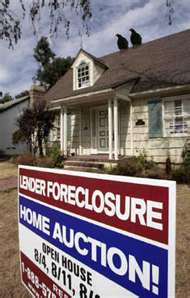 Moyers Journal speaking frankly, no holds barred, about how the financial industry had brought the country to its knees and gotten away with it. He spoke frankly again during his Congressional testimony last year when he came right out and called the mortgage debacle that nearly finished the US economy . . . fraud. Yes he used the ‘f’ word! This was unlike other ‘experts’ who insisted there was no inkling of trouble on the horizon, that the financial meltdown was ‘an act of the economic gods,’ a huge surprise, the product of overly optimistic financial predictions.
No, Black said. It was fraud. It was criminal. In case you missed that testimony, you can watch below. It’s worth a second go-around.
Too bad Black’s comments were basically ignored, caught up in the razzle-dazzle of excuses, half-truths and political posturing that’s become all too familiar to anyone paying attention. Business as usual is still the acceptable mantra. In case, you’ve forgotten [time flies when we’re having so much fun], William Black headed Poppy Bush’s forensic audit team during the S&L scandal, which ultimately led to 1000 elite felony convictions.
Black’s investigative team wasn’t kidding around.
William Black came out yesterday morning with his own take on President Obama’s SOTU announcement of a Task Force [The Let’s Try It Again Task Force], quoting POTUS:
And tonight, I am asking my Attorney General to create a special unit of federal prosecutors and leading state attorneys general to expand our investigations into the abusive lending and packaging of risky mortgages that led to the housing crisis. This new unit will hold accountable those who broke the law, speed assistance to homeowners, and help turn the page on an era of recklessness that hurt so many Americans.
Black suggests we look at the wording, the avoidance of using the ‘f’ or ‘c’ word. That would be fraud and criminal. His response to this and Eric Holder’s follow up memorandum:
The working group will not “investigate … abusive lending” and it will not “hold accountable those who broke the law … [by defrauding] homeowners.” It will not “speed assistance to homeowners.” It will not “turn the page on an era of recklessness” – and fraud, not “recklessness” is what prosecutors should prosecute. The name of the working group makes its crippling limitations clear: the Residential Mortgage-Backed Securities Working Group. Attorney General Holder’s memorandum about the working group makes clear that the name is not misleading. The working group will deal only with mortgage-backed securities (MBS) – not the fraudulent mortgage origination that drove the crisis (the only exception is federally insured mortgages).
Clearly, he’s not impressed. No, instead he’s disgusted and enraged. In fact, the essay nearly jumps off the page with genuine anger. He goes on to say:
The working group is a symbolic political gesture designed to neutralize criticism of the administration’s continuing failure to hold accountable the elite frauds that drove the crisis. Neither the Bush nor the Obama administration has convicted a single elite fraud that drove the crisis. This is a national disgrace and represents the triumph of crony capitalism. Remember that the FBI warned in September 2004 that there was an “epidemic” of mortgage fraud and predicted that it would cause a financial “crisis.” There are no valid excuses for the Bush and Obama administrations’ failures. The media have begun to pummel the Obama administration for its failure to prosecute. The administration could not answer this criticism with substance because it has nothing substantive to offer in prosecuting elite mortgage origination frauds. The ugly truth is that we are three full years into his presidency and Holder could not find a single indictment to bring that Obama could brag about in his SOTU address. Who doubts that Holder and Obama would have done so if they had anything in the prosecutorial pipeline? Why do Holder and Obama have nothing in the pipeline?
One of the other things that deeply disturbs Black is President Obama’s willingness to play politics in this matter, float the gambit of the Task Force /Working Group and the reputation of Eric Schneiderman to create the appearance of a genuine hands-on effort. But this move is not genuine as far as Black is concerned and contradicts the very essence of President Obama’s SOTU address, conjuring up the Seal Team that took out Osama Bin Laden—a team effort, concentrating on the mission.
This is no more than vulgar propaganda, Black claims.
He also refers to a disclosure made by Scot Paltrow for Rueters 10 days ago, revealing that US Attorney General Eric Holder and Lanny Breuer, heading the DOJs criminal division [also a co-chair of the ‘Let’s Try It Again Task Force], had been partners at Covington and Burling, a well-established and well-heeled law firm that represented many of the largest banks, providing cover for their clients through key arguments on the MERS debacle.
Conflict of interest anyone?
The state Attorney Generals? They were lobbyied, leaned on, even offered [as was the case of AG Kamala Harris, CA] $8 billion to assist damaged California homeowners in a bid to agree to the original deal, which would have offered the big banks immunity from liability. All so the President could announce ‘a deal’ in his State of the Union address, even though homeowners would be left out to dry and bank executives, who led deliberate “accounting control frauds,” could continue their conduct with absolute impunity.
This is ugly, made all the uglier in that it was sanctioned through and by the White House. Black suggests that Eric Schneiderman recognized the leverage he had, agreed to join the Task Force as a co-chair with the stipulation that the original deal be modified, specifically concerning civil liability in mortgage origination fraud.
This might explain Jamie Dimon’s whine last Friday, pouting and claiming bankers are the objects of unfair discrimination. Really? Here’s the average American’s response:
Of course, you would think that this mess would be a window of opportunity for Republicans in an election year. What an incredible club to use on President Obama to win the WH, maybe the House and the Senate by gargantuan majorities.
No fear there because for every compromised Democrat there is an equally compromised Republican. Both the Democrats and Republicans rely heavily on campaign contributions from the financial sector. Neither side is willing to cut their bankers [crooked or not] off at the knees.
What to do? What better reason to support any and all actions to get money out of the political arena. Until we do? The world belongs to the highest bidder.
Romney and the Florida Primary: Live Blogging Arrogance and Hubris
Posted: January 31, 2012 Filed under: Live Blog, Republican politics, Republican presidential politics, We are so F'd 59 CommentsRomney’s disdain for the electorate is one of his more deeply rooted traits. During his father’s 1968 presidential campaign, Romney wrote, “how can the American public like
such muttonheads?”
I find that contempt pretty well-founded, and it is a relief that Romney does not believe the nonsense he spouts during the campaign. But the persistent awkwardness of Romney’s campaign style reflects this basic tension. It’s easy to try to persuade somebody for whom you have basic respect. It’s persuading somebody whom you consider stupid — while you must conceal any trace of your disdain — that’s excruciatingly difficult. Romney’s awkward manner on the trail is the agony of suppressed contempt.
Romney appears to have the momentum and the early voting lead in the Florida Primary. Newt vows to go on. What will their speeches tonight reveal to us about their character or lack thereof?
It’s primary day in the Sunshine State, but more than 600,000 people have already voted in Florida’s Republican presidential contest. And a new public opinion poll indicates that the ballots already cast may help former Massachusetts Gov. Mitt Romney take the 50 delegates up for grabs in Florida’s winner take all primary.
Early voting began statewide ten days ago, and according to figures released Monday afternoon by the Florida Department of State, which runs the division of elections, 293,760 people had already cast ballots. And according to the state, more than 531,000 people requested and were sent absentee ballots, and 338,753 were returned and received by Florida officials.
Add it all together and more than 632,000 votes were already cast before primary day. To put it in perspective, that’s more than the 601,577 who voted in the South Carolina primary, and far outpaces the combined 360,000 that took part in the New Hampshire primary and the Iowa caucuses.
And according to an American Research Group survey released Tuesday morning, 36% of people questioned said they already voted, and among those, Romney led former House Speaker Newt Gingrich 51% to 29%, with former Sen. Rick Santorum of Pennsylvania at 12% and Rep. Ron Paul of Texas at 10%.
Things have been getting uglier. It’s hard to think that could be possible by the Romney campaign has been using its immense campaign chest to hammer at Newt. Could that start to backfire? Of course, Zombie Reagan figures prominantly.
“For as long as I’ve been in politics, 14 years, journalists call me and ask if this is the most negative election ad atmosphere I’ve ever seen,” says Kenneth Goldstein, president of Kantar Media CMAG, which tracks content and targeting of political advertising. “And every year I say, ‘Don’t be ridiculous.’”
“But this year it’s true. This primary season is the most negative it’s ever been,” asserts Goldstein. “I have absolutely never seen television advertising so negative in a Republican presidential primary.”
This tsunami of sleaze is being propelled by unprecedented advertising buys. The Romney campaign and its associated super PAC, Restore Our Future, have spent $15.3 million in Florida over the past month alone, according to Maggie Haberman of Politico. To put this in perspective, John McCain spent $11 million on ads during his entire 2008 primary campaign. Back on this side of Citizens United, Newt Gingrich and his billionaire-backed super PAC have spent “only” an estimated $3 million—giving Romney a 5–1 spending advantage in the Sunshine State.
Turn on the TV or radio in Florida these past few days and you’ll soon be subjected to the avalanche of negative ads, most of them purchased courtesy of Romney Co. The attacks come in a bewildering variety—from accusations that Newt worked with Nancy Pelosi “to support China’s brutal one-child policy” to Spanish-language ads that say Newt called Spanish “the language of the ghetto.” Fannie and Freddie have become household names. Both candidates are accusing the other of being insufficiently conservative and secretly pro-abortion. There has been public wrestling for a photo op with Ronald Reagan’s ghost, trying to claim closer association. Even Romney’s Get Out the Vote mailers are anti-Newt.
Axlerove must be doing jigs.
Guess we’ll see what comes out of the wash tonight.
Tuesday Morning Reads
Posted: January 24, 2012 Filed under: 2012 presidential campaign, Barack Obama, morning reads, Teddy Roosevelt, U.S. Economy, U.S. Politics, We are so F'd | Tags: Larry Summers Memo, Obama stimulus, State of the Union Address 40 CommentsGoo d Morning!
I’m tired of Republican Party Dysfunction. Let’s switch to the Democratic Party Brand for awhile. This year’s State of the Union address will be interesting. Will it turn out to be the first major Obama campaign speech of 2102?
Mr. Obama plans, in part, to deliver a “vision” speech. He told campaign supporters over the weekend that he’ll use his speech to discuss “the central mission we have as a country, and my central focus as president.”
“And that’s rebuilding an economy where hard work pays off and responsibility is rewarded – and an America where everybody gets a fair shot, everyone does their fair share, and everybody plays by the same set of rules,” he said.
If that sound familiar, it’s a refrain of remarks Mr. Obama delivered December 6th in Osawatomie, Kansas. Both the president and aides characterize the State of the Union as a “bookend” to the Kansas speech. It was a delineation of the political philosophy Mr. Obama brings to the job and is willing to defend against whichever Republican ends up as his rival later in the year.
Economic programs and objectives will dominate his speech. “I’m going to lay out a blueprint for an American economy that’s built to last,” said the president in a video email Saturday to campaign supporters. And Mr. Obama will cite the “four pillars” on which his blueprint for America will rest: manufacturing, engineering, worker skills and American values.
- MANUFACTURING: According to “talking points” sent by the White House to its political defenders and surrogates, the president will call for “a new era of American manufacturing with more good jobs and more products stamped Made in the USA.
- ENERGY: He will propose “a new era” for energy in the US – “fueled by homegrown & alternative energy sources.
- WORKER SKILLS: He’ll put forward “new ideas” for education and training to take on “jobs of today and tomorrow.”
- AMERICAN VALUES: The president will call for “a return to American Values of fairness for all and responsibility from all.”
We’ll be live blogging the SOTU tonight. I’m suggesting we pitch nerf balls at the TV for every Teddy Roosevelt reference and drink on references to Republican belligerence. What say you?
Here’s some pretty good indications of why the economy has been so slow and pokey recently. Check out The New Yorker and “The Obama Memos”. It’s getting more pundit play than Suskind’s “Confidence Men”. Pay close attention to the whacked advice from Larry Summers who suggested Obama not go very big on the first stimulus because they could just do more later. Let’s just hope a rumored World Bank Presidency stays just that. Imagine this man turned on the developing world. However, there’s a lot more tidbits in there worth chewing on. Like this one.
Neera Tanden was the policy director for Clinton’s campaign. When Clinton lost the Democratic race, Tanden became the director of domestic policy for Obama’s general-election campaign, and then a senior official working on health care in his Administration. She is now the president of the liberal Center for American Progress, perhaps the most important institution in Democratic politics. “It was a character attack,” Tanden said recently, speaking about the Obama campaign against Clinton. “I went over to Obama, I’m a big supporter of the President, but their campaign was entirely a character attack on Hillary as a liar and untrustworthy. It wasn’t an ‘issue contrast,’ it was entirely personal.” And, of course, it worked.
But back to La La Summers.
There was an obvious tension between the warning about the extent of the financial crisis, which would require large-scale spending, and the warning about the looming federal budget deficits, which would require fiscal restraint. The tension reflected the competing concerns of two of Obama’s advisers. Christina Romer, the incoming chairman of the Council of Economic Advisers, drafted the stimulus material. A Berkeley economist, she was new to government. She believed that she had persuaded Summers to raise the stimulus recommendation above the initial estimate, six hundred billion dollars, to something closer to eight hundred billion dollars, but she was frustrated that she wasn’t allowed to present an even larger option. When she had done so in earlier meetings, the incoming chief of staff, Rahm Emanuel, asked her, “What are you smoking?” She was warned that her credibility as an adviser would be damaged if she pushed beyond the consensus recommendation.
Peter Orszag, the incoming budget director, was a relentless advocate of fiscal restraint. He was well known in Washington policy circles as a deficit hawk. Orszag insisted that there were mechanical limits to how much money the government could spend effectively in two years. In the Summers memo, he contributed sections about historic deficits and the need to scale back campaign promises. The Romer-Orszag divide was the start of a rift inside the Administration that continued for the next two years.
Since 2009, some economists have insisted that the stimulus was too small. White House defenders have responded that a larger stimulus would not have moved through Congress. But the Summers memo barely mentioned Congress, noting only that his recommendation of a stimulus above six hundred billion dollars was “an economic judgment that would need to be combined with political judgments about what is feasible.”
He offered the President four illustrative stimulus plans: $550 billion, $665 billion, $810 billion, and $890 billion. Obama was never offered the option of a stimulus package commensurate with the size of the hole in the economy––known by economists as the “output gap”––which was estimated at two trillion dollars during 2009 and 2010. Summers advised the President that a larger stimulus could actually make things worse. “An excessive recovery package could spook markets or the public and be counterproductive,” he wrote, and added that none of his recommendations “returns the unemployment rate to its normal, pre-recession level. To accomplish a more significant reduction in the output gap would require stimulus of well over $1 trillion based on purely mechanical assumptions—which would likely not accomplish the goal because of the impact it would have on markets.”
Paul Krugman, a Times columnist and a Nobel Prize-winning economist who persistently supported a larger stimulus, told me that Summers’s assertion about market fears was a “bang my head on the table” argument. “He’s invoking the invisible bond vigilantes, basically saying that investors would be scared and drive up interest rates. That’s a major economic misjudgment.” Since the beginning of the crisis, the U.S. has borrowed more than five trillion dollars, and the interest rate on the ten-year Treasury bills is under two per cent. The markets that Summers warned Obama about have been calm.
I know this is an add source for me, but the AEI has “Eleven stunning revelations from Larry Summers” has a list of quotes from the actual memo. That’s what I’m going to use here. First, stimulus projects were not picked based on their impact on the economy but on their ability to fulfill campaign promises.
The short-run economic imperative was to identify as many campaign promises or high priority items that would spend out quickly and be inherently temporary. … The stimulus package is a key tool for advancing clean energy goals and fulfilling a number of campaign commitments.
Another stunner was this quote which blames banking regulators. I suppose Wall Street was an innocent in all of this?
A significant cause of the current crisis lies in the failure of regulators to exercise vigorously the authority they already have.
Krugman had this to say about the memo in a post called “Larry and the Invisibles”.
The key thing I took away from the memo is that it does not read at all like the current story the administration gives for the inadequate size of the stimulus, which is that they knew it should be larger but had to face political reality.
Instead, the memo argues that a bigger stimulus would be counterproductive in economic terms, because of the “market reaction”. That is, Summers et al were afraid of the invisible bond vigilantes.
And to the extent that there is a political judgment, it’s all in the opposite direction: if the stimulus is too big, we’ll have trouble scaling it back, but if it’s too small, we can always go back to Congress for more. That was deeply naive — and I said so in real time.
Now, you can still argue that politics made a bigger stimulus impossible. But that’s not at all the argument being made internally within the administration at the time.
At this point, the shrill one goes all mushy and says that Obama has “toughened” up since then. I guess we’ll see.
Right now, I’d say the country is between a Barrack and a hard right place. What’s a voter to do with such a Hobson’s choice?
So, that’s what I’ve got to offer this morning. What’s on your reading and blogging list today?

 peej
peej Carissa
 bostonboomer
 dakinikat
 ecocatwoman
 mablue2
 Mama Lopez
 peggysue22
 quixote
 skydancingguestblogger
 Mona (aka Wonk the Vote)



 Sky Dancing
Recent Comments