Pi Day is a holiday, not a federal one, mind you, that celebrates pi, the mathematical constant that’s calculated by dividing the circumference of a circle by its diameter.
This year, Pi Day (named for the first three numbers of the mathematical constant and first officially celebrated in 1988 in San Francisco) has special significance – at 53 seconds after 9:26 a.m. and p.m. (9:26:53), the date and the time will represent the first 10 digits of pi – 3.141592653 (some argue that 9:26:54 is a more accurate time, since the 11th digit is 5, so the 3 should be rounded up.)
So what is Pi anyway?
The concept of pi – essential in calculations ranging from classical geometry to the most advanced physics and cosmology – dates to Egyptian pyramid builders of the 26th century BC. The constant was first represented by the Greek letter in 1706.
According to the article, lots of colleges mark the day, and M.I.T. even times their acceptance letters to go out on Pi Day. And get this: Albert Einstein was born on March 14.
I’ll let a real math whiz explain why Pi is important. From The New Yorker:
Why do mathematicians care so much about pi? Is it some kind of weird circle fixation? Hardly. The beauty of pi, in part, is that it puts infinity within reach. Even young children get this. The digits of pi never end and never show a pattern. They go on forever, seemingly at random—except that they can’t possibly be random, because they embody the order inherent in a perfect circle. This tension between order and randomness is one of the most tantalizing aspects of pi.
Pi touches infinity in other ways. For example, there are astonishing formulas in which an endless procession of smaller and smaller numbers adds up to pi. One of the earliest such infinite series to be discovered says that pi equals four times the sum 1 – + – + – + ⋯. The appearance of this formula alone is cause for celebration. It connects all odd numbers to pi, thereby also linking number theory to circles and geometry. In this way, pi joins two seemingly separate mathematical universes, like a cosmic wormhole.
But there’s still more to pi. After all, other famous irrational numbers, like e (the base of natural logarithms) and the square root of two, bridge different areas of mathematics, and they, too, have never-ending, seemingly random sequences of digits.
What distinguishes pi from all other numbers is its connection to cycles. For those of us interested in the applications of mathematics to the real world, this makes pi indispensable. Whenever we think about rhythms—processes that repeat periodically, with a fixed tempo, like a pulsing heart or a planet orbiting the sun—we inevitably encounter pi. There it is in the formula for a Fourier series:
That series is an all-encompassing representation of any process, x(t), that repeats every T units of time. The building blocks of the formula are pi and the sine and cosine functions from trigonometry. Through the Fourier series, pi appears in the math that describes the gentle breathing of a baby and the circadian rhythms of sleep and wakefulness that govern our bodies. When structural engineers need to design buildings to withstand earthquakes, pi always shows up in their calculations. Pi is inescapable because cycles are the temporal cousins of circles; they are to time as circles are to space. Pi is at the heart of both.
For this reason, pi is intimately associated with waves, from the ebb and flow of the ocean’s tides to the electromagnetic waves that let us communicate wirelessly. At a deeper level, pi appears in both the statement of Heisenberg’s uncertainty principle and the Schrödinger wave equation, which capture the fundamental behavior of atoms and subatomic particles. In short, pi is woven into our descriptions of the innermost workings of the universe.
In 1706, William Jones – a self-taught mathematician and one of Anglesey’s most famous sons – published his seminal work, Synopsis palmariorum matheseos, roughly translated by Jonckers as A summary of achievements in mathematics.
It is a work of great historical interest because it is where the symbol π appears for the first time in scientific literature to denote the ratio of a circle’s circumference to its diameter.
Jones realised that the decimal 3.141592 … never ends and that it cannot be expressed precisely. “The exact proportion between the diameter and the circumference can never be expressed in numbers,” he wrote. That was why he recognised that it needed its own symbol to represent it.
It is thought that he chose π either because it is first letter of the word for periphery (περιφέρεια) or because it is the first letter of the word for perimeter (περίμετρος). (Or because of both).
The symbol π was popularised in 1737 by the Swiss mathematician Leonhard Euler (1707–83), but it wasn’t until as late as 1934 that the symbol was adopted universally. By now, π is instantly recognised by school pupils worldwide, but few know that its history can be traced back to a small village in the heart of Anglesey.
Read more about Jones at the Guardian link.
And now, sadly, we must move on from the sublime to the ridiculous, our pathetic corporate media and their sick obsession with Bill and Hillary Clinton.
We’re all sick and tired of being sick and tired of the media’s insane hatred of the Clintons, and Hillary isn’t even running yet. What is it that causes these pathetic excuses for reporters and editors to hate these two people so much? Under Bill Clinton the U.S. economy was strong and healthy, and times were good for the middle class.
Before Clinton, we went through eight years of “Reaganomics” that left us with huge economic problems and four years of Jimmy Carter malaise. Since then the economy has been in a shambles. Since Clinton, the economy has only been good for the ultra-rich, and we’ve been mired in two wars in the Middle East, and Republicans are trying to get us involved in a third war with Iran.
What was so terrible about peace and prosperity that the media, the GOP, and the Emoprog libertarians just couldn’t tolerate and don’t want to repeat?
If you’re thinking there a huge double standard in the media coverage of the Clintons vs. Republicans who held the same positions, you’re not imagining things. Over at Media Matters, Eric Boehlert has published a series of great pieces on this disparity.
Offering up some advice to the political press corps as it prepares to cover the 2016 presidential campaign, New York Times columnist Frank Bruni recently stressed that reporters and pundits ought to take a deep breath when big stories broke; to not immediately promote stumbles and campaign missteps to be more urgent and damaging than they really are.
“We may wish certain snags were roadblocks and certain missteps collapses, because we think they should be or they’re sexier that way,” wrote Bruni.
That was in his February 28 column. Four days later Bruni abandoned his own advice.
Pouncing on the controversy surrounding which email account Hillary Clinton used while serving as secretary of state, Bruni tossed his counsel for caution to the wind and treated the email development as an instant game changer and even wondered if the revelation indicated Clinton had a political “death wish.”
But that fits the long-running pattern of the D.C. media’s Clinton treatment: Over-eager journalists hungry for scandal can’t even abide by the advice they dispensed four days prior. Or maybe Bruni simply meant that his advice of caution was supposed to apply only to Republican candidates. Because it’s certainly not being applied to Hillary and the email kerfuffle coverage.
Instead, “The media and politicos and Twitterati immediately responded with all the measured cautious skepticism we’ve come to expect in response to any implication of a Clinton Scandal,” noted Wonkette. “That is to say, none.”
Just look how the very excitable Ron Fournier at National Journal rushed in after the email story broke and announced Clinton should probably just forget about the whole running-for-president thing. Why preemptively abandon an historic run? Because she may reveal herself to be “seedy,” “sanctimonious,” “self-important,” and “slick.” This, after Fournier denounced Bill and Hillary Clinton two weeks ago for their “stupid” and “sleazy” actions.
Why can’t these people see how ridiculously over-the-top they are when it comes to Hillary and Bill? How do they treat similar behavior by Republicans? Boehlert reported on March 10:
Even for a Republican White House that was badly stumbling through George W. Bush’s sixth year in office, the revelation on April 12, 2007 was shocking. Responding to congressional demands for emails in connection with its investigation into the partisan firing of eight U.S. attorneys, the White House announced that as many asfive million emails, covering a two-year span, had been lost.
The emails had been run through private accounts controlled by the Republican National Committee and were only supposed to be used for dealing with non-administration political campaign work to avoid violating ethics laws. Yet congressional investigators already had evidence private emails had been used for government business, including to discuss the firing of one of the U.S. attorneys. The RNC accounts were used by 22 White House staffers, including then-Deputy Chief of Staff Karl Rove, who reportedly used his RNC email for 95 percent of his communications.
As the Washington Postreported, “Under federal law, the White House is required to maintain records, including e-mails, involving presidential decision- making and deliberations.” But suddenly millions of the private RNC emails had gone missing; emails that were seen as potentially crucial evidence by Congressional investigators.
The White House email story broke on a Wednesday. Yet on that Sunday’s Meet The Press, Face The Nation, and Fox News Sunday, the topic of millions of missing White House emails did not come up. At all. (The story did get covered on ABC’s This Week.)
By comparison, not only did every network Sunday news show this week cover the story about former Secretary of State Hillary Clinton emails, but they were drowning in commentary. Between Meet the Press, Face The Nation, This Week, and Fox News Sunday, Clinton’s “email” or “emails” were referenced more than 100 times on the programs, according to Nexis transcripts. Talk about saturation coverage.
Indeed, the commentary for the last week truly has been relentless, with the Beltway press barely pausing to catch its breath before unloading yet another round of “analysis,” most of which provides little insight but does allow journalists to vent about the Clintons.
And what about Colin Powell? And what about announced presidential candidate Jeb Bush? Boehlert wrote on March 11:
As the press demands answers regarding which private emails Clinton handed over to the State Department and which ones she withheld because she deemed them to be personal in nature, many journalists fail to include relevant information about prominent Republicans who have engaged in similar use of private email accounts while in office, specifically former Secretary of State Colin Powell and former Florida Gov. Jeb Bush.
By omitting references to Powell and Bush and how they handled private emails while in office, the press robs news consumers of key information. It’s also material that deflates the overheated suspicions of a wide-ranging Clinton cover-up.
Appearing on ABCs This Week on Sunday, Powell was asked how he responded to the State Department request last year that all former secretaries hand over emails from their time in office. Powell confirmed that he had used private email while secretary but that he didn’t hand over any emails to the State Department because his private emails were all gone.
“I don’t have any to turn over,” he explained. “I did not keep a cache of them. I did not print them off. I do not have thousands of pages somewhere in my personal files.” Powell’s revelation is important because it puts into perspective the email protocol of a former secretary of state. By his own account, Powell’s emails, unlike Clinton’s, include his regular communications with foreign dignitaries. What was he emailing them in the lead-up to the war in Iraq? We’ll never know.
To date however, both the New York Times and the Washington Post have largely downplayed references to the fact that Powell’s private, secretary of state emails are all gone.
We simply have no “Fourth Estate” any longer. The media simply reports whatever fits their “narratives” from the 1980s and 2008 and ignores everything that doesn’t fit.
I know there is much more happening today. What Saturday reads would you recommend?
Did you like this post? Please share it with your friends:
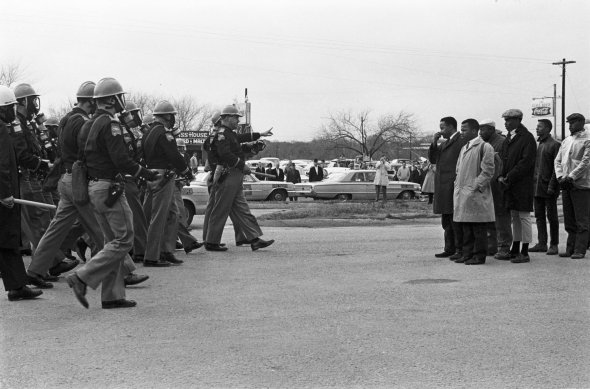
Two Minute Warning, photo by Spider Martin. Selma “marchers facing a line of state troopers in Selma moments before police beat the protestors on March 7, 1965. Courtesy Tracy Martin (NPR)
SELMA, Ala. — They have come from coast to coast to commemorate a solemn moment in civil rights history, but also to renew their commitment to a fight that many say isn’t finished.
Tens of thousands of Americans are gathering here on Saturday to mark the 50th anniversary of Bloody Sunday, when marchers attempting to walk from Selma to Montgomery to demand an end to discriminatory polling practices were viciously attacked by police.
It took two more attempts for marchers — led by John Lewis and Hosea Williams — to successfully complete their roughly 50-mile trip to Montgomery. But their determination — and the searing images of the violence during that first march — shook the nation’s collective conscience and helped usher in the landmark Voting Rights Act of 1965….
Participants began arriving Thursday for a five-day commemoration that will reach its apex today when President Obama will speak from the foot of the Edmund Pettus Bridge, where the marchers were bloodied by state troopers and sheriff’s posse armed with tear gas and clubs.
This month Selma, Ala., will mark the 50th anniversary of “Bloody Sunday.” That’s the day police beat demonstrators attempting to march to Montgomery in support of voting rights. Some of the most iconic images of that day were captured by a white photographer — the late Spider Martin.
Spider Martin’s real introduction to the civil rights movement came on a late night at home in February 1965. He was 25, a photographer for The Birmingham News. He explains in a video from 1987 that he got the call because he was the youngest staff member and no one else wanted to go. That assignment would lead to his most famous work.
“About midnight I get this phone call from the chief photographer and he says ‘Spider, we need to get you to go down to Marion, Ala.’ Says there’s been a church burned and there’d been a black man who was protesting killed. He was shot with a shotgun. His name was Jimmie Lee Jackson.” ….
Jackson’s killing helped spur the Selma-to-Montgomery voting rights marches a few weeks later. Martin was in Selma for Bloody Sunday when state troopers attacked protesters. Holding a camera made him just as much a target. He recounted in an interview with Alabama Public Television, what happened when a police officer saw him.
“He walks over to me and, blow! Hits me right here in the back of the head,” he said. “I still got a dent in my head and I still have nerve damage there. I go down on my knees and I’m like seeing stars and there’s tear gas everywhere. And then he grabs me by the shirt and he looks straight in my eyes and he just dropped me and said, ‘scuse me. Thought you was a nigger.'”
Martin kept covering the marchers until they reached Montgomery two-and-a-half weeks later.
See more of Martin’s photographs of the Selma march at the NPR link and at ArtsRevive.com.
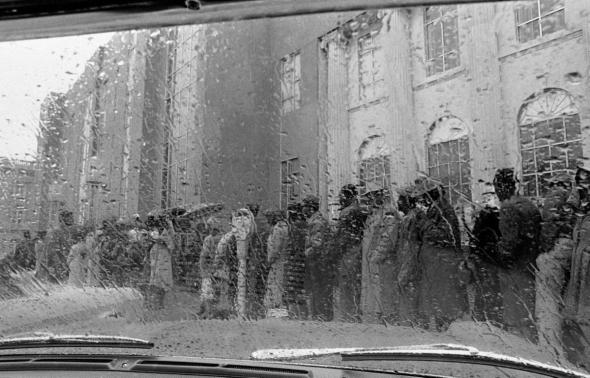
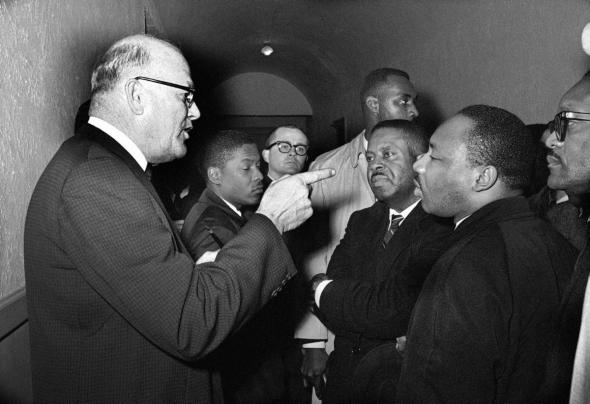
The New York Daily News has a wonderful gallery of photos of the events leading up to the Selma to Montgomery march, which began on March 21, and concluded on March 25, 1965. Here are two of the photos. Please click on the link to see more.
Feb. 7, 1965, African Americans stand in line to attempt to register to take a literacy test in order to register to vote in Selma, AL
March 1, 1965, Registrar Carl Golson shakes finger in MLK’s face saying that voter registration in Lowndes Cty is none of his business.
At The Nation, The Almanac column has reprinted an article by George B. Leonard published 50 years ago on March 10: Midnight Plane to Alabama.
Fifty years ago today, Alabama State Troopers attacked voting-rights demonstrators on the Edmund Pettus Bridge in Selma. Events moved quickly after that, with President Lyndon Johnson delivering his “We Shall Overcome” address before Congress and calling for a voting-rights bill just over a week later. But in early May, The Nation circled back to that moment on the bridge, with an essay by the California writer George B. Leonard, who watched footage of the assault at home. Shocked and appalled by what he saw, Leonard (originally from the South) took a plane to Selma to be there for whatever would happen next.His essay, “Midnight Plane to Alabama,” appeared in The Nation of May 10, 1965.
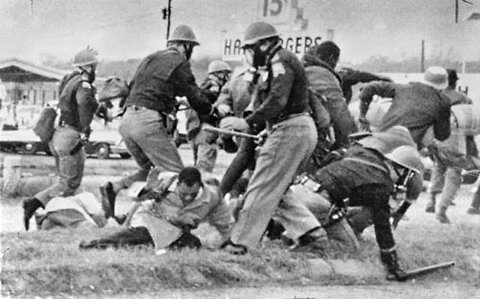
The pictures were not particularly good. With the cameras rather far removed from the action and the skies partly overcast everything that happened took on the quality of an old newsreel. Yet this very quality, vague and half-silhouetted, gave the scene the vehemence and immediacy of a dream. The TV screen showed a column of Negroes striding along a highway. A force of Alabama state troopers blocked their way. As the Negroes drew to a halt, a toneless voice drawled an order from a loudspeaker. In the interests of “public safety” the marchers were being told to turn back. A few moments passed, measured out in silence, as some of the troopers covered their faces with gas masks. There was a lurching movement on the left side of the screen, a heavy phalanx of troopers charged straight into the column, bowling the marchers over. A shrill cry of terror, unlike any sound that had passed through a TV set, rose up as the troopers lumbered forward, stumbling sometimes on the fallen bodies. The scene cut to charging horses, their hoofs flashing over the fallen. Another quick cut, a cloud of tear gas billowed over the highway. Periodically the top of a helmeted head emerged from the cloud, followed by a club on the upswing. The club and the head would disappear into the cloud of gas and another club would bob up and down. Unhuman. No other word can describe the motions. The picture shifted quickly to a Negro church. The bleeding, broken and unconscious passed across the screen, some of them limping alone, others supported on either side, still others carried in arms or on stretchers. It was at this point that my wife, sobbing, turned and walked away, saying, “I can’t look any more.”
Alabama state troopers attack protesters in Selma, March 7, 1965
How far have we come in 50 years?
Just this week, the Department of Justice released a report that enumerates shocking civil rights violations by police and city officials in Ferguson, Missouri. Following the killing of black teenager Michael Brown by Ferguson police officer Darren Wilson, there were demonstrations during which Ferguson and St. Louis police and Missouri state troopers used military war surplus equipment and blatantly unconstitutional policies in their efforts to shut down the protests.
Riot police stand guard as demonstrators protest the shooting death of teenager Michael Brown in Ferguson, Missouri August 13, 2014. Credit: REUTERS/Mario Anzuoni
In the past year, we’ve seen incident after incident of black men and boys being shot and killed by police around the country.
Most concerning of all, the conservatives on the Supreme Court succeeded in greatly weakening the Voting Rights Act by invalidating the most important part of the law, which required nine states to get federal approval before they made any changes in voting laws. Following that decision, Republican states rushed to impose limits on voting that unfairly targeted minorities.
When thousands gather this weekend in Selma, Alabama, to mark the 50th anniversary of “Bloody Sunday,” some will likely conclude that the town that changed America has not seemed to make much progress of its own.
The majority of registered voters in Selma are now black — along with most of the city, whites having fled in the decades since their African-American neighbors gained access to the ballot box. More than half the businesses in Selma are black-owned.
But Selma is a poor city in one of the poorest states in the country. The typical resident earns about half the state’s median income of $43,000, and over 40 percent of its citizens live below the poverty line, more than twice the state average. According to the most recent data, 10 percent of Selma residents are unemployed — one of the highest rates in Alabama — compared to six percent statewide….
“The people who received less benefit from the movement are the ones who did the most,” said Andrew Young, a lieutenant of Martin Luther King Jr.’s who was among those marching on March 4, 1965. “That’s always bothered me.”
“The farmers who let us stay in their homes, who bonded us out of jail, are old guys now. They still own land but they can’t make a living on the land.”
Ferguson, MO, August 13, 2014. (Photo by Scott Olson/Getty Images)
“It is perversely ironic to commemorate the past without demonstrating the courage of that past in the present,” NAACP president Cornell Brooks told The Atlantic‘s Russell Berman last week. “In other words we can’t really give gold medals to those who marched from Selma to Montgomery without giving a committee vote to the legislation that protects the right to vote today.”
On one level the story is simple: racism. Too many police officers fear people of color in the neighborhoods they patrol, and are likely to over-react with force during encounters. The local courts also engage in discrimination by failing to indict the killers, even when captured on video, as in the brutal police slaying of Eric Garner in Staten Island, NY. Both the policing and the court system obviously reflect the polarization of our communities, and our inability to escape the legacy of slavery, more than 150 years after emancipation.
But racism only accounts for part of the story. We also must understand how judicial racism and even police violence are deeply connected to the financialization of the economy and runaway inequality.
It is not by accident that America has become both the most unequal developed nation in the world, and the nation with the largest prison population. We’re number one in police killings, incarceration and inequality—not Russia, not China. Our national self-image so steeped in the idea of freedom has not caught up with these ugly realities.
Racism is has been with us for centuries, but something very new happened in America around 1980 that set the stage for these police killings. Something very big is transforming us into the first democratic police state in human history.
“Around 1980…” What happened in 1980? Ronald Reagan was elected. It was the beginning of the Republican “revolution” against freedom, modernity and an inclusive America.
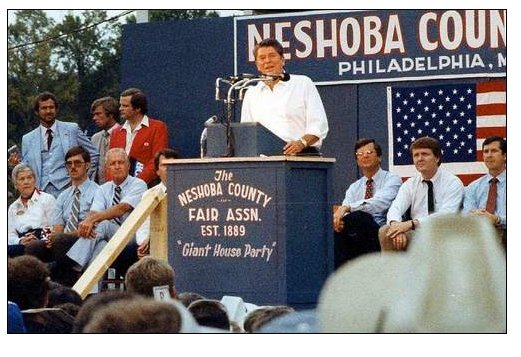
Ronald Reagan kicks off his 1980 presidential campaign in Philadelphia, Mississippi.
Do you recall where Reagan chose to begin his campaign for the presidency? Here’s a column by the late William Rasberry, published on the occasion of Reagan’s death, Reagan’s Race Legacy.
I might have let this period of national mourning pass without a sour note. But I was in Mississippi when I heard the news of his death, and it came just one day after a white Mississippi newspaper editor proudly handed me a copy of the Philadelphia, Miss., paper, the Neshoba Democrat.
Philadelphia, county seat of Mississippi’s Neshoba County, is famous for a couple of things. That is where three civil rights workers — Michael Schwerner, James Chaney and Andrew Goodman — were murdered in 1964. And that is where, in 1980, Republican presidential candidate Ronald Reagan chose to launch his election campaign, with a ringing endorsement of “states’ rights.”
It was bitter symbolism for black Americans (though surely not just for black Americans). Countless observers have noted that Reagan took the Republican Party from virtual irrelevance to the ascendancy it now enjoys. The essence of that transformation, we shouldn’t forget, is the party’s successful wooing of the race-exploiting Southern Democrats formerly known as Dixiecrats. And Reagan’s Philadelphia appearance was an important bouquet in that courtship.
I don’t accuse Reagan of racism, though while he served, I did note what seemed to be his indifference to the concerns of black Americans — issues ranging from civil rights enforcement and attacks on “welfare queens” to his refusal to act seriously against the apartheid regime in South Africa. He gets full credit from me for the good things he did — including presiding over the end of international communism. But he also legitimized, by his broad wink at it, racial indifference — and worse….in some ways, including racially, he left us a more divided nation, in part by making division seem legitimate.
That’s the legacy of Philadelphia.
Even Reagan probably would be amazed by what the Republican Party has become today, but he certainly enabled it.
You can watch coverage of today’s events in Selma on C-Span. President Obama and Representative John Lewis will appear at around 2:30PM.
U.S. President Barack Obama will call on Americans to carry forward the spirit of the Civil Rights Movement on Saturday during a visit to Selma, Alabama, to commemorate the 50th anniversary of a march that sparked the 1965 Voting Rights Act.
Obama, the first black U.S. president, will deliver remarks at the Edmund Pettus Bridge, where police and state troopers beat and used tear gas against peaceful marchers who were advocating against racial discrimination at the voting booth….
“Selma is not just about commemorating the past. It’s about honoring the legends who helped change this country through your actions today, in the here and now,” he told a town hall-style meeting.
“Selma is now. Selma is about the courage of ordinary people doing extraordinary things because they believe they can change the country, that they can shape our nation’s destiny. Selma is about each of us asking ourselves what we can do to make America better.” ….
Obama condemned the Missouri city of Ferguson on Friday for “oppressive and abusive” actions against black residents that were revealed in a U.S. Justice Department report accusing police and court officials of racial bias.
We have a very long way to go.
This is an open thread. Please share your thoughts on this post and other stories you’re following in the comment thread and have a terrific weekend.
Did you like this post? Please share it with your friends:
It’s been since at least November since I’ve had some time to myself when I wasn’t completely in need of tons of sleep so I’m enjoying spending some time in bed with my feet up getting my reads on. There’s not been a lot that’s intrigued me but it beats designing and updating an on line International Finance Class, believe me. So, imagine my sheer joy when I found out that Walmart broke down and upped its wages.
There are several reasons the America’s #1 corporation and chain store made the leap. It was probably a combination of fear of unionization and the incredible employee turnover rate. It really costs to hire and train new workers so upping the salary is really the required move for that one. There’s a lot of analysis on the deed so I’d thought I’d take a look at it. First up, Joe Pinsker at The Atlantic discusses the move.
The CEO of Walmart announced earlier today that all of the company’s employees will, starting in April, be paid at least $9 an hour, nearly $2 more than the federal minimum wage. That’s still far short of the $15 per hour pushed for by OUR Walmart, a union-like group of Walmart workers. Still, it’s a change for a company that has stubbornly opposed such a raise for years.
Walmart’s CEO framed the raise as an act of corporate benevolence, but the reason his company will inch closer to paying all its employees fair wages has little to do with goodwill (few business decisions do). If Walmart has determined that it’ll need to start paying higher wages to stay competitive, then other retailers might arrive at the same conclusion. This isn’t an isolated act of corporate social responsibility—it’s a response to the current realities of labor economics that will likely inform the behavior of other American employers.
Some companies have set even higher wage floors more in line with living wage expectations. Most recently, for example, Aetna set its floor for US workers at $16 an hour, twice the current federal minimum wage.
“Raising wages among low-wage workers shifts income into the pockets of workers and families that are highly likely to quickly spend every additional dollar they earn,” says David Cooper, economic analyst at the Economic Policy Institute.
“So even though some businesses have to pay their workers more, they see more customers coming through the door because now there’s additional dollars rippling out through local economies in a way that doesn’t really happen if those dollars just go back into the bank accounts of corporate shareholders.”
So what has changed? The simple answer is that the world for employers is very different with a 5.7 percent unemployment rate (the January level) than it was five years ago, at 9.8 percent. Finding qualified workers is harder for employers now than it was then, and their workers are at risk of jumping ship if they don’t receive pay increases or other improvements. Apart from pay, Walmart executives said in their conference call with reporters that they were revising their employee scheduling policies so that workers could have more predictability in their work schedules and more easily get time off when they needed it, such as for a doctor’s appointment.
The giant question now is not whether there will be some meaningful wage gains in 2015; beyond the anecdotal evidence from Walmart and Aetna, the collapse in oil prices means even modest pay increases will translate into quite large inflation-adjusted raises. The question is whether wage gains will be strong enough to create a virtuous cycle in which rising pay for the workers at the bottom three-quarters of the income scale, who are most likely to spend the money and get it circulating through the economy, will spur more investment and hiring.
To the degree their logic was, “We think we’re going to need to raise wages this much in the next couple of years anyway to retain good workers and maximize profitability, so we may as well get ahead of the curve and get a public relations bump out of it and announce the plans in a big splashy way,” that would be the best news for American workers. Because that would imply that it won’t just be Walmart workers getting a raise in 2015.
Sitting in the pediatrician’s office with their 6-day-old daughter, the two moms couldn’t wait to meet the doctor they had picked out months before.
The Roseville pediatrician — one of many they had interviewed — seemed the perfect fit: She took a holistic approach to treating children. She used natural oils and probiotics. And she knew they were lesbians.
But as Jami and Krista Contreras sat in the exam room, waiting to be seen for their newborn’s first checkup, another pediatrician entered the room and delivered a major blow: The doctor they were hoping for had a change of heart. After “much prayer,” she decided that she couldn’t treat their baby because they are lesbians.
“I was completely dumbfounded,” recalled Krista Contreras, the baby’s biological mother. “We just looked at each other and said, ‘Did we hear that correctly?’ …. When we tell people about it, they don’t believe us. They say, ‘(Doctors) can’t do that. That’s not legal.’ And we say, ‘Yes it is.'”
The Contrerases of Oak Park are going public with their story to raise awareness about the discrimination that the lesbian, gay, bisexual and transgender (LGBT) community continues to face. There is no federal or Michigan law that explicitly prohibits discrimination against LGBT individuals.
For months, the couple kept quiet about what happened to them and their baby — Bay Windsor Contreras — at Eastlake Pediatrics last October.
But the pain and frustration wouldn’t go away. So they broke their silence.
“We want people to know that this is happening to families. This is really happening,” said Jami Contreras, 30, who was blindsided that fall day in the doctor’s office. “It was embarrassing. It was humiliating … It’s just wrong.”
Benton County Superior Court Judge Alex Ekstrom rejected arguments from the owner of Arlene’s Flowers in Richland that her actions were protected by her freedoms of speech and religion. While religious beliefs are protected by the First Amendment, actions based on those beliefs aren’t necessarily protected, he said.
“For over 135 years, the Supreme Court has held that laws may prohibit religiously motivated action, as opposed to belief,” Ekstrom wrote. “The Courts have confirmed the power of the Legislative Branch to prohibit conduct it deems discriminatory, even where the motivation for that conduct is grounded in religious belief.”
Barronelle Stutzman, the owner of Arlene’s Flowers, sold flowers for years to customer Robert Ingersoll. She knew he was gay and that the flowers were for his partner, Curt Freed.
After Washington state legalized same-sex marriage in 2012, Ingersoll went to the shop the following spring to ask Stutzman to do the flowers for his wedding. At the time, floral arrangements for weddings made up about 3 percent of her business.
She placed her hands on his and told him she couldn’t, “because of my relationship with Jesus Christ,” she said in a deposition. As a Southern Baptist, she believed only in opposite-sex marriages.
For more than 30 years, Emmy-winning journalist, documentary filmmaker, and Al Jazeera America anchor Tony Harris has reported on senseless and vicious acts of violence, many fueled by intolerance, fear and hate. In the new Investigation Discovery one-hour special HATE IN AMERICA, Harris partners with The Southern Poverty Law Center (SPLC), a non-profit that has been tracking hate groups across the country since 1971, and NBC News’ award-winning production arm Peacock Productions, to examine the current realities of intolerance in America.
According to the SPLC, more than 900 active hate groups currently exist across the United States, from neo-Nazis to anti-government militias, targeting entire classes of people for their race, religion, and sexuality, among other immutable characteristics. Largely propagated by anger and fear over the nation’s ailing economy and the diminishing white majority, that number has been on the rise for over a decade.
Traveling to communities torn apart by violence, Harris pulls back the curtain on what drives modern-day hate, and comes face to face with its victims to examine HATE IN AMERICA.
HATE IN AMERICA premieres on Investigation Discovery on Monday, February 23, at 8/7c.
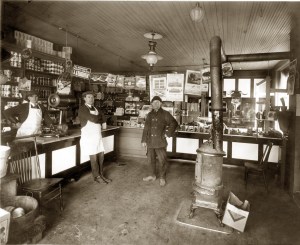
I’ve often wondered why my attitude towards shopping has changed over time. I used to love going to the big stores downtown and the clerks all seemed so cheery and glamorous. The buildings were vast and had huge tall ceilings supported by ornate columns. The window decorations were incredible during the holidays and they were up such a short period that you had to rush down there just to catch them. It was fun to walk from store to store and each store had its on personality and personalities. This is so different from today’s megastore where every one is rude and seems to only care about low priced junk. The aisles are tight and packed with crap and the crap is hard to find. There is very little help and only cashiers in far off places.
I used to think I started disliking stores and shopping just because I’d worked so much retail in high school and college. But, I still love to hit little antique stores in quaint places and will take hours staring down some bargain. I figured I’d just burned out on the entire store experience from those years. But, I still love hopping around the big stores in NYC and I used to love hitting the Maison Blanche in downtown New Orleans when I first moved here. So much of the things I enjoyed about shopping as a customer are gone. Also, when I was small, even retail store owners and employees had civilized work hours. Now, all I can think about it how grumpy every one looks and how junky the merchandise has become since they work night and day on every day imaginable. I’ve taken to ordering a lot of stuff on line just to avoid the overall experience of the ugly buildings, merchandise and people. The thought of going to a Walmart stresses me out. It’s something I avoid if I can. So, I don’t know. What happened?
Whatever happened to a fun day at a store? Oh, well. Everything changes and now it’s just all about returning profits to a few at the inconvenience and dismay of the many.
So, those are the two interrelated topics that I’ve been investigating this week. What’s on your reading and blogging list today?
Did you like this post? Please share it with your friends:
Tonight President Obama will give his sixth State of the Union Address. Yesterday, Dakinikat wrote about Obama’s proposal to increase taxes on the wealthy to benefit the middle class. Obviously that isn’t going to pass muster with our Republican Congress, but maybe it will at least embarrass some members just a little bit. We’ll have a live blog tonight during the speech, and I hope you’ll join us.
Here are a few stories to check out before tonight.
The president will enter the House chamber Tuesday night for his sixth State of the Union address riding a wave of confidence driven by an improving economy and brightening public approval ratings. And he seems as defiant as ever.
Obama vowed in a private meeting with Democrats last week that he will play “offense” during the final two years of his presidency, building on the aggressive executive actions he laid out over the past two months. The legislative proposals he has previewed — including a plan for free community college and a revamping of the tax code — have been based firmly on his terms, drawing objections from Republicans.
The nerve of this guy! He tried to reach across the aisle for years, and now he’s given up the ghost. Shocking.
Joni Ernst is not the next Sarah Palin.
And Tuesday night, she’ll get the chance to prove it.
The SOTU will be followed by a Republican response by newly elected Iowa Senator Joni Ernst. Will she castrate a hog during her presentation? Ben Jacobs at The Daily Beast writes:
Ernst, the gun totin’, hog castrating freshman Republican senator from Iowa will give her party’s response to the State of the Union—a tricky, high-profile task that have landed many before her at the bad end of a punchline.
But the prime time address not only gives Ernst a chance to show off her Iowa charm, it gives her the opportunity to shed the comparison to Sarah Palin that she attracted as she campaigned through the Hawkeye State’s 99 counties last year as a populist conservative.
Once called an “onion of crazy” by Democratic National Committee chairwoman Debbie Wasserman Schutz (D-Fla.), the Iowa senator first gained national attention in a crowded, if undistinguished, primary field with an television ad about castrating hogs. She followed that up with another advertisement that featured her in safety glasses firing away at a target while the voiceover boasted that she kept “more than lipstick in her purse.”
“It’s almost like the kiss of death to get picked to do the Republican response,” said Elaine Kamarck, a senior fellow at the Brookings Institution. “It represents an amazing opportunity to catapult yourself into the national conversation, but the risk is huge and the success rate has been minimal at best in recent years.”
Republicans couldn’t have been more excited to spotlight their Indian-American wunderkind Bobby Jindal, Louisiana’s governor, in response to the first black President’s address to a joint session of Congress. But all party bigwigs and critics alike were talking about the next day was Jindal’s awkward delivery, not his prospects for higher office — and certainly not GOP diversity.
It was a moment reminiscent of then-Gov. Tim Kaine’s (D-Virginia) 2006 response, when he was outdone by his own eyebrows.
And then a parched Marco Rubio took a not-so-subtle sip of water, eyes still piercing into the camera. Forget that he had delivered the first-ever bilingual rebuttal, drowned out by Rubio and his infamous water bottle.
Rubio quickly bounced back from that moment, raising more than $100,000 through his PAC by selling “RUBIO” branded water bottles. And his political fortunes are still fairly intact.
And superstitious politicos beware.
Virigina Gov. Bob McDonnell gave a rousing response straight from the Virginia state legislature in 2010. Five years later, and he’s about to start a two-year stint in federal prison over corruption charges.
Even last year’s speaker, Rep. Cathy McMorris Rodgers was accused by a former staffer of ethics violations, though that investigation died out pretty quickly.
Maybe it’s just that today’s Republicans are a sorry bunch of losers channeling the Koch brothers?
Speaking of losers, Louisiana Rep. Steve Scalise had the nerve to discuss Martin Luther King’s legacy yesterday. From The Hill: Scalise praises MLK amid controversies.
House Majority Whip Steve Scalise (R-La.) on Monday praised the legacy of slain civil rights leader Martin Luther King Jr. amid controversy over his speech to a white supremacist group while he served as a Louisiana state legislator…
“As we reflect upon the life of Rev. Martin Luther King, Jr., today, we also recognize how our nation has been strengthened by his legacy,” Scalise said in a statement.
“Dr. King challenged our country to fulfill the promises of liberty, equality, and justice prescribed in the founding of our great nation. Leading by example, he stressed the teachings of tolerance, service, and love, regardless of race, color, or creed. Today, his writings and speeches continue to empower and inspire those who seek liberty, equality, and justice,” Scalise continued.
Scalise made no mention of any events he planned to attend to commemorate the holiday.
Scalise’s comments stood out, however, given that the holiday coincides with multiple race-related controversies over his career prior to entering Congress.
For one, Scalise opposed making King’s birthday a state holiday in 2004 while he served in the Louisiana Legislature, as well as making it a school holiday in 1999.
The Hill also reported last week that Scalise voted against a resolution in the Louisiana Legislature apologizing for slavery. He later supported a version that only expressed “regret” for slavery.
“Why are you asking me to apologize for something I didn’t do and had no part of?” Scalise said, according to minutes of a 1996 Louisiana House committee meeting obtained by The Hill. “I am not going to apologize for what somebody else did.”
And, as reported in late December, Scalise in 2002 spoke before the European-American Unity and Rights Organization founded by former Ku Klux Klan leader David Duke.
Why is this man still serving as House Majority Whip?
Yesterday Think Progress noted that Scalise isn’t the only opponent the Martin Luther King holiday who still remains in power.
After King’s assassination in 1968, Rep. John Conyers (D-MI) introduced the first Congressional legislation to create a federal Martin Luther King Day holiday. In the years that followed, Congress held congressional hearings during which hostile witnesses said “violence was exactly what [King] wanted,” and that King formed a “common front” with the “virulently racist Nation of Islam.”
More than 15 years later, Congress finally enacted such a law. The bill, signed by President Ronald Reagan, passed in the Senate on a 78-22 vote and in the House of Representatives by a 338 to 90 margin. The most vocal opponents included the late Sen. Jesse Helms (R-NC), who mounted a 16-day filibuster of the proposal and smeared King as a Communist.
Voting with Helms against the King holiday were four men who remain in the Senate today: Judiciary Chairman Chuck Grassley (R-IA), Finance Chairman Orrin Hatch (R-UT), Banking Chairman Richard Shelby (R-AL) and Armed Services Chairman John McCain (R-AZ). Shelby and McCain were in the House at the time. House Appropriations Chairman Hal Rogers (R-KY) and House Judiciary Crime, Terrorism, Homeland Security, and Investigations Subcommittee Chairman Jim Sensenbrenner (R-WI) also voted against the proposal. McCain apologized in 2008 for being too slow “to give greatness its due,” and Hatch wrote in 2007 that the vote was “one of the worst decisions” he has made as a senator.
Read more of the sorry history of the MLK holiday at the link.
Jezebel had a fascinating, though heartbreaking, story by Anna Merlen about the archaeological excavation of the graves of young boys at the Dozier School in Florida. We’ve written about this story here in the past. Merlen interviewed Dr. Erin Kimmerle, an associate professor at the University of South Florida, one of the leaders of the project.
The Dozier School was located in the tiny town of Marianna, West of Tallahassee and thirty minutes or so from the Georgia line. It opened in 1900 as the Florida State Reform School, and despite years of reports of serious abuse and mistreatment, it remained open for over 100 years.At least 98 people died there over the years, two staff members and 96 boys aged six to 18. Men who were once Dozier residents recounted brutal beatings they received in the White House, a small outbuilding on the school grounds whose walls remain spattered with what looks like blood. More than one survivor has called the building “a torture chamber.”
A group of men who were sent to the school in the 1950s and ’60s have banded together to tell their stories: they call themselves the White House Boys. The Tampa Bay Times has done the best coverage of the Dozier School, including an investigation in 2009 that uncovered squalid conditions, staff neglect and mistreatment from 1900 to the present day, depicting the school, as they put it, as “a place of abuse and neglect, of falsified records, bloody noses and broken bones.” [….]
Dr. Erin Kimmerle is a forensic anthropologist, an associate professor at the University of South Florida and a leader of the team excavating Dozier. (Before coming to USF, she worked as the Chief Anthropologist at the Hague, analyzing mass graves in Bosnia and Croatia.) Along with two colleagues (Antoinette Jackson and Christian Wells) and a crew of graduate students, Kimmerle has been excavating Boot Hill, the burial ground at Dozier, as well as the surrounding area and trying, through DNA testing, to return the boys’ remains to their families for a proper burial.
In January of 2014, the team exhumed 55 bodies—five more than they expected to find, 24 more than official records said were buried there. There are still many questions: how many boys lie buried under the Dozier grounds, their bodies slowly entwining with the roots of the mulberry trees around them? How did they die? And who do we hold accountable for the 100 years of suffering the Dozier school inflicted?
The interview is extremely interesting and informative. I highly recommend it.
Here’s another sad Florida story that I’ve been following. Two young sisters were arrested and charged with murder after the older girl shot and killed her 16-year-old brother on January 5.
According to the initial incident report, the girls’ father is a truck driver and their parents left them alone with their brother and a 3-year-old sister while the mother accompanied the father on a trip. The 15-year-old told police that on the day of the shooting, her brother locked her in a room with just a blanket and a bucket to use as a toilet.
According to police, she said that while her brother slept, her younger sister helped her escape the room and the 15-year-old went outside and used a knife to cut the foam around the window air conditioning unit in the window of her parents’ locked bedroom. In the bedroom, she told police, she found a handgun, loaded it, and then went into the living room where her brother was sleeping and shot him.
The arrest report says the girls then packed some things, put their 3-year-old sister in a bedroom, and walked to a nearby Dollar Store, where they called a friend, who later called police. The girls told them that the 15-year-old was routinely locked in the room her brother had kept her in.
The sisters’ parents were arrested and charged with child neglect and according to the Columbia County Sheriff’s Office are still behind bars. According to their arrest report, the mother told police the 15-year-old was locked in the room about four times a week, and the father said the longest she was locked up was 20 days. In a search of the house, police found notes written by the parents asking the girl to explain why she should be let out of the room.
It turned out that there was a long history of physical, emotional, and sexual abuse in this family. The older girl had reported that her uncle was abusing her, and he is now serving a life sentence for the crimes. In addition, the mother had caught the brother raping the 1-year old, and had told authorities, but nothing was done about it.
Police say the girls will be tried as juveniles for second degree murder. Shouldn’t this killing be viewed as self-defense though? This case has also exposed a problem with laws about incest. Acccording to CBS News, Experts: Fla. sibling shooting exposes “incest loophole.”
In 2010, the children’s aunt went to police when she found a memory stick belonging to her husband with video of him sexually molesting the oldest sister. The uncle was eventually convicted and is serving life in prison.
And the abuse did not stop there. The family began locking the girl in a room – once for 20 days – and reportedly pulled her from school due to “behavioral issues.” And among the reports released by the Columbia County Sheriff’s Office is a heavily redacted document that suggests that in 2011, when the older sister would have been 11 or 12, her mother found the girl and her brother having sex in the house. But, according to the incident report, “the case was closed as unfounded and no criminal acts were disclosed.”
“We treat sexual abuse of children in the family as a social and psychological problem and not as a crime – and it is a crime,” says Grier Weeks, the executive director of the National Association to Protect Children.
Incest is still treated more lightly by law enforcement in most states in the U.S.
According to Daphne Young of Child Help, a non-profit organization devoted to the prevention and treatment of child abuse, 68 percent of child sex abuse victims are abused by a family member. Jennifer Marsh of the Rape, Abuse and Incest National Network (RAINN) says that 40 percent of the people who call the National Sex Abuse hotline say incest is their primary or secondary reason for seeking help.
And yet, perpetrators who sexually abuse family members can be subject to lower penalties than they would be had they assaulted a neighbor or stranger. In Washington State, for example, the Special Sex Offender Sentencing Alternative Law allows an offender to receive a lighter sentence if he or she had “an established relationship with, or connection to, the victim.”
Weeks calls this “the incest loophole,” and finds it mind-boggling: “The toll on a child [abused by a family member] is devastating. She was not protected by the very people who should have loved and protected her.”
Read more at the link.
This post has gotten way too long, so I’ll just leave you with a recommendation to read a long piece at The NY Review of Books on the Citizens United decision: The Supreme Court’s Billion-Dollar Mistake, by David Cole.
What else is happening? Please post your thoughts and links in the comment thread and have a terrific Tuesday!
Did you like this post? Please share it with your friends:
One of the many things that continues to fascinate me these days is that the number of people voting for Democrats and indicating more faith in that party than the Republican one begins to grow. Yet, the results of the recent election show that it hardly matters. States with more cows than people get an equal say in the U.S. Senate and that is a problem. In fact, “Senate Democrats got 20 million more votes than Senate Republicans. Which means basically nothing.”
Here’s another: Democratic candidates in all of the races won by Republicans or Democrats got about 98.7 million votes. Republican candidates in those same races got 94.1 million.
The 20 million figure, in other words, is cherry-picked to accentuate the gap. Vox’s analysis comes from a researcher at FairVote, which advocates for reforms to how members of Congress are elected.
Interestingly, Republicans got as many votes when losing to Democrats (about 47 million) as they did when beating Democrats. Democratic losers, though, got only about 31.3 million votes in losing. In other words: Democrats won their races by 20.3 million votes combined — Republicans won theirs by 15.7 million.
Trende points out a key reason for this: Most of the Republicans won in lower-turnout elections. It’s true that there were smaller states up for grabs this year: If you total the population from every state with an election this year — including Oklahoma and South Carolina twice — and divide by the number of races, you get about 48.7 million, compared to 72.7 million on average in 2012. But Republicans won 46 of their 54 seats in 2010 and 2014, compared to the Democrats, who won 23 of their 44 in 2012. In 2010, total turnout was about 90 million. Two years later, thanks to the presidential election, it was 40 million votes higher.
Many “red states” beat their chest as being fiscally conservative. Proud of their low income tax, business friendly environment, and self-reliance rhetoric.
But is it fair?
California, a “blue state,” gets just $.80 back for every $1 they put in. New York, even worse. They get less than $.75 on their dollar.
Whose going to start calling out the hypocrisy of some of the red states who point fingers at states like California and New York as the problem? These states want self-reliance? On what? California and New York’s goodwill?
This isn’t something Democrats should be proud of. They’re leaders are the one’s sitting there while their citizens get the short end of the stick.
Not something Republicans should be proud of either. Kinda hard to be the fiscal conservative when you ask Uncle Sam to pay your bills.
A lot of these states were brought in as territories via the Louisiana Purchase or at the close of the Mexican American War. Most of these states have a vast amount of land–a lot of it actually owned and managed by the Federal Government–and they were probably brought in at a time when a lot of folks thought the middle of the country would eventually fill up with people or at least become a place with a viable economy. Many Native American nations were literally rolled over to create vast wastelands of ranches and natural resource extraction outposts. Does it really makes sense to continue to support the way these outback states were carved out and is there any legal way to consolidate them now?
Yes, this would decrease the number of Senators in the Senate. But, it would mean each Senator would be slightly more powerful. It actually might improve the odds of an outback state’s House delegation having more power. I mean, really, Nebraska has 3 Congressmen. Who ever listens to even one of them? They’re a basic flyover state in terms of the presidential election too. They usually get a hit and run by a vice president or vice presidential candidate. If they were part of a larger state with similar topography and concerns, they’d be part of state with a larger congressional block even though they’d fold into one or more states and thereby share a Senator with more people and antelope.
So, why can’t we look at Outback States like Idaho, the Dakotas, Oklahoma, Arizona, Utah, Idaho, Nebraska, Montana, Wyoming, Nevada, etc. and just consolidate them? Why shouldn’t Nebraska and the Dakotas become one state? Or say, why not fold Idaho, Montana and Wyoming into Washington? Why should every one in the country suffer from the leadership these outback states send to the Senate while having to pay so much for them even to exist? Is there some way to redo these old territories into larger, consolidated states with a more economically viable level of population to support the vast areas of nothing but nature that basically define their states? Could we do it?
A long time ago, I remember a proposal called The Buffalo Commons made by Frank and Deborah Popper. It was a suggestion to turn a large part of the middle of the country into a huge National Park that would be left to the wild. I bet it would still be controversial today and more impossible given that setting up more National Parks is likely to be more unpopular today than it was 40 years ago. But, many of the same problems the concept worked to solve still exist, and now we have even bigger issues since our outback states are high maintenance and tend to send representatives with a coup mentality to Congress. Why can’t we just consolidate a few of them and try to at least make them less costly to the rest of us? It’s even more important from a resource protection standpoint as indicated by the stupidity surrounding the Keystone Pipeline. This is a boondoggle which benefits the special interests of a few politicians and is likely to create risk to the many including the folks living in these states. Wouldn’t it be nice for them to have a lot more say in the future of how federal lands and federal co-option of private land operates?
In 1987, Drs. Frank and Deborah Popper developed their bold new idea for a Buffalo Commons, (Popper and Popper, “The Great Plains: From Dust to Dust, PLANNING, 1987). Their continuing research showed that hundreds of counties in the American West still have less than a sparse 6 persons per square mile — the density standard Frederick Jackson Turner used to declare the American Frontier closed in 1893. Many have less than 2 persons per square mile.
The frontier never came close to disappearing, and in fact has expanded in the Plains in recent years. The 1980 Census showed 388 frontier counties west of the Mississippi. The 1990 Census shows 397 counties in frontier status, and the 2000 Census showed 402. Most of this frontier expansion is in the Great Plains. Kansas actually has more land in frontier status than it did in 1890.
Great Plains Restoration Council mounted a Plains-wide mapping project at the county level, using a series of economic and social indicators, to show exactly where the frontier is and how much further it has expanded. GPRC than did more sophisticated mapping that scrutinized these and other factors down to the Census Block level, allowing for a much more rigorous and exact understanding of ecological, biological, geographical, topographical, demographic and political conditions. Since then, we have specifically honed our focus onto a few, key target ecological areas while developing a new model of youth education.
There once were over 400 million acres of wild prairie grasslands in the central part of North America. The backbone of the Buffalo Commons movement is the work — over a period of decades — to re-establish and re-connect prairie wildland reserves and ecological corridors large enough for bison and all other native prairie wildlife to survive and roam freely, over great, connected distances, while simultaneously restoring the health and sustainability of our communities wherever possible so that both land and people may prosper for a very long time. Future generations may choose to expand these reserves and corridors, as the new culture of caring and belonging we have started today becomes an integral, ingrained part of life in the world of tomorrow, especially as extensive grasslands become needed to help absorb carbon from the atmosphere. (Highly biodiverse native prairies are excellent carbon sequesters.)
So, I’m not a legal expert, but it seems if a state can be made out of a territory then several states can be merged into something more viable for the modern country. I’d love to hear if anyone thinks this is way to bring more democratic representation to the country. Frankly, I think this could be a win win situation if some of these people would give up their provincial loyalties.
Again, the consolidation would bring a larger delegation to the House for a combined state, and it might make them feel more relevant to the Presidential election process. Right now, everyone ignores nearly every state but Colorado on the way across the Mississippi to hear about California. I’ve actually lived in states that I think would make good candidates to consolidate with other states so I do have some knowledge of what it’s like to live in the Great American Outback. I certainly believe it makes a lot of sense to look to see if those territories would’ve been dealt a better situation had they be carved out into different looking states. This is especially true since so many of them really don’t have all that many people in them and most of them are have been losing population for some time. What exactly constitutes a ghost state?
Here’s a few other things you can think on today.
Here are two studies on the Affordable Healthcare Act. One is by the Rand Corporation and the other by the Brookings Institute. It’s especially relevant to look at the link between the law and the tax credits since this is the next challenge to the law to come before SCOTUS. The last was the idea that states could opt out of the Medicaid Expansion which created a horrible situation for those of us in states ruled by Red State Crazies. First some points from the Brookings Institute.
In “The Early Impact of the Affordable Care Act State-by-State,” Brookings nonresident fellow in Economic Studies and Yale University Economics Department faculty member Amanda Kowalski finds that national enrollment trends obscure significant variation across states, as a result of the types of people who opted in and how insurers set premiums. Across all states, from before the fourth quarter of 2013 to the first half of 2014, enrollment-weighted average per-person premiums in the individual health insurance market rose by 24.4% beyond what they would have had they simply followed state-level seasonally-adjusted trends. This large increase stands in contrast to the experience in Massachusetts, which saw premium decreases after its 2006 reform, as documented by Kowalski in previous joint research. Massachusetts also saw decreases in markups (premiums minus costs), which have been rare in other states in 2014.
Kowalski focuses on the individual insurance market using data through the second quarter of 2014 after the open enrollment period ended. She characterizes states into five groups, based on their involvement in the implementation of the ACA. On one extreme were the 5 “direct enforcement” states that ceded all enforcement of the ACA to the federal government (Alabama, Missouri, Oklahoma, Texas, and Wyoming). On the other extreme were 8 states (Colorado, Connecticut, DC, Kentucky, New York, Rhode Island, Vermont, and Washington) that took the implementation of the ACA into their own hands by implementing the Medicaid expansion and setting up their own exchanges. Another group of 5 of these states also set up their own exchanges and expanded Medicaid, but experienced severe technology glitches (Hawaii, Maryland, Minnesota, Nevada, and Oregon), so she examines them as a distinct group. The two groups in the middle of the implementation spectrum include a set of 11 states that adopted the Medicaid expansion but did not set up their own exchanges (Arkansas, Arizona, Delaware, Iowa, Illinois, Michigan, North Dakota, New Hampshire, New Mexico, Ohio, and West Virginia) and a set of 19 “passive” states that did not fit into any of the other four groups (Alaska, Florida, Georgia, Idaho, Indiana, Kansas, Louisiana, Maine, Mississippi, Montana, North Carolina, Nebraska, Pennsylvania, South Carolina, South Dakota, Tennessee, Utah, Virginia, and Wisconsin) – they took some role in implementing the ACA, but did not implement the Medicaid expansion, and they used the federal exchange. All comparisons exclude California and New Jersey because their data are not complete, and they also exclude Massachusetts, because Massachusetts implemented its own reform in 2006.
She finds that individuals in “direct enforcement” states – those states that that ceded all enforcement of the ACA to the federal government (Alabama, Missouri, Oklahoma, Texas, and Wyoming) – are worse off by approximately $245 per participant on an annualized basis, relative to participants in states that were passive implementers of the ACA.
Kowalski also finds, not surprisingly, that the 5 states that had severe glitches with their exchanges (Hawaii, Maryland, Minnesota, Nevada, and Oregon) are worse off than other states with well-functioning state exchanges (Colorado, Connecticut, DC, Kentucky, New York, Rhode Island, Vermont, and Washington), by a large magnitude – approximately $750 per participant on an annualized basis. On the other hand, participants in states that set up well-functioning exchanges were better off than they would have been had their states been passive by approximately $420 per enrollee.
Reviewing data on the 27 states that adopted the Medicaid expansion, she finds that those that expanded were better off than all other states, although the amount is not statistically significant.
Kowalski also divides states based on whether they allowed renewal of non-grandfathered plans in response to the backlash that if people “liked their plan they could keep it” (27 did, but DC and the remaining 23 did not). She finds that participants in states that allowed renewal of non-grandfathered plans are worse off by around $220 annually than participants in other states who did not allow grandfathered non-compliant plans – likely because the people who remained in non-grandfathered plans were healthier than other people in the individual health insurance market.
Using the most recent data collected by the National Association of Insurance Commissioners (NAIC) and compiled by SNL Financial, which includes individual health insurance enrollment outside of the exchanges, Kowalski takes a broader view than the widely-cited report from the U.S. Department of Health and Human Service’s Office of the Assistant Secretary for Planning and Evaluation (ASPE), which reported 8 million exchange enrollees in May. By taking a broader view, Kowalski is able to observe trends in the individual health insurance market from before the exchanges opened for business. Taking these trends into account, at least 4.2 million enrollees are newly-covered in this market (many were likely previously uninsured, but some may have switched from other types of coverage).
Looking at the states individually, she finds that the law benefitted enrollees in at least 13 states (Alaska, Connecticut, DC, Indiana, Kentucky, Maryland, Maine, North Dakota, New Hampshire, Nevada, New York, Rhode Island, and Vermont), with Maine enrollees gaining the most at around $1500 per market participant annually, whereas Oregon (a state with severe glitches on its website and roll-out) experienced the greatest loss – around $850 annually per participant.
In this research report, RAND Corporation researchers assess the expected change in enrollment and premiums in the Patient Protection and Affordable Care Act (ACA)–compliant individual market in federally facilitated marketplace (FFM) states if the U.S. Supreme Court decides to eliminate subsidies in FFM states. The analysis used the Comprehensive Assessment of Reform Efforts (COMPARE) microsimulation model, an economic model developed by RAND researchers, to assess the impact of proposed health reforms. The authors found that enrollment in the ACA–compliant individual market, including plans sold in the marketplaces and those sold outside of the marketplaces that comply with ACA regulations, would decline by 9.6 million, or 70 percent, in FFM states if subsidies were eliminated. They also found that unsubsidized premiums in the ACA–compliant individual market would increase 47 percent in FFM states. This corresponds to a $1,610 annual increase for a 40-year-old nonsmoker purchasing a silver plan.
Key Findings
Enrollment in the Patient Protection and Affordable Care Act (ACA)–Compliant Individual Market Would Decline Significantly in Federally Facilitated Marketplace (FFM) States
Individual-market enrollment would decline by an estimated 70 percent, or 9.6 million people.
This decline includes plans sold in the marketplaces and those sold outside of the marketplaces that comply with ACA regulations.
Unsubsidized Premiums in the ACA-Compliant Individual Market Would Increase 47 Percent in FFM States
This corresponds to a $1,610 annual increase for a 40-year-old nonsmoker purchasing a silver plan.
As you can see, eliminating Federal Subsidies would basically make health insurance unaffordable for many many people again.
So, I’ve been a little radical today. What’s on you reading and blogging list today?
Did you like this post? Please share it with your friends:
The Sky Dancing banner headline uses a snippet from a work by artist Tashi Mannox called 'Rainbow Study'. The work is described as a" study of typical Tibetan rainbow clouds, that feature in Thanka painting, temple decoration and silk brocades". dakinikat was immediately drawn to the image when trying to find stylized Tibetan Clouds to represent Sky Dancing. It is probably because Tashi's practice is similar to her own. His updated take on the clouds that fill the collection of traditional thankas is quite special.
You can find his work at his website by clicking on his logo below. He is also a calligraphy artist that uses important vajrayana syllables. We encourage you to visit his on line studio.













 This is a pretty good sign that the economy is doing well enough that workers are beginning to be able to trade up to better jobs. It’s the best sign that I’ve seen yet that the economy has really started to recover from the financial crisis.
 A judge in Washington state has made a meaningful decision on a Florist that refused service to a gay couple seeking flowers for their wedding. The bottom line is that religion is not an excuse to refuse public accommodation under the law.
 People use just about anything to justify bigotry but religion seems to be a source of refuge for a huge part of the hate-based discrimination. You may want to take a look at a new documentary called “Hate in America” if you’d like to hear more about all the issues every one has with bigots.




 Good Morning!
 A lot of these states were brought in as territories via the Louisiana Purchase or at the close of the Mexican American War. Most of these states have a vast amount of land–a lot of it actually owned and managed by the Federal Government–and they were probably brought in at a time when a lot of folks thought the middle of the country would eventually fill up with people or at least become a place with a viable economy. Many Native American nations were literally rolled over to create vast wastelands of ranches and natural resource extraction outposts. Does it really makes sense to continue to support the way these outback states were carved out and is there any legal way to consolidate them now?
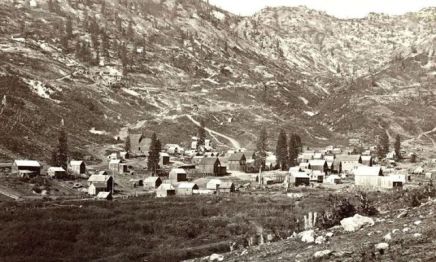 So, I’m not a legal expert, but it seems if a state can be made out of a territory then several states can be merged into something more viable for the modern country. I’d love to hear if anyone thinks this is way to bring more democratic representation to the country. Frankly, I think this could be a win win situation if some of these people would give up their provincial loyalties.

 peej
peej Carissa
 bostonboomer
 dakinikat
 ecocatwoman
 jjlo
jjlo mablue2
 Mama Lopez
 peggysue22
 quixote
 skydancingguestblogger
 Mona (aka Wonk the Vote)





Recent Comments