
Just Who are they Protecting?
Posted: May 14, 2011 Filed under: New Orleans, U.S. Economy | Tags: flooding Cajun country, Louisiana 1927, Louisiana 2011, Louisiana Bobby Jindal, Mississippi River Flooding, Morganza Spillway, protecting business interests from precautionary shutdowns 35 Comments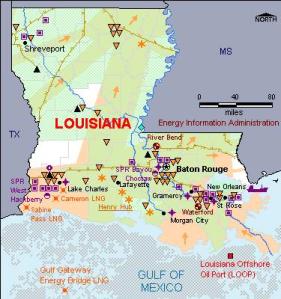 I’ve been watching a lot of Weather Channel and local news trying to get more information on the local flooding and the decision to open up the Morganza Spillway. I live within blocks of the Mississippi River and lived through Katrina so it’s a natural response for me. If you watch the major national news outlets, you’re under the impression that the Morganza Spillway opening will protect Baton Rouge and New Orleans from eminent flooding. The implication is that the Mississippi will top the levees and fill up the cities. Every one then envisions another après Katrina situation. That’s what they want you to believe, but that doesn’t appear to be the case as I’ve learned the last few days.
The local TV has had the city council and mayor of New Orleans and of Baton Rouge talking about the situation to the press on air on Thursday. Their main worry is that the speed and level of the river will cause barge traffic navigation and berth problems. If a rogue barge or boat hits a levee that could compromise the levee. City officials would shut down the river traffic before they would let that happen.
New Orleans city officials, with Katrina still fresh in their minds, has a plan for barges that may threaten the city’s river levees: “We can’t afford to have barges running loose, breaking levees,” said New Orleans City Council President Jackie Clarkson. “That’s unacceptable now … We’re going to sink them.”
Right now, the levees are expected to be able to handle the river even if the Morganza Spillway isn’t open. So, what will happen if the Morganaza Spillway wasn’t opened? Why are they really flooding Cajun Country?
The bottom line is that 10 oil refineries in the Baton Rouge/New Orleans area probably go off line for about 10 days and the river will be closed to traffic or traffic will be severely limited because the levels that trigger precautionary shut downs would be reached. Plus, the City Council President has threatened to sink any barges going rogue which can’t be making shipping interests very happy in general. When “they” speak about ‘saving’ New Orleans and Baton Rouge, what they’re really discussing is saving the commercial interests and the tax revenues. It would impact both the dollar and the price of oil as well as the price of soybeans, wheat, and other grains. Here’s just a taste of that.
Oil fell on Friday as the dollar rose and concerns eased that refinery operations could be disrupted by Mississippi River flooding.
However, what every one in the press and speaking to the press infers is the prevention of some kind of post-Katrina repeat. Few come out and say it, however. According to my Mayor and City Council, that’s not in the cards period and since they all lived through Katrina, I actually believe them. So, it’s just like in 1927 when a bunch of New Orleans businessmen convinced the government to blow levees unnecessarily displacing a lot of poor folk and flooding their homes. I’m thinking this is all about the lost $2 million dollars a day tax revenues each to both the State of Louisiana and the City of New Orleans plus, the costs to impacted businesses of a likely 10 day shut down.
So, first, let me take you through how I figured this out. I suppose it started with the Mayor’s presser on Thursday that basically was headlined “The City is Safe”. I also saw how anxious our Governor was to get the Corps of Engineers to just make the decision to open the spillway. Now, my governor is not the most people-centric man. Governor Bobby Jindal is only concerned about himself and industry interests who fund his campaigns. Jindal’s been been running around the state telling people to flee and emphasizing that the area around the Atchfayala Basin will flood with or without the Morganza Spillway opening as if that alone is justification for flooding people out of their homes. He just seemed over anxious to get it opened. He’s made the Corps look like it’s dragging its feet on this when it basically announced the height and river speed that would be required to open that spillway and they’ve done so consistently.
But again, the big news lead has been protecting the city of New Orleans. We’re now the poster child of flooding because of the post-Katrina levee failure. Again, our Mayor says we’re safe.
The mayor says officials do not expect flooding in New Orleans because of the strength and size of the river levees.
At the news conference, the Corps of Engineers reiterated that they do not yet have the green light to open the Morganza Spillway to relieve pressure off the city’s levees.
“We have not gotten approval to open and operate the Morganza Floodway yet,” said Lt. Col. Mark Jernigan. “We expect, based upon the National Weather Service Forecast, to reach the optimal trigger this weekend.”
Corps officials have maintained that they expect to open the Morganza structure some time between Saturday and Tuesday.
Mayor Landrieu stressed that authorities are inspecting the levees around the clock. He asked people to resist the urge to go on the levees to see the river for themselves, warning that they could get in the way of levee inspection work, or even be hurt by debris that’s bobbing along the surface of the surging river.
So, the levees will protect the city. The levees along the Mississippi River are 25 feet tall and are as wide as a football field. The river–without the Morganza opening–was forecast to crest well below that. The floodwalls mentioned below are the concrete ones along the canals that have been redone since their failure during the storm surge of Hurricane Katrina. They’re not really threatened either with or without the Morganza Spillway Opening.
The river is predicted to crest on May 23 at 19.5 feet—2.5 feet above the official flood level, but six inches shy of the city’s 20-foot floodwalls.
That was the information prior to any decision made on the Morganza spillway that opened today. Here’s an example of the spin again with the “avert a a potentially bigger disaster in Baton Rouge and New Orleans”. Notice the ‘bigger disaster’ is what you infer from the Katrina Experience. This is from The Weather Channel.
In an agonizing trade-off, Army engineers said they will open a key spillway along the bulging Mississippi River on Saturday and inundate thousands of homes and farms in Louisiana’s Cajun country to avert a potentially bigger disaster in Baton Rouge and New Orleans.
Shortly after Governor Bobby Jindal announced that the Morganza Spillway would be opened “within 24 hours,” a Friday afternoon press release from the Army Corps of Engineers cemented it: “The President of the Mississippi River Commission Major General Michael J. Walsh has directed the New Orleans District Commander Colonel Ed Fleming to be prepared to operate the Morganza Floodway within 24 hours. The operation will include the deliberate and slow opening of the structure.”
About 25,000 people and 11,000 structures could be in harm’s way when the gates on the Morganza spillway are unlocked for the first time in 38 years.
Earlier this week, the Corps did three scenarios including two without opening the Morganza Spillway. The worst case scenarios have both water speed and height that aren’t actually forecast to happen. What is supposed to happen is the the bare minimum level that justifies opening the Morganza Spillway. The absolute worst scenario would be levee failure which isn’t considered the least bit likely which is why the mayor and city council of New Orleans aren’t the least bit concerned.
So, let me give you some information on what is threatened by a ten day shut down if the Morganza Spillway remains closed. This first business interest is the sacred oil industry: Mississippi flooding threatens nearby oil refineries. At specific heights and river speeds, the 10 oil refinaries along the river must be shut down as a precaution even though the facilities are protected by levees. This industry and its interests fear the repeat of what happened when they shut down during Hurricanes Katrina and Rita.
A lesser known fact is that about 14%of the national refining capacity is potentially at risk from a worse-case scenario of the Mississippi River flooding and inundating the low-lying facilities. Ten refineries (nine in Louisiana and one in Tennessee) are in the immediate floodplain of the Mississippi, protected only by levees.
To date (as the Mississippi gets set to crest in Memphis tonight) Valero Energy reportsthat its 180,000-barrels-per-day Memphis plant is secure, as is its 185,000-barrel-per-day St Charles refinery in Norco, Louisiana. Norco is also where Motiva Enterprises has a refinery. Motiva’s joint venture partner Royal Dutch Shell has a facility further west along the Mississippi at Convent, Louisiana.
To relieve pressure from the swollen river in this area the US Army Corps of Engineers opened the Bonnet Carre Spillway today, sending excess water into Lake Pontchartrain.
The Gulf Coast and Louisiana are essential to the US oil industry and any one that relies on the gas and oil. (See the Map at the top of this post.)
- Louisiana ranks fourth among the States in crude oil production, behind Texas, Alaska, and California (excluding Federal offshore areas, which produce more than any single State).
- The Louisiana Offshore Oil Port (LOOP) is the only port in the United States capable of accommodating deepdraft tankers.
- Two of the U.S. Strategic Petroleum Reserve’s four storage facilities are located in Louisiana.
- The Henry Hub is the largest centralized point for natural gas spot and futures trading in the United States, providing access to major markets throughout the country.
- The liquefied natural gas (LNG) import terminal at Sabine is the largest of nine existing LNG import sites in the United States.
But there’s another industry that’s equally reliant on the Mississippi River and barge traffic. That would be US agribusiness. About 62% of US soybean and grain exports move through New Orleans on barges. Oh, and coal moves that way too, just so you know. The wheat industry was hard hit by the shutdown of the Port of New Orleans during the Hurricane Katrina period. You can read more about that by following that link.
Here’s some analysis from the Weather Channel on what’s at stake in terms of nonbusiness interests. The first set of points deals with not opening the Morganza Spillway.
This is clearly one of the toughest decisions made by the U.S. Army Corps of Engineers. If you don’t open the spillway…
- You will still have river flooding along the Atchafalaya River, just not nearly as expansive.
- You risk putting undue pressure on the Old River Control Structure, which may get overwhelmed.
- This would cause the catastrophic “jumping” of the Mississippi River to the Atchafalaya River Basin, as described earlier.
- Pressure on levees in Baton Rouge and New Orleans would remain high, if the Old River Control Structure does not fail.
However, if you do open the spillway…
- There will be widespread inundation of the Atchafalaya Basin.
- Areas outside of levee protection would be under at least 5 feet of water.
- Pressure on levees in Baton Rouge and New Orleans would be lower.
The reason this is a tough call is that it’s obvious that relieving “pressure” on the levees under the assumed “risk” to overwhelming the system is based on their worst case scenarios which aren’t in the forecast. They are justifying opening the spillway on the worst case scenarios which appear low probability. While the river levels and speed will be historically high, it’s been obvious that the opening of the Bonnet Carre Spillway has significantly reduced any danger of that to New Orleans also. Any one doing some river watching can see that the levels have fallen although it’s also being reported by feet and inches by local weather news. There’s a lot more room for the coming higher waters now that the BC spillway opened.
However, the levels and river speed that are forecast are basically right at the marginal levels that would justify the Morganza Spillway opening even though they are unlikely to cause those worst case scenarios which is why Mayor Landrieu and the City Council are dismissing flooding possibilities and obsessing on rogue barges. The measurements are, however, high and quick enough for a likely shut the river down of river traffic (19 feet) and precautionary shutdowns of the refineries and chemical plants along the river for a period of about 10 days. Unless, that is, Cajun Country is flooded to bring the numbers back to the everything is okey dokey, business-as-usual measurements.
Here’s some more analysis today from The Weather Channel. Again, from what I can tell down here from public hearings, the most likely source levee failure in New Orleans would be from the barge traffic and not the river itself. However, always present in the analysis is the industry that lines the river between Baton Rouge and New Orleans. All of which have to shut down for precautionary purposes for about 10 days if the Morganza Spillway were to remain closed because most of them deal in hazardous materials so the EPA makes them shut down when they are marginally threatened.
Opening the spillway will release a torrent that could submerge about 3,000 square miles under as much as 25 feet of water in some areas but take the pressure off the downstream levees protecting New Orleans, Baton Rouge and the numerous oil refineries and chemical plants along the lower reaches of the Mississippi.
“Protecting lives is the No. 1 priority,” Army Corps of Engineers Maj. Gen. Michael Walsh said at a news conference aboard a vessel on the river at Vicksburg. A few hours later, the corps made the decision to open the key spillway and inundate thousands of homes and farms in Louisiana’s Cajun country to avert a potentially bigger disaster in Baton Rouge and New Orleans.
Engineers feared that weeks of pressure on the levees could cause them to fail, swamping New Orleans under as much as 20 feet of water in a disaster that would have been much worse than Hurricane Katrina in 2005.
Again, the argument for levee failure seems quite weak at the moment. This is especially true since the Corps been working the last five years to expand and strengthen that very same levee system to withstand the storm surge that came with Hurricane Katrina. They’ve been bragging about that new protection for years now, so it seems odd that they’d feel threatened by it under the most marginally ‘risky’ situation. It is worth noting that the official ‘flooding stage’ of the Mississippi River in New Orleans is stage about 10 feet below the River levees and the only thing it really does is trigger cautions for navigation on the river. It doesn’t threaten over-topping of levees or flooding.
It is likely that the real threat of the high river right now is the loss of 10 days of business to the oil industry, the state and local government coffers and to the agribusiness and chemical industry plus the associated losses to the Insurance and Banking industries that ensure against these types of loss-of-business scenarios. The Governor and other interests are less worried about the post Katrina situation impacting the population as they are the post Katrina situation impacting the oil industry and the port. I am not sure what the Federal government’s role would be in this decision, but if you remember what gas prices were during the post-Katrina period, I’m sure they wouldn’t want a repeat of those price spikes. Here’s a bit more of the economic impact of a prolonged river shut down via HuffPo.
The river’s rise may also force the closing of the river to shipping, from Baton Rouge to the mouth of the Mississippi, as early as next week. That would cause grain barges from the heartland to stack up along with other commodities.
If the portion is closed, the U.S. economy could lose hundreds of millions of dollars a day. In 2008, a 100-mile stretch of the river was closed for six days after a tugboat collided with a tanker, spilling about 500,000 gallons of fuel. The Port of New Orleans estimated the shutdown cost the economy up to $275 million a day.
The decision to open the Morganza spillway is made by the Mississippi River Commission by suggestion of the US Corps of Engineers. This commission is made up of a number of civilian and corps engineers and a representative from NOAA. You remember, NOAA, those are the folks that appear to be protecting BP from the spill at nearly every turn. Also, NOAA has a close relationships with the Weather Channel and other providers of weather-related information. One of the commissioners is a businessman with interests in land and cotton. The other one has interests in cotton and grain which, of course, move by barges down the Mississippi. Those would be the same barges that my City Council President threatened to blow up if they go rogue on the river.
So, I actually think we’re seeing a closer repeat of Louisiana, 1927 than most folks realize.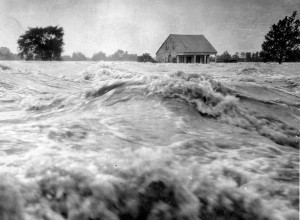 You can see many historical photos from the flooding of Plaquemines and St. Bernard Parishes in 1927 caused by blowing up levees to protect New Orleans Business interests. You’ll be seeing similar photos shortly from the Atchafalaya Basin parishes shortly.
Enjoy your fill up at the pump and your morning wheat toast folks! Believe me, this isn’t to keep my city from another post-Katrina apocalypse even though that’s what they’re implying.
Tuesday Reads: U.S.-Pakistan Deal, “Dr. Sex,” Fearful Republicans, Violence against Women, and More
Posted: May 10, 2011 Filed under: Foreign Affairs, morning reads, Pakistan, Republican politics, U.S. Economy, U.S. Military, U.S. Politics, Violence against women, Women's Rights | Tags: corporate money, Islamophobia, J. Michael Bailey, Long Island serial killer, medicare, murder, Northwestern University, rape, Rep. Paul Ryan, taxes, town halls 29 Comments
Good Morning!!
The Guardian posted a story last night that seems to put the lie to all the supposed arguing about whether the Obama administration had the right to unilaterally enter Pakistan and raid Osama bin Laden’s residence. The two governments had agreed ten years ago that this would be acceptable in the event bin Laden’s location was found.
The US and Pakistan struck a secret deal almost a decade ago permitting a US operation against Osama bin Laden on Pakistani soil similar to last week’s raid that killed the al-Qaida leader, the Guardian has learned.
The deal was struck between the military leader General Pervez Musharraf and President George Bush after Bin Laden escaped US forces in the mountains of Tora Bora in late 2001, according to serving and retired Pakistani and US officials.
Under its terms, Pakistan would allow US forces to conduct a unilateral raid inside Pakistan in search of Bin Laden, his deputy, Ayman al-Zawahiri, and the al-Qaida No3. Afterwards, both sides agreed, Pakistan would vociferously protest the incursion.
“There was an agreement between Bush and Musharraf that if we knew where Osama was, we were going to come and get him,” said a former senior US official with knowledge of counterterrorism operations. “The Pakistanis would put up a hue and cry, but they wouldn’t stop us.”
So Pakistan kept its word. No wonder they are so insulted by all the accusations that they protected bin Laden. The agreement would protect the Pakistan government from public reaction at home. The only problem is that neither side seems to have thought about what the reaction would be here in the U.S.
Anyway, as I mentioned in a comment a couple of days ago, the Pakistan ISI has retaliated by outing the CIA station chief in Islamabad for the second time . Joseph Cannon has been doing a fantastic job of covering the ins and outs of this story, see here and here.
Back in March, I wrote a post about Professor J. Michael Bailey, AKA “Dr. Sex,” who taught a course in Human Sexuality at Northwestern University. In an optional after-class session, Bailey had a allowed a man to bring a woman to orgasm using a sex toy called “the f*cksaw.” Today Northwestern announced that the human sexuality course will not be offered next year.
Northwestern University will not offer a controversial human sexuality class next academic year after its professor came under fire for allowing a live sex-toy demonstration during an after-class lecture.
About 100 of psychology professor J. Michael Bailey’s students observed a naked woman being penetrated by a motorized sex toy on Feb. 21. The university said in March that it would investigate the incident; officials said Monday that the review continues.
“I learned a week or two ago that they had decided to cancel the course for next year,” psychology department chair Dan McAdams said Monday. “The decision was made higher up than me at the central administration level.”
No other Northwestern psychology professor is qualified to teach the subject, McAdams said. Bailey “will have other teaching assignments in the coming year,” according to a university statement.
I’m not particularly surprised. I wonder what “other teaching assignments” Bailey will be getting–Psychology 101, perhaps? There is bound to be some kind of disciplinary action that we won’t be told about.
Rep. Paul Ryan (R-WI) has admitted that the raucous town hall crowds faced by Republicans over his Medicare Destruction Plan have had an effect (although not on him). John Nichols has a great piece about it at The Nation.
But the outcry over his plan to mess with Medicare, heard in Wisconsin communities from Milton to Kenosha, and at spring recess sessions in the districts of Republican freshmen from Pennsylvania to Florida, obviously influenced other Republicans.
Images from Kenosha – a historic factory town in Ryan’s district, where hundreds of people showed up to criticize his scheming to cut benefits for working Americans while giving billionaires and multinational corporations new tax breaks – were featured nationally on broadcast network news shows.
Cable news programs focused intense attention on the story. MSNBC’s Ed Schultz devoted much of a program last week to the outcry. (In addition to a blistering analysis of the congressman’s proposal by the host, this writer provided some on the ground reporting from Kenosha, including details of a brief interview with Ryan, who was typically dismissive of the popular discomfort with his plan.) But other networks — even Fox — at least touched on the congressman’s troubles.
The reporting was noticed in Washington where, last week, GOP leaders began almost immediately to distance themselves from Ryan’s plan to use Medicare funds to enrich the private insurance firms that have donated so generously to his campaigns.
At Salon, Michael Winship has a good article about the many corporations who don’t pay any taxes–yet the Republicans constantly complain that poor people don’t have to pay any on their paltry incomes.
What’s greasing the wheels for these advantages is, hold on to your hats, cash. Over the last decade, according to the New York City public advocate’s report, those same five companies — GE, Exxon-Mobil, Bank of America, Chevron and Boeing — gave more than $43.1 million to political campaigns. During the 2009-2010 election cycle, the five spent a combined $7.86 million in campaign contributions, a 7 percent jump over their 2007-2008 political spending.
“These tax breaks were put in place to promote growth and create jobs, not bankroll the political causes of corporate executives,” Public Advocate Bill de Blasio said. “… No company that can afford to spend millions of dollars to influence our elections should be pleading poverty come tax time.”
And by the way, those campaign cash figures don’t even include all the money those companies funneled into the 2010 campaigns via trade associations and tax-exempt non-profits. Thanks to the Supreme Court Citizens United decision, we don’t know the numbers because, as per the court, the corporate biggies don’t have to tell us. Imagine them sticking out their tongues and wiggling their fingers in their ears and you have a pretty good idea of their official position on this.
Meanwhile, last week Republicans like Utah’s Orrin Hatch, ranking member of the US Senate Finance Committee, grabbed hold of an analysis by Congress’ nonpartisan Joint Committee on Taxation and wrestled it to the ground. The brief memorandum reported that in the 2009 tax year 51 percent of all American taxpayers had zero tax liability or received a refund. So why, the Republicans asked, are Democrats and others so mean, asking corporations and the rich to pay higher taxes when lots of other people – especially the poor and middle class — don’t pay taxes either.
The great Chris Hedges has a new post up at Truthdig: Your Taxes Fund Anti-Muslim Hatred [PDF]
…perhaps most ominously—as pointed out in “Manufacturing the Muslim Menace,” a report by Political Research Associates—a cadre of right-wing institutions that peddle themselves as counterterrorism specialists and experts on the Muslim world has been indoctrinating thousands of police, intelligence and military personnel in nationwide seminars. These seminars, run by organizations such as Security Solutions International, The Centre for Counterintelligence and Security Studies, and International Counter-Terrorism Officers Association, embrace gross and distorted stereotypes and propagate wild conspiracy theories. And much of this indoctrination within the law enforcement community is funded under two grant programs for training—the State Homeland Security Program and Urban Areas Security Initiative—which made $1.67 billion available to states in 2010. The seminars preach that Islam is a terrorist religion, that an Islamic “fifth column” or “stealth jihad” is subverting the United States from within, that mainstream American Muslims have ties to terrorist groups, that Muslims use litigation, free speech and other legal means (something the trainers have nicknamed “Lawfare”) to advance the subversive Muslim agenda and that the goal of Muslims in the United States is to replace the Constitution with Islamic or Shariah law.
“You would not expect a Democratic administration to fund right-wing groups,” Thom Cincotta, a civil liberties attorney and the author of the Political Research Associates report, told me, “and yet we continue to have hard-right, Islamophobic speakers and companies being paid taxpayer dollars to promote racist doctrines that undermine U.S. national security policy concerning Islam and the Muslim world. Policy expert after policy expert point out that framing our counterterrorism efforts as a war against Islam is a recipe for building increased resentment among Muslims, as well as a potent recruiting tool for those who would like to carry out violent attacks against us. This kind of demonizing breaks down communication between law enforcement agents and Muslim communities, which have proven to be strong allies in the rare instances of domestic extremism. Not only does it threaten to erode basic civil liberties, it threatens freedom of expression and freedom of worship.”
Also recommended at Truthdig, an article about the “anti-war orgins” of Mother’s Day.
In 1870, Julia Ward Howe responded to the horrors of the Civil War by issuing her “Mother’s Day Proclamation,” calling on women around the world to rise up and oppose war in all its forms.
It would be decades before Americans officially began celebrating Mother’s Day, and much of the original spirit of the proclamation has since been lost.
Some new (and horrifying) information came out today in the case of the bodies that have been found in Long Island. It turns out there may be as many as three murderers on the loose in New York.
“It is clear that the area in and around Gilgo Beach has been used to discard human remains for some period of time,” Spota said at a Hauppauge news conference with investigators Monday. “As distasteful and disturbing as that is, there is no evidence that all of these remains are the work of a single killer.”
Jeeze, I’m glad I don’t live in Oak Beach, LI. The most interesting (and very horrifying) information is that some of the body parts found belong to a woman named Jessica Taylor whose mutilated body was discovered 30 miles away in Manorville, NY, in 2003.
Authorities Monday made one new identification: Jessica Taylor, 20, who went missing in July 2003 and whose torso was found at that time near Manorville.
Spota said her death appears related to another woman, still unidentified, parts of whose body was found off Ocean Parkway in April and in Manorville in 2000.
Why do so many men murder women? Serial murder is relatively rare, but it sure seems to happen pretty often in this country. And men murder their wives and girlfriends every day in the U.S. Will violence against women ever be treated as seriously as it should be? It should be seen as an epidemic that needs to be vigorously addressed through public policy. I don’t know if that will happen in my lifetime.
Change would have to start with teachers and textbooks that value women’s current and historical contributions to our society, along with public education campaigns for adults. I also wonder if the anti-abortion movement doesn’t contribute to the general attitude that women have no right to protect the integrity of their own bodies.
It would also help if law enforcement personnel could be made to understand that rape is a serious crime even if the victim isn’t killed or beaten within an inch of her life. Rape is still rape even if the victim knows the perpetrator. With that in mind, I’m going to end with a story from Boston: Thousands Attend Boston’s “SlutWalk” March. The march was a response to an ignorant remark made by a policeman in Toronto.
In January, a Toronto police officer told a group of university students that women should avoid dressing like “sluts” to avoid being raped. He later apologized. The officer who made the comments, Constable Michael Sanguinetti, was disciplined but remained on duty, said Toronto police spokesman Mark Pugash.
However, advocates in Toronto held a “SlutWalk” to protest the officer’s remarks and to highlight what they saw as problems in blaming sexual assault victims. Since then, SlutWalks, organized mainly through social media, have been held in Dallas, Asheville, N.C., and Ottawa, Ontario. Organizers say the events also were held to bring attention to “slut-shaming,” or shaming women for being sexual, and the treatment of sexual assault victims.
“I had watched the Toronto walk happen from afar,” said Jaclyn Friedman, author of “Yes Means Yes: Visions of Female Sexual Power and a World Without Rape” and resident of Medford, Mass. “When I heard it was coming to Boston I just emailed the organizers and said, `How can I help?”‘
The Boston march attracted 2,000 people, even though organizers expected only 30.
Chanting “We love sluts!” and holding signs like “Jesus loves sluts,” approximately 2,000 protesters marched Saturday around the Boston Common as the city officially became the latest to join an international series of protests known as “SlutWalks.”
That’s it for me. What are you reading and blogging about today?
Some Alternative Takes on the Killing of Osama bin Laden
Posted: May 7, 2011 Filed under: Foreign Affairs, Hillary Clinton, Middle East, Pakistan, Psychopaths in charge, Team Obama, The Media SUCKS, U.S. Economy, U.S. Military, U.S. Politics | Tags: Barack Obama, drug trade, George W. Bush, Joseph Cannon, Mark Weisbrot, Noam Chomsky, Osama Bin Laden death, Robert Baer, Tom Englehardt, War on Terror 22 Comments
First of all, I think Joseph Cannon has it right. There is no way Obama sent just two helicopters into Pakistan to kill Public Enemy No. 1. The Pakistanis knew what was happening and cooperated–either willingly or unwillingly. Either the Pakistan government, military, and intelligence services wanted plausible deniability or the U.S. pressured them into going along with the assassination. I don’t believe for one minute that Obama wanted to take bin Laden alive. Here’s Cannon’s take:
Allow me to suggest one possible scenario. Let us suppose the Bin Laden daughter Safia was correct when she said that her father was captured and then executed. (Frankly, I think that’s a fairly good bet.) Both the body and the post-mortum photos would provide evidence of the execution. A close-range shot leaves powder burns and other evidence.
This hypothesis would also explain the changing stories about whether Obama and Clinton watched the operation on video in real time. (I feel certain that they did.) I suspect that they realized belatedly that they would need plausible deniability if the truth of the execution ever came out: “I am shocked, shocked to learn about this. At the time, I had no idea…”
After reading Cannon’s piece, I think it makes sense that Obama and the rest of his team did see the kill shots, but they’ll never admit it. I also think Cannon makes a lot of sense when he brings in the question of Al Qaeda and the drug trade.
The connection between the ISI and Al Qaeda primarily involved drugs. That’s the factor which everyone keeps forgetting about. Yet it is key.
It should also not be forgotten that the ISI has strong links to the CIA. America was perhaps the primary market for Afghanistan’s poppy product, and thus it was necessary for the Bin Laden network to maintain ties with powerful people in this country.
I haven’t yet formulated a proper theory about all of this. But it seems to me that the answer to the mysteries surrounding the life and death of Osama Bin Laden may revolve around the drug connection.
Via Truthdig, former CIA agent Robert Baer basically agrees with Joseph Cannon. In this radio interview, Baer says that the Pakistan government must have known where bin Laden was and it is highly unlikely that they weren’t involved in the operation. He says the chances of a foreigner living in a heavily secured compound in that area filled with military and security people is zero. Baer also says if the U.S. had done this, there would have been a much sharper reaction from Pakistan–they would have closed the U.S. embassy and thrown all Americans out of the country. According to Baer, those Black Hawk helicopters are extremely slow and they would have been seen for hours flying in from Afghanistan, and if Obama had sent two helicopters in alone, he would be extremely daring, but utterly foolish. No president has ever forgotten what happened to Jimmy Carter after his failed attempt to rescue the hostages in Iran.
There’s a lot more, you can listen to the interview if you’re interested. But the bottom line, as far as I’m concerned, is that our government thinks we’re stupid. They think we’ll believe whatever outrageous propaganda they feed us.
Next up, Noam Chomsky’s reactions. Like me, Chomsky thinks bin Laden should have been brought back here and put on trial.
It’s increasingly clear that the operation was a planned assassination, multiply violating elementary norms of international law. There appears to have been no attempt to apprehend the unarmed victim, as presumably could have been done by 80 commandos facing virtually no opposition—except, they claim, from his wife, who lunged towards them. In societies that profess some respect for law, suspects are apprehended and brought to fair trial. I stress “suspects.” In April 2002, the head of the FBI, Robert Mueller, informed the press that after the most intensive investigation in history, the FBI could say no more than that it “believed” that the plot was hatched in Afghanistan, though implemented in the UAE and Germany. What they only believed in April 2002, they obviously didn’t know 8 months earlier, when Washington dismissed tentative offers by the Taliban (how serious, we do not know, because they were instantly dismissed) to extradite bin Laden if they were presented with evidence—which, as we soon learned, Washington didn’t have. Thus Obama was simply lying when he said, in his White House statement, that “we quickly learned that the 9/11 attacks were carried out by al Qaeda.”
That’s why I love Chomsky. He comes right out and says exactly what he really thinks. Here’s a little more:
We might ask ourselves how we would be reacting if Iraqi commandos landed at George W. Bush’s compound, assassinated him, and dumped his body in the Atlantic. Uncontroversially, his crimes vastly exceed bin Laden’s, and he is not a “suspect” but uncontroversially the “decider” who gave the orders to commit the “supreme international crime differing only from other war crimes in that it contains within itself the accumulated evil of the whole” (quoting the Nuremberg Tribunal) for which Nazi criminals were hanged: the hundreds of thousands of deaths, millions of refugees, destruction of much of the country, the bitter sectarian conflict that has now spread to the rest of the region.
I know you’ll want to read the whole thing–it’s not very long, but it’s powerful.
Tom Englehardt, of the American Empire Project and TomDispatch.com argues that Osama bin Laden achieved his goals–he wanted to destroy the U.S. economy and generally have an impact on American society and culture.
Unfortunately, in every way that matters for Americans, it’s an illusion that Osama bin Laden is dead. In every way that matters, he will fight on, barring a major Obama administration policy shift in Afghanistan, and it’s we who will ensure that he remains on the battlefield that George W. Bush’s administration once so grandiosely labeled the Global War on Terror.
[….]
Consider it an insult to irony, but the world bin Laden really changed forever wasn’t in the Greater Middle East. It was here. Cheer his death, bury him at sea, don’t release any photos, and he’ll still carry on as a ghost as long as Washington continues to fight its deadly, disastrous wars in his old neighborhood.
Let’s face it. We no long live in anything resembling freedom. The Constitution is on life support. Our economy is wrecked, and we may never get back to where we were. We’re living in the last days of a dying empire. And the American empire wasn’t much to write home about anyway–certainly it can’t compare to the one Rome built.
Economist Mark Weisbrot, writing in the Guardian expands on bin Laden’s goals and his vision of what he wanted to happen to the U.S.
Bin Laden, who – like Saddam Hussein and other infamous mass murderers – was supported by the United Stated government for years before he turned against it, changed the world with the most destructive terrorist act ever committed on US soil. But the reasons that he was able to do that have as much to do with US foreign policy at that particular juncture as with his own strategy and goals.
Bin Laden’s goal was not, as some think, simply to bring down the US empire. That is a goal shared by most of the world, who – fortunately for us – would not use terrorist violence to further this outcome. His specific goal was to transform the struggle between the United States and popular aspirations in the Muslim world into a war against Islam, or at least create the impression for many millions of people that this was the case. As we look around the world 10 years after the attack, we can see that he had considerable success in this goal. The United States is occupying Afghanistan and Iraq, bombing Pakistan and Libya, and threatening Iran – all Muslim countries. To a huge part of the Muslim world, it looks like the United States is carrying out a modern-day crusade against them, despite President Obama’s assertions to contrary Sunday night.
George W. Bush happily obliged by inventing the “War on Terror.” And his successor, Barack Obama is now willingly carrying the torch. We should pull U.S. troops out of Afghanistan and Iraq, since the bogey man is dead. But that won’t happen.
Weisbrot says that the WOT made al Qaeda stronger and bin Laden probably knew that would happen:
Could bin Laden have known that the US response to 9/11 would have made his movement even stronger, even if he lost his base in Afghanistan? I would say it is likely. While it was not predictable that President Bush would necessarily invade Iraq – although it was a strong possibility – it was foreseeable that the US government would seize on 9/11 to create a new overarching theme for its interventions throughout the world.
The administration and the media are already searching for a new bogey man, and working hard to gin up as much outrage as possible among gullible Americans. The latest effort is the release of bin Laden’s home movies. But we only get video–no sound. Why doesn’t our government allow us to hear what’s going on in videos? Are they afraid bin Laden’s words will influence us? And why do they keep calling bin Laden’s home a “lair?” Is that supposed to make us see him and his family as animals?
Finally, what are we to make of the video below–Osama bin Laden watching himself on television? Are we supposed see him as narcissistic and self-involved? Are we expected to compare this aging man watching himself on TV with our glorious hero President who would supposedly never do such a thing?
How very appropriate that the video begins with a Coors Beer ad. It fits right in with the sports motif that is building around the killing of the bogey man: USA! USA! and all that….
Still no answers for the Jobs Crisis
Posted: May 5, 2011 Filed under: Domestic Policy, Economy, Equity Markets, Federal Budget, Federal Budget and Budget deficit, jobs, The Great Recession, U.S. Economy, unemployment | Tags: joblessness, unemployment 27 Comments It’s difficult for me to watch the job market continue to dither knowing full well that nothing is being done about it. Just in case you’ve missed the other headlines today, U.S. jobless claims “unexpectedly” jumped. It wasn’t unexpected on my part.
Applications for jobless benefits jumped by 43,000 to 474,000 in the week ended April 30, the most since August, Labor Department figures showed today. A spring break holiday in New York, a new emergency benefits program in Oregon and auto shutdowns caused by the disaster in Japan were the main reasons for the surge, a Labor Department spokesman said as the data was released to the press.
Even before last week, claims had drifted up, raising concern the improvement in the labor market has stalled. Employers added 185,000 workers to payrolls in April, fewer than in the prior month, and the unemployment rate held at 8.8 percent, economists project a Labor Department report to show tomorrow.
“We’re seeing so many distortions in the claims numbers week to week that it’s hard to say, but I’m willing to be patient and wait and see,” said Stephen Stanley, chief economist at Pierpont Securities LLC in Stamford, Connecticut. “Other reports show an improvement in the labor market. It’s going to take a while to dig out of the hole we have in relation to the jobs the economy lost during the recession.”
Yes, it is a hole, and there’s very little being done to fill it. There are quite a few factors that contribute to the current appalling job market. The Fifth Fed District’s Macroblog looks at the contribution of offshoring. Offshoring basically means that part of a production process is moved to an overseas location. That can mean anything from a call center to manufacturing of a good. You can see that the impacted industries include both service and manufacturing sectors. The nifty table up there in the left hand corner will give you an idea of the impact of offshoring by industry. The numbers are tabulated from data during the years of 1999 – 2008. The changes and content of the ‘other’ category is further elucidated in the macroblog piece. It includes another table that you may review too.
Sixty-nine percent of the foreign employment growth by U.S. multinationals from 1999 to 2008 was in the “other industries” category, and 87 percent of that growth was in three types of industries: retail trade; administration, support, and waste management; and accommodation of food services. Some fraction of these jobs, no doubt, reflect “offshoring” in the usual sense. But it is also true that these are types of industries that are more likely than many others to represent production for local (or domestic) demand as opposed to production for export to the United States.
This is a bit interesting. There are two main types of Foreign Direct Investment that involve ‘offshoring’. One is called vertical and the other is horizontal. Horizontal FDI means that one segment of the process is moved to another country but the final good or service still goes to the consumer in the company’s home country. The last analysis from macroblog implies that a substantial part of that offshoring is actually Vertical FDI. This means that the company is moving itself over to the country to take advantage of end consumers in the other country.
This finding isn’t surprising if you consider the number of countries that are experiencing booms in the number of middle class citizens. There are more middle class Chinese than there are US citizens, as an example. There is also the fact that the middle class in the US has been losing income and purchasing power for nearly 30 years. It only figures that these companies would look for greener pastures elsewhere. Why expand here when your customer base is unlikely to be expanding and unable to afford your products in any meaningful way?
Macroblog points out that this is unlikely to explain all the doldrums in the US job market, but it does provide one factor and and interesting one at that. I would say that this analysis basically says that US businesses are much more bullish on foreign markets than they are on their own. (Capital flows for investment suggest this too.) This should give all of us pause.
Interestingly enough, another FED President also suggested that the economy and the US job markets weren’t as stable as they could be and suggested more stimulus. Three Fed Presidents rotate in and out of the Open Market Committee–that’s the monetary policy decision body–and each district is a world unto itself in many ways. Fed Boston is not in the current rotation.
Federal Reserve Bank of Boston President Eric Rosengren yesterday said record stimulus is necessary to spur the “anemic” economy and that raising interest rates to combat increasing food and fuel prices would impede growth.
“With significant slack in labor markets, stable inflation expectations, and core inflation well below our longer run target, there is currently no reason to slow the economy down with tighter monetary policy,” Rosengren said during a speech in Boston.
Not surprisingly, equity markets seemed to be caught a bit off guard with this news. Right now, I think the market seems to be in one of those periods where it’s not paying much attention to fundamentals. Bloomberg.com notes that Futures Fell on the news. Some times Wall Street thinks as long as their churning out fees and capital gains, all is right with the world. This is definitely not the case. It does explain why their economists tend to get caught off guard though. Hello? Real World anyone?
Stock-index futures dropped after the report. The contract on the Standard & Poor’s 500 Index maturing in June fell 0.6 percent to 1,334.8 at 8:58 a.m. in New York. Treasury securities rose, sending the yield on the benchmark 10-year note down to 3.18 percent from 3.22 percent late yesterday.
Dean Baker from CEPR is pretty pessimistic about the entire thing.
Weekly unemployment claims jumped to 474,000 last week, an increase of 43,000 from the level reported the previous week. This is seriously bad news about the state of the labor market. It seems that the numbers were inflated by unusual factors, most importantly the addition of 25,000 spring break related layoffs in New York to the rolls due to a changing vacation pattern, however even after adjusting for such factors, claims would still be above 400,000 for the fourth consecutive week.
This puts weekly claims well above the 380,000 level that we had been seeing in February and March. This suggests that job growth is slowing from an already weak level. This is news that should be reported prominently.
Unfortunately, the lackadaisical job market is off the front pages. Much of the political focus on the economy remains honed in on the federal debt. Again, this is the silly because one of the best ways of increasing tax revenues and closing the debt is for people to be employed. It’s an uphill battle to expect the deficit to close with this unacceptable level of unemployment. I still can’t figure out where they’ve placed their heads back their in Washington, D.C. Oh, well, look over there … it’s a dead Osama Bin Laden and we’ve not got any pictures yet!
Tuesday Reads: Osamarama
Posted: May 3, 2011 Filed under: Afghanistan, Barack Obama, Federal Budget, Foreign Affairs, morning reads, Pakistan, the blogosphere, U.S. Economy, U.S. Military, U.S. Politics | Tags: astronomy, brain damage, conspiracy theories, Facebook, football, Julian Assange, Obama Administration, Osama bin Laden 43 Comments
Good Morning!! Grab your coffee and pull up a chair. I’ve got some interesting links for you this morning. It’s mostly Osama-related with a few non-Osama links thrown in.
I guess we need to brace ourselves for 24/7 Osama bin Laden news until further notice. The White House is leaking information in dribs and drabs, the corporate media is in hysteria mode, and the conspiracy theories are already spreading like wildfire.
The biggest problem for the Obama administration is going to be the supposed “burial at sea.” Let’s hope they have extensive photo and video evidence that that actually took place. Some 9/11 relatives are very upset about this. They wanted to see the body.
Rosaleen Tallon kissed her three children good night and went to sleep feeling at peace. The terrorist responsible for the death of her brother, New York firefighter Sean Patrick Tallon, was dead. Her two boys and her little girl had been assured that the “bad man” behind the attacks that claimed their uncle was gone.
But when Tallon awoke Monday to the news that Osama bin Laden had been buried at sea, she was stunned. That was one corpse she would like to have seen for herself, Tallon said, her fiery words underscoring the change this suburban science teacher has undergone in the last decade.
“I wouldn’t be honest if I didn’t say I was a little dismayed — a lot dismayed,” Tallon said as her 20-month-old son, Paddy, nestled in her arms while savoring a red lollipop. “I think that was too hasty. I would’ve liked the American people to say without a shadow of a doubt, ‘Yes, that’s him.’ “
Hey, why didn’t they put bin Laden’s body in the Capital rotunda and let people view it until they had their fill? But seriously, the “burial at sea” thing is really problematic. At Corrente, Lambert isn’t buying it.
But how are we going to drag the body through the streets, if it’s floating in the Indian Ocean somewhere? Can’t anybody here play this game?
NOTE On the bright side, this does explain why the corpse wasn’t a festive centerpiece at the White House Correspondents Dinner. I’d been wondering about that.
Perhaps Lambert will be pleased to know that the folks over at Alex Jones’ Infowars agree with him. Here’s a sample of the posts going up over there.
Inside Sources: Bin Laden’s Corpse Has Been On Ice For Nearly a Decade
A multitude of different inside sources both publicly and privately, including one individual who personally worked with Bin Laden at one time, told us directly that Osama’s dead corpse has been on ice for nearly a decade and that his “death” would only be announced at the most politically expedient time.
That time has now come with a years-old fake picture being presented as the only evidence of his alleged killing yesterday, while Bin Laden’s body has been hastily dumped into the sea to prevent anyone from finding out when he actually died.
In April 2002, over nine years ago, Council on Foreign Relations member Steve R. Pieczenik, who served as Deputy Assistant Secretary of State under Henry Kissinger, Cyrus Vance, and James Baker, told the Alex Jones Show that Bin Laden had already been “dead for months”.
Pieczenik would be in a position to know such information, having worked directly with Bin Laden when the US was funding and arming the terror leader in an attempt to drive the Soviets out of Afghanistan in the late 70′s and early 80′s (a documented historical fact that talking heads in the corporate media are actually denying today in light of developments).
“I found out through my sources that he had had kidney disease. And as a physician, I knew that he had to have two dialysis machines and he was dying,” Pieczenik told Jones during the April 24, 2002 interview.
Intel Chief: They Killed “Make Believe Osama”
Former Pakistani intelligence chief Hamid Gul went on the Alex Jones Show today and characterized the unverified assassination of Osama bin Laden as symbolic theater.
Gul said the event was a “make believe drama” designed to be used for Obama’s upcoming re-election campaign.
The supposed hit as described by the government and the corporate media is the “stuff of folk lore, for legend-making and the ballad,” Gull explained.
Hamid Gull went on to cite the late Prime Minister of Pakistan, Benazir Bhutto, who told David Frost in late 2007 that Osama bin Laden was murdered by Ahmed Omar Saeed Sheikh, who is also one of the men convicted of kidnapping and killing journalist Daniel Pearl.
Apparently the right wing blogs are also claiming the Navy Seal secret operation was a complete fake, except they think Osama is still alive. Here’s a report at Think Progress: Meet The Deathers: Andrew Brietbart Website Pushing Conspiracy Theory That Osama Might Not Be Dead
Mere hours after President Obama announced the death of Osama bin Laden, supported by incontrovertible DNA evidence, the conspiracy theorists are hard at work. Andrew Breitbart, a prominent right-wing commentator with close ties to the Republican Party and the Tea Party, is pushing the theory on his website Big Peace.
On Breitbart’s website, J. Michael Waller, suggests Obama take a number of extraordinary steps so he can “make sure [Osama] is dead.” Pictures are apparently not enough. Walker asserts that he needs to be able to “walk right up to bin Laden’s corpse and view it.”
See? They needed to lay the corpse out in the Capital rotunda so that every American who wanted to feast his or her eyes on it. Hell, maybe Lambert’s right–they should have dragged it through the streets to satisfy the more bloodthirsty among us. {Sigh….} I have a feeling that pretty soon I’m going to get very tired of hearing about Osama bin Laden.
In case you believe that Osama was really killed by Navy Seals in the past few days, here is a fascinating article at Wired’s Danger Room blog on the advanced technology used by the folks who hunt terrorists. Apparently they carry around thumb and eye scanners to identify the culprits they are looking for. That’s in addition to taking DNA samples.
At the Wall Street Journal, Ralph Gardener asks, “Is fist-pumping the right reaction?” He never really answers the question, but I found myself disturbed by the reactions last night too. But hey, Americans are generally pretty tacky–just look at the TV shows they watch nowadays. Hoarders? American Idol? Geeze.
At CNN there is an article about the “spending spree” that followed the 9/11 attacks.
In the decade between Sept. 11, 2001, and the death of Osama bin Laden on Sunday, the U.S. government has spent hundreds of billions of dollars with the aim of making Americans safer.
Agencies were created, expanded or given new missions. The government hired thousands of new employees to analyze intelligence, track terror financing and support the nation’s rapidly expanding national security apparatus.
Gee, can I get a dispensation from paying for all that–like all the religious nuts who don’t want to pay for abortions or dispense birth control pills or provide medical care for women who get abortions?
I’ll end with a few non-Osama-related news stories. A former Chicago Bears player who committed suicide by shooting himself through the heart (to preserve his brain for study) has been found to have had severe brain damage.
On Monday, scientists at Boston University who examined Duerson’s brain tissue said he suffered from a “moderately advanced” case of chronic traumatic encephalopathy (CTE), a degenerative brain disease associated with repeated blows to the head.
His brain showed pronounced changes in the frontal cortex amygdala and the hippocampus, which control judgment, inhibition, impulse, mood control and memory, said Dr. Ann McKee, a co-director of the Center for Study of Traumatic Encephalopathy at the Boston University School of Medicine and director of the Bedford VA CSTE Brain Bank.
“When you look at it microscopically, it’s undisputable,” said McKee, who has detected CTE in approximately 40 of the 50 brains she has examined, a pool that includes athletes and military veterans.
Known for his aggressive and hard-hitting defense, Duerson is the 14th of 15 former NFL players studied at the brain bank to be diagnosed with CTE. Overall, the condition has been found in more than two dozen deceased professional football players.
Football should really be banned, at least for kids. It will never happen though.
Astronomers create 3D map of 3-Billion-Year-Old Universe
Using light from 14,000 distant yet powerful cosmic beacons, astronomers have pieced together the largest and most detailed 3-D map of the ancient universe.
Previous versions plotted the locations of galaxies within 7 billion light-years of Earth. The new version, however, charts clouds of hydrogen in a swath between 10 billion and 12 billion light-years away — farther in distance and deeper in time than any 3-D map before it.
The hydrogen clouds could help answer some of astronomers’ more profound questions about the universe, including the nature of dark energy.
“We’re looking for a bump in the data that may tell us how fast universe is expanding,” said cosmologist Anže Slosar of Brookhaven National Laboratory, one of the researchers who presented the map May 1 at the American Physical Society meeting in Anaheim, California. “We don’t have enough data to see the bump yet, but we expect to get there in a few years.”
Julian Assange says that Facebook is an “appalling spying machine.”
Asked about his thoughts on the role that social media has played in shaping the recent revolutions in the Middle East, the WikiLeaks founder went in another direction. “Facebook in particular is the most appalling spying machine that has ever been invented,” he said. “Here we have the world’s most comprehensive database about people, their relationships, their names, their addresses, their locations and the communications with each other, their relatives, all sitting within the United States, all accessible to U.S. intelligence. Facebook, Google, Yahoo — all these major U.S. organizations have built-in interfaces for U.S. intelligence. It’s not a matter of serving a subpoena. They have an interface that they have developed for U.S. intelligence to use.”
He continued, still not answering the question: “Now, is it the case that Facebook is actually run by U.S. intelligence? No, it’s not like that. It’s simply that U.S. intelligence is able to bring to bear legal and political pressure on them. And it’s costly for them to hand out records one by one, so they have automated the process. Everyone should understand that when they add their friends to Facebook, they are doing free work for United States intelligence agencies in building this database for them.”
If you like to look at the night sky, there will be a nice show this month when Venus and Jupiter appear very close to each other. May 11 is the day to check them out, I guess.
That’s all I’ve got for today. What are you reading and blogging about?

 peej
peej Carissa
 bostonboomer
 dakinikat
 ecocatwoman
 mablue2
 Mama Lopez
 peggysue22
 quixote
 skydancingguestblogger
 Mona (aka Wonk the Vote)



 Sky Dancing
Recent Comments