
Is Goldman CEO Lloyd Blankfein Facing Possible Prison Time?
Posted: August 24, 2011 Filed under: Corporate Crime, Crime, The Bonus Class, U.S. Economy, U.S. Politics | Tags: corporate crime, corruption, Goldman Sachs, Lloyd Blankfein, Naomi Prins, Reid Weingarten, Senate Permanent Subcommittee on Investigations 4 Comments
Lloyd Blankfein
That’s the question Naomi Prins, a former managing director of Goldman Sachs and author of It Takes a Pillage: Behind the Bonuses, Bailouts, and Backroom Deals From Washington to Wall Street, asked yesterday at The Daily Beast.
I posted in a comment yesterday that I’d heard Blankfein hired a well-known Washington criminal defense attorney. Since then, the business media has been buzzing about why Blankfein hired attorney Reid Weingarten.
Big-shot Washington defense attorney Reid Weingarten, of the firm Steptoe & Johnson LLC, has represented former Enron chief accounting officer Richard Causey (who pleaded out), former Rite Aid vice chairman and chief counsel Franklin Brown (found guilty by a jury on 10 counts of conspiring to falsely inflate his company’s value), and former WorldCom CEO Bernie Ebbers (convicted on nine felony counts by a jury). All three are in jail. Two of them, Ebbers and Causey, had undergone congressional panel investigations beforehand. Another of Weingarten’s clients, former Tyco counsel Mark Belnick, was acquitted, though Tyco CEO Dennis Kozlowski, who was not represented by Weingarten, was convicted and remains in jail.
Prins speculates that Blankfein may be in trouble for two possible reasons. The first is because of his own “loose lips,” when he testified before the Senate Permanent Subcommittee on Investigations in April.
Recall that Blankfein emphatically told the subcommittee, “We didn’t have a massive short against the housing market, and we certainly did not bet against our clients.” The 650-page subcommittee report (PDF) presented on April 13, 2011, which cites Blankfein 79 times, begs to differ.
The report accused Goldman of trading against its clients by simultaneously shorting certain subprime mortgage securities (a.k.a. “cats and dogs”) while stuffing them into the collateralized debt obligations it sold. It also suggested that Goldman executives, including Blankfein, misled Congress in testimony surrounding the Abacus CDO, Hudson, Timberwolf, and other deals, by saying it didn’t have a big short.
The second possibility is that Blankfein’s colleagues are distancing themselves from him in order to protect themselves and Goldman Sachs. Prins writes:
The top lesson I learned before leaving Goldman in the wake of Enron was Goldman’s foremost internal policy is to protect Goldman. It’s also to protect the most powerful members. When cracks manifest in the corporate armor, those two policies are at odds.
The executives running Goldman are exceedingly wealthy, not least because when the firm faced its darkest hour and lowest stock price in years during the bank-created crisis of fall 2008, the government provided it billions of dollars in the form of cheap loans, FDIC debt guarantees, TARP, AIG make-wholes, and a late-night moniker change from investment bank to bank holding company, giving the firm access to excessive Federal Reserve aid.
After the news came out that Blankfein had hired Weingarten, Goldman’s shares fell 6%, and according to Prins, that kind of thing is “frowned upon.” So Blankfein may be be trying to protect himself from being stabbed in the back by his co-workers in addition to fighting anything the Justice Department has planned for him.
I doubt if Obama and Geithner will let Blankfein go to prison, but it will be fun to watch him and the wealthy Goldman partners feeling a little bit of discomfort.
Two Reuters columnists speculated about this story today. Leigh Jones writes:
If you need to hire Reid Weingarten, your career has probably hit a rough patch.
The rule now applies to Goldman Sachs (GS.N) CEO Lloyd Blankfein, who Reuters reported on Monday has retained Weingarten, a partner at Steptoe & Johnson in Washington.
With that move, Blankfein becomes the latest in a long line of executives and high-profile people in trouble who have turned to Weingarten for help. They range from Tyco (TYC.N) corporate counsel Mark Belnick, for whom Weingarten won an acquittal, to ex-Enron accounting officer Richard Causey, who pleaded guilty to fraud and conspiracy, to film director Roman Polanski, who tapped Weingarten to fight extradition to the Unites States for sexually assaulting a 13-year-old girl in 1977.
Jones spends most of the piece providing background on Weingarten, but he also points out that Blankfein’s choice of attorney is telling, and like Prins he notes the market reaction:
Blankfein’s choice of Weingarten as his lawyer has raised questions about what kind of trouble the Goldman Sachs CEO might be in. The DOJ, where Weingarten once worked, is investigating the bank for mortgage-related investments it made.
While it is not unusual for company leaders to arm themselves with their own lawyers, Weingarten’s reputation as a litigator — as opposed to a lawyer who guides clients through investigations — is making Goldman investors nervous. The day that Blankfein’s hiring of Weingarten broke, the bank’s stock dropped nearly 5 percent to its lowest level since March 2009. By late Wednesday afternoon, the shares were at $109.92, up 3.2 percent from Monday’s close at $106.51.
Alison Frankel is more sanguine, arguing that Blankfein hiring an outside attorney is really no big deal.
The market assumed the worst on Monday after Reuters’ great scoop on Goldman Sachs (GS.N) CEO Lloyd Blankfein bringing in Reid Weingarten of Steptoe & Johnson to represent him in the Justice Department’s investigation of the bank. Goldman’s share price fell almost 5 percent on the fear that Weingarten’s entrance signals that DOJ is getting serious about its follow-up to the April 2011 Senate subcommittee report on the financial crisis.
In one sense, that’s reading way too much into the mere fact that Blankfein has brought in his own lawyer. It’s standard operating procedure for corporate executives at companies under investigation to have separate counsel. Consider the example of other alleged villains of the financial meltdown. Richard Fuld of Lehman (LEHKQ.PK), Joseph Cassano of AIG (AIG.N), Angelo Mozilo and David Sambol of Countrywide, John Thain of Merrill Lynch, Kenneth Lewis of Bank of America (BAC.N): They all have their own lawyers, and none of them have faced any criminal charges. Only Mozilo and Sambol even had to answer to the SEC.
She provides a number of examples of other executives doing just that. But…
Nevertheless, Blankfein’s choice of Weingarten is very intriguing. Weingarten is a great lawyer with close ties to the Justice Department, where he once worked in the Public Integrity section, and to Attorney General Eric Holder, whom he actually represented when Congress grilled Holder about President Bill Clinton’s eleven-hour pardon of financier Marc Rich. Weingarten is not, however, part of the club of white-collar defense counsel who typically get referrals from New York firms like S&C. (That group includes Andrew Levander of Dechert; Mary Jo White of Debevoise & Plimpton; Patricia Hynes of Allen & Overy; and Gary Naftalis of Kramer Levin Naftalis & Frankel, all of whom represent high-profile Wall Streeters in financial crisis cases.)
One white-collar defense lawyer who gets referrals from Wall Street firms told me it could be significant that Blankfein went outside the usual circle, turning to a lawyer best known for his trial work. “For many people, the choice of Reid Weingarten would be unusual to represent someone in a simple interview,” he said. “He’s often retained when an investigation is going to lead to a case that would go to trial.”
Hmmmm…. Okay, I’ll believe it when I see it, but I can dream, can’t I?
Left Behind
Posted: August 22, 2011 Filed under: financial institutions, U.S. Economy, U.S. Politics | Tags: bad economy, bad housing market, foreclosure, HOLC, homeowners, housing crisis, mortgage-backed securities, SEC, Standard & Poor's, TARP 16 Comments The Great Recession of 2007-2008 took out some one in every sector of the economy. Worst hit, however, was the housing sector where the financial contagion was hatched by folks betting on the forever upward trend in real estate prices. Prices and sales of homes have plummeted. However, the government focused clearly on reviving the same group of people that were most responsible for the damage. Both the Bush and Obama administrations have raptured Wall Street while leaving US families behind. Granted, many homeowners jumped into loans they could not afford and bought houses at price levels that should’ve sent them clear warning symbols. But remember, even the most sophisticated investors–like AIG and Lehman Brothers–got sucked into the mortgage and housing madness. You can’t exactly expect every home owner to read through the fine print and look for trends in underlying home values using the Case-Shiller Index. Buying a home is an emotional process. Investing is supposed to be the cautious practice.
So, what’s really different between this housing crisis and the two previous, similar crises that happened during the Great Depression and Savings & Loan crisis is that there is no vehicle to redress homeowners’ wiped-out balance sheets and foreclosure problems. There has been largess all over the place for banks and other financial institutions. During the 2008 elections, then-candidate Hillary Clinton emphasized the important role of the HOLC during the Great Depression and argued that something akin to it should be considered today. The purpose of the HOLC was to renegotiate mortgages so that people could stay in their homes. The HOLC was dismantled in 1951 when the last of its assets–dating from as late as 1935–were liquidated.
There were some efforts by the Obama administration that accompanied the Bush 43 TARP program to try to get private financial institutions to renegotiate loans in lieu of foreclosure, but those programs have failed miserably. At least the SEC is beginning to look into possible criminality leading to the financial crisis like the role of rater Standard & Poor’s in overrating toxic mortgage-backed securities. Still, the victims of these practices have had little to no relief. The NYT reminds us today that many homeowners need help. We should be further reminded that the overall economy will not improve until the housing market stabilizes.
Tens of millions of Americans are being crushed by the overhang of mortgage debt. And Congress and the White House have yet to figure out that the economy will not recover until housing recovers — and that won’t happen without a robust effort to curb foreclosures by modifying troubled mortgage loans.
Instead of pushing the banks to do what is needed, the Obama administration has basically urged them to do their best to help, mainly by reducing interest rates for troubled borrowers. The banks haven’t done nearly enough. In many instances, they can make more from fees and charges on defaulted loans than on modifications.
The administration needs better ideas. It can start by working with Fannie Mae and Freddie Mac, the government-run mortgage companies, to aggressively reduce the principal balances on underwater loans and to make refinancing easier for underwater borrowers. If the president championed aggressive action, and Fannie and Freddie, which back most new mortgages, also made it clear to banks that they expect principal reductions, the banks would feel considerable pressure to go along.
The housing numbers are chilling. Sales of existing homes fell in July by 3.5 percent, while prices were down 4.4 percent in July from a year earlier. In all, prices have declined 33 percent since the peak of the market five years ago, for a total loss of home equity of $6.6 trillion.
There’s no letup in sight. Currently, 14.6 million homeowners owe more on their mortgages than their homes are worth, and nearly half of them are underwater by more than 30 percent. At present, 3.5 million homes are in some stage of foreclosure. Nearly six million borrowers have already lost their homes in the bust.
There are 10 states where basically no one is buying a house. That’s a pretty good indicator of a still sick market. What’s most appalling is that on top of these statistics comes the story about how much money the creators of both the housing bubble and the housing crash were bailed out by both the FED and the Federal Government. The FED’s main purpose is to stabilize the financial system and thet basically did what they had to do under the charter they were given, but the numbers are beyond astounding. None of these institutions were punished for their bad decisions or fined. The SEC and the FED seem toothless in the face of such perfidy.
Citigroup Inc. (C) and Bank of America Corp. (BAC) were the reigning champions of finance in 2006 as home prices peaked, leading the 10 biggest U.S. banks and brokerage firms to their best year ever with $104 billion of profits.
By 2008, the housing market’s collapse forced those companies to take more than six times as much, $669 billion, in emergency loans from the U.S. Federal Reserve. The loans dwarfed the $160 billion in public bailouts the top 10 got from the U.S. Treasury, yet until now the full amounts have remained secret.
Fed Chairman Ben S. Bernanke’s unprecedented effort to keep the economy from plunging into depression included lending banks and other companies as much as $1.2 trillion of public money, about the same amount U.S. homeowners currently owe on 6.5 million delinquent and foreclosed mortgages. The largest borrower, Morgan Stanley (MS), got as much as $107.3 billion, while Citigroup took $99.5 billion and Bank of America $91.4 billion, according to a Bloomberg News compilation of data obtained through Freedom of Information Act requests, months of litigation and an act of Congress.
“These are all whopping numbers,” said Robert Litan, a former Justice Department official who in the 1990s served on a commission probing the causes of the savings and loan crisis. “You’re talking about the aristocracy of American finance going down the tubes without the federal money.”
The FED is mandated with stabilizing the financial system. It’s sole connection to borrowers is to ensure truth in lending laws are applied which still leaves borrowers stuck reading the fine print. The Federal Government, however, has a completely different mandate. There’s a lot of fuzziness surrounding the idea of promoting the general welfare. I’m pretty sure that letting business put a market on steroids then helping them recover while letting home owners swing in the wind isn’t promoting any one’s general welfare. However, the government has chosen to stabilize mortgage investors while still leaving the actual market for houses in a declining state. Then, they wonder why the economy is so bad. Folks with declining incomes and wealth do not go on spending sprees. They retreat.
There is so much unfinished business left over from the 2007-2008 financial crisis it’s hard to know where to start the complaints. It’s one of the major reasons for budget shortfalls all over the country. But, you wouldn’t know that if you listen to political rhetoric. Again, undoing the damage that caused the problems from the start would be a lot more judicious than creating additional ones. We don’t need deficit commissions. We need to deal with the root causes of the current deficit. That would be too many wars, too many tax cuts, and way too many people who don’t have jobs and homes because Wall Street broke the economy.
Monday Reads
Posted: August 22, 2011 Filed under: education, Foreign Affairs, Libya, morning reads, religion, religious extremists, The Bonus Class, U.S. Economy, U.S. Politics, unemployment, voodoo economics | Tags: asteroids, Barack Obama, Christianity, Creationism, David Koch, DNA, education, gold, Karen Bass, Laura Richardson, Libyan Rebels, Martha's Vineyard, Maxine Waters, meteorites, Mitt Romney, Muammar Gaddafi, National Transitional Council, oil, oil prices, Stock Market, Tripoli, unemployment, Valerie Jarrett, Warren Buffet 18 Comments
Good Morning!! Yesterday was an exciting day for the Libyan rebels, who have taken over the capital city, Tripoli. From the NYT:
Col. Muammar el-Qaddafi’s grip on power dissolved with astonishing speed on Monday as rebels marched into the capital and arrested two of his sons, while residents raucously celebrated the prospective end of his four-decade-old rule.
In the city’s central Green Square, the site of many manufactured rallies in support of Colonel Qaddafi, jubilant Libyans tore down green flags and posters of Colonel Qaddafi and stomped on them. The leadership announced that the elite presidential guard protecting the Libyan leader had surrendered and that they controlled many parts of the city, but not Colonel Qaddafi’s leadership compound.
The National Transitional Council, the rebel governing body, issued a mass text message saying, “We congratulate the Libyan people for the fall of Muammar Qaddafi and call on the Libyan people to go into the street to protect the public property. Long live free Libya.”
Officials loyal to Colonel Qaddafi insisted that the fight was not over, and there were clashes between rebels and government troops early on Monday morning. But NATO and American officials said that the Qaddafi government’s control of Tripoli, which had been its final stronghold, was now in doubt.
We’ll have to wait and see what happens next. I hope it will mean the U.S. pulling out of there, but that’s probably a vain hope. After all, Libya has oil and gold.
Business Insider: AFTER QADDAFI: Oil Prices Will Tank, Stock Prices Will Soar
Watch what happens to oil prices if and when the Qaddafis lose and leave.
In short order, Libyan oil production will ramp up. As it does, oil prices in world markets will fall and oil futures markets will reflect the expected increase in production of oil from Libya. The key prices to watch are those trading in Europe, like Brent. US oil prices (WTI) are no longer the leading indicator of world prices intersecting with world supply/demand. Excess inventory at Cushing, OK is complicating the pricing structure.
We expect oil prices to fall when highly desirable, sweet Libyan crude production is fully resumed and enters the pipeline. Maybe, they are going to fall by a lot. This will come as a much-needed boost to the US economy and to others in the world.
Remember: the oil price acts like a sales tax on consumption. To clarify this relationship we convert crude oil prices to gasoline prices and then estimate what a change in gas price will mean for the American consumer. Roughly, a penny drop in the gas price per gallon gives Americans 1.4 billion more dollars a year to spend on other than gasoline. That is a huge stimulant to the economy. The ratio is different in Europe because the gas taxes are so much higher there. Nevertheless, it is still significant.
In other news, President Obama is still on vacation, and unemployment is still soaring. From the SF Chronicle: Obama keeps full vacation day after Libya briefing
In between briefings on Libya, President Barack Obama packed golf, beach time, a stop at a seafood restaurant and a visit to a wealthy friend’s seaside compound into his Martha’s Vineyard vacation Sunday….
Then Obama and his family headed to dinner at the house where White House adviser Valerie Jarrett is staying.
Earlier, Obama spent about an hour at the home of Comcast chief executive Brian Roberts after playing golf with some buddies. The golf foursome included Obama’s Chicago pal Eric Whitaker, UBS America executive Robert Wolf and a White House aide. Obama spent the morning at the beach with his wife, Michelle, and daughters Sasha and Malia.
From the LA Times: Congresswomen hear economic, unemployment woes at Inglewood event
…hundreds of people from Los Angeles-area communities…gathered Saturday to share their stories of hardship and to urge local members of Congress to push corporations to help fix the economy and devise ways to put people back to work. Three Democratic U.S. representatives attended the event: Maxine Waters and Karen Bass of Los Angeles and Laura Richardson of Long Beach….
The recession has slammed Los Angeles County, where 1 in 4 workers are jobless or underemployed, according to Good Jobs LA. This summer, L.A. businesses announced 5,700 layoffs, the jobs advocacy group said.At the same time, corporations are hoarding almost $2 trillion in cash but failing to invest in jobs, the advocacy group said. The group also cited skyrocketing bonuses for many chief executives and big tax breaks for some of the nation’s largest companies.
Warren Buffet recently asked President Obama to raise taxes on the rich for the good of all. Another multi-billionaire, David Koch, disagrees with Buffet that rich Americans should sacrifice anything for their country.
America’s current tax system forces people making $50,000 a year to pay a higher rate than hedge fund managers making $2.4 million an hour. Warren Buffett penned an op-ed last week declaring that America’s super-rich have been “coddled long enough by a billionaire-friendly Congress.” Lamenting the numerous tax loopholes and special breaks afforded to billionaire investors, Buffett noted that in his entire career, even when capital gains rates were as high as 39.9 percent, he never saw anyone “shy away from a sensible investment because of the tax rate on the potential gain.”
Charles Koch, head of the massive petrochemical, manufacturing, and commodity speculating Koch Industries corporation, has responded to Warren’s call for shared sacrifice: “No Thanks.” In a statement to right-wing media, Koch states:
Much of what the government spends money on does more harm than good; this is particularly true over the past several years with the massive uncontrolled increase in government spending. I believe my business and non-profit investments are much more beneficial to societal well-being than sending more money to Washington.
Yeah, like supporting wingnuts like Scott Walker and Paul Ryan is good for our country. I’d like to see Koch’s fortune confiscated. Maybe we need to bring back the guillotine?

Romney's home in La Jolla, CA
Speaking of rich A$$holes, Mitt Romney has decided that his $12 million mansion in La Jolla must be enlarged–he wants the already huge house to be four times as big.
LA JOLLA — GOP presidential contender Mitt Romney, scheduled to attend a series of fundraisers this weekend in San Diego, is also working on plans to nearly quadruple the size of his $12 million oceanfront manse in La Jolla.
Romney has filed an application with the city to bulldoze his 3,009-square-foot, single-story home at 311 Dunemere Dr. and replace it with a two-story, 11,062-square-foot structure. No date has been set to consider the proposed coastal development and site development permits, which must be approved by the city.
The former governor of Massachusetts purchased the home three years ago. According to a description from the listing agent, the Spanish-style residence at the end of a quiet cul-de-sac is sophisticated and understated in its décor, “offering complete privacy and unsurpassed elegance.”
Tentative plans call for new retaining walls and a relocated driveway, but would retain the existing lap pool and spa.
Just how many homes does this man own anyway? Slate Magazine says “just” two. He had a huge house in Massachusetts, not too far from where I live, but he sold it in 2009 for $3.5 million.
I guess after he used (screwed) our state to set up his run for President, he decided to clear out and move his con man act to California. He also sold a “$5.25 million, 9,500-square-foot ski villa in Deer Valley, Utah,” according to Slate. Time calls that “the new frugality.” He’s hanging onto a home in New Hampshire apparently. Where’s that guillotine?
In science news, from Clive Cookson at the Financial Times: Life on earth came from space
The existence of amino acids in space has already been proved by the analysis of meteorites that have struck earth, and comet samples collected in space during Nasa’s Stardust mission. It has been harder to prove that traces of nucleobases found in meteorites were not the result of contamination after they arrived – but the new study seems to do so, while showing that nucleobases reach earth from space in greater diversity and quantity than scientists had thought.
The Nasa team analysed samples of 12 carbon-rich meteorites, including nine found in Antarctica (a rich collecting ground), and detected guanine and adenine, two of the four nucleobases that make up DNA. They also found three related molecules known as nucleobase analogues, a discovery which provides confirmation that the organic compounds in meteorites come from space.
“You would not expect to see these nucleobase analogues if contamination from terrestrial life was the source, because they’re not used in biology,” says Michael Callahan, lead author of the study, which appears in Proceedings of the National Academy of Sciences. “However, if asteroids are cranking out prebiotic material, you would expect them to produce many variants of nucleobases, not just the biological ones, because of the wide variety of ingredients and conditions in each asteroid.”
Further confirmation came from an analysis of Antarctic ice, taken from near where the meteorites were collected, which showed no trace of the compounds.
Wait…. you mean life didn’t originate in the Garden of Eden?
In related news, a court has ruled that a teacher who made fun of creationism and Christianity cannot be sued for expressing her opinions.
A federal appeals court ruled Friday that a California teacher could not be sued for criticizing Christianity and Creationism during a college-level European history course.
“This was a really important ruling for academic freedom,” University of California constitutional scholar Erwin Chemerinsky, who took on the case pro bono, told The Orange County Register. “There has never been a precedent set for something like this before. Teachers should be able to criticize religion just like they can criticize government, business and similar groups without the fear of being sued.”
A three-judge panel of the 9th U.S. Circuit Court of Appeals tossed out a lower court’s decision, which held that teacher James Corbett violated a student’s First Amendment rights by making comments during class that were hostile to religion in general, and to Christianity in particular….
Corbett said during his class that serfs opposed social, political and economic [sic] that were in their best interest because of religion, compared Creationism to “magic,” and made twenty other comments that then-sophomore Chad Farnan alleged were disparaging to Christians.
Oh, did I mention this was a college course? Good grief!!
That’s all I have for today. What are you reading and blogging about?
Another Republican Wingnut Spouts Surreal Idiocy
Posted: August 18, 2011 Filed under: Surreality, U.S. Economy, U.S. Politics | Tags: Affirmative Action, Barack Obama, dependency, food stamps, frail elderly, lunatics, Medicaid, medicare, Oklahoma, Tom Coburn, welfare, wingnuts 12 Comments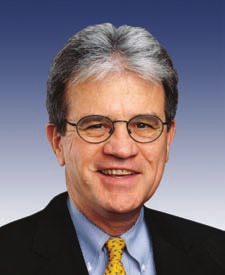
Senator Weird Hair
Another day, another Republican wingnut reveals his ugly inner self. This time it’s Senator Tom Coburn of Oklahoma. Let’s see … where to begin….
Via Think Progress: At a town hall meeting in Pryor, OK, a woman who advocates for people in nursing homes asked Coburn a how we can balance the budget and also make sure the “frail elderly” are protected.
QUESTION: With more and more cuts in Medicare and Medicaid on the horizon, I’m really worried about protecting our frail elderly in the Medicare and Medicaid facilities. So I would like to know how Congress proposes to balance the budget and still make sure our frail elderly in these facilities are protected and have trained care staff, especially in the home care services for seniors sector.
COBURN: That’s a great question. The first question I have for you is if you look in the Constitution, where is it the federal government’s role to do that? That’s number one. Number two is the way I was brought up that’s a family responsibility, not a government responsibility.
Oh really?
Thursday Reads: Molly Ivins, Governor Goodhair, Corporate Crime, and Heroes
Posted: August 18, 2011 Filed under: 2012 presidential campaign, Corporate Crime, George W. Bush, morning reads, Republican presidential politics, U.S. Economy, U.S. Politics | Tags: Antonio Diaz Chacon, Bill Clinton, Bush-Perry feud, Citi, corporate crime, George W. Bush, Governor Goodhair, heroes, Howard Dean, Indonesia, Jesus Lara, Karl Rove, Matt Taibbi, Mexican border, Molly Ivins, murder, Predator drones, Republican presidential wannabes, Rick Perry, SEC, Texas 45 Comments
Good Morning!! I’m going to be leaving for a two-day drive to Indiana either today or tomorrow, so I’m a bit meshugge this morning. Please be patient with me. Let’s see what’s in the news.
From what I can see, it’s mostly Rick Perry. And I must say, I find “Governor Goodhair” endlessly fascinating. He’s more of a gaffe-machine than Joe Biden–and that’s really saying something. Molly Ivins gave Perry that nickname. I miss her so much. So I was thrilled when I cam across this article in the Sacramento Bee:
Molly can’t say that about Rick Perry, can she? It’s a collection of quotes on Perry from Ivins. Here’s one:
June 24, 2001
First, we Texans would like to salute the only governor we’ve got, Rick “Goodhair” Perry, the Ken Doll, for vetoing the bill to outlaw executing the mentally retarded.
We are Texas Proud.
Such a brilliant decision – not only is Texas now globally recognized for barbaric cruelty, but a strong majority of Texans themselves (73 percent) would prefer not to off the retarded.
Gov. Goodhair’s decision – in the face of popular opinion, the Supreme Court and George W. Bush’s recent conversion on this subject – is a testament to his strength of character.
Or something.
His Perryness announced, anent the veto, that Texas does not execute the retarded. I beg your pardon, Governor. Johnny Paul Penry, now on Death Row for a heart-breaking murder and the subject of two Supreme Court decisions, has an IQ between 51 and 60, believes in Santa Claus and likes coloring books.
We will never have another political writer like Molly.
Yesterday Perry “challenged” Obama on border security.
Perry, who was on his second trip to New Hampshire as a presidential candidate, criticized President Obama for his assertion during a speech in El Paso, Tex. in May that his administration had “strengthened border security beyond what many believed was possible.”
“Six weeks ago the President went to El Paso and said the border is safer than it’s ever been,” Perry said. “I have no idea, maybe he was talking about the Canadian border.”
Perry thinks we should use Predator Drones to deal with illegal immigration.
“I mean, we know that there are Predator drones being flown for practice every day because we’re seeing them, we’re preparing these young people to fly missions in these war zones that we have. But some of those, they have all the equipment, they’re obviously unarmed, they’ve got the downward-looking radar, they’ve got the ability to do night work and through clouds. Why not be flying those missions and using (that) real-time information to help our law-enforcement? Becuase if we will commit to that, I will suggest to you that we will be able to drive the drug cartels away from our border.”
Apparently the Governor of Texas did not know that the Department of Homeland Security has already been using Drones to patrol the Mexican border for years.
I’m not that up on Texas politics, but I’m beginning to get the idea that the Bush crowd doesn’t care much for Rick Perry. According to Elspeth Reeve at The Atlantic, Bush’s Crew Is Gunning for Rick Perry
Is Rick Perry “another George W. Bush”? In reality, Bush was more of a fake Perry, the Texas version of a studio gangster, clearing brush in his cowboy boots despite his prep school background. It helps explain why Bush’s allies and Perry’s allies don’t like each other very much: the Bush-loving Republican establishment sees Perry as “the low-rent country cousin,” the Los Angeles Times reports. And it explains why Karl Rove (who once worked for Perry, before helping Bush become president) went on Fox News to criticize Perry for calling the Federal Reserve treasonous — and to wish for more candidates to enter the 2012 race.
You’ll need to go to the link to read all about the Bush-Perry feud. In addition, Howard Dean told The Hill that the “Bush camp will take Perry out.”
Former Democratic National Committee Chairman Howard Dean predicted that prominent political supporters of former President George W. Bush will deal a critical blow to Texas Gov. Rick Perry’s (R) presidential campaign.
“The Bush people don’t fool around, as you know,” Dean said Tuesday night on MSNBC. “You can say a lot of things about Bush’s presidency and his failures as president, but one thing nobody should say [anything] bad about [is] his political team. They know what they’re doing, and they are ruthless, and they are going to take Perry out.”
Here’s Bill Clinton’s opinion on Rick Perry’s presidential ambitions:
—————————————————-
Do you have a Citi credit card? Better watch out
TANGERANG, Indonesia — Irzen Octa, a down-on-his-luck Indonesian businessman, suffered a torment familiar to millions of Americans struggling with debts racked up in better times: He feared losing his home.
In the end, he managed to keep the ramshackle two-story house where he and his wife raised their two now-teenage daughters. Instead, Octa, pursued by Citibank over a $5,700 debt on his platinum credit card, lost his life.
The 50-year-old businessman, invited to a Citibank office in Jakarta in late March, collapsed in a tiny room set aside by the U.S. bank for questioning of deadbeat debtors. He died shortly afterward — a casualty of a “harsh interrogation,” said Jakarta police spokesman Baharudin Djafar.
Whoa!
Noting that Indonesian debt collectors have a reputation for sometimes aggressive persistence, Johansyah, the central bank official, said: “The best thing to do is just pay.”
Octa’s widow said she first discovered that her husband had money problems when five men showed up uninvited at their Tangerang home one night in October and said they had come to get money. Unable to collect, they slept on a terrace outside the front door.
In the following months, debt collectors kept calling — and Octa’s debts kept rising because of hefty interest.
Sounds like a Mafia movie! Will that start happening here after the Republicans remove all regulations?
Matt Taibbi has a new article at Rolling Stone: Is the SEC Covering Up Wall Street Crimes?
Imagine a world in which a man who is repeatedly investigated for a string of serious crimes, but never prosecuted, has his slate wiped clean every time the cops fail to make a case. No more Lifetime channel specials where the murderer is unveiled after police stumble upon past intrigues in some old file – “Hey, chief, didja know this guy had two wives die falling down the stairs?” No more burglary sprees cracked when some sharp cop sees the same name pop up in one too many witness statements. This is a different world, one far friendlier to lawbreakers, where even the suspicion of wrongdoing gets wiped from the record.
That, it now appears, is exactly how the Securities and Exchange Commission has been treating the Wall Street criminals who cratered the global economy a few years back. For the past two decades, according to a whistle-blower at the SEC who recently came forward to Congress, the agency has been systematically destroying records of its preliminary investigations once they are closed. By whitewashing the files of some of the nation’s worst financial criminals, the SEC has kept an entire generation of federal investigators in the dark about past inquiries into insider trading, fraud and market manipulation against companies like Goldman Sachs, Deutsche Bank and AIG. With a few strokes of the keyboard, the evidence gathered during thousands of investigations – “18,000 … including Madoff,” as one high-ranking SEC official put it during a panicked meeting about the destruction – has apparently disappeared forever into the wormhole of history.
Under a deal the SEC worked out with the National Archives and Records Administration, all of the agency’s records – “including case files relating to preliminary investigations” – are supposed to be maintained for at least 25 years. But the SEC, using history-altering practices that for once actually deserve the overused and usually hysterical term “Orwellian,” devised an elaborate and possibly illegal system under which staffers were directed to dispose of the documents from any preliminary inquiry that did not receive approval from senior staff to become a full-blown, formal investigation. Amazingly, the wholesale destruction of the cases – known as MUIs, or “Matters Under Inquiry” – was not something done on the sly, in secret. The enforcement division of the SEC even spelled out the procedure in writing, on the commission’s internal website. “After you have closed a MUI that has not become an investigation,” the site advised staffers, “you should dispose of any documents obtained in connection with the MUI.”
I haven’t finished the article yet, but it sounds like an important story.
I’m going to end with a couple of feel-good stories.
Father of 2 becomes hero in abducted girl’s rescue
ALBUQUERQUE, N.M. — The timing was just right for saving the life of a 6-year-old girl and for turning a 24-year-old mechanic and father of two young daughters into a hero.
It was coincidence that Antonio Diaz Chacon had come home from work early to spend time with his family Monday afternoon. It was also a coincidence that the family’s washing machine had just gone out, forcing them to do laundry a block down the road at a relative’s home.
Had it not been for that, Diaz Chacon wouldn’t have been there to see the girl thrown into a van as another neighbor yelled for the would-be kidnapper to let the child go.
Diaz Chacon is credited with saving the girl after chasing the van through a maze of neighborhoods to the edge of where Albuquerque’s sprawling housing developments meet the desert. It was there where the van crashed into a pole, the suspect fled and Diaz Chacon was able to rescue the girl and take her home.
Go read the whole thing. It’s good to know there are still brave and generous people out there who act selflessly just because someone needs help. And here’s another story about a heroic rescue–by an 8-year-old boy.
Just 8 years old and a novice swimmer, Jesus [Lara] reacted quickly last weekend to save a drowning infant from the bottom of a pool. On Thursday morning, the Plano Fire Department recognized his life-saving actions and explained how grateful they were for his quick reaction.
[….]
Jesus has only been swimming for two months. His father Henry began teaching him to swim in the pool at the Estancia Apartments where they live. Henry said after a long day of work Friday, Aug. 5, he kept his promise to take his son to the pool that night.
While Jesus was swimming, he noticed some bubbles coming from an object under the water.

Jesus Lara being honored by fire department
The bubbles were coming from a 21-month-old toddler who had stumbled into the water.
“I grabbed a quick breath, and I dove under,” he said.
Jesus resurfaced holding a 21-month-old boy and arms outstretched, he yelled for his father to help.
“It was what he said that spoke volumes to me,” Henry said, remembering the boy’s words, “I found him at the bottom of the pool.”
Jesus’ father knew CPR and was able to resuscitate the child, who is now “doing fine.”
Those are my recommended reads for today. What are you reading and blogging about?

 peej
peej Carissa
 bostonboomer
 dakinikat
 ecocatwoman
 mablue2
 Mama Lopez
 peggysue22
 quixote
 skydancingguestblogger
 Mona (aka Wonk the Vote)



 Sky Dancing
Recent Comments