
Romney, GOP Appear to be Planning “October Surprise” on Libya . . . Will it Work?
Posted: October 2, 2012 Filed under: 2012 presidential campaign, Foreign Affairs, Libya, MENA, Middle East, Mitt Romney, U.S. Military, U.S. Politics | Tags: ambassador Chris Stevens, Barack Obama, Benghazi attacks, Craig Unger, Darrell Issa, Jason Chaffetz, Jimmy Carter Strategy, October surprise 41 Comments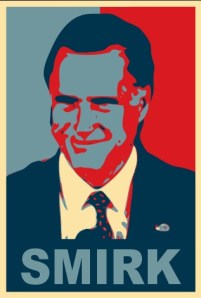
The Romney campaign and the GOP appear to be rolling out an “October Surprise” in the leadup to to tomorrow night’s presidential debate.
On Sunday, the Wall Street Journal published an op-ed by Mitt Romney in which he supposedly proposed “A new course for the Middle East. Here’s the opening:
Disturbing developments are sweeping across the greater Middle East. In Syria, tens of thousands of innocent people have been slaughtered. In Egypt, the Muslim Brotherhood has come to power, and the country’s peace treaty with Israel hangs in the balance. In Libya, our ambassador was murdered in a terrorist attack. U.S. embassies throughout the region have been stormed in violent protests. And in Iran, the ayatollahs continue to move full tilt toward nuclear-weapons capability, all the while promising to annihilate Israel….
Yet amid this upheaval, our country seems to be at the mercy of events rather than shaping them. We’re not moving them in a direction that protects our people or our allies.
What follows is several paragraphs of criticism of President Obama’s policies as Romney interprets them. For example, Romney accuses the President of “allow[ing] or leadership to atrophy,” “misunderstanding our values,” and “thinks that weakness will win favor with our adversaries,” but provides no evidence for these claims.
The only “solutions” Romney puts forward are also vague. He argues that we must develop a “coherent strategy” of supporting our Middle Eastern allies and also “restore our credibility with Iran.” Based on Romney’s previous statements, he seems to be suggesting that somehow if he is President, the Iranians will be more terrified of him than weak, Carter-like Barack Obama.
It means placing no daylight between the United States and Israel. And it means using the full spectrum of our soft power to encourage liberty and opportunity for those who have for too long known only corruption and oppression. The dignity of work and the ability to steer the course of their lives are the best alternatives to extremism.
But this Middle East policy will be undermined unless we restore the three sinews of our influence: our economic strength, our military strength and the strength of our values. That will require a very different set of policies from those President Obama is pursuing.
Yesterday Craig Unger wrote that he had learned from an anonymous source that GOP operatives will
unleash a new two-pronged offensive that will attack Obama as weak on national security, and will be based, in part, on new intelligence information regarding the attacks in Libya that killed U.S. Ambassador Chris Stevens on Sept. 11.
The source, who has firsthand knowledge of private, high-level conversations in the Romney camp that took place in Washington, D.C., last week, said that at various times the GOP strategists referred to their new operation as the Jimmy Carter Strategy or the October Surprise.
He added that they planned to release what they hoped would be “a bombshell” that would make Libya and Obama’s foreign policy a major issue in the campaign. “My understanding is that they have come up with evidence that the Obama administration had positive intelligence that there was going to be a terrorist attack on the intelligence.”
The source described the Republicans as chortling with glee that the Obama administration “definitely had intel” about the attack before it happened. “Intelligence can be graded in different ways,” he added, “and sometimes A and B don’t get connected. But [the Romney campaign] will try to paint it to look like Obama had advance knowledge of the attack and is weak on terrorism.”
“Chortling with glee?” The apparent goal of all this GOP strategizing is to make Barack Obama look like Jimmy Carter circa 1980. Romney and Ryan have both been trying to do this for months, with little effect.
To be honest, I’m having a hard time taking all this too seriously, but today Reps. Darrell Issa and Jason Chaffetz of the House Committee on Oversight and Government claimed to have information to prove that:
Despite two explosions and dozens of other security threats, U.S. officials in Washington turned down repeated pleas from American diplomats in Libya to increase security at the U.S. consulate in Benghazi where the U.S. ambassador was killed…
In a letter to Secretary of State Hillary Rodham Clinton [read the full letter here (pdf), Chairman Darrell Issa and Rep. Jason Chaffetz of the Oversight and Government Reform Committee said their information came from “individuals with direct knowledge of events in Libya.”
Issa, R-Calif. and Chaffetz, R-Utah said the Sept. 11 attack in Benghazi that killed Ambassador Chris Stevens and three other Americans was the latest in a long line of attacks on Western diplomats and officials in Libya in the months before Sept. 11.
The letter listed 13 incidents, but Chaffetz said in an interview there were more than 50. Two of them involved explosive devices: a June 6 blast that blew a hole in the security perimeter. The explosion was described to the committee as “big enough for forty men to go through”; and an April 6 incident where two Libyans who were fired by a security contactor threw a small explosive device over the consulate fence.
“A number of people felt helpless in pushing back” against the decision not to increase security and “were pleading with them to reconsider,” Chaffetz said. He added that frustrated whistleblowers were so upset with the decision that they were anxious to speak with the committee.
Issa and Chaffetz will hold a hearing on the issue next Wednesday, October 10.
Just a side note: Jason Chaffetz is a convert to Mormonism who attend BYU and is a Romney surrogate. He also spoke at the Republican Convention.
The Wall Street Journal fired another salvo today with another op-ed by Bret Stephens: Benghazi Was Obama’s 3 a.m. Call Here’s the concluding paragraph, which sums up the entire argument pretty well:
The U.S. ignores warnings of a parlous security situation in Benghazi. Nothing happens because nobody is really paying attention, especially in an election year, and because Libya is supposed to be a foreign-policy success. When something does happen, the administration’s concerns for the safety of Americans are subordinated to considerations of Libyan “sovereignty” and the need for “permission.” After the attack the administration blames a video, perhaps because it would be politically inconvenient to note that al Qaeda is far from defeated, and that we are no more popular under Mr. Obama than we were under George W. Bush. Denouncing the video also appeals to the administration’s reflexive habits of blaming America first. Once that story falls apart, it’s time to blame the intel munchkins and move on.
Jake Tapper also helped out by trying to get White House spokesman Jay Carney to comment on the charges from Issa and Chaffetz. Here’s the response:
Carney said that “embassy security is a matter that is in the purview of the State Department,” and noted that “Secretary Clinton instituted an accountability review that is underway as we speak” while the investigation of the attack itself is being conducted by the FBI.
The press secretary said that “from the moment our facility was attacked” the president has been focused on providing security to all diplomatic posts “and bringing the killers to justice.”
About the list of security issues, Carney said it was a “known fact that Libya is in transition” and that in the eastern part of Libya in particular there are militant groups and “a great number of armed individuals and militias.”
So I guess we can expect Romney to attack President Obama on the Libya issue during tomorrow night’s debate, no doubt accompanied by the famous Romney smirk. Obama should be prepared though, since the “October Surprise” has been so clearly spelled out by multiple media sources.
Is there more to it? Will it work? I kind of doubt it, because it’s clear from the polls that Romney has already destroyed his credibility with voters. But I could be wrong.
What do you think?
Whatever Your Preferred Metaphor, Romney’s Campaign is Imploding
Posted: September 17, 2012 Filed under: 2012 presidential campaign, U.S. Economy, U.S. Military, U.S. Politics | Tags: birtherism, buzzards circling overhead, Mitt Romney, Paul Ryan, race baiting, Romney campaign, sharks smelling blood, Stuart Stevens, the GOP base 56 Comments
Buzzards circling overhead…
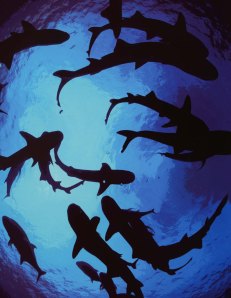
Sharks smelling blood in the water…
Whatever metaphor you use to describe it, the Romney campaign is searching for answers and playing the blame game.
Last night, based on unnamed sources within the campaign, Politico’s Mike Allen and Jim Vandehei posted a long analysis of “how Mitt Romney stumbled,” and named the designated the scapegoat for Romney’s failures, top campaign strategist and ad man, Stuart Stevens. Stevens has been picked to shoulder the blame for Romney’s lackluster convention speech and his failure to even mention the ongoing war in Afghanistan or the American servicepeople who are fighting and dying far from home. According to Allen and Vandehei, Stevens:
knew his candidate’s convention speech needed a memorable mix of loft and grace if he was going to bound out of Tampa with an authentic chance to win the presidency. So Stevens, bypassing the speechwriting staff at the campaign’s Boston headquarters, assigned the sensitive task of drafting it to Peter Wehner, a veteran of the last three Republican White Houses and one of the party’s smarter wordsmiths.
Stevens junked the entire thing, setting off a chaotic, eight-day scramble that would produce an hour of prime-time problems for Romney, including Clint Eastwood’s meandering monologue to an empty chair.
Romney’s convention stumbles have provoked weeks of public griping and internal sniping about not only Romney but also his mercurial campaign muse, Stevens. Viewed warily by conservatives, known for his impulsiveness and described by a colleague as a “tortured artist,” Stevens has become the leading staff scapegoat for a campaign that suddenly is behind in a race that had been expected to stay neck and neck through Nov. 6.

Designated scapegoat Stuart Stevens
Allen and Vandehei write that, although campaign insiders are throwing Stevens to the wolves, so to speak, Mitt Romney himself deserves a great deal of the blame too. Stevens is his guy, and Romney is likely to stick with him. But back to the convention speech snafu:
As the Tampa convention drew near, Wehner, now a “senior adviser” and blogger for the campaign, was laboring under an unusual constraint for the author of a high-stakes political speech. He was not invited to spend time with Romney, making it impossible to channel him fluently.
Nevertheless, Wehner came up with a draft he found pleasing, including the memorable line: “The incumbent president is trying to lower the expectations of our nation to the sorry level of his own achievement. He only wins if you settle.” It also included a reference to Afghanistan, which was jettisoned with the rest of his work.Instead, eight days before the convention, at a time when a campaign usually would be done drafting and focused instead on practicing such a high-stakes speech, Stevens frantically contacted John McConnell and Matthew Scully, a speechwriting duo that had worked in George W. Bush’s campaign and White House. Stevens told them they would have to start from scratch on a new acceptance speech. Not only would they have only a few days to write it, but Romney would have little time to practice it.
The speech McConnell and Scully came up with was also largely scrapped, and Stevens and Romney “cobbled together” the final unimpressive acceptance speech that failed to even mention the war in Afghanistan or the Americans fighting and dying overseas.
The entire Politico article is well worth reading, since the Romney campaign frequently uses Politico to disseminate their desired campaign narratives, one of which is that Stevens is not a committed conservative, but an ivy-league educated, “creative,” “eclectic,” “artist” type who isn’t particularly ideological and maybe just doesn’t understand the Republican base. And besides, he’s disorganized and undisciplined. But Allen and Vandehei say that “Romney associates” are “baffled” that Romney himself hasn’t gotten a grip on the campaign, since he was such a successful corporate CEO.
This morning both Politico and Buzzfeed posted more insider revelations about the Romney campaign’s latest strategies. Politico’s quotes Stuart Stevens on the supposed new emphasis on “status quo vs. change.”
Stevens said the economy is likely to remain “the dominant focus” of the campaign. But ads and speeches will focus on a wider array of issues, including foreign policy, the threat from China, debt and the tone in Washington.
Stevens said the big, unifying question will be: “Can we do better on every front?”
On Monday, Romney unveiled a new ad, “The Romney Plan,” that punches back at Obama’s consistent emphasis on growing the economy for the middle class, and emphasizes what the Republican would do.
“My plan is to help the middle class,” Romney says in the ad. “Trade has to work for America. That means crack down on cheaters like China. It means open up new markets.”
A second Romney ad out Monday, “Failing American Families,” is harsher, with a male narrator saying: “Barack Obama: More spending. More debt. Failing American families.”
One of the new policies Romney will go with is an appeal to Latino voters on increasing “legal immigration.” Stevens also argues that the chaos in the middle east and the Fed’s decision to roll out QE3 demonstrate President Obama’s lack of leadership. He believes that Romney’s middle east policies will be more appealing to voters in the long run.
At Buzzfeed, McKay Coppins characterizes the new Romney strategy as a move to the far right, with “more God, less economy.”
Mitt Romney’s campaign has concluded that the 2012 election will not be decided by elusive, much-targeted undecided voters — but by the motivated partisans of the Republican base.
This shifting campaign calculus has produced a split in Romney’s message. His talk show interviews and big ad buys continue to offer a straightforward economic focus aimed at traditional undecided voters. But out stumping day to day is a candidate who wants to talk about patriotism and God, and who is increasingly looking to connect with the right’s intense, personal dislike for President Barack Obama.Three Romney advisers told BuzzFeed the campaign’s top priority now is to rally conservative Republicans, in hopes that they’ll show up on Election Day, and drag their less politically-engaged friends with them. The earliest, ambiguous signal of this turn toward the party’s right was the selection of Rep. Paul Ryan as Romney’s running mate, a top Romney aide said.
“This is going to be a base election, and we need them to come out to vote,” the aide said, explaining the pick.
The Buzzfeed report sounds a lot more reality-based to me than Politico’s. Romney will undoubtedly step up the race-baiting, not-so-subtly encourage the birthers, and hope he can tear Obama down with barrages of negative ads funding by his billionaire superpac donors. No doubt it’s going to get really ugly as we approach the debates and then move on to election day, especially if they follow the advice of Focus on the Family’s Bryan Fischer to turn Paul Ryan loose to fire up the base on social issues:
Fischer said he believed Romney would be leading national polls by double digits at this point if he had followed Paul Ryan’s lead and offered more detailed conservative positions on the budget and social issues.
“The biggest mistake is they put a bag over Paul Ryan’s head,” he said. Fischer said he was “deeply disturbed” that Ryan didn’t mention the campaign’s opposition to gay marriage in his speech to the summit on Friday.
“I got to believe that there was some kind of directive from the top of the campaign: We don’t want you to deal with this issue,” he said.
Will any of this help Romney recover from his lousy convention and his disastrous foreign policy missteps? Somehow, I doubt it, but only time will tell.
Here’s one of the new Romney ads.
It’s just more of the same, as far as I can see. Where are the specifics of what Romney would do differently? Here’s the other ad–I guess this supposedly provides specifics (but it doesn’t).
Meanwhile the vultures continue to circle. The New York Daily News is out with a piece by Mike Lupica, calling the Romney campaign a “band of clowns” and “one of the worst campaigns of recent memory.”
There was a lot of talk about Libya last week, because Mitt Romney didn’t know when to shut up about dead Americans, including Chris Stevens, a good man who was our ambassador there.
Somehow, in a terrible moment like that, Romney was boneheaded enough to hand political advantage over to the other side, despite the fact that the President went ahead with a scheduled campaign stop in Las Vegas the next day, as if delaying his appearance by an hour was a suitable mourning period.
But it is not just Libya. It is everything that has happened lately as Romney and the amateurs around him continue to run one of the worst campaigns of recent memory, even against one of the worst economies any sitting President has ever tried to defend.
The people around Romney don’t just look like amateurs, they look like clowns sometimes. Romney was never going to be a great candidate; he doesn’t have it in him, he too often comes across like some stiff poster boy for all the one-percenters who want him elected. But you thought he would do better than this, with the whole thing sitting right there for him, because of this President’s record on the economy and on jobs. Only Mitt Romney has taken an election that should have been his to win and made it something for Barack Obama to lose.
And so on. The media sharks smell blood, and I doubt if they’re going to back off. Soon the rats will be deserting the sinking ship. So many metaphors, so little time.
Tuesday Reads: Ooh That Smell!
Posted: September 11, 2012 Filed under: 2012 presidential campaign, Barack Obama, Mitt Romney, morning reads, U.S. Economy, U.S. Military, U.S. Politics | Tags: death stench, Mark Halperin, Paul Ryan, Tenther Movement, the Constitution 79 Comments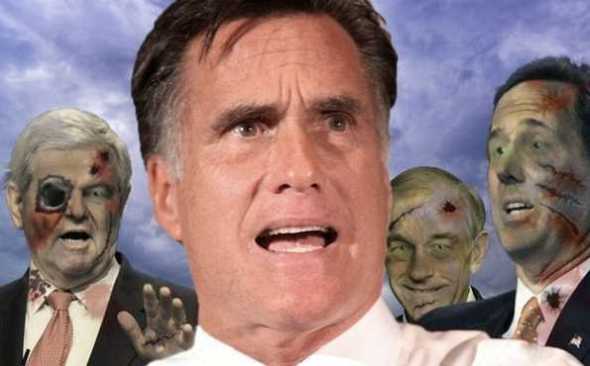
Good Morning!!
Can you smell the “death stench?” coming from the Romney campaign? Mark Halperin is beginning to. Yesterday he wrote about The Troubles: all the bad news piling up for Mitt Romney following the conventions–like the fact that the Obama camp raised more cash than Romney in August, multiple polls suggest that Obama is getting a bounce from his convention and Romney didn’t. Halperin says all this bad news is leading to a “congealing” media narrative that Romney’s campaign is dying. And all that was written before the latest CNN poll showed Obama at 52% with a lead of 6 points.
Until Romney breaks this cycle, he is in danger of living out the Haley Barbour dictum: in politics, bad gets worse. Super PACs might start shifting their money from the presidential race to save the House majority and look to pick up Senate seats. Romney’s own fundraising will take a hit. Stories about Romney pulling up stakes in Michigan and other ostensible battlegrounds will add to the death stench. And there will be an avalanche of suggestions and second-guessing from pundits and Republican operatives and politicians about Romney’s tactics, strategy and staff.
How tragic! The “death stench.” Oooh That Smell!
Ooh that smell
Can’t you smell that smell?
Ooh that smell
The smell of death surrounds you, yeah
Priorities USA has released a new ad to kick Romney while he’s down.
Everyone is still talking about Romney’s wacky interview with “Disco Dave” on Meet The Press and how he pretended to be in favor of parts of Obamacare on national TV and then quickly flip-flopped in such a way that low information voters might not find out about. From TPM:
“Mitt Romney literally went on ‘Meet The Press’ and misled the American people,” Brad Woodhouse, communications director for the DNC, said on a conference call with reporters Monday. “He acted as if he supports something that he clearly does not.”
Romney said Sunday that he intends to keep parts of ‘Obamacare,’ and cited the law’s rule forbidding discrimination against people with pre-existing conditions as an example.
“I’m not getting rid of all of health care reform,” Romney said. “Of course there are a number of things that I like in health care reform that I’m going to put in place. One is to make sure that those with pre-existing conditions can get coverage.”
….
The Romney campaign later clarified that his position on pre-existing conditions had not changed, and that he only supports coverage for people with pre-existing conditions if they have had “continuous coverage,” according to a statement released to National Review. “[Romney’s] own plan will deal with pre-existing conditions but not in the same way that Obamacare does,” a Romney campaign aide told TPM after Romney’s interview.
Ezra Klein wrote a post about the Obamacare kefluffle called “when begin vague backfires.”
Romney has been playing a little trick. Here’s what he told David Gregory:
There are a number of things that I like in health-care reform that I’m going to put in place. One is to make sure that those with preexisting conditions can get coverage.
To most of the world, that sounded like Romney was saying he was going to keep Obamacare’s protections for people with preexisting conditions. And enough reporters know Obamacare well enough to know that you can’t keep those protections without keeping quite a bit of the law. That’s why people thought Romney’s position had changed.
But to folks who’ve been following Romney’s game of three-card monte on this issue, it was clear he was just being strategically vague in describing his position: Romney has long said he would protect people with continuous coverage from being discriminated against due to preexisting conditions. But this is something that the law mostly does now, and that would leave 89 million Americans out in the cold.
Romney’s play here was obvious enough: By being a little fuzzy about what, exactly, he was proposing, he could sound like he had a way to protect people with preexisting conditions while still saying he wants to repeal Obamacare. He’d get the best of both worlds. But the problem with trying to strategically confuse people is that you actually confuse them, and that’s what happened here. Rather than coming away thinking Romney had a secret plan to protect people with preexisting conditions, they went away thinking Romney had a secret plan to protect Obamacare.
Disco Dave tried half-heartedly to get Romney to provide just one specific loophole that he would close in order to pay for the massive tax cuts he’s proposing. But Romney was determined not to reveal whether he wants to get rid of the mortgage deduction, the charitable contributions deduction or something else. We know he’s not going get rid of all those loopholes that make it possible for him to pay less than 15% of his income in taxes. I’m sure of that.
Fortunately, TV Pundits are beginning to confront Romney and his running mate Paul Ryan with their attempts to con less-informed voters. Here are two examples.
MSNBC’s Chris Jansing asking Romney adviser Tara Wall for specifics on which tax loopholes Romney would close and getting word salad.
JANSING: What are the loopholes you would close? Will you tell the American people how you’re going to to this better place that you say they have?
WALL: Well, again, the campaign has laid out a number of specifics relative to the principles that will guide the policies of a Romney-Ryan ticket. […] Again, the specification include policies that are pro-growth in nature, that reduce the deficit, that reduce the burden on taxpayers and small businesses, small businesses number one have been hit hard by a number of regulations that have stifled growth and job creation. And so number one, those are some of the things you have to start with.
JANSING: Well, with all due respect, a pro-growth policy is not specific.WALL: The other part of that is energy independence. That’s an approach to energy independence that will create millions of jobs. There is a target of 12 million jobs by the Romney-Ryan target. Relative to those loopholes that you mention, I agree that Congressman Ryan pointed out taht have to be put out in a public debate. But I think, again, we have to look at the overall principles that are going to drive the policies and not ram through policy as we saw with Obamacare.
WTF?! Is that the kind of thing Romney is going to say in the debates?
Here’s Norah O’Donnell of all people confronting Paul Ryan on his vote for the sequester that he’s blaming on President Obama.
Amazing! Too bad Disco Dave can’t do that.
Yesterday Jonathan Chait reported another Romney conspiracy theory: the media is conspiring with pollsters to help Obama win.
These comments from a “top Romney adviser” to National Review…are pure derangement:
PPP has these polls that just put chum in the water for the media. Sometimes I think there’s a conscious effort between the media and Chicago to get Republicans depressed. And I hope our friends realize that all these media analysts out there are Democrats WHO WANT US TO LOSE. And the more Washington DC controls our economy, the more important inside-the-beltway publications are and the more money they make. The 202 area code is dominated by people who will make more money if Obama is reelected, so it’s not just an ideological thumb they’re putting on the scale for him, it’s a business interest.
If this is the Romney campaign’s genuine theory of the race — that political reporters are deliberately trying to mislead America into believing Obama is winning in order to fatten their profits — the Romney campaign is in a lot of trouble.
Again, WTF?! That “death stench” is getting stronger.
Think Progress caught something else odd in Romney’s interview on MTP. I noticed it when I listened to the interview but I thought it was just more Romney strangeness. Romney told Disco Dave, “I’m as conservative as the Constitution.”
Now what the hell does that mean? TP says it’s a dog whistle to “Tenthers.” From Wikipedia:
The Tenther movement is a political ideology and a social movement in the United States that espouses that many actions of the United States government are unconstitutional. Adherents invoke the concept that the states share sovereignty with the federal government and with the people by citing the Tenth Amendment to the United States Constitution as the basis for their legal and ideological beliefs:
“The powers not delegated to the United States by the Constitution, nor prohibited by it to the States, are reserved to the States respectively, or to the people”
Adherents believe that political authority enumerated in the United States Constitution as belonging to the Federal Government must be read very narrowly to exclude much of what the national government already does. They argue for the recognition of limited sovereignty of the States. Opponents use the term in order to draw parallels between adherents and 19th century states’ rights secessionists, as well as the movement to resist Federal Civil Rights legislation.
This is the Ayn Randish version of the “Constitution” that Paul Ryan believes in.
Last September, GOP vice presidential candidate Paul Ryan spoke at the Hillsdale College’s Kirby Center, a Washington, D.C. arm of the conservative institution that was founded under the leadership of Supreme Court spouse Virginia Thomas. The speech was delivered in commemoration of Constitution Day, and it provides a fairly substantial window into how he understands America’s most important document. Unfortunately, the speech also raises very real doubts about whether Mr. Ryan can distinguish the founders’ vision from his own. Ryan’s speech does not simply defend his laissez faire vision for the country, it suggests that this austere vision is mandated by the Constitution itself:
We can strengthen our defense of liberty if we remember to keep in mind those who are struggling to make ends meet. What makes our Constitution such an extraordinary document is that, in making the United States the freest civilization in history, the Founders guaranteed that it would become the most prosperous as well. The American system of limited government, low taxes, sound money, and the rule of law has done more to help the poor than any other economic system ever designed.
That is scary. Make sure you click on the link and read the whole thing. Good thing that “death stench” is surrounding Ryan too.
I guess this has been kind of a strange post, but I’m in a strange mood today. I hope it makes at least some sense. I realize I didn’t mention that today is the anniversary of 9/11, but JJ will have something about it later on.
So… what are you reading and blogging about today?
Saturday Reads: President Obama’s Acceptance Speech
Posted: September 8, 2012 Filed under: 2012 presidential campaign, Barbara Ehrenreich, Civil Liberties, Civil Rights, Mitt Romney, morning reads, U.S. Economy, U.S. Military, U.S. Politics | Tags: acceptance speech, Charles P. Pierce, citizenship, democracy, Democratic National Convention 2012, Howard Kurtz, Michael Tomasky, Nielson ratings, Peter Beinart, Politico, self-government, Tom Junod 68 Comments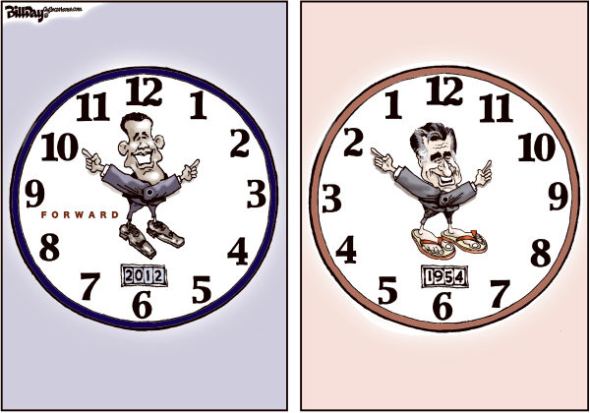
Good Morning!
Generally speaking the pundits didn’t care for President Obama’s acceptance speech on Thursday night. It’s not surprising that the guys at Politico thought it “fell flat.”
A surprisingly long parade of Democrats and media commentators described the speech less as a failure than a fizzle—an oddly missed opportunity to frame his presidency or the nation’s choice in a fresh or inspirational light.
Even those who liked the president’s performance generally went no further than saying that he was effective in doing a job that needed to be done, in a tough-minded if prosaic style.
These shoulder-shrug reactions confront Obama with a question no one expected to be asking when the week in Charlotte began: How did a president for whom stirring speeches were the engine of his rise to power manage to give, at best, only the third-most compelling speech at a convention devoted to his own re-election?
But even more liberal commentators found Obama’s speech wanting. Peter Beinart called it “underwhelming and anticlimactic.”
Obama’s acceptance speech had two apparent goals: The first was to lay out an agenda for the next four years so people feel they have something forward-looking to vote for. The second was to recapture the sense of hope that defined Obama’s 2008 campaign.
On paper, he did both things. But what the speech lacked was a coherent explanation of the nightmare this country has gone through for the last four years. Republicans are laying the Great Recession at Obama’s feet. Obama is saying that Republicans created it and, if elected, will make it worse. To win that argument, Obama needed to explain why the financial crisis happened, and he didn’t. Yes, he mocked the GOP for proposing tax cuts as the answer to every problem, but the financial crisis didn’t happen because of tax cuts. It happened, in large measure, because Republican and some Democratic politicians—blinded by free-market fundamentalism and Wall Street largesse—allowed bankers to create unregulated markets in which they gambled the savings of millions of Americans, knowing that if their bets failed, they wouldn’t be the ones to lose their homes and their life’s savings.
Obama should have told that story, and then gone at Romney for doubling down on the ideology that almost brought America to its knees. Then he should have contrasted that with his own interventions to protect people who the market has failed: whether they be auto workers or people with sick kids.
Michael Tomasky called it Pedestrian and Overconfident
Let’s be blunt. Barack Obama gave a dull and pedestrian speech tonight, with nary an interesting thematic device, policy detail, or even one turn of phrase. The crowd sure didn’t see it my way. The delegates were near delirium; to what extent they were merely still feeding off the amassed energy of the previous two nights I can’t say.
And swing voters watching at home? They probably weren’t as bored as I was, but it seems inconceivable that they’d have been enraptured. This was the rhetorical equivalent, forgive the football metaphor, of running out the clock: Obama clearly thinks he’s ahead and just doesn’t need to make mistakes. But when football teams do that, it often turns out to be the biggest mistake of all, and they lose.
Nevertheless, the final night of the Democratic Convention drew about 35.7 million viewers. The second night of the convention, when Bill Clinton spoke pulled in more views than the Giants-Cowboys game that played opposite the Convention coverage, about 25.1 million people–but nowhere near the number who watched the speeches by Vice President Biden and President Obama. Mitt Romney’s acceptance speech attracted 30.3 million viewers.
Howard Kurtz reported that Obama’s acceptance speech was deliberately “low-key.”
While the pundits are generally calling the president’s Thursday night address mediocre, Obama and his advisers had taken great pains to avoid soaring rhetoric that might have been derided as empty.
Indeed, they extensively tested the president’s speech in dial groups, a type of focus group where voters twist dials to register approval or disapproval of specific passages, and say it tested off the charts. The reaction, they say, was more positive than to Obama’s 2008 acceptance speech in Denver.
In short, the president deliberately dialed it down, stopping well short of the altitudes he is capable of reaching. Perhaps that will prove to be a mistake, but the decision to go with a less rousing approach was carefully considered.
The campaign’s primary goal at the Democratic convention was to provide a concrete sense of what Obama would do in a second term. That was what independent voters wanted, according to the research, and that was the focus in Charlotte.
Personally, I thought the first half of Obama’s speech was underwhelming, but I’ve never been a big fan of his speeches. About half-way through I thought the speech became more interesting. I was impressed that Obama admitted how difficult the job is and that he has questioned himself at times and that he has been “changed” by being President of the United States. I think the best evaluation of the speech that I read yesterday was by Tom Junod at Charles Pierce’s blog: President Obama Falls Back to Earth, Transformed. Junod’s thesis statement: “We should have known that Barack Obama would emerge from this convention conventionalized — that is, as a more conventional politician than he was when he went in. Or that we ever thought he could be.”
He didn’t rise to the occasion on Thursday night; he not only didn’t reinvent the possibilities of political language, he used language that many people had to feel they’d heard before. His speech was disappointing until, with about ten minutes to go, it acknowledged disappointment, and so began its rise. “The times have changed — and so have I,” he said. “I’m no longer just a candidate. I’m the president.” Of course, he was reminding us of his power; the fact of his presidency has become an argument for his presidency. But he was also reminding us that as a candidate who rose to power on the politics of pure potential, he is, as president, a fallen man. “And while I’m proud of what we’ve achieved together, I’m far more mindful of my own failiings, knowing exactly what Lincoln meant when he said, ‘I have been driven to my knees many times by the overwhelming conviction that I had no place else to go.'”
This was where the speech turned, and became, in its statement of humility, a statement of rousing power. “I ask you for your vote,” he said, and his commonplace words had a beseeching quality that put them outside the realm of political performance. He had failed to transform his office, and failed to transform our politics, but he sounded fully aware that he had been himself transformed.
He had started out as the Cassius Clay of our politics, brash and blinding, with an abilty to do things in the ring that no one else had ever thought of — with an ability to be untouchable. Now he stood inside the ring of stars on the blue carpeted stage of the Democratic National Convention as the Muhammad Ali whose greatness was proven after he returned to boxing bigger, slower, harder-hitting but also easier to hit. Oh, Ali got touched, all right, and since he lost his skill at avoiding punches he had to find the skill of taking them. He became a prodigy not of otherworldly gifts but rather of sheer will, and so it was with Obama in his speech on Thursday night. At an event that paid endless tributes to our wounded warriors, he rebranded himself as something of a wounded warrior himself; and at the very moment when those who remembered 2008 hoped he might say something that no one had ever heard before and maybe even reinvent, one more time, the possibilities of a word as hackneyed as hope itself, he instead completed his hard-won journey to convention.
Of course I never thought Obama was anything but an ordinary, conventional politician. As everyone here knows, I never bought the “hope and change” schtick. I never saw Obama as a great liberal savior. I was impressed with his acceptance speech, because he showed humility. By the end of the speech I was convinced that this man had matured in office, and because of that, I saw hope for his second term.
Apparently, Charlie Pierce never saw the transcendent Obama either.
I never heard the music.
People told me it was there. People told me it sang to them. People told me that its chords touched them deeply in their hearts. I watched as it make them weep and cheer. I watched as it moved them while I stood there, an unbeliever at the grotto, seeing only rocks and weeds where everyone around me saw and heard and joined in something altogether transformative. I was there in Boston when the president gave the speech that first sent him rocketing up the charts, and I didn’t hear it. Since then, I have seen him give an acceptance speech, an inaugural address, a Nobel oration, and three State of the Unions, and the only thing I remember about any of the latter is that he got heckled by some peckerwood from South Carolina, and that he called out the corporate meat-puppets of the Supreme Court in what I still believe is the finest — and certainly, the most prescient — moment of his presidency.
But I never found the poetry in it all. I thought he was a good, smart orator with some uniquely gifted writers and a talent for creating a warm and comfortable context in which people could take what they believed were all their best instincts out for a walk. I still believe that. He still reaches people at depths that I cannot fathom. He still reaches them in frequencies beyond my poor ability to hear.
That is pretty much how I’ve always reacted to Obama’s speeches. But in his convention speech, I thought I saw something more substantive. And it gave me hope. Pierce was impressed with Obama’s reference to “…the hard and frustrating and necessary work of self-government.”
That I heard. That I understood. It is not musical. It is not in any way poetic. But it is a clear line drawn between the president and the person and the party that would like to take his job from him. It is now an article of absolute faith among Republicans that “the government” is an entity separate from “the American people,” which they say the same way that the old Jesuits talked about “the mystical Body of Christ.” It is now an ironclad commandment of conservative orthodoxy that “the government” is something parasitic and alien. There is a reason why conservatives talk about “government” and not “self-government,” because to refer to the latter is to concede that “the government” is really the most basic product of our political commonwealth, that it is what we produce among ourselves so as to order the production of everything else that we do together. This is not an idle distinction. It is the entire message of last week’s Republican convention, and it is the entire message of the campaign they are planning to run, and, make no mistake, it resonates deeply with millions of people because it has been spoonfed to them as a kind of noxious anesthetic for almost foty years now, a long enough time for it to seem as though it is the natural order of things.
“…the hard and frustrating and necessary work of self-government.”
Make no mistake. This little throwaway line was the most direct, and the most serious, challenge that the president threw down at the feet of the Republican ticket on Thursday night because it strikes at the very essence of four decades of conservative political philosophy. We create “the government” we have. “The government” is not imposed from without. It is our creation. Its proper operation is our responsibility. If we do not like the way it operates, we do the hard and frustrating and necessary work to change the way it does. If we believe that it is being hijacked, we do the hard and frustrating and necessary work of using the tools of self-government to run the moneychangers out of the place. If we do not like the way the person we vote for is doing the job with which we have entrusted him — if he, say, allows the crooks who brought down the economy to walk away free, or if he perpetuates policies antithetical to civil liberties, or if he gets a little too cozy with fracking or if he gives away too much in some Grand Bargain — then we do the hard and frustrating and necessary work of self-government to hold his damn feet to the fire and say, “No further.”
Please go read the whole thing if you haven’t already. Obama articulated the key difference between today’s Republicans and the rest of us. They hate government and believe it should do nothing for people, just fund national defense and aid corporations. Most Democrats still believe that Government has a role in making people’s lives better, in ensuring that even the weakest and most vulnerable among us have rights to “life, liberty, and the pursuit of happiness.”
At the same time we citizens have the responsibility to stand up to our leaders, to voice our needs and our values, to remind our leaders that they work for us and there are certain things we won’t tolerate–whether that’s privatizing social security and medicare, limiting women’s rights, killing people with unmanned drones, limiting voting rights or some other policy that is important to us.
I think Obama’s speech got the job done. It made the convention delegates happy, and it laid a foundation for the arguments he will make over the final few weeks of the campaign. I hope he will continue to emphasize the importance of citizenship–of the necessity of every American being involved in “self-government.” That is the price of democracy.

 peej
peej Carissa
 bostonboomer
 dakinikat
 ecocatwoman
 mablue2
 Mama Lopez
 peggysue22
 quixote
 skydancingguestblogger
 Mona (aka Wonk the Vote)



 Sky Dancing
Recent Comments