
Where Have all the Flowers Gone?
Posted: July 5, 2012 Filed under: Economy, social justice, the villagers | Tags: hippy values, Kurt Anderson, the 1960s, the me generation 40 Comments I want to share the op-ed of Kurt Anderson in the NYT that is a think piece on the idea of American Liberty. There were several reasons I was drawn to it. First, he talks about growing up in a time and a place that we share. We went to high school together. He was the yearbook editor the year and a senior as I started my sophomore journalism class. I had a good friend that had a big crush on him and she would use me to get into the J-room just to get the chance to “accidentally” bump into him. He also hung out with those of us that frequented the social studies IRC which was a hot bed of political discussion at the time. Anderson’s experience–as voiced in this editorial–is basically my experience. Also, he writes on a question that I’ve asked myself a lot. Why has the myriad of movements and self-expression of the so-called “me” generation translated into this current philosophy of unfettered economic free marketeering that seems to betray the experiences of the 1960s and 1970s? Why the return to a gilded age by folks that grew up during a time that seemed in rebellion against all greed and power hoarding? I admit I saw most of the 1960s from grammar school but I still got the point.
Periodically Americans have gone overboard indulging our propensities to self-gratification — during the 1840s, during the Gilded Age, and again in the Roaring Twenties. Yet each time, thanks to economic crises and reassertions of moral disapproval, a rough equilibrium between individualism and the civic good was restored.
Consider America during the two decades after World War II. Stereotypically but also in fact, the conformist pressures of bourgeois social norms were powerful. To dress or speak or live life in unorthodox, extravagantly individualist ways required real gumption. Yet just as beatniks were rare and freakish, so were proudly money-mad Ayn Randian millionaires. My conservative Republican father thought marginal income tax rates of 91 percent were unfairly high, but he and his friends never dreamed of suggesting they be reduced below, say, 50 percent. Sex outside marriage was shameful, beards and divorce were outré — but so were boasting of one’s wealth and blaming unfortunates for their hard luck. When I was growing up in Omaha, rich people who could afford to build palatial houses did not and wouldn’t dream of paying themselves 200 or 400 times what they paid their employees. Greed as well as homosexuality was a love that dared not speak its name.
Anderson goes on to explain that maybe what ties the greedy to the bohemian is 1967. I find this an odd assertion but I’m willing to entertain it.
“Do your own thing” is not so different than “every man for himself.” If it feels good, do it, whether that means smoking weed and watching porn and never wearing a necktie, retiring at 50 with a six-figure public pension and refusing modest gun regulation, or moving your factories overseas and letting commercial banks become financial speculators. The self-absorbed “Me” Decade, having expanded during the ’80s and ’90s from personal life to encompass the political economy, will soon be the “Me” Half-Century.
People on the political right have blamed the late ’60s for what they loathe about contemporary life — anything-goes sexuality, cultural coarseness, multiculturalism. And people on the left buy into that, seeing only the ’60s legacies of freedom that they define as progress. But what the left and right respectively love and hate are mostly flip sides of the same libertarian coin minted around 1967. Thanks to the ’60s, we are all shamelessly selfish.
I’m not sure that that was my take away from the 1960s. It certainly does not explain my life choices that were made to escape the repressive conformity that’s so admired in Omaha. My desire to express myself does not take on the tone of oppressing other people in the process. I do not make decisions that actively advance my own interests at the cost of others. I have a difficult time equivocating the kind of get-ahead-greed-at-any-cost that I feel is typified by a Willard Romney and the desire to live life on your on terms as found in the denizens of the country’s gay and boho enclaves. You are not going to find the same kinds of “values” on Castro Street that you find on any street of a gated community. How exactly is being yourself on your own terms the same as doing everything possible to collect stuff and money including ensuring laws favor you at every turn?
I am reminded of a very famous phrase used by many writers through out the ages. That would be “comparisons are odious”.
Yup.
Corporate Journalism is Killing our Democracy
Posted: June 14, 2012 Filed under: The Media SUCKS, the villagers | Tags: Times Picayune 18 Comments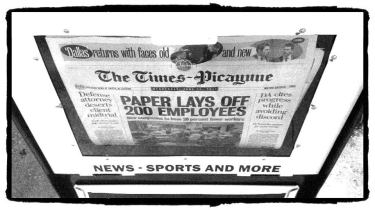 The time would be now for those of us that recognize the integral and historic relationship between our history as a republic and a democracy and our news papers and pamphleteers to recognize the need for drastic measures. Perhaps it is time to consider our local newspapers and television stations to be community assets and mount movements to make them mutual organizations or nonprofits. The historic trashing of the Times Picayune by the Newhouse corporation looking for more profits–as is their nature–should serve as a warning to all US cities. Your ability to know more about your local governments, your local citizens, and your community is at risk.
There are some things that are too important to be left to the profit motive.
Judy Woodruff of New Hour interviewed the TP Editor who insists that our ability to know will not be hampered by not only less access to the paper–many of our poorest do not have access to the internet version–and less staff. The TP is 175 years old. It’s one of the oldest newspapers in the country.
JIM AMOSS, editor, The New Orleans Times-Picayune: Many readers can’t imagine a morning without our newspaper in their hands. I understand that. I’m a print guy. I grew up in this business.
JUDY WOODRUFF: The Times-Picayune’s parent company, Advance Publications, also announced layoffs at three Alabama newspapers: The Birmingham News, The Press-Register in Mobile, and The Huntsville Times. Together, they will lose 400 employees.
The cuts and the changes are all a far cry from 2005, when Hurricane Katrina ravaged New Orleans. The Times-Picayune became a lifeline to those trying to recover and rebuild. Seven months later, Loyola University communications professor Larry Lorenz underscored that vital role in a conversation with the NewsHour’s Jeffrey Brown.
LARRY LORENZ, Loyola University: In the Civil War era, Oliver Wendell Holmes, the father of the later Supreme Court justice, wrote an essay called “Bread and the Newspaper.” And in it, he said, bread and the newspapers, we must have.
JEFFREY BROWN: So you have got to eat and people need information?
LARRY LORENZ: You bet. The information that’s in the newspaper feeds us as much as the bread feeds us.
JUDY WOODRUFF: But now, like a growing number of newspapers nationwide, The Times-Picayune faces a fight for survival.
Our city is not taking this quietly. This link comes via Morning Edition at NPR. You’ll notice a pattern here on exactly where I’m having to go to get news on this story. It’s not going to come from the right wing propaganda machine at Fox News. It’s not coming from other US papers either.
What happens when a media company wants to take away your daily newspaper? In New Orleans, you take to the streets.
A recent rally to preserve daily publication of the Times-Picayune featured high-profile musicians including Kermit Ruffins, whose sang a jazzy tune invoking the name of the 175-year-old paper. It’s part of a campaign launched by New Orleans’ most prominent residents and powerful leaders to save the Times-Picayune, a cultural institution in a city that gives high credence to tradition.
“It’s a morning ritual,” said Constable Lambert Boissiere, a former city councilman and state senator. “You know, you get the paper, get your cup of coffee, have you a little breakfast or whatever, paging through the articles you want to read. Then you had the conversations at lunch about the things you read in the paper.
“So that’s going to be gone,” Boissiere said. “I can’t imagine myself and my friends sitting in front of the computer every morning, going through the different sections to read the articles. I don’t see that happening.”
The cuts at the paper are part of a restructuring by Advance Publications, a Newhouse company, that will shift to three-day print editions and an emphasis on online news.
But more than a third of New Orleans residents don’t have Internet access, raising questions about how poorer and older citizens will keep up with news or even the local obituaries. Rituals aside, Boissiere said, the timing is terrible.
“We finally cleaned up our act since Katrina. We got business coming back. Our athletics things, with the Hornets and the Saints, we got a Super Bowl, we had Final Four, everything,” he said. “We’re getting to be a big city again. And then to lose a daily paper, I think it’s a bad signal affecting the growth of the city.”
Concerned civic leaders have banded together to put pressure on Newhouse to rethink its plan.
I personally am watching friends that have worked for the paper for decades collect their pink slips. It’s heartbreaking. It also raises an obvious question. This can’t be just about stopping a printing press. An internet-based paper still requires writers and photographers, doesn’t it? HuffPo is following the story.
Overall, the paper reported that it was laying off a third of its staff, totaling 202 employees. The Gambit newspaper said that 49 percent of the newsroom was being let go.
Katy Reckdahl, a laid-off reporter, spoke to the local WWL news station about the changes. “I guess I’m trying to figure out how I didn’t fit into the new organization,” she said. “I think they’ve torn apart an institution,”
As the ax continued to fall, Jim Amoss, the paper’s editor, posted a video on the T-P website.
“This is a difficult week at our paper,” he said. “We’ve had to let go of some wonderful employees. It is a painful transition.”
Amoss said that the paper was not “immune” from the broader economic climate facing newspapers, and that “news organizations that don’t serve a digital audience as well as their print readers risk a slow death.”
Renee Peck, a former T-P writer, reported that heart-rending scenes were being played out within the newsroom:
The first to go early this morning was a longtime copy editor who, ironically, has been overseeing online content for the past decade. When she burst into tears at the news, the supervisor in charge seemed unprepared, and had to duck into the ladies’ bathroom for paper towel.Employees who were laid off were offered severance packages; if they choose to accept the buyouts, they must work at the paper until Sept. 30.
The cuts at the Alabama papers, which are making a similar digital transition, were even more savage. Poynter reported that one paper, the Birmingham News, is seeing its newsroom cut by a shocking 60 percent, with 400 employees let go across all three papers affected by cuts.
Here’s a CBS story about what I’ve been seeing on my FaceBook feed for the past two days.
Job casualties in New Orleans included some of the city’s most experienced writers and photographers, many of whom announced their own departure on a Facebook page by simply posting “-30-,” an old copy editor’s code for “end of story.”
Peter Finney, a sports writer for the paper since 1945, is being laid off but has been asked to write a freelance column, the paper said. Managing editors Peter Kovacs and Dan Shea, among the newsroom leaders during the paper’s Pulitzer Prize winning coverage of Hurricane Katrina’s aftermath, have not been asked to stay. Brett Anderson, the current restaurant critic for the food-obsessed city, is leaving for a fellowship.
Employees who took part in Tuesday’s meetings described an emotional scene that played out over the course of the day among colleagues who have worked together for many years.
Reporter Barri Marsh Bronston said she was being let go after 31 years.
“These last three weeks have been unbearable, but I’m feeling a sense of relief right now,” she said in a post on Facebook. She did not want to be interviewed but gave permission for her comment to be used.
Throughout the day, employees met with various managers and were told either that they would have a job with the new company, Nola Media Group, or they were offered severance packages. Some will later be able to apply for positions in the new operation, the paper said.
Corporations and their single minded pursuit of profits are the country’s most prolific sociopaths and serial killers. It’s time to revive an old time corporate form. Companies that are responsible for public trust should most likely be owned by stakeholders and not just money hungry investors. I want our villagers back.
So Many Plutocrats, So Few Guillotines …
Posted: June 13, 2012 Filed under: the villagers | Tags: Aristocrats, David Brooks, Mitt Romney, plutocrats, SNOBS 15 Comments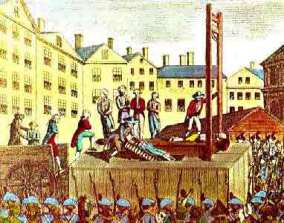 I don’t wonder how these folks get their money or their positions. However, I do wonder if any one even listens to them. Oh, wait. One of them is running for president and the other is taken seriously in the media.
Where’s a guillotine when you need one?
Dianne Bauer opened up her cafe to Mitt Romney and his campaign for a small round table discussion Friday morning before his speech at Bayliss Park.
This isn’t the first politician that has asked Bauer to use the Main Street Cafe in downtown Council Bluffs.
“With Rick Perry he made a point of stopping in the kitchen before he ever went to the other side to address the public and the media to thank us and introduce himself to us,” said Bauer. “That’s what I thought we would get here, just normal. This was all out, like you’d think Obama was here.”
Bauer’s issues with the campaigns staffers started the night before when they started staging the cafe for the event.
She described many of their demeanors as “arrogant”.
She says her cafe was not treated with the respect it deserved.
“Stuff got broke. My table cloths they just got ripped off, wadded up and thrown in the back room,”
She says the boom truck she allowed the campaign to borrow to gain access to the roof now has an 8-inch gauge in it that she’ll have to take the time to repair.
The campaign told her to send them an itemized list of anything that was broken, and they would pay for it, but Bauer says that won’t fix everything.
“My dad’s picture, an emblem my dad gave me, it got broke. Those aren’t things you can replace,”
Bauer says she never even got to meet the candidate she closed half of her restaurant down for.
“Every time we tried to go out or look, secret service was right there,” she said.
She was complaining about the event to a friend when reporters overheard her and posted about it online.
That’s when Romney called Bauer himself. She says he explained that it was just a misunderstanding that she did not get to meet him, but the phone call didn’t smooth things over for her.
“He responded ‘well, I’m sorry your table cloths got ripped off, wadded up and thrown in the back room’ and I took it as mocking,” she said. “We’re the ones he’s wanting to get the votes from, you’d think we would have been treated better.”
She says the whole experience left her wondering.
“With how he treated me, is that how he’s going to treat others? You know, if he gets in office is he going to be that way to us little people?”
The always guillotine-worthy David Brooks proves to his again exactly why he is a public menace. He whines that there just aren’t any good ‘followers’ out there any more. I guess he’s in search of a new generation of true believers. I’m going to let you read Dean Baker who rips him a new one.
Nope, I’m not kidding. His column today is devoted to “the follower problem.” He is upset that people are cynical and don’t seem to trust the elites. Brooks tells us:
“I don’t know if America has a leadership problem; it certainly has a followership problem. Vast majorities of Americans don’t trust their institutions. That’s not mostly because our institutions perform much worse than they did in 1925 and 1955, when they were widely trusted.”
Let’s leave aside 1925 since it was a very different world. In 1955 the economy was growing at a healthy pace with workers up and down the income ladder sharing in the prosperity. They were seeing rapidly rising living standards and it was a virtual certainty that children would enjoy much better standards of living than their parents.
Brooks may have missed it, but the economy collapsed in 2008. This was not due to any external event like a massive drought or asteroid strike, it was due to fact that the people who design economic policy were too brain-dead to see the largest financial bubble in the history of the world.
The result of this failure is that tens of millions of people are unemployed, underemployed, or out of the workforce altogether. Millions more are facing the loss of their homes. And a huge cohort of baby boomers, many of whom spent their lives working at decent paying jobs, are approaching retirement with nothing to support them but their Social Security.
It’s enough to make me take up knitting.
OOPS wrong musical …
Ignore the Man Screaming in Front of the Curtain
Posted: June 10, 2012 Filed under: The Media SUCKS, the villagers, War on Women, WE TOLD THEM SO | Tags: bloviators, liberal angst, Right Wing Hate Groups 13 Comments Here’s an interesting thesis from Steven Almond writing at the NYT.
Liberals are to blame for the success of right wing canards and screamers because they don’t elevate the conversation. They fixate on the bloviator.
Of course, not all right-wing pundits spew hate. But the ones who do are the ones we liberals dependably aggrandize. Consider the recent debate over whether employers must cover contraception in their health plans. The underlying question — should American women receive help in protecting themselves from unwanted pregnancies? — is part of a serious and necessary national conversation.
Any hope of that conversation happening was dashed the moment Rush Limbaugh began his attacks on Sandra Fluke, the young contraceptive advocate. The left took enormous pleasure in seeing Limbaugh pilloried. To what end, though? Industry experts noted that his ratings actually went up during the flap. In effect, the firestorm helped Limbaugh do his job, at least in the short term.
But the real problem isn’t Limbaugh. He’s just a businessman who is paid to reduce complex cultural issues to ad hominem assaults. The real problem is that liberals, both on an institutional and a personal level, have chosen to treat for-profit propaganda as news. In so doing, we have helped redefine liberalism as an essentially reactionary movement. Rather than initiating discussion, or advocating for more humane policy, we react to the most vile and nihilistic voices on the right.
Media outlets like MSNBC and The Huffington Post often justify their coverage of these voices by claiming to serve as watchdogs. It would be more accurate to think of them as de facto loudspeakers for conservative agitprop. The demagogues of the world, after all, derive power solely from their ability to provoke reaction. Those liberals (like me) who take the bait, are to blame for their outsize influence.
Blink.
Okee dokee then.
From Digby: Little wingnut monsters: even if you don’t feed them, they grow up anyway.
This may be the single dumbest op-ed in the NY Times this year, which would be an accomplishment, given that Friedman, Brooks, Douthat, and Bruni all write there. Apparently Steve Almond thinks that if liberals would just ignore nasty old Republicans, then we’d have an amazingly civil public discourse and Fox news would shrivel up and die. The logic goes something like this:
1.) Ignore Mean Republicans
2.) …3.) UNICORNS!
This is something like clap-for-Tinkerbelle in reverse. If we stop enabling righties by paying attention to them, they’ll go away.
I would like to say that I don’t feel personally victimized by escalating right-wing fanaticism. Most of the time I feel more like a helpless bystander watching barbarians sack my country.
From me:
WTF is wrong with you? We now have walking, talking, reproducing humanoids that think taking from the poor and giving to the rich solves all of our economic problems, that poor people deserve to starve and die from lack of insurance because there’s something morally wrong with them, a basically ineffective right of center president is a socialist, Kenyan Muslim who has spent us into no man’s land, Fox News is actually news and not just made up shit that rich Republicans want you to believe, and fertilized egg has more right to “life” than a woman or a man that’s been wrongly convicted of a crime or GLBT people. We’re supposed to ignore the propagandists and just spout platitudes about “big ideals”? Gimme a friggin; break and buy a clue, dude! We tried Air America. It bored every one. Eliot Spitzer got sent to out media land for having heady conversations. What planet is this?
That is all.
Tuesday Reads: Wisconsin Recall Madness!
Posted: June 5, 2012 Filed under: 2012 elections, Labor unions, morning reads, Populism, Psychopaths in charge, Reproductive Rights, Republican politics, Right to Work, Tea Party activists, The DNC, the GOP, the villagers, U.S. Economy, U.S. Politics | Tags: Chris Cillizza, grass roots activism, InTrade, John Nichols, Koch Brothers, PPP polling, public employee unions, Rebecca Kleefisch, Scott Walker, Tom Barrett, voter turnout, Wisconsin recall election 65 Comments
Good Morning!!
Today is the day of reckoning for Wisconsin. Voters will go to the polls today to decide the fate of Governor Scott Walker and five other Wisconsin Republicans: the Lieutenant Governor and four state senators. If the Democrats can win just one of those seats, they will regain the senate majority.
I think everyone here knows the genesis of this recall battle, but here’s a quick explainer from Chris Cillizza at the WaPo. Cillizza also speculates on possible surprising outcomes from the election.
Cillizza allows that Barrett could conceivably win and the Democrats could retake the senate–the latest poll by PPP had Walker leading by only 3 points, within the margin of error. The poll also suggested that Barrett had the momentum as of yesterday. On the other hand, InTrade had Walker’s chances at more than 90% late last night. The truth is no one really knows for sure, because the turnout and enthusiasm on each side will tell the tale. Cillizza, being a Villager, still thinks Walker will win, but thinks the Senate could switch.
When they filed petitions to recall Walker himself last fall, Democrats also filed papers to recall another four state senators — Senate Majority Leader Scott Fitzgerald, and Sens. Pam Galloway, Terry Moulton and Van Wanggaard, (Galloway resigned earlier this year; Republican state Rep. Jerry Petrowski is running for her seat.)
They need only win one race to take control.
Fitzgerald is likely safe given his heavily Republican district, although Lori Compas, his Democratic rival, has attracted a lot of media attention.
But Democrats are bullish on the races against Moulton and Wanggaard. Both districts went for President Obama in 2008; Wanggaard’s went narrowly for John Kerry in 2004. Whether Barrett wins or not, they expect to take back the state Senate.
Moulton faces former state Rep. Kristen Dexter; Wanggaard faces former state Sen. John Lehman (D). Outside groups have spent hundreds of thousands of dollars on both sides. State Rep. Donna Seidel (D) also has a shot at beating Petrowski; before Galloway the seat had gone Democratic for two decades.
Cillizza points out that if Barrett wins and the Democrats take the state senate and could get some of the Walker legislation overturned before another election could give the senate back to the Republicans. The other possibility, Cillizza mentions is that Democrats could defeat Walker’s Lt. Governor Rebecca Kleefisch, but that’s pretty unlikely. She’s leading in the polls at the moment.
The Seattle Times had a good article on Sunday about the national issues that are at stake in the election today.
Under fire for cutting budgets at the expense of public employees, Walker would be the third governor in U.S. history yanked from office in a recall election. Walker has an edge, but the race is close.
The campaign will mean more than who governs Wisconsin. It’s a test case of the larger clashes in American politics that are driving elections for the presidency and control of Congress, highlighting divisions over the costs of government.
With more than $30 million raised from conservative donors, many of them from other states, and visits from a who’s who of high-profile Republican governors (New Jersey’s Chris Christie, South Carolina’s Nikki Haley, Louisiana’s Bobby Jindal and Virginia’s Bob McDonnell), Walker’s campaign to survive the recall has the feel, the money and the stakes of a national race.
The state vote is raising questions that will echo nationwide. Can a tough-minded conservative Republican force cuts in government at the risk of angering public-employees unions and win a swing state such as Wisconsin? Will voters think he’s doing the best he can in a tough time? Or will they rise in a grass-roots backlash against the well-financed Republican effort?
Admittedly, that article has a Republican flavor, but it does do a pretty good job of spelling out the issues. For a more left-wing perspective, here’s a lengthy piece at by Sarah Jaffe of Alternet: Wisconsin’s Recall Drama Down to Nail-Biting Finish.
Wisconsin’s recall is, as reporter John Nichols put it, the kind of “renegade politics” that are disdained by the national Democratic party and even some state Democrats. It is being driven by the same activists who turned out by the thousands to occupy their capitol when Governor Scott Walker attacked workers’ right to organize and bargain collectively.
Now, a day before the biggest recall yet—of Governor Walker, Lieutenant Governor Rebecca Kleefisch, and four Republican state senators—the fight will be won or lost where it began: on the ground.
There’s a lot of big outside money pouring into Wisconsin, mostly to pump up Walker’s attempt to hang on to his seat, but the one thing that money can’t buy is an excited, driven grassroots movement. If Milwaukee mayor Tom Barrett beats Walker on Tuesday, it will be because of thousands of volunteers getting out the vote person by person.
“This is really a case of Walker raising $13 million against possibly the most widespread grassroots get-out-the-vote effort in the state’s history,” Matt Reiter, co-president of the Teaching Assistants’ Association at the University of Wisconsin at Madison, told AlterNet.
Please try to check that one out. It’s long, and very informative. John Nichols of The Nation (mentioned prominently in Jaffe’s piece) is Wisconsin native, and has written a book about the struggle in his home state. Here’s a piece Nichols wrote yesterday: How To Buy A Recall Election.
Governor Scott Walker is not trying to win the Wisconsin recall election that will be held June 5.
He is trying to buy it.
If the embattled governor does prevail, he will provide essential evidence not of his own appeal but of the power of money to define our politics.
On the other hand, if Walker is defeated, a template will have been developed for a people-power, message-power politics that might be able to challenge big money.
And there is no question that what is in play is very big money.
Read the gory details at the link.
At Salon, Josh Eidelson writes about the possible effects of some Wisconsin voters’ “resentment” of union workers on the recall outcome.
If Scott Walker survives tomorrow’s election, there will be plenty of reasons. Many people will point to his huge cash advantage, for good reason. But no factor will have been more important than the decades of decline in U.S. union membership.
“Unions had their place,” a woman named Jerri told me soon after I arrived in Wisconsin last week. “They did their part back in the ‘40s and ‘50s, and then they got too big, and are abusing their power.” Jerri and her husband, Tim (both declined to give last names), were eating at a bar in Wauwatosa, the purple Milwaukee suburb that’s home to Scott Walker. They both work in sales: She’s in retail at the mall; he’s in wholesale, selling caskets. Tim said Walker’s union “reforms” were necessary because local politicians had been “looking out for the union” instead of “people like me.” He said unions are for people who don’t “feel they should have to work very hard.” Jerri complained that unions “are sucking off my teat.” Public workers’ benefits, she said, “should be the same as anybody in any kind of private job.”
That last statement is most telling. While resentment toward unions has grown since the 1950s, it’s not because they got too big. It’s because they got too small. A multi-decade drop in unionization left fewer Wisconsinites who are union members or live in union households. Meanwhile, because governments are less prone than businesses to terrorize workers or shut down facilities to avert unionization, public sector unionization has remained more stable. In 2009, for the first time, there were more total U.S. union members in government employment than in the entire private sector.
That one is pretty scary for those of us who care about quality education and public services.
The Wall Street Journal highlights the importance of turnout in the recall election.
Both sides say few voters remain undecided, after more than $63.5 million in political spending saturated the airwaves and clogged voters’ mailboxes. A weekend survey by the Democratic group Public Policy Polling found Mr. Walker holding a slight lead and only 3% of likely voters undecided. With few voters left to persuade, the main question is which side will win the turnout battle.
Labor groups and their allies knocked on more than 300,000 doors during the past few days and placed more than 400,000 phone calls, said Brian Weeks, the assistant political director for the American Federation of State, County and Municipal Employees union.
Unions historically have had a strong ground game. But Republicans said they took a page from labor’s playbook and have developed a coordinated get-out-the-vote effort, which could also give the party a boost in the November presidential election, helping the GOP equal the Democrats’ election-day machinery.
Felicia Sonmez and Rachel Weiner of the WaPo write about the battle of “TV ad spending vs. boots on the ground.” They say that this election:
serves as a proxy for the national battle between Democrats’ much-touted ground organization and Republicans’ fundraising advantage.
With Walker ahead in the polls and leading Milwaukee Mayor Tom Barrett (D) in the money race by more than 7 to 1 – and with GOP-aligned outside groups far outspending their counterparts across the aisle — Democrats maintain that their shot at victory depends on a far superior get-out-the-vote operation buoyed in large part by organized labor.
According to Monica Davey at the NYT,
About 60 to 65 percent of Wisconsin residents of voting age are expected to go to the polls on Tuesday, the state’s Government Accountability Board said. That would be a higher turnout than two years ago, when Mr. Walker and a wave of Republicans largely swept state and federal offices here, but not as high as the more than 69 percent turnout in 2008, when Barack Obama easily won the state.
Only time will tell. We’ll have a live blog this evening so we can follow the results together. Now I need you to let me know what else is in the news. I look forward to clicking on your links.

 peej
peej Carissa
 bostonboomer
 dakinikat
 ecocatwoman
 mablue2
 Mama Lopez
 peggysue22
 quixote
 skydancingguestblogger
 Mona (aka Wonk the Vote)



 Sky Dancing
Recent Comments